Ikogosi Warm Springs
Ikogosi Warm Springs, Nigeria
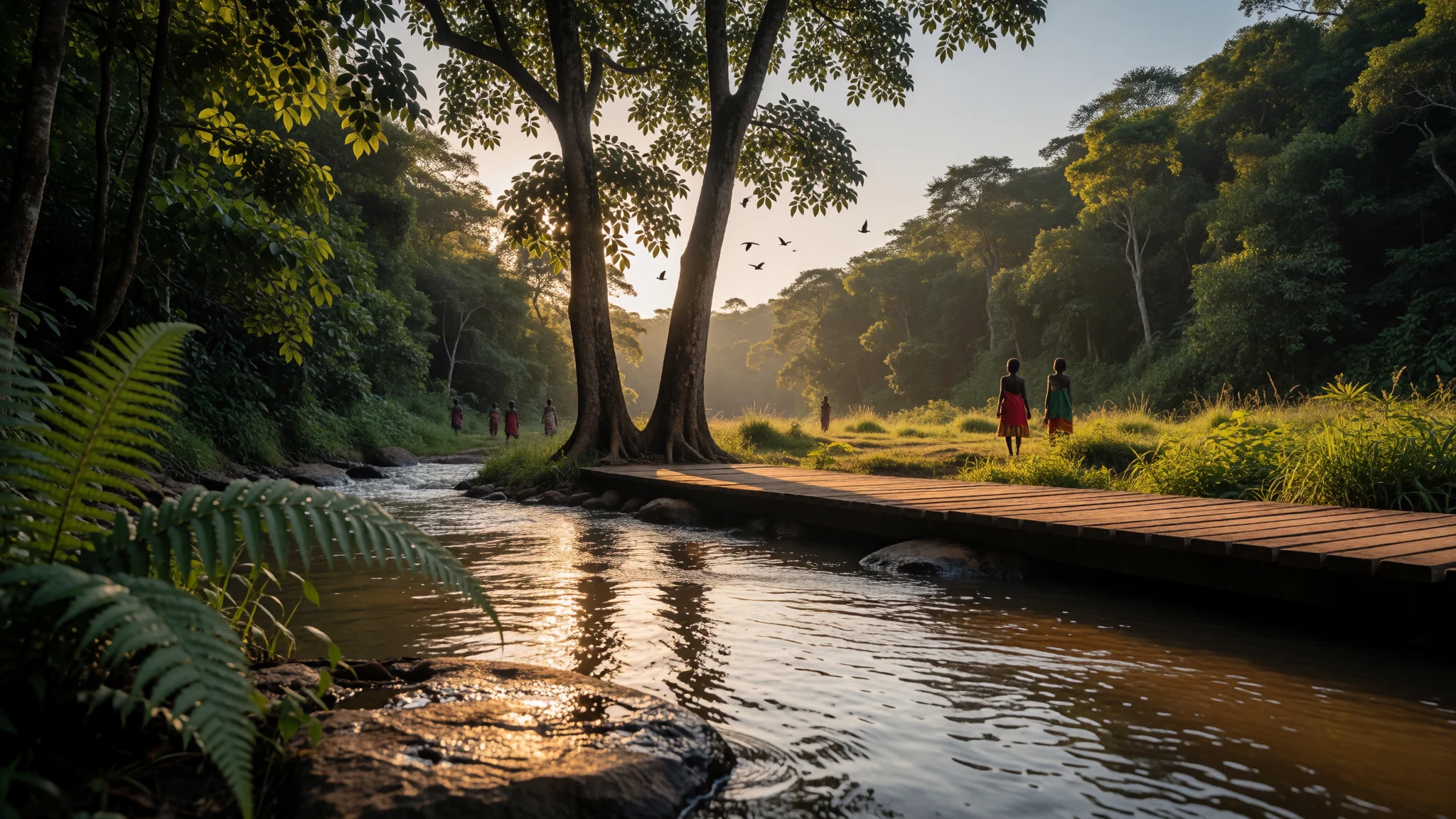
Ikogosi Warm Springs is a forest resort in Ekiti where a hot stream and a cold one run side by side and stay distinct.
The place
Ikogosi Warm Springs sits at Ikogosi, a small town in Ekiti State, southwestern Nigeria, in hilly country covered by dense forest. The draw is easy to state and odd to see: a warm spring and a cold spring flow next to each other, meet at a confluence, and keep their own temperatures even where the streams touch. A hand in each stream feels the difference within a few centimetres. At the source the water is far too hot for bathing, but by the meeting point it has cooled to something closer to a bath. The flow stays steady, so the effect does not depend on the season. At the confluence, two different trees have grown together from a shared base, and local tradition reads them as a sign of unity and harmony. The springs lie inside a forested resort estate rather than a village green. The grounds hold lodgings, a restaurant and bar, an amphitheatre, an outdoor pool and a gym, so a visit can be a short day trip or an overnight stay. The nearest large town is Ado-Ekiti, the state capital, about an hour away by road. The climate is tropical: warm and wet in one half of the year, hot, muggy and partly cloudy in the dry months, so the forest feels green and damp on most visits.
Its story
Ikogosi Warm Springs was known to local people long before outsiders marked it on a map, and the older story is one of caution. Residents around the springs regarded the place as charged with a power that could harm a stranger. They warned a Baptist missionary, Rev. John S McGee, to keep away when his work brought him to Ekiti. He went anyway. McGee set up a Baptist youth camp beside the water, and it grew popular with young people and with visitors curious about the warm and cold streams running together. When he retired, the camp was left to decline. It was eventually sold to the Nigerian government for a sum that looks tiny today, and the grounds were later developed into the resort that stands there now. Both versions of the place survive side by side. The missionary account explains how the springs became a destination, while the local belief in a guarded, powerful spot explains why the site was avoided for so long. Guides often tell both, and neither cancels the other. The twin trees at the confluence give the story a tidy ending, since they are taken as a symbol of unity, the same idea the two streams seem to act out in the water below.
What to see
- The warm spring source — Resort grounds, Ikogosi
The warm spring rises inside the resort grounds and is the reason most people come. The water is very hot where it emerges, so visitors watch from a short distance rather than bathe. Steam, mineral staining and the contrast with the cool forest air reward a slow look, and guides explain how the flow is channelled downstream.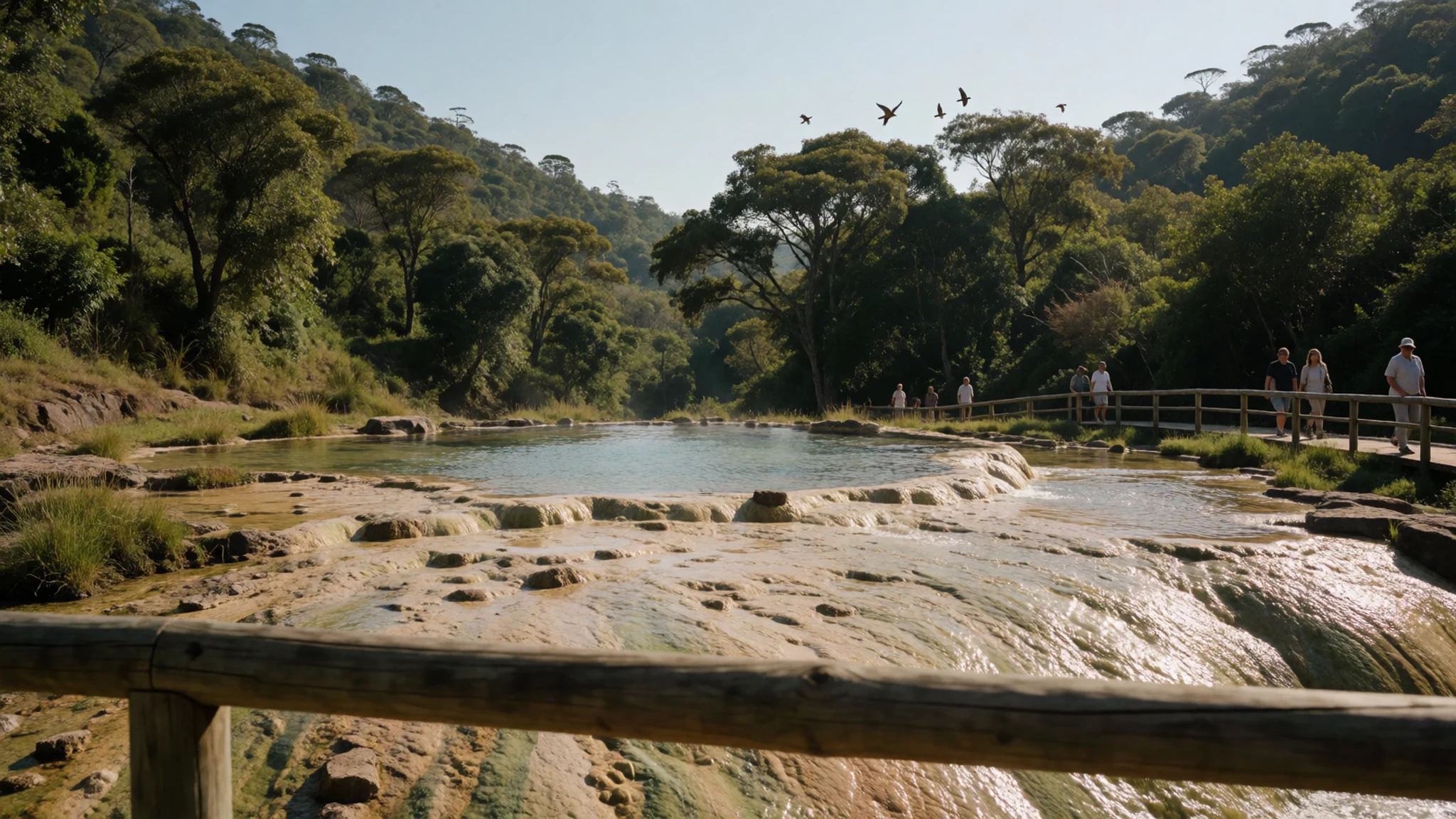
- The confluence — Resort grounds, Ikogosi
At the confluence the warm and cold streams meet and do not blend straight away. From the walkway, visitors can put one hand in each stream and feel two temperatures side by side. The whole resort is organised around this spot, so expect most photographs, and most other visitors, to gather here at weekends.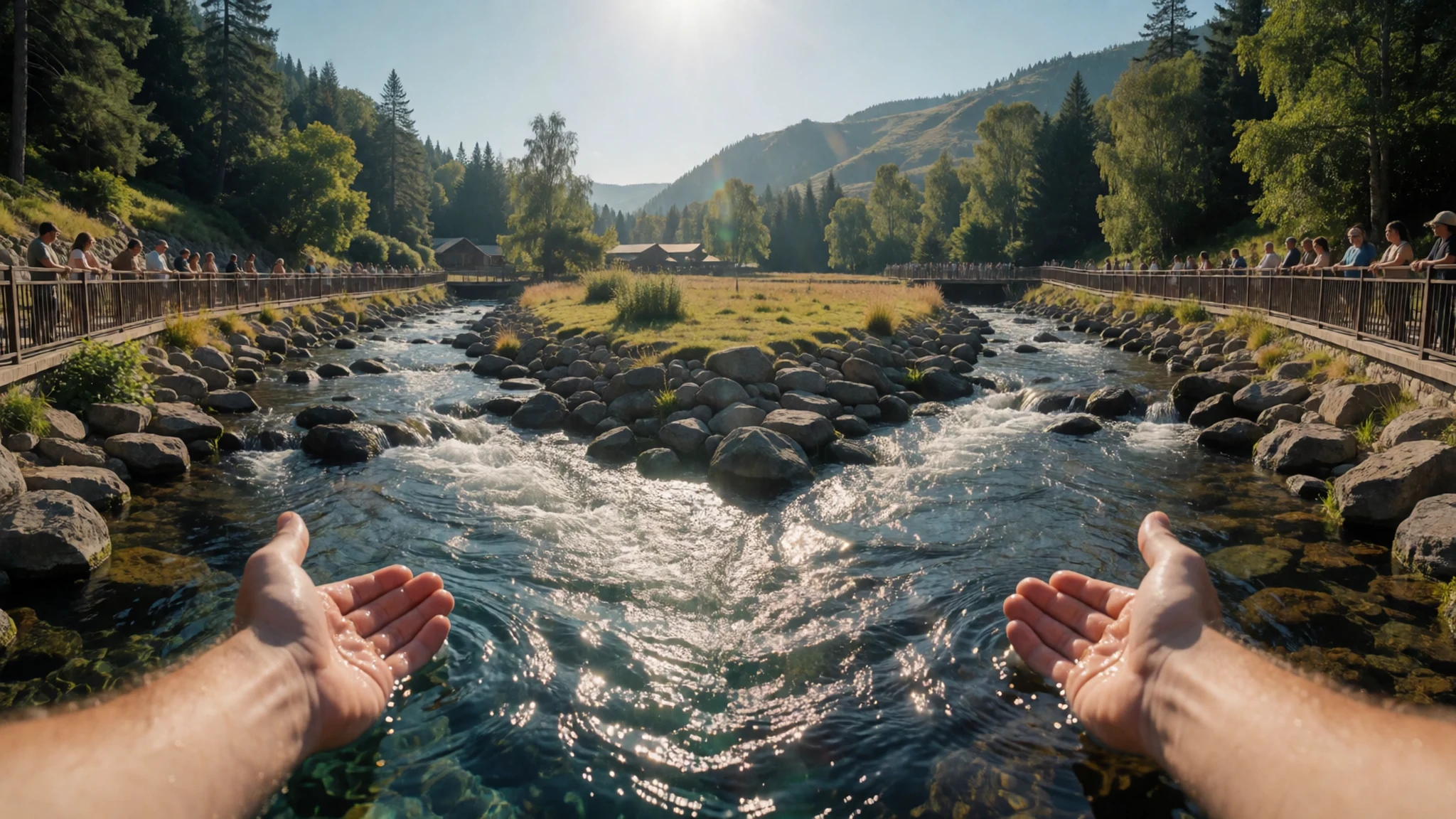
- The twin trees — Confluence area, Ikogosi
Beside the meeting point grow two different trees, fused together from one base. Local people read them as a symbol of unity, oneness and harmony, and guides usually point them out with the story attached. They make a good short stop after the confluence, and a reminder that the site matters culturally as much as scientifically.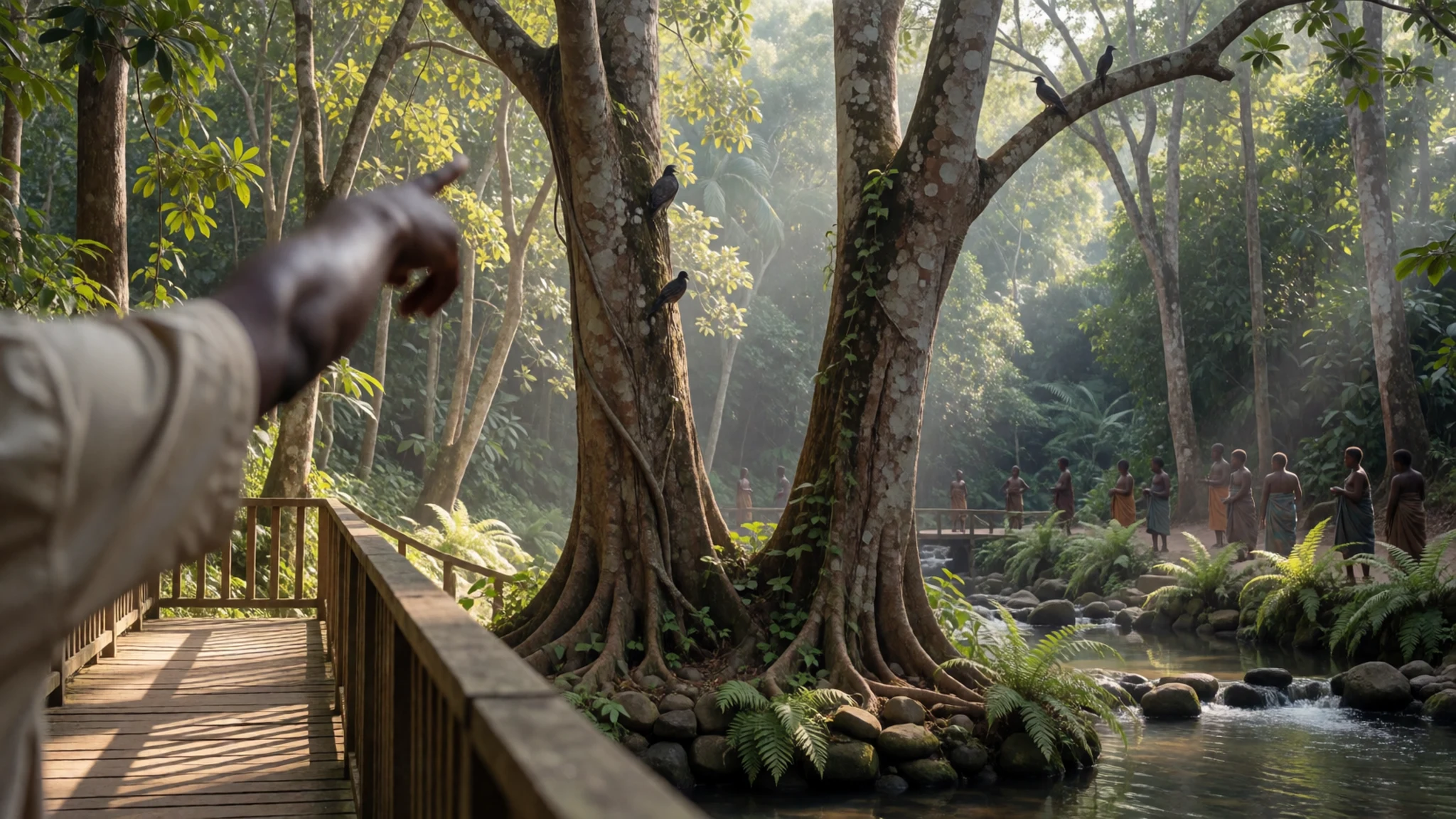
- The waterpath — Below the confluence, Ikogosi
Below the confluence, the mixed water travels along a channel and winds away through the grounds. Following it is an easy, mostly gentle walk, and the water is comfortably warm by this stage, so paddling is the usual way to enjoy it. Sandals with grip help, because wet stone and algae can be slippery.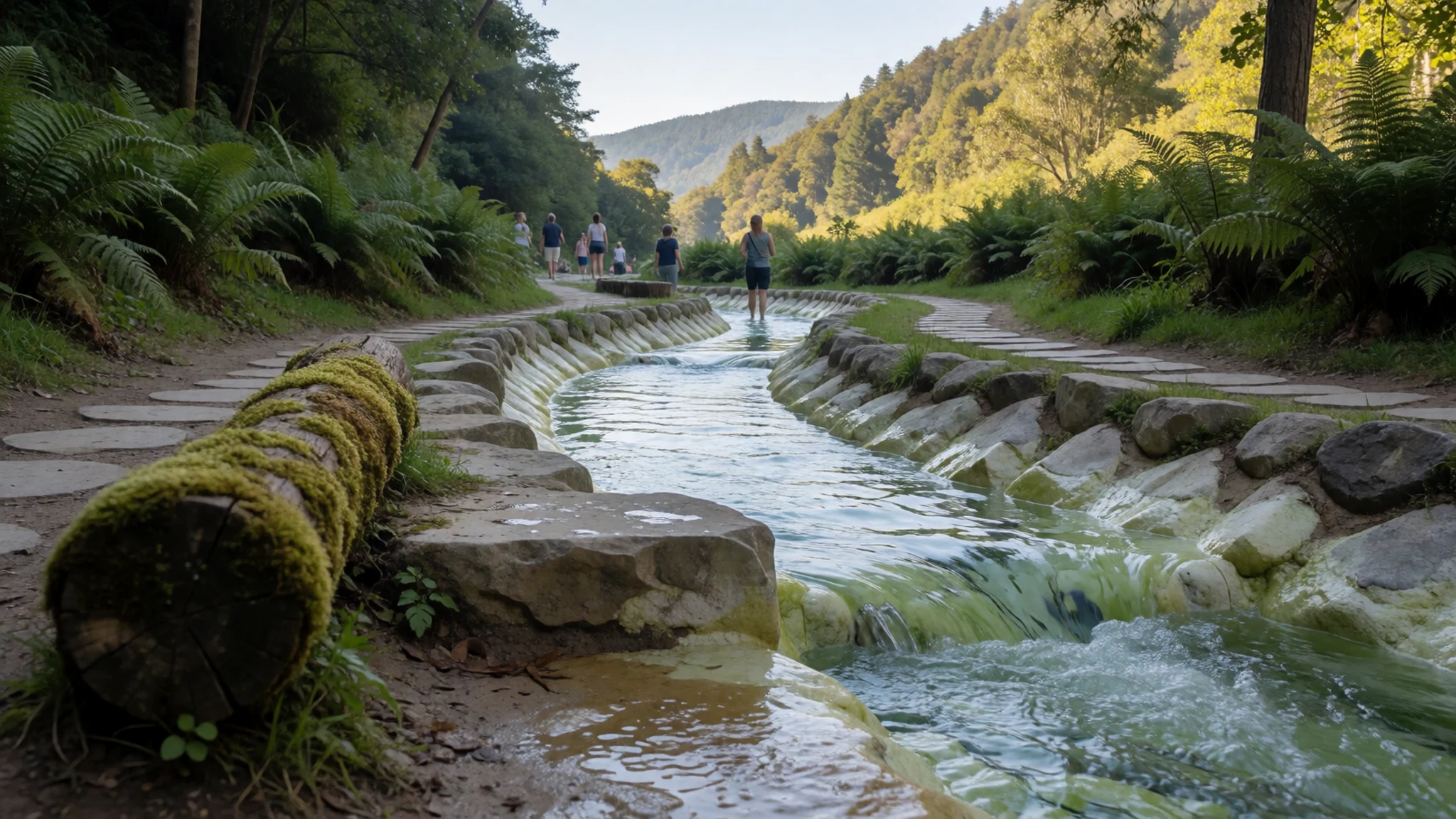
- The forest and hills — Resort estate, Ikogosi
The resort sits within dense forest over hilly ground, and the walks around it are a quiet counterpoint to the busier spring area. Shade makes the heat bearable, birdsong and insects fill the early morning, and the slopes give a feel for the Ekiti uplands. Ask at the entrance which trails are open before setting off.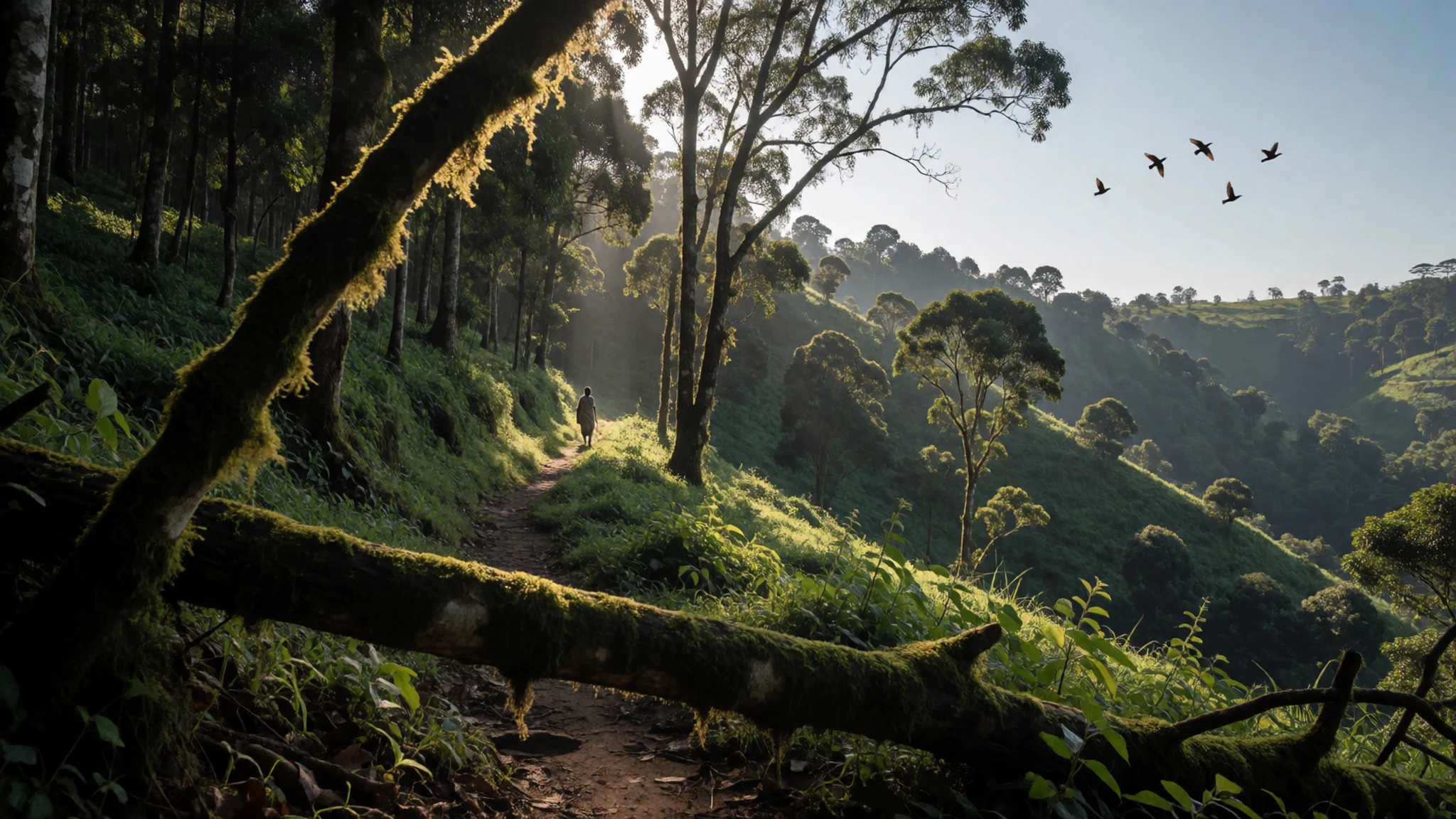
Culture
Ikogosi Warm Springs lies in the Yoruba-speaking uplands of Ekiti State, and the springs carry meaning beyond the novelty of two temperatures. Local people long treated the place with caution, believing a power lived there, and some of that respect survives in the way guides talk about it. The twin trees at the confluence are read as a sign of unity, an idea visitors from the region often bring up themselves. Christianity and Islam are both widely practised in southwestern Nigeria, alongside older Yoruba beliefs, and a visitor may meet all three in conversation. Greetings matter: a friendly good morning to gate staff, guides and people on the path comes before any question, and younger people often greet elders with a slight bow or kneel. Visitors need not copy that, but it helps to notice it. The resort is run as a tourist enterprise, so guides, gate staff and craft sellers depend on visitors for work. Polite, good-humoured bargaining and a modest tip for a guide are normal. Weekends bring school groups, families and church outings, and the mood is cheerful rather than hushed. Greet people first, ask before photographing anyone, and follow the guide's instructions at the water's edge.
What to wear
Ikogosi Warm Springs is in Yoruba country, where the best-known traditional textiles are aso oke, a hand-woven strip cloth made on narrow looms, and adire, cotton cloth patterned with indigo resist-dye. Women wear a wrapper (iro), a blouse (buba) and an elaborately folded head-tie (gele), while men wear a loose buba and trousers, an agbada over the top for formal occasions, and a fila cap. These outfits come out for weddings, naming ceremonies, festivals and Sunday services, often in matching cloth chosen by a family. Day to day, people in Ekiti dress in a mix of jeans, T-shirts, shirts and dresses, with Ankara wax-print tailoring for smarter moments. At the resort, expect families in casual clothes and swimwear at the pool. A visitor should wear light, quick-drying clothing, since the climate is warm and often humid, with a cover-up for shoulders and knees when walking through the town and the area around the grounds. Bring sandals or trainers with real grip for the wet walkways, a hat and sun protection, and a light rain layer in the wet season. Keep swimwear to the pool area and change out of wet clothes before eating at the restaurant.
What to eat
- Pounded yam with egusi soup — Local eateries in Ikogosi town and the resort restaurant
Pounded yam with egusi, a thick soup of ground melon seeds, is the dish named as the main local meal in this part of Ekiti. It often comes with bush meat. Look for it at local eateries in Ikogosi town and in the resort restaurant.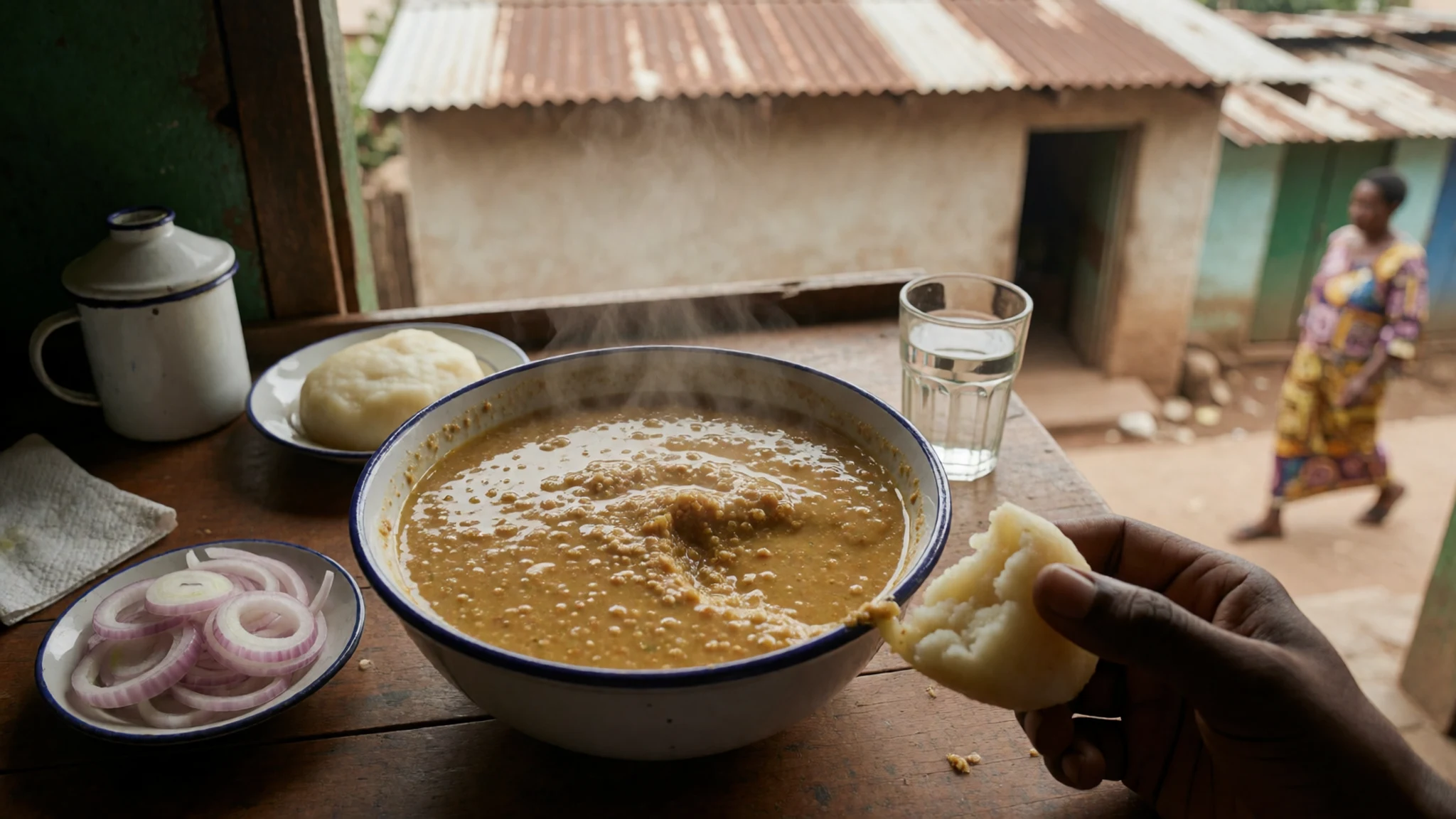
- Efo riro — Roadside canteens and home-style eateries around Ikogosi
Efo riro is a rich Yoruba stew of leafy greens cooked with palm oil, pepper, locust beans and meat or fish. Ordered with pounded yam or another swallow, it makes a filling lunch after the walk. Try it at a roadside canteen.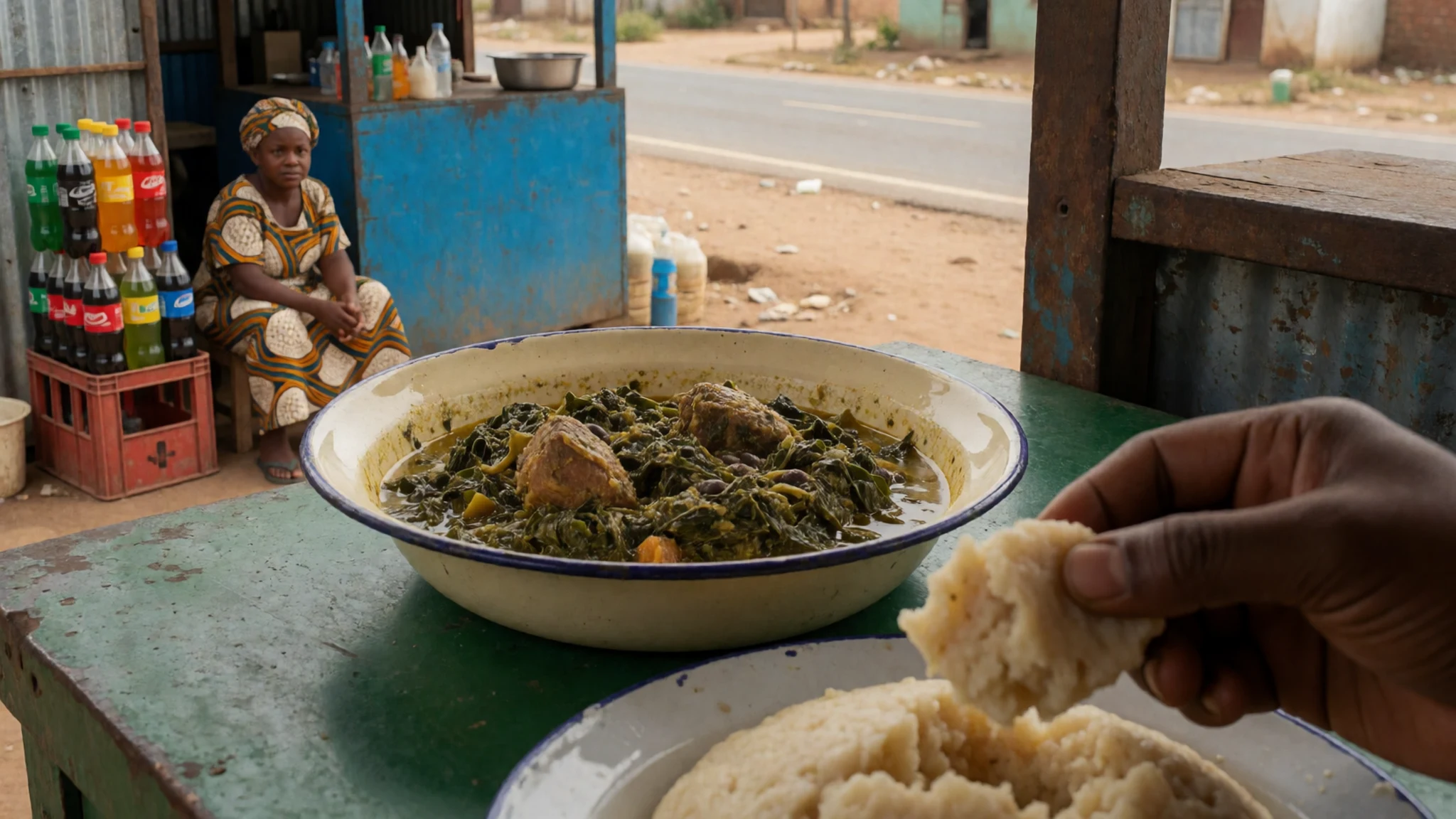
- Moin moin — Local markets and small food stalls in the town
Moin moin is a steamed pudding of blended beans, pepper and onion, often wrapped in leaves or served in small pots. It works as a light snack or a side to rice and stew. Women selling it often set up near gatherings and in markets. - Roasted plantain with pepper sauce — Roadside grills and charcoal stalls on the way to the resort
Plantain roasted over charcoal until smoky and slightly charred, usually eaten with a spicy pepper or palm-oil sauce, sometimes with fish. It is cheap, quick and filling, and easy to eat on foot between the spring and the road.
Plan it
Best time. November to February is the drier season and the easiest for walking, though it is hot and muggy. The wet season is warmer and greener, with cooler spells and slippery paths.
How long. 1–2
Getting there. Fly to a Nigerian airport with onward road links to Ado-Ekiti, the state capital (Lagos and Abuja are the usual gateways), then travel by road. From Fajuyi Park in Ado-Ekiti, cars run to Ikogosi Warm Springs, a drive of about an hour.
Budget. mid
Tips
- Check lodging availability and rates directly with the resort before travelling
- Arrive early on weekdays for quieter walkways; weekends bring school groups and families
- Carry cash as well as a card, since small stalls and guides may not take cards
- Wear sandals or trainers with grip, and bring a change of clothes if you plan to paddle
- Bring drinking water and sun protection for the walk through the grounds
Etiquette
- Greet staff, guides and people on the path before asking questions
- Ask before photographing people, and follow the guide's instructions at the water's edge
- Keep swimwear to the pool area and dress modestly in town
Nearby
Sources
- Wikidata Q19580382 (CC0)
- Wikipedia: Ikogosi Warm Springs (rev 1367001714) (CC BY-SA 4.0)
- Wikivoyage: Ikogosi Warm Springs (rev 5096788) (CC BY-SA 4.0)
- Photo: Ikogosi-Ekiti warm spring 06, Hadassah Photostorie group (CC BY-SA 4.0)
- Photo: Welcome to Ikogosi ekiti, MediaMOF (CC BY-SA 4.0)
- Photo: Ikogosi warm spring, Godwin Oluyomi (CC BY-SA 4.0)
- Photo: Ikogosi, Talesbyprisca (CC BY-SA 4.0)
- Photo: Ikogosi cold and warm spring waterpath, Asoegwu Yvonne (CC BY-SA 4.0)
- Photo: Cossy Water Factory, Ikogosi Ekiti, Jesu-loba (CC BY-SA 4.0)
- Photo: Ekiti State Government House, Ado-Ekiti (2), Favouridowu (CC BY-SA 4.0)
- Photo: Ekiti State Government House, Ado-Ekiti, Favouridowu (CC BY-SA 4.0)


