Lagos
Lagos, Nigeria
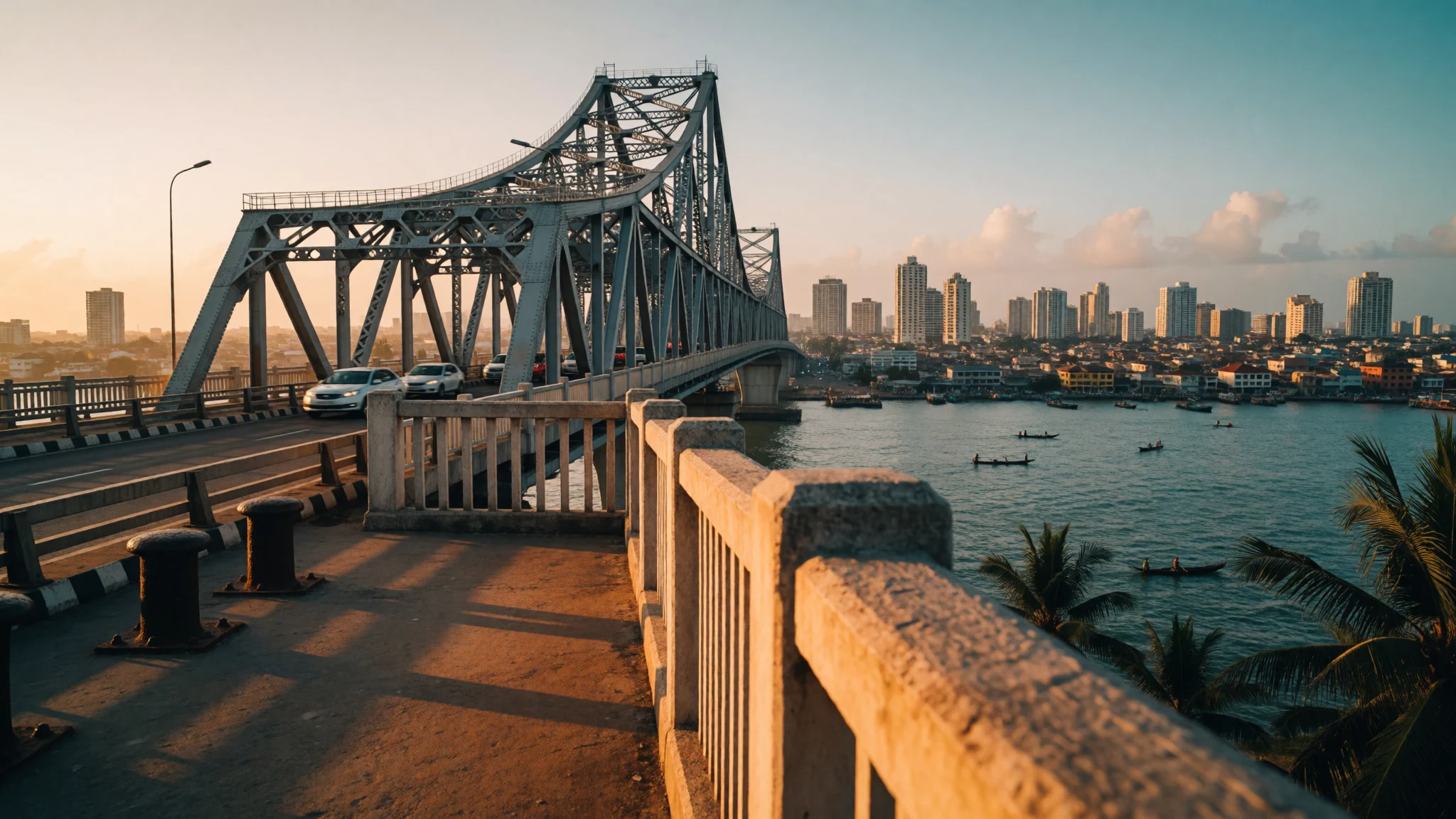
Lagos is a lagoon port and Nigeria's largest city, a former capital of markets, music and towers standing just above the water.
The place
Lagos stands on Nigeria's southwest coast, where sand spits and creeks meet Lagos Lagoon just inland of the Atlantic. It is a port city and a former capital, with a population of about 17 to 21 million and an elevation of only 34 metres, so water does as much organising as roads do. Barrier beaches take the ocean swell; behind them the lagoon frays into channels that still separate the Island from the Mainland.
Lagos Island, Èkó in Yoruba, is the old commercial heart: markets, mosques, churches and office towers packed onto low ground. Beyond the bridges the city runs through mainland districts such as Apapa, Ikeja, Surulere, Agege and Shomolu, and the practical map is that split, Island and Mainland, more than any single centre. Sea cargo moves through Apapa, Tin Can Island and the Lekki deep-sea port. Roads push out toward Badagry, Abeokuta and Ibadan, and a further expressway toward Calabar is only partly in use. A standard-gauge railway links Lagos with Abeokuta and Ibadan, and an urban rail line now threads the metropolis.
Banks give the skyline its purpose. Access Bank, First Bank of Nigeria and Zenith Bank have their headquarters in Lagos, and the city is a financial hub for West and Central Africa. The street noise is generators, horns and minibuses. Evenings on the islands put lit towers against dark water. Heat barely lifts, and once the rains arrive low roads flood while the traffic is still in them. A good day in Lagos keeps to one district, because a cross-town journey can swallow the afternoon.
Its story
Lagos began as Awori farmland on an island in the lagoon, not as a capital drawn on a colonial map. The Awori, a Yoruba people, already lived along the coastal mainland, ground that is now Lagos Mainland, Eti-Osa, Amuwo-Odofin and Apapa, and farther inland around Agege, Shomolu, Ikeja, Oshodi-Isolo and Kosofe. The island by the water they called Ọ̀sà was a place to plant crops and sleep near the fields. Yoruba speakers still call the city Eko, a name tied to their word for a farm hamlet, which is what the island was when those families worked the soil. The Awori were on the island in the 15th century; 1472 was a Portuguese visit, not the founding.
Settlers from nearby Iddo Island made the farm a lasting town. That lower town, Ìsàlẹ̀ Èkó, is the Lagos Island of later maps. Canoes and, in time, ocean ships turned a cultivation plot into a port. People came for trade, and the island's position at the lagoon mouth made it the place where inland routes met the Atlantic.
Growth pushed west off the island. Districts now called Lagos Mainland, Ajeromi-Ifelodun and Surulere filled in, and the city acquired the two-part shape it still uses: the Island, which is the older Lagos, and the Mainland, which is the expansion. The lagoon stayed the boundary even after bridges tied the halves together. Returned families from Brazil later added houses and mosques in a creole style, but that layer sits on Awori ground. The story of Lagos is a farm that became a harbour, then a metropolis of about 17 to 21 million, without the water ever quite getting out of the way.
What to see
- Lagos Island — Lagos Island
Lagos Island, called Èkó in Yoruba, is the older city: markets, mosques, churches and offices on low land beside the lagoon. Viewed from above, the island is a band of roofs and towers with water on more than one side. Crossing a bridge back to the mainland is often the slow part of any outing. Start early, before heat and traffic close in.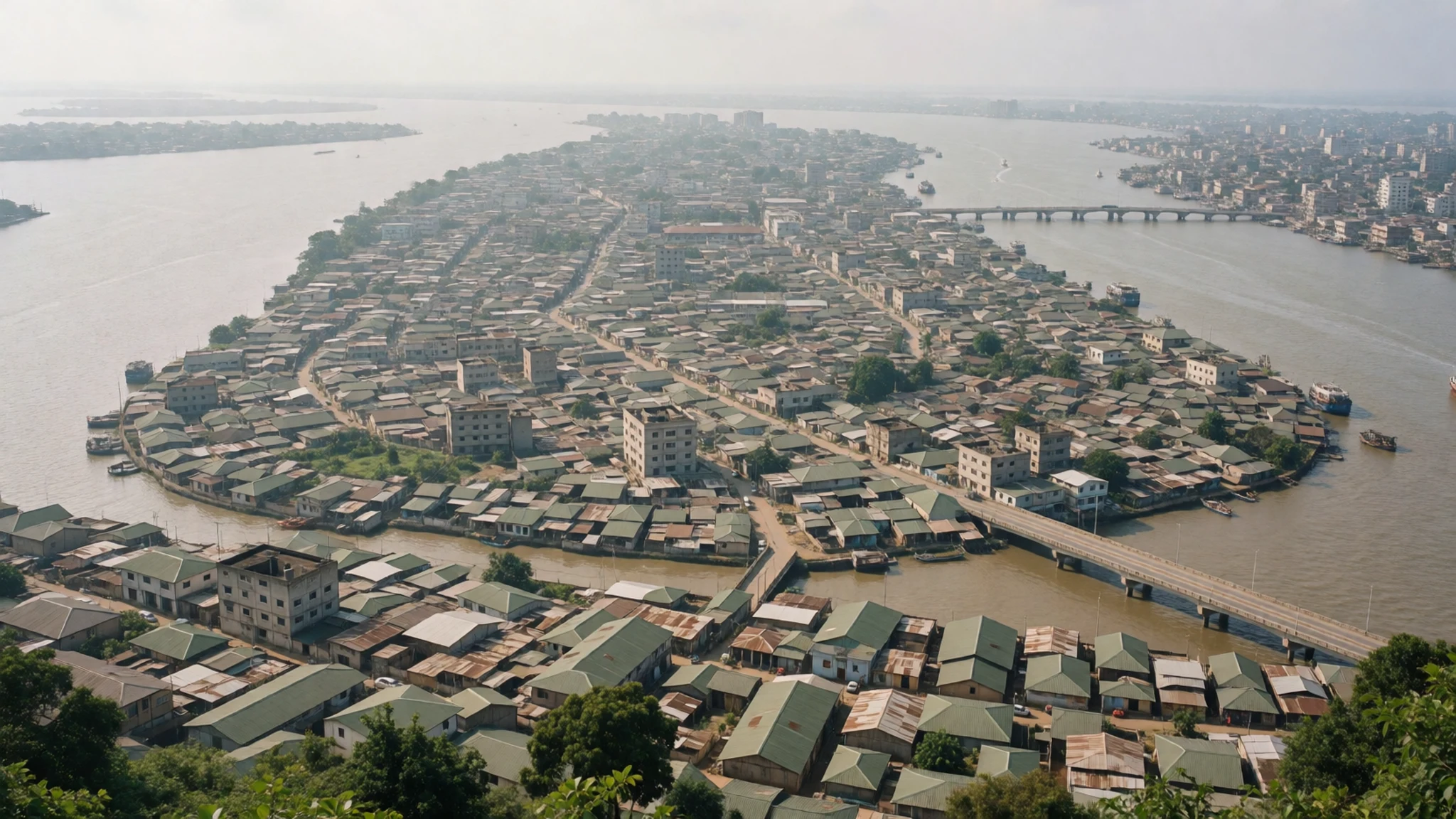
- Tarkwa Bay — Tarkwa Bay
Tarkwa Bay is a western ocean beach of Lagos, and a shipyard, while the new towers of Eko Atlantic stand across the harbour on the Victoria Island shore. Western shores such as this one sit apart from the eastern beaches at Lekki and Eleko, so the choice is really which side of the city to leave from. Sand, shipping and high buildings share one horizon. Daylight suits a picnic, once the boat or road approach is settled.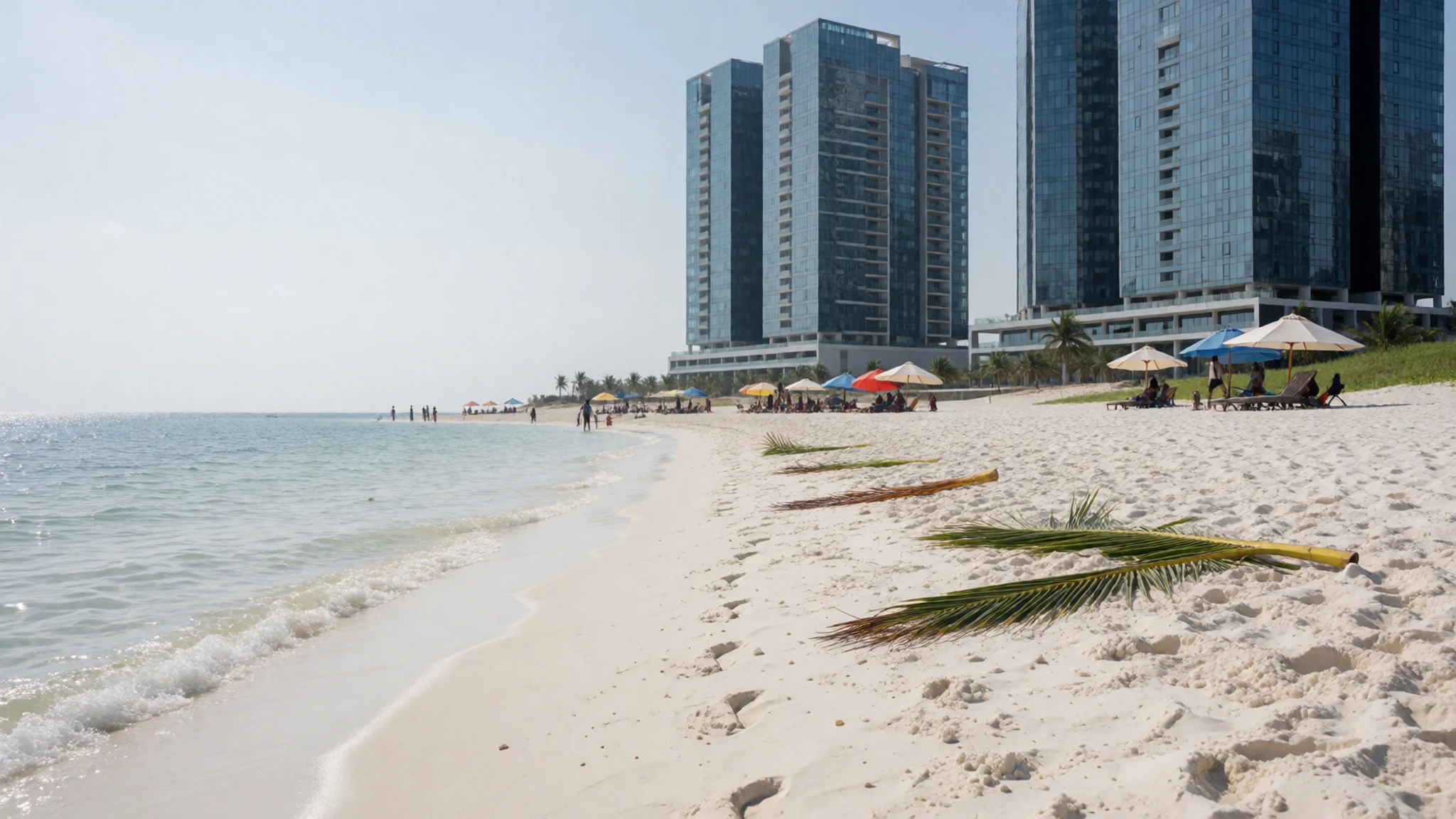
- Tinubu Square — Lagos Island
Tinubu Square is an open space in commercial Lagos Island, a pause among streets given over to selling and horns. The square is a landmark when the island's lanes start to look the same, and it makes a simple stop on foot between the markets and the older waterfront blocks. Morning is the comfortable hour; by afternoon the roads around it seize up and the paving throws the heat back.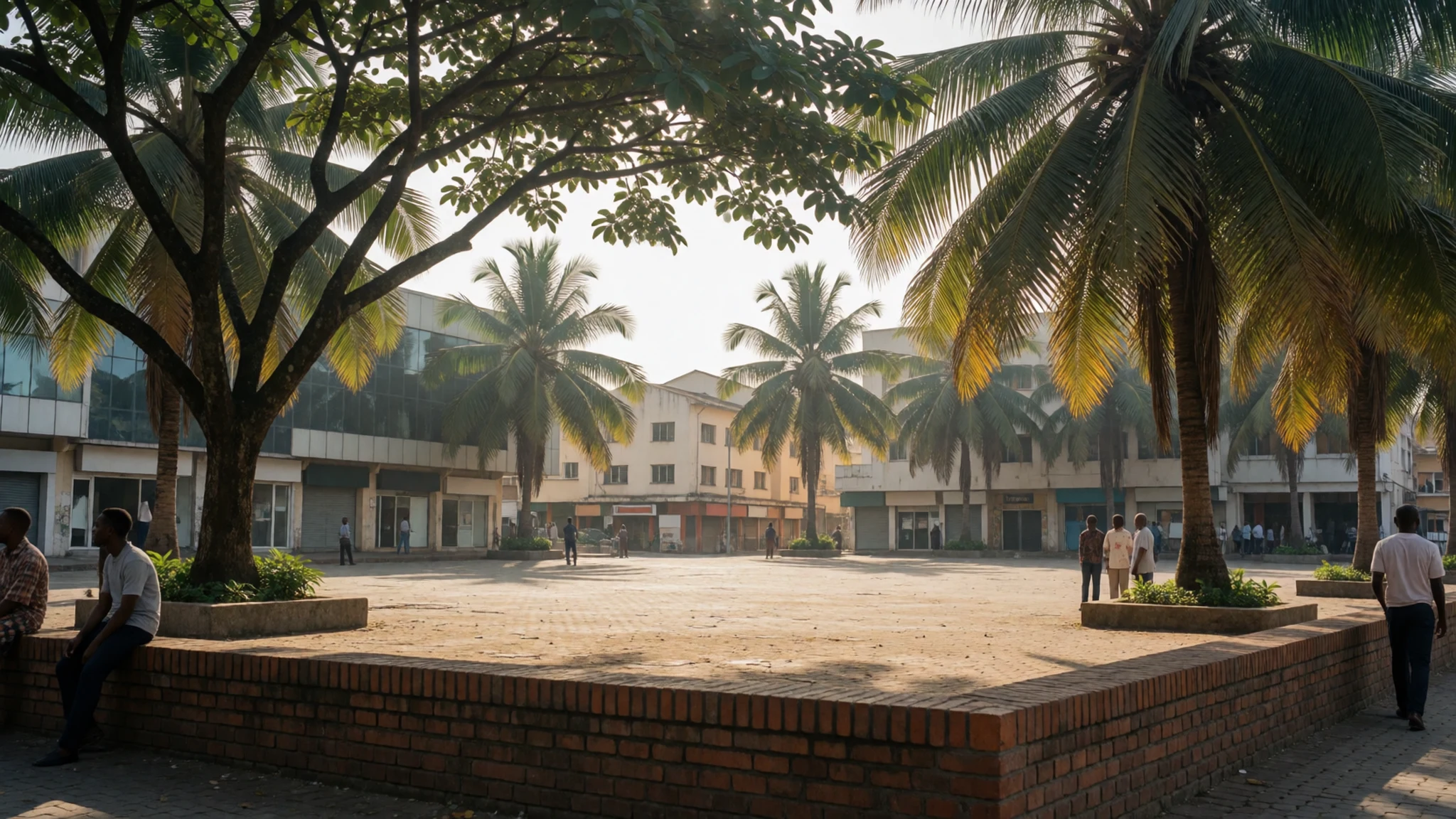
- National Theatre — central Lagos
The National Theatre is Lagos's big public stage, a landmark building for concerts, gatherings and the city's performance life. Nigerian music and film both treat Lagos as a home base, and a venue of this scale is part of how that reputation stays physical rather than only on a screen. The building's sculptural roof is the thing to look at from outside even when nothing is on inside.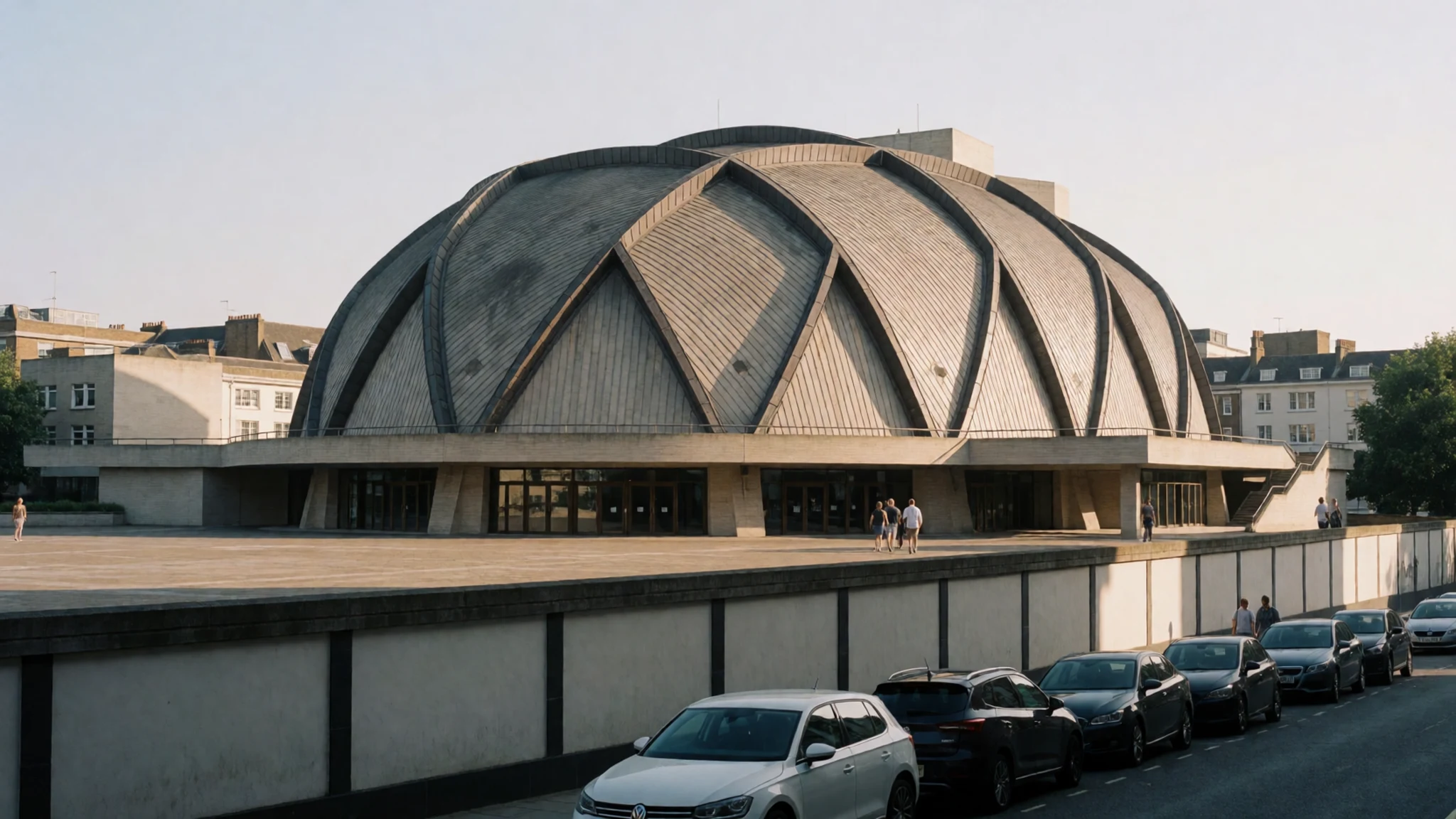
- Freedom Park — Lagos Island
Freedom Park gives central Lagos a garden and a pond, with a statue standing by the water. It is one of the places on the island where a visitor can find trees and a bench instead of another carriageway. Lagos has several such parks: some ticketed, many of the state-built ones free to enter, so the gate on the day is the authority.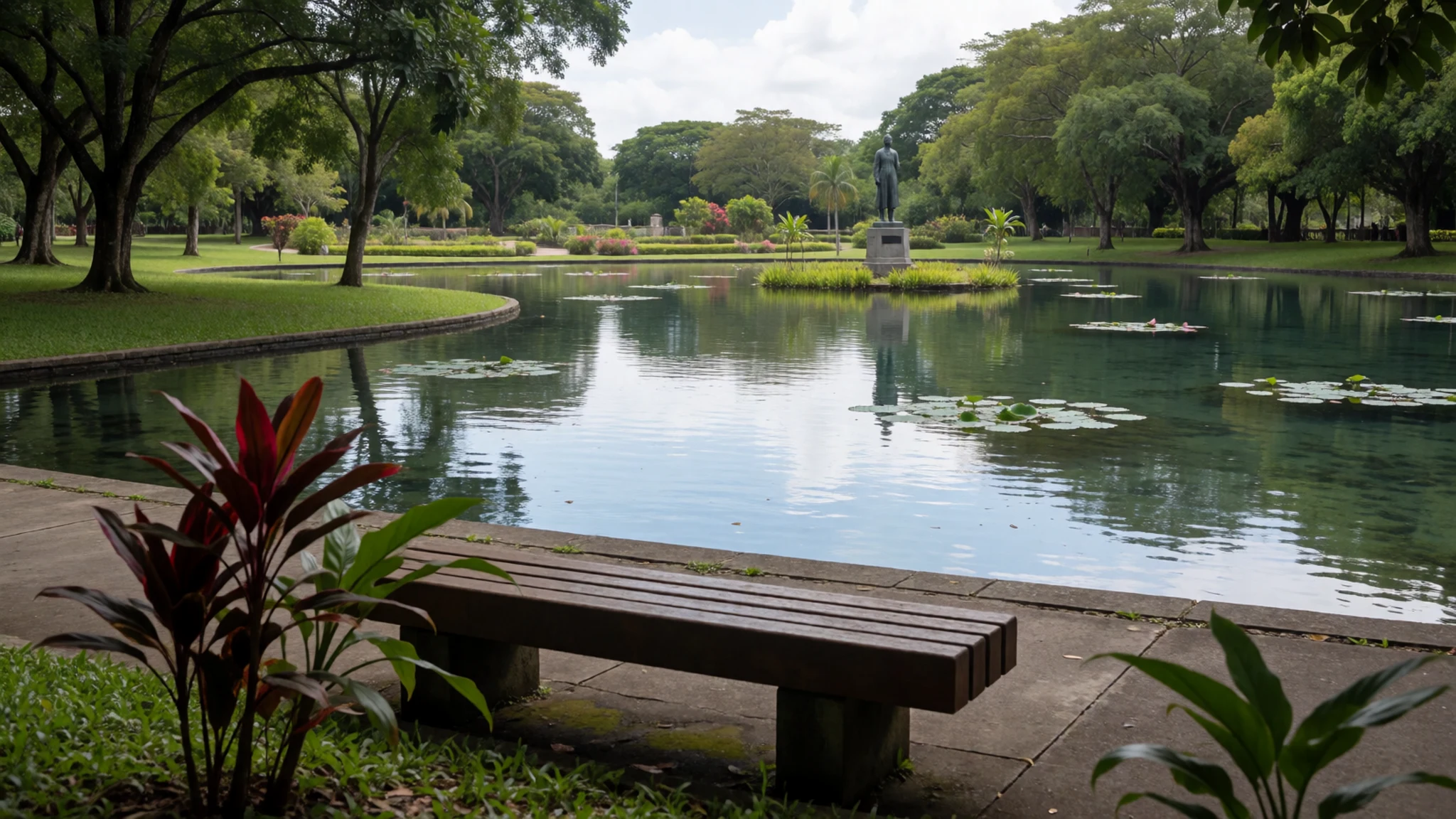
Culture
Lagos is Nigeria's cultural engine as well as its commercial one, a port where Yoruba life sets the tone and every other Nigerian community has a foothold. British colonial rule started its Nigerian chapter here, so European institutions, churches and the English language sit closer to the surface than in many inland cities. Brazilian-style buildings left by returned creole families still stand, among them the Water House and the Shitta Bey Mosque, beside tropical-modern concrete from the first generation of Nigerian architects, including Onafowokan Michael Olutusen and Oluwole Olumuyiwa: deep shade, louvres and screens against the sun. The islands carry most of the tall towers; the mainland skyline is lower but not empty. Music and film made in Lagos travel far beyond Nigeria, which is why the city can feel like a capital of sound even on an ordinary Tuesday. All of this sits in a plainly mixed city: Yoruba people predominate, but Lagos is where other Nigerian communities come to trade, study and settle. Ask before you photograph people, and cover shoulders and knees when you enter a mosque or a church.
What to wear
Lagos dress starts with Yoruba cloth. For ceremonies, men wear agbada, a wide flowing robe, often in aso-oke, the handwoven strip-cloth of silk or cotton, with a fila cap; women wear iro and buba, a wrapper and blouse, with a gele head-tie in the same aso-oke or in stiff imported lace and gele-ready fabrics. Aso-oke is the textile with a name and a status: it appears at weddings, chieftaincy events and Sundays when a family has decided to match. Coral beads still mark some traditional titles and bridal dress. On an ordinary weekday the city looks different. Office workers on the Island wear tailored suits, modest dresses and smart shoes; young people move in jeans, printed T-shirts and trainers; Ankara and other wax prints show up as dresses, shirts and headwraps that are fashion, not costume. Air conditioning indoors and glare outdoors mean a jacket may come off at the door. A visitor should dress for heat, rain and places of worship. Light cotton or linen, shoulders that can be covered, and shoes that can survive a flooded pavement or a sandy path to the beach are more useful than a formal outfit. At the Shitta Bey Mosque and in many churches, modest clothing, with covered shoulders and knees, is the respectful choice, and shoes come off where the floor custom requires it.
What to eat
- Jollof rice — fast-food counters and everyday eateries on the Island and the Mainland
Jollof rice is the Lagos plate people argue about: long-grain rice cooked in a pepper-and-tomato stew until the grains take the colour. It turns up with fried plantain or chicken at fast-food counters and at everyday eateries on both the Island and the Mainland.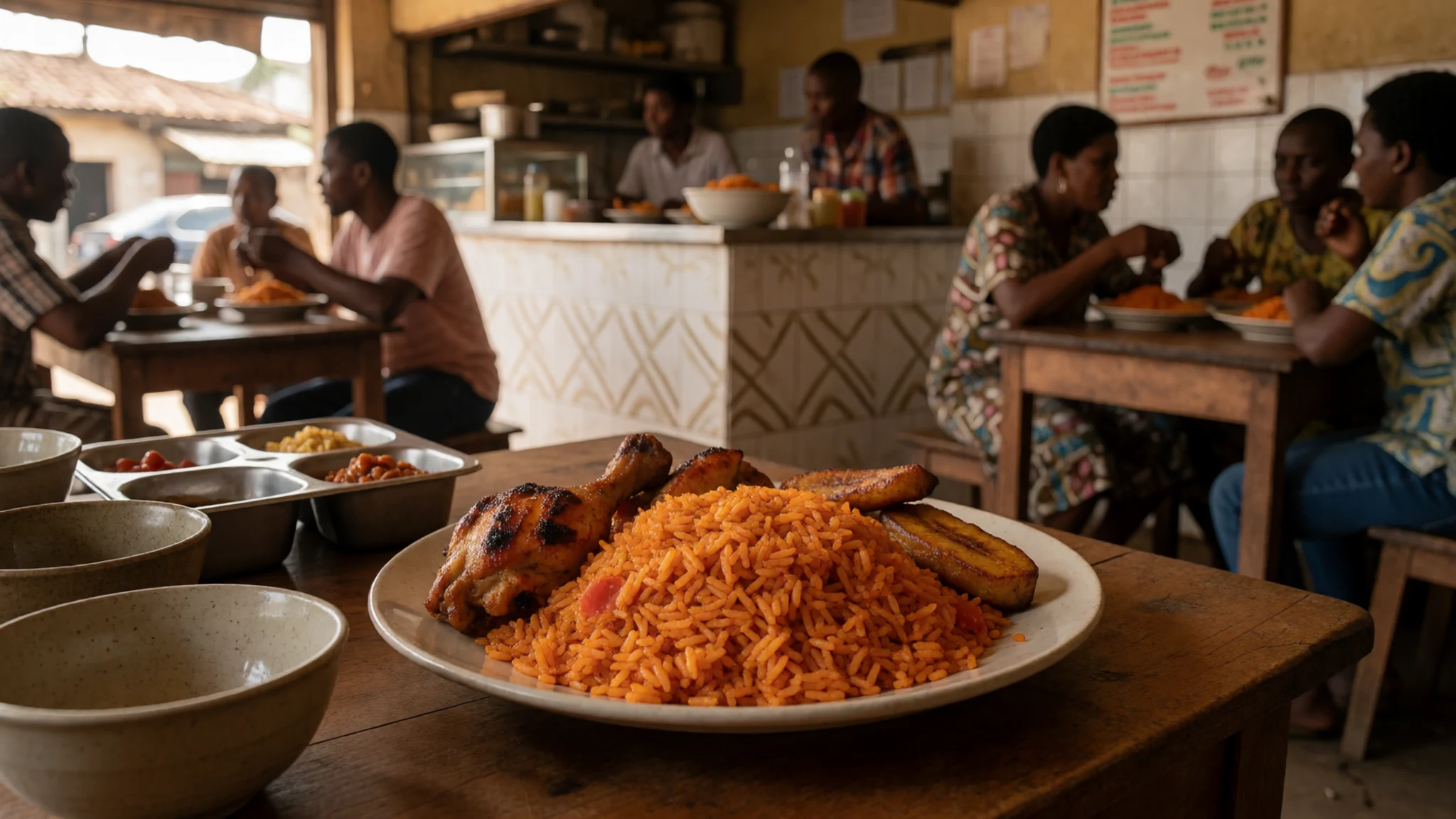
- Moin-moin — markets and fast-food counters
Moin-moin is a steamed bean pudding, ground beans seasoned with pepper and sometimes egg or fish, wrapped and cooked until it sets. In Lagos it is breakfast, a side, or a snack from a canteen tray, sold near markets and at fast-food counters beside rice.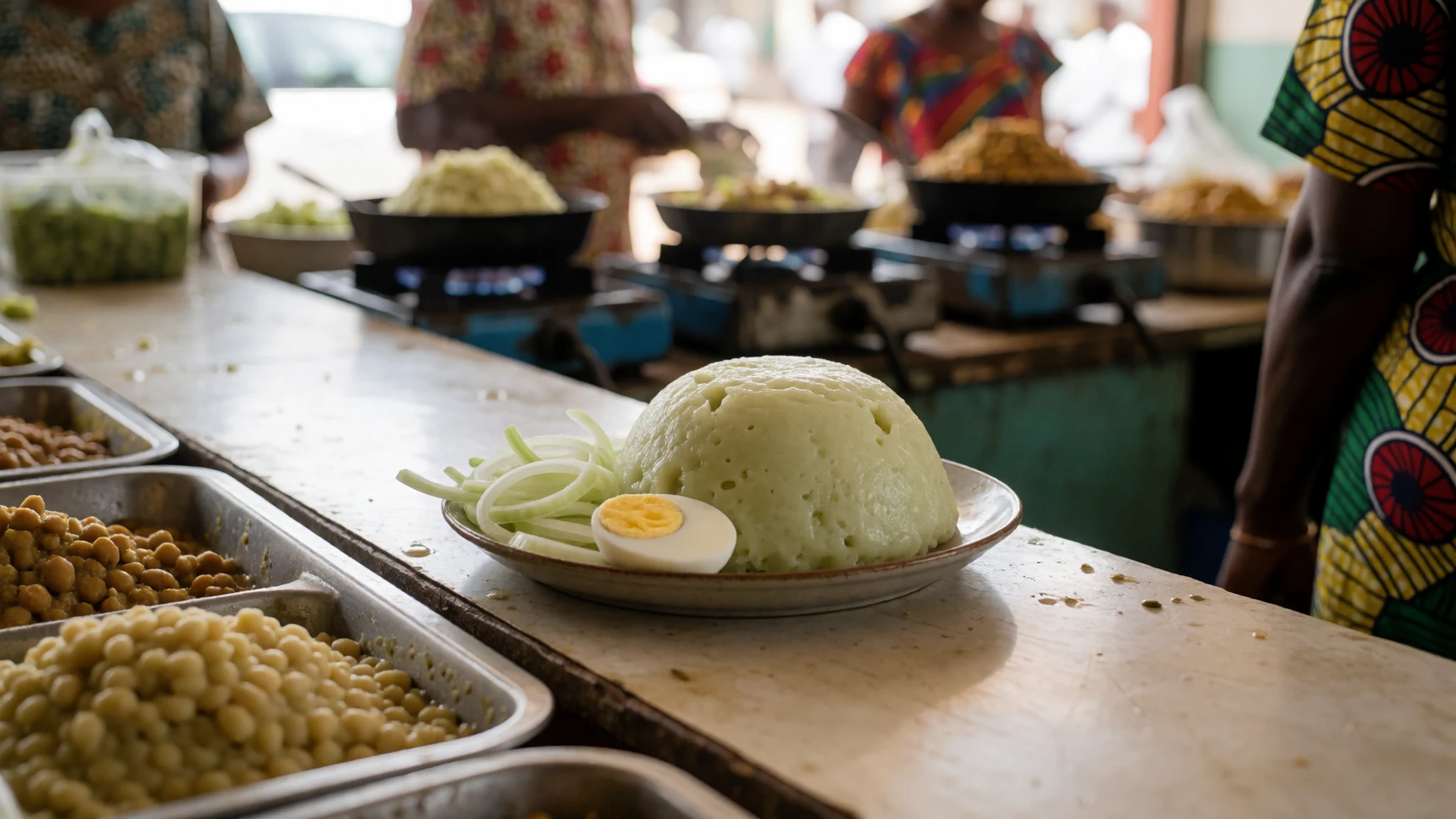
- Meat pie — bakeries, bus parks and fast-food counters
The Lagos meat pie is a small baked pastry with a spiced minced filling, eaten hot with a soft drink and no ceremony. Bakeries, bus-park stalls and the big fast-food counters sell them from morning onward, on the Mainland as much as on Victoria Island. - Fried rice — canteens and fast-food counters in Ikeja, on the Island and along Lekki
Lagos fried rice is a separate dish from jollof, grains tossed with vegetables, liver or shrimp and a lighter seasoning so the colours stay distinct. Eateries that plate Nigerian food almost always offer both, and the choice is personal rather than regional. - Suya — evening roadside grills in Surulere and on the Mainland
Suya is grilled beef sliced thin, coated in a peppery groundnut spice and cooked at a roadside brazier. Lagos stalls light up in the late afternoon, especially in Surulere and along busy Mainland roads, and a crowd at the grill is the useful recommendation.
Plan it
Best time. December to February is the dry season and the easier time to be outside in Lagos, with a shorter dry spell in August inside the longer rains that run from May to October. Rain peaks in September, heat peaks in April, and August brings the year's gentler afternoons; December to February balances lighter rain with easier walking weather.
How long. 3–4
Getting there. Fly into Lagos's international airport and plan a slow last leg by taxi or ride-hail onto Lagos Island or Victoria Island; congestion, not mileage, sets the time. Rail and road continue inland toward Abeokuta and Ibadan, and expressways also head for Badagry. The ports at Apapa, Tin Can Island and Lekki are for cargo. For official guidance, see http://www.lagosstate.gov.ng/.
Budget. mid
Tips
- Keep the morning to one side of the lagoon; a bridge crossing can use up the best hours.
- Begin markets, Tinubu Square and beach trips early, before heat and traffic peak together.
- Carry some cash for stalls and small parks; cards are more reliable in malls and larger eateries.
- In the wet months, expect flooded side streets and choose shoes that can get wet.
- Confirm what is open on the Lagos State website rather than trusting a fixed timetable.
Etiquette
- Greet someone before asking for help, a direction or a photograph.
- Dress modestly at mosques and in many churches, with shoulders and knees covered.
- Do not photograph worshippers or traders until they have agreed.
Nearby
Sources
- Wikidata Q8673 (CC0)
- Wikipedia (rev 1383478218) (CC BY-SA 4.0)
- Wikivoyage (rev 5408004) (CC BY-SA 4.0)
- Skywater.jpg (CC BY-SA 4.0)
- Lagos-centre-from-executive-lounge-Continental-hotel-2026-IMG_7970_(cropped).jpg (CC BY-SA 4.0)
- View Tarkwa Bay Beach with Eko Atlantic Buildings at Background, in Lagos State. Nigeria (2).jpg (CC BY-SA 4.0)
- 2014 Tinubu Square Lagos Nigeria 14640600637.jpg (CC BY 2.5)
- National Theater in Lagos State-Nigeria.jpg (CC BY-SA 4.0)
- King's Court by artists collective Inscribe in Muri Okunola Park.jpg (CC BY-SA 4.0)
- Lagos-Freedom-Park-Statue-at-pond-Aug-2026-IMG_6720.jpg (CC BY-SA 4.0)
- CIVIC TOWERS B.jpg (CC BY-SA 4.0)


