Agbokim Waterfalls
Agbokim Waterfalls, Nigeria
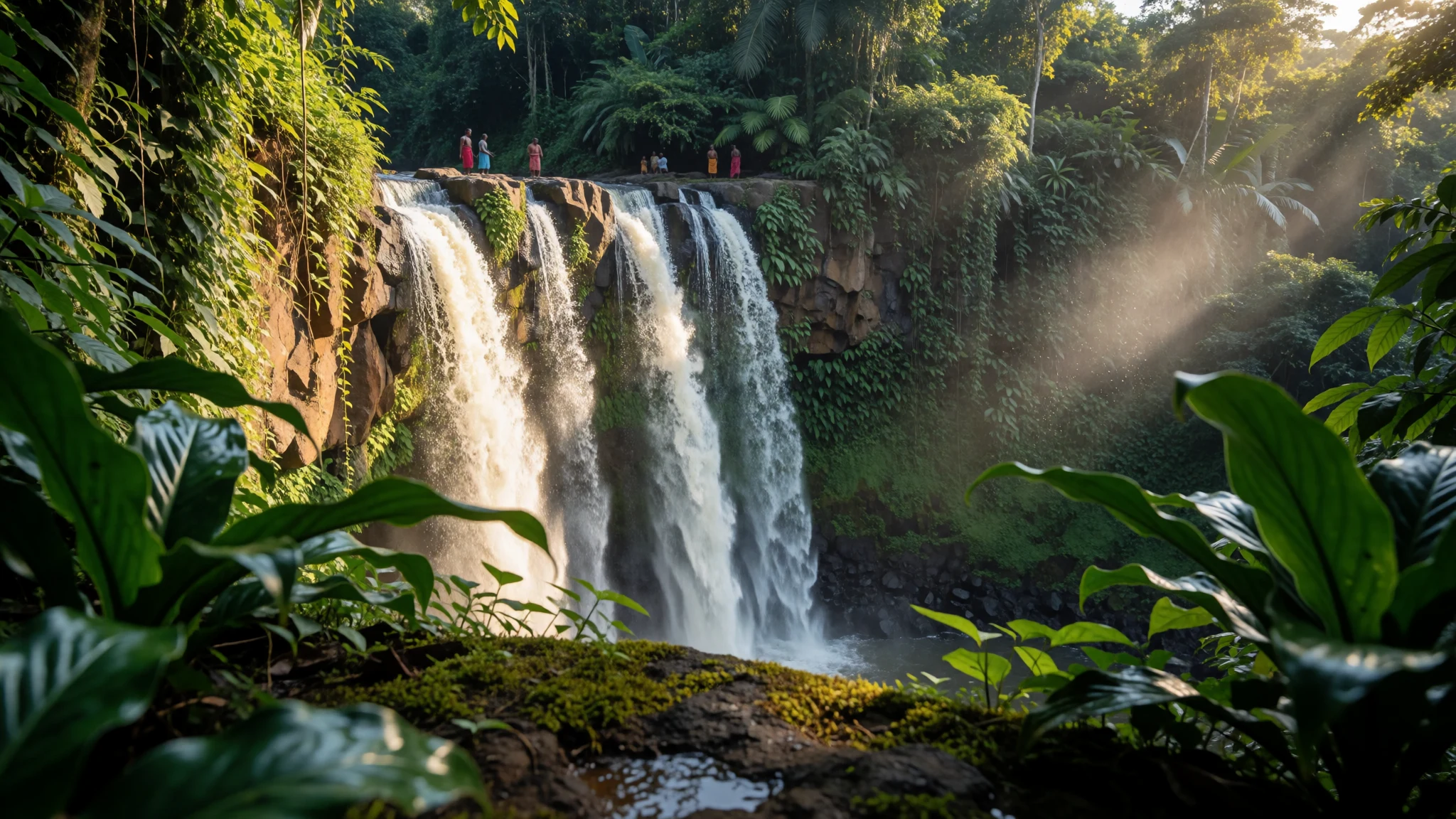
Agbokim Waterfalls is a seven-stream cascade in Cross River State's rainforest, close to the Cameroon border, for travellers who like long roads and quiet.
The place
Agbokim Waterfalls sits in the Etung local government area of Cross River State, in Nigeria's South-South region, very close to the border with Cameroon. The nearest town of any size is Ikom, and the state capital Calabar lies several hours away by road. That distance is the first thing to understand about the place: it rewards a planned trip rather than a casual detour.
The water arrives as seven separate streams that spill over a high cliff and drop into tropical rainforest below. In the wet months they merge into a broad, loud sheet; in drier months the individual strands show more clearly against the dark rock. The surrounding land is hilly and steeply folded, and the site stands at about 246 metres above sea level, so the air is warm and humid rather than cool.
There is a viewing area near the top, and paths lead down through the trees towards the base. Footing is often wet and slippery, and the forest is noisy with insects and birds. Facilities are basic compared with better-known Nigerian attractions, and there are no places to stay in Agbokim itself, so most visitors base themselves in Ikom or Calabar and make the trip as a long day out.
Crowds are usually modest outside holidays and weekends. The community around the falls is an active part of the visit, with local people acting as guides and caretakers of the surrounding forest. The setting suits slow looking: the sound, the spray, the green wall of trees, and the sense of being at the edge of the country.
Its story
The recorded story of Agbokim Waterfalls begins in the early 1900s, the date Wikidata gives for the site. A hunter named Ntankum, from the Ejagham-speaking communities, came upon the falls while searching the forest for game. He liked what he found and brought his family up into the hills to settle near the water.
Local accounts say that others followed, including older Inaku people who had lived in a mountain area before. The settlers found what a community needs: forest for hunting, ground for food crops and, according to the oral tradition, water they could work to produce salt. Their lives spread across the river system that runs between this part of Nigeria and Cameroon.
The falls were therefore a lived-in landscape long before anyone thought of them as a destination. Tourism came later, and it sits on top of older habits of care. Residents have worked to protect the forest by resisting clearance and planting trees, since the river depends on the health of the woodland that feeds it. Less forest means less water, and people here understand that link directly.
Today the site is promoted as a place for rest and recreation, and it is counted among Cross River State's natural attractions. Visitors who ask about its origins will usually hear the Ntankum story from a local guide, told with small variations, which is how oral history tends to survive.
What to see
- The main cascade viewpoint — Agbokim, Etung
The top viewing area gives the clearest look at all seven streams dropping over the cliff edge. In the rains the water merges into a single roaring curtain; in drier months the separate strands are easier to count. Spray can soak cameras, so bring a cloth or a waterproof pouch.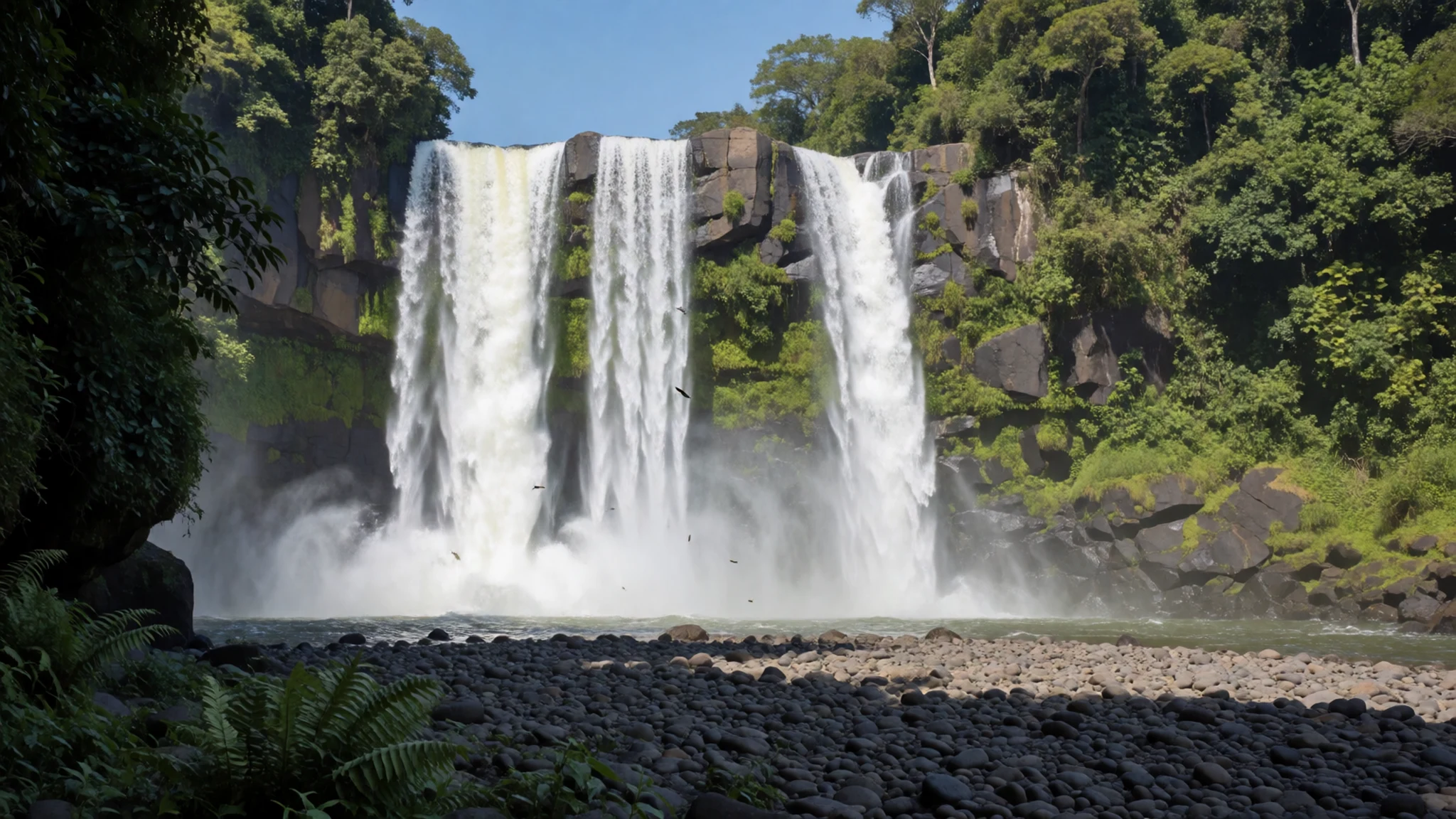
- The cliff-edge long view — Cliff top, Agbokim
A path along the cliff gives a wider, more dramatic angle, especially on overcast or rainy days when long exposures turn the water silky. The rock is slick and the drop is real, so keep to marked ground and avoid leaning over for a photograph.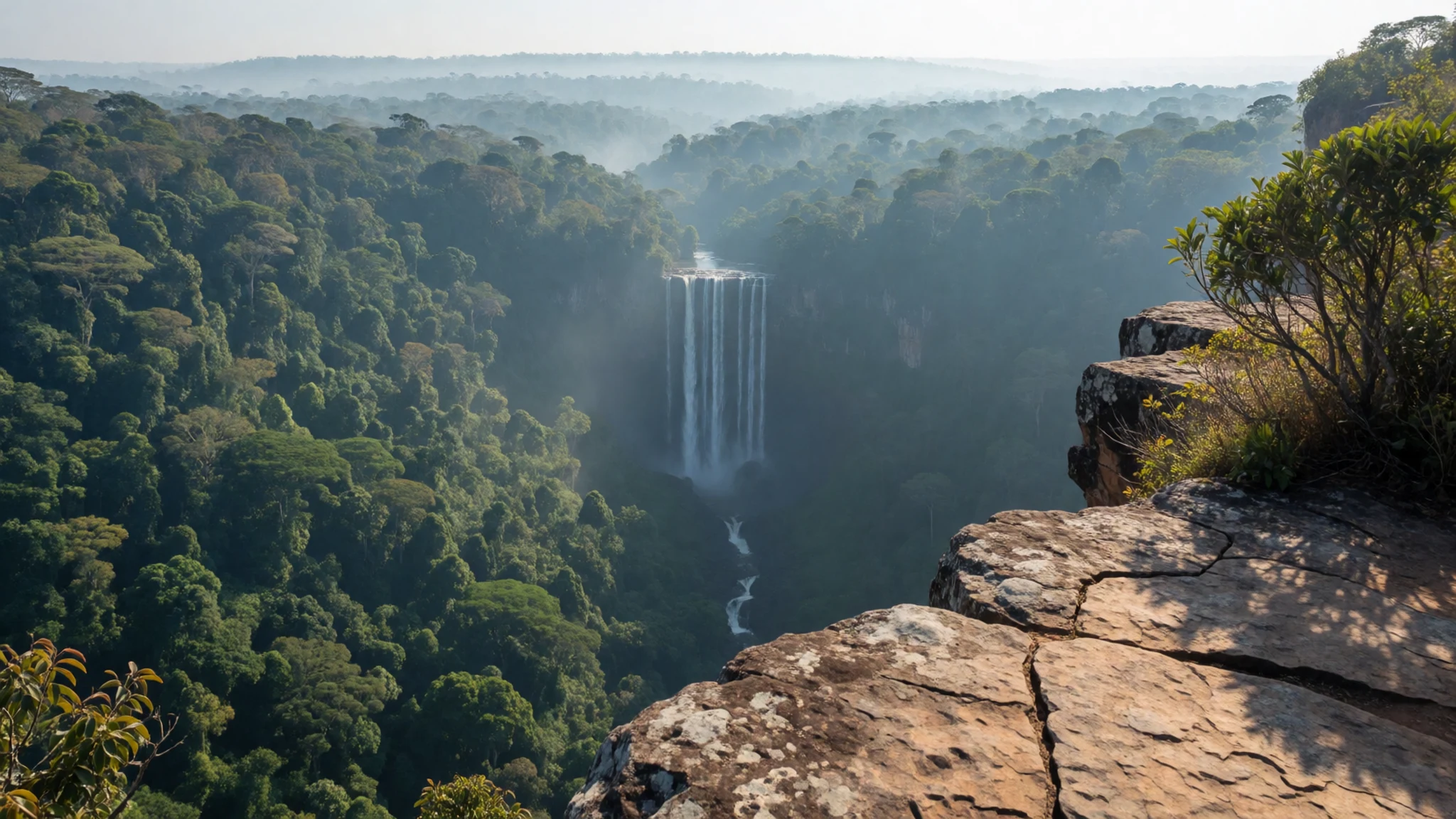
- The forest path to the base — Below the falls
Walking down towards the pool at the foot brings the sound and mist right up close. The trail passes through dense rainforest with roots, steps and damp earth. Allow extra time on the return climb, which is humid and tiring, and go with a local guide.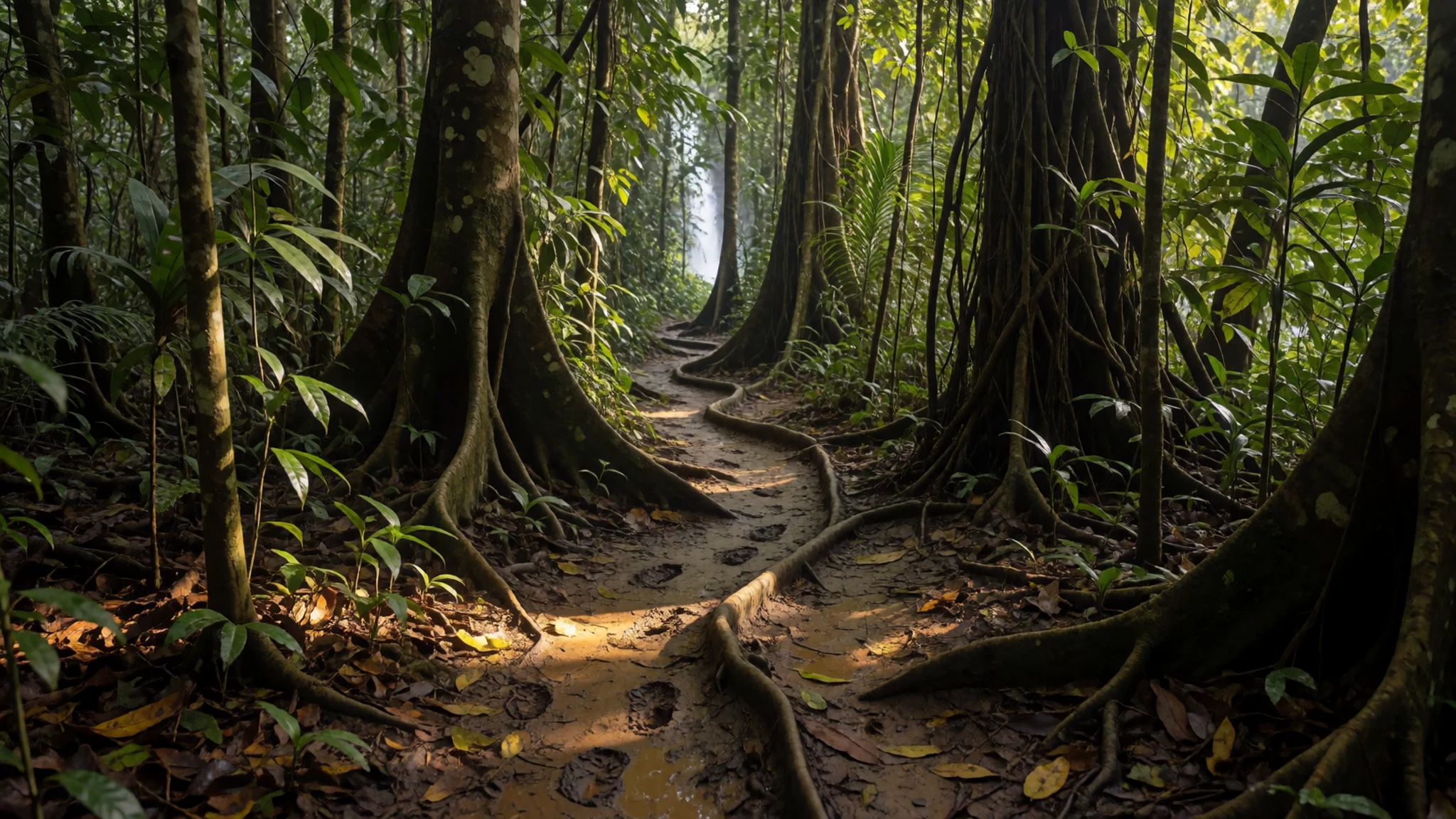
- The pools and streams — Base of the falls
Below the drop, water gathers in pools and channels that run on through the trees. These are good places to sit and listen, and to watch butterflies and birds. Check with guides before wading, as currents and slippery stones change with the season and recent rain.
- The Ikom road and border country — Ikom to Agbokim
The drive from Ikom passes villages, farmland and patches of forest, and the Cameroon border lies close by. It is a reminder of how remote the falls are. Stop for water and snacks in Ikom, since supplies near the site are limited.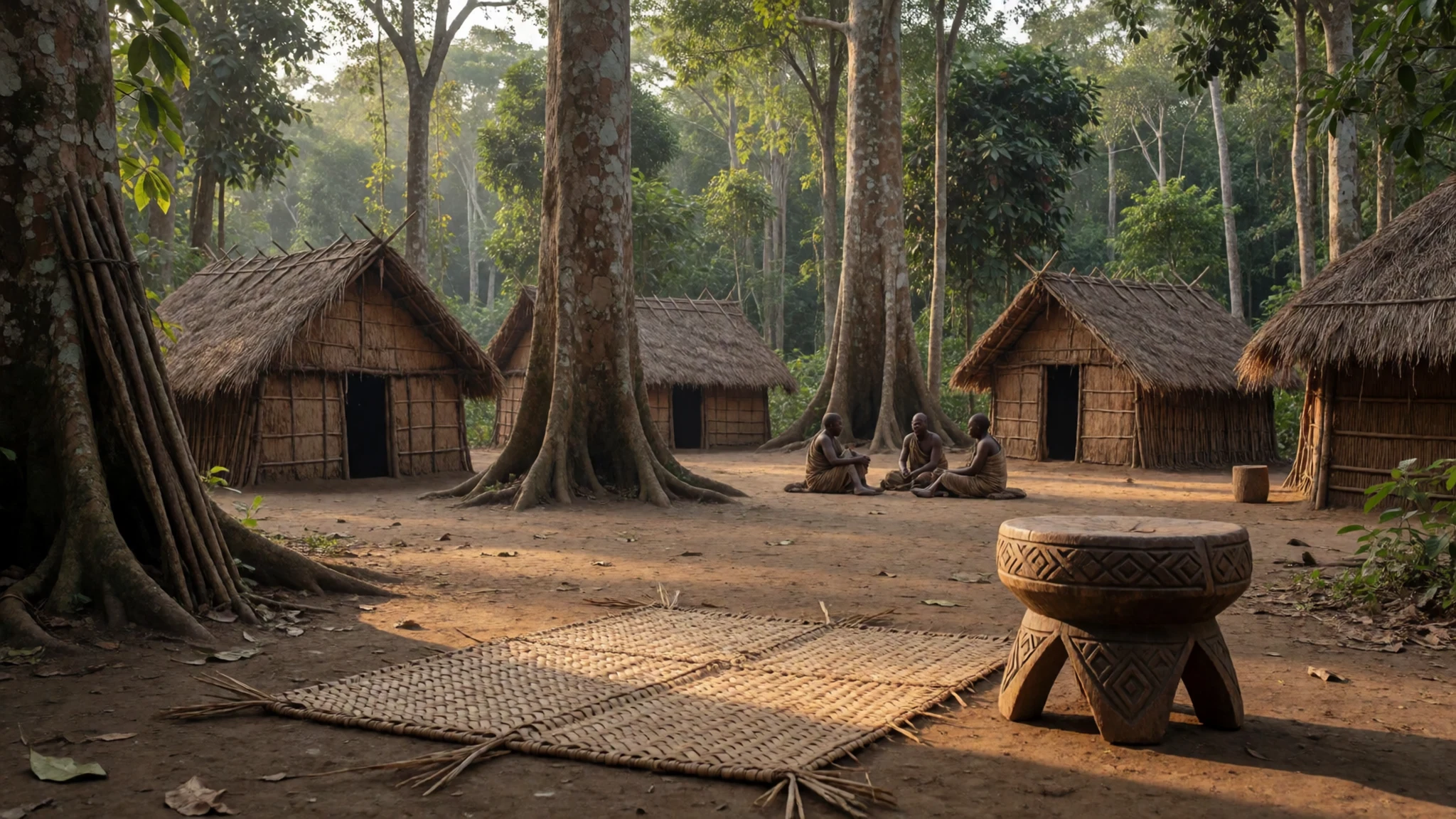
Culture
Agbokim Waterfalls lies in Ejagham country, and the people of the area, along with neighbouring Cross River communities, shape how the place is understood. Oral history credits a hunter named Ntankum with finding the falls and settling his family nearby, and many residents still trace their roots to that movement of people from the hills. The waterfall is a community asset as much as a scenic one.
Local residents take part in looking after the site. Forest protection and tree planting are treated as shared work, because the river depends on the woodland that surrounds it. Guides are usually from the neighbourhood, and hiring one is a simple way to put money into the village and to hear the founding story told by someone who grew up with it.
The wider region is known for a rich mix of languages, masquerade traditions and festivals, and Calabar's cultural calendar is the best-known in the state. Agbokim itself is quieter, a working rural area where farming, hunting and small trade fill the week. Greetings matter: a friendly hello to people you pass on the path is expected and warmly returned.
Ask before photographing residents, especially children, elders and anyone at work, and greet the caretakers or a village representative on arrival before heading down to the water.
What to wear
Agbokim Waterfalls lies in Ejagham country, and the wider Cross River region has a strong tradition of dress tied to ceremony. Wrappers and head ties in bright printed cotton are common for women at festivals and church, and men wear embroidered or printed shirts with trousers or wrappers. The region's masquerade and ceremonial dress uses raffia, beads, cloth and carved elements, usually worn at specific events rather than daily.
Day to day, people in and around Ikom wear practical modern clothes: shirts, jeans, skirts, simple dresses and sandals, with traditional prints saved for celebrations, weddings and Sundays. Farmers and hunters wear sturdy, plain clothing and often rubber boots in the wet season.
For a visit, the climate and terrain decide. Heat and humidity are high at around 246 metres in tropical forest, so light, quick-drying cotton or synthetic layers work best. Bring a thin rain jacket, because showers can arrive fast. Footwear matters most: shoes with real grip, such as trail shoes or sturdy sandals, because rock and clay are slippery near the water. Modest dress is appreciated in villages, so shoulders and knees covered is a sensible default, with swimwear kept for places where locals bathe. A hat, insect repellent and a change of socks make the day more comfortable.
What to eat
- Egusi soup with pounded yam — Local eateries in Ikom and Calabar
A thick soup of ground melon seeds cooked with leaves, palm oil and meat or fish, eaten with a swallow such as pounded yam. Filling and widely loved across Nigeria, it is a good lunch after the trek.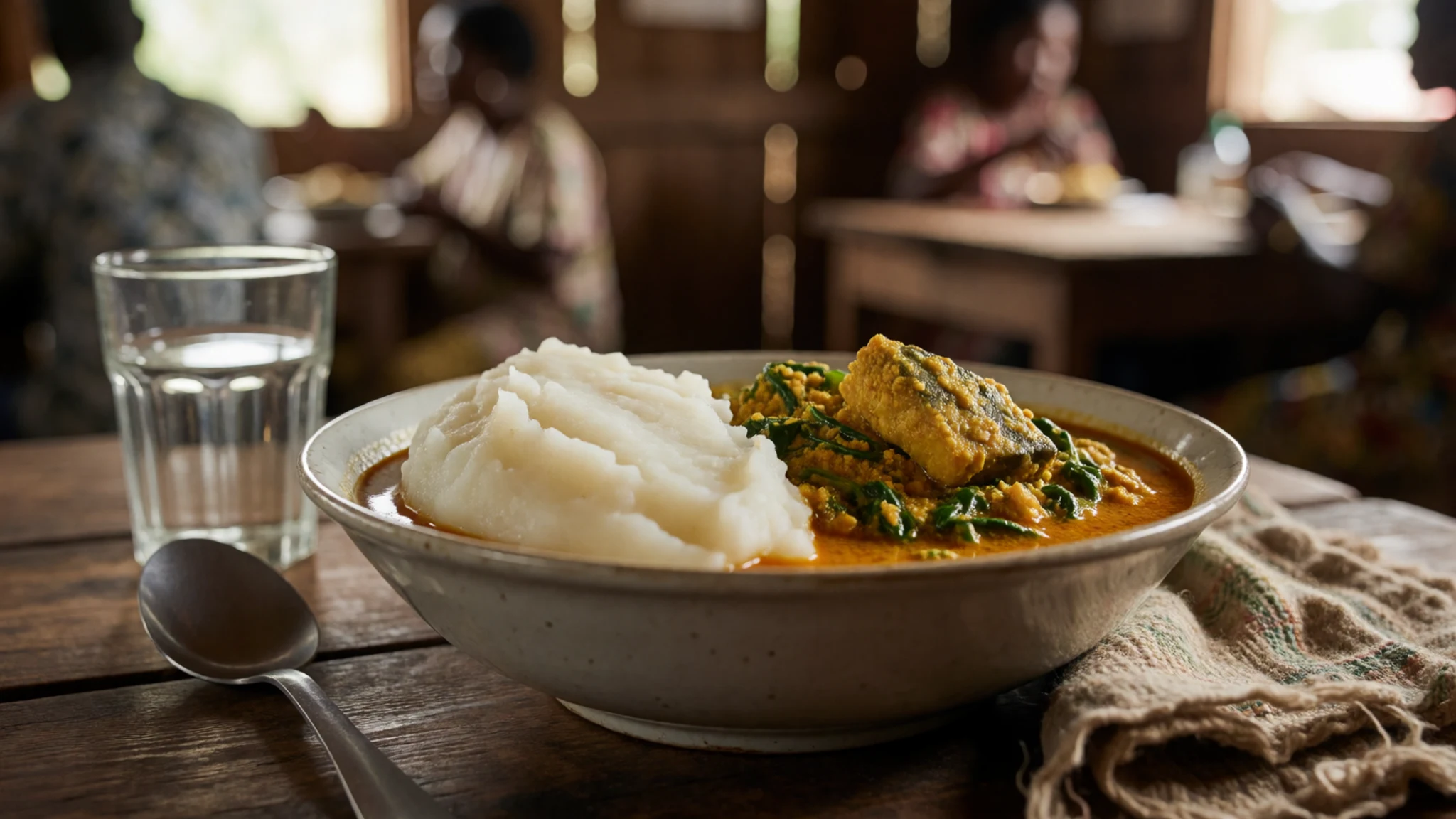
- Afang soup — Buka-style eateries in Calabar and Ikom
A Cross River and Akwa Ibom favourite made from shredded afang leaves and waterleaf, cooked with palm oil, dried fish and meat. It is rich, leafy and savoury, usually served with garri, fufu or pounded yam.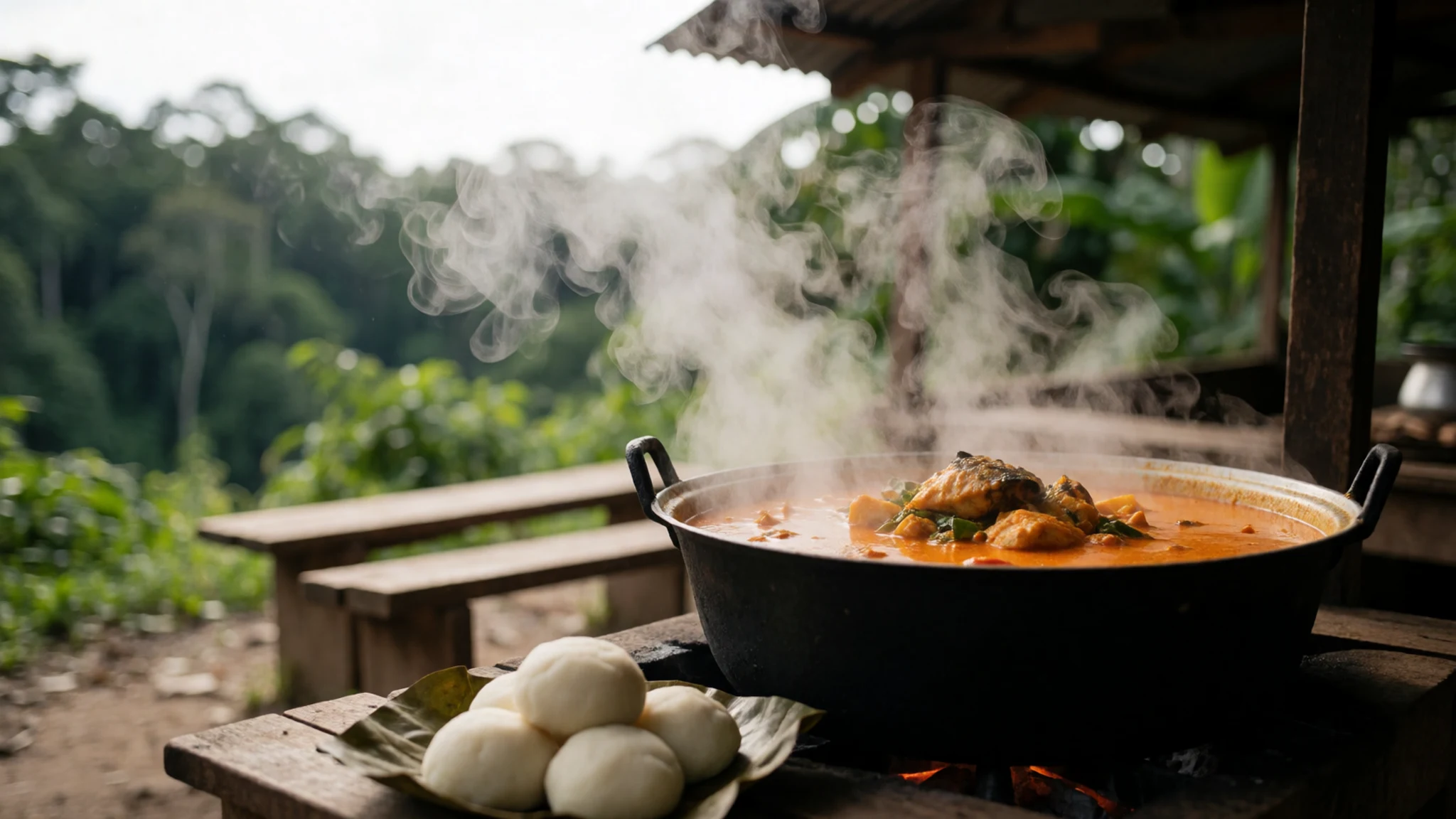
- Edikang ikong — Family-run eateries and markets in Calabar
A vegetable soup built on fluted pumpkin leaves and waterleaf, with plenty of fish and meat, cooked with little water so the greens stay dense. It is a regional staple and a good place to start with local cooking. - Grilled or peppered fish — Roadside grills and evening stalls in Ikom
Fresh or smoked fish grilled over charcoal and served with hot pepper sauce, onions and sometimes plantain. It is simple, smoky and spicy, and a common choice for a quick meal after a day out in the forest. - Roasted plantain with fish — Roadside stalls along the Ikom route
Ripe plantain roasted over coals until blistered and sweet, often called boli and eaten with spicy fish sauce or groundnuts. It is cheap, easy to carry and a handy snack for the road to the falls.
Plan it
Best time. November to February, the drier months, when roads and trails are easier and the streams are easier to see. The rainy season brings a fuller, louder fall but muddier paths and slippery rock.
How long. 1–2
Getting there. Fly to Margaret Ekpo International Airport in Calabar, then take a taxi to a motor park and a shared taxi to Ikom. From Ikom, hire another taxi for the last leg to the falls. Driving is simpler for a group, but allow a long day.
Budget. low
Tips
- Base yourself in Ikom or Calabar, as there are no hotels in Agbokim itself
- Start early so the road and the walk fit in daylight
- Carry cash, water and snacks, since cards and shops are scarce near the site
- Wear shoes with grip and bring a rain layer
- Check road conditions and any local entry arrangements before setting out
Etiquette
- Greet caretakers and local residents on arrival
- Ask before photographing people
- Take your rubbish with you and keep to marked paths
Nearby
Sources
- Wikidata Q25067051 (CC0)
- Wikipedia: Agbokim Waterfalls (rev 1368651476) (CC BY-SA 4.0)
- Wikivoyage: Agbokim Waterfalls (rev 4477716) (CC BY-SA 4.0)
- Photo 01, dotun55 (CC BY-SA 2.0)
- Photo 02, Ei'eke (CC BY-SA 4.0)
- Photo 03, Uwe Dedering (CC BY 3.0)
- Photo 04, MuaMee (CC BY-SA 4.0)
- Photo 05, Thompson Ememka (CC BY-SA 4.0)
- Photo 06, Thompson Ememka (CC BY-SA 4.0)
- Photo 07, dotun55 (CC BY-SA 2.0)
- Photo 08, dotun55 (CC BY-SA 2.0)


