Olumo Rock
Olumo Rock, Nigeria
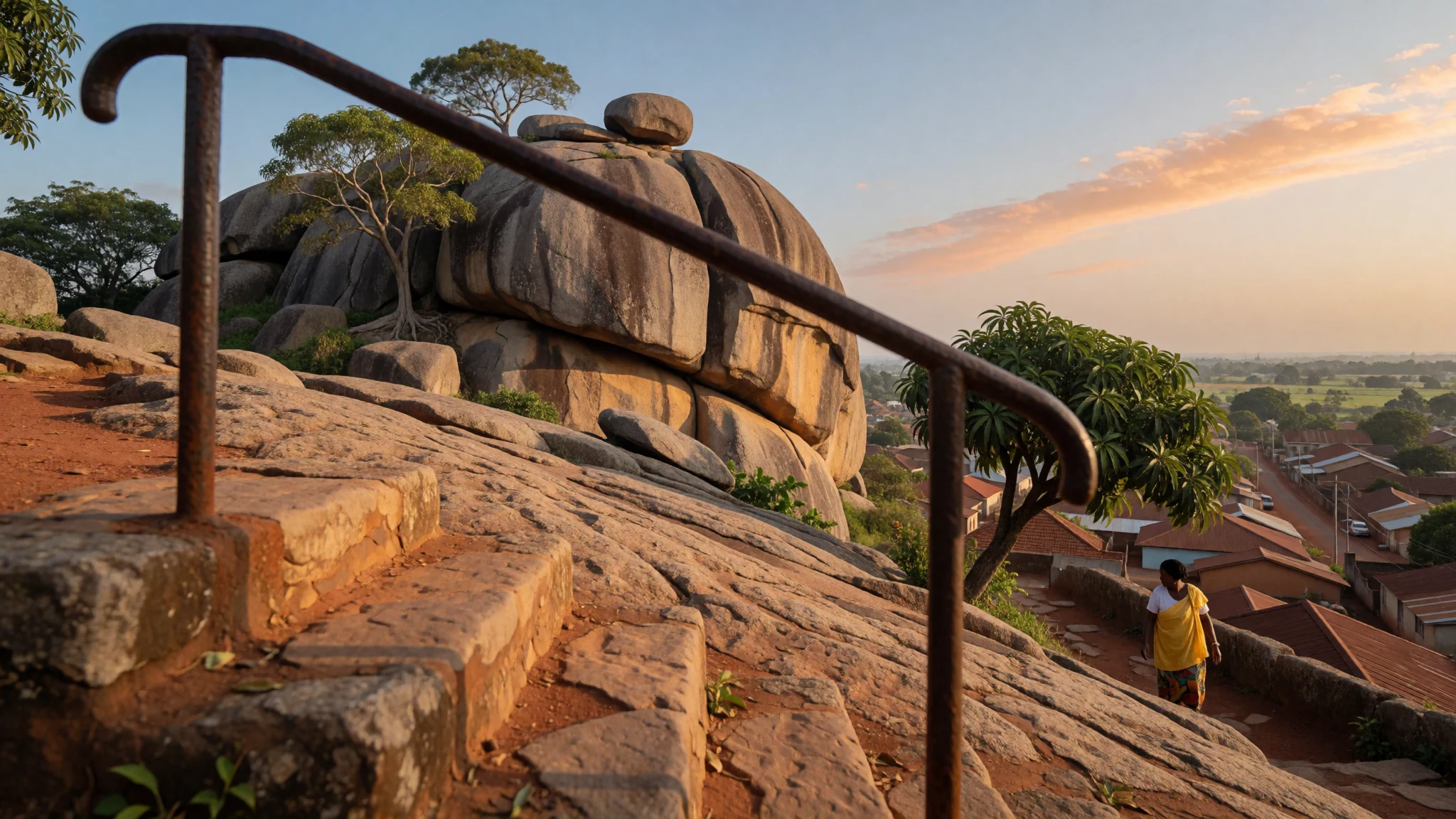
Olumo Rock is a granite refuge in the middle of Abeokuta, where Yoruba spiritual life, wartime history and a city-wide view sit on one climb.
The place
Olumo Rock rises from the middle of Abeokuta, a city in Ogun State, south-western Nigeria, and the city is named after it: Abeokuta means 'under the rock' in Yoruba. The granite dome stands 137 metres above sea level, and from its upper ledges the view takes in tin and tile rooftops, red earth roads and the country beyond. It is not a tidy peak. The rock is a tumble of boulders, shelves, narrow passages and shaded hollows, with trees growing out of the cracks. The name is usually explained as 'god-moulded', joining a word for deity to one for shaping, and that tells a visitor how the place is regarded locally. It is also a living sacred site. The rock's spirit is honoured as an orisha in Yoruba religion, and shrines sit near its base. Archaeologists have recovered very old stone tools here, among them hand axes and hammerstones, so people were using the rock long before the city grew around it. Today it works as a managed visitor site with guides, stairs cut and built into the stone, and lift machinery for part of the way up. What is running on a given day can change, so it is worth asking locally before planning around it. The wider city is a university and industrial town, busy and unpolished, and the rock is its landmark.
Its story
Olumo Rock matters in Nigerian history because of what the Egba people did with it. During the wars of the 19th century, Egba families found shelter among its caves, clefts and overhangs, hiding from slave raiders and from rival armies. The height gave a second advantage: defenders on the rock could watch an enemy column approaching across the plain and prepare long before it arrived. Settlers who gathered here eventually spread out and built the town of Abeokuta at its foot, which is why the name and the rock cannot be separated. The Egba remember the rock with something close to gratitude, and it is held in high esteem by the clan. Abeokuta later became a point of contact with outsiders, including missionaries and British colonial interests, and it saw conflict with the neighbouring kingdom of Dahomey. Over time it grew into a place known for schools, publishing and, after independence, universities and industry. In the Egba telling, the rock is both protector and ancestor: a hiding place in danger, a lookout in war, and finally the reason a city exists at all. Guides on site tell this story as they lead visitors from cave to cave, and their versions carry local memory that no printed summary quite matches.
What to see
- The summit and its view — Olumo Rock, central Abeokuta
The top of Olumo Rock is the main reason to come. From the highest platforms, Abeokuta spreads out in every direction, with the old quarters and newer districts running together under a haze. Morning light is kinder and cooler. Steps and walkways are uneven in places, so go slowly and listen to the guide.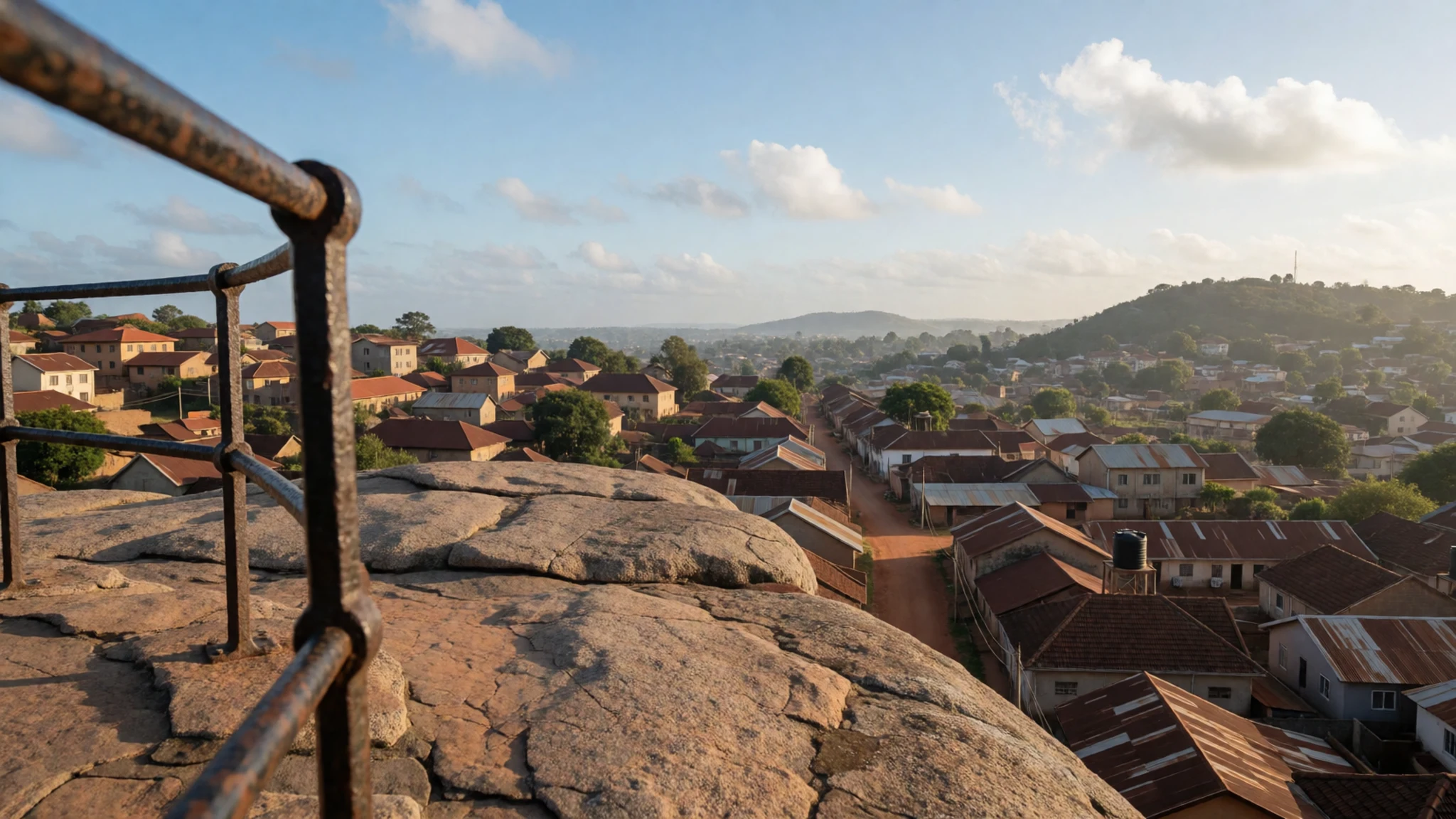
- The hideout caves — Mid-slope of Olumo Rock
Partway up, low hollows and overhangs mark where Egba families once sheltered during the 19th-century wars. The spaces are small and shadowed, and standing inside one makes the history easy to grasp. Guides explain which hollows served for hiding, watching or storing food. Mind your head on the rock ceilings.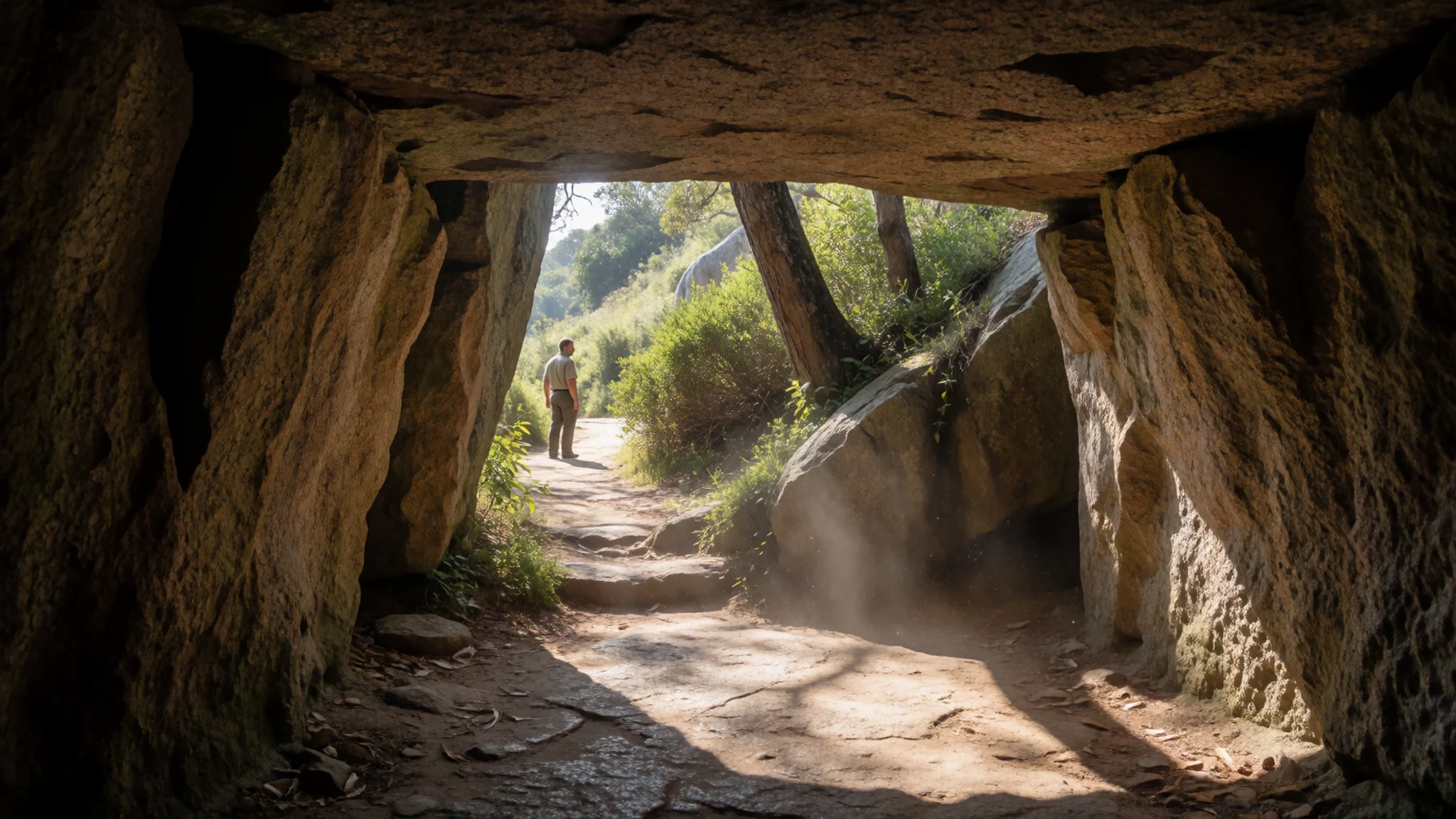
- The orisha shrines at the base — Base of Olumo Rock
Near the foot of the rock, shrines honour the spirit of Olumo. Priestesses and attendants live and work nearby, and the area is a place of worship rather than a display. Visitors can usually learn something through the guide, but photography and offerings should only follow explicit permission.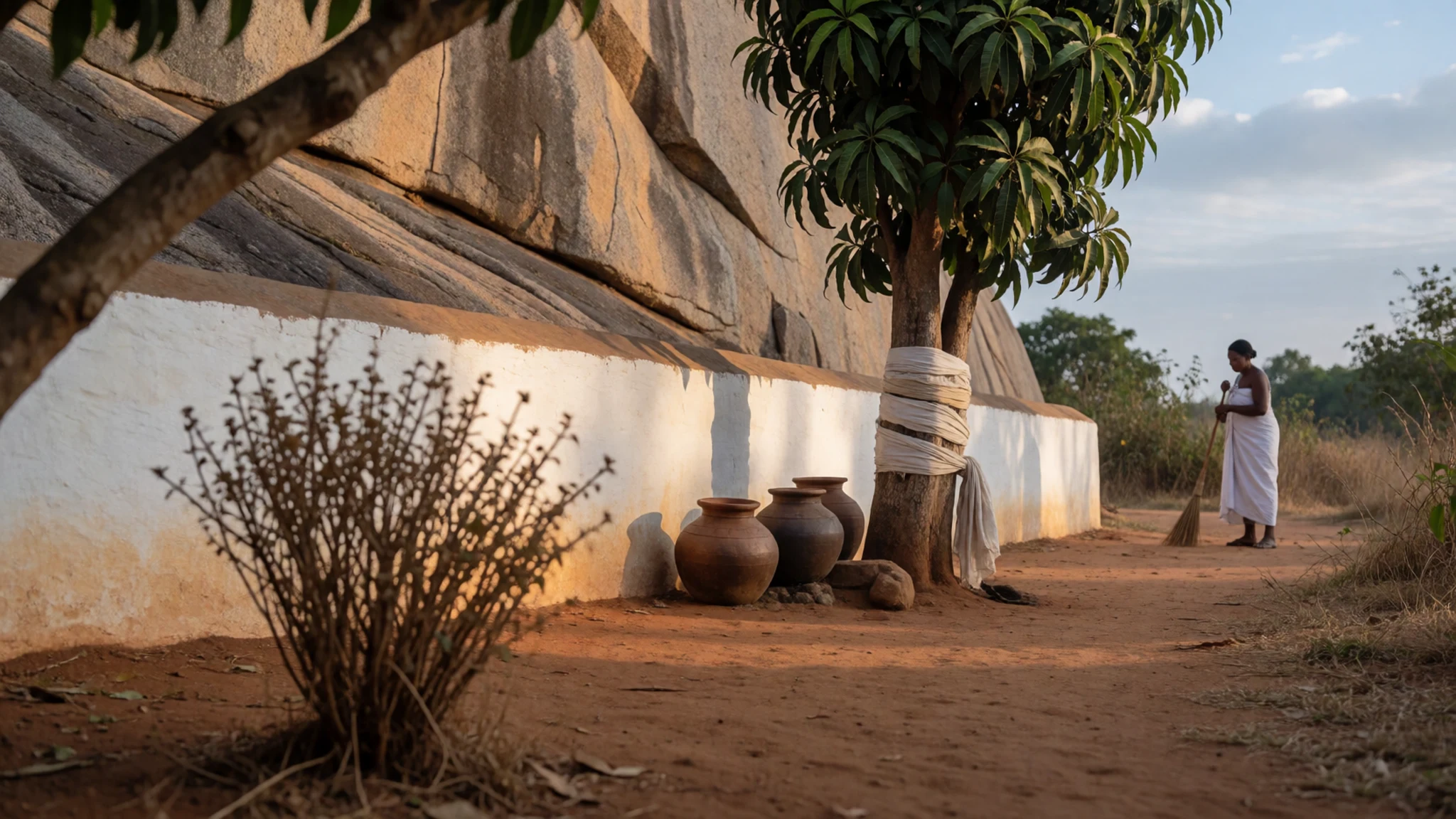
- Ake Palace — Ake, Abeokuta
Ake Palace is the seat of the Alake of Egbaland, the traditional ruler of the Egba. The gate carries an inscription in Yoruba naming it as the palace of the Alake. It is the best stop for understanding the living chieftaincy that still shapes Abeokuta. Ask locally about visiting arrangements before turning up.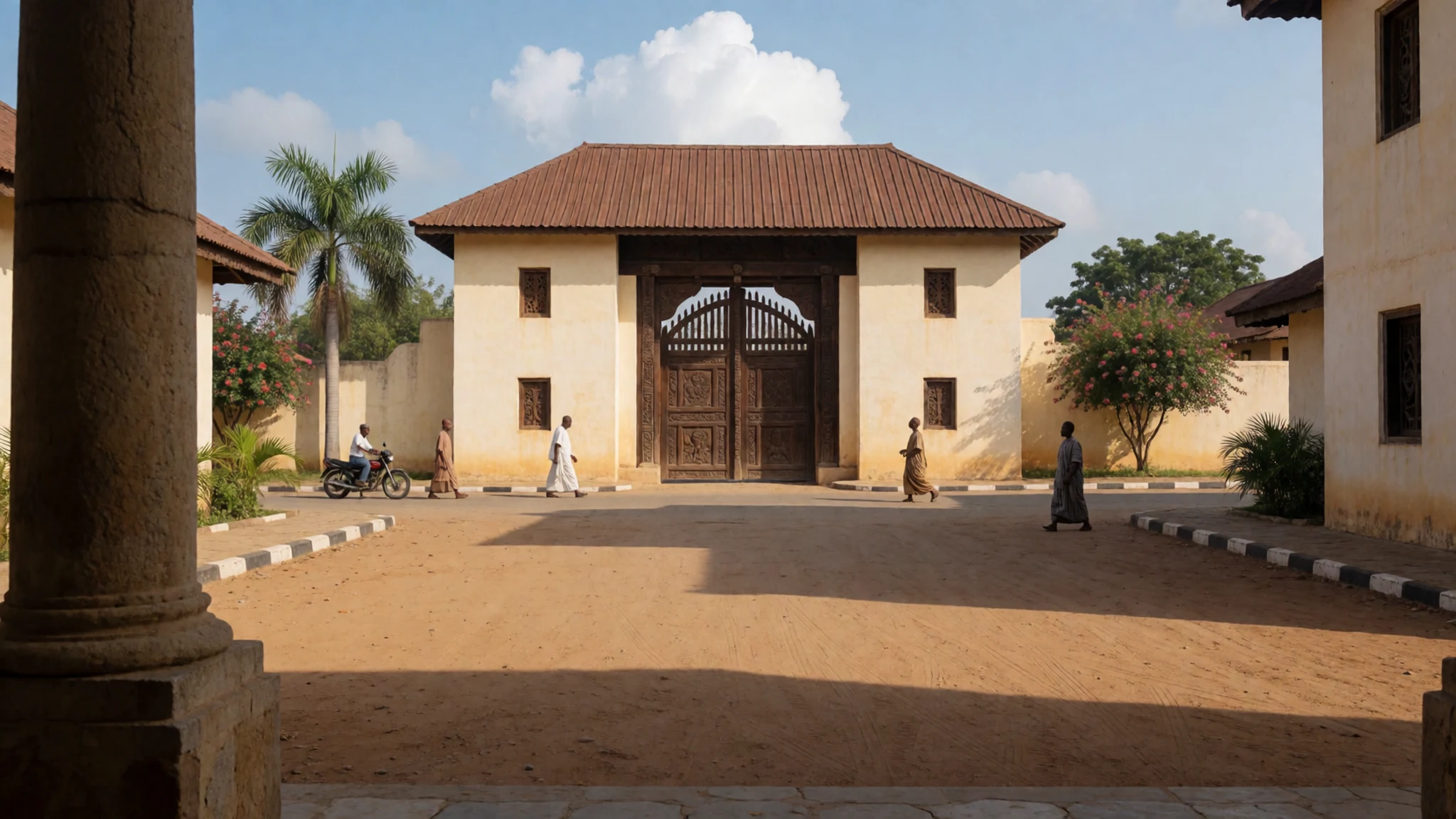
- National Museum Abeokuta — Central Abeokuta
The National Museum Abeokuta holds artefacts, carved figures and relics tied to the Egba people and the history of the town. It makes a sensible second stop after the rock, because the objects put names and context to the story told on the climb. Opening arrangements should be checked on the day.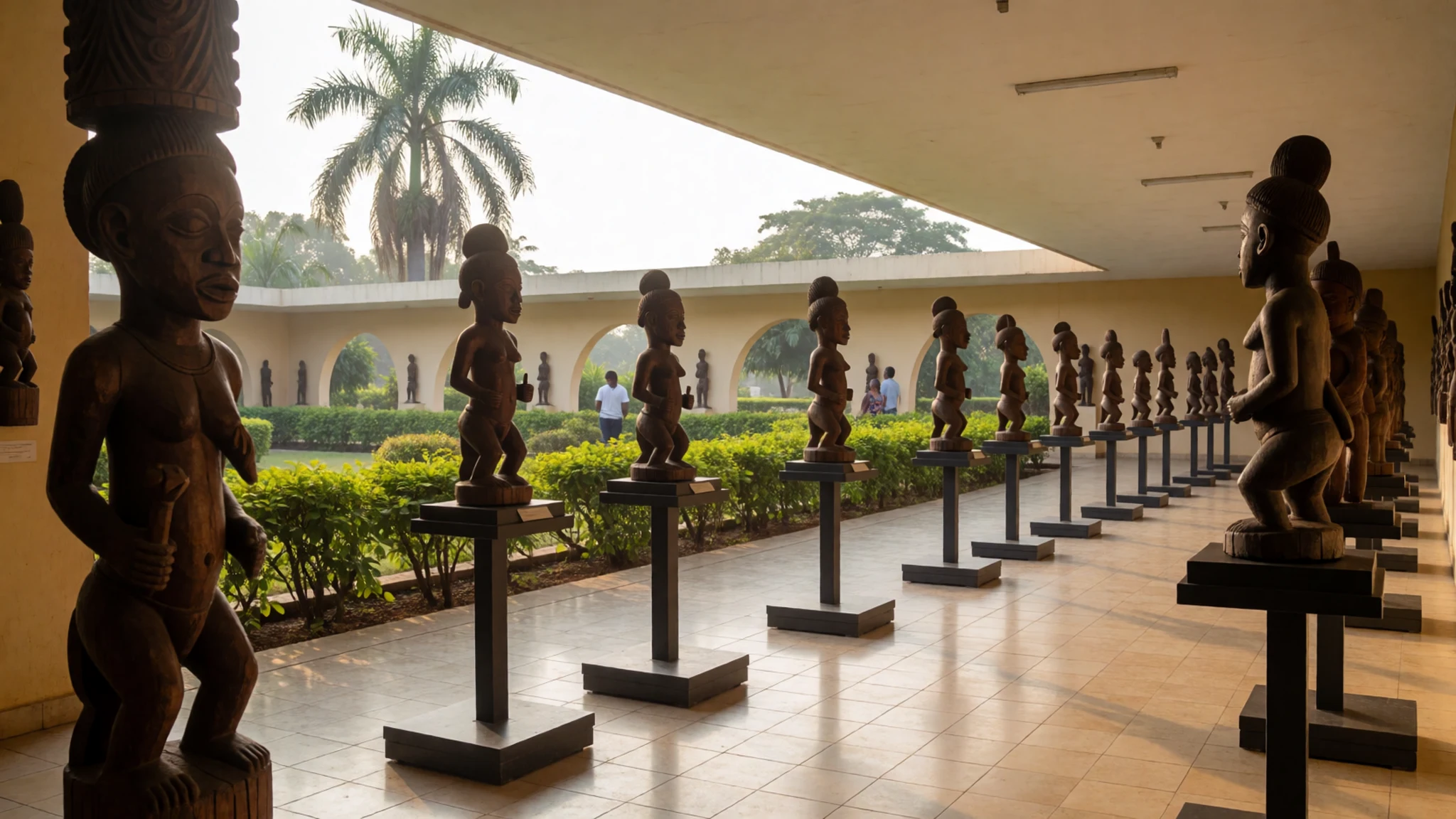
Culture
Olumo Rock sits inside Yoruba culture, and the culture here is both ancestral and ongoing. The rock is known as a protector of the Egba, and its spirit is honoured as an orisha, one of the divine forces in traditional Yoruba belief. The shrines at its base are in active use, attended by priestesses who are treated with deep respect, and they are not a museum display. Many Yoruba people today are Christian or Muslim, and traditional practice sits alongside those faiths, often without conflict. Abeokuta has its own identity too. The Egba think of themselves as a people who found safety under the rock and then built something lasting, and that pride runs through how guides speak and how families talk about the town. Greetings matter. A courteous hello, a smile and a bit of patience before getting to the point go a long way, and elders are addressed with particular respect. Local guides are the best route into the rock's stories, and listening carefully repays the effort, since much of what they say is oral history. Yoruba is the everyday language, and even a few words are appreciated. At the shrines, lower your voice, ask the guide before taking any photograph of people or sacred objects, and follow whatever the attendants tell you about where to stand and what to touch.
What to wear
Around Olumo Rock and Abeokuta, traditional Yoruba dress is built on woven and dyed cloth. Aso oke is hand-woven in narrow strips and sewn together for weddings, naming ceremonies and festivals. Adire, the indigo-dyed cloth with resist patterns, is closely tied to Abeokuta and sold in markets across the city. Women wear a buba (blouse) with an iro (wrapper) and a gele (folded headtie). Men wear the flowing agbada over a shirt and trousers, often with a fila cap. Day to day, people in Abeokuta dress much like other Nigerian city-dwellers: cotton shirts, trousers, skirts, school uniforms and printed fabrics tailored into modern cuts. Church and mosque days bring out the best outfits, and traditional dress appears at ceremonies and civic events. Visitors should wear light, breathable cotton for the heat and humidity, with a hat and sunscreen for the exposed parts of the rock. Shoes matter more than clothes: closed shoes with real grip, because the stone is smooth in places and steps can be uneven. Modest dress is wise at the shrines and around the palace, so shoulders and knees should be covered. A scarf or light shawl is useful. Rain can make rock surfaces slippery, so leave sandals and flip-flops behind.
What to eat
- Amala with ewedu and gbegiri — Local eateries and mama-put canteens around the city centre
Amala is a dark, smooth swallow made from yam or cassava flour, eaten with green ewedu and a bean soup called gbegiri. It is a staple Yoruba meal, and sellers around Abeokuta usually serve it with stew and meat.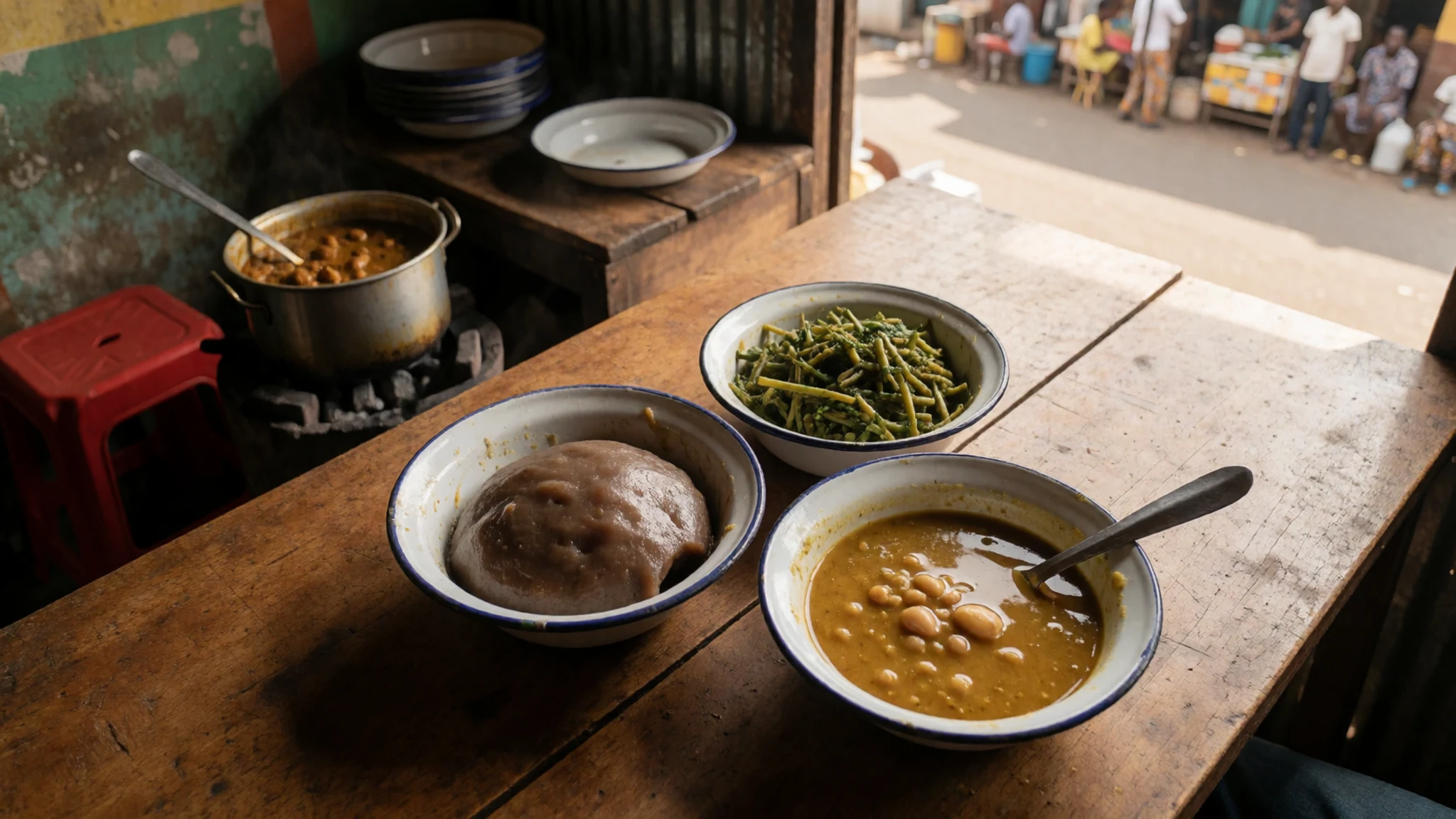
- Pounded yam with egusi — Sit-down restaurants and canteens in Abeokuta
Pounded yam is stretched and smoothed into a soft, heavy dough and torn by hand to scoop egusi, a rich soup thickened with ground melon seeds. It is a filling midday meal that sets up a day of climbing.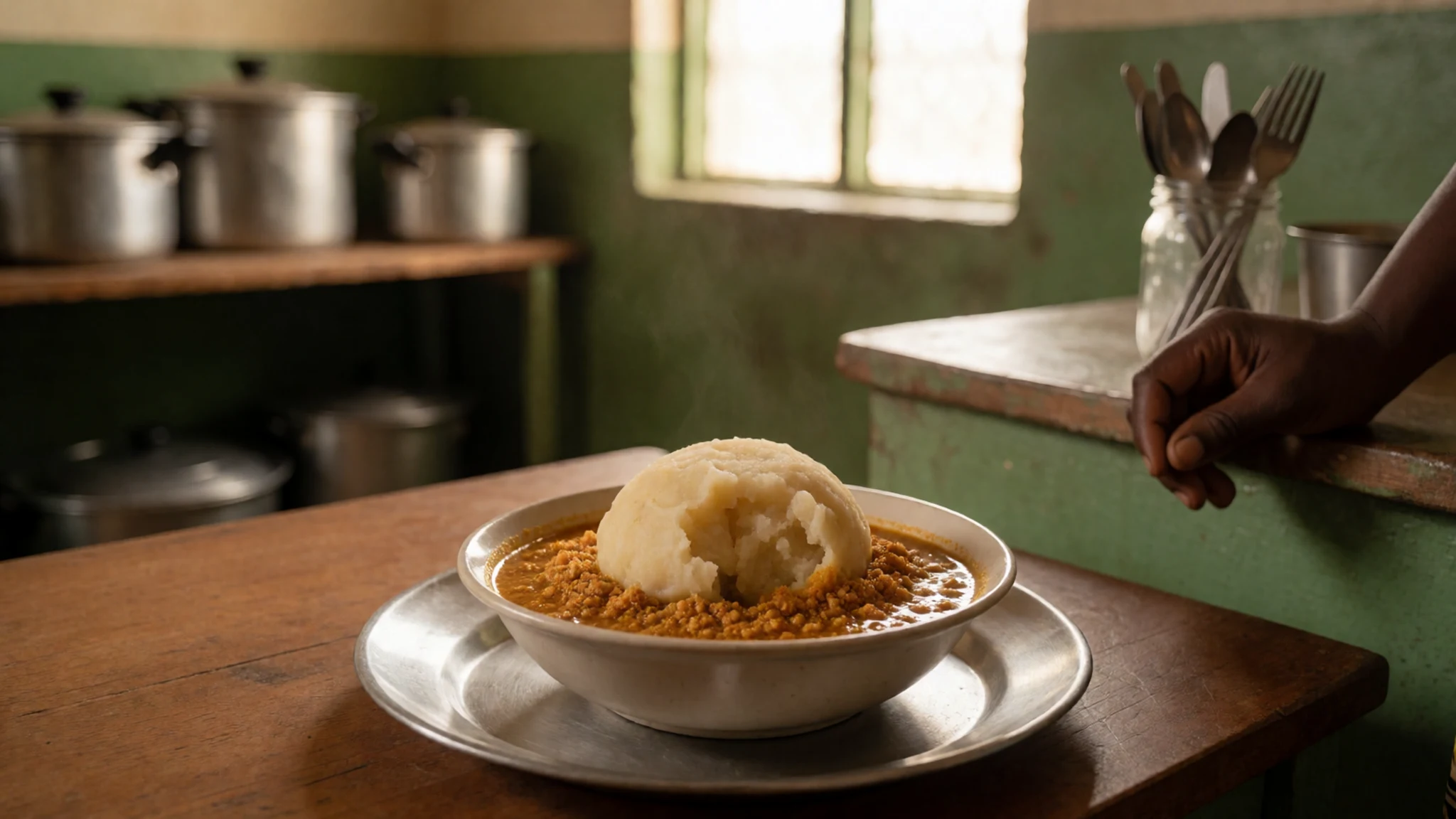
- Ofada rice and ayamase — Roadside food stalls and local restaurants
Ofada is a locally grown rice with a distinct earthy flavour, usually eaten with a spicy green pepper stew called ayamase. Ogun State is closely associated with it, and it is often served wrapped in leaves. - Suya — Evening grill stands around the main roads
Suya is thinly sliced beef or chicken coated in a ground peanut and chilli spice mix and grilled over fire. It is sold in the evening with raw onion and tomato, and is a cheap, popular snack. - Asun — Restaurants and lounges serving barbecue and grills
Asun is smoked or grilled goat meat chopped small and tossed in a fiery pepper sauce. It is strong, smoky and hot, usually served as an accompaniment to drinks or a light meal.
Plan it
Best time. November to February is usually the most comfortable window, as it falls in the drier part of the year and the rock is safer underfoot. The rainy season makes steps slippery and views hazier, and midday heat is strong year-round, so go early.
How long. 1
Getting there. The nearest major airport is in Lagos. From there Abeokuta is about two hours by road along the A5, or take the Lagos–Ibadan railway, which stops about an hour from both cities. Taxis or motorbike taxis cover the last stretch to the rock.
Budget. low
Tips
- Go early in the morning for cooler air and clearer light
- Carry water, a hat and cash for small payments, as card use can be patchy
- Wear closed shoes with good grip for the stone steps
- Hire an official guide at the entrance for the history and the caves
- Check locally what is open, including the lift, before you plan around it
Etiquette
- Ask before photographing people, shrines or sacred objects
- Greet elders and attendants politely, and follow guides' instructions at the shrines
- Dress modestly when visiting the shrines and the palace
Nearby
Sources
- Wikidata Q18357041 (CC0)
- Wikipedia, Olumo Rock (rev 1359153832) (CC BY-SA 4.0)
- Wikivoyage, Abeokuta (rev 5423472) (CC BY-SA 4.0)
- Photo: Olumo Rock Abk.2 (F.Samuel95) (CC BY-SA 4.0)
- Photo: Elevator gears at Olumo (ABORISADEADETONA) (CC BY-SA 4.0)
- Photo: Rock Abeokuta (Caesarinho) (CC BY-SA 4.0)
- Photo: Hide out cave during 19th century Egba war (ABORISADEADETONA) (CC BY-SA 4.0)
- Photo: Entrance to Olumo Rock (ABORISADEADETONA) (CC BY-SA 4.0)
- Photo: Priestesses living under the Olumo Rock (Adenekan19) (CC BY-SA 4.0)
- Photo: A tree on a rock 2 (Obibillion1) (CC BY-SA 4.0)
- Photo: A tree on a rock 3 (Obibillion1) (CC BY-SA 4.0)


