Abuja
Abuja, Nigeria
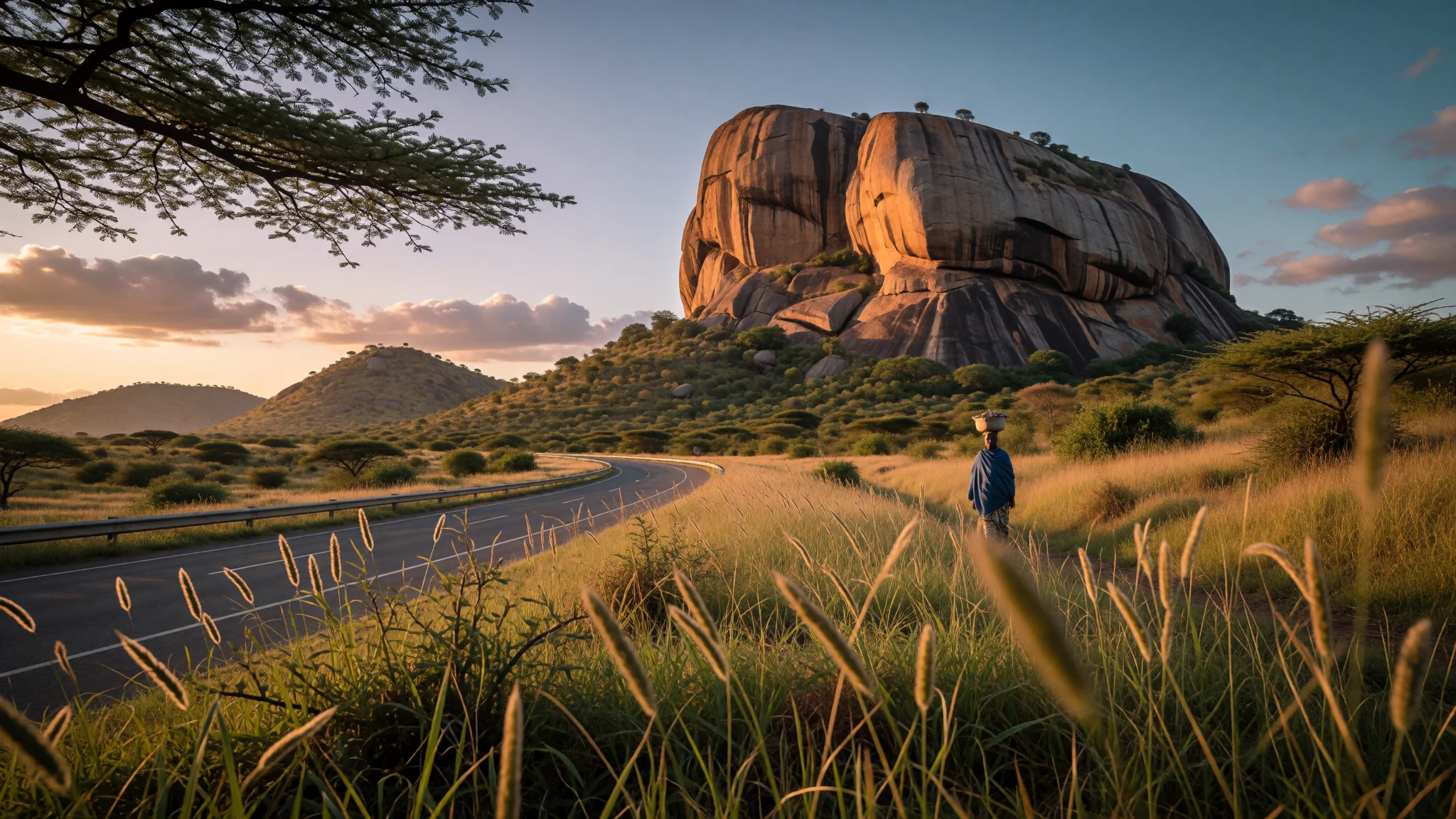
Abuja is a purpose-built capital where wide avenues, a vast granite rock, big places of worship and relaxed parks show how Nigeria presents itself.
The place
Abuja is Nigeria's capital, a planned city near the middle of the country inside the Federal Capital Territory, standing about 360 metres above sea level. Its population is about 1.7 million, and it feels nothing like Lagos: wide expressways, roundabouts, landscaped districts and long distances between one place and the next. Government explains most of the layout. The Presidential Complex, National Assembly and Supreme Court sit together south of Aso Rock, the bare rocky mass that rises above the city and works as its compass point. Beyond the official core, the districts divide by income and purpose: quiet green areas of embassies and ministries, busy commercial strips with markets and malls, and sprawling satellite towns where much of the workforce lives. Traffic is the daily test, and a car or app-hailed ride is the usual way to get around, since walking between sights is rarely practical. The pace is calmer than in Lagos or Kano, except at rush hour. Hills ring the horizon, and Zuma Rock, a second great monolith, stands beside the road north towards Kaduna. Abuja is also where Nigeria's regional diplomacy happens, so the city mixes civil servants, diplomats, traders and students from every part of the country. As a destination it suits those curious about how a modern African state presents itself, with easy parks, galleries and food, more than those chasing ancient streets.
Its story
Abuja was once the name of a smaller town nearby, now called Suleja, and the modern capital inherited the name. The land has long been home to Gbagyi, Gwandara, Basa, Nupe, Koro and other peoples, with the Gbagyi forming the majority. Several villages were relocated as the new city took shape, and those moves still colour local feeling about it. The reason for building at all was political. After independence, Nigeria's leaders wanted a capital that no single ethnic or religious bloc could claim, and a site near the centre, reachable from every region, answered that. Lagos, on the coast, was also choking on its own growth, and officials wanted investment to reach the interior. Brazil's creation of Brasília was the model people cited. A central site was chosen, a federal decree began the transfer of the capital from Lagos, and ministries moved over the following years while new districts rose out of open savannah. Since then the city has outgrown its master plan, with settlements spreading beyond the formal boundaries and the population climbing quickly. Abuja's story is therefore less about old stones than about a deliberate act of nation-building, with all the optimism, friction and unfinished business that carries. The older Gbagyi villages and farmland around the edges are a reminder of what was here first.
What to see
- Aso Rock — Central Abuja, north of the government district
Aso Rock is a monolith about 400 metres high, left standing by erosion, and the city's clearest landmark. The government district spreads to its south, so the rock appears behind most official views. Access to the rock itself is restricted, so most visitors admire it from roads and viewpoints rather than climb it.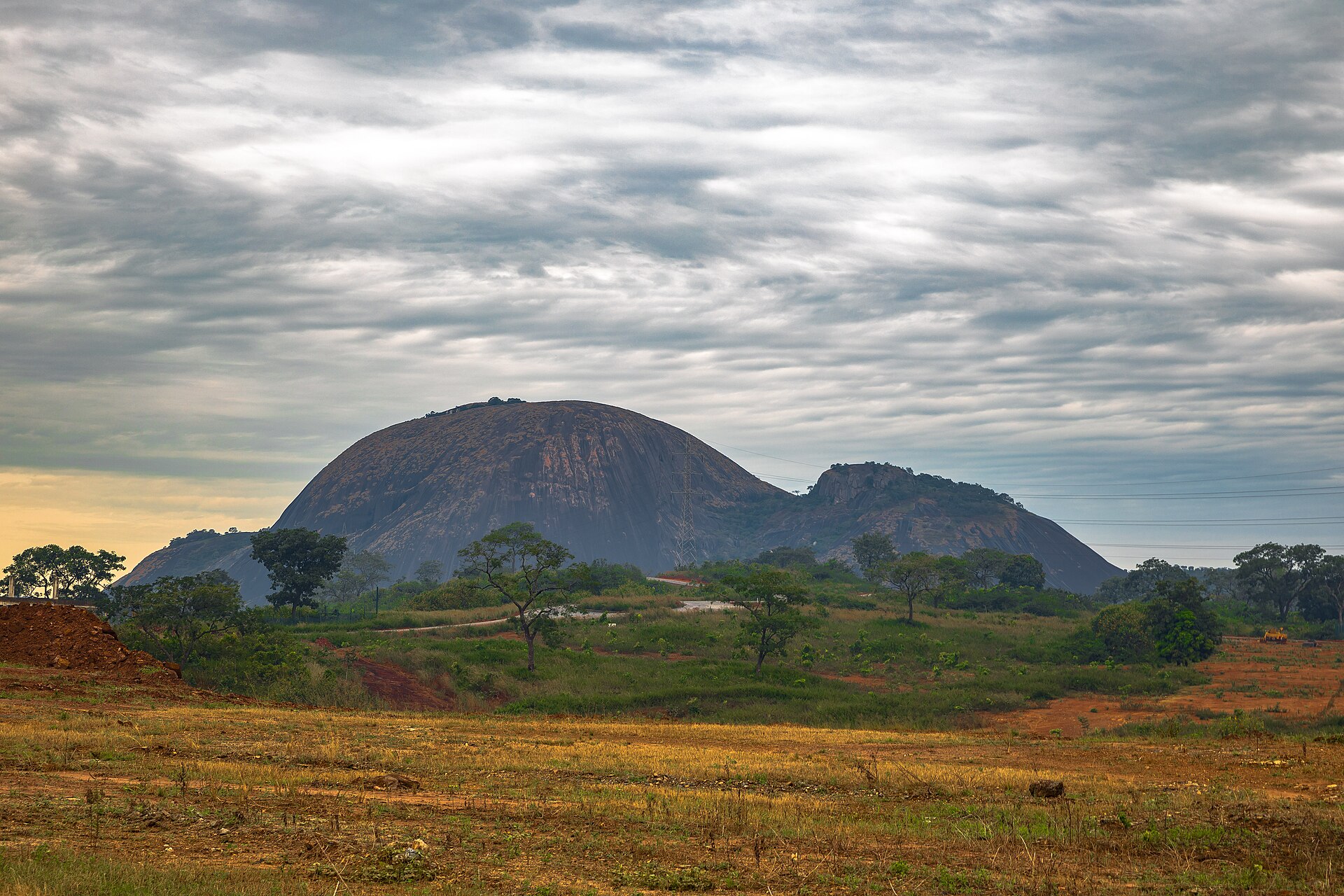
- National Mosque — Central Area
The Nigerian National Mosque is a large, gold-domed building with tall minarets, set among lawns in the central area. Non-Muslims may usually enter outside prayer times, but opening arrangements change, so ask at the gate. Visitors need covered shoulders and legs, and women should carry a headscarf.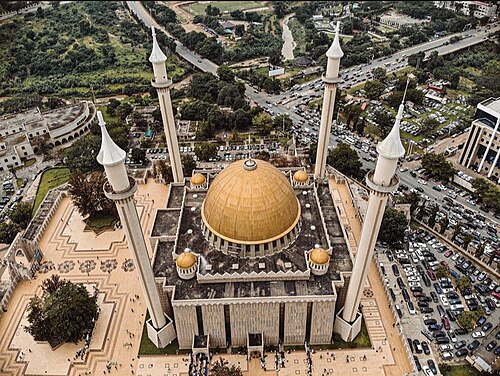
- National Church of Nigeria — Central Area
The National Christian Centre is an inter-denominational church in a neo-Gothic style, sitting close to the mosque. The pairing is deliberate, a statement that the capital belongs to both major faiths. Services draw big congregations, so a weekday visit is quieter for looking at the architecture. - National Assembly Complex — Three Arms Zone
The National Assembly is where Nigeria's legislature sits, a formal complex with a dome and ceremonial approaches. Most visitors see it from the outside and from the road, as it is a working, security-conscious site. Photographing it is best done from a distance, and sensibly, with attention to any guards.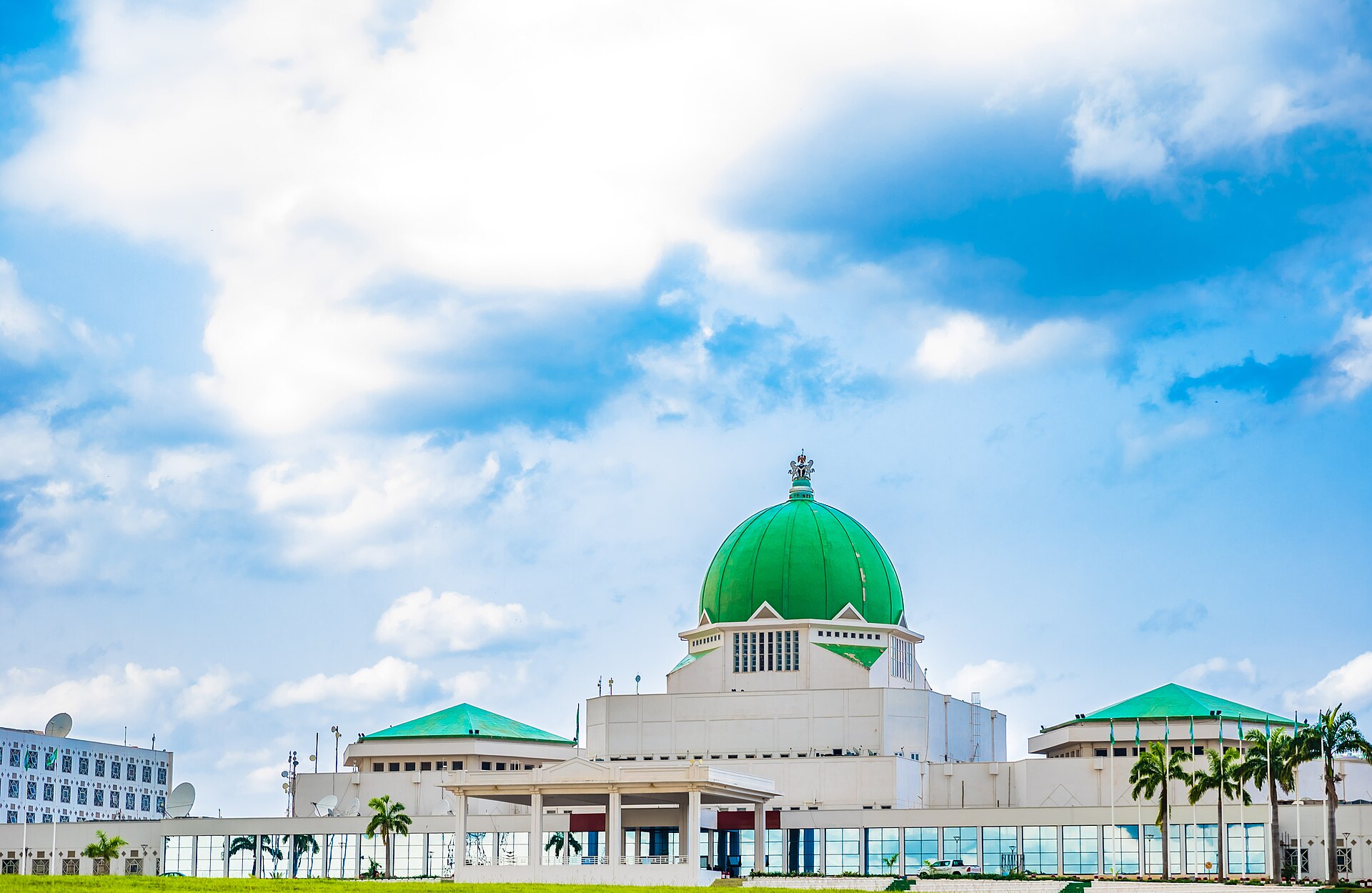
- Millennium Park — Maitama
Millennium Park is the main green escape for residents, with lawns, water features and shaded paths. It was inaugurated by Queen Elizabeth II in 2003. Weekends bring families, joggers and picnickers, and weekday mornings are calmer. It is an easy place to rest from the heat and traffic.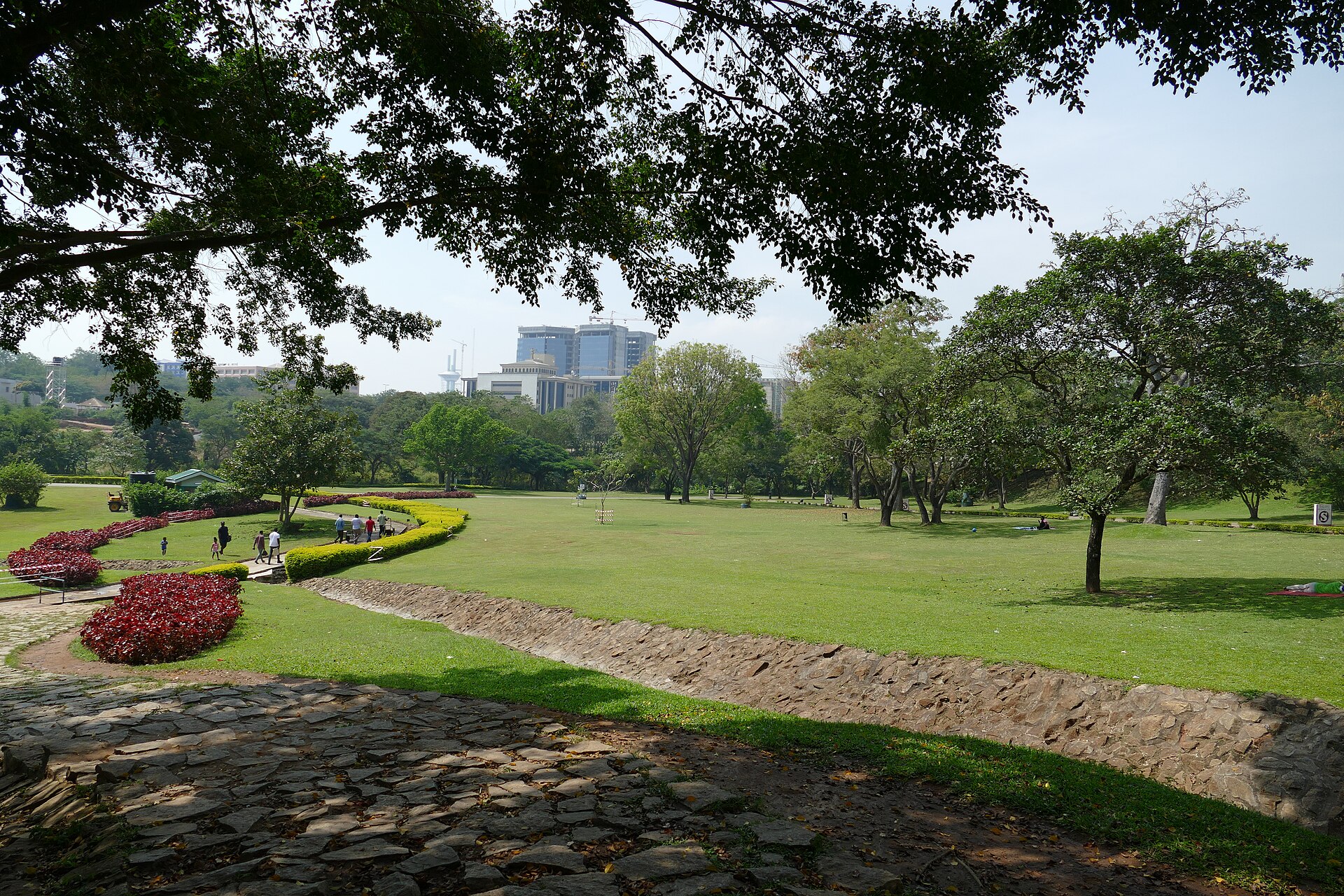
- Thought Pyramid Art Centre — Western Abuja
The Thought Pyramid Art Centre is a small museum and gallery of Nigerian art, with paintings, wooden sculpture and some pieces from further afield. It gives a gentler, more personal view of the country than the monuments do. A restaurant next door makes it easy to combine with a meal.
Culture
Abuja has no single indigenous culture on show, and that is the point of it: the city was built as neutral ground, so Nigeria's regional traditions meet here. Hausa and Fulani families from the north, Yoruba and Igbo professionals from the south and west, and the Gbagyi people whose land it was all share the same streets. English is the common language of offices and media, while Hausa, Yoruba, Igbo and Pidgin carry the everyday talk, often switching within one conversation. Islam and Christianity are both visible, from the call to prayer to Sunday services that fill churches and halls, and the National Mosque and National Christian Centre stand as a pair at the centre. Music matters everywhere: Afrobeats and gospel pour from cars, bars and events, and Nollywood films are a shared reference point. Greetings are important, and people expect a proper hello, a handshake and a question about how you are before any business starts. Older people are addressed with respect, and hospitality is generous. Public life is formal, with a strong sense of rank around officials and the security services. Weekends bring weddings, naming ceremonies and church or mosque gatherings across the districts, and guests who are invited are usually expected to dress well and arrive with patience about the timing. Greet people before asking for anything, dress modestly at the National Mosque, and always ask before photographing individuals, officials or government buildings.
What to wear
Abuja's traditional dress follows the many peoples who live in it. Hausa men wear the babban riga, a flowing embroidered gown, with a fila cap, while Yoruba dress includes the agbada for men and the buba, wrapper and gele headtie for women, often cut from aso-oke, a handwoven strip cloth. Adire, indigo resist-dyed cotton, and bright Ankara wax prints are widely tailored into outfits for weddings and festivals. Now, daily wear in the city is practical and smart. Civil servants and bankers favour suits or shirts and trousers, and many men switch to kaftans or native wear on Fridays and at ceremonies. Women mix tailored Ankara dresses, skirts and blouses with careful hairstyles and headwraps. Young people follow global streetwear, with trainers and jeans. Events call for the best outfit people own, and tailors in every district turn out matching sets at short notice. A visitor should dress for heat and for respect. Light cotton or linen in loose cuts works best, with a sun hat and sunscreen in the dry months and a light rain jacket in the wet season. Cover shoulders and knees at mosques and churches, and carry a scarf for women. Closed shoes or sturdy sandals suit uneven pavements and parks, and sandals are fine for most days.
What to eat
- Jollof rice — Local eateries and party caterers across Wuse and Garki
Jollof rice is rice cooked in a spiced tomato and pepper base until smoky and slightly caramelised. It is served with chicken, fish or fried plantain, and appears at almost every party. Local debate over whose version is best is part of the fun. - Suya — Roadside suya stands in the evening, especially around busy junctions
Suya is thinly sliced beef or chicken coated in a peanut and chilli spice mix and grilled over charcoal, then wrapped in paper with sliced onion and tomato. It is an evening snack, eaten standing at the grill, and the spice can be fierce. - Pounded yam with egusi — Neighbourhood eateries serving Nigerian home cooking at lunch
Pounded yam is a smooth, stretchy mound eaten by hand with egusi, a rich soup of ground melon seeds, leafy greens, palm oil and meat or fish. Tear off a piece, roll it, dip and swallow. It is filling and a fair test of local cooking. - Pepper soup — Bars and open-air eating spots in the evening
Pepper soup is a thin, aromatic broth of goat meat, catfish or chicken, scented with calabash nutmeg and chilli. It is meant to warm and clear the head, and is a staple of late evenings, often with a cold drink. - Akara and moi moi — Morning breakfast stalls and small canteens near markets
Akara are fried bean fritters, crisp outside and soft within, and moi moi is a steamed bean pudding, sometimes with egg or fish. Both are classic breakfast food, eaten with pap or bread and sold hot and early.
Plan it
Best time. November to February is the dry season, with sunny days and cooler nights, though December and January can bring dusty harmattan haze. March and April are very hot, and the rains from about April to October bring downpours and heavier traffic.
How long. 2–3
Getting there. Nnamdi Azikiwe International Airport is about 40 km from the city centre. Take an official airport cab or a ride-hailing app such as Uber or Bolt to the hotel or guesthouse. A light rail link serves the airport, but trains are infrequent. Long-distance buses run from Lagos, Kano and Port Harcourt, ideally in daylight because some roads are poorly maintained.
Budget. mid
Tips
- Allow extra time for traffic, especially at morning and evening rush hours
- Use official airport cabs or ride-hailing apps, and travel only with people you know
- Carry some cash for markets and small eateries, as cards are not accepted everywhere
- Drink bottled or filtered water and carry sun protection
- Check opening arrangements for places like the mosque and museums before a visit, and see the official site at https://fcta.gov.ng/
Etiquette
- Dress modestly at places of worship and remove shoes where asked
- Ask before photographing people, officials, security posts or government buildings
- Greet people politely before asking questions or making requests
Nearby
Sources
- Wikidata Q3787 (CC0)
- Wikipedia: Abuja (rev 1384662273) (CC BY-SA 4.0)
- Wikivoyage: Abuja (rev 5423519) (CC BY-SA 4.0)
- Ovinuchi Prince Ejiohuo, The National Assembly Globe (CC BY-SA 4.0)
- MediaMOF, Abuja heritages 30 (CC BY-SA 4.0)
- Kritzolina, Abuja Millennium Park 2019 01 (CC BY-SA 4.0)
- Taifayan, Abuja central mosque, Nigeria (CC BY-SA 4.0)
- MediaMOF, Heritage in Abuja 26 (CC BY-SA 4.0)
- Ovinuchi Prince Ejiohuo, Aso Rock Nigeria (CC BY-SA 4.0)
- Victor Zaviano, Abuja stadium (CC BY-SA 4.0)
- Kabusa16, National Assembly Building with Mace (CC BY-SA 4.0)


