Osun-Osogbo Sacred Grove
Osun-Osogbo Sacred Grove, Nigeria
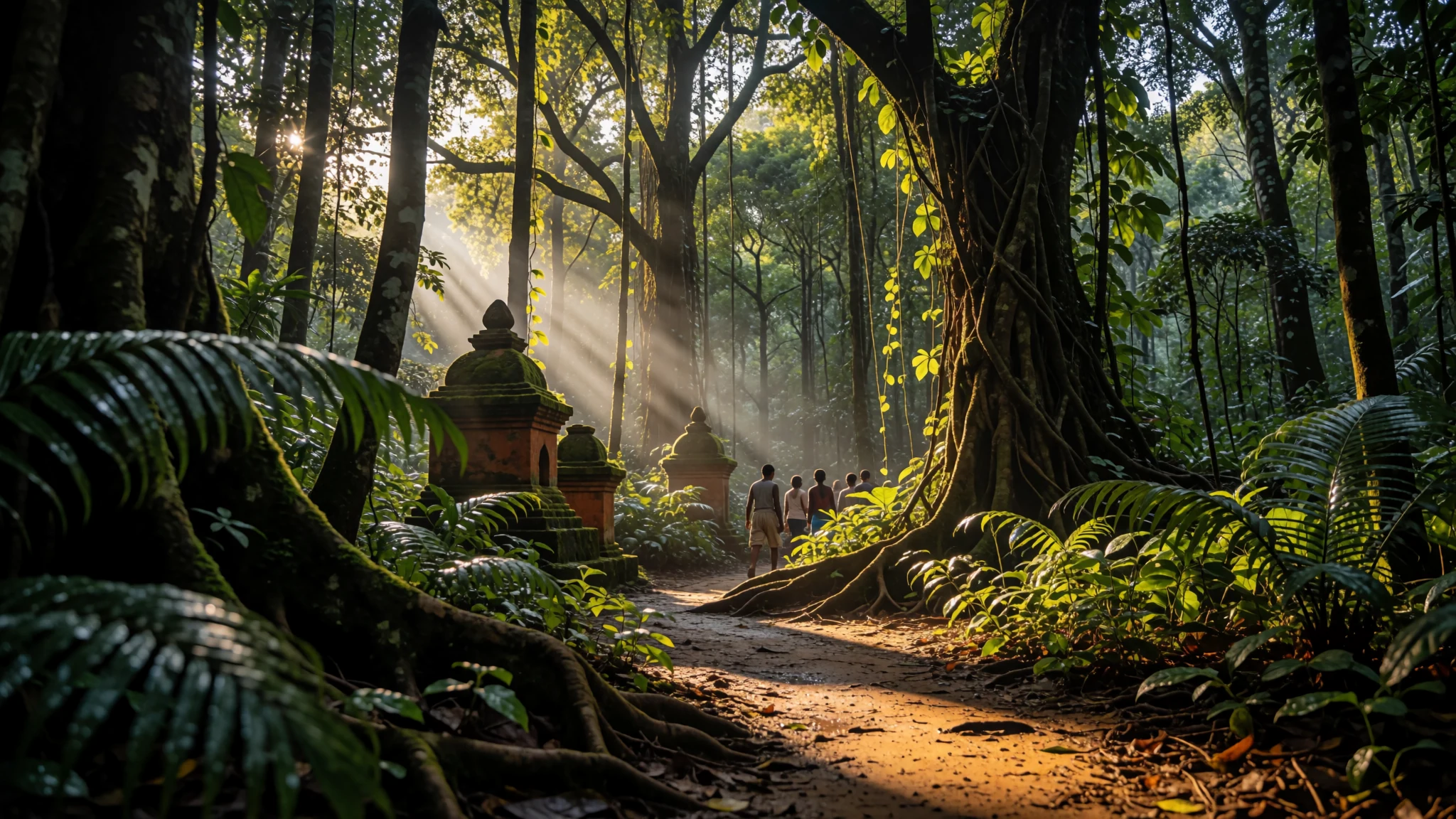
Osun-Osogbo Sacred Grove is a living forest sanctuary where Yoruba spirituality, monumental art, and river deities converge along primeval waters.
The place
Osun-Osogbo Sacred Grove occupies a protected stretch of riverine woodland along the winding banks of the Osun River, situated just outside the urban boundaries of Osogbo in southwestern Nigeria. As one of the very last remaining tracts of primary high forest in the region, the grove spans a vast expanse of lush greenery that historically would have encircled many traditional Yoruba settlements before modern urban expansion cleared the surrounding landscapes. Towering ancient hardwoods, tangled lianas, and a dense understorey create a deeply atmospheric canopy where sunlight filters through in dramatic shafts, illuminating moss-covered shrines, earthen altars, and ritual pathways worn smooth by centuries of bare feet. The river itself serves as the pulsing artery of the sanctuary, its amber-tinted waters flowing steadily over rocky beds where worshippers come to seek blessings, healing, and spiritual communion with the river goddess. Unlike conventional sterile museums or fenced archaeological parks, this landscape remains entirely active and breathing. Traditional rituals, daily prayers, and communal rites take place beneath the forest boughs, making it an immersive cultural ecosystem where nature and ancient cosmology are inextricably fused together in daily practice.
Its story
Osun-Osogbo Sacred Grove has stood as a sacred spiritual refuge for centuries, serving as the mythical dwelling place of the Yoruba deity of fertility, purity, and creation. Long before colonial administration reshaped the region, local kings and priests maintained strict taboos across the woodland, forbidding felling, hunting, and fishing to preserve the sanctity of the goddess's domain. However, by the mid-twentieth century, traditional authority waned, and the sacred grove faced severe neglect, encroachment from land speculators, and unchecked poaching that left ancient shrines crumbling beneath invasive brush. The turning point arrived when an Austrian artist named Susanne Wenger settled in the city and partnered with local traditional rulers, priests, and devotees to launch the New Sacred Art movement. Rather than rebuilding ruins in a clinical architectural style, Wenger and local traditionalists erected striking, monumental sculptures and concrete shrines that blended modernist organic aesthetics with profound Yoruba cosmology. Their concerted efforts repelled poachers, re-established customary protections, and breathed new life into forgotten rituals, ultimately culminating in the sanctuary receiving international recognition as a protected World Heritage site and cementing its status as the indestructible spiritual heart of the community.
What to see
- The Winding Osun River — Central Grove
The Osun River cuts directly through the heart of the grove, serving as the central altar for the river deity. Pilgrims and visitors walk along its rocky banks, collecting its sacred waters in calabashes and offering prayers for fertility, peace, and general wellbeing beneath the cool shade of overhanging forest branches.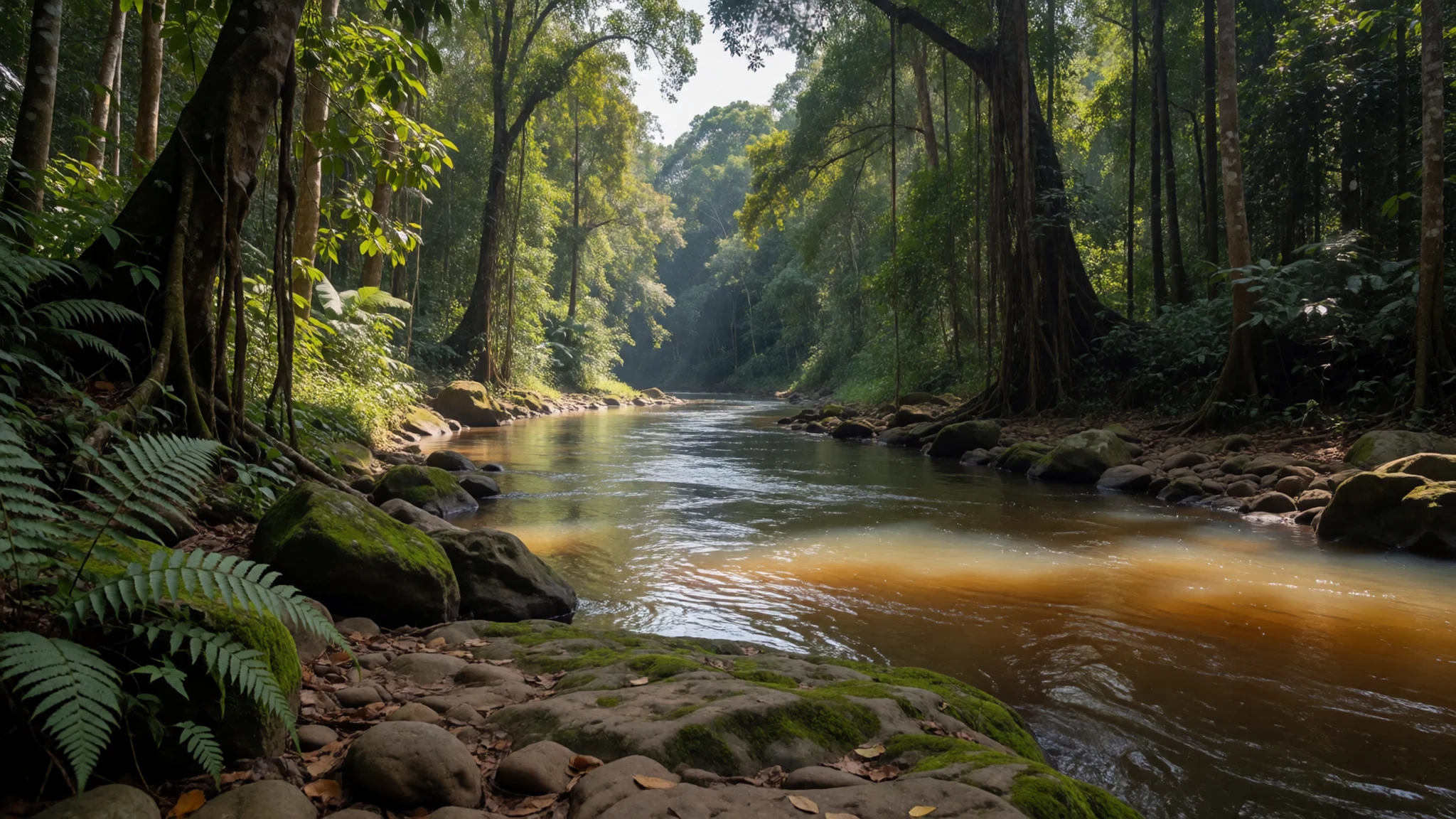
- Historic Shrines and Altars — Throughout the Forest
Scattered quietly throughout the dense woodland are numerous active shrines dedicated to various Yoruba deities and ancestral spirits. These sacred architectural points feature earthenware vessels, weathered stone carvings, and traditional offerings left by devotees participating in ongoing religious ceremonies.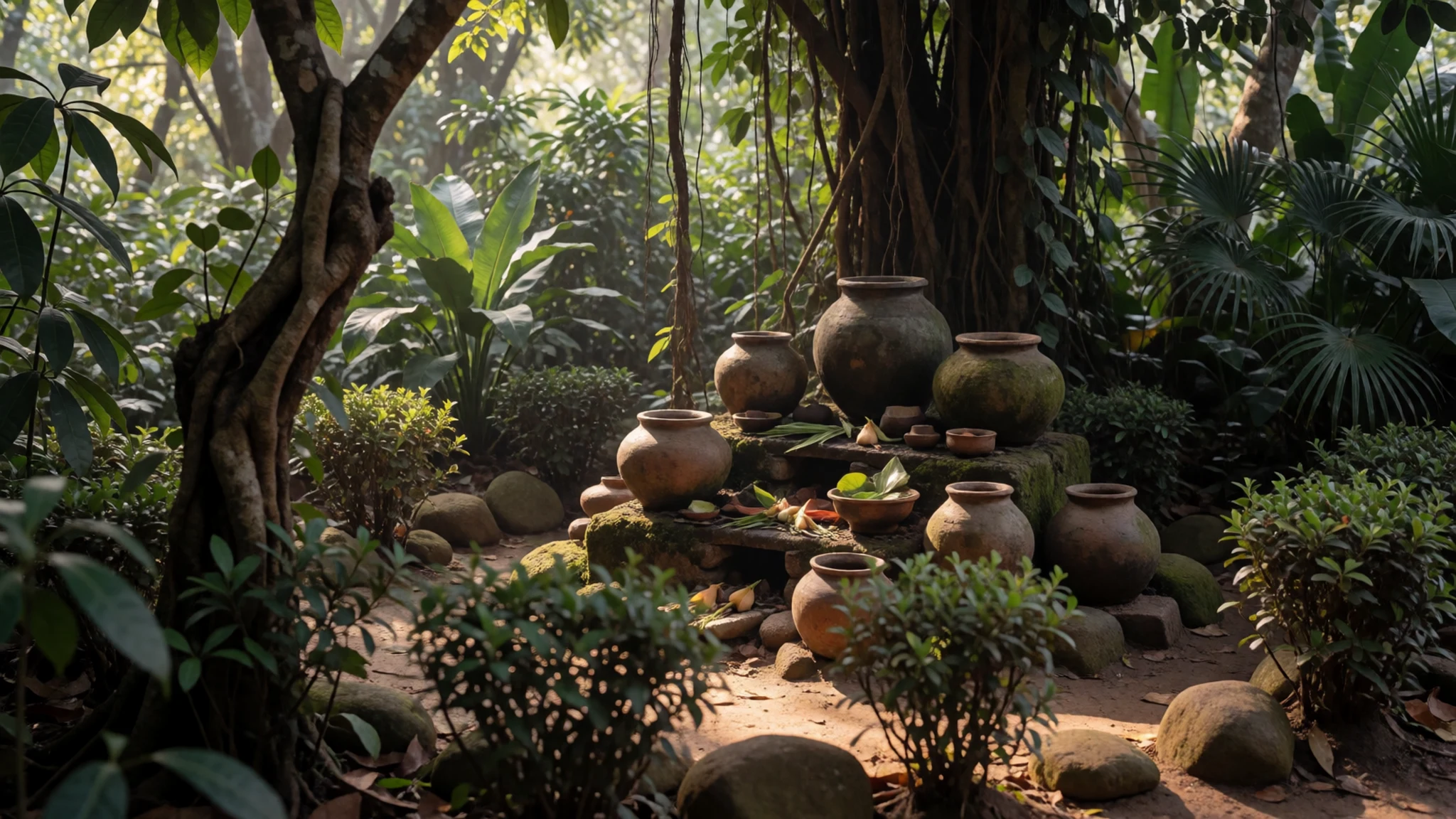
- Monumental Concrete Sculptures — Grove Pathways
Large-scale artistic sculptures tower above the forest floor, created during the artistic revival to personify ancient deities, mythological beasts, and maternal protectors. These imaginative artworks merge seamlessly with the surrounding tree trunks and tangled roots, creating a surreal outdoor gallery of traditional lore.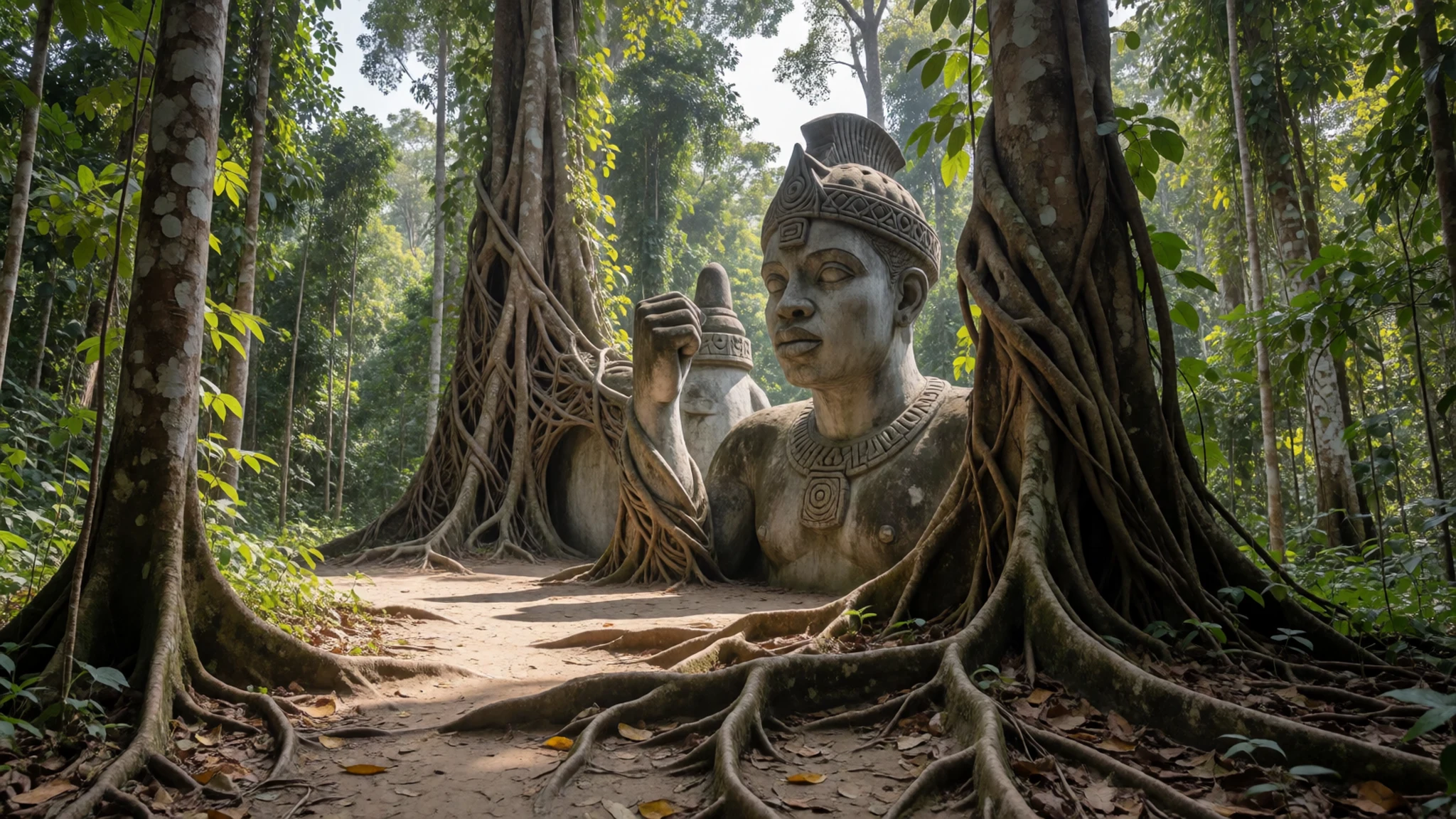
- Primary Forest Canopy — Protected Sanctuary Perimeter
The grove preserves a rare fragment of dense primary high forest, sheltering hundreds of distinct plant species and various forest-dwelling animals such as monkeys and colourful birds. Walking beneath this towering canopy offers an immersive glimpse into the ancient botanical wealth of southern Nigeria.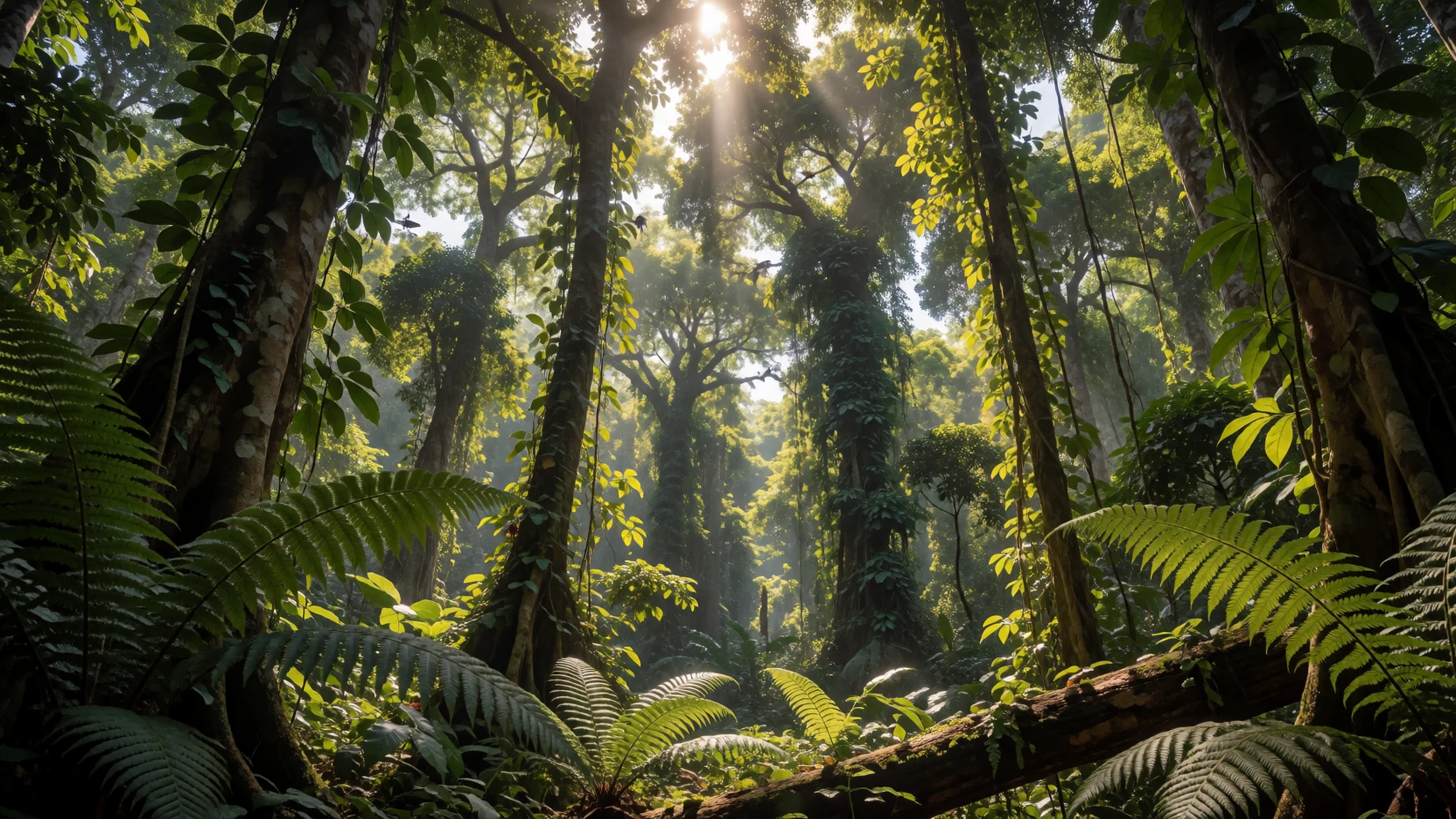
Culture
Osun-Osogbo Sacred Grove is anchored deeply in the living religious traditions of the Yoruba people, whose complex cosmology revolves around a supreme creator alongside numerous intermediary deities, or Orishas. The cultural fabric here is defined by deep reverence for nature, ancestor veneration, and communal festivals that draw thousands of pilgrims from across West Africa and the diaspora. Drummers, chanters, and hereditary priestesses maintain ancient oral histories and ritual choreography that have been passed down unbroken through generations. Visitors stepping into this verdant sanctuary are entering an active place of worship rather than a quiet park, meaning all interactions should be approached with humility and genuine respect for ongoing spiritual practices. Always follow instructions given by site custodians and local guides, and never touch sacred sculptures or remove natural items from the forest floor.
What to wear
Traditional dress across Osogbo and the surrounding region reflects a vibrant textile heritage, featuring rich hand-woven Aso Oke fabrics, deep-dyed Adire indigo cottons, and intricately patterned gele headwraps worn during ceremonies and formal gatherings. For daily life, most urban residents and market traders wear contemporary Nigerian attire, combining western cuts with bright local wax-print fabrics known as Ankara. When visiting the Osun-Osogbo Sacred Grove, travellers should dress modestly out of respect for local religious customs, opting for lightweight, breathable clothing that covers shoulders and knees to cope with the humid tropical climate. Sturdy walking shoes or trainers are essential for navigating unpaved forest paths, uneven stone steps, and muddy riverbanks after tropical rain showers.
What to eat
- Pounded Yam with Egusi Soup — Local roadside canteens throughout Osogbo
A comforting staple made from boiled and pounded yam served alongside a rich, savoury melon seed soup thickened with leafy greens and seasoned meats or fish, found in local eateries across Osogbo.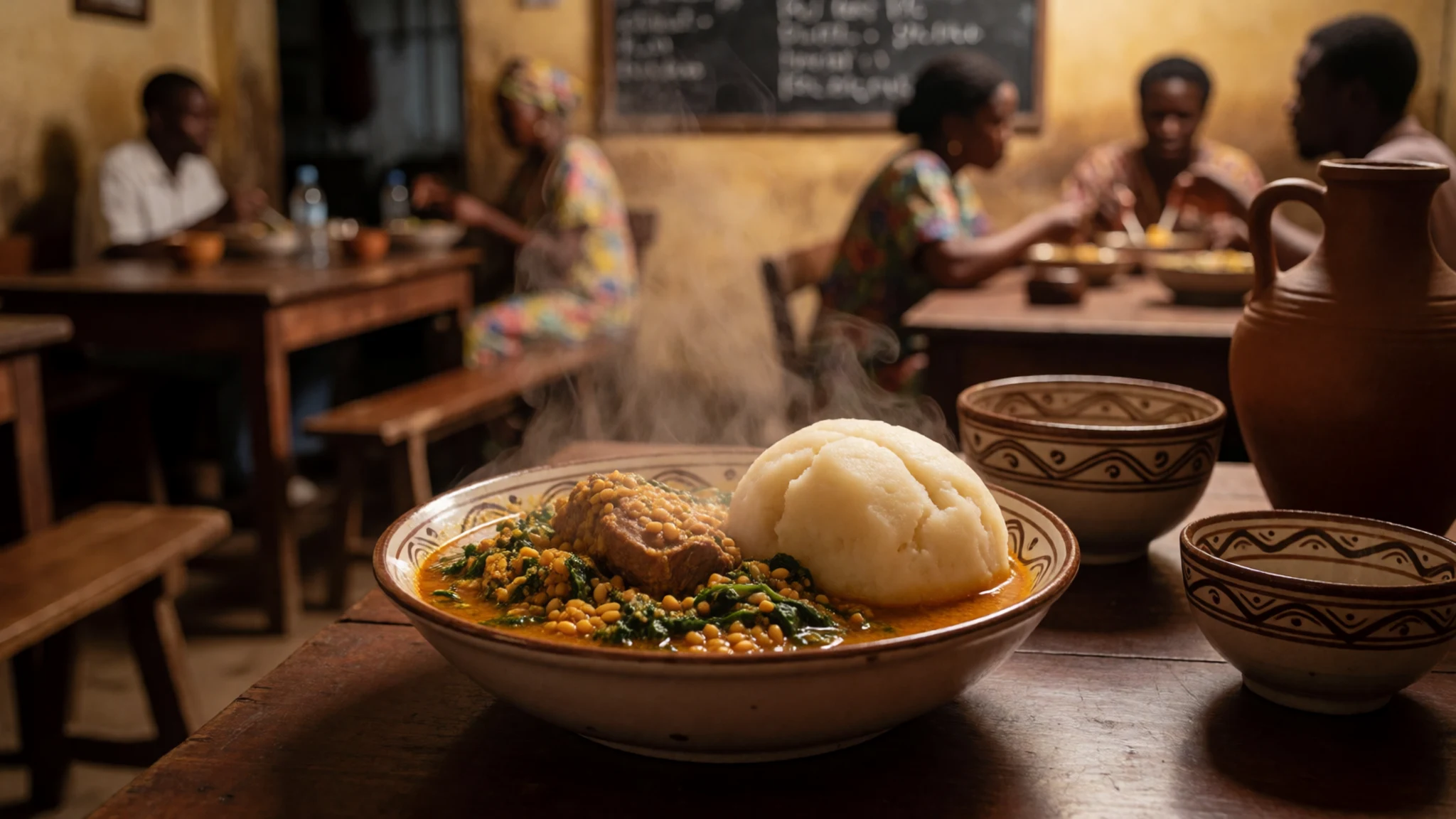
- Amala with Gbegiri and Ewedu — Traditional food markets and downtown eateries
Smooth, dark yam-flour paste paired with a nourishing brown bean soup and slippery jute leaf soup, traditionally eaten by hand in neighbourhood food stalls.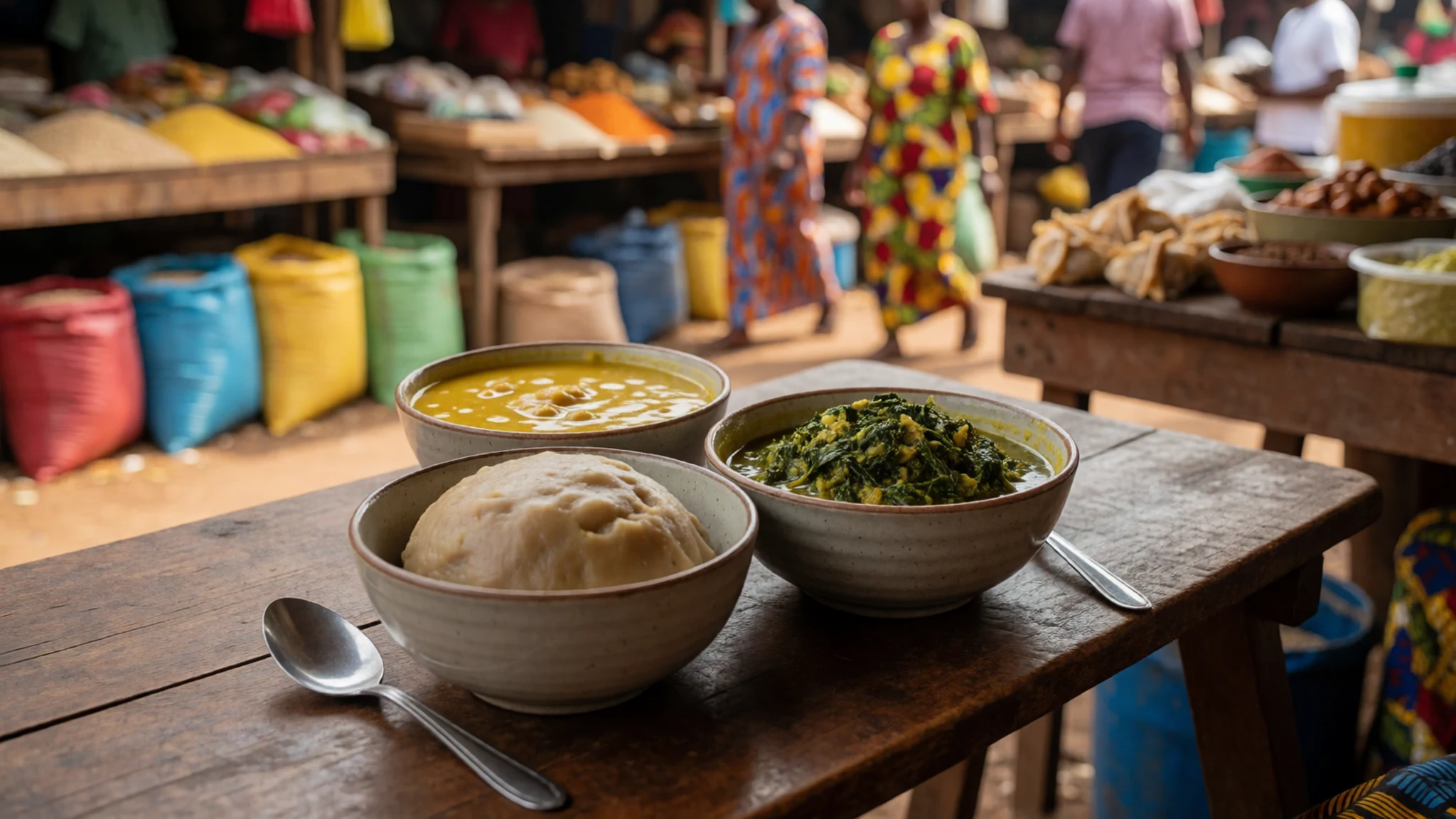
- Suya — Street corners and evening food spots across the city
Thinly sliced beef marinated in fiery ground peanuts, chilli peppers, and aromatic spices, then grilled over open coals by roadside vendors as evening falls. - Jollof Rice with Fried Plantain — Every major restaurant and family diner in town
One-pot spiced rice cooked in a rich tomato, onion, and pepper stock, typically served alongside golden-brown sweet fried plantains and grilled chicken or fish.
Plan it
Best time. Visit between November and February during the drier months when forest paths are firm and accessible; avoid peak rainy months when trails become slick.
How long. 2
Getting there. Arrive by road from major southwestern hubs like Ibadan or Lagos via taxi or local transport, or take the regional train network into Osogbo station.
Budget. low
Tips
- Hire a local guide at the entrance to understand the spiritual iconography of the shrines
- Wear comfortable footwear suitable for uneven dirt tracks and slippery forest roots
- Carry bottled water to stay hydrated in the humid tropical environment
- Bring cash in local currency for small park fees and local transport
Etiquette
- Always ask permission before photographing worshippers participating in rituals
- Do not climb, deface, or lean against sacred sculptures and shrines
- Stay strictly on established walking trails to protect fragile vegetation
Nearby
Sources
- Wikidata Q621498 (CC0)
- Wikipedia (rev 1379888302) (CC-BY-SA 4.0)
- Wikivoyage (rev 5331171) (CC-BY-SA 4.0)