Zomba Plateau
Zomba Plateau, Malawi
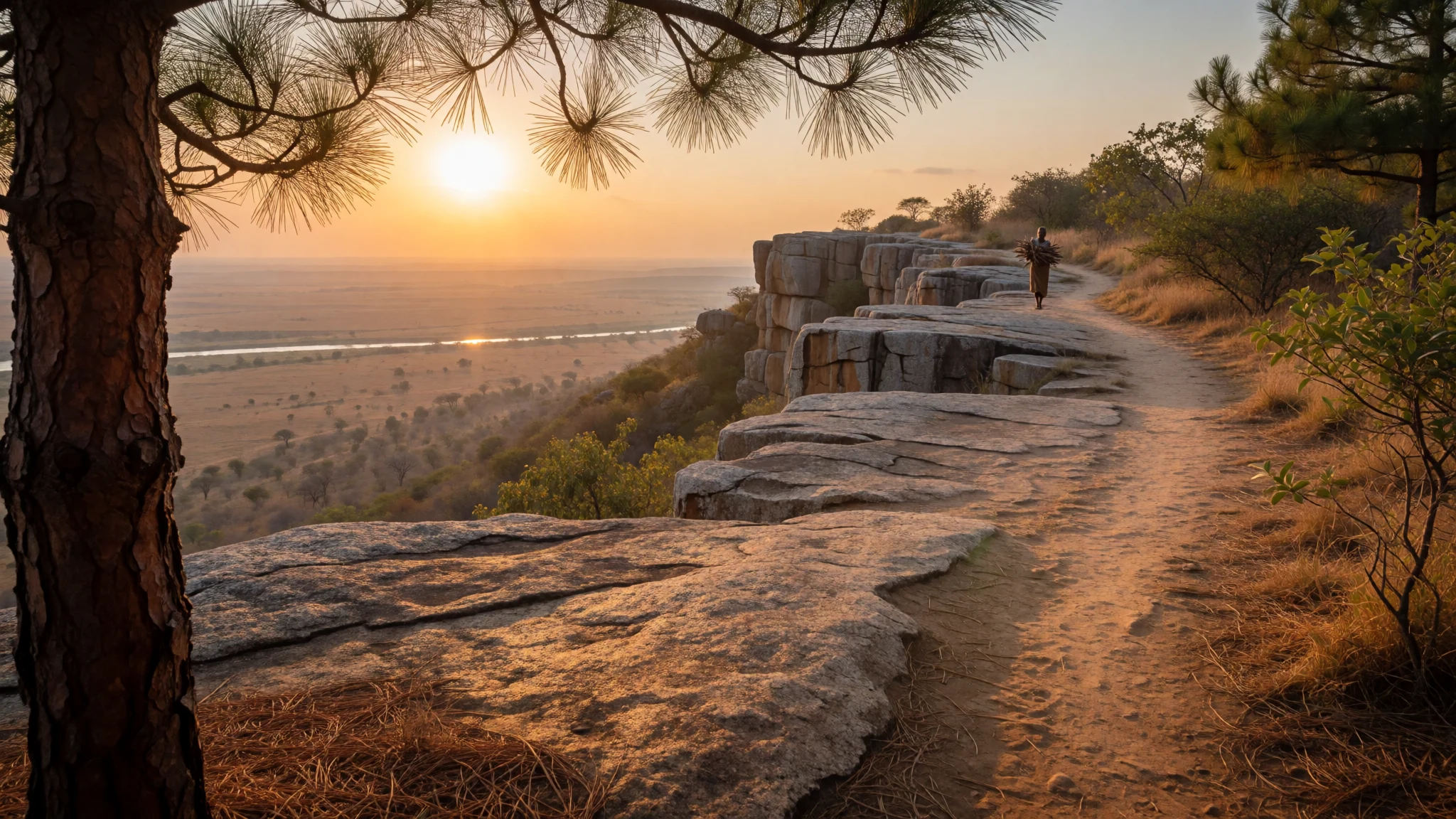
Zomba Plateau is a cool, pine-scented upland above southern Malawi's plains, with waterfalls, long viewpoints and easy walking on a paved road.
The place
Zomba Plateau, also labelled the Zomba Massif, rises above the town of Zomba in the Shire Highlands of southern Malawi. It is a block of mountain rather than a single peak: a broad, flat-topped upland whose rim drops steeply to the plains. A deep gorge, the Domasi Valley, separates the southern half, called Zomba Mountain, from the northern half, Malosa. Most of the top is not wild forest at all. Rows of Mexican pine, planted to feed the sawmill at the foot of the slope, cover large stretches, and the air smells of resin on cool mornings. Between the plantations, fragments of indigenous forest and miombo woodland hang on, along with streams, rocky outcrops and open grassy clearings. Farmers grow strawberries and blackberries up here and sell them to local buyers. A paved road climbs from the town, so the plateau can be reached without a long trek, and simple lodges, camping grounds and private cottages sit among the trees. On clear days the view carries across to the Mulanje Massif and the Blantyre area, and from the western rim over the Shire River towards Liwonde National Park. Mist and drizzle are common, though, and a view can vanish within minutes. Walkers, cyclists, anglers and climbers all use the plateau, and Malawian families come for picnics beside the reservoir. It suits slow days of walking in cooler air better than a rushed list of sights.
Its story
Zomba Plateau began as molten rock. Its main body is granitic syenite, an igneous rock that pushed up into older metamorphic rocks of the highlands in the deep geological past, and the Mulanje Massif to the south-east shares a similar make-up and origin. Erosion has since carved the Domasi Valley and a ring of steep edges, leaving the high, flatter top. Quartz and other semi-precious stones turn up in the rock. The modern landscape owes as much to forestry as to geology. The Zomba and Malosa forest reserves were set up in 1913, and foresters later planted Mexican pine across the tops to supply timber for the Zomba Sawmill on the southern slopes. That is why so much of the plateau looks like a conifer plantation rather than African highland. Where native trees survive, they face pressure from the region's heavy demand for firewood, and deforestation is a real problem. Water has become a second chapter: the Mulunguzi Dam opened in 2000 and now serves as a reservoir for the city of Zomba, so the plateau supplies both timber and drinking water to the town below. Visitors began coming for the cool air and the views, and today the plateau is the main draw of the area, with walking, climbing, fishing and mountain-biking all on offer. Its story is one of competing uses, and the pines, the water and the visitors all share a limited mountain.
What to see
- Mulunguzi Dam and Williams Falls — Mulunguzi river, central plateau
Zomba Plateau's reservoir, opened in 2000, supplies water to the town below. The Mulunguzi river enters it by way of Williams Falls, and a picnic area sits beside the water. In the rainy season the reservoir is full and the falls loud; in the dry months the flow thins. Some falls on the plateau have pools where walkers swim, but test the depth and current first.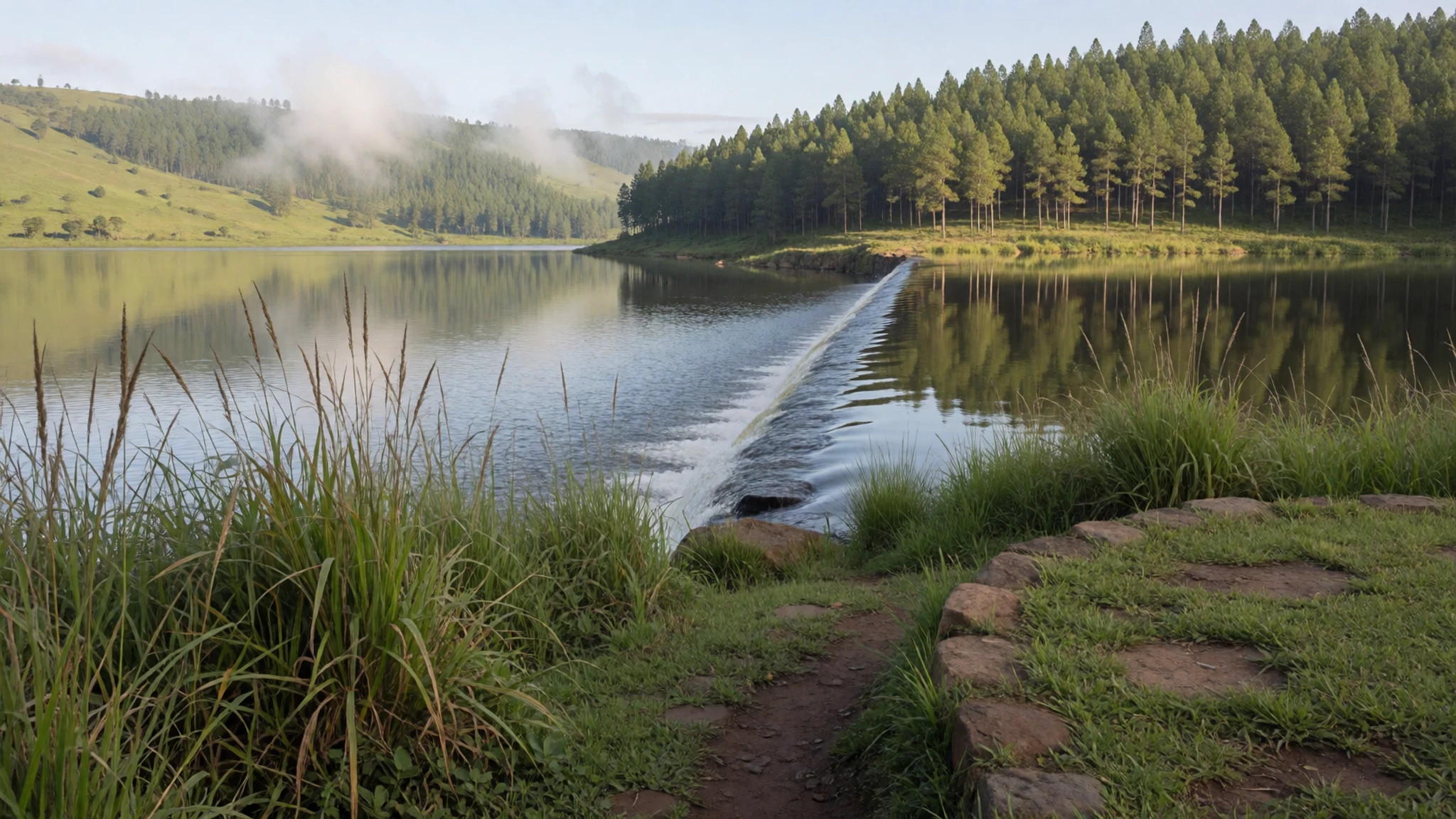
- Emperor's View — Plateau edge
This lookout on the edge of Zomba Plateau gives a wide look over the plains below. Morning is usually clearest, before haze and cloud build. It works as a short stop on the drive up rather than a long hike, and it is a favourite spot for photographs. Ask locally about the current state of the track.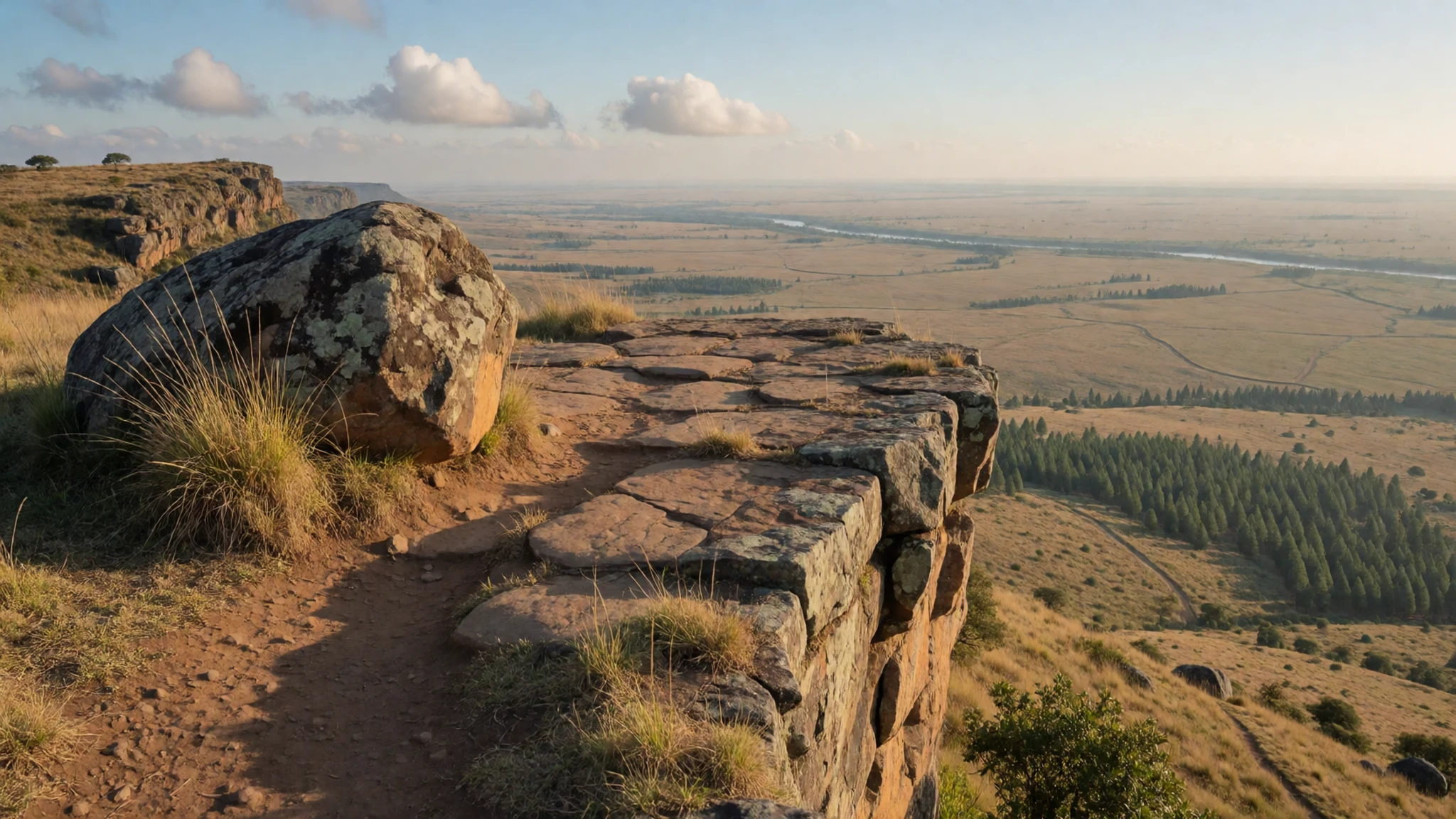
- Chawe summit walk — Chawe, near the lodges
Chawe is the hill that many walkers pick for a half-day outing. A steady climb that reasonably fit hikers can finish in a short morning leads to open views over the plateau and the lowlands. Start early, carry water, and take a layer, because the top can turn cool and misty quickly.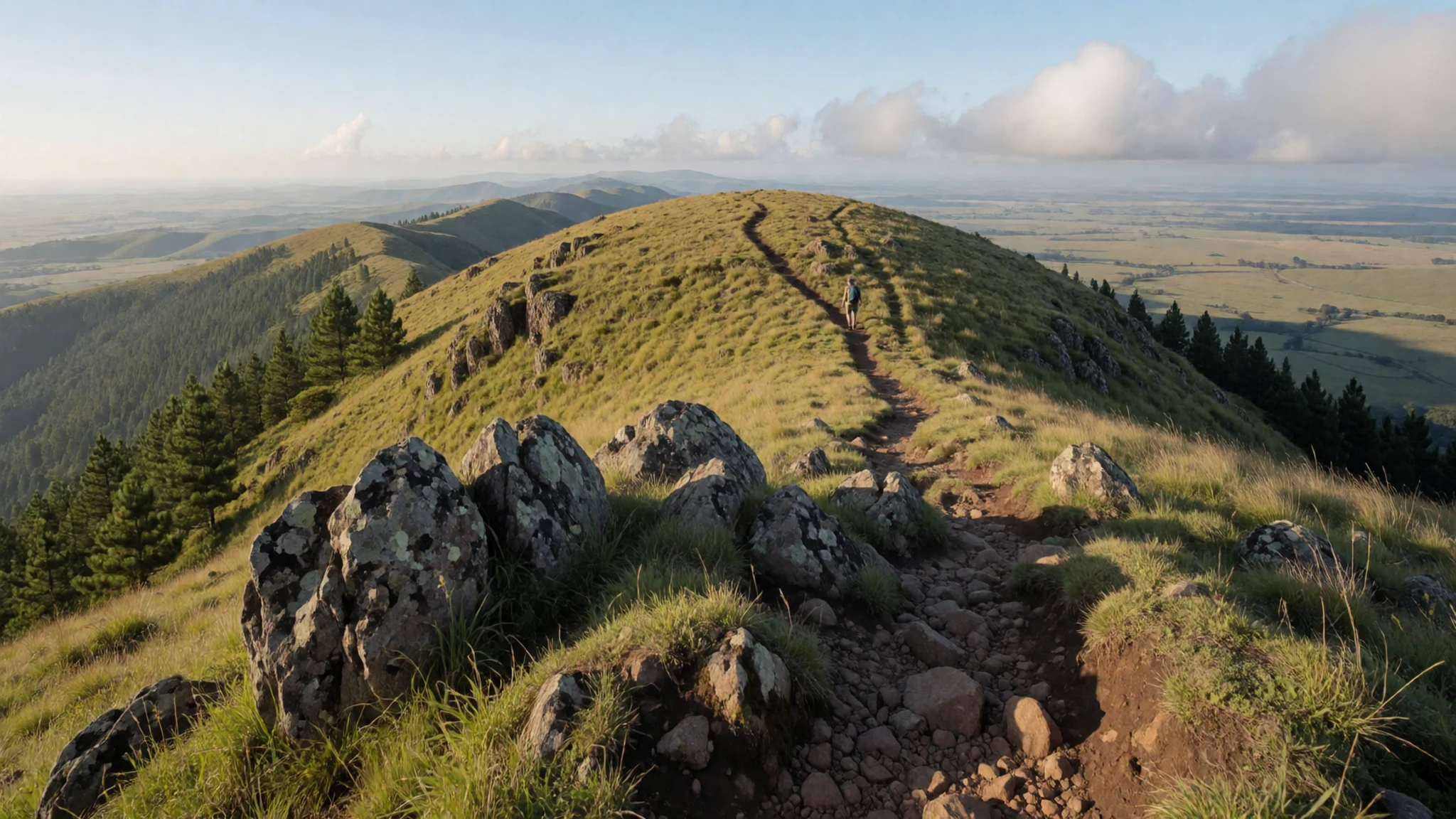
- Western rim viewpoints — Western edge of the plateau
From the western edge of Zomba Plateau the ground falls away towards the Shire River, with Liwonde National Park beyond. The scene is wide, flat and hazy in the dry season, and best in the clear light of early morning. Several informal lookouts along the rim make good picnic stops.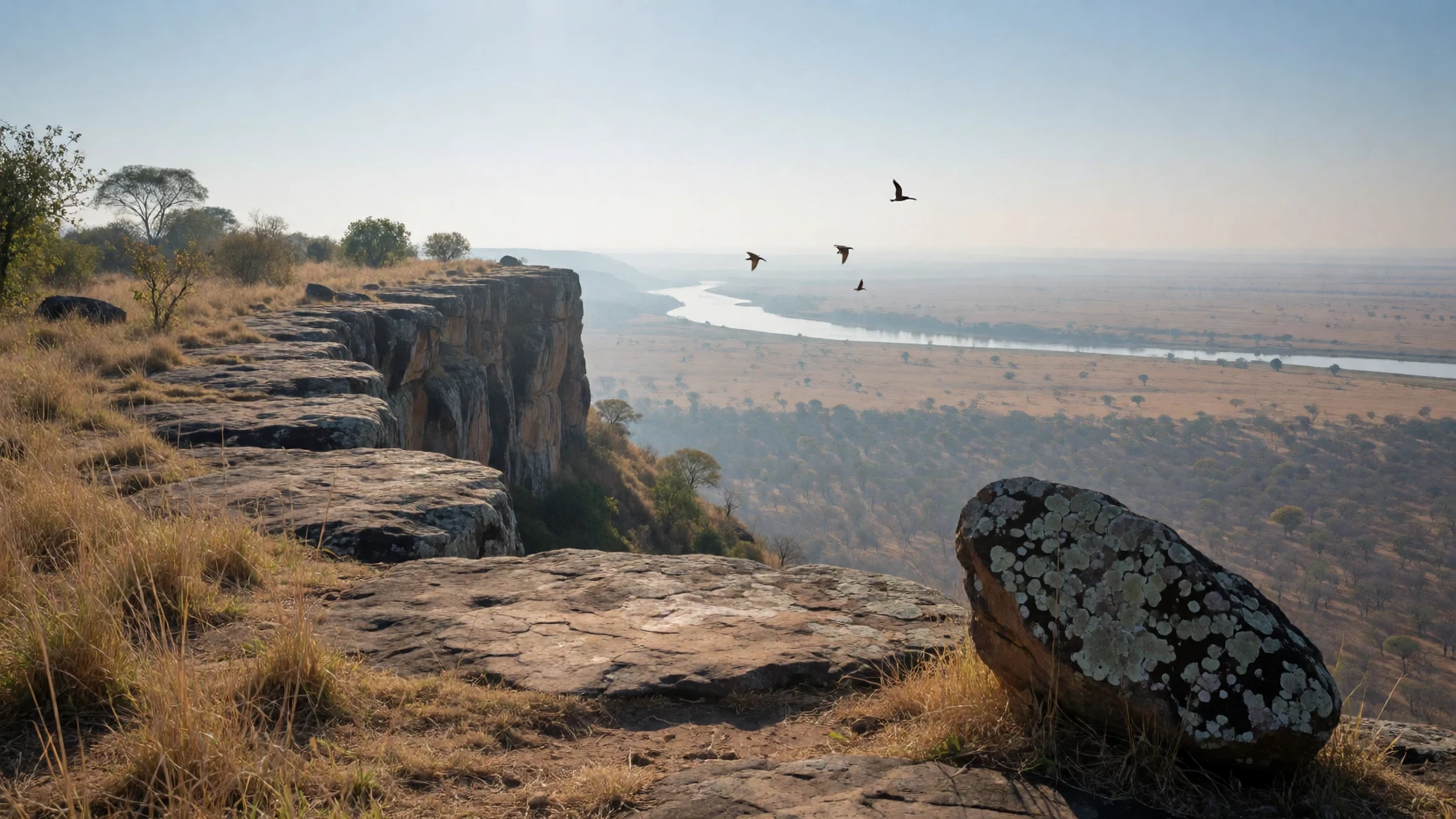
- Pine tracks and forest roads — Forest reserve, across the plateau
Zomba Plateau is threaded with tracks through plantation and remnant forest, popular with walkers and mountain-bikers. The paved road is steep, and the dirt tracks can be slippery after rain. Pine shade keeps the walking cool, and clearings often open onto sudden views. Keep to marked routes and carry a map or ask for a guide.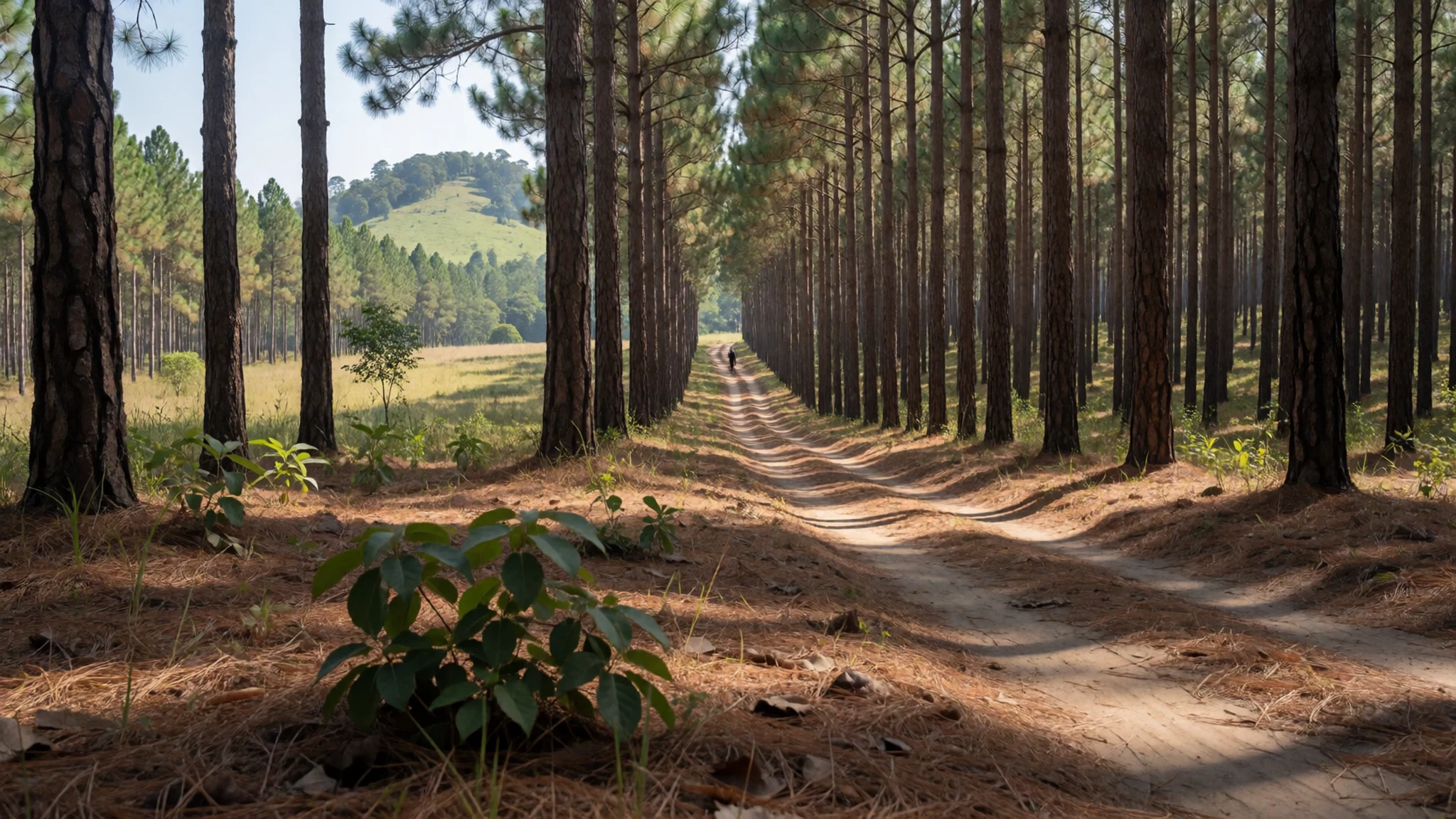
Culture
Zomba Plateau sits in the heartland of southern Malawi, where Chichewa, Yao, Lomwe and other communities live side by side, and the town below was long the seat of government. Life on the mountain is practical rather than ceremonial. Families depend on the forest for firewood, farmers sell strawberries and blackberries by the road, and workers from the sawmill and the forestry reserves keep the plantations running. Much of the Shire Highlands is Christian, with a significant Muslim community among the Yao, so churches and mosques both shape the weekly rhythm, and Sundays are usually quiet. The plateau also carries cottages owned by churches and institutions, which have been used for retreats and holidays for decades. Malawians have a reputation for politeness, and greetings matter: a handshake, a few words of Chichewa and an enquiry about the day all come before business. Roadside stalls are part of the economy of the mountain, and buying a small punnet of berries is a simple way to support local families. Wood smoke, charcoal sacks and bundles of firewood carried on heads or bicycles are everyday sights, and they reflect the pressure on the remaining indigenous trees. Greet people on the path with a friendly "muli bwanji" and ask before photographing anyone, especially at roadside stalls and in villages.
What to wear
Around Zomba Plateau, the everyday traditional garment is the chitenje, a printed cotton cloth, usually in bright patterns, worn by women as a wrap skirt, tied as a head covering or used to carry a baby on the back. Men may wear it too, mainly at home or on formal occasions, and it appears in every festive, church and family setting. Chitenje are sold by the length at markets in Zomba town, and tailors will make them into dresses, shirts and skirts. Day to day, most people dress in ordinary modern clothing: shirts, trousers, dresses, school uniforms, and second-hand garments from imported bales. Smartness counts, and clean, pressed clothes are common even in rural settings. Women often cover the knees, and many Muslim women wear a headscarf. Visitors to the plateau should dress for a mountain climate rather than a lake beach. Mornings and evenings can be cool and damp, so bring a fleece or light waterproof, long trousers for walking through grass, and a hat for sun on the open tops. Strong shoes or trail boots with a good grip are worth having, since paths are steep and slippery after rain. In town and villages, shoulders and knees covered is a courteous default, and shorts and swimwear are best kept for the pools and the lodge grounds.
What to eat
- Nsima with relish — Local eateries and market stalls in Zomba town
Nsima is the stiff maize porridge that anchors most Malawian meals, eaten by hand with a side of relish such as greens, beans, fish or meat. Order it at local eateries in Zomba town, where it arrives hot in a shared dish.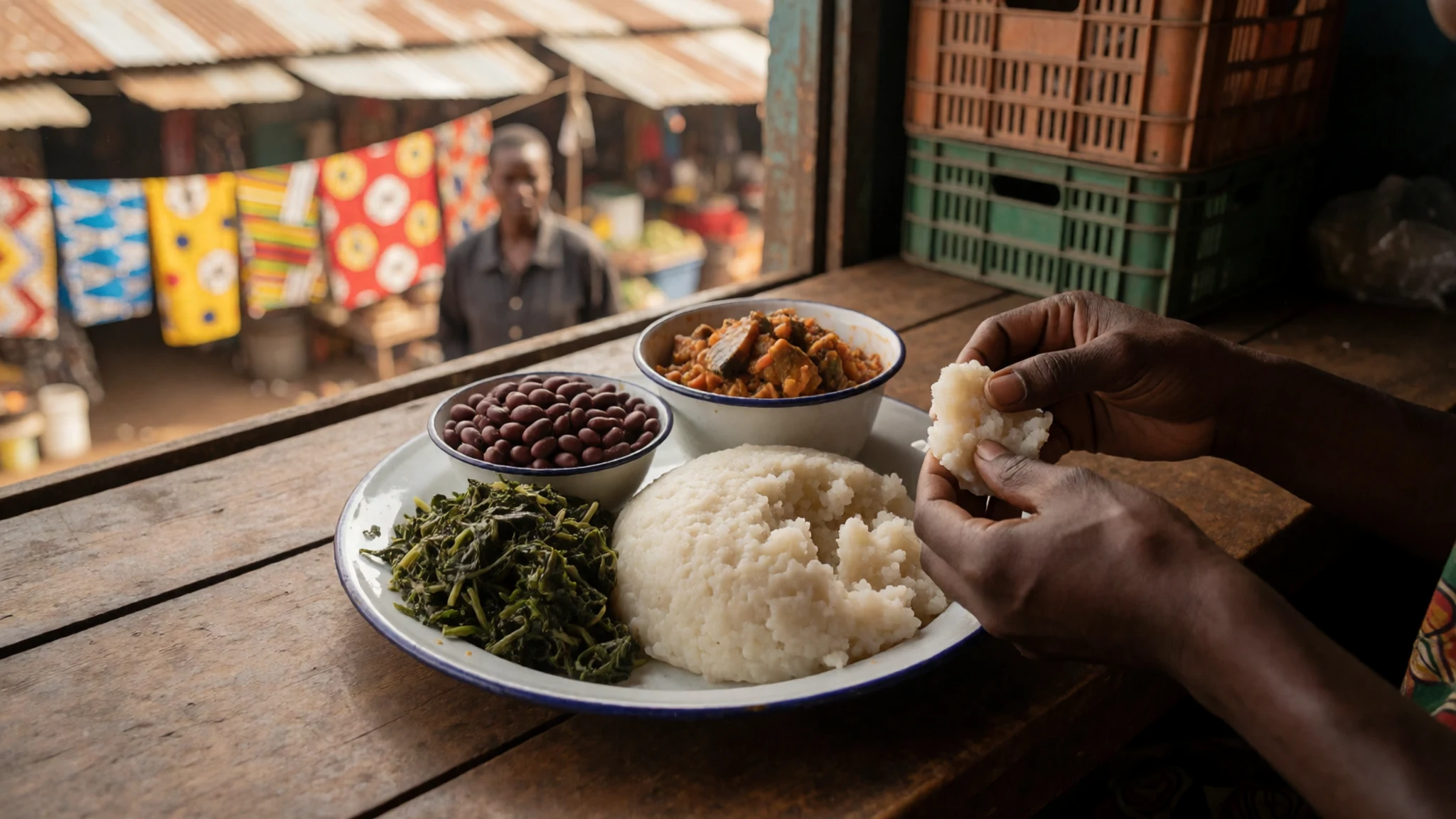
- Chambo — Zomba market and roadside grills
Chambo is a prized freshwater fish from Malawi's lakes, usually served grilled or fried with nsima. It is a standard dish in the south, and the freshest plates come from places close to the water or the main market.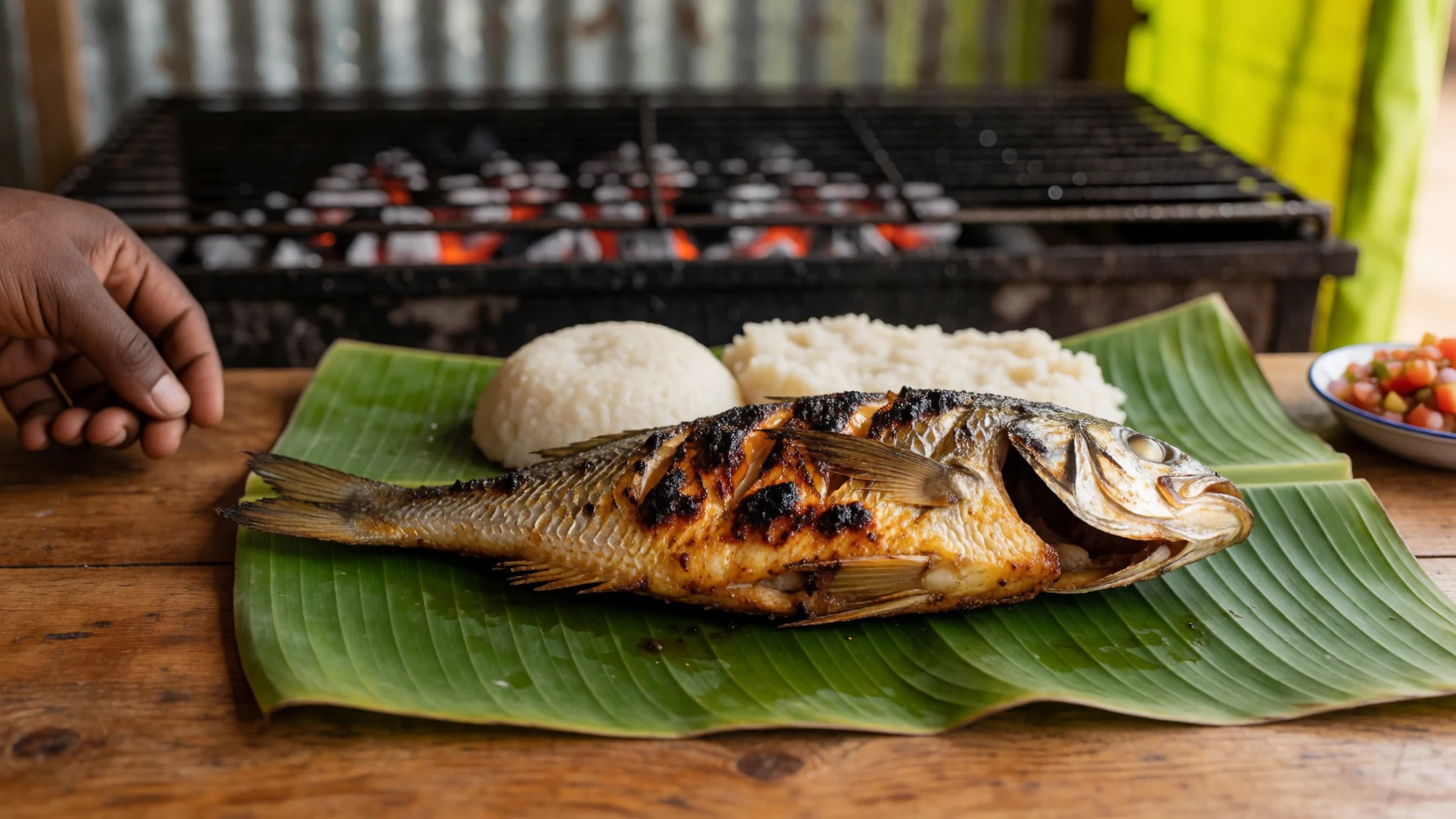
- Chicken kawawa — Traditional-menu restaurants in Zomba town
Chicken kawawa is a traditional chicken dish served in some of Zomba's sit-down restaurants, where it is considered a good choice from a traditional menu. Expect it with nsima or rice, and ask what the kitchen recommends. - Mandazi and street snacks — Bus stops and the main market
Mandazi are fried dough pieces, lightly sweet and often eaten at breakfast or with tea. Vendors also sell roasted maize, boiled eggs and fried cassava. They are cheap, filling fuel for a day on the plateau. - Plateau strawberries and berries — Roadside stalls on the plateau road
Strawberries, blackberries and yellow-berries are grown on the mountain and sold to local buyers. Roadside sellers offer small punnets in season, so buy a few for a picnic, and wash or peel them before eating.
Plan it
Best time. May to October is the dry season, with clearer views and firmer trails, and cool nights on the plateau. The rainy months bring mist, slippery paths and full waterfalls, so views can be patchy, though the forest looks greenest.
How long. 2–3
Getting there. Fly into Chileka Airport at Blantyre or Kamuzu International Airport at Lilongwe, then take a bus or shared minibus to Zomba town; Blantyre is much closer than Lilongwe. The last leg is the paved road up the plateau, by hired car, taxi or a lift arranged with your lodge. Check current services locally.
Budget. low
Tips
- Start walks early, before cloud and haze build on the tops
- Bring warm layers and a rain jacket, because the plateau is cooler and damper than the town
- Carry cash for stalls and small eateries, and fill water bottles in town
- Book lodges or camping ahead for weekends and school holidays
- Use a local guide for longer hikes, since tracks are not always signed
Etiquette
- Greet people before asking questions or taking photographs
- Keep to paths and carry litter out, as the forest is a managed reserve
- Dress modestly in villages and town, saving swimwear for pools and lodge grounds
Nearby
Sources
- Wikidata Q8073720 (CC0)
- Wikipedia: Zomba Plateau (rev 1233649716) (CC BY-SA 4.0)
- Wikivoyage: Zomba Plateau (rev 5423238) (CC BY-SA 4.0)
- Photo: At the slopes of Zomba Plateau, Felefuchs (CC BY 3.0)
- Photo: Mulunguzi dam on Zomba Plateau, Felefuchs (CC BY 3.0)
- Photo: Mulunguzi dam and Williams Falls, Felefuchs (CC BY 3.0)
- Photo: Lake Chilwa - Chiuta - Amaramba, NASA (Public domain)
- Photo: Lake Chilwa NASA (Public domain)
- Photo: Emperor's View, Zomba, Hussein Twabi (CC BY-SA 4.0)
- Photo: ISS-60 Progress MS-11 (crop), NASA (CC0 1.0)
- Photo: ISS-60 Progress MS-11, NASA (Public domain)


