Liwonde
Liwonde, Malawi
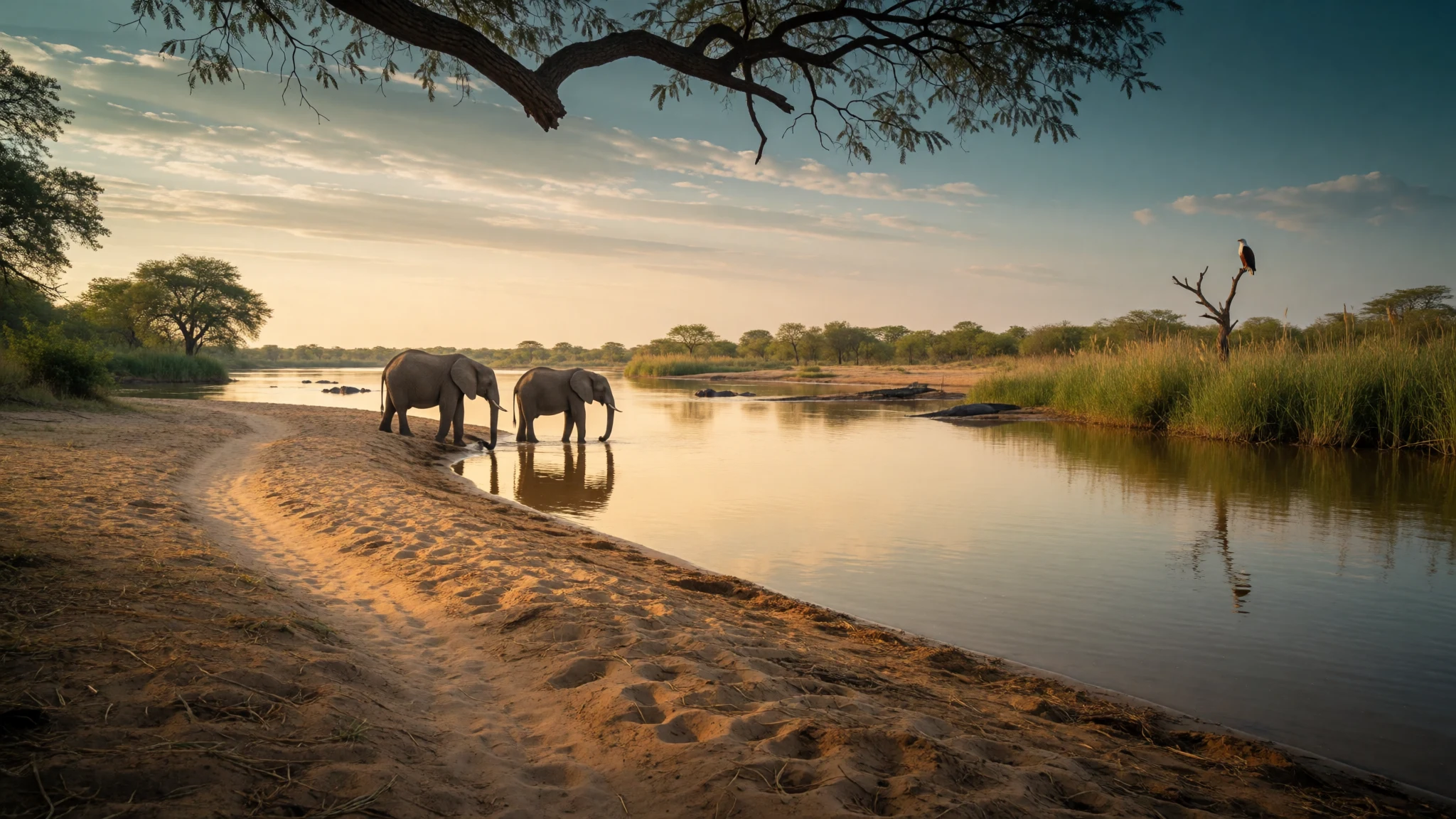
Liwonde is a quiet Malawian reserve where hippos, crocodiles and elephants gather along the Shire River, best seen from a boat at sunset.
The place
Liwonde National Park lies in southern Malawi, close to the Mozambique border, where flat woodland and dry savannah spread out on either side of the Shire River. The park covers 548 square kilometres, and about 30 km of the river runs through it, including a stretch of shoreline on Lake Malombe, a smaller lake south of Lake Malawi. Most of the land sits in Machinga District, with a portion in Mangochi District and Balaka District along the western edge. A northern extension added in 1977 joins the park to the Mangochi Forest Reserve, and when that reserve came under the same management in 2018 the protected area grew to nearly twice its former size. The river organises everything. Hippos spend the day in it, crocodiles sunbathe on its banks, and elephants arrive at the water in the heat of the afternoon, while fish eagles and kingfishers work the channels. Away from the shore the ground is drier, with open woodland, scrub and the occasional baobab. Accommodation is limited and mostly sits beside the river, so the park feels quiet compared with the famous reserves of eastern and southern Africa; a few vehicles on a drive is normal. The nearest town is Liwonde, on the main road, which is where boats, bicycle taxis and supplies are usually arranged. Heat is the main thing to plan around: the wet months bring mud and tall grass, while the dry months thin the cover and push animals towards the water.
Its story
Liwonde National Park was gazetted in 1973, and its history is as much about people as animals. Before the boundary was drawn, families farmed this land for their own food, growing maize, rice, cotton and tobacco, and fishing the river. Creating the park meant moving many of them out, and they resettled along its edge. That is why the villages around Liwonde are crowded by Malawian standards, with farms pressed hard against the wildlife area. For years the arrangement was uneasy. Elephants raided crops, and poaching thinned the wildlife inside. In August 2015 the government's wildlife department invited the non-profit African Parks to take over management. Rebuilding the perimeter fence came first: a monitored electric barrier meant to keep animals in and poachers out. Neighbouring farmers had in fact asked for a fence, because of crop damage. Local people also have a formal place in running the park, through the Upper Shire Association for the Conservation of Liwonde National Park, which works with 31 village natural resources committees around the boundary. Money matters too. Tourism accounts for about 97% of the park's income, much of it from fees paid by the private lodges, and how far that wealth reaches the surrounding villages is still debated. Small enterprises, such as a women's group selling goods and a cultural village lodge, try to narrow the gap.
What to see
- River safari on the Shire — Shire River, near Mvuu Camp
A covered boat on the Shire River is the easiest way into Liwonde National Park. It drifts close to hippos in the water and elephants on the banks, and the low angle suits birdwatching. Late afternoon trips end at sunset, and guides often bring cold drinks along for the last stretch of light.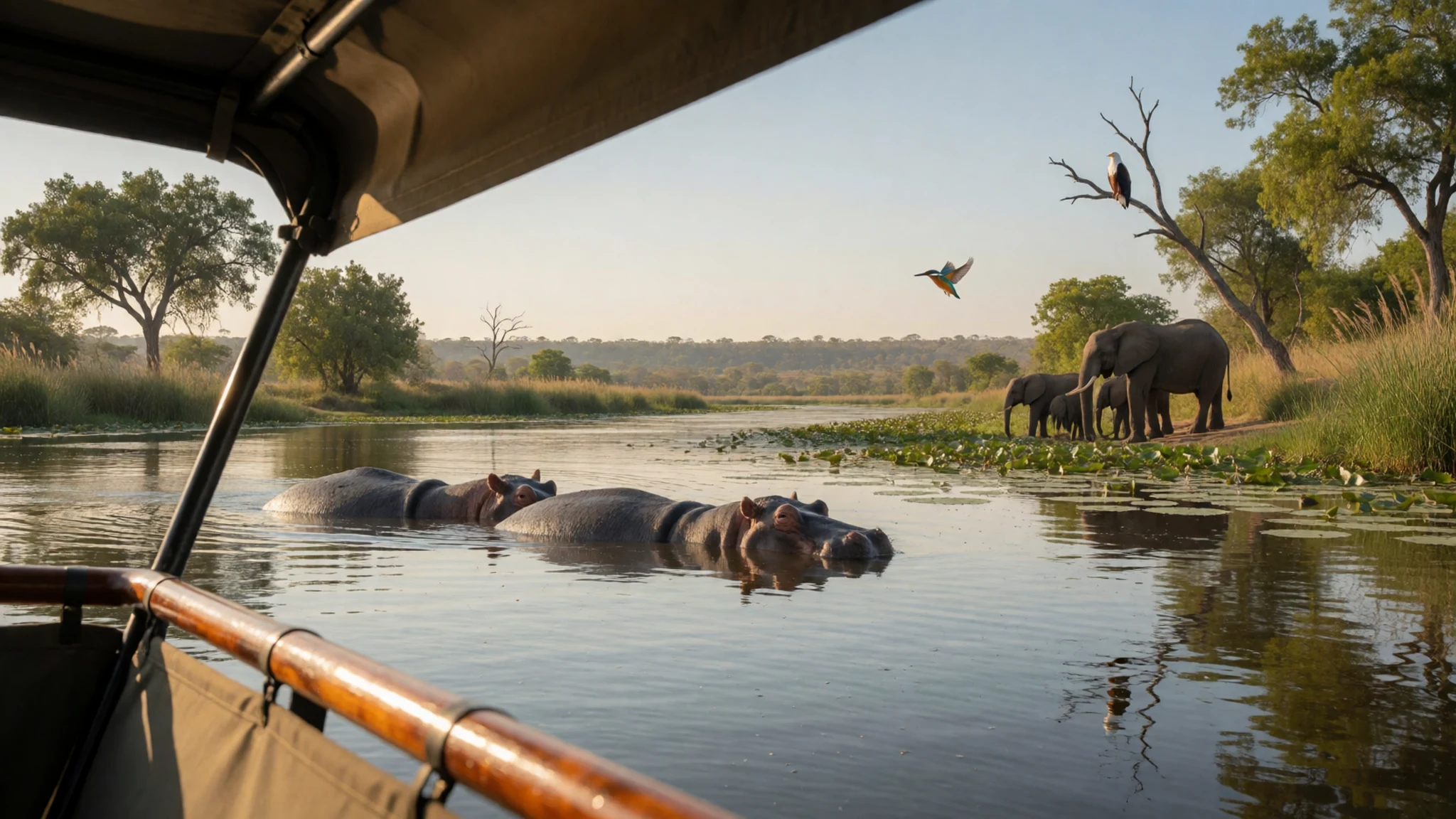
- Game drive — Park interior
Open-sided vehicles take visitors along sandy tracks through woodland and savannah. Elephants are the animals most often seen, and drives also turn up antelope, baboons and, with luck, predators. Early morning and late afternoon work best, when animals are moving and the heat eases. Lodges arrange drives for guests, usually without long advance booking.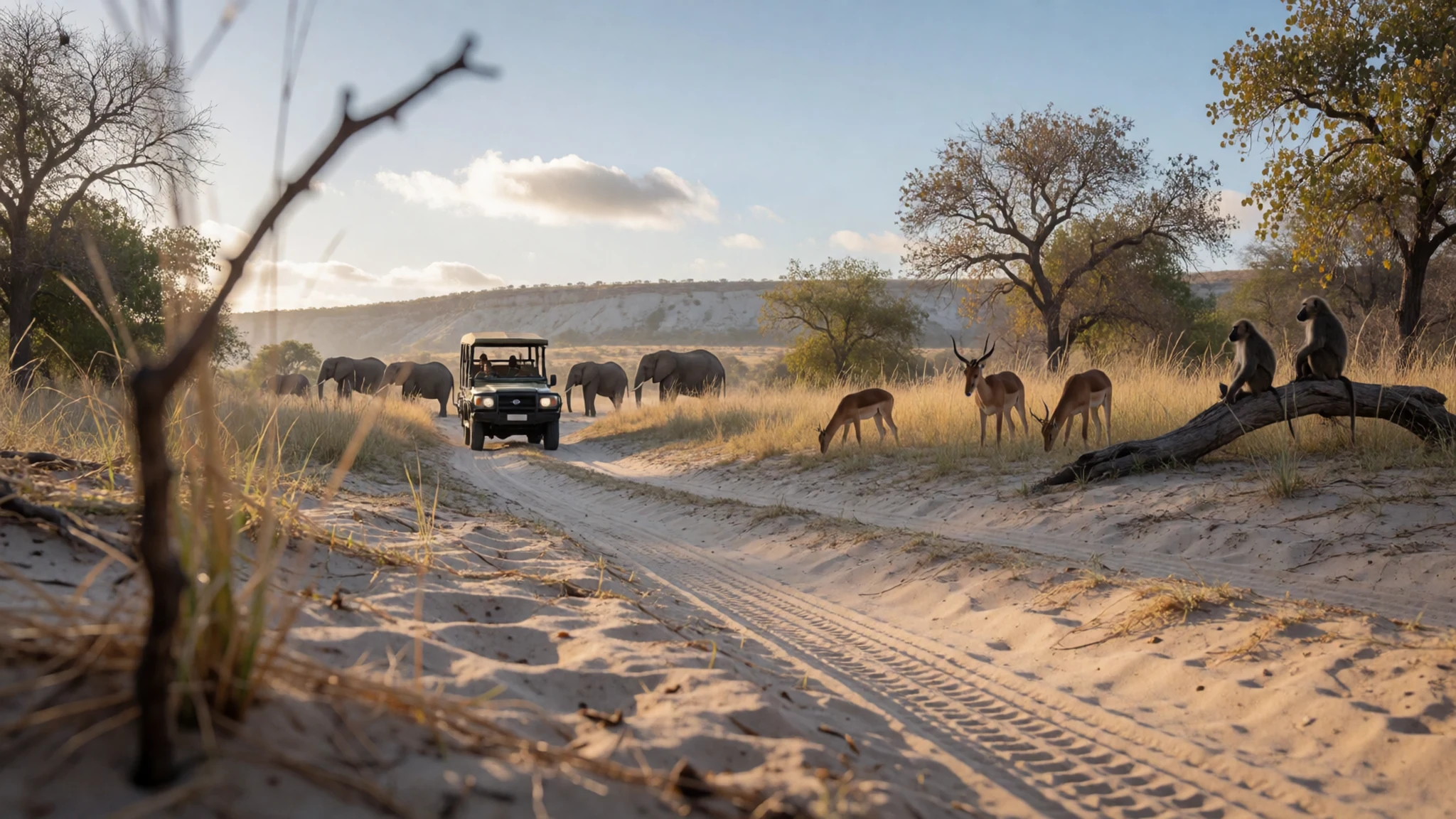
- Guided bush walk — Park interior, near the river
Walking with an armed ranger changes the scale of the park. Large animals are usually seen at a distance, or not at all, but the walk shows what vehicles miss: tracks in the sand, termite mounds, insects, small birds and the plants animals feed on. Morning walks are best, in the cool of the day.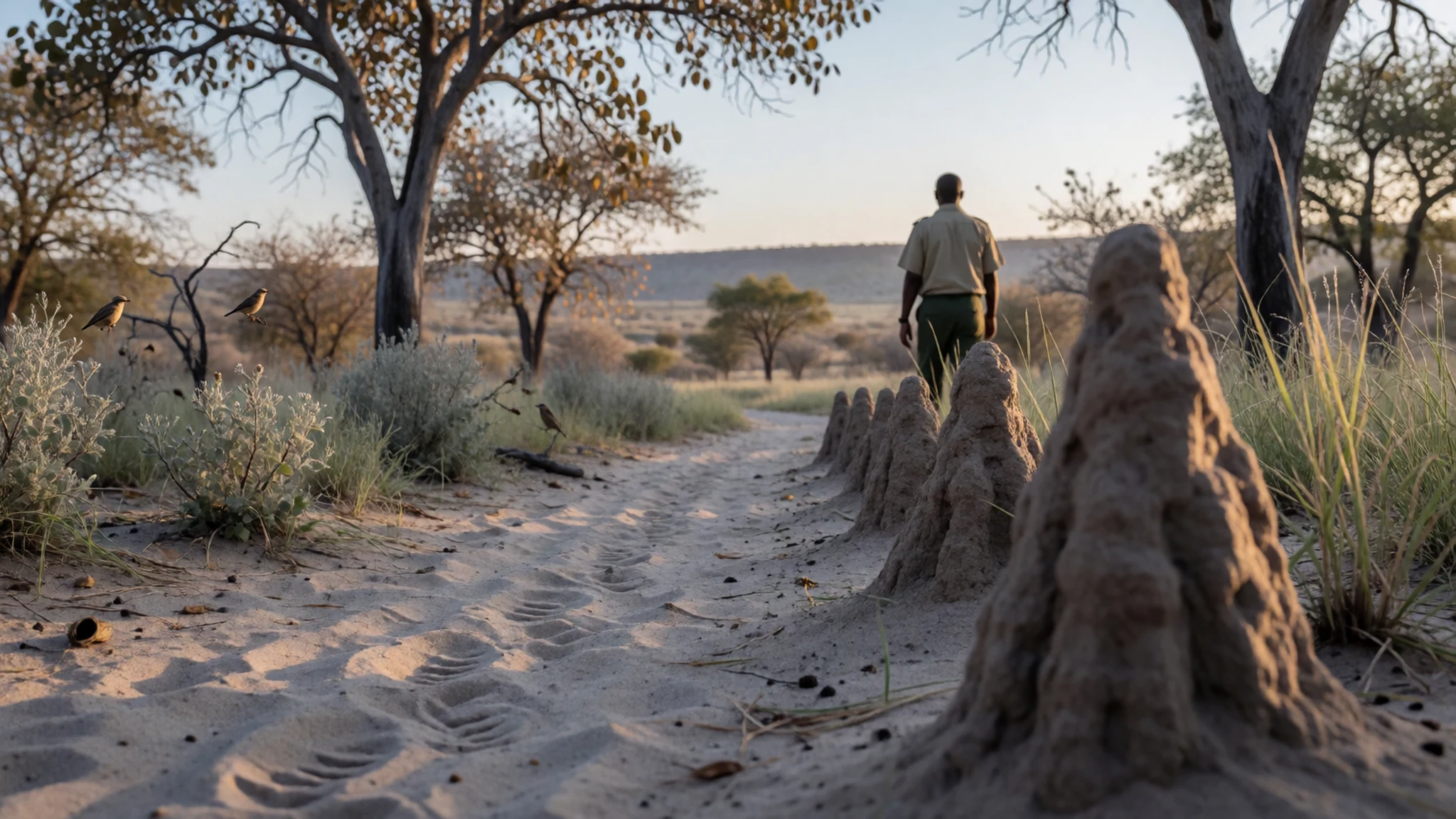
- Crocodile and hippo banks — Shire River banks
Along the Shire River, crocodiles lie motionless on sandbanks in the sun, often close to hippos sharing the same mud. A boat or a lodge deck gives a safe view. Watch the water's edge for movement, because hippos leave the river at night to graze and can be found near the lodges after dark.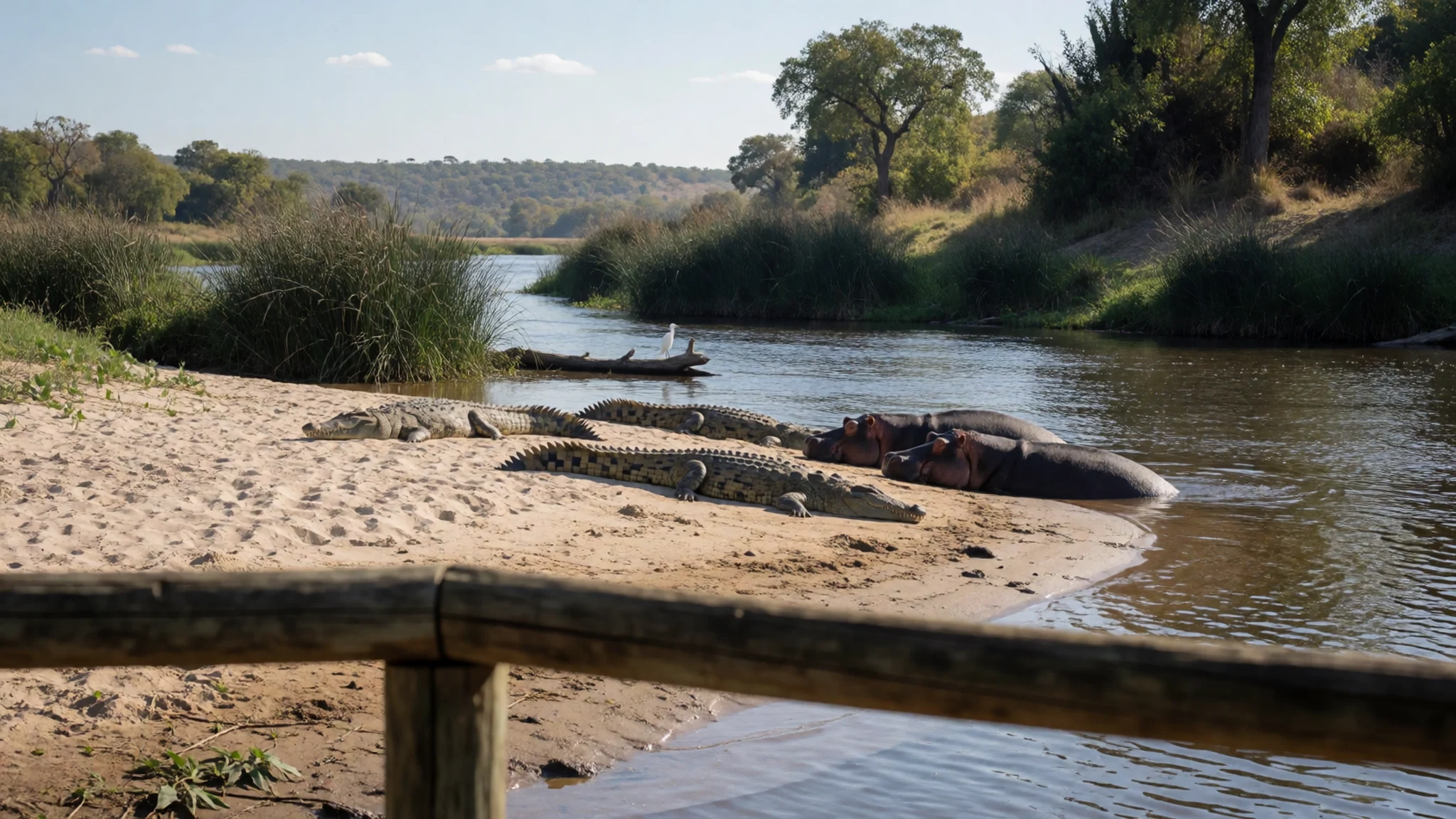
- Njobvu Cultural Village — Park edge, Machinga District
Njobvu Cultural Village sits at the edge of the park and offers a way to meet the communities who live beside the reserve. Ask about village walks and local crafts. Spending here puts money directly into nearby households, which helps spread tourist income beyond the lodges.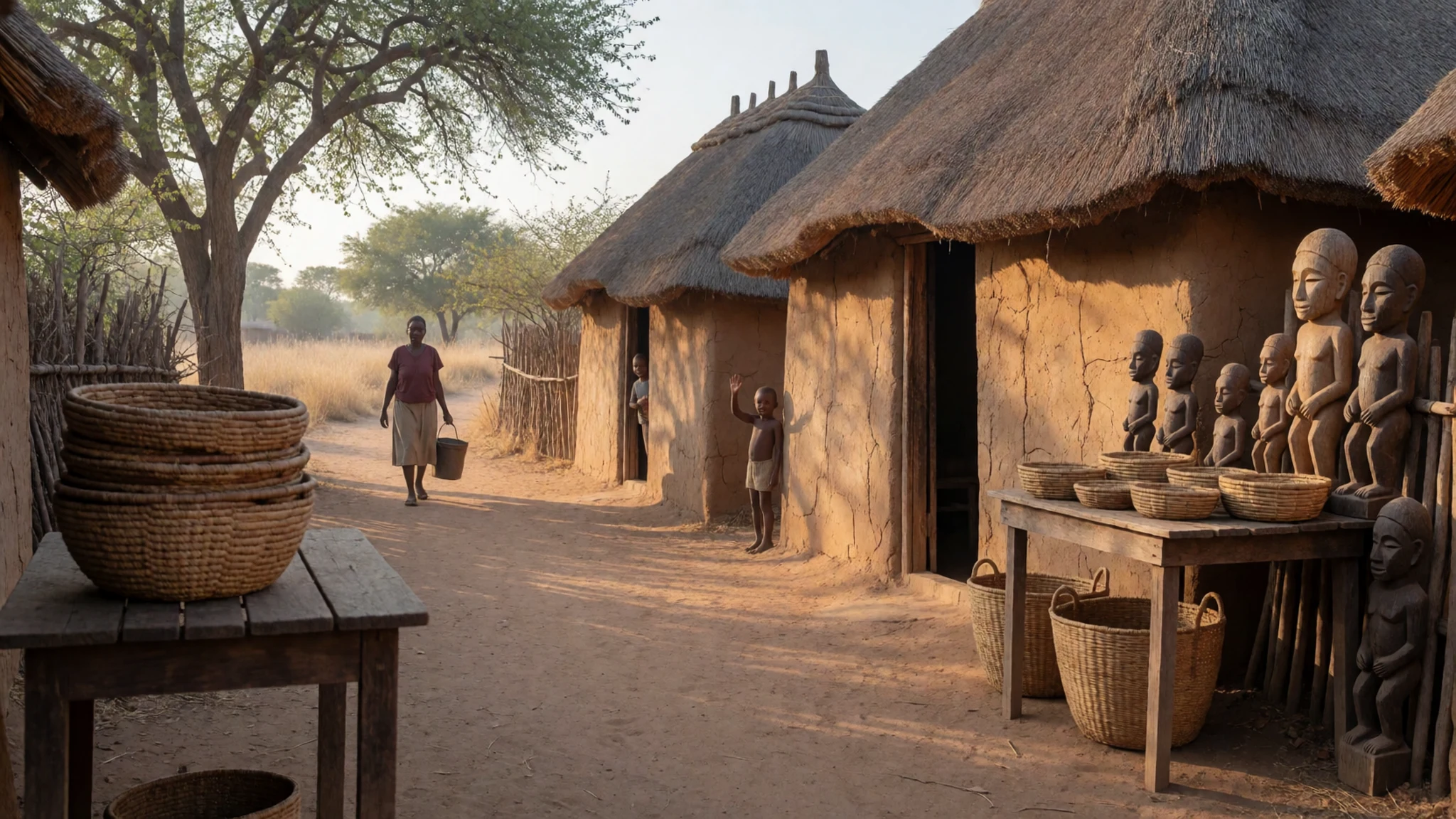
Culture
Culture around Liwonde National Park is shaped by the villages on its edge, home mostly to Yao, Chewa and Lomwe families who farm maize and fish in the Shire River and Lake Malombe. Chichewa is widely spoken, English is used in lodges and offices, and the Yao language is heard around Machinga and Mangochi, where many people are Muslim. Daily life revolves around fields, water and the weekly market. The park's creation left a lasting mark, with relocation in the past and crop raiding still a worry, so conservation here is a conversation about livelihoods as much as animals. Greetings matter. People ask after health and family before getting to business, and rushing past that is read as rude. Meals are shared from a common dish, with nshima, the thick maize porridge, rolled into small balls by hand and used to scoop up relish. Visitors will most often meet local culture through lodge staff, boat guides and rangers, many of whom grew up in the surrounding villages and are generous with explanations. A visit to Njobvu Cultural Village is the most direct way to see village life. Greet people with a handshake, right hand supported by the left forearm, and ask permission before photographing anyone, especially women and children.
What to wear
Fashion in the Liwonde area starts with the chitenje, a length of printed cotton cloth. Women wrap it as a skirt, tie it over a dress, fold it into a headwrap or use it to carry a baby on the back. It is worn daily, and matching cloth is chosen for weddings, funerals and church or mosque occasions. In Yao Muslim communities, women often combine a chitenje with a headscarf, and men may wear a embroidered cap on Fridays. Everyday clothes today are mostly shirts, jeans, skirts and school uniforms, with plenty of second-hand garments sold from imported bales, football shirts among them, and rubber sandals for the fields. Farmers and fishermen favour shorts and work trousers, and rangers and guides wear khaki or green uniforms. Visitors should dress for sun, insects and dust: lightweight long sleeves and trousers in khaki, olive or tan, a hat, sunglasses and closed shoes for bush walks, with sandals for the boat. Avoid dark blue and black, which attract biting insects, and bright white, which shows dust. In villages and near mosques, cover shoulders and knees. A chitenje bought locally makes a useful wrap for cool evenings and a good souvenir.
What to eat
- Nshima with ndiwo — Any eatery in Liwonde town, and lodge dining rooms
Nshima is a stiff maize-meal porridge eaten at most meals, rolled in the fingers and used to scoop up ndiwo, the relish of greens, beans, fish or meat served alongside. It is the everyday dish of southern Malawi and filling after a morning outdoors.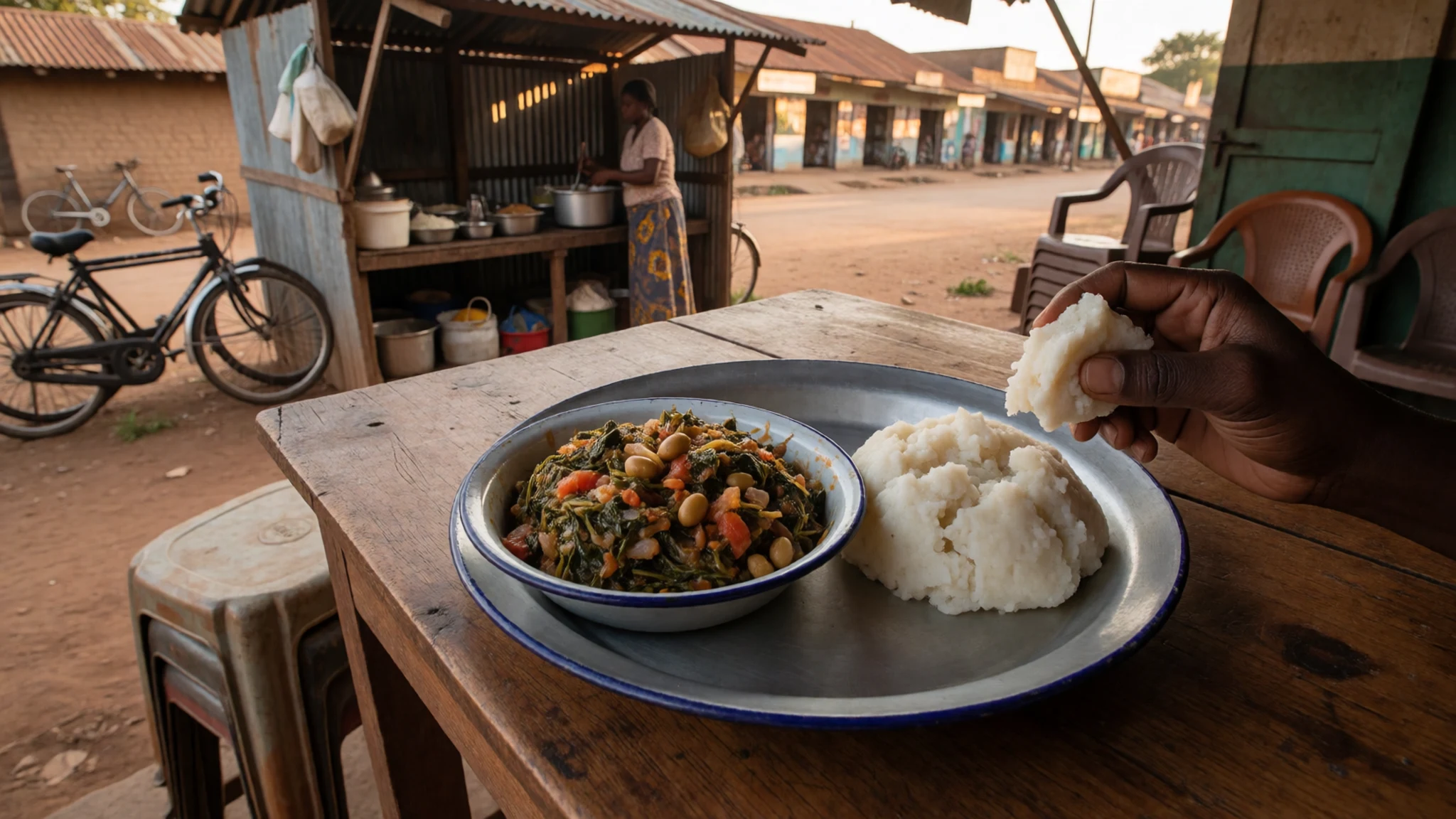
- Grilled chambo — Liwonde town eateries and roadside stalls near the river
Chambo is a tilapia-type fish from the lakes of southern Malawi, usually grilled or fried whole and served with nshima or chips. Freshly cooked, it is mild and sweet, and it suits a simple lunch after a morning on the river.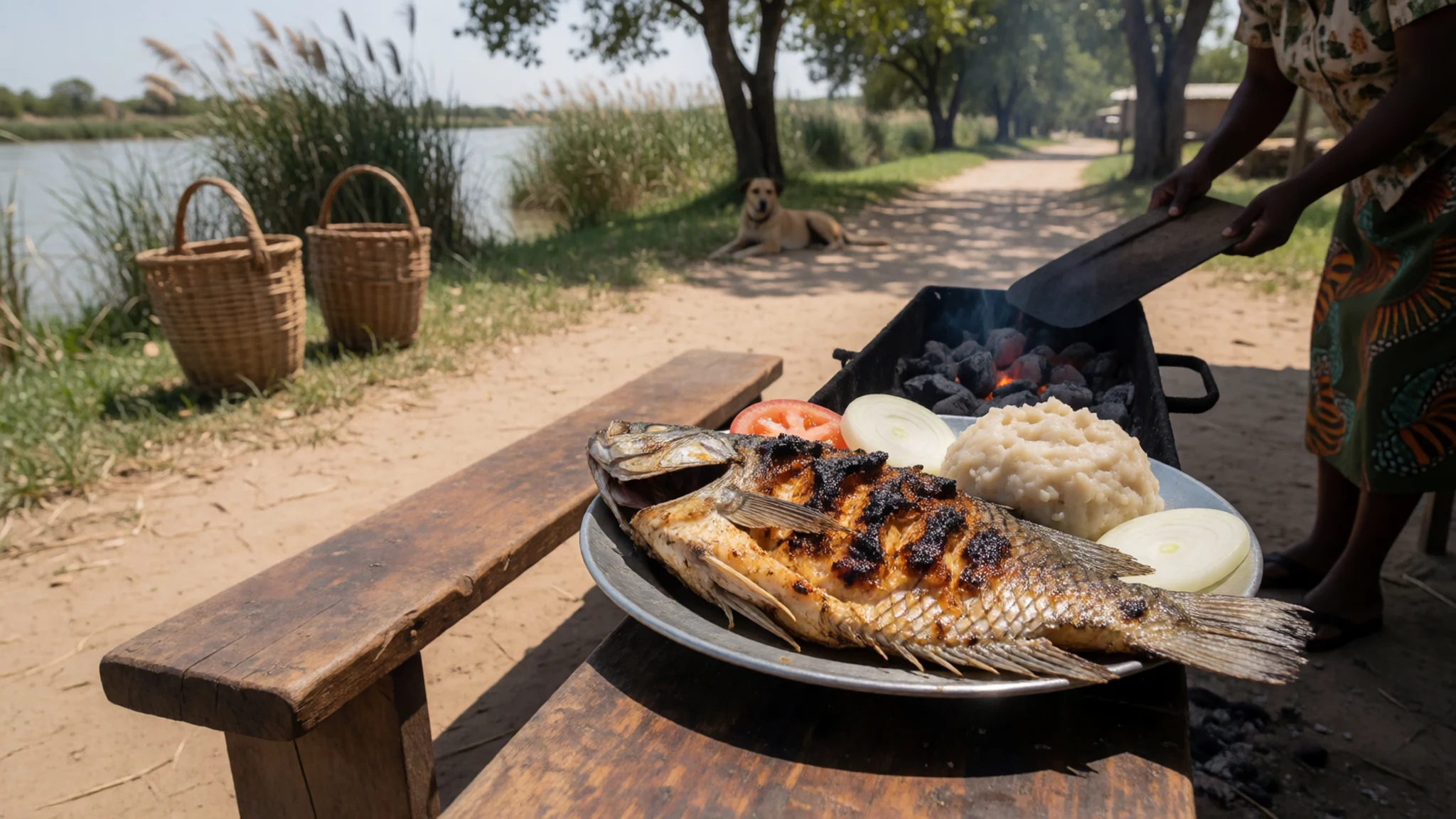
- Mandasi — Market and bus stand stalls in Liwonde town, mostly mornings
Mandasi are small fried dough balls, lightly sweet and sold warm as a breakfast or snack with tea. They are best eaten the moment they are bought, while still crisp outside and soft within. - Roasted maize and groundnuts — Roadside sellers along the main road and at village junctions such as Ulongwe
Cobs of maize grilled over charcoal and paper twists of roasted groundnuts make the standard roadside snack in the dry season. They are cheap, easy to carry and a good way to chat with sellers on the way to the park. - Local beer and pineapple Fanta — Lodge bars and sunset boat trips on the river
Malawi's local beer, Kuche Kuche, and a bright pineapple Fanta turn up in most lodge bars. Many boat guides bring a cool box of drinks along, so a cold one can be enjoyed while the sun drops over the Shire.
Plan it
Best time. May to October, the dry season, when grass is lower, tracks are firm and animals gather at the river. The late dry months are hot, and the rains, usually from about November to April, make tracks muddy and the bush thick.
How long. 2–3
Getting there. Fly to Lilongwe or Blantyre, then travel by road to Liwonde town on the main road. The last leg is either a regular boat from Liwonde town to Mvuu Camp and Lodge, or a drive via the village of Ulongwe on dirt roads to the river and a short boat crossing. Walking into the park is not allowed, so arrange pick-up before arriving.
Budget. high
Tips
- Arrange your boat or transfer with the lodge before you arrive, because you could be stranded at the gate otherwise.
- Book accommodation ahead in the dry season; activities can usually be arranged from inside the park without advance booking.
- Carry some cash for villages, markets and small purchases, and check current park fees with African Parks.
- Bring insect repellent, sun protection, binoculars and a refillable water bottle.
- Use a torch and ask staff to escort you at night, as hippos graze around the lodges after dark.
Etiquette
- Stay in the vehicle or boat unless a guide says otherwise, and keep your voice low near animals.
- Greet villagers first, and ask before photographing people.
- Never walk alone near the river after dark.
Nearby
Sources
- Wikidata Q2739189 (CC0)
- Wikipedia: Liwonde National Park (rev 1372763026) (CC BY-SA 4.0)
- Wikivoyage: Liwonde National Park (rev 5409381) (CC BY-SA 4.0)
- Photo: Liwonde Park, view of Shire River (Brian Dell) (Public domain)
- Photo: Beath High School trip to Malawi 2025 (Ian Mitchell) (CC BY-SA 4.0)
- Photo: Liwonde NP crocodiles (CC BY-SA 2.5)
- Photo: ISS036-E-4843, view of Malawi (crop) (Public domain)
- Photo: Der Shire-Fluss von Matope bis zum Nyassa (Bruno Hassenstein) (Public domain)
- Photo: ISS-60 southern Malawi (NASA, crop) (CC0 1.0)
- Photo: ISS036-E-4843, view of Malawi (Public domain)
- Photo: ISS036-E-4844, view of Malawi (Public domain)


Wildlife
- Hippo (animal)
The hippo is a huge, water-loving mammal, and its name means "river horse" in Ancient Greek. At Liwonde the river is its home, and hippos spend the day in the water, so that is where to look for them. Watch from a safe distance, ideally with a guide beside you, and keep your voice low so the animals stay relaxed. Never feed them; wild animals should always find their own food.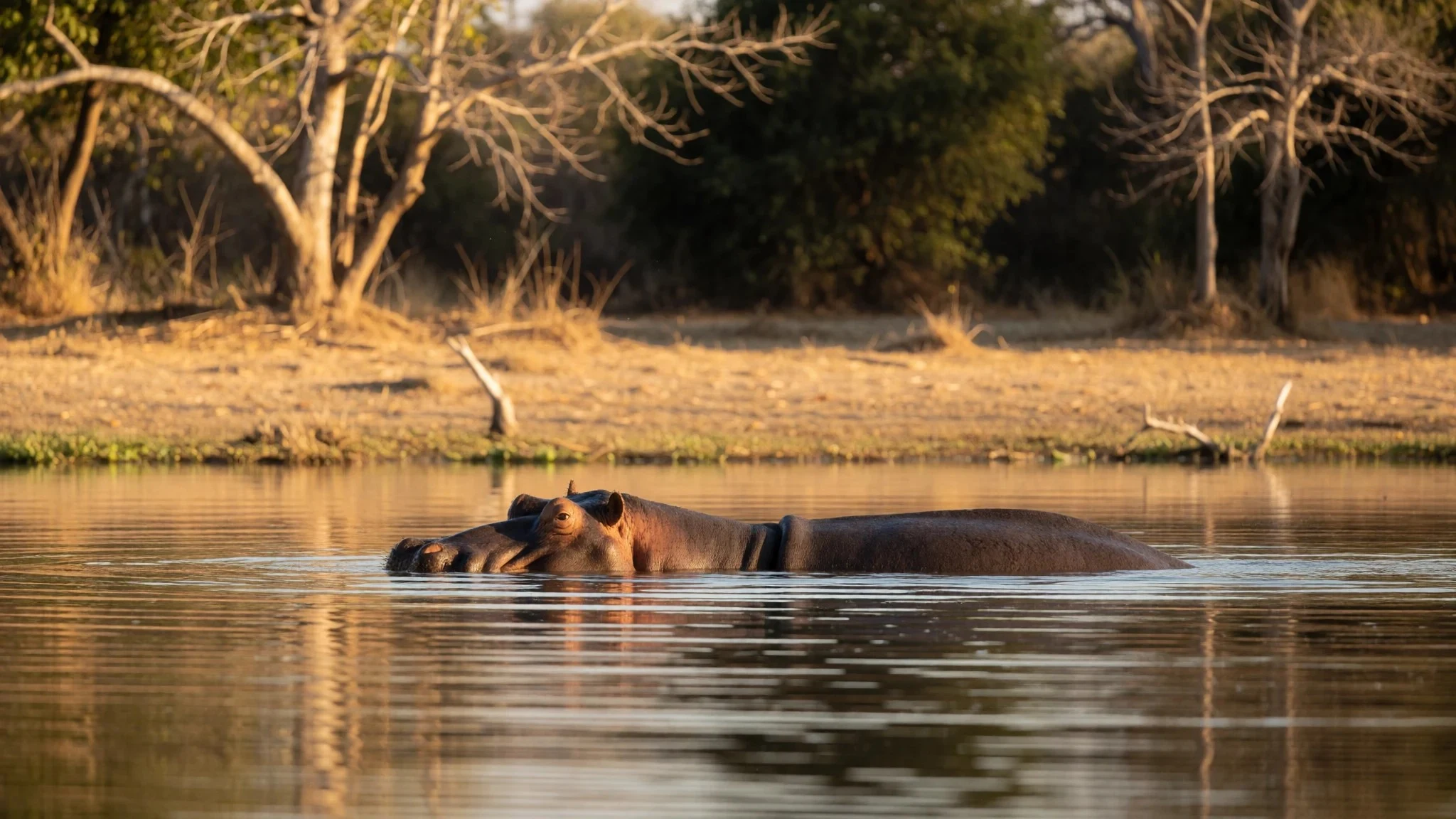
- Crocodile (animal)
The Nile crocodile is a large freshwater giant that lives in African rivers, lakes and swamps. Along the Shire River you may spot one basking perfectly still on a sandbank in the sun, often resting close to hippos in the same mud. Keep well back, stay quiet and let your guide choose where to stand. Never feed a crocodile, and never try to coax it closer.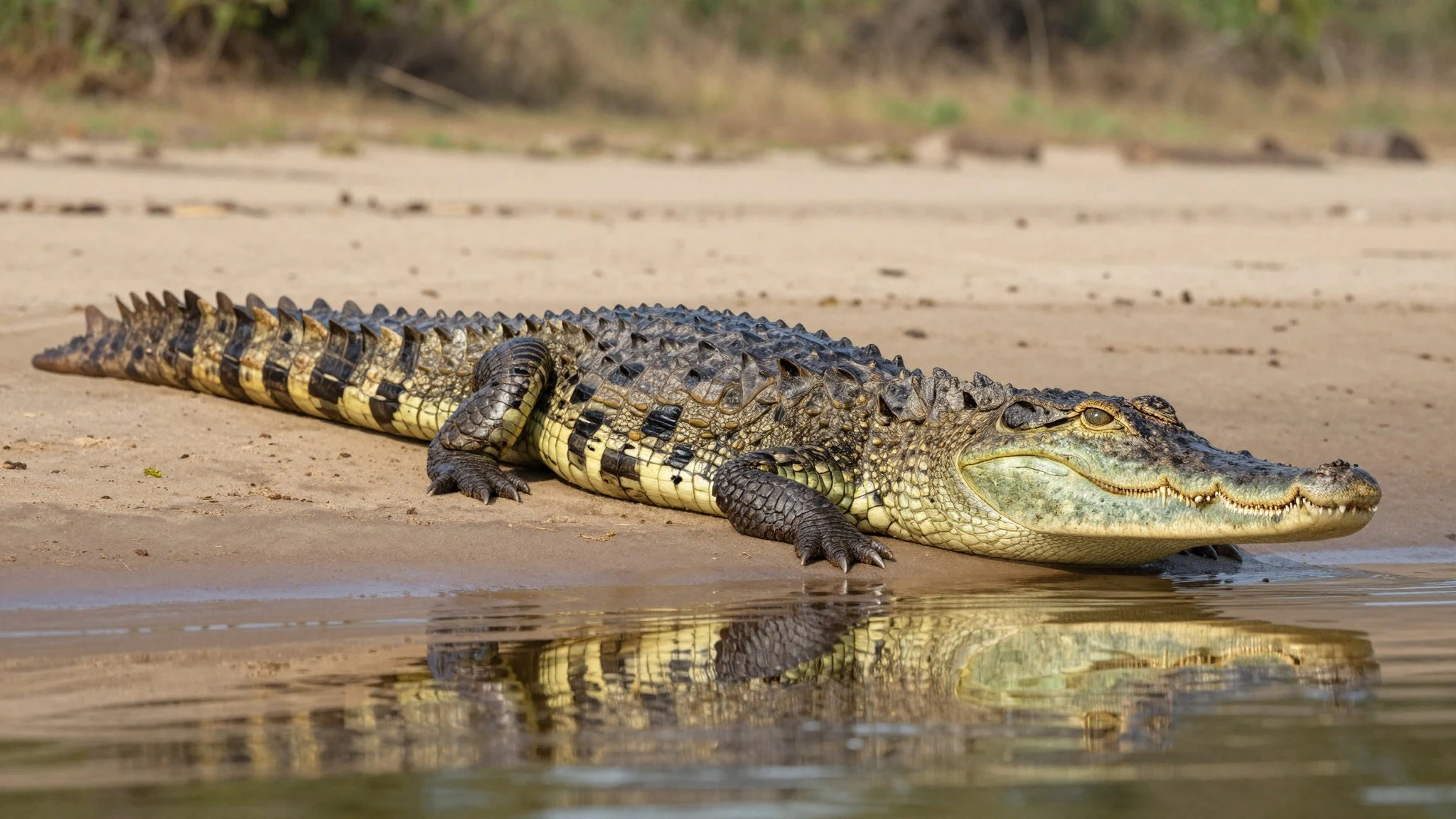
- African fish eagle (bird)
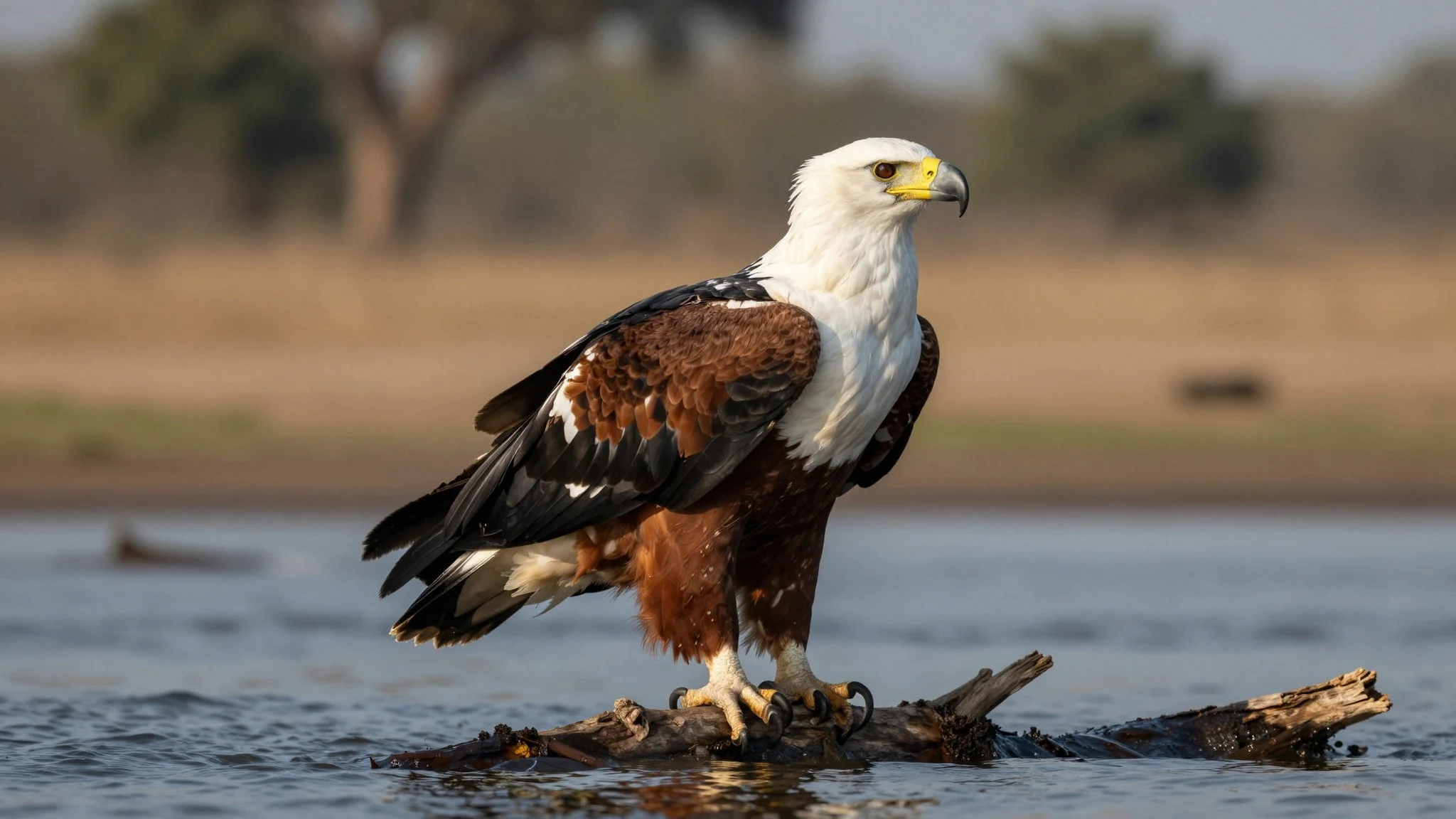
The African fish eagle is a big eagle that lives wherever there is plenty of open water and food, and it is the national bird of Malawi. At Liwonde, look for it hunting along the river channels, alongside the kingfishers. Stay quiet and keep your distance so it can fish undisturbed, and go with a guide who knows where it likes to perch. Never feed it.