Lilongwe
Lilongwe, Malawi
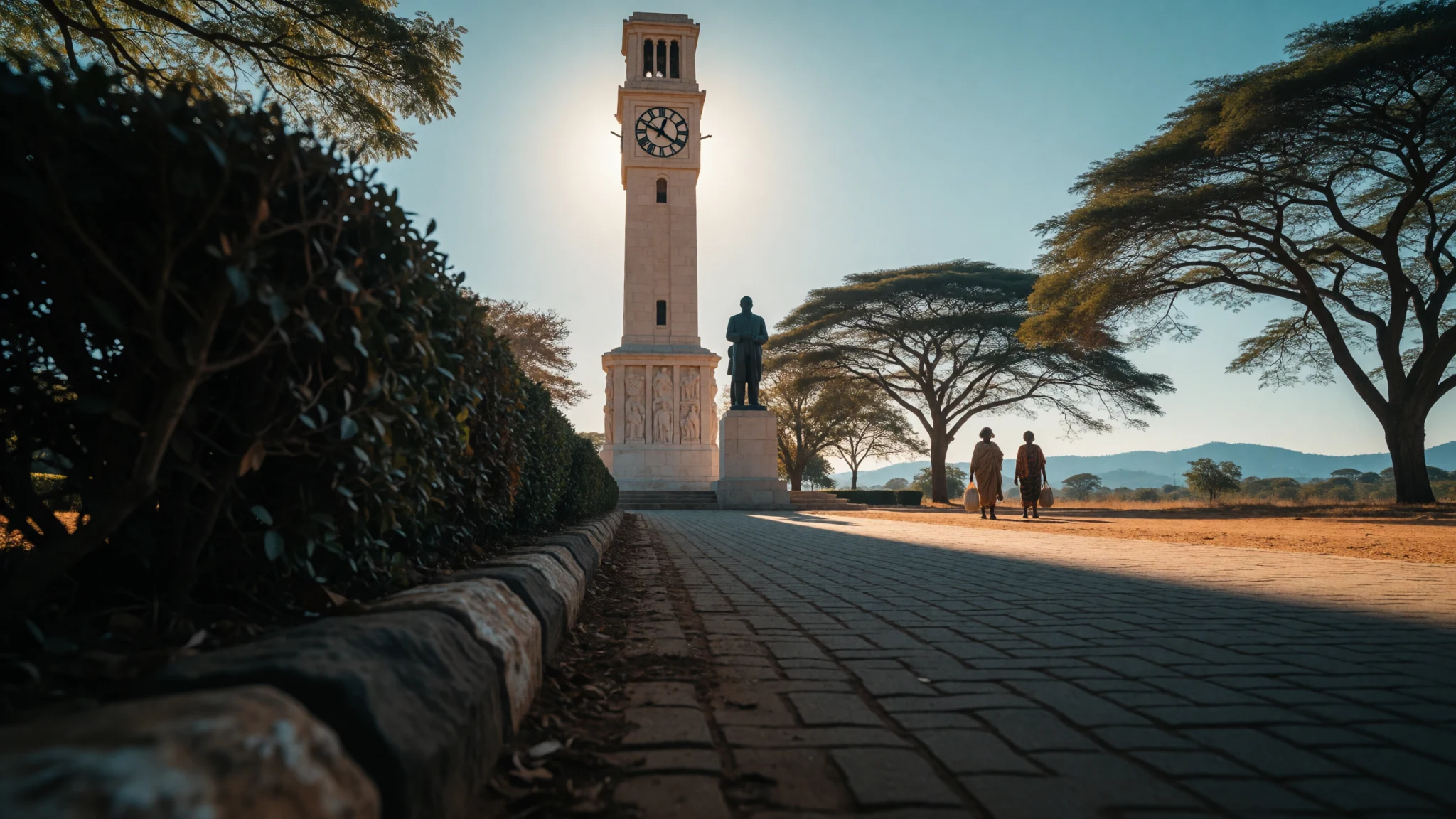
Lilongwe is a calm, practical African capital on a high plateau, best for markets, wildlife rescue and a gateway to Lake Malawi.
The place
Lilongwe is the capital of Malawi, a city of about one million people spread across a plateau in the middle of the country, at 1,050 m above sea level. It takes its name from the Lilongwe River and lies not far from the borders with Mozambique and Zambia, which makes it a natural hub for roads and trade. The city works like two separate towns. The New City, often called Capital City, holds embassies, ministries, offices and the shopping centres where diplomats and aid workers do their errands, with broad roads and plenty of greenery. The Old Town is louder and more everyday: bus stations, walled and open-air markets, cafes and cheap eateries, much of it clustered around Area 2. Neighbourhoods are numbered rather than named, so directions are often given by area number. Lilongwe is not a city of grand monuments, and most visitors pass through for flights, supplies and onward trips to Lake Malawi. Give it a day or two, though, and it shows how a young African capital actually runs: farmers bringing produce in from the surrounding plateau, civil servants in suits, minibuses everywhere, and a pace that is gentler than most capitals. Dry-season skies are clear and the air is dusty; in the rains the plateau turns green and the roads can be slow. Evenings are quiet, and the city is honest about being practical rather than pretty.
Its story
Lilongwe began as a small administrative post. Around 1902 a local leader named Njewa set up a boma here, and by 1904 it had become an administrative centre. Its position where several main roads met turned it into a market for the farmland of the surrounding plateau, and it was formally recognised as a town in 1947. After independence the town kept growing, and in 1965 Malawi's first president, Hastings Kamuzu Banda, chose it as a growth point for the central and northern regions. The reasoning was practical: gather the machinery of government in one place and pull investment towards areas that had lagged behind the south, where the older capital, Zomba, stood. A first plan for the city had already been published in 1955. In 1975 Lilongwe replaced Zomba as the capital, although moving every office took a long time, and the last government departments only arrived in 2005. The move came with building projects: an international airport, rail links towards Salima in the east and the Zambian border in the west, industrial districts in the north, and support for tobacco farming on the plateau. Growth has not slowed. The 2018 census counted 989,318 residents, up from 674,448 in 2008, and that is why new housing areas keep spreading outwards while planners still struggle to keep water, roads and services in step.
What to see
- Lilongwe Wildlife Centre — Between the New City and Old Town, by the river bridge
A rescue and rehabilitation centre near the river, on the way back towards Old Town. Animals that have been confiscated, orphaned or injured are cared for here, and guided tours explain their stories and the wilderness area beyond the enclosures. Look for the roadside sign, and check ahead for tour times. - Kumbali Cultural Centre — Capital Hill, New City
A place to watch traditional Malawian dancing and drumming, with live acoustic music and a Malawian dinner on offer. It suits a first evening when the aim is to understand local rhythm and food without hunting around town. Book ahead and confirm what is on that night. - Parliament buildings — Capital Hill, New City
The seat of Malawi's legislature stands in the capital district behind a gate. Visitors cannot go inside, but the buildings can be seen from the entrance, and a short stop gives a feel for the planned, spacious New City. Take photographs only where guards allow it, and ask if unsure.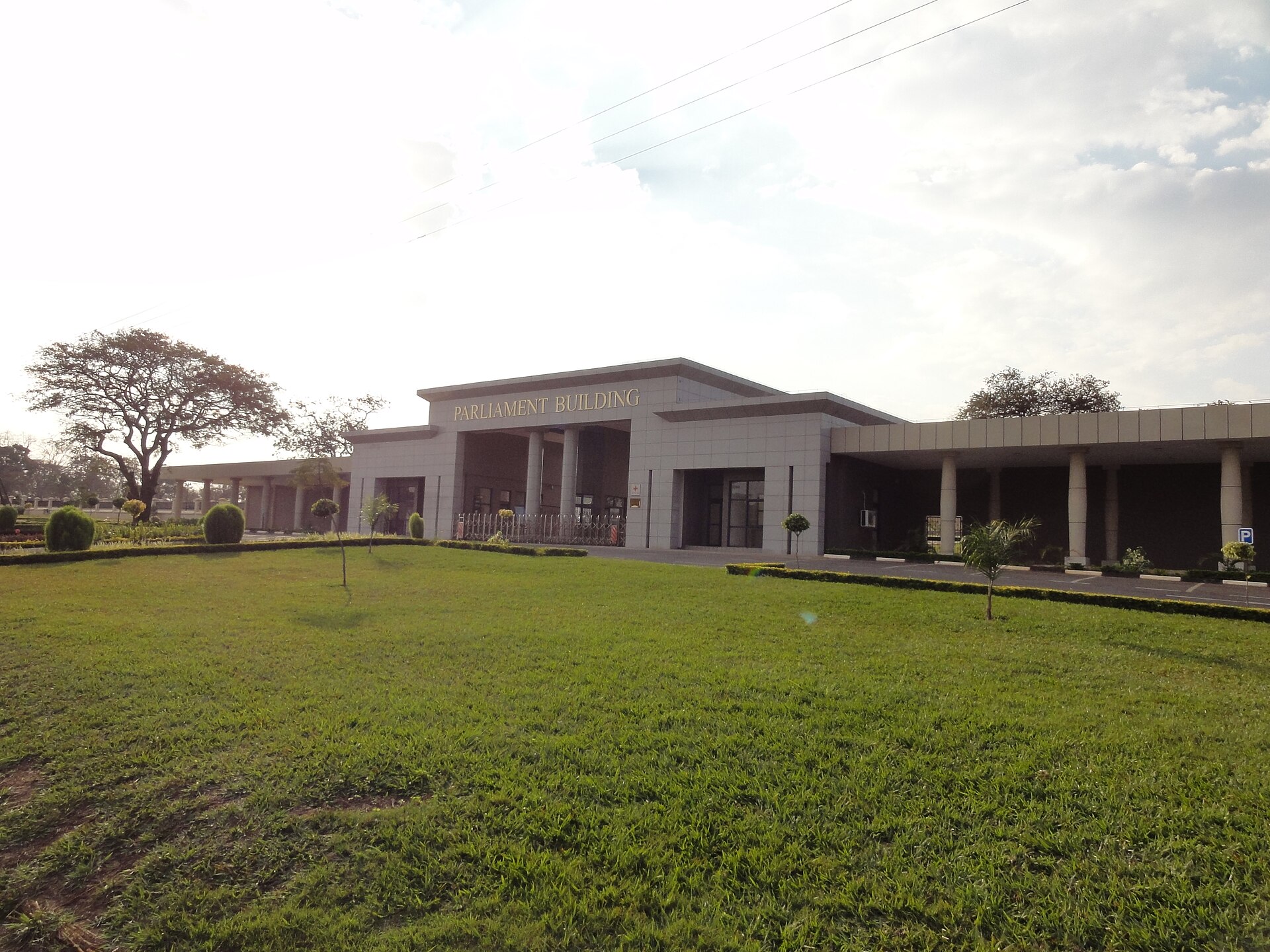
- Kamuzu Mausoleum — Capital Hill, near Parliament
The tomb of Dr Hastings Kamuzu Banda, first president of independent Malawi, whose decision shaped the city's rise to capital. It is a quiet, formal site, and a useful way to connect Lilongwe's layout with the political story behind it. Dress neatly and speak softly. - War memorial clock tower and Banda statue — City centre, Old Town side of the New City
A memorial tower commemorates Malawian soldiers who died in the two world wars, and a statue of Banda stands close by. Neither takes long, but together they give a compact lesson in colonial and independence-era history. Go in the morning for softer light and cooler air.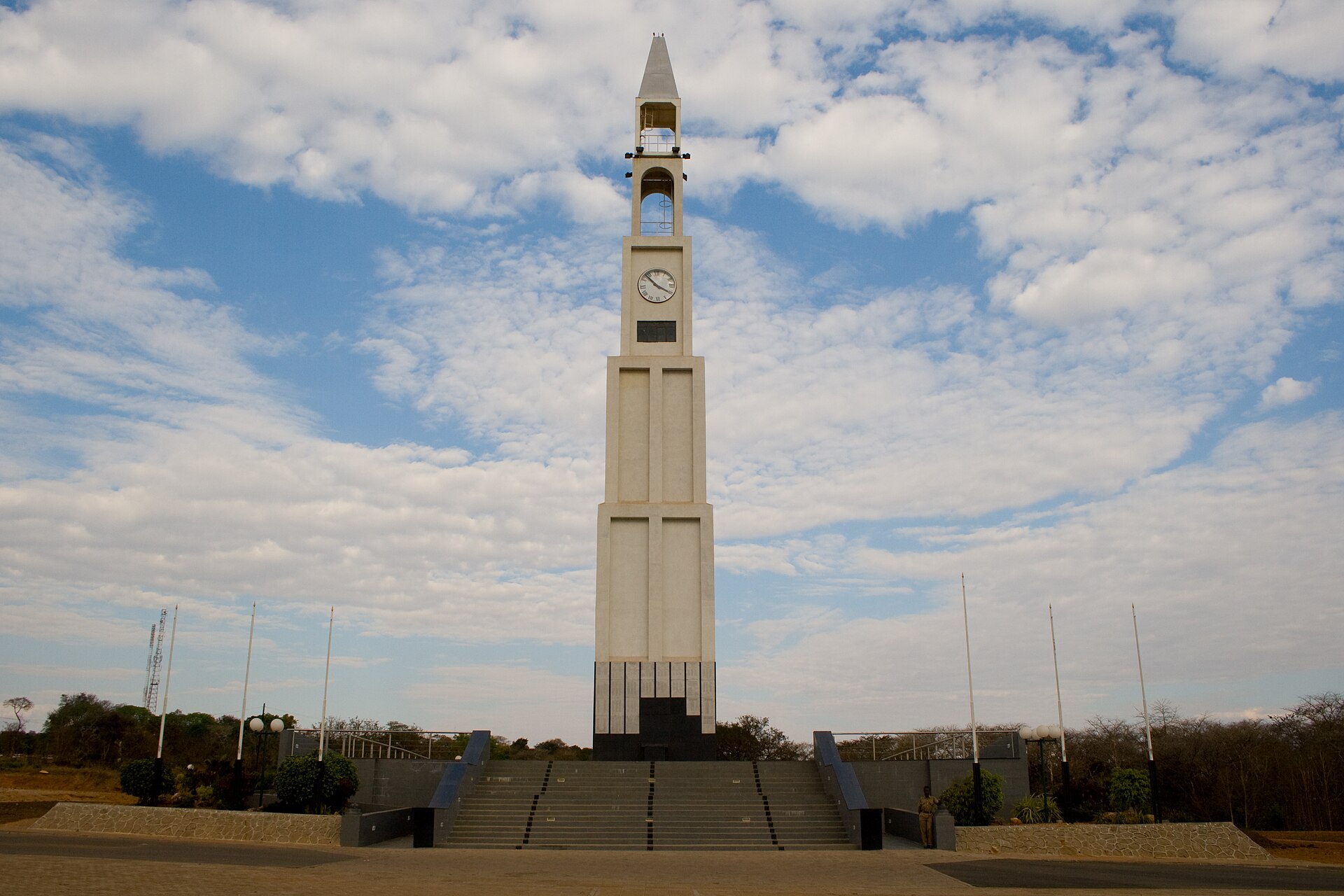
Culture
Lilongwe sits in Malawi's central region, where Chichewa is the everyday language and the Chewa people have long shaped local custom. Their masked Gule Wamkulu dancing is the best-known tradition, and it belongs to initiation and funeral rites rather than tourist shows, so the staged drumming and dance evenings at cultural centres are the better, more respectful place to watch. Church is central to many families, and Sunday mornings bring crowds in their best clothes. Greetings matter here. A proper exchange of hellos and a question about family or health comes before any request, and rushing straight to business can feel rude. Malawians are often called gentle and patient, and that is how daily life tends to run: queues move slowly, minibuses leave when they fill, and meetings start late without anyone being upset. Staple meals are built around nsima, a thick maize porridge eaten by hand with a relish of vegetables, fish, beans or meat. Government and military buildings are sensitive places, and the Parliament compound is closed to visitors beyond the gate. Markets in the Old Town are crowded and cash-based, with bargaining accepted for crafts but not for food. Greet people before asking for anything, and ask permission before photographing individuals, market stalls or any official building.
What to wear
The cloth most associated with Malawi is the chitenje, a printed cotton length in bold patterns that women wrap as a skirt, tie as a head cover or use to carry a baby on the back. It is worn at home, in the fields and at the market, and matching chitenje are often chosen for weddings, funerals and church groups. Men wear it less often, mainly in rural areas. Ceremonial dancers use costumes of cloth, plant fibre and masks, which belong to ritual occasions and are not everyday dress. In Lilongwe today, people mostly dress in a mix of modern and local styles. Office workers wear suits or smart shirts, schoolchildren wear crisp uniforms, and secondhand jeans and shirts are widespread, with chitenje reserved for home and special days. For visitors, light cotton clothes suit the plateau's warm days, and a layer helps on cool evenings in the dry season. A hat and sunscreen are useful, and a compact rain jacket is worth packing for the wet months. Modest dress, with shoulders and knees covered, is appreciated in churches, villages and official places. Comfortable closed shoes handle the dusty Old Town streets and uneven pavements, and a chitenje bought in a market makes a practical, inexpensive wrap or scarf.
What to eat
- Nsima with relish — Local cafes in Area 2 and market eateries in Old Town
Nsima is the staple: a firm maize porridge torn off in small lumps, rolled and dipped into a side of greens, beans, fish, chicken or beef. It is filling and cheap, and it is the dish locals will point to first. - Chicken and chips — Takeaways and fast-food places in both town centres
Fried or grilled chicken with chips is a reliable, quick meal, served from simple takeaways and chain-style fast food places. Quality is often better than expected, and it is a safe choice for a first day when appetite or patience is low. - Chambo fish — Restaurants in the New City and market stalls in Old Town
Chambo is a Lake Malawi fish, usually grilled or fried whole and served with nsima or chips. It is a good taste of the lake while still in the capital, and is best ordered where the menu says it is fresh. - Mandasi — Street sellers near the Old Town bus station and markets
Mandasi are fried dough balls, similar to small doughnuts, sold warm for a snack or breakfast with tea. They are simple, a little sweet and easy to pick up on the move between bus stops. - Curries and Asian dishes — Restaurants and lodges around the Old Town and in the New City gardens
The city's restaurants serve a wide mix of Indian, Chinese and Korean food, a legacy of long-established communities and recent arrivals. They are a useful break from fried food, and many offer takeaway for those staying in lodges.
Plan it
Best time. April to August is the dry season, with clear skies and the easiest travel; June and July are usually the coolest months. The rains bring green countryside but slower roads and heavier downpours, so allow extra time then.
How long. 1–2
Getting there. Fly into Lilongwe Kamuzu International Airport, a drive north of town of roughly half an hour or a little more, then take a taxi to the lodges or restaurants of Old Town or the New City. Buses run from Johannesburg, Harare and Lusaka, and the Zambian border at Mchinji is about 110 km away by minibus or shared truck.
Budget. mid
Tips
- Arrange transport back to your lodge before dark, as the city is said to be unsafe on foot at night
- Carry small cash for markets, minibuses and cheap eateries, as many places do not take cards
- Agree taxi fares before setting off and ask your lodge for a fair rate
- Drink bottled or treated water, and use sunscreen on the high, bright plateau
- Check the city council website (http://www.llcitycouncil.org/) and individual venues for opening times
Etiquette
- Greet people properly before asking a question or making a request
- Ask before photographing people, market stalls or government buildings
- Dress modestly in churches, villages and official places
Nearby
Sources
- Wikidata Q3876 (CC0)
- Wikipedia: Lilongwe (rev 1378621524) (CC BY-SA 4.0)
- Wikivoyage: Lilongwe (rev 5426494) (CC BY-SA 4.0)
- Lilongwe Area 2, Brian Dell (Public domain)
- Clocktower in Lilongwe, Felixfeld (CC BY 3.0)
- National Bank @ citycenter, Timon Zingg (CC BY 3.0)
- Parliament building Malawi, Timon Zingg (CC BY 3.0)
- Parliamentbuilding, Timon Zingg (CC BY 3.0)
- Citycenter, Timon Zingg (CC BY 3.0)
- FWKI Terminal, Sean Mendis (CC BY-SA 4.0)
- 1917. The Residency, Lilongwe, Society of Malawi, Historical and Scientific (CC BY 3.0)


