Zhujiajiao
Zhujiajiao, People's Republic of China
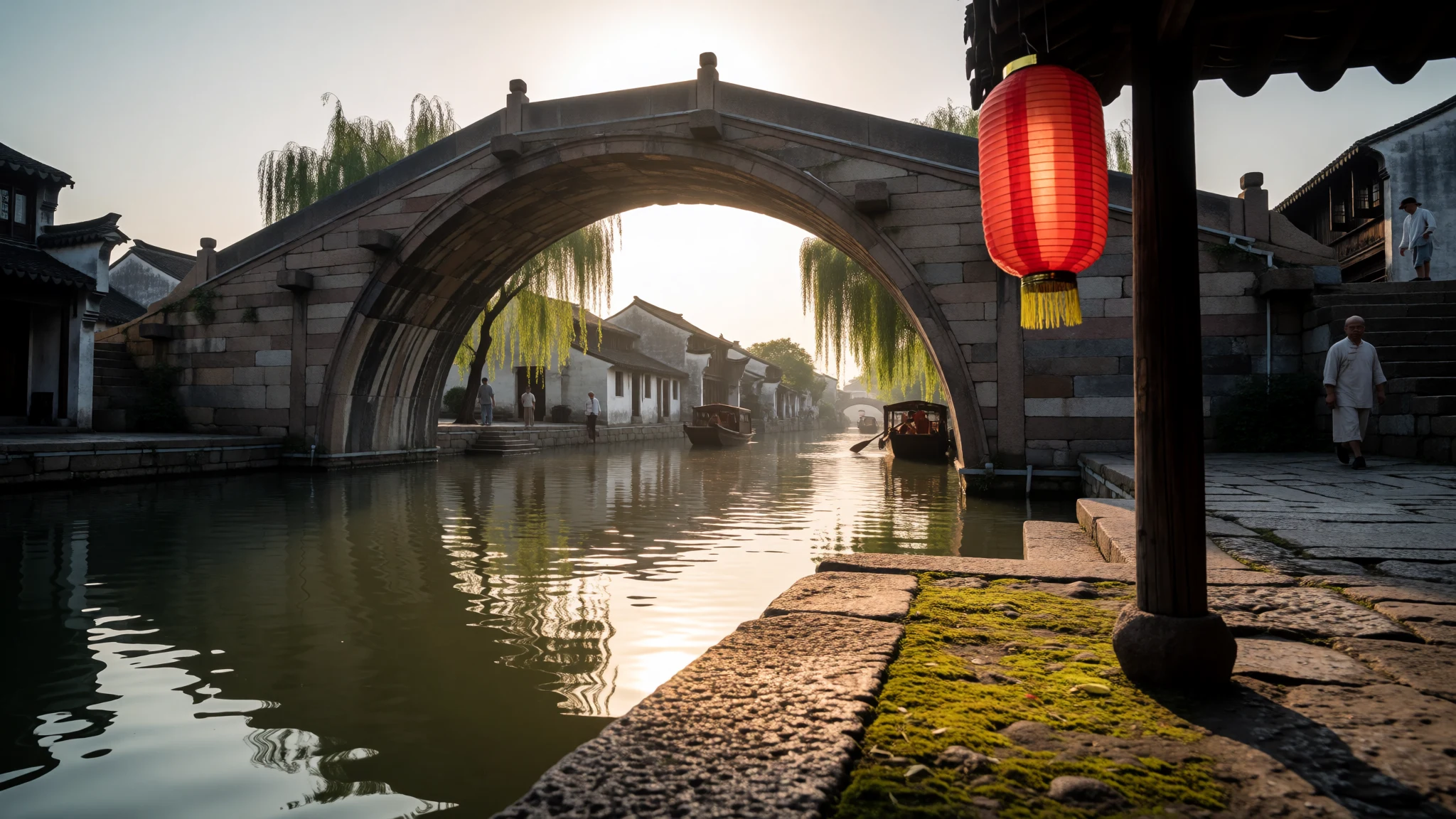
Zhujiajiao is an old canal town inside Shanghai's Qingpu District, where stone bridges and timber houses make an easy escape from the city.
The place
Zhujiajiao is a water town in Qingpu District, on the western edge of Shanghai. It sits where rivers and small canals meet, and the whole old quarter is organised around water: lanes run beside the channels, houses open onto them, and arched stone bridges link one bank to the next. A wide river borders the town, and narrower canals thread through the middle, so a short walk can take in both open water and tight, shaded passages.
The buildings are low, built of timber, brick and tile, with dark roofs and whitewashed walls reflected in the canal. Many of them now hold small shops, tea rooms, snack counters and craft stalls, so the old lanes are busy and commercial rather than quiet. That is part of the character, but it also means the main streets fill up with day trippers, especially at weekends and on public holidays.
The pleasure of the place is in its scale. Nothing here is huge. A stone bridge, a courtyard garden, a temple, a stretch of towpath: each is small enough to take in within minutes, and the town rewards slow wandering more than ticking off sights. Boats, some rowed by a single boatman with a long oar, move along the canals and give a different view of the same houses.
Because it lies within the Shanghai municipality, it is a realistic half-day or full-day outing from the centre, and a calm contrast to the towers and traffic of the city. Early mornings and the edges of town are noticeably more peaceful than midday on the central lanes.
Its story
Zhujiajiao grew as a market settlement in the watery lowlands of the Yangtze delta, where rivers were the roads. Goods, grain and people moved by boat, and a town that sat on a junction of waterways could become a trading point for the villages around it. The layout you still see, with streets hugging the canals and bridges at every crossing, comes from that working life rather than from any grand plan.
The stone bridges are the clearest record of this. They were built so that people and carts could cross without blocking the boats beneath, which is why many of them arch high above the water. Merchants' houses, shops and guild-style buildings gathered close to the water's edge, because that is where business arrived.
As roads and railways took over from boats, towns like this one lost their central role. Many delta settlements were altered or pulled down in the twentieth century as cities expanded, and Zhujiajiao's survival as a compact old quarter owes something to being on the margins for a long time. In more recent decades the town has been conserved and opened to visitors, and its economy has shifted from carrying goods to welcoming people.
That change has a cost and a benefit. The buildings are maintained and the canals kept open, but many shopfronts now sell souvenirs and snacks aimed at tourists. Reading the town well means looking past the stalls to the bridges, the orientation of the lanes and the way the houses face the water, which still explain why it exists at all.
What to see
- The stone bridges — Old town canals
Zhujiajiao is known for its arched stone bridges, and crossing several of them is the simplest way to understand the town. Each rises steeply over the canal so boats can pass beneath. Stand on one at a quiet moment and look along the water: the rows of roofs, the lanterns and the moving boats all line up.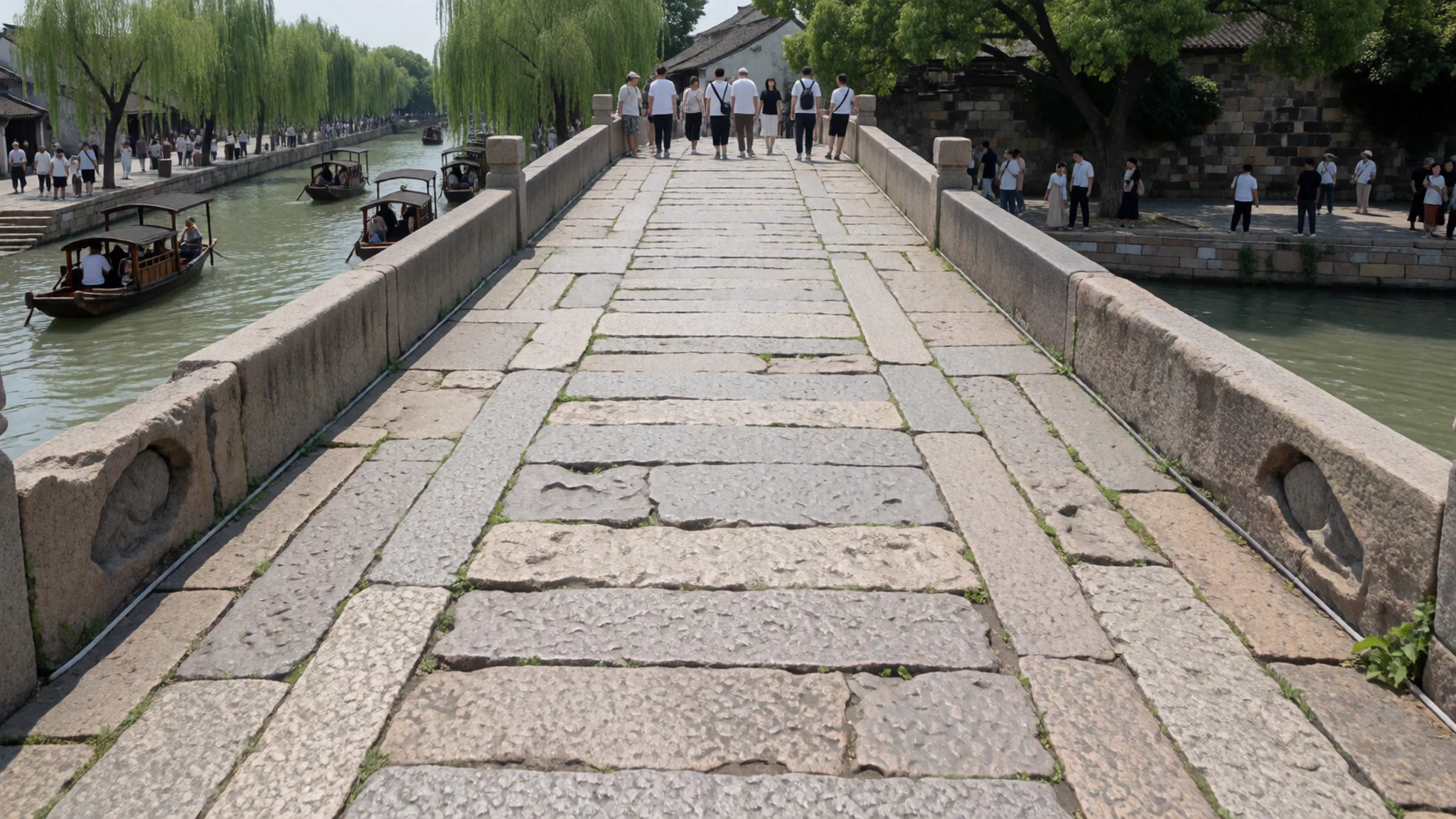
- Canal lanes and towpaths — Central old quarter
The narrow lanes beside the canals are the heart of the old quarter. Timber-fronted houses open straight onto the water, with tea rooms and small shops at street level. The main lanes are crowded at midday, so walk the side channels and the quieter banks for a better sense of daily life.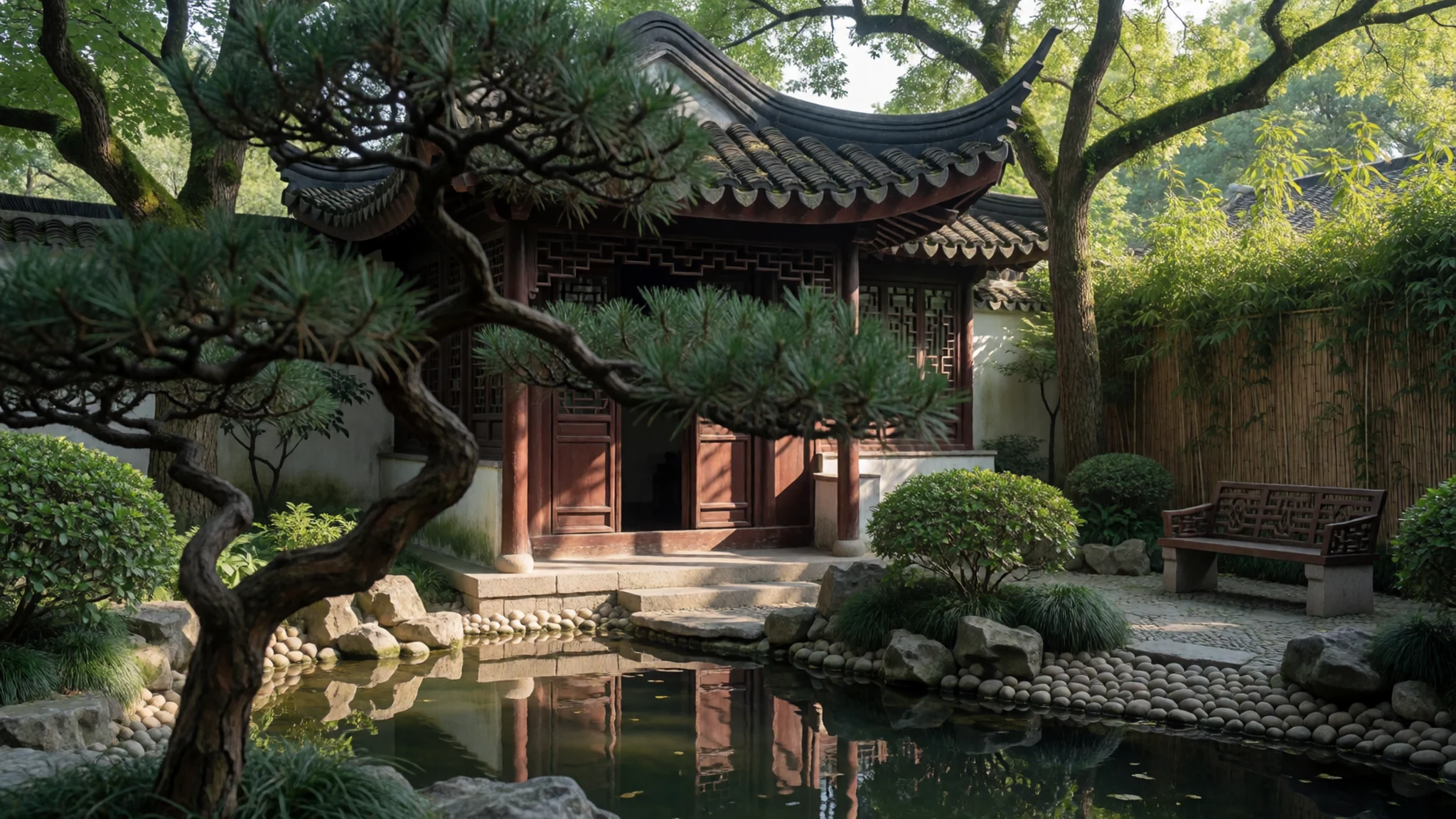
- Kezhi Garden — Old town
Kezhi Garden is a classical-style courtyard garden with ponds, rockwork, pavilions and covered walkways. One of its pavilions, the Upside Down Lion Pavilion, is photographed often. It is compact, so it suits a short, unhurried visit that breaks up the lane walking and gives some shade on a hot day.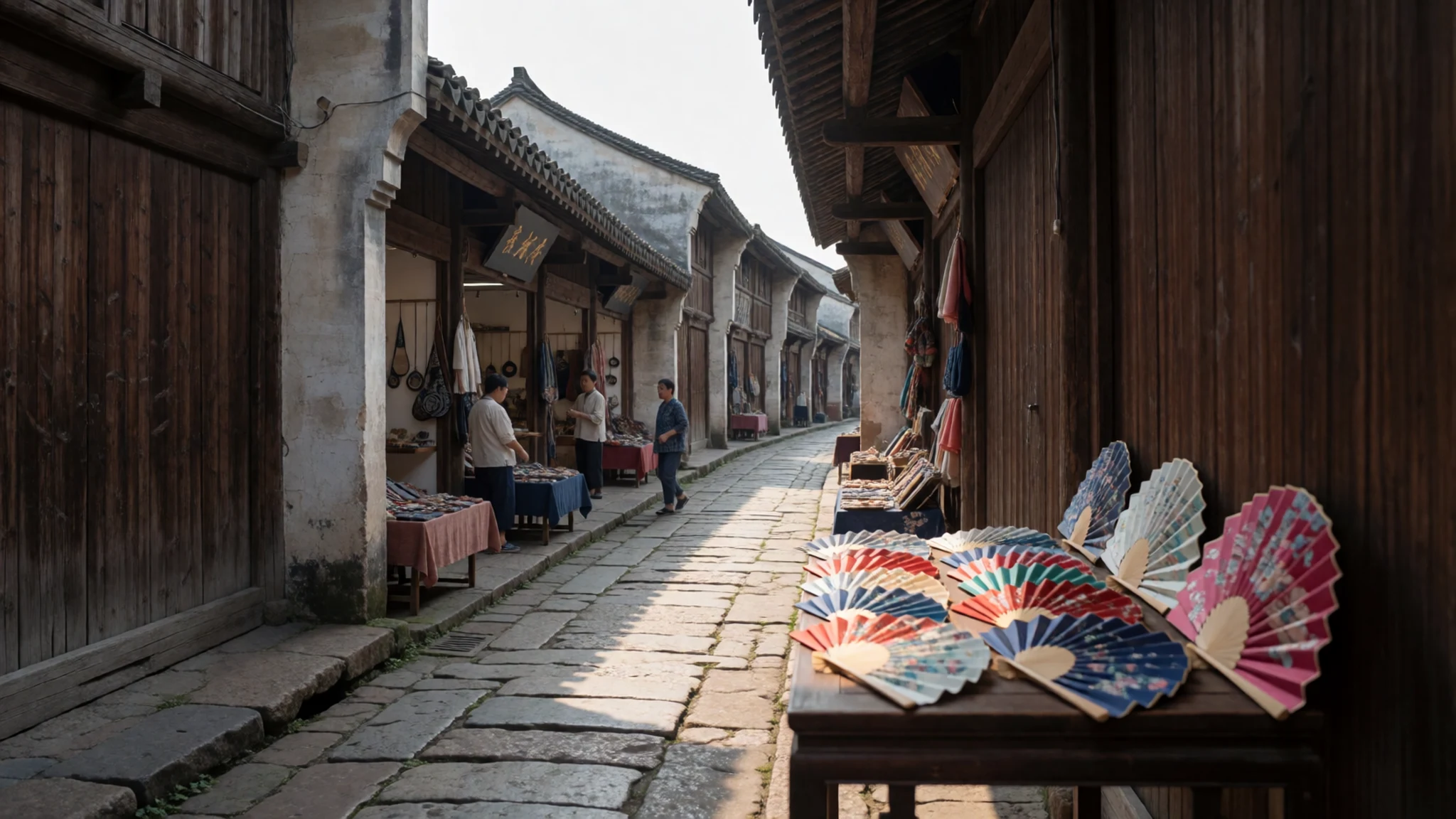
- Boat ride on the canals — Canal landings
Small boats, often rowed with a single long oar, take passengers along the waterways. The ride shows the town from below, with bridges overhead and house foundations at water level. Ask at the landing points about the route before boarding, and expect queues at busy times.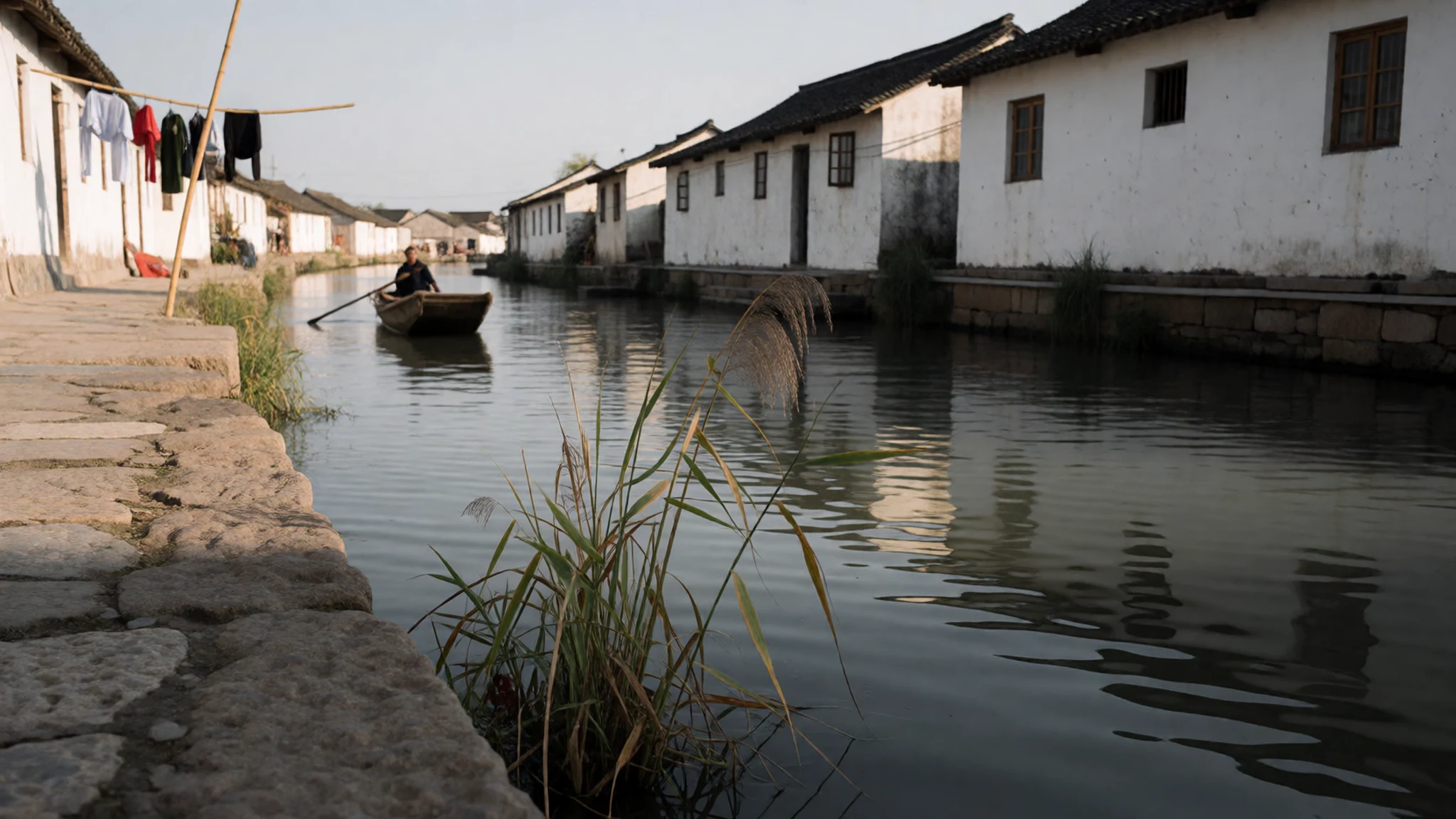
- The wide river edge — River frontage
Along the broader river on the edge of the old quarter, the mood changes. The water opens out, the crowds thin, and the old rooftops sit behind the bank. It is a good place to rest, watch passing boats and gain a sense of how the town sits within the wider river landscape.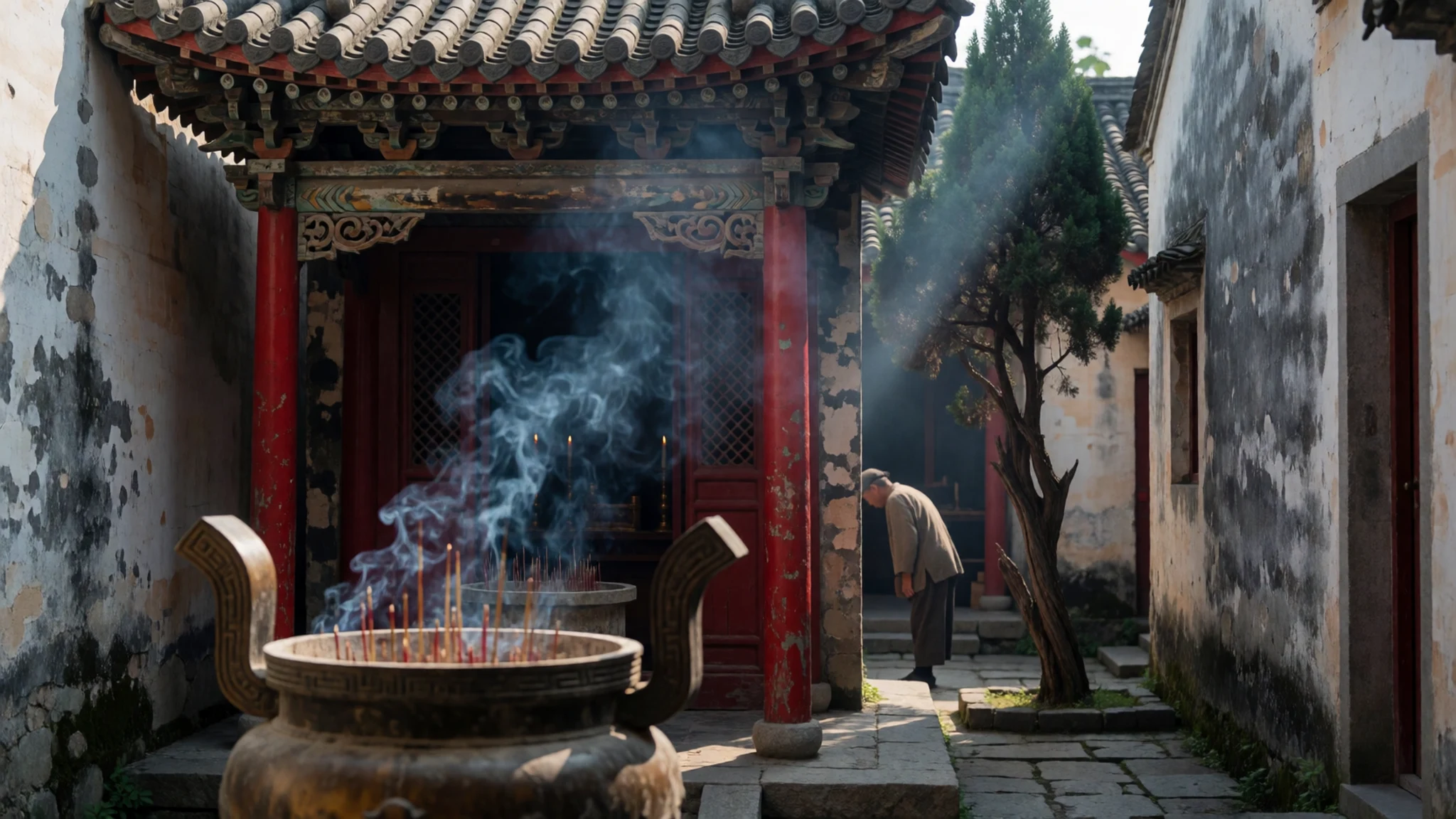
Culture
Zhujiajiao carries the culture of the Yangtze delta, where life was shaped by water, trade and tea. Local habits still show in the rhythm of the day: mornings begin with residents shopping and chatting along the canals before the visitors arrive, and tea houses remain social places where people sit for a long time over a single pot.
The town today balances two lives. One belongs to residents, who use the lanes, bridges and landings as they always have. The other belongs to the tourist trade, with shops, snack counters and performances aimed at visitors. Both are real, and noticing where they overlap is part of the experience.
The delta region has its own dialect and a long tradition of craft, from textiles to small-scale food production. Temples and gardens here follow the classical Chinese pattern of courtyards, screens and carefully framed views, designed to be walked through slowly rather than seen at a glance. Festivals and public holidays bring the biggest crowds and the most decoration, with lanterns and stalls along the canals.
Like elsewhere in China, many people are happy to be part of a holiday scene but not necessarily to be photographed up close. Visitors who go slowly, buy a little from local stalls and keep to the walkways will find the town welcoming.
Ask before photographing residents at close range, especially older people working at their doorways or on the boats.
What to wear
Zhujiajiao sits in the Yangtze delta, a region long associated with silk and cotton weaving. Traditional dress in this part of China drew on those fabrics: silk for finer garments, cotton and hemp for everyday wear. The qipao, a fitted dress with a high collar and side fastenings, belongs to the Shanghai region's twentieth-century style and is the garment most associated with the area, usually worn now for weddings, photographs and celebrations rather than daily life.
In the town itself you will see both worlds. Some visitors hire traditional-style costumes for photographs on the bridges, and a few shops sell silk scarves and embroidered items. Residents, though, dress as people do across Shanghai: jeans, light jackets, trainers, practical cotton clothes and, for older people, the familiar quilted or fleece layers in cooler months.
For a visit, dress for walking and weather. Summers are hot and humid, so light cotton or linen, a hat and a small umbrella that works for both sun and rain are sensible. Winters can be damp and cold near the water, so bring a warm layer and a windproof jacket. The old lanes are paved with uneven stone, often wet, so choose comfortable shoes with grip rather than smooth soles or heels.
There is no strict dress code in the town, but if you step into a temple, cover bare shoulders and avoid anything very revealing as a courtesy.
What to eat
- Zhujiajiao zongzi — Shopfronts along the main canal lanes
Sticky rice wrapped in bamboo or reed leaves and steamed, with fillings such as pork or red bean paste. This is the local snack most often named by visitors. Look for specialist counters on the main canal-side lanes, where they are made fresh and sold warm.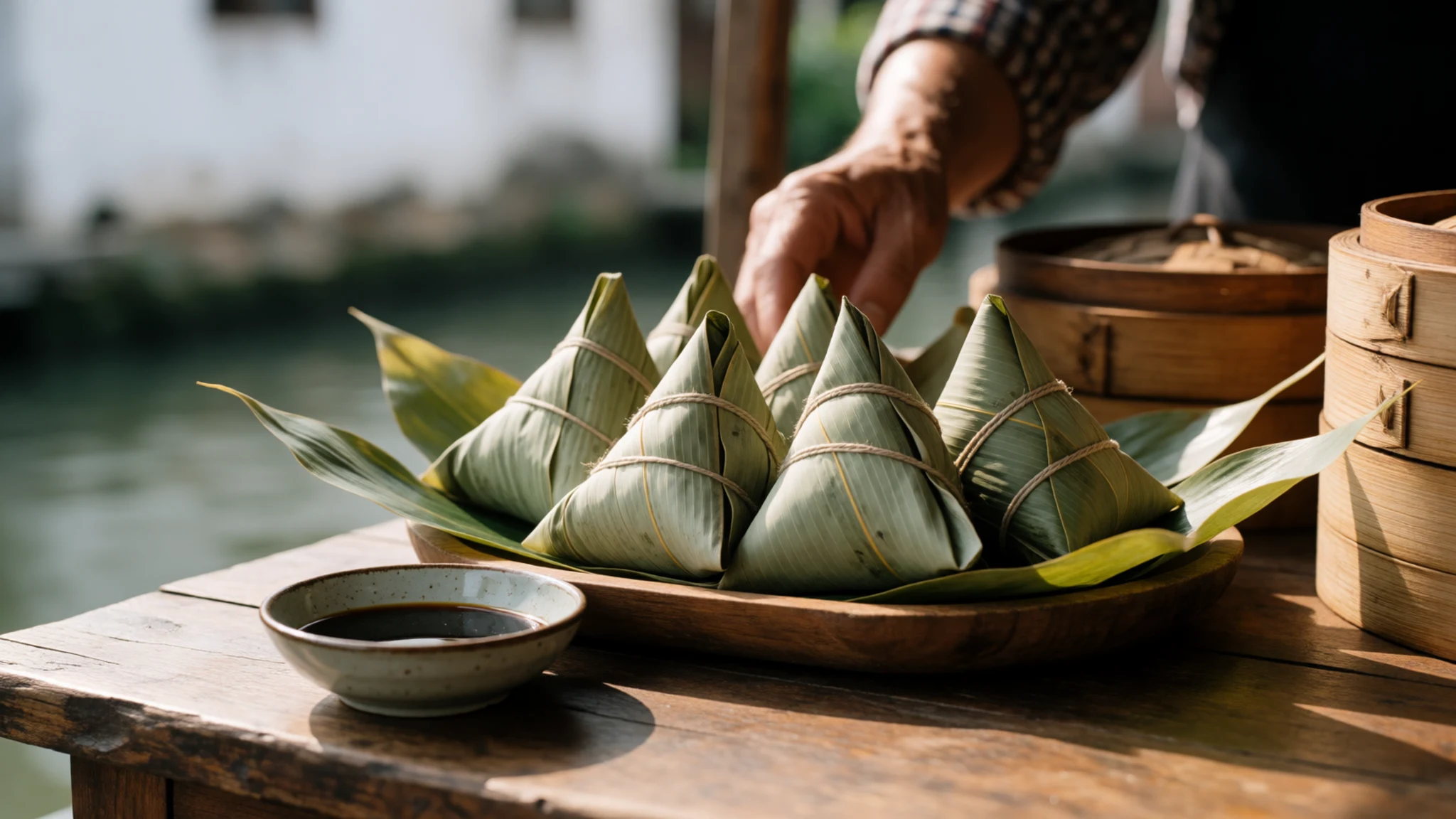
- Braised pork elbow (zhouzi) — Sit-down eateries in the old town
A slow-cooked pork joint in a dark, sweet-savoury sauce, soft enough to pull apart. It is a rich dish associated with the Shanghai region and is often shared at a table. Order it at a sit-down eatery in the old town, ideally with greens to balance it.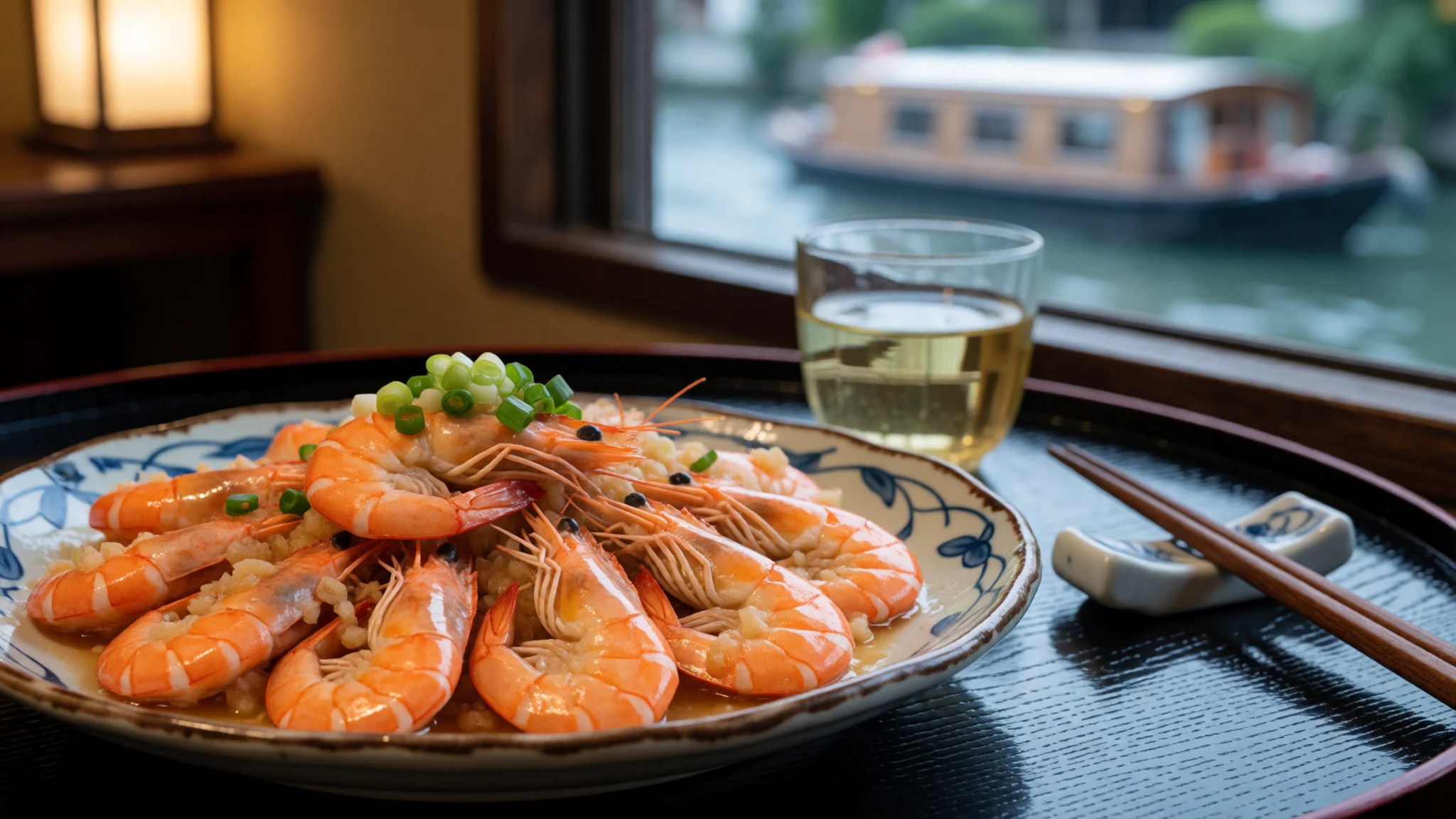
- Fresh river fish and shrimp — Canal-side restaurants
Delta waters supply fish, shrimp and other freshwater produce, which local cooks steam, stir-fry or simmer lightly. Choose dishes with simple seasoning to taste the freshness. Eateries beside the canals tend to specialise in them, and the menu usually changes with the season. - Steamed buns and dumplings — Lane-side snack stalls
Small steamed buns and dumplings are standard Shanghai-region fare, filled with pork, vegetables or sometimes crab. They are easy to eat while walking, though the filling can be very hot. Stalls on the lanes sell them in bamboo steamers throughout the day. - Tea and sweet pastries — Tea houses beside the canals
Tea houses along the canals serve green tea with small sweet or savoury pastries, a pleasant way to rest while watching boats pass. Choose a table by the window or on the water's edge, and expect to stay a while; nobody hurries you.
Plan it
Best time. March–April and October–November, when the weather is mild and walking is comfortable. Summer is hot and humid, with rain likely, and winter can be damp and chilly near the water.
How long. 1
Getting there. Fly into Shanghai Pudong or Hongqiao airport, then travel west to Qingpu District by metro and onward bus or taxi; check current routes on a map app, as services change. The last leg is a short walk into the old town.
Budget. low
Tips
- Go early on a weekday to see the canals before the crowds arrive
- Carry a small umbrella for sun and sudden rain
- Wear shoes with grip, as the stone paving gets slippery when wet
- Keep some mobile payment or cash ready for small stalls, and check that foreign cards work
- Eat snacks hot from the steamer, and carry water in summer
Etiquette
- Ask before photographing residents at close range
- Keep to the walkways and do not block the narrow bridges for photographs
- Cover shoulders and keep voices low when entering a temple
Nearby
Sources
- Wikidata, Zhujiajiao (CC0)
- Wikipedia, Zhujiajiao (CC BY-SA 4.0)
- Wikivoyage, Zhujiajiao (CC BY-SA 4.0)