Yok Don National Park
Yok Don National Park, Vietnam
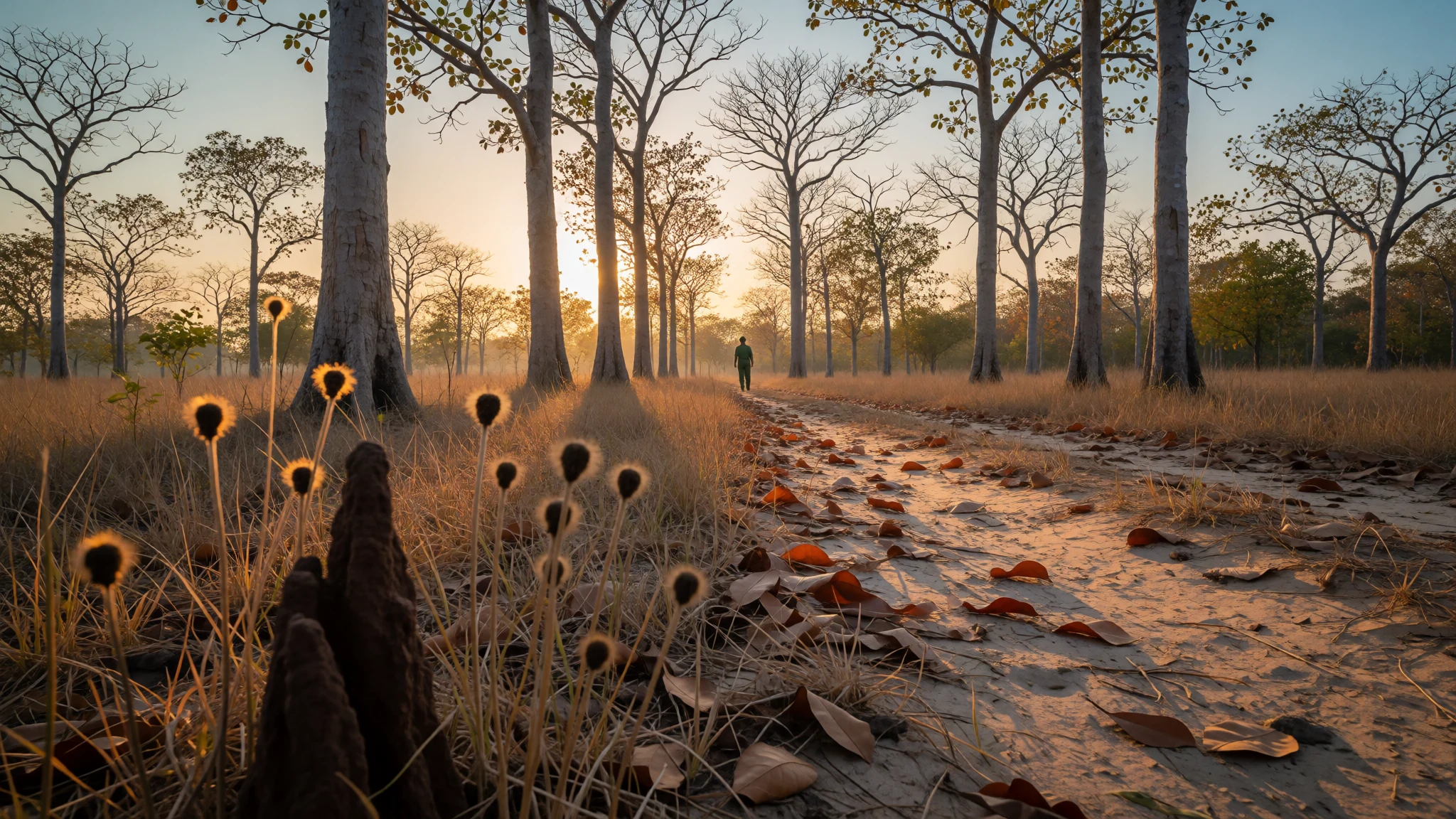
Yok Don National Park is open dry forest on the Cambodian border, where the leaf-fall season makes wildlife and river views easier to find.
The place
Yok Don National Park sits in Đắk Lắk Province in Vietnam's Central Highlands, about 40 km west of Buôn Ma Thuột, and runs up to the Cambodian border. The protected area covers roughly 1,155 square kilometres. On the far side lies Mondulkiri Protected Forest in Cambodia, so the park forms one half of a large block of conservation land that crosses the frontier.
What sets it apart from the green, layered forests most people picture in Vietnam is the vegetation. The park protects khộp forest, a lowland dry woodland of deciduous trees with a grassy, open floor. In the rainy months it is leafy and humid. In the dry season the canopy thins, the grass turns straw-coloured and sunlight reaches the ground. The land is flat to gently rolling, and the Sêrêpok river and its seasonal streams provide most of the water.
That openness is the practical appeal. Distances are easier to read, animals are easier to hear, and birds are easier to spot in bare branches than they would be in dense rainforest. It is also hot. Dry-season afternoons can be punishing, so the useful hours for walking are early morning and late afternoon.
The park is a quiet, rural place rather than a developed resort. Expect a gateway area, guided routes, simple lodging and villages of the Ede and M'nong peoples close by. Large mammals live here but are shy, and a good visit is measured in birds, tracks, trees and river scenes more than in big sightings.
Its story
Yok Don National Park was created in the late twentieth century to protect khộp forest, a habitat that is easy to overlook beside the country's coasts, deltas and mountains. Its protected core has since been surrounded by a buffer zone, and the park now links to forest across the Cambodian border.
People were here long before any park. The country around Buôn Đôn village was known for communities who caught, trained and kept elephants, a craft handed down through families and bound up with local ritual and trade. Elephants shaped the identity of the district, and the village became widely known because of them.
The twentieth century was hard on the Highlands. The region was fought over in the wars that preceded reunification, and later it filled with new settlers, coffee farms and roads. Forest that once ran unbroken has been cut into patches, and wild elephant herds have thinned a great deal as a result.
In recent years the conversation around elephants has changed. Tourist riding has been phased out in favour of watching animals without a saddle, and conservation groups and local authorities have tried to give working animals a gentler life. The park's story now is mostly about holding what remains: guarding the forest edge against clearance, keeping water sources intact and finding ways for nearby villages to earn a living without leaning on the forest itself.
What to see
- Khộp forest walks — Inside the park, guided routes from the gateway area
The main reason to come to Yok Don National Park is to walk its open dry forest with a ranger. Trails pass tall deciduous trees, termite mounds and sandy tracks. In the dry season the bare canopy lets in light and views, and fresh animal prints show clearly in the dust.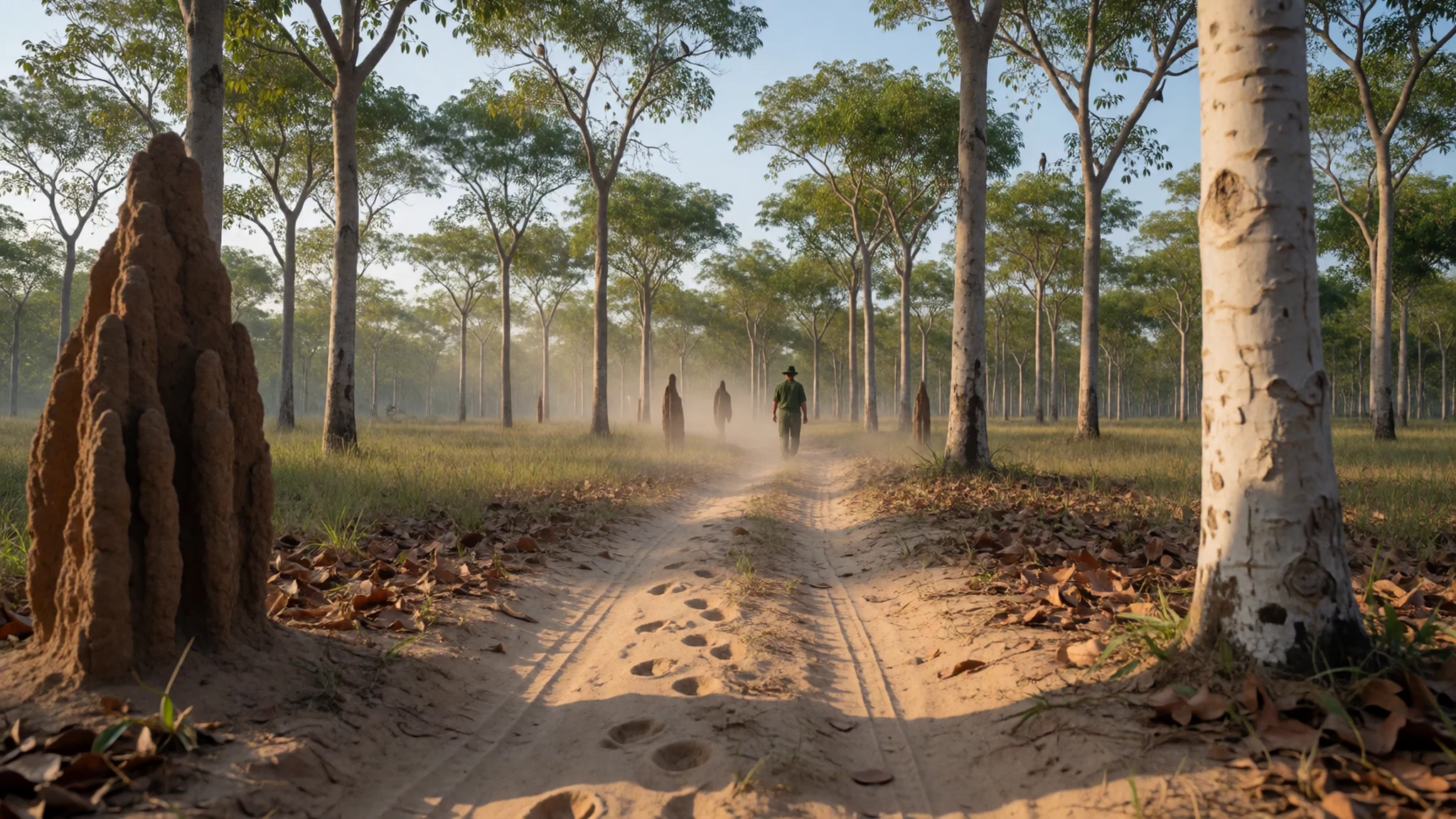
- Sêrêpok river — Northern edge of the park
The Sêrêpok river is the park's lifeline and its calmest scenery. Sandbars and bank vegetation appear as the water drops in the dry season, and herons, kingfishers and other waterbirds work the shallows. Late afternoon, when heat eases and the light turns gold, is the pleasantest time to sit by it.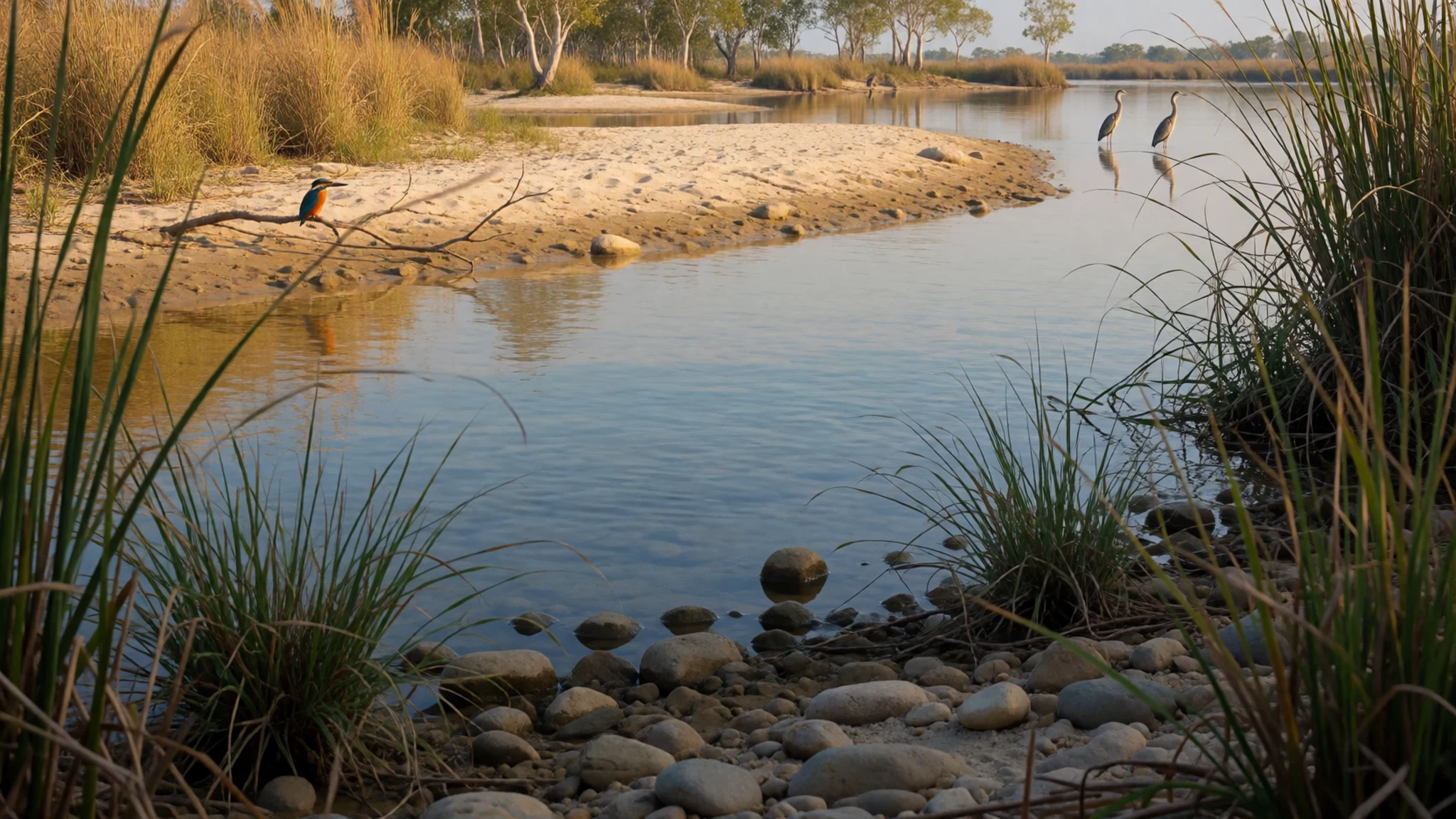
- Buôn Đôn village — Buôn Đôn commune, near the park gateway
Buôn Đôn is the village most closely tied to the region's elephant history. Wooden stilt houses, small shops and riverside paths make a gentle half-day, and local guides can explain how families once kept elephants. Ask about the current elephant-friendly programmes, and avoid operators who still offer rides.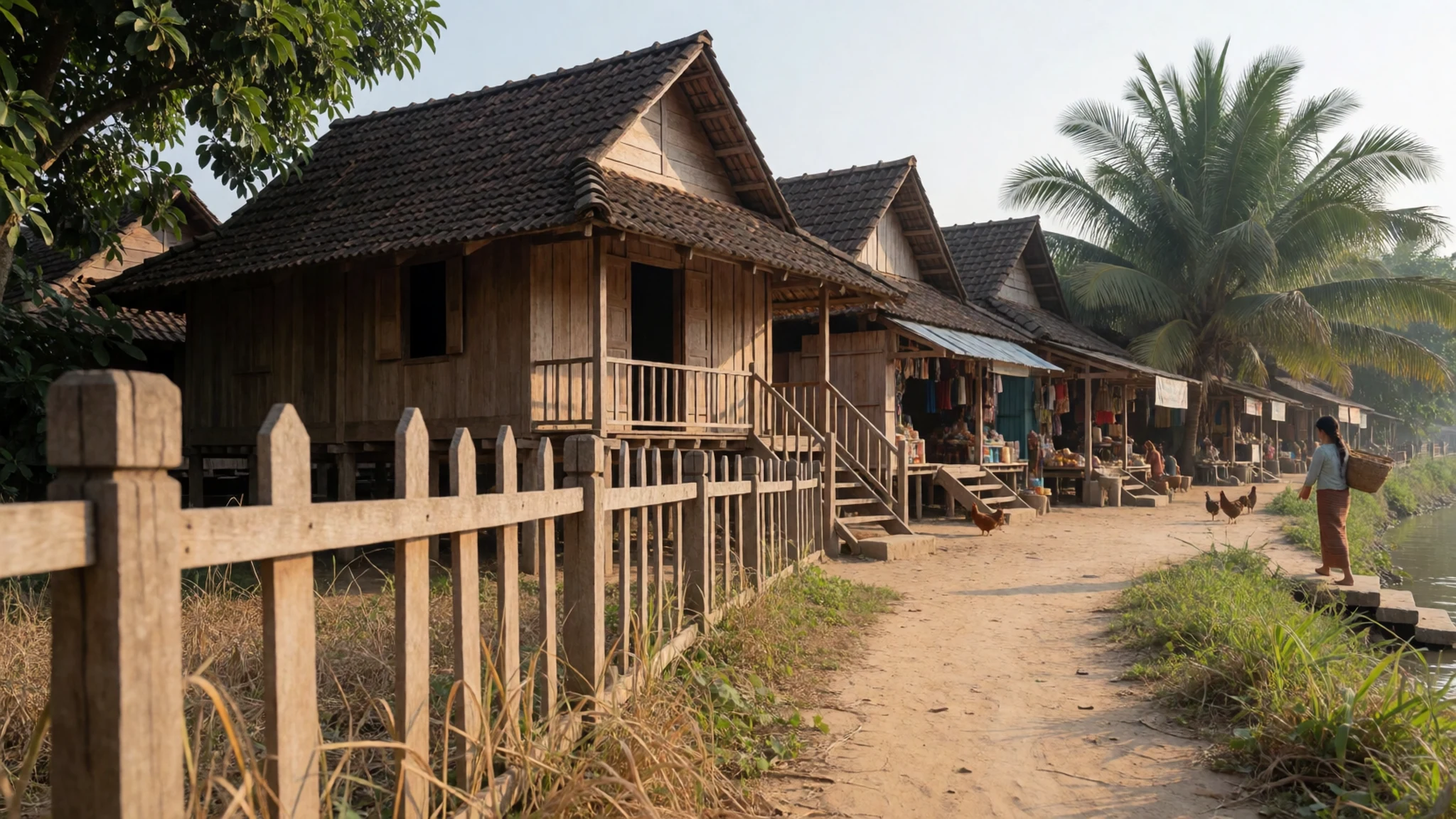
- Dawn birdwatching on forest tracks — Forest tracks near the park entrance
Open woodland suits birders. Early in the morning, bare branches show woodpeckers, bee-eaters, hornbills and raptors against pale skies, and calls carry a long way. Ask the ranger at the gateway to pair you with a guide who knows the species, and bring binoculars, as the best sightings are often distant.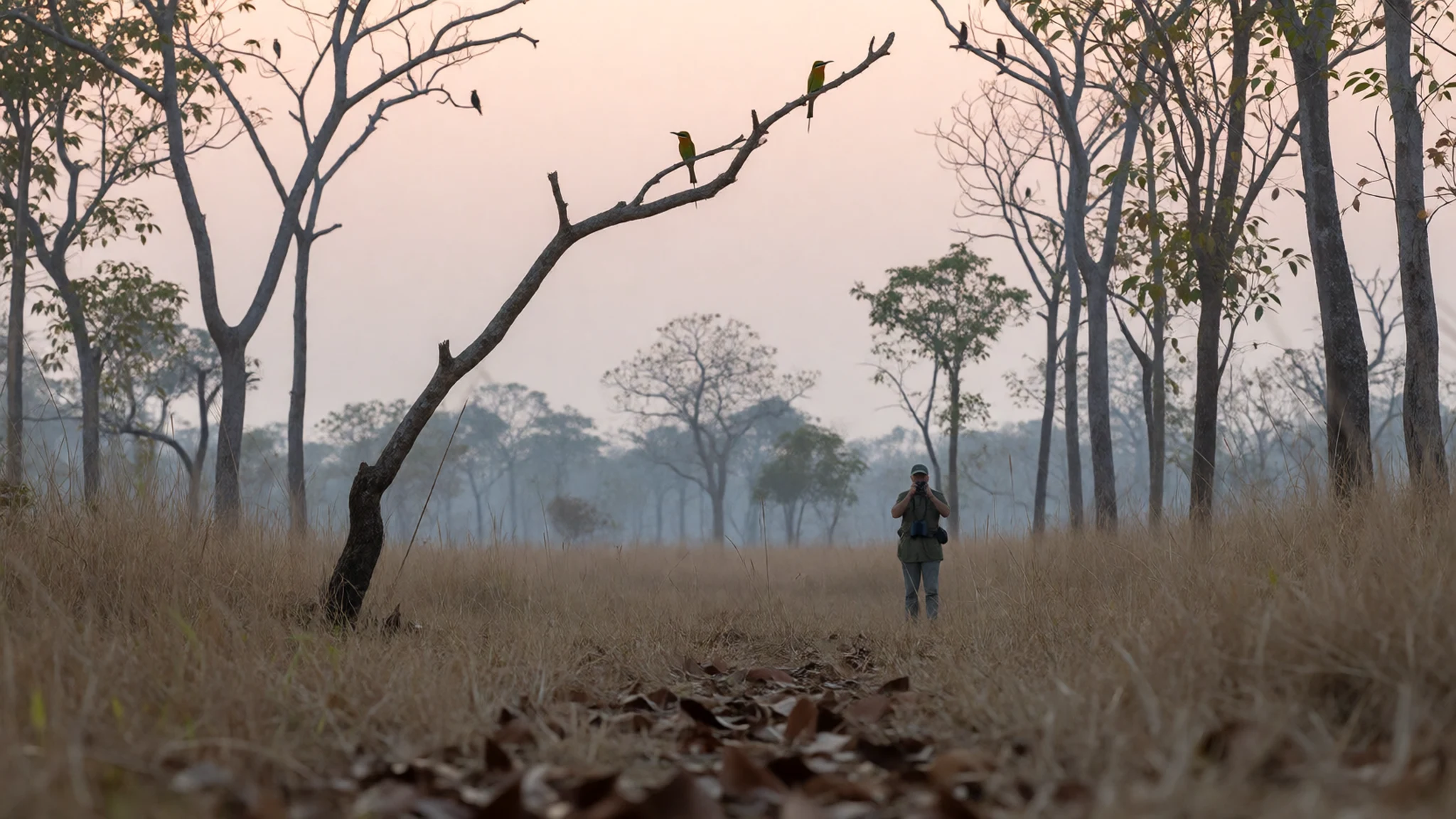
- Buôn Ma Thuột coffee country — Buôn Ma Thuột, about 40 km east of the park
Most travellers arrive through Buôn Ma Thuột, the Highlands' coffee city, and a stop here pairs well with the park. Cafés roast and brew local beans, and plantations in the surrounding hills can be visited in the harvest season. It is a practical base for supplies, cash and onward transport.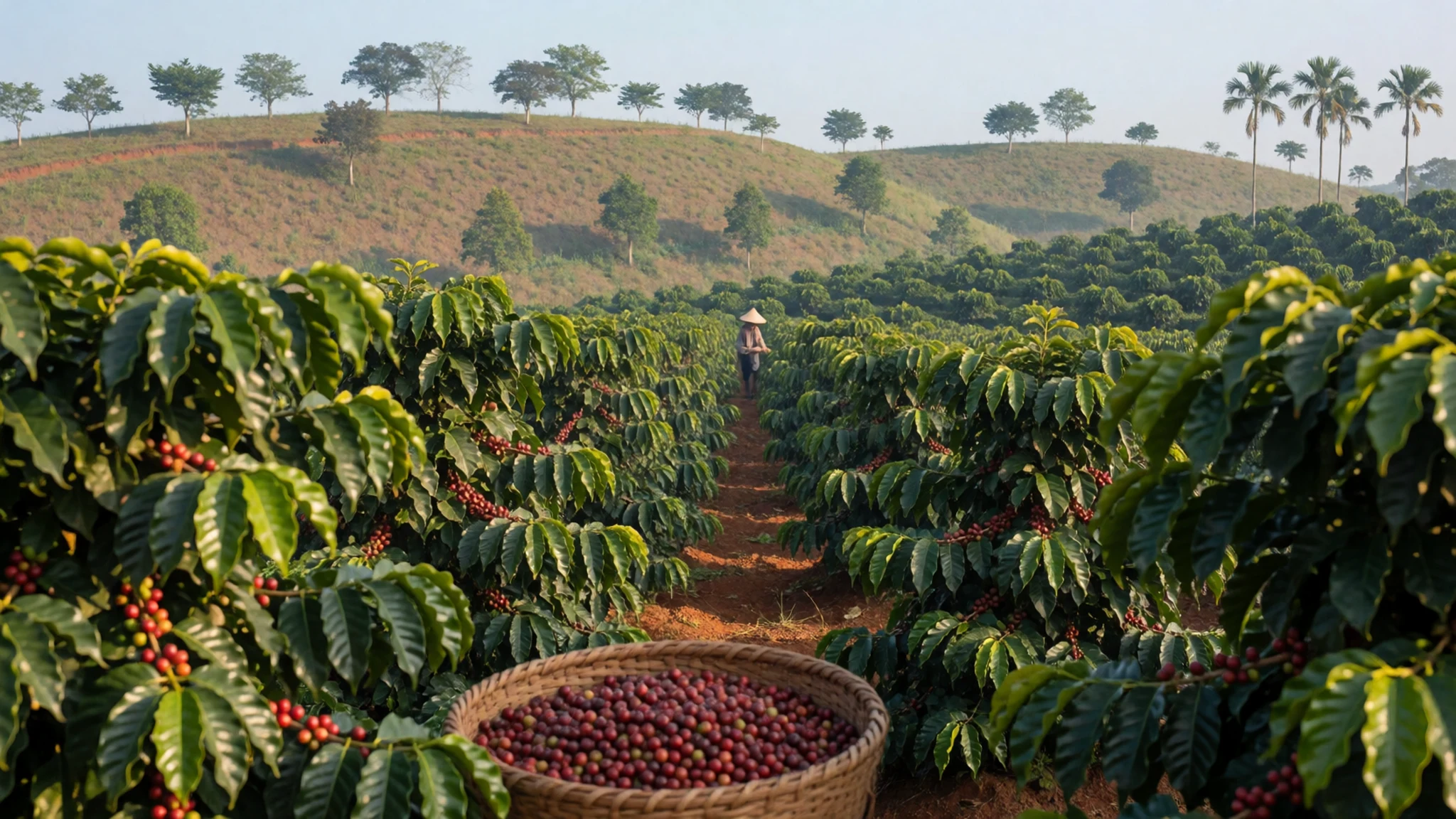
Culture
Yok Don National Park lies in lands traditionally shared by the Ede, M'nong and Lao peoples, and the cultural life around it is quite different from the lowland Vietnam many visitors expect. Ede society is matrilineal, with property and family names passing through women, and households have traditionally lived together in long stilted houses shared by extended families. Rice wine, ancestral rituals and the buffalo sacrifice at major ceremonies have been central to village life, though practice varies from place to place and has changed with time.
Music is part of this inheritance. Bronze gongs, played in sets by groups of villagers, accompany festivals, harvests and funerals, and the instruments are treated as sacred objects rather than props. Elephants have also shaped local culture, and older residents may still talk about the animals as family members.
Vietnamese social etiquette applies as well. Elders are shown deference, and being polite and a little reserved goes a long way. People may ask direct questions about age, marriage and children as a way to decide how to address you; they are friendly rather than intrusive, and the easiest response is to answer cheerfully. In rural areas, visitors are sometimes stared at with curiosity, and it is rarely hostile.
Ask permission before photographing villagers, ceremonies or gongs, and never step into a stilt house or touch ritual objects until your host has invited you.
What to wear
Dress around Yok Don National Park follows the Highlands' own textile traditions as well as the climate. The Ede and M'nong peoples have long woven cotton on backstrap and frame looms, often in dark indigo or black with bands of red, white and yellow in geometric patterns. Traditionally, women wear a wrapped skirt with a fitted blouse, and men wear a loincloth with a short tunic or jacket, sometimes with a woven sash. Full costume is mostly kept for festivals, weddings, gong ceremonies and performances for guests.
Day to day, people dress for farm work and the heat: lightweight cotton shirts, long trousers, rubber boots or sandals, conical hats or caps, and a scarf over the face when riding motorbikes through dust. In Buôn Ma Thuột the look is ordinary modern Vietnamese, with jeans, shirts and school or office uniforms. Woven cloth also turns up on bags, table runners and souvenirs, and buying directly from weavers is the best way to support the craft.
Visitors should dress for sun, insects and sand. Choose loose long sleeves and trousers in breathable fabric, a wide-brimmed hat, sunglasses and sturdy closed shoes with grip. Neutral greens, browns and greys are better than bright colours for wildlife watching. In the rainy season, add leech socks and a light rain jacket. In villages, keep shoulders and knees covered as a courtesy.
What to eat
- Cơm lam (rice in a bamboo tube) — Roadside stalls and village eateries around Buôn Đôn
Sticky rice is packed into a green bamboo tube and roasted over embers until it takes on a smoky, faintly sweet scent. It is peeled open and eaten with grilled meat or sesame salt, and it makes a sturdy snack before a long walk.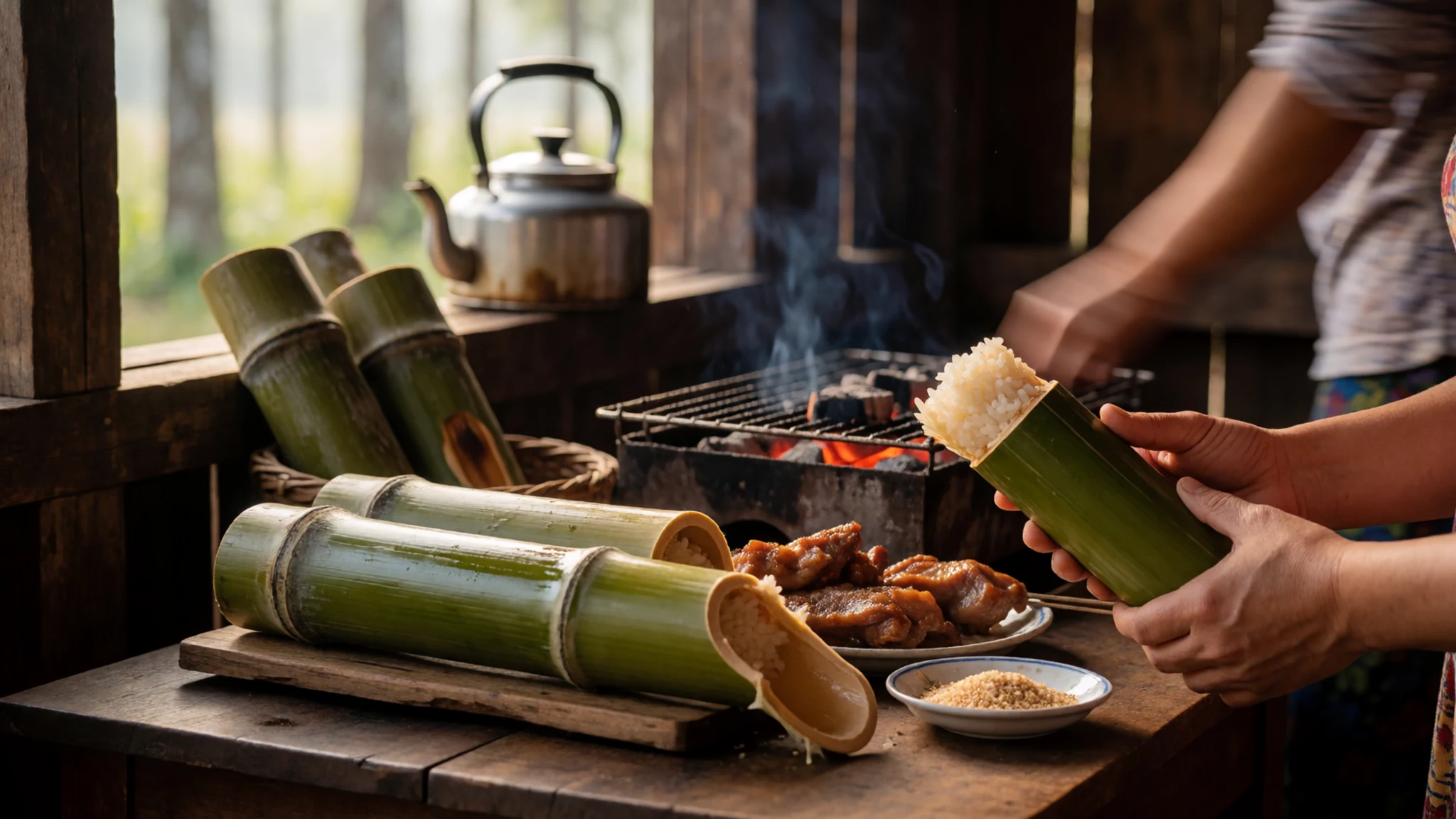
- Grilled chicken or pork with chilli salt — Village eateries and family-run grill places near the park
Meat is skewered and cooked over charcoal, then served with salt blended with chilli and local herbs. It is simple and smoky, and best eaten alongside fresh greens and a bowl of rice. Ask what is local rather than imported.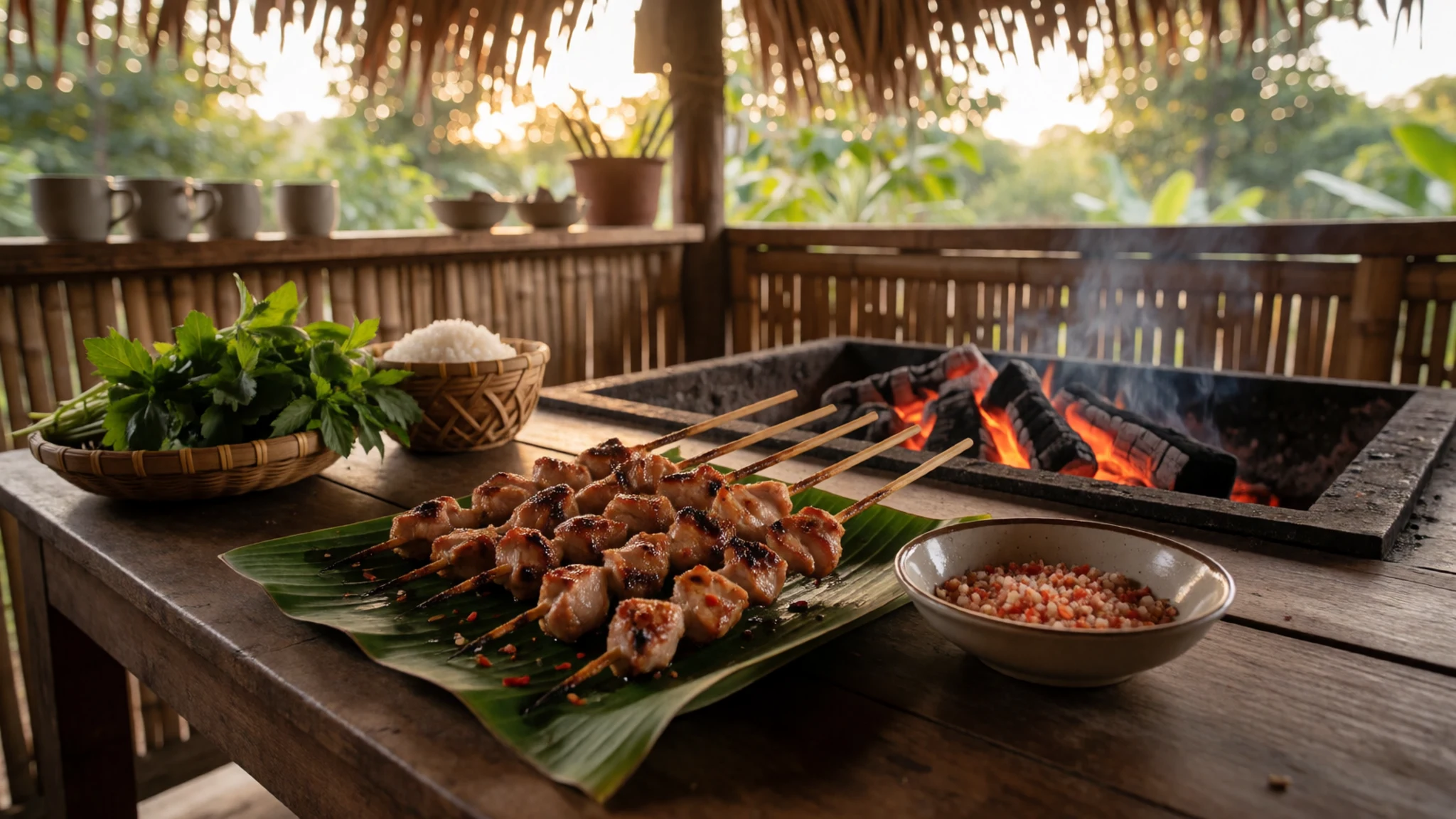
- Rượu cần (jar wine) — Village homes and ceremonies, offered by hosts
Fermented rice or cassava wine is drunk through long bamboo straws from a shared jar, usually at festivals or when guests arrive. It is mild but stronger than it tastes, so sip slowly and accept a small amount if your host invites you. - Cà phê Buôn Ma Thuột (Highlands coffee) — Cafés in Buôn Ma Thuột, and roadside coffee stalls
The city sits at the centre of Vietnam's coffee country, and a strong, dark cup with condensed milk or served black is the local habit. Iced versions suit the heat, but ask for no ice if you are unsure about the water. - River fish and bamboo-shoot soup — Riverside eateries along the Sêrêpok and village kitchens
Freshwater fish is grilled or simmered in a sour, herb-heavy broth with bamboo shoots and wild greens. It tastes of the river, with a gentle bitterness from the shoots, and is eaten with plain rice.
Plan it
Best time. November to March is the dry season, when the forest thins, tracks are firm and wildlife is easier to see. Early in this window is cooler; March can be very hot in the afternoons. From May to October the rains turn tracks muddy, leeches come out and views close in, though the forest is lush.
How long. 1–2
Getting there. Fly to Buôn Ma Thuột airport (BMV) from Hanoi or Ho Chi Minh City, or take a long bus from other Highlands towns. The park is about 40 km west of Buôn Ma Thuột, and the last leg is a road journey by taxi, hired car or motorbike.
Budget. low
Tips
- Arrange a guide at the park gateway rather than walking alone; wildlife areas have rules and it is easy to get lost
- Start walks early and rest in the heat of the afternoon, carrying more water than you think you need
- Carry cash for villages and small eateries, as card payment is patchy outside Buôn Ma Thuột
- Check the official park website or call ahead for current fees, routes and lodging, as they change
- Bring insect repellent and, in the wet season, leech socks
Etiquette
- Ask before photographing people, ceremonies or gongs
- Keep noise low on trails and do not feed or chase wildlife
- Avoid operators who offer elephant rides; choose observation-only experiences
Nearby
Sources
- Wikidata Q286546 (CC0)
- Wikipedia: Yok Đôn National Park (rev 1381023312) (CC BY-SA 4.0)
- Wikivoyage: Vietnam (rev 5410523) (CC BY-SA 4.0)
- Photo: Yok Don National Park, Vietnam (Đỗ Tuấn Hưng) (CC BY 3.0)
- Photo: Yok Don National Park, Vietnam (Đỗ Tuấn Hưng) (CC BY 3.0)
- Photo: Location map of Vietnam (Uwe Dedering) (CC BY 3.0)
- Photo: Đà điểu ở Yók Đôn (Đỗ Tuấn Hưng) (CC BY 3.0)
- Photo: Ảnh vườn quốc gia Yok Đôn (Đỗ Tuấn Hưng) (CC BY 3.0)
- Photo: Vườn quốc gia Yok Đôn trong mùa khô Tây Nguyên (Đỗ Tuấn Hưng) (CC BY 3.0)
- Photo: Ảnh Yok Đôn (Đỗ Tuấn Hưng) (CC BY 3.0)


