Yen Tu
Yen Tu, Vietnam
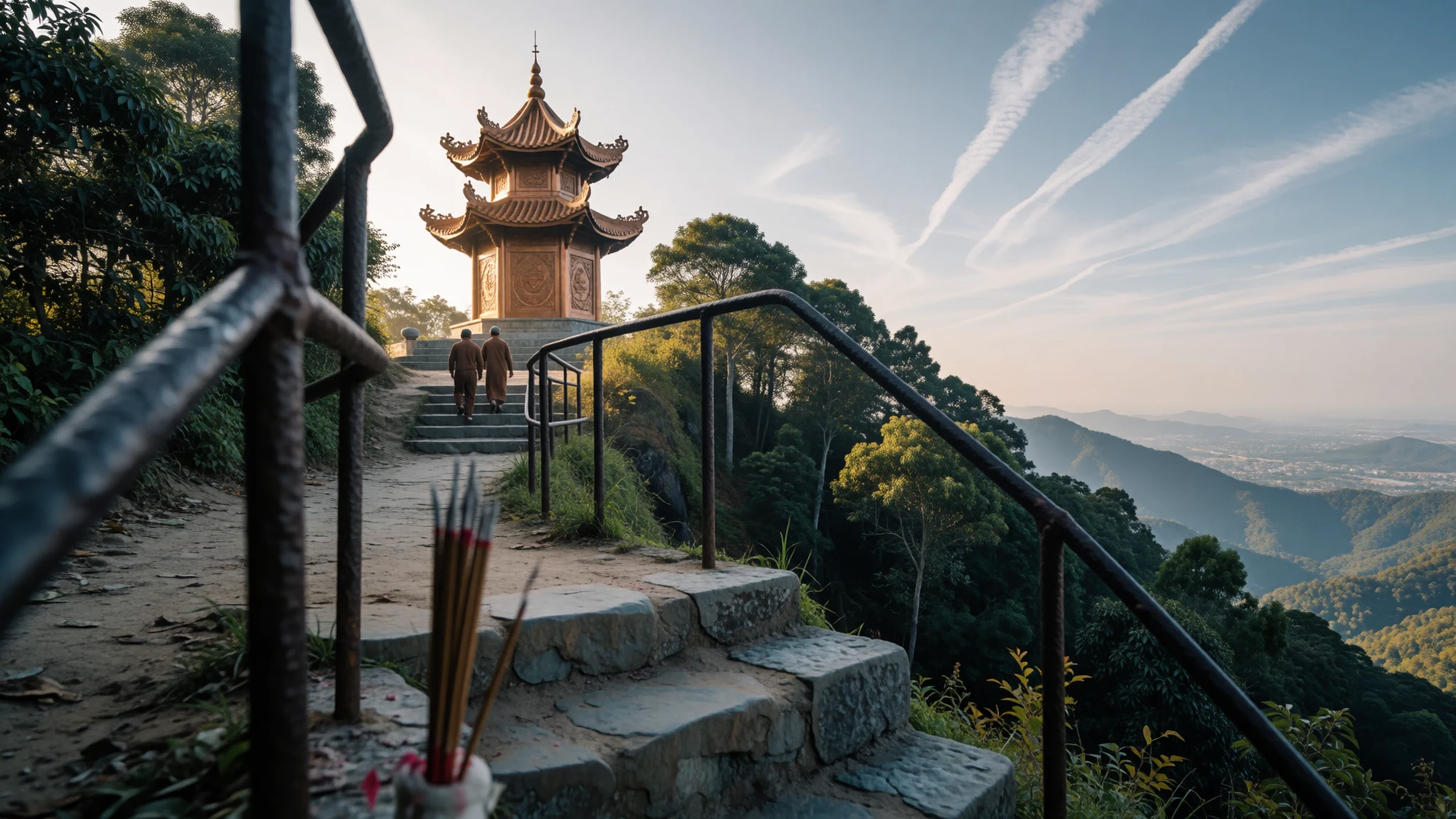
Yen Tu is a forested Vietnamese mountain where pilgrims climb stone steps past pagodas to a bronze temple on the summit.
The place
Yen Tu is a mountain range in northern Vietnam that runs across the provinces and cities of Quang Ninh, Bac Ninh and Hai Phong. The name also belongs to its tallest peak, which rises to 1068 m. The range sits inland from the coast, in green, steep country that is often wrapped in cloud, and the main visitor route climbs from the Quang Ninh side, near Uong Bi.
The mountain matters for two reasons that cannot be pulled apart. It is a working Buddhist landscape, with pagodas, shrines, hermitages and monks' tombs placed along paths that people have walked for centuries. It is also tied to the Tran dynasty and to the Truc Lam school of Zen, a distinctly Vietnamese branch of Buddhism. The site is inscribed by UNESCO as the Complex of Yen Tu Monuments and Landscape, which covers the mountain's religious buildings together with the forest around them.
The climb is the experience. Most of it is on stone steps through trees, with temples appearing at intervals, and the highest point is crowned by the Bronze Pagoda. Pilgrims treat the walk as a devotional act, so the mood on the path is closer to a procession than a sightseeing queue, especially in the spring festival season, when the mountain is at its busiest. Outside that season the paths are quieter, though weekends still draw families and school groups. Mist and rain are common, the steps can be slick, and the summit is noticeably cooler than the base. Anyone planning a visit should treat it as a proper hike with a spiritual purpose, not a short stroll to a viewpoint.
Its story
Yen Tu's story centres on Tran Nhan Tong, a Vietnamese emperor of the 13th century who belonged to the Tran dynasty. After years on the throne he gave up power to his son and withdrew to these mountains, choosing a life of meditation over the court. That decision is why the range is remembered today as much for ideas as for scenery.
In the hills he developed a Vietnamese form of Zen and became the founder of the Truc Lam school, whose name means bamboo forest. The teaching blended Buddhist practice with the concerns of a country that had just been through hard times, and it encouraged people to find awakening within ordinary life rather than only inside monastery walls. He is usually spoken of with the title of Buddha-king in popular memory.
Two later figures complete the school's trio of founders: Phap Loa and Huyen Quang. Between them they organised the community, copied and spread texts, and built up the monastic network that gave the mountain its temples. Statues of all three sit on lotus thrones inside the Bronze Pagoda at the summit, and their images appear in shrines lower down as well.
The tradition faded and revived over the centuries, and the mountain has remained a place of pilgrimage. Today Zen monks live in the Truc Lam Yen Tu monastery within the complex, and pilgrims come to follow in the emperor's footsteps. Reading the landscape with this history in mind explains why the buildings are scattered along a path rather than gathered into one grand site: they mark stages of a journey.
What to see
- The stone path up the mountain — Quang Ninh Province, near Uong Bi
Yen Tu's main pilgrim route is a long stone stairway that climbs through forest, with shrines, tombs and small pagodas placed along the way. Allow a full day, because the pace is slow and the rests are part of the experience. The photo shows the mountain's wooded slopes.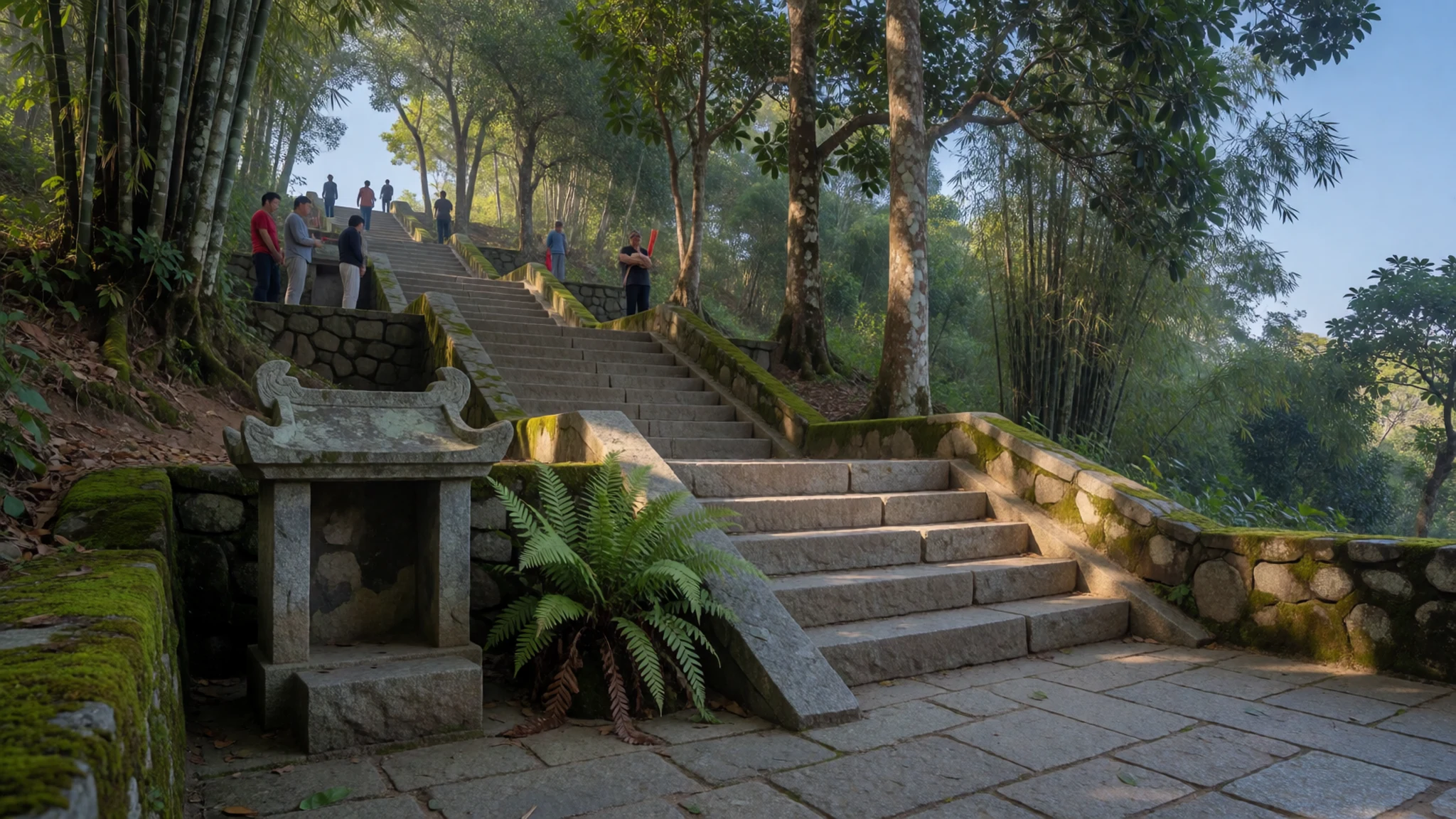
- Hoa Yen Pagoda — Mid-slope on the main route
Hoa Yen is one of the best-known stops on the climb, set on a ledge partway up the slope. Its terraces give wide views over the forest and the plains beyond when the cloud lifts. Many pilgrims treat it as the point where the walk becomes serious.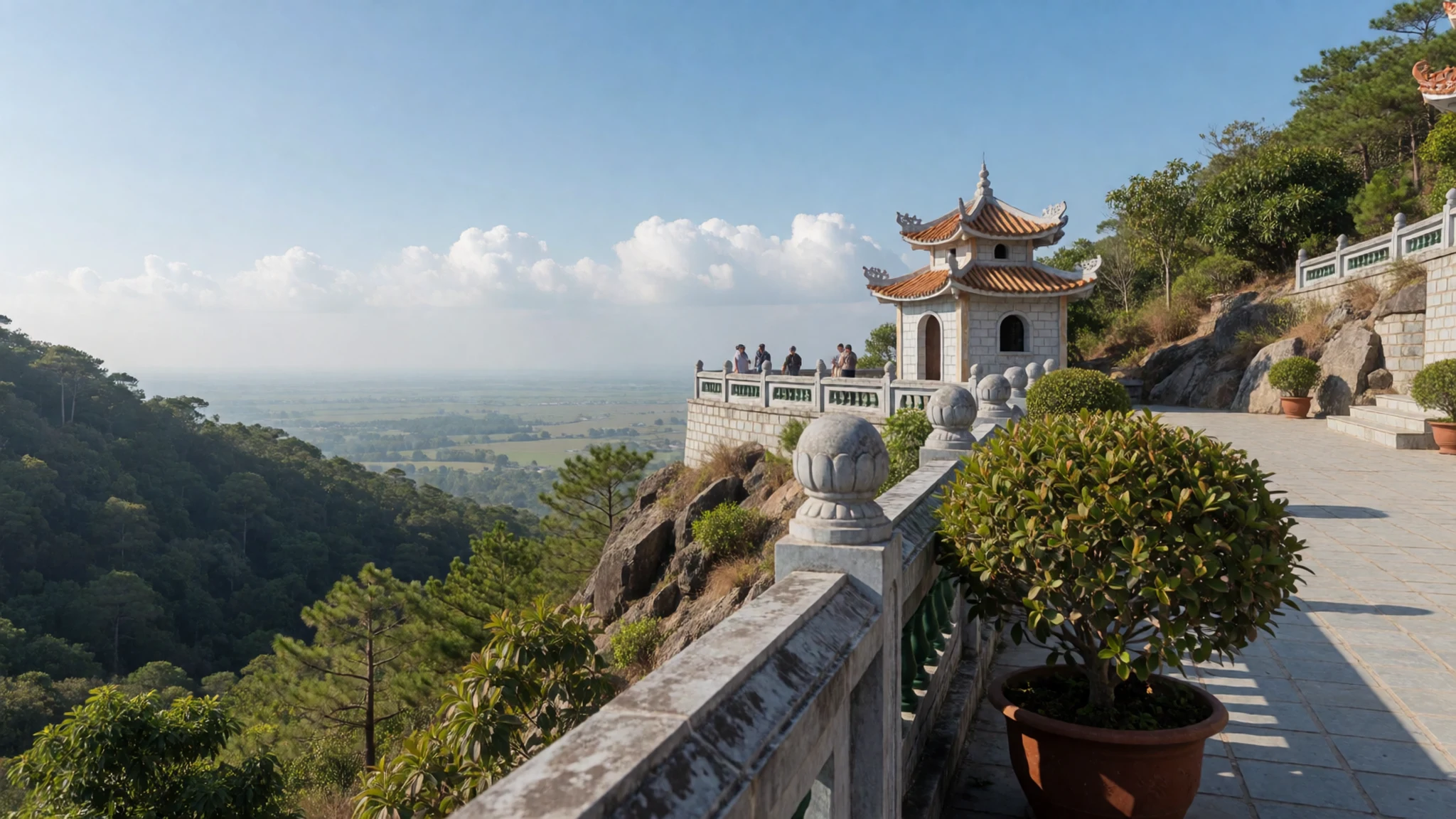
- Giai Oan Pagoda — Lower slopes of Yen Tu
Giai Oan sits lower on the mountain, beside a stream and a small stone bridge. The name refers to the release of grievances, and visitors often stop to light incense and pray. It is a calm, shaded place to rest before the steeper sections.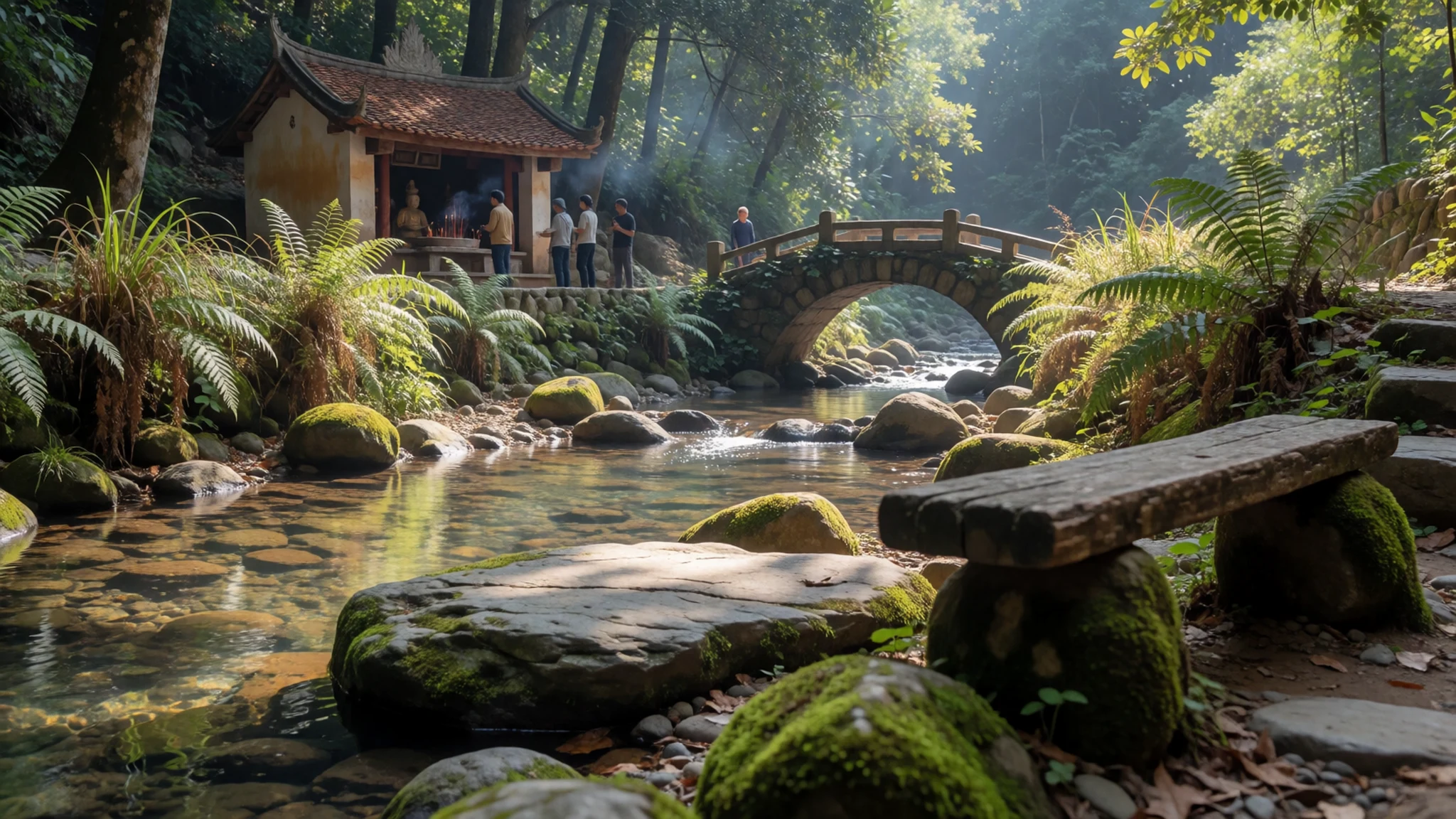
- Truc Lam Yen Tu monastery — Base of the mountain
This active Zen monastery stands at the foot of the climb and carries the Truc Lam name that links the mountain to its founder. It is a practical starting point: large courtyards, quiet halls and a calm atmosphere before the ascent begins. Monks live and practise here, so behaviour should be respectful.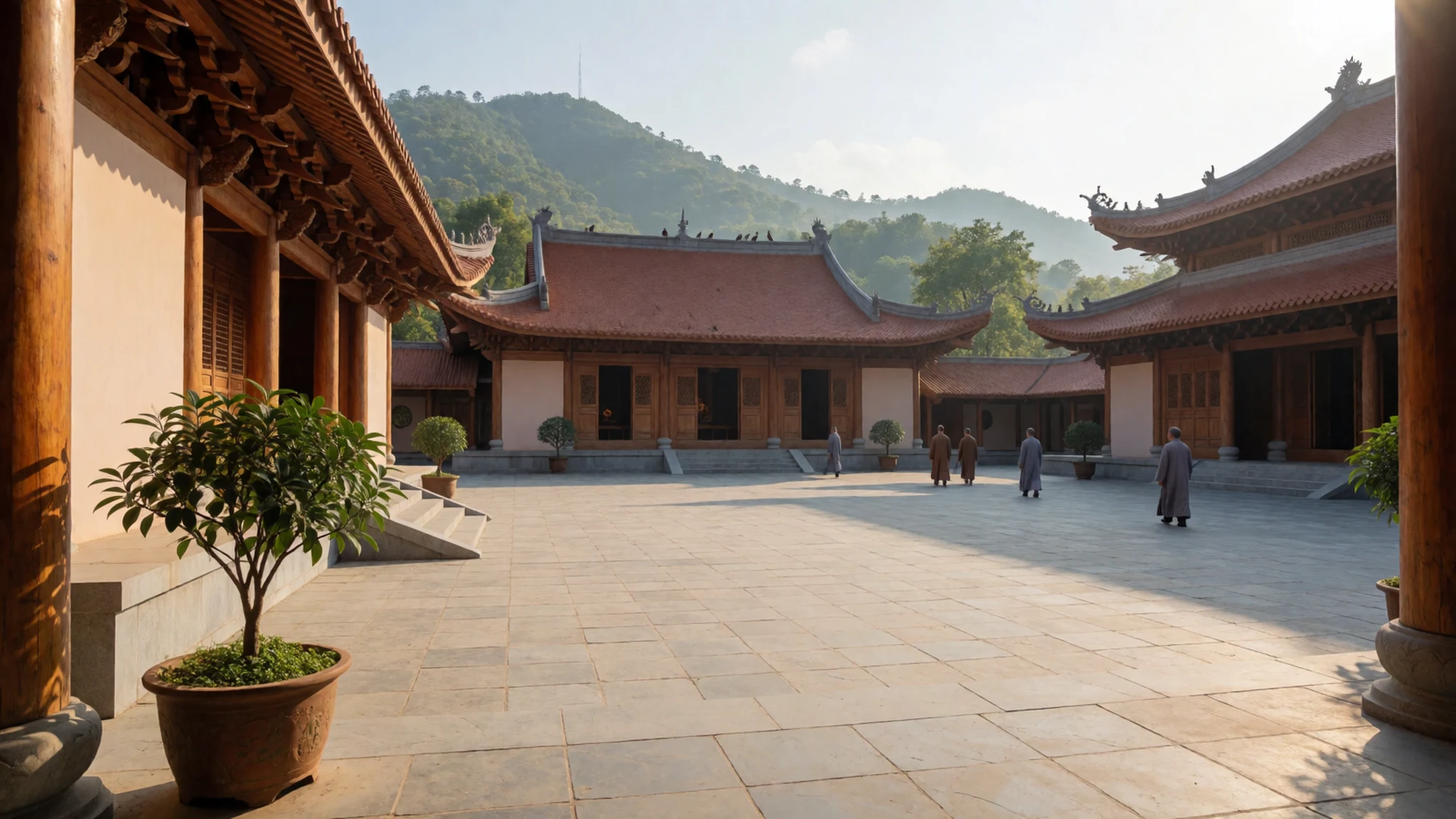
- The Bronze Pagoda — Summit of Yen Tu
The Bronze Pagoda stands at the top of the mountain and is built entirely of bronze, weighing about 70 tonnes. Inside are statues of the Buddha Shakyamuni and the three Truc Lam founders. Weather often closes in on the summit, so the view is a bonus, not a guarantee.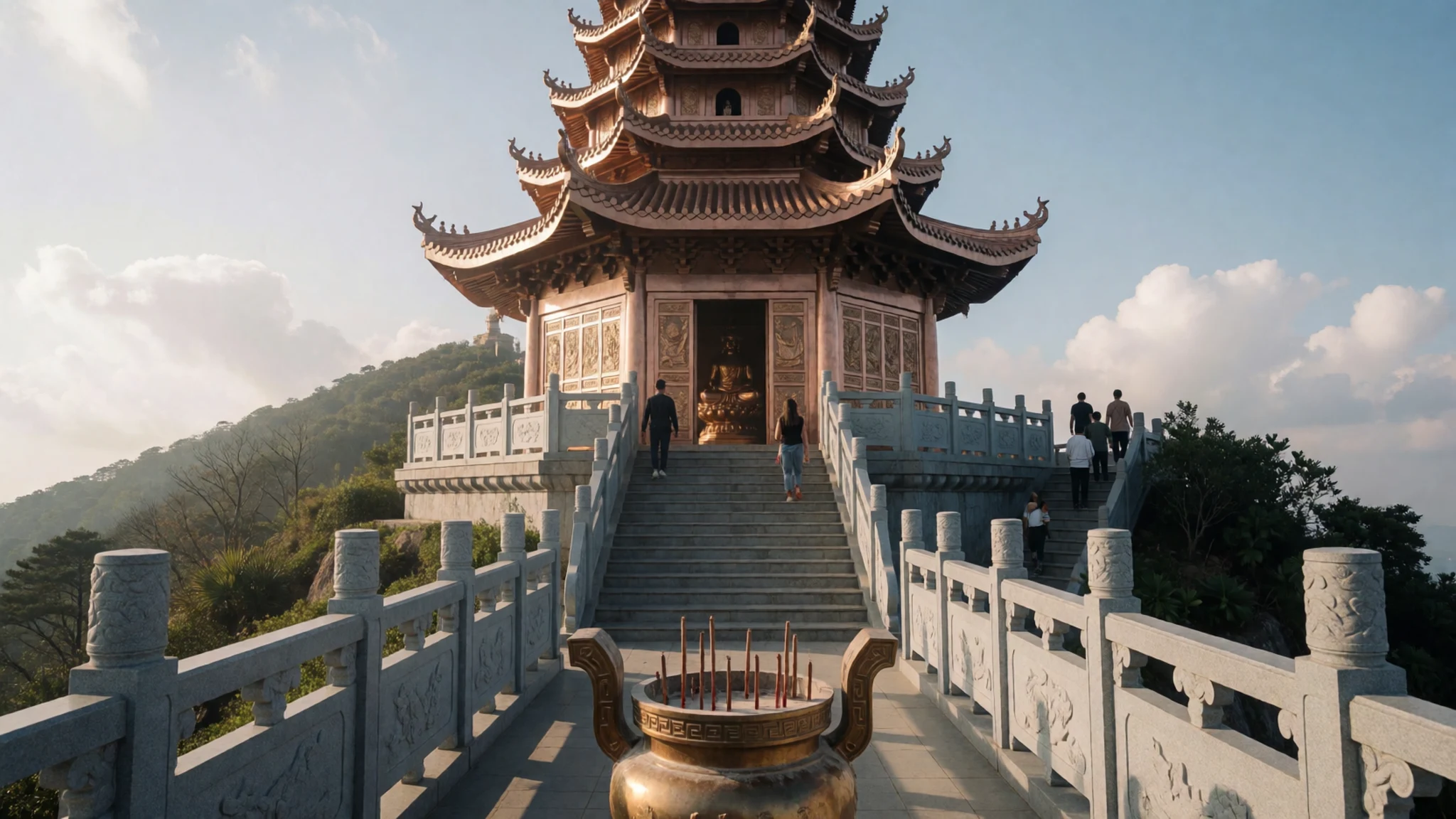
Culture
Yen Tu is a living centre of Vietnamese Buddhism, and its culture is shaped by the Truc Lam school of Zen. The emphasis is on meditation, simplicity and finding awakening in daily life, and that quiet ethos still colours the way the mountain is used. Monks and nuns live in the complex, while lay pilgrims come to pray, make offerings and reflect on the emperor-monk who founded the tradition.
The pilgrimage has a seasonal rhythm. The spring festival, which follows the lunar new year, brings the largest crowds, with families, school groups and organised parties climbing together. Many people carry incense, flowers and fruit to leave at shrines, and some walk the whole route in silence or in prayer. At other times of year the mountain is much quieter and the pace of devotion is more private.
The landscape itself is part of the practice. Shrines are placed at turns in the path, in clearings and on ledges with views, so the walking and the worship merge. Ancestor veneration also runs through Vietnamese religious life, and the tombs of past monks along the route are treated with care rather than as sights. Visitors who go slowly, stop at shrines and keep their voices low tend to be welcomed warmly.
When entering any pagoda hall on Yen Tu, cover your shoulders and knees, take off your hat, speak softly, and ask before photographing monks or people at prayer.
What to wear
Yen Tu sits in northern Vietnam, where traditional dress has long split between the formal and the working. The best-known formal garment is the ao dai, a fitted silk tunic worn over loose trousers, which appears at weddings, Tet and festivals, and is a common sight among pilgrims at the spring celebrations. Older rural clothing is the ao nau, a plain brown cotton outfit dyed with natural pigments, once the everyday clothes of farming families, and the palm-leaf conical hat, the non la, still shades people on the path. Buddhist monks and nuns wear simple robes in brown or grey, while lay devotees at temple ceremonies often put on a grey-blue lay robe.
What people wear now is mostly practical. Pilgrims and day-trippers climb in trainers, sports tops, light trousers and rain jackets, with a layer for the cooler summit. Some bring an ao dai or smart clothes to change into at the top for photographs or prayers, and festival days can look quite formal.
Visitors should dress for a mountain hike that is also a religious site. Wear sturdy shoes with grip, because the stone steps get slippery in mist and rain, and carry a light waterproof. Cover shoulders and knees at shrines and in pagoda halls, and pack a warmer layer for the summit, where the air is cooler and winds can be sharp.
What to eat
- Vegetarian rice and tofu meals — Eateries and temple canteens near the mountain's base
Yen Tu is a Buddhist site, so simple vegetarian meals are the norm: rice with fried or braised tofu, greens and mushrooms. Look for them at the monastery refectories and the plain eateries near the base of the climb.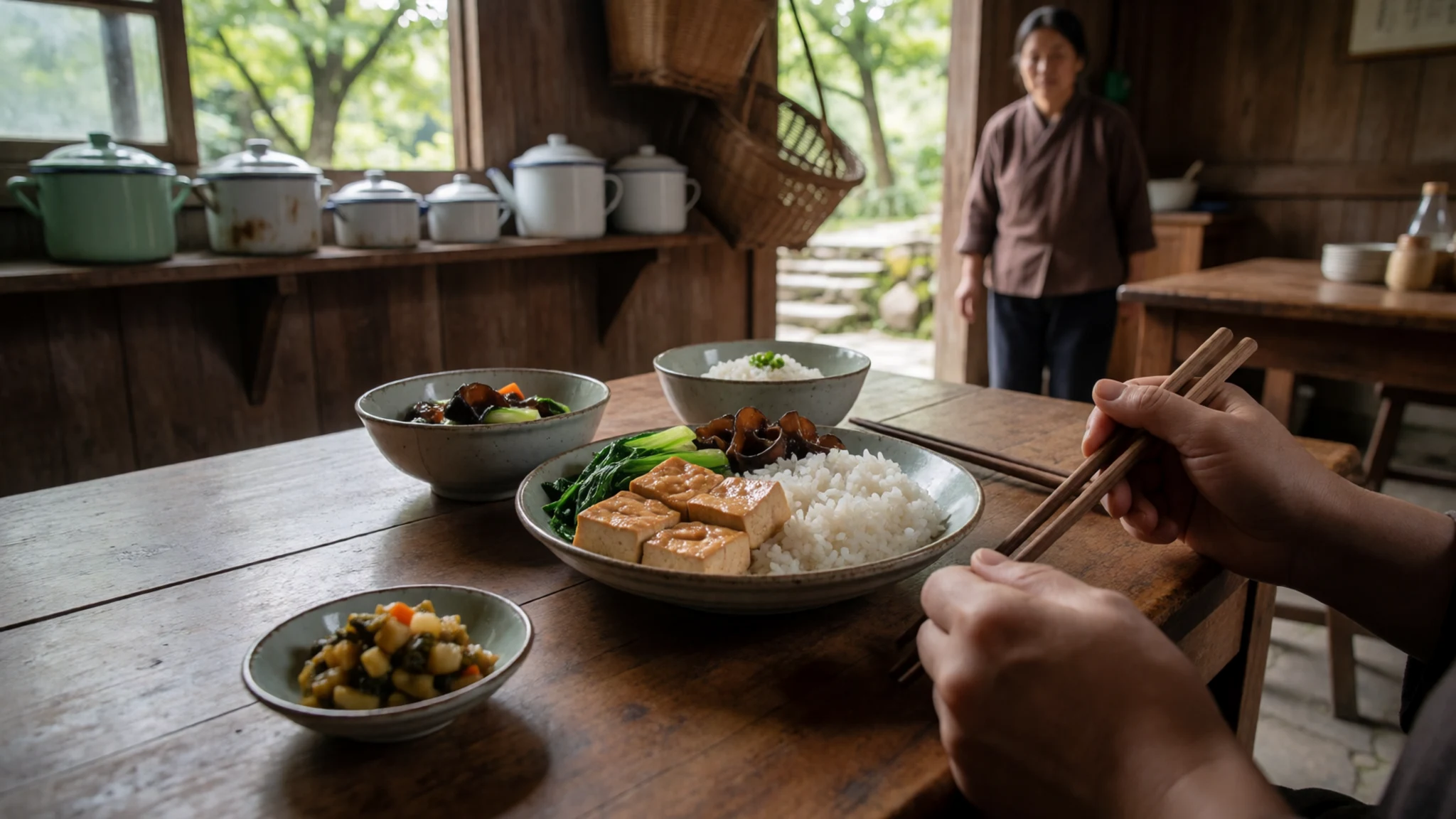
- Banh cuon — Breakfast stalls in Uong Bi and nearby towns
Banh cuon are thin steamed rice-flour sheets rolled around a light filling and eaten with a dipping sauce. They are a common northern Vietnamese breakfast and easy to find in towns on the road to the mountain.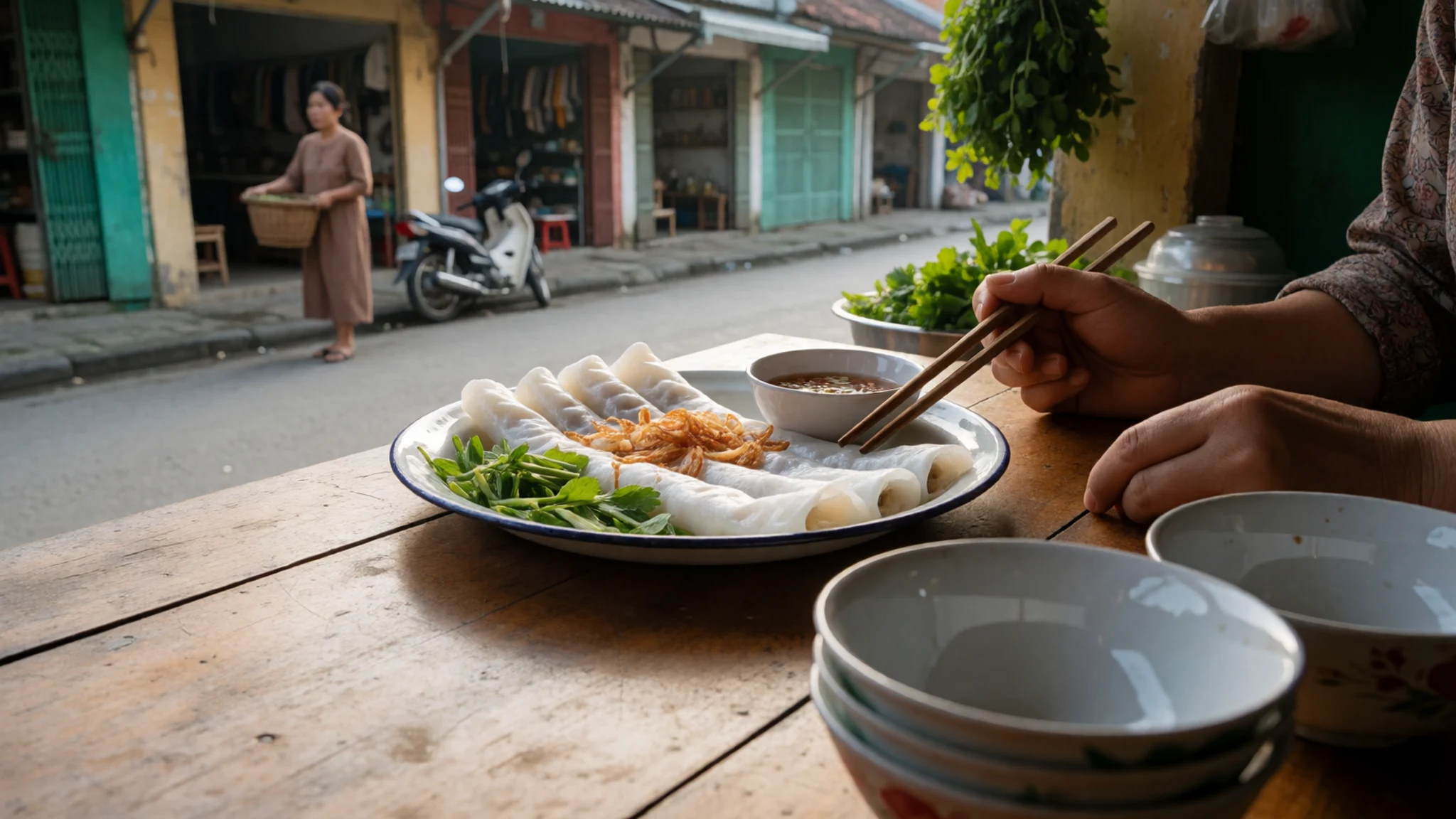
- Xoi — Street stalls and market vendors along the approach road
Xoi is sticky rice, served in many forms, from plain to topped with mung bean or fried shallots. It is a handy, filling snack for pilgrims and travels well on the climb. - Fresh seasonal fruit — Roadside stalls near the entrance to the climb
Pilgrims and visitors often buy fruit as an offering and eat some on the way up. Stalls near the entrance sell what is in season, usually bananas, oranges or pomelo, depending on the month. - Seafood in Ha Long and Quang Ninh — Seafront restaurants and markets in nearby coastal towns
Quang Ninh is a coastal province, so seafood is easy to find away from the mountain, from grilled squid to steamed crab and clam dishes. It makes a good contrast after a day of vegetarian pilgrim food.
Plan it
Best time. October to December and March are the most comfortable months, with milder weather for climbing. The spring festival season, after the lunar new year, is the most atmospheric and the most crowded. Summer is hot, humid and rainy, which makes the steps slippery.
How long. 1–2
Getting there. Fly into Hanoi's Noi Bai airport, then travel by road towards Uong Bi in Quang Ninh Province; the journey takes a few hours, depending on traffic. Local buses, taxis and organised day trips run from Hanoi and Ha Long, and the final stretch to the base of the mountain is by road.
Budget. low
Tips
- Start early, because the climb is long and crowds build through the morning, especially in festival season
- Check the official or local tourism pages for opening times, cable car arrangements and festival dates before travelling
- Carry water and snacks, and take a rain jacket and a warm layer for the summit
- Wear shoes with good grip, as stone steps can be slick in mist or rain
- Keep some cash for offerings, drinks and small stalls, as card use is patchy on the mountain
Etiquette
- Dress modestly at pagodas, with shoulders and knees covered
- Keep your voice low and ask before photographing monks or people praying
- Take litter back down with you and leave offerings only where others are placed
Nearby
Sources
- Wikidata Q16481408 (CC0)
- Wikipedia — Yen Tu (rev 1377313011) (CC BY-SA 4.0)
- Wikivoyage — Yen Tu (CC BY-SA 4.0)
- Photo: Mount Yen Tu, Quang Ninh Province — Thang Nguyen, via Wikimedia Commons (CC BY-SA 2.0)
