Yangzhou
Yangzhou, People's Republic of China
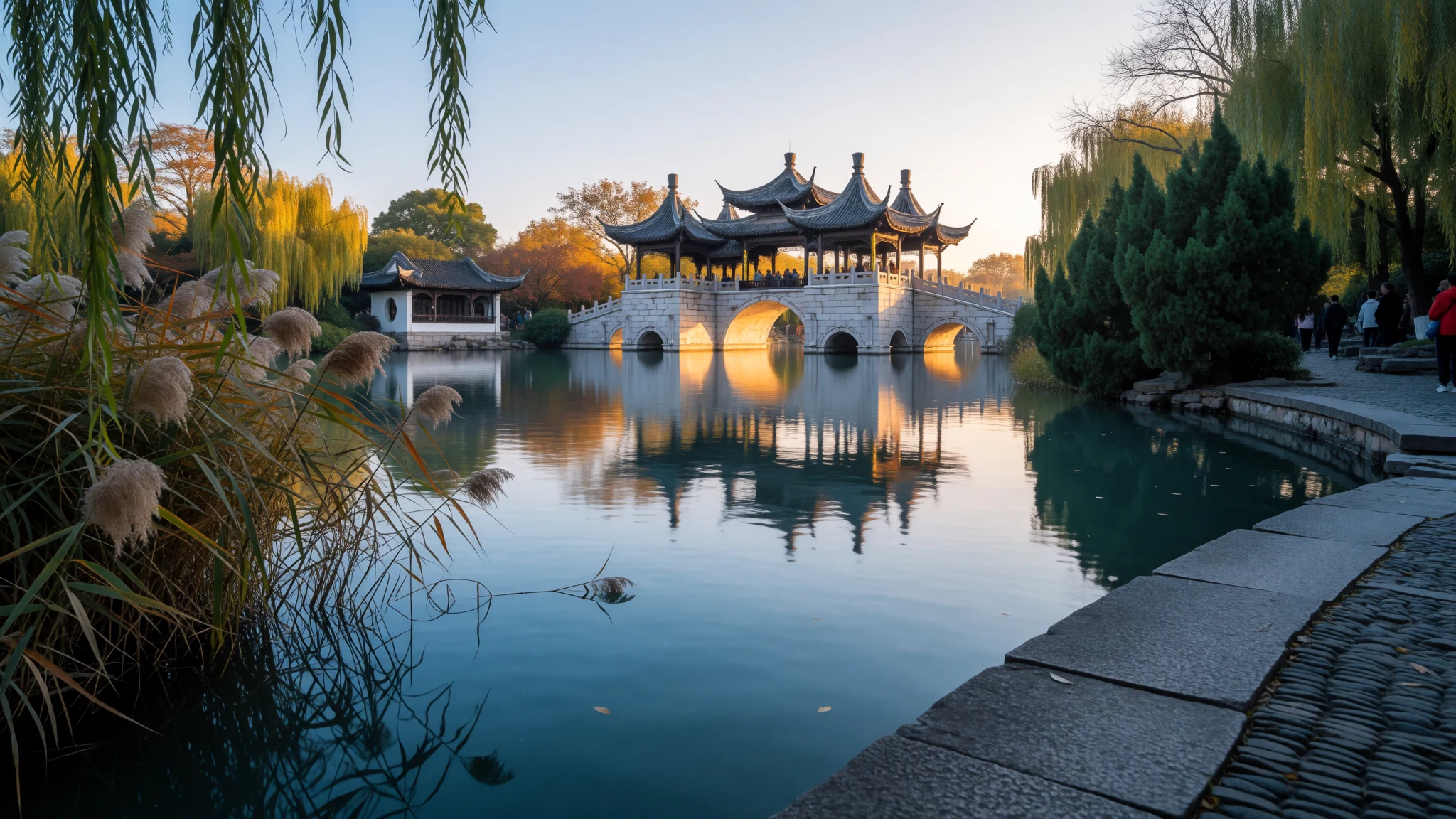
Yangzhou is a canal-side Jiangsu city of lakeside gardens, merchant lanes and tea-house breakfasts, calmer and easier than its famous neighbours.
The place
Yangzhou sits on the north bank of the Yangtze in central Jiangsu, a prefecture-level city with about 4.6 million people across its whole territory. Nanjing, the provincial capital, lies to the southwest, and Zhenjiang faces it across the river to the south. The ground is flat plain, threaded with canals and lakes, and the city feels low, green and unhurried compared with the megacities a short train ride away. The Grand Canal runs through the area from north to south. Its modern line skirts the eastern edge of the built-up area, while the older channel still passes through the centre, which is why bridges, towpaths and waterside lanes keep turning up in the old quarter. The city falls into distinct parts. The old town around Wenchang Pavilion and Dongguan Street has narrow lanes, restored merchant houses and tea houses. The Slender West Lake park occupies the northwest, with its winding water and pavilions. Newer districts to the west hold the malls, the museum and the main railway station. The name means roughly 'Rising Prefecture', a reminder of its old administrative rank. Yangzhou once drew great wealth, and the legacy shows in garden houses, performing arts and a reputation for scholars and painters. Today it works well as a slow stop between Shanghai and Nanjing. Many people come for a day, but staying overnight lets the old lanes empty out and the lantern-lit evenings feel local.
Its story
Yangzhou begins, as far as the record goes, with a ditch. During the Spring and Autumn period, Fuchai, ruler of the state of Wu, wanted a quicker way to move supplies from his base around present-day Suzhou towards the northern plain, where he was fighting Qi. His engineers strung together the streams and lakes of the region to link the Yangtze with the Huai River, and the Han Canal was complete by 486 BC. The next year a walled fortress went up at its southern end, on the Yangtze's north bank, to guard the entrance and buy time for reinforcements to arrive. That fortress, Hancheng, is the seed of the later city. Under the Eastern Han the area was organised as Guangling Commandery in Xu Province. Over the centuries the canal grew from a military convenience into a trade artery, and the river crossing prospered on the goods passing through. Wealth drew merchant families, and with them came poets, painters and scholars who shaped the city's name. Its history was not only gentle. In 1645 a Ming general, Shi Kefa, refused to open the city to the advancing Qing, and a memorial to him still stands. The painter Shitao made his home here during the 1680s, later returning in 1697 and remaining until he passed away in 1707. When the money drained away, Yangzhou's standing slipped from the glossy label of Jiangnan to the humbler one of Jiangbei, a shift locals still talk about.
What to see
- Slender West Lake — Northwest of the city centre
Slender West Lake is a narrow ribbon of water winding through a park just northwest of the old centre. It was laid out to echo the famous lake at Hangzhou. Pavilions, willows and arched bridges line the banks, and the Five Pavilion Bridge is the picture most people take home. Boats run along the water.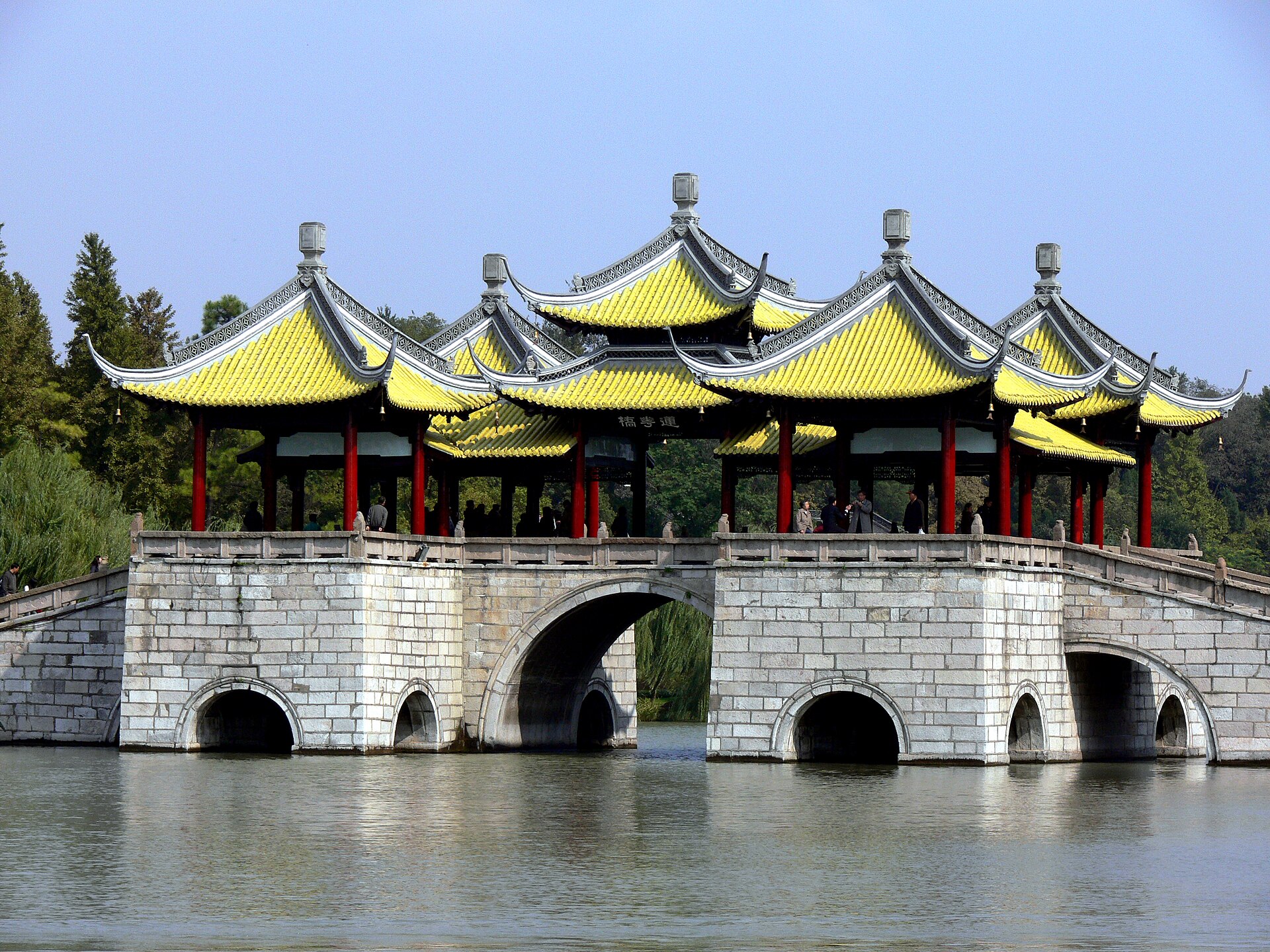
- Dongguan Street — Old town, east side
Dongguan Street is the old town's main walking lane, running east towards the canal. Restored shopfronts, craft stalls and snack sellers fill it by day, and tea houses spill out at breakfast. It gets crowded at weekends and in holiday weeks, so go early or after dark when the lanterns are lit.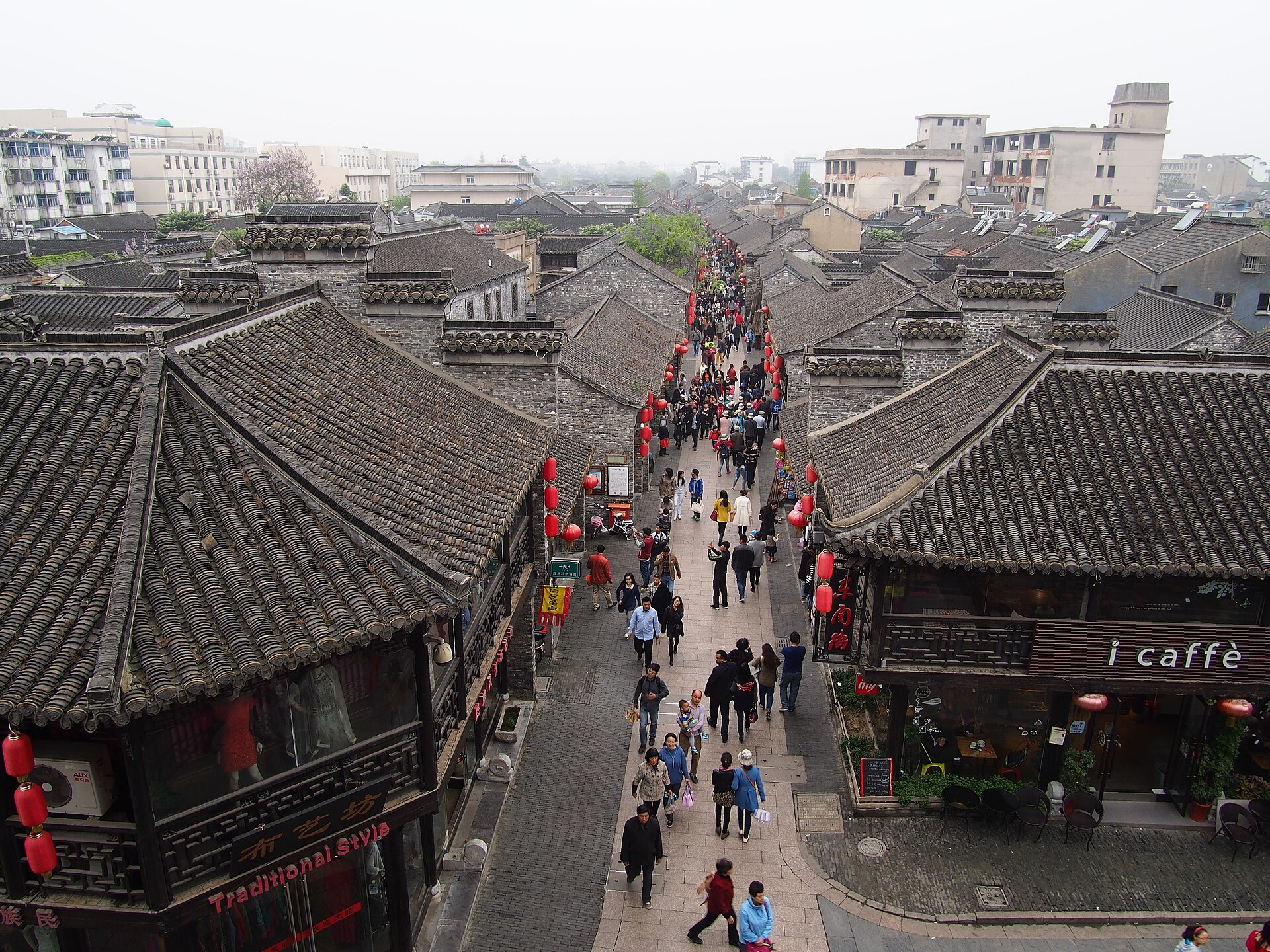
- He Garden (Heyuan) — Old town
He Garden is a walled private garden of halls, covered corridors, rockeries and ponds, with a boat-shaped hall that photographs well. It shows how Yangzhou's merchant households once lived and entertained. Allow an hour to wander the maze of courtyards, and expect tour groups in the middle of the day.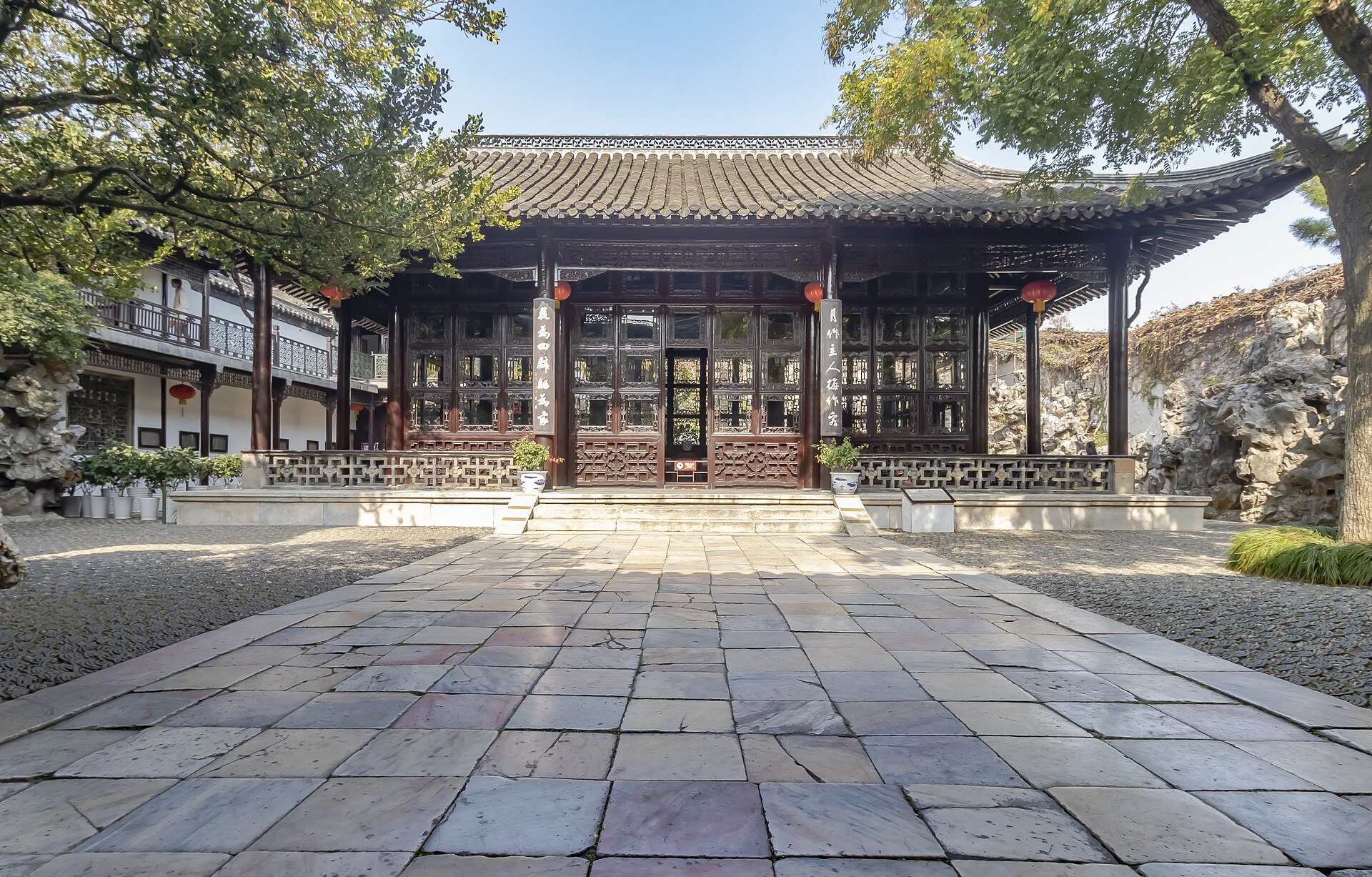
- Shi Kefa Memorial — Northwest old town
The Shi Kefa Memorial honours the Ming general who refused to surrender Yangzhou to the Qing in 1645. Halls and a tomb sit in a quiet compound with trees and stone paths. It is a short, thoughtful visit, and the atmosphere is more reflective than at the garden sights.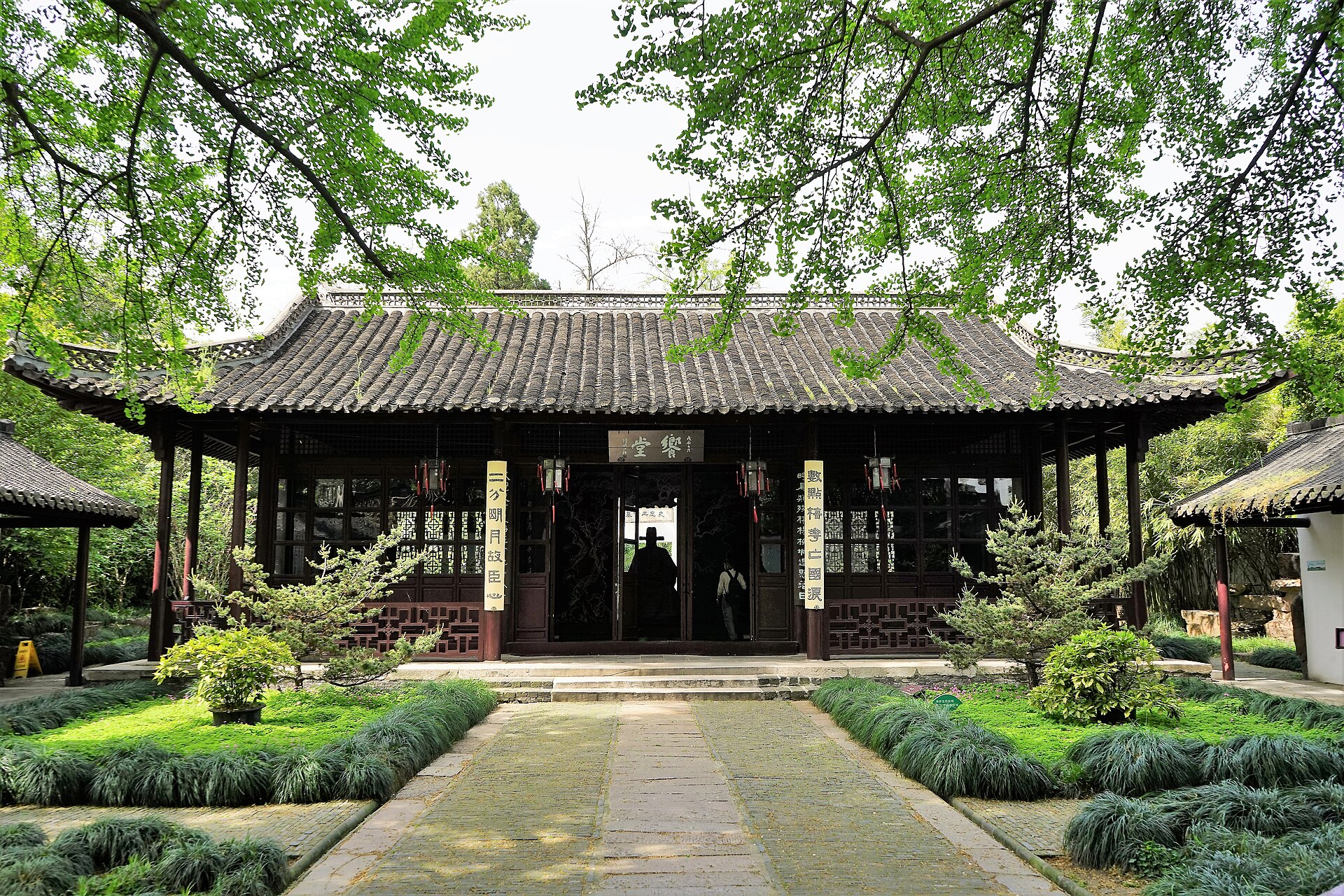
- Tianning Temple — Northwest old town
Tianning Temple is a large Buddhist complex whose halls are strung along a south-to-north axis, with landscaped courtyards between them. It is an active place of worship rather than a museum, so the mood changes with the hour. Mornings are quietest, and incense smoke often hangs in the courtyards. - Yangzhou Museum — West of the centre
The Yangzhou Museum covers the city's long story, with displays that include a boat recovered from the Grand Canal. It is a sensible choice for a hot, wet or very cold afternoon, and it explains the canal, merchants and artists whose traces you meet outdoors. Check the official site for opening arrangements.
Culture
Yangzhou has its own dialect, part of the Lower Yangtze Mandarin group. It sits close to the speech of the Ming and Qing courts, which drew on Nanjing, and it differs enough from standard Chinese that visitors from elsewhere in China may need to listen carefully. Language here has also carried a sense of regional identity. In its rich years the city counted itself part of Jiangnan, the wealthy south of the river, even though it lies north of the Yangtze. After the fortunes faded it was often filed under Jiangbei, the so-called backwater, and local pride still bristles at that. The arts are the city's real inheritance. During periods of prosperity and imperial favour, storytelling and painting both flourished, and the painter-calligrapher Shitao is the figure most associated with that creative streak. Teahouse life remains a living custom: a slow breakfast of tea and small plates is a social ritual, not just a meal. Religion is visible in several forms, from the Buddhist halls of Tianning Temple to Puhaddin Park, centred on the tomb of a missionary who came in the 13th century and is said to have descended from the Prophet Muhammad. At temples, mosques and tombs, keep your voice low, dress modestly, and ask before photographing anyone who is praying.
What to wear
Yangzhou's traditional dress belongs to the wider Jiangnan world of silk and fine cotton. Historic clothing in the Han Chinese tradition includes the long changshan gown for men and the qipao and layered robes for women, usually in silk, brocade or cotton, and worn today mainly at weddings, festivals and photo shoots. Around Slender West Lake and the old lanes it is common to see young visitors in rented Han-style costume, posing on bridges and in garden courtyards. Everyday dress in the city is plain and practical: shirts and trousers, light jackets, trainers, and sportswear for the morning walkers and dancers in the parks. Dressing is smart-casual rather than showy. A visitor should plan around the weather. Summers are hot and humid, so light cotton or linen, a sun hat and a compact umbrella help, as showers can come without warning. Winters are cold and damp, and layers work better than one heavy coat. Wear comfortable, grippy shoes, because old lanes and garden paths are paved with uneven stone that turns slick in rain. Temples and the Muslim tomb park do not require special clothing, but covered shoulders and knees show respect, and you should be ready to remove a hat indoors.
What to eat
- Yangzhou fried rice — Local eateries across the old town
Yangzhou fried rice is the city's best-known export: fluffy rice with egg, ham, shrimp and peas, cooked quickly over high heat. Any local eatery serves a version, and a plate here is lighter and less oily than many copies elsewhere. - Lion's head meatballs — Huaiyang restaurants near Slender West Lake
Lion's head meatballs are large, tender pork meatballs simmered in broth with cabbage. They come from the Huaiyang style of cooking, which favours gentle flavour, fine knife work and clear soups. They are a good dish for sharing. - Morning tea and soup buns — Tea houses around Dongguan Street
Morning tea here means a long breakfast of tea with filled buns, dumplings and small plates. Soup-filled buns are a favourite, and crab versions turn up in season. Go early, sit upstairs if there is a balcony, and take your time. - Dried tofu shreds — Tea houses and Huaiyang restaurants
Dried tofu shreds are fine strips of firm tofu, dressed in a light sauce or served in broth with ham, ginger and sesame. The knife skill is the point. It is a cold or warm side dish that often appears at tea-house tables. - River crab dishes — Huaiyang restaurants and tea houses, autumn
Crab dishes are an autumn habit in Yangzhou. Look for crab roe in dumplings, buns or braised dishes, usually served with ginger vinegar. The season depends on the year's catch, so ask what is fresh and expect some dishes to cost more.
Plan it
Best time. April–May and October–November are the most comfortable, with mild days for walking the lake and the lanes. June–July can be wet and very humid, August is hot, and winter is cold and damp. Autumn is also crab season.
How long. 1–2
Getting there. Fly into Nanjing Lukou, about 60 km southwest, then take an express bus to the Yangzhou City Terminal, or into Shanghai Hongqiao and take a train to Yangzhoudong, usually under two hours. Yangzhou Railway Station is at the far west of the city, about 7 km from the centre, so plan a taxi or bus for the last leg.
Budget. low
Tips
- Start at Slender West Lake or Dongguan Street early, before tour groups and holiday crowds arrive.
- Carry a phone with mobile payment set up if you can, and keep some cash for small stalls, since cards are not accepted everywhere.
- Check opening arrangements for the museum and gardens on the official site, https://www.seeyangzhou.com/, before you go.
- Bring a compact umbrella and sturdy shoes, as stone lanes get slippery in rain.
Etiquette
- Keep your voice low and dress modestly at Tianning Temple and Puhaddin Park.
- Ask before photographing people at prayer or at family meals in tea houses.
Nearby
Sources
- Wikidata Q57906 (CC0)
- Wikipedia: Yangzhou (rev 1386793137) (CC BY-SA 4.0)
- Wikivoyage: Yangzhou (rev 5422862) (CC BY-SA 4.0)
- Photo: The Five Pavilion bridge (Gisling) (CC BY-SA 1.0)
- Photo: Yangzhou Wenchangge (Huangchenhai) (CC BY-SA 4.0)
- Photo: Dongguan Street, 2015.04 (rheins) (CC BY 3.0)
- Photo: Heyuan Garden (ScareCriterion12) (CC BY-SA 4.0)
- Photo: Shi Kefa Memorial (Cangminzho) (CC BY-SA 4.0)
- Photo: A car ferry crossing (Cz2018764171) (CC BY-SA 4.0)
- Photo: Administrative divisions of Yangzhou (Chk2011) (CC BY-SA 4.0)
- Photo: Yangzhou five pavilion bridge (BobkeNL) (CC BY 3.0)


