Yamdrok Lake
Yamdrok Lake, People's Republic of China
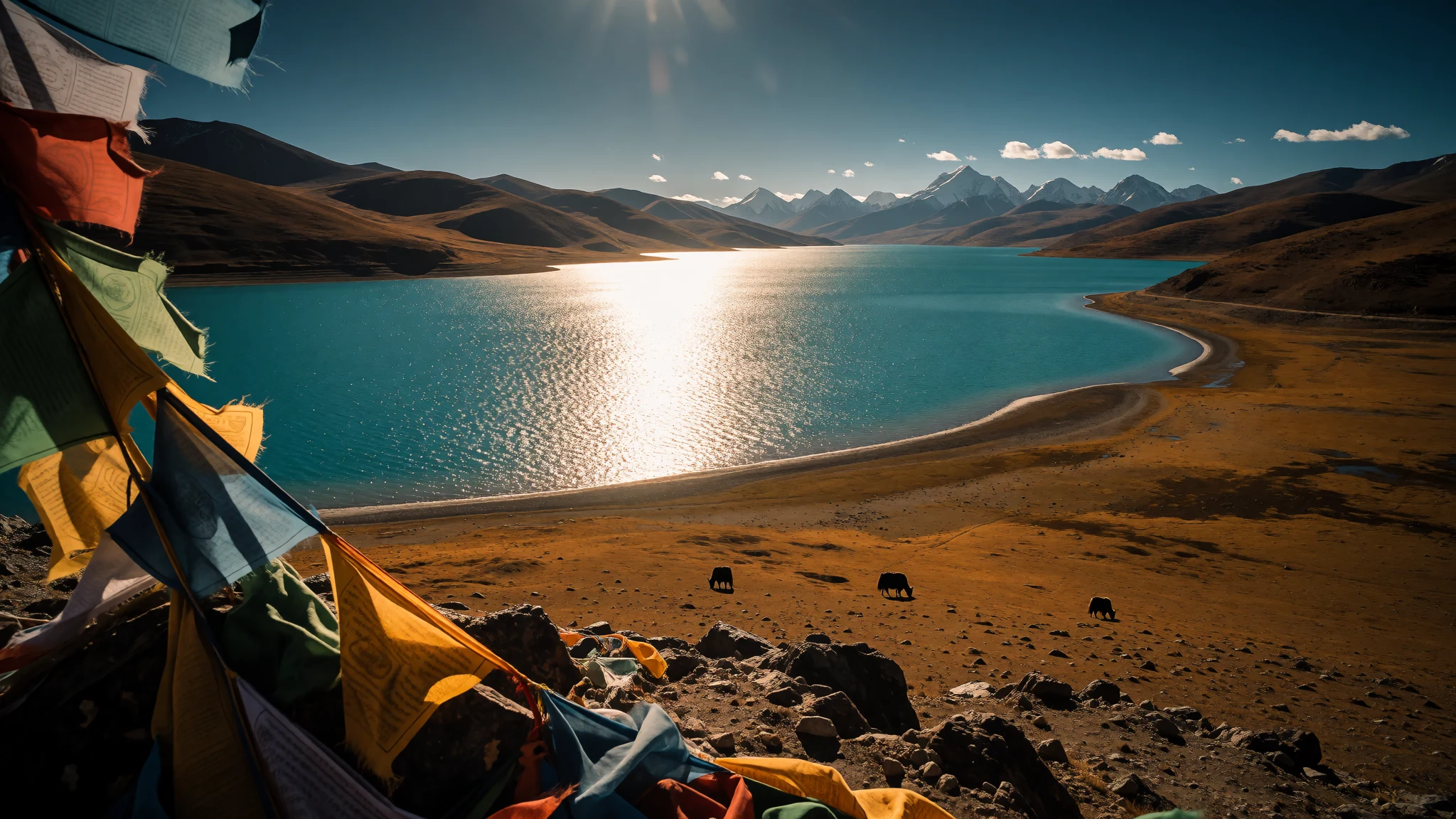
Yamdrok Lake is a turquoise sheet of water at 4,440 m, seen from a high pass on the road between Lhasa and Gyantse.
The place
Yamdrok Lake (Tibetan: ཡར་འབྲོག་གཡུ་མཚོ་; Chinese: 羊卓雍錯) sits in Shannan prefecture, Tibet, at an elevation of 4,440 m. It is a freshwater lake, and its name is usually rendered as turquoise, which suits the colour it shows on a clear day. The shoreline is long and ragged rather than round, running for more than 70 km, with snow-capped mountains standing behind it and small streams feeding it from the slopes.
Gyantse lies roughly 90 km to the west, and Lhasa about 100 km to the north-east, so the lake sits on a natural stopping point between the two. Most visitors meet it first from a high pass above the water, where the road switches back and the whole lake opens out below.
The climate is that of a cold steppe, edging towards alpine tundra. Winters are long, cold and extremely dry, while summers are brief, cool and wetter. The gap between day and night temperatures is wide, so a bright morning can turn sharply cold by evening. There is little shade and the light is strong, which is why the water looks so vivid against the bare brown hills.
The lake has an outlet at its western end, a tributary of the Yarlung Tsangpo. A hydropower station was finished near the village of Baidi there in 1996. Villagers graze yaks and sheep along the edges, and the setting feels pastoral despite the infrastructure.
Its story
Yamdrok Lake is held sacred in Tibet, and local belief says it is a goddess who took the shape of water. That idea shapes how people treat it: as a living presence to be respected, not simply scenery or a resource.
The surrounding region matters to Tibetan history too. Shannan prefecture, south of Lhasa and reaching to the Bhutan border, is regarded by many as the birthplace of Tibetan culture. Its wide valleys and mild climate make it among the most fertile parts of the plateau, a sharp contrast with the austere heights around the lake. Farming settlements grew in the valleys, and the early rulers of Tibet are linked to this land.
Travellers have long crossed the passes here on the way between the capital and the towns of the west. The route follows the old logic of the plateau: climb over a ridge, drop to a basin, repeat. The lake is the largest basin on that stretch, and the view from the top of the pass has become the moment people remember.
In recent decades the lake has also taken on an industrial role, with the hydropower station at Baidi, the largest in Tibet according to the sources used here. So the water carries three meanings at once: sacred body, grazing land and power source. Seeing all three in one afternoon is part of what makes the place worth understanding.
What to see
- The pass viewpoint above the lake — Road between Lhasa and Gyantse
The classic view is from the high pass on the road, where the lake spreads below in a long turquoise ribbon among bare slopes. Photographers gather here, and prayer flags and stalls often crowd the edge. Go early for clearer air and fewer people, and wrap up well because the wind is cold.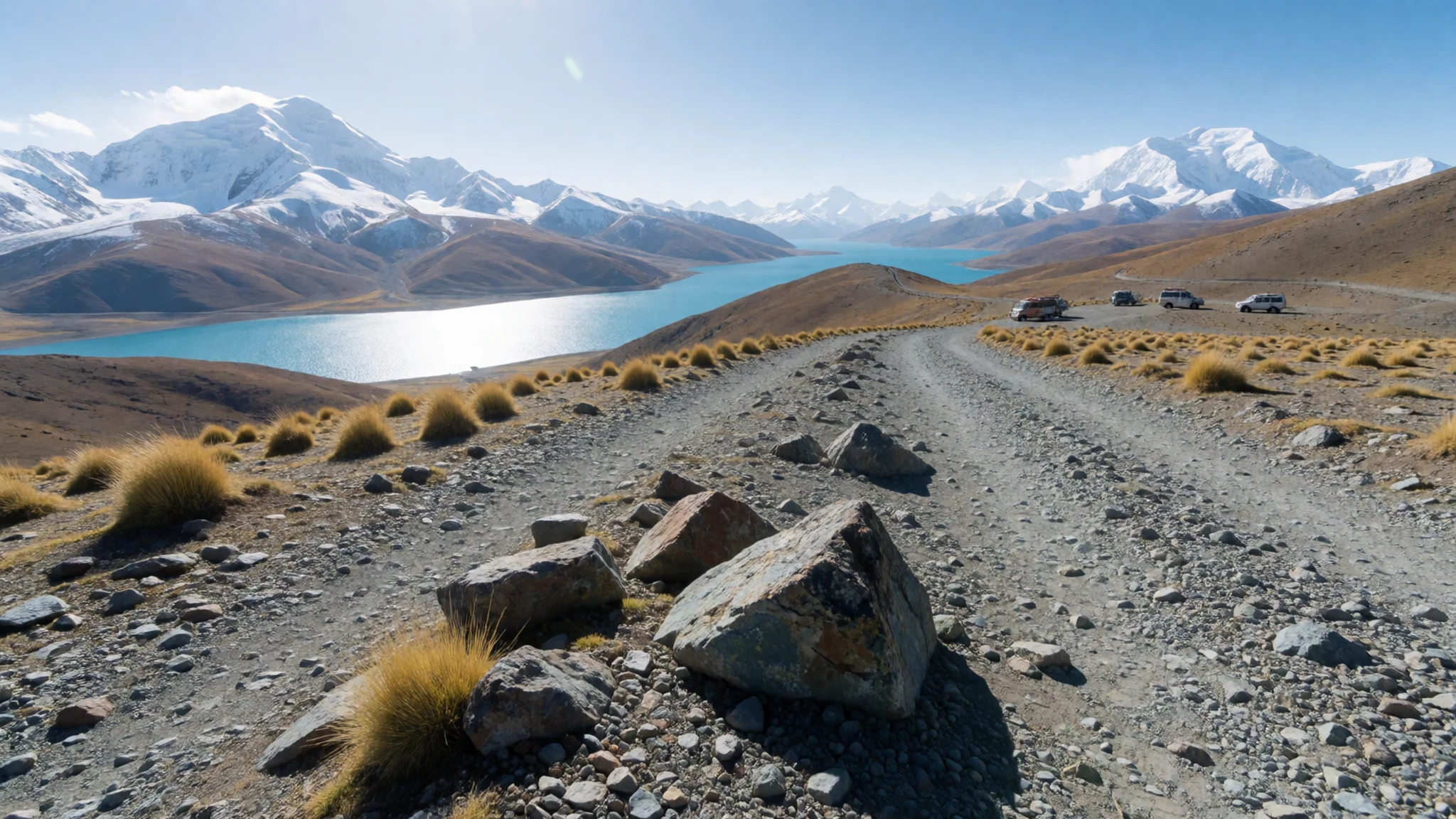
- Langbuqi viewing platform — Yamdrok shoreline
A built platform gives a second angle on the water, useful for wide frames of the lake with the mountains behind. It is a short stop rather than a destination. The light is best when the sun is high enough to bring out the turquoise, so late morning often suits.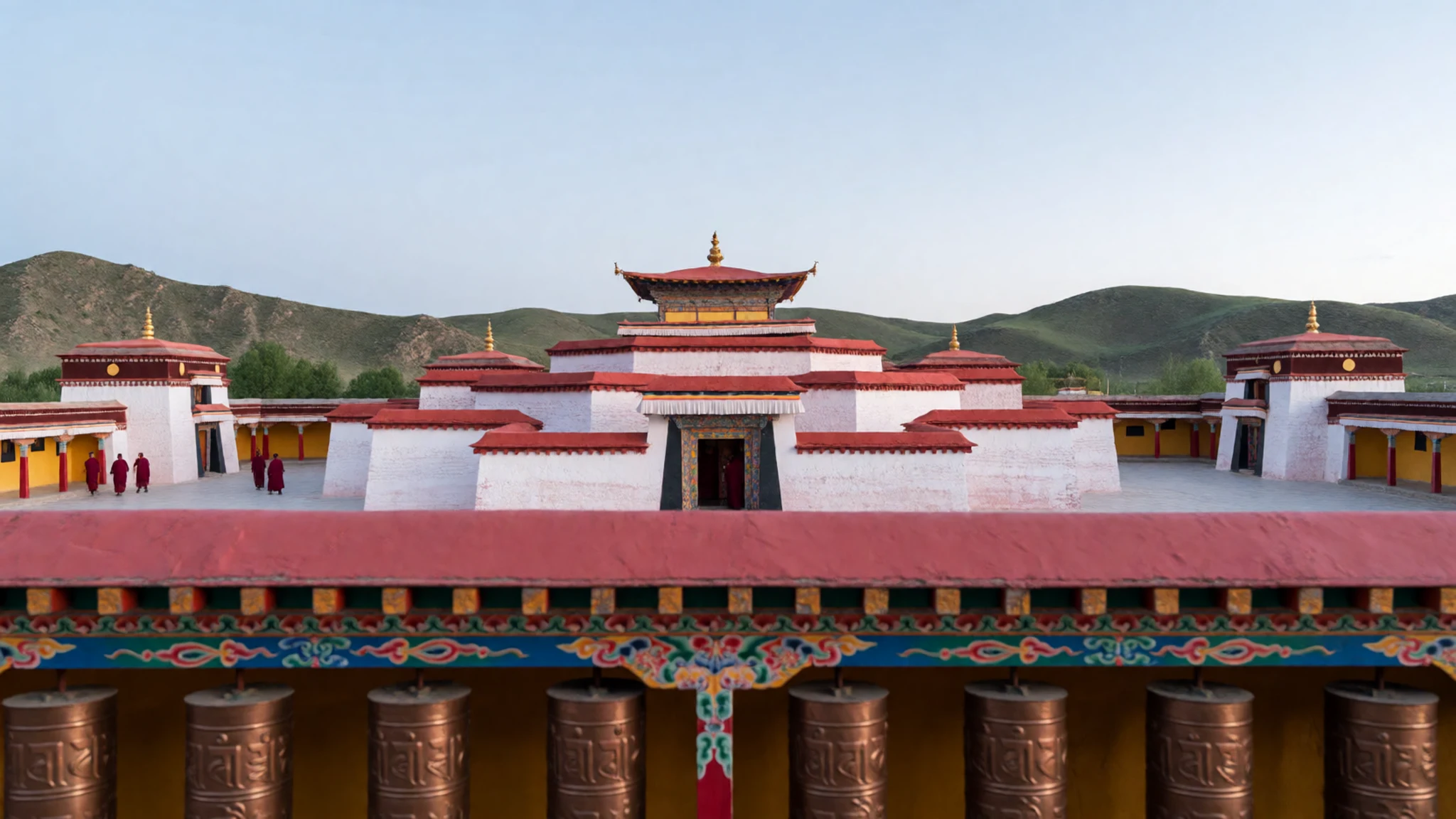
- Grazing yaks along the shore — Lake margins
Herders keep yaks and sheep on the pasture beside the water, and a yak in the foreground makes the scale of the lake clear. Keep a respectful distance, never block animals on the track, and ask the owner before taking close photographs, since some expect a small tip.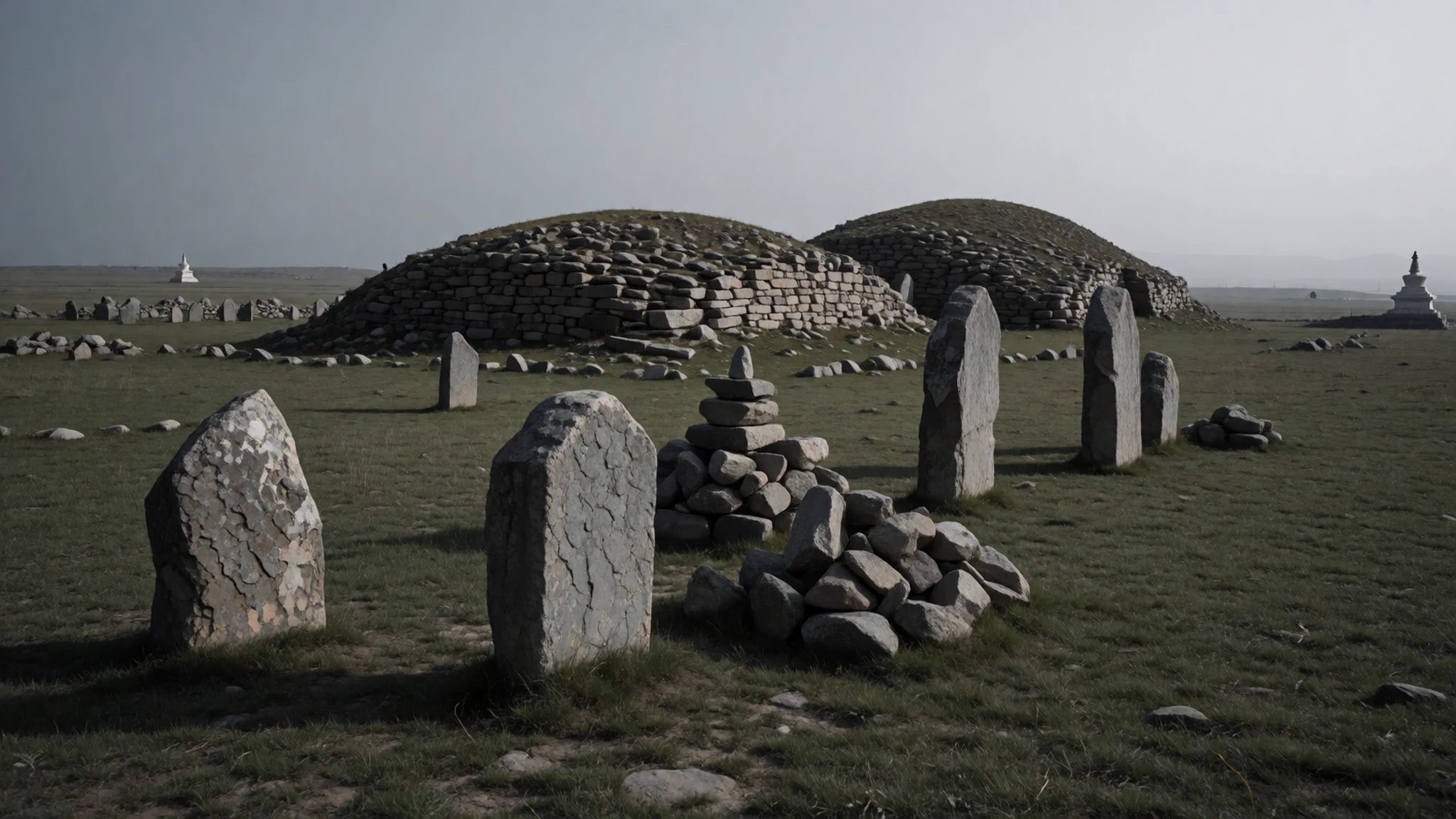
- Samye Monastery — Samye, Shannan
Samye, in Shannan prefecture, is described as the first Buddhist monastery in Tibet, which makes it an important stop for anyone interested in the religion's early history. It lies some distance from the lake, so treat it as a separate excursion and check access rules before planning the trip.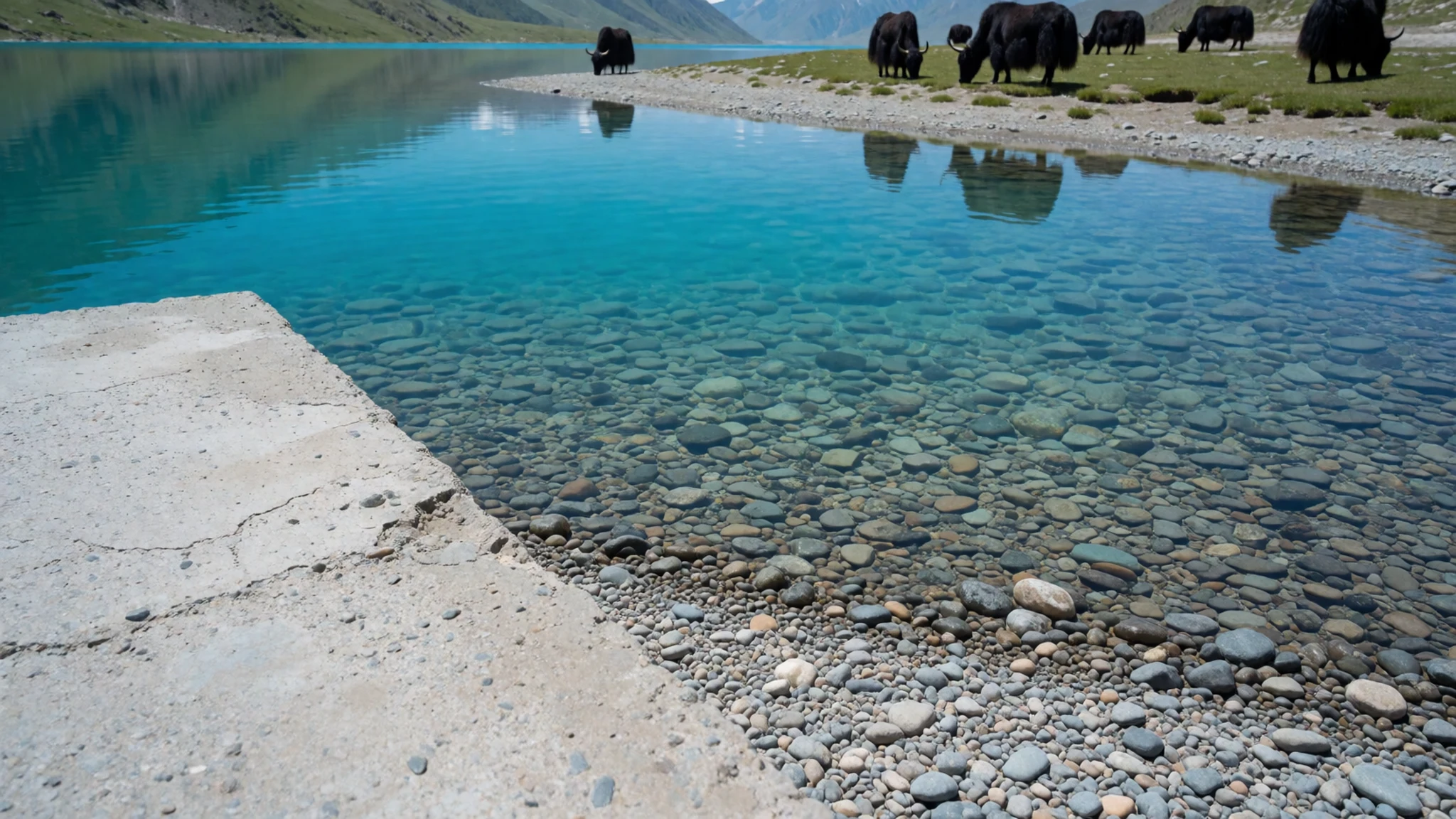
- Tombs of the Tibetan Kings — Yarlung valley, Shannan
This traditional burial area in the Yarlung valley includes the tomb of Songtsan Gambo within it. The site gives a sense of how early Tibetan rulers were commemorated. It sits in Shannan prefecture, away from the lake, so it fits better into a longer journey through the region.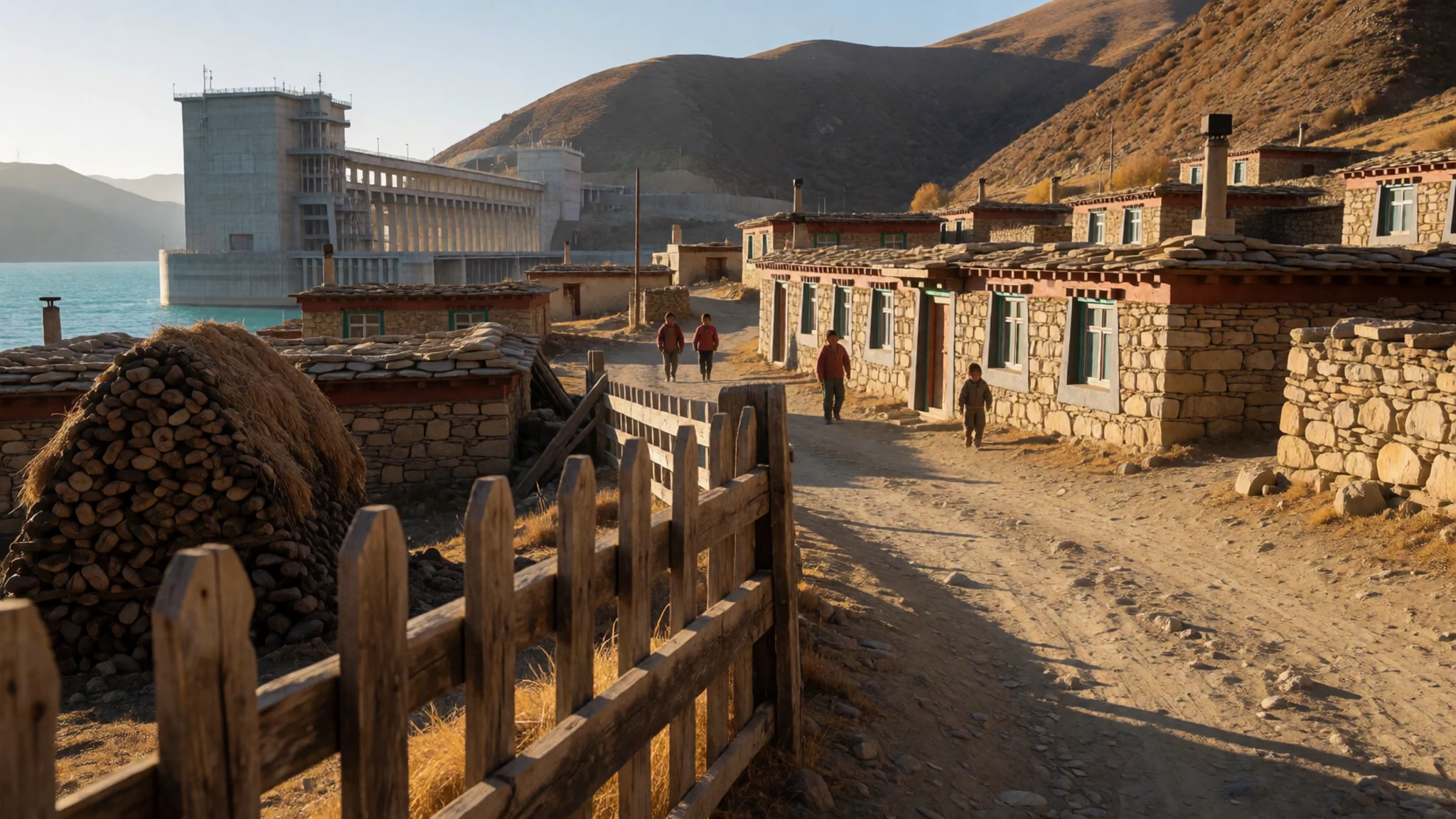
Culture
Yamdrok Lake is one of the holy lakes of Tibet, and for local people it is more than a view. The belief that the lake is a goddess in another form explains why many visitors see prayer flags, small stone cairns and quiet gestures of respect near the shore.
Tibetan Buddhism shapes daily life in the region. Pilgrims walk circuits around sacred places, always clockwise, spinning prayer wheels as they go. Prayer flags carry printed mantras and are meant to send blessings on the wind, so they are hung high and left to fade. The colours have traditional meanings, and the flags should never be treated as decoration.
Herding remains central around the lake. Families keep yaks and sheep, and butter tea and barley are everyday staples. Hospitality matters: if a household offers tea, accepting is polite.
Visitors travel in a region with its own rules about access and permits, and those rules can change. It is sensible to rely on a licensed operator and to follow guidance on where you may go and what you may photograph.
Walk clockwise around prayer flags, cairns and shrines, never step over offerings, and ask before photographing people or their animals.
What to wear
Around Yamdrok Lake, traditional Tibetan dress is practical clothing for cold, high country. The chuba is a long, wrapped robe, traditionally made from wool or sheepskin, tied at the waist with a sash. Women often wear a sleeveless version over a blouse, with a striped woollen apron called a pangden, historically woven by hand. Felt and leather boots, and wide-brimmed hats, protect against wind and strong sun. Many people wear turquoise and coral jewellery, which fits the lake's own colour.
In daily life today, people mix tradition and the modern. Herders may wear a chuba while working, while younger people tend towards jackets, jeans and trainers. In towns, you see more everyday contemporary clothing, though chubas are still worn on festival days and at family gatherings.
Visitors should dress for altitude and sudden change. At 4,440 m the sun is fierce by day and the temperature falls fast, so layers are essential: a thermal base, a fleece, a windproof and waterproof shell, plus a warm hat, gloves and sunglasses. Use sunscreen and lip balm. Sturdy shoes with grip help on loose ground near the shore. At monasteries, cover shoulders and knees and remove hats inside the prayer halls.
What to eat
- Butter tea (po cha) — Village homes, guesthouses and roadside tea stops
Tea churned with yak butter and salt, served hot and sipped through the day. It is rich, savoury and warming, and it suits the cold altitude. Guesthouse hosts often refill the cup before it empties, so leave some if you have had enough.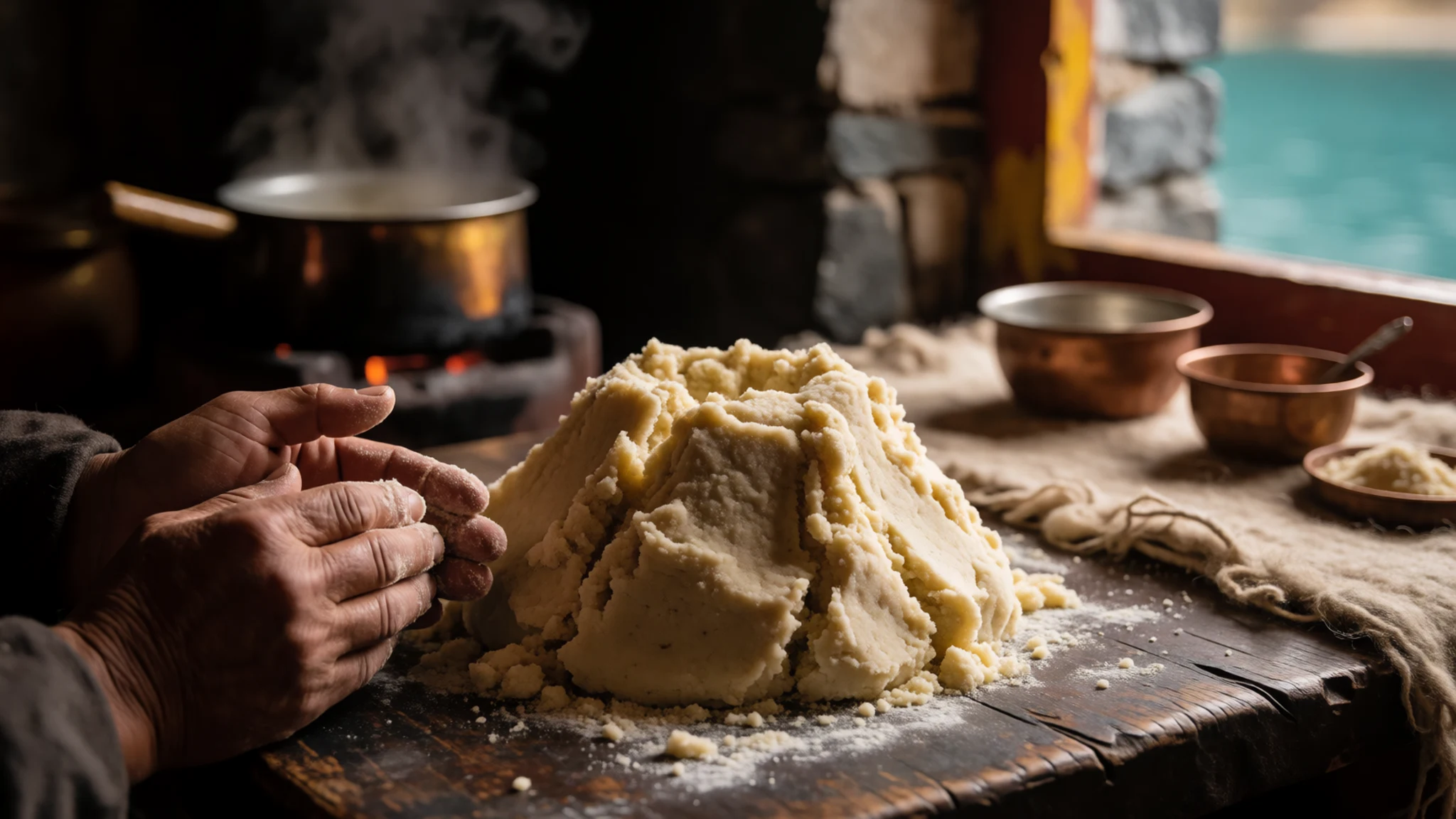
- Tsampa — Family homes and local eateries in Shannan
Roasted barley flour, a staple of the plateau, usually mixed with butter tea into a firm dough and eaten by hand. It is plain but filling, and gives herders steady energy for long days out with their animals.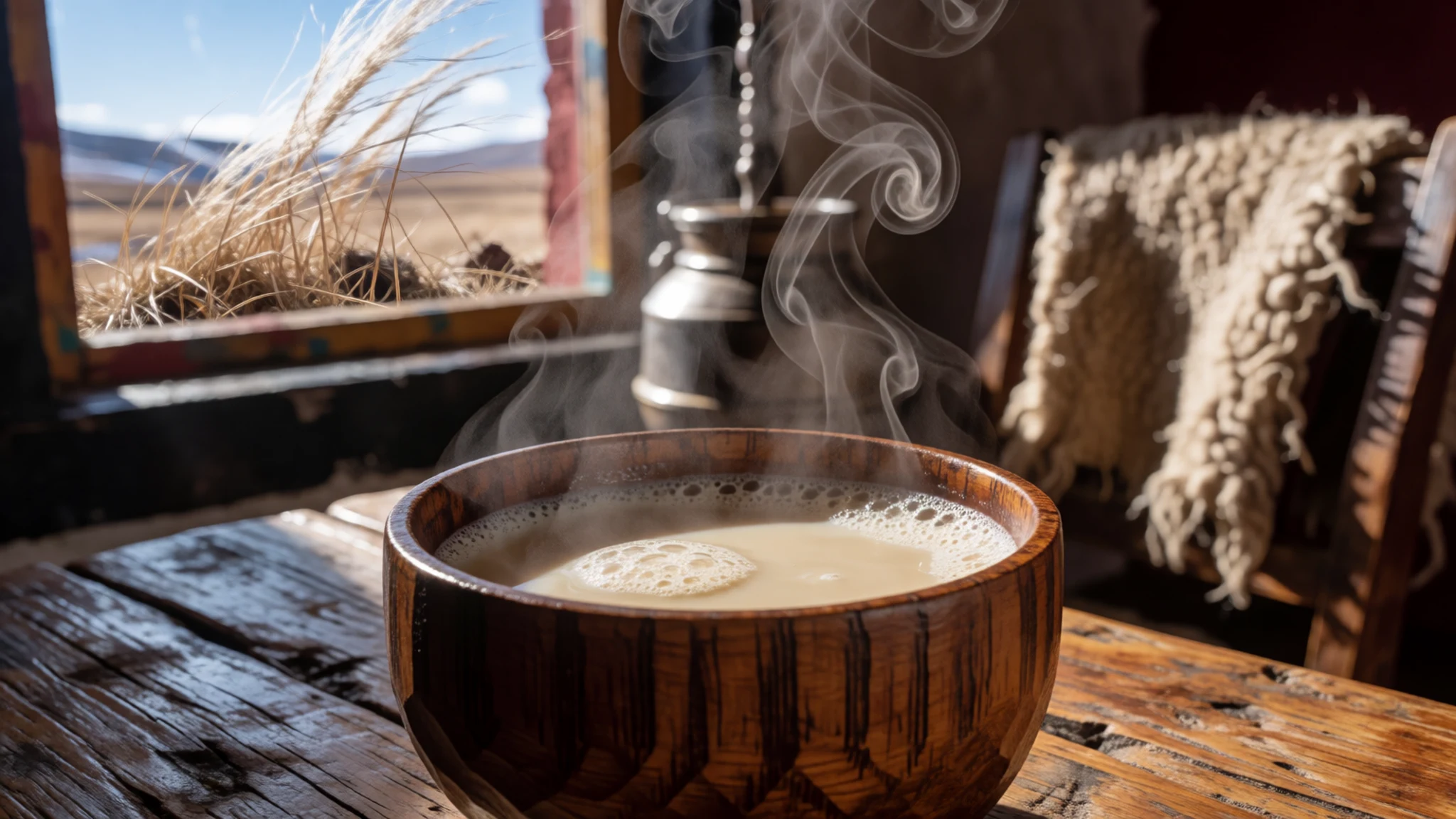
- Thukpa — Simple noodle eateries in Gyantse and Tsethang
A hearty noodle soup with meat, often yak or mutton, and vegetables in a hot broth. It is a sensible meal after a cold morning by the lake, and easy to find in small towns along the route. - Momo — Street stalls and small restaurants in Lhasa and Gyantse
Dumplings filled with minced yak, mutton or vegetables, steamed or fried and served with a chilli dip. They make a quick lunch on a long drive, and vegetarian versions are common in larger towns. - Yak yoghurt and dried cheese — Village markets and roadside stalls near the lake
Herding families make tangy yoghurt and hard dried cheese from yak milk. The cheese is chewy and sour, a snack for travel. Try a little first, as the flavour is strong.
Plan it
Best time. May to June and September to October are the more comfortable months. Summers are short, cool and wetter, while winters are long, cold and very dry. Days and nights differ greatly in temperature at any time of year.
How long. 1–2
Getting there. Fly to Lhasa Gonggar Airport, then travel by road. Lhasa is about 100 km from the lake and Gyantse about 90 km to the west. Most visitors go by arranged car or tour on the route between the two.
Budget. mid
Tips
- Spend a day or two in Lhasa first to adjust to altitude before going higher
- Carry layers, sun protection and plenty of water, since the light is strong and the air dry
- Start early for clearer views and fewer people at the viewpoints
- Carry some cash for small stalls and tips, as cards are not always accepted
- Check current permit and access requirements with a licensed operator before travelling
Etiquette
- Walk clockwise around sacred markers and prayer flags
- Ask before photographing people, herders or their animals
- Take your rubbish away and keep off the water's edge pasture where animals graze
Nearby
Sources
- Wikidata Q939604 (CC0)
- Wikipedia: Yamdrok Lake (rev 1385921786) (CC BY-SA 4.0)
- Wikivoyage: Shannan (prefecture) (rev 3701087) (CC BY-SA 4.0)
- Photo: Yamdrok-tso, Peter Vigier (CC BY 3.0)
- Photo: Lac Yamdrok, Alassb777 (CC BY 4.0)
- Photo: Yamzho Yumco, Kkkwylin (CC0 1.0)
- Photo: Yamdrok Lake, travel oriented (CC BY-SA 2.0)
- Photo: Yamdrok Lake scenery, C980040 (CC BY-SA 4.0)
- Photo: Yamdrog Tsho 1954 map, Army Map Service (Public domain)
- Photo: Yamdrok Tso, Ljuba brank (CC BY 3.0)
- Photo: 羊卓雍措, Gordon Cheung (CC BY 2.5)


