Yading
Yading, People's Republic of China
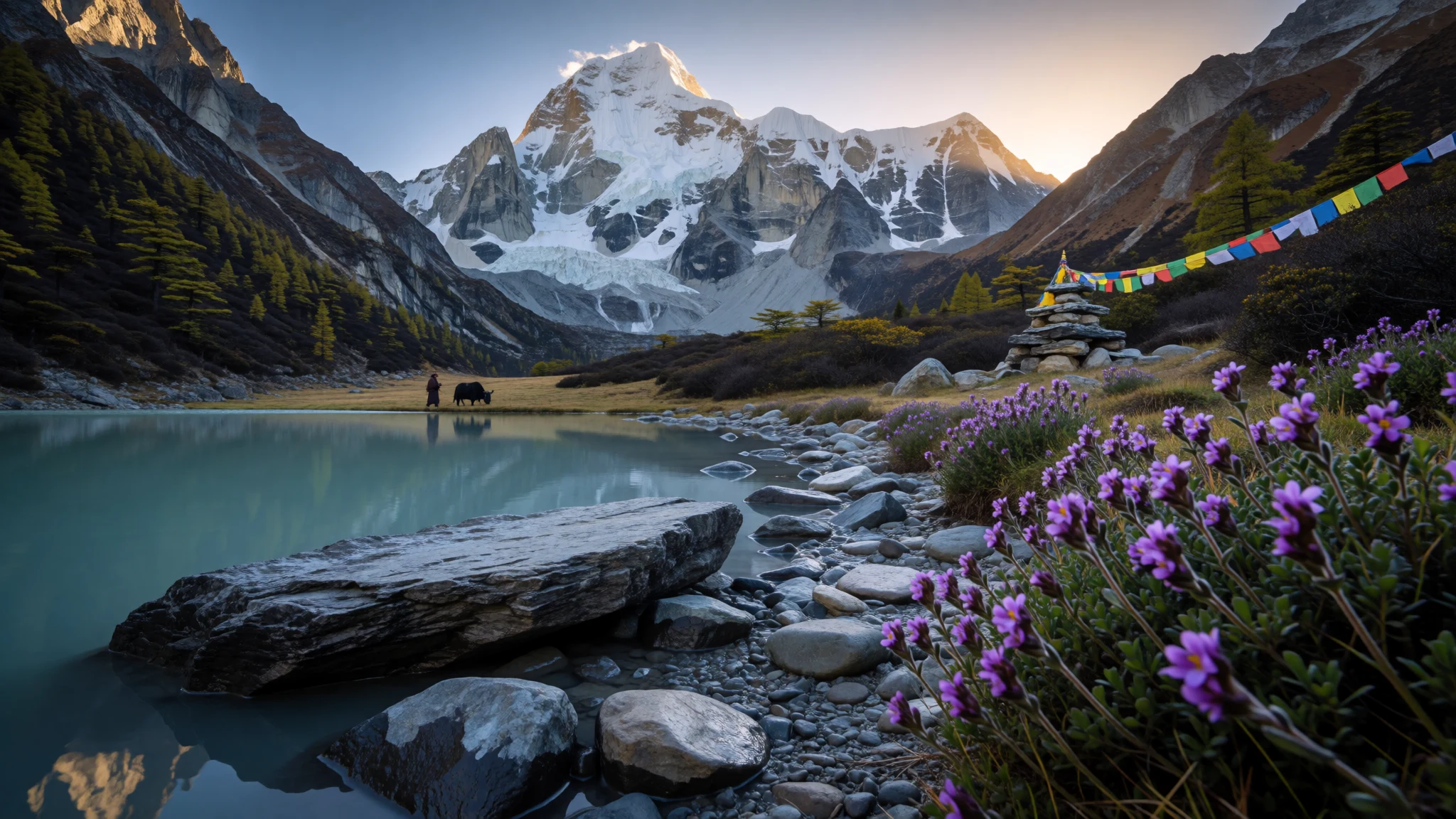
Yading offers three sacred snow peaks and turquoise glacial lakes on the edge of the Tibetan plateau, reached by walking slowly at real altitude.
The place
Yading, known in Tibetan as Nyidên, is a protected mountain area in the far southwest of Sichuan, China, inside Daocheng county and rated a Chinese AAAAA tourist attraction. It works both as a scenic park and as a living pilgrimage landscape. Three peaks give it its character: Jampelyang at 6032 m, with Chenrezig and Chanadorje both at 5958 m. Around them are more than 30 summits above 4500 m and over 60 glacial lakes, all of it high country on the Himalayan plateau. Altitude is the defining fact of a visit. Everything inside the park sits above 4,000 m, so the air is thin even on flat boardwalks, and steady uphill walking tires people who feel fine at lower levels. The standard day walk follows a well-marked, mostly stepped path to Milk Lake and Five-colour Lake, about 10 km there and back with roughly 400 m of ascent. A shorter and quieter outing visits Pearl Lake and returns across Chonggu Grassland, under 3 km in all. Deer, pheasant, marmots and foxes live in the park, and yaks graze on the open grass. Daocheng Yading Airport is the nearest air link, and visitors base themselves in the town of Riwa or in Yading village. Winter, roughly December to April, brings snow and flatter colours, so most people come outside those months.
Its story
The story of Yading is above all a religious one. In Tibetan Buddhism the three main peaks are sacred, and the 5th Dalai Lama is credited with sanctifying them. Each is understood as the earthly form of a bodhisattva: Chenrezig, the figure of compassion, also called Avalokiteśvara; Jampelyang, linked with wisdom and known elsewhere as Manjushri; and Chanadorje, the form of Vajrapani. Jampelyang, at 6032 m, is the tallest of the trio. Pilgrims have long come to honour the peaks, and the lakes beneath them are treated as holy too, which is why local Tibetans frown on swimming in them or stepping onto frozen surfaces. Awareness beyond the region came much later. In March 1928 the explorer Joseph Rock reached the area on foot, coming from the Muli side and crossing Daocheng ground, and his descriptions brought the mountains to wider notice. The modern chapter is about access. With a protected-area boundary, an airport near Daocheng and improved roads, a remote pilgrimage landscape has become a mainstream destination. That brings crowds on the main lake route and a visible litter problem, which sits uneasily with the idea of sacred ground. Visitors who want to respect the place keep to the paths, carry their rubbish out and leave the water alone.
What to see
- Chenrezig (Xiannairi) — Yading National Nature Reserve
Chenrezig, called Xiannairi in Chinese, is one of the three holy peaks at 5958 m. It is the summit most visitors hope to see clear of cloud, and mornings usually offer the best odds. Pilgrims regard it as the form of the bodhisattva of compassion, so it is a place of devotion as well as scenery.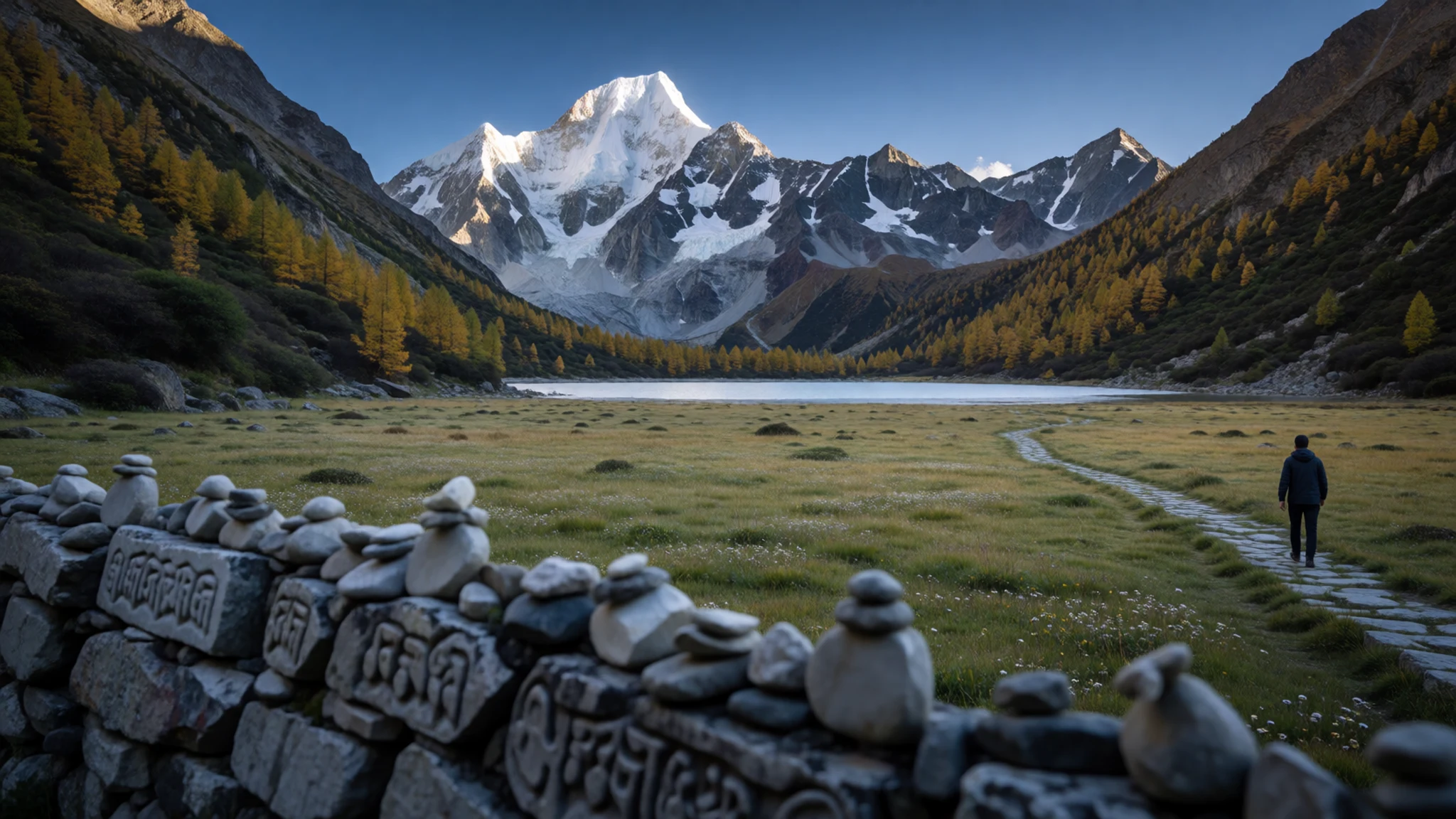
- Jampelyang (Yangmaiyong) — Yading National Nature Reserve
Jampelyang, Yangmaiyong in Chinese, rises to 6032 m and is associated with wisdom. Its rocky, snow-streaked summit shows up from several points in the park, including the approach to the lakes. Bring binoculars or a zoom lens, since the peak sits well back from the paths.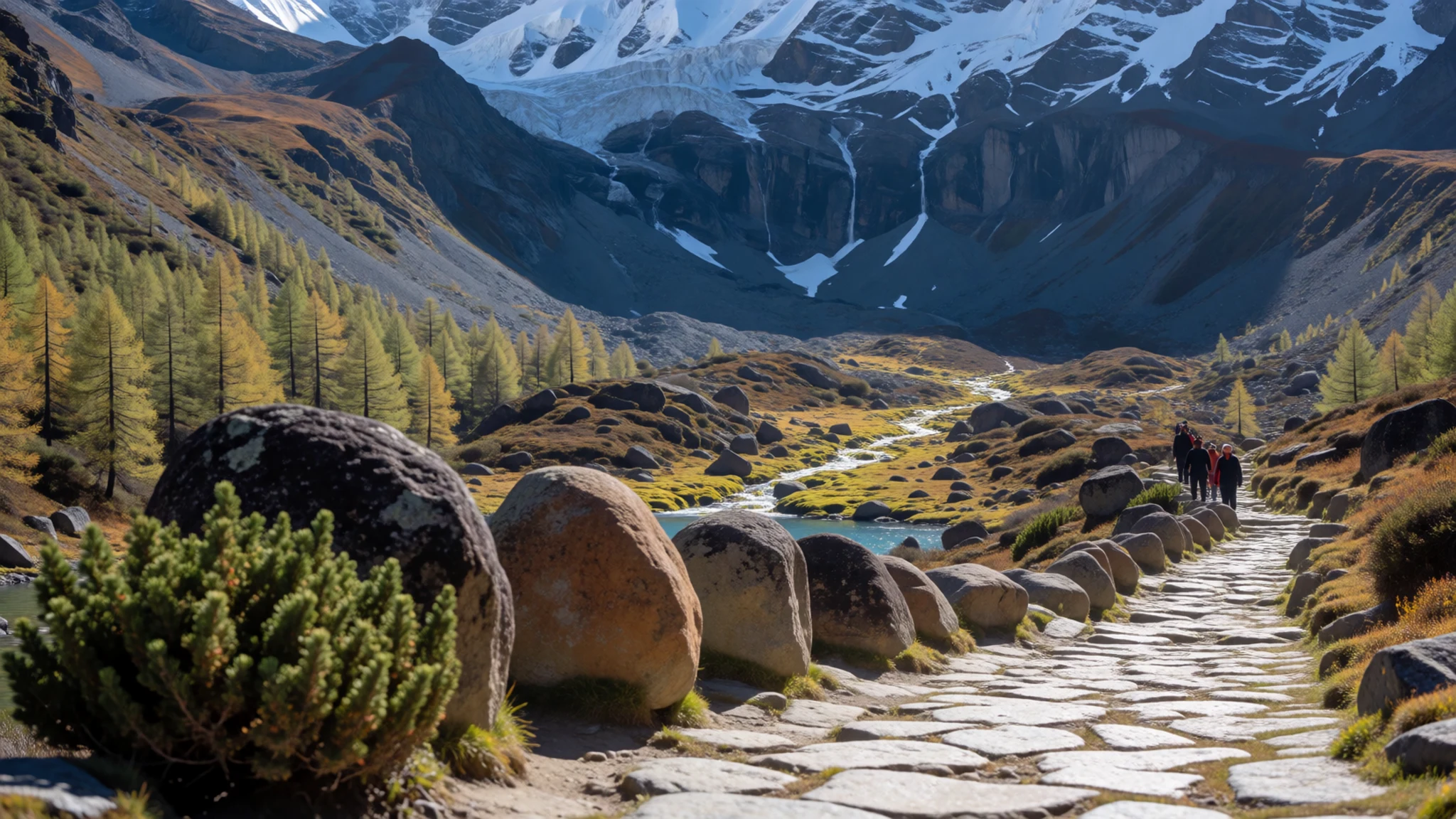
- Chanadorje and Chonggu Grassland — Yading National Nature Reserve
Chanadorje, or Xianuoduoji, also stands at 5958 m and is seen as the form of Vajrapani. The open Chonggu Grassland at its foot is a gentler, flatter outing than the lake climb, and combining it with Pearl Lake makes a short, less crowded visit of under 3 km.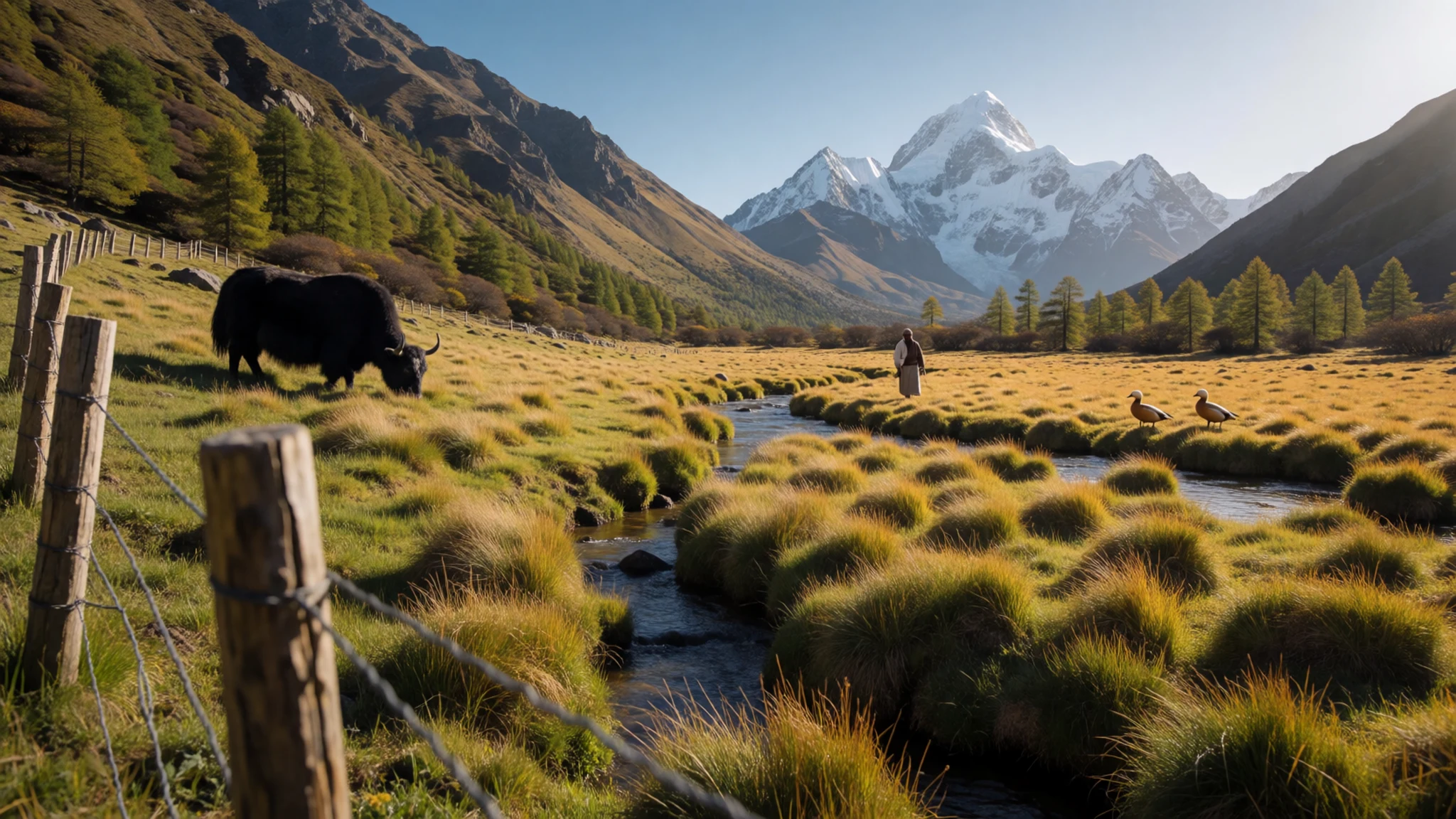
- Milk Lake (Erong) — Beyond the main trail, Yading National Nature Reserve
Milk Lake, called Erong in Tibetan and Niunaihai in Chinese, is a pale turquoise glacial lake ringed by rock and snow. It is the usual goal of the stepped day walk, so expect company. Local Tibetans hold it holy, and touching the water or walking on any ice is discouraged.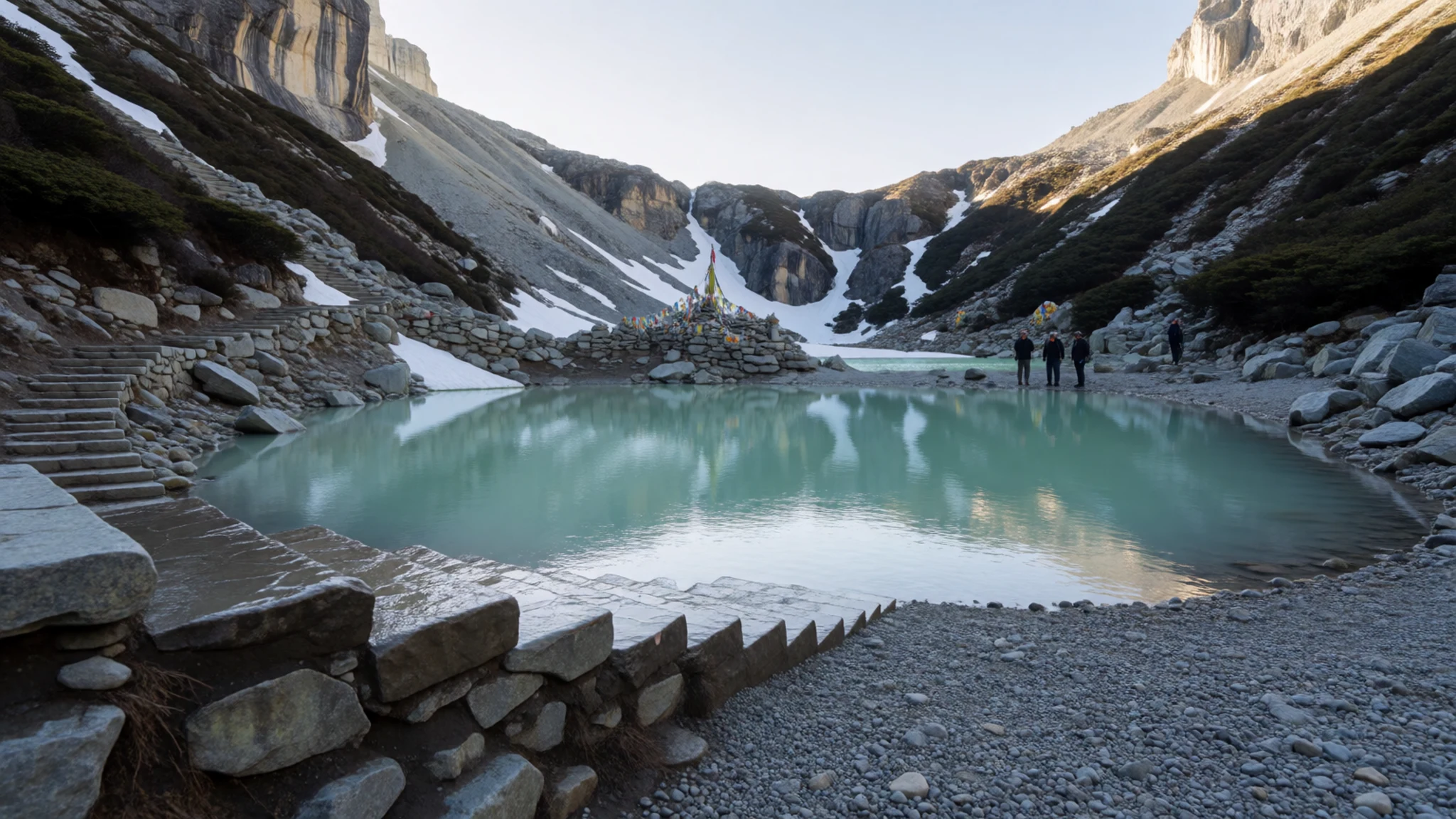
- Five-colour Lake (Danzhen) — Beyond the main trail, Yading National Nature Reserve
Five-colour Lake, Danzhen, sits close to Milk Lake on the same marked route, so the two are normally seen together. Its Chinese name refers to the shifting shades of the water, which change with light and cloud. A clear, still morning shows the strongest colour; visits after snowfall look flatter.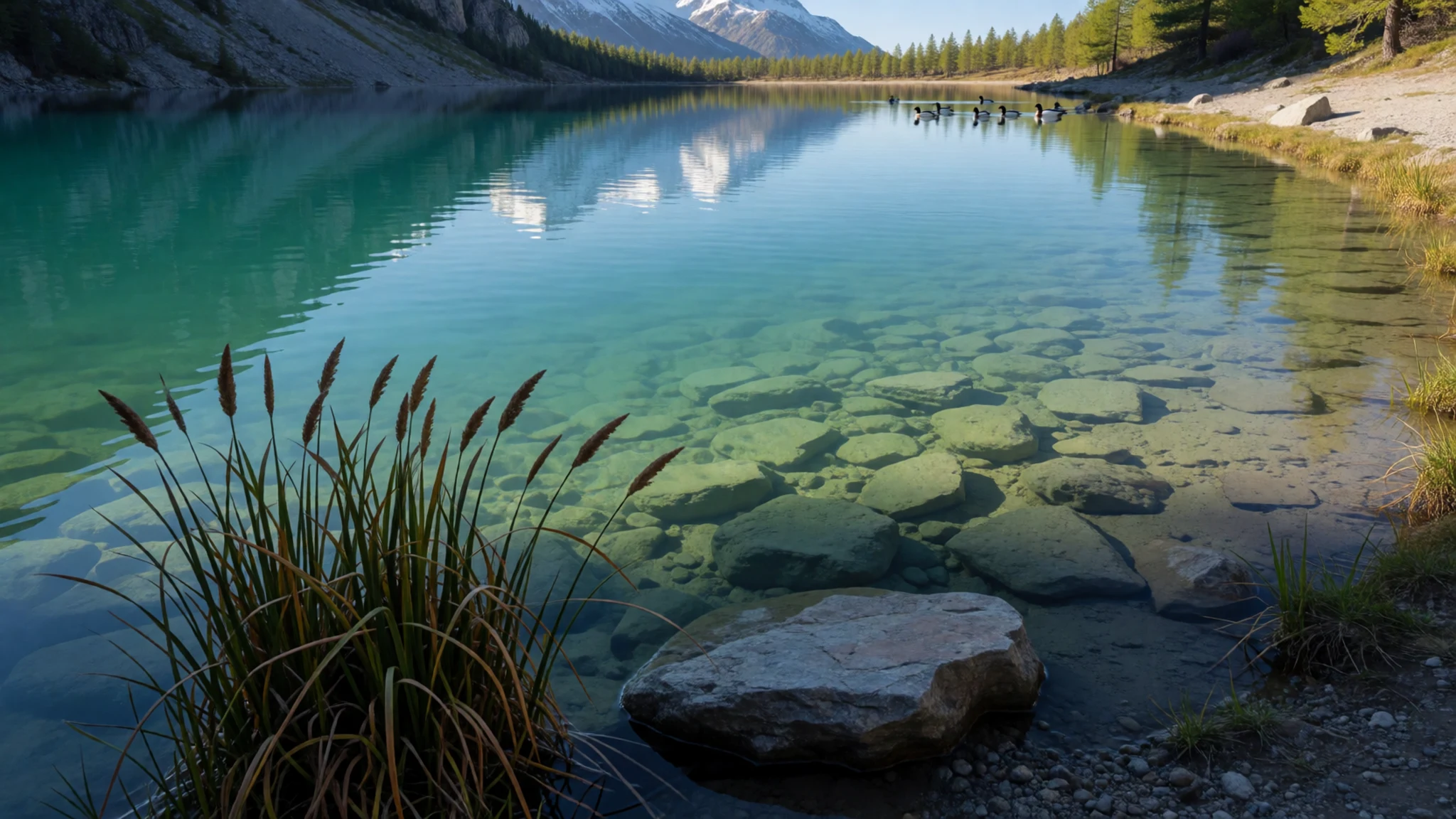
Culture
Yading is first of all a Tibetan Buddhist landscape, and the culture of the place is the culture of pilgrimage. The three peaks are not simply scenery: they are sacred figures, and the lakes beneath them are part of that holiness. Pilgrims move around holy sites on foot, keeping the sacred object on their right, and some do this over several days. Prayer flags, stacked stones and small offerings mark places of devotion along many Tibetan routes, and these are not props for photographs. Villages in the area, including those around Riwa and Yading, are Tibetan communities with their own customs and a working relationship with the land: herding yaks, tending grassland and hosting travellers. Tourism has become part of local income, but it has also put pressure on a place that people regard as holy. The sensible approach is to move quietly, accept that some parts are not meant for visitors, and ask before photographing people or stepping into private pasture. Camping outside designated areas depends on herders' goodwill, and should be treated as a favour, not a right. Leave nothing behind, including food scraps, because the mountain is both a home and a shrine. Keep to the marked paths, walk around prayer flags and stone piles clockwise, and never wade into, touch or step onto the frozen surface of the holy lakes.
What to wear
Around Yading the traditional dress is Tibetan, in the Kham style. The central garment is the chuba, a long robe of wool or sheepskin tied at the waist with a sash, which lets herders adjust the length and keep warm at altitude. Women often wear it over a blouse with a striped apron, and for festivals the cloth may be silk brocade, with jewellery of coral, turquoise and amber. Heavy boots, felt hats and braided hair ornaments complete the look. Everyday clothing today is practical and modern: fleece, padded jackets, jeans and trainers, with the chuba appearing more at festivals, ceremonies and among older residents. Visitors should dress for cold, wind and strong sun at altitude. Layers work best: a thermal base, a fleece and a windproof, waterproof shell, plus a warm hat, gloves and sunglasses, because the light is intense above 4,000 m. Good walking shoes with grip are important for the steps and wet boardwalks. Where monasteries and shrines are visited, cover shoulders and knees, remove hats indoors and avoid loud or revealing clothing. A small daypack and a spare layer make the stepped lake route far more comfortable.
What to eat
- Butter tea (po cha) — Guesthouses and village eateries in Riwa and Yading village
Butter tea mixes brewed tea, butter and salt into a warming, savoury drink that suits the thin, cold air. It tastes more like broth than tea. Locals sip it all day, and a first cup is worth trying even if the second feels optional.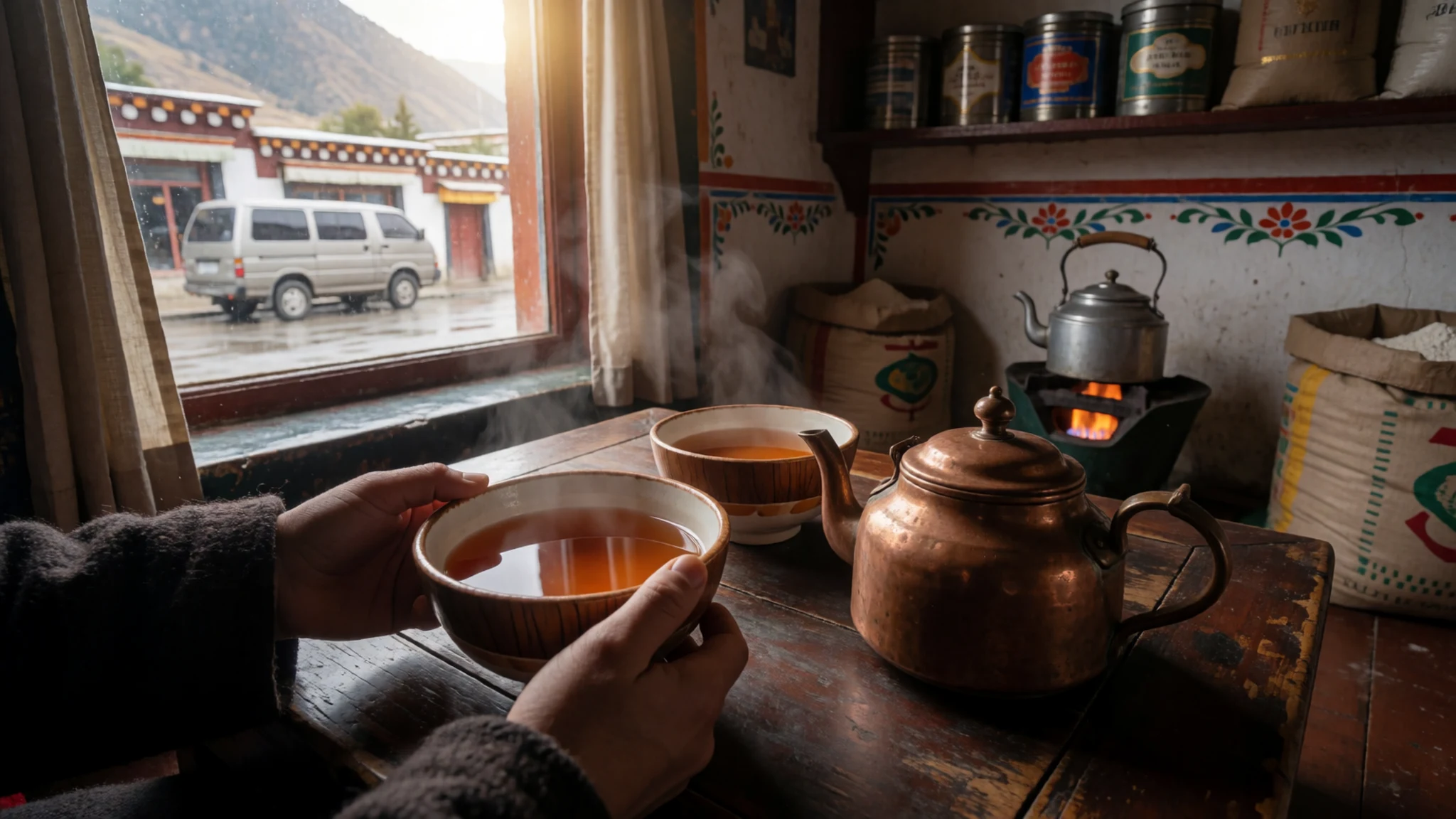
- Tsampa — Family-run guesthouses and Tibetan households
Tsampa is roasted barley flour, usually mixed with butter tea or yak butter into a dough that is eaten by hand. It is the long-standing staple of Tibetan highlands, filling and portable, and many hosts will happily show how it is kneaded.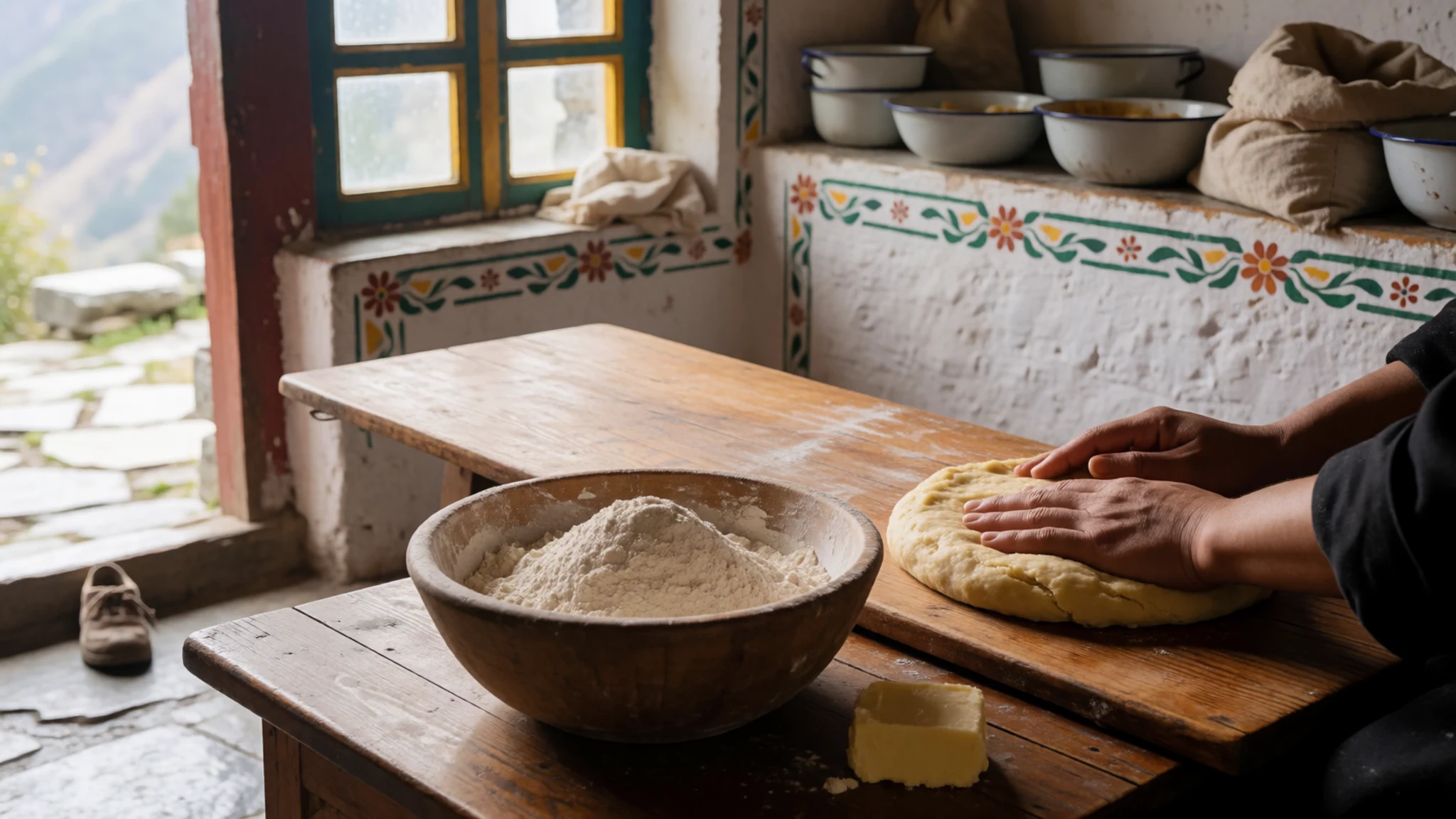
- Yak meat dishes — Restaurants and eateries in Daocheng town, Riwa and Yading village
Yak appears as stew, hotpot, dried strips and stir-fry. The meat is lean and slightly sweeter than beef, and slow-cooked versions are the most tender. Hotpot in a village eatery is a good way to warm up after the walk. - Momos — Small Tibetan eateries and guesthouse kitchens
Momos are filled dumplings, usually of yak or vegetables, steamed or fried and served with a chilli dip. They are an easy, inexpensive meal near the park, and vegetarian versions are often available if you ask in advance. - Thukpa — Noodle shops and guesthouse kitchens around Riwa
Thukpa is a hot noodle soup with meat or vegetables, simple and filling. It is a common choice before an early start or after a cold day outdoors, and many kitchens will adjust the spice level on request.
Plan it
Best time. Late spring to early autumn, roughly May–June and September–October, offers easier walking and stronger colour. From December to April snow makes paths harder and the scenery looks duller, so most visitors avoid those months.
How long. 2–3
Getting there. Fly to Daocheng Yading Airport, or travel overland from Chengdu through Kangding to Daocheng. From Daocheng, shared or private vehicles go to the town of Riwa and on to the park entrance gate; check current fares and schedules locally. Inside the park, a shuttle bus links the stops.
Budget. mid
Tips
- Spend a night or two at altitude before the lake climb, and walk slowly, because the whole park is above 4,000 m and altitude sickness is a real risk.
- Start early for the Milk Lake and Five-colour Lake route, which gets crowded later in the day.
- Stay in Riwa or Yading village; both have guesthouses, and Riwa also has a youth hostel.
- Carry water, snacks, warm layers and rain cover, since weather changes quickly.
- Camping is allowed only in designated campgrounds, a day's hike from Longtongba, and official information is thin, so plan carefully and carry all supplies.
Etiquette
- Stay on marked paths and do not touch the holy lakes or walk on frozen water.
- Take all rubbish out with you and follow leave-no-trace practice.
- Ask before photographing people, and ask herders before camping near their land.
Nearby
Sources
- Wikidata Q1059996 (CC0)
- Wikipedia: Yading (rev 1385644318) (CC BY-SA 4.0)
- Wikivoyage: Yading (rev 5294071) (CC BY-SA 4.0)
- Photo: Jampelyang (Yangmaiyong), Dcpeets (CC BY-SA 4.0)
- Photo: Yading National Park Milk Lake, Izeberg007 (CC0 1.0)
- Photo: Yading panoramio (1), Anders Johnson (CC BY 3.0)
- Photo: Leshitso (Snake Lake), Izeberg007 (CC0 1.0)
- Photo: Chanadorje and Chonggu Grassland, Dcpeets (CC BY-SA 4.0)
- Photo: Daocheng Aden Milk Sea, CHENG SHIYI (CC BY-SA 4.0)
- Photo: Chonggu Temple (48074050216), marroyo12 (CC BY 2.5)
- Photo: Chonggu Temple (48074094833), marroyo12 (CC BY 2.5)


Wildlife
- Himalayan marmot (animal)
The Himalayan marmot is a marmot of the high grasslands, a small mountain neighbour that belongs to the roof of the world. Marmots live in the Yading park, out on the open alpine meadows. Ask your guide which season and hour give you the best chance of seeing one. Watch from a good distance, keep your voice low and your movements slow, and let the animal go about its day. Never offer it food, however charming it looks.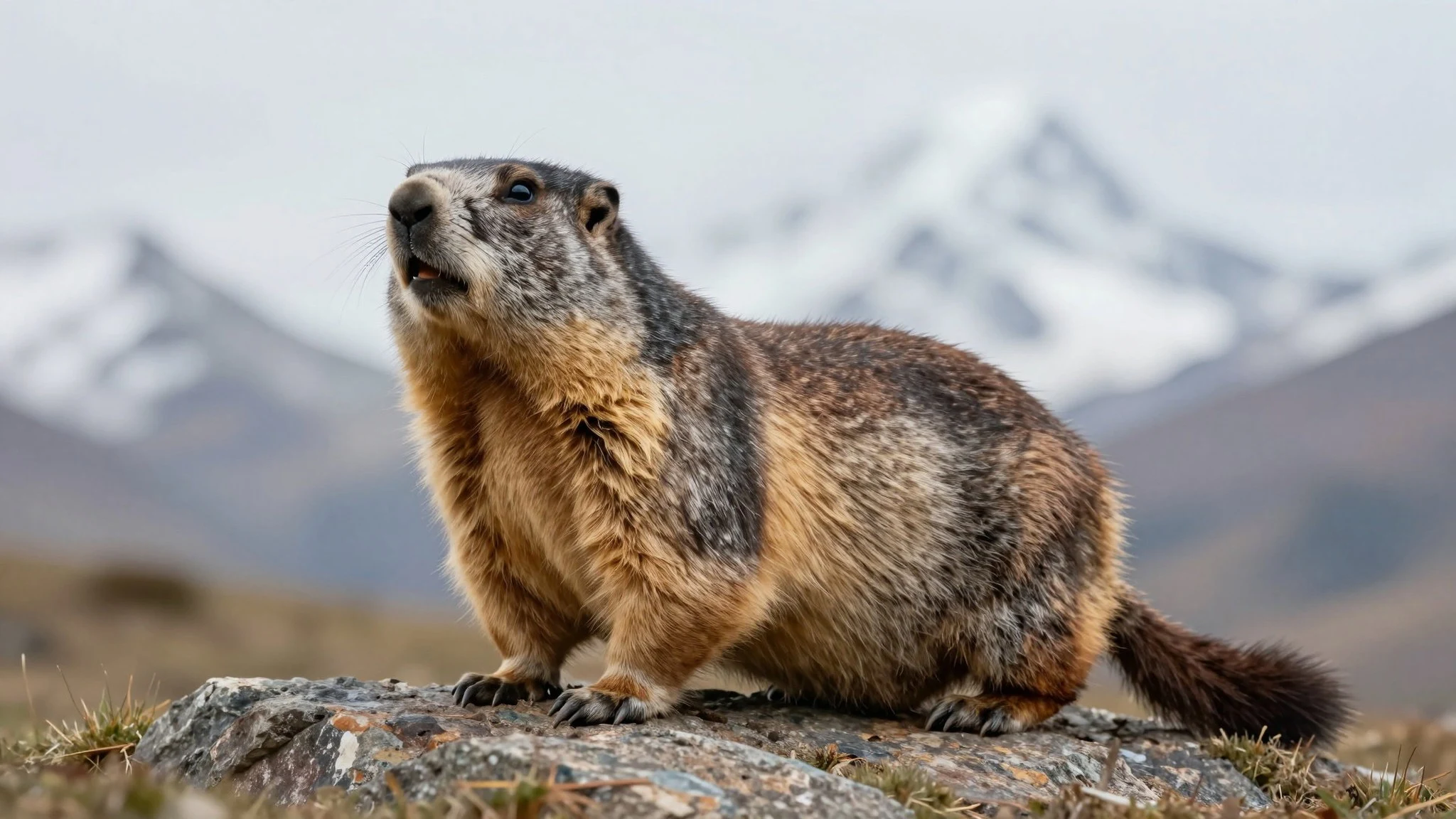
- Red fox (animal)
The red fox is the biggest of the true foxes, and it roams much of the northern half of the world, from Europe and Asia to North America. Foxes live in the Yading park, and your guide will know where a sighting is most likely and at what time of year. Watch from a respectful distance, stay quiet and still, and let the fox decide how close to come. Never feed it, however charming it looks.