Xidi Village
Xidi Village, People's Republic of China
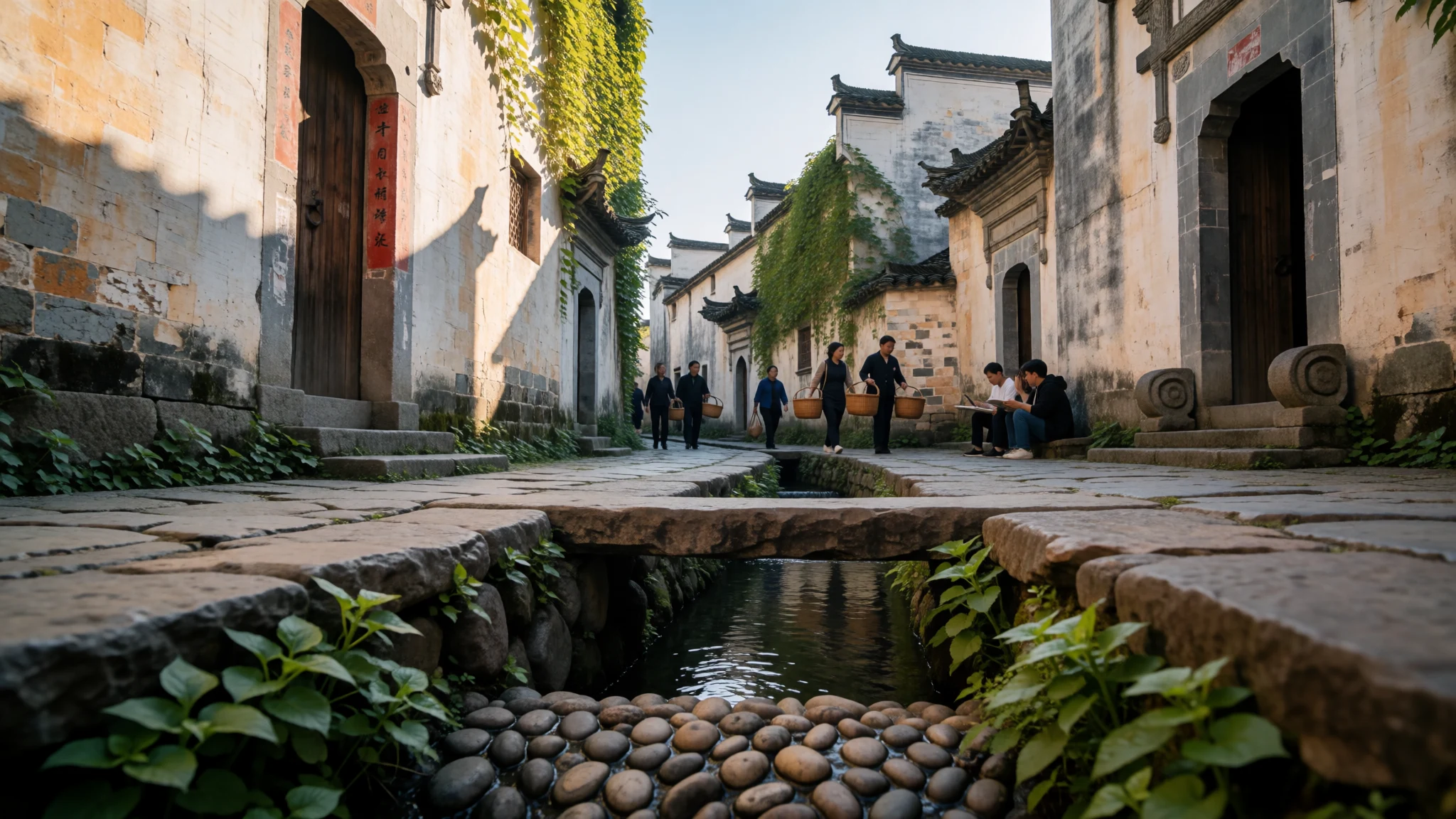
Xidi is a car-free Anhui village of carved merchant houses, ancestral halls and stone arches, best seen early or late, when the tour groups have gone.
The place
Xidi is a village in Yi County, under Huangshan City, in the old Huizhou region of southern Anhui province in China. It sits in a valley of low green hills, and its centre is a tight web of stone-flagged lanes, whitewashed walls and dark tiled roofs, with small channels of water running beside the paths. Cars are kept out, so the soundscape is footsteps, running water and the occasional shutter being pulled open. Together with nearby Hongcun, Xidi was listed by UNESCO in 2000 as the Ancient Villages in Southern Anhui, valued for how completely it keeps the layout and houses of rural Anhui from imperial times. Walking it feels like moving through a model of how a merchant clan once arranged its home town: ancestral halls for the family, memorial arches for honoured officials, and courtyard houses with carved wooden screens and small open wells of light. By day, Chinese tour groups fill the main lanes, though visitors report fewer than at Hongcun, and art students set up easels at bridges and corners. Evenings are much quieter once the groups leave, especially for anyone sleeping in a village guesthouse. It is a good place to wander without a list: turn off the main lane and the crowd thins within minutes. It is also a lived-in village, with washing hung out, doors left ajar and residents selling small crafts from front rooms. Huangshan, the famous mountain, is in the same district, which is why many trips pair the two.
Its story
Xidi was first built between 1049 and 1053, under the Song dynasty, and was originally called Xichuan, meaning West River, after the streams that run through it. Its story is largely the story of one family, the Hu clan, who traced their line back to a Tang emperor's adopted son and settled here from nearby Wuyuan. By 1465, in the Ming dynasty, Hu family members had taken up trade, and the profits of merchant life paid for the first large private houses and for shared works such as lanes, drains and bridges. By the middle of the seventeenth century the family's influence had grown from business into politics, and officials from the clan were honoured with memorial arches that still stand at the village edge. The village reached its height in the eighteenth and nineteenth centuries, when it held about 600 houses. Then the old order began to come apart. In the late nineteenth century the feudal system broke down and the merchant communities of Anhui declined, and Xidi stopped growing. That early freeze is the reason the village survives so intact: there was little money for rebuilding, so the old houses, carvings and street plan were simply left standing. Much of what visitors admire today is therefore the wealth of Ming and Qing merchants, preserved by a long period of relative poverty.
What to see
- Hu Wenguang Memorial Arch — Main road at the village edge
This stone arch was raised in the Ming dynasty to honour Hu Wenguang, an official of that period, and it is one of the best-known landmarks of Xidi. It stands over the road at the village edge, so it works well as a first stop and a photograph.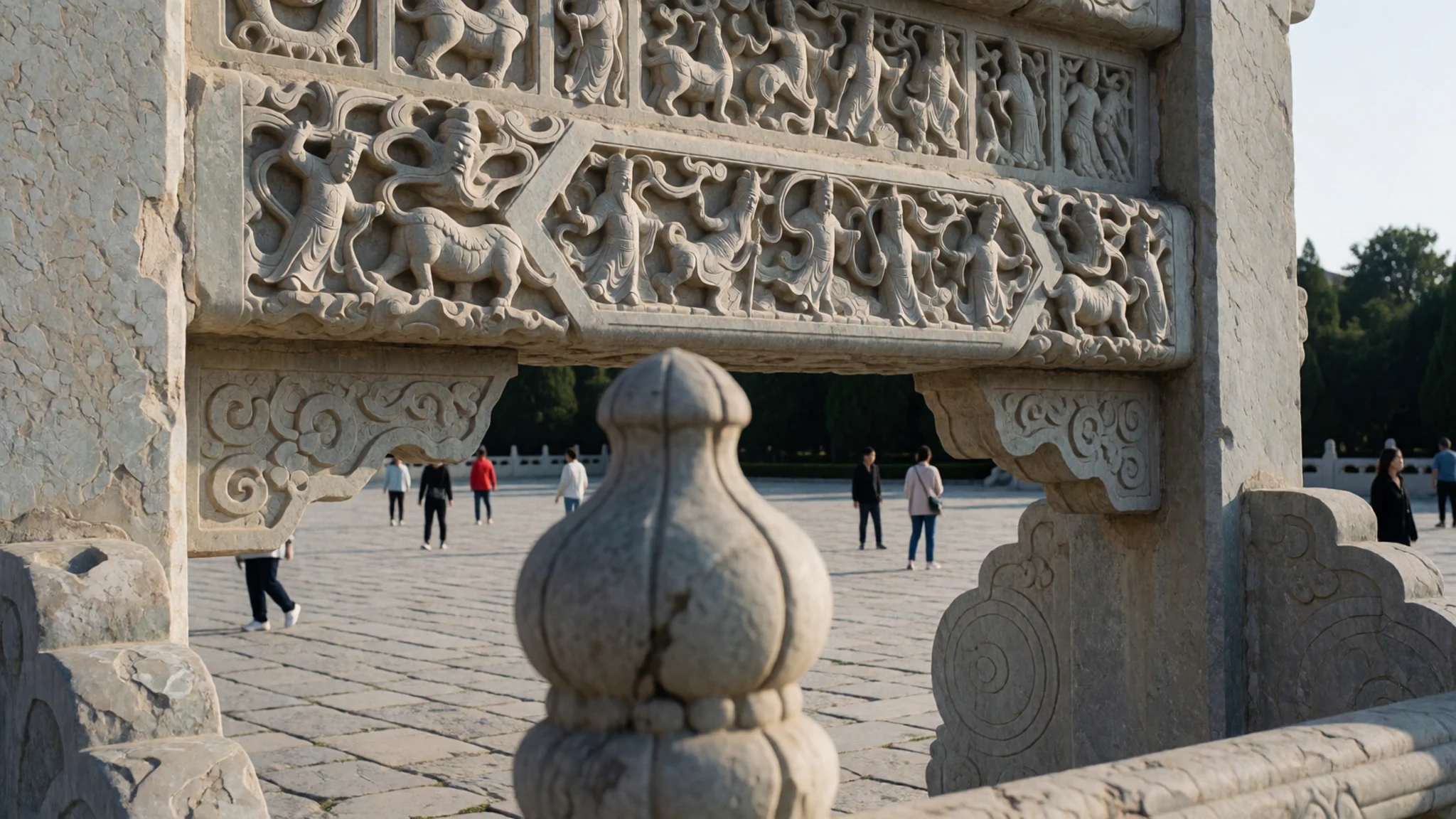
- Jing'ai Hall ancestral hall — Central lanes of the village
Jing'ai Hall is the Hu family's ancestral temple, a large timber-framed space where clan ceremonies were held. The roof beams, stone bases and open courtyard show how seriously a merchant family took lineage, and the quiet inside is a useful break from the lanes.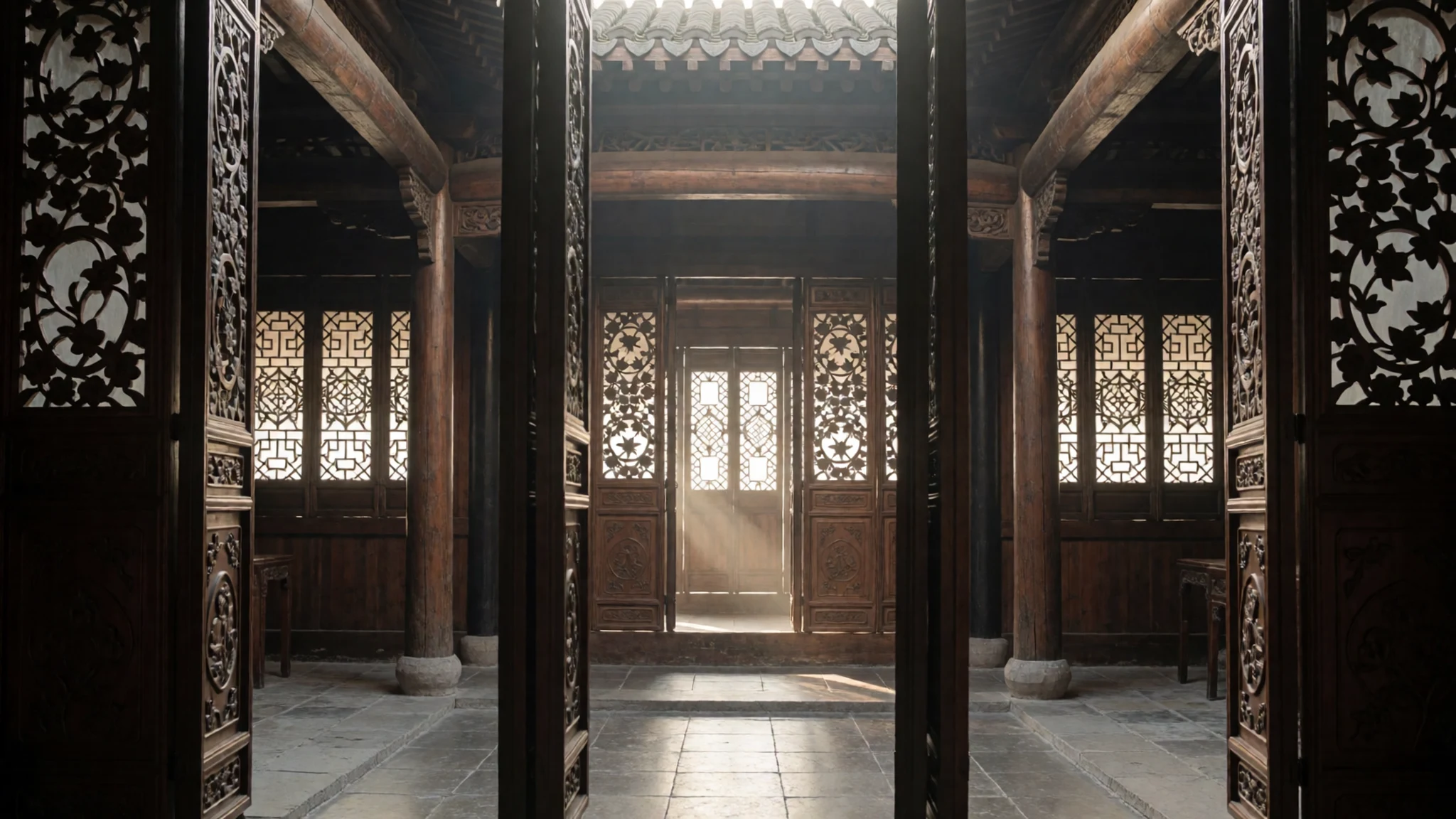
- Da Fu Grand House — Inner village
Built in the Qing dynasty, this merchant mansion is known for the plum-blossom patterns carved into its main hall doors and the paper-cut style windows in the Ming manner. Inside, small courtyards open to the sky and light moves across the wooden screens through the day.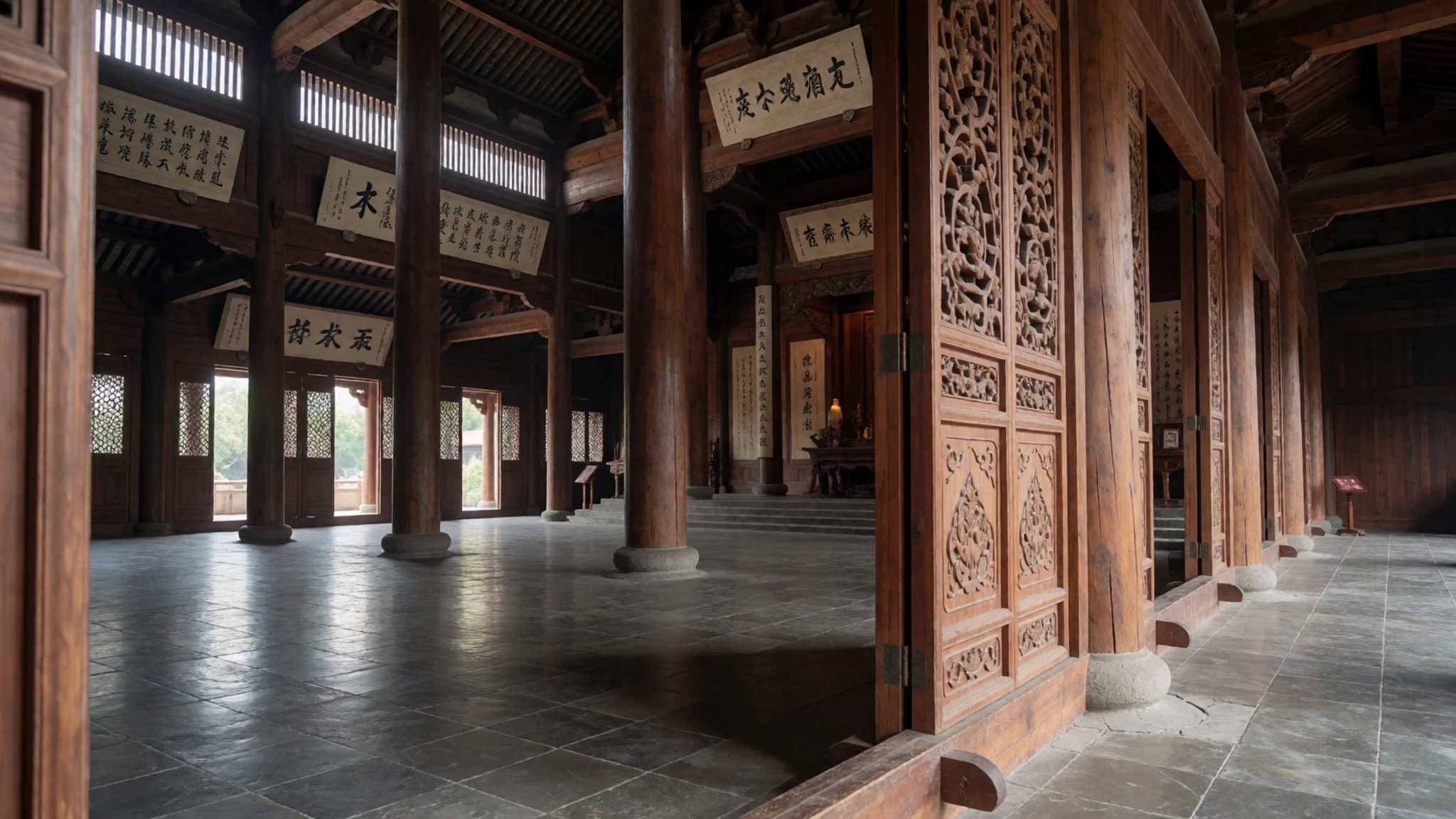
- Yingfu Tang and Dunren Tang houses — Residential lanes
These two houses date from the Kangxi years of the Qing dynasty and show how a prosperous Xidi family lived. Look for the narrow street fronts, tall windowless outer walls, carved beams and the inner courtyards, which were designed to gather light and rainwater while keeping the household private.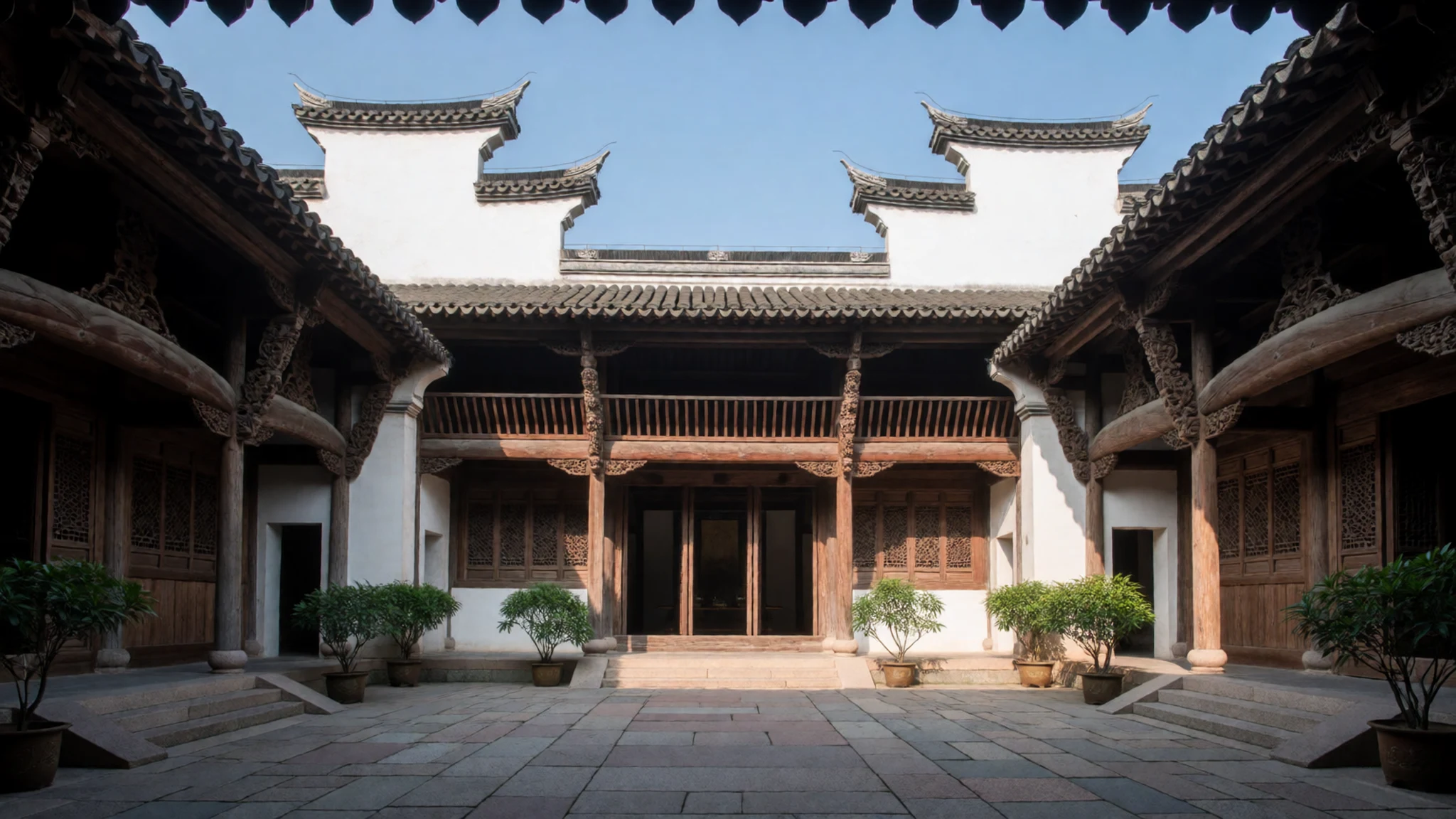
- Lanes and water channels — Throughout the village
The village itself is the main sight. Follow the narrow stone lanes beside the small channels of water, cross a bridge or two, and look up at the stepped gable walls and dark tiles. The side lanes away from the main street are quieter and often most rewarding.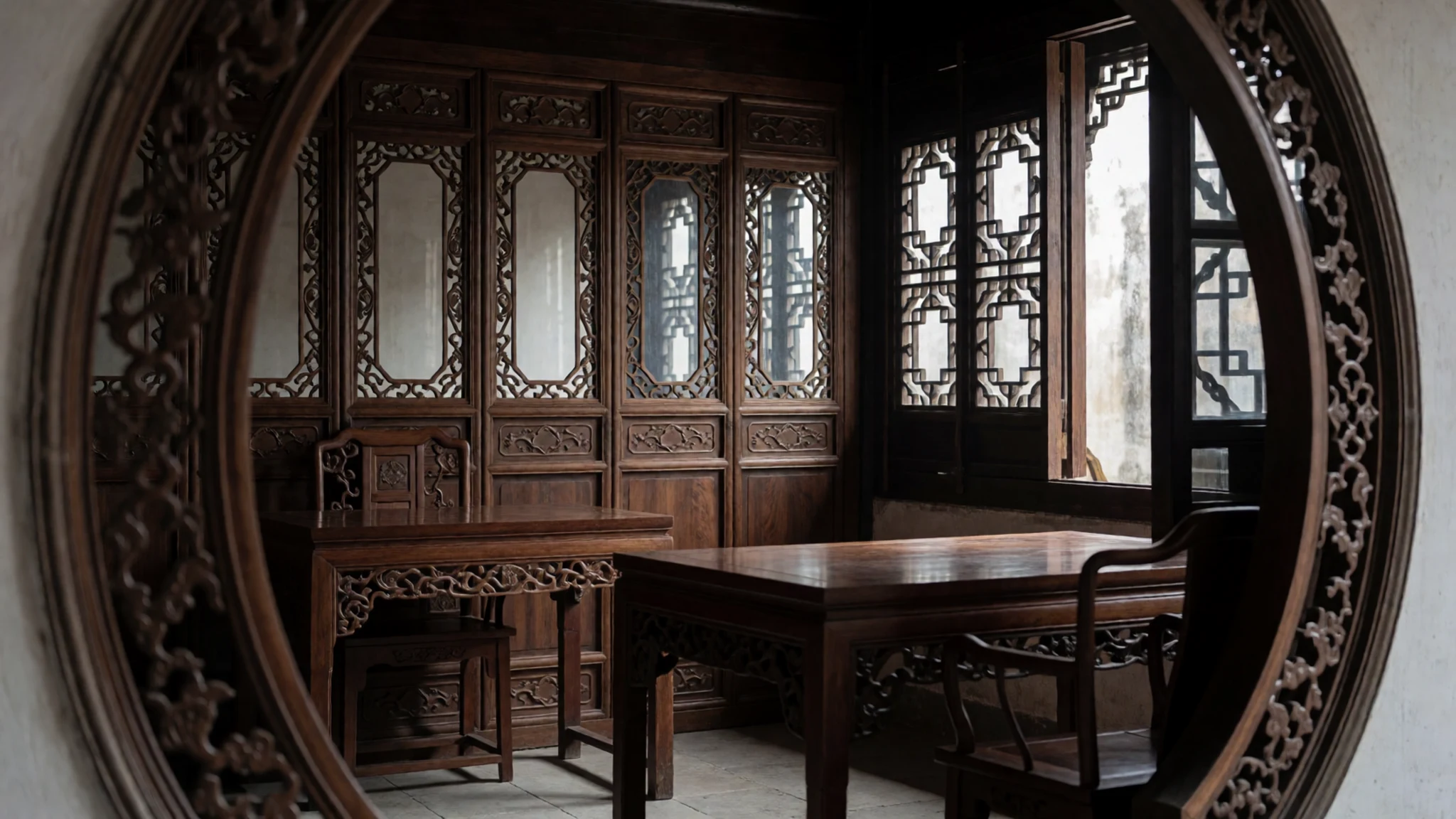
Culture
Xidi's culture is the culture of Huizhou merchant families, who made money in trade and then spent it on lineage, learning and display. The clan was central: ancestral halls held ceremonies, recorded family history and reminded younger generations who they came from. Success in the imperial examinations and in official life was celebrated publicly, which is why memorial arches stand along the approaches to the village. The houses carry the same values in smaller form. Carved doors, window screens and beams show motifs of plum blossom, cranes, scholars and good-luck symbols, and the pairing of a wealthy trade with a taste for books is visible in the small study rooms and the poetic names given to houses and halls. Feng shui shaped the village too, with its streams, its orientation and its layout meant to bring prosperity and steady water. Today Xidi is also an art village, with students painting scenes from the bridges and lanes, and some households run guesthouses or sell crafts from their front rooms. Many of the buildings are still real homes, not museums, so the village feels both preserved and lived in. Please keep your voice low in the ancestral halls and ask before photographing residents or stepping into a family's private courtyard.
What to wear
In the Ming and Qing centuries, a wealthy Huizhou merchant would have worn the long robe of Han Chinese tradition, often with a short jacket over it, in silk for formal occasions and plainer cotton or hemp for daily work. Women of such families wore jackets with wide sleeves and either skirts or trousers, with embroidery on silk for festivals and weddings. Colours were chosen to show rank and occasion, and such clothing is now mostly seen in museums, period displays and costume photography rather than on the street. Today, residents wear what people wear across rural China: practical jackets, trousers, sports shoes, and a rain cape or umbrella in wet weather. Older villagers may still wear dark, simple cotton clothes, and art students tend towards paint-splashed casual wear. Visitors need no special dress, but the terrain and climate matter. Wear comfortable shoes with grip, because the old stone lanes get slippery after rain and the paving is uneven. Bring light layers for hot, humid summers and a warm layer for cool mornings and evenings in autumn. Carry a compact umbrella or rain jacket at any time of year. For ancestral halls, covered shoulders and knees show respect, though there is no formal dress code.
What to eat
- Mao doufu (hairy tofu) — Small family restaurants along the main lanes
A Huizhou speciality in which tofu is left to grow a soft white mould, then pan-fried until crisp and served with a chilli or soy dip. The flavour is savoury and earthy, so it is worth trying once.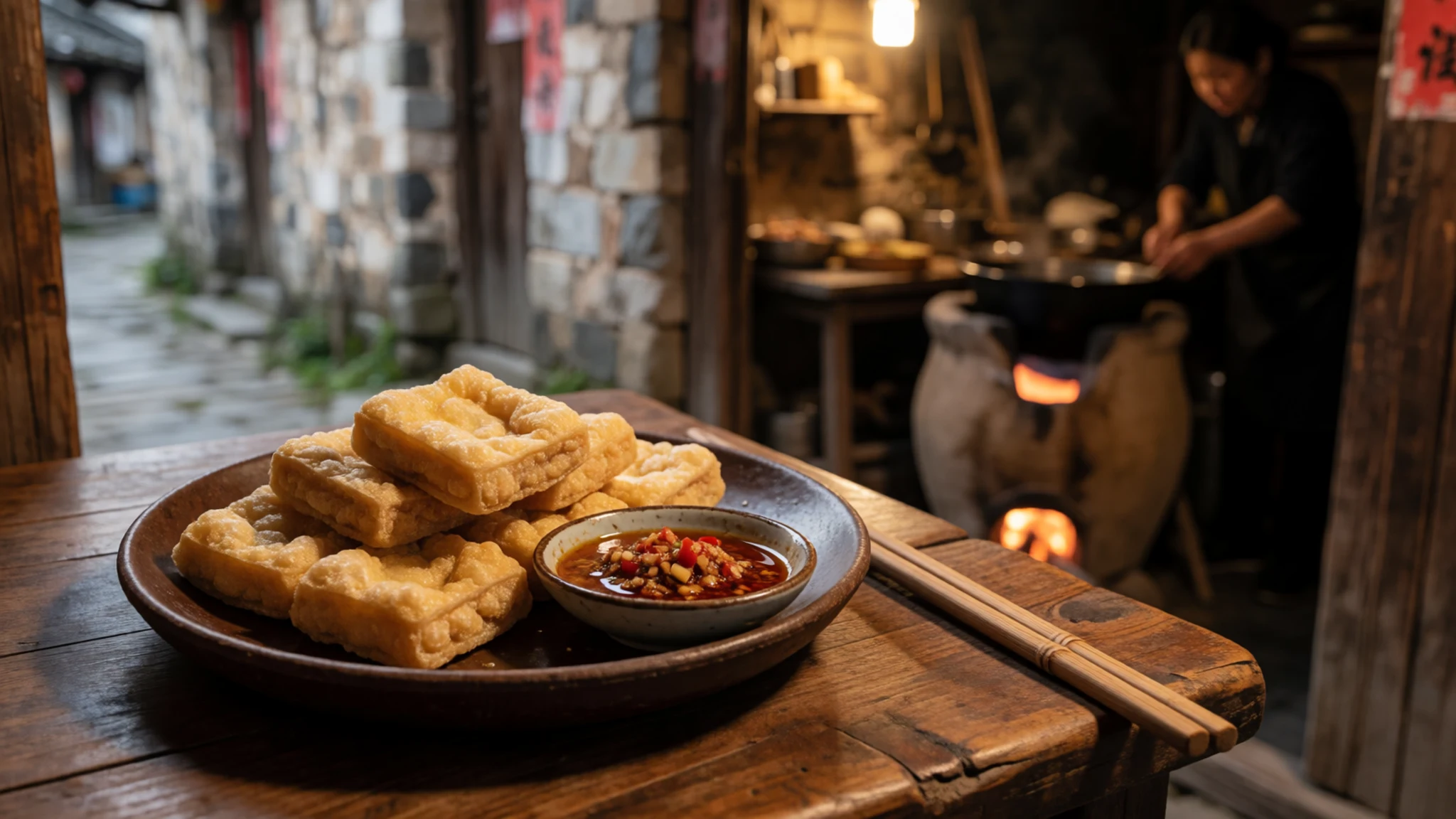
- Stinky mandarin fish — Restaurants in the village, or in Yi County town
A whole fish cured with salt until it develops a strong smell, then braised or steamed. The flesh is firm and savoury, and the smell is stronger than the taste. It is a regional dish and a good test of curiosity.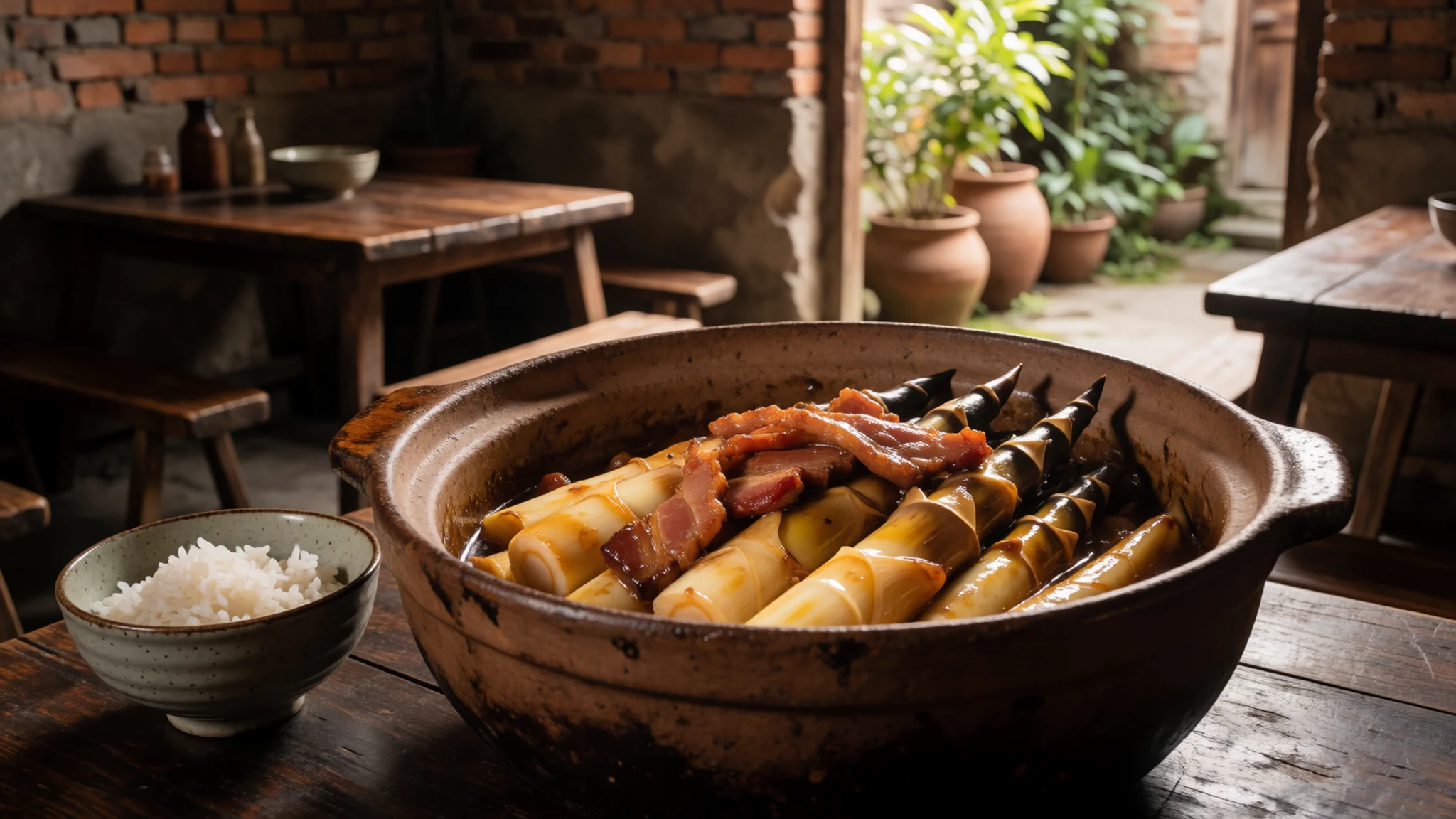
- Bamboo shoot dishes — Small eateries, where diners can often point at ingredients in the kitchen
Hills around the village supply bamboo shoots, which appear fried with pork, stewed in soups or dried for winter. They give a crunchy, slightly sweet counterpoint to the heavier braised dishes common in Anhui cooking. - Local rice wine — The small rice wine brewery just inside the entrance streets
A mild, slightly sweet fermented drink made from rice, served in small cups and often warmed. It is the village's own tipple and goes well with braised meat. Drink it slowly, because the sweetness hides some strength. - Sesame baked cakes (shaobing) — Bakers and stalls near the village entrances
Crisp, flaky baked flatbreads, often filled with pickled vegetable and pork or eaten plain with sesame on top. They are a practical snack for a morning of walking and easy to find at a street stall.
Plan it
Best time. March–April for mild weather and fresh green hills, and late October–November, when the valley between Hongcun and Tachuan turns colourful. Summers are hot, humid and wet, and winter is cold and damp. Weekends and Chinese holidays are the busiest.
How long. 1–2
Getting there. Reach Huangshan City by rail or air, then take a tourist bus from the terminal beside Huangshan North railway station; it stops at Xidi on its way to Hongcun. From Huangshan bus station, minibuses may need a change, so ask the drivers. A bus or taxi from Tunxi also works.
Budget. mid
Tips
- Arrive early or stay overnight so the lanes are quiet before the tour groups come
- Tickets are sold only at the west entrance; check the current price at the ticket office
- Many entrances check tickets, so keep yours with you all day
- Ask the price before ordering in small restaurants to avoid surprises at the bill
- Wear shoes with grip, as the old paving is slippery after rain
Etiquette
- Ask before photographing residents or entering a family courtyard
- Keep your voice low in ancestral halls
- Do not touch or lean on carved woodwork
Nearby
Sources
- Wikidata Q4010 (CC0)
- Wikipedia: Xidi (rev 1385646072) (CC BY-SA 4.0)
- Wikivoyage: Xidi (rev 5240622) (CC BY-SA 4.0)
- Photo: Arco triunfal, RolfMueller (CC BY 3.0)
- Photo: 安徽西递牌楼, EditQ (CC BY-SA 4.0)
- Photo: Xidi village in southern Anhui province, Anna Frodesiak (Public domain)
- Photo: 西递村祠堂——敬爱堂, 颐园新居 (CC BY-SA 4.0)
- Photo: 西递村民居——膺福堂, 颐园新居 (CC BY-SA 4.0)
- Photo: 西递村民居——惇仁堂, 颐园新居 (CC BY-SA 4.0)
- Photo: Ancient Villages in Southern Anhui – Xidi and Hongcun, Giovanni Boccardi (CC BY-SA 3.0 igo)
- Photo: CN Xidi 0806 (100), Diego Tirira (CC BY-SA 2.0)


