Wulong
Wulong, People's Republic of China
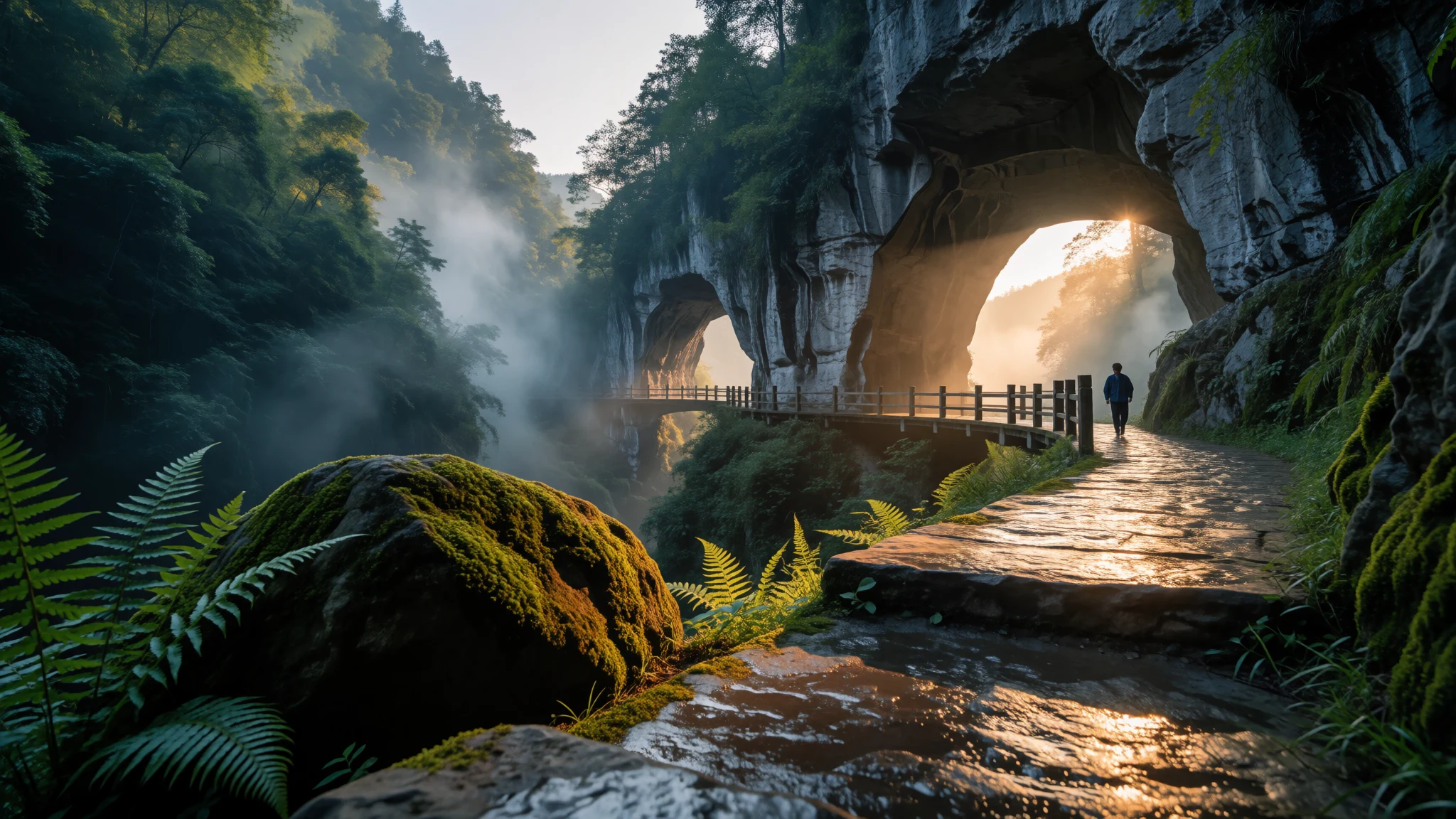
Wulong is where dissolved limestone has collapsed into natural bridges, giant sinkholes and caves, all within a single Chongqing district.
The place
Wulong is a district of Chongqing Municipality in south-western China, and its karst scenery is the reason most people make the trip. The Wulong Karst (武隆喀斯特) is divided into three areas, each centred on a different feature: the Three Natural Bridges, the Qingkou Tiankeng cluster and Furong Cave. Together they sit inside the Wulong Karst National Geology Park, which forms part of the South China Karst World Heritage Site, and the area carries China's AAAAA tourist-attraction rating. The terrain is steep and green, cut by the Wujiang River into canyons, with forested ridges and, higher up, open grassland around Fairy Mountain. The district town lies in the river valley and works as the practical base, with hotpot restaurants, a couple of museums and plenty of places to sleep. The karst areas themselves are separate sites, each with its own entrance, so a visit is really a choice of one or two areas rather than a single sweep. Most routes are stairs and boardwalks that drop into the hollows and climb back out again, which makes the walking manageable but hard on the knees. Domestic tour groups are the main crowd, and weekends and national holidays are noticeably busier. Signs and ticketing lean heavily on Chinese, so a translation app and a saved offline map are worth having. Mist and low cloud are common; they suit the gorges, though they can hide the long views.
Its story
Wulong's story is written in limestone. Rainwater is faintly acidic, and over a very long span it has dissolved the rock along its cracks, hollowing out caves and sending streams underground. Where a cave roof grows too thin to carry its own weight, it falls in, and the results are what Wulong is known for. A tiankeng (天坑, literally 'heavenly pit') is a giant sinkhole formed this way, with sheer walls and often a pocket of forest on its floor. The Qingkou cluster holds several, and one of them, Niubizidong, fills with snow in winter. The Three Natural Bridges are what remains when a collapse leaves stretches of the old roof standing, so that arches of rock span a gorge. Furong Cave shows the slower side of the same process: dripping water leaves mineral behind and builds the stalactites and stalagmites of the cave interior. Meanwhile the Wujiang River keeps cutting, and the Longshuixia fissure shows another version of the story, a narrow slot in the rock rather than a collapsed bowl. Recognition followed the scenery. The Wulong Karst is listed as part of the South China Karst World Heritage Site, and a national geology park was set up around it. Tourism has since grown up on the back of boardwalks, shuttle services and museums, including the Wulong Karst World Natural Heritage Museum, which explains the geology for anyone who wants the background before going underground. The outcome is a place where a lesson in earth science doubles as a day outdoors.
What to see
- Three Natural Bridges — Wulong Karst National Geology Park
A series of natural limestone bridges inside the Wulong Karst National Geology Park. Each arch is what is left of an old cave roof after the rest collapsed, and walkways lead down beneath and between them. Go early if possible: the paths funnel groups through narrow points, and morning light is gentler.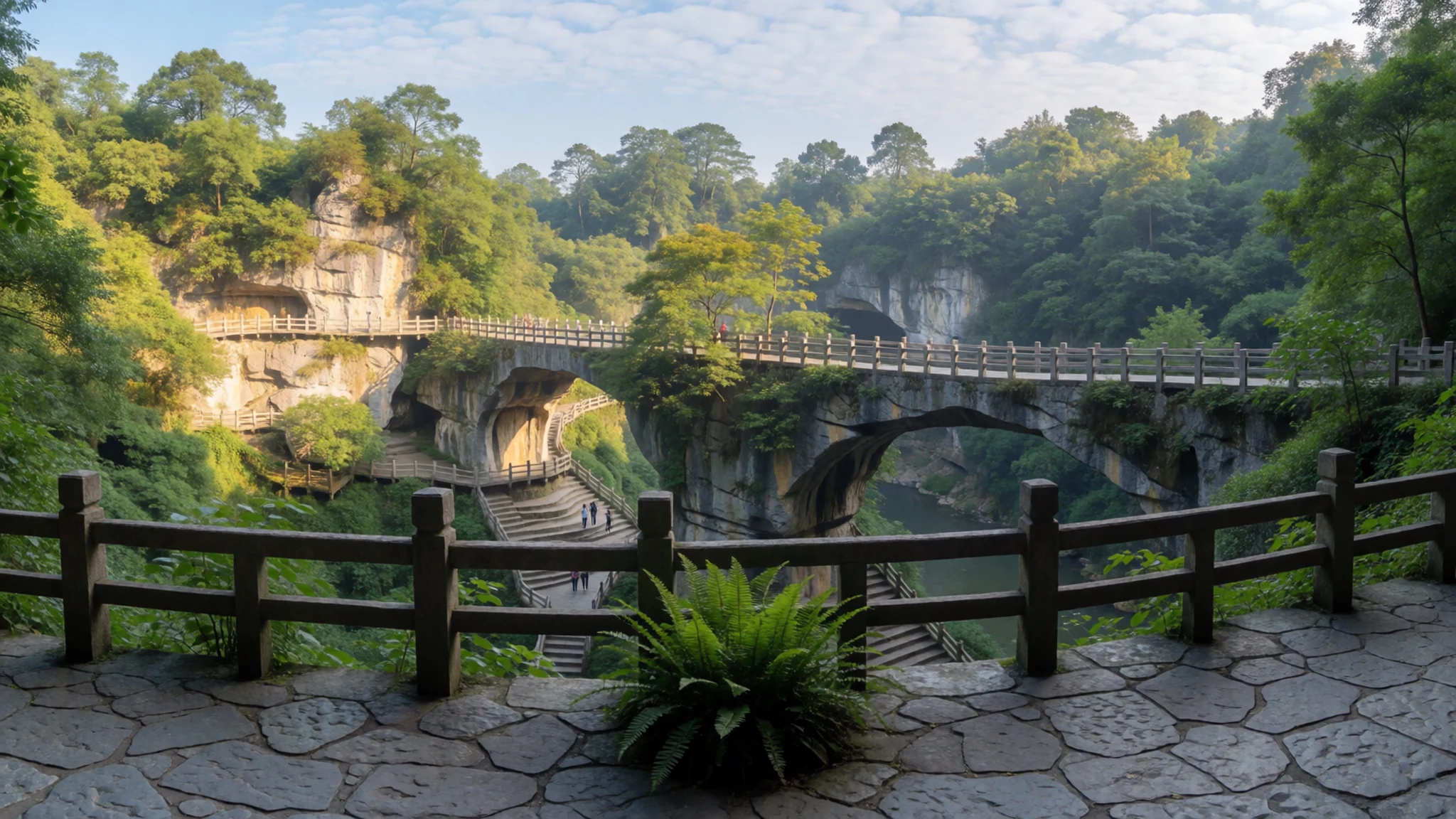
- Qingkou Tiankeng cluster — Qingkou, Wulong District
A group of giant sinkholes with steep walls and green floors, one of which, Niubizidong, is photographed under snow in winter. Viewing is from platforms and stairways at the rim and partway down, so the sense of scale comes from looking across rather than walking the bottom.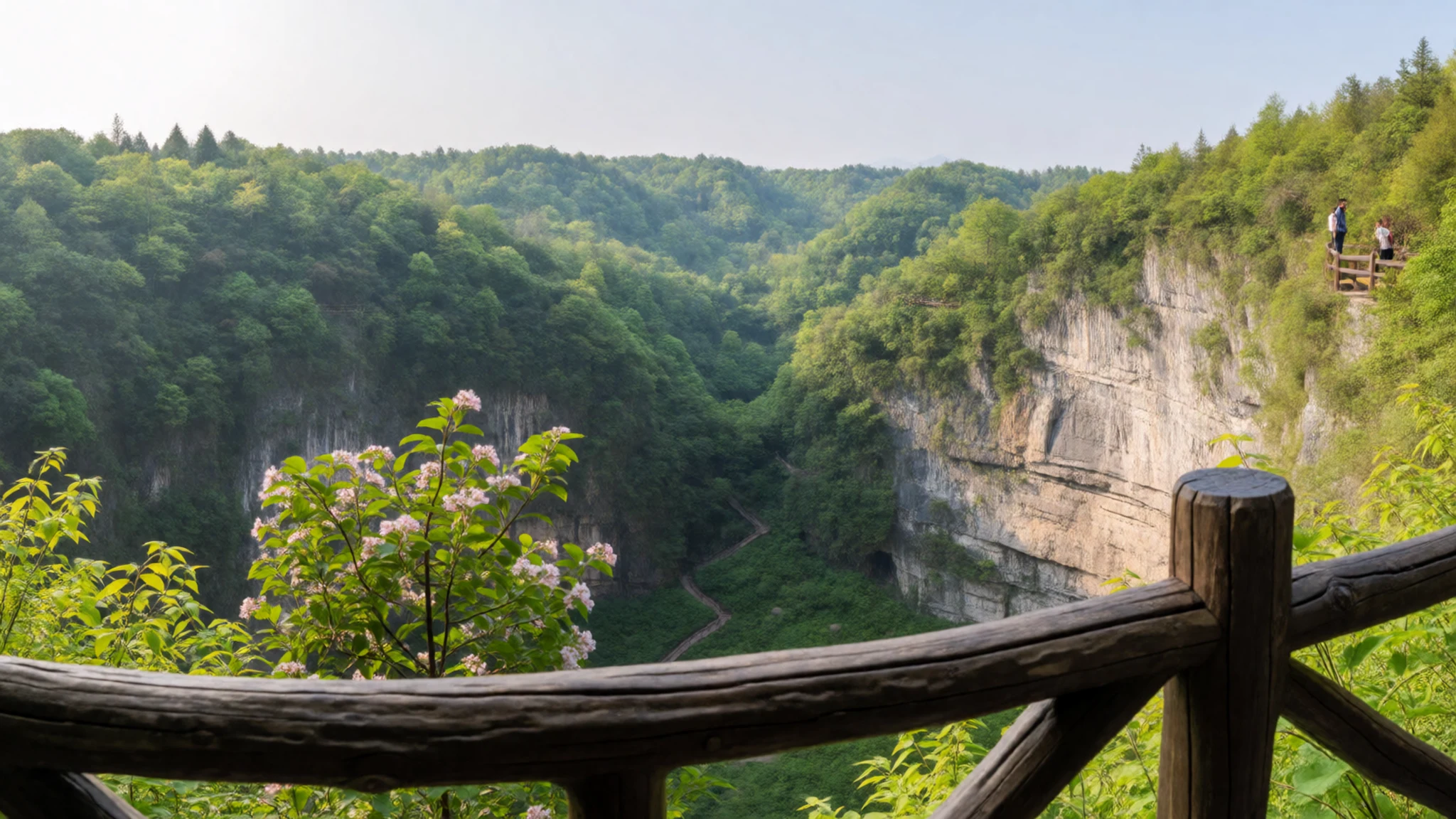
- Furong Cave — Wulong Karst, Furong river valley
A limestone cave with stalactites, stalagmites and flowstone, reached through a park within the South China Karst World Heritage area. It is the quiet, damp counterpart to the open sinkholes. The route is a guided walkway, so expect to move at the group's pace and carry a light layer.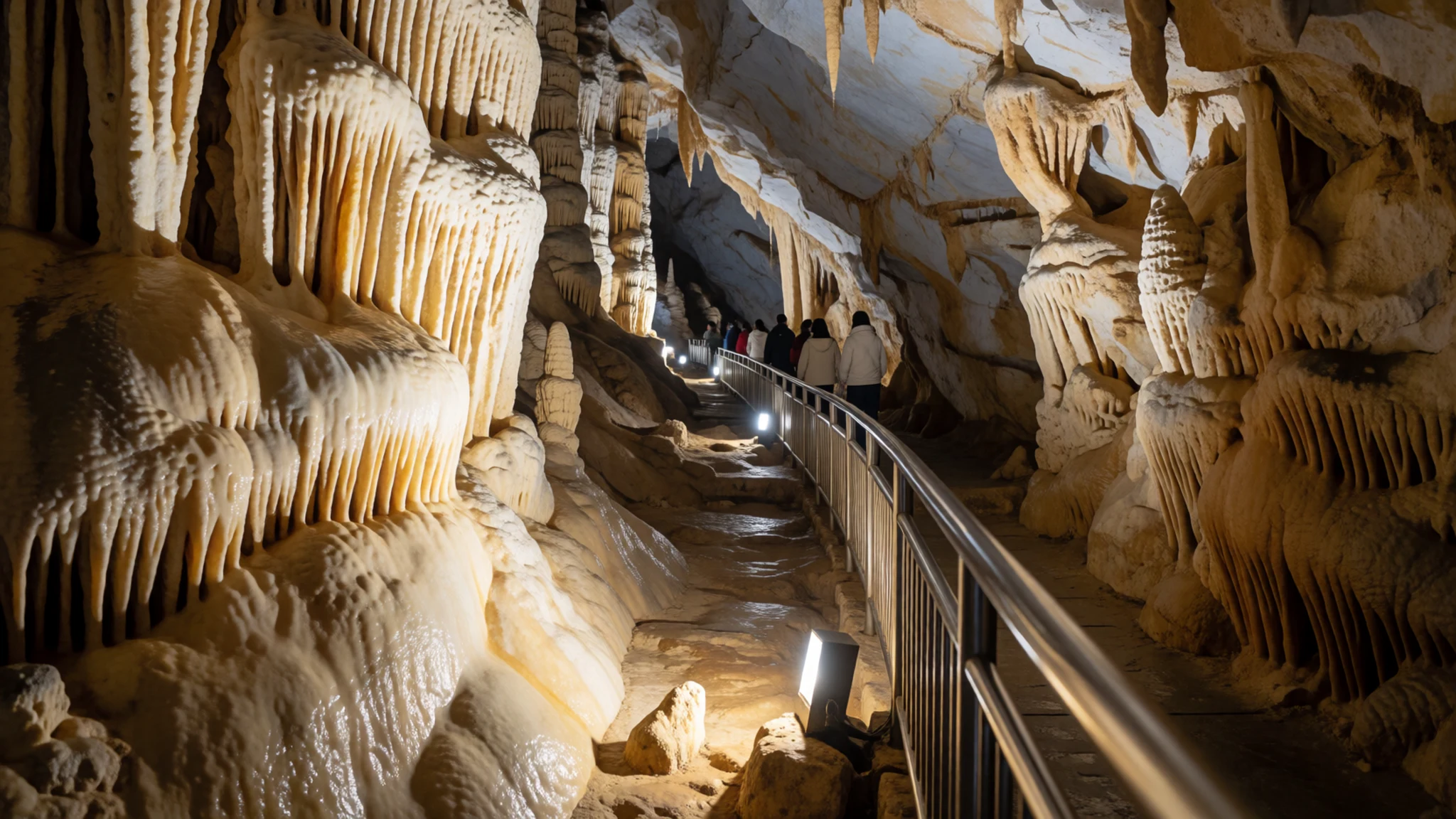
- Longshuixia Fissure Gorge — Wulong District
A narrow gorge cut deep into the rock, where the sky shrinks to a strip overhead and the walls close in on the path. It is a different shape of karst from the sinkholes and bridges. Paths can be wet underfoot, so shoes with grip matter more here than anywhere.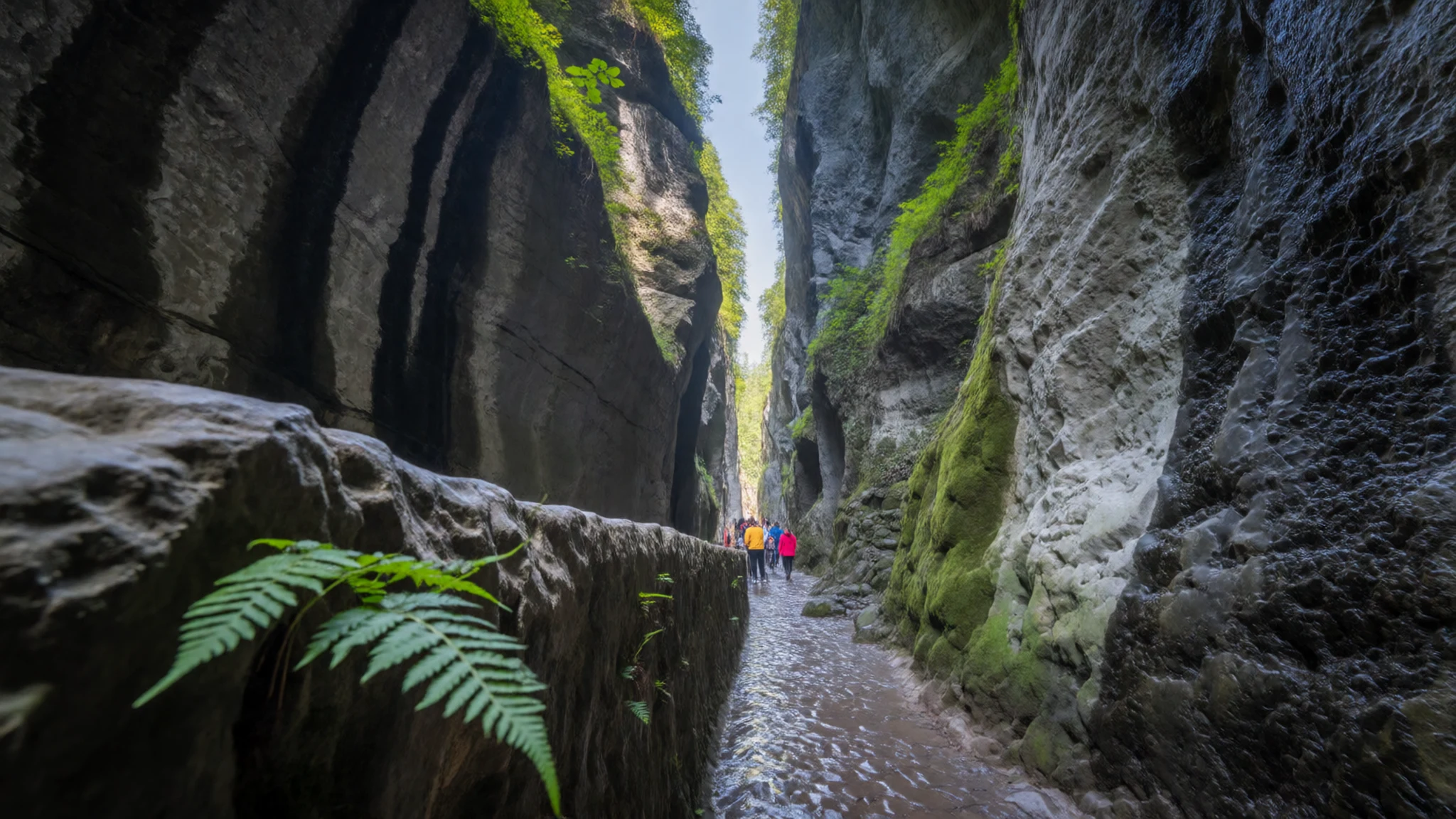
- Fairy Mountain National Forest Park — Fairy Mountain, Wulong District
A highland area of gentle grassland trails and dense forest, good for easy to moderate hikes. It makes a cooler change from the gorges, and in winter snow draws local visitors for photography and play. Farmhouse-style restaurants nearby serve mushrooms and barbecue after a walk.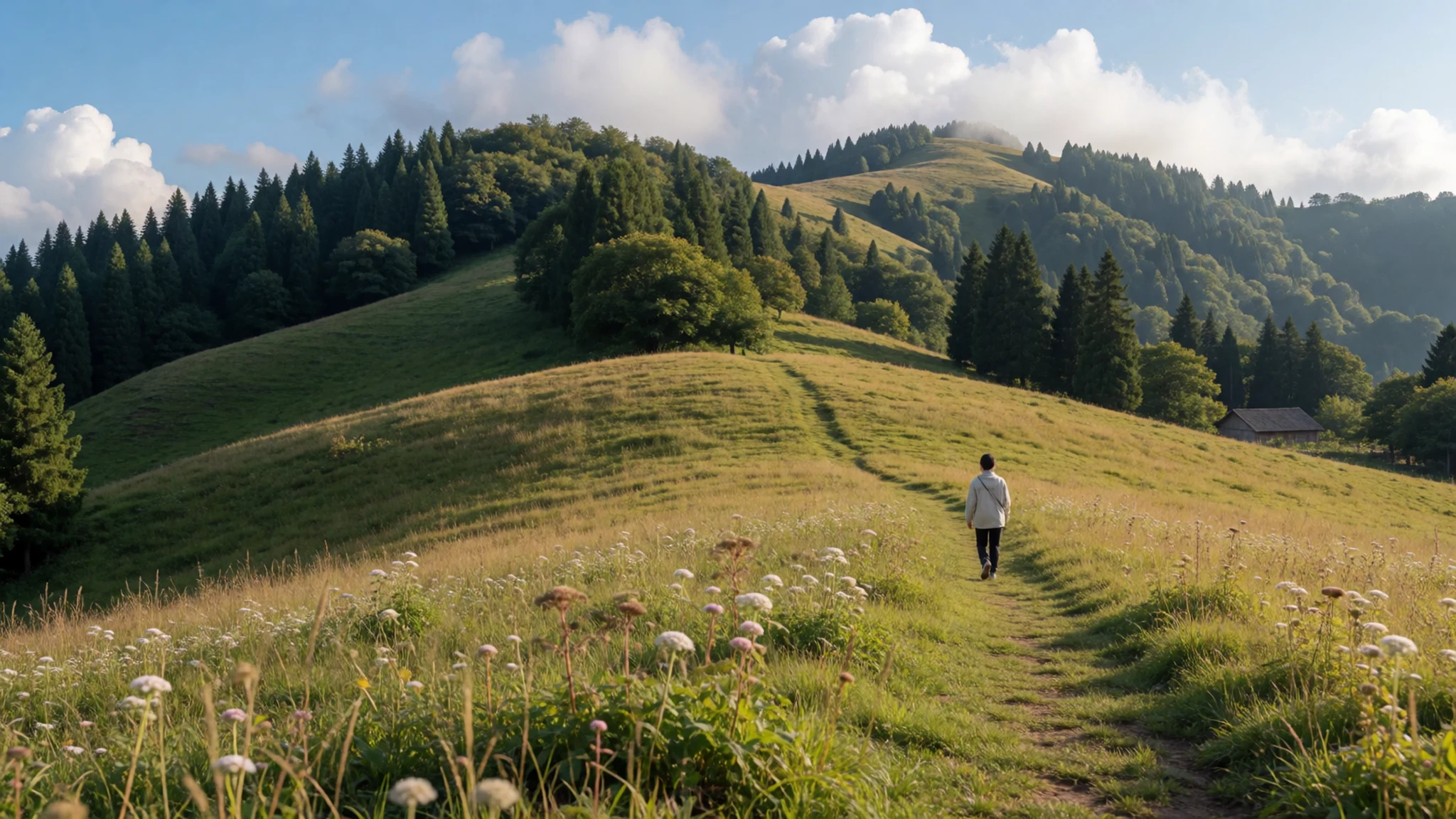
- Wulong Karst World Natural Heritage Museum — Wulong town
A museum in the district town that sets out how the area's caves, bridges and sinkholes formed. It is useful on a wet day or before heading to the sites, though exhibits are mainly in Chinese, so a translation app helps. Check the official listing for opening arrangements before going.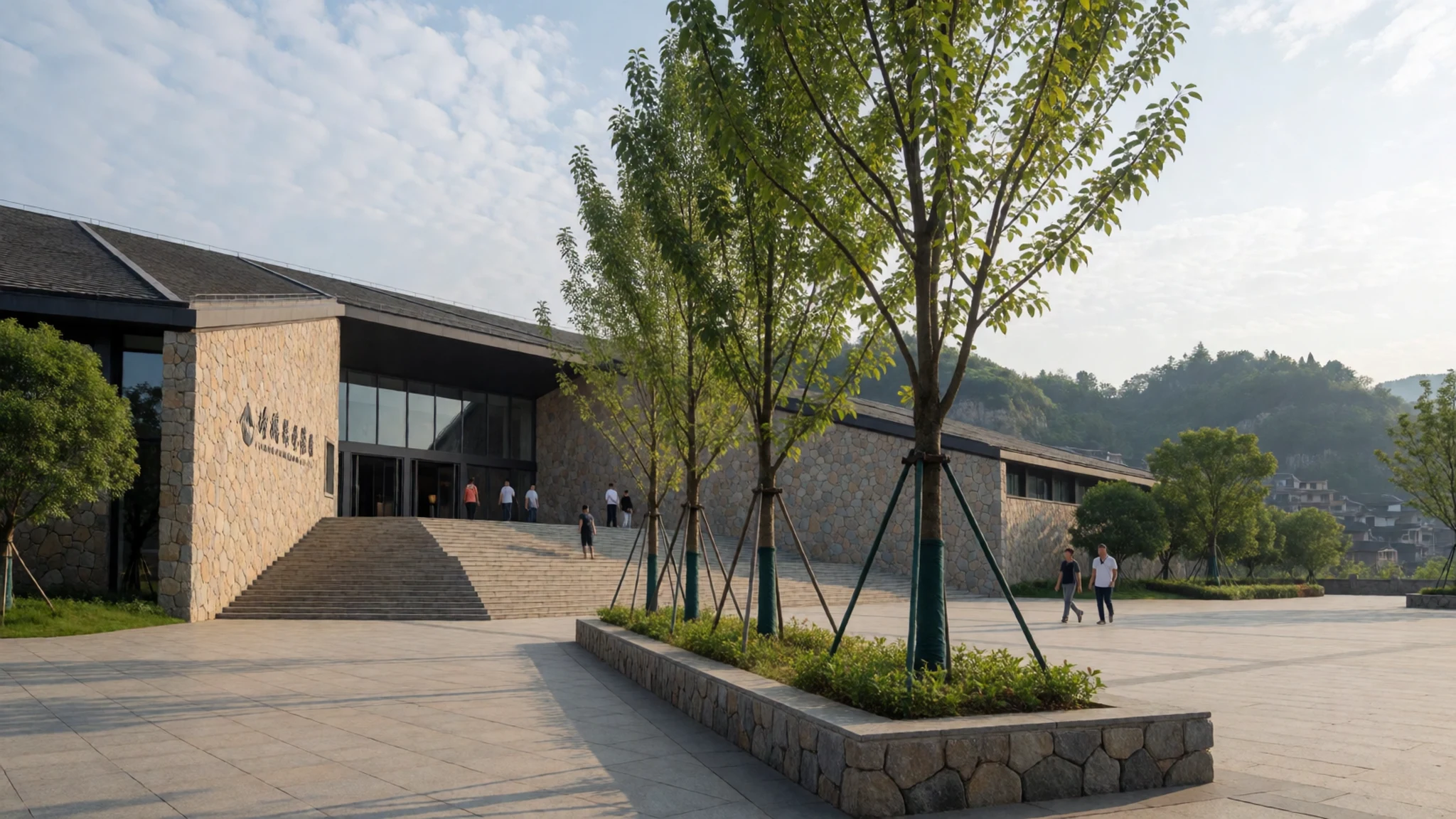
Culture
Wulong's culture is that of rural Chongqing: relaxed, food-centred and shaped by the river and the hills. Meals are social and noisy, built around shared pots of hotpot or farmhouse dishes, and a riverside tea house is a normal place to spend an unhurried afternoon. Around Fairy Mountain, farm-style restaurants serve mushrooms and barbecue to hikers, a reminder that the upland is a working rural area as well as a park. Most visitors are Chinese domestic tourists, so the mood at the sites is that of a day out: tour-group flags, guides with portable speakers, picnics and a great many photographs. The Wulong Museum and the Karst World Natural Heritage Museum give local and geological context, mostly in Chinese. Everyday speech is Mandarin with a Chongqing accent, and English is not widely spoken outside larger places to stay, so a few phrases and a patient smile go a long way. Karst features are treated as protected natural monuments, with staff and posted rules at entrances, and queues for boardwalks and shuttle buses tend to be orderly but firm. Mobile payment is the norm for small purchases, which can be awkward for foreign visitors, so it helps to carry some cash as a back-up. Queue at shuttle stops and boardwalk entrances rather than pushing ahead, and stay behind the rails and on the marked paths inside the caves and sinkholes.
What to wear
Wulong has no single costume that visitors will see on the street. In the hills of this part of south-western China, rural and minority communities have traditionally worn cotton and hemp cloth, often dyed dark blue and finished with embroidered borders, and festival dress is mostly seen at celebrations and staged performances rather than in daily life. What people wear now is practical and casual: trainers or walking shoes, quick-dry tops, sun hats and umbrellas, and thin waterproof ponchos sold at the entrances when the weather turns. Tour groups often match caps or jackets so that members can find each other. In the district town, ordinary city clothes are fine. For a visit, dress for the terrain and the weather rather than for any dress code. Wear layers, since caves are cool and damp while the valleys can be warm and humid. Choose shoes with a good grip, because stairs and boardwalks are slippery when wet and there are many steps. Carry a light waterproof for drizzle and for rafting on the Wujiang River, and a warm layer for Fairy Mountain, which is cooler and can see snow in winter. No special covering is needed at the karst sites, though shoulders and knees covered is a sensible default if you stop at a temple or rural shrine along the way.
What to eat
- Chongqing hotpot — Hotpot restaurants in Wulong town
Meat, offal and vegetables cooked at the table in a bubbling, chilli-and-pepper broth. It is the social meal of the region, best shared by a group. Order the mildest broth if unsure; hotpot restaurants cluster in the district town and are busiest in the evening.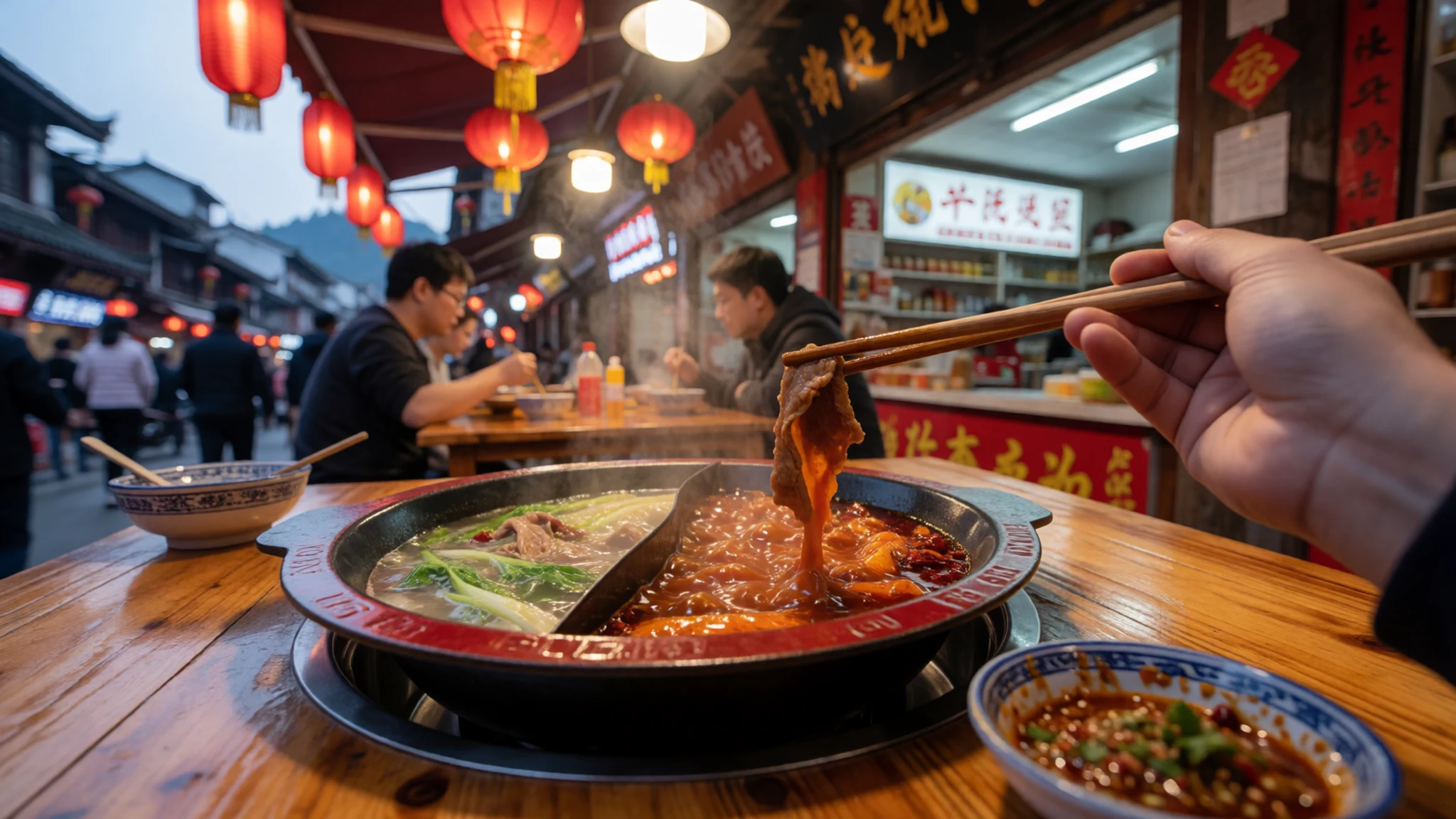
- Fatty intestine fish — Eateries around Fairy Mountain
A Sichuan–Chongqing style dish that pairs pork intestine with river or other fish in a rich, spicy sauce. It is a local signature rather than a delicate dish, and suits those who like strong flavours. Look for it at specialist eateries near Fairy Mountain.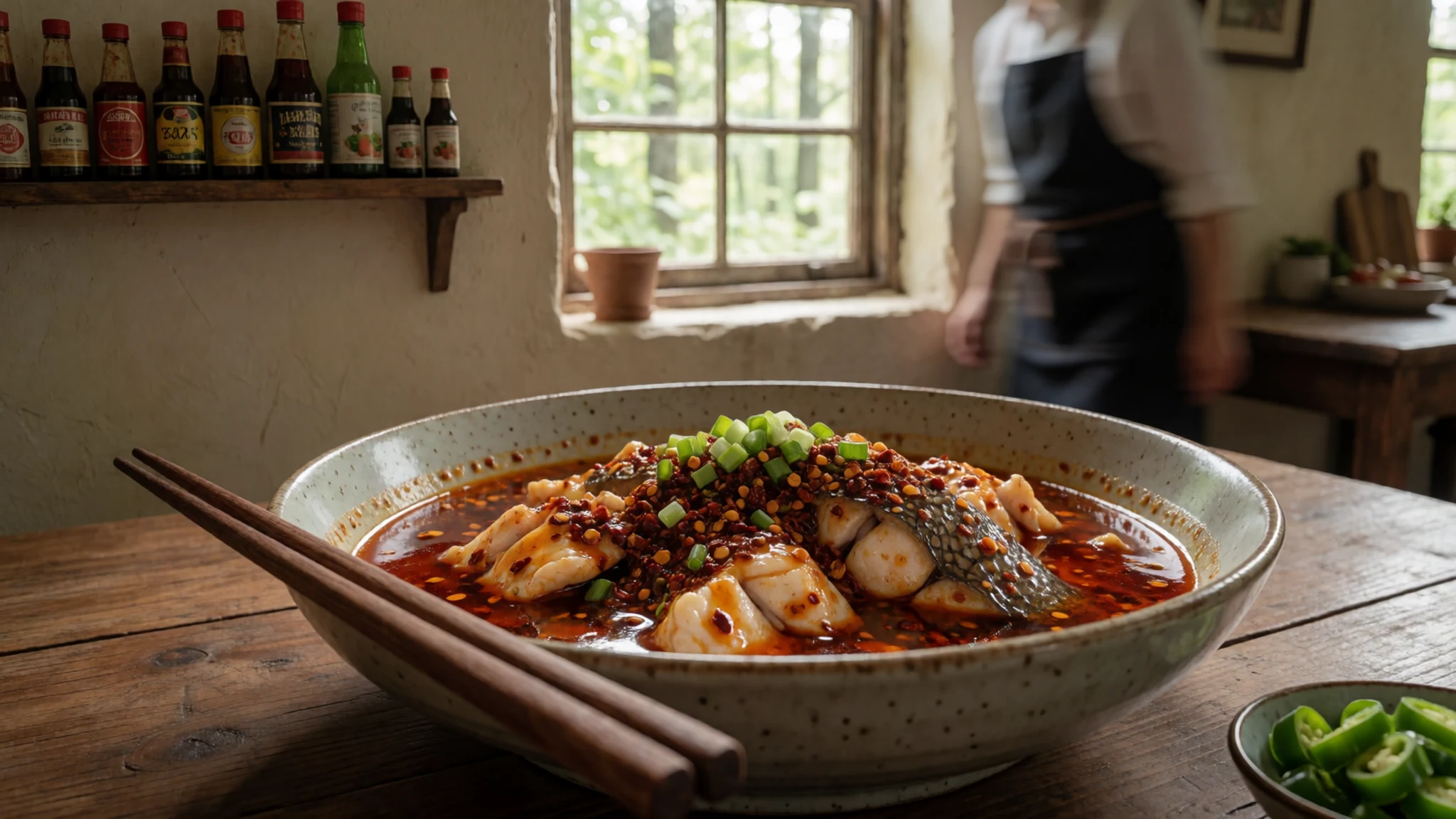
- Firewood chicken — Home-style restaurants in the valley town
Chicken cooked over a wood fire in a farmhouse style, with the smoky edge that gas cooking lacks. It usually arrives with Sichuan–Chongqing seasoning and a few home-style side dishes. Order it for a group, as portions are generous. - Mountain mushroom soup and barbecue — Farmhouse restaurants around Fairy Mountain
Upland restaurants serve wild and farmed mushrooms in soups and on the grill, alongside farm-style barbecue. It is a good, warming meal after a hike on Fairy Mountain, especially on a misty or cold day. - Fresh lamb dishes — Local lamb restaurants in Wulong town
Local lamb is served stewed, stir-fried or in broth at restaurants that specialise in it. It is a hearty option in cooler months, and a change from the heat of hotpot. Ask what is freshest that day. - Local tea and snacks — A tea house by the river in Wulong town
A simple riverside tea house is a calm place to sip tea and try small local snacks before or after the sights. It suits a slow break more than a full meal, and a good spot to sit out a rain shower.
Plan it
Best time. April–May and September–October are the most comfortable months for walking, with mild weather and fewer holiday crowds than the national holiday weeks. Summer is hot and humid, and the sites are busiest at weekends and school holidays. Winter is cold, with snow possible on Fairy Mountain, and mist or drizzle can arrive in any season, so check the forecast before choosing your site.
How long. 2
Getting there. Fly to Chongqing's main airport, or check whether a closer regional airport serves Wulong, then continue by train or bus to Wulong district town. Book rail tickets through the official Chinese rail app or a trusted agent, and check current timetables. Use local taxis or the shuttles run by the parks for the last leg to each karst area.
Budget. mid
Tips
- Pick one or two karst areas per day rather than trying all three; each has its own entrance and ticket, so check the official site for current arrangements.
- Arrive early on weekends and national holidays, when queues for boardwalks and shuttle buses build quickly.
- Carry a light waterproof, a warm layer and shoes with a good grip; stairs and paths are often wet.
- Set up mobile payment or carry some cash, and download an offline map and a translation app before leaving the town.
- Check the Wujiang River rafting operators and conditions locally, and bring a waterproof cover for phones and cameras.
Etiquette
- Queue at shuttle stops and boardwalk entrances, and keep to the marked paths and rails in caves and sinkholes.
- Do not touch or break cave formations, and take your rubbish with you.
- Ask before photographing local people at work or at meals.
Nearby
Sources
- Wikidata Q8039213 (CC0)
- Wikipedia: Wulong Karst (rev 1385278195) (CC BY-SA 4.0)
- Wikivoyage: Wulong (rev 5393081) (CC BY-SA 4.0)
- Photo: Wulongtianshengsanqiao (Brookqi) (Public domain)
- Photo: Niubizidong Tiankeng in the snow (Speleologist) (CC BY-SA 4.0)
- Photo: Furongdongfufashisun (Brookqi) (Public domain)


