Wilpattu
Wilpattu, Sri Lanka
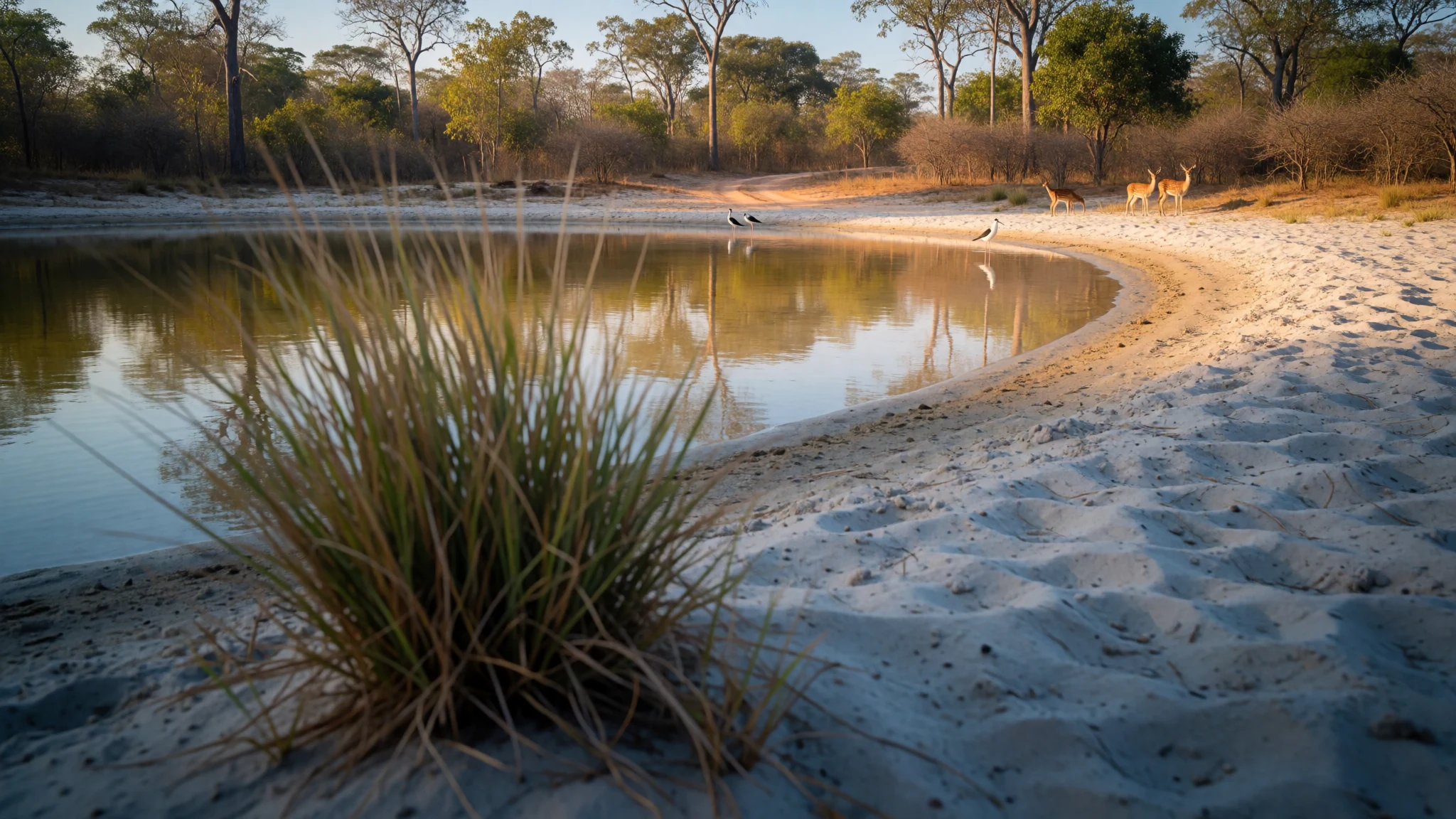
Wilpattu is a dry-zone Sri Lankan forest of sand-rimmed natural lakes, where leopards, elephants and sloth bears are the draw.
The place
Wilpattu National Park (විල්පත්තු) lies on the north-western coastal lowlands of Sri Lanka, in the dry zone, about 30 km west of Anuradhapura and 26 km north of Puttalam. Colombo is roughly 180 km to the south. The park covers 1,317 sq km, and the land climbs from sea level to only 152 m, so the terrain is flat to gently rolling scrub and forest. What sets Wilpattu apart is the willu: a natural, sand-rimmed basin that fills with rainwater and holds it for much of the year. About 106 of these and of man-made tanks are scattered through the park. Animals gather at them, so a drive here is mostly a matter of moving from one patch of bright water to the next. Only about a quarter of the park is open to visitors. The rest is dense forest or thick scrub, left alone for conservation. Tracks are sandy and reddish, and a vehicle with a guide is the only way in. Leopards are why most people come, and the park has a strong reputation for them. Elephants, sloth bears and spotted deer share the forest with crocodiles, snakes and a long bird list. Expect heat, dust and long stretches where nothing shows, followed by ten minutes that justify the whole day.
Its story
Wilpattu's story begins, according to tradition, on its coast. The Mahavansa, the old Sinhalese chronicle, says that in 543 BC Prince Vijaya came ashore at Tambapanni, now identified with Kudrimalai Point, also called Horse Point. From there he founded a kingdom and, in the telling, the Sinhalese nation. The same headland turns up in a foreign account: in 47 AD a subject of the Roman emperor Claudius was blown off course by the monsoon and landed here. The local king afterwards sent his own envoys to Rome. The land itself was protected in stages, first as a wildlife sanctuary in 1905 and then as a national park in 1938. The twentieth century then brought a long interruption. During the Sri Lankan Civil War the park was closed to visitors from December 1988 until 16 March 2003, and the forest and its animals were left largely undisturbed. Today the park runs a limited visitor zone covering about a quarter of its area. The popular season runs roughly from February to October, though some private ecotourism operators run safaris all year. Wilpattu therefore carries two histories at once: an ancient one tied to a landing place on the shore, and a modern one of protection, closure and slow reopening.
What to see
- Kudiramalei Point (Horse Point) — Western coast of the park
Kudiramalei Point, also called Horse Point, is the coastal headland that the Mahavansa links to Prince Vijaya's landing. Roman-era stories gather here too. It suits visitors interested in history and sea air rather than big game, and the guide should confirm whether the route is open on the day.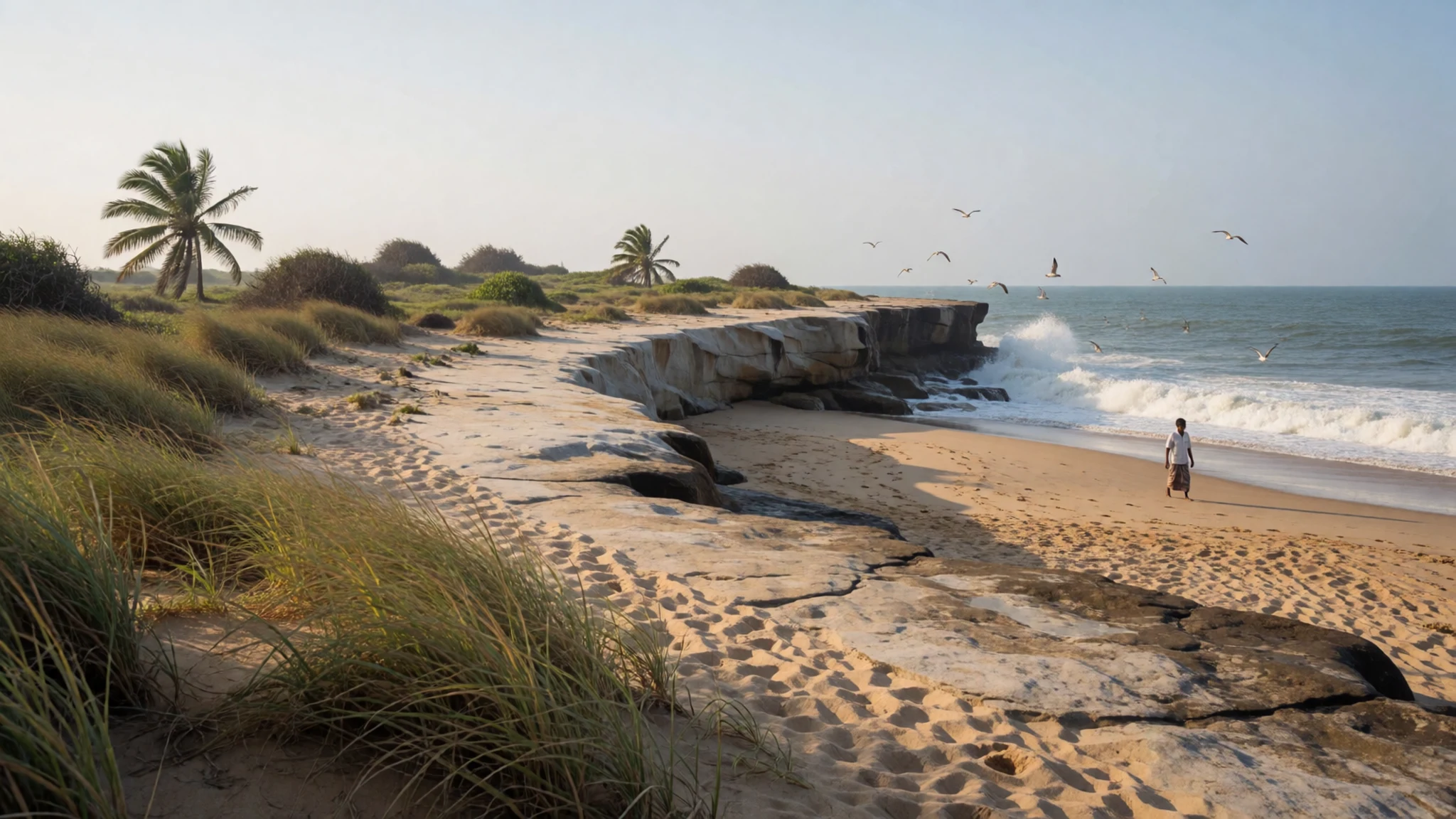
- Leopard trails — Open visitor zone
The leopard trails wind through scrub and along willu margins where the cats hunt and drink. Sightings are never guaranteed, and a patient guide who reads alarm calls from deer and birds does more than luck. Early morning and late afternoon give the coolest air and the softest light.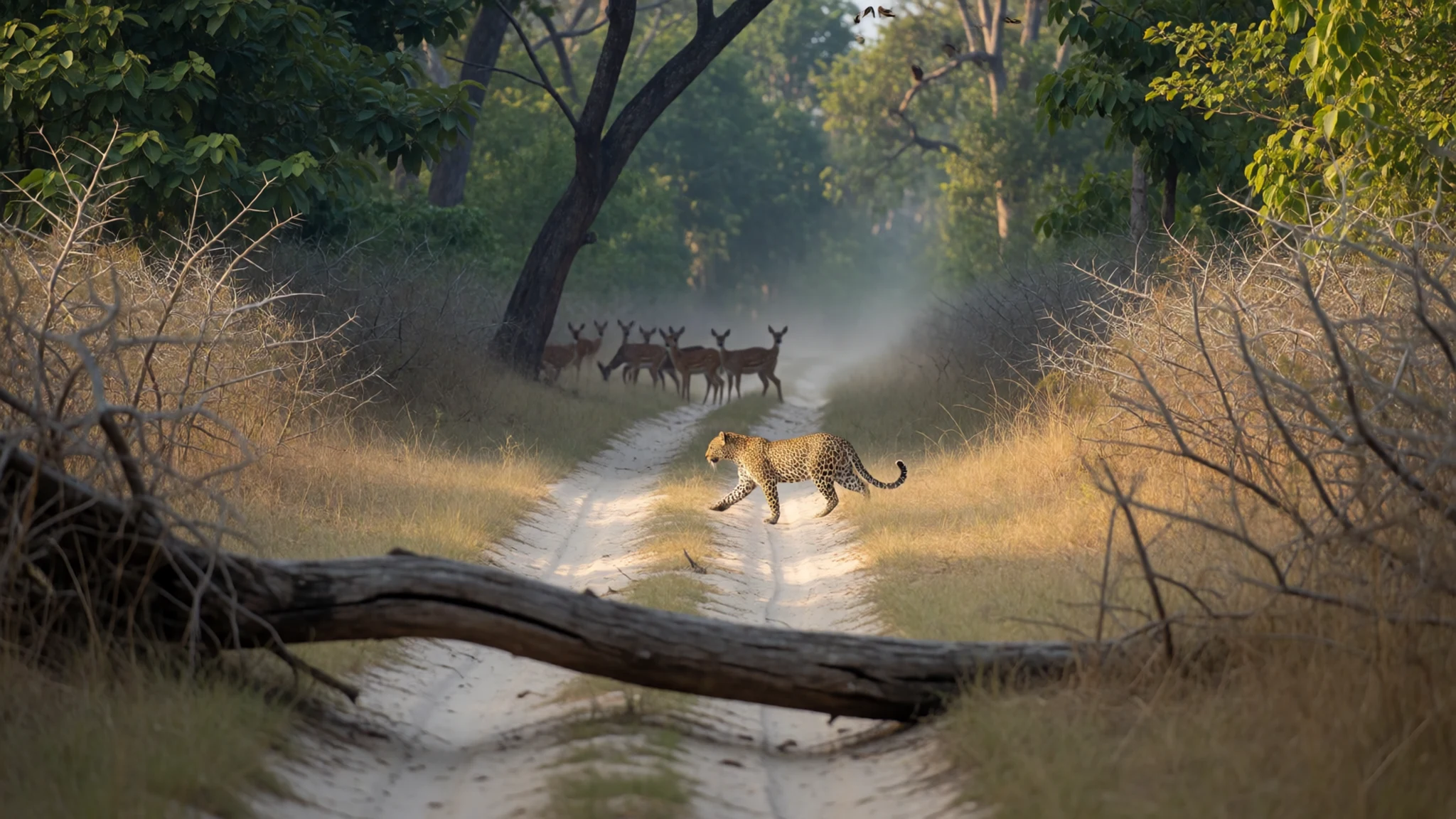
- The willus — Throughout the visitor zone
The willus are the park's signature: natural basins with sandy rims that fill with rain and draw animals in. Sitting quietly at one for half an hour often beats driving on. Water levels change with the season, so the look of each basin shifts from visit to visit.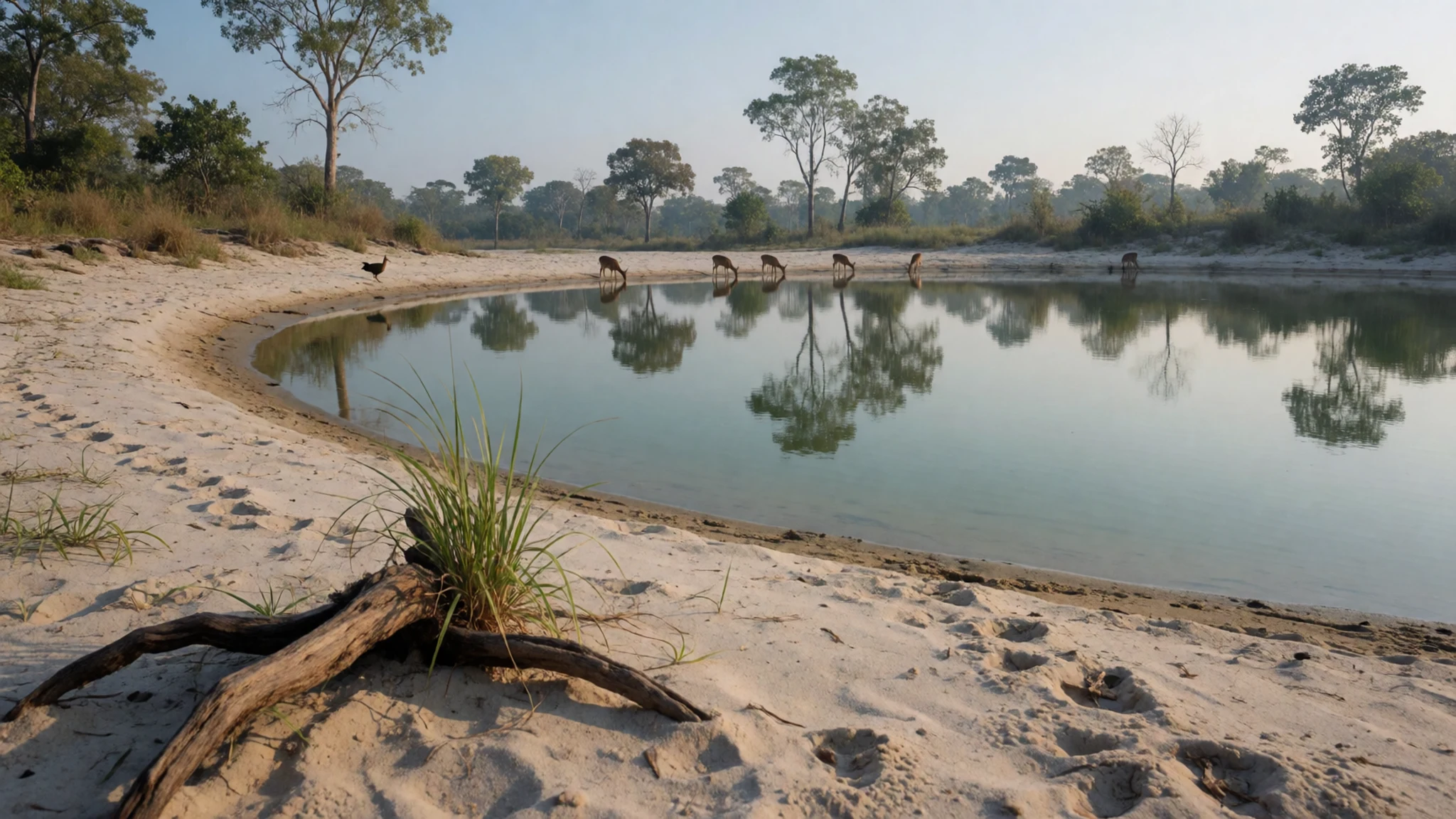
- Waterbirds at the lakes — Willu margins and tank edges
Black-winged stilts pick along the shallows on long pink legs, while greater coucals work the edges of the undergrowth, a deep-voiced, chestnut-winged bird that is easy to spot. The lake margins reward binoculars far more than speed, and a slow vehicle is a good hide.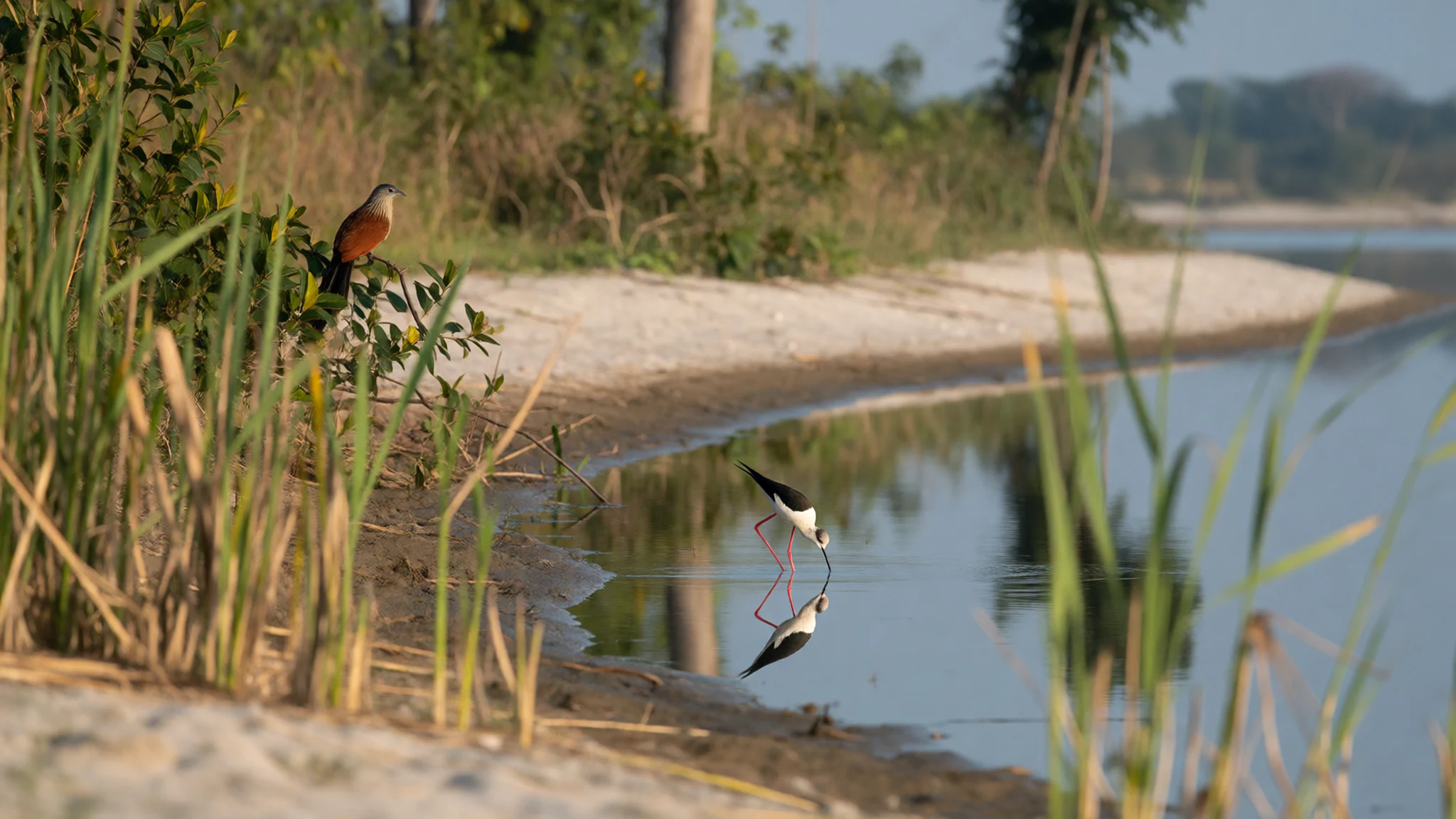
- Forest birds — Woodland sections of the park
Away from the water, the forest holds Sri Lanka junglefowl scratching on the track, Malabar pied hornbills in the canopy, crested treeswifts on bare branches and orange-breasted green pigeons in fruiting trees. Birders do well here even when the big mammals stay hidden.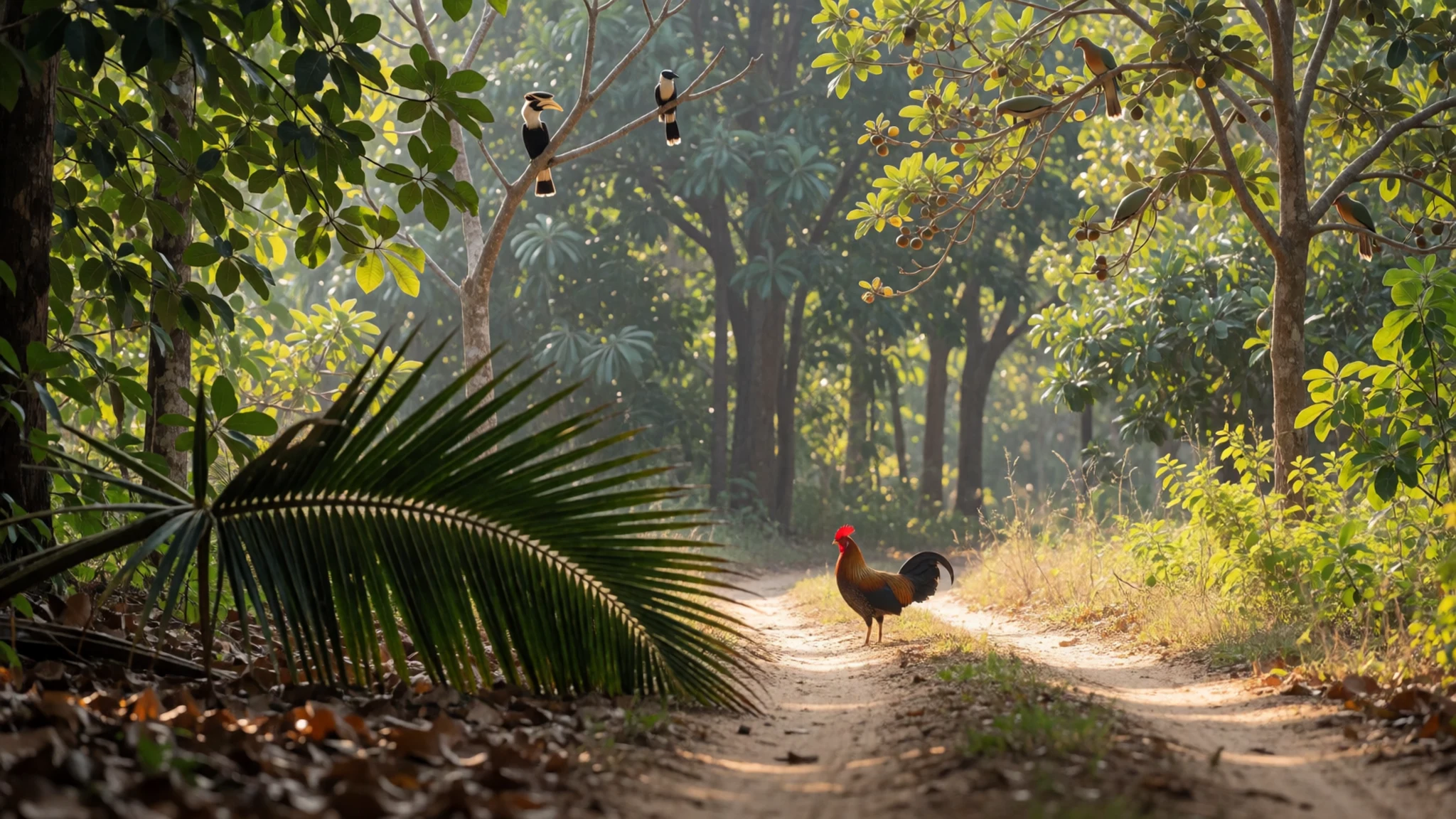
- Elephants, sloth bears and deer — Across the open zone
Beyond the leopard, the park shelters elephants, sloth bears and spotted deer, along with crocodiles in the tanks. Elephants are most often seen near water in the open, while sloth bears are shy and rarely seen. Keep to the guide's distance rules around every animal.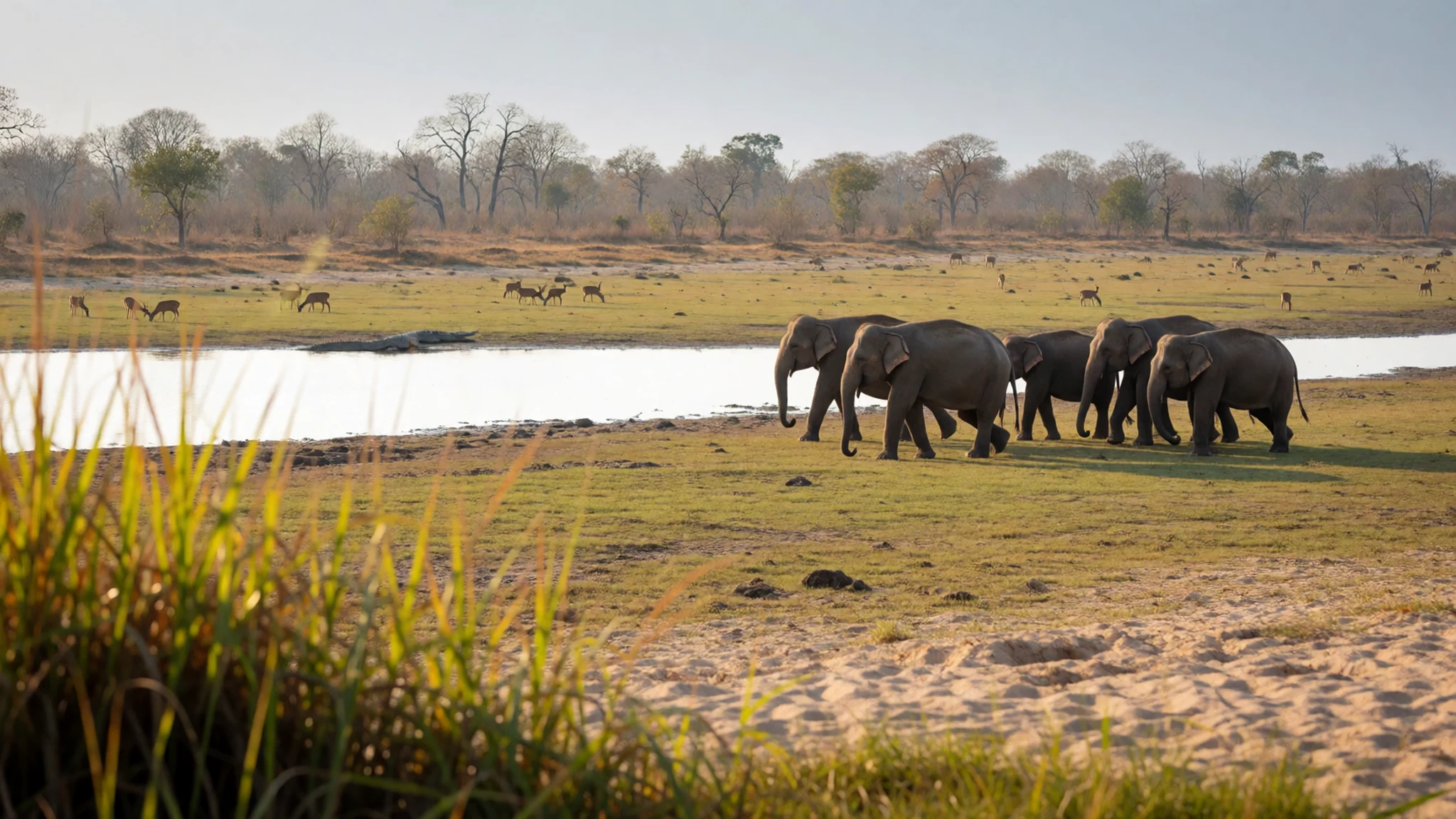
Culture
Wilpattu National Park sits close to the old heartland of Sinhalese Buddhist civilisation, with Anuradhapura only a short drive to the east. The legend of Prince Vijaya's landing on its coast shapes how many Sri Lankans see this stretch of country, as a place where the island's story starts. The towns around the park are mixed: Sinhalese, Tamil and Muslim communities live along the coast at Puttalam and Mannar, and the food, dress and calls to prayer change as the road runs north. The park's recent history matters too. Its long closure during the civil war is still part of local memory, and many families nearby have a connection to that period. Safari guides and trackers are often from villages at the park's edge and know the forest in a way no book can. Hiring locally, rather than driving in from far away, keeps the benefit near the park. Travel is slow by Western standards, meals are unhurried and plans shift when the weather or the animals decide. Visitors who take this in good humour tend to enjoy it most. Stay seated in the vehicle, follow your guide's instructions at every stop, keep your voice low near the water and never feed or call to any animal.
What to wear
Around Wilpattu, traditional dress follows the communities who live there. Sinhalese men wear the sarong, a wrapped cotton cloth, often with a shirt, and for formal occasions a long white cloth with a shirt or national-style jacket. Women wear the saree, including the Kandyan style with a frilled blouse, in cotton and silk. Along the coast, Tamil women wear sarees and men the veshti, a white wrapped cloth, while Muslim women often wear a headscarf or abaya. Handloom cotton and batik are the textiles most associated with the island. Day to day, people mostly wear practical clothes: light shirts and trousers, sarongs and cotton dresses, with salwar kameez and sarees common among women. Western-style jeans and T-shirts are common among younger people in Anuradhapura and Puttalam. Visitors should dress for dust, sun and insects. Choose long, loose cotton in khaki, olive or brown, and avoid white and bright colours that stand out in the forest. Wear a hat, sunglasses and closed shoes with grip for climbing in and out of the vehicle. Carry a light layer for cool dawn drives. At temples in Anuradhapura, cover shoulders and knees, and be ready to remove shoes and hat.
What to eat
- Rice and curry — Roadside eateries in Anuradhapura and Puttalam
The everyday meal: rice with a spread of vegetable, lentil and fish or chicken curries, plus a sambol. Order it at any roadside eatery or small family-run place in Anuradhapura or Puttalam, usually at lunchtime, when the dishes are freshest.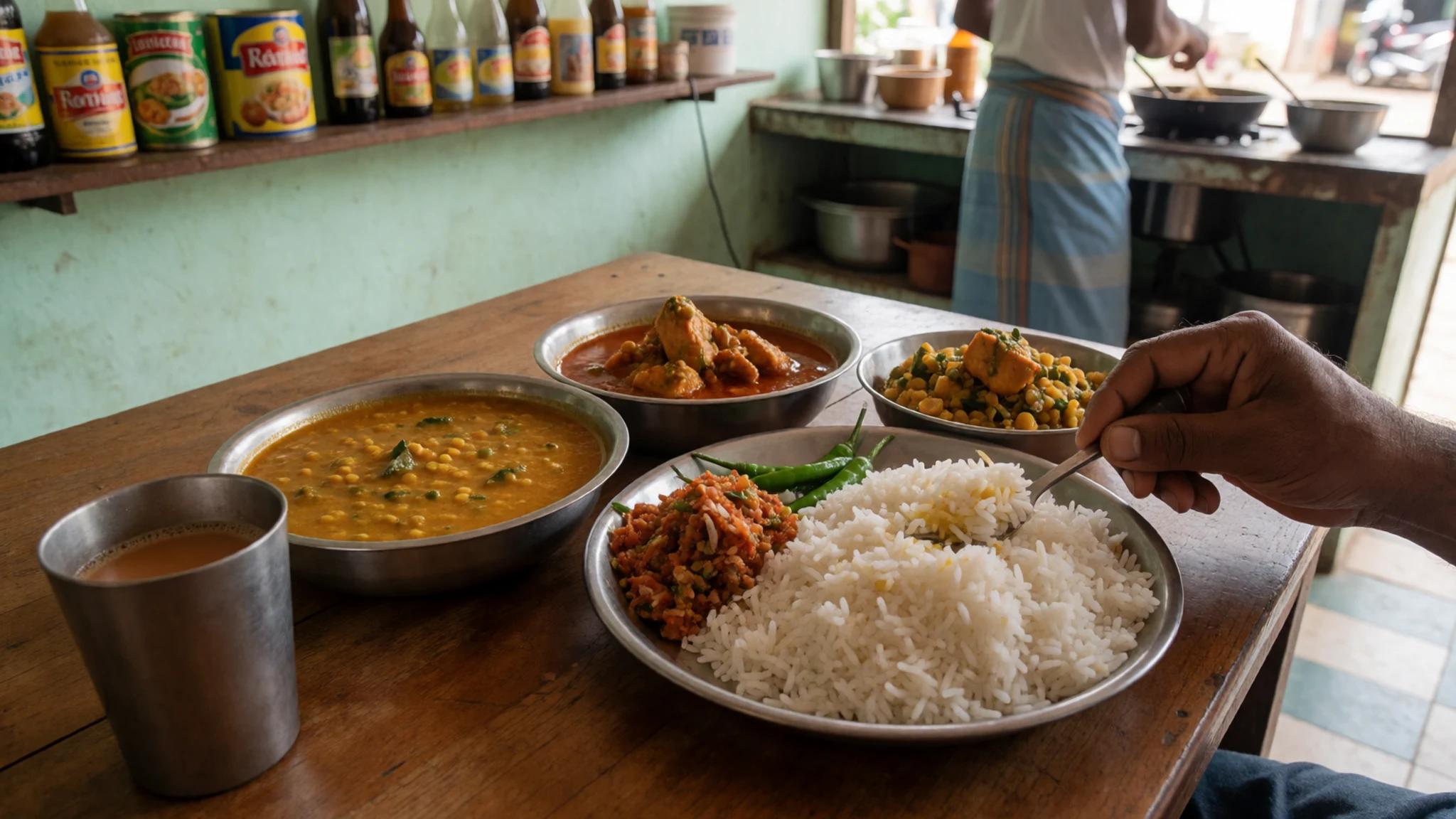
- Hoppers (appa) — Breakfast and evening stalls in town centres
Bowl-shaped pancakes made from fermented rice batter and coconut milk, crisp at the edge and soft in the middle. Often topped with an egg. Breakfast and early evening stalls in the larger towns are the best place to find them, served with a hot sambol.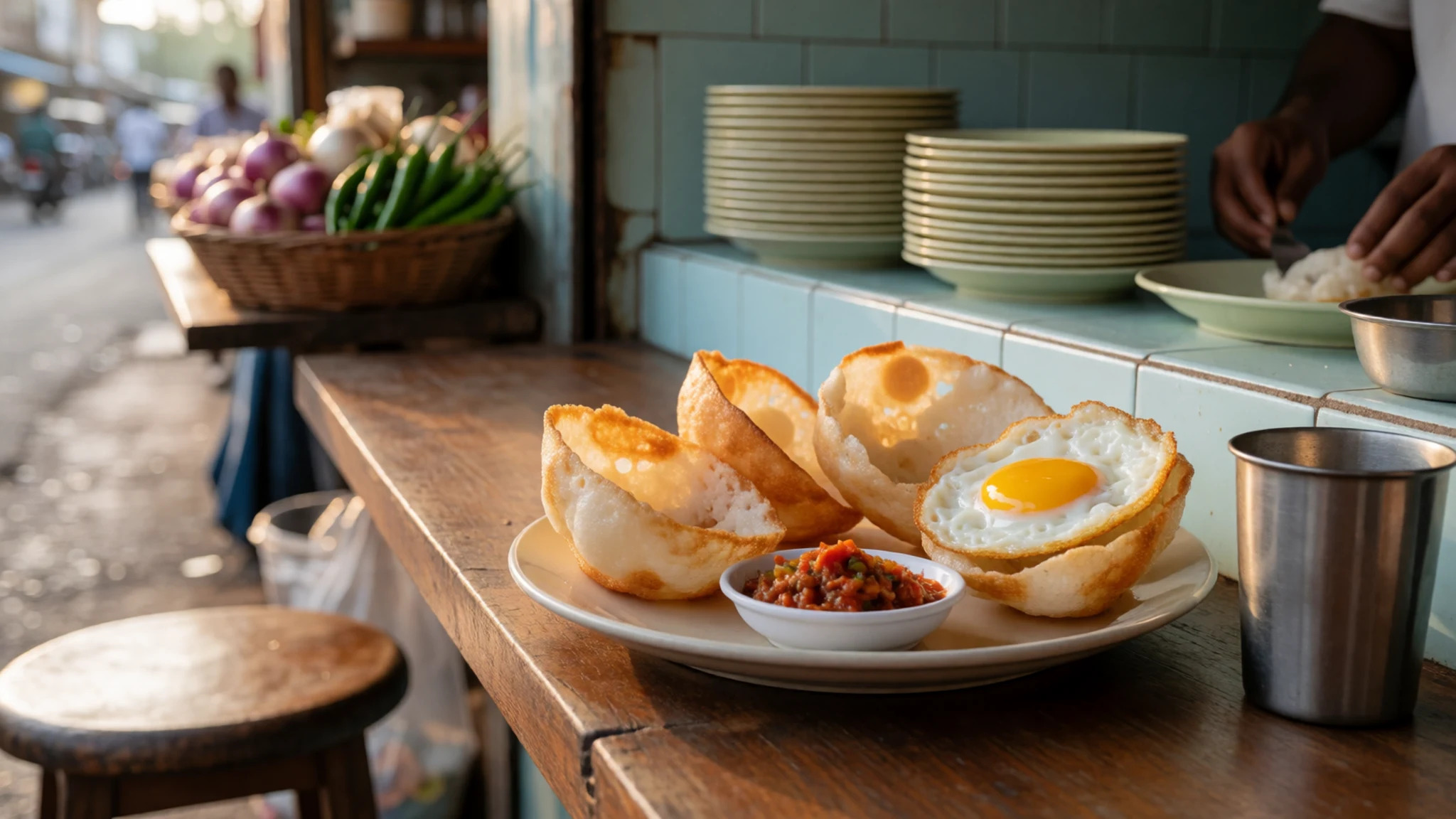
- Kottu roti — Street stalls in towns in the evening
Chopped flatbread stir-fried on a hot griddle with vegetables, egg and optional meat, loudly clattered with two blades. It is a night-time street food, so look for the sound before the sign. Order it spicy only if you like chilli. - Crab and prawn curry — Coastal fish markets and eateries around Puttalam and Mannar
Along the Puttalam and Mannar coast, seafood is a feature of local cooking, often in a rich, peppery curry. Fish markets near the lagoons and shore are good places to see the catch, and small eateries nearby cook it simply with coconut. - Pol roti with sambol — Small breakfast eateries near Anuradhapura
A coconut flatbread with grated coconut mixed into the dough, eaten with pol sambol, a fresh relish of coconut, chilli and lime. It makes a sturdy early breakfast before a morning drive, and eateries near Anuradhapura commonly sell it.
Plan it
Best time. The park's usual visiting season runs from February to October. Rain from the north-east monsoon (December to February) and inter-monsoon showers in March can wash out tracks and close parts of the park. June to September sits well inside the drier stretch; April, May and October are workable but can be hot or showery. Average temperature is around 27 °C, and annual rainfall about 1,000 mm.
How long. 2–3
Getting there. Fly into Bandaranaike International Airport near Colombo, then travel north by road, roughly 180 km to the park area. Most visitors base themselves in Anuradhapura, Puttalam or Mannar and join a guided jeep safari from there; the final stretch to the gate is by road.
Budget. mid
Tips
- Book a jeep and guide through your accommodation or an operator in Anuradhapura, Puttalam or Mannar
- Check with the national wildlife department for current fees, rules and which tracks are open before you travel
- Go out at dawn or late afternoon for cooler air and more animal activity
- Carry plenty of water, a hat, sun protection and some cash for tips and small purchases
- Expect rain-affected access from December to March and confirm conditions before booking
Etiquette
- Stay in the vehicle and follow your guide's advice at all times
- Do not feed or approach any animal
- Keep noise low near water and when animals are close
Nearby
Sources
- Wikidata Q3524793 (CC0)
- Wikipedia: Wilpattu National Park (rev 1362948911) (CC BY-SA 4.0)
- Wikivoyage: Wilpattu National Park (rev 5293053) (CC BY-SA 4.0)
- Photo: Black-winged Stilt, Thimindu Goonatillake (CC BY-SA 2.0)
- Photo: Wilpattu National Park (3), Rehman Abubakr (CC BY-SA 4.0)
- Photo: Wilpattu National Park (8), Rehman Abubakr (CC BY-SA 4.0)
- Photo: Greater Coucal, Thimindu Goonatillake (CC BY-SA 2.0)
- Photo: Sri Lanka Junglefowl, Thimindu Goonatillake (CC BY-SA 2.0)
- Photo: Crested Treeswift, Thimindu Goonatillake (CC BY-SA 2.0)
- Photo: Malabar pied hornbill, Rehman Abubakr (CC BY-SA 4.0)
- Photo: Orange-breasted Green Pigeons, Thimindu Goonatillake (CC BY-SA 2.0)


Wildlife
- Leopard (animal)
A leopard is a slender, muscular wild cat with a golden coat dotted with dark rosettes, as if it wore the shadows of leaves. In Wilpattu, a dry forest of sand-rimmed natural lakes, it is among the animals that draw visitors most. I have no notes on the season or time of day it appears. Watch from a respectful distance, keep your voice low, go with an experienced guide, and never feed or tempt it closer.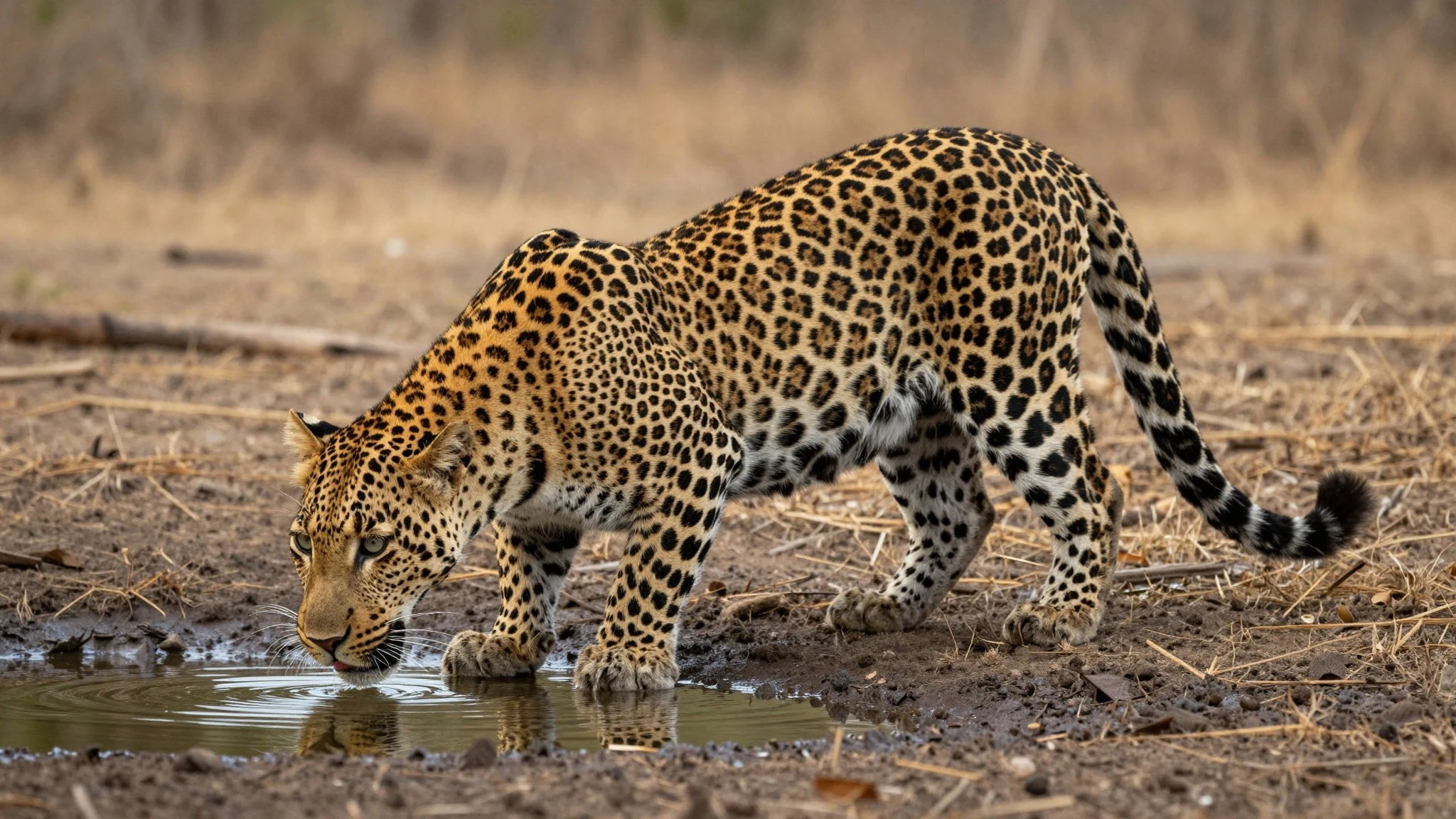
- Elephant (animal)
The Asian elephant is the biggest land animal in Asia, with a long trunk, folded ears and wrinkled grey skin. It is clever, too, and can show signs of grief and greeting. In Wilpattu it shares the forest with sloth bears, spotted deer and crocodiles. My notes give no season or hour for seeing it. Keep well back, stay calm and quiet, follow your guide's lead, and never offer food.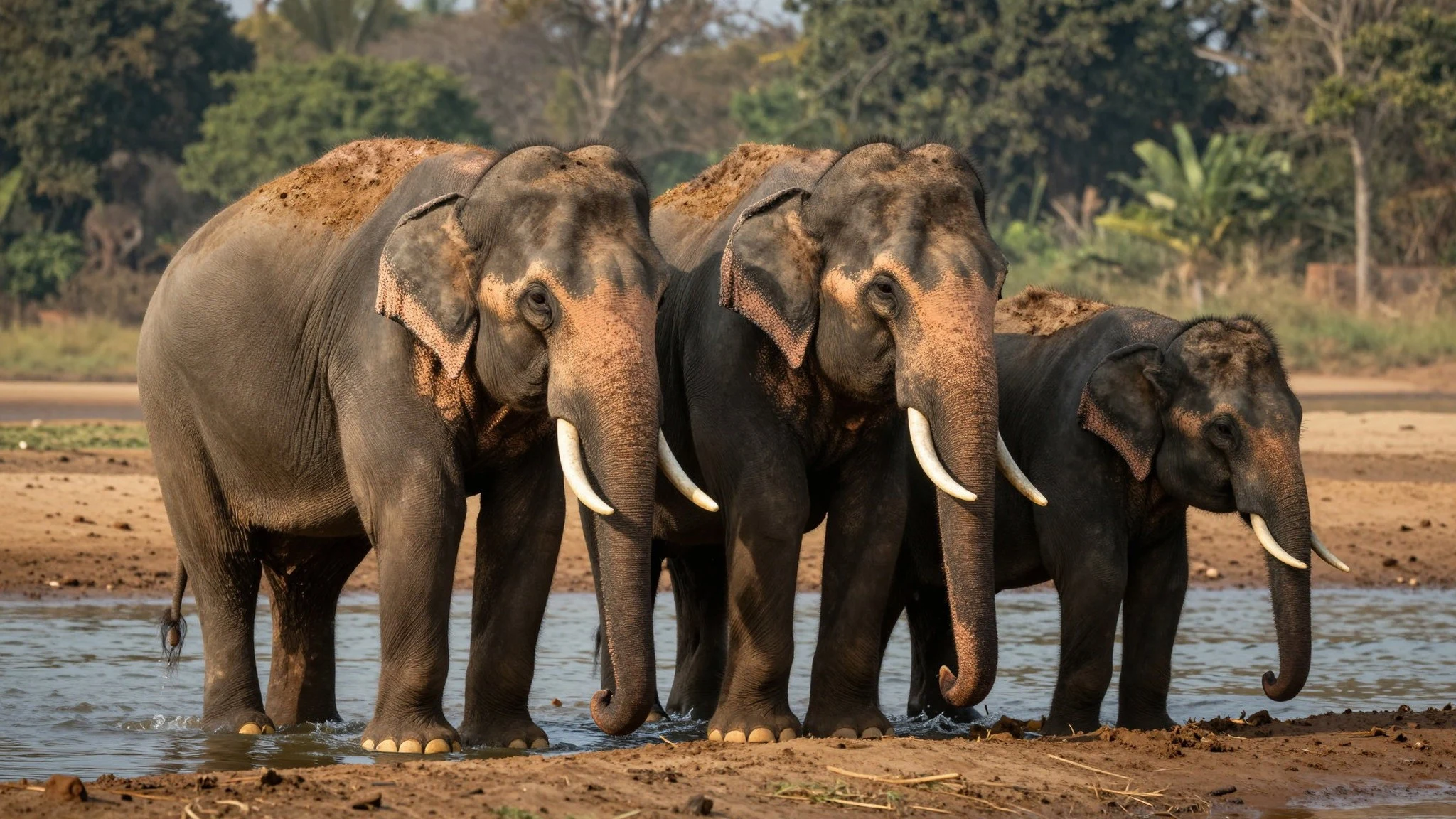
- Black-winged stilt (bird)
The black-winged stilt is a wading bird whose very long legs make it look as though it walks on stilts. In Wilpattu you may find it picking its way along the shallows on those slender pink legs. My notes do not say which season or time of day is best. Watch from a distance so it stays relaxed, keep still and quiet at the water's edge, ask your guide where to look, and never feed it.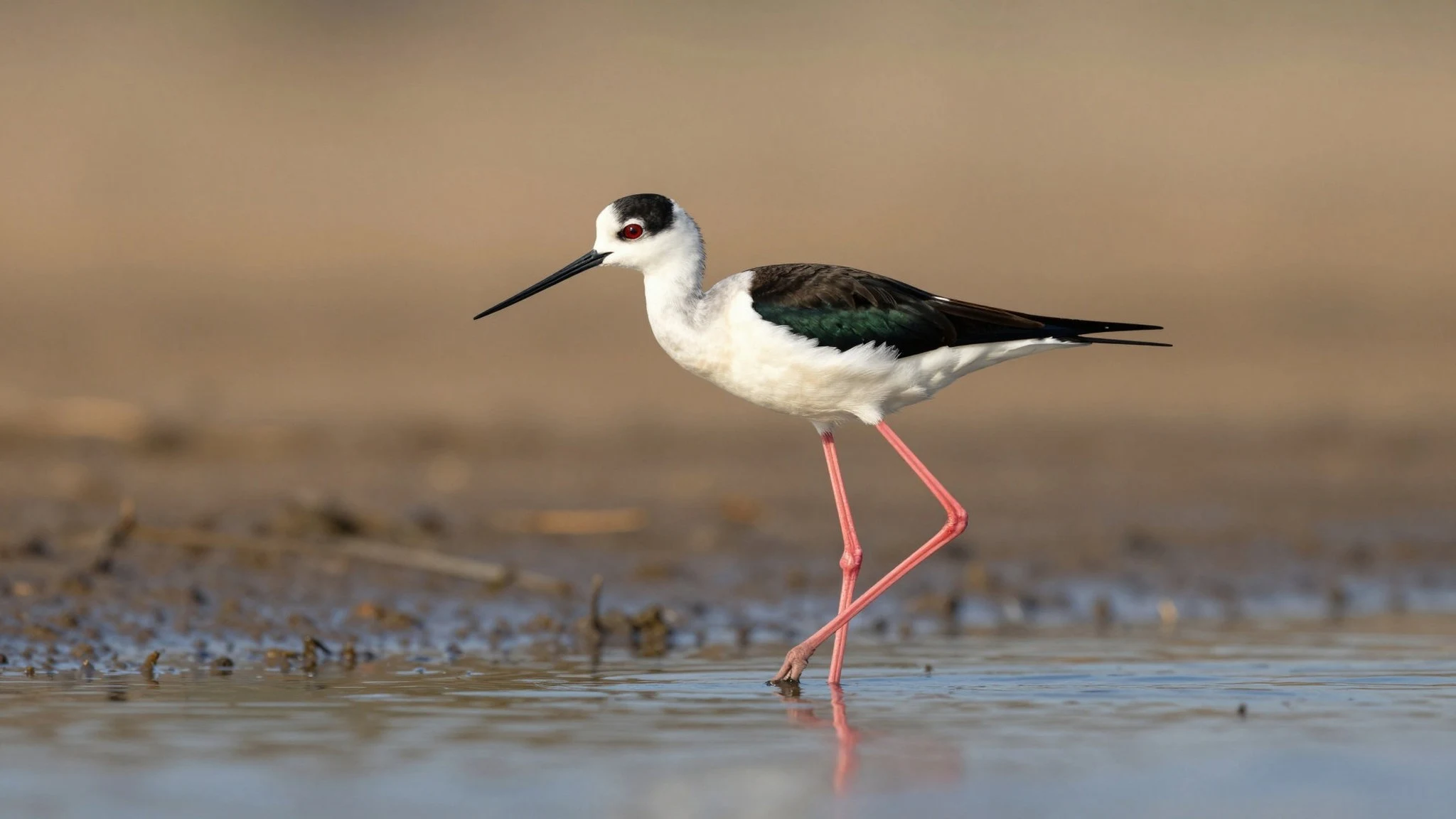
- Greater coucal (bird)
The greater coucal is a large, crow-like bird with a long tail and coppery wings, and it would rather clamber and stroll than fly far. In Wilpattu it works along the edges of the undergrowth, and its low, booming call and rusty wings make it easy to spot. My notes give no season or time of day. Stand quietly, keep a polite distance, let your guide point it out, and never feed it.