Way Kambas National Park
Way Kambas National Park, Indonesia
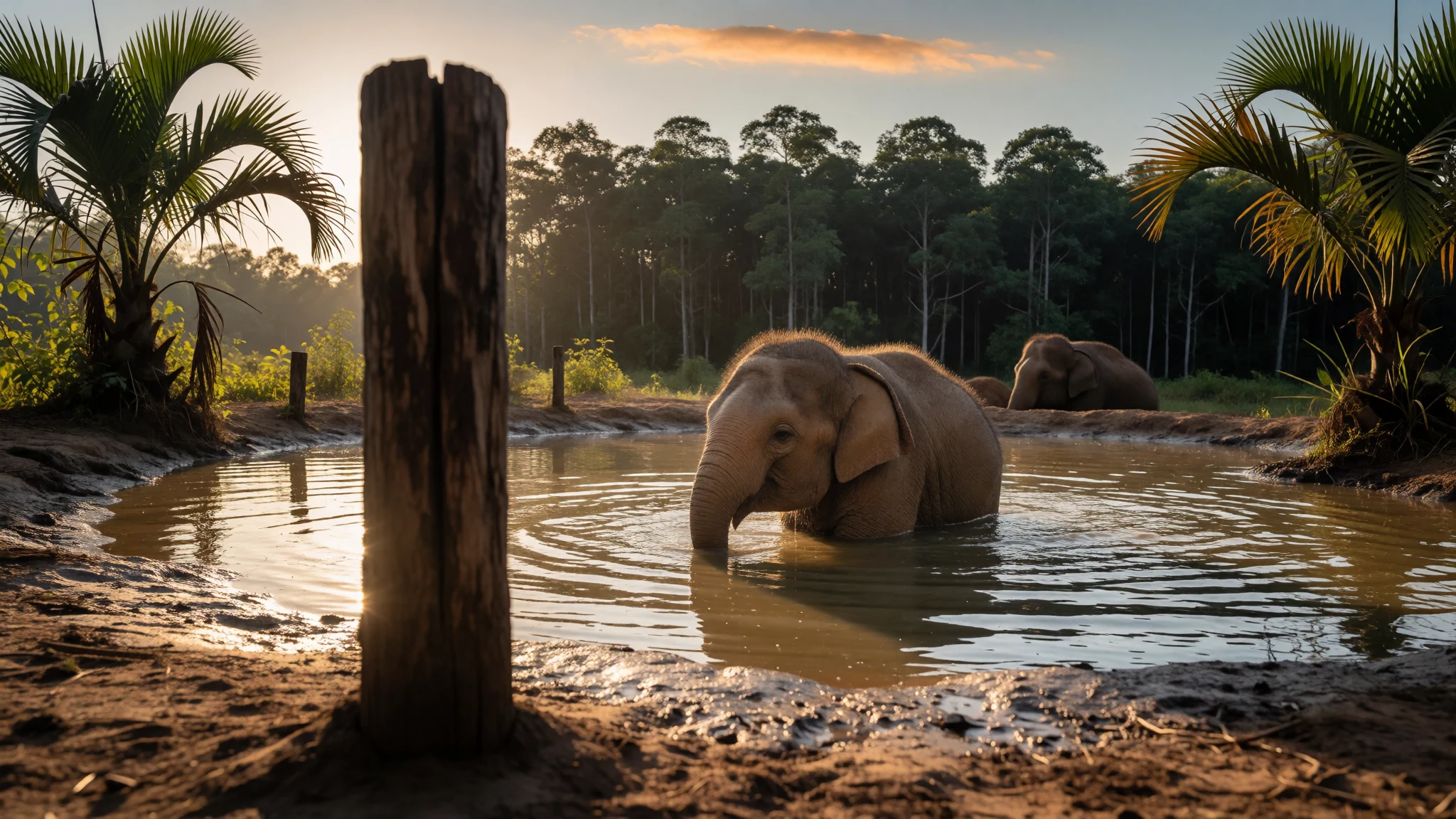
Way Kambas National Park is a flat Sumatran forest where elephants are cared for and a few rhinoceroses and tigers hang on.
The place
Way Kambas National Park lies on the low south-eastern coast of Sumatra, in Lampung province, a few hours' drive from the provincial capital, Bandar Lampung. It covers about 1,300 square kilometres of swamp forest and lowland rainforest, and most of that is regrowth rather than original forest, because of heavy logging in the last century. That history shapes the scenery. Instead of towering old-growth canopy, the park offers rivers, wet ground, scrub and tall secondary woodland, with open edges where animals are easier to spot. Trees include meranti, merbau and pulai, with palms such as aren and serdang. The wildlife list is the reason the park matters: Sumatran elephants, tigers and rhinoceroses, all in small and shrinking numbers, plus Malayan tapir, sambar deer, muntjac and sun bears. More than 400 bird species have been recorded, which makes the park a serious stop for birdwatchers. The land is flat and the climate is equatorial, so heat and humidity are constant and mosquitoes are part of the deal. Visitors should treat tigers and rhinoceroses as animals to know about rather than animals to expect; the realistic highlights are elephants, monkeys, birds and the quiet of the forest edge. The park was created in 1989 and runs as a working conservation area, not a theme park, which explains both its rough edges and its purpose.
Its story
Way Kambas National Park was founded in 1989, but its story begins earlier, with the timber industry that cut into Lampung's lowland forests during the last century. Logging removed much of the original cover, and the tangle of regrowth seen today is the result. Animals paid the price. Elephants lost range and started pushing into farmland and village edges, where clashes with people turned deadly for both sides. Local residents have been killed and injured over many years, and traps set by neighbouring communities remain a danger to wildlife and walkers alike. Poaching and illegal clearing add to the pressure on tigers, rhinoceroses and elephants, whose numbers have fallen. The response has been practical rather than grand. Patrol teams work the forest, an elephant conservation centre looks after and trains captive animals, and a rhinoceros sanctuary was set up to give the Sumatran rhinoceros a protected base. The International Rhino Foundation has also worked to bring a few wild rhinoceroses in from the forest, a sign of how thin the wild population has become. In 2016 the park was formally named an ASEAN Heritage Park, a recognition that the region treats it as a shared natural asset. Whether that is enough is still an open question, and the park's story remains one of slow, uncertain recovery rather than a finished rescue.
What to see
- Elephant Conservation Centre — Park edge, Lampung Timur
The centre works as an elephant school, where animals are trained alongside their keepers. Riding and dance-style shows are offered, though some travellers prefer simply to watch the animals at work and rest. Go early, when the elephants are moving between enclosures, and ask staff what each routine is for.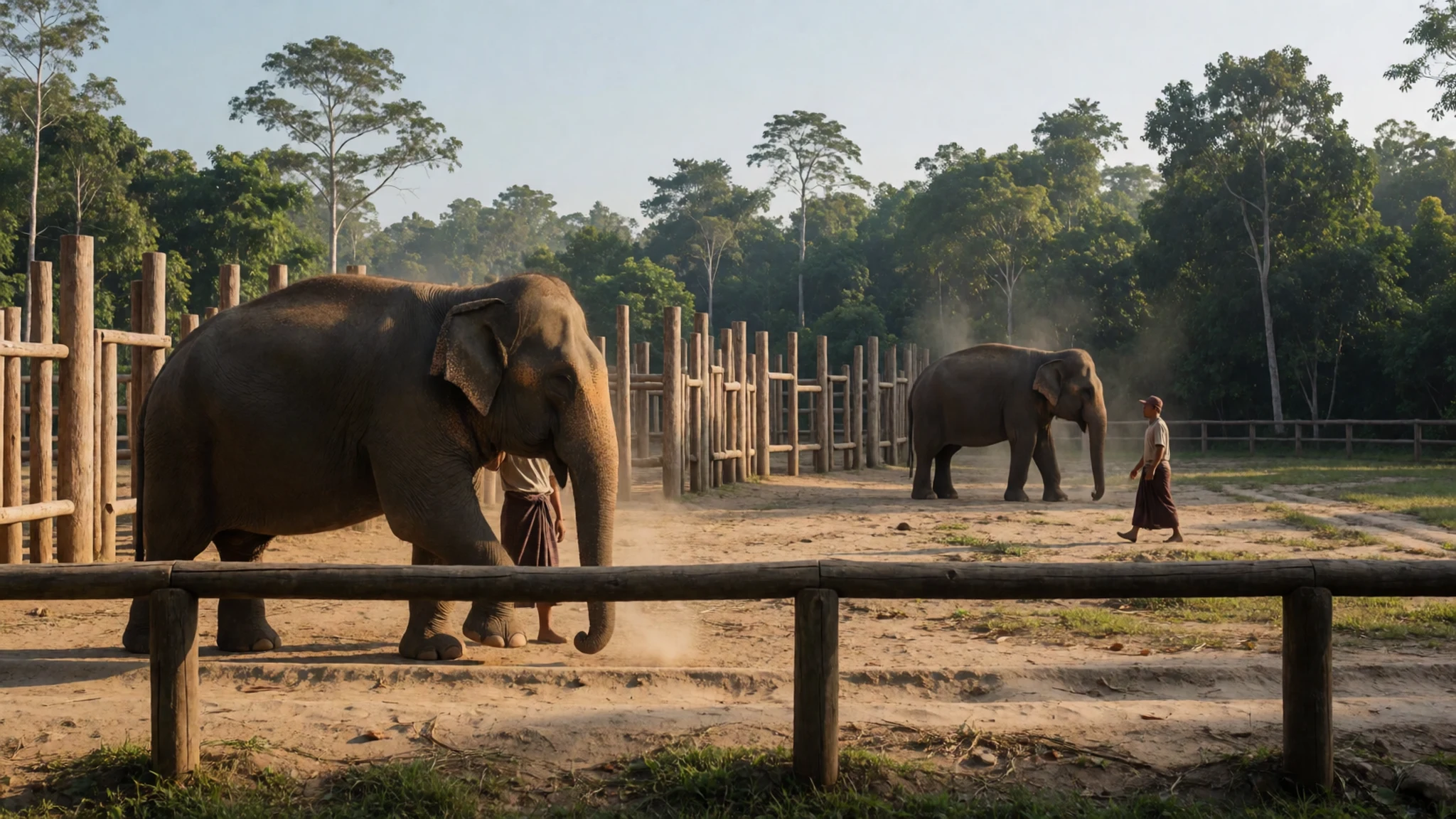
- Morning bathing and calves at play — Elephant centre grounds
Young elephants are washed and allowed to play in shallow water, which is the gentlest and most photogenic part of a visit. Keep a respectful distance, stay behind any barrier, and do not call out or throw food. Mornings are cooler, and the animals are livelier then.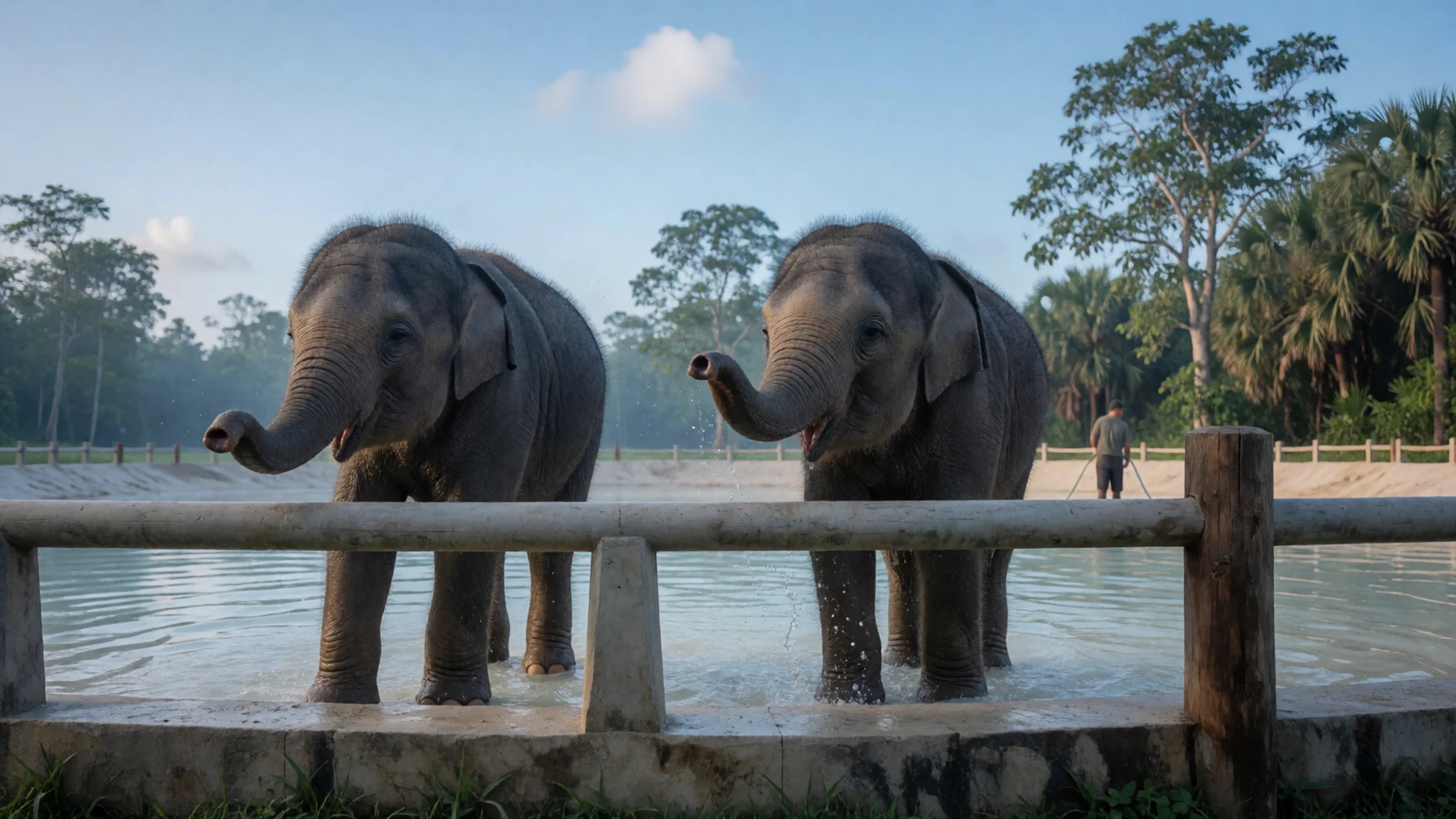
- Sumatran Rhino Sanctuary — Inside the park, restricted area
The sanctuary was created to protect the Sumatran rhinoceros, a species now reduced to a handful of animals. Access is controlled, so ask the park office whether visits are possible before you go. Even a distant sighting here carries weight, because the species is critically endangered.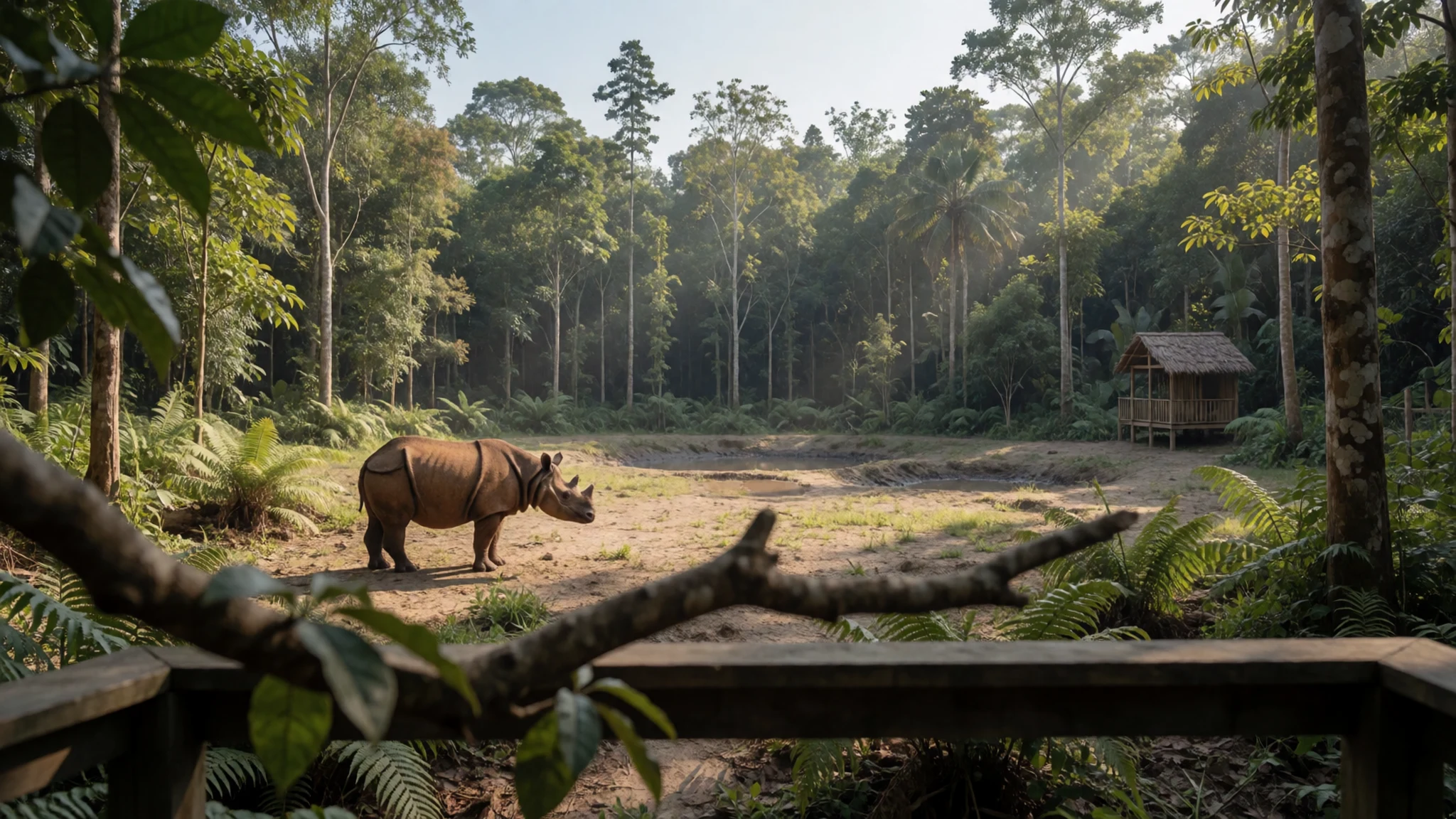
- Birdwatching along rivers and forest edges — River and forest edges
With more than 400 bird species recorded, the park rewards patient watchers. Dawn along riverbanks and open clearings is the best slot, before heat and noise build. Hire a local guide who knows calls and perches, and bring binoculars, since the canopy is often screened by regrowth.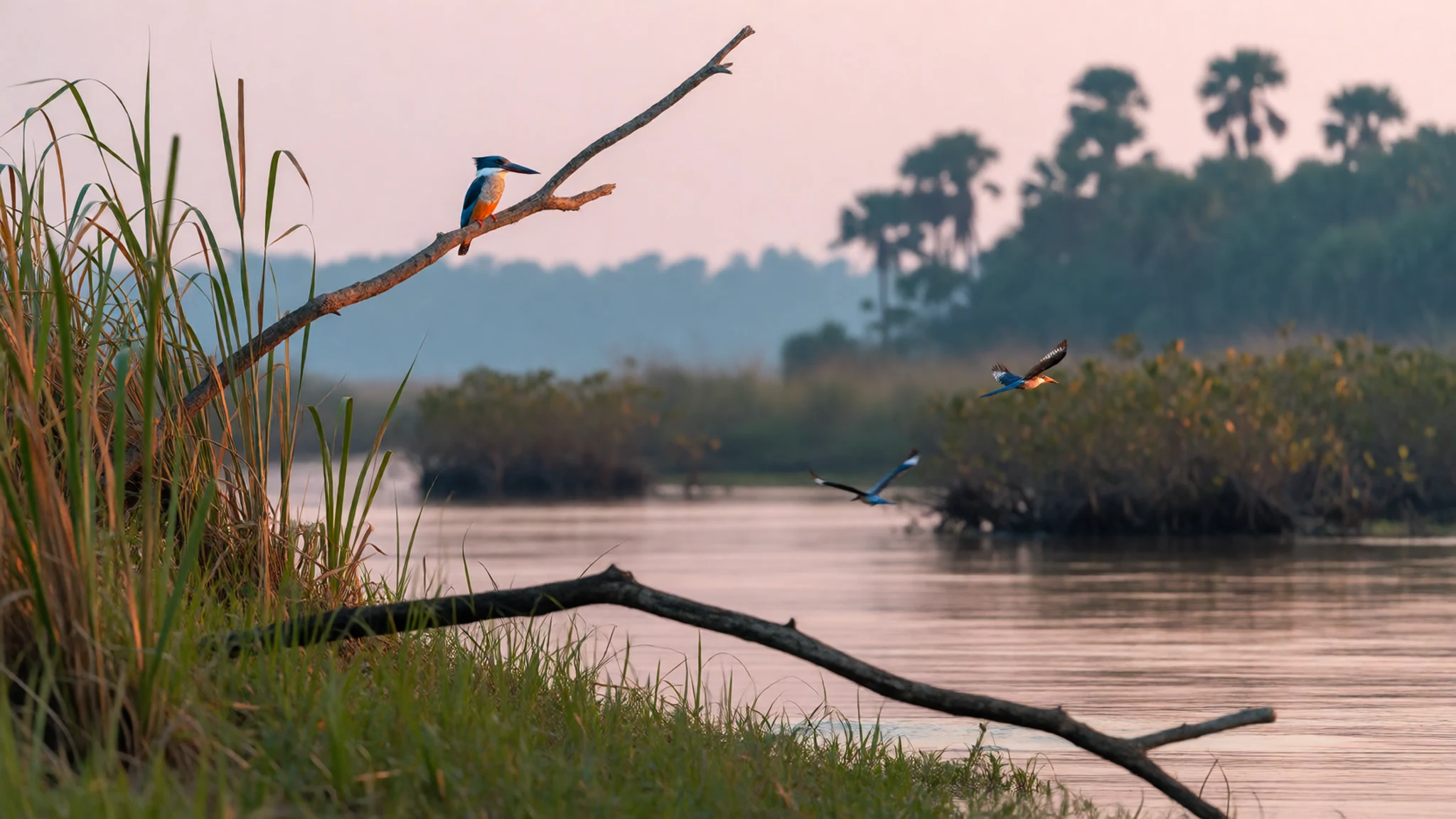
- Jungle trekking — Forest trails within the park
Guided treks take in secondary forest, swamp margins and wildlife trails. Expect heat, mud and insects rather than big-animal drama. A ranger or licensed guide is strongly advised, both to read tracks and to avoid elephants and old traps near village boundaries.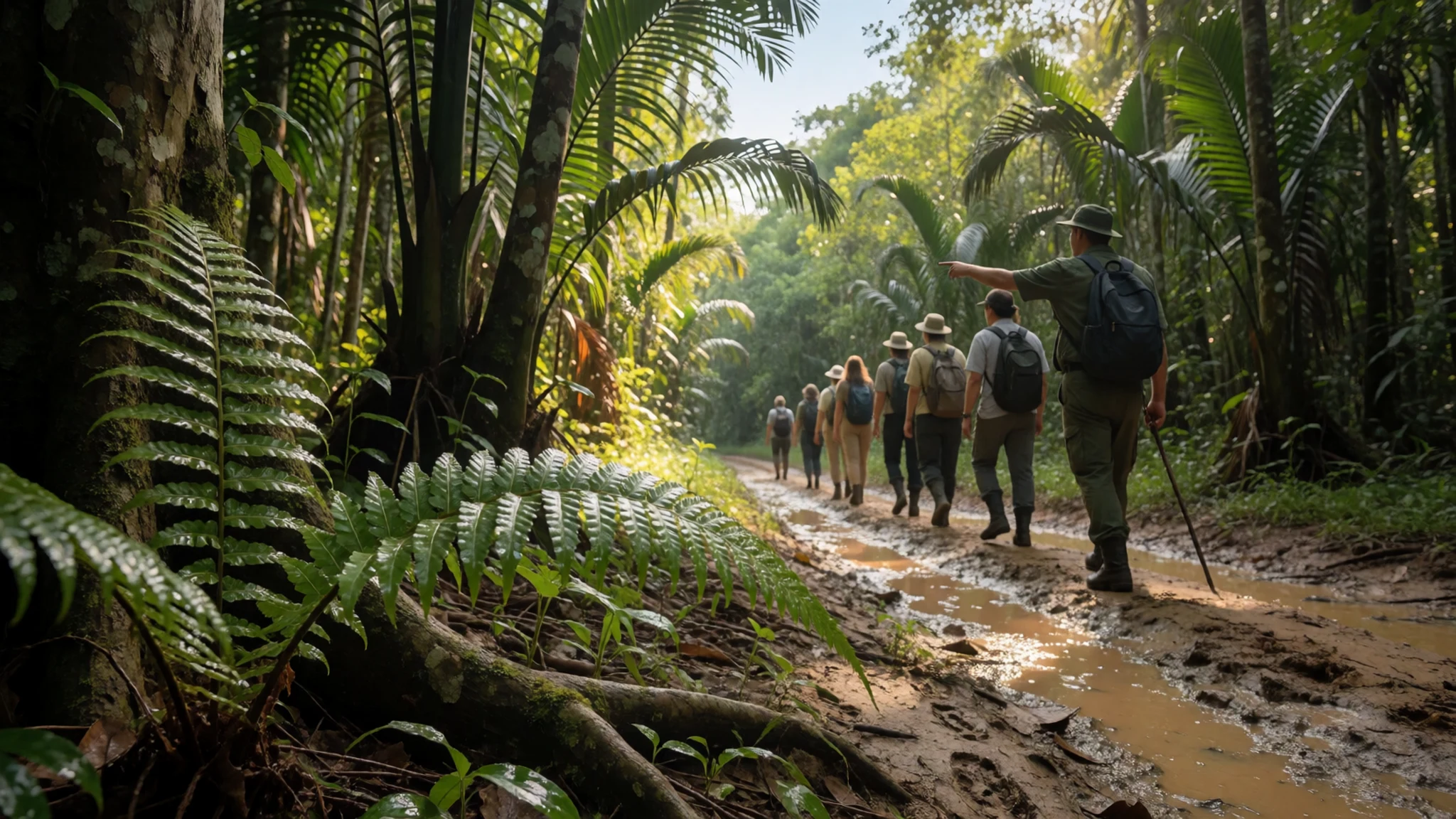
Culture
Way Kambas National Park sits in Lampung, a province where Lampungese communities live alongside Javanese, Sundanese and Balinese settlers who arrived through government resettlement programmes. The result is a mixed countryside: Muslim villages with mosques and calls to prayer, Hindu shrines and offerings in Balinese hamlets, and small roadside stalls everywhere. Near the park, the hamlet of Gunung Agung has homestays kept by families of Balinese origin who have lived there for a long time, and some hosts put on Balinese dance and live music for guests. Elephant keepers, known as mahouts, hold a central place in park life: the bond between keeper and animal is daily and personal, and the work is skilled. Conservation is also a local conversation, because farmers at the forest edge bear the cost of crop raiding and, at times, of fatal encounters with elephants. Visitors who listen to that side of the story leave with a more honest picture than cute calves alone could give. Do not feed, tease or touch elephants and monkeys, and ask your guide or keeper before photographing people or going near any animal.
What to wear
Way Kambas National Park lies in Lampung, whose best-known traditional textile is tapis, a hand-woven cloth embroidered with gold or silver thread in swirling motifs. It is worn as a wrapped skirt at weddings and formal ceremonies, often with the tall metal siger crown for brides. Balinese families in the area keep their own dress for temple festivals and dance: a sarong, a sash and, for men, a folded headcloth called udeng, usually in cotton or silk. Day to day, nobody dresses ceremonially. Villagers wear T-shirts, long trousers and sarongs at home, and many Muslim women wear headscarves; rangers and mahouts wear work uniforms, boots and wide-brimmed hats. A visitor should dress for heat, insects and mud. Light, long-sleeved cotton shirts and long trousers in muted colours protect against sun and bites. Closed, quick-drying shoes or light boots suit forest tracks; sandals are fine only around the centre. Bring a hat, a thin rain jacket and insect repellent. In villages and homestays, cover shoulders and knees, out of courtesy more than any strict rule.
What to eat
- Smoked fish (ikan asap) — Village eateries and roadside stalls near the park
Freshwater or river fish smoked over a low fire until firm and fragrant, usually served with rice, chilli sambal and raw greens. It is a plain, filling meal after a hot morning on forest tracks.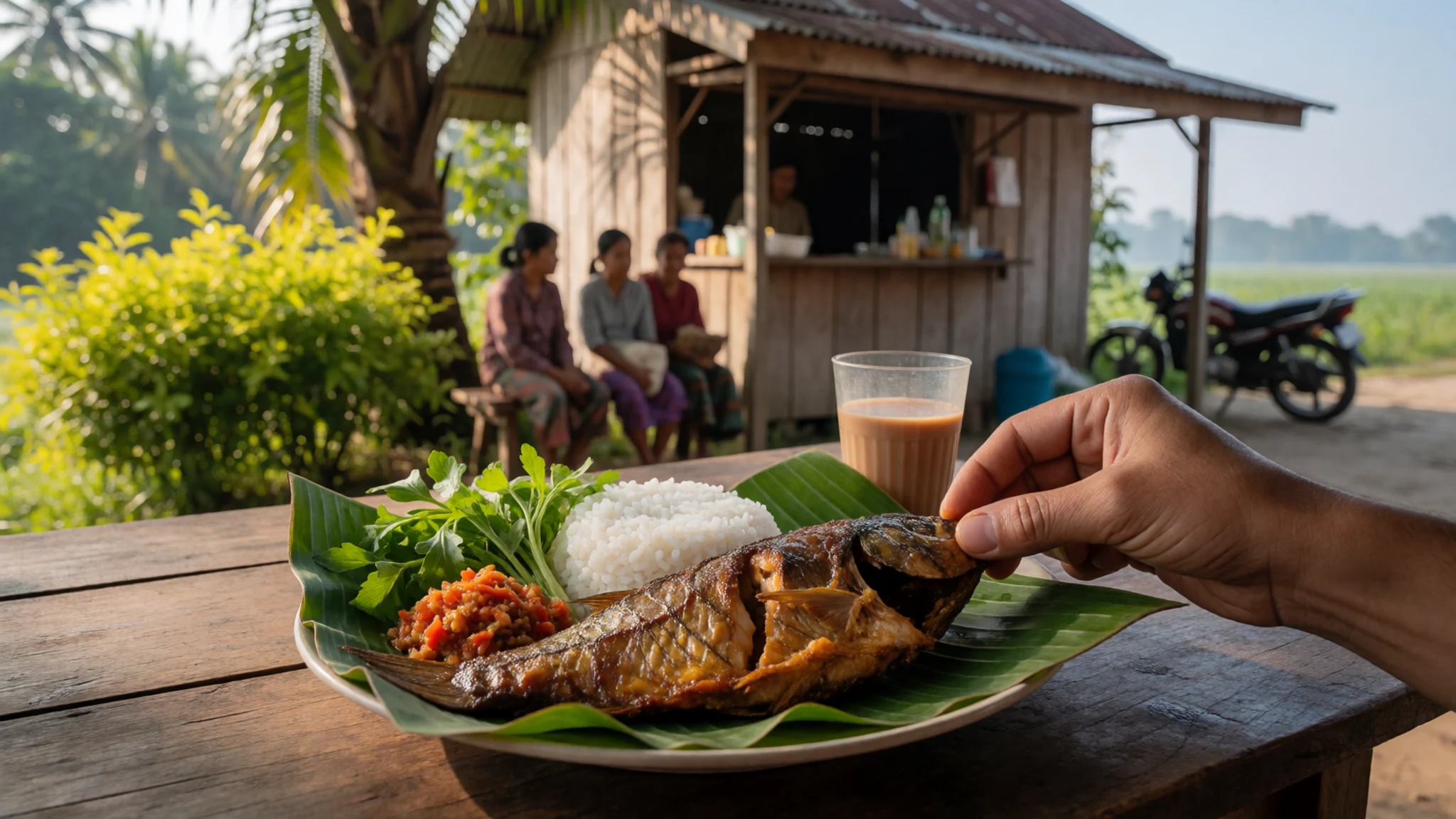
- Young coconut (kelapa muda) — Roadside stalls on the approach roads
A green coconut opened at the stall, with sweet water to drink and soft flesh to scrape out afterwards. It is the usual answer to the heat and humidity, and costs little compared with bottled drinks.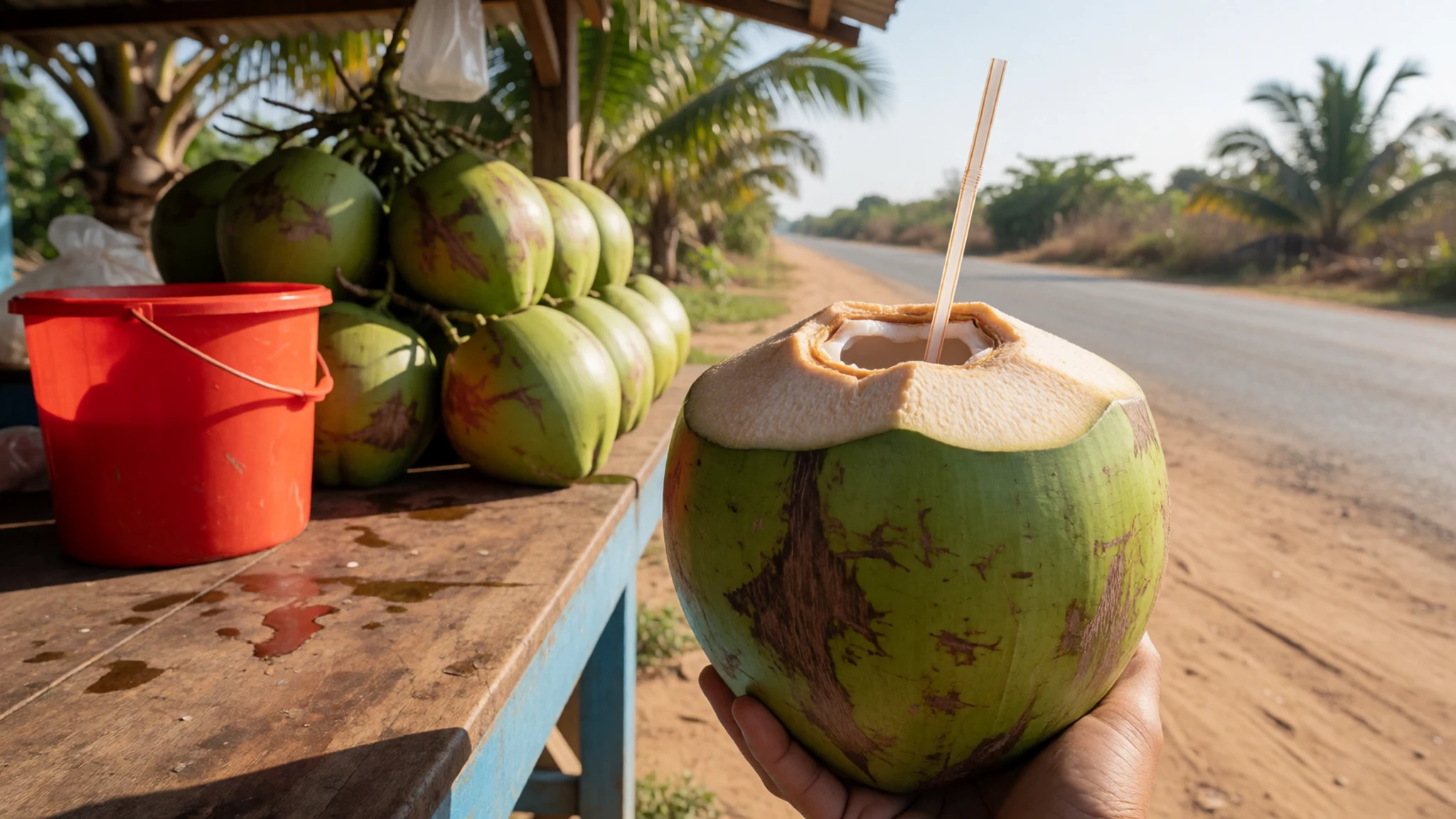
- Seruit — Family-run eateries in Lampung towns
A Lampung speciality of grilled or fried fish pounded into a spicy sambal with shrimp paste, sometimes with fermented durian or sour fruit. It is eaten with rice and raw vegetables, and the flavour is strong and sharp. - Banana chips (keripik pisang) — Snack shops and market stalls in Bandar Lampung
Thin, crisp slices of fried banana, sold plain, salted or coated with sweet flavours. They travel well, so they make a handy snack for the road back to Bandar Lampung and a common gift to take home. - Lampung coffee — Warung (small eateries) and coffee stalls
Strong, dark coffee from the province's highlands, usually brewed in a glass with grounds left in and often sweetened. It suits an early start before an elephant-centre morning or a long drive afterwards.
Plan it
Best time. Roughly May to September, when rain is usually lighter and forest tracks are easier to walk. The park is close to the equator, so it is hot and humid all year, and wetter months bring mud and heavier insects.
How long. 1–2
Getting there. Fly to Radin Inten II Airport at Bandar Lampung, or arrive by ferry from Java at Bakauheni and continue by road. The park is about 2–3 hours' drive from Bandar Lampung, so arrange a car and driver or a tour in advance. Check the official site, http://www.waykambas.org, for visiting arrangements.
Budget. low
Tips
- Start early: animals are more active and the heat is lower in the morning.
- Check the official site or ask the park office about opening arrangements, permits and any fees before you travel.
- Hire a local guide for treks and birdwatching, and stay on marked paths.
- Carry cash for small eateries, homestays and stalls, as card use is limited away from towns.
- Bring plenty of drinking water, insect repellent and a rain jacket.
Etiquette
- Keep a safe distance from elephants and never feed wild or captive animals.
- Follow guide and ranger instructions, especially near village boundaries where traps may be set.
- Ask before photographing people and dress modestly in villages and homestays.
Nearby
Sources
- Wikidata Q963098 (CC0)
- Wikipedia: Way Kambas National Park (rev 1383201381) (CC BY-SA 4.0)
- Wikivoyage: Way Kambas National Park (rev 5190745) (CC BY-SA 4.0)
- Photo: Sumatran Rhinoceros, Way Kambas 2008 (Willem v Strien) (CC BY 2.5)
- Photo: Indonesia Sumatra relief location map (RXerself) (CC BY-SA 4.0)
- Photo: Indonesia relief location map (Uwe Dedering) (CC BY 3.0)
- Photo: Elefanten Training Center (michael tanadi) (CC BY-SA 1.0)
- Photo: Anak gajah bermain di kolam (Muredja) (CC BY-SA 4.0)
- Photo: Anak gajah mandi pagi (Muredja) (CC BY-SA 4.0)
- Photo: Beberapa monyet di sepanjang jalan Way Kambas (Iwandimas84) (CC BY-SA 4.0)
- Photo: Berwisata di Taman Nasional Way Kamabs (Iwandimas84) (CC BY-SA 4.0)


Wildlife
- Sumatran elephant (animal)
The Sumatran elephant is a huge, gentle forest giant, a kind of Asian elephant found on the island of Sumatra, and it is now critically endangered. Way Kambas is one of the parks that matter for it, because its numbers are falling as forest disappears and poachers hunt it. Should you hope to see one, go with a guide, keep a respectful distance, stay quiet and calm, and never offer it food.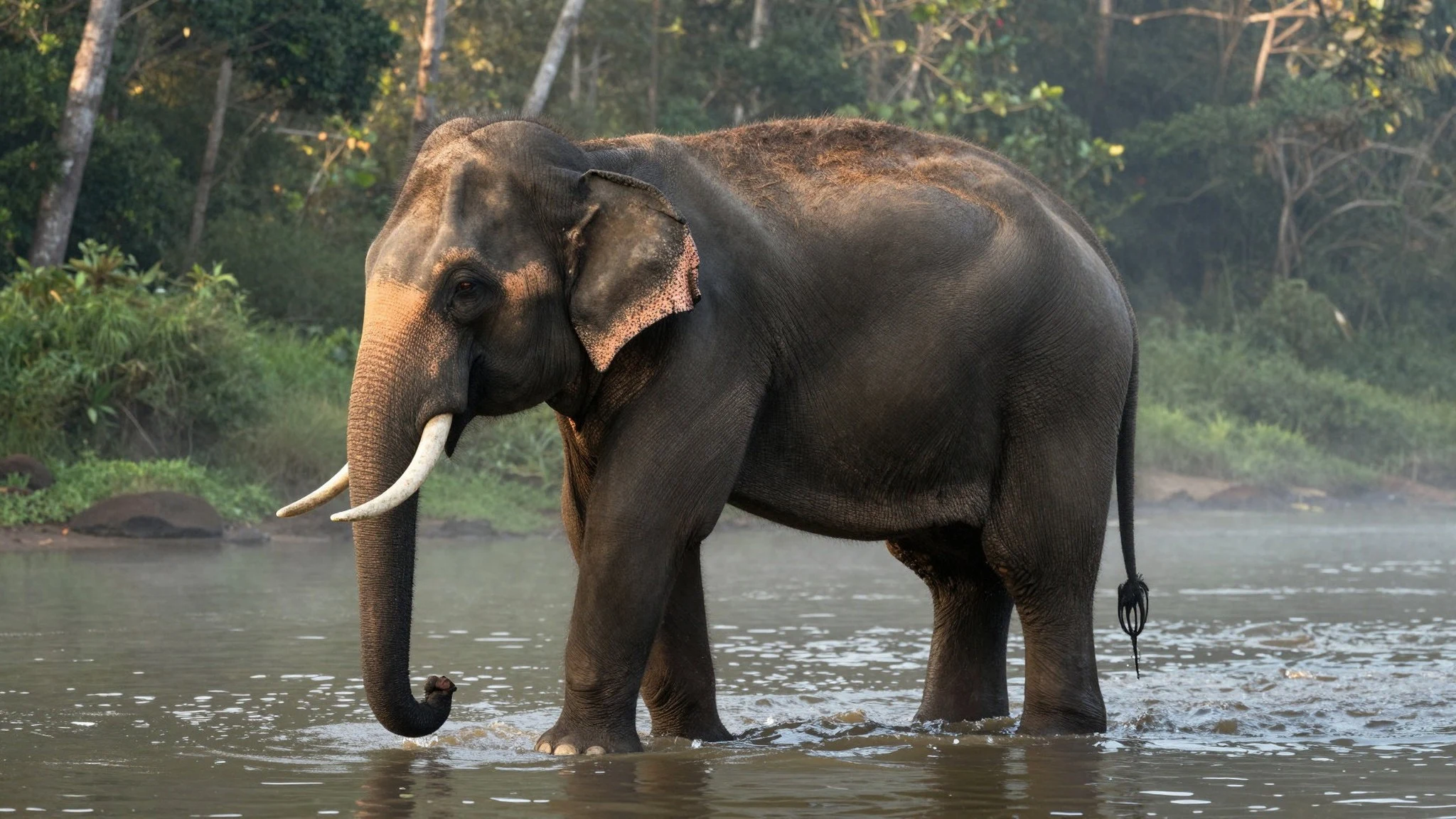
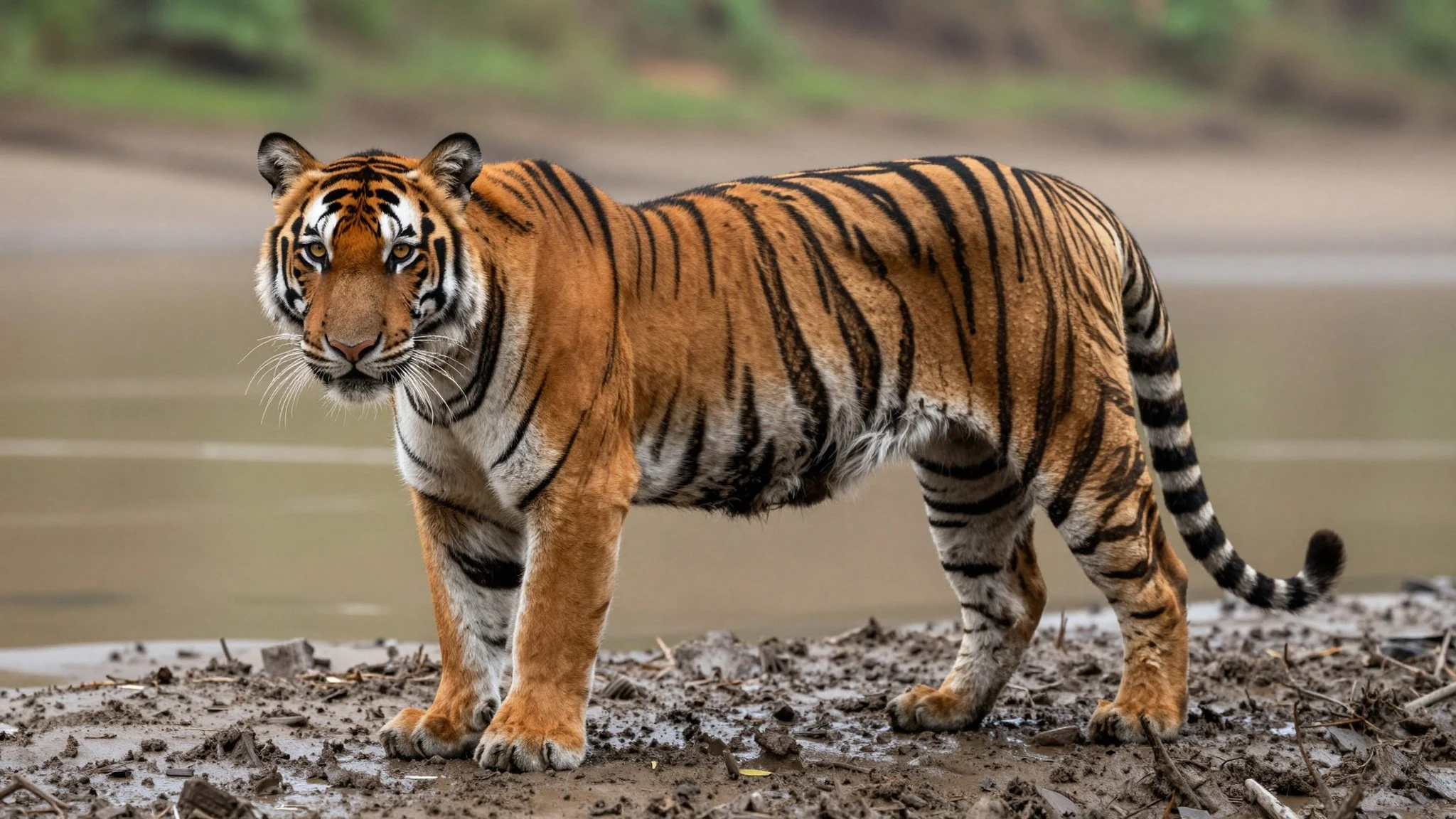
- Sumatran tiger (animal)
The Sumatran tiger is the island's own striped big cat, and it is the last tiger of its kind left in the Sunda Islands, since its Bali and Javan cousins have vanished. Way Kambas counts it among its rare animals, though its numbers are falling. Tigers are shy, so travel with a guide, keep well back, speak softly, and never feed any wild animal, however calm it seems.