Vejer de la Frontera
Vejer de la Frontera, Spain
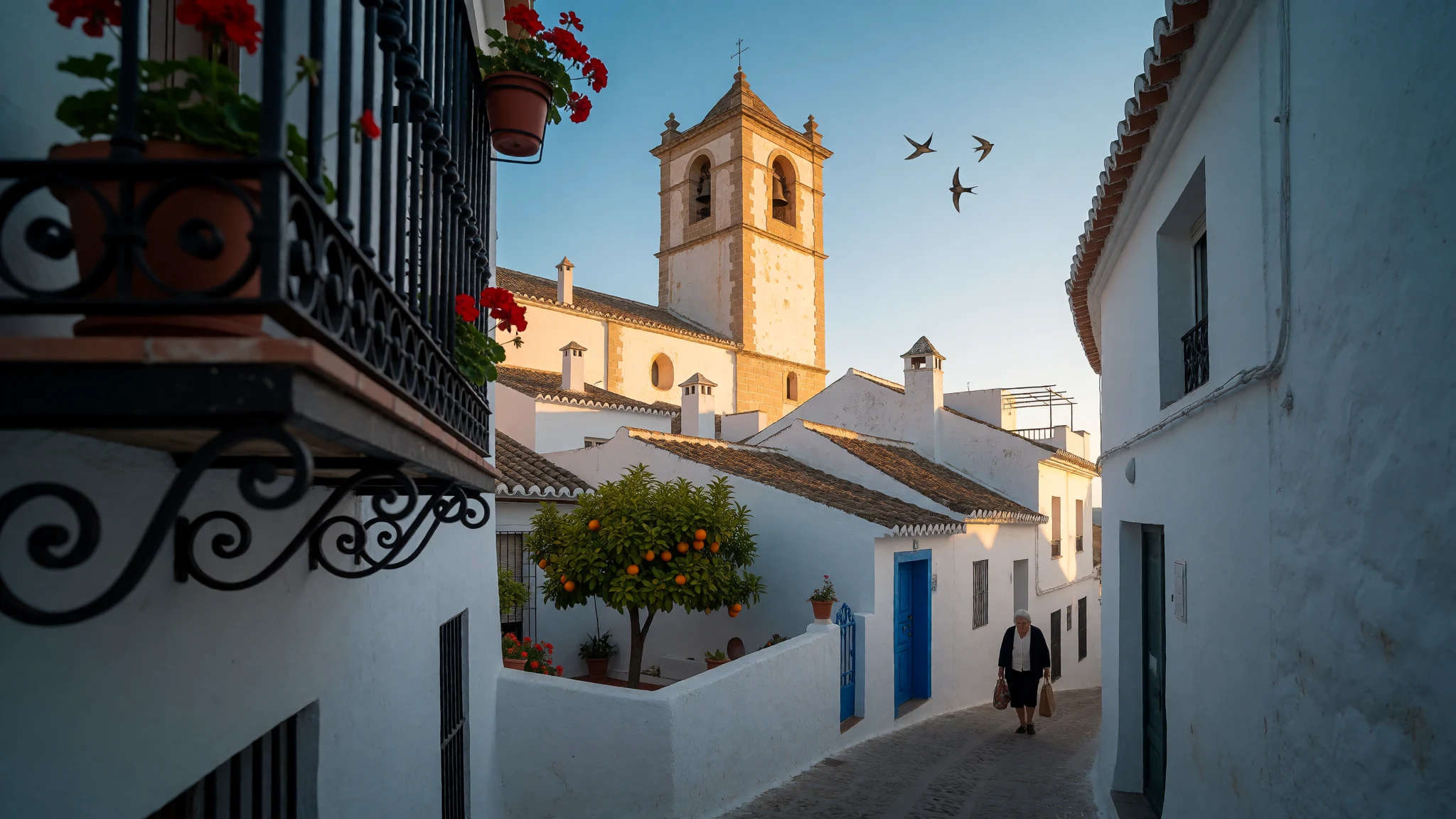
Vejer de la Frontera is a whitewashed Andalusian hilltop town above the Atlantic coast, with Moorish lanes, plazas and none of the resort sprawl.
The place
Vejer de la Frontera sits on a low hill in the province of Cádiz, in Andalusia, on the right bank of the river Barbate and looking out towards the Straits of Gibraltar. At 168 m above sea level it is not high, but with orchards and orange groves around it and open country in every direction, the town reads from far off as a white cluster on a ridge. The municipality has 13,131 inhabitants, so the old centre feels more like a village with a few good bars than a city. Inside, the lanes twist and climb, and many houses keep the plain whitewashed look and inward-facing layout left by centuries of Moorish rule. Churches and convents are scattered between them, and the streets open without warning onto small squares and viewpoints. Farming and fruit-growing still matter here, and fighting bulls are bred in the surrounding countryside, which is why the town holds an annual bull run. The coast is a short drive away and has a different character from the Costa del Sol: wind-blown, with cliffs, narrow bays and little high-rise development. Accommodation tends to be small family-run guesthouses and rented apartments rather than large complexes. The wind draws windsurfers, though beach-goers should expect a breezier, sometimes cooler Atlantic day than on the Mediterranean. Vejer works best as a base for slow walking, long lunches and day trips along the coast and to other white villages inland.
Its story
Vejer de la Frontera owes its name and much of its character to a border. Moorish rule in this part of Andalusia began in 711, and the hill was a settlement under that rule until Saint Ferdinand of Castile took it in 1248. Even then the fighting did not end tidily. Across the province of Cádiz the Christian reconquest was drawn out and fiercely contested, and the castles and watchtowers dotting the countryside are the leftovers of that long standoff. Towns that sat on the dividing line were given the tag 'de la frontera', meaning 'of the frontier', and Vejer wears it still. The Moorish centuries shaped the street plan, which stayed compact and defensible on its hill, and the look of many houses. After the reconquest, churches and convents were added to the skyline, so the old town now layers two traditions in one tight space. Away from the hilltop, the sea mattered as much as the soil. For generations the Cádiz coast lived on catching and processing tuna, and traces of that trade survive in the public buildings of the area. Farmland, orchards and cattle rounded out the local economy, and bull-breeding continues. The result is a town whose history is easy to read in its walls and lanes without any museum: a frontier post that became a farming and fishing centre, and now a quiet place to stay.
What to see
- The whitewashed old town — Historic centre
The old town of Vejer de la Frontera is best explored without a plan. Narrow whitewashed lanes bend uphill past doorways, iron balconies and tiny squares, and many houses still show the Moorish-era layout. Mornings are quiet and cool, and the light on the white walls is strongest before midday, so early starts reward photographers.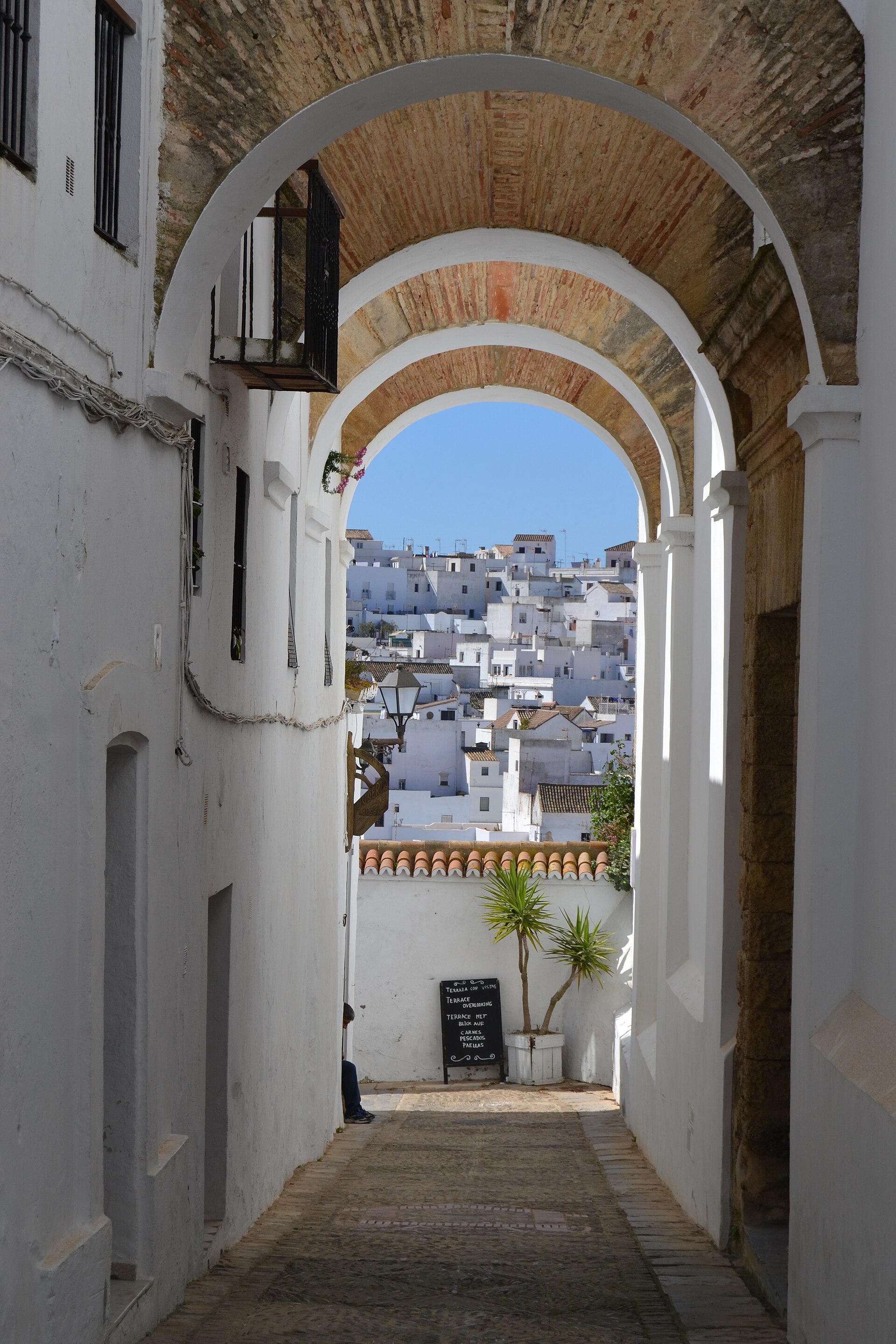
- The historic churches — Historic centre
The historic centre holds several old churches and convents, and the church façade is a favourite photograph, its stonework set against whitewashed walls. Visit between services, when doors are more likely to be open, and expect interiors that reflect both the Moorish past and the Christian centuries that followed. Check local notices for opening times.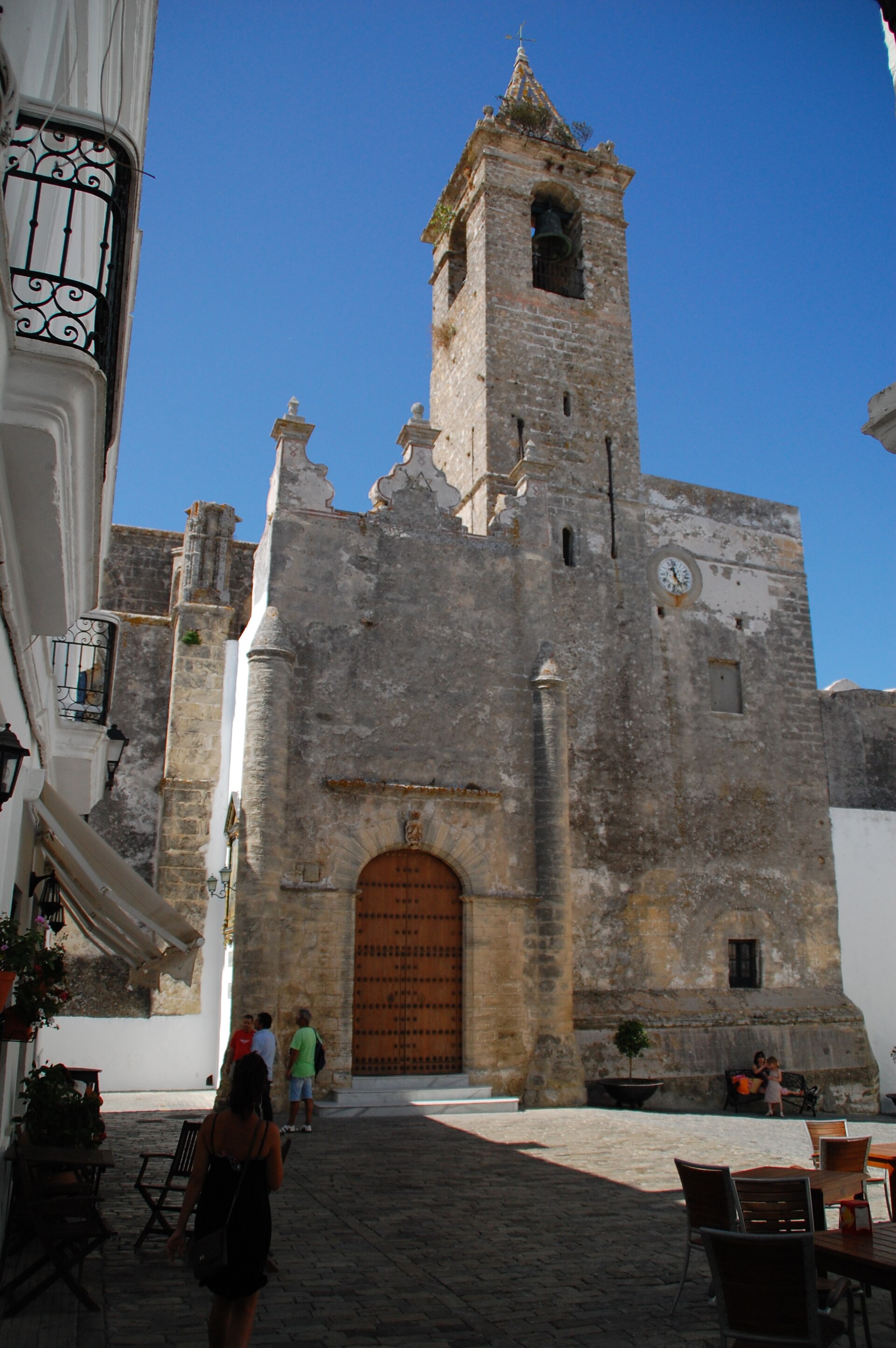
- Viewpoints over the valley — Edge of the hilltop
From the edge of the hilltop the land falls away to orchards, the Barbate valley and, on clear days, the sea towards the Straits of Gibraltar. Sunset draws the few crowds the town gets. The wind can be strong up here, so a light layer is useful even in warm months.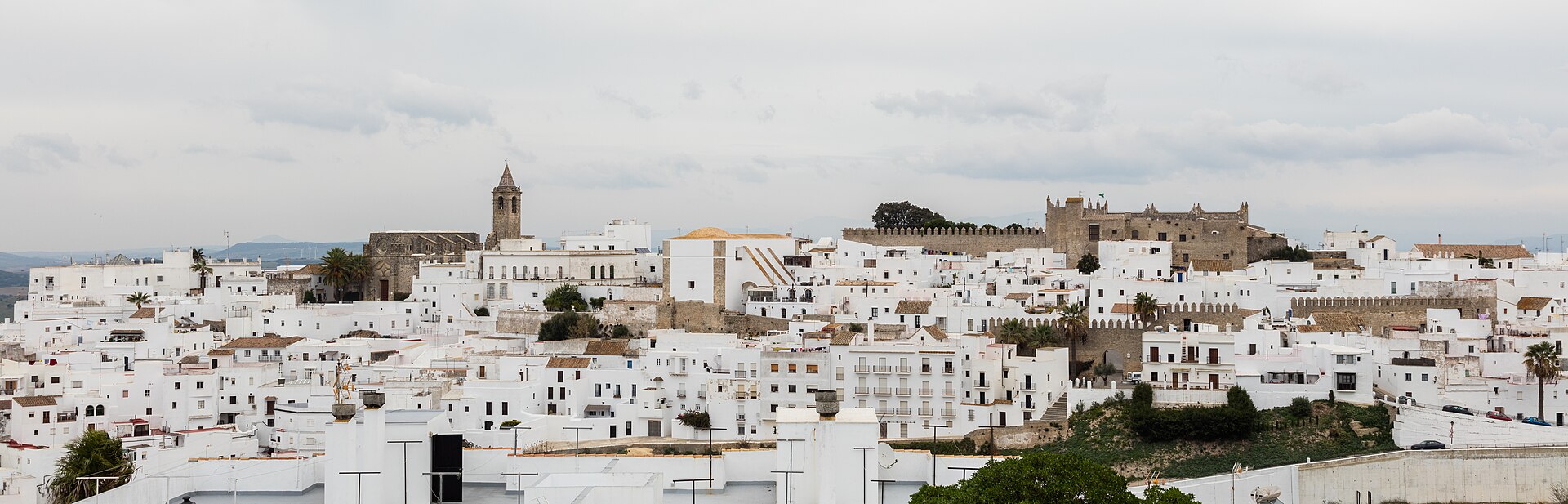
- Holy Week processions — Streets of the old town
Holy Week brings processions through the lanes of Vejer de la Frontera, with robed brotherhoods, carried floats and slow drum and brass music. It is a local religious occasion rather than a show, and the narrow streets fill quickly. Book rooms well ahead if the dates matter, and watch from the side of the route.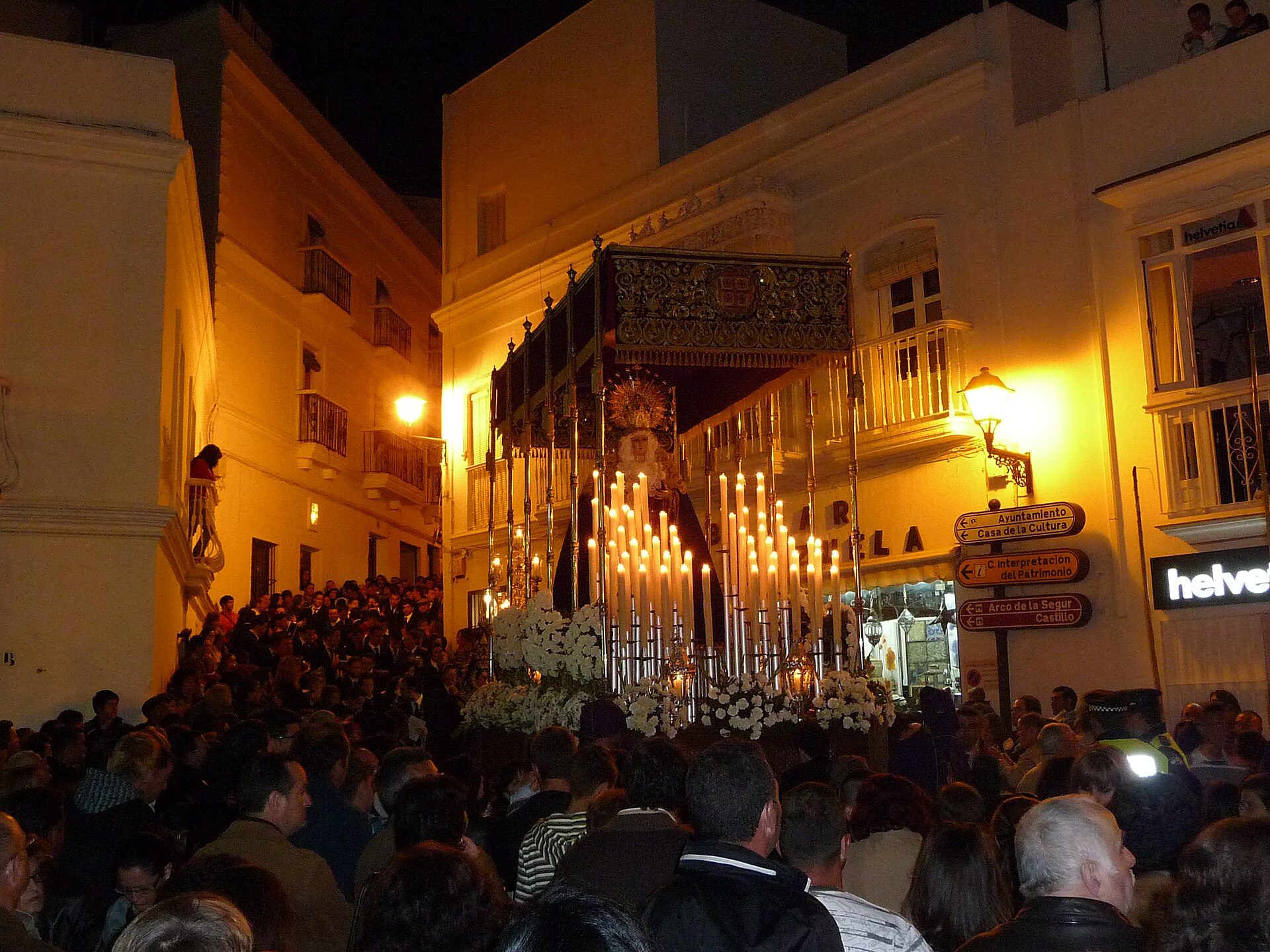
- Day trips to the white villages — Inland Cádiz province
Vejer works as a base for the pueblos blancos of Cádiz province. Alcalá de los Gazules, Grazalema and Zahara de la Sierra are good walking centres, with whitewashed streets and hill country around them. Allow a full day for each, hire a car if possible, and check bus links before relying on them. - The Atlantic coast — Coast south-west of town
The coast near Vejer is wind-blown, with cliffs, narrow bays and few large developments. It draws windsurfers, and swimmers and walkers should treat it as an Atlantic shore: breezy, sometimes cooler than expected, with currents that deserve respect. Go for a half-day by car or taxi, and take sun protection regardless.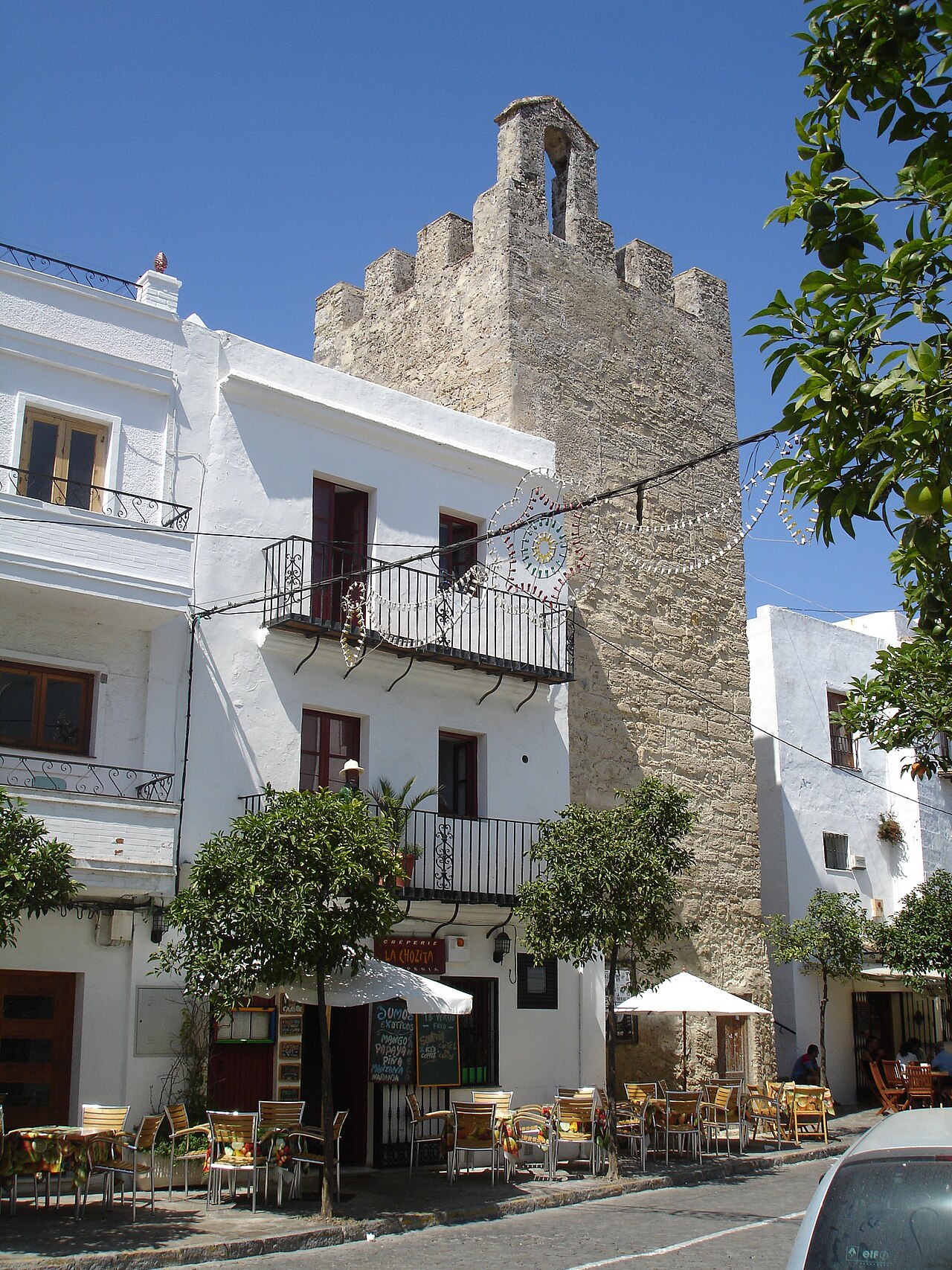
Culture
Vejer de la Frontera keeps an Andalusian rhythm: mornings are slow, lunch runs late, and the evening stroll fills the squares once the heat eases. Catholic tradition runs through the calendar, most visibly in Holy Week, when brotherhoods carry sacred images through lanes barely wide enough for them. Country life is still close at hand, and the surrounding farmland breeds fighting bulls, so an annual running of the bulls sits alongside church processions and village fiestas. Opinions on bull events vary, among locals as much as visitors, and it is fair for a visitor to watch or to skip. The Moorish centuries left their mark in the whitewashed houses, the layout of the lanes and the way the town turns inward towards patios and plazas. Elsewhere in the province, flamenco, sherry and carnival belong to the same regional identity, and Vejer shares that taste for music, song and quick-witted humour without staging it for outsiders. The town is small and neighbours know one another, so the pace of daily life matters more than any single monument. Shops often close in the afternoon, and bars fill again once evening comes. A few Spanish greetings, offered before any request, are received warmly. Keep your voice low in the narrow lanes at night, and during Holy Week processions stay at the edge of the route, switch off camera flash and never step between the participants.
What to wear
Traditional dress around Vejer de la Frontera divides into festival and religious wear. For ferias and fiestas in Andalusia, women wear the traje de flamenca, a fitted dress with a flared, ruffled skirt, usually in cotton or light crepe, often spotted or plain in strong colours and finished with a shawl, flowers and large earrings. Men may wear the traje corto, a short jacket with high-waisted trousers and a flat-brimmed hat. The town is also remembered for the cobijada, a long dark cloak and veil that traditionally covered a woman from head to toe, leaving one eye free; today it survives as a heritage image rather than daily dress. During Holy Week, the hooded robes of the processional brotherhoods are worn by members only. Day to day, locals dress simply: linen and cotton in summer, jeans and a jacket in the cooler, windier months, and trainers or leather sandals for the hills. Smart-casual is normal for dinner out. A visitor should pack light, breathable cotton or linen, a sun hat and sunglasses, and a windproof layer, since the Atlantic breeze arrives even on warm days. Shoes need good grip, as the lanes are steep and cobbled. For churches, cover shoulders and avoid very short shorts; a light scarf or shirt in the bag is enough. For the coast, add a towel and a windbreak.
What to eat
- Fresh tuna — Bars in the old town and seafood places on the coast
Tuna, served grilled, as tartare or in thin cured slices, reflects the coast's long tuna tradition. Ask for it in the bars of the old town and in seafood eateries by the shore, where it often appears as a daily special. - Fried small fish and prawns — Casual seafood bars and beachside eateries
Crisp small fish and sweet prawns are the classic Cádiz order, served hot with lemon and usually shared across a table. Look for them at casual seafood bars and beachside eateries along the nearby coast. - Game stews — Village eateries in the countryside
Inland kitchens in the province cook hare and partridge slowly in rich, wine-based stews. They are best sought in village eateries in the countryside around Vejer, especially in the cooler months when hearty dishes dominate menus. - Manzanilla and fino sherry — Traditional bars; day trips to the sherry towns
The Sherry Triangle of Jerez, Sanlúcar and El Puerto de Santa María lies within day-trip range. Manzanilla is pale and gentle, fino very dry. Taste both at a traditional bar in Vejer, or visit the sherry cellars in those towns. - Local oranges and fruit — The morning market and neighbourhood eateries
Orange groves and orchards surround the town, so fruit and vegetables arrive fresh at the market in season. Shop there in the morning, and look for orange in salads and desserts at neighbourhood eateries.
Plan it
Best time. April–May and September–October, when walking the lanes is comfortable and the coast is usable; summer is hotter and busier, and the Atlantic wind can make beach days cooler and rougher than expected at any time of year.
How long. 2–3
Getting there. Jerez airport (XRY) is the regional airport; Seville, Málaga and Gibraltar are alternatives. Rail from Madrid serves Jerez and Cádiz city, and the last leg to the hill town is by hire car, bus or taxi, so check current services.
Budget. mid
Tips
- Book rooms well ahead for Holy Week and summer weekends
- Hire a car if you want the coast and the white villages; check bus links before relying on them
- Pack a windproof layer and sun protection, as the Atlantic breeze is frequent
- Carry some cash for small bars and market stalls, though larger places take cards
- Check the official site, http://www.vejerdelafrontera.es/, for local events and opening times
Etiquette
- Keep noise down in the narrow lanes at night
- Stay at the edge of processions and do not use flash
- Cover shoulders when entering churches
Nearby
Sources
- Wikidata Q827393 (CC0)
- Wikipedia: Vejer de la Frontera (rev 1377155493) (CC BY-SA 4.0)
- Wikivoyage: Cádiz (province) (rev 5433227) (CC BY-SA 4.0)
- Photo: Dietmar Giljohann, Vejer de la Frontera, Sept. 2004 (CC BY 3.0)
- Photo: Emilio J. Rodríguez-Posada, Callejeando por Vejer (32830496340) (CC BY-SA 2.0)
- Photo: Marccodera, Vejer de la Frontera Conjunt històric 2 (CC BY-SA 3.0 es)
- Photo: El Pantera, Vejerdsc02022 (CC BY-SA 2.0)
- Photo: Emilio J. Rodríguez-Posada, Callejeando por Vejer (32398207983) (CC BY-SA 2.0)
- Photo: El Pantera, SemanaSanta-Vejer-p1020203 (CC BY-SA 1.0)
- Photo: Diego Delso, Vista de Vejer de la Frontera (DD 20) (CC BY-SA 4.0)
- Photo: Diego Delso, Vista de Vejer de la Frontera (DD 13) (CC BY-SA 4.0)


