Union Island
Union Island, Saint Vincent and the Grenadines
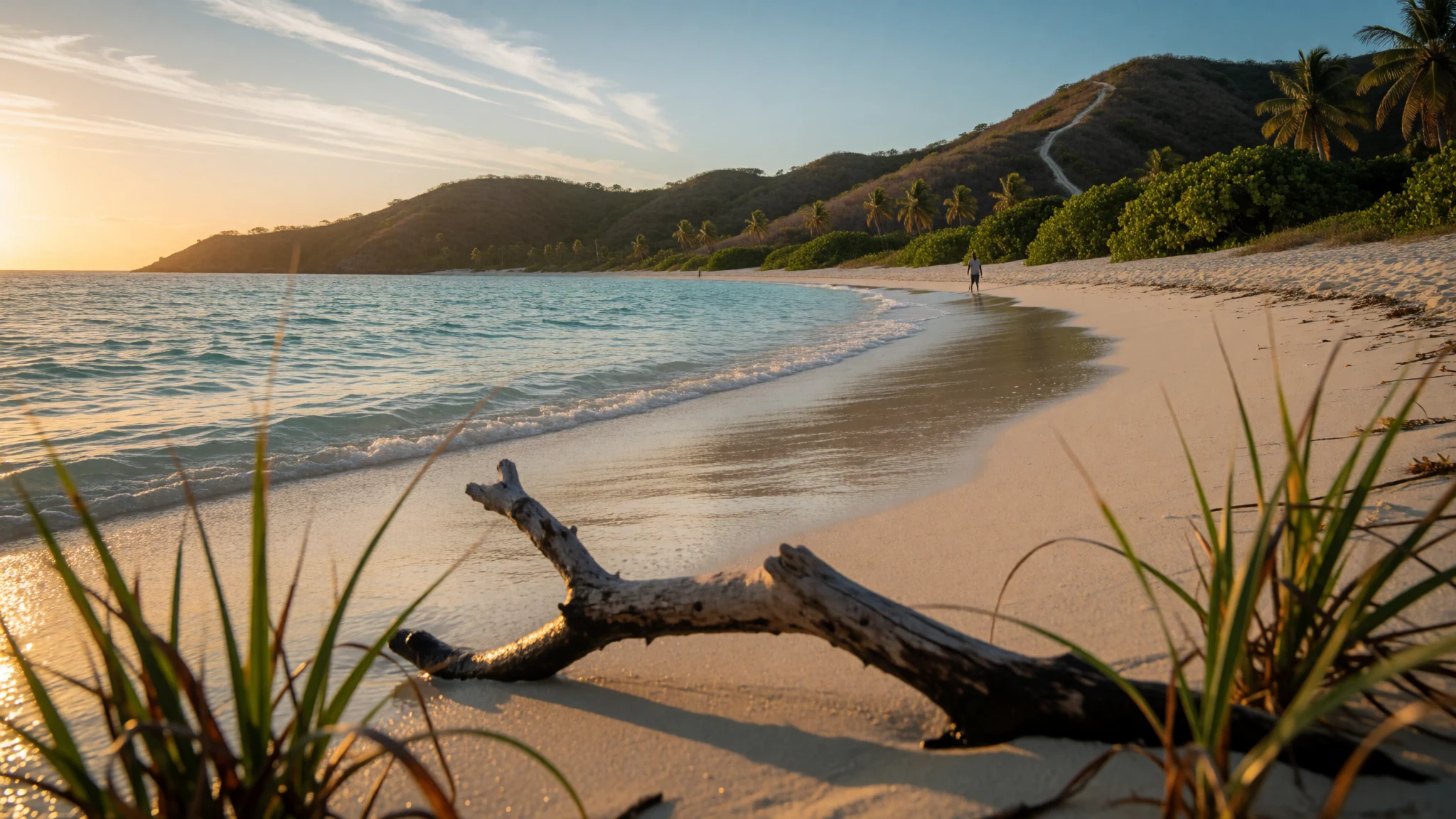
Union Island is the Grenadines' working harbour, a base for the Tobago Cays and for quiet western bays.
The place
Union Island lies in the southern Grenadines, a hilly piece of Saint Vincent and the Grenadines set among sailing routes and the Atlantic swell. Clifton, on the south-eastern shore, is the working harbour: a tight anchorage, a short airstrip, water taxis, chandleries and the customs dock where yachts clear in. Ashton, over the hill to the west, is the older village, quieter by day and more a place of houses than of landings. Between them the land rises into dry green hills, with goats on the slopes, small cultivated patches and tracks in the trade wind. The coast is not one long resort beach. It breaks into rocky points, small coves and two kinds of water: the busy, shallow harbour at Clifton, and the open bays on the west and north, where the settlement noise falls away. Chatham Bay, on the western side, is the anchorage sailors use when they want a long beach and an evening that is still mostly a boat and a grill. The island's role is practical. It is a fuel and provisions stop, a crew-change point, and the usual departure for the Tobago Cays, reef islets to the east protected as a national marine park of Saint Vincent and the Grenadines. Rain comes in short squalls, the light is hard by mid-morning, and most journeys onward, to Mayreau, Canouan or Saint Vincent, still begin as a boat ride from Clifton, while the boat to Carriacou leaves from Ashton.
Its story
Union Island's story is the story of a dry southern Grenadine: people moving by sea, a village that stayed, and a harbour that grew to serve them. Kalinago seafarers knew these islets long before French and British charts argued over the Grenadines. The southern islands were too small and too dry for the sugar estates of the larger colonies, so cotton, fishing, provision grounds and the carrying trade made the economy. After emancipation, families built a lasting settlement at Ashton, with churches, shared labour and Vincentian Creole as the language of the yard. Clifton's weight came later, when sailing boats began to treat the Grenadines as a route rather than a passage through. The south-eastern bay offered shelter, a place to clear customs, and room for fuel, water and a chandlery, and a short airstrip then linked the harbour to regional flights. Union Island became a hinge: Vincentian in law, Grenadine in habit, and near enough to Carriacou that families have long swapped news, music and market days across the channel. The sailing regatta on the south shore is that life in public, with local boats and visiting yachts in the same water. The hard recent chapter is a hurricane that tore through Clifton and Ashton. Rebuilding shows in new roofs, patched docks and shops that opened again in stages, so the island now holds both an old knowledge of the sea and a recovery that is not finished.
What to see
- Clifton Harbour — Clifton
Union Island meets the sea at Clifton Harbour, a shallow bowl on the south-eastern shore where ferries, water taxis, fishing boats and yacht tenders share the dock with customs and a short row of shops. The airstrip sits just behind the streets, so people arriving by air and by sea end up in the same small grid. Mornings here turn on boats leaving for the cays.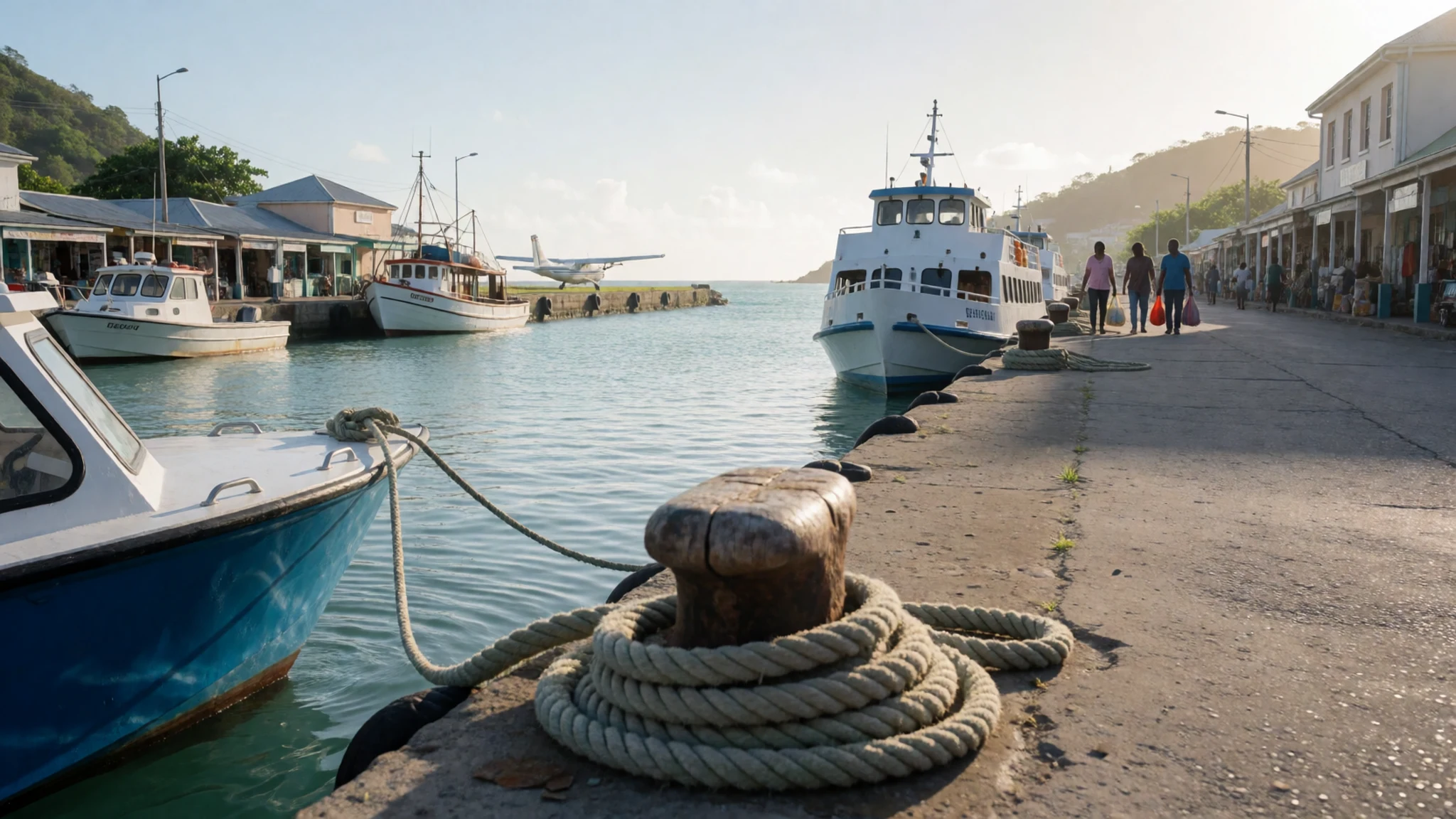
- Ashton — Ashton
Ashton is Union Island's other settlement, over the hill west of Clifton, and it reads as a place people live rather than a place where boats clear in. Houses step off the main road, churches mark Sunday, and the pace drops once the harbour is out of earshot. There is a small waterfront used by local boats more than by charter fleets.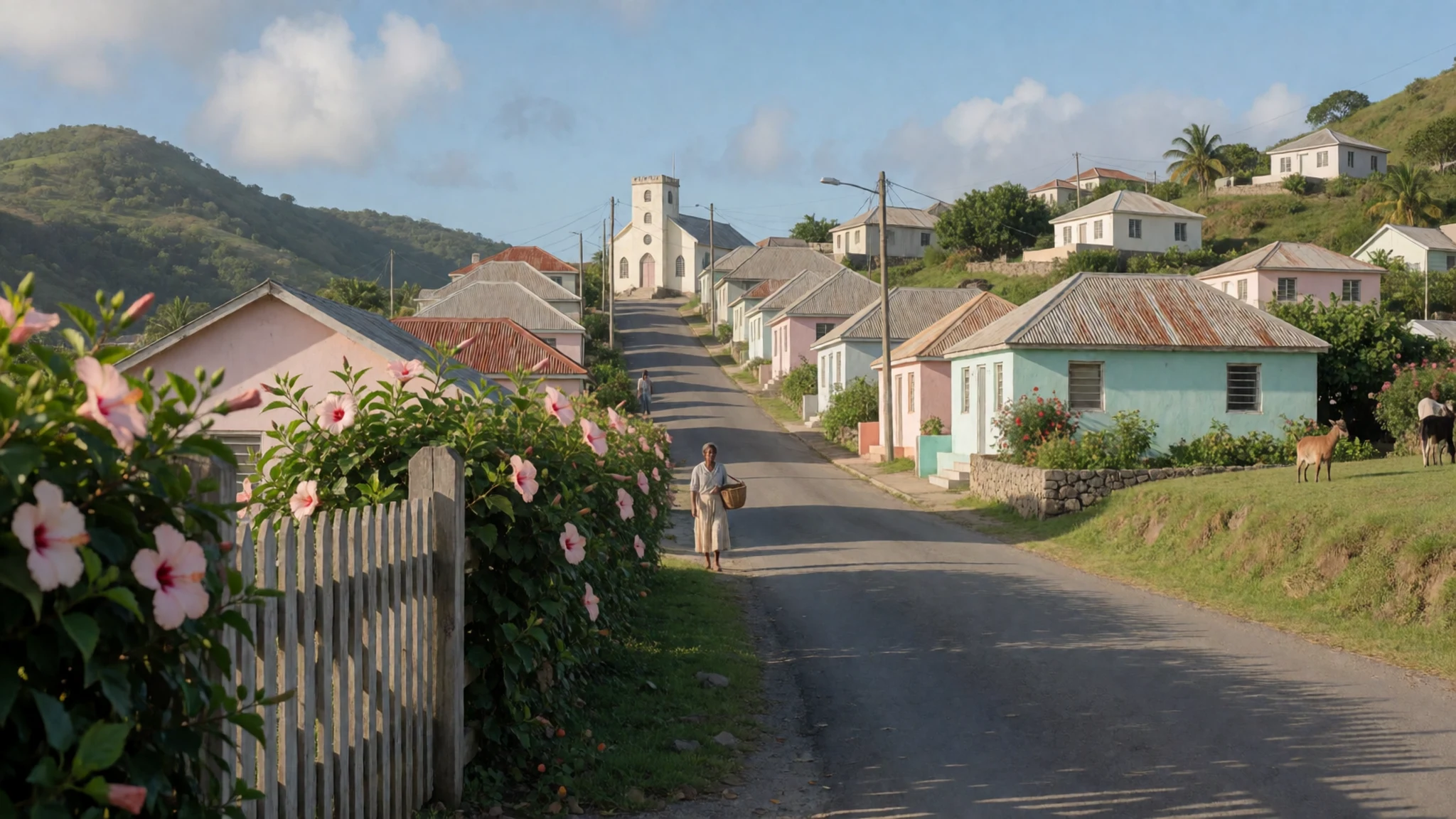
- Chatham Bay — west coast
Chatham Bay, on the western side of Union Island, is the long open anchorage people choose when they want a beach away from Clifton's engines and radios. Yachts lie off a pale shore, and when boats are passing a simple grill may be set up for the evening. The water is clear over sand, with the hill behind and no town street in the way.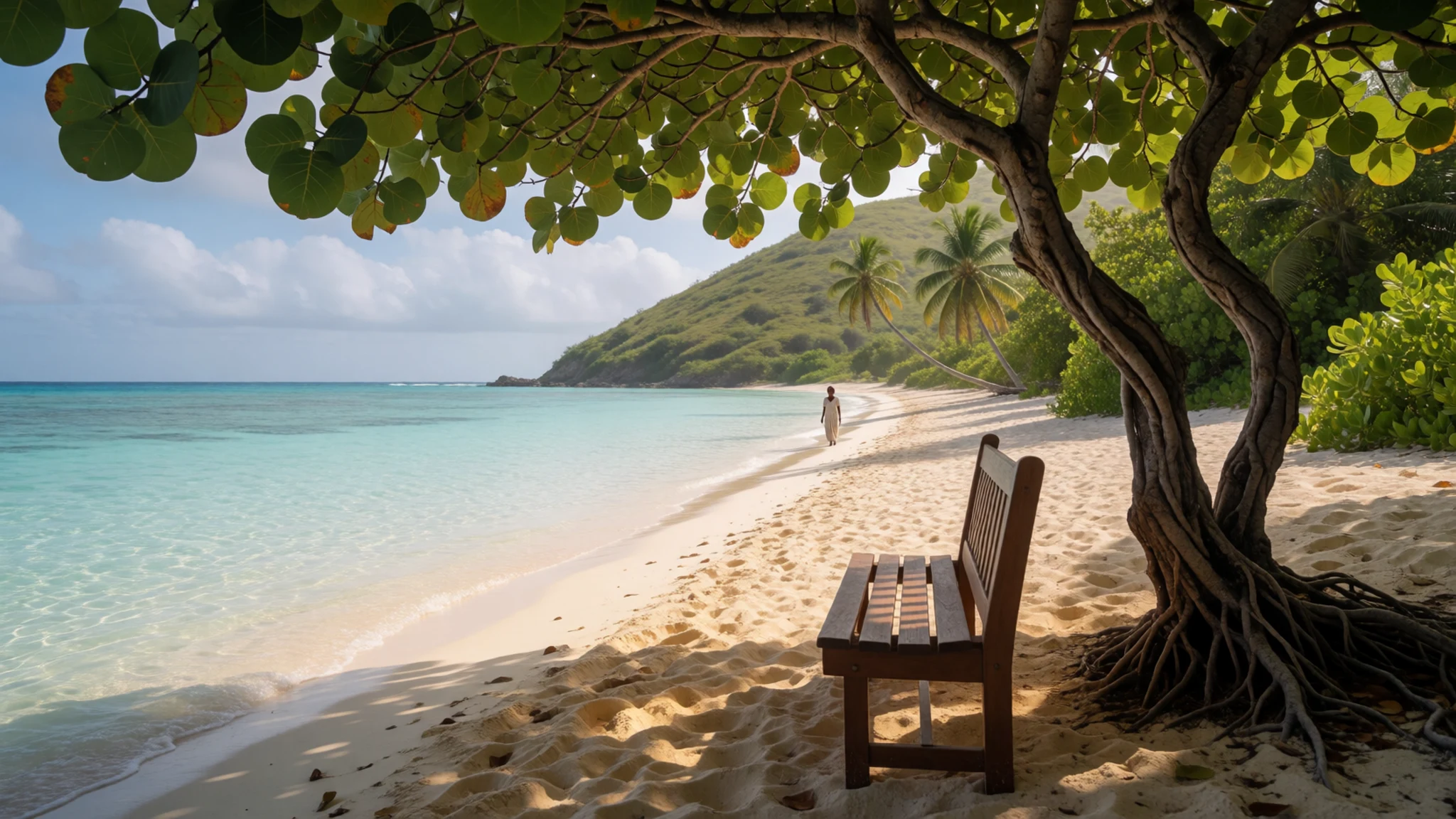
- Tobago Cays — east of Union Island
The Tobago Cays are not on Union Island, yet they are why many boats clear in at Clifton. A sail east reaches a handful of low islets inside a horseshoe of reef, held as a national marine park of Saint Vincent and the Grenadines. Turtles on the grass flats and nurse sharks on the sand are the usual sight. Clifton supplies fuel, food and the early start.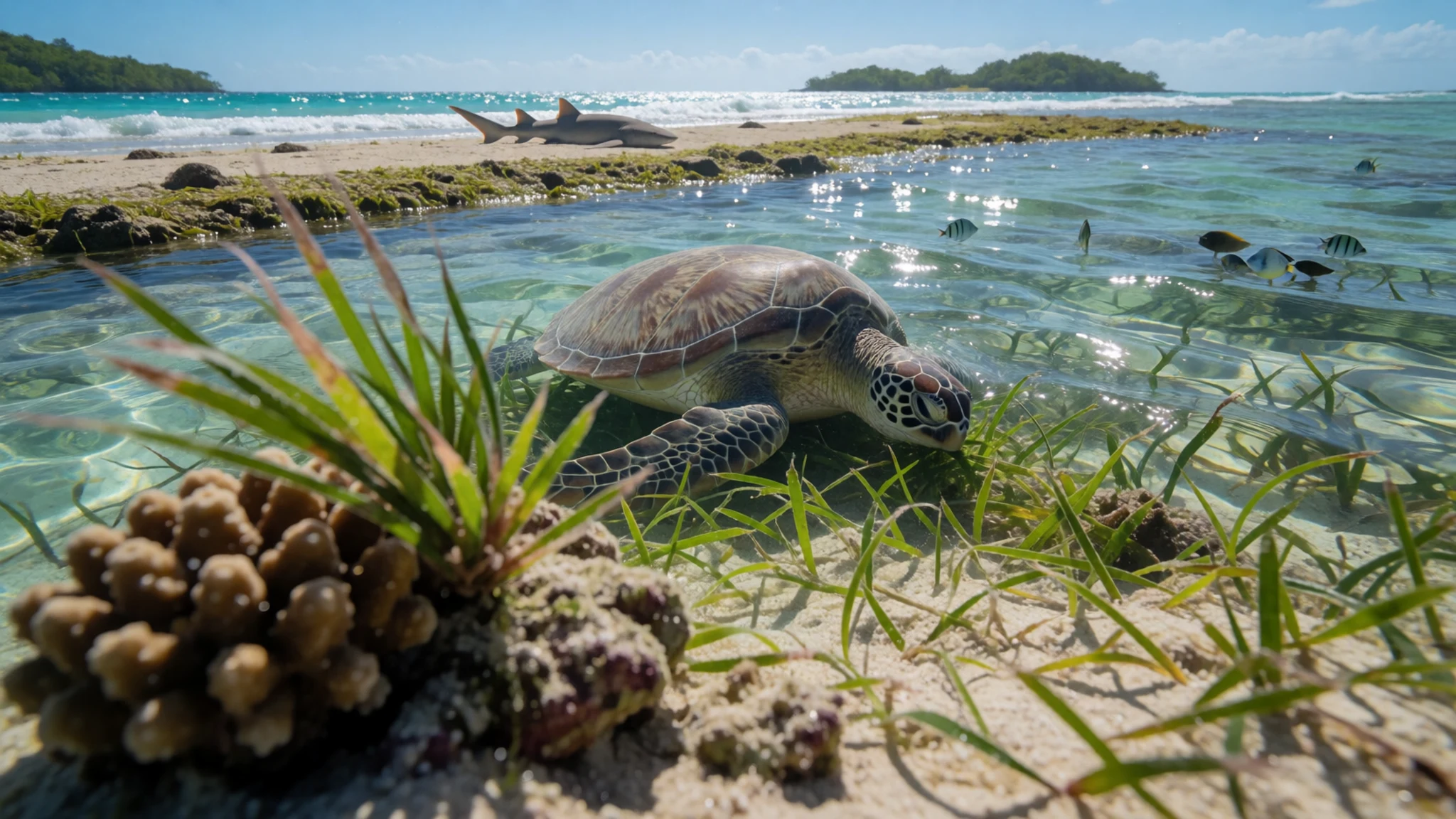
- Happy Island — Clifton Harbour
Happy Island sits in Clifton Harbour on Union Island, a tiny man-made cay of conch shells with a bar turned toward the sunset. A short tender ride from the dock is the only way out, and the ground exists because a local man kept adding shells until there was room to stand. Drinks and a swim are the whole visit.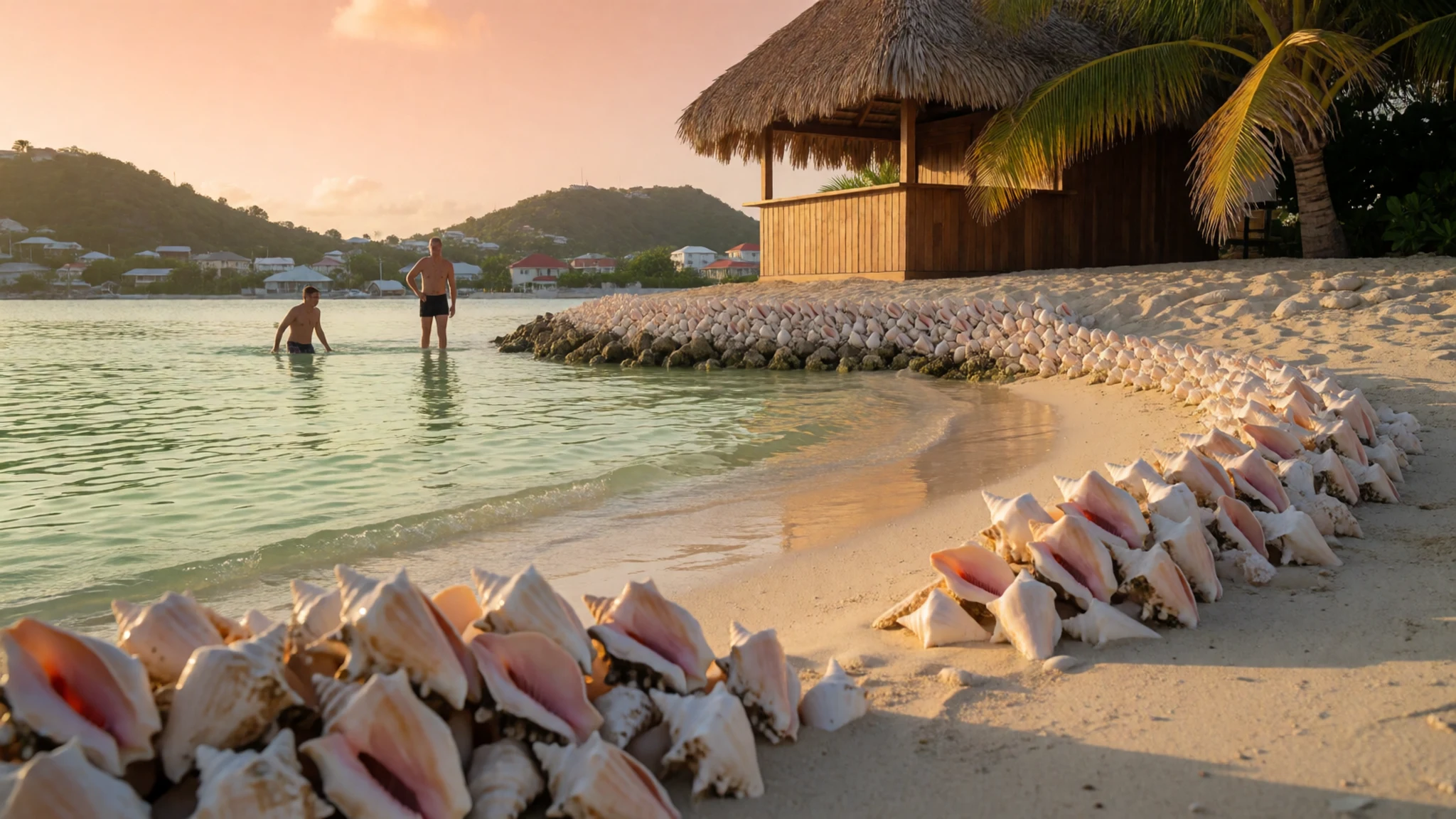
Culture
Union Island's culture is a harbour culture with a village memory. People greet one another by name in Clifton and Ashton, news travels by boat as fast as by phone, and Sunday still belongs in part to church. Vincentian Creole English is the everyday speech, closer in rhythm to the southern Grenadines than to Kingstown, and talk slips easily toward Carriacou, whose channel is a social border rather than a distant crossing. The sailing regatta is the civic week: races, parties, friends back from other islands, and a seriousness about boat-handling that predates charter tourism. Weekends run on soca, calypso, reggae and a sound system on the dock, while rum shops do the work of a town square. Fishing, piloting and small trade are respected skills. The island is also in a hard recovery from a hurricane, so patience with closed buildings and slow repairs belongs to the place. On Union Island, greet people before you ask a favour or take a photo, and do not fly a drone over boats in Clifton Harbour without asking.
What to wear
Union Island has no court dress that a visitor is expected to recognise, but festival and church clothes follow a southern Caribbean pattern. For the regatta, weddings and Independence gatherings, women often wear bright cotton or lace, and men a light shirt, sometimes linen, with trousers rather than beach shorts. Cotton and a little lace matter more than heavy cloth, because the heat decides. What people wear on an ordinary day in Clifton is practical: T-shirts, shorts, sundresses, caps and sandals that can take a wet dock. Fishermen and water-taxi crews add a long sleeve against sun and salt. The sailing crowd mixes in with rash guards and faded shorts, but the town is not a resort catwalk. A visitor does well in light, covering cotton through the middle of the day, with swimwear kept to the beach or the boat, and a shirt or dress added for shops, rum shops and church. Footwear has to manage a concrete dock, a rough track to the west coast and a wet dinghy step: strapped sandals or water shoes, not loose flip-flops once the wind rises. Evenings stay warm, so a wrap is enough, and anything that cannot survive salt spray is the wrong kit for Union Island.
What to eat
- Fried fish and bakes — cookshops in Clifton or Ashton
On Union Island, fried jackfish or snapper with bakes, which are fried dough rather than a sweet cake, is the ordinary cookshop lunch in Clifton or Ashton. Pepper sauce comes alongside and should be taken as a condiment. The plate follows the morning catch, so the fish changes.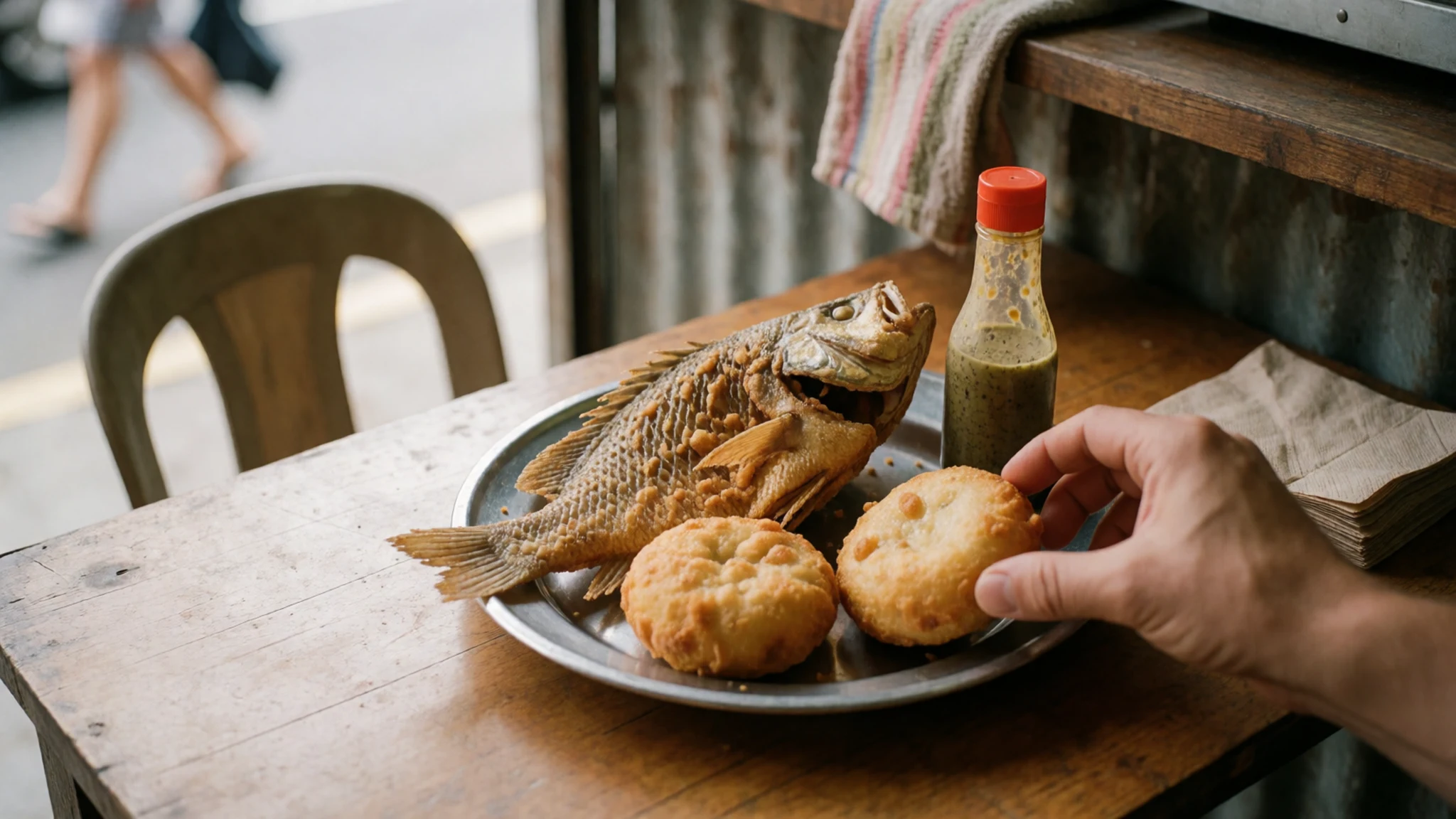
- Lambi — cookshops around Clifton
Lambi, queen conch, is stewed, curried or served as a cold souse on Union Island when a diver has brought it in. The meat is firm and mild, and lime and pepper do most of the seasoning. Cookshops around Clifton sell it on days the catch allows.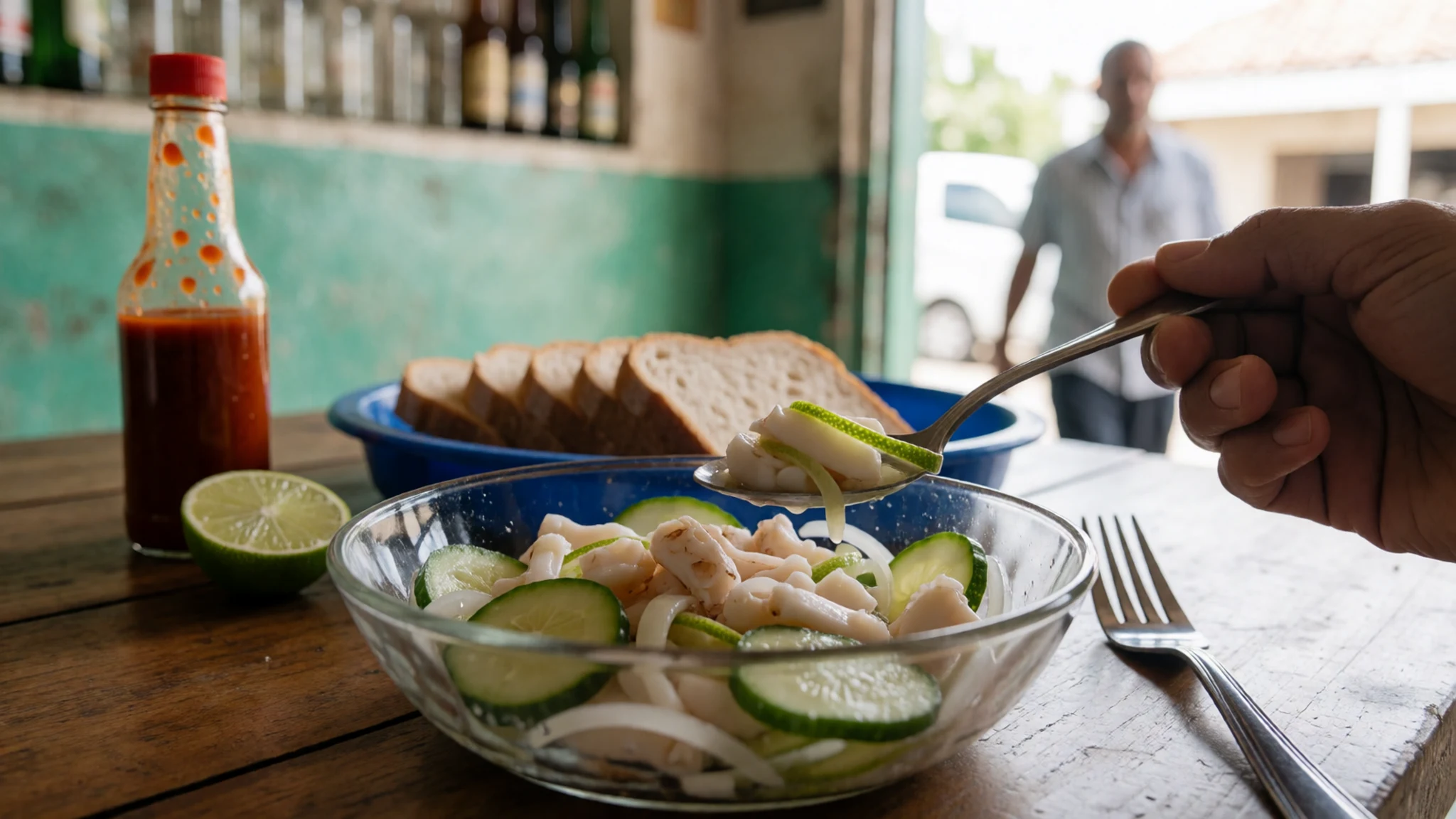
- Roti — Clifton cookshops and snack bars
Roti on Union Island is a soft flatbread wrapped around a curry of chicken, goat, fish or vegetables, with potato and chickpea in the gravy, as elsewhere in the southern Caribbean. Clifton cookshops and snack bars sell it as a hot meal that also travels onto a boat. - Saltfish and provisions — cookshops in Ashton and Clifton
Saltfish with provisions is the home meal of Union Island, and it appears on cookshop tables in Ashton and Clifton. Green banana, breadfruit, dasheen, yam or sweet potato is boiled soft, and the saltfish is flaked and cooked with onion, pepper and tomato.
Plan it
Best time. The dry season runs from December to June, with steadier trade winds for a sail to the Tobago Cays, and February is the most comfortable month. May stays bright and grows hotter. The rainy season runs from June to December, October is the wettest and September the hottest, and Atlantic storms are more likely, though plenty of weeks are still fine.
How long. 3–4
Getting there. Union Island is reached through Clifton, on a small regional plane into the airstrip behind the town or by ferry and water taxi into the harbour. Boats and flights connect via Saint Vincent and, depending on the operator, islands such as Bequia, Canouan and Carriacou. Confirm the current schedule with the airline or boat operator before travel.
Budget. mid
Tips
- In the drier months, reserve the small plane or the ferry before travel; both run with limited seats.
- Carry some cash, because smaller cookshops, water taxis and stalls on Union Island often cannot take a card.
- Begin a Tobago Cays boat day early, and confirm the marine park rules with the captain.
- Bring drinking water, a hat and sun protection; shade on the western bays is scarce.
- If a dock, path or building is closed, treat it as possible hurricane repair and ask locally rather than pushing through.
Etiquette
- Greet people in Clifton and Ashton before you ask a question or take a photograph.
- Cover swimwear before walking into shops, rum shops or a church.
- Do not stand on coral, and anchor in the marine park only where the captain says it is allowed.
- Keep voices down late at night; Clifton and Ashton are neighbourhoods as well as landing places.
Nearby
Sources
- Wikidata (CC0)
- Wikipedia: Union Island (CC BY-SA 4.0)
- Wikivoyage: Union Island (CC BY-SA 4.0)
More in Saint Vincent and the Grenadines
- Baliceaux
- Barrouallie
- Battowia
- Bequia
- Canouan
- Chateaubelair
- Fort Duvernette
- La Soufrière
- Mayreau
- Mustique
- Owia
- Petit St. Vincent
Every place in Saint Vincent and the Grenadines · Every place, A to Z