Ua Pou
Ua Pou, France
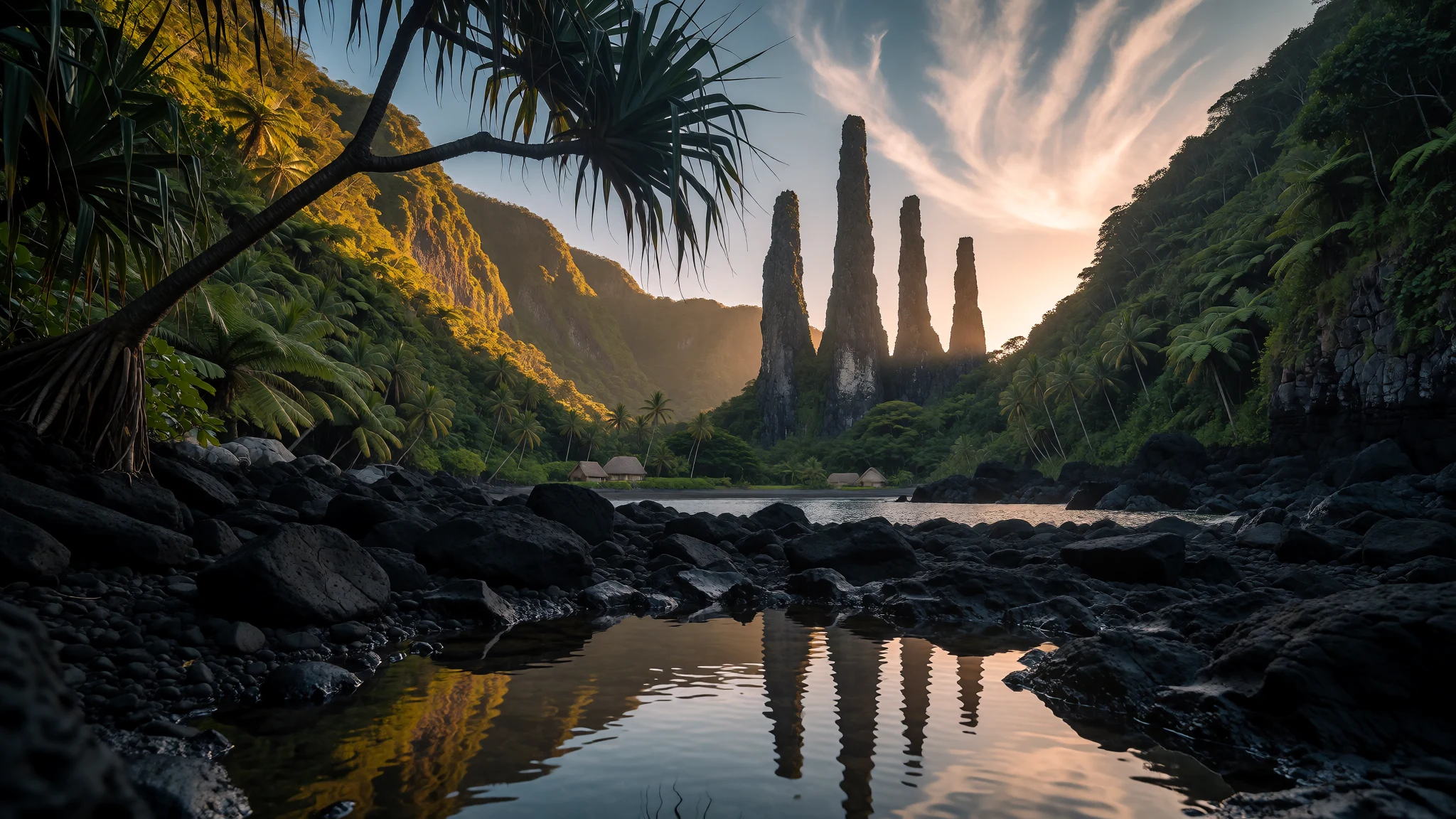
Ua Pou is a Marquesan island where basalt spires rise over small valley villages, far from crowds, with artists and dancers at its heart.
The place
Ua Pou is an island in the northern Marquesas, part of French Polynesia, lying south of Nuku Hiva across open Pacific water. About 2,200 people live here, almost all in small settlements tucked into valleys or strung along the coast. The main village, Hakahau, sits on a bay on the north-east side, with the harbour and the airstrip close by. What sets the island apart from its neighbours is the skyline. A cluster of basalt pillars stands in the middle of the island, towering above the ridges around them, and the tallest, Mount Oave, is the high point of the whole archipelago. In the morning the spires often wear a cap of cloud; by afternoon they can vanish completely. The land below falls steeply to rocky shores, cut by deep valleys that once held separate tribal districts and still decide where the villages stand. Geologically the island belongs to a chain of volcanoes built as the Pacific Plate slid slowly over a hot spot, so the rock is young and the slopes are sharp. The climate is tropical: warm all year, with showers that arrive from nowhere. Ua Pou is not a resort island. Guesthouses are small and few, shops are basic, and the rhythm of life follows the supply ship and the flight schedule. Visitors come for the scenery, for walking and riding through the valleys, and for the island's name in carving, tattooing, singing and dance.
Its story
Ua Pou has a history that stands out in the Marquesas: before European ships arrived, the island is said to have been brought under a single ruler, which was not the case on the other large islands. Before that, the valley tribes fought and allied in shifting ways. Oddly, quarrels between the eastern and western halves did not stop people from either side fleeing to kin on Nuku Hiva when trouble came, so loyalties ran across valleys and across the water. The first Polynesian settlers lived under rock overhangs. Excavations at the Anapua shelter, near Hakatao in the south, show people who ate mostly fish. As numbers grew, independent tribal districts formed in the valleys, and the pattern of villages today still follows them. In the Hakamoui valley, the chief Heato was revered as a living god and held fast to the old religion, resisting missionaries and foreign officials alike. Only after his death did French missionaries gain a real foothold. His daughter Teiki Teiuao succeeded him and, with the help of European firearms, brought all the island's tribes under her rule. Today most islanders are Christian, and the stone church at Hakahetau, dedicated to St Joseph, is the first stone church in the Marquesas. Little of the old settlements has been excavated or restored, so much of that earlier world still lies under leaf litter and banyan roots: house platforms, carved stone figures and the memory of the valleys.
What to see
- The basalt pillars of Mount Oave — Central Ua Pou
The spires at the centre of Ua Pou are the island's signature, and they show best from the coast near Hakahau or from a boat at dawn, before cloud gathers. Mount Oave is the tallest. Walkers can climb into the ridges with a local guide; the pillars themselves are sheer rock and not for casual scrambling.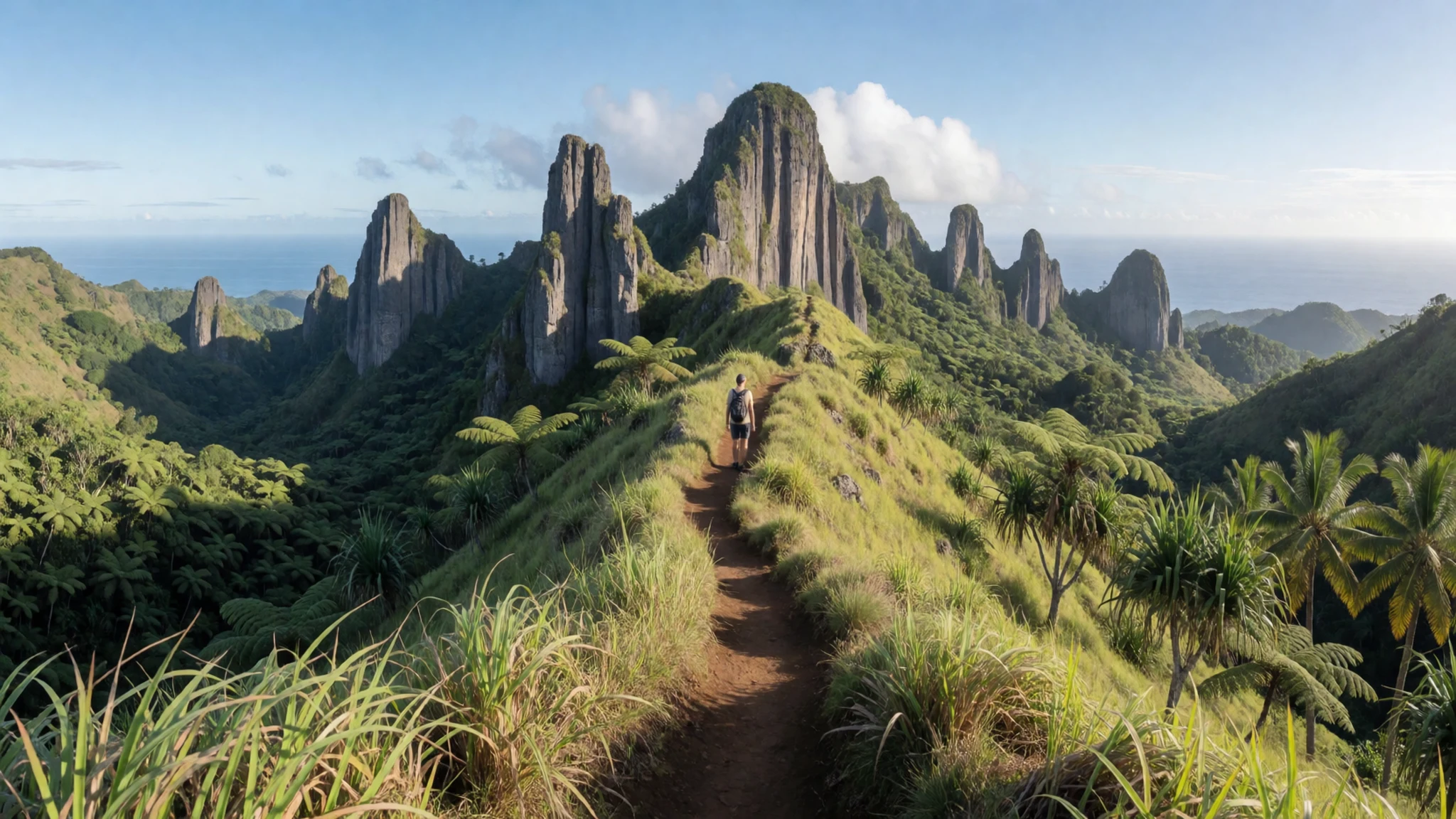
- Hakahau museum and Marquesan house — Hakahau
In Hakahau, a small museum holds carvings and objects of worship from the island's past. Beside it stands a reconstructed Marquesan dwelling on a raised stone platform, a tenai paepae, showing how families once lived. It is a short, easy stop on arrival, and a good place to ask about valley walks and guides.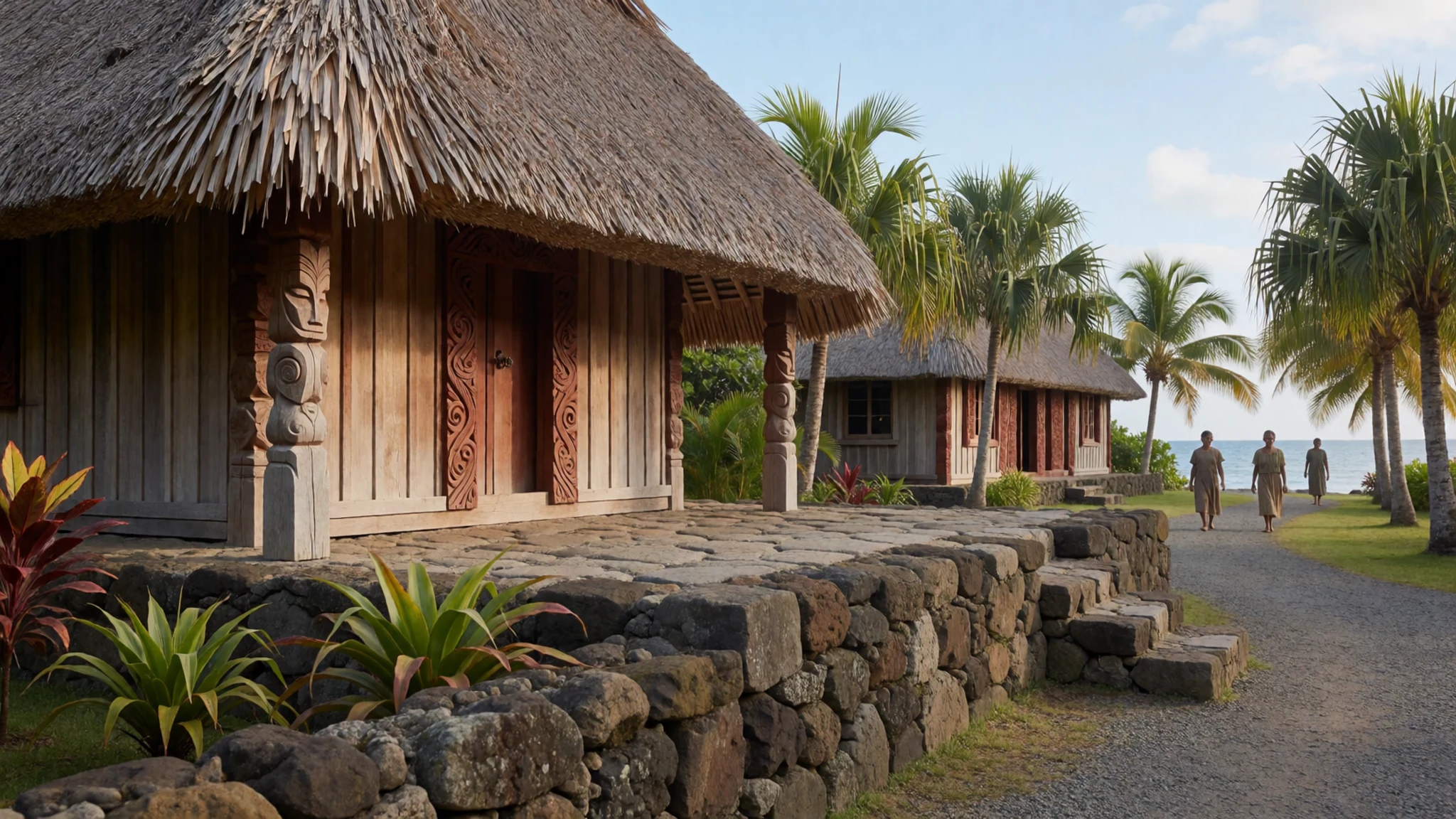
- Hakamoui valley — Hakamoui valley
Hakamoui was the home of the chief Heato and his clan. The valley is thick with coconut and fan palms, mango trees, pandanus and huge banyans, and the stone platforms for houses and ceremony are hard to spot under the growth. A guide helps a great deal. Expect heat, mud after rain, and a tiki or two.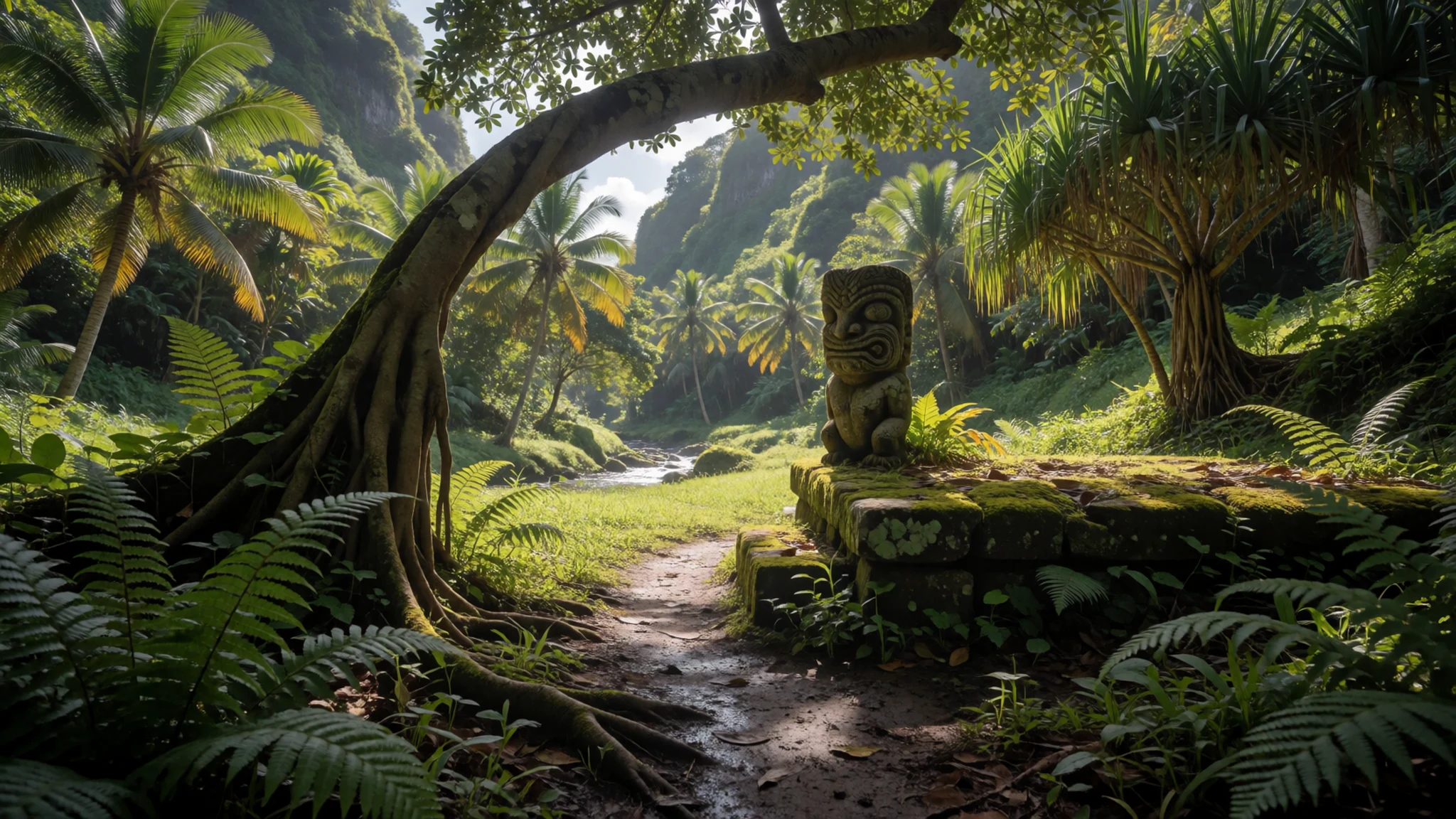
- Hakahetau stone church — Hakahetau
Hakahetau, a village on the coast, has a church of stone dedicated to St Joseph, the first stone church in the Marquesas. Its setting between steep green slopes and the sea makes it a pleasant stop on a drive round the island. If a service is under way, sit quietly at the back and keep photographs for afterwards.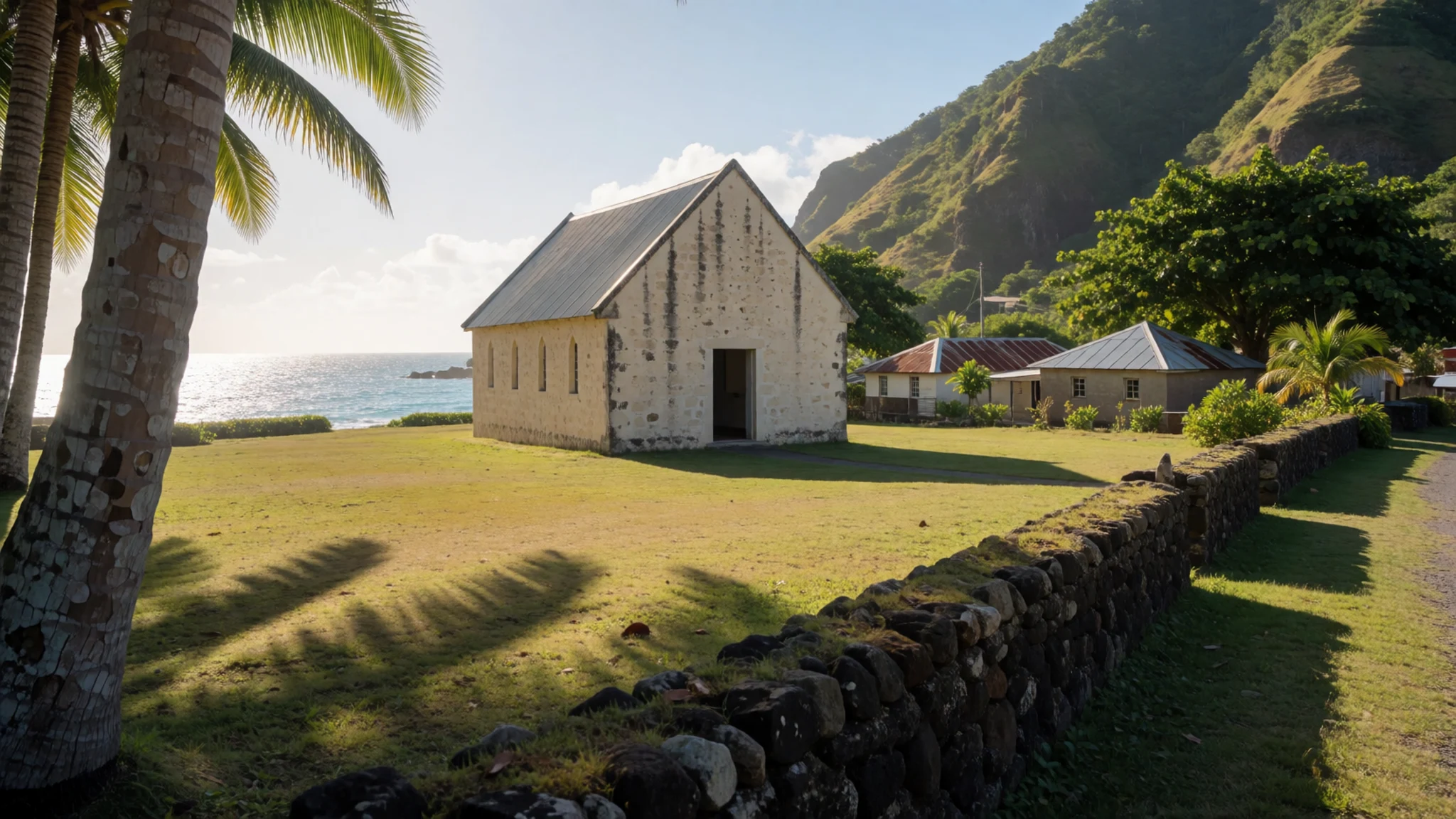
- Anahoa Bay beach — Near Hakahau
Anahoa Bay has a beach backed by greenery below the steep hills, close to Hakahau. It suits a quiet walk and a look at the coast better than a long swimming day, since currents and surf vary, so ask locals before entering the water. Bring shade and drinking water, as there is little commercial infrastructure.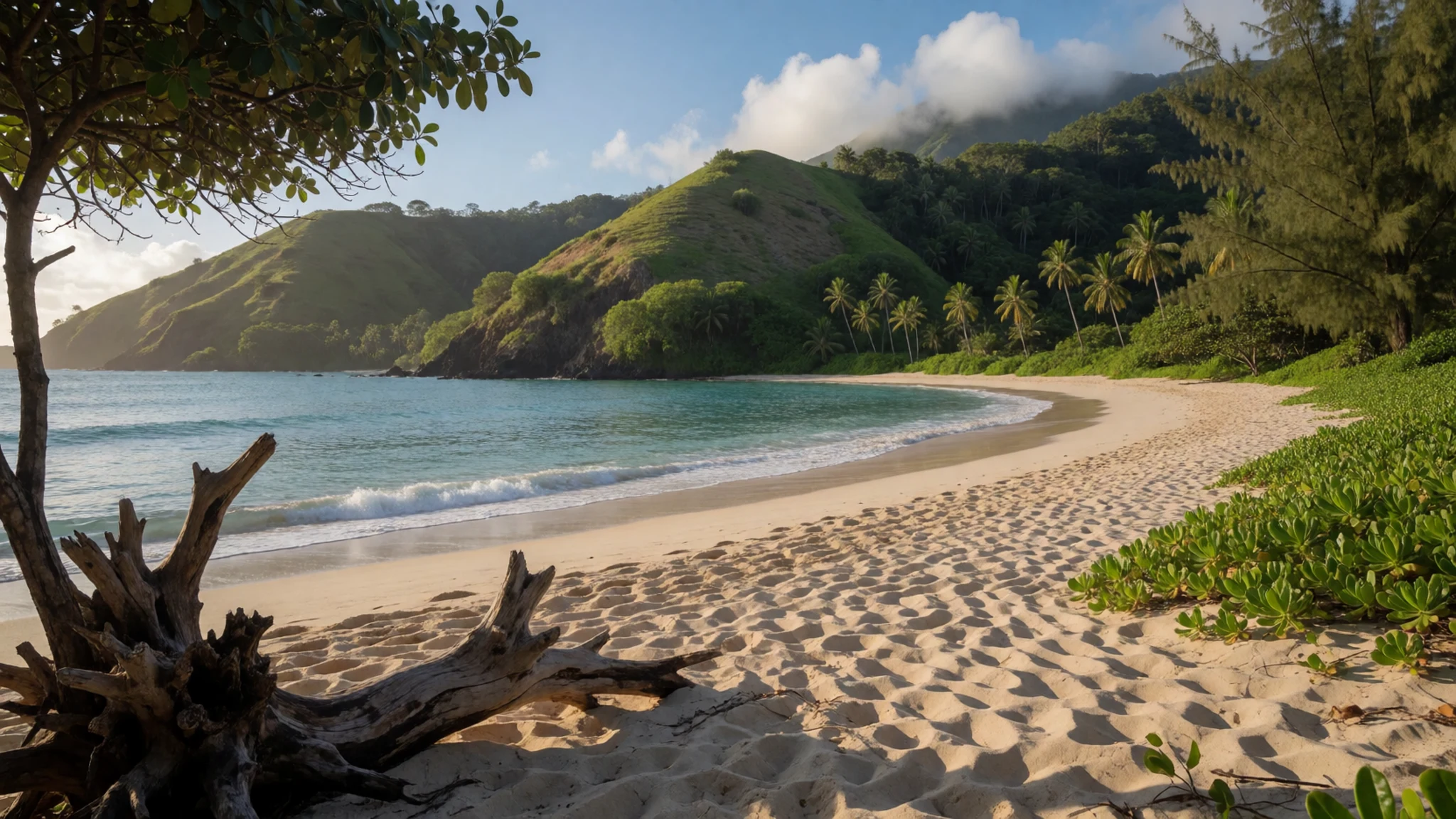
Culture
Ua Pou is a Marquesan island where older traditions and Christian faith sit side by side. Most people are Christian today, the result of Catholic and Protestant missions, yet the older culture stays strong in the arts. The islanders are known for sculptors, wood and stone carvers, tattoo artists, and traditional singers and dancers. Carved pieces are sold in small studios and craft centres, and buying directly from the maker is the best way to leave money on the island. Tattooing carries deep meaning in Marquesan tradition, with patterns that speak of lineage and place, and it is worth treating as a living art rather than a souvenir. The island also takes part in the Matava'a festival, held periodically, an important gathering for Marquesan culture with dance, song and crafts. Daily life still rests largely on subsistence: families fish, grow taro and yams, pick breadfruit and bananas, and share what they have. French and Marquesan are both heard, and a friendly greeting before any question goes a long way. Visitors will find a quiet, private community where the stone platforms and tiki are not stage sets but part of family and clan history. Ask before photographing people or their carvings, and never climb on or move house platforms or tiki, which can be sacred or belong to a family.
What to wear
Ua Pou's traditional dress draws on Marquesan materials: tapa, a cloth beaten from tree bark, wrapped garments, skirts and headdresses of plant fibre for dance, crowns of leaves and flowers, and ornaments of carved bone, wood and shell. Tattoo is itself a kind of dress, worn for life. These pieces appear mostly at festivals such as Matava'a, at dance performances and at important church or community occasions. Everyday clothing now is simple and practical: T-shirts, shorts, bright cotton dresses, the pareu wrap, caps or straw hats, and flip-flops or boots for fields and trails. On Sundays people dress up for church, with neat shirts and modest dresses, often with a flower in the hair. A visitor should pack for heat, humidity and sudden showers: light cotton or quick-dry clothes, a long-sleeved shirt against sun and insects, a hat, and a thin rain jacket. Sturdy shoes with good grip matter for muddy valley paths and steep ridges, with sandals for the beach. For church, cover shoulders and knees, and keep swimwear for the shore. Away from the beach, modest clothing is the polite choice in villages, and it helps keep off the sun too.
What to eat
- Poisson cru — Family guesthouse tables and small village eateries
Raw fish cut in cubes and soaked in lime juice, often finished with coconut milk and chopped vegetables. It is as fresh as the morning's catch, and is a staple of island meals across the Marquesas and wider French Polynesia.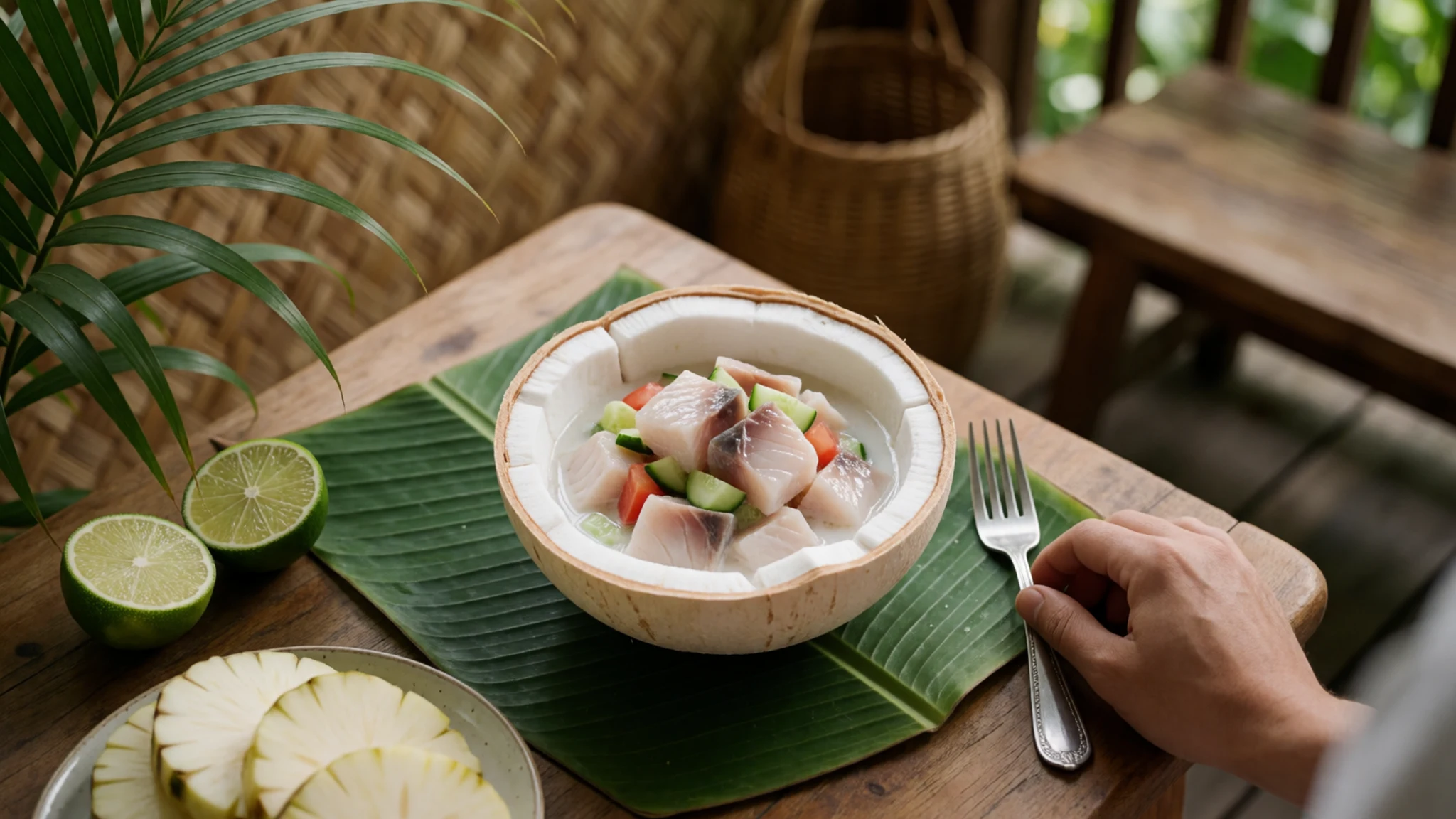
- Breadfruit — Home cooking at guesthouses and village meals
A starchy fruit from the tree that has long fed Marquesan families. It is baked, boiled or fried and eaten like potato or bread beside fish and meat. Texture ranges from fluffy to dense depending on ripeness and cooking.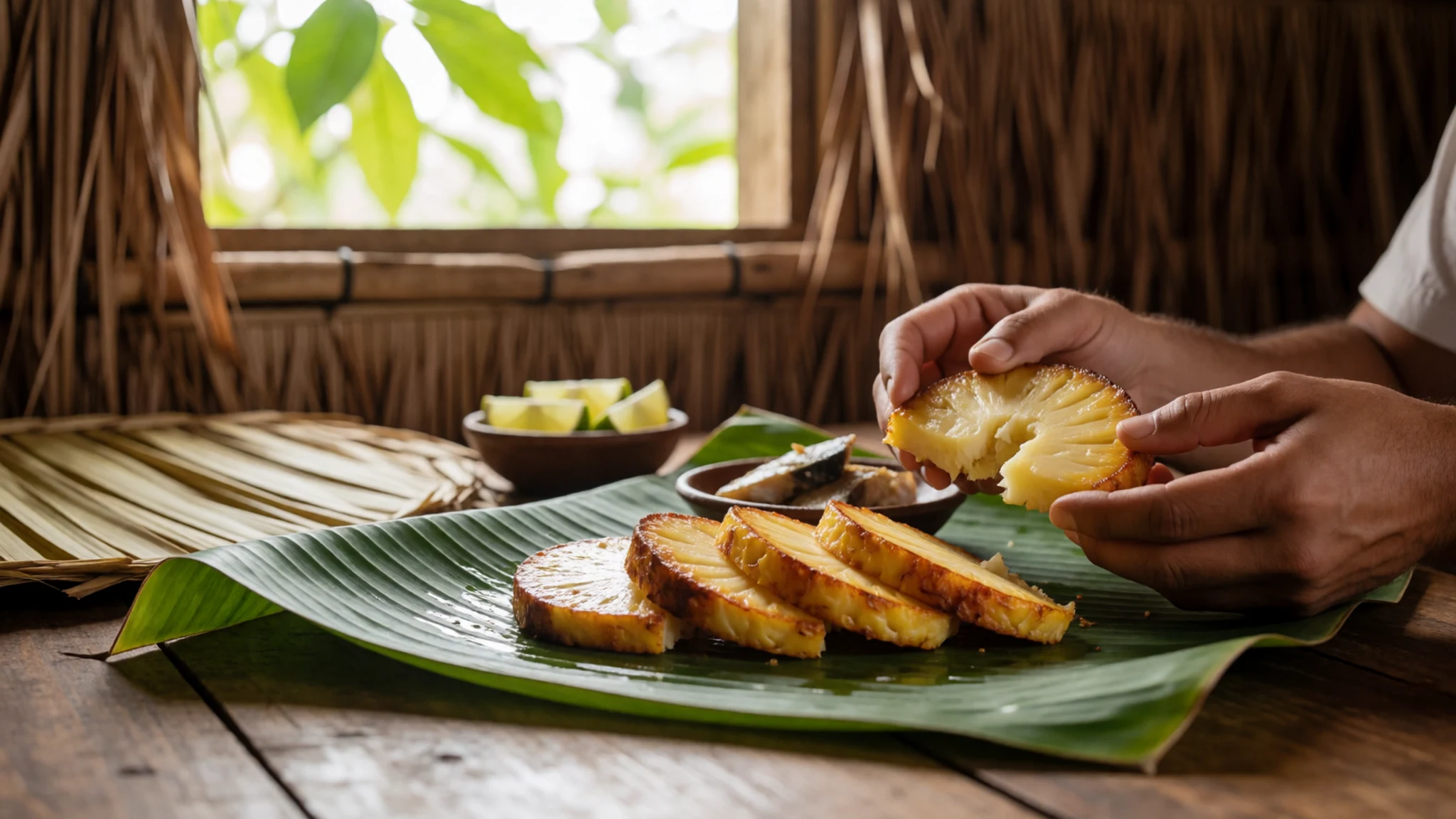
- Earth-oven pork or goat — Village feasts and festival gatherings, by arrangement through a guesthouse
Meat wrapped in leaves and slow-cooked over hot stones in a pit oven, usually for feasts and celebrations. The result is smoky and tender. It is hard to find on an ordinary day, so ask a host about community events. - Taro and yams — Village tables and home-style meals in Hakahau and the valleys
Boiled or baked root vegetables that, with breadfruit, form the base of many traditional meals. Taro is dense and mildly sweet; yams are heavier and earthier. They arrive alongside grilled fish, often with coconut milk poured over. - Fresh tropical fruit — Village gardens, roadside stalls and small shops in Hakahau
Bananas, coconuts and other tropical fruit grow in village gardens and along valley tracks. Ripe bananas and drinking coconuts make an easy snack on a hot walk, and fruit is often offered as a gift.
Plan it
Best time. Ua Pou is tropical and warm all year. The drier months, roughly May to October, tend to make walking easier, but showers can come at any time, so pack for rain whenever you go.
How long. 2–3
Getting there. Fly with Air Tahiti from Tahiti, usually with a connection through another Marquesan island, to the small airport near Hakahau; check the airline's schedule, as services vary. The cargo-passenger ship Aranui also sails from Tahiti to the Marquesas; check the operator's website. The last leg is a short road transfer, best arranged with your guesthouse.
Budget. mid
Tips
- Book guesthouses and flights well ahead, as rooms and seats are few
- Carry enough cash, since card machines and cash points may be scarce
- Hire a local guide for the valleys and ridges, where paths are faint
- Start walks early, because cloud often gathers over the peaks later in the day
- Bring water, insect repellent and a rain jacket
Etiquette
- Ask before photographing people, carvings or private property
- Do not climb on or move house platforms or tiki
- Dress modestly in villages and cover shoulders and knees in church
Nearby
Sources
- Wikidata Q614645 (CC0)
- Wikipedia: Ua Pou (rev 1383589608) (CC BY-SA 4.0)
- Wikivoyage: Marquesas Islands (rev 5361697) (CC BY-SA 4.0)
- Photo: Ua Pou – Vue générale, Sémhur (CC BY-SA 1.0)
- Photo: Map of Ua-Pou, Godefroy (CC BY 3.0)
- Photo: Plage de la baie d'Anahoa, Sémhur (CC BY-SA 1.0)
- Photo: Cheval à Ua Pou, Remi Jouan (CC BY-SA 2.5)
- Photo: La Tapageuse at Hakahau, Sardon (CC BY 3.0)
- Photo: Marquesashaus, American at de.wikipedia (CC BY 3.0)
- Photo: Marquesas Tiki, American at German Wikipedia (CC BY 3.0)
- Photo: Marquesasflora, American at de.wikipedia (CC BY 3.0)


