Trujillo
Trujillo, Honduras
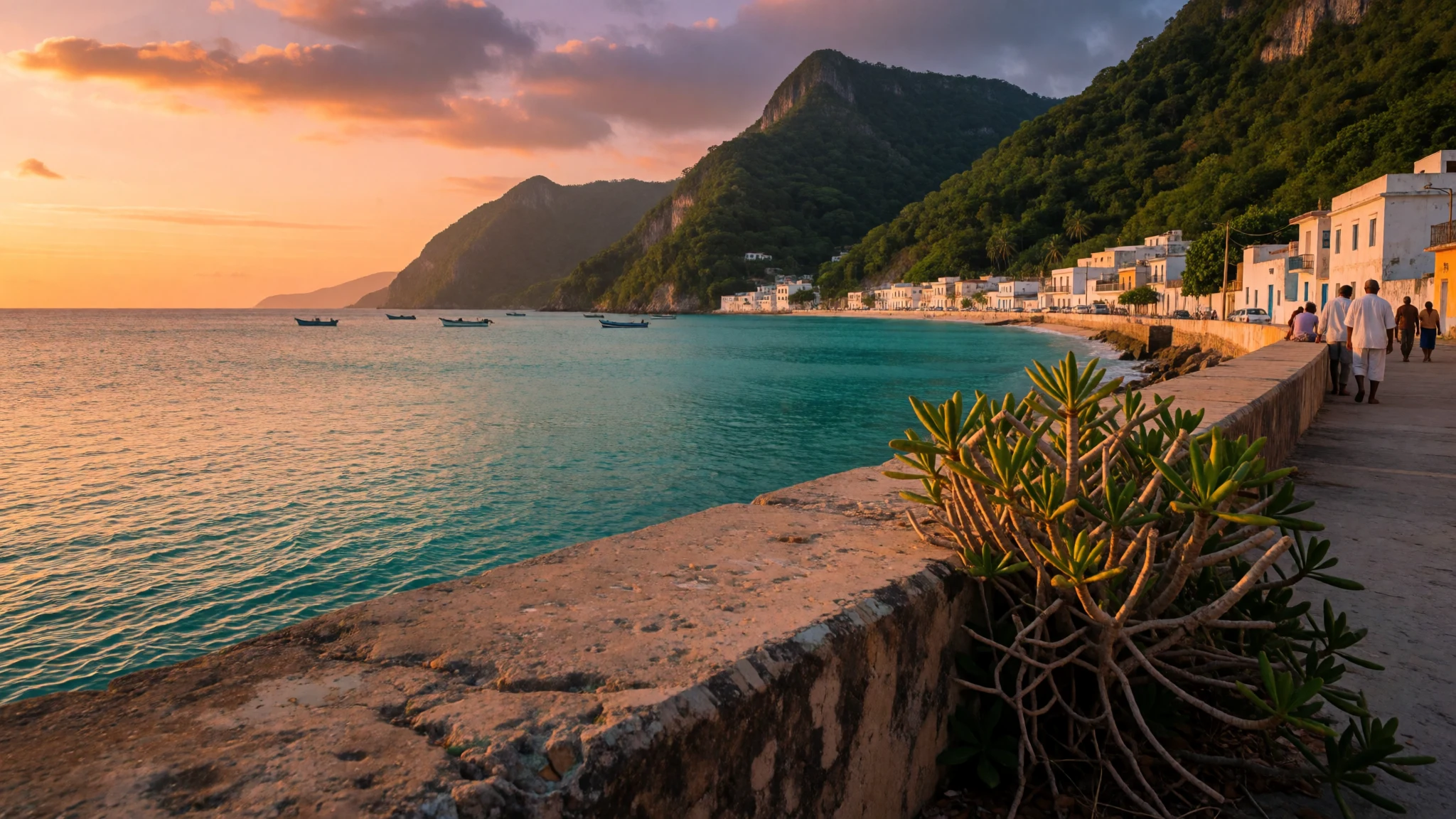
Trujillo is a quiet Caribbean bay town where Columbus landed, Spanish cannon still face the sea and Garifuna villages line the beach.
The place
Trujillo sits on a bluff above the Bay of Trujillo on the northern Caribbean coast of Honduras, and it is the capital of the department of Colón. The municipality has about 60,000 people, while the old centre lies close to the water, at an elevation of just 15 m. Behind the town two steep mountains, Mount Capiro and Mount Calentura, climb in green folds, so the view from almost anywhere is of forest dropping towards the sea.
Along the beach lie three Garifuna fishing villages: Santa Fe, San Antonio and Guadelupe. They give the coastline its rhythm, with boats pulled up on the sand, nets drying and drumming in the evenings. The Garifuna are descendants of African and Indigenous Caribbean peoples, and their language, music and cooking are among the main reasons to come here rather than simply pass through.
Trujillo is remote. The local runway has no commercial flights as far as the brief records, and the rugged terrain has stopped a coastal highway being built, so road journeys from Tela or La Ceiba loop inland and take time. The reward is a town that feels forgotten in the best sense, with few crowds, though visitor services are thin and an occasional cruise ship can briefly fill the centre.
The town has also been talked about far beyond Honduras as a proposed site for a charter city, an idea promoted by the economist Paul Romer and by the Trujillo-born president Porfirio Lobo Sosa. Many locals, especially Garifuna communities, have objected that it ignores their culture and land.
Its story
Trujillo enters European history in 1502, when Christopher Columbus anchored here on his fourth and last voyage. It was the first time he set foot on the mainland of Central America. He called the headland Punta de Caxinas, and because the sea off this coast was so deep he named the wider water the Golfo de Honduras, the Gulf of the Depths. Tradition adds that the first Christian mass in the Americas was said here, though that is a claim rather than a proven fact.
The Spanish town came later. In 1524 Hernán Cortés sent Cristóbal de Olid to plant an outpost nearby, and Olid founded Triunfo de la Cruz. He soon began treating the place as the base for a private kingdom, so Cortés dispatched Francisco de las Casas to deal with him. Las Casas lost most of his ships in a storm yet still won, and then moved the settlement to a better and larger natural harbour. The new town took the name Trujillo, and the facts record its founding as 1525.
The harbour made Trujillo a loading point for gold and silver from the interior. That wealth also made it a target, and for much of the colonial period pirates and rival European powers raided the coast, which is why a fortress, Santa Bárbara, stands above the town. Cattle ranching became another local trade, with most animals kept for Honduran use. Later history left odd traces, among them the grave of the American adventurer William Walker, who tried to seize Nicaragua and ended his career here.
What to see
- Fortaleza de Santa Bárbara — Hilltop above the town centre
The old Spanish fortress above the bay was built to defend a harbour that pirates and rival powers kept attacking. Cannon still point seaward from the walls, and the outlook over the water and the town explains why the site mattered. It is small, so a short visit is enough.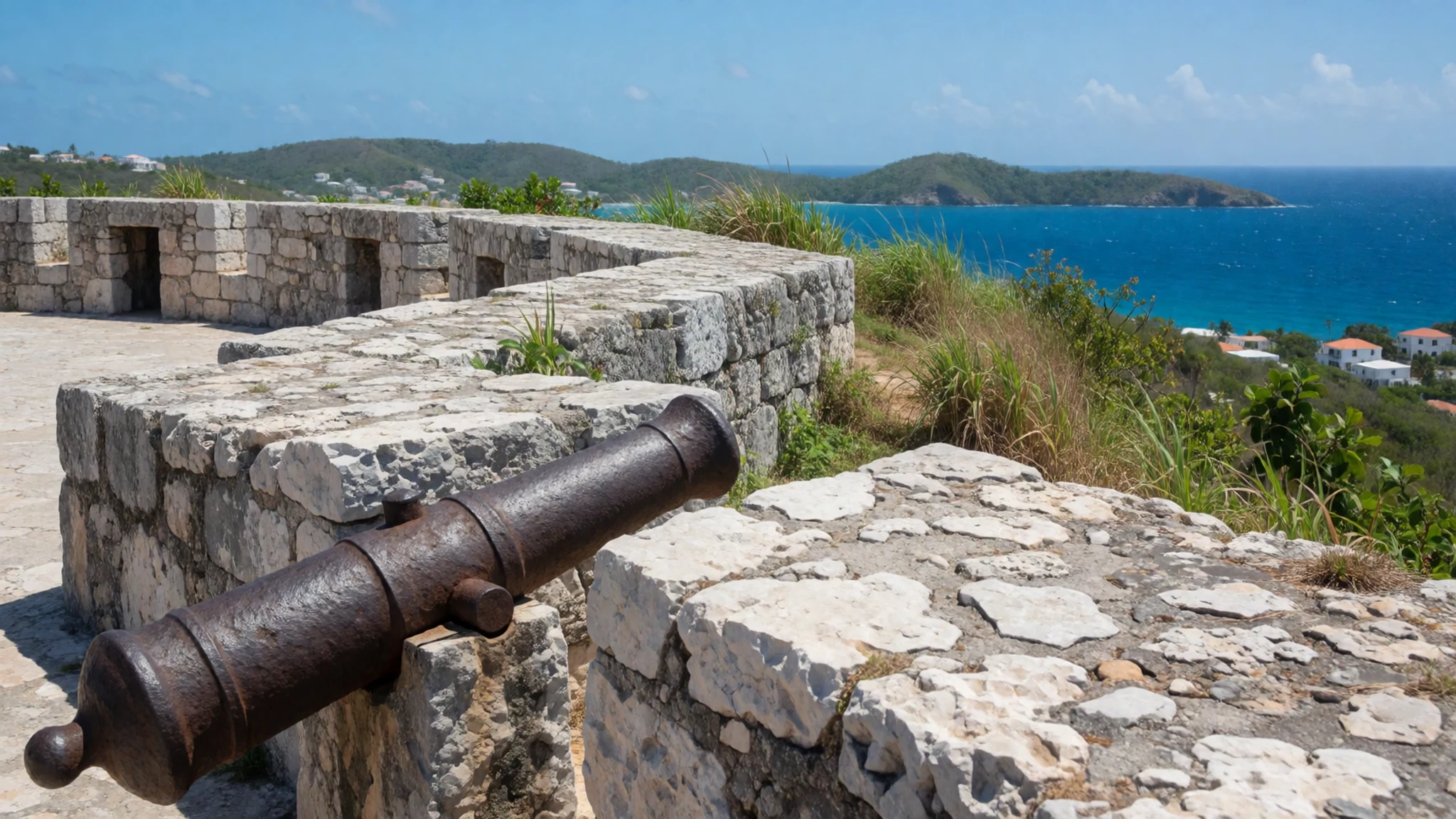
- Catedral San Juan Bautista — Central square
Trujillo's cathedral anchors the central square beside the fortress. The square is the easiest place to take the town's pulse, with small shops, eateries and benches for watching local life. Go in the cool of the morning or at dusk, when the light on the church is softest.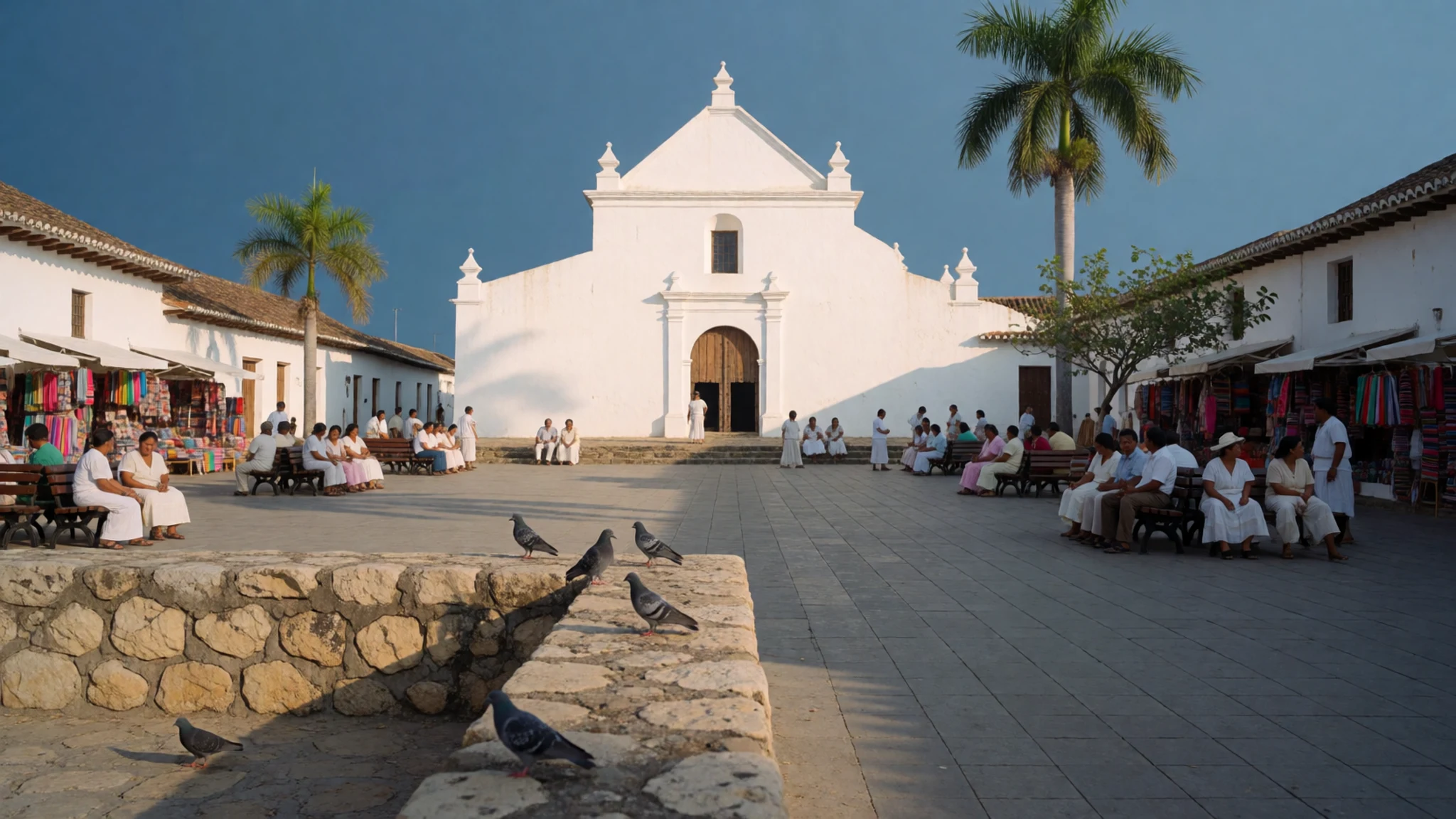
- Grave of William Walker — Old cemetery, near the centre
A short walk from the centre, the cemetery holds the burial place of William Walker, the American filibuster who briefly made himself ruler of Nicaragua. It is a curious stop for anyone interested in the region's nineteenth-century politics, and a reminder that Trujillo has hosted some unlikely characters.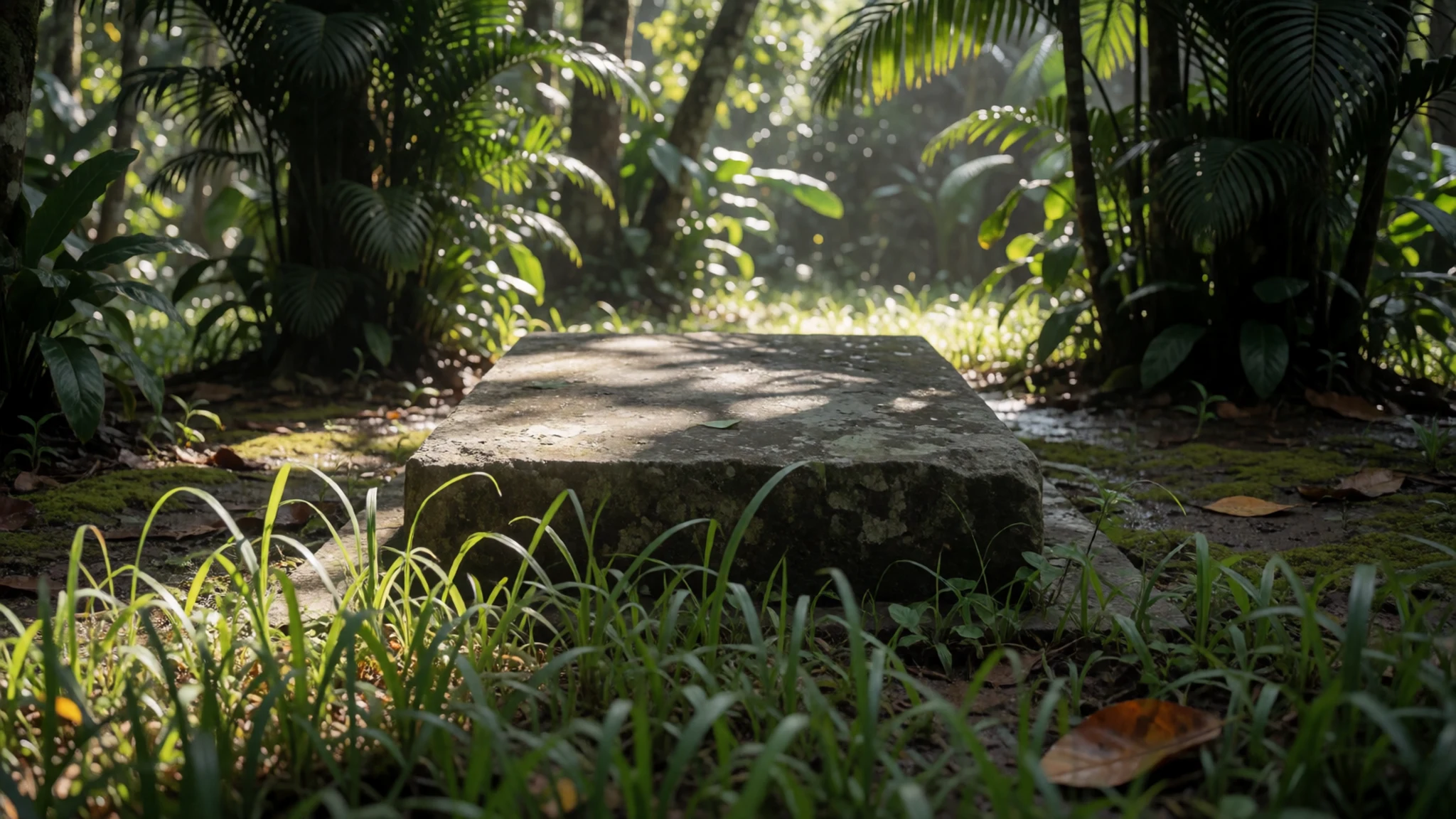
- Museo y Balneario Rufino Galán — Waterfront, west of the centre
This is one man's eclectic private collection of pre-Columbian and modern objects, some genuine and some not, so it is best enjoyed as a personal curiosity rather than a formal museum. It sits by the water on the edge of town, and the setting is half the appeal.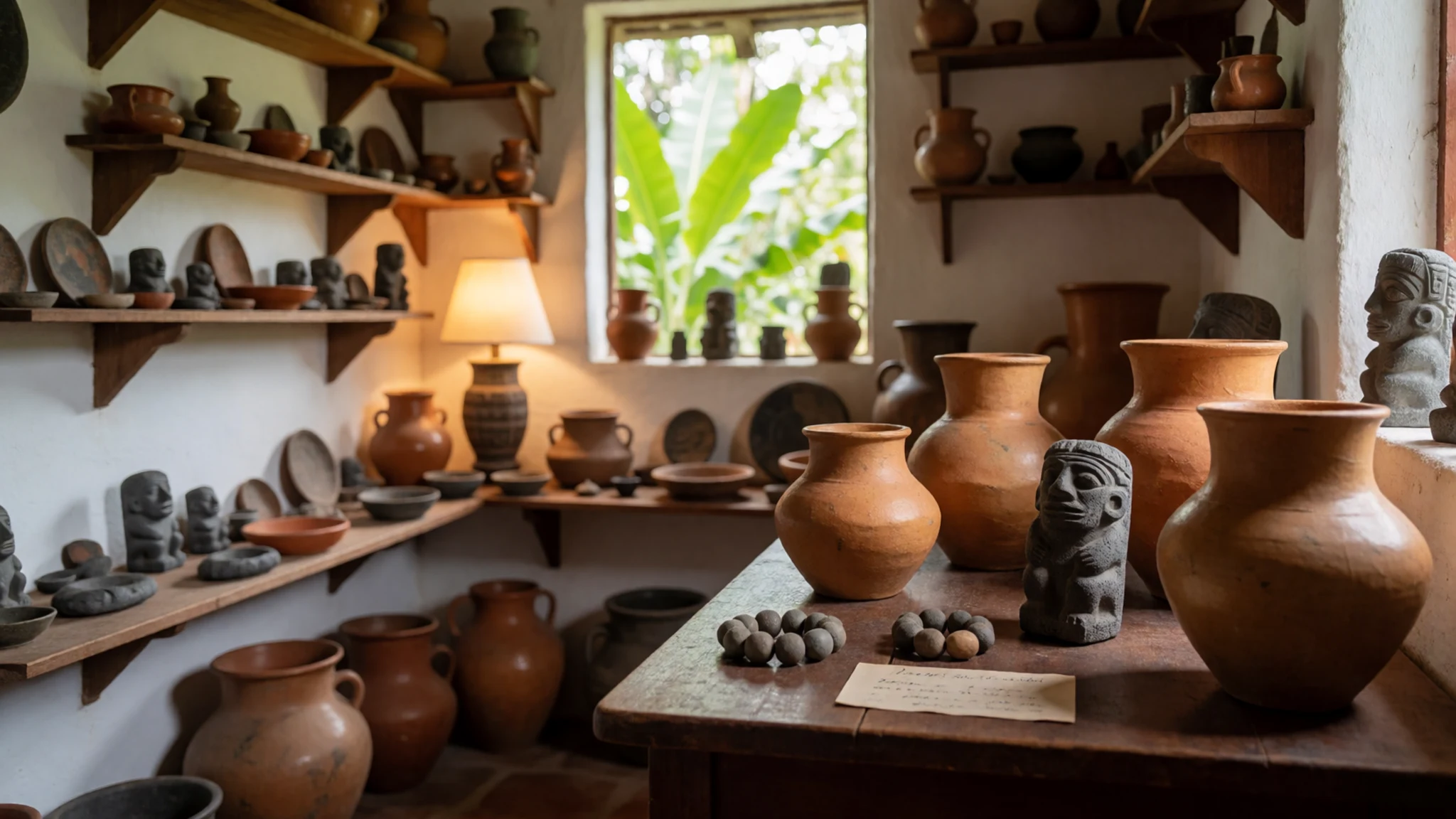
- The bay from the mountain — Slopes of Mount Capiro, behind the town
Climbing or driving up into the slopes behind town gives the best sense of the geography: the curve of the bay, the bluff with its small grid of streets, and the Garifuna villages strung along the sand. Choose a clear morning, as cloud can blank the view.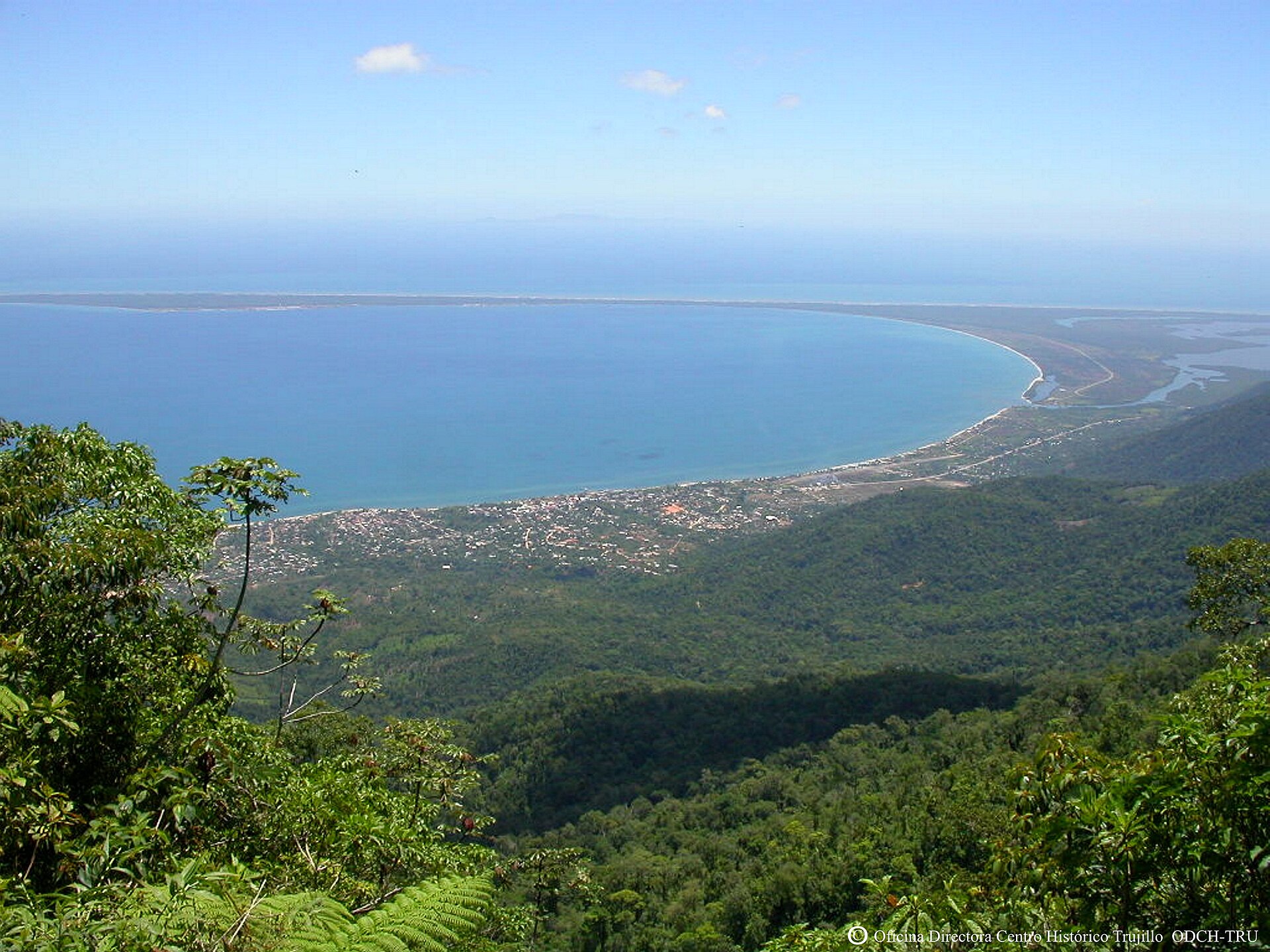
Culture
Trujillo's culture is shaped by two layers: a Spanish colonial port that grew from Columbus's landing, and the Garifuna communities who live along the shore. The Garifuna keep their own language, drumming, dance and cooking, and the villages of Santa Fe, San Antonio and Guadelupe are where those traditions are most visible. Music often drifts along the beach in the evening, and celebrations draw families together with drums, singing and dancing.
The Spanish inheritance shows in the cathedral, the fortress and the grid of streets around the central square. Catholic feast days and church life still matter to many residents, while fishing remains central to daily routine. Boats go out early, and the catch is sold or cooked within hours.
Trujillo's politics are part of the picture too. The charter city proposal has divided opinion, and many Garifuna residents worry about losing land and cultural control. Visitors will meet a range of views, and listening is usually more rewarding than arguing. Pace is slow, greetings matter, and a little Spanish goes a long way, as English is not widely spoken outside the places used to travellers.
Ask permission before photographing people, especially in the Garifuna villages, and buy from local fishers and cooks rather than treating the beach as a backdrop.
What to wear
Trujillo's traditional dress comes mainly from Garifuna culture. Women wear long, loose dresses and skirts in bold cotton prints, often with a matching head wrap tied high, and these appear most at festivals, dances and church or community events. Fabrics are light cotton and similar breathable cloths, chosen for the heat, and colours tend to be bright rather than muted. Men may wear white or light shirts with trousers on formal occasions.
Everyday clothing is practical and casual. In town most people wear T-shirts, shorts or light trousers, simple dresses, sandals and caps, while fishers favour old shirts, rolled trousers and rubber boots or bare feet near the boats. On Sundays and at celebrations people dress up more, with pressed shirts and neat dresses.
Visitors should plan for heat and humidity with light cotton or quick-drying clothes, a sun hat and sunscreen. Pack a light rain jacket, since showers can be sudden on this coast. Sandals or water shoes suit the beach, but sturdier shoes are better for the fortress paths and any walk up the mountain slopes. Beachwear is fine on the sand, but cover shoulders and knees when entering the cathedral, and put on a shirt when walking through town or the villages.
What to eat
- Fried fish with tajadas — Beachfront eateries along the bay
Whole fried fish, usually caught that morning, arrives with crisp slices of plantain and a simple cabbage salad. It is the classic beach meal here, eaten with lime and plenty of napkins, and the freshness is hard to beat.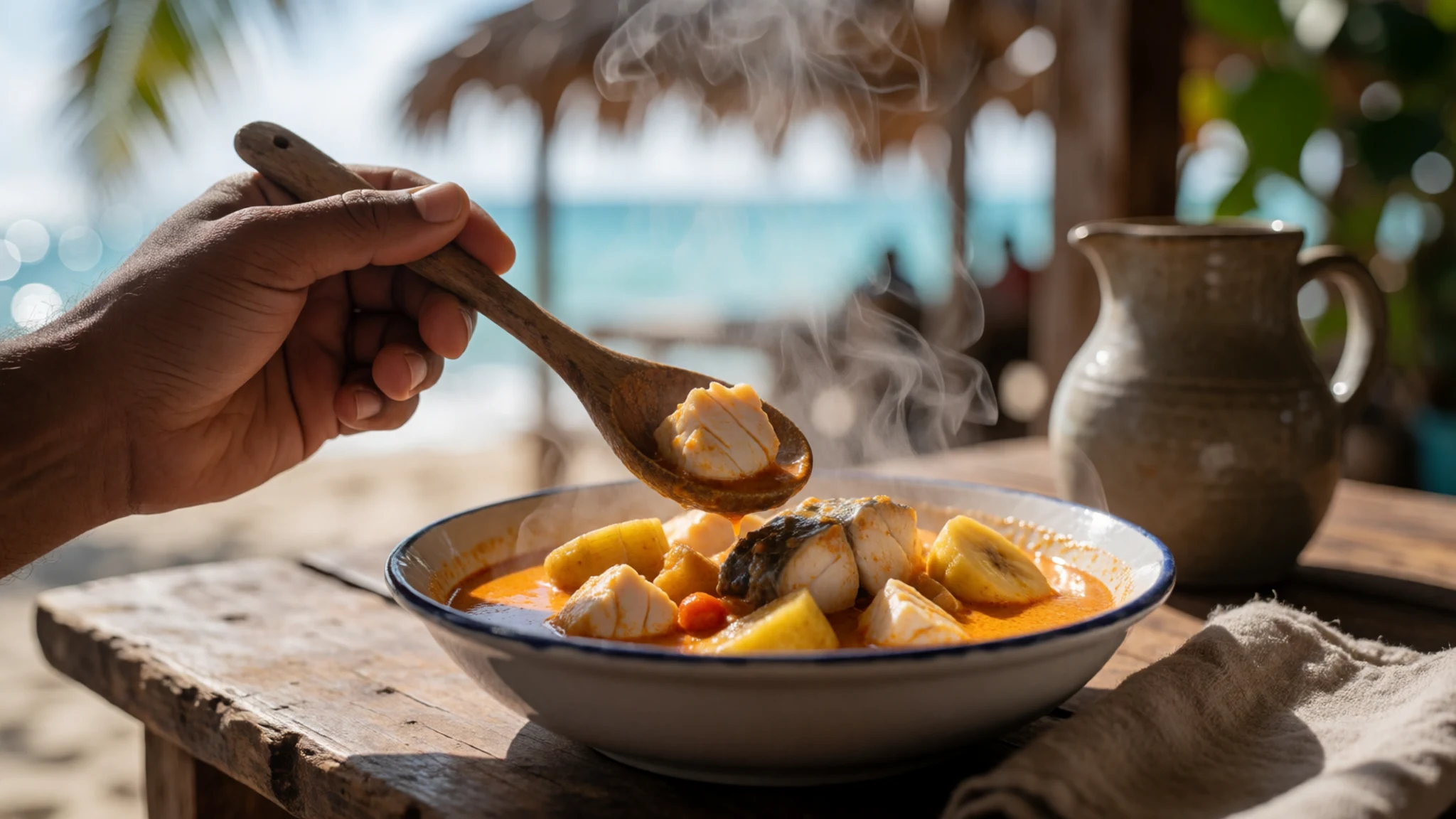
- Tapado — Garifuna villages such as Santa Fe and San Antonio
This Garifuna seafood stew is cooked in coconut milk with plantain, cassava and local fish or shellfish. It is rich, mildly spicy and filling, and it is often cooked in bigger batches, so ask early in the day.
- Machuca — Garifuna family kitchens and village beach eateries
Machuca is green plantain boiled and pounded into a thick mash, then served with a coconut-based fish soup poured over or beside it. It is hearty comfort food and a good way to taste Garifuna cooking. - Pan de coco — Village stalls and roadside sellers
Coconut bread is baked or fried in sweet, dense rounds, often sold from homes or small stalls. It makes a good breakfast with coffee or a snack on a long coastal walk, and it is usually best when still warm. - Birria and tacos — Casual eateries near the central square
For a change from seafood, Trujillo has casual Mexican food, including slow-cooked birria, tacos and grilled meats. Portions are generous and the setting is relaxed, which suits a long evening after a day on the coast.
Plan it
Best time. March to May is usually the more comfortable stretch, with less rain for the beach and the mountain views, though it is hot. The Caribbean coast of Honduras is humid all year, and heavy rain is more likely later in the year, so check a forecast before booking.
How long. 2–3
Getting there. The local runway has no commercial flights as far as the brief records, so travel is by road. Take a bus, taxi or driven car from La Ceiba or Tela on the north coast; the terrain forces an inland loop, so allow generous time. Cruise ships occasionally call.
Budget. low
Tips
- Allow extra time for the long inland road, and travel in daylight
- Carry cash, as some beachside restaurants do not take cards
- Start walks and viewpoints early, before the heat and cloud build
- Drink bottled or filtered water and bring sun protection and insect repellent
- Check current local advice on safety before travelling and after dark
Etiquette
- Ask before photographing people, especially in the Garifuna villages
- Cover shoulders and knees when entering the cathedral
- Greet people politely and respect fishers working on the beach
Nearby
Sources
- Wikidata Q992173 (CC0)
- Wikipedia: Trujillo, Honduras (rev 1376980632) (CC BY-SA 4.0)
- Wikivoyage: Trujillo (Honduras) (rev 5357450) (CC BY-SA 4.0)
- Photo: Vista de la Catedral de Trujillo, Bryanreyeshn (CC BY-SA 4.0)
- Photo: Cathedral of Trujillo, 2006, David M. (CC BY 3.0)
- Photo: Cañones en la Fortaleza de Santa Bárbara, stanleyatala (CC BY 3.0)
- Photo: Conquest of Trujillo, Joannes de Laet (Public domain)
- Photo: View from the mountain, Trujillo bay, 2006, David M. (CC BY 3.0)
- Photo: U.S. Navy Utilitiesman 2nd Class Robert Arthur (U.S. Department of Defense) (Public domain)
- Photo: 170223-N-YL073-074, Trujillo, Honduras (shamira purifoy) (Public domain)
- Photo: 170227-N-YL073-244, Trujillo, Honduras (shamira purifoy) (Public domain)


