Trang An
Trang An, Vietnam

Trang An is a slow boat through limestone caves and rice-valley light, close enough to Hanoi for a short journey.
The place
Trang An lies in the karst country of Ninh Binh, in northern Vietnam, where towers of grey limestone rise out of paddies, ponds and slow green water. The place is less a single viewpoint than a maze of river, cave and valley. A sampan leaves a busy wharf, slips under a low rock lip, and the daylight drops to a lamp and the sound of the oar. Then the boat comes out into a bowl of cliffs and rice, and enters another cave. That rhythm — dark, then bright, then dark again — is the visit.
The rock is limestone, worn by water into blades, pockets and tunnels. In the open valleys, farmers still plant rice between the towers, so the view from the boat is working land as well as scenery. In the cooler months a mist sits on the water until the sun lifts it. In the hot months the cliffs hold the heat, and the air inside a cave feels like a brief relief.
Trang An is organised for visitors. Boats run set routes from a central landing, with a rower at the stern and a fixed circuit of caves and temples rather than a free wander. Popular departures feel crowded: boats queue, and voices carry under the rock. Quieter stretches come in the gaps between groups.
Roads run along the feet of the towers, with eateries, small shrines and fields pressed against the stone. Trang An suits a slow pace and a low seat in a wooden boat, a day shaped by water and rock.
Its story
Trang An's story is water cutting rock, and people learning to live between the towers. Rain and rivers spent an immense stretch of time dissolving the limestone, opening caves where a stream could pass through a hill. A dark tunnel, a sudden valley, a cliff with a shrine at its foot: that is the carving a sampan rides, still continuing in a small way whenever the river runs high.
These valleys were home long before boat tickets. Communities kept temples in the rock and along the banks. Hoa Lu, folded into the same karst, made this country a political centre as well as a farming one. Trang An still sits inside that older geography. The caves were shelter, route and sacred ground, not only corridors for a tour.
The boat carries a local skill. Rowers, many of them women from nearby villages, move the sampan with oars. On neighbouring waterways some steer with their feet braced on the loom, so the stroke still works under a low roof. Tourism has given it a wage, and it has also put many boats on the same water in the middle of the day.
Trang An today is a managed landscape of routes, landings and fields that people still farm. The honest story holds both things: an old pattern of water, rice and rock, and a visitor economy laid on top of it.
What to see
- Trang An boat route — Trang An wharf
Trang An's main boat route leaves from the central wharf and threads a chain of low caves and open valleys. A rower takes a wooden sampan through passages where the roof drops close to the gunwales, then out into bowls of rice and cliff. Small temples mark some landings. At busy hours the boats queue; the same water is calmer on the first departures of the day.
- Hoa Lu — Hoa Lu
Hoa Lu, inside the Trang An landscape, was a royal capital tucked among the karst before power moved north to the Red River delta. What remains is a complex of temples, gates and low citadel lines set against a cliff, with shrine halls honouring the early kings who ruled from this valley. The ground is flat and shaded and gives Trang An a human past to set beside the caves.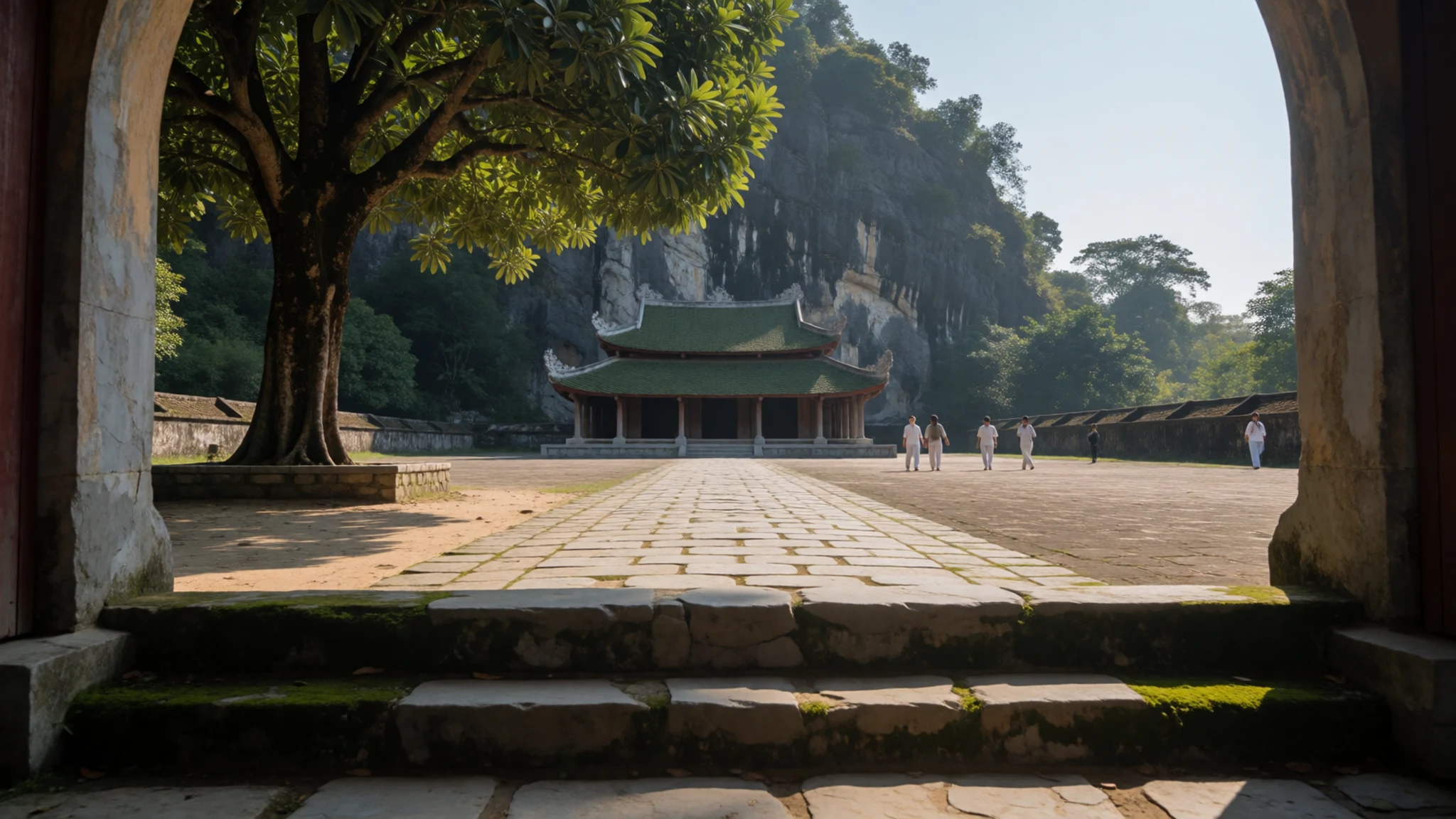
- Bich Dong Pagoda — Tam Coc valley
Bich Dong Pagoda, in the Tam Coc valley beside Trang An, climbs the foot of a limestone cliff in stacked halls, the upper ones set into the cave itself. The approach is a stair and a series of doorways, each a little darker, until the rock becomes the roof. The upper hall sits in the rock and looks back over the valley.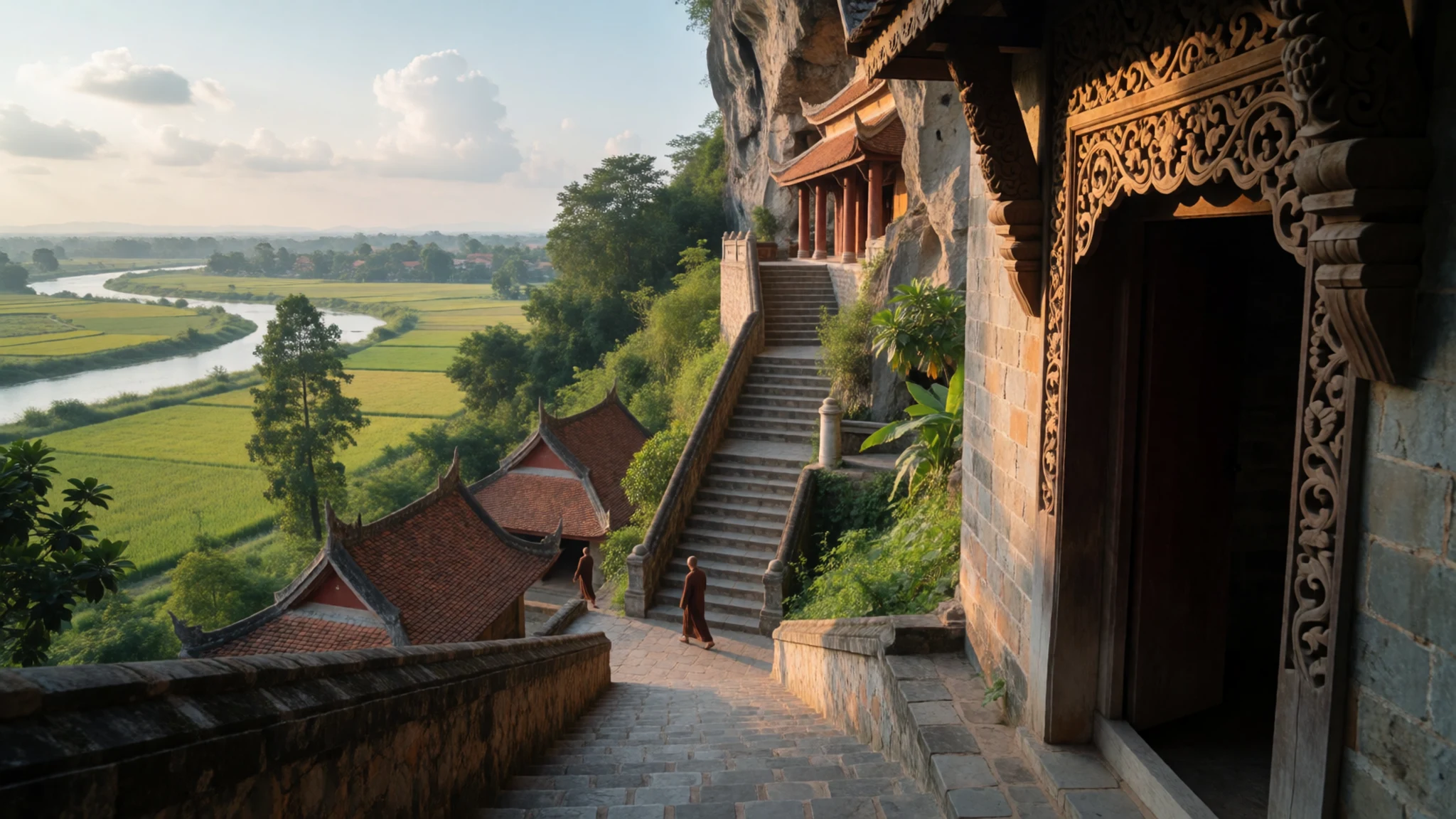
- Tam Coc — Tam Coc
Tam Coc, often paired with a day at Trang An, is a waterway of caves where rice fields run right up to the karst and sampans pass under low, water-polished roofs. Rowers here often steer with their feet, a skill suited to tunnels too tight for a standing stroke. Midday traffic is heavy. The fields are green while the rice is growing and gold again when it ripens.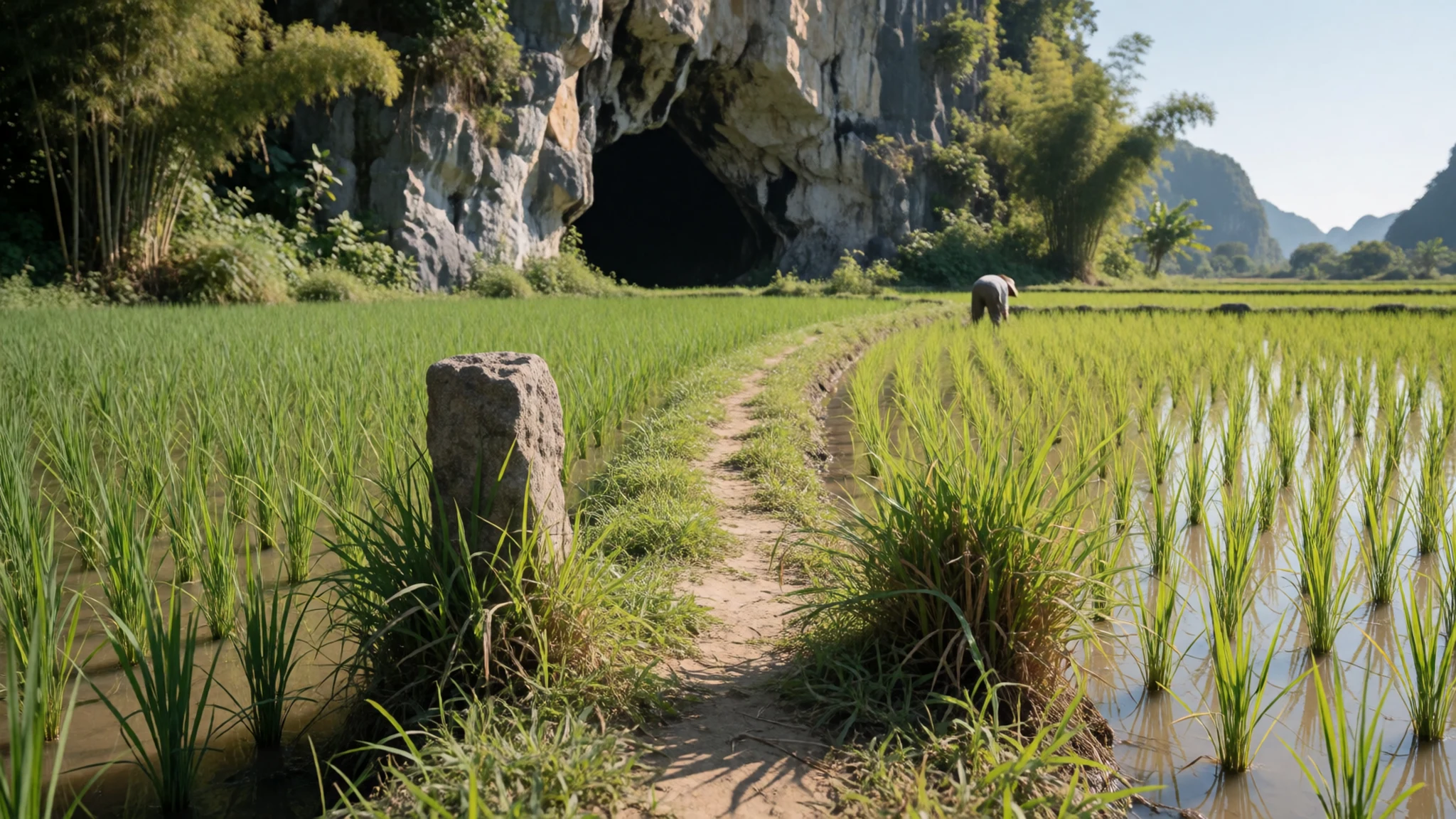
- Hang Mua — the ridge above Tam Coc
Hang Mua, above Tam Coc on the edge of the Trang An landscape, is a steep stair to a terrace that looks across peaks, paddies and the river bends. The steps are many and exposed, hot in the dry-season sun and slick after rain, so the climb suits steady feet more than a rush. From the top the boat routes below read as a pattern.
Culture
Trang An is a working landscape, not a park emptied of daily life. Rice still fills the flat ground between the towers, and many of the people who row the sampans live in villages a short walk from the landings, fitting a visitor shift around fields and family. The pagodas set into cliffs and cave mouths are places of worship first. Locals come with incense and fruit, and a visit that treats the halls as only a backdrop misses why the buildings are there. At Hoa Lu, inside the same karst, temple courtyards remember the early kings who ruled from this valley, and festival days bring processions and offerings that follow an order the village already knows.
The skill of the rowers belongs to that same local world. On the waterways beside Trang An, steering with the feet is a practical answer to a low cave roof, learned on these rivers and now also a wage. It is poor form to turn someone's labour into a stunt, or to stand up for a photograph just as the rock comes down.
In the caves and pagodas of Trang An, speak quietly, stay seated when the roof lowers, and ask before photographing a rower or anyone who is praying.
What to wear
Trang An sits in northern Vietnam, and dress around it follows the country's habits more than any costume unique to the karst. The formal garment is the áo dài: a long tunic over wide trousers, cut close through the body and slit at the sides, traditionally silk or a silk-like weave. It comes out for weddings, festivals, school ceremonies and shrine days, including at Hoa Lu when a festival fills the courtyards. In the fields and on the boats the older everyday picture is simpler — loose cotton shirts, trousers easy to roll, and the nón lá, the conical palm-leaf hat that shades a rower or someone transplanting rice.
What people wear now, on the road and at the wharf, is ordinary warm-weather clothing: T-shirts, light trousers, sandals, and a helmet for the motorbike. The áo dài is for occasions, not for rowing.
A visitor to Trang An should dress for heat, wet stone and barefoot thresholds. Cover shoulders and knees for the pagodas. Choose slip-on shoes, because they come off at every hall and the cave steps are slick. Add a hat and a thin rain layer for the open valleys. Leave swimwear for the coast; these boats pass shrines, not beaches.
What to eat
- Dê núi — eateries on the roads between the wharf, Tam Coc and Hoa Lu
Mountain goat, dê núi, is the dish Ninh Binh cooks for visitors to Trang An. The meat is grilled, stewed or set in a herb-heavy hotpot with sharp leaves and rice. Eateries on the roads between the wharf, Tam Coc and Hoa Lu specialise in it.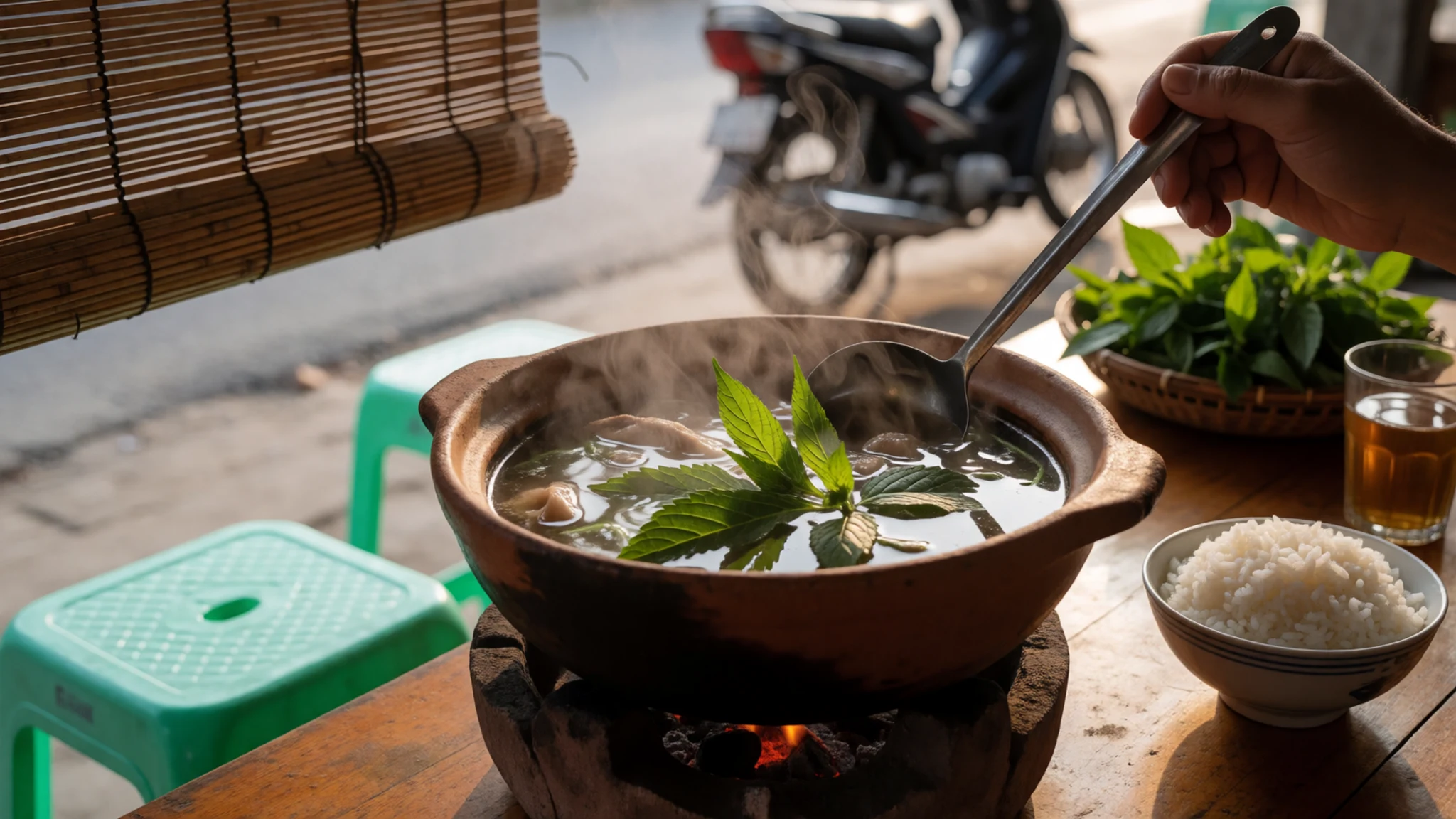
- Cơm cháy — roadside stalls and goat eateries near Trang An
Cơm cháy is Ninh Binh's crisp rice cake, grilled from a thin sheet of cooked rice until it blisters, then topped with goat floss, pork or a slick of sauce. Around Trang An it is sold in boxes at roadside stalls and in the same eateries that serve goat.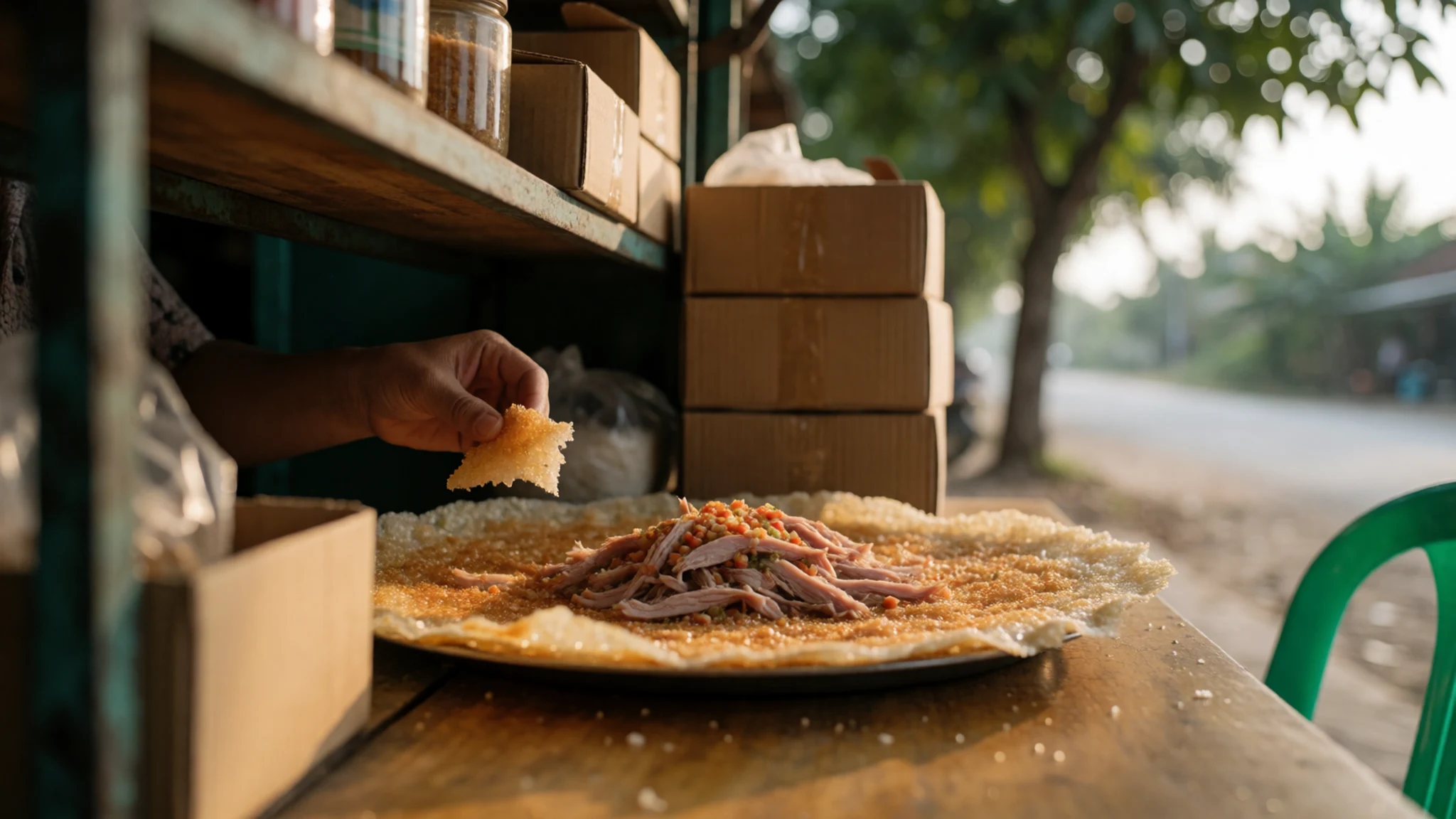
- Ốc núi — pavement eateries and market stalls around Ninh Binh
Ốc núi, mountain snails, are a Ninh Binh plate that shows up wherever Trang An's day-trippers stop to eat. They are boiled or stir-fried with lemongrass, chilli and garlic, and served with a dip and a pick. A pavement eatery or market stall is the right setting. - Miến lươn — noodle shops in Ninh Binh town
Miến lươn is a bowl of glass noodles and eel, in a light broth with fried shallot and herbs. It is a good morning bowl near Trang An, light enough for a hot day too. Noodle shops in Ninh Binh town serve it. - Nem chua — market stalls in Ninh Binh
Nem chua is a small round of fermented pork, sour and firm, wrapped in a leaf with a slice of garlic and chilli. Near Trang An it is a market snack rather than a sit-down dish, eaten between a boat trip and the ride back.
Plan it
Best time. The drier, cooler stretch from late autumn through early spring is a good window for Trang An: morning mist on the water, heat that is easier to walk in, and rice either young and green or cut and gold. From late spring into summer the valleys turn hot and humid, and heavy showers can delay a boat. The landscape is still worth the trip then if the day starts early and a rain layer is in the bag.
How long. 2–3
Getting there. Trang An is reached from Hanoi. Noi Bai airport serves that city; from there the last leg is by road south into Ninh Binh, either a train to Ninh Binh station and then a taxi or arranged car, or a coach or private car direct from the capital. The journey ends at the Trang An wharf rather than in a town centre you can wander. Check the official site for the landing in use.
Budget. mid
Tips
- Book a boat or join the first departures if you want space on the water at Trang An.
- Carry cash, because small stalls and some landings still prefer it to cards.
- Wear shoes you can slip off, and take care on the wet step into the sampan.
- See Hoa Lu and any pagoda before the coach groups arrive, then take the boat.
- Bring a hat and drinking water; the open valleys have little shade even on a hazy day.
Etiquette
- Remove shoes at pagoda steps and keep voices low inside shrine halls.
- Ask before photographing rowers or anyone who is praying.
- Stay seated in the caves and do not stand for a photograph as the roof lowers.
- Leave the rice fields and cave formations untouched, and carry litter out.
Nearby
Sources
- Wikidata (CC0)
- Wikipedia (CC BY-SA 4.0)
- Wikivoyage (CC BY-SA 4.0)