Tram Chim National Park
Tram Chim National Park, Vietnam
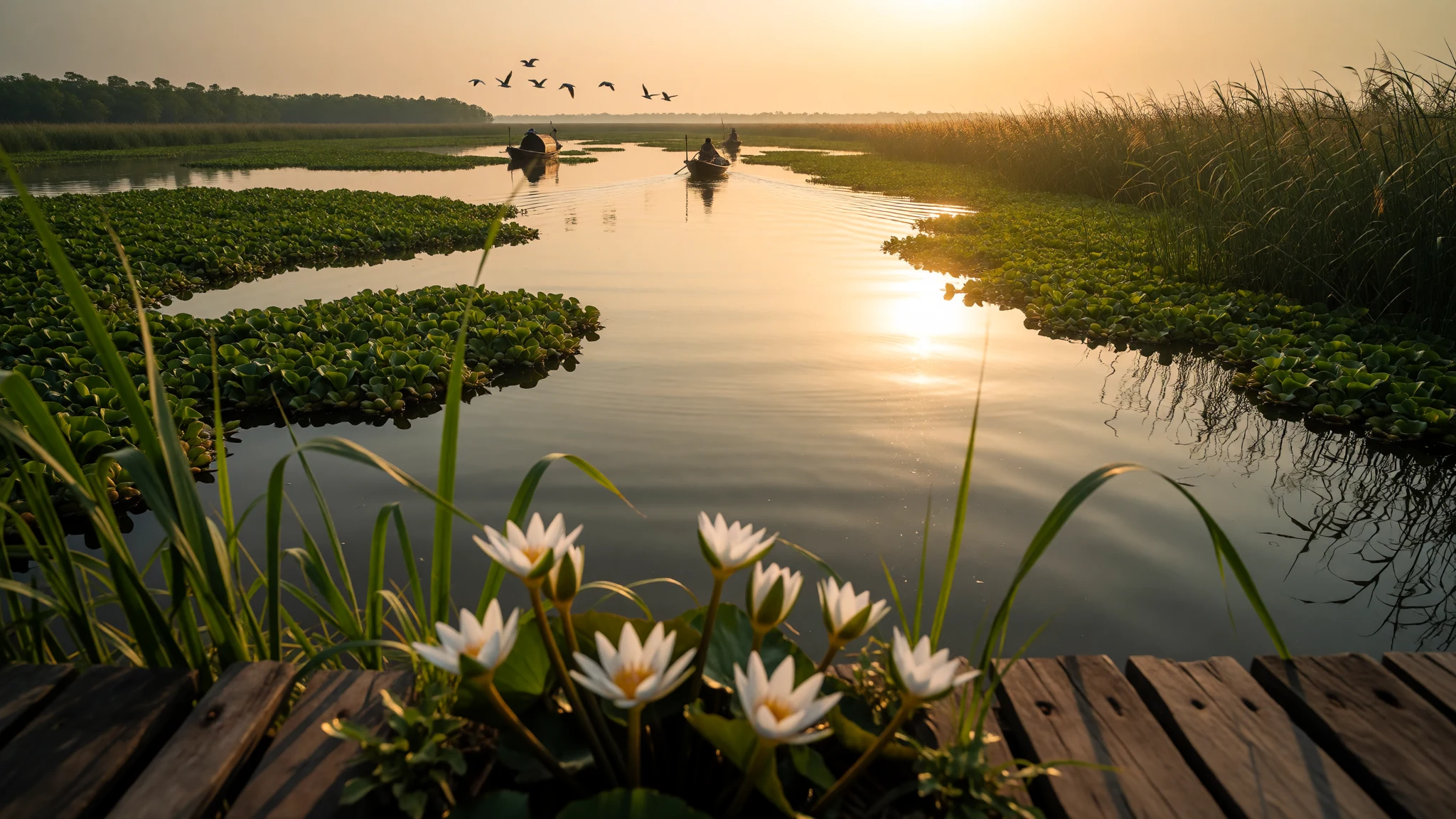
Tram Chim National Park is a flooded grassland in the Mekong Delta where sarus cranes, watchtowers and quiet boat channels replace the delta bustle.
The place
Tram Chim National Park sits in the Plain of Reeds, a low wetland in the Mekong Delta of southern Vietnam, within Dong Thap Province. The name joins two Vietnamese words: tràm, the melaleuca trees that grow here, and chim, birds, which is a fair summary of the place. The park was established in 1998 with a clear purpose, to bring back a wetland that had been drained and degraded and to give rare waterbirds somewhere to live. The sarus crane is the flagship species, a tall bird that appears on the IUCN Red List, and the park is also recognised as a wetland of international importance under the Ramsar Convention.
The landscape is flat and open, a patchwork of grassland, shallow water, canals and stands of melaleuca, with very little shade and a very large sky. Water levels shape everything. At some seasons the ground is a green meadow dotted with small flowers, at others it is a sheet of water with birds working the edges.
Beyond the park boundary the delta is farmland, rice above all, threaded with canals and villages that are reached as easily by boat as by road. Against that working landscape the park feels like a deliberate pause. Most visitors arrive by road, take a small boat or climb a watchtower, and spend a few unhurried hours. It rewards patience rather than sightseeing checklists, and the birdlife is best seen by sitting quietly and looking. Facilities are modest, and sun and mosquitoes are real.
Its story
Tram Chim National Park owes its existence to a change of mind about what the Plain of Reeds is for. For decades the delta's priority was rice, and wetlands like this one were drained, cut by canals and converted wherever farming allowed. The region also saw heavy fighting during the war that Vietnamese people call the American War, and its recovery since peace has been agricultural first. Against that background, protecting a patch of reedy swamp was a deliberate decision.
The park was created in 1998 with restoration in mind. The aim was to bring back the seasonal flooding and the grassland communities that cranes and other waterbirds rely on, and to hold the line against further conversion. Later it gained recognition as a Ramsar wetland, which placed it on a list of sites valued well beyond Vietnam.
Restoration here is not a finished story. Managing water is difficult in a delta shaped by upstream rivers, canals and farmland, and the silt and floods that the Mekong delivers no longer arrive exactly as they once did. Dry-season fires are a worry in grass and melaleuca, and bird numbers can vary from year to year. Park staff balance these pressures with local communities who farm and fish along the edges.
For a visitor, that history explains why the park looks managed in places. Banks, canals and towers are part of how a wetland is held together. It is a working conservation site rather than a wilderness, and it is more interesting once that is understood.
What to see
- Sarus crane grasslands — Core grasslands, Tam Nong district
Tram Chim National Park was set up largely for the sarus crane, a tall grey bird with a red head, and its open grasslands are where people look for it. Sightings depend on season and water level, so treat a crane as a bonus, not a promise. Ask rangers or guides where birds have been seen recently.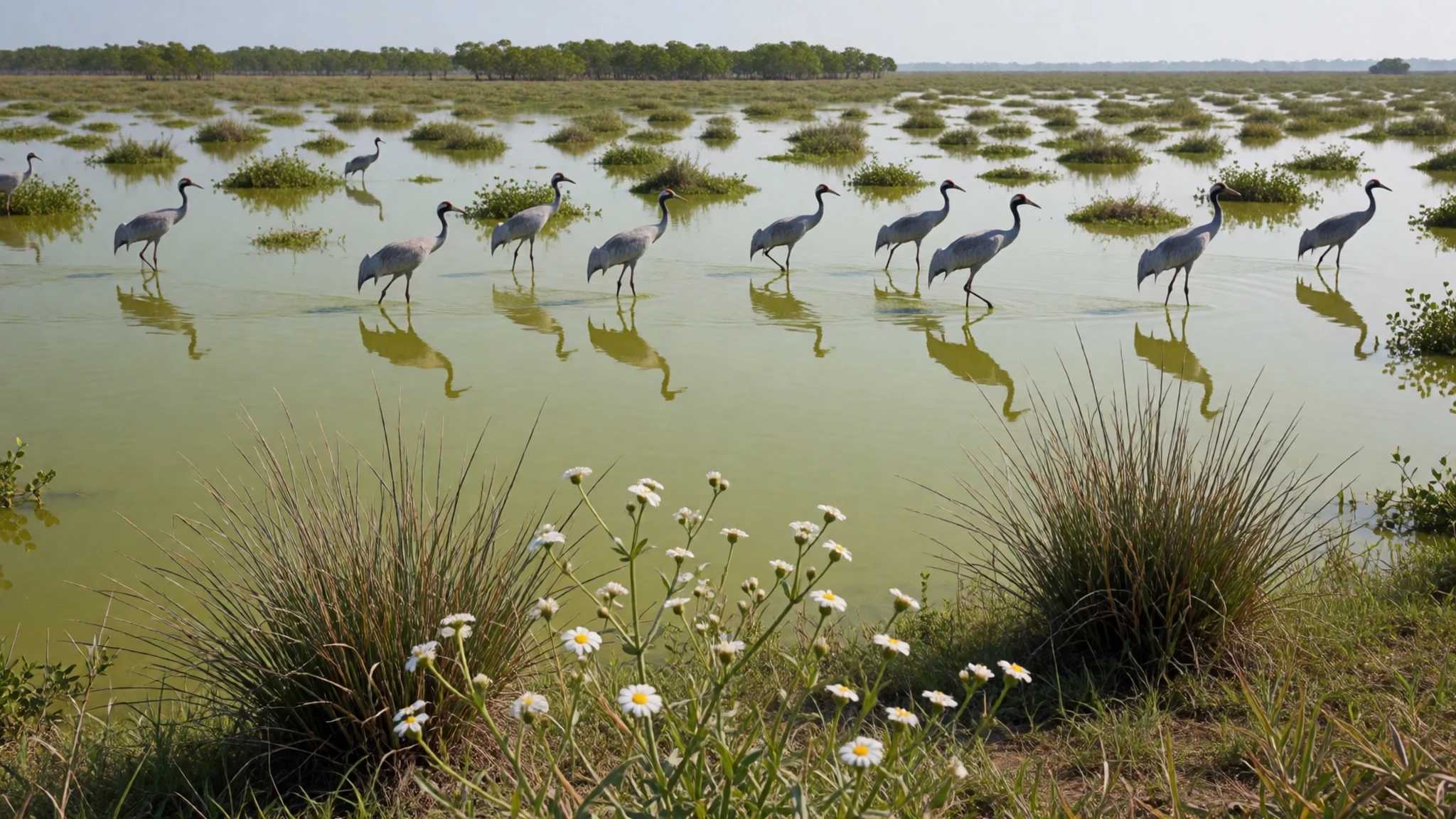
- The watchtowers (chòi canh) — Along the park's visitor routes
The timber watchtowers, called chòi canh, rise above the reeds in Tram Chim National Park and give a long, flat view of grass, water and distant tree lines. They help make sense of how the wetland is laid out. Go early, when the light is soft and birds are active, and bring binoculars and water.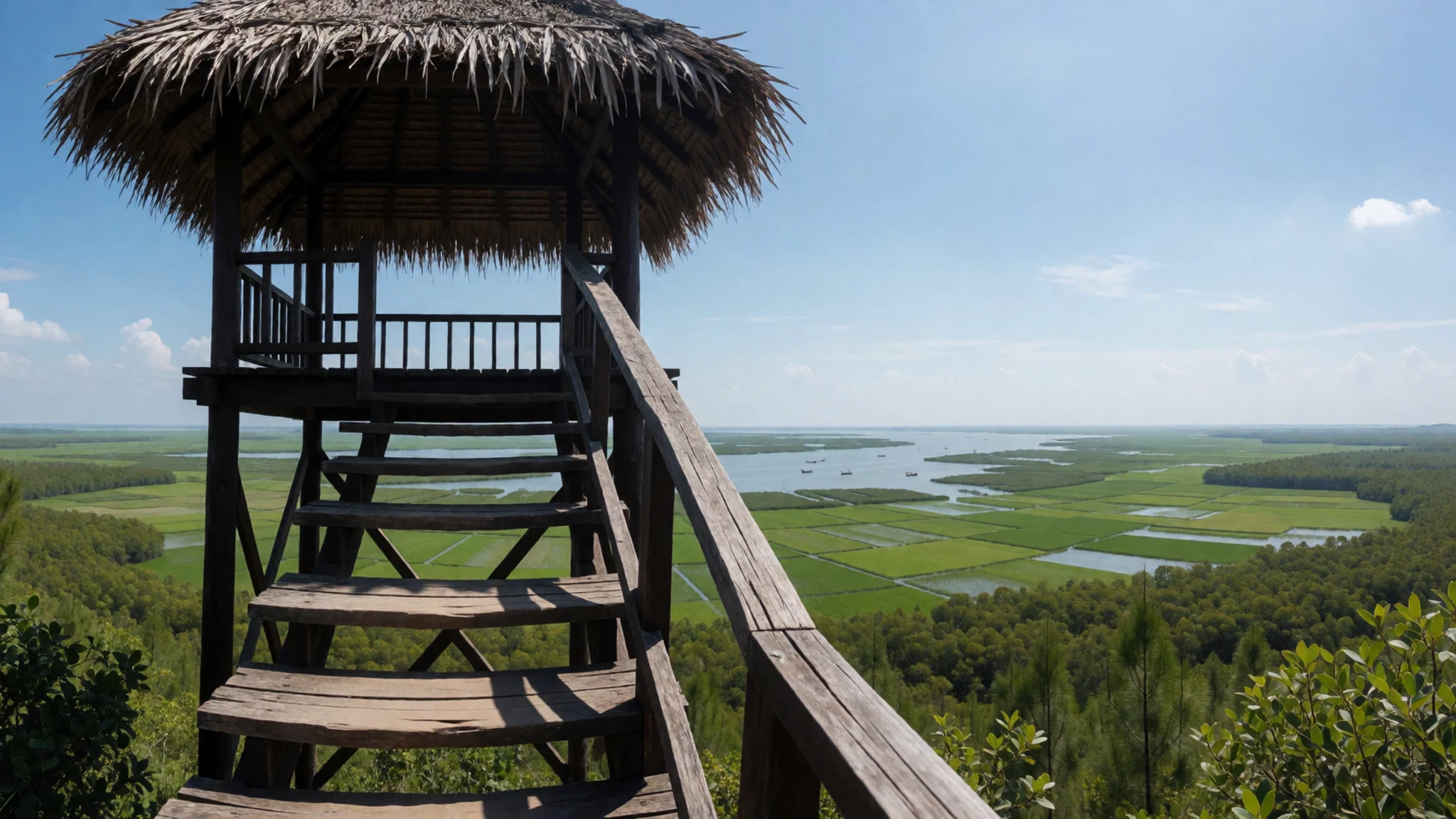
- Reed meadow and boat channels — Canals and flooded meadow
Small boats run through narrow channels between melaleuca stands and floating plants in Tram Chim National Park. The pace is slow, and guides may cut the engine near birds, so the soundtrack is wind, frogs and wings. Shade is limited, so a hat matters more than a long camera lens.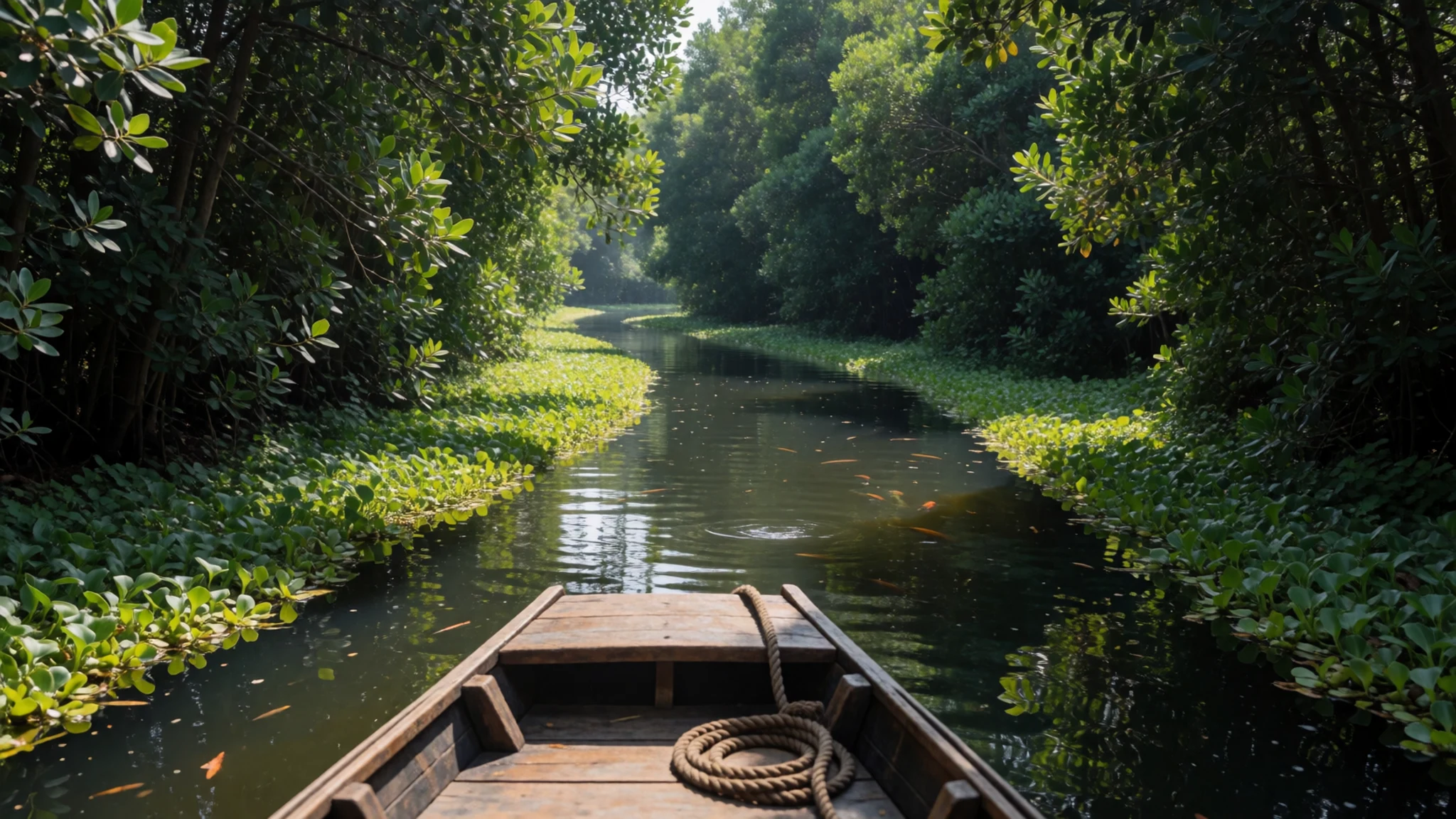
- Asian openbill storks — Shallows and tree stands
Asian openbill storks, Anastomus oscitans, gather in groups at Tram Chim National Park, wading through the shallows and perching in trees. Their bills have a small gap, an adaptation for handling snails. A long lens helps photographers, but patient watching from a tower works nearly as well.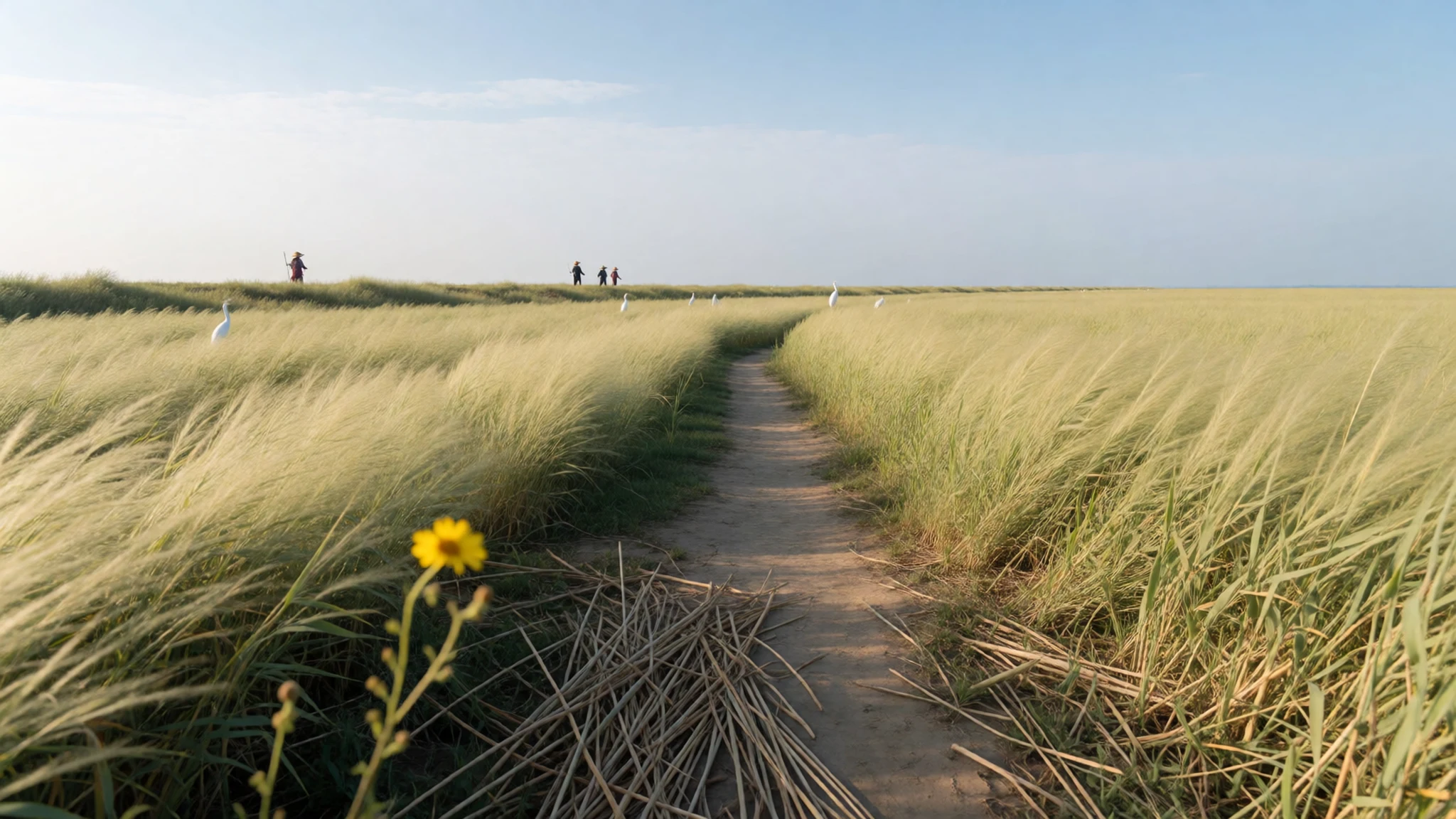
- Wetland flowers and the open meadow — Meadow paths and edges
In parts of Tram Chim National Park the grassland is dotted with small flowering plants such as Xyris indica, whose yellow heads stand above the reeds when conditions suit. What is in bloom varies with water level and season, so ask a local guide to name plants and point out where flowers are showing.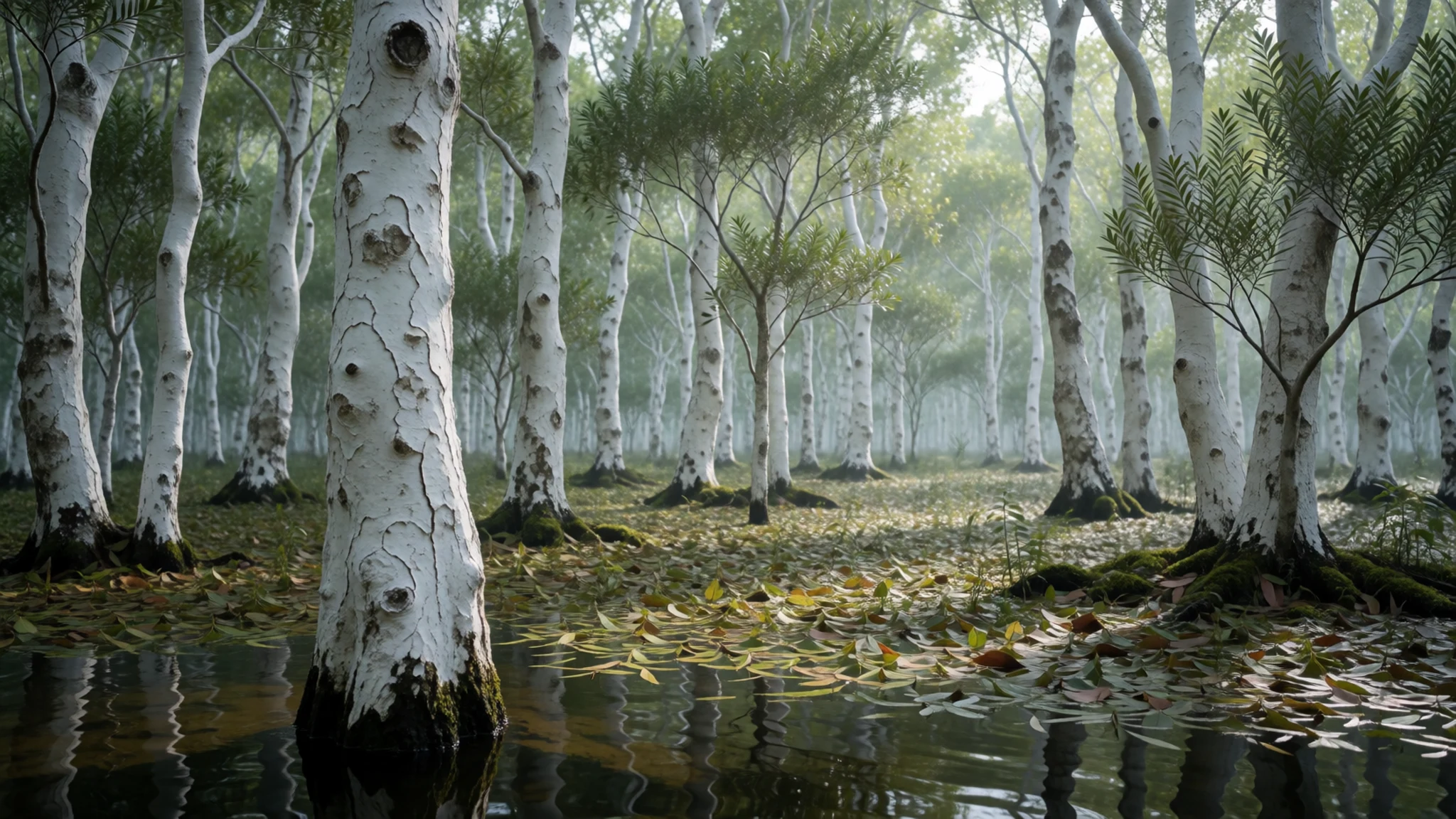
Culture
Tram Chim National Park lies in a part of the Mekong Delta where life is organised around water. Villages sit along canals and are reached by boat as readily as by road, and farming, fishing and river travel set the rhythm of the day. The delta is known across Vietnam for rice, and the paddies beyond the park boundary belong to the same landscape as the wetland.
The high points of the year are Tết, the lunar new year, when families travel home, houses are cleaned and decorated, and many businesses close for several days, and Tết Trung Thu, the mid-autumn festival, when children carry lanterns and, in delta towns, set candles afloat on tiny boats. Visitors in either period should expect closed eateries, busy roads and a warm welcome if invited into a home.
The relationship between the park and nearby communities matters. Some local people work as guides, boat rowers or food sellers, and the park's rules affect fishing and grazing around its edges. Buddhist temples and ancestor altars are part of everyday life, with incense and small offerings in homes and shops, and visitors will see them in even the plainest village.
Birdwatching is a newer pastime here than farming, and guides value quiet because it is what brings wildlife into view. Keep your voice low, stay on marked paths and boat routes, and ask before photographing local people or their homes.
What to wear
Around Tram Chim National Park the traditional working dress of the delta is the áo bà ba, a loose, two-piece outfit of cotton or light fabric that suits heat and wet fields. It is often worn with the khăn rằn, a checked cotton scarf that serves as sunshade, towel and face cover, and the nón lá, the conical hat of palm leaf. The silk áo dài, the long split tunic worn over trousers, appears at Tết, weddings and school ceremonies.
Day to day, most people in Dong Thap wear what suits a hot, humid farming region: long-sleeved shirts or light jackets against the sun, trousers, rubber sandals or boots for wet ground, and a motorbike helmet. Town streets show jeans, T-shirts and school uniforms. The áo bà ba is now seen more on older farmers, performers and festival days than as everyday wear.
For a visit, dress for sun, water and insects. Lightweight long sleeves and trousers in quick-drying fabric protect against both, and a wide-brimmed hat, sunglasses and sunscreen are needed on open ground. Muted greens, greys and browns are less likely to startle birds than bright colours. Closed shoes or sturdy sandals suit muddy paths and wooden towers, and a thin rain jacket is useful in the wet season. For any temple on the way, cover shoulders and knees.
What to eat
- Lẩu mắm — Family-style eateries in Dong Thap towns
A tangy, deeply savoury hotpot built on fermented fish broth, with aubergine, herbs, vegetables, noodles and fish or prawns added at the table. It is a delta classic, often shared by groups at family-style eateries in Dong Thap towns.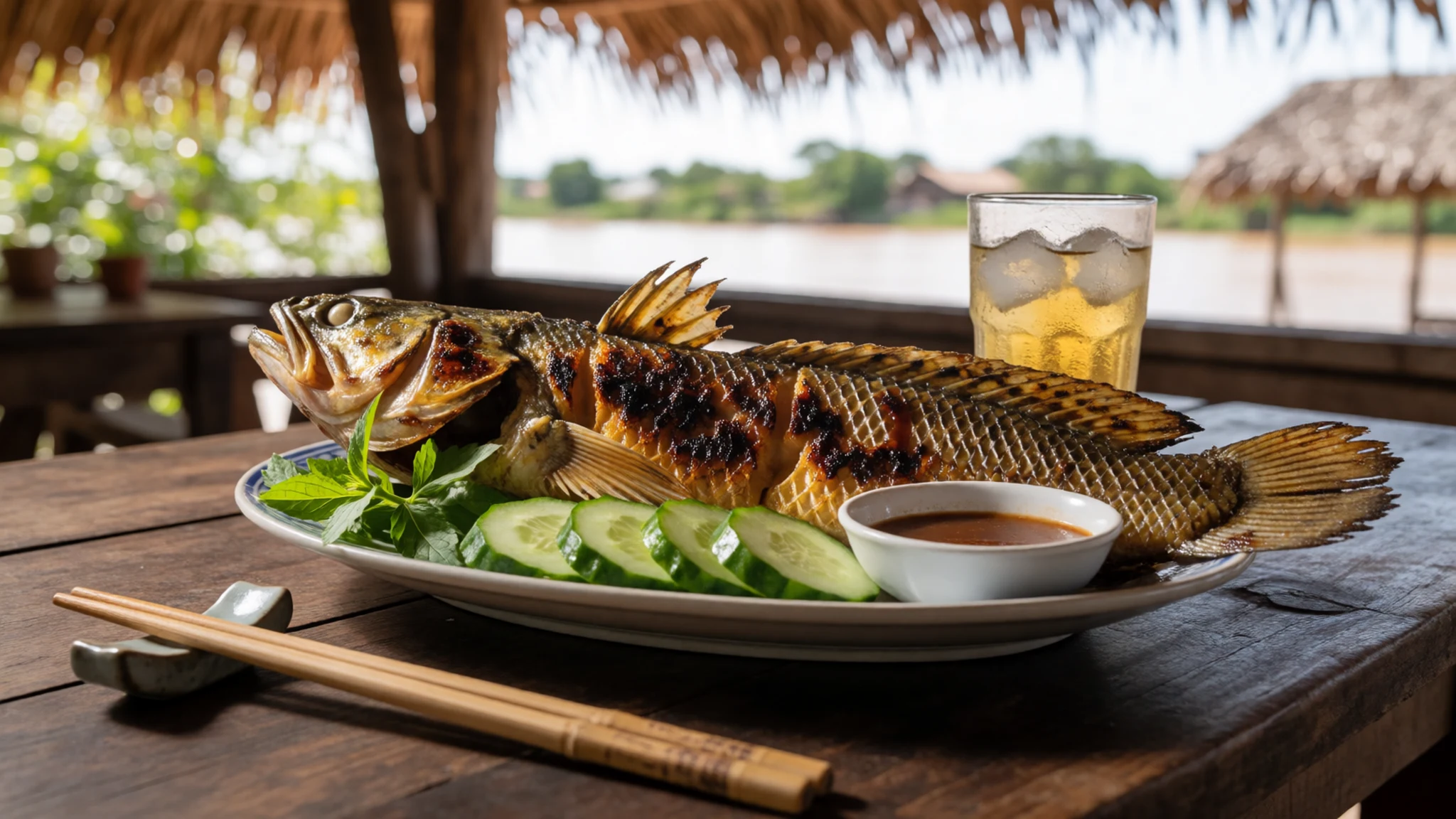
- Cá lóc nướng trui — Riverside eateries and country restaurants
Whole snakehead fish grilled in its skin over straw or charcoal, then peeled and eaten wrapped in rice paper with herbs, green banana and dipping sauce. Look for it at riverside eateries and country restaurants around the delta.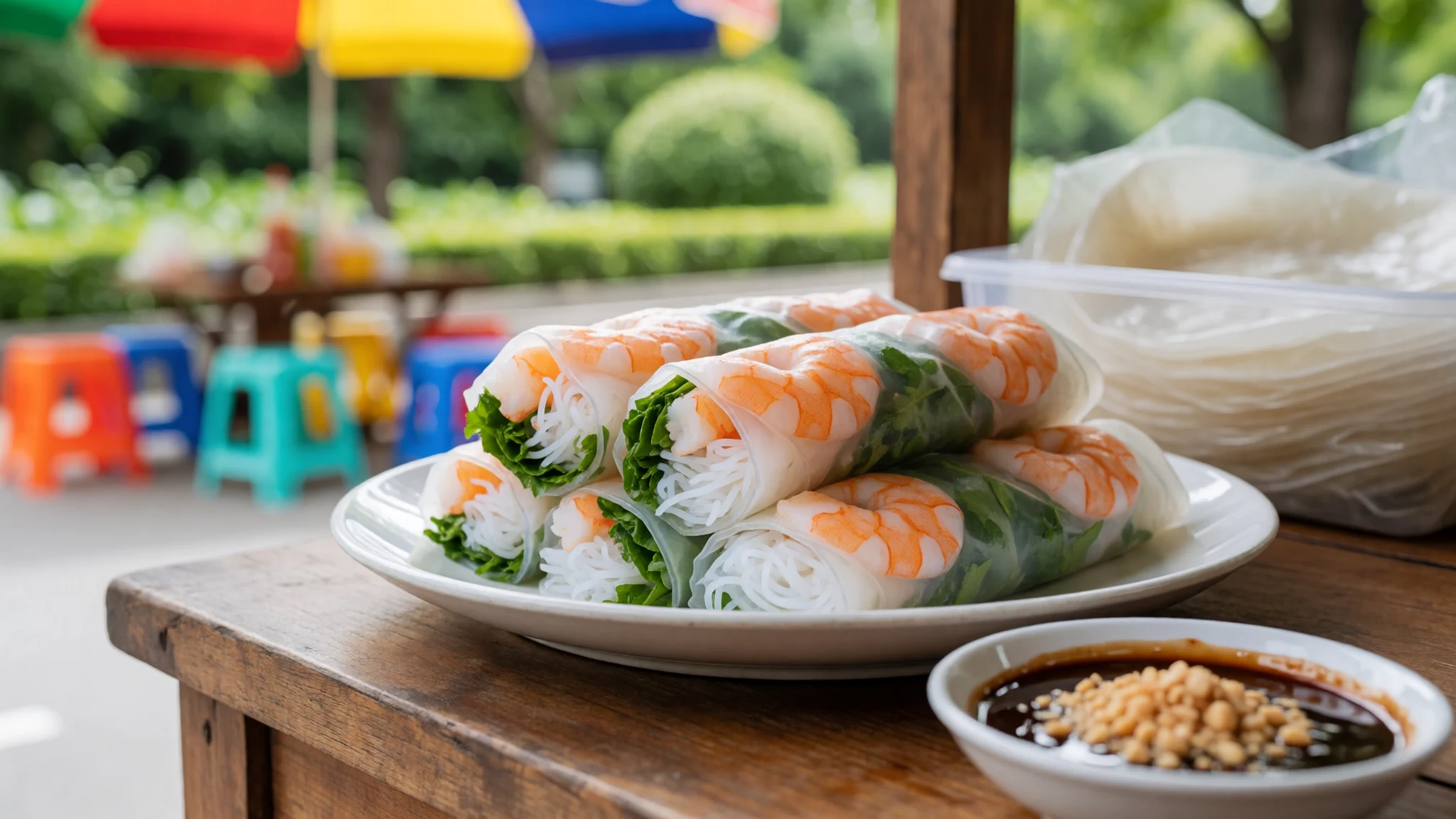
- Gỏi ngó sen — Local eateries and market food stalls
A fresh salad of crunchy lotus stems with shredded herbs, prawn or pork, peanuts and a sweet-sour lime dressing. Lotus is grown in Dong Thap's ponds, so it turns up on menus at local eateries and market food stalls. - Bánh xèo — Roadside stalls and small family eateries
A crisp, turmeric-yellow pancake folded over prawns, pork and bean sprouts, eaten wrapped in lettuce and herbs with a fish-sauce dip. Delta versions tend to be large and rustic; find them at roadside stalls and small family eateries. - Canh chua cá — Lunchtime eateries and market food counters
A sour soup of fish, pineapple, tomato, okra and fragrant herbs, balanced with sugar and tamarind, served with plain rice. It is everyday delta home cooking, found at lunchtime eateries and market food counters.
Plan it
Best time. December to March is the drier, cooler and more comfortable stretch, with easier walking and clearer views. The wet season brings heat, heavy showers and high water, which changes what can be reached. Check current water levels and bird sightings with the park or a local guide before travelling.
How long. 1–2
Getting there. Fly to Tan Son Nhat International Airport (SGN) at Ho Chi Minh City, or to Can Tho International Airport (VCA). The last leg is by road to Tam Nong district in Dong Thap Province, usually in an arranged car or on a tour. Delta roads are busy, so allow generous time.
Budget. low
Tips
- Go early: the light is better, birds are more active and the heat is lower
- Ask a local guide or tour operator for current access, water levels and visiting arrangements before you set out, as these change
- Carry cash in small notes, because card acceptance in rural Dong Thap is patchy
- Bring water, sunscreen and insect repellent, and a hat for the open grassland
- Do not swim in the canals, as river water can carry parasites
Etiquette
- Keep your voice low and do not approach or flush birds for a photograph
- Stay on marked paths and boat routes
- Ask before photographing local people or their homes
Nearby
Sources
- Wikidata Q586985 (CC0)
- Wikipedia: Tràm Chim National Park (rev 1385771186) (CC BY-SA 4.0)
- Wikivoyage: Dong Thap (rev 5267518) (CC BY-SA 4.0)
- Photo: Dồng cỏ ở Tràm Chim, Quoilp at Vietnamese Wikipedia (CC BY 3.0)
- Photo: Vietnam relief location map, Uwe Dedering (CC BY 3.0)
- Photo: Anastomus oscitans Tràm Chim 1, Hungda (CC BY 3.0)
- Photo: Anastomus oscitans Tràm Chim 2, Hungda (CC BY 3.0)
- Photo: Cranes in Tram Chim National Park, Nhthien (CC BY 3.0)
- Photo: Chòi Canh vuon Tram Chim, trungydang (CC BY 3.0)
- Photo: Hoàng Đầu Ấn (Xyris indica), Quoilp at Vietnamese Wikipedia (CC BY 3.0)
- Photo: Khu chòi canh vuon quoc gia Tram Chim, trungydang (CC BY 3.0)


Wildlife
- Sarus crane (animal)
The sarus crane is a gentle giant of the wetlands, the tallest bird able to fly, standing as high as 1.8 metres. Tram Chim was protected so that rare birds could live safely, and this crane is its most celebrated resident. It does not travel away to migrate, and it favours open, watery country and seasonally flooded woodland. To watch well, go with a local guide, keep well back, stay quiet and calm, and never give it food. - Sarus crane (bird)
The sarus crane is a gentle giant of the wetlands, the tallest bird able to fly, standing as high as 1.8 metres. Tram Chim was protected so that rare birds could live safely, and this crane is its most celebrated resident. It does not travel away to migrate, and it favours open, watery country and seasonally flooded woodland. To watch well, go with a local guide, keep well back, stay quiet and calm, and never give it food.