Tortuguero
Tortuguero, Costa Rica

Tortuguero is a canal village on Costa Rica's Caribbean edge, reached by boat, for rainforest wildlife and turtle nesting beaches.
The place
Tortuguero lies on a thin barrier of sand and palm between the Caribbean Sea and a network of blackwater canals, in the far northeast of Costa Rica. The settlement is a village without cars, laid out along a single footpath, with the national park of the same name pressing in around it as mangrove, raffia swamp and low rainforest. Travel inside this landscape is by boat: the canals work as streets, and an outboard is as ordinary here as a bus is elsewhere. The beach is dark sand facing open Atlantic water, and the surf is rough enough that swimming is a poor idea. Rain is part of the scenery in every month, often as a short, hard shower that leaves the air even heavier. Under the canopy, palm forest grows in standing water, and the banks of the canals are a reliable place to look for wildlife. Spectacled caiman lie on the mud, bare-throated tiger herons hunt the shallows, and monkeys, sloths and toucans appear when a boat slows down. After dark, in the nesting months, sea turtles come ashore on that same beach, and the village's present life is organised around letting them do it. Lodges cluster at either end of the path, and the ranger post at Cuatro Esquinas marks the working boundary of the park. Wooden houses, small shops and simple eateries face that path, and the sound of the place is frogs, rain on metal roofs and the occasional motor on the water.
Its story
Tortuguero takes its name from the Spanish word for turtle, and the animals are the thread through its story. Long before a village stood on the sandbar, people of the Caribbean lowlands knew this coast as a place where turtles came out of the sea. Later, settlers — many of them Afro-Caribbean families from the wider Limón coast — built a life here on fishing, small farms and the taking of turtles and their eggs. That hunting economy was the ordinary one for generations, and the beach was a workplace rather than a spectacle. Over time, biologists and local people began to argue that the nesting population could not survive that pressure. The shift was slow and practical: eggs that had been gathered became something to protect, and a research presence grew up beside the village. A national park was declared over the canals, the palm swamps and the nesting beach, and the old landing place turned into a ranger post. The village did not disappear inside the park boundary; it stayed as a thin line of houses between protected water and protected sand. What changed was the reason outsiders came. Where boats once went out to hunt, they now go out to look, and night walks on the beach are led so that nesting can be watched at a distance. Tortuguero's story is that bargain — a remote coast that stopped consuming the thing it is named for, and now earns its living by guarding it.
What to see
- The park canals — Tortuguero National Park
Tortuguero is read from the water. Guided boats follow narrow canals through mangrove and palm swamp, with the engine cut wherever the bank looks promising. Spectacled caiman, herons, monkeys and the odd sloth are the usual company, and the light under the canopy stays dim even at midday. A dry bag for cameras is worth carrying, because rain arrives without much warning.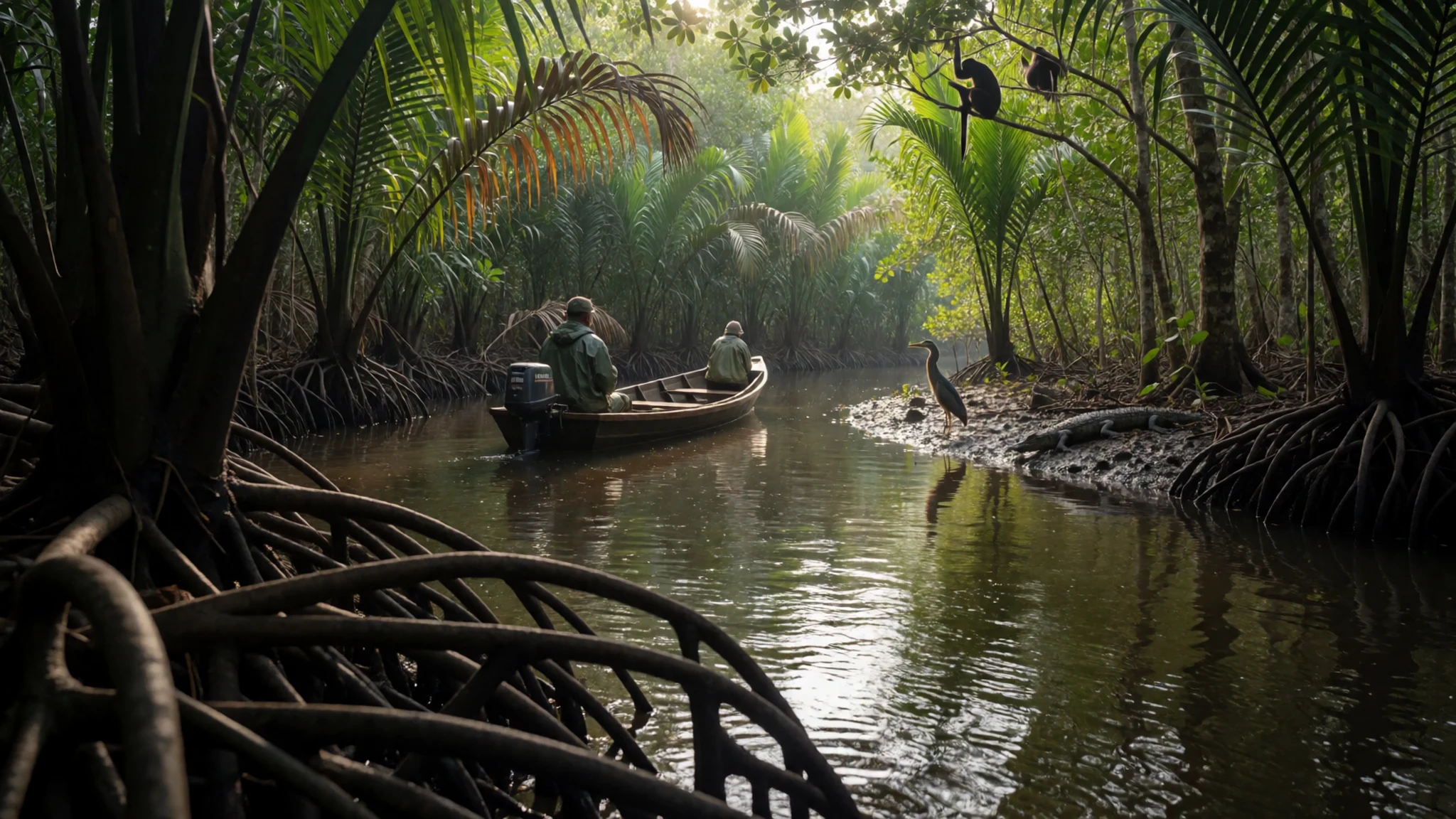
- The nesting beach — Caribbean beach, Tortuguero National Park
Tortuguero's sea beach is a long dark strand with forest immediately behind it and almost no shade. By day it is for walking, not swimming: the surf is strong and the current pulls. In nesting season the same sand is walked at night with a guide, when turtles come ashore to dig and lay. The park sets those hours, and visitors do not go out alone.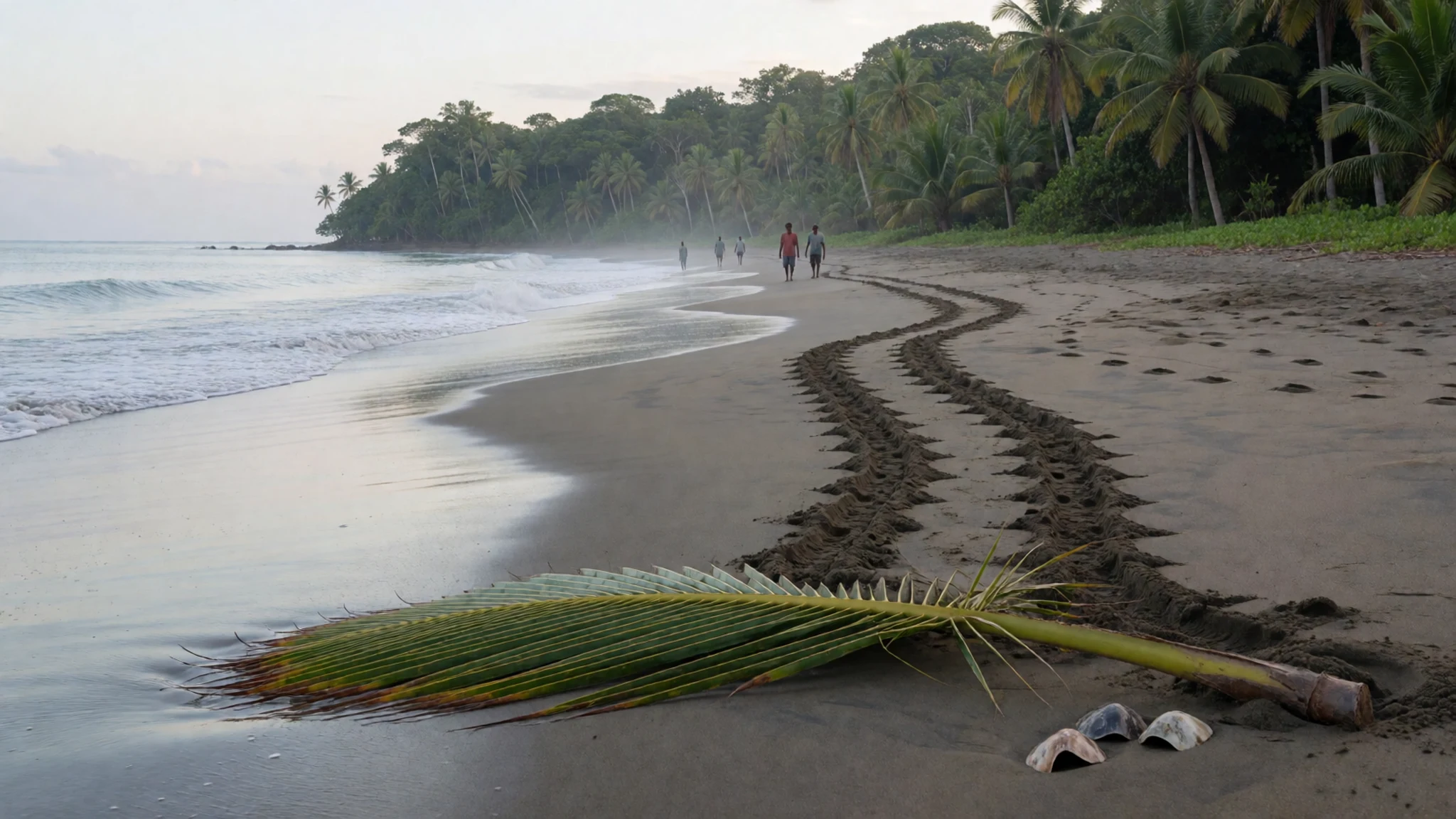
- Palm swamp forest — Tortuguero National Park
Tortuguero's inland face is flooded palm forest, especially manicaria and raffia standing in swamp rather than on firm ground. Trails are few and often boardwalk or boot-deep mud, so most people see this woodland from a boat. The canopy is low and dense, the water dark, and the birdlife — tiger herons among it — is easier to hear than to find.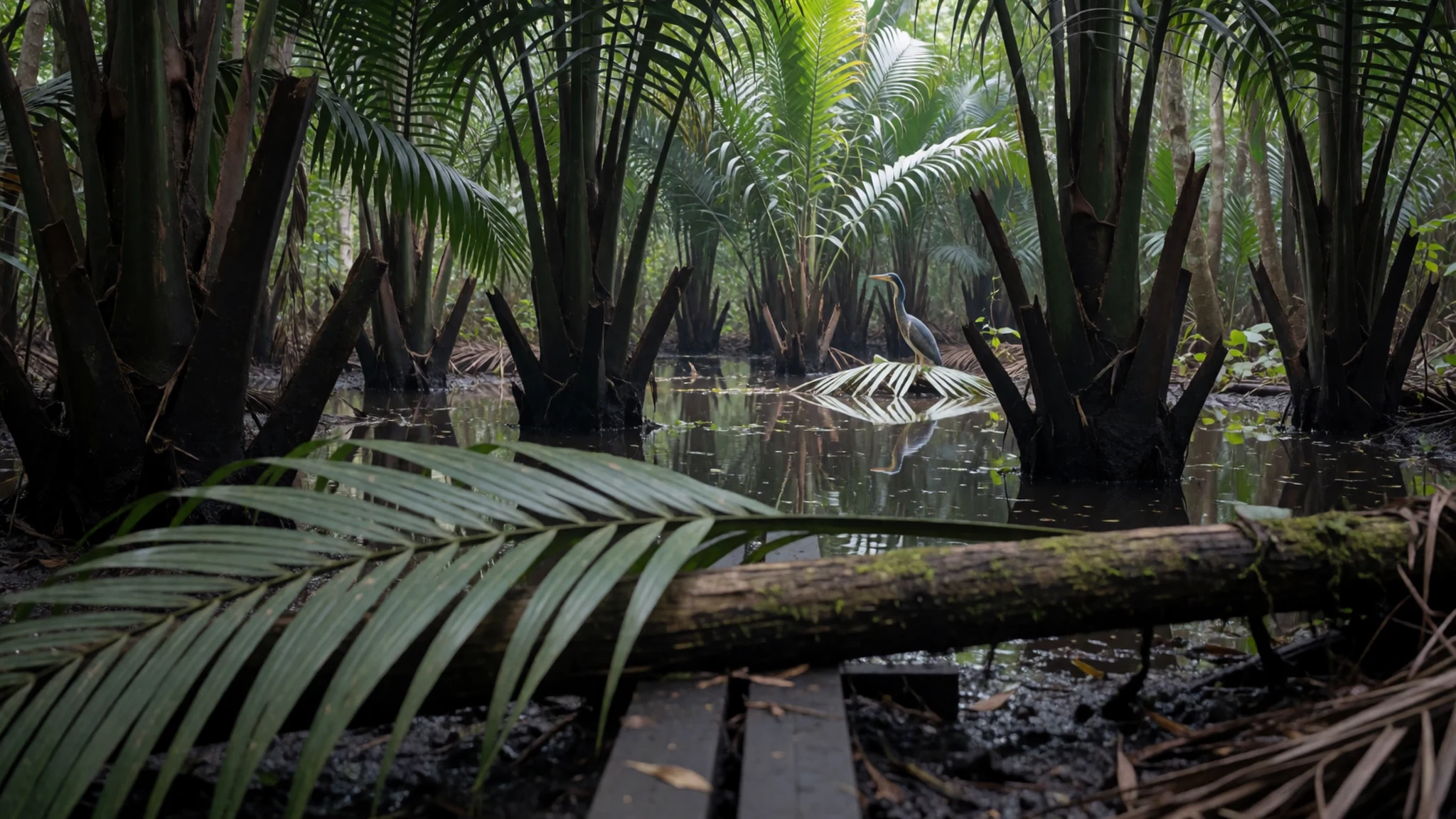
- Cuatro Esquinas — Cuatro Esquinas, Tortuguero village
Cuatro Esquinas is the ranger post where Tortuguero village meets the national park, at the junction of footpath, canal and protected land. It is the practical place to confirm which trails and which beach hours are open. From the post the view runs over water, palms and the low roofs of the settlement. The post is the place to ask before assuming a path or a night walk is allowed.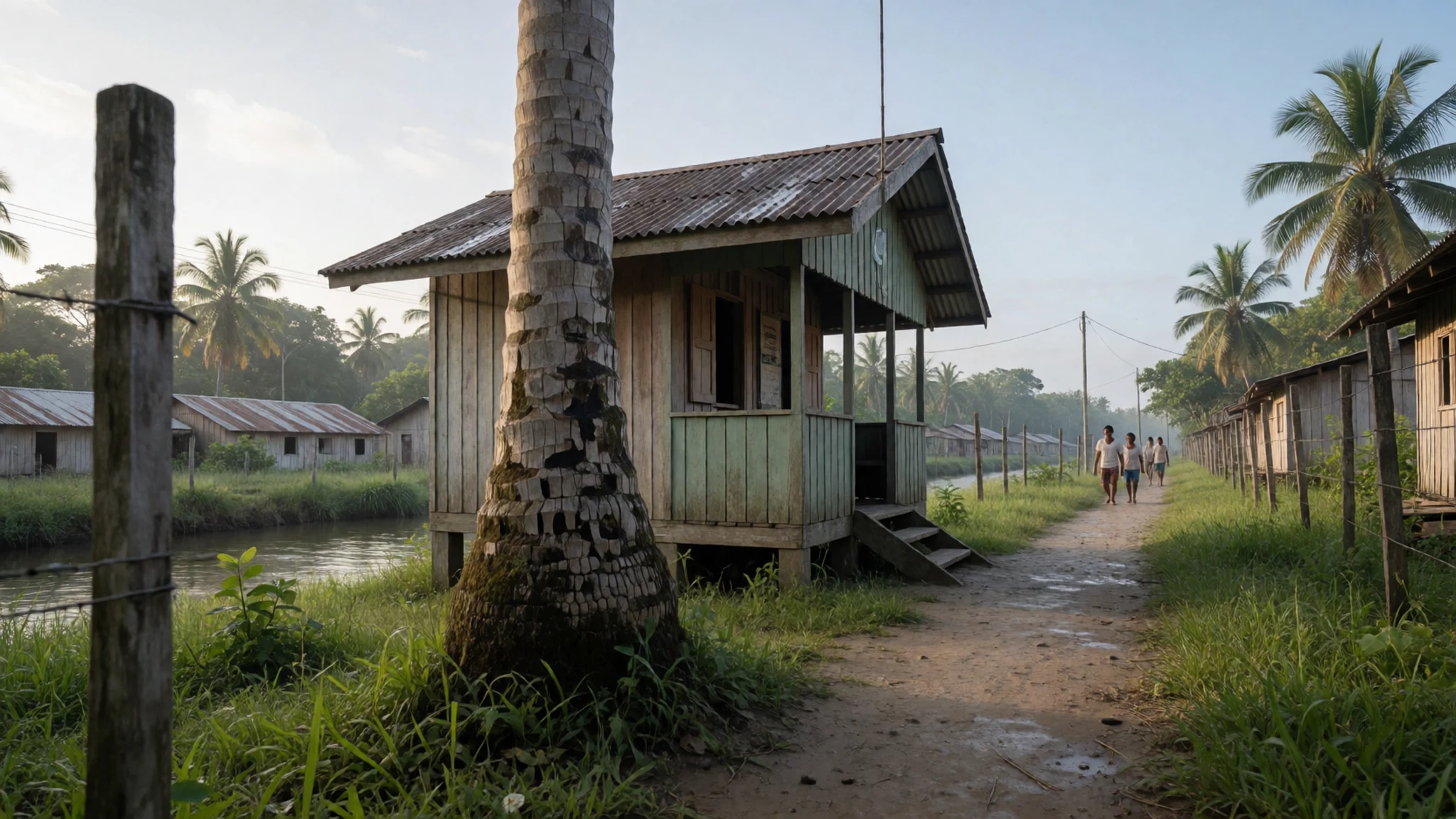
- The Caribbean shore — Caribbean coast, Tortuguero National Park
The Caribbean shore at Tortuguero is the open edge of the park: surf, a belt of coconut palms and forest, and no town behind it. From a boat or from the sand, the coast reads as a continuous green wall. Turtles use this same shore, so it can feel empty even when the village is a short walk inland. The breakers are no place for bathing.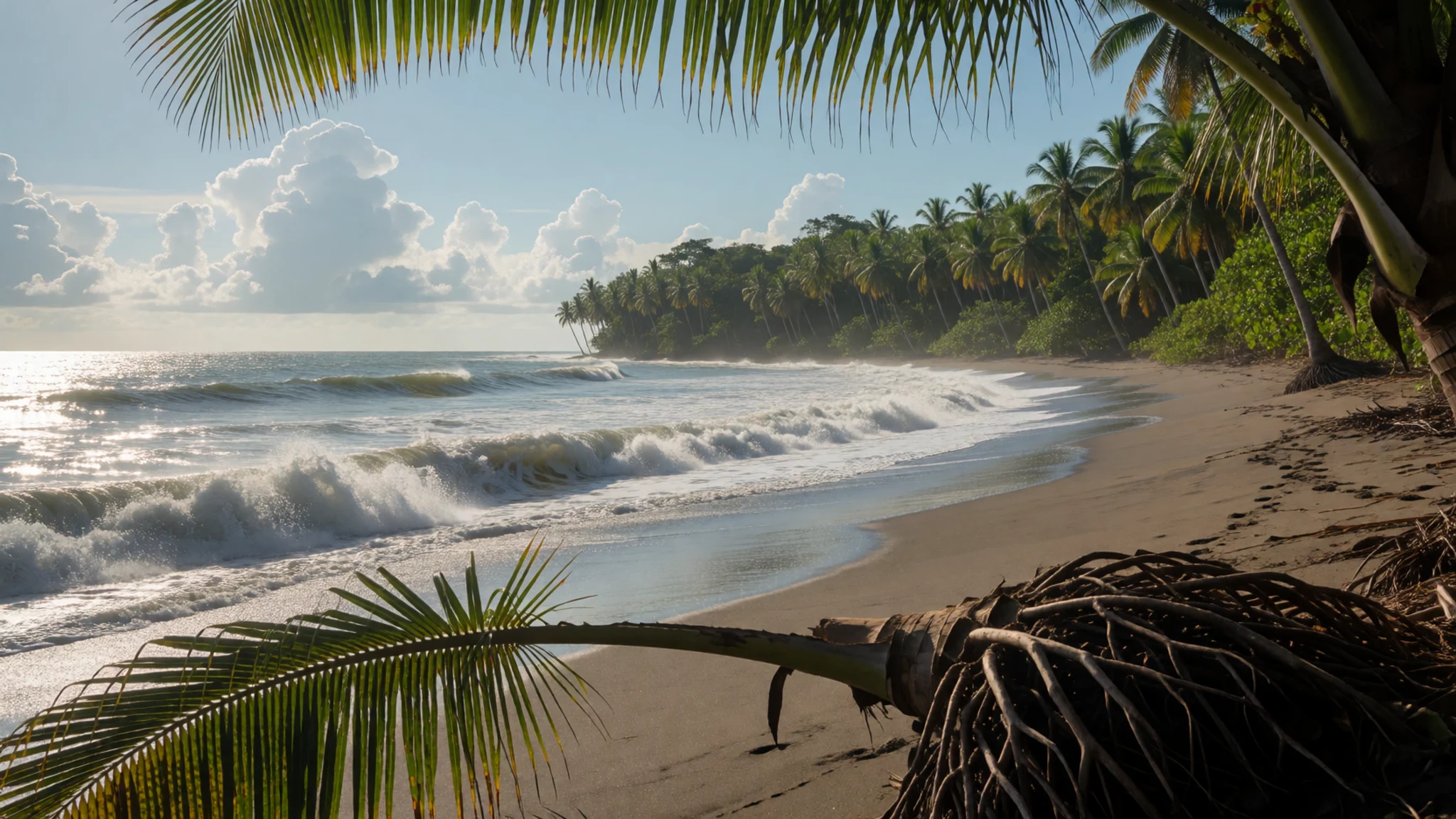
Culture
Tortuguero's culture is Caribbean Costa Rica rather than the highland, Spanish-colonial pattern of the Central Valley. Spanish is the language of signs and the park, while many families also speak an English-based creole of the Limón coast, and the cooking, church life and music lean that way too. The village is small enough that work is visible: boatmen, guides, lodge staff and park rangers pass on the same footpath. Attitudes to the turtles have become part of local manners. Older practice treated eggs and nesting females as food and income; public life now treats the beach at night as a shared duty, and guiding is skilled work with rules, not a casual extra. Religion is present in a low-key way, mostly small Protestant and Catholic congregations, and festivals follow the Costa Rican calendar more than any single village rite. People are direct and unhurried, and the national phrase pura vida is heard here as a real greeting, not a performance. Visitors are expected to fit a place that has no cars, no nightlife strip and a conservation job to do. On a nesting walk, use no white light and take no photographs of turtles unless the guide allows it.
What to wear
Dress in Tortuguero follows the heat, the rain and the work, not a formal costume tradition. There is no single village garment that people put on for visitors. Everyday clothes are light: T-shirts, shorts, cotton dresses and football shirts, with a rain jacket or a plastic poncho kept by the door because showers are assumed. Rubber boots come out for muddy trails and for boat landings; flip-flops handle the footpath when it is dry. Sunday and church bring a cleaner shirt or a simple dress, still in fabrics that can survive humidity. What a visitor should copy is that practical layer, not a folklore outfit. The useful kit is quick-drying clothes, a light long sleeve against mosquitoes and sun, and shoes that can get wet and then walk. Trainers or closed sandals beat heavy hiking boots on the flat ground, but bare feet are a bad idea on canal steps and village docks. For a night beach walk, dark clothing is the considerate choice, with bright colours and white torches left at the lodge so nesting turtles are not startled. A hat and a rain shell matter more here than anything smart.
What to eat
- Caribbean rice and beans — sodas along the village footpath
In Tortuguero this is the Limón version: rice and beans cooked with coconut milk, often served with chicken, fish or a little salad. It is the ordinary plate of the village, not a festive special. Sodas, the simple neighbourhood eateries along the footpath, serve it daily.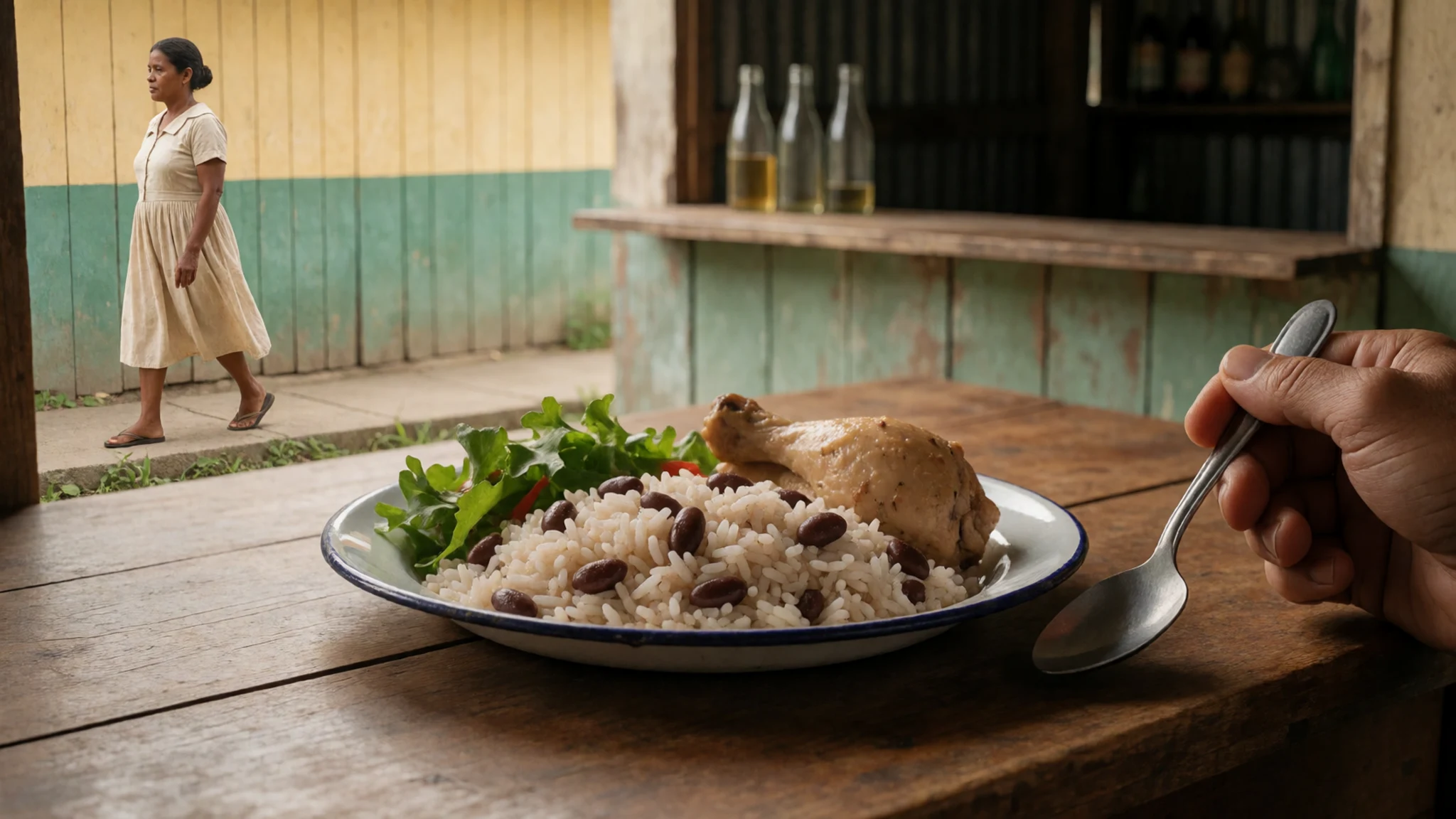
- Rondón — lodges and sodas in the village
Rondón, also called rundown, is a coconut stew from the Caribbean coast, built on fish with root vegetables and plantain. Tortuguero's version depends on what the boats brought in. It is a lodge and soda dish rather than street food, and the coconut is the point, not a garnish.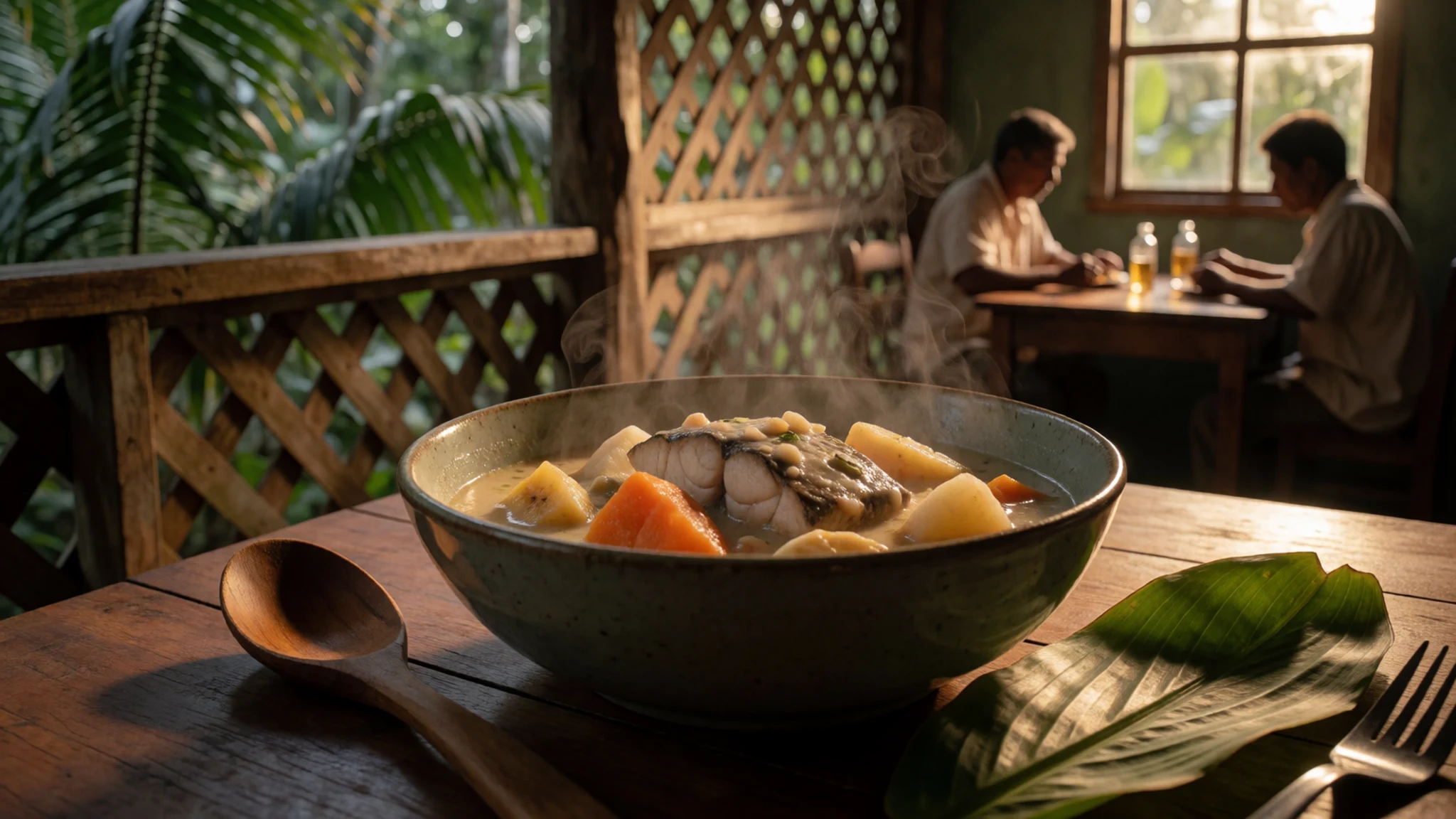
- Whole fried fish — sodas on the village path
Whole fried fish is the straightforward catch plate in Tortuguero, usually a local snapper, crisped and served with patacones or coconut rice. Sodas on the village path cook it when the morning boats have done well. It is meant to be eaten the day it comes in. - Patacones — village sodas
Patacones are green plantains smashed and fried twice until the edges crisp, and in Tortuguero they sit beside fish more often than they are eaten alone. Sodas add them to rice and beans or to the day's catch. They suit the climate: hot, salty and unbothered by humidity. - Patí — bakeries and sodas on the footpath
A patí is a spiced meat turnover from the Limón coast, close to a Jamaican patty, and it travels well on a boat. In Tortuguero, bakeries and sodas on the footpath sell them when baked that morning. The crust should be flaky and the filling still warm.
Plan it
Best time. Tortuguero is wet in every month. February to April is the less rainy stretch on this Caribbean shore, March is the hottest month, October the wettest, and January the most comfortable. February to July is when hawksbill, loggerhead, green and leatherback turtles come ashore here to nest, and the later months of that stretch are wet, so anyone coming for night walks should pack for mud and downpours. Check official park channels before fixing dates, because sea conditions and nesting activity vary.
How long. 2-3
Getting there. Tortuguero has no road from the rest of Costa Rica. The usual route is a flight to San José, a road transfer to a river dock in the northern Caribbean lowlands, and a boat through the canals to the village. A small airstrip beside the village is the other last leg, on a light aircraft. Boat and plane seats are limited, so the last leg needs a booking before the rest of the trip is fixed.
Budget. mid
Tips
- Book the boat or the light aircraft before booking anything else; the village is not a place you can reach on a whim.
- Start canal trips early, when the banks are busier with birds and the rain is often still holding off.
- Bring cash. Small sodas and boatmen are not set up for cards.
- A rain jacket and insect repellent are daily kit, including in the drier months.
- Night turtle walks are guided only; do not plan to wander the beach alone after dark.
Etiquette
- On nesting walks, follow the guide's light rules: no flashes, no white torches, and no approaching a turtle.
- Do not collect shells, plants or anything else from the beach or the canals.
- Ask before photographing people in the village.
Nearby
Sources
- Wikidata (CC0)
- Wikipedia — Tortuguero National Park (CC BY-SA 4.0)
- Wikipedia — Tortuguero, Costa Rica (CC BY-SA 4.0)
- Wikivoyage — Tortuguero (CC BY-SA 4.0)
Wildlife
- Spectacled caiman (animal)
The spectacled caiman is a crocodile cousin with a bony ridge between its eyes, as if it wears a pair of glasses. In Tortuguero you may spot one lying on the mud beside the waterways, its grey, greenish or yellowish skin blending in. The notes give no season or hour, so ask your guide when it is easiest to find. Watch from a slow boat, keep your voice low, stay well back, and never feed it. - Bare-throated tiger heron (animal)
Picture a long-legged bird wading quietly, waiting to catch its dinner: that is the bare-throated tiger heron. Around Tortuguero it works the shallow water, and a boat that drifts slowly gives you the best chance of seeing it. No season or time of day is given, so let your guide advise you. Stay at a respectful distance, whisper rather than shout, and never feed it, however close it seems. - Bare-throated tiger heron (bird)
Picture a long-legged bird wading quietly, waiting to catch its dinner: that is the bare-throated tiger heron. Around Tortuguero it works the shallow water, and a boat that drifts slowly gives you the best chance of seeing it. No season or time of day is given, so let your guide advise you. Stay at a respectful distance, whisper rather than shout, and never feed it, however close it seems.