Río Celeste
Río Celeste, Costa Rica
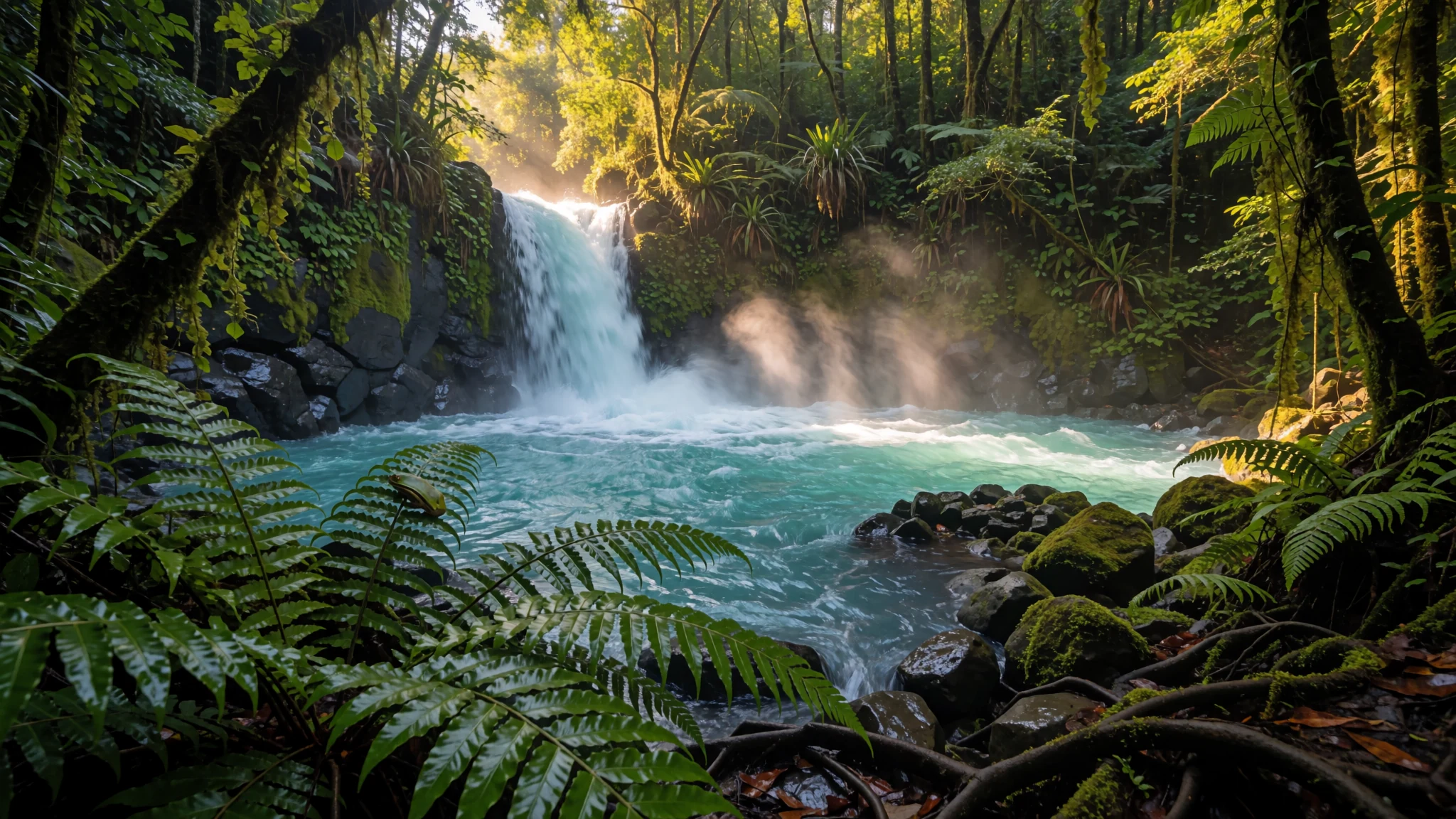
Río Celeste is a small river in northern Costa Rica whose waterfall runs an unreal turquoise, and it is worth the walk through the rainforest to see it.
The place
Río Celeste is a river in the mountains of northern Costa Rica, flowing through rainforest about 1,556 metres above sea level. Its name means sky blue, and on a clear day the water does look that colour. Most visitors come for one view: a waterfall where the river drops over dark rock into a pool of pale turquoise, framed by thick green trees. The area is protected within Tenorio National Park, and the trail to the falls is the reason most people make the trip from the lowland towns and resort villages nearby. The landscape is volcanic and wet. Rain falls for much of the year, and the forest drips, steams and hums with insects and birds. The colour is what people remember, but the walk is part of the experience too: roots, mud, wooden footbridges and the sound of water growing louder as you go. Plan for a full morning rather than a quick stop, bring a waterproof layer, and expect the trail to feel busier around midday when tour groups arrive. Compared with the big-name sites of Central America, it is quiet, leafy and a little damp, which is exactly its appeal for many people. Expect an entry fee and check the official site for current opening arrangements before you travel.
Its story
The blue of Río Celeste is the question everyone asks, and the explanation is more chemistry than legend. The river begins as two streams. One carries water down from the volcanic hills, and the other comes from a hot spring area nearby. Where they meet, the water picks up fine particles released from volcanic rock, along with dissolved minerals. These particles are small enough to stay suspended, and they scatter sunlight in a way that makes the water look pale blue to turquoise, depending on the light and the season. Researchers have studied the river and proposed the mechanism, but the details are still discussed, so treat any single account as a simplified version. The landscape is shaped by volcanic activity: soft ground, steep slopes and a climate that keeps the forest soaked. Protection came through the creation of the national park, which preserves the forest and its wildlife and keeps the land from being cleared for farming. Over time the falls became a well-known natural sight in the country, and the trail has been adjusted to manage the number of visitors. For a traveller, the story is a reminder that striking colours in nature often come from ordinary processes in unusual places. Here it is water meeting volcanic minerals under thick tree cover.
What to see
- The Río Celeste waterfall — Tenorio National Park, the main lookout at the end of the trail
The main attraction is the waterfall itself, where the river drops into a wide pool of turquoise. Viewpoints along the trail let you see the falls from above and below. Stand back from the edge, because the rocks are wet and slippery year round. Mid-morning light tends to show the colour best, though the water changes shade with the weather. Bring a camera with a lens cloth, since spray and humidity can fog it quickly.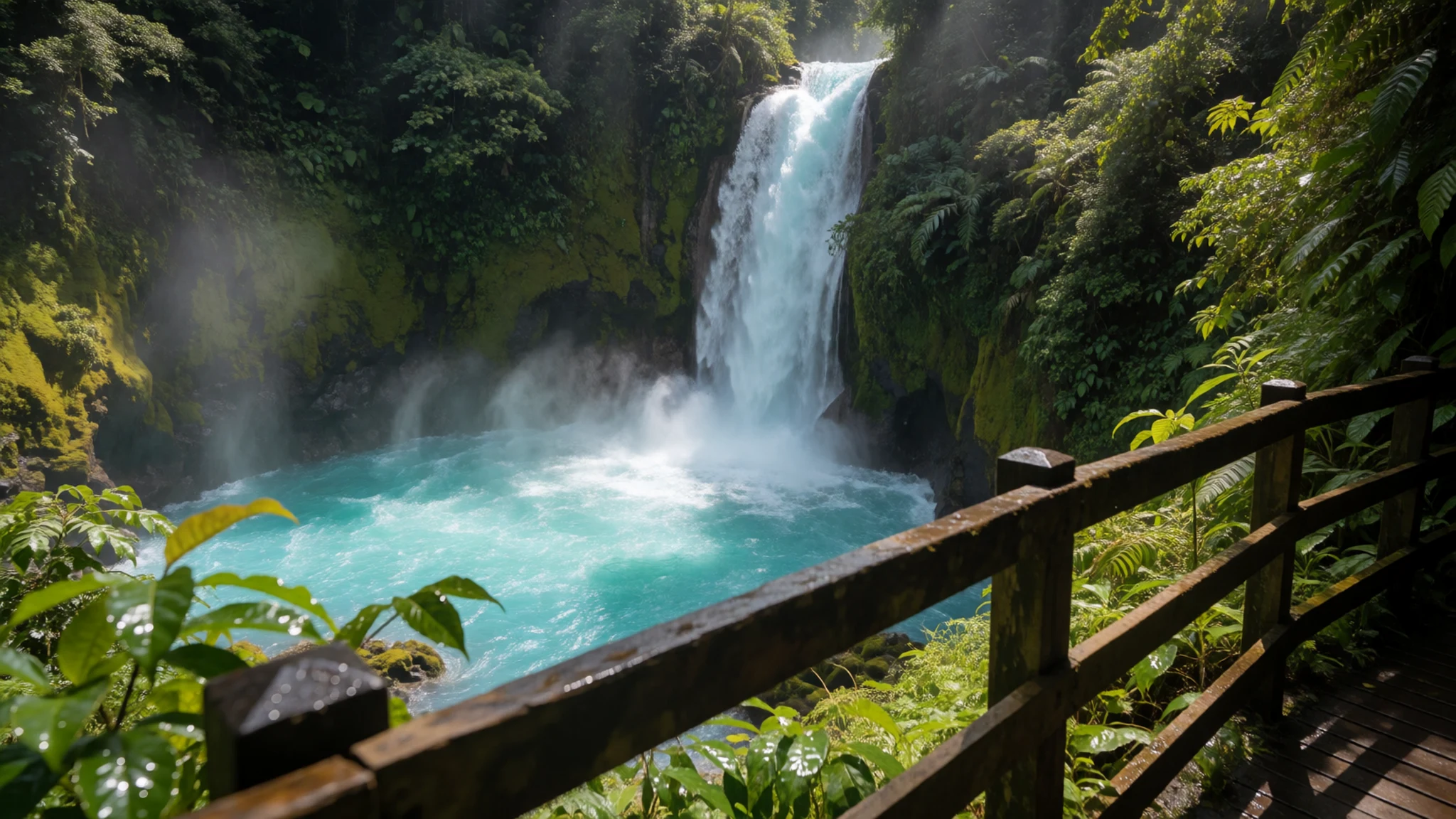
- The confluence of the two streams — The lower part of the trail, where the two streams join
Here the two streams meet, and the water changes colour as the mixing takes place. It is one of the most instructive stretches of the walk, because you can see the blue forming rather than just admiring the finished result. The bank can be muddy, so keep to the marked path and avoid stepping into the water. Pause here on the way back, when the crowds have thinned a little.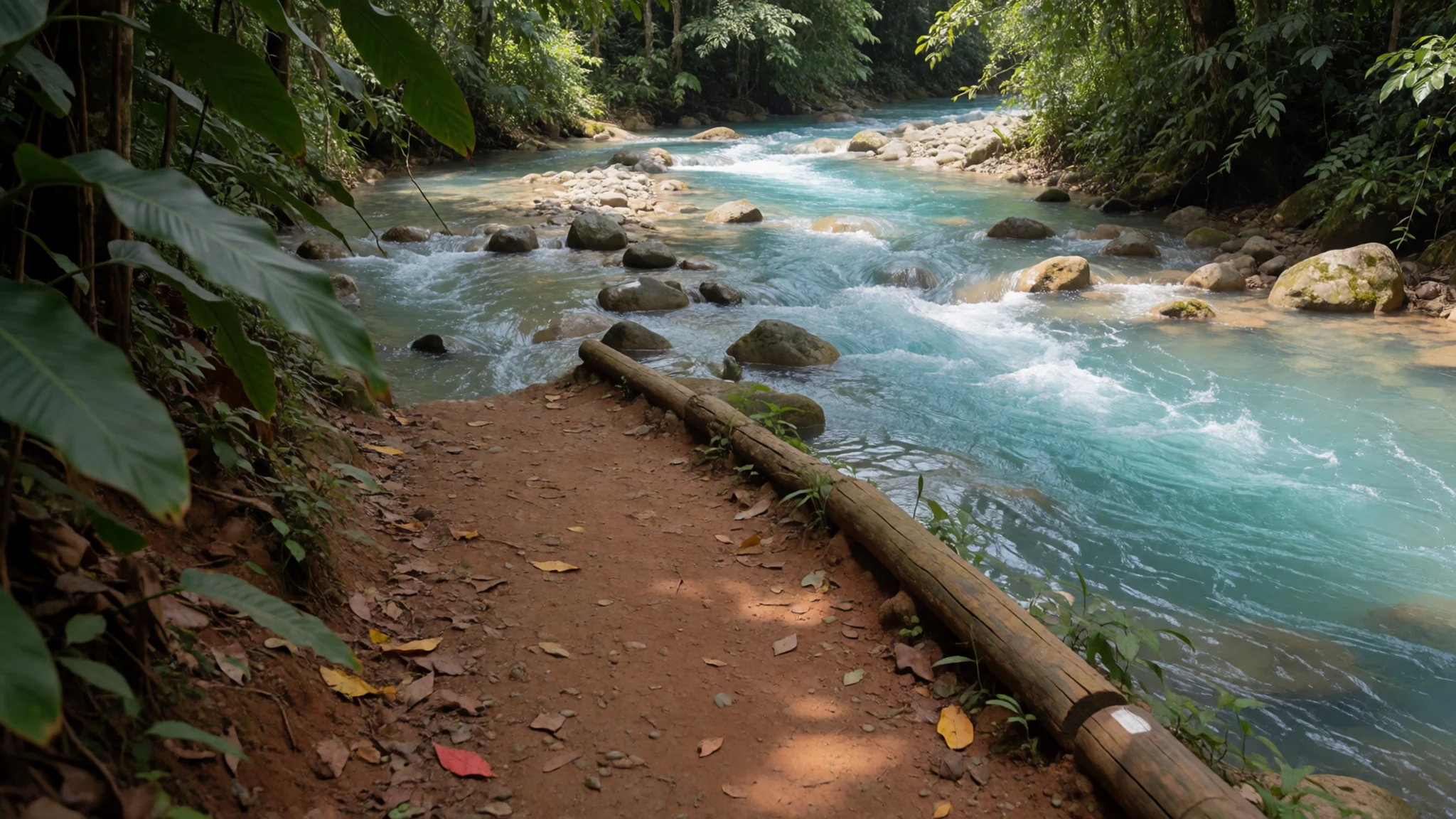
- The forest trail — The marked trail from the park entrance to the falls
The walk to the falls runs through primary and regenerating rainforest, with roots, stones and muddy sections. Wooden boardwalks help in the wettest parts. Good footwear with grip matters more than fitness, and the climb is steady rather than steep. Allow time to stop and listen, because the canopy holds a surprising amount of life.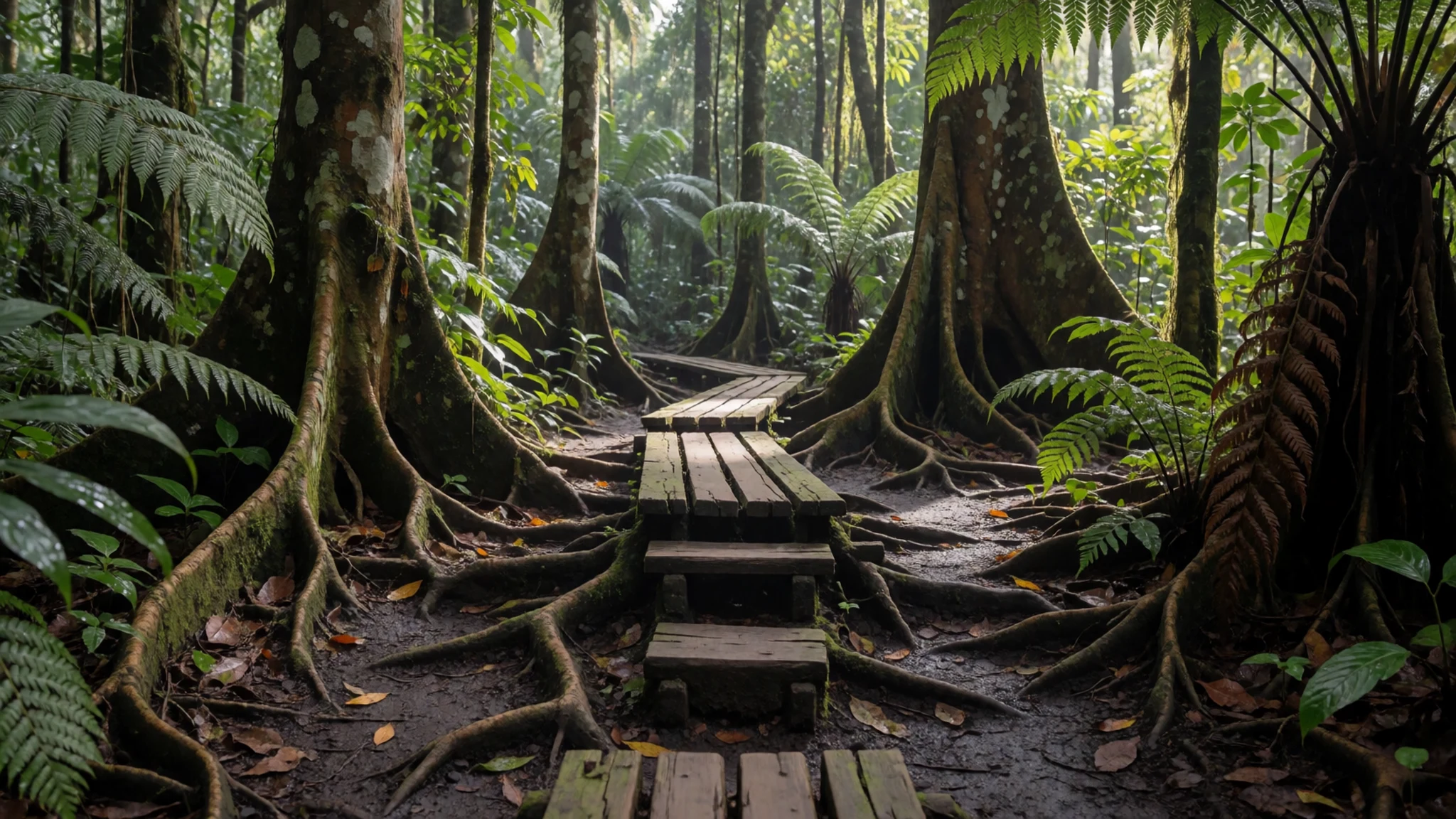
- The hot spring area — The upper section of the trail, near the source area
Near the upper part of the route, hot springs and bubbling pools give off steam and a faint sulphur smell. The water is hot, so do not touch it or let children wander near the edges. The contrast with the cool, clear river is striking, and it helps explain the volcanic character of the whole valley. Keep to the path, which is there for your safety as well as the landscape's.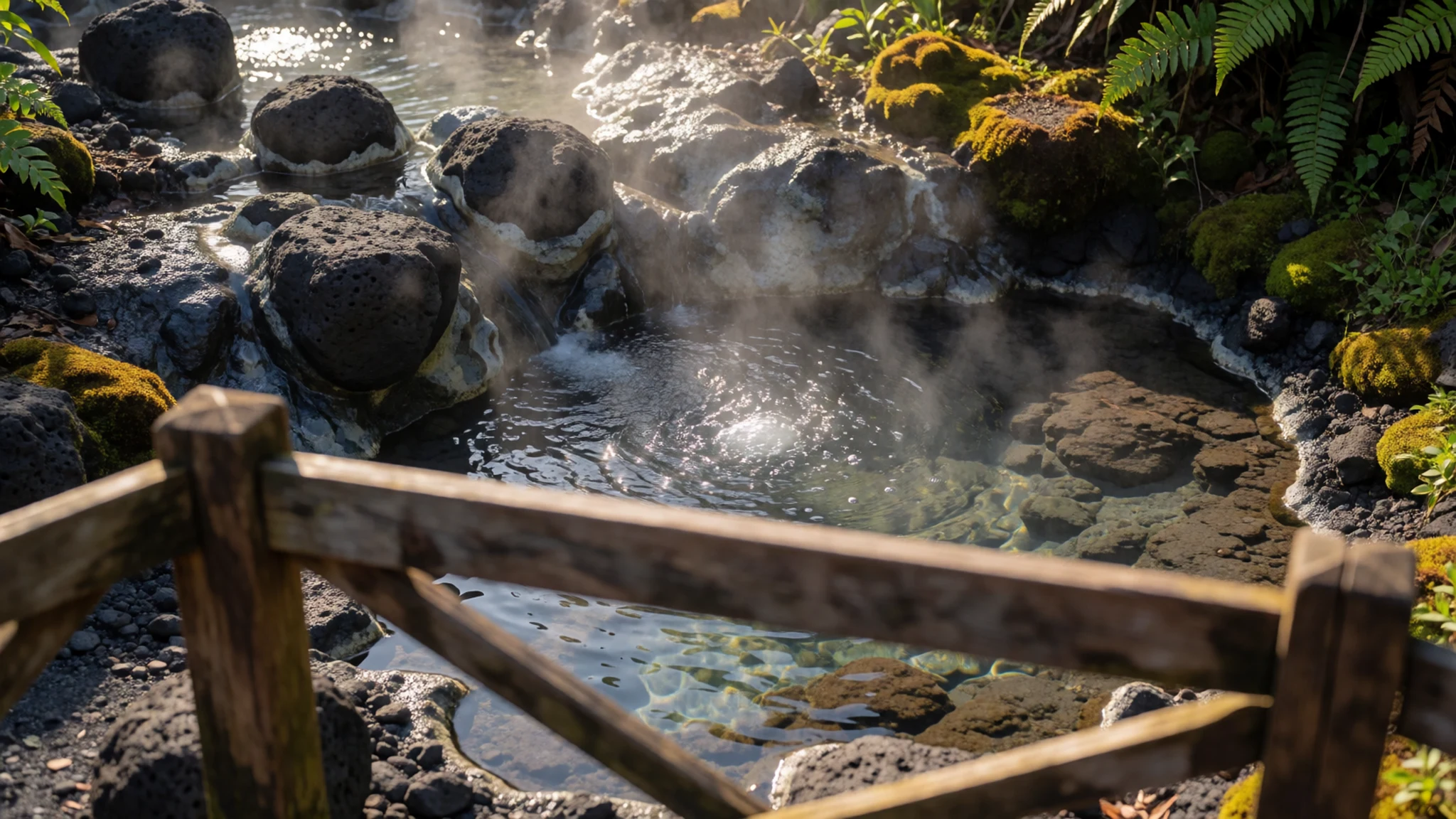
- Birdlife and wildlife on the walk — The forest canopy and understory along the trail
Keep your eyes on the treetops and the undergrowth. Birds are the most common sightings, and you may also spot lizards, butterflies and insects that thrive in the damp air. Mammals are harder to find, so do not expect guaranteed encounters. Quiet walkers see more, so pause occasionally, speak softly and resist the urge to crowd wildlife for a photograph.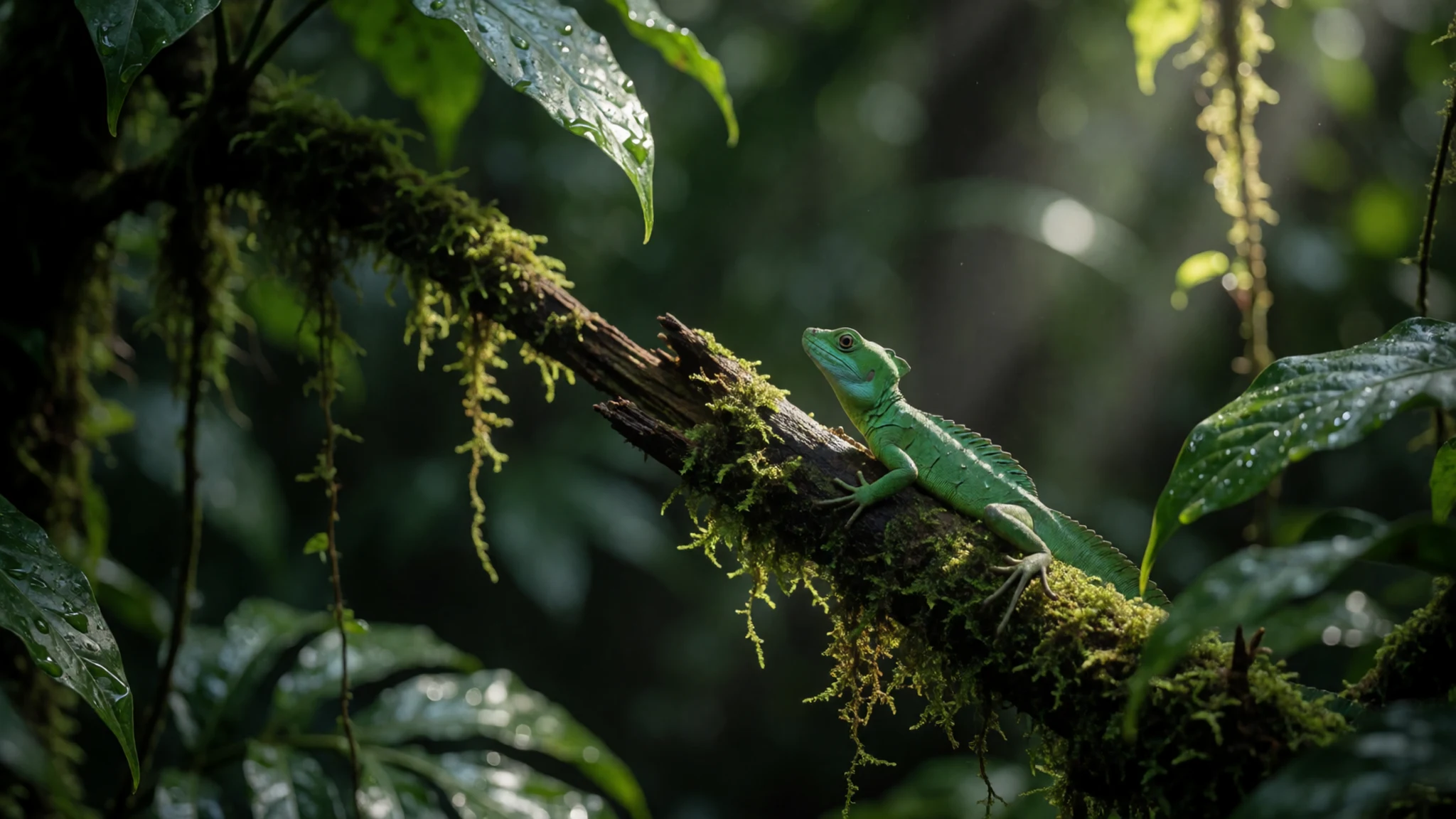
Culture
Costa Rica is known for its relaxed, friendly approach to life, often summed up by the phrase pura vida, and the same easy pace shapes visits to Río Celeste. Most people you meet on the trail, at the park entrance or in the nearby villages will be Costa Rican, working in tourism, farming or conservation. Spanish is the everyday language, and a simple greeting such as buenos días goes a long way at the entrance and in shops. The park is run to protect a sensitive forest and water system, and rangers expect visitors to follow the rules, which include staying on marked paths and respecting closures. Tour groups can be large, so be patient on narrow sections and let faster walkers pass where it is safe. Tipping in restaurants is customary, and guides usually expect a tip if they have been helpful. Please stay on the marked trail and carry out everything you bring in, since the forest and the water are fragile.
What to wear
Traditional dress in Costa Rica varies by region. The best-known style is the sanjuanero dress of Guanacaste, a bright, full cotton skirt and fitted blouse with ruffles and patterned fabric, worn at festivals and folk dances. Textiles are mostly cotton, chosen for coolness and colour rather than ornament, and the patterns often echo rural life and local celebrations. Few people wear these clothes day to day now, but they still appear at cultural events, school parades and fairs. Everyday dress in the area is practical: jeans or shorts, t-shirts, sandals and sometimes rubber boots when the ground is wet. For a visitor, the priority is the terrain and the climate. Wear quick-drying layers, a lightweight waterproof jacket and closed shoes with good grip, since the trail is muddy and slippery. Carry a swimsuit under your clothes if you plan to swim, and add sun protection and insect repellent. Modesty is relaxed at the park, but cover up in the villages and at any restaurant away from the beach.
What to eat
- Casado — A soda, the small local eatery found in villages near the park
The everyday lunch of Costa Rica is a plate of rice and black beans, served with a choice of meat or fish, a salad and sometimes plantain. It is hearty and fills you up before a long walk or a drive back. Portions are generous, so it is worth sharing if you are only snacking. Most local eateries serve it at midday.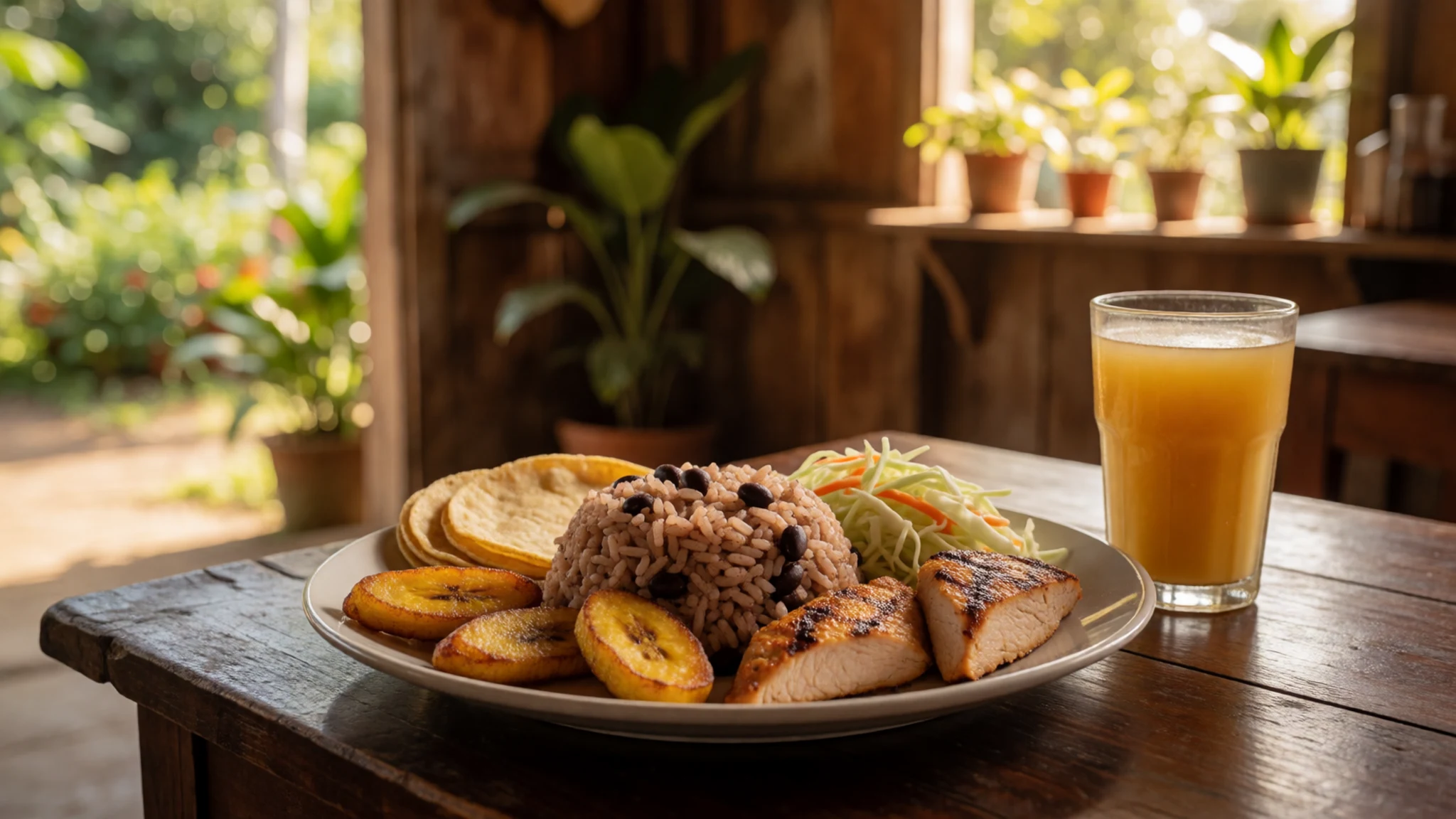
- Gallo pinto — Breakfast at a soda or a guesthouse dining room in the nearby villages
Rice and black beans fried together with onion, sweet pepper and coriander, then served for breakfast with eggs, fried plantain and fresh cheese. It is simple, savoury and reliable. Many guesthouses and sodas serve it first thing, which suits an early start to the trail.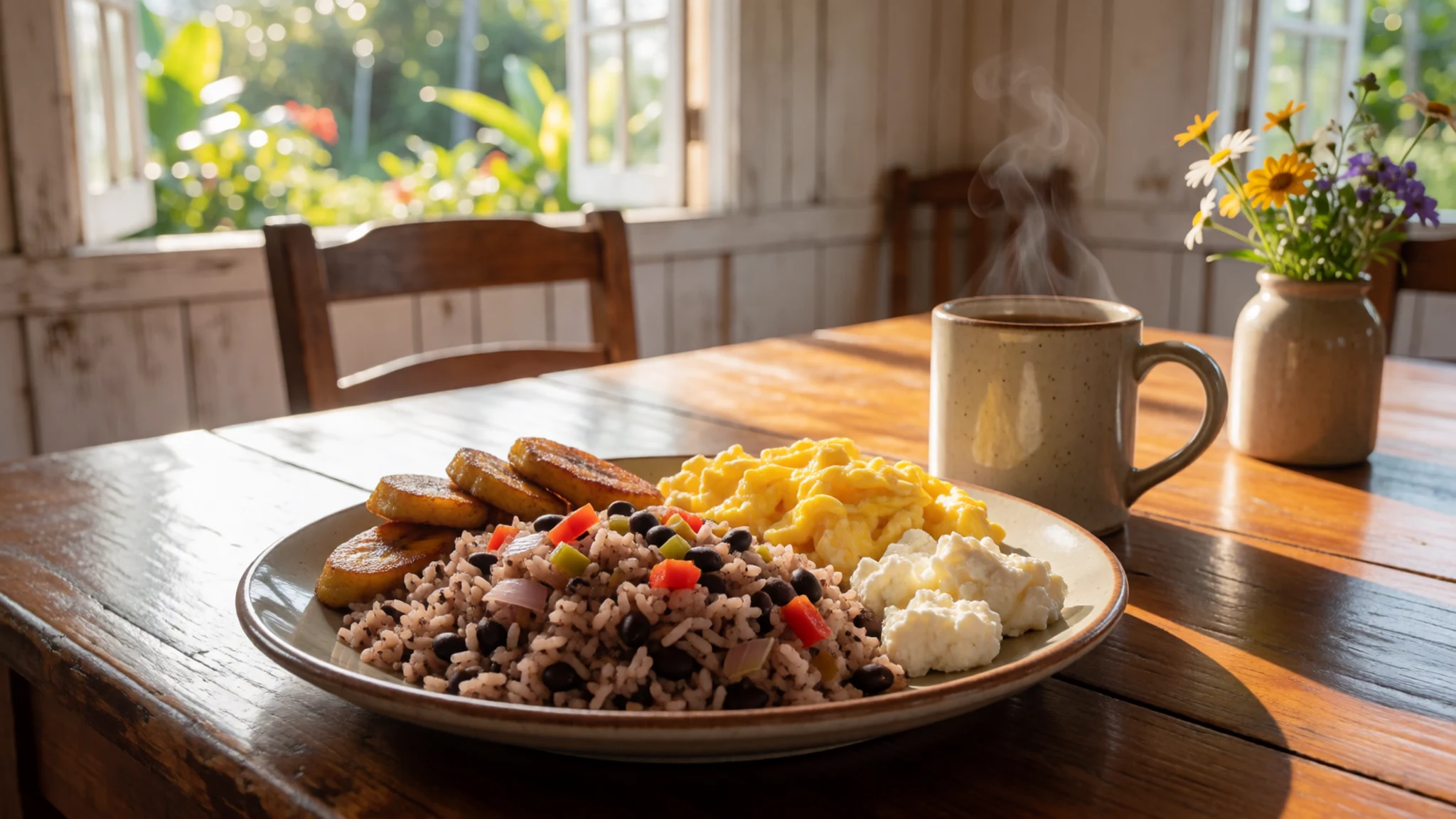
- Fresh fruit drinks — Roadside stands and small markets along the route into the park
Refrescos naturales are blended fruit drinks made with water or milk and a little sugar. Common flavours include tamarind, passion fruit and guava. They are refreshing after a hot, humid walk, and they are usually made fresh in front of you. - Chifrijo — Bars and casual sodas in the nearby towns, particularly in the evening
A popular snack that layers rice, black beans, pork cracklings and pico de gallo in a bowl, often topped with avocado. It is a Costa Rican favourite, usually served at bars and sodas in the evening. It makes a good dinner after a day on the trail.
Plan it
Best time. The drier months from about January to April are easiest for walking, with clearer skies and firmer paths. The green season from May to November brings heavier rain and a fuller river, which can make the trail muddier but the falls more dramatic. Expect humidity year round.
How long. 1–2
Getting there. Fly into Liberia's Daniel Oduber Quirós International Airport, then take a shuttle, taxi or hire car to the park area, a drive of a few hours on mixed roads. Public buses reach the nearby villages, with a final stretch on foot or by taxi.
Budget. mid
Tips
- Start early to beat the midday tour groups and the heat
- Book transport and any guided visit in advance during peak season
- Bring cash for small stands, as cards are not always accepted
- Carry plenty of water and wear waterproof footwear with grip
Etiquette
- Stay on the marked trail and respect the rangers' instructions
- Keep noise low so you can hear the forest and any wildlife
Nearby
Sources
- Wikidata Q23747022 (CC0)
- Cephas, Celeste River fall (photo) (CC BY-SA 4.0)
- Wikipedia (CC BY-SA 4.0)
- Wikivoyage (CC BY-SA 4.0)
