Manuel Antonio National Park
Manuel Antonio National Park, Costa Rica
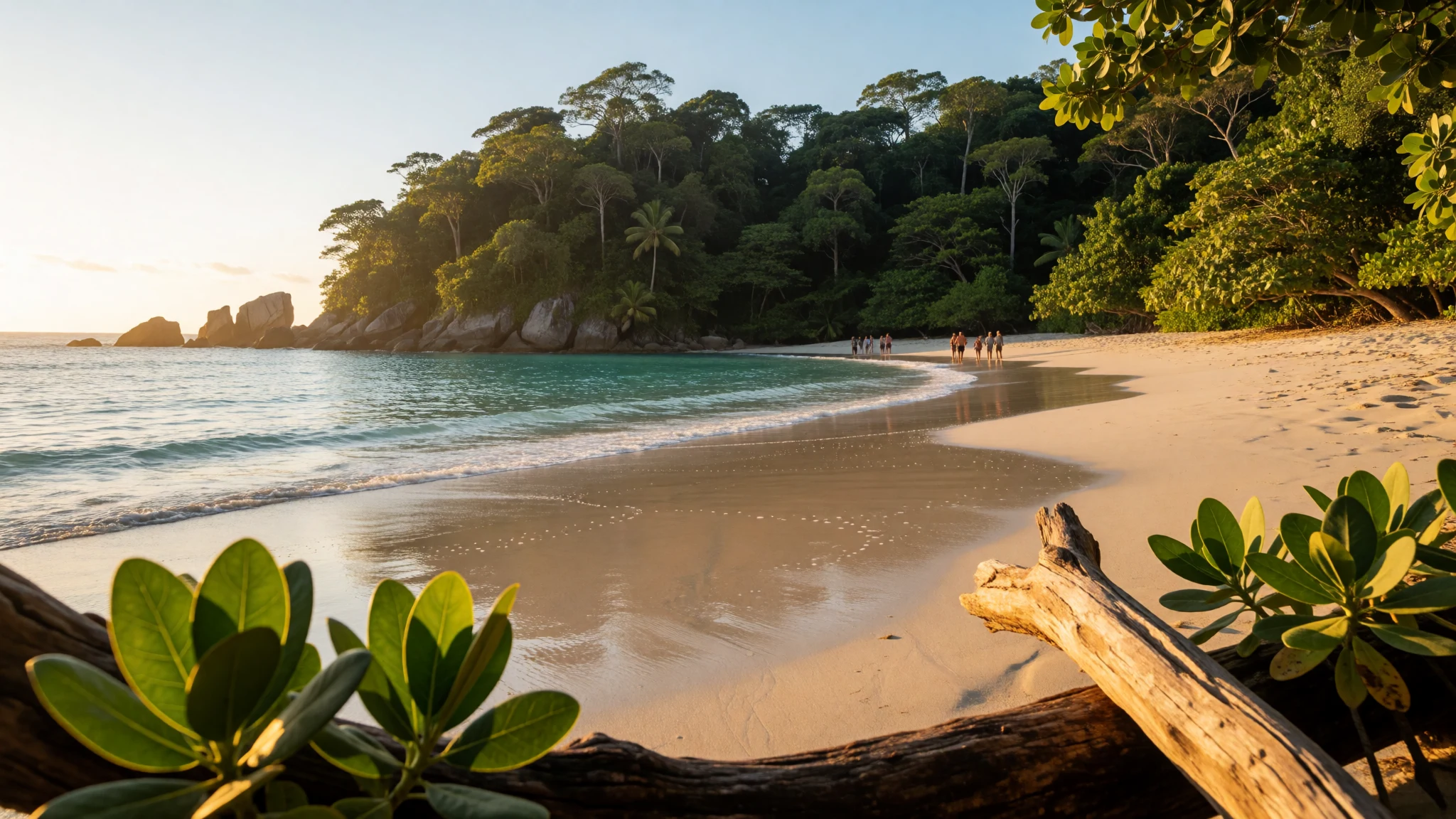
Manuel Antonio packs beach time and jungle trails into a small park, with wildlife encounters that feel close-up.
The place
Manuel Antonio National Park (Parque Nacional Manuel Antonio) is a small coastal park on Costa Rica’s Central Pacific, a short distance south of Quepos and far enough from the bustle that the rainforest still feels like it’s breathing. It was established in 1972 after local community pressure to protect the area by limiting development and destruction, at a time when the coast was shaped by outside ownership and restrictions.
The park’s appeal is the mix: tropical forest right beside the shoreline, rocky inlets, and short hiking routes that lead to viewpoints and peninsula edges. Because it’s small in area yet heavy on visitors, the experience can swing quickly between quiet moments and busy ones—especially around the main beach area, where people arrive in waves and linger for swimming.
Wildlife is a big part of the draw. Capuchin monkeys, coatis and other animals share the trails and edges of the beach, and sightings are most reliable with a guide who can read the forest. That closeness also means the park runs on responsible behaviour: animals here are used to people, and that can turn tense if visitors treat wildlife like entertainment rather than wild neighbours.
Practical reality check: there’s no need for complex logistics inside the park, but the basics matter—plan for sun, carry water, and expect the heat to rise fast in open coastal stretches. Crowds can be intense in peak season, so early starts and a bit of patience go a long way.
Its story
Manuel Antonio often starts like a beach day and turns into a forest walk before lunch. The entrances and main paths funnel people towards the shore, and for a while it feels like everyone is sharing the same script: arrive, cool off, then wander back into the green. The surprise is how quickly the scenery shifts from bright surf to shaded, leafy trails where your senses wake up—bird calls, insect buzz, and the soft rustle that might be nothing… or might be a monkey making a move.
In good weather the park feels easy to love because the routes are short and well marked. With a guide, wildlife watching becomes less random: someone with a naturalist background can point out movement in the canopy and help the group stay respectful. Without that help, the park can feel busier and more chaotic, because people move slowly when they’re looking for animals and then suddenly speed up when a sighting sparks excitement.
The flip side is that Manuel Antonio has a reputation for being overcrowded, and that matches what many visitors feel on the ground—trails can be crowded, and animals can become bold when they associate humans with food. Lunch becomes a little tricky, too. Food left unattended, opened bags, or curiosity around wildlife can all create problems, and the park’s resident animals are clearly willing to try.
By the time the day winds down, the best feeling is often simple: the ocean air, the jungle shadows, and that moment when the beach noise fades and the forest returns to itself.
What to see
- Main park beaches & shoreline bays — Park coastline (main beach access)
Manuel Antonio’s main beach zones are reached via an interior approach, with white sand and close jungle-to-water scenery. Expect gentle surf in places and no lifeguards, so swim within comfort and conditions.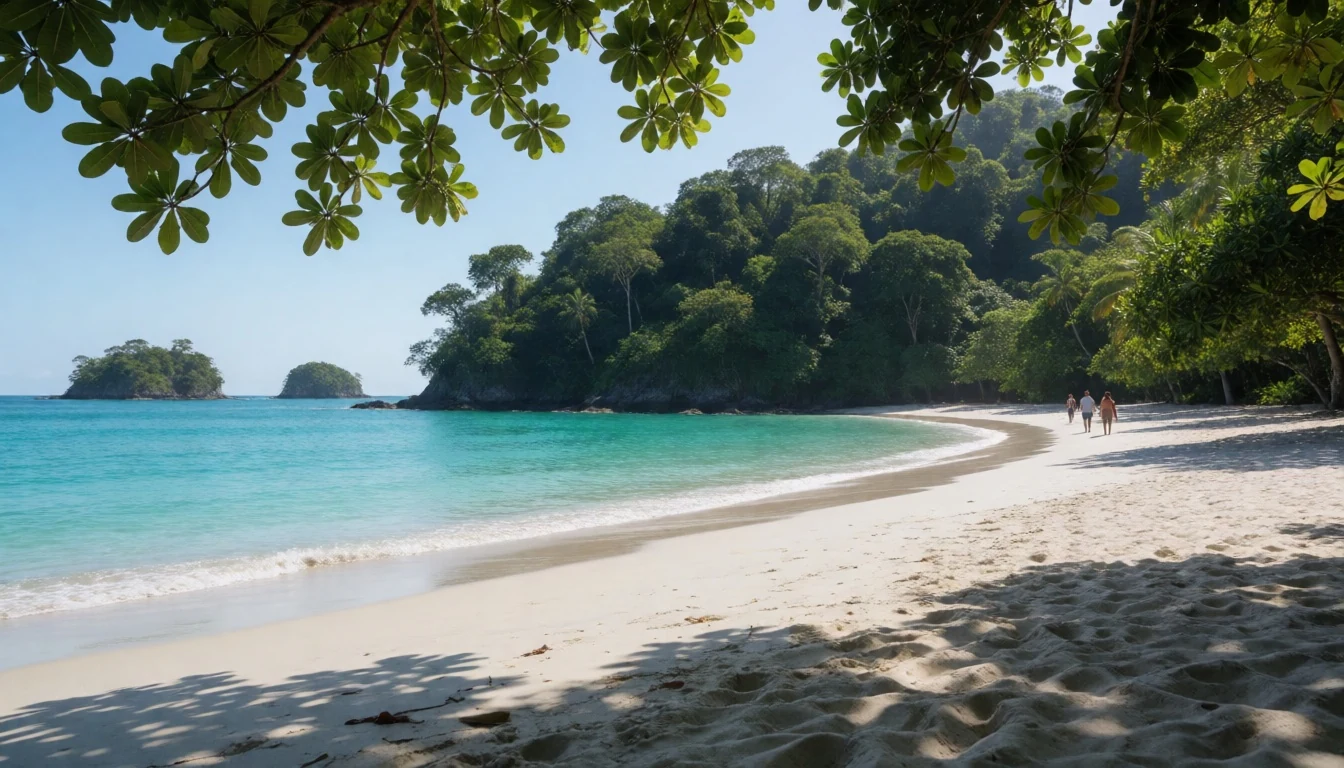
- Hiking trails (short routes) — Forest trails & peninsula edges
Several short, clearly marked trails connect viewpoints and peninsula edges. The popular routes are manageable for a half day, and continuing on other paths often feels quieter once the first wave moves on.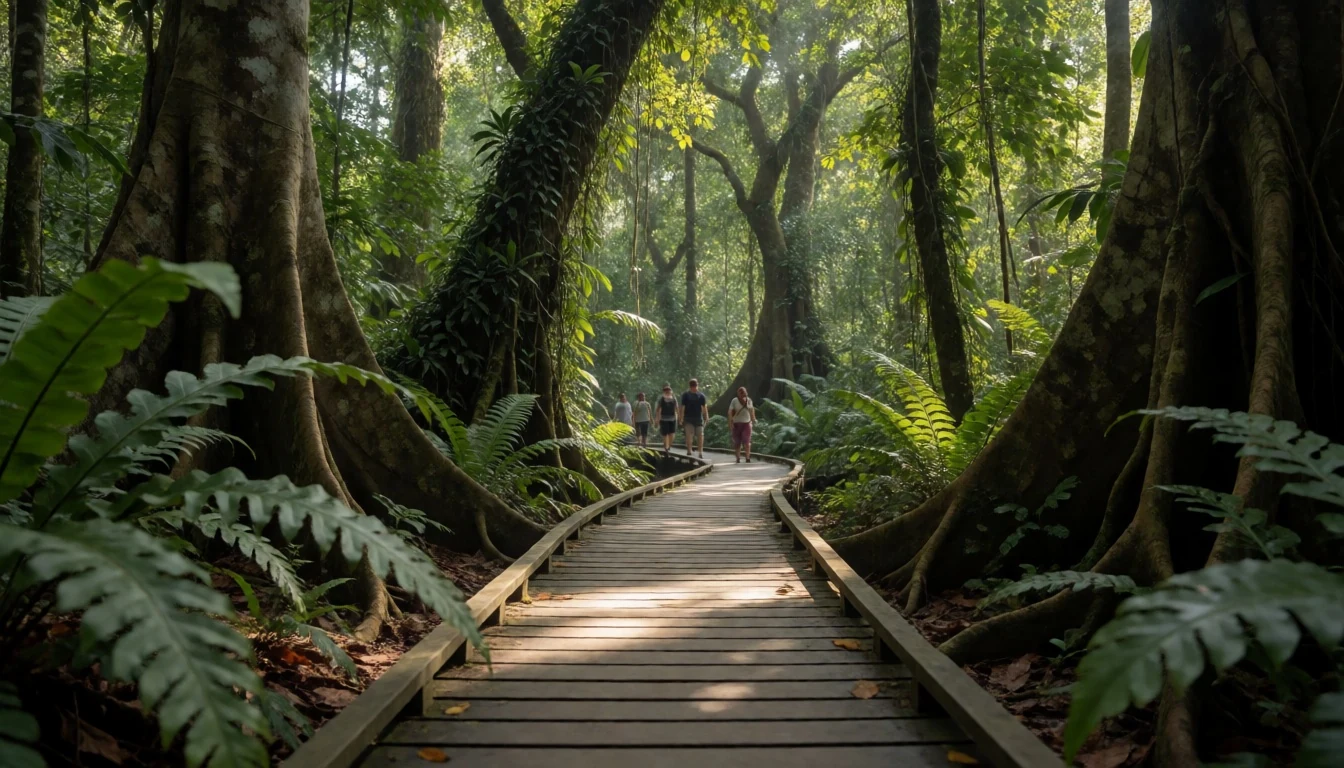
- Wildlife watching with a naturalist guide — Rainforest interiors & trail edges
A certified naturalist guide helps turn “maybe we’ll see something” into more consistent encounters. The best results usually come from slow walking, scanning the canopy, and letting animals keep their space.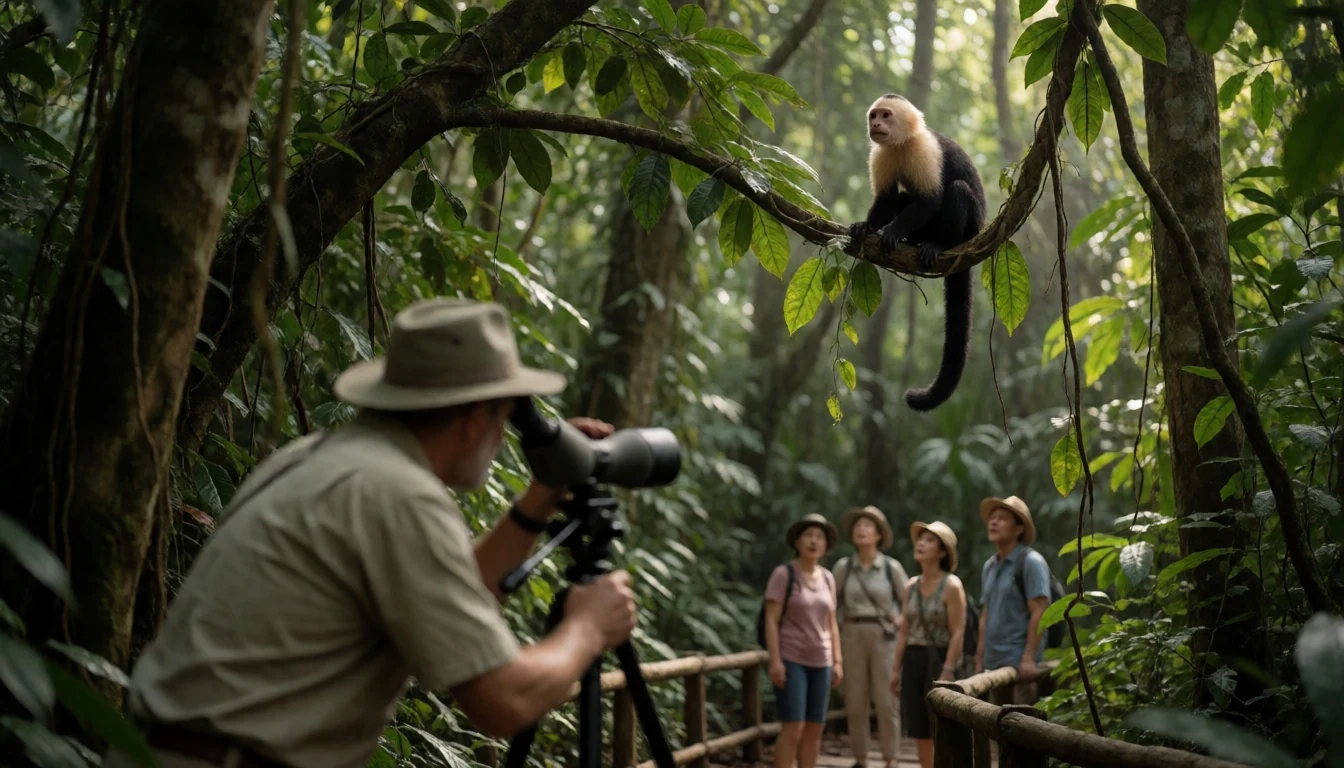
- Puerto Escondido area (outside views) — Coastal area near the park approach
Across the broader coastline scene, Puerto Escondido is part of the wider beach landscape you pass on the way in. Here, the vibe can be more active with services and larger waves—different from the protected-feeling park beaches.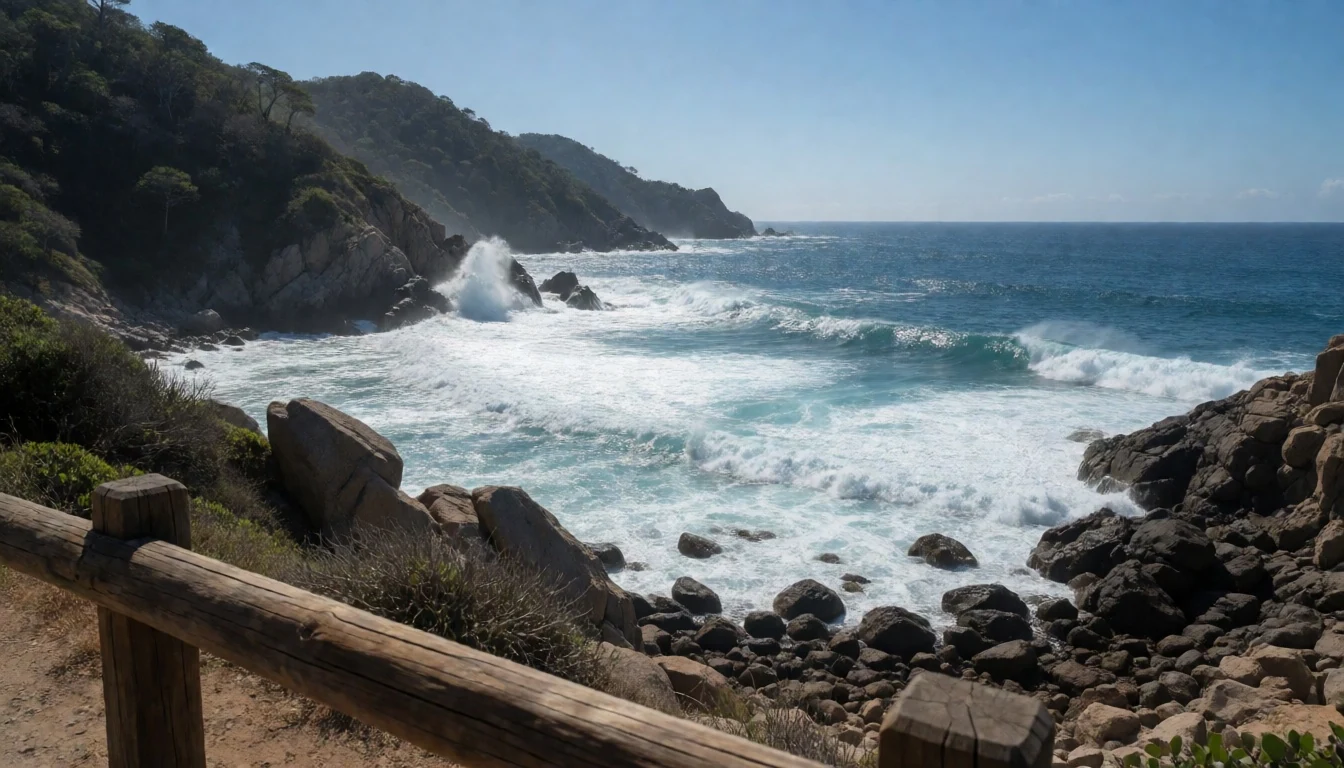
- Rocky coast & rainforest edge (photo stops) — Rocky shoreline & forest boundary
The boundary where rocky edges meet the tropical forest makes great photo material: contrasting textures, patchy light under trees, and ocean colour that changes minute by minute. Go slowly and keep distance.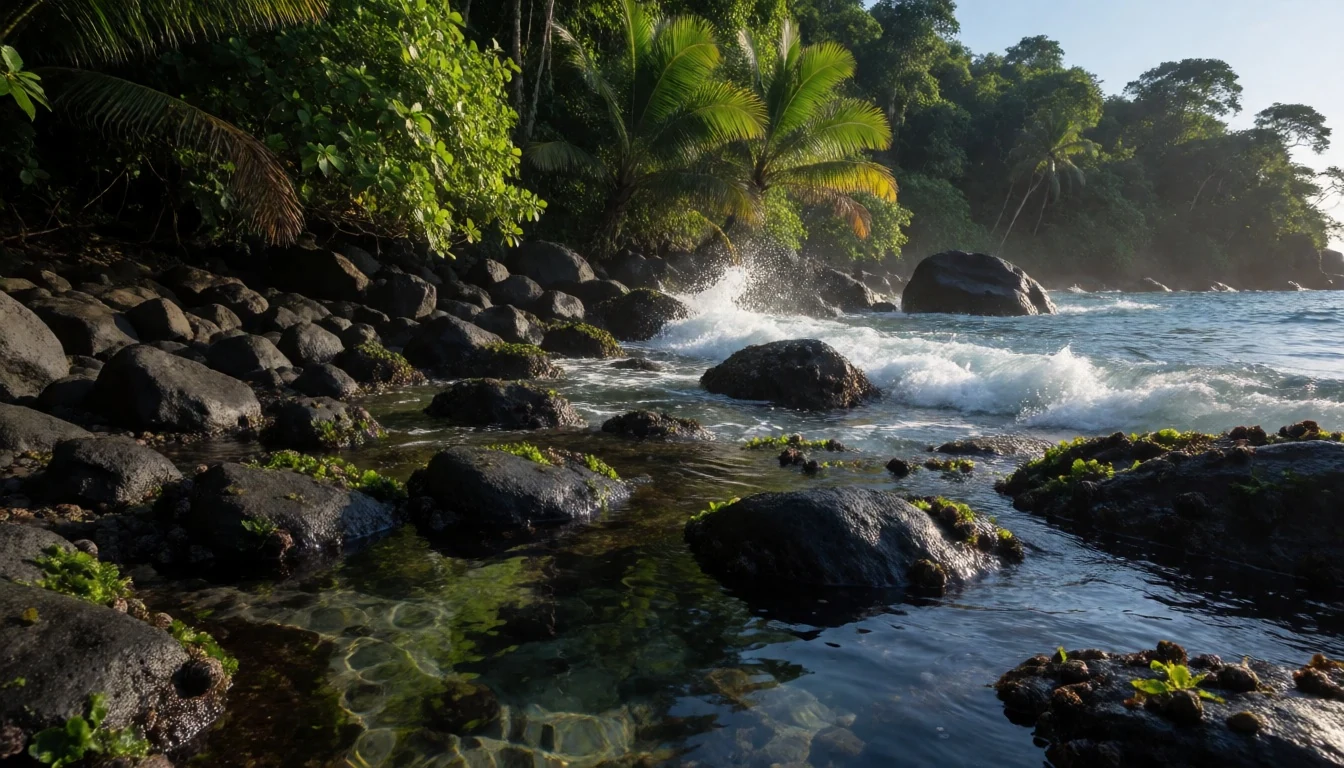
Culture
Manuel Antonio National Park runs on a simple idea: wildlife and visitors share the same space, and the balance depends on how people behave. The animals here are not “props”. They wander the trails, scavenge around human activity, and can become persistent if they learn that bags contain snacks. That’s why the park community treats feeding as a hard no.
Crowd management is another cultural reality. Trails are narrow enough that groups meet and overlap, especially near the shore and on the most popular walk segments. It helps to pause, let others pass, and avoid pushing forward when someone has spotted movement. When people rush toward a monkey or reach out with food, everyone’s trip gets less pleasant and the animals’ behaviour can change.
Beach culture is also straightforward: there are no lifeguards at the main beaches, and there are no marker buoys signalling swim limits. That means swimming needs personal judgement and comfort with ocean conditions.
Visitor etiquette line: Do not feed monkeys or other wildlife, and keep food zipped away so animals aren’t tempted to approach people.
What to wear
In Manuel Antonio, clothing is about rainforest comfort and coastal practicality more than style. Traditional dress isn’t a big feature in day-to-day park life, so what people actually wear is usually sun-ready and quick-drying: breathable tops, shorts or lightweight trousers, and flip-flops or sandals for moving between beach and trail edges.
That said, the park’s terrain rewards sturdier footwear. Trails are well marked but can still be uneven where roots and rocky sections meet. If there’s a wet patch, slick sandals become a struggle. A lightweight water-friendly shoe or trainers with grip makes a noticeable difference.
For visitors, the smart kit is: a hat, sunscreen, and a light layer for the shade under the trees. Since open beach stretches can get hot, go for breathable fabric rather than heavy cotton. Carry a small dry bag for phone and valuables—because animals may investigate anything that looks edible.
If planning to swim, bring swimwear and a cover-up that’s easy to rinse. The key wardrobe idea is modest, practical movement with secure storage—because the park’s wildlife may treat unsecured bags as a snack option.
What to eat
- Grab-and-go lunches just outside the park — Outside the park perimeter
Since food and drinks aren’t available inside Manuel Antonio, most people eat nearby. Look for casual options around the perimeter area that suit a beach-and-trails day—simple sandwiches, fruit, and drinks for refuelling.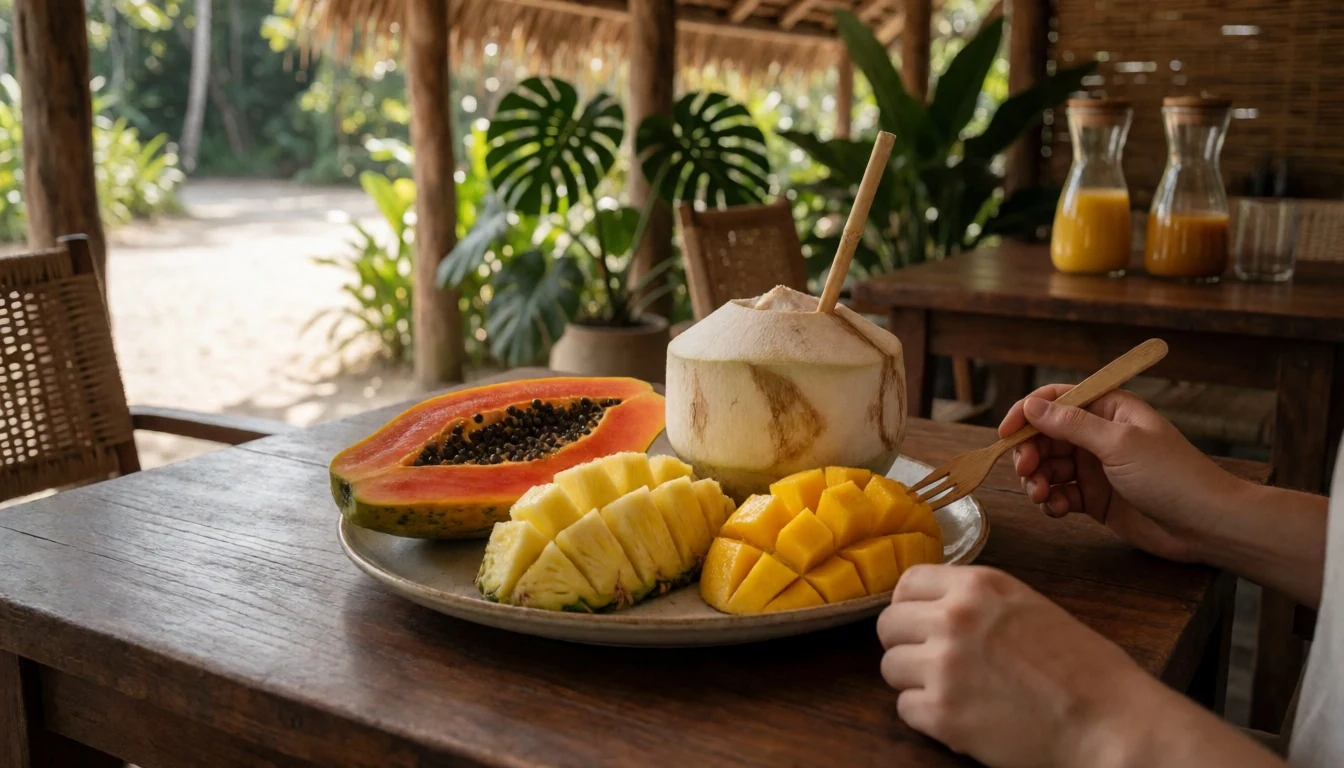
- Picnic-style meals at the park’s tables — Raised picnic tables by the bathroom area
Inside Manuel Antonio there are raised picnic tables near the bathroom area where visitors can set out lunch. Keep food secured and avoid leaving it unattended—wild animals may try to investigate opened bags.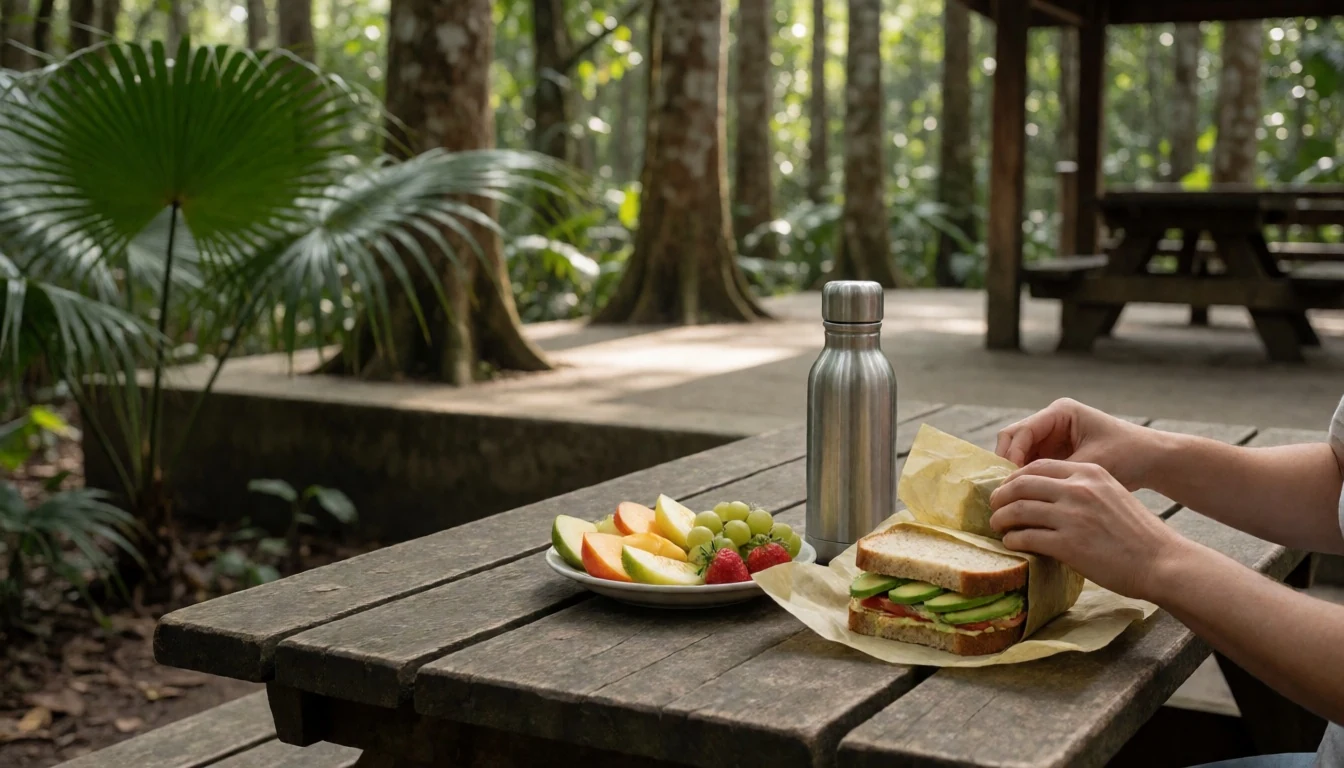
- Drinks from nearby water points and refills — By the picnic tables
The park has water near the picnic tables, but it may be hard to refill bottles easily. Bring cups if needed and treat water refills as something to manage with a bit of care. - Fruit and snacks from local market stalls — Local markets and stalls around Quepos/Manuel Antonio
In the Quepos–Manuel Antonio area, small stalls and market-type set-ups are common places to pick up fruit and snack items for the day. Aim for items that can be kept closed and carried securely. - Sunset meals at full-service coastal restaurants — Hotel restaurants and full-service eateries near the coast
For the evening, many hotels and restaurants in the wider Manuel Antonio area offer sit-down meals. It’s a relaxed, coastal way to end the day, especially if dinner is paired with an ocean view atmosphere.
Plan it
Best time. The hottest months are March and April, while the wettest stretch runs from September through November; June through October bring the most rain, so expect wetter, rougher conditions for hiking and beach time.
How long. 3–4
Getting there. Manuel Antonio can be reached within about 3 hours from San José by car via Jacó; the bus Quepos–Manuel Antonio runs every 30 minutes from 07:00 to 22:00.
Budget. mid
Tips
- Start the park walk early to avoid the busiest waves of visitors
- Pack secure storage for snacks; animals investigate anything that looks edible
- Plan for no lifeguards and no marked swim buoys—swim only when conditions feel safe
- If wildlife watching matters, use a certified naturalist guide for more reliable spotting
- Allow extra time for roads up and down; the distance from accommodation to the beach can be longer than expected
Etiquette
- Do not feed monkeys or other wildlife, even if others are doing it
- Keep food zipped away during the day, including while on the beach
- If a guide is working with a group, follow their lead on where to stand and how close to get
Nearby
Sources
- Wikidata Q112854 (CC0)
- Wikipedia (rev 1375927249) (CC BY-SA 4.0)
- Wikivoyage (rev 5377964) (CC BY-SA 4.0)
- Photo photos/01-07.jpg (CC BY-SA 4.0)