Poás Volcano
Poás Volcano, Costa Rica
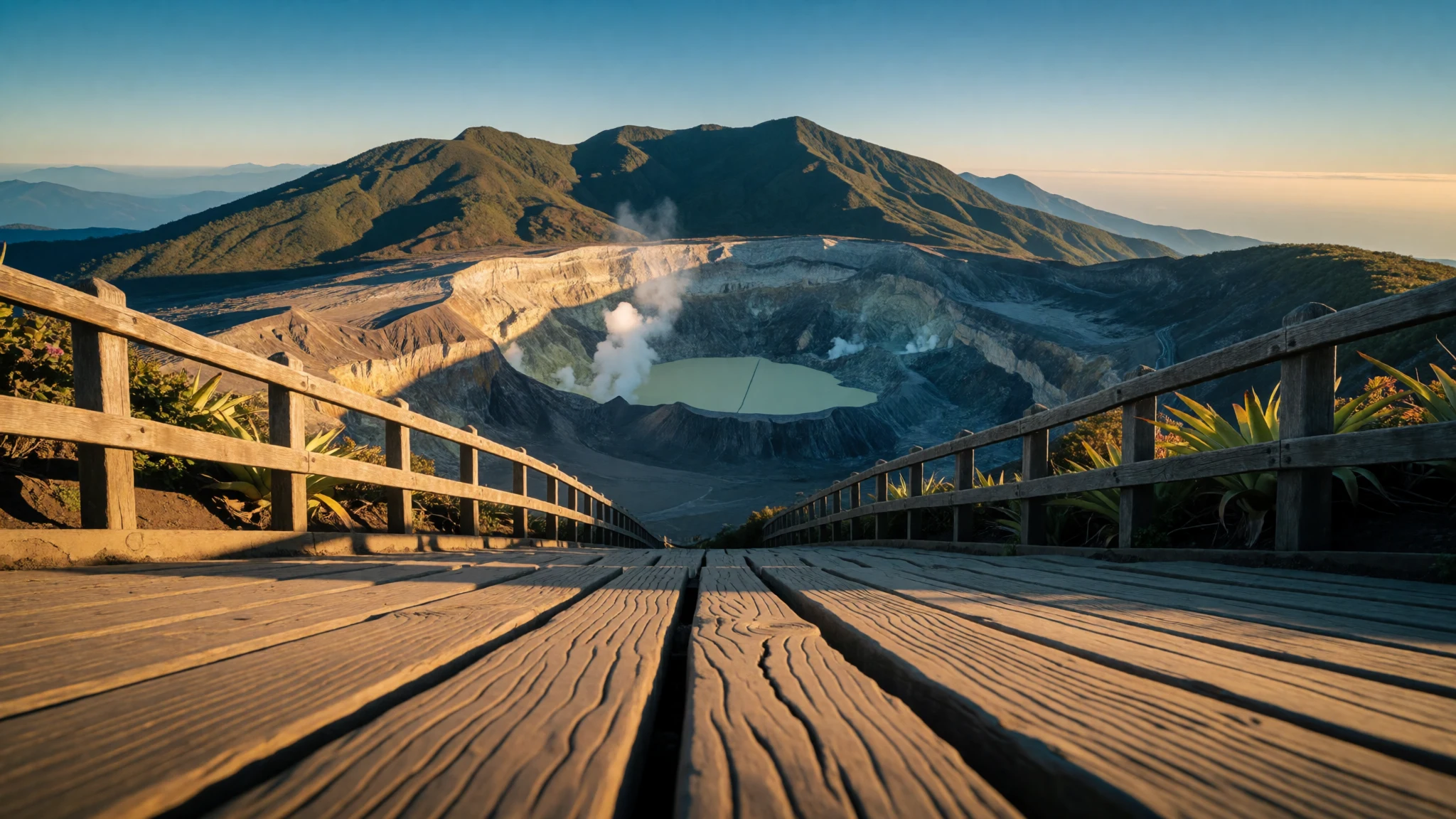
A live volcano in the Costa Rican highlands, where a crater lake and drifting steam can be reached by road, weather and activity permitting.
The place
Poás Volcano rises to 2,708 metres in the central highlands of Costa Rica, inside a national park that carries its name. It is a stratovolcano, the steep, layered kind built up by many eruptions, and it is still active. That single fact shapes every visit: the crater, the paths and even the opening arrangements depend on what the mountain is doing. The park lies in Alajuela province, in the hills above the Central Valley, so the capital's airport and the coffee towns of the valley are within a morning's drive. Most visitors come on a day trip, often combined with a coffee farm or a waterfall stop.
The summit area is cool and often cloudy, with wind that can carry a sulphur smell across the viewing point. When the cloud lifts, the main crater opens out as a wide pit of pale rock holding an acid lake, with steam rising from vents along the walls. Cloud usually builds by late morning, so the view is a matter of timing as much as luck. Around the crater the vegetation changes: stunted cloud-forest trees, ferns and bromeliads cling to the slopes, and hummingbirds visit flowers near the car park. A second, older crater holds Botos Lake, a cold, still, rain-filled basin ringed by forest, which in calmer periods is reached by a short walk.
Poás also gives a clear picture of how Costa Rica approaches travel. Protected areas cover a large share of the country, and the park system is a main reason people come. Poás is the easy, roadside version of that: a volcano that can be seen without a long hike, though one that is closed or restricted whenever gas and ash make it unsafe.
Its story
Poás Volcano has erupted many times in recorded history, and its recent story is largely about closures, caution and careful reopening. Within the last decade a strong eruption forced the evacuation of visitors and nearby residents. The summit then stayed shut from April 2017 to September 2018, with a wide safety perimeter around the crater while scientists tracked gas, ash and tremors.
When the park finally reopened, access was narrow. Only the crater viewing area could be visited, the museum at the visitor centre and the paths towards Botos Lake stayed closed, and a reservation through the national park's website became part of the routine. That booking system is still the clearest sign of how the mountain is managed: numbers are controlled so that staff can clear the summit quickly if the gas changes.
Brief eruptions followed soon after the reopening, and further activity has come since. One of them was photographed by OVSICORI-UNA, the national volcano observatory, as an ash column rising at first light. Those images are a reminder that the crater visitors admire is not a monument but a working vent.
For local people the volcano is also a neighbour. Farms, dairies and strawberry fields cover the slopes below, and communities in the hills live with the possibility of ash and acid rain. Visitors who accept that the viewing platform may be closed on the day, and who check before travelling, tend to have a calmer trip than those who treat the volcano as a fixed attraction.
What to see
- The main crater viewing platform — Poás Volcano National Park, Alajuela
The platform on the rim is the reason most people come to Poás Volcano. On a clear morning it looks straight down into a broad pit of pale rock, a steaming vent field and an acid lake. Access depends on volcanic activity and reservations, so confirm the situation before setting out.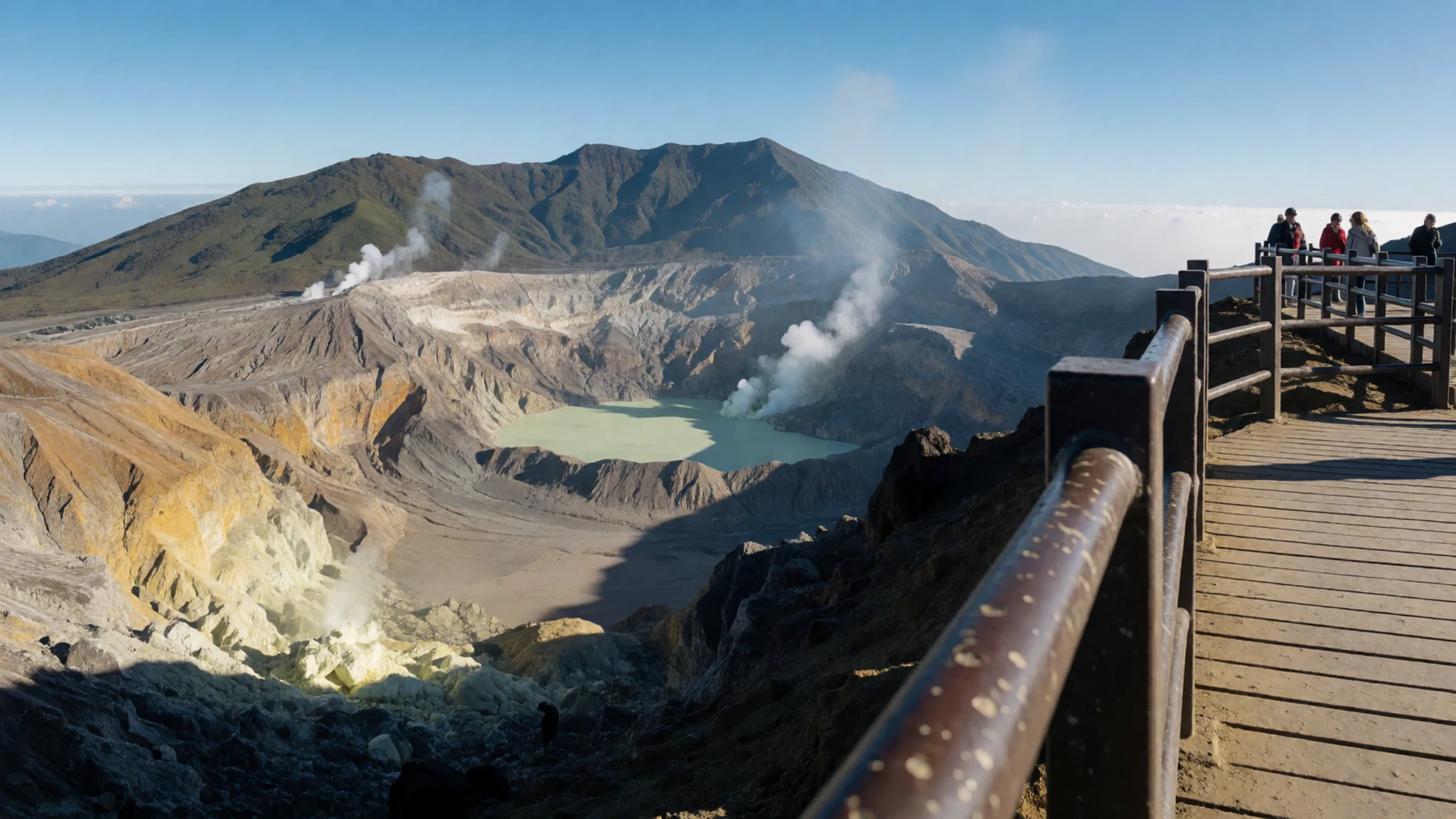
- Fumaroles on the crater walls — Main crater, Poás Volcano National Park
Along the inner slopes of the crater at Poás, thin plumes of steam and gas seep from cracks in the rock. The yellow staining around the vents comes from sulphur deposits. The smell can be sharp, and the gas drifts with the wind, so the platform sometimes closes briefly.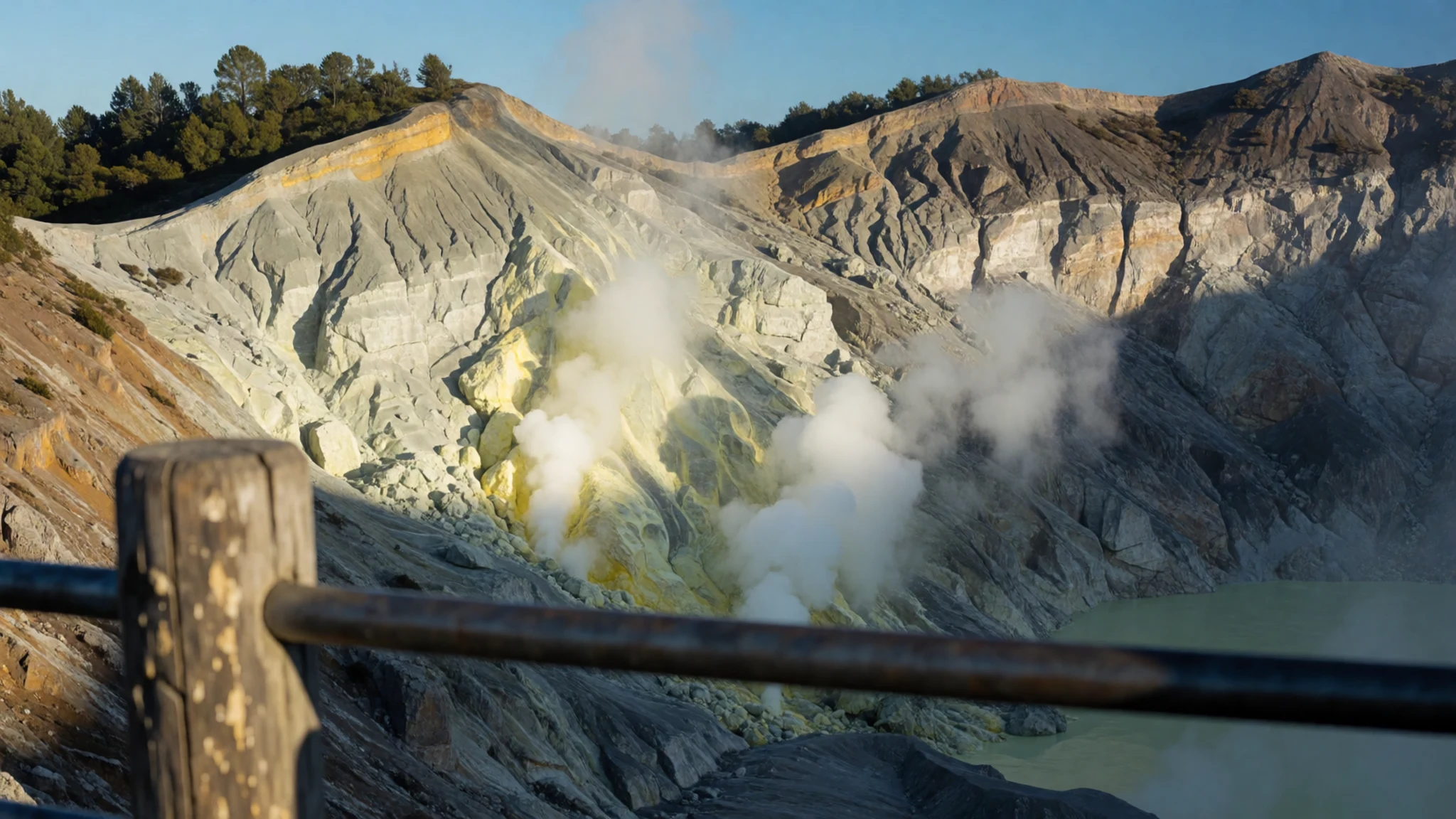
- Botos Lake — Short walk from the main crater, Poás Volcano National Park
Botos Lake fills an older crater beside the active one at Poás Volcano. The water is cold and still, framed by dense cloud forest, and the contrast with the bare, steaming main crater is striking. The trail to it has been closed during periods of heightened activity, so check before planning around it.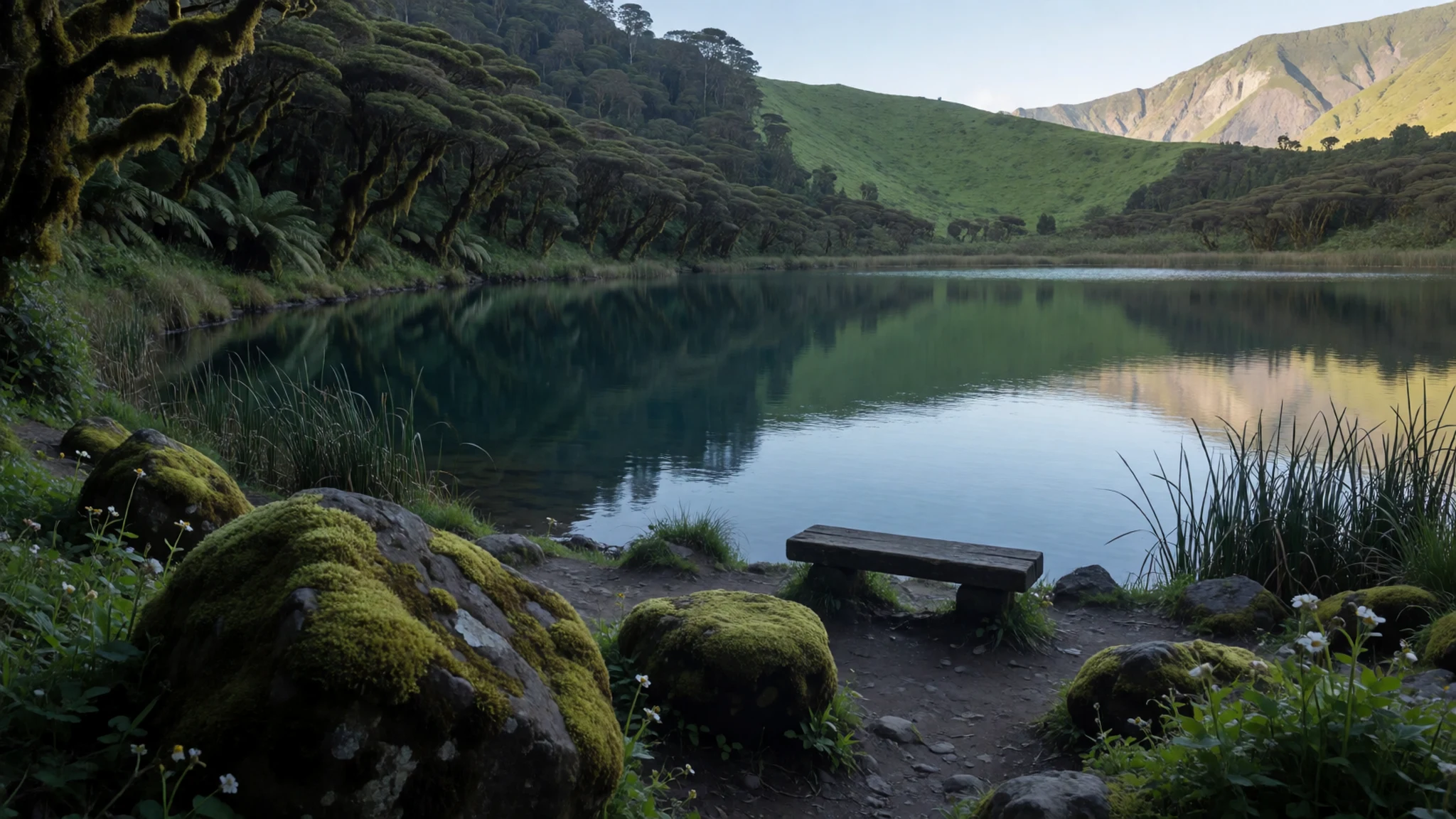
- Cloud forest around the summit — Summit paths, Poás Volcano National Park
The slopes near the Poás Volcano car park and paths carry cloud forest: twisted low trees draped in moss, ferns, bromeliads and flowering shrubs that attract hummingbirds. Morning is the most rewarding time, before cloud thickens and the birds quieten. A waterproof layer and patience matter more here than a long walk.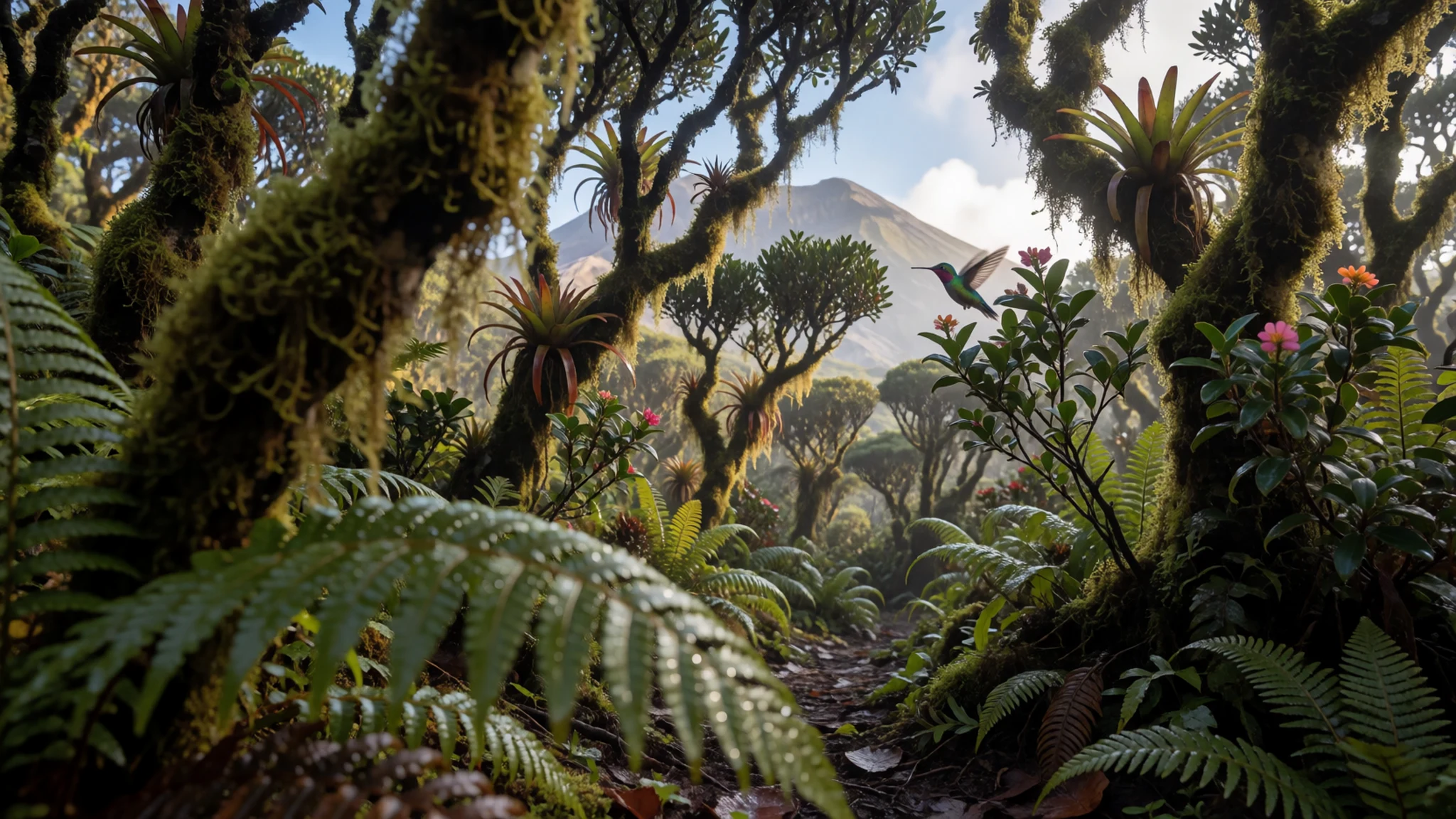
- The plume from the lookout — Crater lookout, Poás Volcano National Park
Even when the crater floor is hidden, the plume above Poás Volcano can be a sight in itself: a column of steam and gas leaning with the wind against the sky. Photographs from the main lookout show how quickly the view changes, which is why rangers and the observatory keep close watch.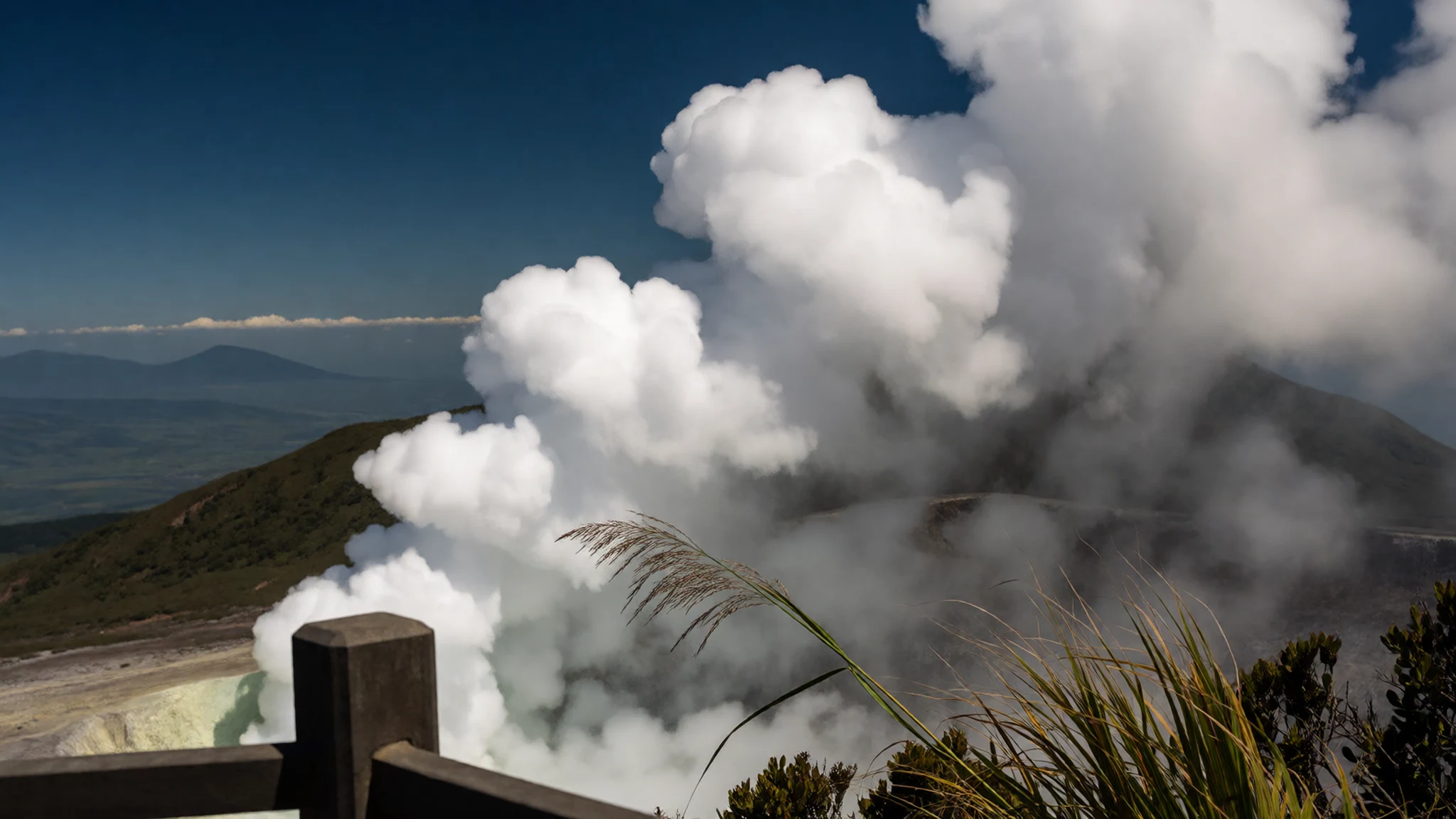
Culture
Poás Volcano sits in the Costa Rican highlands, where everyday manners are gentle and quietly formal. Costa Ricans, often called Ticos, are hospitable and relaxed, and being bien educado, or well-mannered, matters. Shops, cafés and park offices are usually entered with a greeting such as "buenos días" or "buenas", and it is polite to answer in kind. Small courtesies help: "disculpe" when passing someone, and a softly phrased request such as "¿me podría dar…, por favor?" rather than a bare demand. Even visitors with only a few words of Spanish usually find the effort welcomed.
Time is treated loosely in everyday life, and the phrase pura vida, roughly "pure life", sums up a shrugging, cheerful patience. Showing frustration over a late bus or a slow lunch rarely gets results and tends to cause amusement. That said, tour pick-ups and park entry slots are the exception, and arriving late can mean missing the clear morning window at the crater.
The volcano itself has a place in local life beyond tourism. Families in the surrounding hills farm strawberries, flowers and dairy, and the park is a source of work as well as a landmark. Rangers and guides take the mountain's moods seriously, and their instructions reflect long experience of gas, ash and sudden weather rather than caution for its own sake.
At Poás Volcano, follow the rangers' instructions immediately, stay on the marked platform and paths, and greet staff with a friendly "buenos días" before asking anything.
What to wear
Poás Volcano is a place for practical clothes, but Costa Rica has its own dress traditions. The traditional costume, seen at folk dances, school festivals and national celebrations, pairs a white cotton blouse and a wide, brightly coloured skirt trimmed with ribbons for women with a plain white cotton shirt, dark trousers, a straw hat and a neckerchief for men. It is worn on special occasions, not day to day.
What people actually wear now is ordinary and casual: jeans or light trousers, T-shirts, trainers or boots, and in the cool highlands a fleece or rain jacket. Farmers and park staff wear rubber boots and hats, and the look in the towns of the Central Valley is relaxed rather than formal. Church visits and smarter restaurants call for neat, covered shoulders and knees, but nothing stricter.
Visitors to the volcano should plan for cold, damp and changeable weather at the summit, which is far cooler than the valley floor. Layers work best: a light base, a warm mid-layer and a waterproof jacket that also cuts the wind. Closed shoes with a good grip suit the wet paths and car park, and a hat and sunscreen are useful for the brief sunny spells. Bring a scarf or buff, since gas can irritate the throat, and leave delicate fabrics at home because the mist soaks through quickly.
What to eat
- Gallo pinto — Small local eateries (sodas) on the road to Poás
Rice and beans stir-fried together with a little onion, pepper and coriander, the usual Costa Rican breakfast and sometimes served at other meals. It often comes with eggs, fried cheese or sour cream. Look for it at a roadside eatery on the way up to the volcano.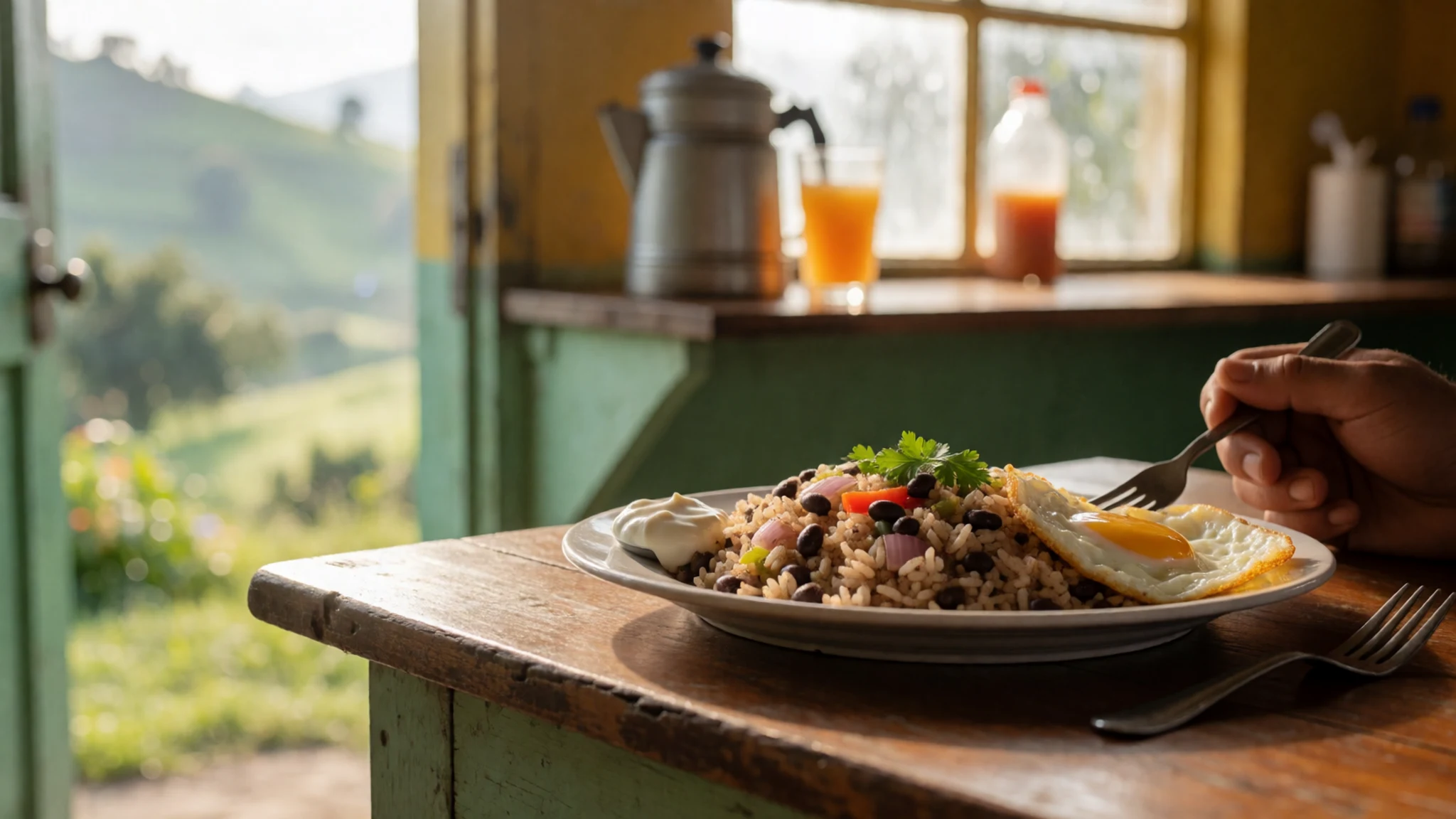
- Casado — Sodas in Alajuela and the villages near the park
The standard lunch plate, whose name means "married": rice and beans with chicken, meat or fish, plus salad and fried plantain. It is filling, mild in flavour and easy to find. Sodas in the villages below the volcano serve it at midday for the working crowd.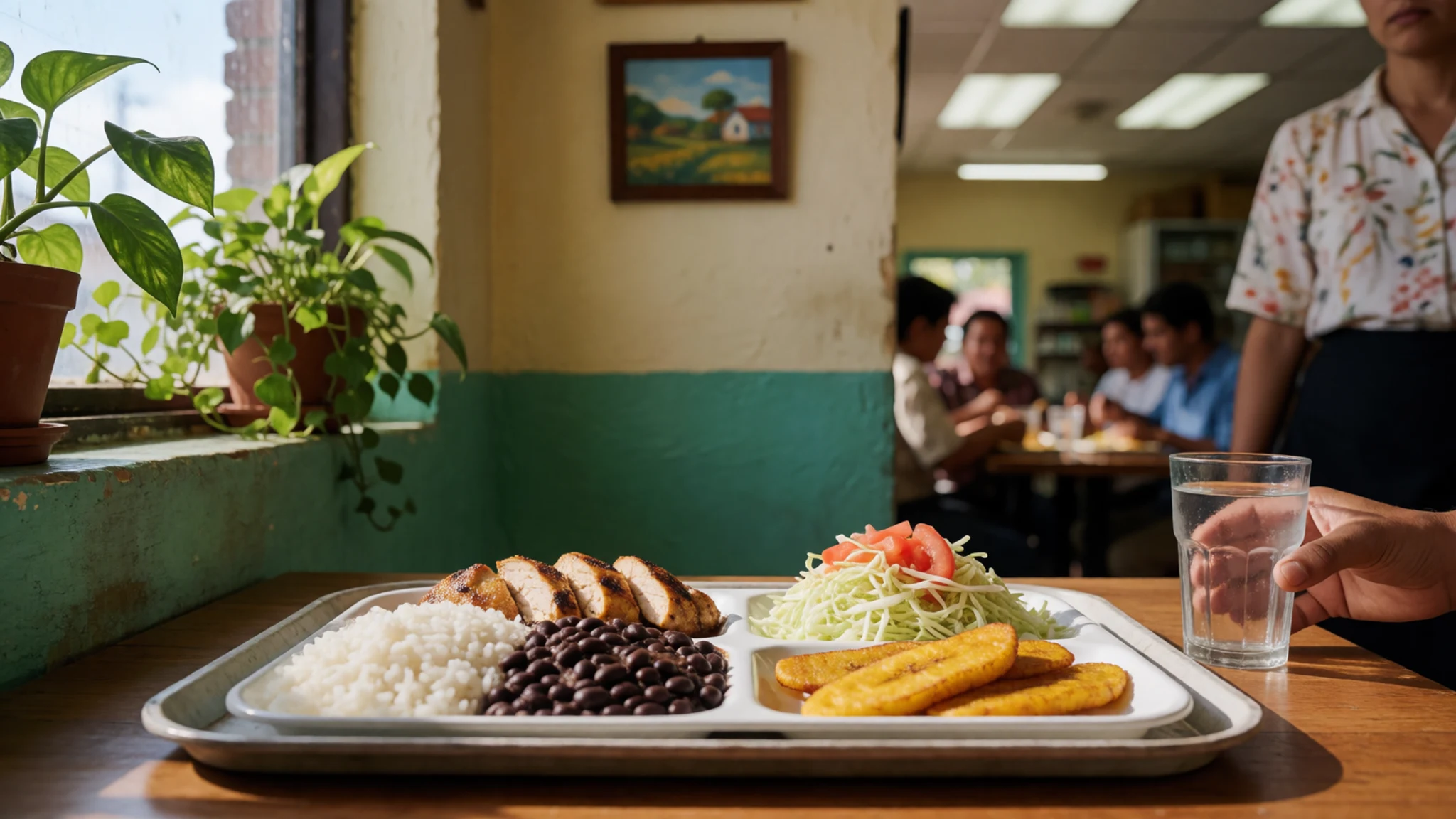
- Plato del día — Any simple lunchtime eatery in the highlands
The plate of the day, often a casado with whichever meat or fish the kitchen has chosen that morning. Asking what it is costs nothing and usually leads to the freshest, most local meal on offer. It suits travellers who prefer not to decide. - Fresh strawberries and cream — Roadside stalls and cafés on the approach to the park
The cool slopes around Poás Volcano are farmland, and strawberries are the best-known crop. Roadside stalls and small cafés sell them fresh, as juice, or with cream, and they make a sensible stop on the drive down from the summit. - Highland coffee — Coffee farms and village cafés in the Central Valley
The Central Valley's hills grow coffee, and it is usually served black, sweet and strong in small cafés, or poured through a cloth filter at the table. A visit to a farm or a village café after the volcano is an easy way to taste it where it grows.
Plan it
Best time. December to April is the drier season and gives the best chance of a clear crater, especially early in the morning before cloud builds. From May to November rain is most frequent, peaking in October, so mornings matter even more. Activity can close the crater at any time of year.
How long. 1–2
Getting there. Fly into Juan Santamaría International Airport near San José, then travel by road via Alajuela towards the village of Poasito and on up to the park. The last leg is usually by hired car, taxi or organised tour. Check local bus options before relying on them.
Budget. mid
Tips
- Reserve entry through the national park's official website and check current rules, because access depends on volcanic activity
- Arrive as early as the park allows, since cloud usually covers the crater later in the morning
- Carry a waterproof jacket and a warm layer; the summit is much cooler than the valley
- Bring some cash for roadside stalls and small eateries, and carry your own water
- Check the park or OVSICORI-UNA updates on the morning of the trip, as the crater can close at short notice
Etiquette
- Follow ranger instructions straight away, especially if the crater is cleared because of gas
- Keep to marked paths and viewing platforms, and take your litter back down with you
- Greet staff and shopkeepers politely in Spanish before asking questions
Nearby
Sources
- Wikidata Q1969482 (CC0)
- Wikipedia: Poás Volcano (rev 1383766269) (CC BY-SA 4.0)
- Wikivoyage: Costa Rica (rev 5398160) (CC BY-SA 4.0)
- Photo: The crater of the volcano Poás in Costa Rica — Peter Andersen (CC BY 3.0)
- Photo: Costa Rica relief location map — Sting (CC BY 3.0)
- Photo: Volcán Poás columna de humo — Netflix (CC BY 3.0)
- Photo: Botos Lake panorama — Mariordo (CC BY 3.0)
- Photo: Poas volcano crater panorama — Mariordo (CC BY 3.0)
- Photo: Poás eruption — OVSICORI-UNA (Public domain)
- Photo: Poas Volcano landscape — MongeNajera (CC BY 3.0)
- Photo: Active volcano in Costa Rica — Carlos Eduardo Joos (CC BY 2.5)


Wildlife
- Volcano hummingbird (bird)
The volcano hummingbird is a tiny bird from the group nicknamed the bee hummingbirds, and it is pictured on a Costa Rican banknote. Around Poás, look for it visiting flowers near the car park, close to slopes of small cloud-forest trees, ferns and bromeliads. A local guide will help you spot it. Keep your distance, stay quiet and still so it feels safe, and never feed it, however tempting that may seem.