Irazú Volcano
Irazú Volcano, Costa Rica
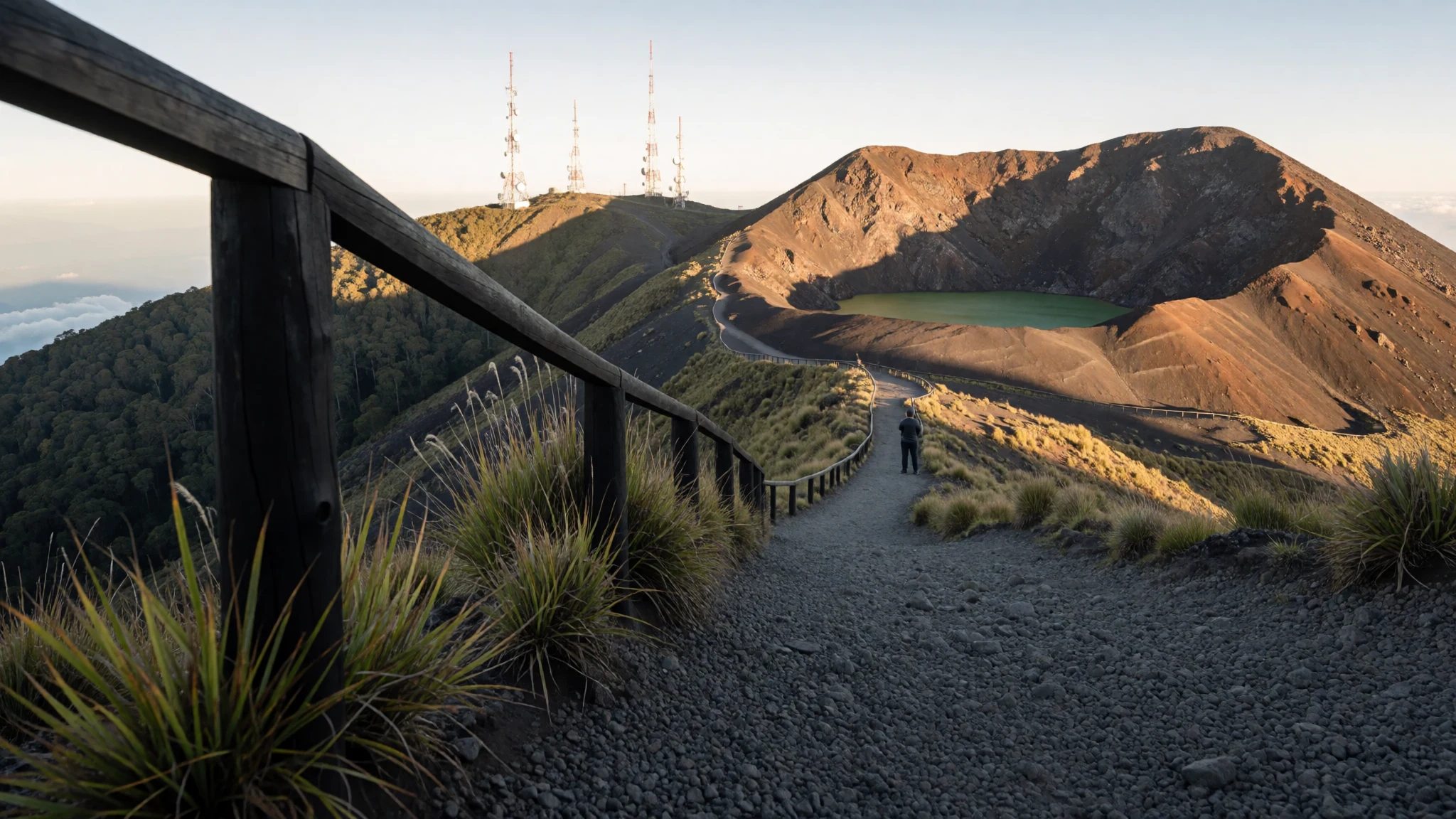
Irazú Volcano lets a visitor walk to the rim of a living crater, with a green lake below, in a morning's drive from San José.
The place
Irazú Volcano rises in Costa Rica's Cordillera Central, close to the city of Cartago, and tops out at 3,432 m. Sources describe it as the highest active volcano in the country. Geologists call it a stratovolcano, built up over a very long time from layers of lava and ash, and its broad, rough cone sits above the Central Valley like a lid. The summit is not a single neat crater. Several depressions sit side by side, and the best known holds Diego de la Haya, a lake that shifts in depth and in shade, usually a milky green that can lean towards turquoise in good light.
The mountain is easy to reach by Costa Rican standards. A paved road climbs almost to the rim, so a visit needs more patience than fitness. The top is bare and windswept, with dark ground, stunted plants and a few television transmitters standing against the sky. Below the barren crown, the slopes are covered by national park forest, where hummingbirds, woodpeckers, owls and foxes live among cloud-wet trees.
The weather is the catch. The summit is cloud-covered most of the time, and a clear spell is rare enough that people remember it. On such a day the view can reach both the Atlantic and the Pacific. On most others, the crater appears and vanishes behind moving mist, which is atmospheric in its own way. The air is thin, cool and often damp, so the place feels far from the tropical beaches that dominate Costa Rica's image.
Its story
Irazú Volcano carries a heavy reputation in Costa Rica. Many Costa Ricans call it El Coloso, the Colossus, a nickname that comes from the damage it has caused in past eruptions. Cartago, the old colonial-era capital, sits at its foot, and the mountain has shaped how people there think about risk, fertile soil and the sky above them.
The name itself is uncertain. One explanation joins two indigenous words, one meaning point and the other thunder. Another traces it to Iztarú, the name of an indigenous village on the volcano's flanks. Neither can be proved, but both suggest that people lived with this mountain, and gave it meaning, long before roads and viewing platforms arrived.
The most vivid record in the staging photos is the eruption of 1963, which shows a dark ash cloud being blown sideways from the summit by the wind. It is a useful reminder that this is not a retired volcano with a pretty lake. It is an active one, monitored and managed, and a visit can be affected by its condition.
Today the mountain sits inside a national park, protected for its forest as much as its crater. That mix of danger, farmland and conservation explains the atmosphere at the summit: visitors are relaxed and curious, but the barriers, signs and rangers are there for good reason.
What to see
- The main crater rim — Summit, Irazú Volcano National Park
The main crater is the reason most people come. A viewing path follows the rim, and the ground drops away to bare, stained rock in grey, ochre and rust. On a clear morning the scale is easy to grasp. In cloud, the crater appears in brief windows, so wait a few minutes before moving on.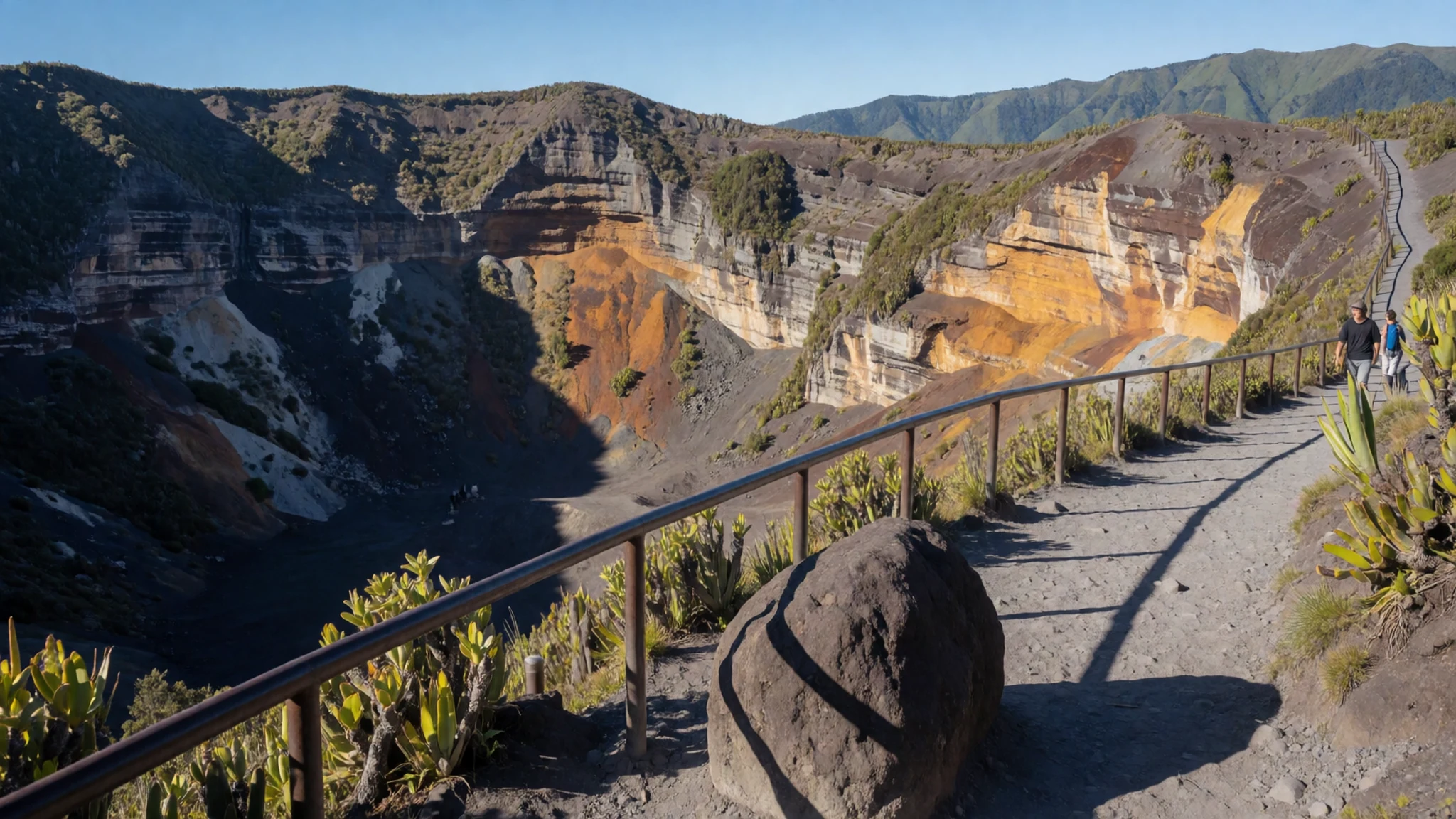
- Diego de la Haya crater lake — Summit craters
Diego de la Haya is the green lake inside one of the summit craters. Its colour and level change over time, so photographs of it never quite match. Viewing is from a safe distance, which is enough to see the strange mineral tint against the dark surrounding slopes.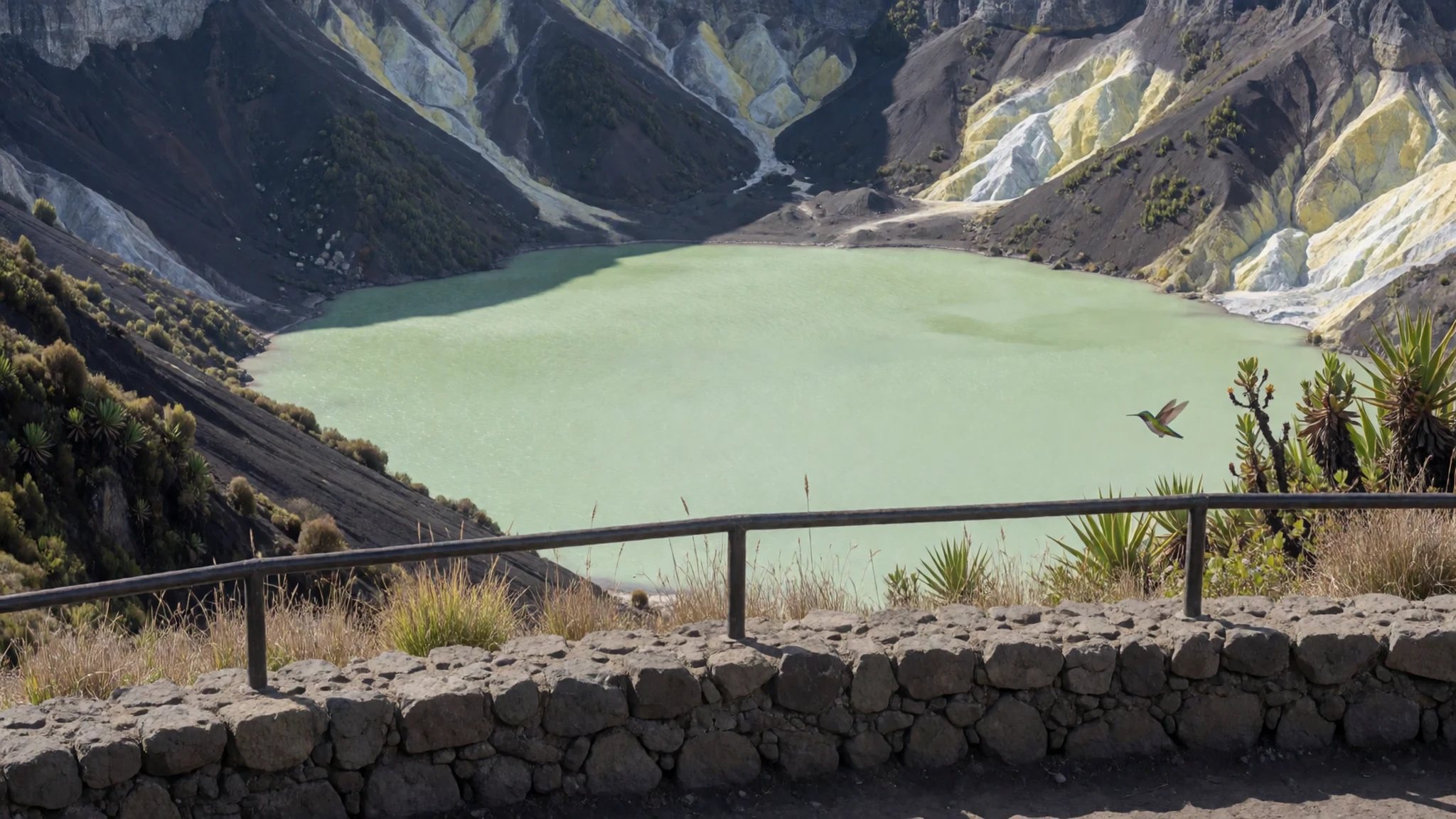
- The summit panorama — Summit viewpoints
From the high viewpoints the land falls away in every direction, and the whole crater complex can be seen as one landscape. Patient visitors may get a glimpse of both oceans on a rare clear day. Even without that, cloud rolling across the cones makes a memorable, moody scene.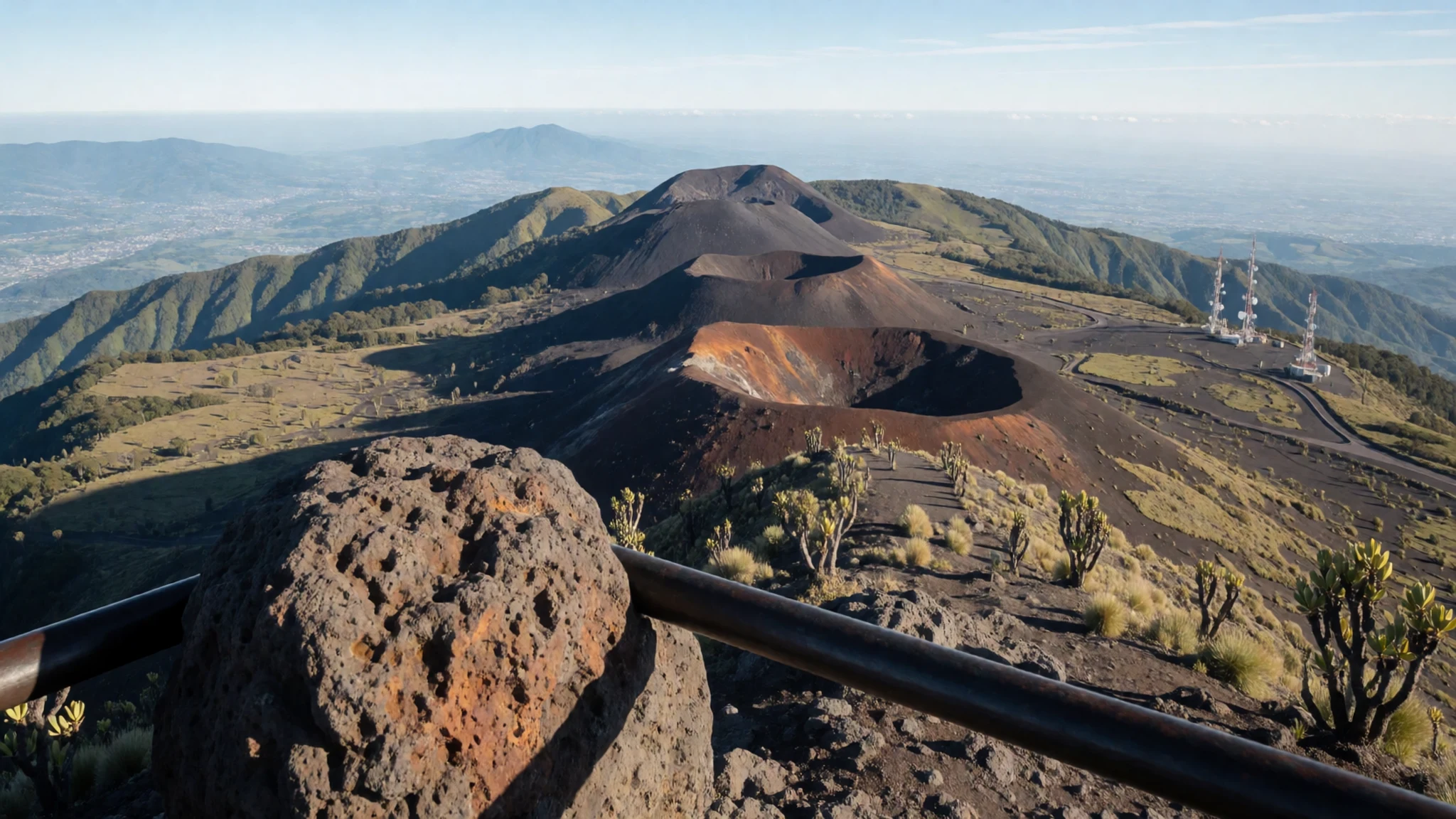
- Sunset and late light — Summit area
Late light turns the crater rim copper and pink, and the cloud below can glow. Entry and closing times are set by the park, so check the official site before planning for evening. If a sunset visit is allowed, take warm layers because the temperature drops fast at this height.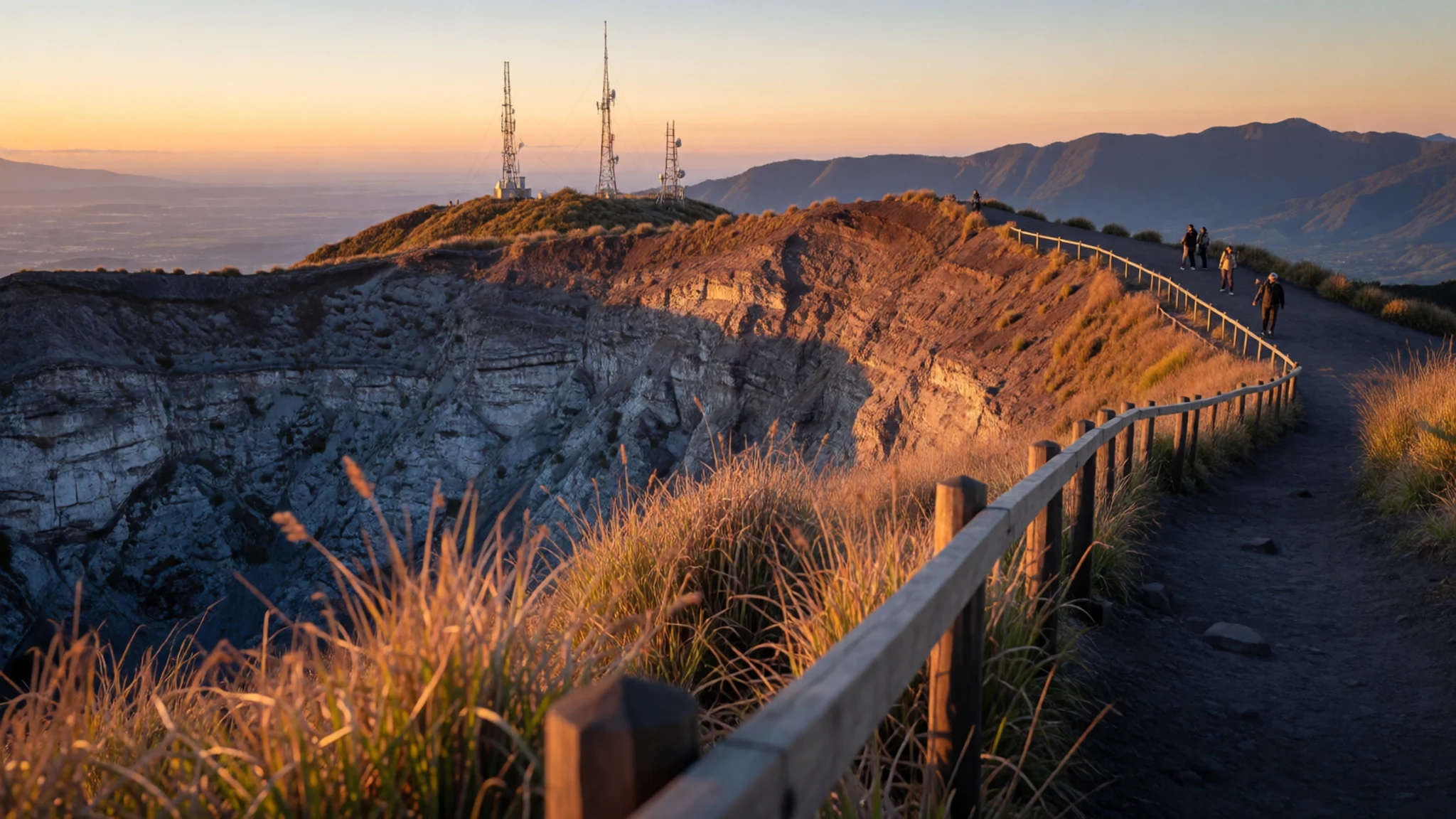
- Montane forest in the national park — Lower slopes, Irazú Volcano National Park
Below the bare summit, the park protects primary and secondary montane forest. Birdwatchers can look for hummingbirds and woodpeckers, and a patient eye may catch an owl or a fox at the edge of the trees. The forest feels very different from the stark crater above.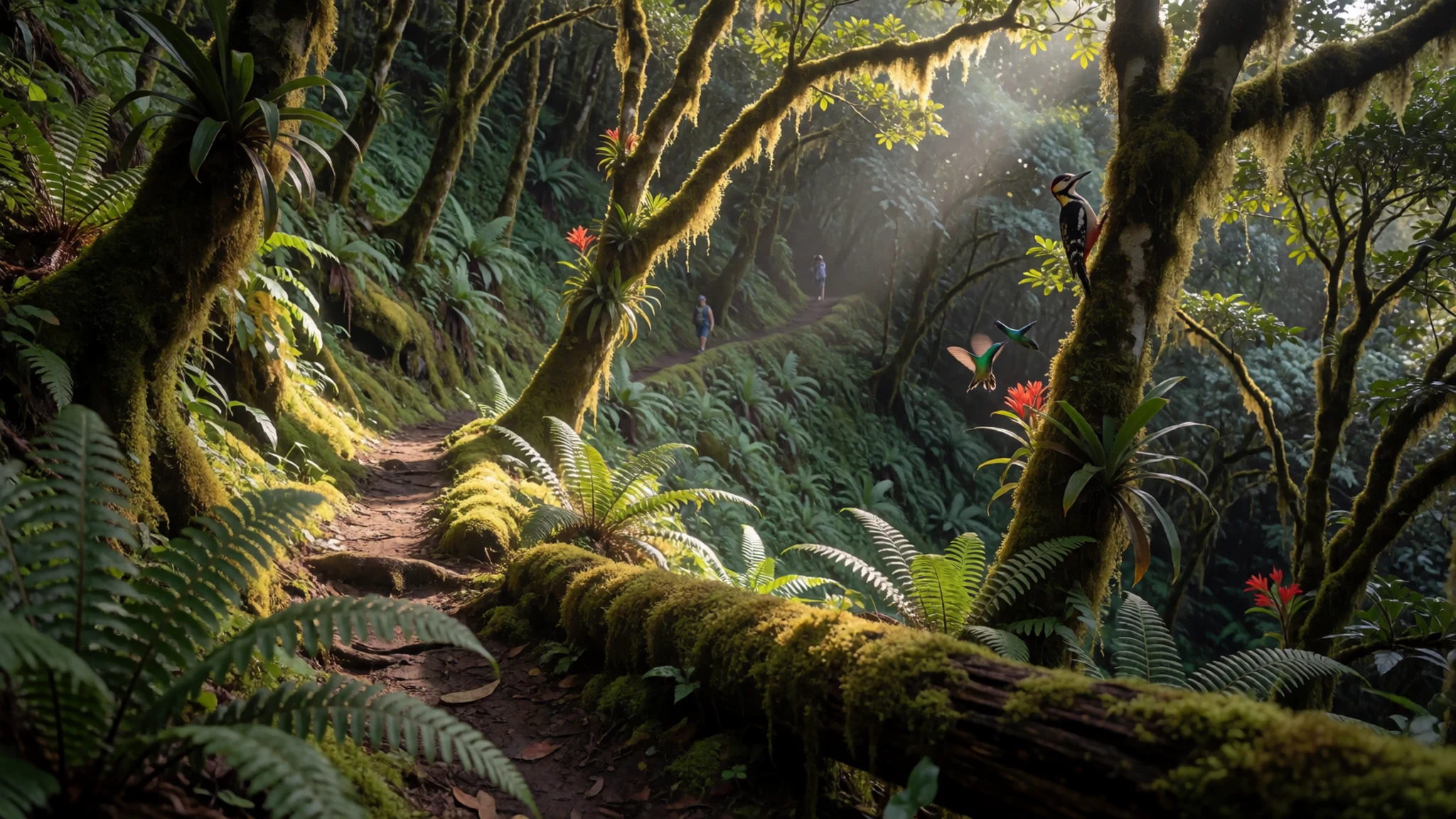
- Cartago — Cartago, at the foot of the volcano
Cartago, the city below the volcano, makes a worthwhile stop before or after the climb. It is the nearest sizeable town, with markets, cafés and old churches, and it shows how closely daily life here is tied to the mountain that looms above it.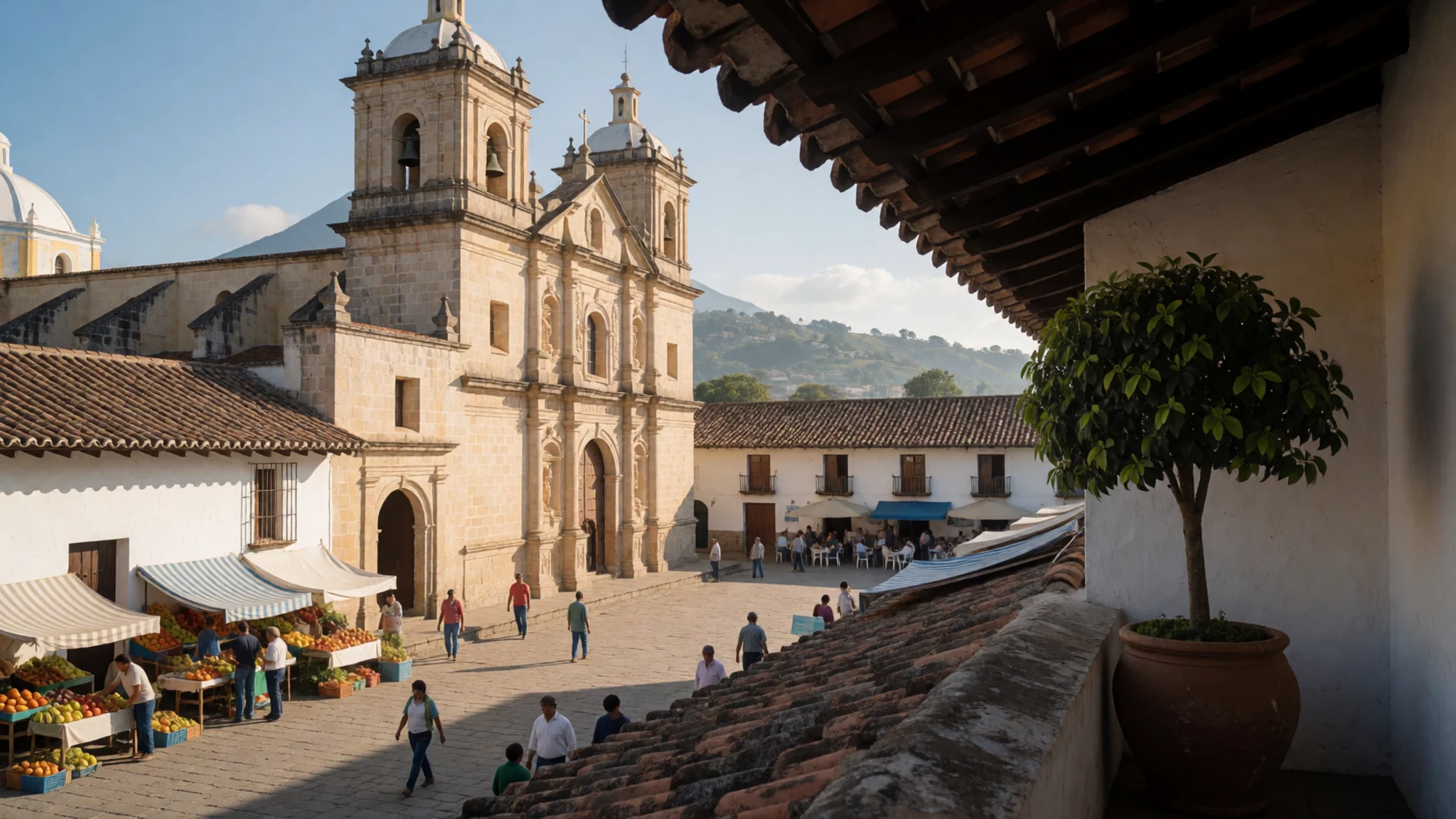
Culture
Irazú Volcano belongs to the highland culture around Cartago, where everyday manners matter as much as any sight. Costa Ricans, known as Ticos, are generally hospitable and relaxed, and being bien educado, or well-mannered, is valued highly. Walking into a shop, a café or a park office, it is normal to say buenos días or simply buenas, and people expect a greeting in return.
Small courtesies go a long way. Saying disculpe when passing someone, or asking for something gently with a phrase like quisiera or ¿me podría dar…, por favor?, is received warmly. Many people speak some English, but a few Spanish words are noticed and appreciated. Orders barked like commands come across as rude.
Time is treated loosely in everyday life. The pura vida outlook, roughly a cheerful acceptance of whatever comes, means buses, tours and meals may not run exactly as planned. Getting visibly frustrated rarely helps, and tends to be met with amusement instead.
The mountain also carries a weight of respect. El Coloso earned its nickname through past disasters, and local people tend to talk about it with a mix of pride and caution. Rangers take the rules at the crater seriously, and for good reason, since the rim and the gases are real hazards.
On the summit, stay behind the barriers and on the marked paths, and follow the rangers' instructions, especially about how long to stay and where to stand.
What to wear
Irazú Volcano sits in a country whose traditional dress is mostly seen at festivals, school events and folk dance. The typical women's costume has a wide, layered skirt in bright cotton, trimmed with ribbons and lace, worn with a white blouse that sits off the shoulders. Men wear a white cotton shirt and plain trousers, often with a straw hat and a coloured neckerchief. These outfits come out for civic celebrations and performances, not daily life.
Everyday clothing in Cartago and the Central Valley is practical and casual: jeans, t-shirts, trainers, light jackets and, in the cooler hours, fleeces or ponchos. Highland people dress for changeable weather, so a rain layer is common. Smart clothes appear for church and family occasions, but nothing is formally required for the volcano.
For a visit, the summit is the problem, not the dress code. The crater is cool, windy and often damp, and conditions can change within minutes, so wear layers: a warm mid-layer, a windproof and waterproof jacket, and long trousers. A hat and gloves are welcome at early hours. Choose closed shoes with a good grip, since paths can be wet and loose underfoot. Sunscreen and sunglasses matter too, because the sun is strong at altitude when the cloud breaks. Modest dress is not a particular concern here, though beachwear would feel out of place.
What to eat
- Gallo pinto — Any small soda or breakfast counter in Cartago
Gallo pinto is Costa Rica's everyday breakfast, made of rice and beans stir-fried together with a little onion or coriander. It is often served with eggs and fresh cheese. It is easy to find at a roadside soda or family eatery in Cartago.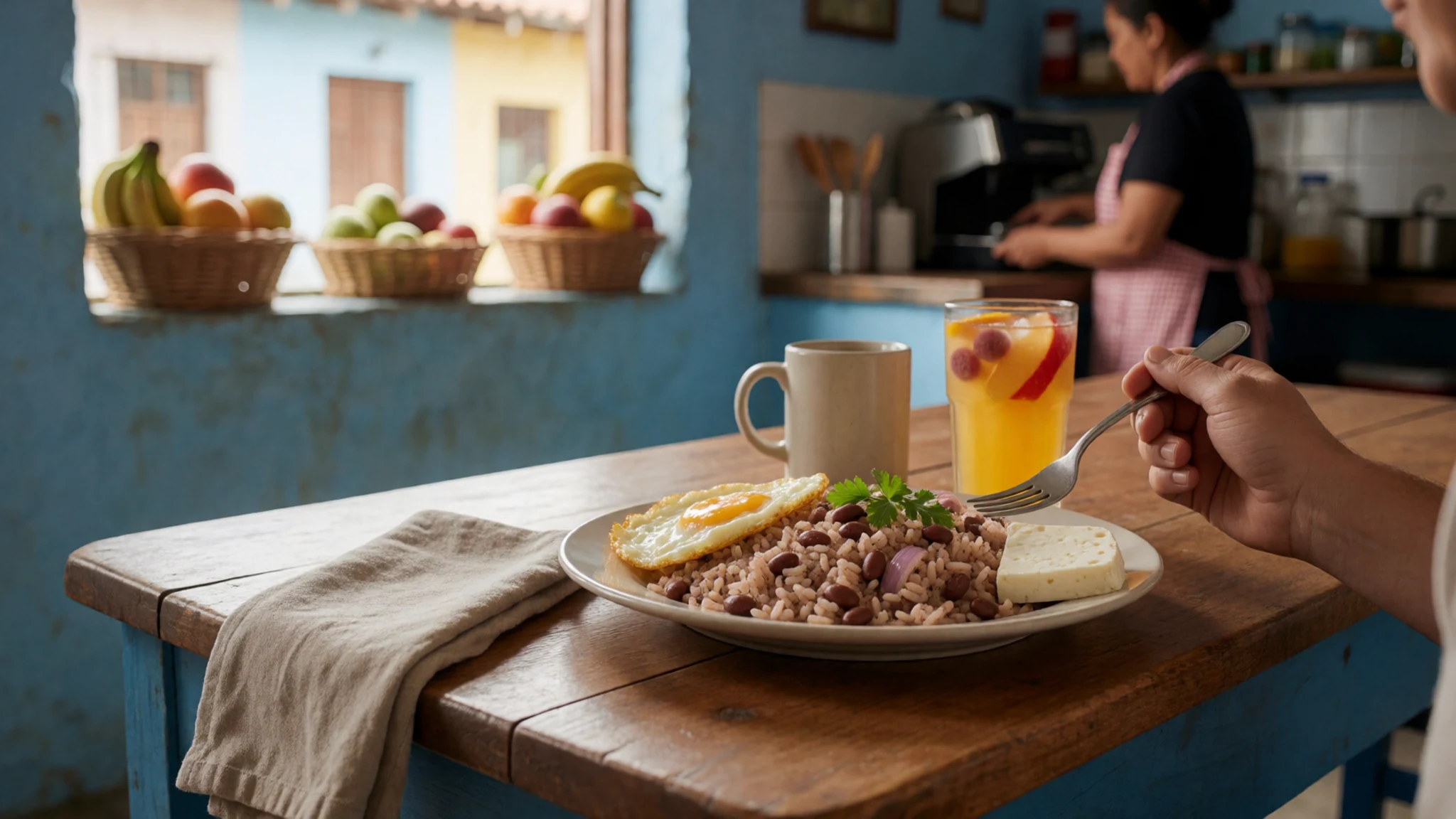
- Casado — Local sodas and market food counters
Casado is the standard lunch plate, with rice, beans, a portion of grilled, stewed or fried protein, a simple salad and sweet fried plantain on the side. The name means married, a nod to everything sharing the plate. It is filling, cheap by local standards and ideal after a cold summit.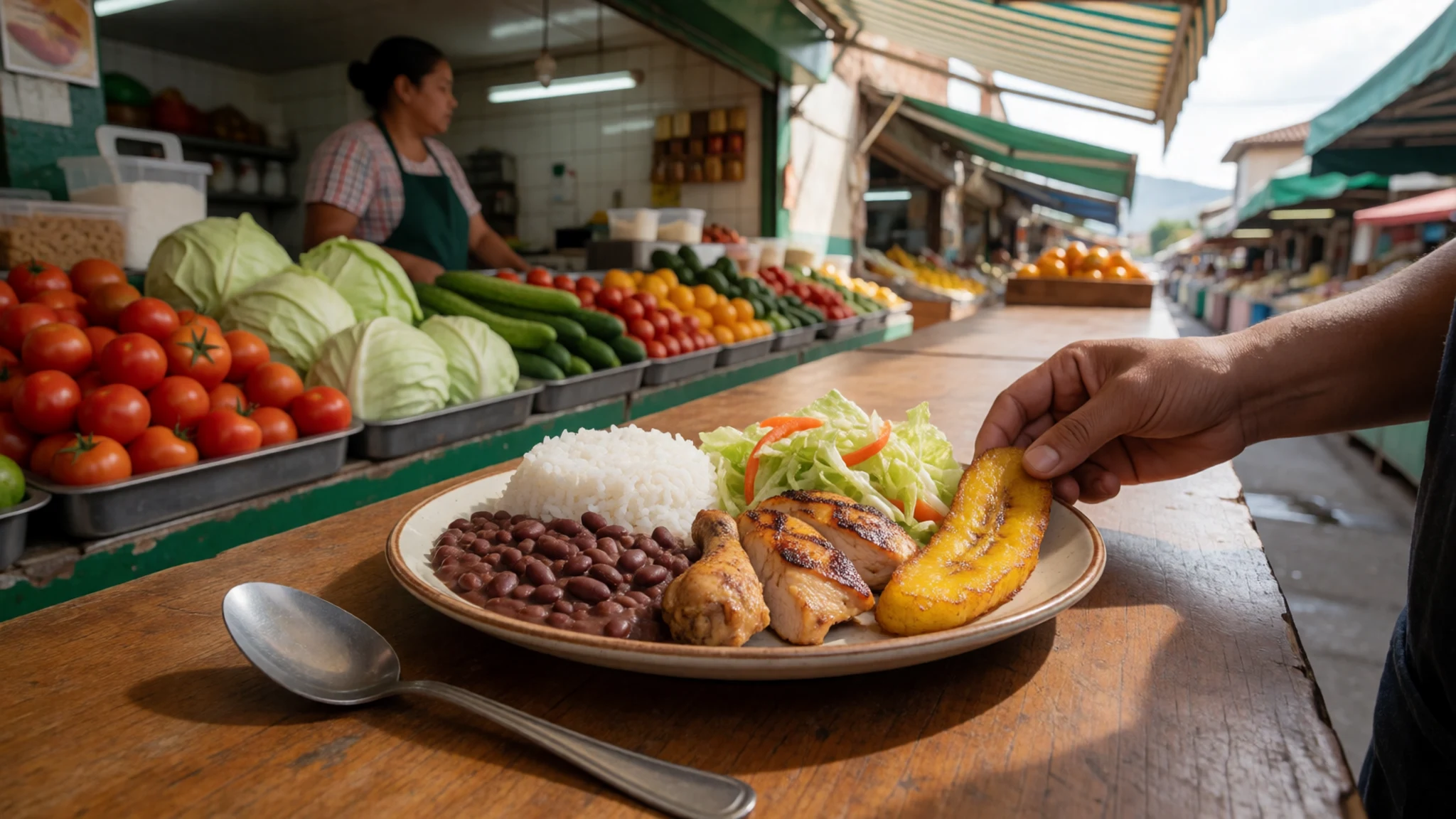
- Sopa negra — Family eateries in the highlands around Cartago
Sopa negra, or black soup, is a warm bowl built on black beans, often served with rice or an egg. It suits the cool highland air well, and it is a good choice for a lighter meal after coming down from the crater. - Tres leches — Bakeries and cafés in Cartago and nearby towns
Tres leches is the classic sweet finish, a soft sponge soaked in three kinds of milk, usually condensed milk, evaporated milk and cream. It is moist and sweet, and is found in bakeries and cafés across the Central Valley. - Local coffee — Roadside cafés and sodas on the way to the volcano
Coffee is the natural partner to a cold morning on the mountain. Costa Rica's highlands produce plenty of it, and a cup of freshly brewed local coffee at a roadside café is a pleasant, warming ritual before or after the climb.
Plan it
Best time. December to March is usually the drier season in the highlands, and early mornings give the best chance of seeing into the crater before cloud builds. The summit is cloud-covered much of the time all year, so flexibility helps.
How long. 1
Getting there. Juan Santamaría International Airport near San José is the nearest airport. From San José or Cartago, drive or take a tour up the paved road to the summit car park; check the park's official site for bus options and entry details.
Budget. low
Tips
- Go early, since cloud usually thickens later in the day
- Bring layers and a waterproof jacket, as the summit is cold, windy and damp
- Take it slowly on the paths because the air is thin at 3,432 m
- Check the official park site for tickets, opening hours and any closures before you travel
- Carry some cash as well as a card for roadside food and small purchases
Etiquette
- Stay behind the barriers and on marked paths near the crater rim
- Greet people with buenos días or buenas when entering shops and cafés
- Do not feed or disturb wildlife, and take your rubbish with you
Nearby
Sources
- Wikidata Q1672472 (CC0)
- Wikipedia — Irazú Volcano (rev 1378916351) (CC BY-SA 4.0)
- Wikivoyage — Costa Rica (rev 5398160) (CC BY-SA 4.0)
- Photo: Irazu Volcano Costa Rica — Rafael Golan (CC BY 3.0)
- Photo: Costa Rica relief location map — Sting (CC BY 3.0)
- Photo: Panorama of Irazu Volcano — Rafael Golan (CC BY 3.0)
- Photo: DirkvdM irazu 2.jpg (CC BY 3.0)
- Photo: Main crater of Irazú Volcano — Bernard Gagnon (CC0 1.0)
- Photo: Irazu Volcano, eruption of 1963 — MGLeonard (CC BY 3.0)
- Photo: Sunset from the Summit — Daniel32708 (CC BY 3.0)
- Photo: Top View of Diego de la Haya — Daniel32708 (CC BY 3.0)


Wildlife
- Gray fox (animal)
The gray fox is a small, silvery wild dog, a bit like a quiet shadow slipping between the trees. At Irazú Volcano, a patient watcher may glimpse one at the edge of the trees, though the notes do not say which season or hour is best. Keep a respectful distance and stay quiet and still, so it is not startled. A local guide can help you look in the right places. Never offer it food, because wild animals should find their own.