Monteverde Cloud Forest Reserve
Monteverde Cloud Forest Reserve, Costa Rica
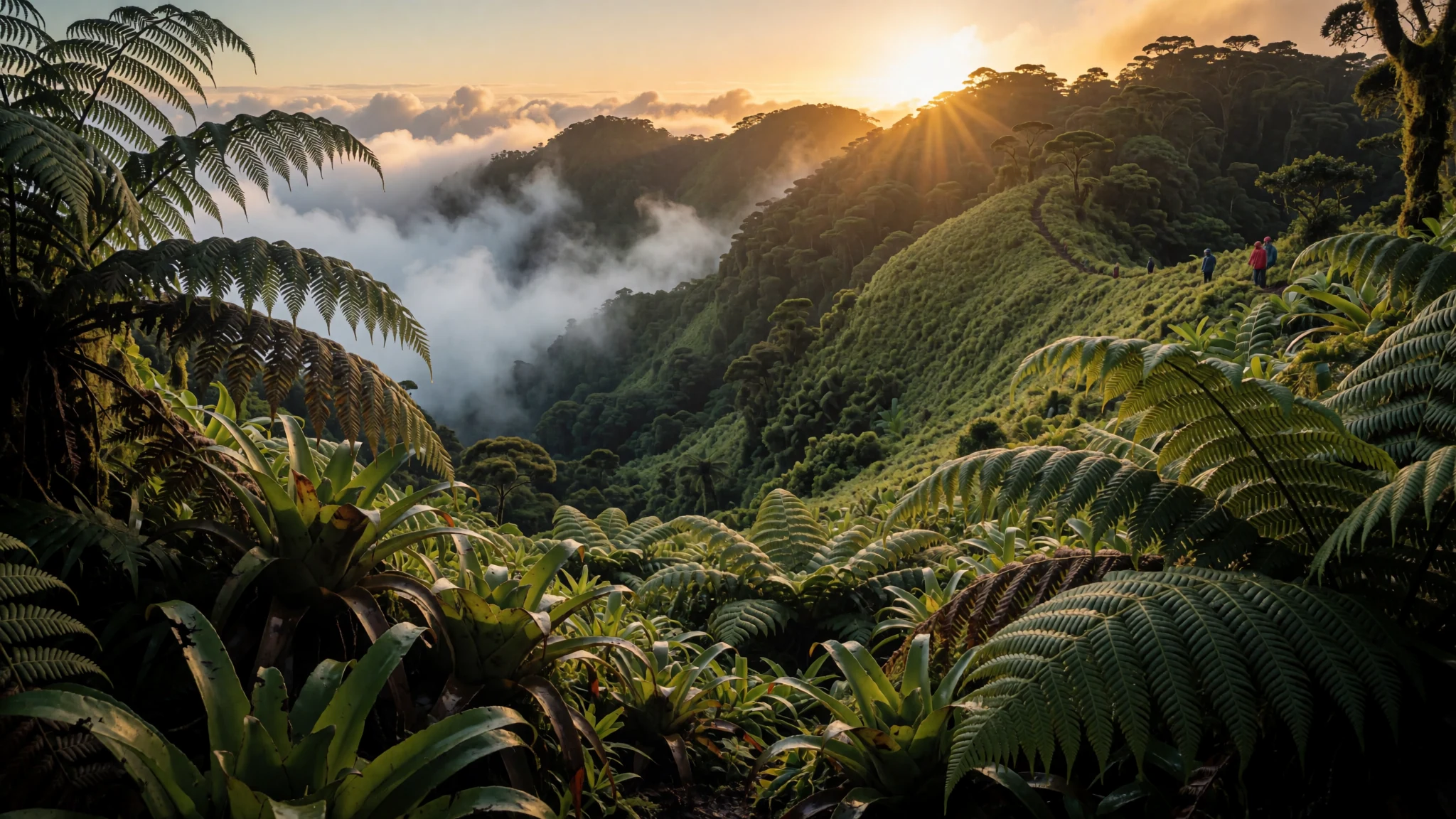
A cloud forest you walk through rather than look at, with mist, hummingbirds and more plant species than most visitors expect.
The place
Monteverde Cloud Forest Reserve lies along the Cordillera de Tilarán, spanning the Puntarenas and Alajuela provinces in Costa Rica, and takes its name from the nearby town. The reserve covers over 10,500 hectares, roughly 90% of it virgin forest, arranged into six life zones. Sitting at about 1,534 metres, it is cool, damp and frequently wrapped in cloud, so a fine drizzle can fall even on bright days.
Its biodiversity is what draws scientists and visitors alike. More than 2,500 plant species have been recorded, including the largest number of orchid species found in a single place, alongside around 400 bird species, about 100 mammals and many reptiles, amphibians and insects. Hummingbirds are a constant presence around flowering plants, and the understorey rewards slow walking, because much of the wildlife sits well off the trail.
About 70,000 people visit each year, so the main loops can feel busy from late morning, particularly in the dry season. Early starts suit both the crowds and the animals, which tend to be most active before the cloud thickens. The trails are muddy and steep in places, making sturdy footwear more useful than anything stylish. The reserve is a protected research area first and a day out second, which shapes its rules: stay on the paths and keep voices low.
Its story
Monteverde Cloud Forest Reserve has its roots in a settlement of Quaker farmers from Alabama, who arrived in Costa Rica seeking to avoid military service during the Korean War, a draft that conflicted with their pacifist beliefs. They chose the country partly because it had abolished its army a few years earlier. The settlers named their community Monteverde, or "Green Mountain", for the plants that remain green in every season.
Biologists began to notice the area in the following decades. A visit by a conservation researcher from a tropical science foundation, travelling with a land specialist working for the government, led to advice that the native forest be kept intact. The forest protected water sources and served as a windbreak against the strong winds that crossed the valley, shielding fields and homes.
Conservation then became a formal project. A young graduate student, George Powell, came to study the birds and found the habitat ideal for research. He was struck by the richness of the cloud forest, including the home of the golden toad, now extinct, and troubled by hunters and squatters clearing land. A land company agreed to donate a parcel if Powell could find a civic association to sponsor the takeover. That arrangement laid the groundwork for the reserve visitors see today.
What to see
- Original Monteverde Butterfly Garden — Cerro Plano, central Santa Elena
The Original Monteverde Butterfly Garden spreads across four separate gardens where hundreds of butterflies and other live insects can be seen up close. Admission covers everything on site, which makes it a sensible option for families or anyone wanting a shorter outing than the reserve itself. It is easy to fit around a rainy morning, and the open feeding areas make the insects far easier to photograph than they would be in the forest.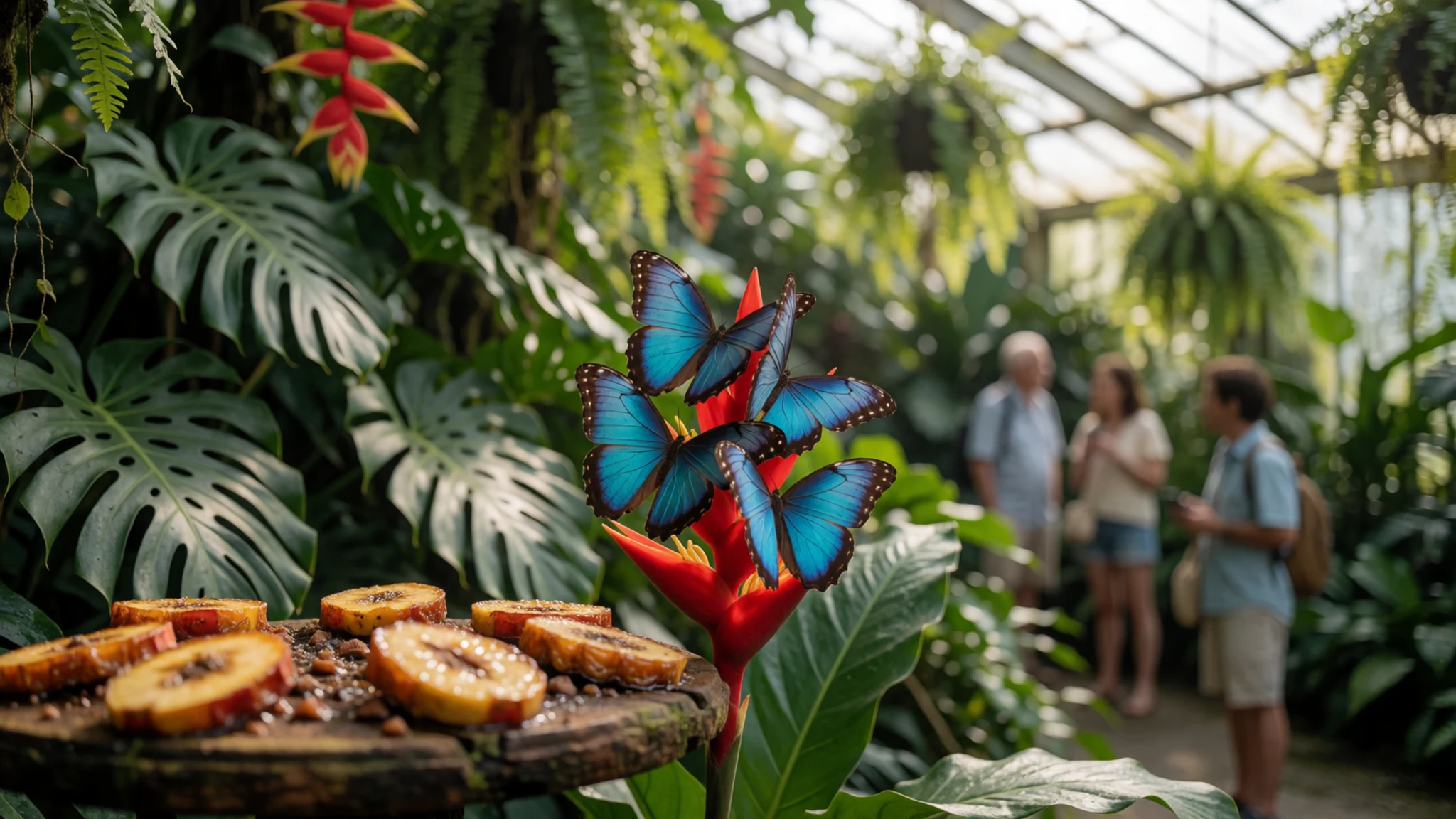
- Caburé chocolate tour — Old Monteverde, at the Café Caburé complex
The Caburé chocolate tour follows cacao from raw bean to finished bar, in a factory that is small and playful rather than industrial. It works well as a break from walking in the rain, and the tasting at the end gives a clear sense of how different chocolate can taste. Check the official site or the shop for current tour times, since schedules change.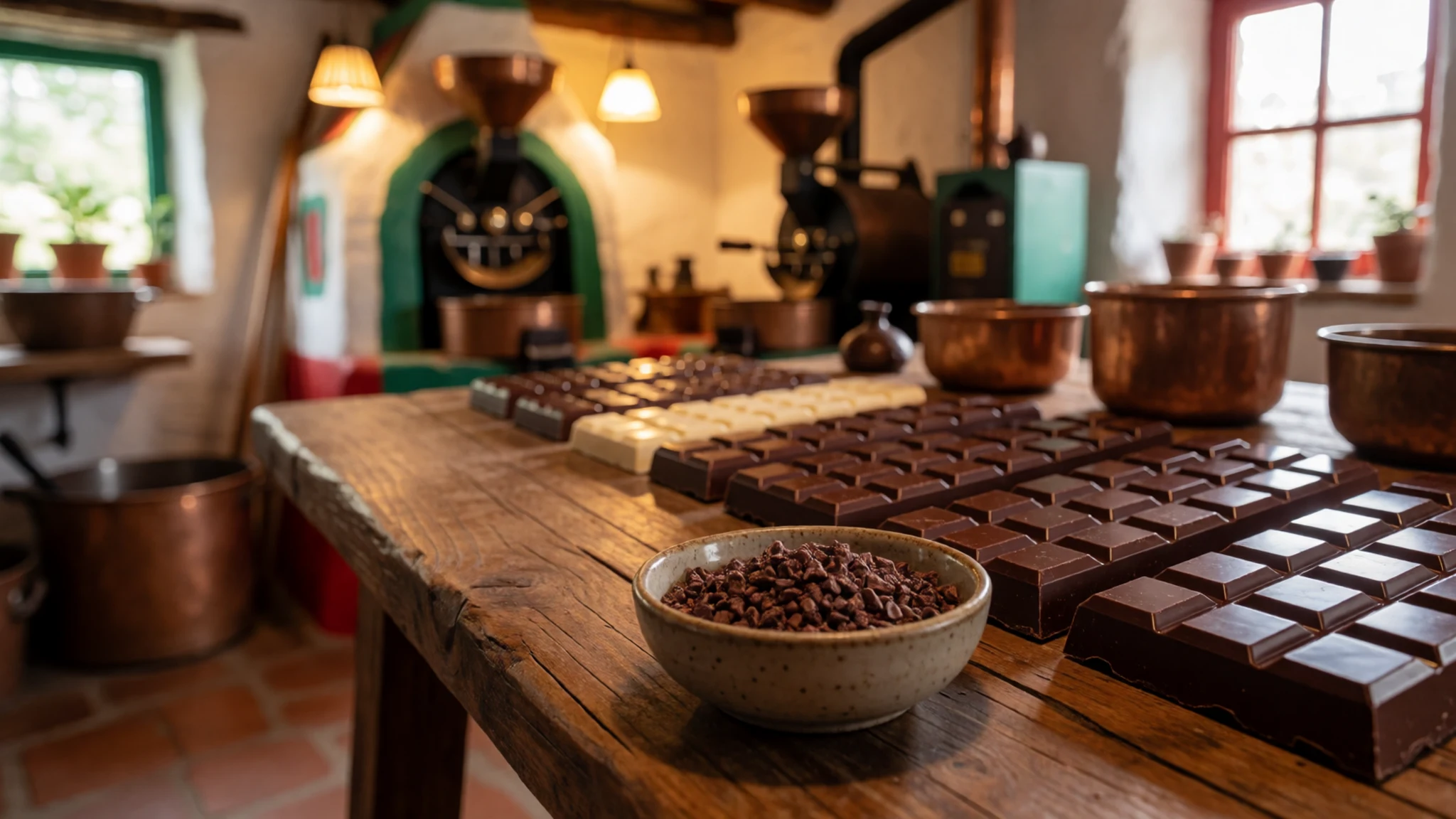
- San Luis Botanical Garden — San Luis valley, outside Santa Elena
This botanical garden has arboretum trails and 75 species of medicinal plants, so it suits anyone curious about how local plants have been used. Resident naturalists lead day and night walks through the forest trails. The night walk is the easiest way to see the nocturnal side of the forest, including frogs and insects that stay hidden by daylight.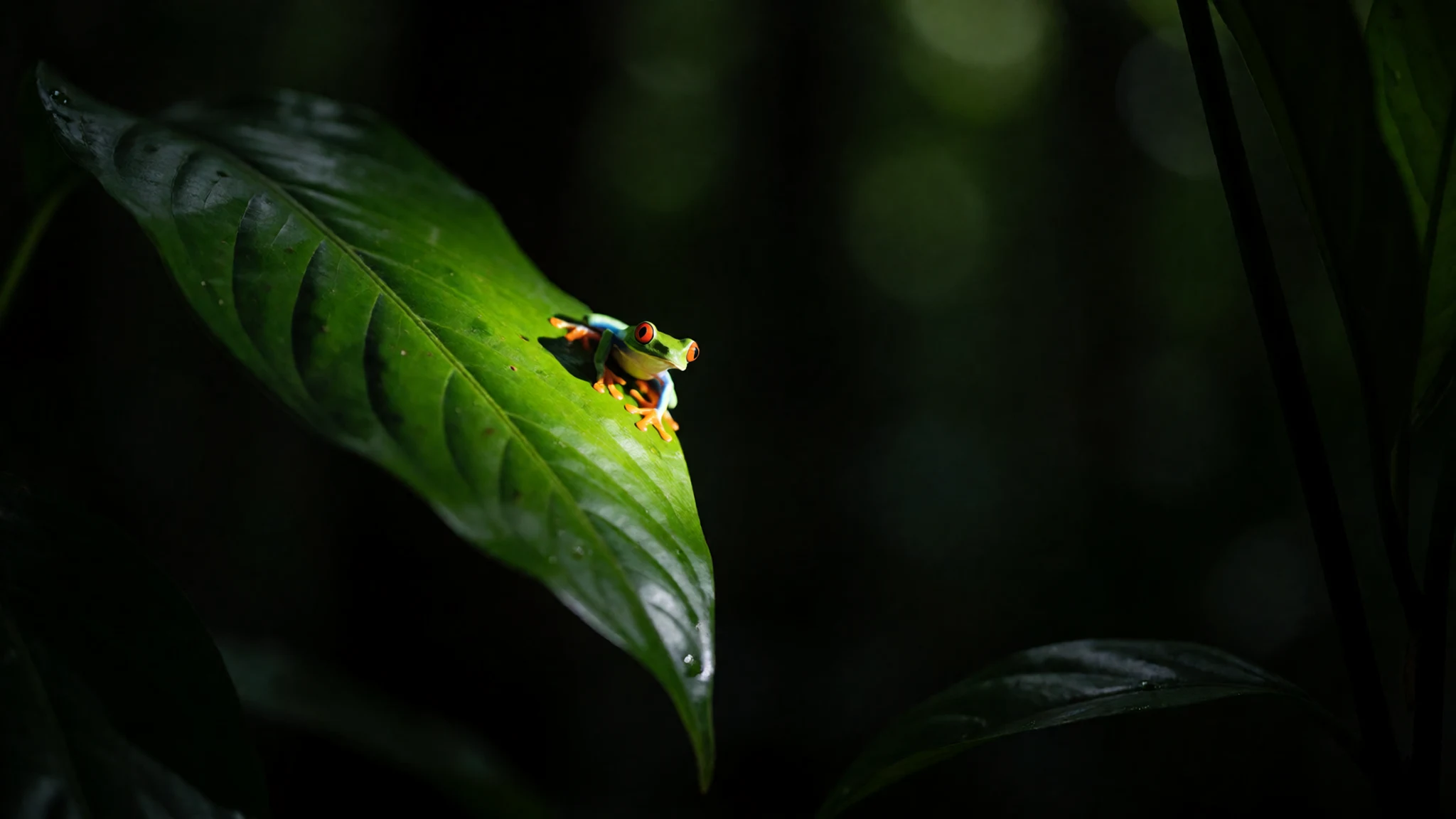
- Catarata Los Murciélagos waterfall — Monteverde, a short forest path below the road
A short hike of about ten minutes leads down to this waterfall, with some steep steps but nothing demanding. Swimming is possible at the base, which makes a good midday cool-off after a morning in the forest. The path can be slippery after rain, so take care on the steps, and expect the water to feel refreshing rather than warm.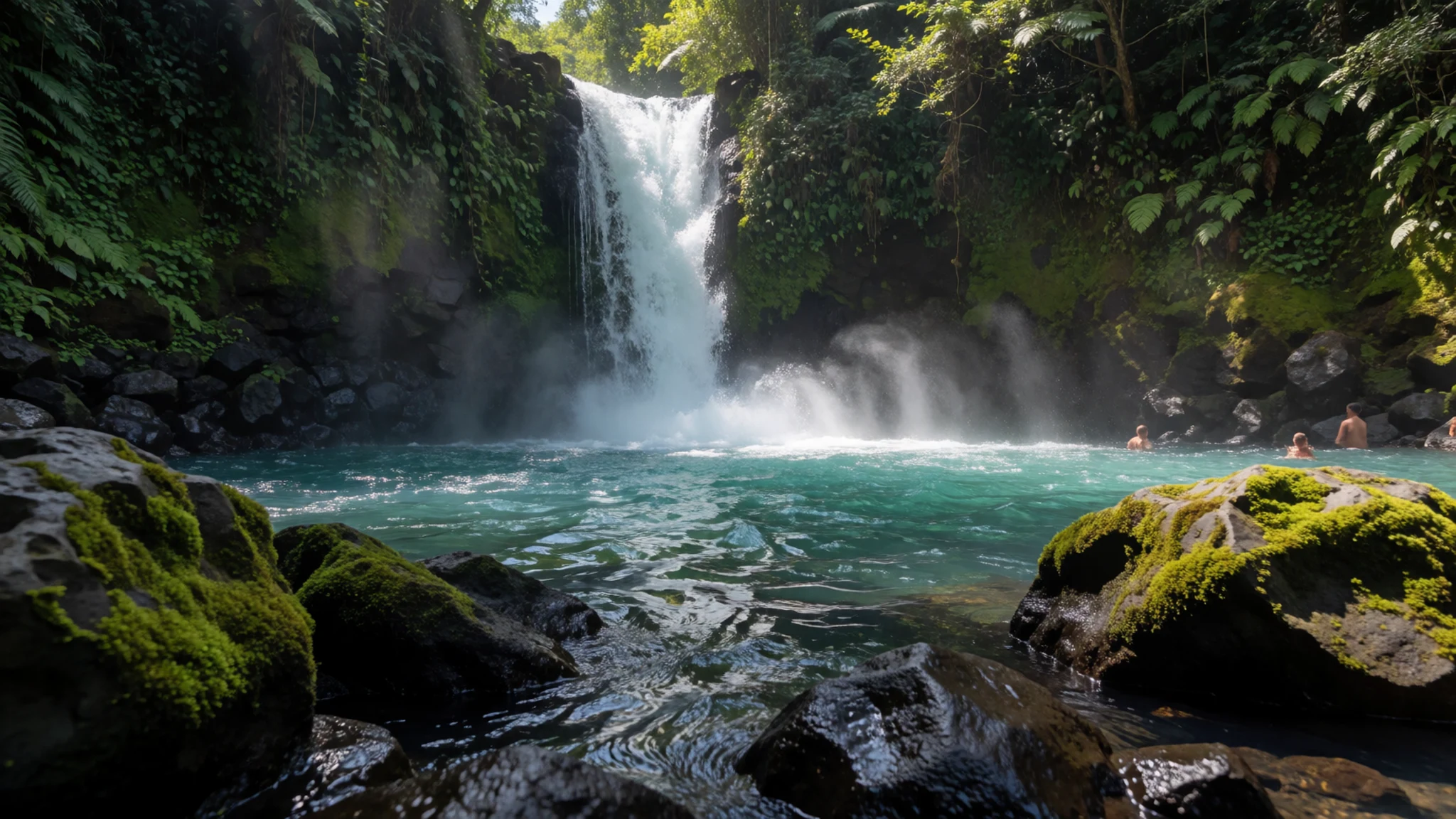
- The Ventana viewpoint — Inside the Monteverde Cloud Forest Reserve
The Ventana inside the reserve is one of the most scenic spots in the area, according to Wikivoyage. Mist and cloud often hide the view, so the best chance is an early start, before the cloud builds up through the morning. Keep to the marked path to the lookout, and allow time to wait for a clearing.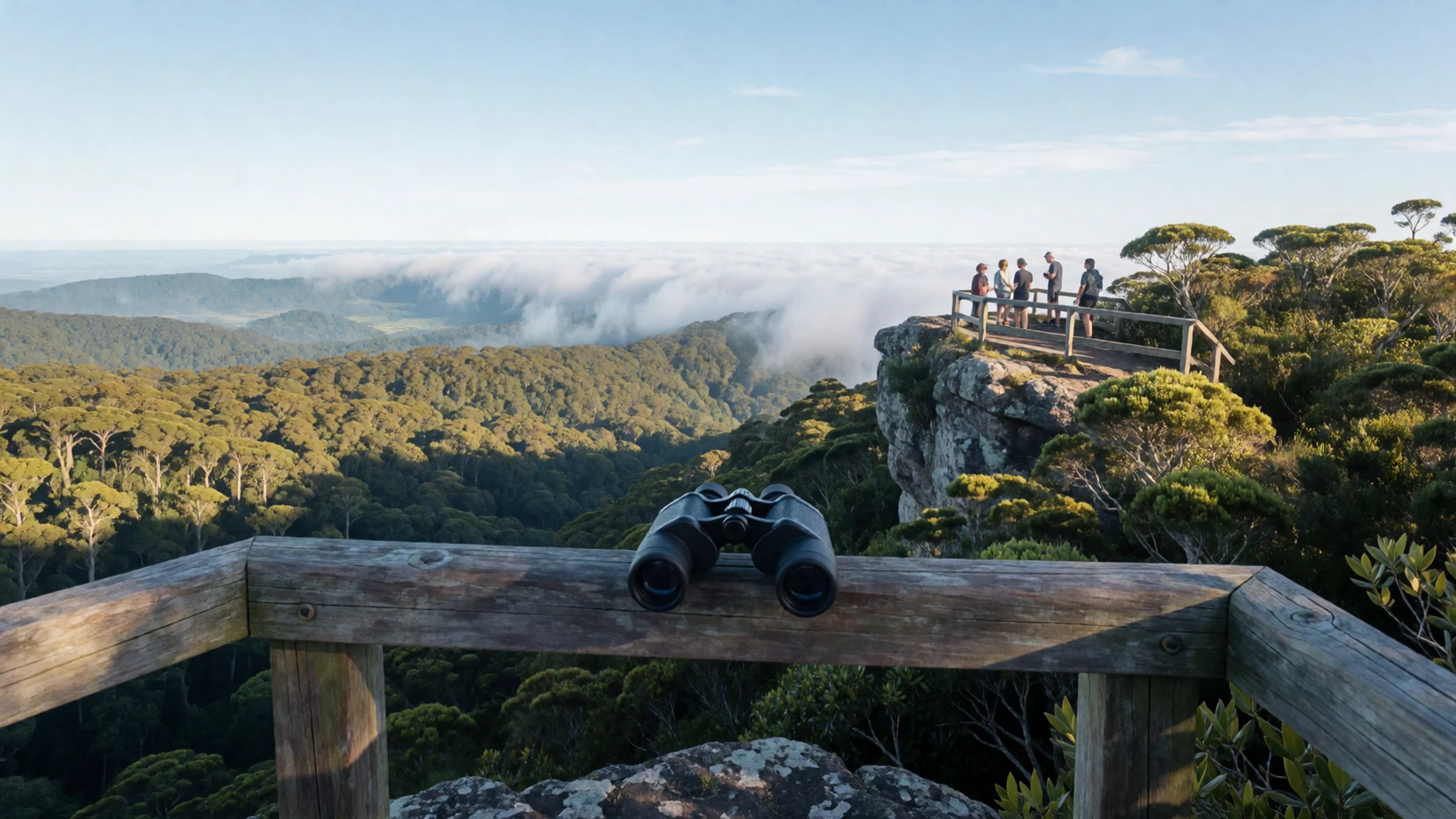
Culture
Monteverde Cloud Forest Reserve sits within a wider Costa Rican tradition of valuing protected land, and local guides often describe the forest as a shared asset rather than a backdrop. Spanish is the everyday language, and a polite greeting before asking for directions or a table is customary in shops and small eateries. Many people in Santa Elena work in tourism, so friendly interest in their work is welcome, though haggling over fixed-price services is unusual. Conservation rules here are taken seriously. Rangers and naturalists explain why paths are fixed, why certain plants should not be touched, and why noise carries so far under the canopy. Respect for the forest also means respect for the people who study it: several biologists have lived here for decades, and interrupting a research walk can disrupt their work. Photography is generally welcome, but ask before photographing staff, guides or local families, particularly at private gardens where people are working. Stay on marked trails, keep voices low and never handle frogs, insects or other wildlife.
What to wear
Monteverde Cloud Forest Reserve sits in a region where traditional dress is more about everyday work than ceremony. Costa Rica's national costume, the traje típico, usually means a full cotton skirt and an embroidered blouse, worn at festivals and folk dances rather than on hikes. Its bright embroidery and practical cotton reflect rural life, but nobody wears it to the forest. In Santa Elena and the reserve, most people dress in layers: waterproof jackets, fleece, quick-drying trousers and sturdy boots. The everyday look is relaxed and practical.
For a visit, the climate decides most choices. Cloud and drizzle can arrive at any hour, so pack a rain jacket that can cover a daypack, and choose clothing that dries quickly if it gets wet. Long sleeves and trousers help against insects and scratches from vegetation. The trails are muddy and steep in places, so closed, grippy shoes with ankle support are a better choice than sandals. Swimwear is useful if you plan to cool off at the waterfall, and a light hat helps on clearer days. Modest dress is not required at the reserve, though covering shoulders and knees is sensible at churches in the town.
What to eat
- Gallo pinto — traditional sodas along Santa Elena's main road
Gallo pinto, rice and black beans fried together with onion and coriander, is the everyday breakfast across Costa Rica and an easy way to start a day on the trails. It usually comes with eggs, fresh cheese or fried plantain. Order it at a traditional soda, the small family eatery found along the main roads of town.
- Fresh bread and pastries — a bakery on Santa Elena's main street
Bread, pastries and coffee are sold at a bakery on Santa Elena's main street, with prices kept modest for locals and visitors alike. It is a practical stop for a morning snack before a long walk, and it is handy for packing food for the trails.
- Bean-to-bar chocolate — Café Caburé in Old Monteverde
Bean-to-bar chocolate is a local speciality around Monteverde, and the Caburé tour and shop show the process from cacao pod to finished bar. Dark chocolate with a fruity, slightly bitter edge is the one to try first. - Gelato — a Santa Elena guesthouse that makes its own gelato
The owners of a Santa Elena guesthouse make their own gelato, and it draws a steady crowd from the town. Flavours change through the day, so ask what is made that day. Tropical fruit flavours are a sensible choice after a hot, sticky walk. - Coffee — cafés around Santa Elena and Old Monteverde
Coffee grown on the slopes of the Tilarán range is served in cafés across town, usually strong and black or with milk. An afternoon cup is a good way to wait for the cloud to lift from the viewpoints, and many cafés have seating with a view of the valley. - Casado — local eateries in Santa Elena
A casado is the standard Costa Rican plate: rice, beans, salad and a choice of meat or fish, often with plantain. It makes a filling lunch after a morning walk, and most local eateries serve a version of it.
Plan it
Best time. The drier months, roughly December to April, are the easiest for walking trails and for views, though the reserve is never completely dry. The wetter months bring heavier rain and thicker cloud, which keeps the forest lush but makes trails slippery and views rarer.
How long. 2–3
Getting there. The cheapest route is by public bus. From the west, take a bus towards San José and ask to get off at La Irma, then wait at the crossroads for the small bus up to Monteverde, which runs only a couple of times a day and can be late in the afternoon. Taxis are available from La Irma, and some Spanish helps the driver explain the region. A rental car is practical in the dry season, because the road from town to the reserve is unpaved.
Budget. mid
Tips
- Start early in the morning, when wildlife is most active and the cloud is lower
- Carry a waterproof jacket or small umbrella, since cloud and drizzle can arrive at any time
- Take cash for small eateries and markets, as smaller places may not accept cards
- Carry water and a snack, because the longer trails have few places to buy anything
- Book guided walks in advance and check the official site for current times
Etiquette
- Stay on marked trails to protect roots, soil and the mosses that hold moisture
- Keep voices low so birds and other wildlife are not disturbed
- Do not touch or feed wildlife, including frogs and insects
- Ask permission before photographing guides or staff at the gardens
Nearby
Sources
- Wikidata Q864538 (CC0)
- Wikipedia: Monteverde Cloud Forest Reserve (rev 1362859034) (CC BY-SA 4.0)
- Wikivoyage: Monteverde and Santa Elena Cloud Forest Reserves (rev 5411396) (CC BY-SA 4.0)
- Photo: Hengebru i Monteverde biologiske reservat, Costa Rica (01-monteverde-puente.jpg) (CC BY 3.0)
- Photo: Cloud forest bosque, Monteverde (02-monteverde-bosque.jpg) (CC BY-SA 2.0)
- Photo: Hummingbird biodiversity in the Costa Rican cloud forest (03-hummingbird-biodiversity-in-the-costa-rican-cloud-forest.jpg) (CC BY-SA 4.0)
- Photo: Golden toad, Bufo periglenes (04-bufo-periglenes2.jpg) (Public domain)
- Photo: Cloud forest at Monteverde (05-cloud-forest-at-monteverde.jpg) (CC BY-SA 1.0)
- Photo: Banner view, Monteverde Cloud Forest Reserve (06-banner-monteverde.png) (CC BY 3.0)
- Photo: Ophiocordyceps melolonthae (07-2016-05-25-ophiocordyceps-melolonthae-tul-c-tul-g-h-sung-j-m.jpg) (CC BY 3.0)
- Photo: Cloud forest at Monteverde Reserve, Costa Rica (08-costa-rica-panor-micas-2004-05.jpg) (CC BY-SA 4.0)


