Arenal Volcano
Arenal Volcano, Costa Rica
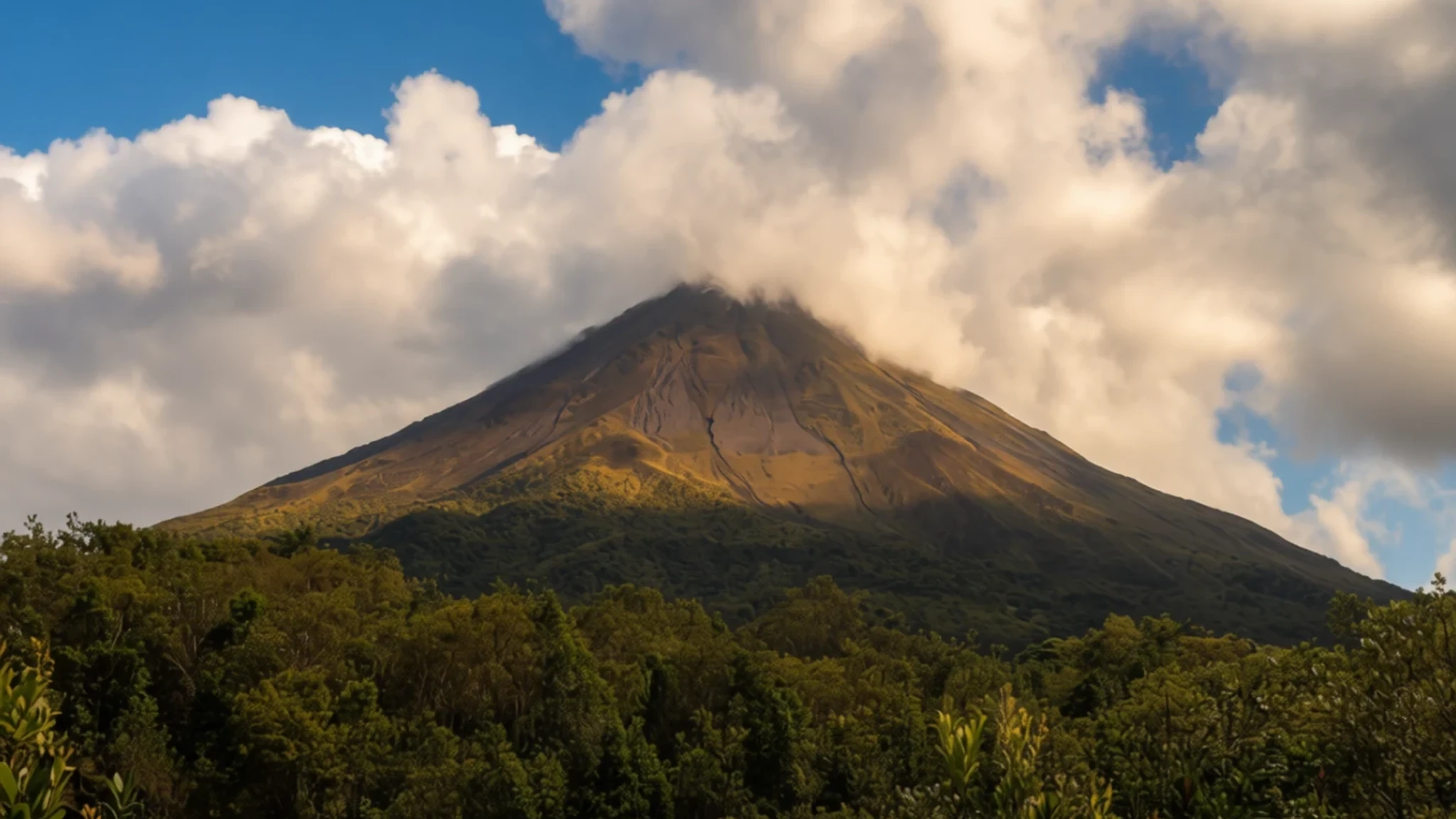
Arenal is a conical volcano near La Fortuna, best seen from a distance, with rainforest trails and wildlife around its base.
The place
Arenal Volcano is a cone-shaped volcano in north-western Costa Rica, in Alajuela Province, rising to about 1,670 metres. Geologists regard it as young, probably less than 7,500 years old, and it is built from andesite, a stiff lava that tends to pile up into steep cones like this one. Locals and older maps also use names such as Pan de Azúcar and Guatusos Peak, but most people simply say Arenal.
For centuries the mountain looked quiet. Its summit held two craters, a few wisps of steam and a cover of dense forest. That changed in 1968, when it erupted without much warning and destroyed the small town of Tabacón. The eruption opened three more craters on the western flanks, though only one of them remains today. Activity carried on from 1968 until 2010, and the volcano has been dormant since then, though it still gives off steam and the occasional rumble.
Most visitors now see the cone from below rather than from the rim. The town of La Fortuna sits at its foot and has grown into the main base for trips here, with viewpoints, lodges and tour operators. The land around the mountain is a patchwork of pasture, regrowing forest and protected woodland. Lake Arenal sits nearby and appears in the classic view from the Arenal Observatory Lodge. The summit can disappear into cloud, so keep a second plan for the day.
Its story
The story of Arenal Volcano begins with a mountain that people in the surrounding valley had long taken for granted. Its forested cone had two craters at the summit and wisps of gas from its vents, and nothing about it suggested it was about to change the region. In 1968 that changed. The volcano erupted unexpectedly and the small town of Tabacón was destroyed, leaving families to abandon homes that had stood in its shadow.
The eruption was not a single event but the start of a long episode. New craters opened on the western flanks, three in all, and lava moved down the slopes over the following decades. Because activity lasted from 1968 until 2010, scientists have had decades of observations to work from. The old lava from 1968 still lies across parts of the western side, and walking over it shows how recently the land was remade.
For the communities around the mountain, the change brought new work. Visitors arrived in growing numbers, and La Fortuna developed into a base for trips to the volcano, the lake and the surrounding forest. Lodges, tour operators and small restaurants followed, and the local economy shifted towards tourism while still relying on farming and the land.
Today the volcano no longer erupts, but it is not dead in the way an extinct cone would be. Its steady rumbles and occasional steam remind people that the ground beneath it is still active. Many people come for the view, but the story they take home is often about the mountain that woke up in 1968 and has been watched carefully ever since.
What to see
- Viewpoints above La Fortuna — La Fortuna, the town at the foot of the volcano
The most common way to see the cone is from a viewpoint or hillside terrace above La Fortuna, where the volcano fills the sky and its slopes show dark lava beneath green forest. Many lodges and tour operators have their own lookouts, and some charge for access. Go in the morning if you can, since cloud tends to gather over the summit later in the day. Bring binoculars for the birds.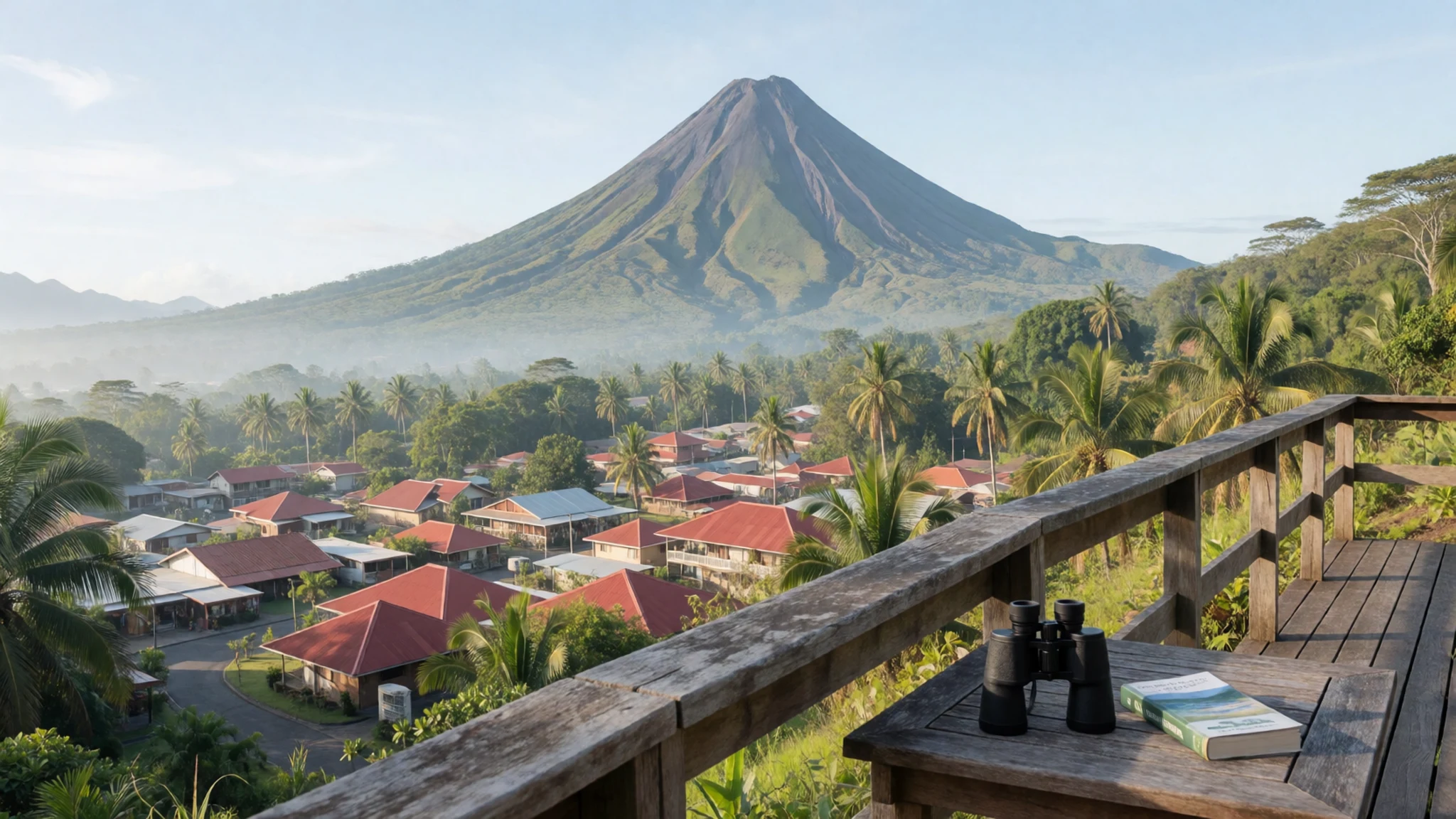
- Lake Arenal — beside the volcano, seen from the Arenal Observatory Lodge area
Lake Arenal lies close to the volcano and appears on the left of the classic view from the Arenal Observatory Lodge. The water gives the scene a second focus, with the cone rising above the shoreline. It suits a slower afternoon, and lakeside walks and boat trips are common, though you should check what is running when you visit.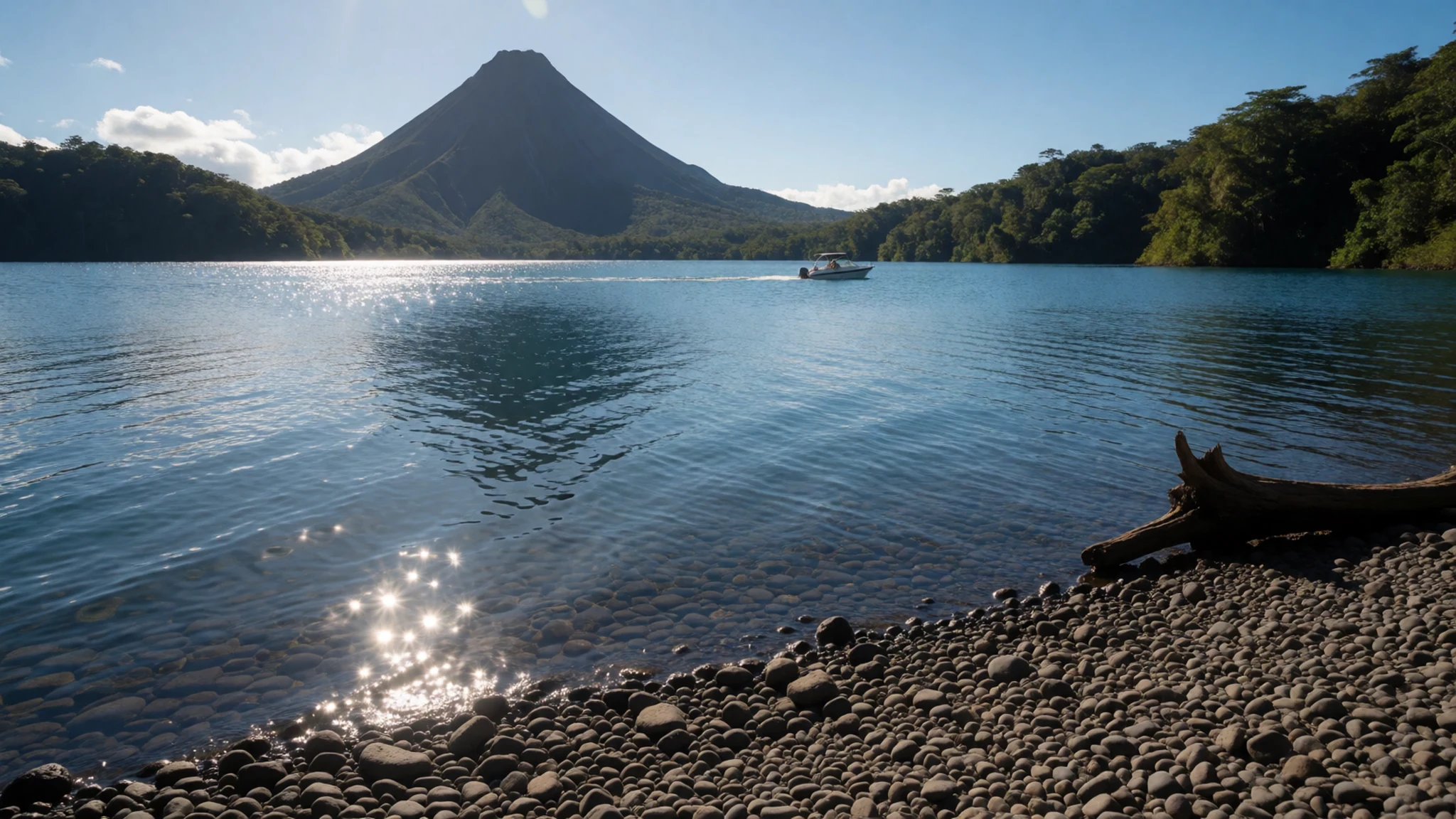
- The 1968 lava flow — the western flank of the volcano, on the old lava field
Old lava from the 1968 eruption still covers parts of the western side, and walking across it shows how recently this land was remade. The rock is dark, rough and broken into blocks, very different from the forest that surrounds it. Guided walks can explain the path of the flow and point out features that are easy to miss on your own.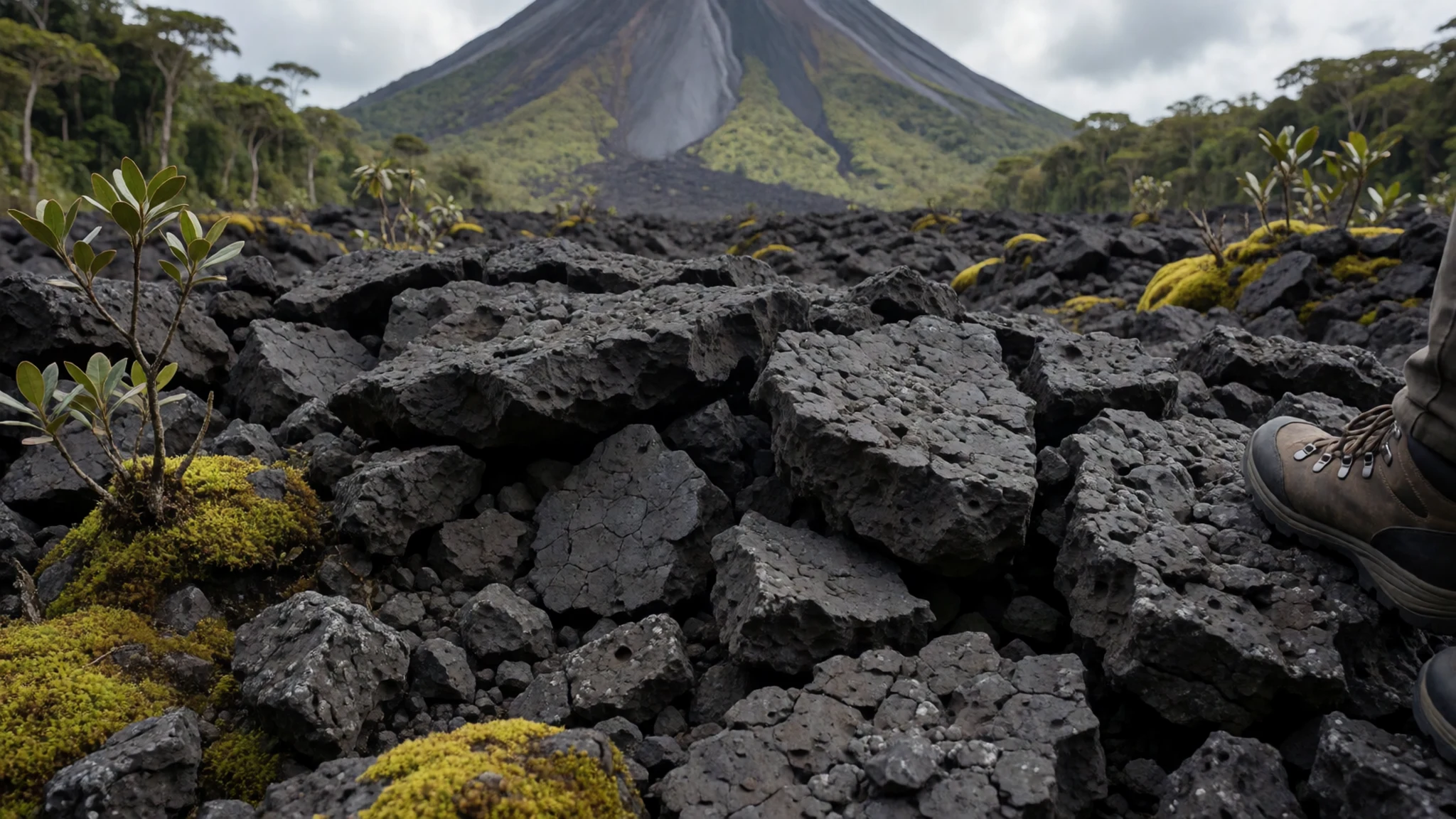
- Protected forest and its wildlife — forest trails on the lower slopes near La Fortuna
Costa Rica's national parks and protected areas cover a large share of the country, and the forest around the volcano sits within that wider network. Trails in forests like this can hold monkeys, sloths, tapirs and wild cats, along with many birds, though sightings depend on luck and timing. Walk slowly, listen as much as you look, and hire a local guide if you want to find animals hidden in the canopy.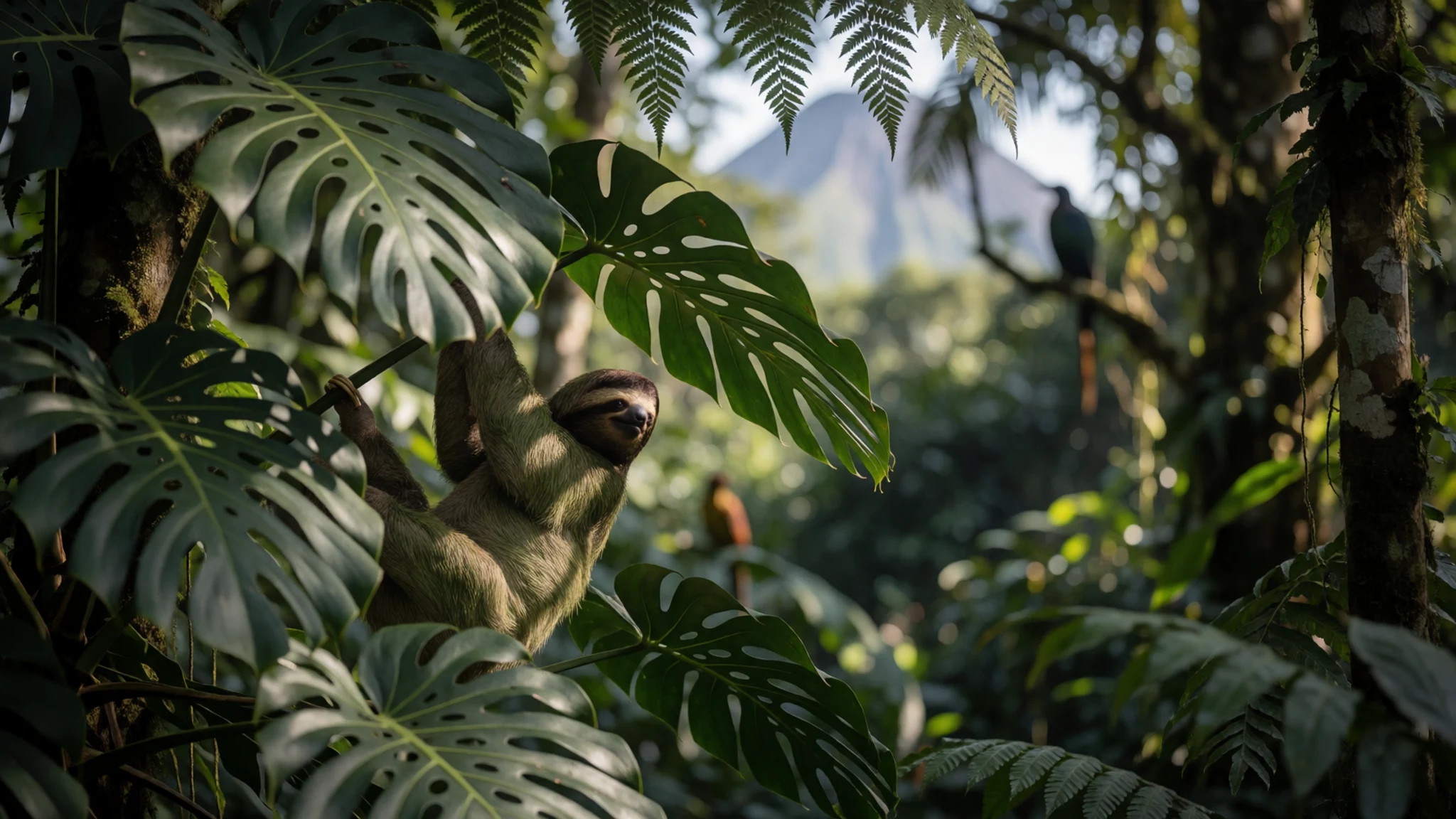
Culture
Around Arenal Volcano, you will mostly meet Ticos, the name Costa Ricans use for themselves. They are friendly and easygoing, and the national ideal of being bien educado, or well-mannered, shows in daily life. Shopkeepers and staff expect a greeting when you enter, so say "buenos días" or "buenas" and wait for the reply before asking for anything. Small courtesies count: "disculpe" when you brush past someone, and "quisiera" or "¿me podría dar…, por favor?" instead of a blunt demand. Time moves more slowly than many visitors are used to, and the phrase pura vida captures that attitude. Getting irritated over a late bus or a slow bill rarely helps and is more likely to bring a smile than faster service. Greet people you pass on the trail, keep your voice down near wildlife, and never feed or touch the animals you come across.
What to wear
Traditional dress around Arenal Volcano follows the wider Costa Rican pattern, where the classic outfits appear mostly at festivals, school celebrations and national holidays rather than in everyday life. The typical women's dress is a full, gathered skirt with a fitted blouse, often in bright cotton with printed or patterned fabric, and it is more likely to be seen in towns and at folk events than on the volcano's trails. Today people in La Fortuna dress much as people do in any warm town: jeans or shorts, T-shirts, sandals or sneakers, and practical work clothing for farms and tour companies.
Visitors should dress for heat, humidity and sudden rain. Light, quick-drying layers suit the damp lowland air, and a waterproof jacket is worth packing because showers can arrive quickly. Closed shoes with good grip matter on muddy, rooty forest paths, and sandals are fine for town walks and lodges. Long sleeves and a hat cut sun exposure on open viewpoints. Swimwear suits pools and lodge grounds, but cover up when you walk into a town or a restaurant. Pack one warm layer for cool evenings and early mornings at the lookouts.
What to eat
- Gallo pinto — the small local sodas (family eateries) in La Fortuna, especially at breakfast
Rice and black beans fried together with onion and a little cilantro, the everyday breakfast across the country. It is often served with eggs, cheese or fried plantain, and it can appear at lunch or dinner too. If cilantro is not to your taste, ask for it to be left out. Most people will be happy to do so.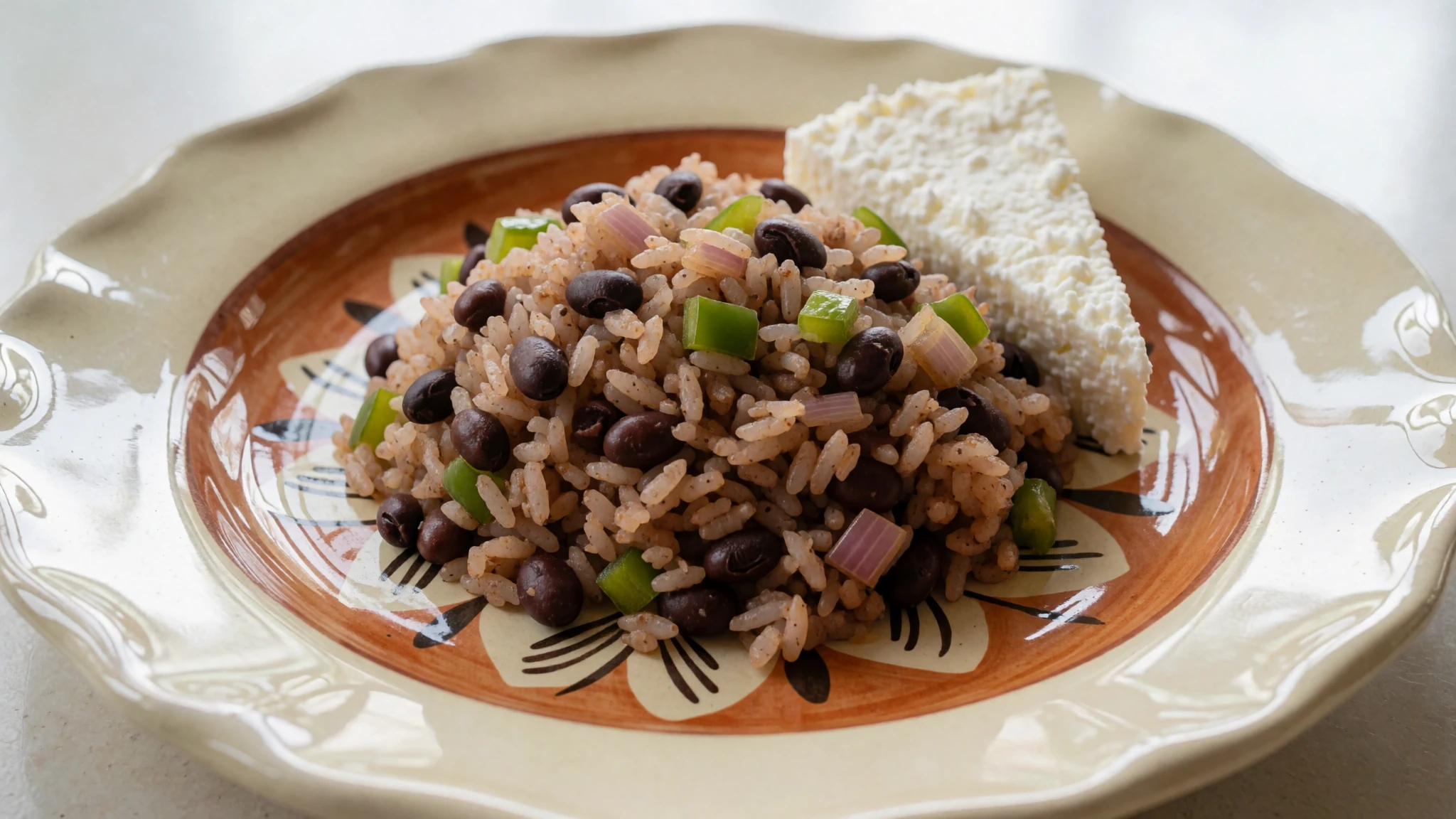
- Casado — the lunch counters of the town centre and roadside sodas
The standard lunch: rice and beans with a portion of meat, chicken or fish, served with a green salad and fried plantain. The name means "married", which suits a plate that brings several things together. It is filling and good value, and you will find it on almost every lunch menu.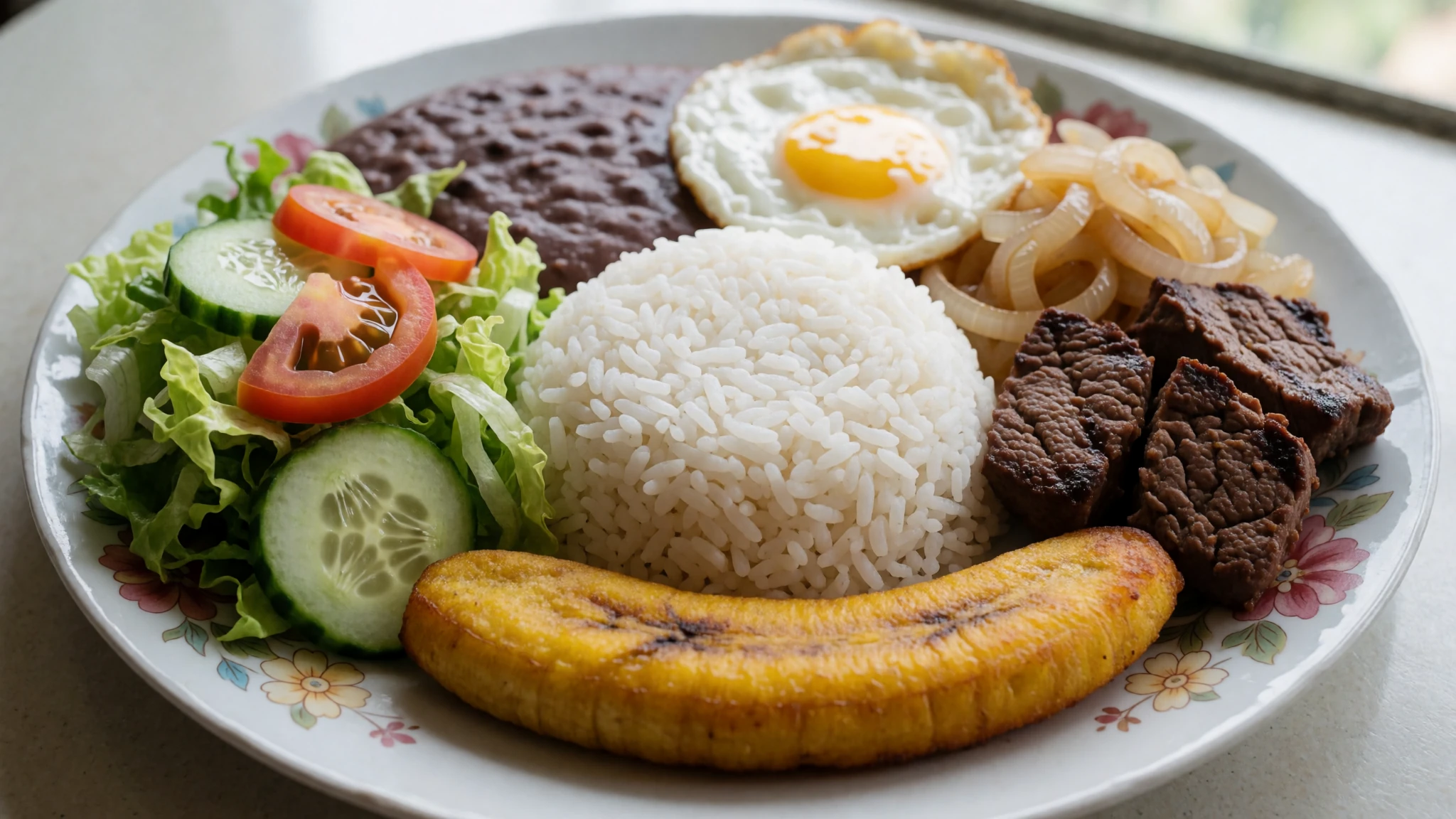
- Plato del día — family restaurants and sodas in town at lunchtime
The plate of the day is usually a casado built around whatever meat or fish the kitchen has that morning, often served with a natural fruit juice. It is the easiest way to eat well at lunch without studying a long menu. Order early, since the popular plates can run out before the afternoon. - Sopa negra — homestyle soda kitchens and family tables in the countryside
Literally "black soup", made from black beans cooked until they darken the broth. It is usually served with rice and sometimes a boiled egg, and it is a simple, comforting meal that families cook at home. It is less common on tourist menus, so look for it in homestyle kitchens. - Tres leches — bakeries and dessert counters in La Fortuna
Literally "three milks", a light sponge cake soaked in a mixture of milks and finished with cream. It is the classic Costa Rican dessert, and most bakeries and sit-down restaurants in the area make their own version. Share a slice if the portion looks generous.
Plan it
Best time. Plan around the drier months from December to April, when trails are firmer and views are more often clear. May to November is the rainy season, with heavy showers and muddier paths, though the landscape is lush and the crowds are often smaller.
How long. 2–3
Getting there. Fly into San José's international airport, then travel by road to La Fortuna, the town at the foot of the volcano. The road journey is the long final leg, so arrange a shuttle or hire a car in advance.
Budget. mid
Tips
- Book viewpoints, tours and lodge stays ahead in the dry season
- Go early, before cloud builds over the summit
- Check the official site for park opening times and any fees
- Carry cash for small sodas and market stalls
- Bring water, sun protection and a waterproof layer
Etiquette
- Greet people with buenos días when you enter shops, sodas and lodges
- Keep to marked trails and stay behind barriers near any crater area
- Do not feed or touch wildlife you meet on the trails
Nearby
Sources
- Wikidata Q641588 (CC0)
- Wikipedia (rev 1380828000) (CC BY-SA 4.0)
- Wikivoyage (rev 5398160) (CC BY-SA 4.0)
- Arenal Volcano panorama (cropped), Rhododendrites (CC BY-SA 4.0)
- Matthew G. Landry, 2006 (CC BY-SA 2.5)
- The Arenal Volcano viewed from the Arenal Observatory Lodge, Christophe Meneboeuf (CC BY 3.0)
- Arenal volcano from the old 1968 lava flow, Christophe Meneboeuf (CC BY 3.0)
- Arenal Volcano, Rhododendrites (CC BY-SA 4.0)
- Arenal Volcano panorama, Rhododendrites (CC BY-SA 4.0)
- Volcano Arenal seen from La Fortuna, Central Intelligence Agency (Public domain)
- Arenal Volcano, Costa Rica, Central Intelligence Agency (Public domain)


