Corcovado National Park
Corcovado National Park, Costa Rica
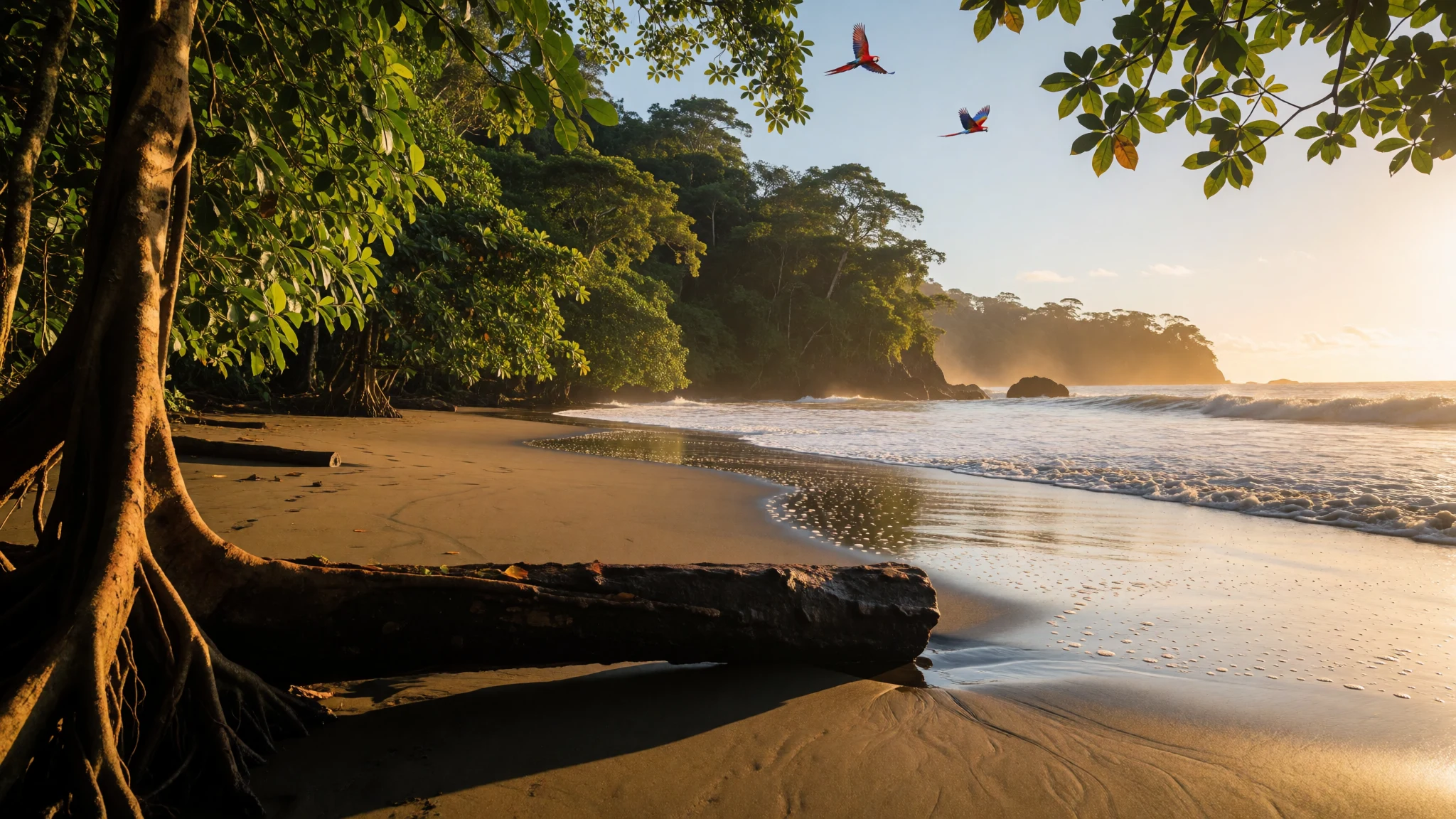
Corcovado National Park is lowland rainforest on Costa Rica's Osa Peninsula, reached on foot, where tapirs, macaws and big cats still have room.
The place
Corcovado National Park covers a large part of the Osa Peninsula in the far south-west of Costa Rica, where rainforest-covered hills run almost straight down to the Pacific. The facts give an elevation of just 63 metres, which sets the mood: this is mostly lowland forest, humid and loud with insects and birds, rather than a mountain park of ridges and views. Around Sirena the ground flattens into river plains, seasonal marshes, shallow lagoons and the broad Laguna Corcovado, while sheltered estuaries hold mangrove. The coast mixes sandy beach, rocky headland and river mouth, with trees pressing right up to the sand.
Few roads reach it. Walkers come along the beach from Carate in the south or San Pedrillo in the north, inland through the Los Patos entrance, or via Drake Bay on the northern side. Puerto Jiménez is the nearest sizeable town and the usual staging point. That isolation is a large part of why the lowland forest has survived, since easily reached lowlands elsewhere were logged for their big timber.
It also explains the practicalities. There are ranger stations rather than hotels, food is carried in, and the heat and humidity tire even fit walkers. Wildlife is the reason to come: tapirs, monkeys, wild cats, macaws, frogs. Sightings are never guaranteed, and the forest rewards slow walking, early starts and a good guide far more than speed.
Its story
Corcovado National Park was established in 1975, at a time when the lowland forests of the Osa Peninsula were under pressure. Lowlands are the easiest ground to reach and tend to hold the biggest and most valuable trees, so they were the first to be logged across much of the region. They are also usually the richest habitat for wildlife, which is what makes what remains here so valuable. Protection came late enough that a substantial block of primary forest was still standing.
The story since then has been one of holding the line. Illegal gold mining and poaching have both been problems inside the park, and deforestation around its edges has not stopped. Conservation groups and the government have responded in several ways: more ranger presence, rules that make land developers plant trees, and partnerships such as the one between the Global Conservation Organization and Osa Conservation aimed at ending illegal mining and hunting.
There is a human side too. Park managers and researchers argue that protection works better when neighbouring communities share in it, through outreach, local guiding and lodges owned by families from the area. The park is protected, but not finished business. Its survival depends on continuing enforcement, on money from careful tourism, and on visitors who leave nothing behind, which is why the leave-no-trace message is repeated so firmly at the stations.
What to see
- Sirena ranger station — Central lowlands
Sirena is the natural base for exploring the park, set in the lowland plains with an old airstrip beside it. Staying several nights lets walkers do dawn and night walks without hauling everything again. Beds and meals need advance reservation, and guests bring their own bedsheets. Tapirs and monkeys turn up near here.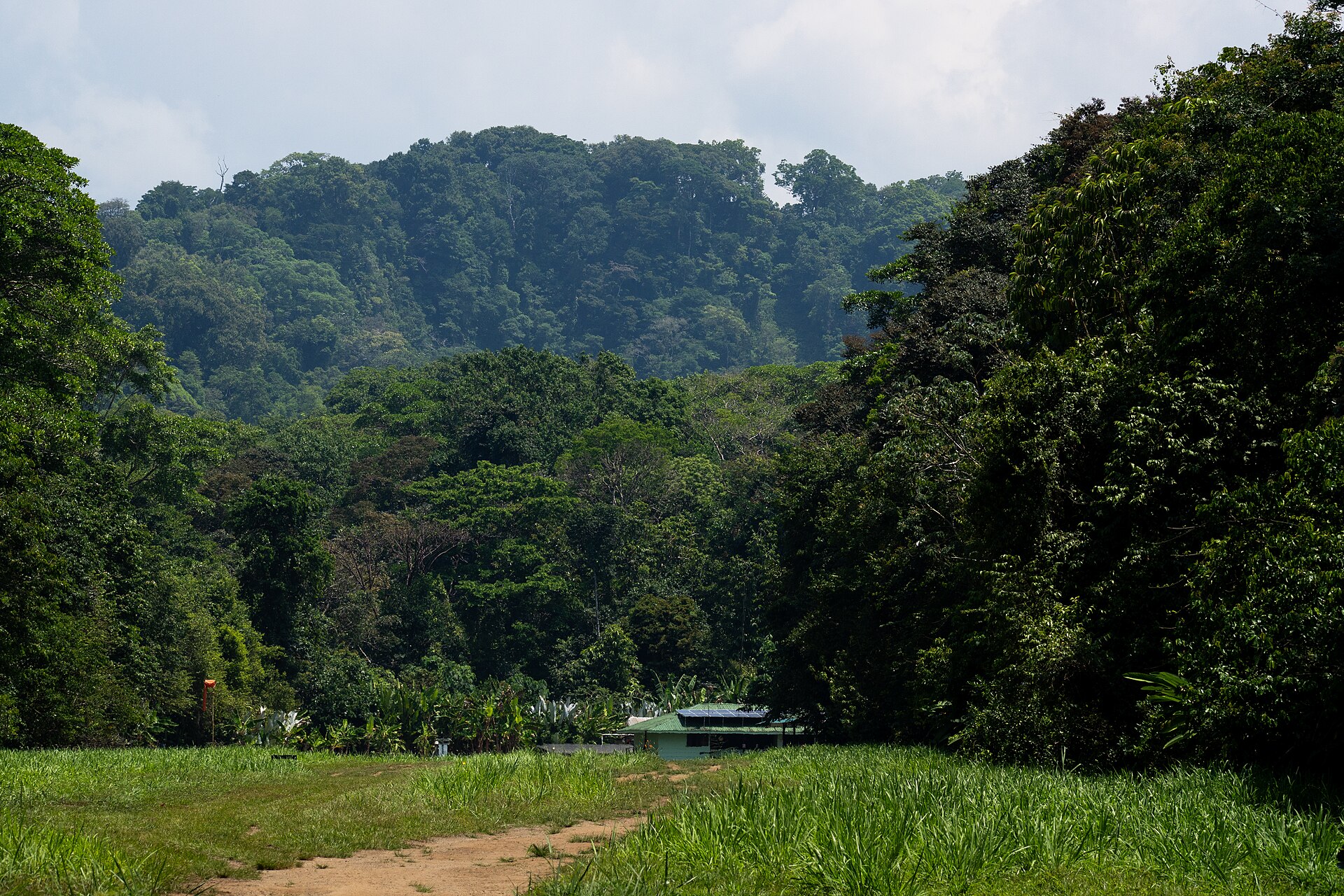
- La Leona to Sirena beach walk — Southern coast
This is the classic approach from the south: a long, hot coastal walk along sand, river crossings and rocky points. It is very exposed, with little shade, so an early start, strong sun protection and far more water than seems reasonable are essential. Timing around the tide matters, and a guide helps. - Tapirs and the mammals of the forest — Forest trails around Sirena
Corcovado is known for Baird's tapir, along with squirrel monkeys, tamanduas, white-nosed coatis and wild cats such as puma and jaguar, though cats are rarely seen. Guides know the habits of the animals and where tapirs tend to pass. Patience matters more than gear, and quiet, slow walking pays off.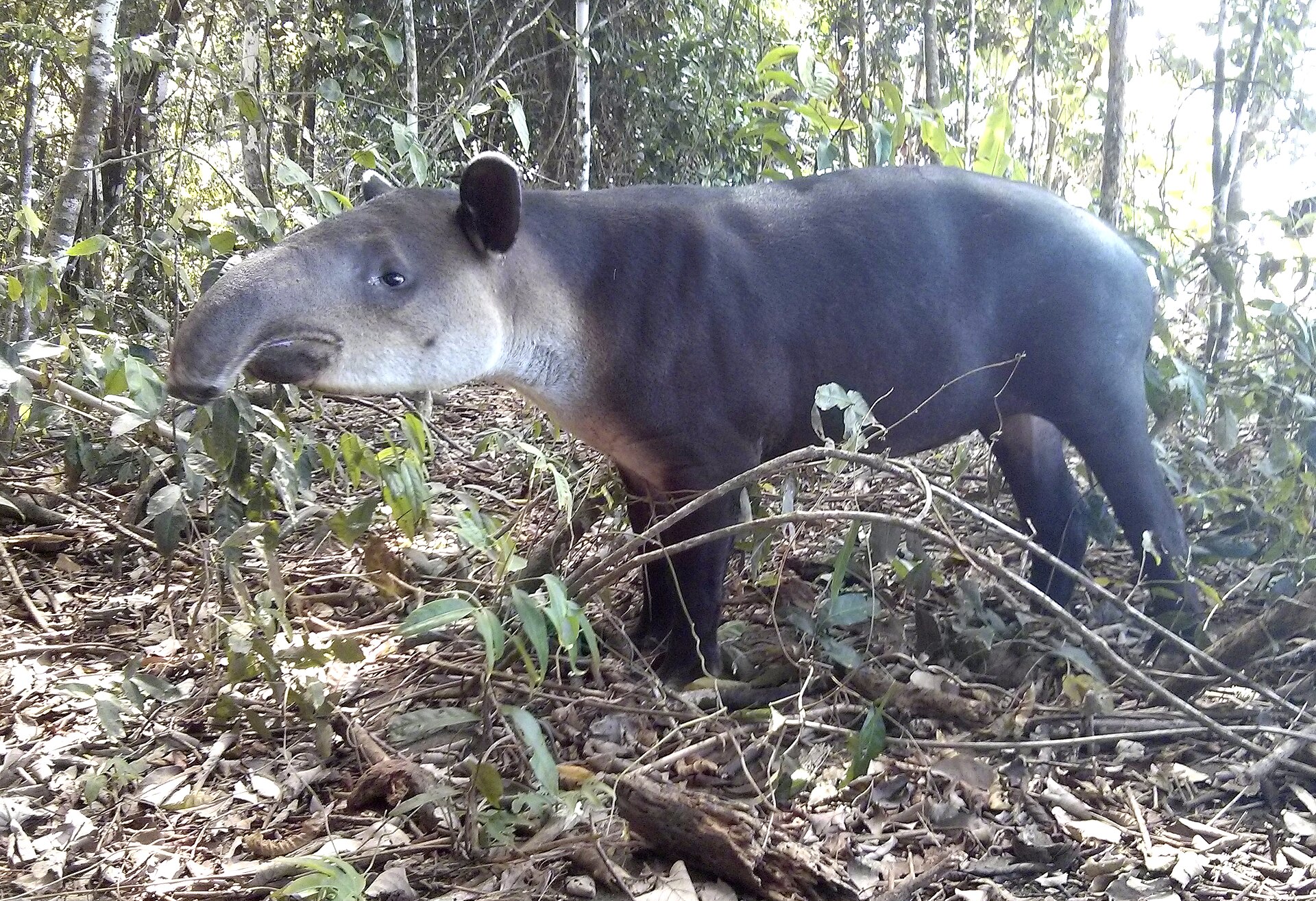
- Birds, including scarlet macaws — Coast and forest edge
The park is a strong birding destination, with scarlet macaws flying over the coast and forest birds such as the Guianan trogon sitting still on shaded branches. Early morning is best, when the canopy is busiest and the heat is manageable. A guide with a telescope will find species that most visitors would walk past.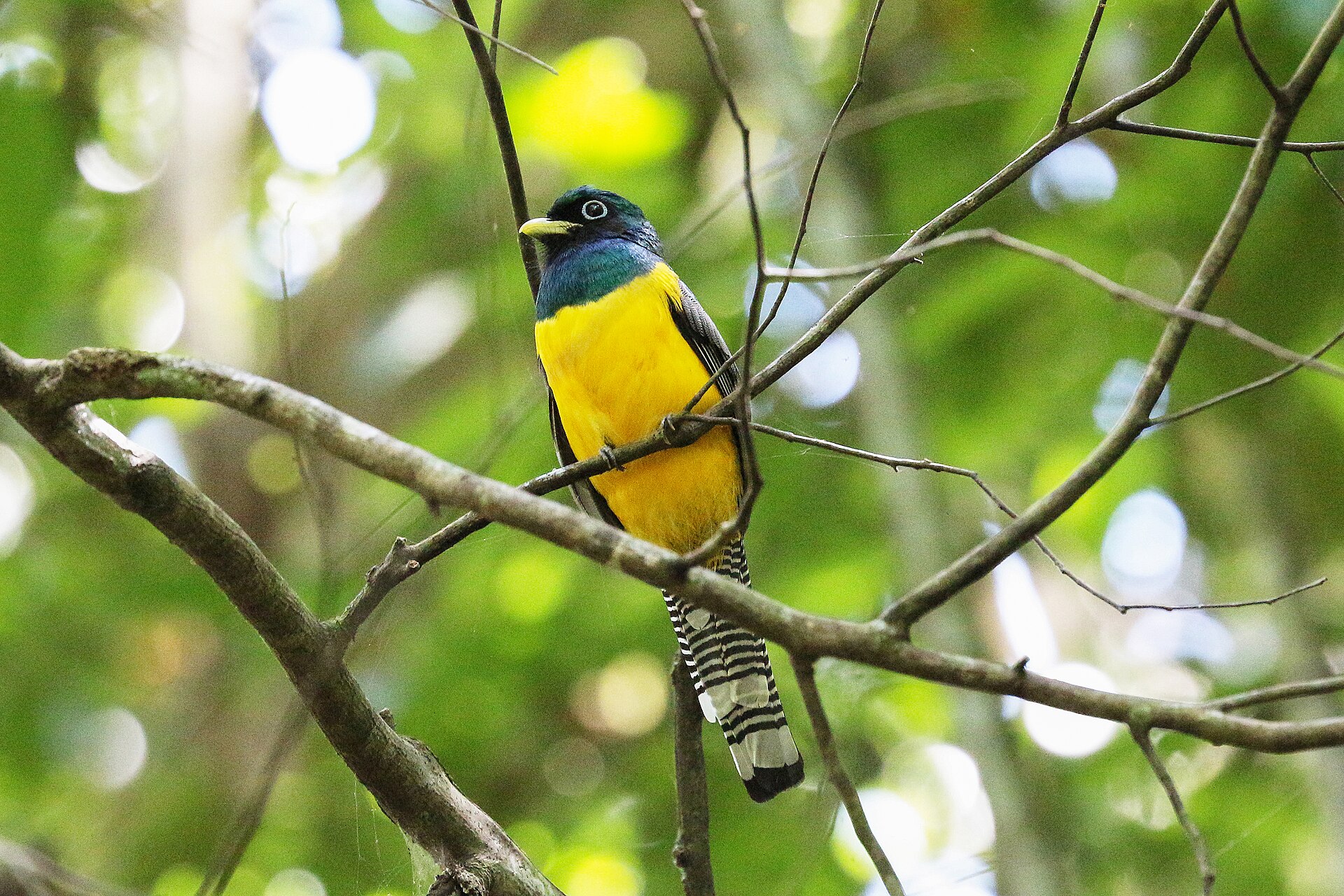
- Laguna Corcovado and the river plains — Interior lowlands
Behind the beach, the flat ground around Sirena holds rivers, seasonal marshes, shallow lagoons and mangrove at the estuaries. The Claro River is one of the clear watercourses crossed on these trails. It is a good place to see waterbirds and reptiles, and to understand how wet this lowland landscape is.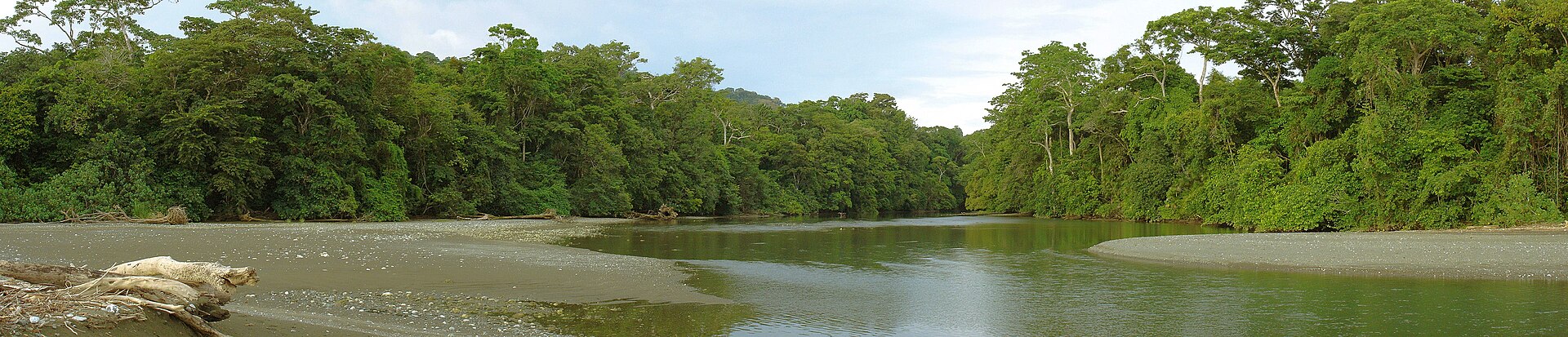
Culture
Corcovado National Park is a protected area first and a visitor attraction second, and its culture is shaped by that. The Osa Peninsula has long been a place where people have worked the land, panned for gold and farmed, and the arrival of the park changed the relationship between locals and the forest. Today many residents of Puerto Jiménez, Drake Bay and the villages near the boundary work as guides, boat operators, cooks, lodge owners and rangers, and some small lodges are owned by local Costa Rican families, who call themselves Ticos.
The prevailing ethic among those who work in and around the park is simple: the place is still intact because it has been hard to reach, and it stays intact only if people choose to keep it that way. Rangers and guides expect visitors to pack out every scrap of rubbish, including the small things like wrappers and fruit peel. Picking up litter left by others is welcomed, and encouraging fellow walkers to do the same is part of the culture.
Guides are respected for their knowledge of animal habits and tapir routes, and a day with one is usually better for it, though there is also room to walk quietly on your own where rules allow. Evenings at stations are early, since days start before dawn and the forest is noisy after dark anyway.
Carry out every piece of rubbish you bring in, keep your voice low near wildlife, and never feed or approach the animals.
What to wear
Corcovado National Park sits in a part of Costa Rica where traditional dress is mostly a matter of festivals rather than daily life. The national folk costume, seen at school parades, dance performances and civic days, features white cotton blouses and full, brightly coloured ruffled skirts for women, often with flowers in the hair, and white shirts, dark trousers and straw hats for men. Cotton and printed cotton are the usual cloth. It is not something worn around the Osa Peninsula on a normal day.
What people wear now is practical. Guides, rangers and boat crews wear quick-drying shirts, long trousers or shorts, caps, and rubber boots or sturdy trail shoes. In Puerto Jiménez and Drake Bay, casual shorts, T-shirts and sandals are normal in town, with nothing formal expected anywhere.
Visitors should dress for heat, humidity, sun and insects rather than for any religious or modesty norm. Light, long-sleeved shirts and long trousers in quick-drying fabric protect against sun, scratches and bites, and a wide-brimmed hat helps on the exposed beach walks. Wear boots or sturdy shoes with good grip for mud and river crossings, and carry spare dry socks, as everything stays damp. A rain jacket is useful in the wetter months. Swimwear is fine on the beaches, but cover up when passing through villages.
What to eat
- Gallo pinto — Small local eateries (sodas) in Puerto Jiménez and Drake Bay
Rice and black beans stir-fried with onion, sweet pepper and coriander, eaten at breakfast across Costa Rica. It usually comes with eggs and fried plantain. Look for it in the small family-run eateries of Puerto Jiménez and Drake Bay before heading into the park. - Casado — Sodas and lodge dining rooms around the park edge
The standard lunch plate: rice, beans, salad, fried plantain and a choice of chicken, fish or beef. It is cheap, filling and found almost everywhere. Eateries near the park boundary often serve a local fish version, which is a good meal to have before a long walk. - Fresh fish and ceviche — Seafront eateries in Drake Bay and Puerto Jiménez
Pacific fish, often grilled whole or cured in lime juice with onion and coriander as ceviche. Boat communities along the Osa coast supply it, and it tastes best eaten the day it is landed. Ask what was caught that morning. - Patacones — Street stalls and small eateries in Puerto Jiménez
Slices of green plantain fried, flattened and fried again until crisp, served with salt, beans or guacamole. They are a common snack or side and travel poorly, so they are best eaten fresh in town rather than carried in. - Trail food and station meals — Ranger stations, by advance reservation
Inside the park, most walkers carry light, non-perishable food such as pasta, rice, beans and soup packets, plus powdered drink mixes for flavouring water. Cooked meals at Sirena are possible with advance reservation. Potable water is available at each ranger station, though many walkers also bring a purifier.
Plan it
Best time. December to April is the dry season, when trails are easier and river crossings safer; travel to and through the park is best done then. Rains from May onwards make trails muddy and access harder, and heat and humidity are high all year.
How long. 3–4
Getting there. Fly to San José, then take a domestic flight or a long road journey to Puerto Jiménez, the nearest sizeable town and the main gateway. From there, walk or take a transfer to an entrance such as Carate or Los Patos, or reach the northern side via Drake Bay, sometimes by boat. Check the official park authority for current entry rules, permits and whether a guide is required.
Budget. high
Tips
- Reserve Sirena beds and meals well in advance, and bring your own bedsheets
- Carry far more water than seems necessary and a purifier, especially on the exposed beach walk from La Leona to Sirena
- Start walking at first light to avoid the worst heat and see more wildlife
- Use sun protection and insect repellent, as dengue is a possibility though malaria is not a concern
- Walk with a guide or a buddy, never alone
Etiquette
- Carry out all rubbish and leave no trace
- Keep a respectful distance from wildlife and never feed animals
- Follow ranger instructions and stay on marked trails
Nearby
Sources
- Wikidata Q869074 (CC0)
- Wikipedia: Corcovado National Park (rev 1365294220) (CC BY-SA 4.0)
- Wikivoyage: Corcovado National Park (rev 5400526) (CC BY-SA 4.0)
- Photo: Parque Nacional Corcovado, José R. (CC BY 3.0)
- Photo: Sirena Station, Julio-César Chávez (CC BY 4.0)
- Photo: Tapir in Costa Rica, zielwasser (CC BY 3.0)
- Photo: Guianan trogon in Costa Rica, Bernard Gagnon (CC0 1.0)
- Photo: Tamandúa, José R. (CC BY 3.0)
- Photo: Claro River, Miguel Vieira (CC BY 2.5)
- Photo: White-nosed coati in Costa Rica, Bernard Gagnon (CC0 1.0)
- Photo: Lokatie Nationaal park Corcovado, WiDi (CC BY 3.0)


