Cocos Island
Cocos Island, Costa Rica
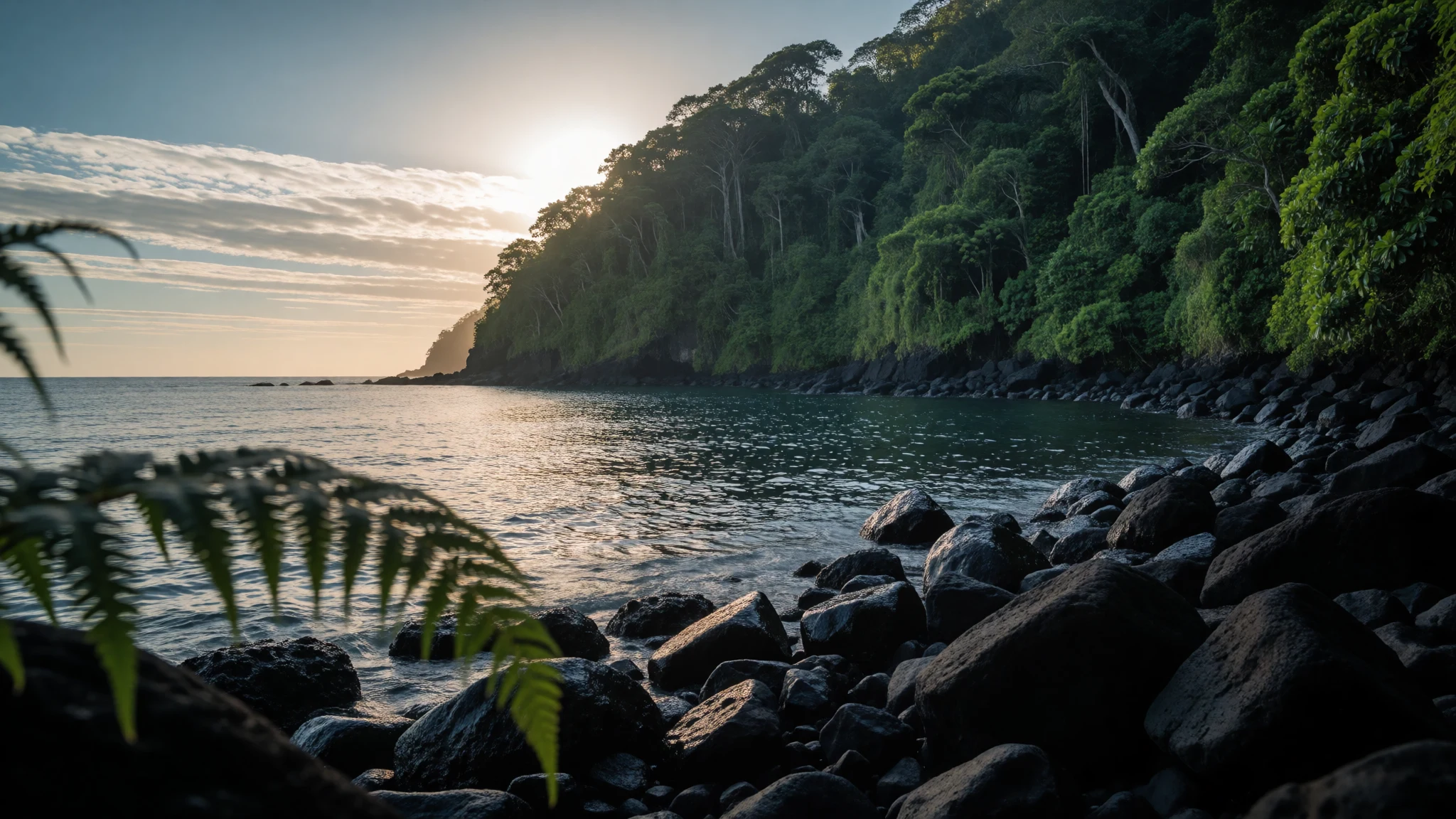
Cocos Island is a remote Costa Rican national park where hammerhead sharks school offshore and cloud forest covers the hills, reached only by a long sea crossing.
The place
Cocos Island (Isla del Coco) is a Costa Rican national park sitting alone in the eastern Pacific, well out of sight of the mainland. Nobody lives here except rangers, and the only realistic way to reach it is on a boat that has made the long open-water crossing from Costa Rica's Pacific coast, usually a diving liveaboard. The island itself is steep and densely wooded. Cliffs drop straight into bays, waterfalls spill into the sea after heavy rain, and the higher ground wears a cloud forest that stays damp, mossy and dripping for much of the year. Wafer Bay and Chatham Bay are the two anchorages most often named, and a ranger station on the shore serves as the island's only real settlement. Offshore, rocky islets and underwater peaks pull in schooling hammerhead sharks, rays and other large fish, which is why divers accept the crossing and the cost. This is not a beach holiday. There are no sunbeds, no resorts and no shops, and the sea can be rough enough to turn the first day into a test of stomachs. Rain is common, the light changes quickly, and the reward is a place that feels untouched because access is tightly controlled. Landings on shore are limited by the park, so most visitors spend their days in the water, on the boat, or on short supervised walks.
Its story
Cocos Island has been known to sailors for centuries, and its reputation rests as much on legend as on biology. Ships crossing the Pacific used it as a place to find fresh water and coconuts, which is the likely origin of its name. Stories later grew that pirates and Spanish colonial traders buried treasure here, and the tale has been retold in books, newspapers and adventure films ever since. Treasure hunters have mounted many expeditions, digging into hillsides and caves, and as far as any reliable record shows, none has found anything. The digging did harm to the island, which is part of why Costa Rica took a firmer line. The island was protected as a national park, and the surrounding sea has been brought under strict rules to shield its marine life from fishing. Today the park authority keeps rangers on the island, and visits need permits. The old treasure fever has been replaced by a quieter kind of searching, with scientists and divers recording sharks and other species. The island is also often linked in popular memory with the dinosaur island of a famous film, though that connection is closer to folklore than documented fact. What remains is a place whose history is told mostly in anecdotes, and whose strongest claim today is simply that it has been left largely alone.
What to see
- Wafer Bay — Northern coast
Wafer Bay on Cocos Island is a sheltered anchorage on the northern side, backed by green slopes and a rocky shore. It is a common stop for liveaboards and the usual place for supervised landings. Sunsets here turn the water copper, and rain showers can pass through within minutes.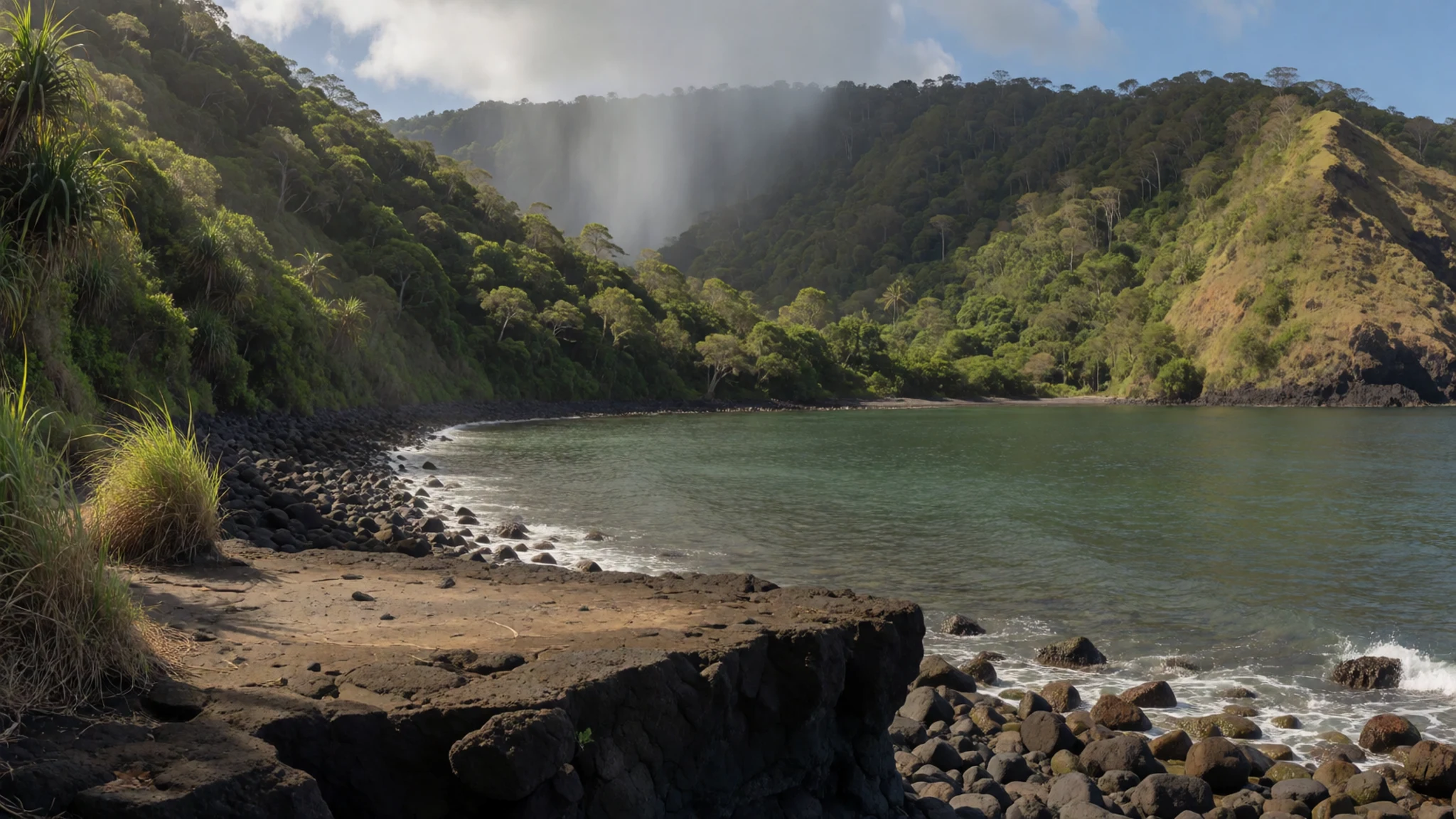
- Chatham Bay — North-eastern coast
Chatham Bay on Cocos Island is the second main anchorage, a wide cove ringed by steep, wooded hills. Boats shelter here between dives, and the shore gives a close look at how thick the island's vegetation is. Landing is controlled, so the view from the deck is often the main event.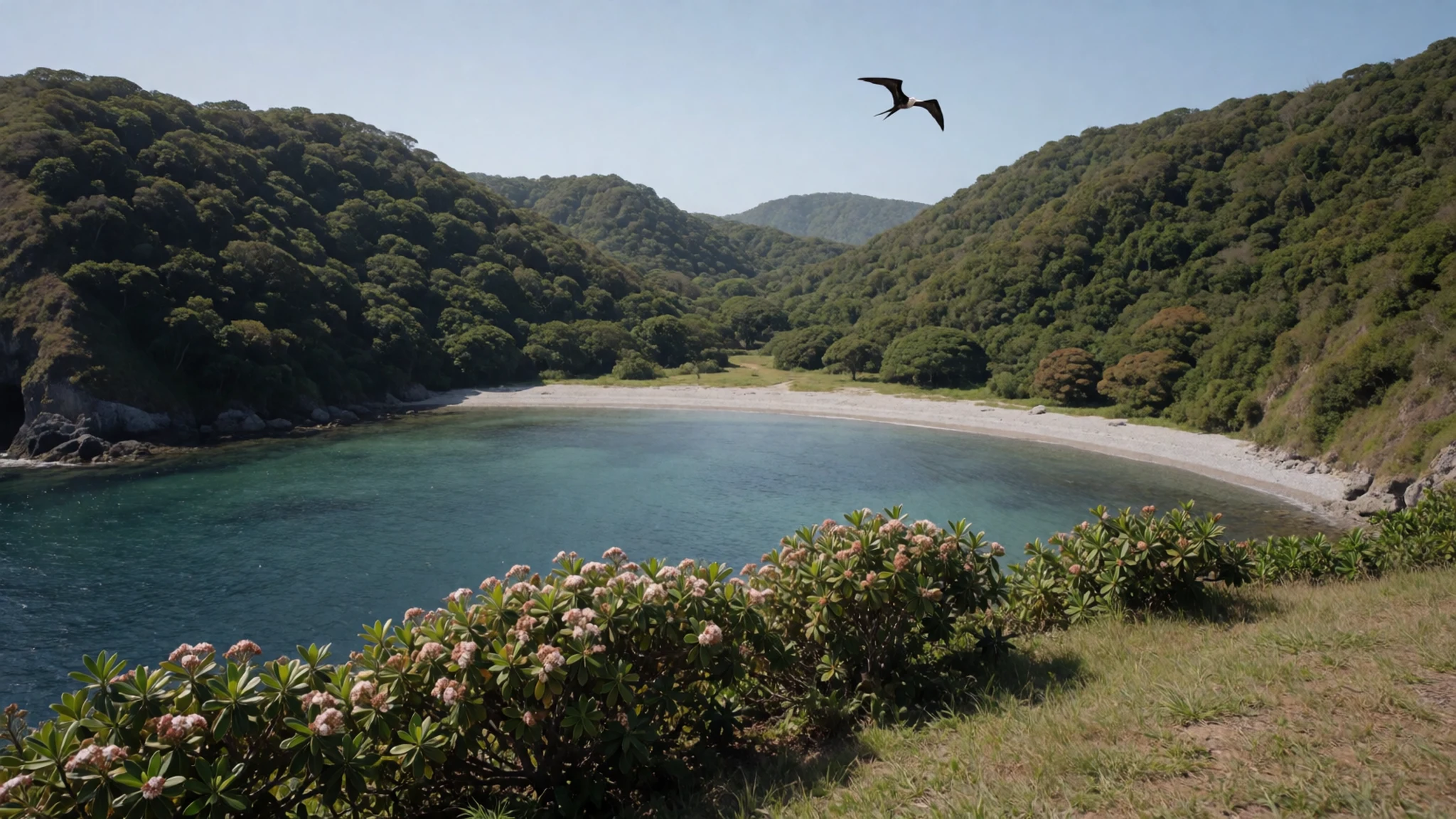
- Manuelita Islet — Just off the north-eastern coast
Manuelita is a small rocky islet just off Cocos Island and a favourite dive site because so many kinds of marine life gather around it. Divers report reef fish, rays and sharks in the same dive. Currents can be strong, so it suits experienced divers with a good guide.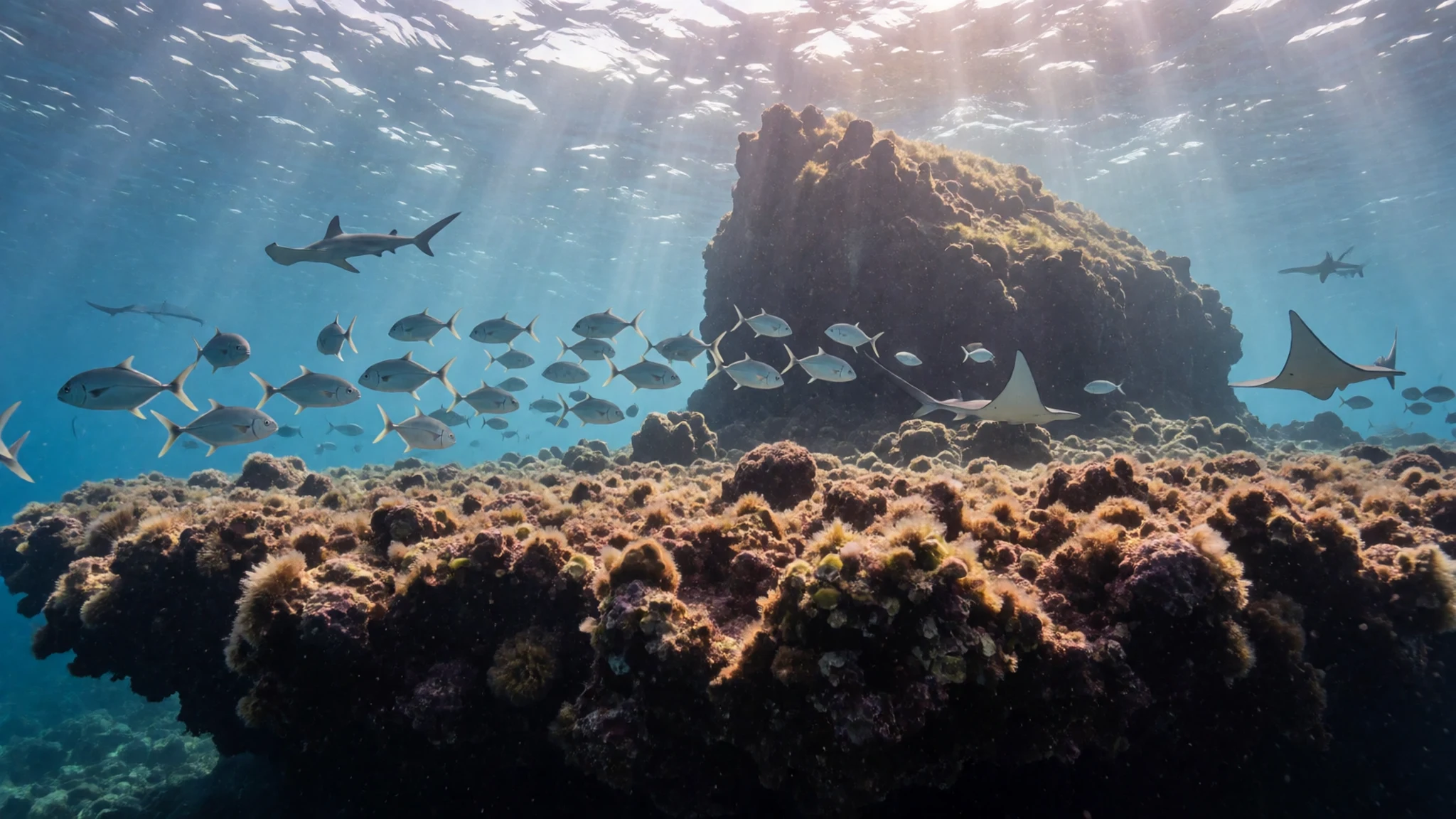
- Cerro Iglesias cloud forest — Interior highlands
The trail towards Cerro Iglesias climbs from the coast into cloud forest, where ferns, moss and twisted trees hold the mist. Paths are muddy and steep, and walks are allowed only with rangers or park approval. Expect birdsong, dripping leaves and views that appear and vanish with the cloud.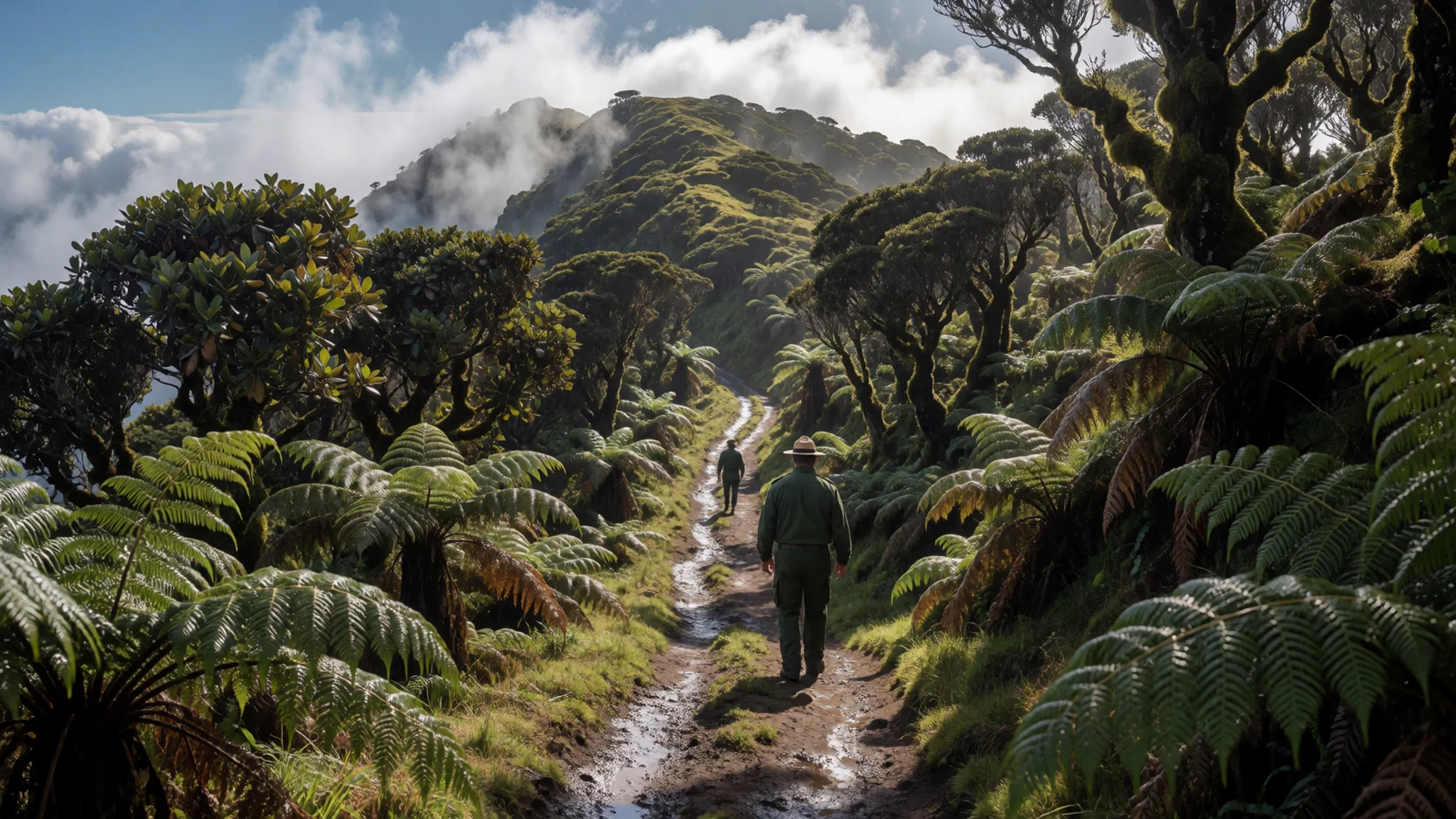
- Ranger station and visitor centre — Wafer Bay shore
The ranger station on Cocos Island is the base for the park's staff and the place where visits are logged and rules explained. A small visitor centre gives background on the island's wildlife and history. Rangers are a good source of facts, so listening to their briefing is worthwhile.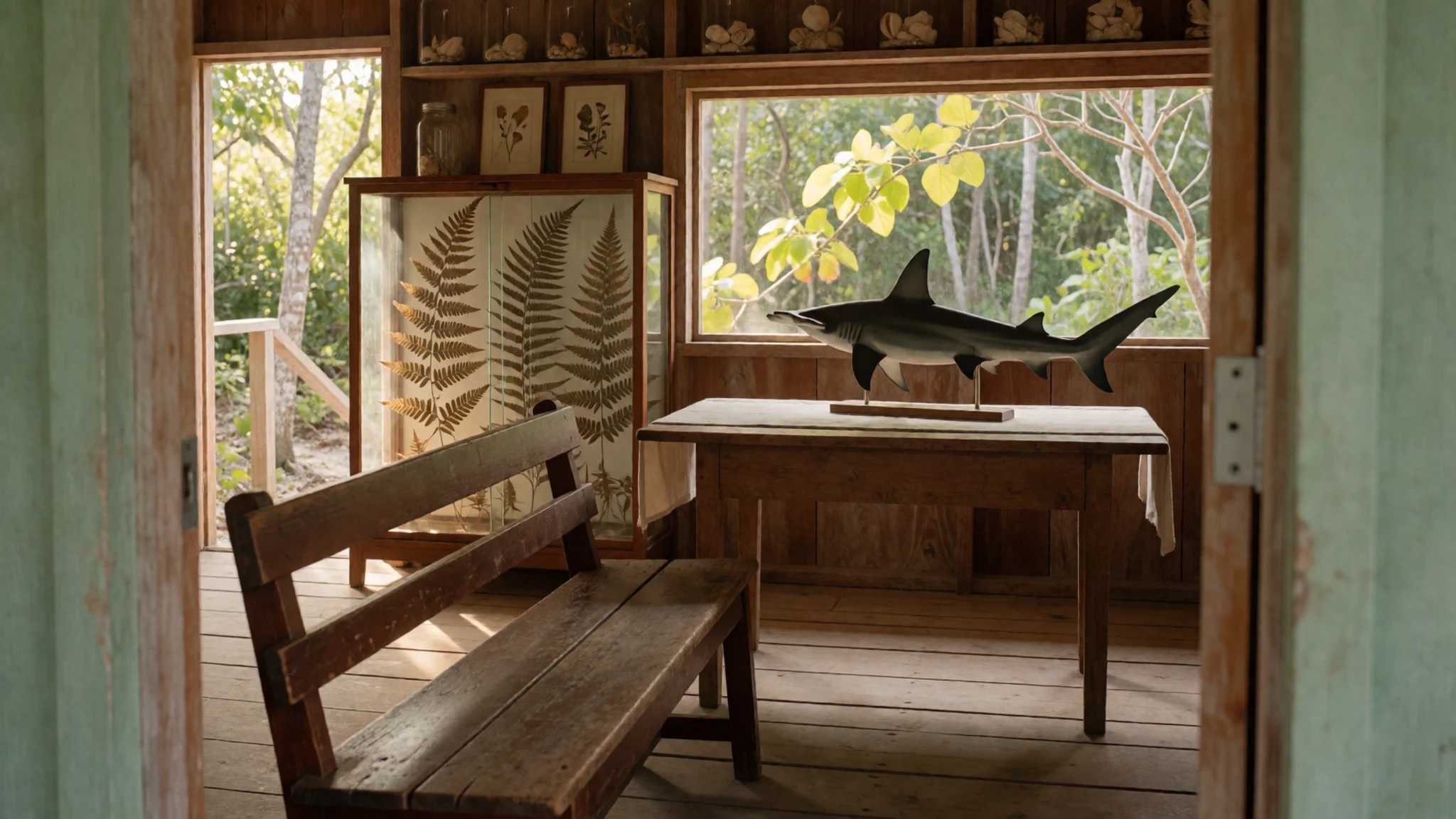
Culture
Cocos Island has no resident community, so its culture is really that of Costa Rica's conservation movement and of the seafarers who pass through. Costa Rica has built much of its national identity around protecting nature, and the rangers on the island are treated as respected guardians rather than mere officials. The phrase "pura vida", heard all over the mainland, serves as hello, thank you and everything is fine, and the crew of a Costa Rican liveaboard will use it constantly. Life aboard runs on routine: briefings before each dive, shared meals, early starts and a great deal of patience when weather changes the plan. Spanish is the working language ashore, though dive crews usually manage English well. Treasure stories remain part of local lore, and guides tend to tell them with a smile rather than as fact. Divers form a small, tight community here, swapping notes on which sharks were seen and where. Conservation rules are taken seriously, and a breach can cost a boat its permit. Take nothing from the island or the reef, and follow the ranger's and dive guide's instructions on where to land, where to walk and how close to approach wildlife.
What to wear
Cocos Island has no traditional dress of its own because nobody settled there, so the relevant tradition is mainland Costa Rica's. Folk costume there means full, flounced cotton skirts in bright colours worn with white blouses and ribbons, and for men white cotton shirts, straw hats and a neckerchief. It appears at festivals, school parades and dance performances rather than daily life. What people wear now is practical and relaxed. On the mainland coast, that means light cotton T-shirts, shorts or jeans and sandals. On the island, rangers wear working uniforms, while dive crews and guests live in rash vests, board shorts, quick-dry shirts and wetsuits. Visitors should pack for heat, sun, rain and a rocking boat. Bring quick-dry layers, a long-sleeved sun shirt, a brimmed hat and a light waterproof jacket. Reef-safe sunscreen matters, and so do sunglasses with a strap. Non-slip shoes suit the deck, and sturdy closed shoes with good grip are needed for muddy ranger-led trails. There are no religious sites to dress for, though covering up modestly in mainland towns before and after the crossing is polite. Pack clothes in waterproof bags, because very little dries quickly in the damp air.
What to eat
- Gallo pinto — Mainland sodas and liveaboard galleys
Gallo pinto is Costa Rica's everyday breakfast of rice and beans fried together with onion, sweet pepper and herbs. It is served with eggs and fried plantain. Expect it in a mainland soda (small local eatery) before departure, and on most liveaboard breakfast tables.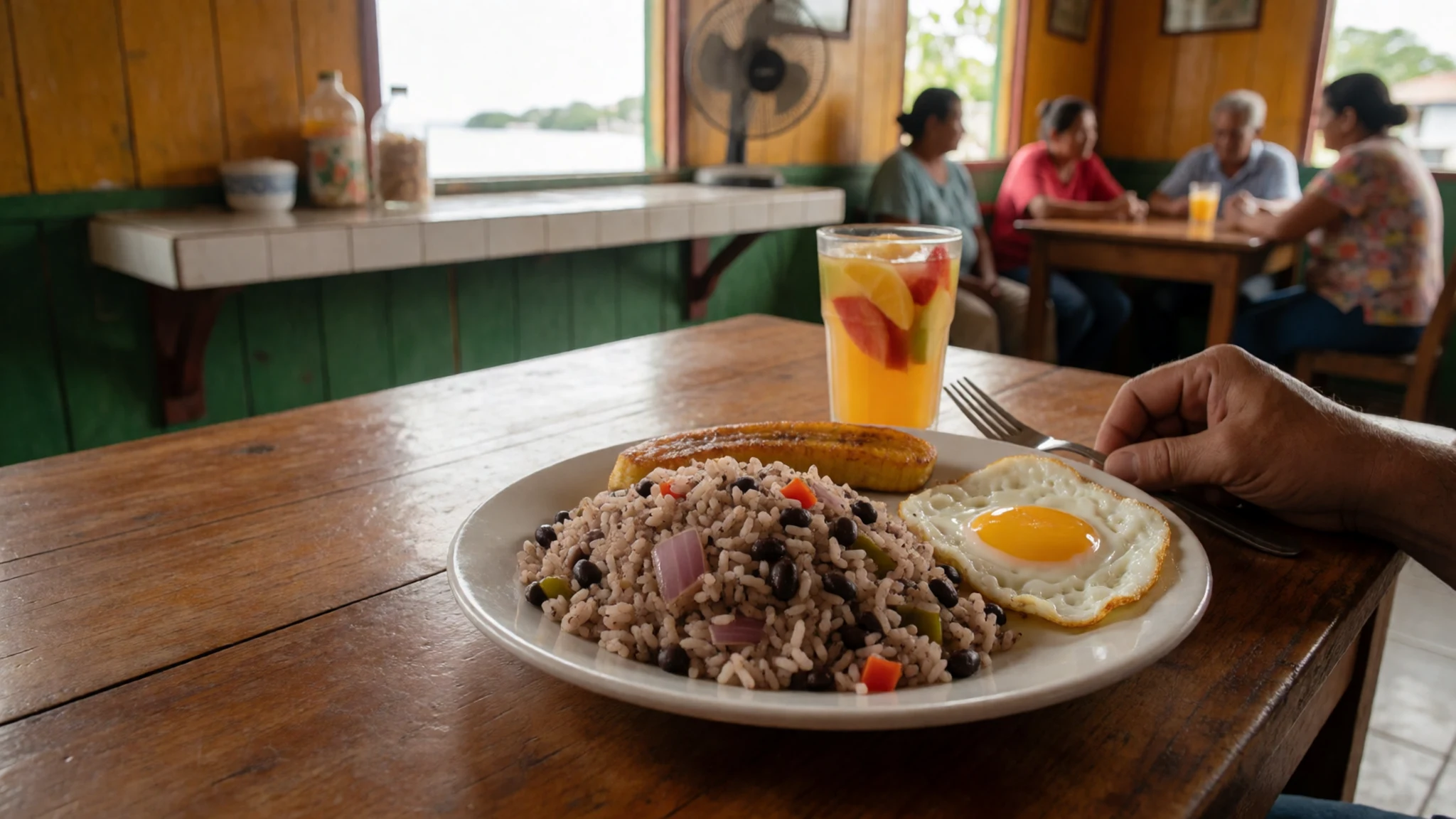
- Casado — Sodas near the Pacific ports
A casado is a plate of rice, beans and salad with a portion of fish, chicken or beef, often with plantain alongside. The name means "married", for the pairing of ingredients. It is a filling, good-value lunch at sodas near the departure ports.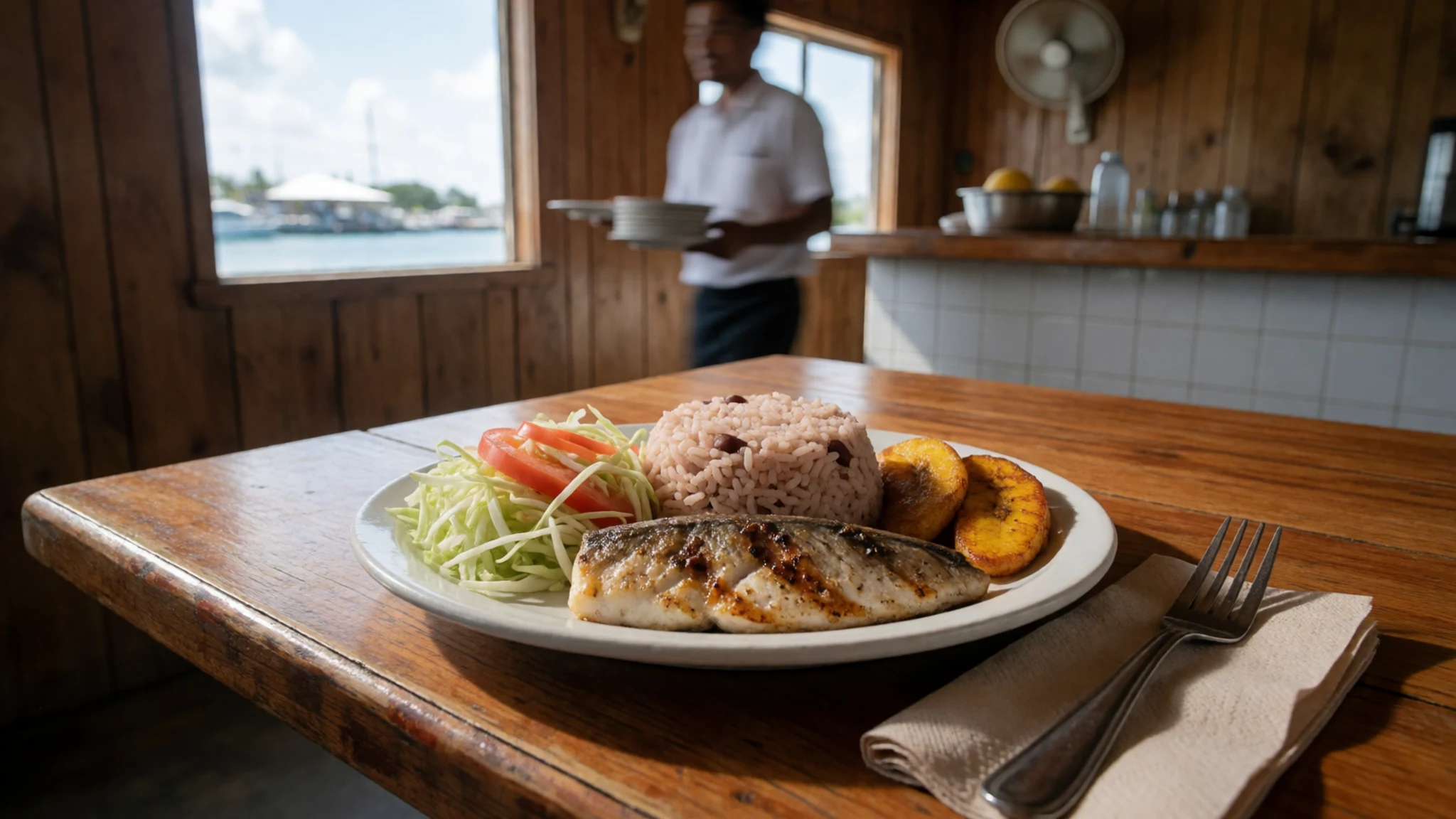
- Ceviche — Seafront stalls and seafood restaurants on the coast
Ceviche on the Costa Rican Pacific coast is raw fish cured in lime juice with onion, coriander and sweet pepper, usually served with crackers. It tastes best where the catch is fresh, so seek out seafront stalls and small seafood restaurants on the mainland. - Patacones — Coastal bars and street stalls
Patacones are green plantain slices fried, flattened and fried again until crisp. They arrive as a snack or side, sometimes topped with beans, cheese or fish. They are a common bar snack in coastal towns and often appear on boats between dives. - Fruit frescos — Markets, roadside stands and sodas
Frescos are cold drinks blended from fresh fruit, water and sugar, with flavours such as pineapple, watermelon, passion fruit or blackberry. They are welcome after salty, hot days on the water, and are sold at markets, roadside stands and most sodas.
Plan it
Best time. Cocos Island is wet and humid for much of the year, so conditions vary more than months suggest. December to May is generally the drier, calmer spell, with easier crossings. Many divers choose the wetter months for more shark activity, accepting rougher seas and rain. Check with the operator on current conditions.
How long. 8–10
Getting there. Fly into Juan Santamaría International Airport near San José, then travel overland to the Pacific port your liveaboard departs from, commonly Puntarenas. The last leg is the open-sea crossing on the boat, which takes about a day or more each way. There are no scheduled public ferries, so book a licensed operator.
Budget. high
Tips
- Book a liveaboard well ahead, as places are limited and park permits are controlled
- Bring seasickness remedies and start them before the crossing
- Pack reef-safe sunscreen, a dry bag and spare dive gear, since shops are unavailable
- Carry cash for tips for the crew and for mainland purchases, and check what the boat accepts
- Check the park authority's official site and your operator for current rules and permits
Etiquette
- Follow rangers' instructions on landings, trails and wildlife distances
- Take nothing from the island or reef, and carry all rubbish back to the boat
- Tip the boat crew in line with your operator's guidance
Nearby
Sources
- Wikidata (CC0)
- Wikipedia — Cocos Island (CC BY-SA 4.0)
- Wikivoyage — Cocos Island (CC BY-SA 4.0)
Wildlife
- Scalloped hammerhead shark (animal)
The scalloped hammerhead is a shark whose wide head is shaped like a hammer, with an eye and a nostril at each end. It is fairly large, though smaller than its great and smooth cousins. Around Cocos Island, look for it far out at sea, near islets of bare rock and submerged peaks, where groups gather alongside rays and other big fish. Dive with a guide, keep a respectful distance, stay calm and quiet in the water, and never feed it.