Tomonoura
Tomonoura, Japan
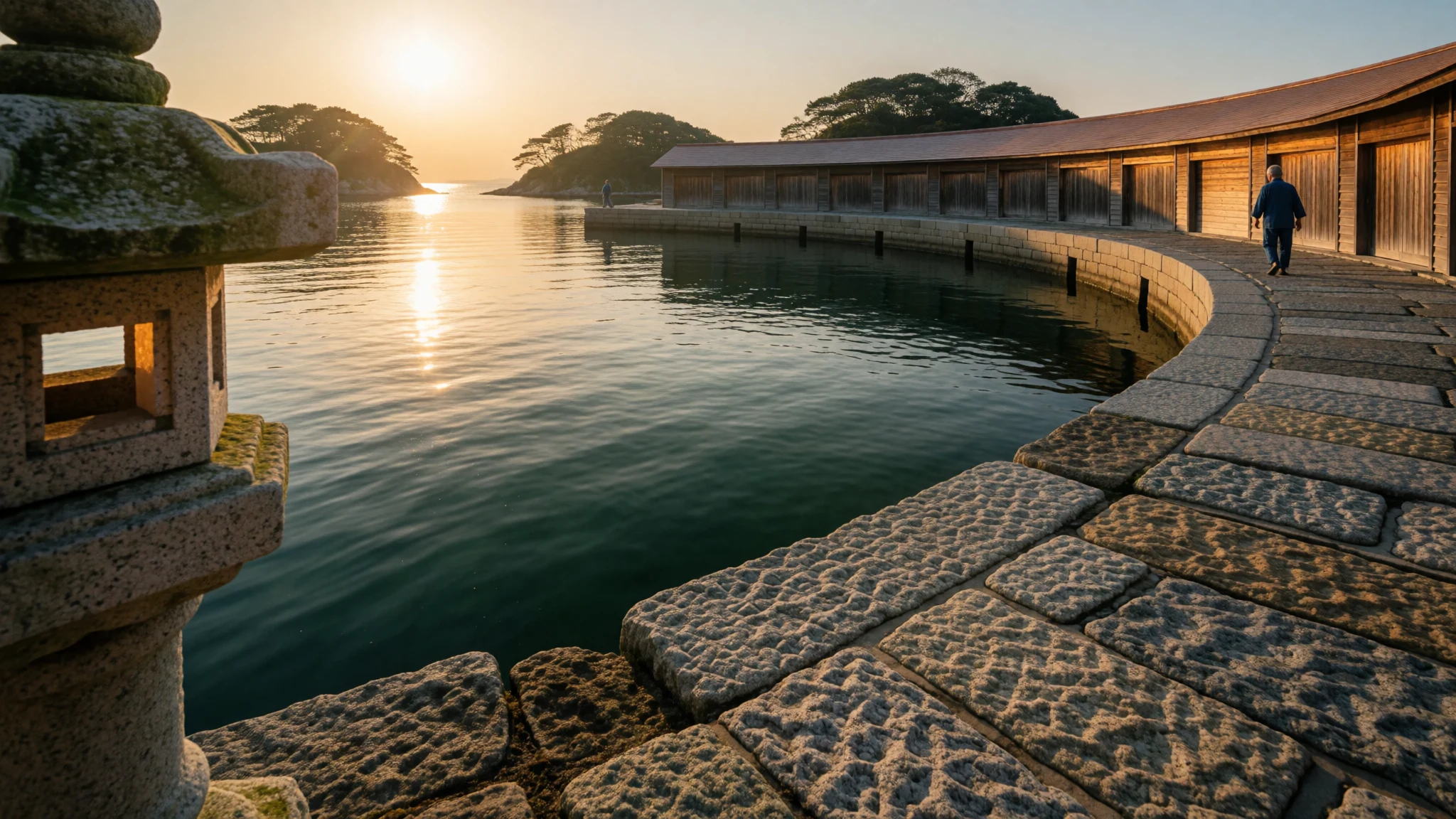
Tomonoura is a tidal harbour town on the Seto Inland Sea where old stone quays, shrines and narrow lanes still work as a living neighbourhood.
The place
Tomonoura (鞆の浦) is a small port town in the Tomo district of Fukuyama, Hiroshima Prefecture, on the southern tip of the Numakuma Peninsula and about 14 kilometres south of Fukuyama Station. Its harbour is circular, and it survives largely because the modern port was built around it rather than over it. Low wooden houses, stone lanterns and temple roofs crowd the water's edge, and the lanes behind the quay are narrow enough that a delivery van fills them. The town lies inside the Setonaikai National Park, and the view across the Seto Inland Sea takes in a scatter of small islands, Sensui Jima among them. For centuries Tomonoura was a place where ships waited. The tides of the inland sea push in different directions on either side of this headland, so sailors held here until the water turned, and the town picked up a nickname that means roughly 'port of waiting for tides'. That patience still shapes the place. Weekday mornings are quiet, weekends and holiday seasons are busier, and a single afternoon is enough for a walk along the waterfront. Staying overnight lets the day-trippers leave first and gives the harbour back to the fishermen. Red sea bream (madai) fishing remains part of local identity. The local tourist association runs a multilingual guide site at https://visittomonoura.com/ for current information. Summers are hot and humid with little shade on the quay, while spring and autumn are gentler for walking.
Its story
Tomonoura was already a name poets knew in the Nara era, since the Man'yōshū, the early anthology of Japanese verse, includes several poems about the harbour. In the Heian period the monks Saichō and Kūkai are credited with founding Jyoganji and Ioji temples here. Tradition, recorded in the Engishiki, also traces the origins of Kyoto's Yasaka Shrine to Nunakuma Shrine in this town. Medieval wars left marks. After the Battle of Tatarahama, Emperor Kōgon came to Tomonoura, and the five-storey pagoda at Jyoganji was lost in the fighting between the Northern and Southern Courts. In the Sengoku period the Mōri clan built Tomo Castle. When Oda Nobunaga drove the shogun Ashikaga Yoshiaki out of Kyoto, Yoshiaki set up a government in exile here, the Tomo Bakufu, with backing from the Mōri. In the Edo period Fukushima Masanori began rebuilding the castle, but Tokugawa Ieyasu ordered the work stopped. Later, the lords of Fukuyama Domain placed an administrative office on the castle site. Near the end of that era, a ship called the Iroha Maru, owned by Sakamoto Ryōma, sank off Tomonoura after a collision, which gives the harbour a place in the story of Japan's modernisation. A railway ran between Tomo and Fukuyama from 1913 until it closed in 1954, after which the town was left to roads and its own pace. That slow modern history is partly why the old harbour was never swallowed by industry.
What to see
- Tomonoura harbour — Harbour front, Tomonoura
The curved harbour at Tomonoura is the reason for the trip. A stone quay wraps around the water, with moored fishing boats, old stone lanterns and weathered warehouses facing the inland sea. It rewards a slow walk at low evening sun and a second look after dark. Ten minutes covers the outline; an hour covers the details.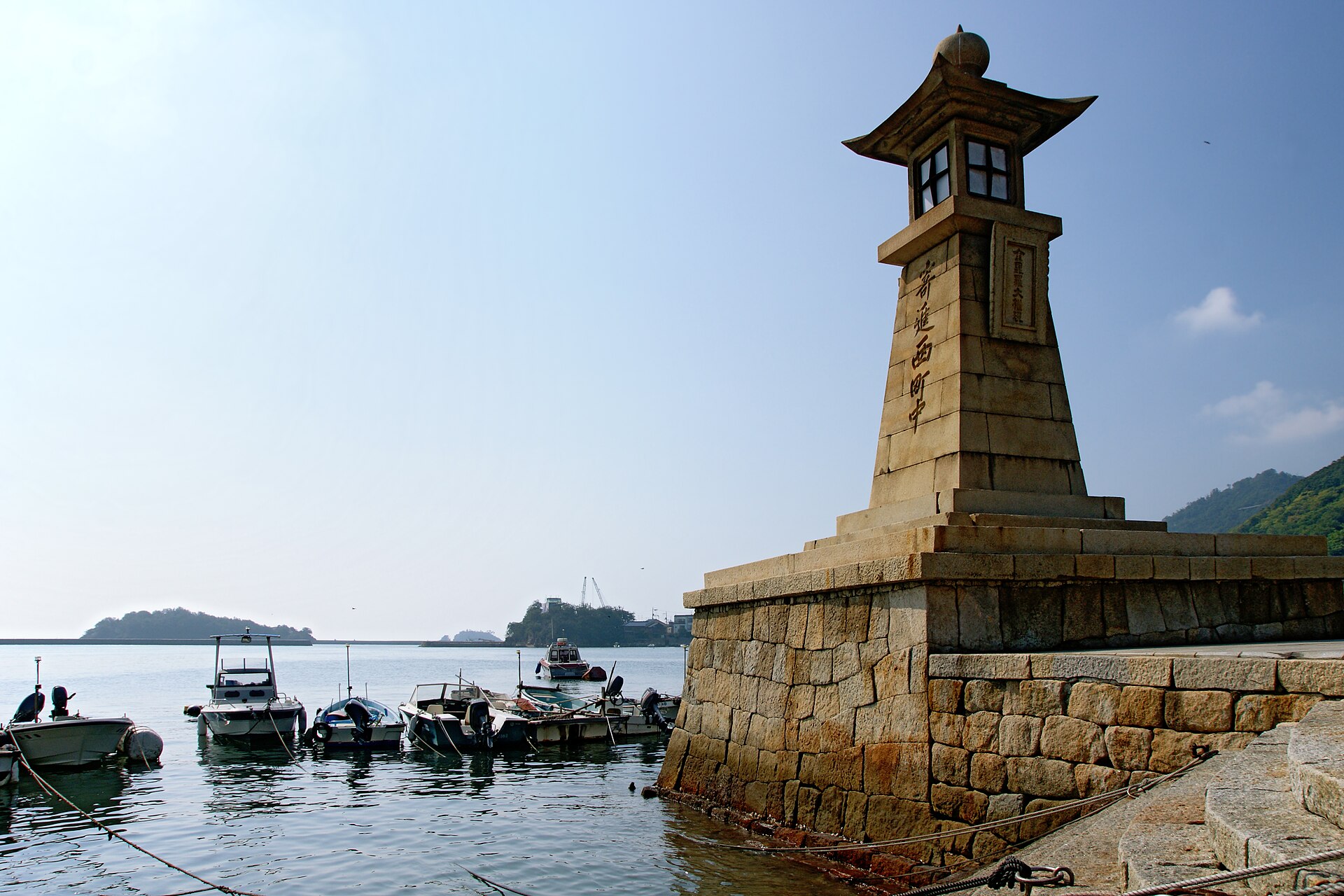
- Gangi stepped landing — Waterfront, Tomonoura
Gangi are broad stone steps that run down into the water, built so boats could unload at any state of the tide. The example at Tomonoura shows how the tidal sea shaped the town: the lower steps vanish at high water and reappear as the tide drops. Best seen at low tide, when the stonework is fully exposed.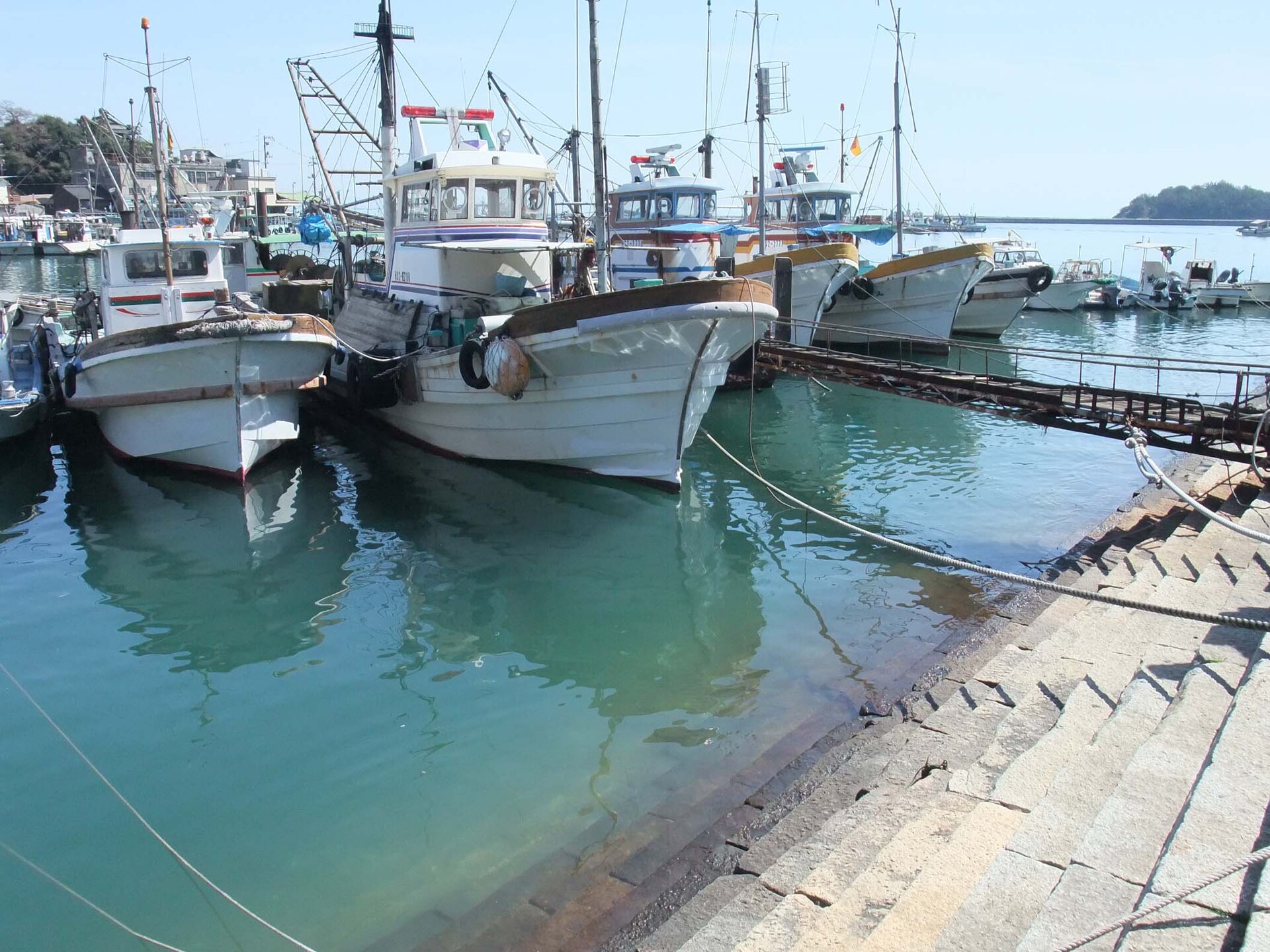
- Sensui Jima — Island across the bay
Sensui Jima is a small island in the bay with two Japanese-style hotels that have hot-spring baths, plus a campground for the more adventurous. A newly refurbished stone path runs along the shore and suits an unhurried stroll with views back to the harbour. Check the official site for ferry details before planning.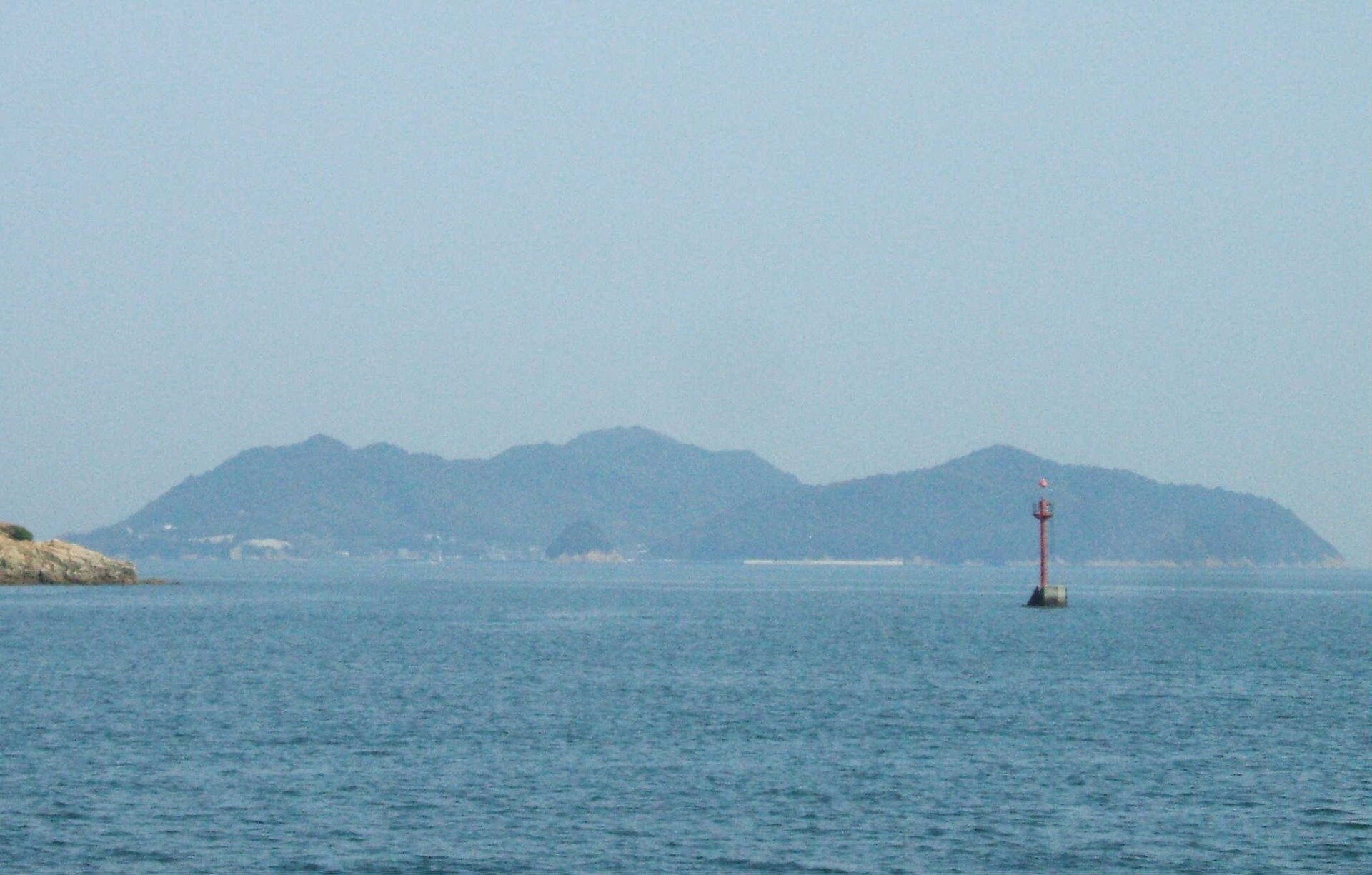
- Nunakuma Shrine — Inland Tomonoura
Nunakuma Shrine is the Shinto shrine linked by tradition to the origins of Yasaka Shrine in Kyoto, which gives this quiet precinct a connection to a far larger festival city. It is a calm stop away from the quay, worth a short visit for the setting and the sense of the town's long religious history. - Heisei Iroha-maru — Harbour, Tomonoura
The Heisei Iroha-maru, photographed at Tomonoura, takes its name from the ship owned by Sakamoto Ryōma that sank in these waters in the late Edo period. It works as a visual reminder of the town's place in that story. Check the official site for current access, as arrangements for visiting can change.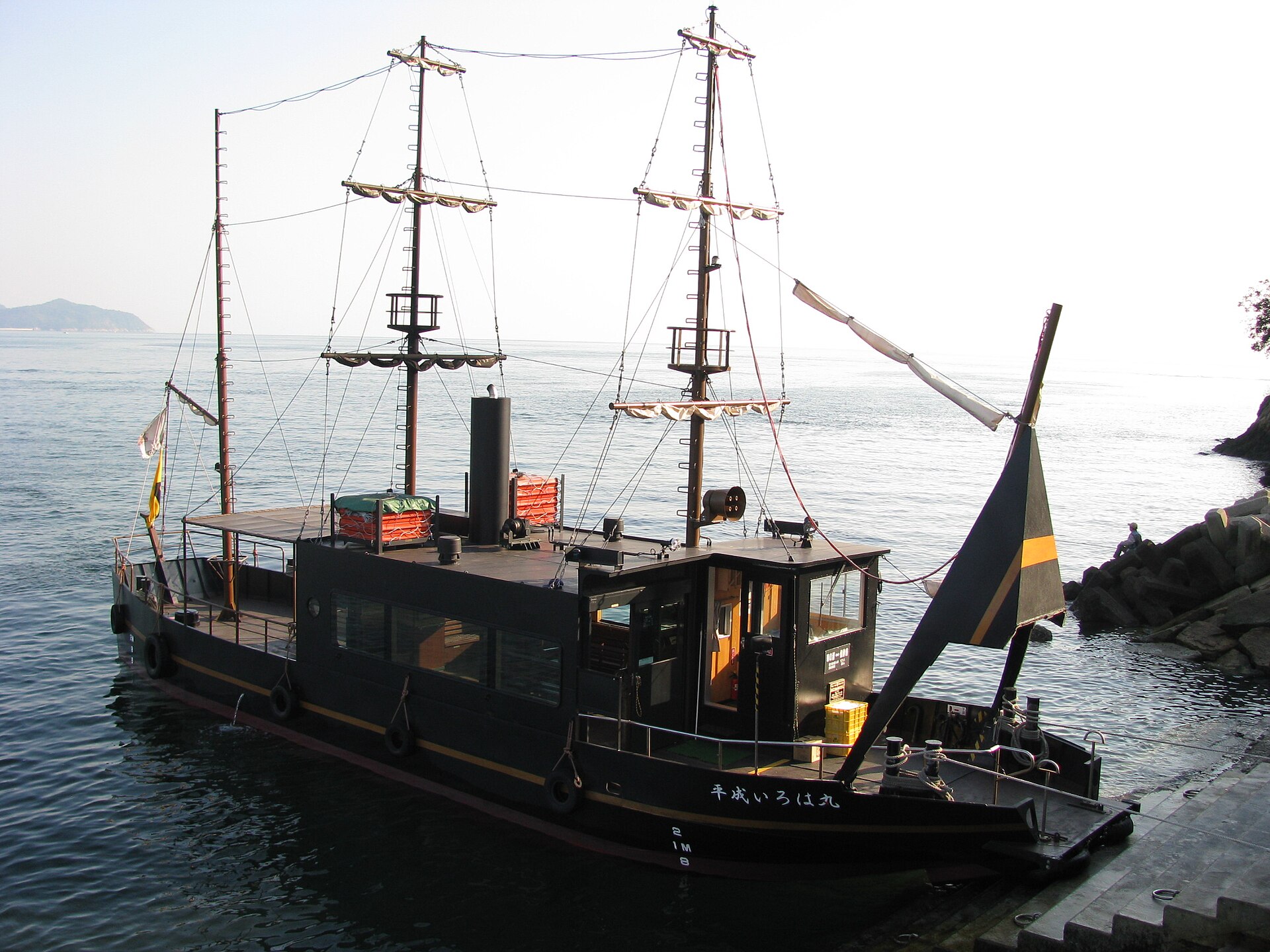
Culture
Tomonoura is a working neighbourhood as well as a visitor destination, and that is the first thing to understand about its culture. People live in the old wooden houses, hang washing in the lanes and fish from the same quay that appears in the postcards. Shinto and Buddhist sites sit side by side, from Nunakuma Shrine to Jyoganji and Ioji temples, and the shrine calendar still marks the seasons for many families. The sea gives the place its rhythm. Tides decided when ships could leave, and that habit of waiting is part of how the town describes itself. The local drink, homeishu, a sweet medicinal liqueur whose name means roughly 'keep life liquor', has been made in the Tomo area for a very long time, and several distilleries offer free tastings. Local pride also shows in how the harbour has been preserved: residents and visitors alike treat the circular quay as shared heritage. Craft and food are small-scale, family-run and seasonal, so shops may close at short notice, and a polite greeting goes a long way. Visitors should keep their voices low in the residential lanes, ask before photographing anyone, and never step into private doorways or peer into homes, since these streets are people's front yards.
What to wear
Traditional dress around Tomonoura follows the wider Japanese pattern. The kimono, usually of silk, is worn for weddings, shrine festivals and formal occasions, while the lighter cotton yukata appears at summer festivals and at the onsen hotels on the island. Festival crews wear short happi coats, and fishing families historically relied on sturdy cotton work clothes dyed with indigo. Day to day, the town dresses practically: fleeces and windcheaters for the harbour wind, rubber boots for the boats, and plain cotton or linen for summer. Smart-casual is normal for temple and shrine visits, but nobody expects formal wear. Visitors should dress for the climate, which means lightweight, breathable clothes and a sun hat for the hot, humid summer and a light jacket for cooler, breezy months in spring and autumn. Comfortable closed shoes matter, as the quay is uneven stone and some lanes and temple approaches have steps. Choose shoes that slip off easily and wear clean socks, since shoes come off at temple halls and in many guesthouses. At shrines and temples cover shoulders and knees, avoid beachwear in the lanes, and carry a compact umbrella for sudden rain.
What to eat
- Madai (red sea bream) — Seafood eateries around the harbour front
Madai is the fish most closely tied to Tomonoura's waters. Expect it as sashimi, grilled with salt or simmered in a light broth, depending on the season. It has a clean, delicate flavour and is worth ordering when the local catch is on the menu. - Tai-meshi — Small family restaurants in the old town lanes
Tai-meshi is rice cooked with sea bream, so the fish flavours the grains as they steam. It is a gentle, comforting dish that suits a cool day after walking the quay. Ask whether the kitchen serves it, as menus change with the catch. - Homeishu — Distilleries and shops in the old town
Homeishu is a sweet liqueur, flavoured with herbs and traditionally made in the Tomo area. Its name means roughly 'keep life liquor'. Several local distilleries offer free tastings, which makes it an easy introduction to the town's craft heritage. - Seasonal Seto Inland Sea fish — Harbour-side eateries and set-meal restaurants
Beyond madai, local eateries serve whatever the inland sea provides: grilled small fish, shellfish and sashimi sets that change by month. Set meals are the simplest way to sample several things at once. Ask what is freshest today.
Plan it
Best time. April–May and October–November, when the weather is mild and good for walking the quay and lanes. Summer is hot and humid, so go early or late in the day, and winter is cooler and quieter but still comfortable for short walks.
How long. 1–2
Getting there. Take the San'yo Shinkansen to Fukuyama, about 25 minutes from Hiroshima and about one hour from Osaka, then a local bus south to Tomonoura. Check the official site at https://visittomonoura.com/ for current bus details.
Budget. mid
Tips
- Arrive early on weekends and holidays to enjoy the harbour before the crowds
- Carry some cash, since small eateries, shops and shrines may not take cards
- Bring water and sun protection in summer, as the quay has little shade
- Check the official site for ferry times to Sensui Jima and for any seasonal events
- Stay overnight if possible, as the evening and early morning are the calmest times
Etiquette
- Take off shoes where a step up and slippers or a shoe rack are provided
- Keep voices low in residential lanes and ask before photographing people
- Do not step onto private property or into doorways
Nearby
Sources
- Wikidata Q8194022 (CC0)
- Wikipedia: Tomonoura (rev 1338245283) (CC BY-SA 4.0)
- Wikivoyage: Fukuyama (rev 5402477) (CC BY-SA 4.0)
- Photo: Gangi in Tomonoura, Yanajin (CC BY 3.0)
- Photo: Tomonoura in Fukuyama, 663highland (CC BY 3.0)
- Photo: Tomonoura in Fukuyama, 663highland (CC BY 3.0)
- Photo: Busy streets of Tomo-no-Ura, Prue Simmons (CC BY 2.5)
- Photo: Fukuyama municipal ferry station, ブルーノ・プラス (CC BY-SA 4.0)
- Photo: Hashiri Jima from Tomonoura, Carpkazu (CC BY 3.0)
- Photo: Heisei Iroha-maru, Aimaimyi (CC BY-SA 2.5)
- Photo: 平賀源内生祠, Saigen Jiro (CC0 1.0)


