Tiradentes
Tiradentes, Brazil
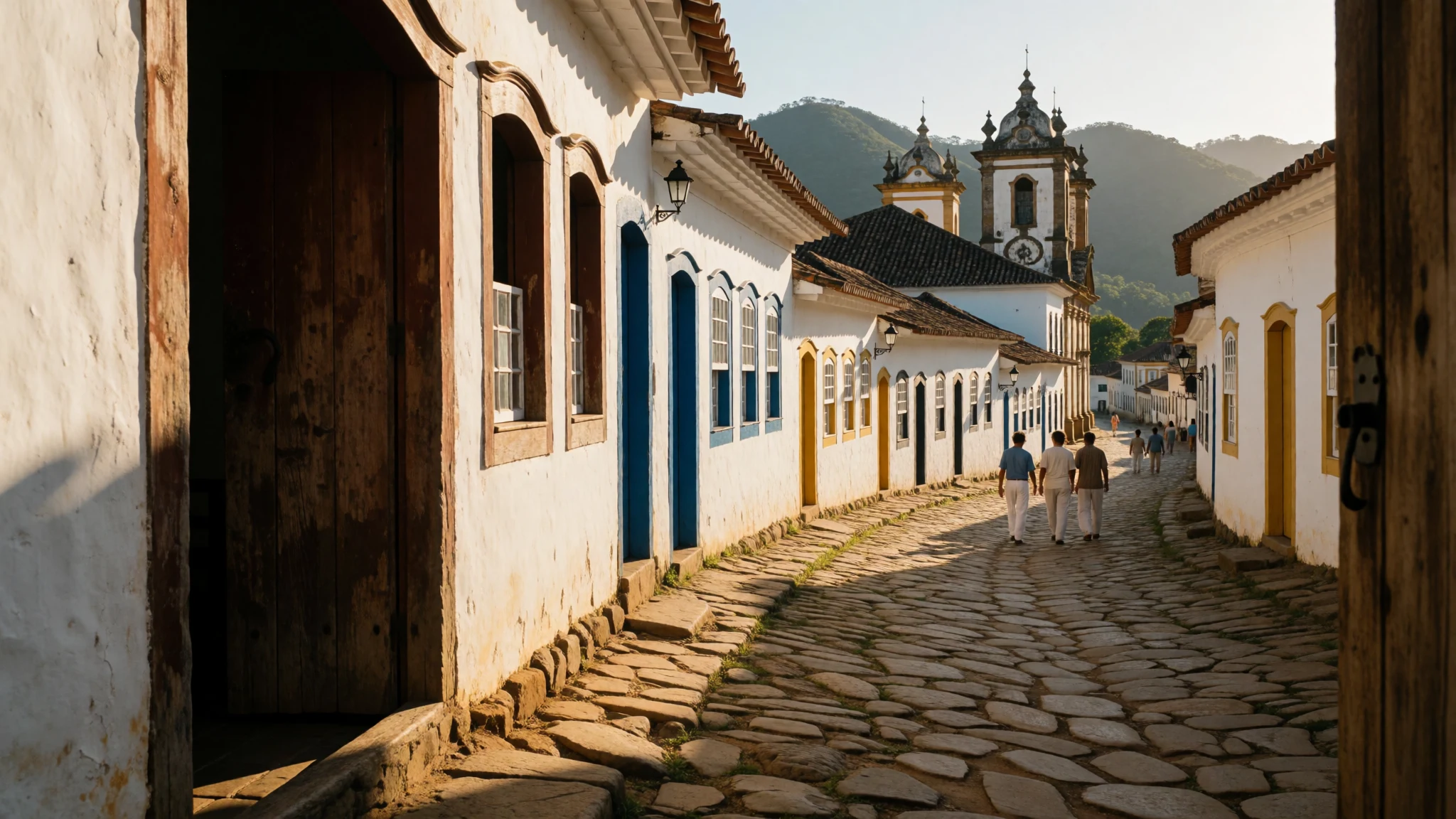
Tiradentes is a small colonial town in the hills of Minas Gerais, with cobbled lanes, gilded churches and very good mountain food.
The place
Tiradentes is a small town in the state of Minas Gerais, in south-eastern Brazil. It sits at 927 m above sea level, on the foot of a wooded mountain range, and has a population of 8,056. That makes it a village-sized place with a big reputation, and on a weekday morning it feels as quiet as its size suggests.
The historic centre is a grid of steep cobbled streets lined with low whitewashed houses, painted window frames and stone-framed doorways. Churches stand at the ends of lanes, and a fountain and an old council hall add to the colonial picture. Portuguese colonial architecture here has survived with little modern intrusion, which is the main reason people come.
The town is part of a loose circuit of historic towns in Minas Gerais, alongside Ouro Preto, São João del-Rei, Diamantina, Mariana, Congonhas and Sabará. Tiradentes is the smallest and easiest to walk, and many visitors treat it as a weekend base rather than a place to cover in an hour.
Weekends and holidays bring crowds, along with the busiest restaurants and the highest prices for rooms. Midweek is calmer. Beyond the old centre, the neighbouring hamlet of Bichinho, rural lanes and the Serra de São José give the town a countryside edge. Distances are short: the larger town of São João del-Rei is only 14 km away, which makes it a natural companion for a day out.
Its story
Tiradentes began as a mining settlement. The original village was founded in 1702, and by 1718 it had been raised to the status of a town, under the name Vila de São José do Rio das Mortes. The region's gold made it prosperous, and that wealth is why such a small place has so many carefully built churches and civic buildings.
The name that people use today came later. In 1889 the town was renamed in honour of Tiradentes, the national hero who was born nearby. He was a leader of an independence plot against Portuguese rule in the eighteenth century, and Brazil remembers him as a martyr of the movement. Naming the town after him tied this quiet corner of Minas Gerais to the national story.
After the gold economy faded, the town did not grow into a modern city. That lack of growth is what preserved the old streets, since there was little money or pressure to rebuild. Later generations came to value that survival, and the centre is now protected and prized as an unspoiled example of colonial Portuguese building.
Today the town's economy leans on visitors: inns in restored houses, craft shops, restaurants and festivals. The past is not a museum exhibit here but a working backdrop, with residents going about daily life along the same lanes laid out in the gold era. Knowing that history makes the walk between the churches feel less like sightseeing and more like reading a map of old money.
What to see
- Church of Saint Anthony (Matriz de Santo António) — Historic centre
The parish church, built in 1732, is the town's showpiece and is known for an interior covered in gold leaf. It sits at the top of the main street and rewards a slow look at the altars. Photography is not allowed inside, so put the camera away at the door.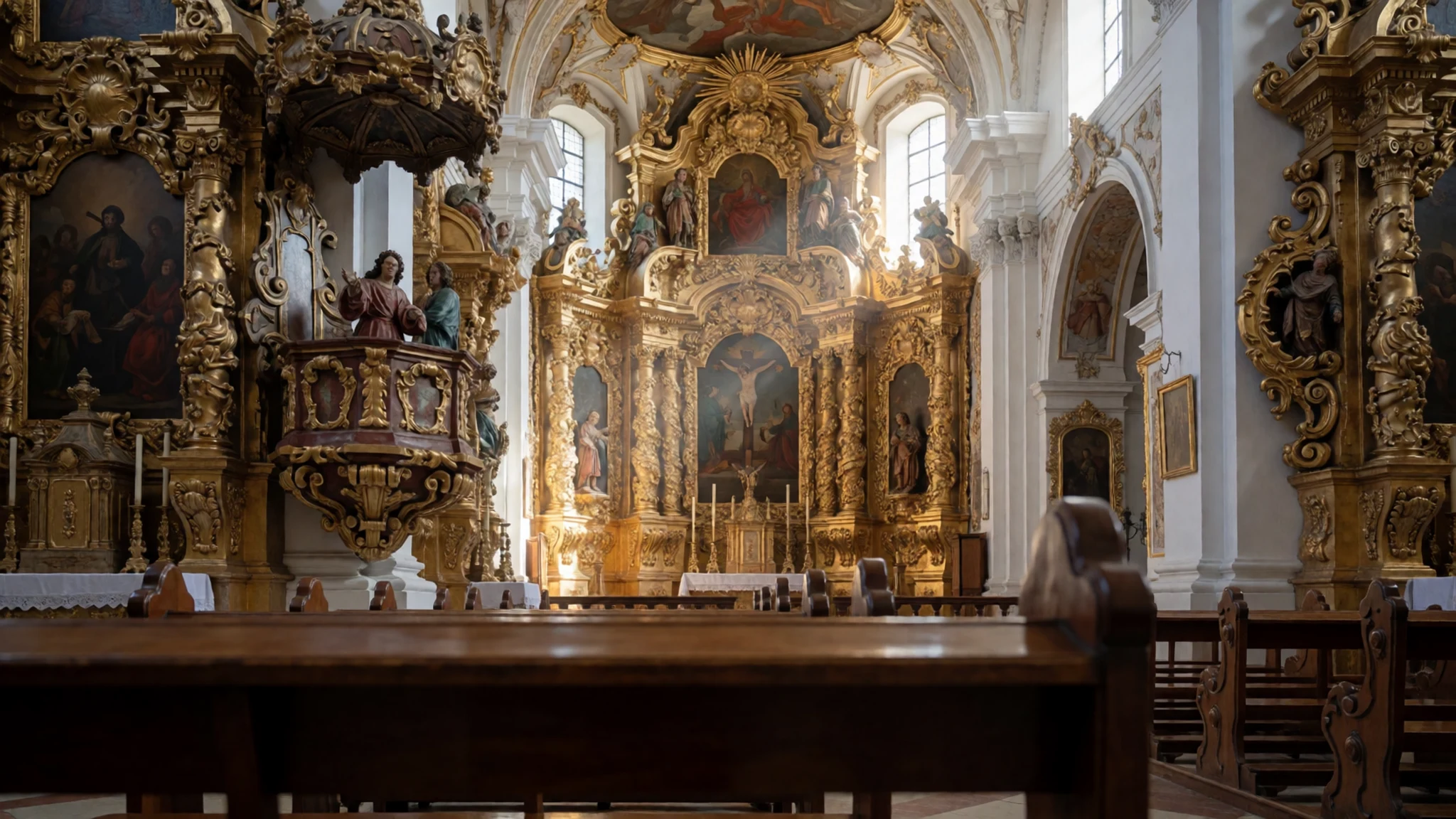
- São Francisco de Paula — Near Praça Silva Jardim
This hilltop church is the place for the best view over Tiradentes, with red roofs falling away to the valley and the mountains behind. It is a short, steady climb from the centre, and the bus station is close by. Late afternoon light is soft and the crowds are thinner.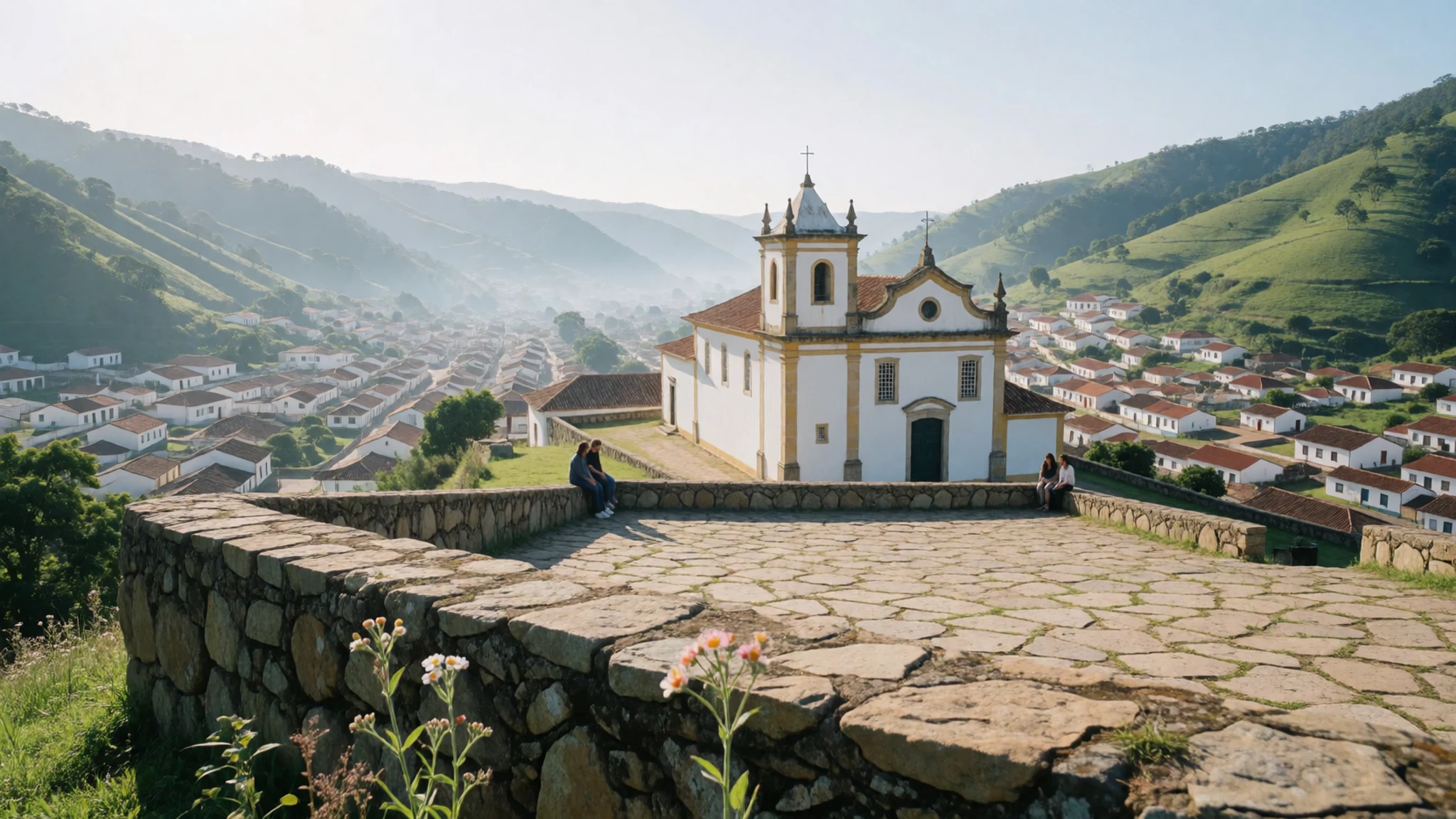
- Rosário dos Pretos — Historic centre
This small church was built by and for the town's Black Catholic brotherhood, and its modest scale contrasts with the grander parish church. It is a useful reminder that enslaved and free Black people were part of the gold-era community. Opening is irregular, so be ready to see only the façade.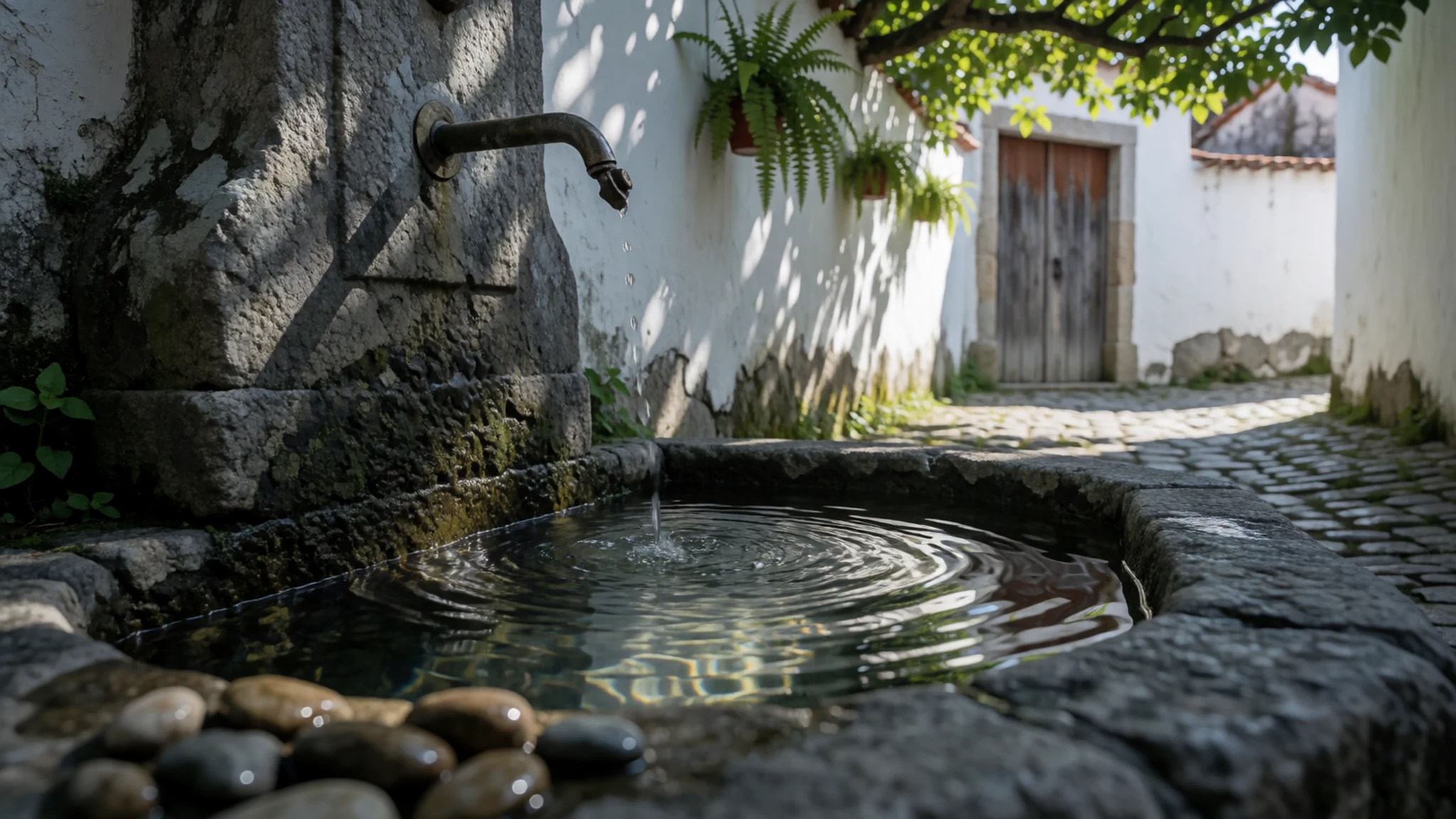
- Chafariz de São José — Historic centre
The stone fountain dates from the 1700s and once served as the public water point for residents. It is simple, solid and easy to pass without noticing, but it gives a sense of how daily life worked in the colonial town. It makes a good short stop on a walk between churches.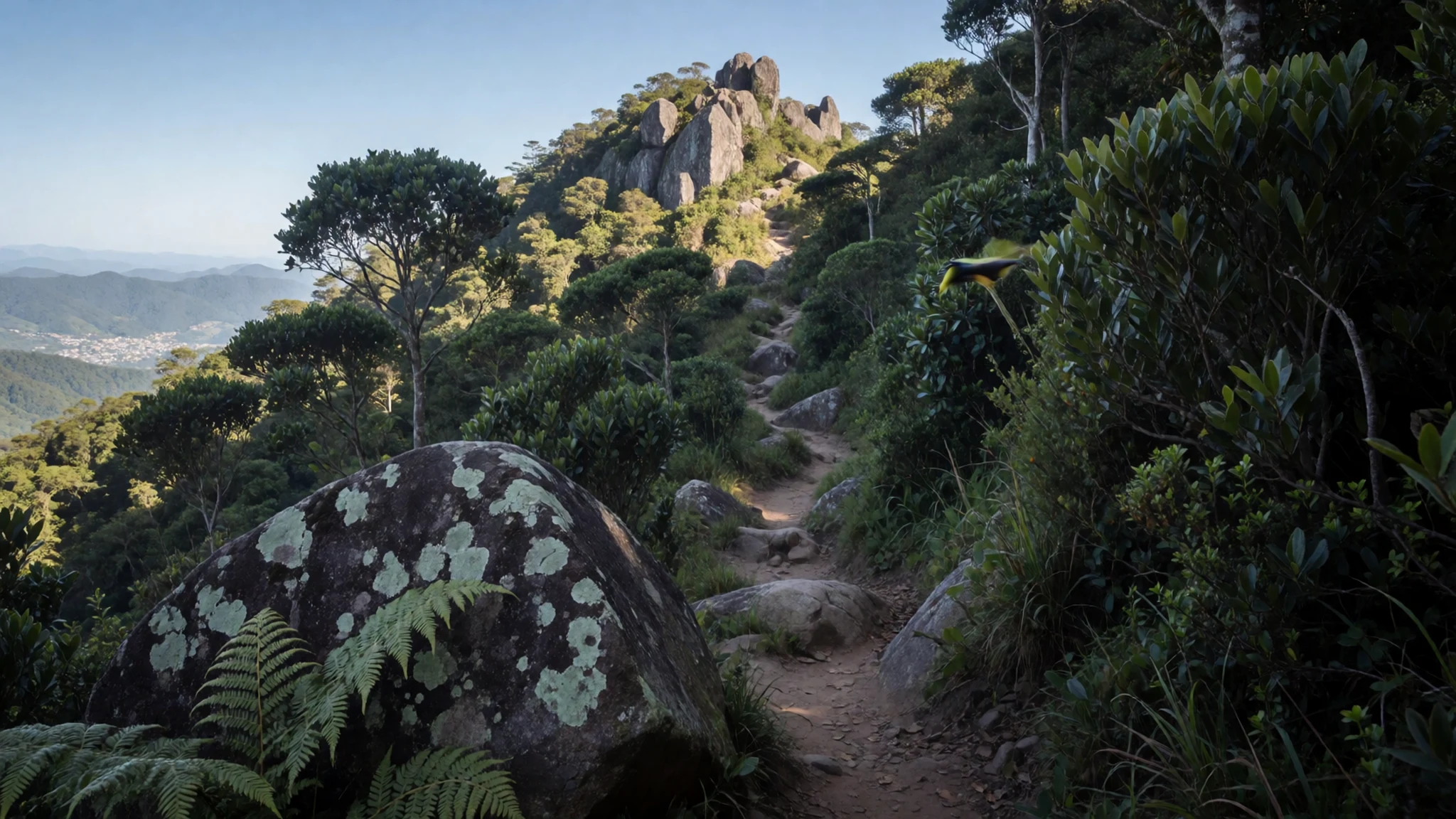
- Historic streets and carriage ride — Largo das Forras
The cobbled lanes, low houses and old council hall are the main sight in themselves, best taken on foot. Small horse-drawn carriages leave from the Largo das Forras square and the railway station for a short tour of the old town, which suits anyone who finds the slopes tiring.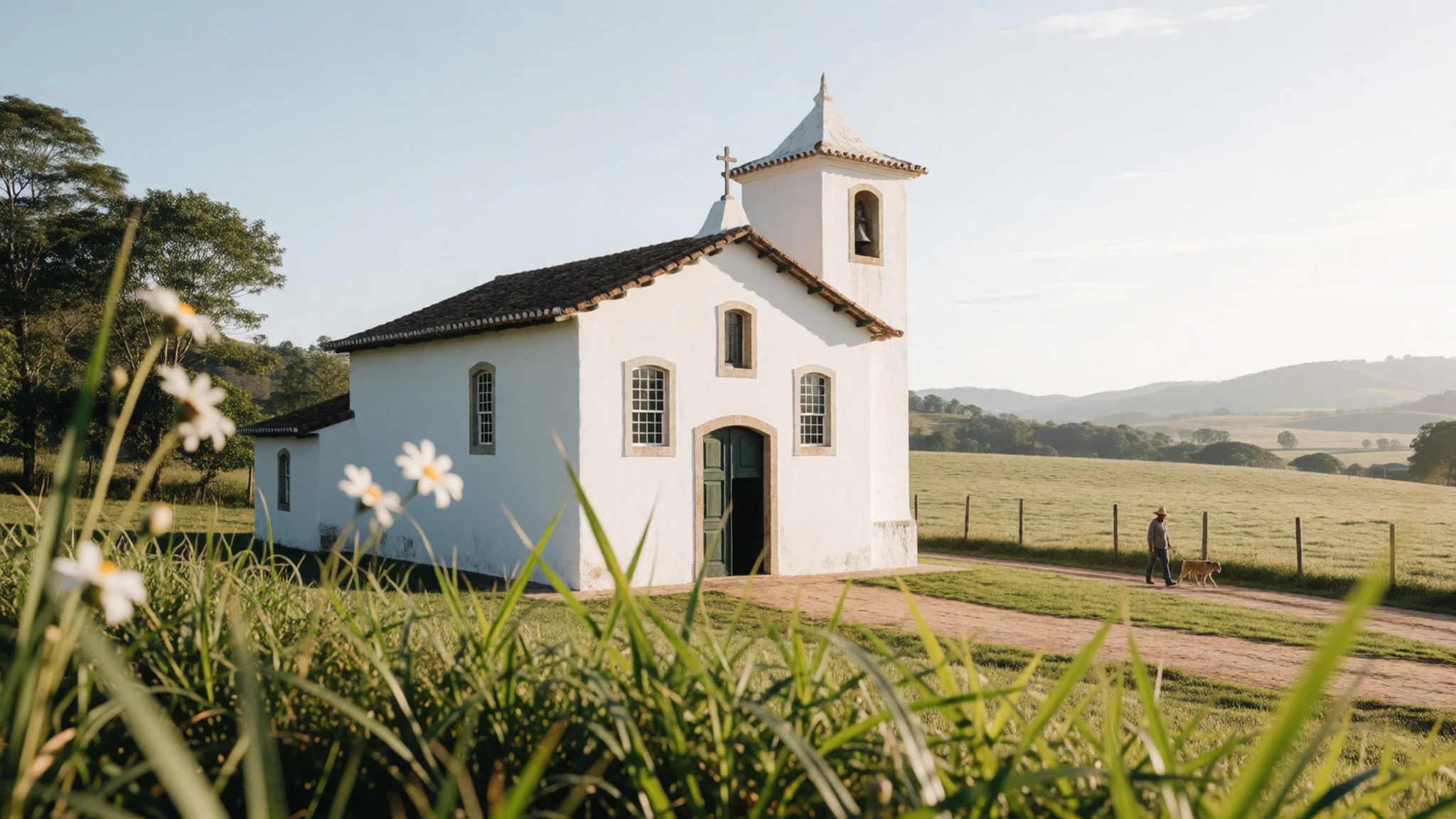
- Serra de São José — North of the town
The mountain range behind the town offers walking trails through scrub, rock and forest, with views back over the rooftops. Paths range from gentle to demanding, so ask locally about a guide, carry water and start early, since afternoon weather in the hills can change quickly.
Culture
Tiradentes is Catholic in its public life, and the calendar of the church shapes the town. Holy Week is especially busy, with processions and decorated streets, and the town fills with visitors from other parts of Minas Gerais and Brazil. Smaller feast days and neighbourhood celebrations also take over the lanes, with music and food stalls.
The culture of Minas Gerais is closely tied to its colonial gold past. Baroque church decoration, wood carving, pewter and ironwork, and a strong tradition of home cooking all trace back to that era. Craft workshops in town and in nearby Bichinho keep some of those skills going, producing furniture, ceramics and woven goods.
Music is a quiet but constant presence. Live performances are held in churches and squares, and the town hosts a cultural and gastronomic festival in August that mixes concerts with cooking. People from Minas Gerais are known across Brazil for being reserved at first and generous once you chat, and conversation in shops and inns tends to be unhurried.
The town's naming for a national hero means local pride runs deep. The independence story is taught and celebrated, and you will see his name on streets, signs and shops across the region.
In the churches, dress modestly, keep your voice low, and never use a camera inside the Church of Saint Anthony, where photography is not permitted.
What to wear
Tiradentes has no single traditional costume that people wear daily. The region's older dress belongs to rural Minas Gerais: cotton and linen shirts, simple skirts, straw hats and sturdy leather boots, which are still seen at agricultural fairs and in the countryside. Festivals and Catholic processions bring out formal clothes, with women in their best dresses and men in jackets.
Textiles are part of the local craft scene. Weavers in the area make cotton rugs, table runners and shawls, often in earthy colours, and these are sold in shops in the old centre and in Bichinho. Wool and cotton blankets are popular souvenirs, because the nights can be cool.
What people wear now is casual and neat. Residents favour jeans, light shirts and trainers by day, with a jumper or fleece in the evenings. Weekend visitors from the cities dress a little smarter for dinner, often in linen, but nothing is formal, and a restaurant will not turn anyone away for plain clothes.
For visitors, comfort matters more than style. The streets are cobbled, uneven and steep, so wear flat shoes with grip rather than sandals with thin soles. Bring layers: the town is at 927 m, so winter mornings and evenings are cool and summer brings warm sun and rain. A hat, sunscreen and a light waterproof are useful. For churches, cover shoulders and knees.
What to eat
- Feijão tropeiro — Restaurants in the historic centre
A classic dish of Minas Gerais, made with beans, toasted cassava flour, egg, bacon and greens. It was once the food of cattle drovers and is hearty enough to be a meal on its own. Most restaurants in the old town serve it.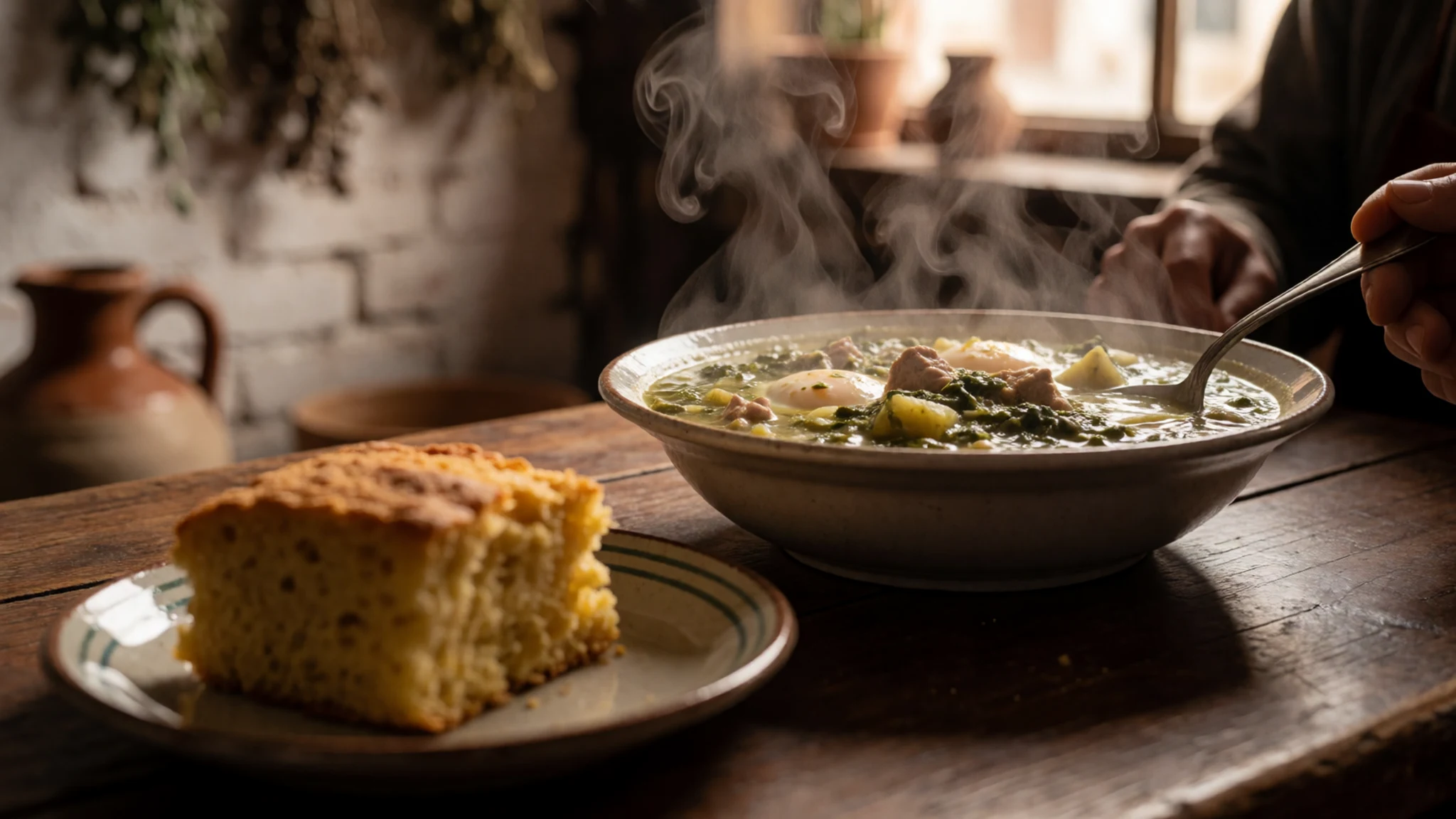
- Frango com quiabo — Rural-style eateries towards Bichinho
Chicken cooked with okra, usually served with rice and sometimes with angu, a soft cornmeal porridge. It is a home-style dish with a slightly sticky, rich sauce. Look for it at country-style restaurants on the roads out towards Bichinho.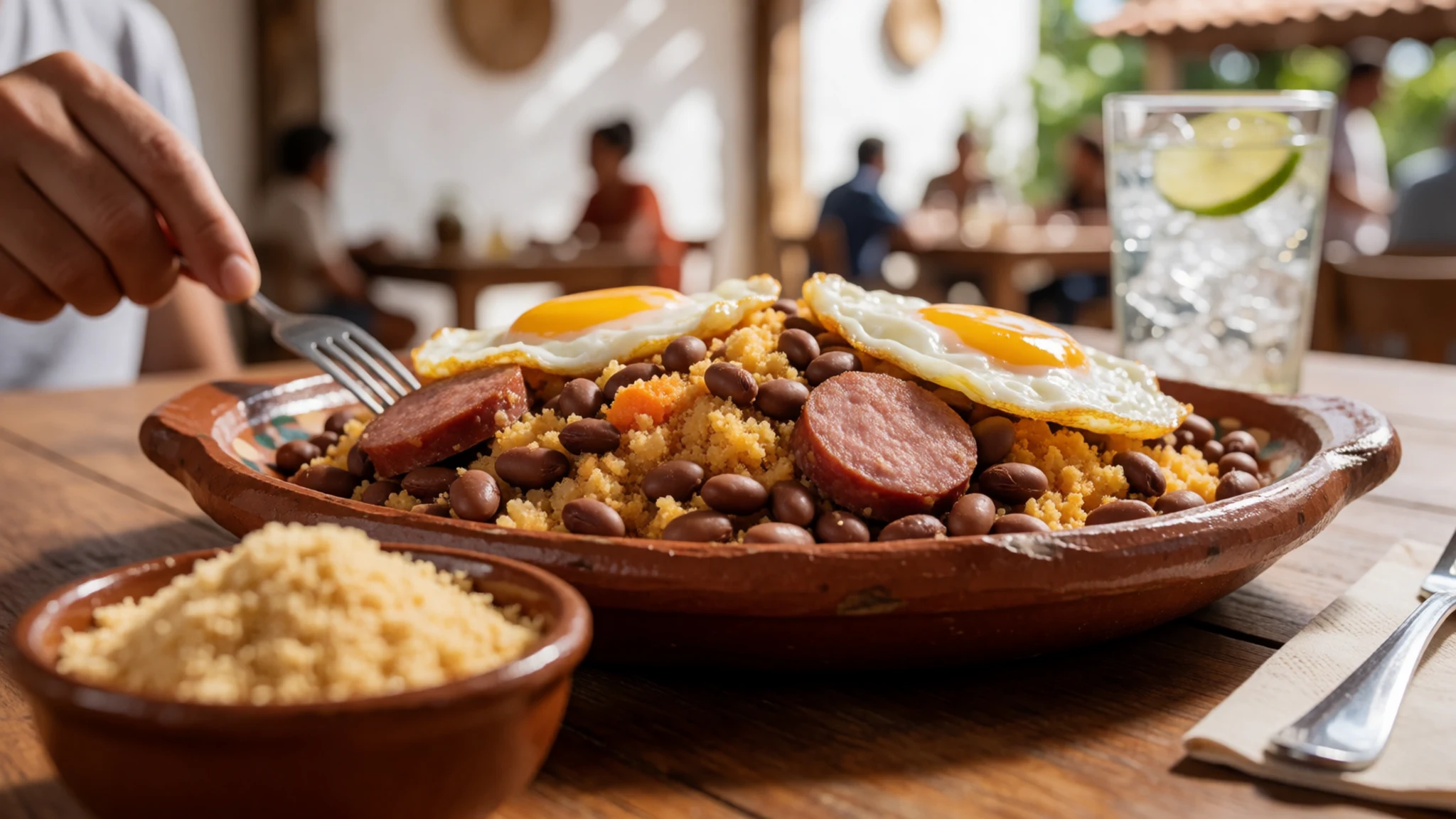
- Pau de angu — Road between Tiradentes and Bichinho
A local favourite of cornmeal with meat and gravy, simple and filling. The name is also used for a well-known eatery on the road to Bichinho, so ask residents where they like to go. - Pão de queijo — Bakeries and cafés around the main squares
Small, chewy cheese breads made with cassava starch, eaten warm at breakfast or with coffee. They are naturally gluten-free and found everywhere in Minas Gerais, from bakeries to street cafés. - Cachaça — Shops and bars near Largo das Forras
Brazilian sugar-cane spirit, sold in bottles at many shops in town and served in bars near Largo das Forras. Local makers offer different ages and flavours, and shopkeepers will often let you taste before buying. - Doce de leite and fruit sweets — Sweet shops in the old town
Minas Gerais is known for sweets made from milk, guava and other fruits, often paired with fresh white cheese. They make easy gifts and are sold in small shops and stalls around the old centre.
Plan it
Best time. April to September is the dry season, with sunny days and cool nights, and it is the most comfortable time for walking the cobbled streets. The wetter months bring heavy showers, though the hills are greener. August has a cultural and gastronomic festival, so book well ahead.
How long. 2–3
Getting there. Fly to Belo Horizonte, Rio de Janeiro or São Paulo and continue by road or bus to the nearby city of São João del-Rei, which is 14 km away. From there, local buses run to Tiradentes about every 40 minutes. On weekends, a steam train runs between the two towns, a pleasant 35-minute ride.
Budget. mid
Tips
- Book rooms well ahead for weekends, New Year, Carnaval and Holy Week, when the town is at its busiest
- Visit churches and viewpoints early, before tour groups arrive
- Wear comfortable shoes for the cobbled, sloping streets
- Buses have no ticket booths, so pay onboard and carry small notes
- Check the official town website for events and opening times: http://www.tiradentes.mg.gov.br
Etiquette
- Do not take photographs inside the Church of Saint Anthony
- Dress modestly and speak quietly when entering a church
- Ask before photographing residents or craftspeople
Nearby
Sources
- Wikidata Q1003423 (CC0)
- Wikipedia: Tiradentes, Minas Gerais (rev 1382263185) (CC BY-SA 4.0)
- Wikivoyage: Tiradentes (rev 5420201) (CC BY-SA 4.0)
- Photo 01-subida-da-f.jpg, Fernanda Pitaluga (CC BY-SA 4.0)
- Photo 02, Alex costa maciel (CC BY-SA 4.0)
- Photo 03, Tissiana de A. de Souza (CC BY-SA 4.0)
- Photo 04, Raquel Mendes Silva (CC BY-SA 4.0)
- Photo 05, Prefeitura Municipal de Tiradentes (Public domain)
- Photo 06, Rosino (CC BY-SA 2.0)
- Photo 07, Rosino (CC BY-SA 2.0)
- Photo 08, Rosino (CC BY-SA 2.0)


