Timor
Timor, Indonesia
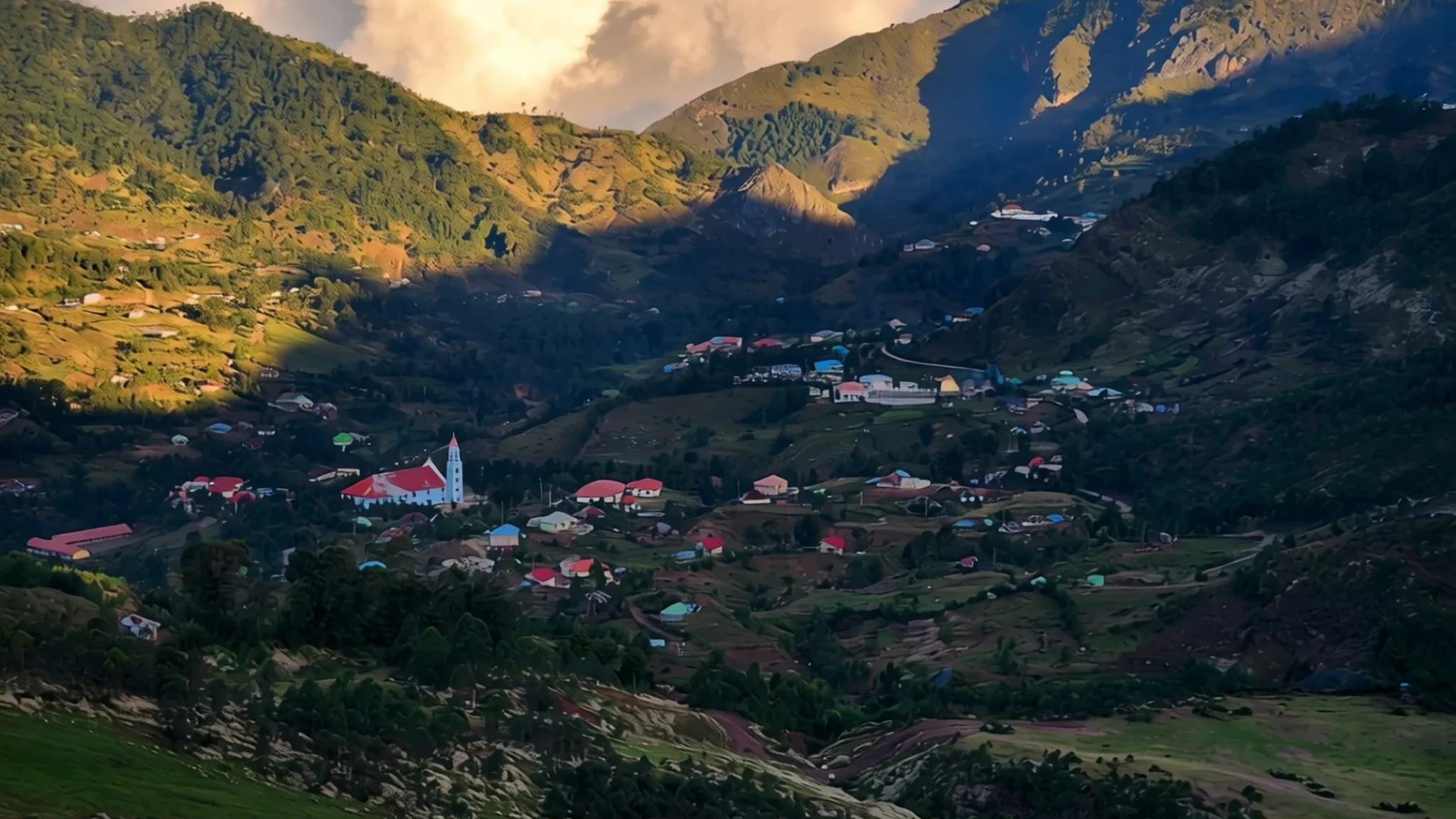
Timor is a dry, mountainous island split between two countries, for travellers who want weaving villages, rough roads and a layered colonial past.
The place
Timor sits at the southern edge of maritime Southeast Asia, facing the Timor Sea, with mainland Australia less than 500 km to the south. Its name comes from the Malay word for east, because it lies at the far end of the Lesser Sunda chain. The island is shared by two countries: Indonesia holds the west, and Timor-Leste the east, plus the small exclave of Oecusse on the western side. About 3.4 million people live here, and the island is large enough that crossing it takes real time.
The land is rugged. Mountains rise to 2,963 m, and the geology explains why: the island is being pushed upwards as the Australian plate grinds against Southeast Asia. Slopes are steep, rivers are short and seasonal, and roads wind slowly, especially inland in the east, where journeys that look short on a map can take most of a day.
The climate is hotter and drier than the green islands to the north. A long dry season runs from April to November, with hot winds blowing in from Australia. That makes the landscape brown and golden for much of the year, then briefly green once rains arrive.
The main towns are Kupang, the capital of the Indonesian province of East Nusa Tenggara, and Dili and Baucau in Timor-Leste. Income comes from offshore gas and oil, coffee and a small amount of tourism. Visitors should expect basic infrastructure, long drives and very few crowds.
Its story
Timor was known to traders long before Europeans arrived. A Chinese text of the 13th century mentions the island for its sandalwood, and a Javanese poem of the 14th century places it within the Majapahit sphere. Sandalwood, honey and wax travelled out along Javanese, Chinese and Indian trade routes, and the fragrant timber is the reason outsiders kept coming back.
The Portuguese settled in the late 16th century, and the Dutch followed in the mid-17th, based at Kupang. For generations the two powers competed, until a treaty in 1859 divided the island, though the exact boundary was only settled in 1912. West Timor passed into Indonesia in 1949, while the east remained a Portuguese colony.
Timor also appears in English maritime history. In 1789 William Bligh and the sailors loyal to him reached Kupang after the mutiny on the Bounty, and survivors of the wrecked HMS Pandora landed here two years later.
The Second World War left deep scars. Japanese forces occupied the island in February 1942, and Timorese volunteers helped a small Dutch-Australian force fight a guerrilla campaign. Villages were burned and food was seized, and the civilian death toll was very heavy. After Portugal's Carnation Revolution of 1974, the colonial administration began to withdraw, and the east then lived through years of Indonesian occupation before becoming independent Timor-Leste.
What to see
- Kupang — West Timor, Indonesia
The main city of the Indonesian west, Kupang is where most visitors arrive. It has a seafront, markets and a Dutch-era history tied to the island's trade. Evenings are the best time, when the heat eases and the roundabouts and food stalls fill with people.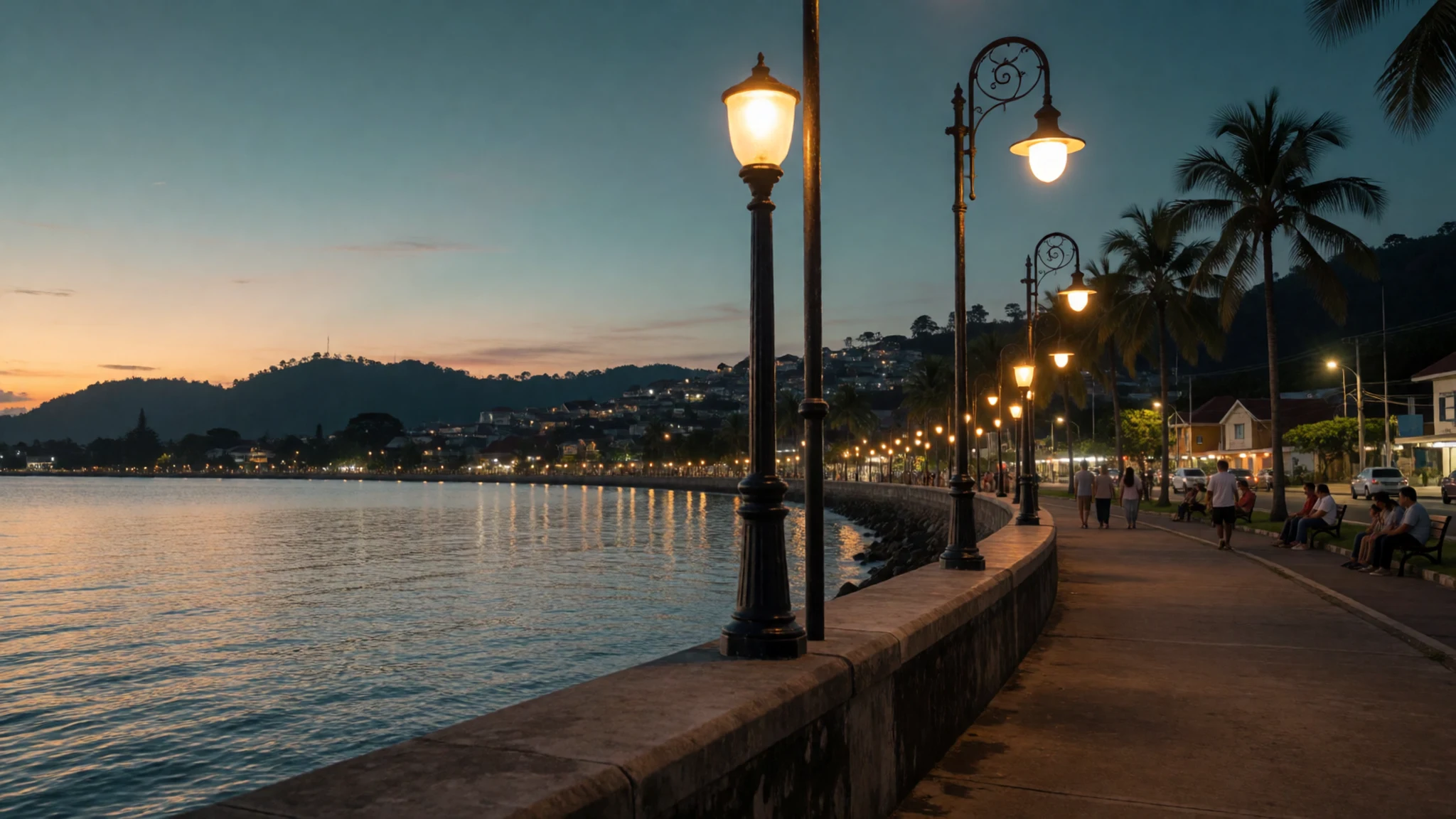
- Mount Mutis — Central West Timor
Mutis is the highest peak in the west of the island, and its cool, forested upper slopes feel unlike the dry lowlands. It suits walkers who are happy with simple arrangements and local guides, and the air is noticeably fresher than on the coast.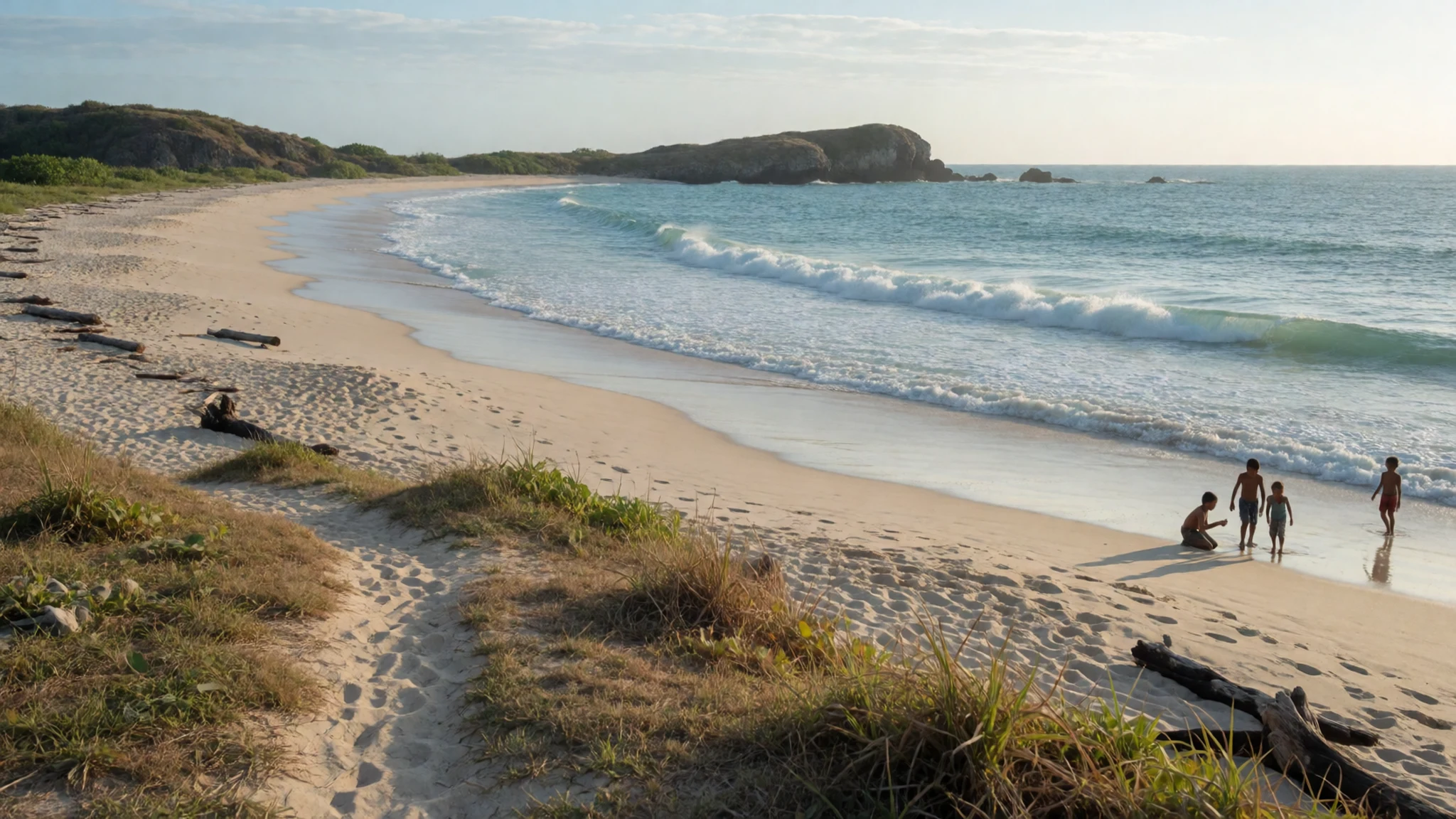
- Dili — North coast, Timor-Leste
The capital of Timor-Leste is a low, seaside city with Portuguese-era buildings, waterfront promenades and a strong sense of recent history. It is the practical base for the east, with cafés, galleries and the easiest transport links to the rest of the country.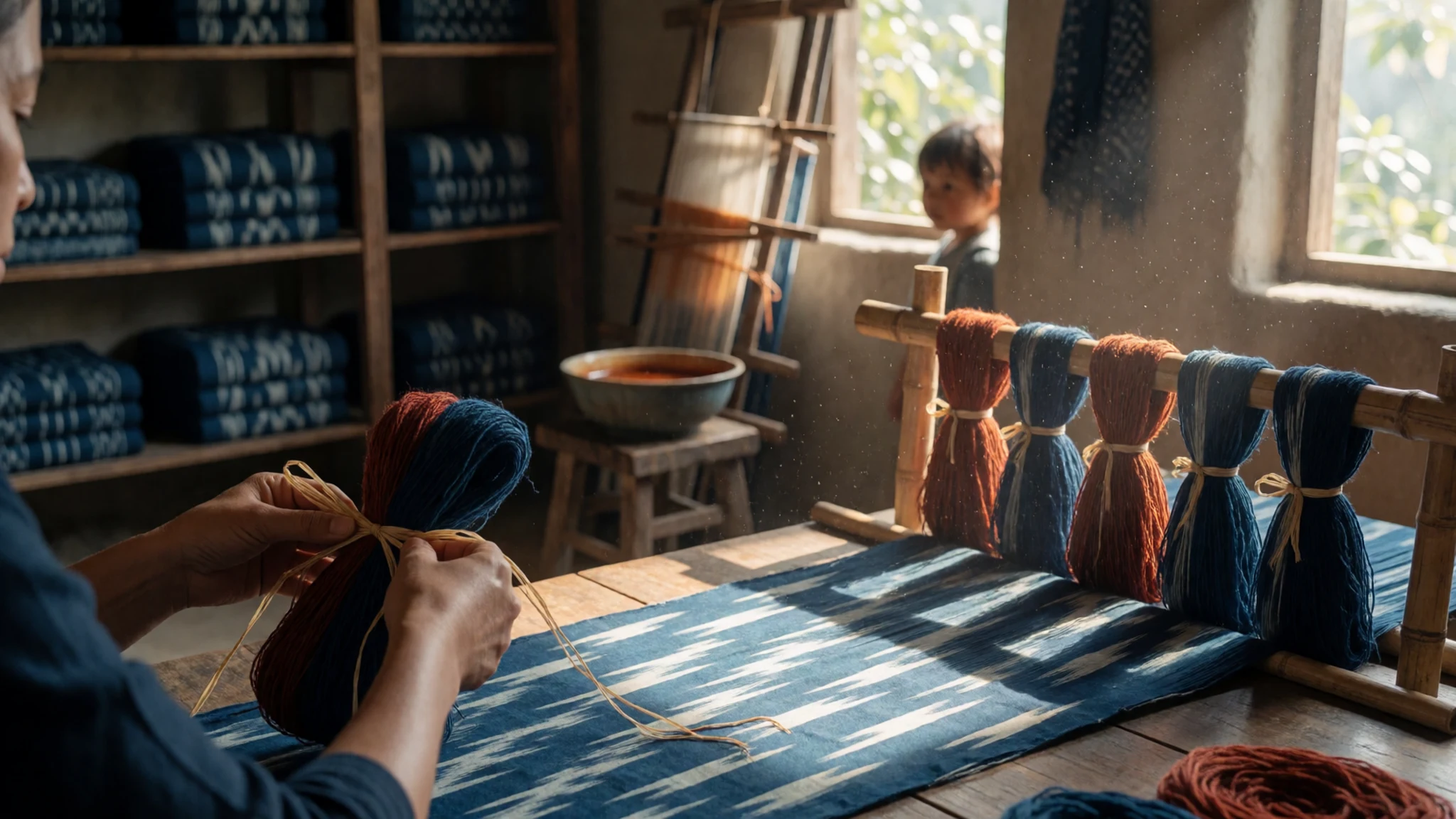
- Weaving villages — Villages across West and East Timor
Across the island, families weave ikat cloth, using patterns that differ by district and community. Visiting a village with a local guide lets you see the dyeing and weaving, and buying directly supports the makers. Ask before photographing people at work.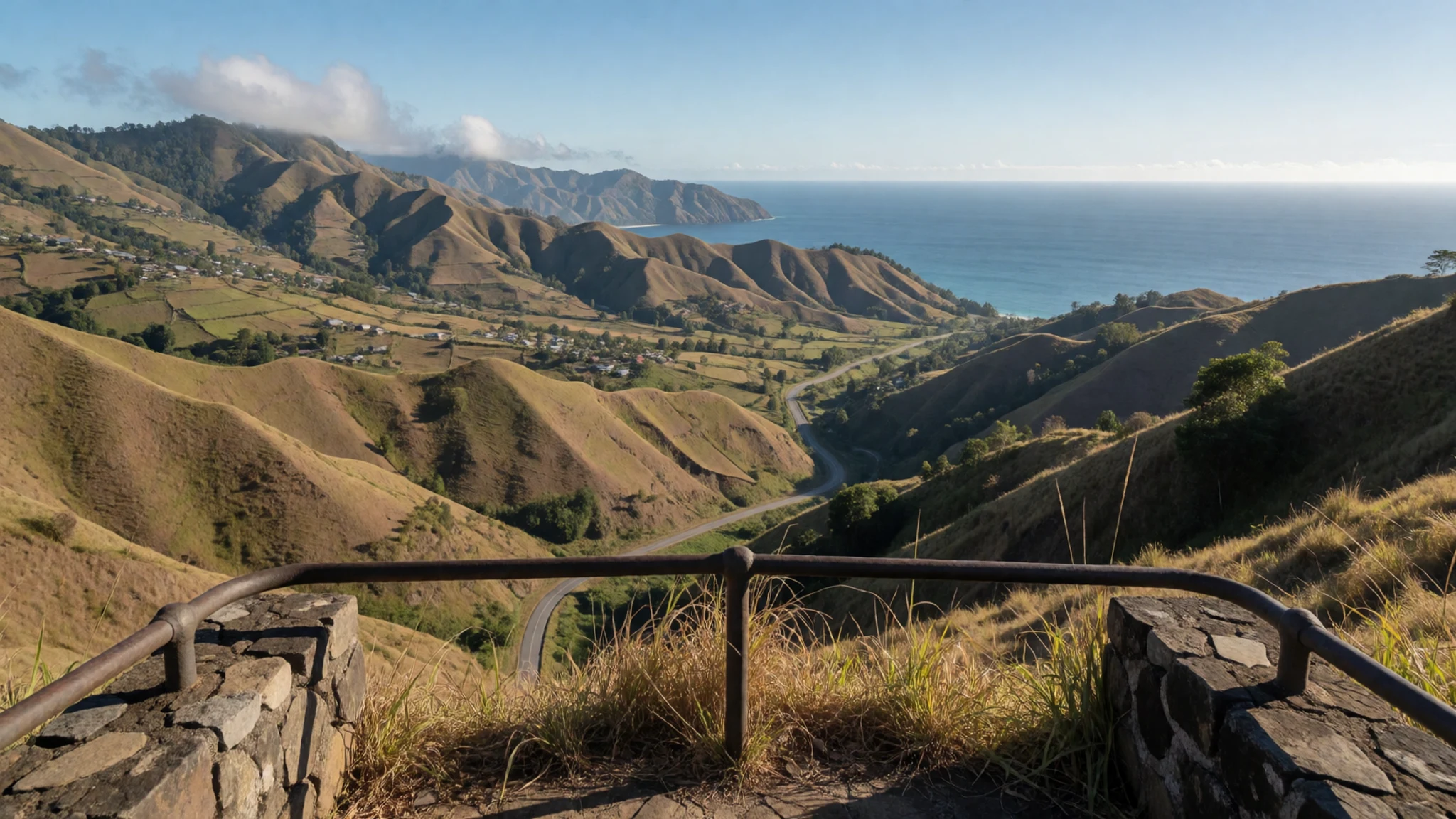
- Mount Ramelau — Ermera and Ainaro area, Timor-Leste
Ramelau is the highest mountain in Timor-Leste. Climbers usually start before dawn to reach the summit for sunrise, with views across the island towards both coasts. The path is steep, so bring a torch, water and a warm layer.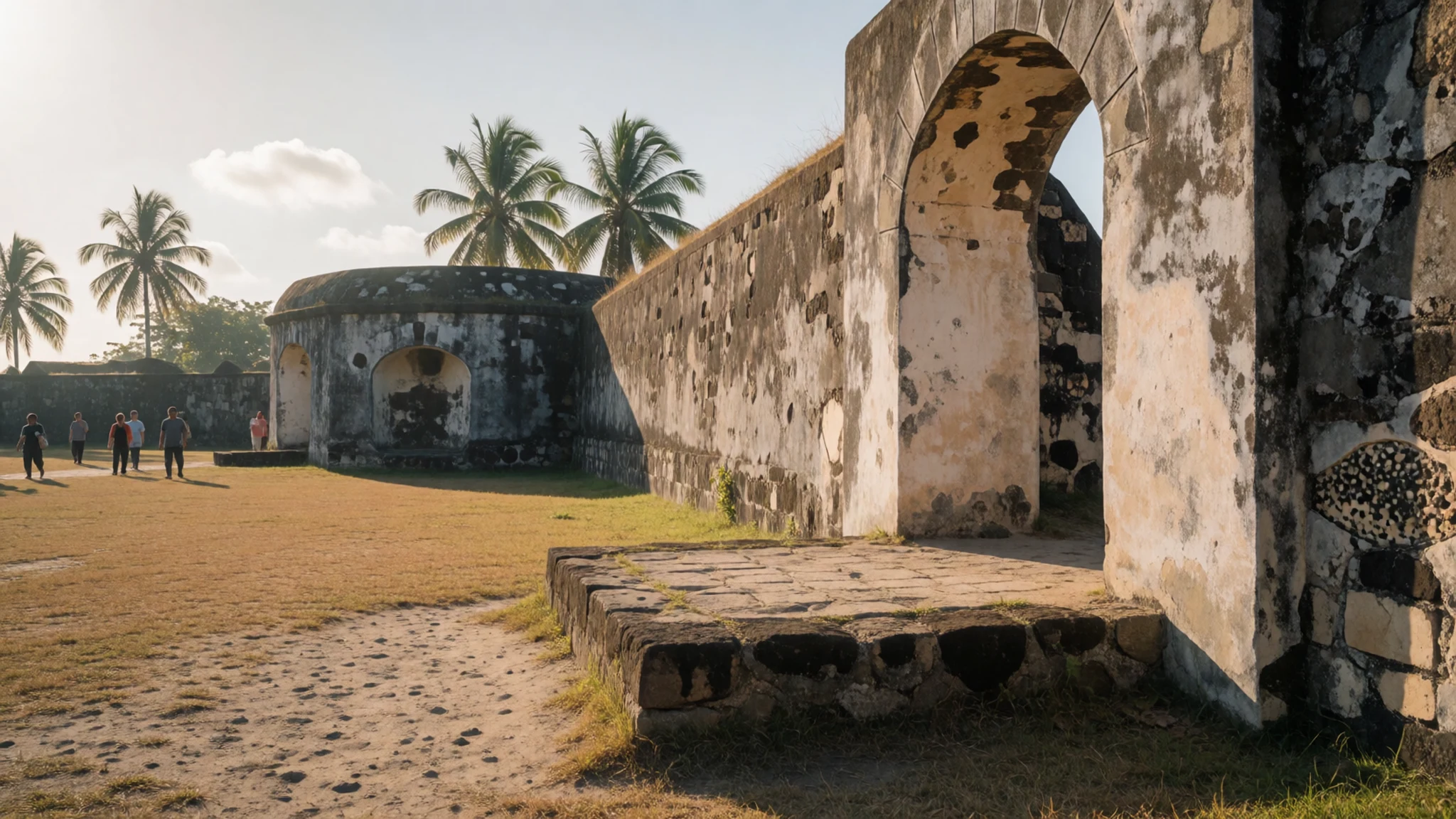
Culture
Timor is a place of many communities rather than one culture. The island has a number of languages, shown on a map in the photo set, and Indonesian, Portuguese and Tetun all appear in public life depending on which side you are on. Christianity is strong in both halves, and churches shape the weekly rhythm, with Sunday services drawing whole villages.
Older customs sit alongside the church. Many communities keep ancestral traditions around family houses, ceremonial exchange and cloth, and weaving carries real social meaning, marking marriages, funerals and status. Hospitality is warm; a visitor in a village may be offered coffee, betel nut or a meal, and refusing politely is normal, though accepting a drink is appreciated.
The island's recent history is still close. Many families lived through the years of Indonesian rule in the east, and the occupation ended in 1999, so memories of conflict and independence are personal rather than distant. Listen more than you ask, and let people raise the subject themselves.
Ask permission before photographing people, ceremonies or ancestral houses, and dress modestly and remove your shoes if invited into a home or sacred place.
What to wear
Timor's best-known traditional dress is built around handwoven ikat cloth, made from cotton and dyed with natural colours such as indigo and plant-based reds. Men wear a wrapped cloth, often called a tais in Timor-Leste or a selimut in the west, and women wear a tubular skirt or wrap with matching shawls. Motifs, colours and layout differ by community, and the cloths are worn at weddings, funerals, church feasts and formal gatherings, and given as gifts in exchange between families.
Day to day, people dress simply for the heat: T-shirts, shirts, long skirts or trousers, sandals and caps. In cities such as Kupang and Dili, office workers wear smart casual clothes, and schoolchildren wear uniforms. Woven cloth often appears as a scarf or sash over modern clothes, especially on Sundays and at celebrations.
Visitors should pack for hot, dry weather: light cotton or linen, a wide hat, sunglasses and strong sun protection. Modest clothing, with covered shoulders and knees, is polite in villages and especially at churches and ceremonies. Sturdy closed shoes or walking boots are worth bringing for the hills and for Mount Ramelau, and a warm layer helps on high ground at dawn. Sandals are fine in town.
What to eat
- Se'i — Eateries across Kupang
Smoked, thinly cut meat, usually beef or pork, cooked over embers and served with rice. It is a signature dish of the Indonesian west and is rich, smoky and salty. Often eaten with chilli and sambal.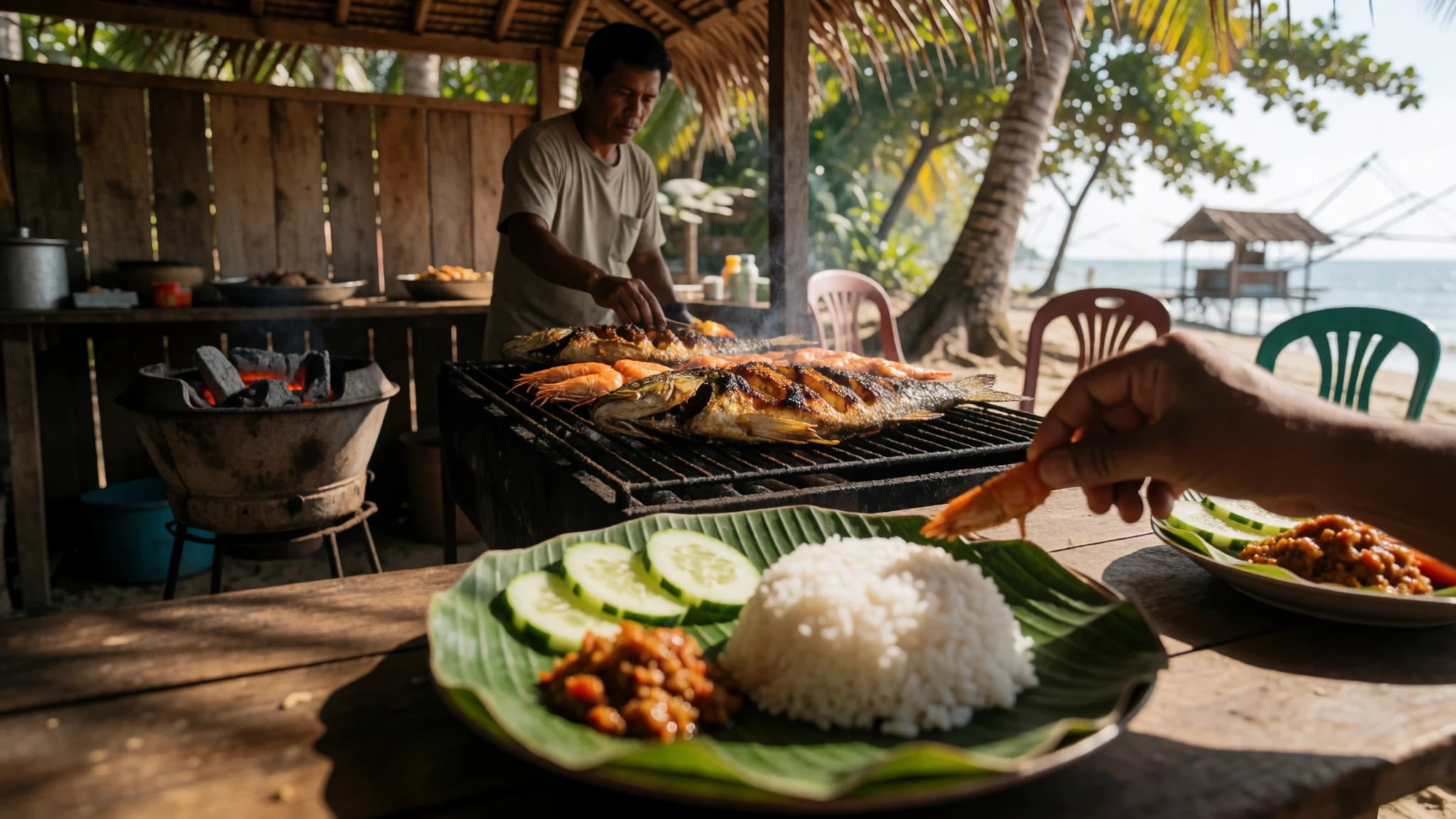
- Jagung bose — Village homes and simple local eateries
A comforting dish of crushed maize cooked into a soft porridge, often with beans or greens. It reflects the importance of maize on a dry island and is common in family meals.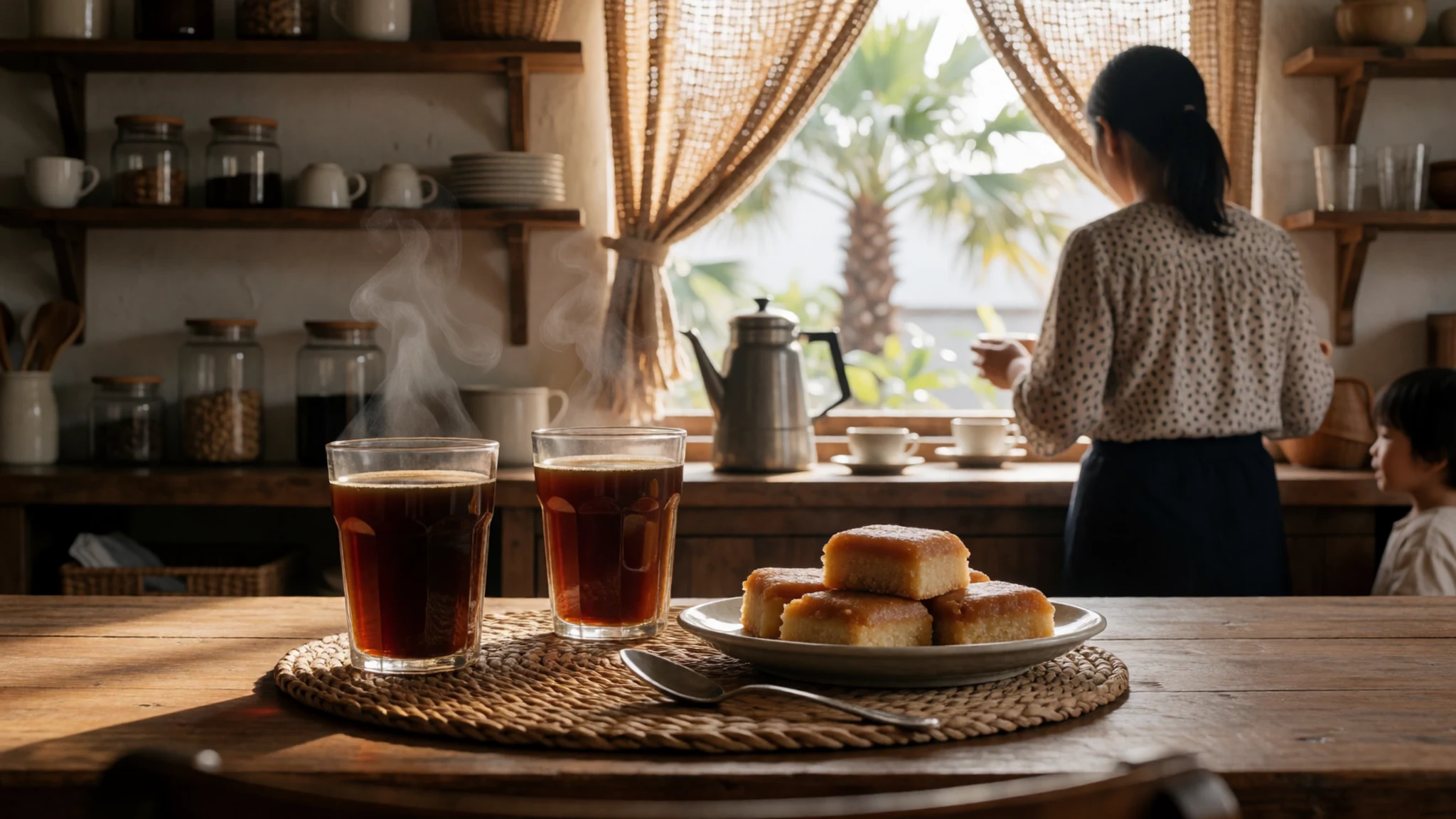
- Ikan bakar — Seafront stalls in Kupang and Dili
Grilled fresh fish, seasoned and served with rice and chilli sauce. It is simple, quick and best eaten near the coast, where the catch arrives daily. - Timorese coffee — Cafés in Dili and highland villages
Coffee is grown in the mountains, especially in Timor-Leste, and is served strong, often sweet. It makes a good stop while travelling through hill towns and is also sold as beans to take home. - Batar da'an — Local eateries and family tables in Timor-Leste
A Timor-Leste dish of maize, beans and pumpkin stewed together, hearty and mild. It is a staple home dish and shows how simply and sustainably local ingredients are combined.
Plan it
Best time. May to September, in the long dry season, when roads are most passable and the weather is sunny. Expect heat and dry winds, and note that the wetter months can make rural roads difficult.
How long. 4–7
Getting there. Fly to El Tari Airport at Kupang for West Timor, or to Dili's airport for Timor-Leste. Onward travel is by road, using buses, shared minibuses or hired cars with drivers. Border crossings between the two halves should be checked with official sources before travel.
Budget. low
Tips
- Check visa and border rules on official government sites before you go
- Allow extra time for journeys, as roads are slow and winding
- Carry cash, because cards are not accepted everywhere outside the main towns
- Bring water, sun protection and any medicines you need
- Start hikes such as Ramelau before dawn
Etiquette
- Ask before photographing people, ceremonies or homes
- Dress modestly in villages and at churches
- Accept hospitality politely, and remove shoes when invited indoors
Nearby
Sources
- Wikidata Q83067 (CC0)
- Wikipedia: Timor (CC BY-SA 4.0)
- Wikivoyage: Timor (CC BY-SA 4.0)
- Timor island2.jpg (Public domain)
- Languages of Timor Island as of 2006 (English) (CC BY 3.0)
- Heirloom Ikat Textile from Timor (CC BY-SA 4.0)
- Tirosa Roundabout in Kupang at night (CC BY 3.0)


