Tierradentro
Tierradentro, Colombia
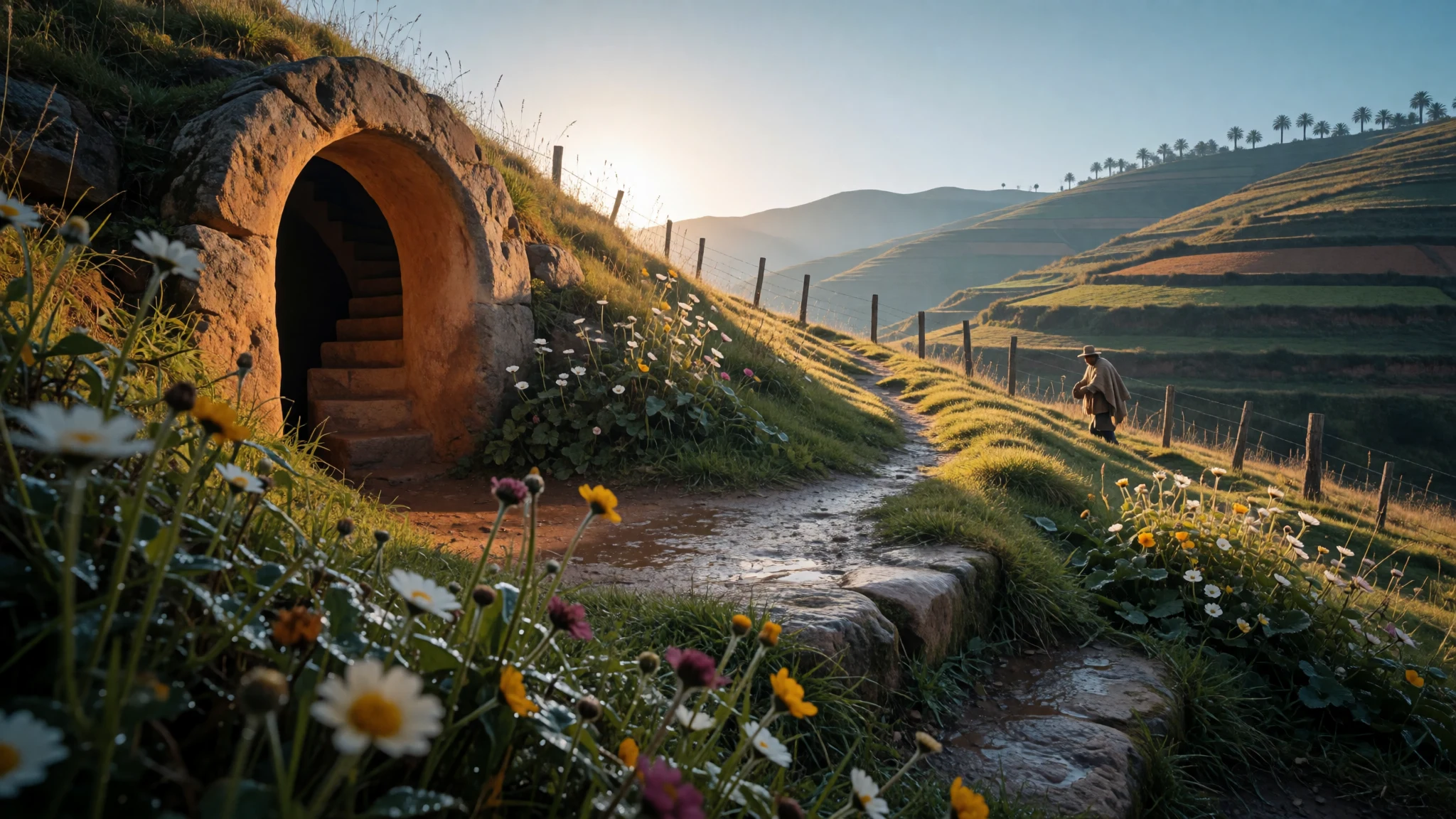
Tierradentro hides painted underground tombs among green Andean ridges, reached on foot through farmland and quiet villages.
The place
Tierradentro is an archaeological park in the Andes of south-western Colombia, in the municipality of Inza, Department of Cauca, about 100 km from the departmental capital, Popayán. The name is Spanish for "inner land", though it is the tombs cut beneath the ridges that made the place known. The park protects the traces of a culture that began to flourish around 200 BC and left its finest work in the first millennium AD: 162 excavated hypogea, as the underground burial chambers are called. The landscape is steep, green and farmed, with ridge-top sites linked by footpaths rather than roads. Most visitors stay in San Andrés de Pisimbalá, a tiny hamlet near the entrance, and walk out each morning to a different hill. The sites carry local names: Segovia, El Duende, El Tablón, Alto de San Andrés and Aguacate, the last on a high summit with wide views. Near the entrance, two small museums add context. One shows pottery and statues; the other covers the Nasa (Páez) people who live in the surrounding mountains today. Labels are mainly in Spanish. The place is quiet compared with Colombia's better-known destinations, and it takes effort to reach, which is much of its character. A typical visit means walking uphill, ducking into cool chambers and resting at village houses. The park is a UNESCO World Heritage Site, inscribed in 1995. Visitors, Colombian and foreign, bring real income to local families, so the quiet is not emptiness.
Its story
Tierradentro's story is told mostly by what its people left underground. Communities in these mountains began building a distinct tradition around 200 BC, and it carried on, in changing forms, into the 17th century. The chambers visitors see today date from the 6th to the 9th centuries AD. Each was dug into a hillside and entered from a west-facing doorway, then reached by a spiralling flight of steps down to a central room, several metres below the surface, with smaller rooms around it where the dead were laid. Walls and pillars were decorated in red, black and white, with angular patterns and stylised people and animals. The sculpture and painting resemble the work of the neighbouring San Agustín tradition, only far denser here, and some writers treat Tierradentro as part of that wider culture rather than a separate one. Much of what once lay inside has gone. Grave robbers emptied many chambers before the area was protected, so pottery, textiles and statues survive only in scraps, and the architecture and painted surfaces carry most of the evidence. Hypogea have been found on several hills, including Aguacate, San Andrés, Segovia, El Duende and El Tablón. Today the same hills are home to Nasa people, and the ethnological museum near the park entrance tells their side of the story. UNESCO inscribed the park in 1995, and visiting has since become a real part of the local economy.
What to see
- Park entrance and museums — Park entrance, near San Andrés de Pisimbalá
The park entrance sits close to two small museums and is the sensible first stop. The archaeological museum shows pottery, statues and explanatory panels, mostly in Spanish, while the ethnological museum covers the Nasa (Páez) people of the surrounding hills. Time spent here makes the painted chambers easier to read later on the ridges.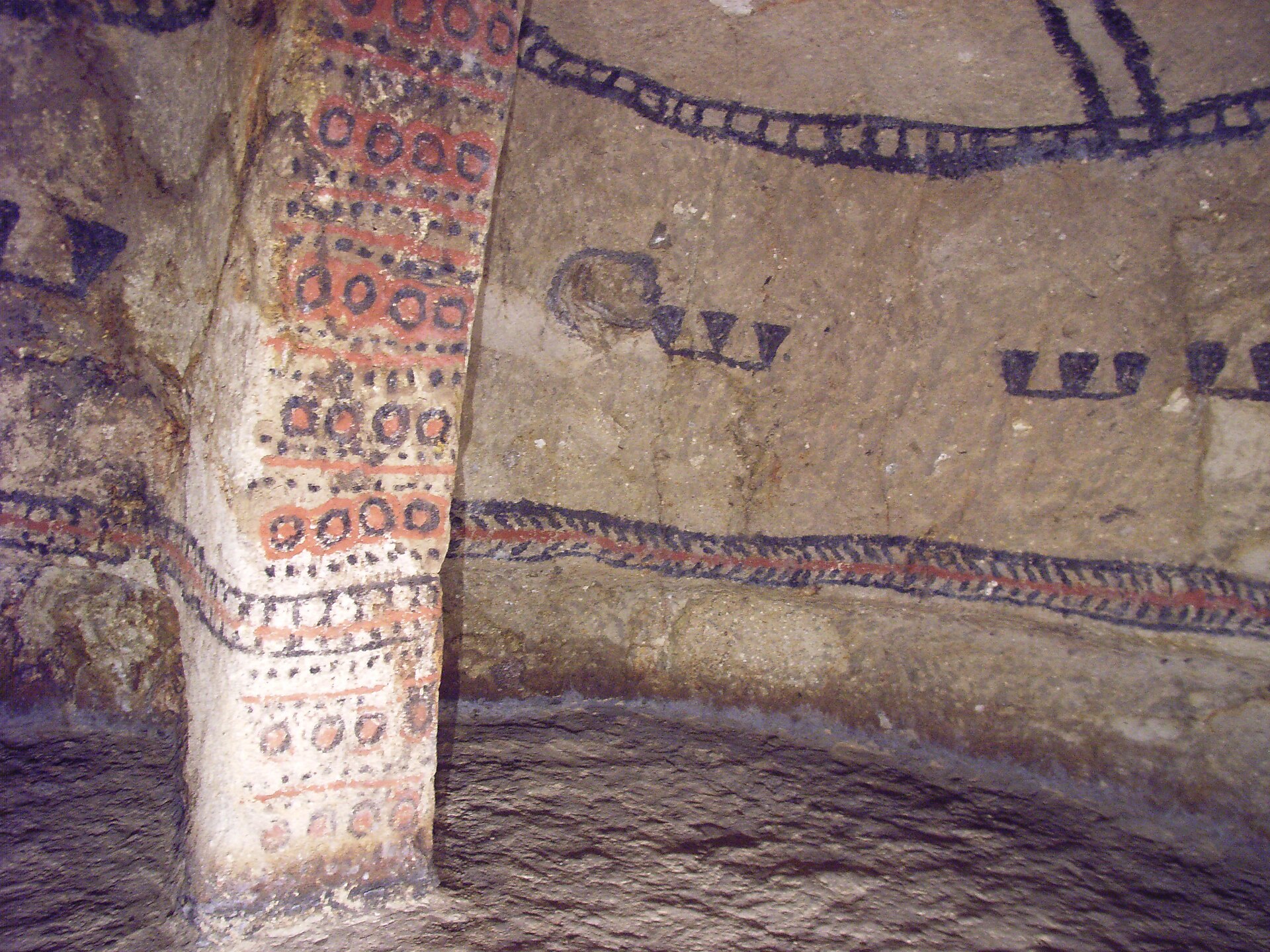
- Segovia — Ridge above the park entrance
Segovia is the extensive hilltop site most visitors head for first. Several burial chambers here are in good condition and are lit, which matters because painted walls are hard to appreciate by torchlight alone. Steps lead down to each chamber, and the red, black and white geometric patterns show clearly on walls and pillars.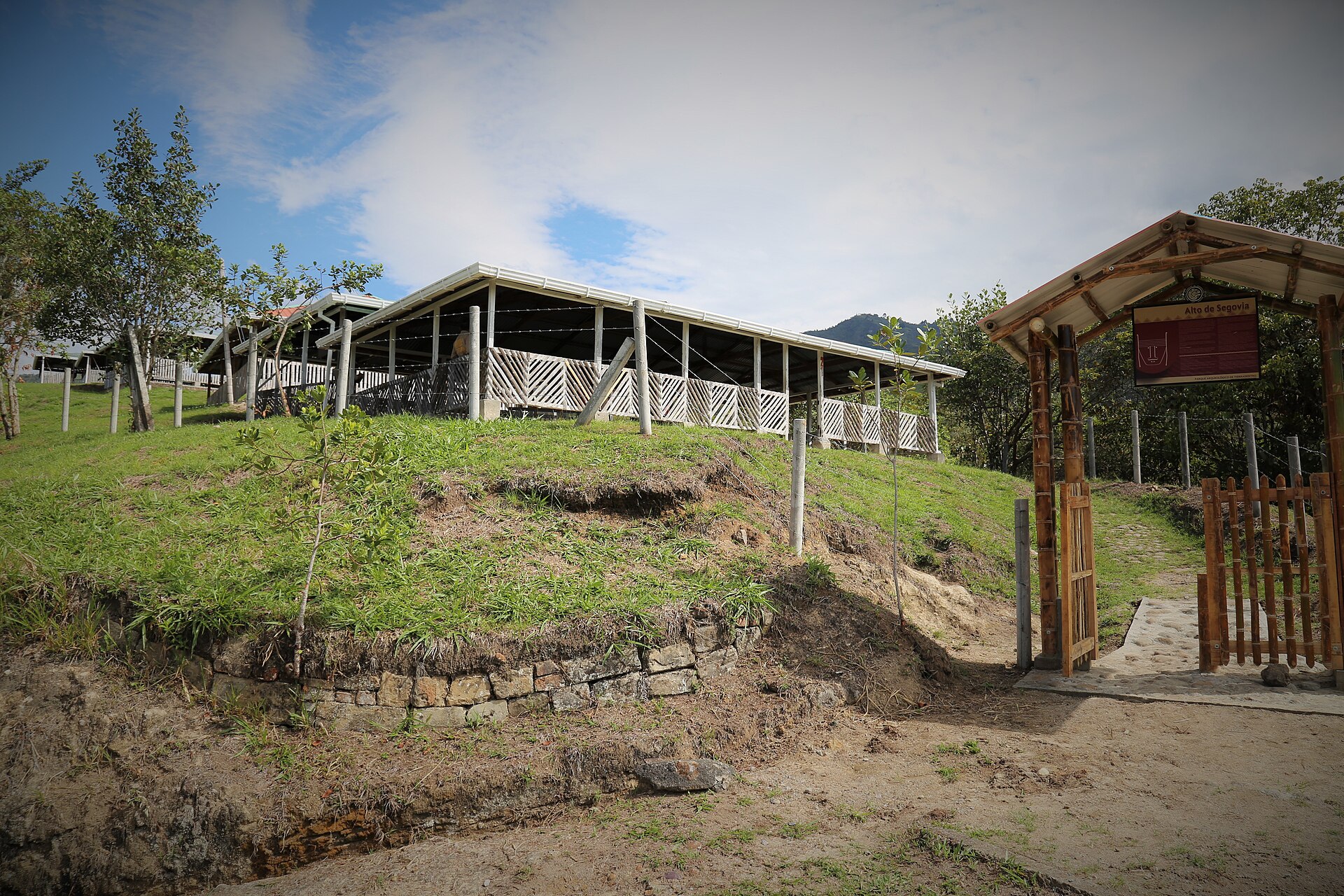
- El Duende — Ridge beyond Segovia
El Duende lies further up the ridge beyond Segovia and has a smaller group of burial chambers. It is a natural extension of the same walk and usually quieter. It also shows how tombs were scattered along the high ground rather than gathered in one cemetery. Carry a torch in case a chamber is unlit. - El Tablón and Alto de San Andrés — Near San Andrés de Pisimbalá
El Tablón stands near San Andrés and is known for stone statues of a kind also seen around San Agustín. Unlike the chambers, these figures stand in the open, so clear light helps. Alto de San Andrés, a short walk from the hamlet, adds another burial site, handy for an easy afternoon. - Aguacate — Summit west of the park entrance
Aguacate, the "Avocado Hill", sits on top of a mountain and has its own walk from the park entrance. The reward is the view over folded Andean valleys. Most chambers here are not maintained, so expect rough, overgrown ground rather than tidy displays, and go with sturdy shoes and plenty of water.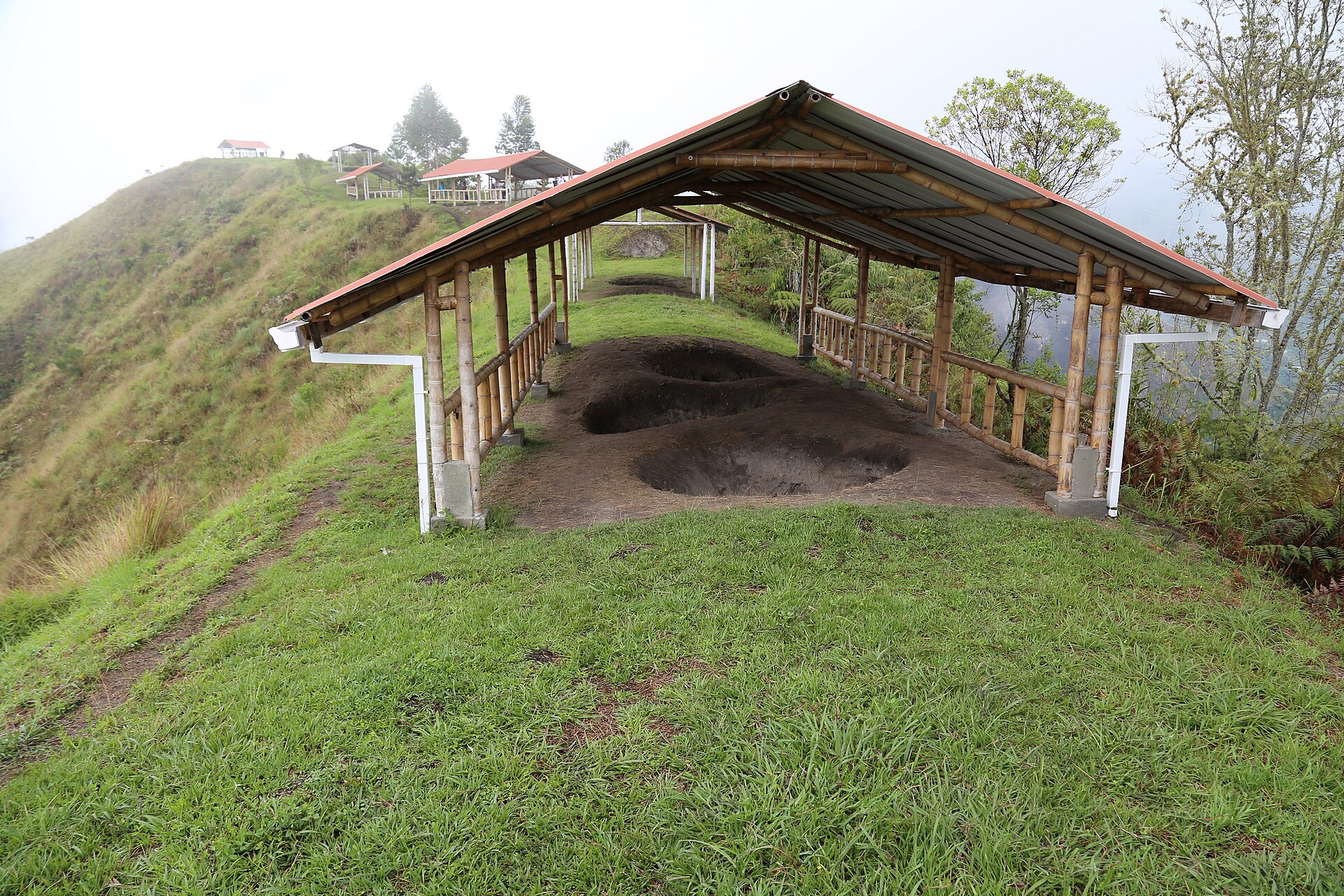
Culture
Tierradentro is living country, not only an archaeological landscape. The Nasa (Páez) people farm the surrounding mountains, speak their own language alongside Spanish, and treat these hills as home. The ethnological museum near the park entrance is a good way into their history and present, although its labels are mainly in Spanish. The beliefs of the ancient builders are known only through what survives: tombs facing west, the dead placed in side chambers, walls covered in patterns whose meanings are still debated. It helps to treat the chambers as graves first and sights second. Village life in San Andrés de Pisimbalá moves slowly, with small rooms rented by local families and simple meals cooked in family kitchens. Colombian visitors make up much of the park's traffic, so even basic Spanish greetings are appreciated. Security in this part of Colombia has at times been tense, with armed groups active in the hills, so local advice belongs in any plan. Ask your hosts and the park staff what is currently safe before choosing a route, and check national guidance before travelling. Ask before photographing local people, and keep voices low and hands off the painted walls when you are inside a chamber.
What to wear
Tierradentro has no single costume for visitors to look for, but the Nasa (Páez) communities around the park keep a distinct dress tradition. Woollen ruanas, the square shawl-cloaks worn over the shoulders, and felt hats are common, particularly among older men and at community gatherings. Women's dress often includes wrapped skirts and shawls, woven belts called chumbes, and shoulder bags made in village workshops. Wool and cotton are the usual fibres, suited to cool mountain evenings. Day to day, most people in San Andrés de Pisimbalá wear what rural Colombia wears: jeans or work trousers, cotton shirts, a ruana or jacket in the evening, and rubber boots for mud and farm work. Visitors should dress for steep paths, changeable weather and quiet villages. Wear shoes with real grip, since slopes turn slick after rain and steps into chambers can be damp. Bring light layers for warm middays and cool evenings, a rain jacket, a hat and sunscreen. Long trousers protect against scratches on overgrown paths such as the Aguacate route. Shorts are tolerated, but modest, covered clothing is a courtesy in the hamlet and around the church. A small torch is worth packing too.
What to eat
- Sancocho — Family-run eateries and rented rooms in San Andrés de Pisimbalá
A hearty soup of meat or chicken with plantain, yuca and potato, common across Colombia and made in simple family kitchens. After a day of climbing the ridges it fills the gap well, and it is usually served with rice. - Tamales — Village eateries and market stalls in La Plata or Popayán
Cornmeal parcels steamed in leaves, filled with meat, vegetables or both. Versions differ by region and household, so ask what is inside. They are often eaten as a breakfast or a filling snack before heading out to the hills. - Arepas — Breakfast tables at guesthouses and small eateries in the hamlet
Round cornmeal cakes, grilled or fried, served plain with butter and cheese or alongside eggs. In Tierradentro they make an easy breakfast before the climb to the ridge-top sites, and they travel well in a daypack for a mid-morning stop. - Trout and fresh river fish — Simple restaurants in the valley, on request at guesthouses
Freshwater trout, a common choice in cool Andean valleys, usually fried whole and served with rice, plantain and salad. Availability varies, so ask where you are staying rather than assuming it will be on the menu. Good after a long walk. - Tinto and aguapanela — Village shops and guesthouse kitchens throughout the park area
Small cups of black coffee, called tinto, are served at any hour in Colombia, and the Cauca region grows coffee on its hillsides. Take one at a village shop in the morning and another when the afternoon cools.
Plan it
Best time. The drier spells, roughly December to February and July to August, are the easier months for walking the ridge paths. Rain can arrive in any month in these mountains, so pack a waterproof whatever the season, and expect muddy, slippery slopes after heavy showers.
How long. 2–3
Getting there. Popayán, about 100 km away, is the usual base and has an airport; from there buses make the four-hour journey to Tierradentro, and some drop passengers at El Cruz, from where it is a 2 km walk to San Andrés de Pisimbalá. Tour operators in Popayán run day trips. From Bogotá or Neiva, go to La Plata, then take a pickup truck to San Andrés; the last pickups leave in the late afternoon, so travel in daylight.
Budget. low
Tips
- Stay in San Andrés de Pisimbalá so the ridge walks can start early, before the midday heat.
- Carry cash, as cards are unlikely to work in the hamlet, and fill water bottles before heading up to the sites.
- Pack a torch and shoes with good grip; some chambers are unlit and steps can be damp.
- Check opening times and ticket arrangements with the park or your host before going, as they can change.
- Ask locally about security before setting out on a longer route, since armed groups have been active in the region.
Etiquette
- Treat the chambers as graves: keep voices low and do not touch the painted walls.
- Ask before photographing local people, especially children and elders.
- Greet people in Spanish and respect that the hills are Nasa homeland.
Nearby
Sources
- Wikidata Q179506 (CC0)
- Wikipedia: Tierradentro (rev 1366157102) (CC BY-SA 4.0)
- Wikivoyage: Tierradentro (rev 5314584) (CC BY-SA 4.0)
- Tombs in Tierra Dentro — inyucho (CC BY 2.5)
- Alto de Segovia, Tierradentro — CarlosE Duarte (CC BY 3.0)
- Alto de Segovia, Tierradentro, Cauca — CarlosE Duarte (CC BY 3.0)
- Alto de Segovia, Tierradentro, Inza, Cauca — CarlosE Duarte (CC BY 3.0)
- Alto El Aguacate, parque Arqueológico Tierradentro — CarlosE Duarte (CC BY 3.0)
- Alto El Aguacate, Tierradentro — CarlosE Duarte (CC BY 3.0)
- Bridge in Colombia, Tierradentro — Graham Styles (CC BY 2.5)
- Cerro del Aguacate Tierradentro Cauca — La guarda del angel (CC BY-SA 4.0)


