Tanjung Puting
Tanjung Puting, Indonesia
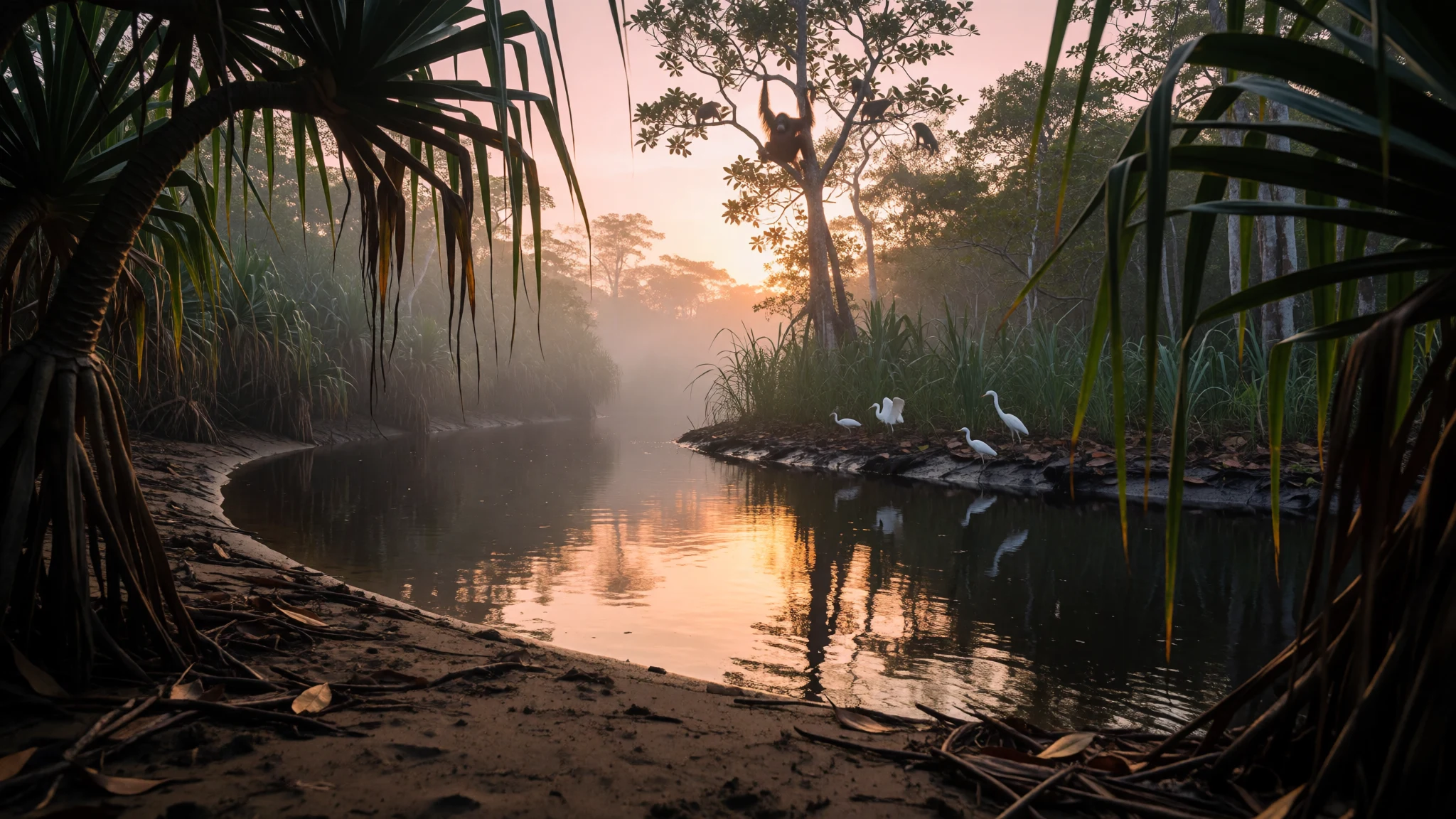
Tanjung Puting is a slow boat journey up a dark Bornean river to watch wild and rehabilitated orangutans in a forest that is still under pressure.
The place
Tanjung Puting National Park lies on the southern coast of Central Kalimantan, the Indonesian province that covers part of Borneo, in the West Kotawaringin district. The Sekonyer River organises everything here. Dark, tea-coloured and slow, it serves as the park's road, and nearly every visit is a journey along it. The ground is flat and close to the sea, with the facts recording about 29 metres above sea level, so the scenery is a wall of green rather than a skyline. The protected area covers 416,040 hectares and holds several kinds of forest: dryland forest dominated by dipterocarp trees, peat swamp, heath forest, mangrove, coastal beach forest, and regrowth on land once disturbed. The Kumai River marks the northern edge, and across it the picture changes, because peat forest there has been cleared for oil palm. That contrast is part of the honest story of the place. The park dates from 1982, yet roughly 65% of its primary forest is degraded, and loss of habitat remains the main danger to the animals. Pangkalan Bun, the district's main town, is the practical gateway, with the small port of Kumai close by for boats. Heat and humidity are constant, insects are a fact of life, and the pace is set by the boat's engine rather than a timetable. The reward is time at close range with orangutans, proboscis monkeys, gibbons and bearded pigs, in a landscape where the river is still the main route.
Its story
Tanjung Puting National Park owes much of its reputation to a single camp. Camp Leakey was founded in 1971 with help from the Leakey Foundation, and it became the first of four research centres set up inside the park to study and rehabilitate orangutans and other primates. It was there that Dr Birutė Galdikas began her career, watching orphaned and rescued orangutans as they were returned to the forest. Her work reached a wide audience when National Geographic gave it a cover story in October 1975, and the camp's name has been tied to orangutan conservation ever since. The story did not end with that attention. Protection on paper has not stopped the forest from being damaged, and the park's formal status, which dates from 1982, sits beside the fact that a large share of its primary forest is degraded. In 1997 the Friends of National Parks Foundation, an Indonesian NGO, began restoring habitat in the Pasalat and Beguruh parts of the park. It also keeps an education centre at Pasalat, so that local people and visitors can learn why the work matters. Today's boat trips follow the same river that early researchers used, and the park is as much a lesson in repair as a place to see animals. Seeing a rehabilitated orangutan is a reminder of how much effort it takes to keep a forest alive.
What to see
- Sekonyer River — Along the length of the park
The Sekonyer River is the park's main route and a good way to understand it. Boats drift between mangrove and swamp forest, and the dark water doubles the trees. Wildlife shows up without effort: kingfishers, macaques, monkeys on the banks. Early mornings and late afternoons are cooler and busier with animals.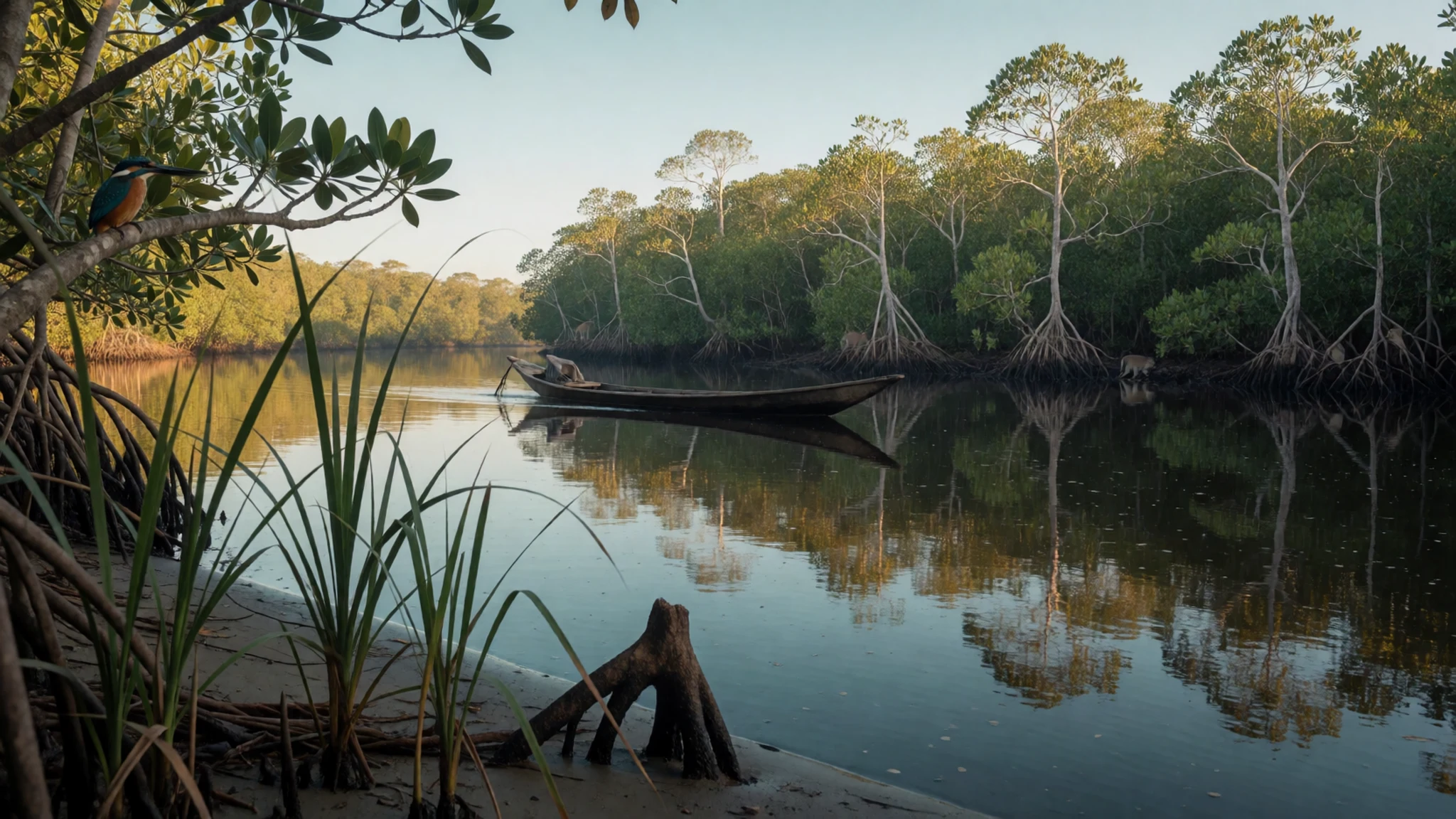
- Camp Leakey — Upper Sekonyer River
Camp Leakey, founded in 1971, is the oldest research centre in the park and the usual turning point of a river trip. Orangutans of different ages move through the area, some born to mothers once raised by people. Rangers set the rules for distance and behaviour, and they are worth following closely.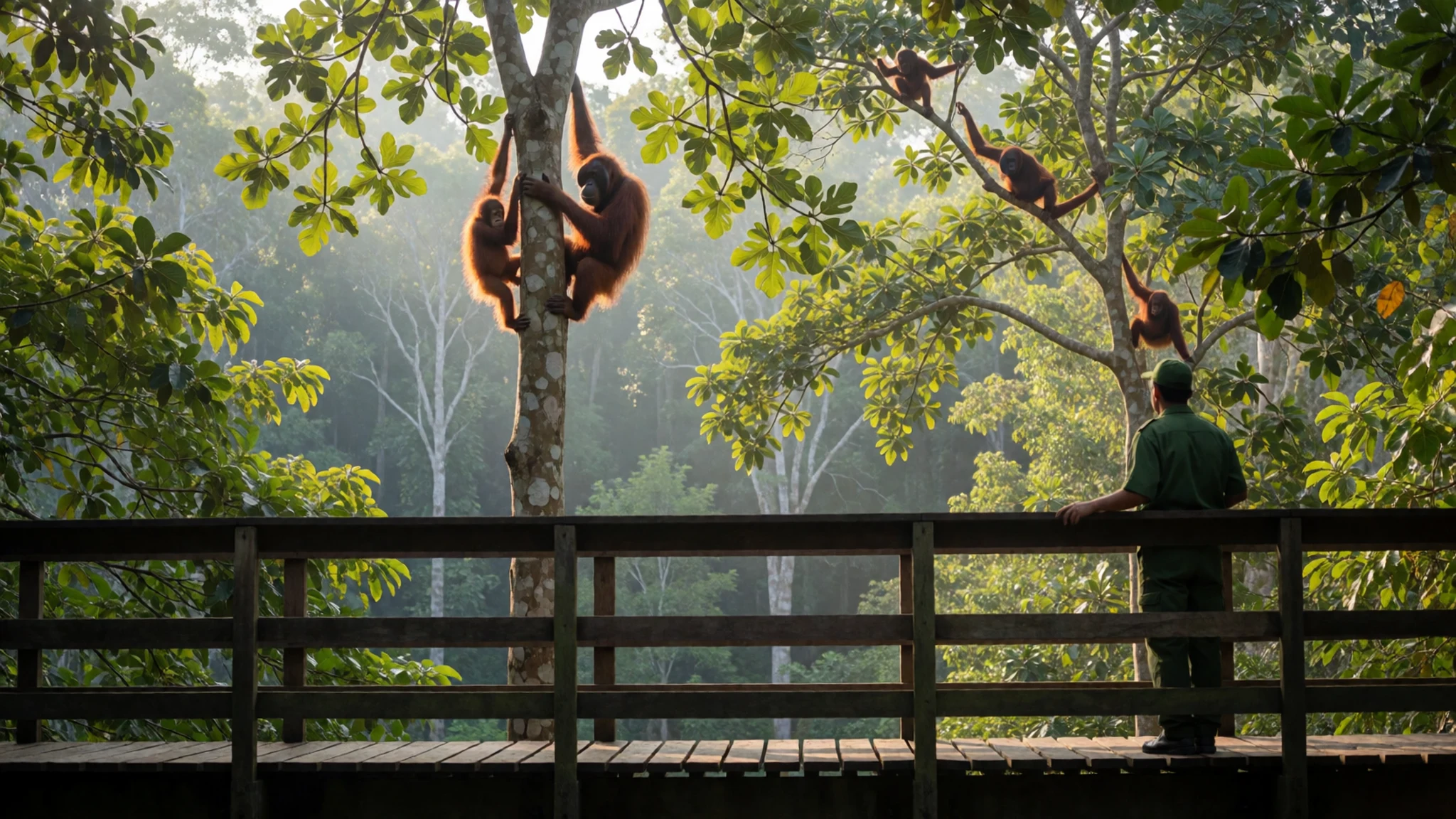
- Proboscis monkeys on the riverbank — Lower Sekonyer River
Proboscis monkeys, called bekantan locally, gather in riverside trees, especially near dusk when they settle to sleep. Males have the heavy, drooping nose that gives the species its name. They are shy, so a quiet engine and a slow approach from the boat make the difference between a glimpse and a long look.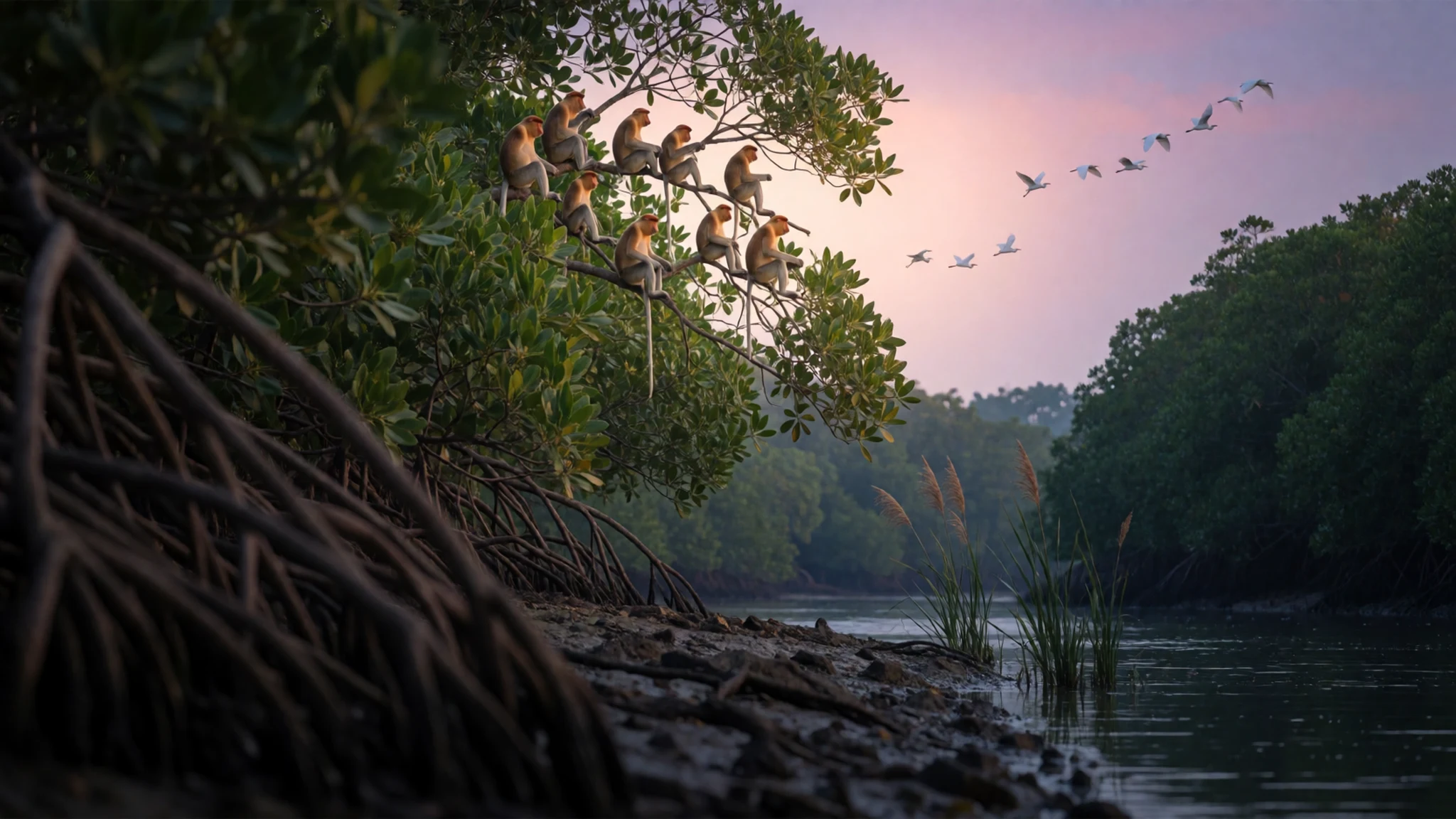
- Bornean white-bearded gibbons — Forest near the camps
Bornean white-bearded gibbons are usually heard before they are seen, their whooping calls carrying across the canopy at first light. Spotting one means looking up into the middle layers of the forest and being patient. Walks near the camps, with a guide, give the best chance of a clear view.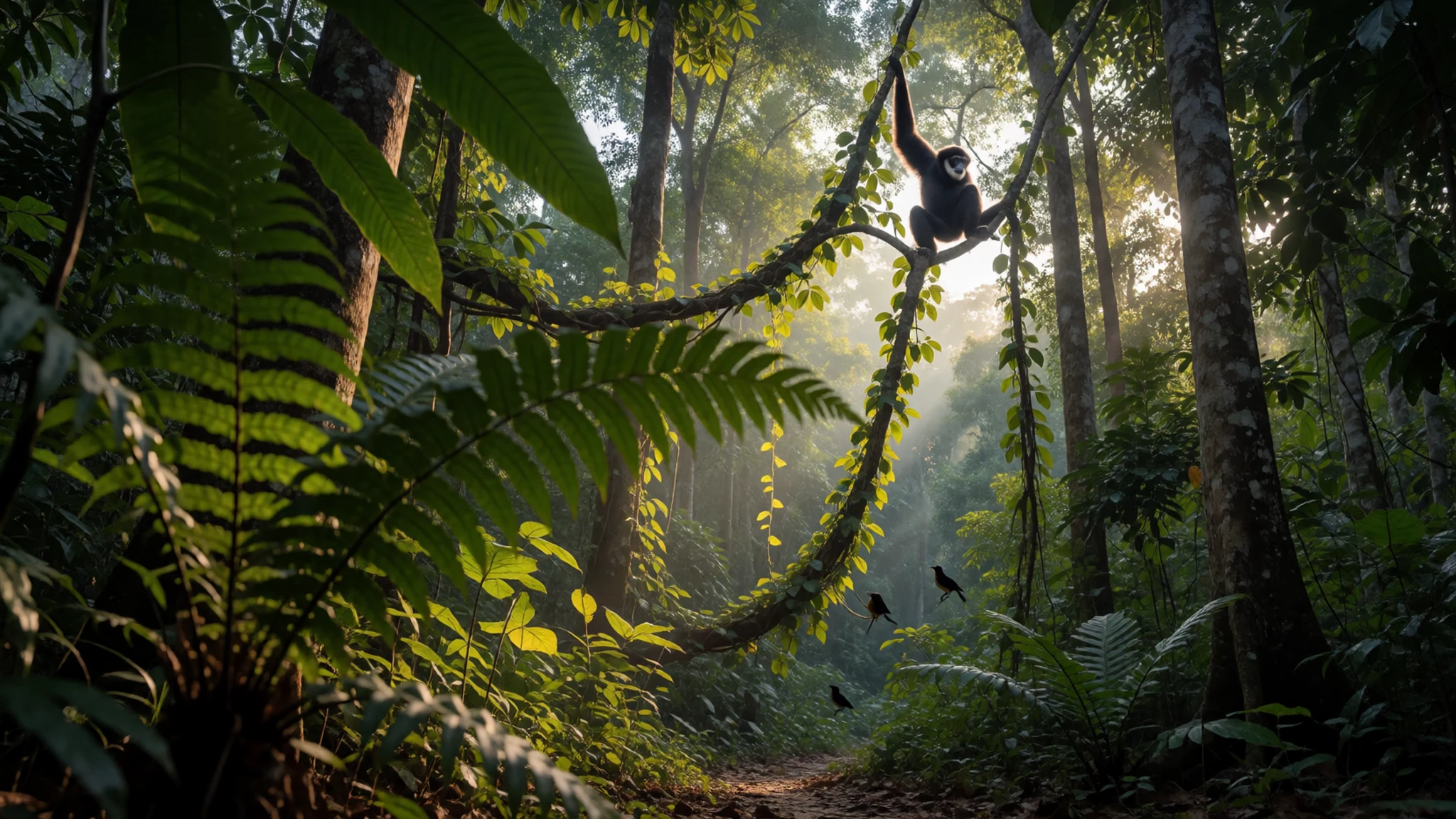
- Bearded pigs — Clearings near the research camps
Bearded pigs wander the forest floor and often appear at the edges of clearings near the camps, rooting through leaf litter. They look placid but are wild animals and can be bad-tempered. Watching from a respectful distance, with a guide beside you, is far wiser than trying for a closer photograph.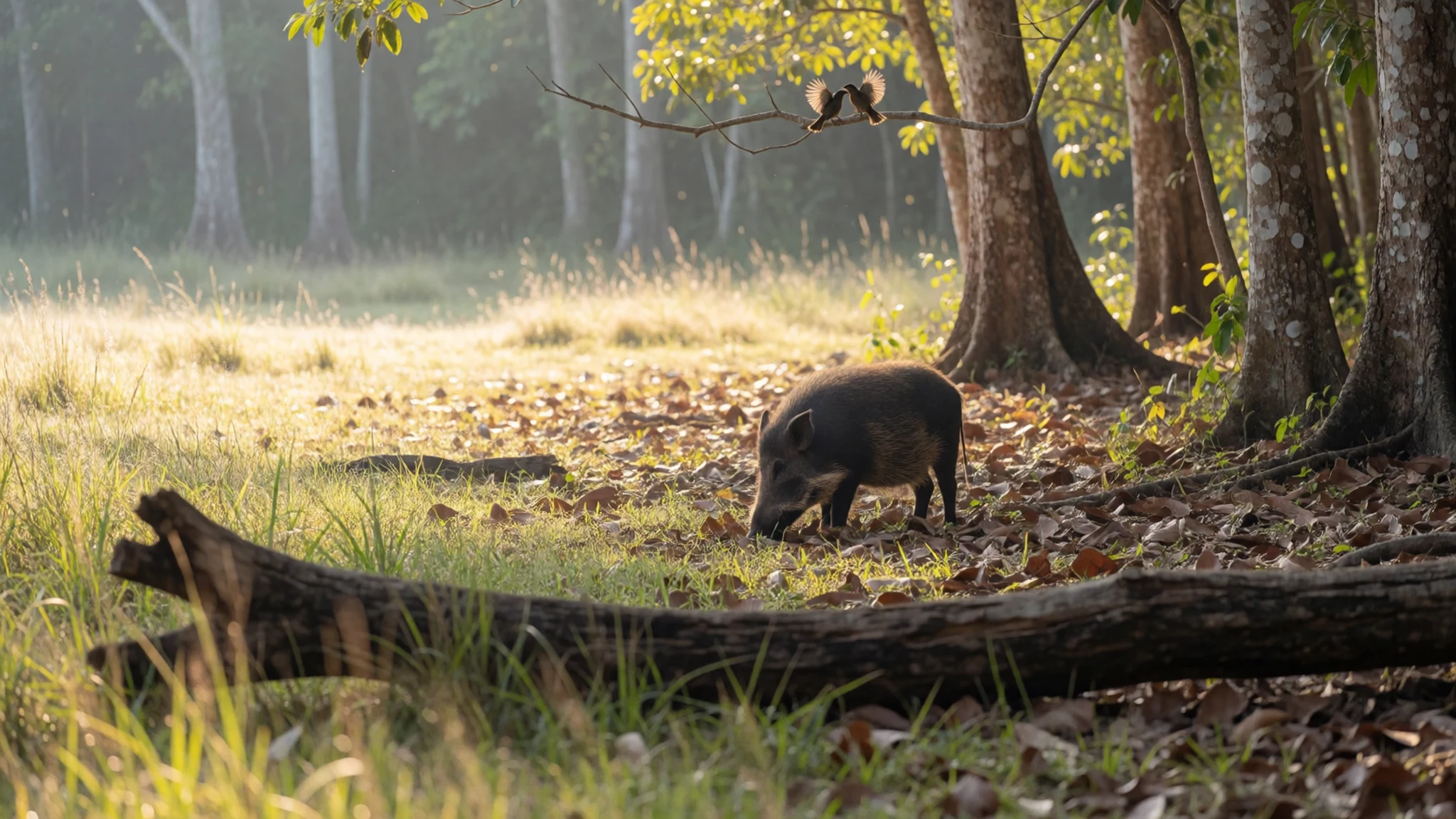
- Kumai harbour — Kumai, on the Kumai River
Kumai is the small port where river trips begin, a short way from Pangkalan Bun. Wooden boats line the waterfront, and guides load food, water and bedding before heading out on the Kumai and then the Sekonyer. It is a plain working town, useful for last supplies rather than sightseeing.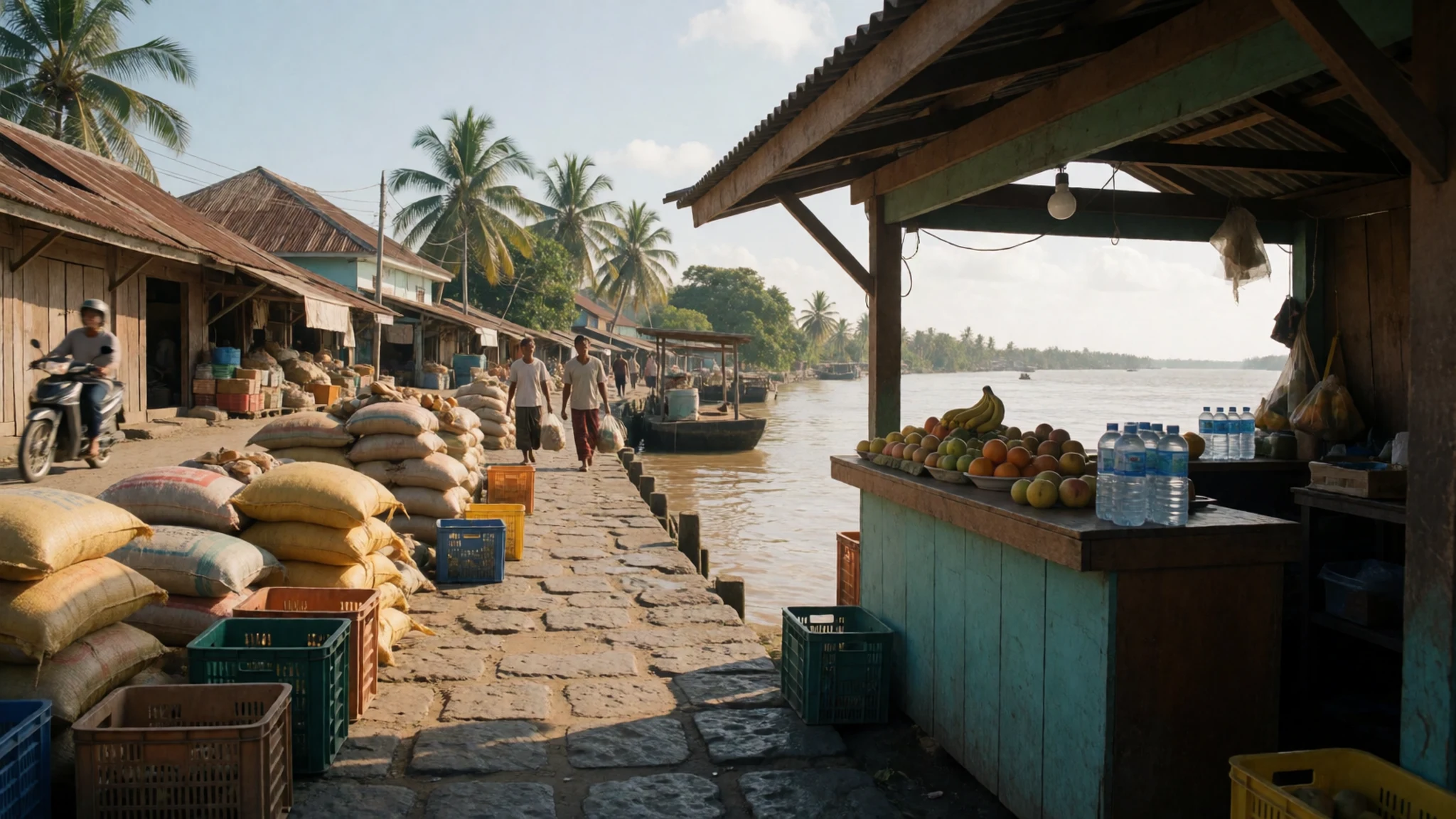
Culture
Tanjung Puting National Park sits in a part of Borneo shaped by river travel, Dayak heritage and coastal Malay and Banjar communities. Daily life in Pangkalan Bun and Kumai runs through markets, mosques and ports, with Indonesian as the shared language and local languages spoken at home. Inside the park the dominant culture is conservation, carried by rangers, researchers, boat crews and guides, many of whom come from nearby towns and know the animals' habits well. The wooden boats called klotok serve as transport, kitchen and bed, and the crews cook meals aboard, which makes the trip feel more like staying with a family than joining a tour. Dayak communities of the interior have long used the forest and rivers for food, building materials and ritual, and a visitor should treat the forest as someone's living and workplace rather than a stage. The orangutans here are wild animals, even those raised by people, and the staff are firm about keeping distance and not feeding them. In town, modesty and courtesy matter: greet people with a smile, and use the right hand for giving and receiving. Etiquette: keep a clear distance from orangutans, never offer them food, and keep snacks and bags closed so the animals do not learn to grab from people.
What to wear
Tanjung Puting lies in Dayak country, where traditional dress for ceremonies uses beadwork, woven rattan, bark cloth and feathers, often with bold geometric and animal motifs. Coastal Malay and Banjar communities wear sarongs and batik for festivals and religious occasions, usually in cotton or light silk. These clothes appear at weddings, celebrations and community events rather than in everyday life. In Pangkalan Bun and Kumai, people dress for heat and humidity: cotton shirts, T-shirts, long trousers or skirts, headscarves for many women, and sandals or rubber boots on the river. Boat crews and guides favour quick-dry shirts, caps and sturdy footwear. A visitor should wear light, loose, long-sleeved tops and long trousers, which protect against sun and insects better than shorts. A wide-brimmed hat, sunglasses and a thin rain jacket are useful, since showers can arrive at any time. Closed shoes or sandals with grip suit the wet wooden jetties and muddy forest paths, and a spare dry set of clothes helps on a damp boat. In towns, and especially near mosques, covered shoulders and knees are polite. Neutral greens and browns are a sensible choice for forest walks, and bright colours are best kept for the evening.
What to eat
- Meals cooked aboard the klotok — Aboard the wooden river boat
Meals on a klotok are cooked by the crew on a small stove, and typically mean rice with vegetables, fried tofu or tempeh, fish or chicken, and fresh fruit. Simple, hot and generous, they are the main way visitors eat during a river trip.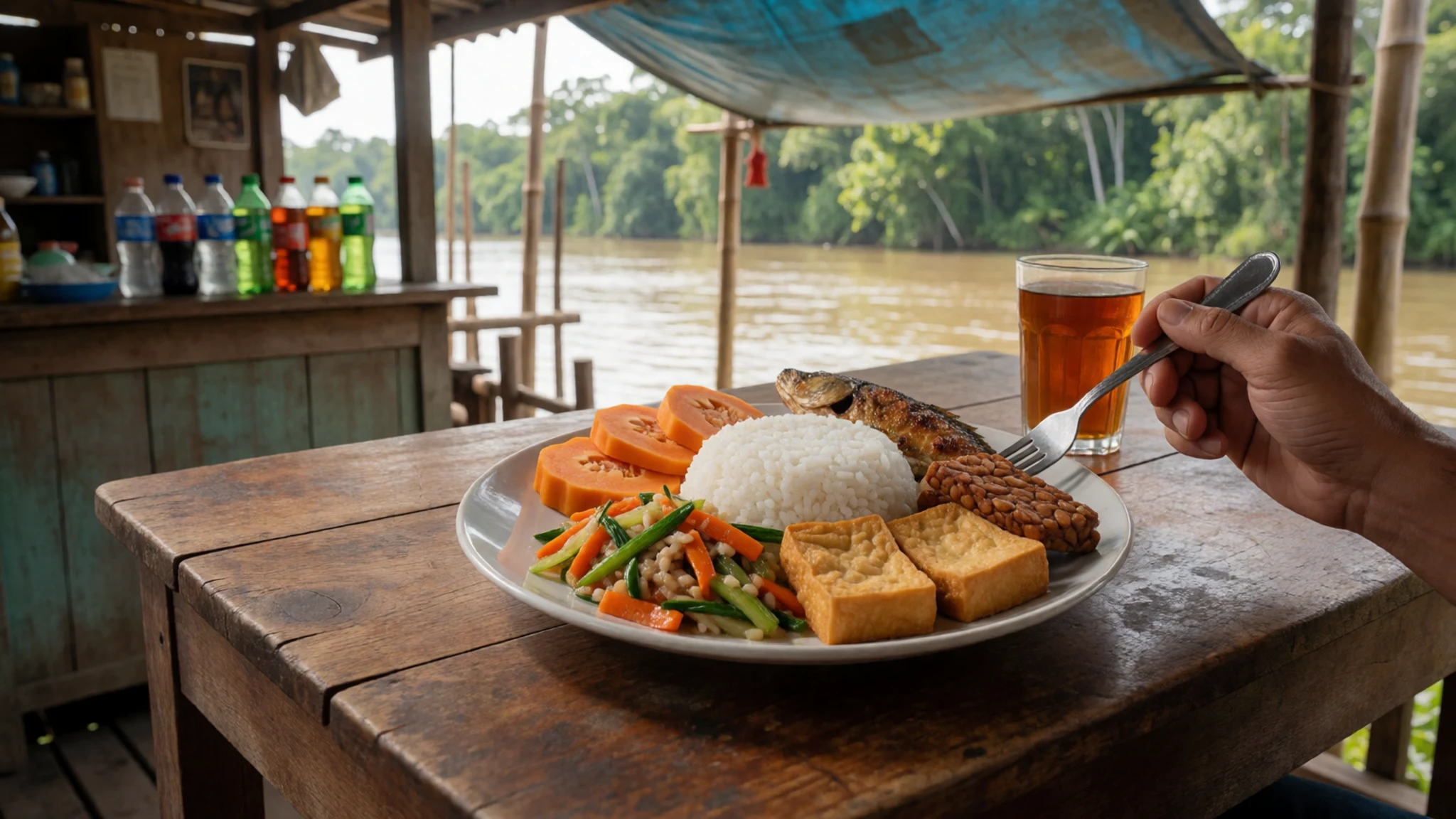
- Nasi goreng — Warung and small eateries in Pangkalan Bun and Kumai
Nasi goreng is Indonesia's everyday fried rice, seasoned with sweet soy sauce, shallot and chilli, and usually topped with a fried egg. It is the easiest breakfast or late supper in Pangkalan Bun and Kumai, and many boats serve it too.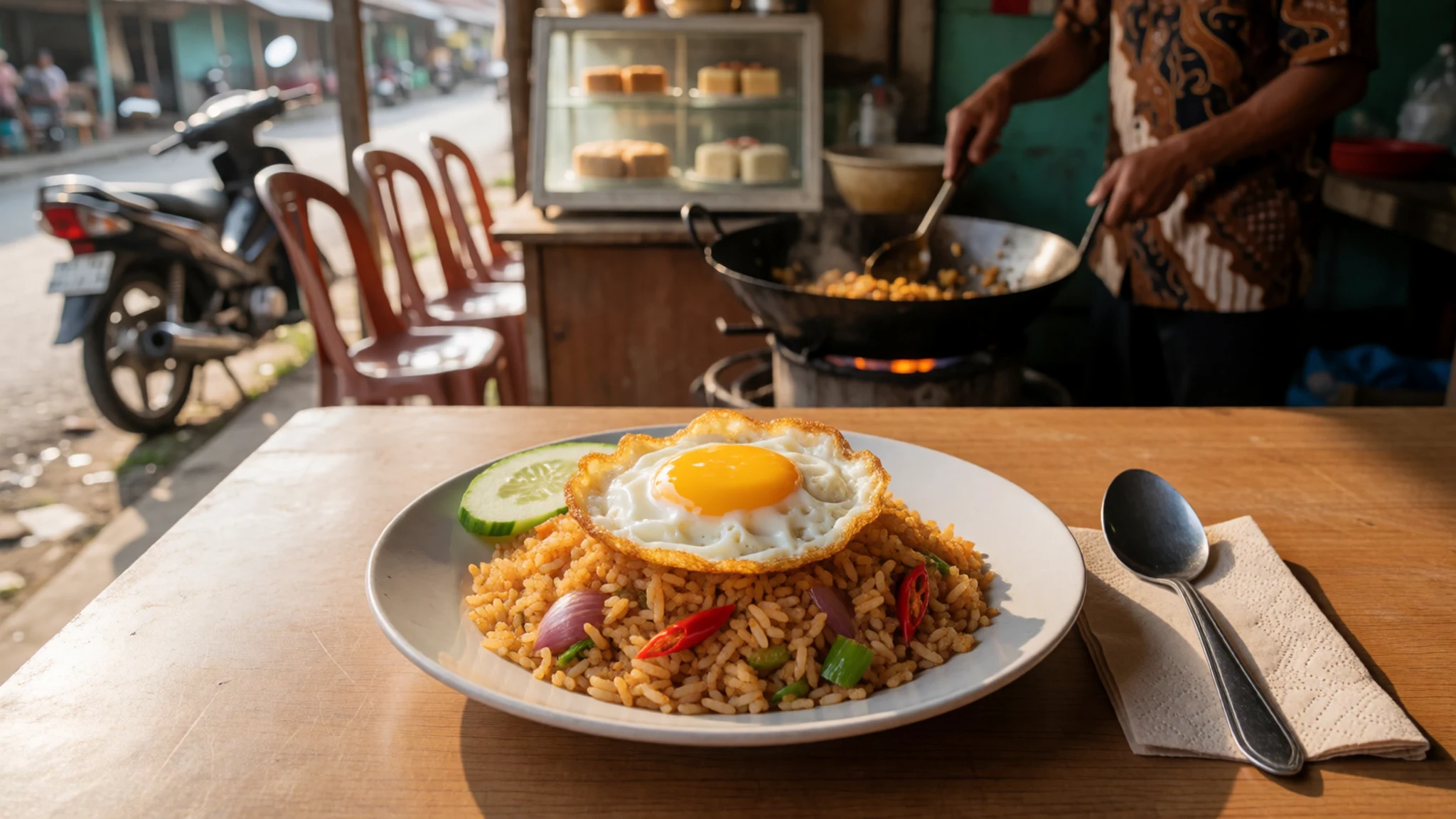
- Soto Banjar — Soup stalls and local eateries in Pangkalan Bun
Soto Banjar is a clear, fragrant chicken soup of the Banjar people of Kalimantan, flavoured with spices and served with rice cake or vermicelli, boiled egg and fried shallots. It is a gentle, warming bowl for a rainy morning. - Ikan bakar — Waterfront eateries in Kumai
Ikan bakar is fish grilled over coals, usually brushed with a sweet or spicy marinade and served with rice, sambal and raw vegetables. The catch depends on the day, from freshwater species to sea fish landed at the coast. - Umbut rotan — Home-style eateries and Dayak family kitchens
Umbut rotan is the tender heart of the rattan palm, cooked in a soup or stir-fry, and has a slightly bitter taste that Dayak cooks balance with coconut or spices. It is a traditional forest ingredient worth trying when offered.
Plan it
Best time. June–September is usually the drier part of the year, which makes river travel and forest walks easier, though showers can come in any month so close to the equator. Heat and humidity are constant year-round, so early mornings are the most comfortable time on the water.
How long. 3–4
Getting there. Fly to Iskandar Airport (PKN) at Pangkalan Bun from Jakarta, Surabaya, Semarang, Sampit and several other cities. Tour operators and local guides usually collect guests at the airport and drive them to Kumai, where the river boat leaves; the speedboat run from Kumai to Camp Leakey takes about an hour and a half at best.
Budget. mid
Tips
- Arrange the trip in advance through a tour company or a local guide, and compare what each includes before paying
- Bring enough cash from town, since there are few places to pay or withdraw once on the river
- Carry insect repellent, sun protection and a refillable water bottle, and ask the crew about safe drinking water
- Pack a thin rain jacket and keep electronics in dry bags
- Start forest walks early, when animals are more active and the air is cooler
Etiquette
- Stay a clear distance from orangutans and never feed them
- Follow your guide's and ranger's instructions on paths and platforms
- Dress modestly in towns and near mosques, and greet people politely
Nearby
Sources
- Wikidata Q1378379 (CC0)
- Wikipedia: Tanjung Puting (rev 1384624952) (CC BY-SA 4.0)
- Wikivoyage: Tanjung Puting National Park (rev 5256324) (CC BY-SA 4.0)
- Photo: Wikiearth-Bekantan Taman Nasional Tanjung Puting (RaiyaniM) (CC BY-SA 4.0)
- Photo: Tanjung-Puting90153 (Nanosanchez) (CC BY-SA 4.0)
- Photo: Indonesia relief location map (Uwe Dedering) (CC BY 3.0)
- Photo: Landscape of the Tanjung Puting National Park, Indonesia 2 (Thomas Fuhrmann) (CC BY-SA 4.0)
- Photo: Tanjung Puting30477 (Nanosanchez) (CC BY-SA 4.0)
- Photo: Tanjung puting0222 (Nanosanchez) (CC BY-SA 4.0)
- Photo: Tanjung putingh0613 (Nanosanchez) (CC BY-SA 4.0)
- Photo: Tanjung puting90178 (Nanosanchez) (CC BY-SA 4.0)


Wildlife
- Proboscis monkey (animal)
The proboscis monkey is the one with the enormous nose, reddish-brown skin and a long tail, and it lives up in the trees. Borneo is its only home. In Tanjung Puting, look for groups in the riverside trees, especially towards dusk, when they bed down for the night. Evening is the moment to scan the water's edge and give the branches a patient look.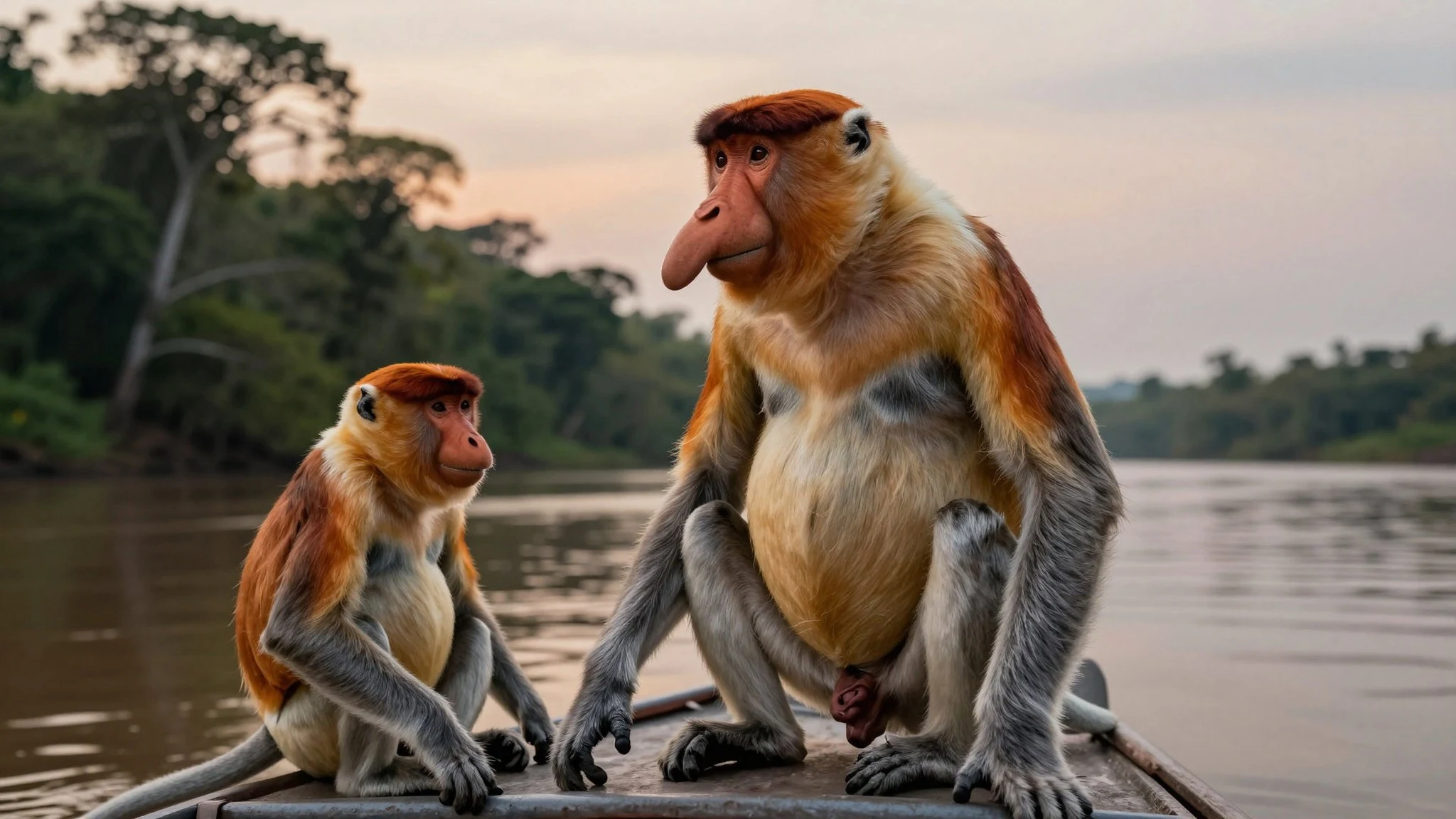
- Bornean white-bearded gibbon (animal)
The Bornean white-bearded gibbon is the treetop singer of southern Borneo: you will usually hear it before you spot it. In Tanjung Puting, listen at first light for its whooping calls drifting over the canopy, then search the high branches. Be patient and keep your ears open. It is an endangered gibbon, because forests in its part of Borneo are being logged, so every sighting is something precious.