Tanis
Tanis, Egypt
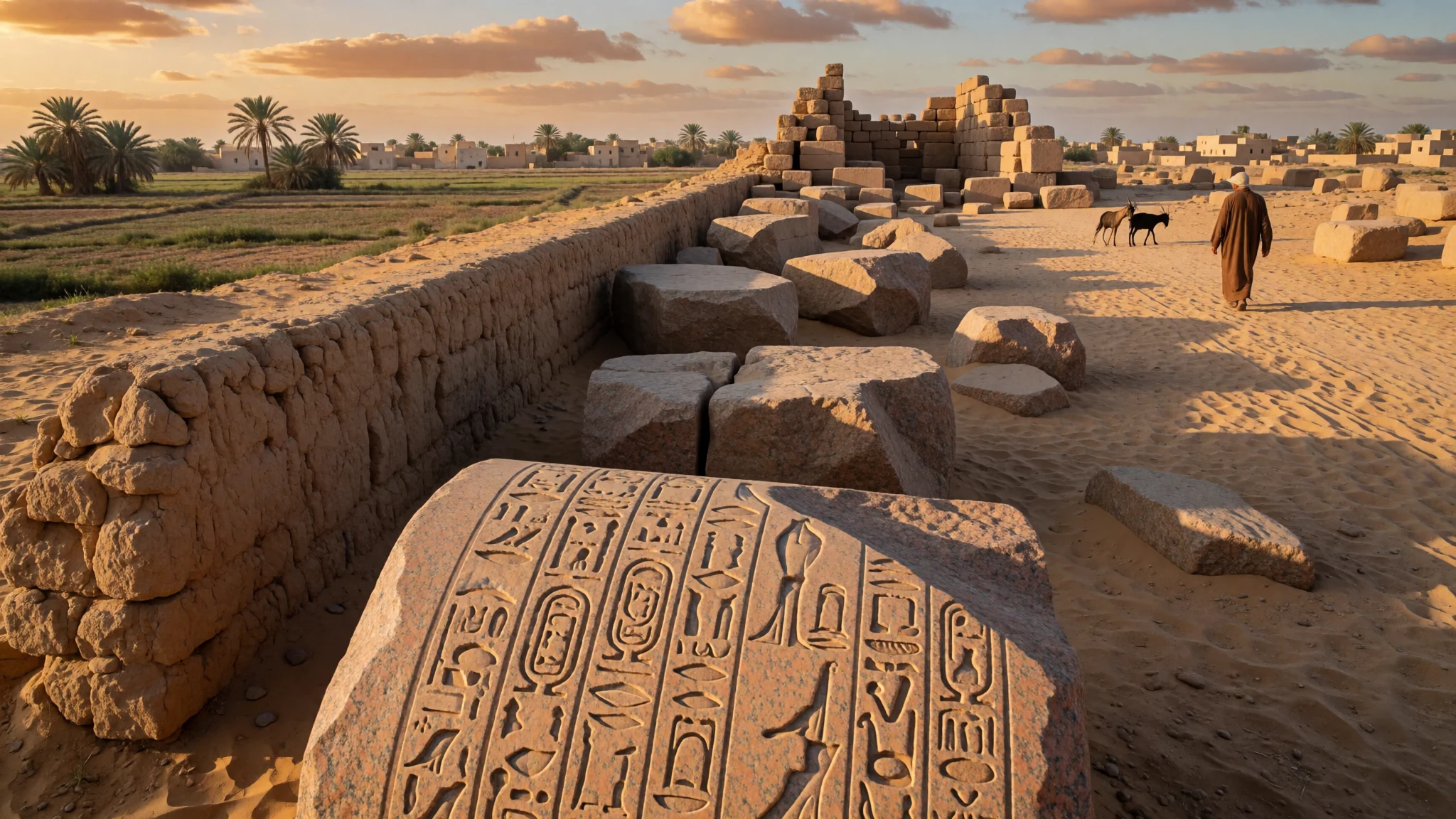
Tanis is a Delta ruin field where pharaohs once ruled and were buried, and where the gold from their tombs now fills Cairo's museum cases.
The place
Tanis sits in the northeastern Nile Delta, in Sharqia Governorate, about five metres above sea level. Locals know it as San al-Hagar, and the modern village of the same name has a population of about 43,000. The ancient city took its Greek name from the Egyptian ḏꜥn.t, and it also appears in Hebrew scripture as Zoan, in Akkadian records and in Coptic. Few places have so many names across so many scripts, which hints at how long people kept coming back.
The landscape is flat, green and farmed. Canals, fields and small settlements surround a low, scrubby spread of mounds, and the ruins lie among them: toppled granite, broken obelisks, mud-brick enclosures and the stone-lined chambers of royal tombs. The Tanitic branch of the Nile once ran beside the city, but it silted up long ago, so the river that gave Tanis its purpose is no longer visible.
This is not a Giza or a Luxor. Nothing towers, and there is little shade, little signage and very few other visitors. What Tanis offers is scale of a different kind: a capital's worth of stone dragged here from older cities, left lying in a field. It rewards people who like archaeology for its puzzles, and who are happy to read a site plan and use their imagination.
Tanis is best treated as a day trip from Cairo, paired with a visit to the Egyptian Museum, where the finest finds from the royal tombs are displayed. Seen in that order, or the reverse, the empty field and the glittering gold make sense of each other.
Its story
Tanis has no recorded history before the nineteenth Dynasty, when it was the chief town of the fourteenth nome, or province, of Lower Egypt. A temple inscription from the reign of Ramesses II mentions a Field of Tanis. By the twentieth Dynasty the city appears in documents such as the Onomasticon of Amenope and the Story of Wenamun, as the home town of Smendes, a man who would become pharaoh.
The city's real rise followed a failure elsewhere. Pi-Ramesses, the great royal residence nearby, lost its harbour when the Pelusiac branch of the Nile silted up, and the court moved away. Tanis became the seat of power for the pharaohs of the twenty-first Dynasty, and later, alongside Bubastis, of the twenty-second.
Much of what stands at Tanis did not begin there. Builders took statues, obelisks and blocks from Pi-Ramesses and other nearby cities and reused them, so a Tanis temple can contain inscriptions naming kings who reigned long before the city mattered. It is a recycling yard of the pharaonic past, and sorting out which stone belongs to which king is part of the site's long-running scholarly puzzle.
These rulers claimed legitimacy over both Upper and Lower Egypt through traditional titles and building projects, though their works were modest beside those of the New Kingdom's peak. The royal burials discovered at Tanis, with their gold masks, collars and pectorals, are the surviving proof that the dynasties took their dead seriously even when their power was smaller.
What to see
- The ruins of San al-Hagar — San al-Hagar, Sharqia
The main site is a wide field of broken granite, fallen columns and the remains of temple enclosures, with tomb chambers set among the mounds. It is quiet and exposed, so allow time to wander, and look closely at the reused blocks carrying older royal names.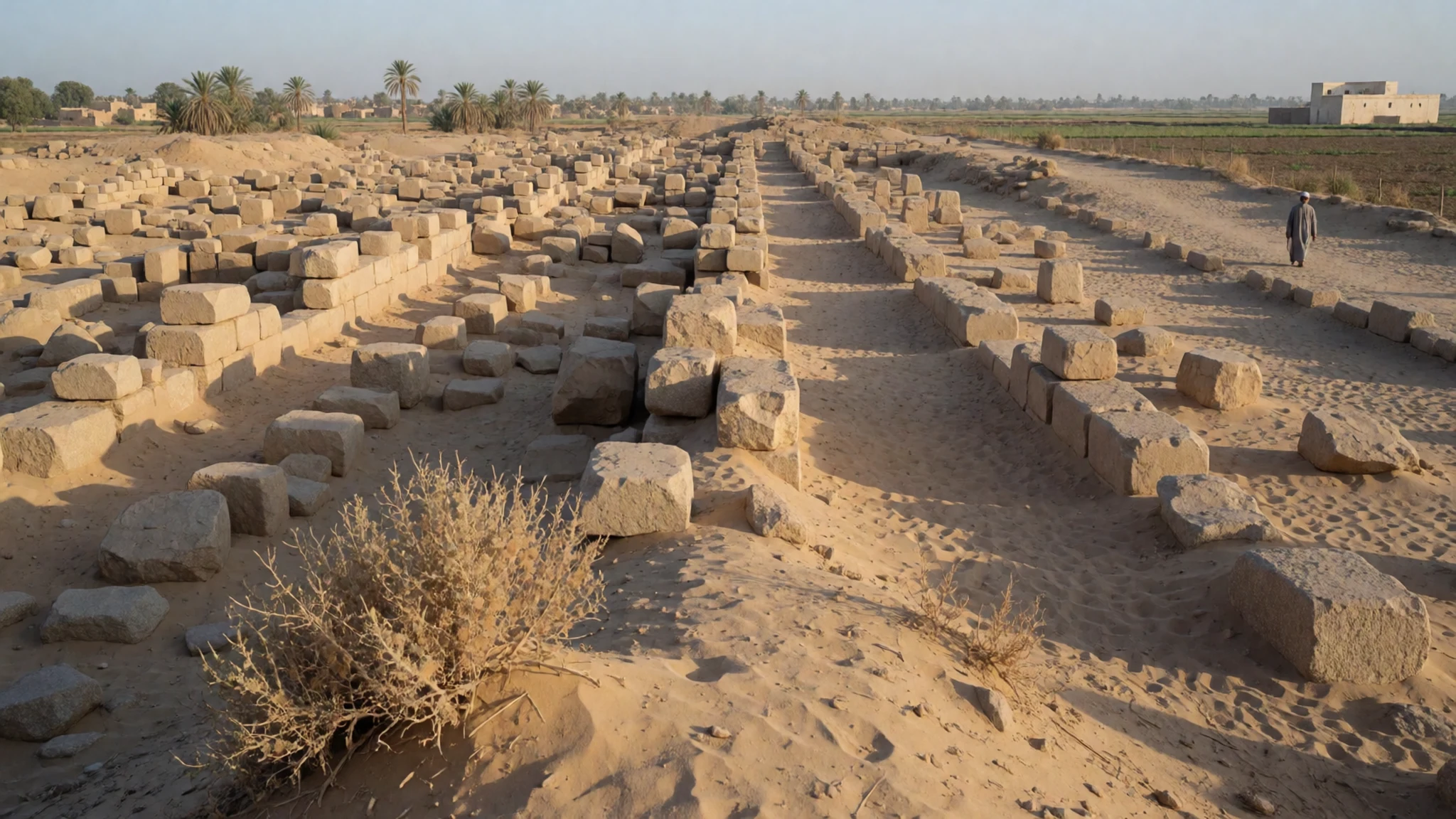
- The site plan and its surroundings — Around the ruin field
An old printed plan of the ruins and their environs shows how the temple precinct, enclosure walls and nearby mounds fit together. Studying a copy before arriving helps enormously, because on the ground the outlines are low and easily lost among the fields and drifting dust.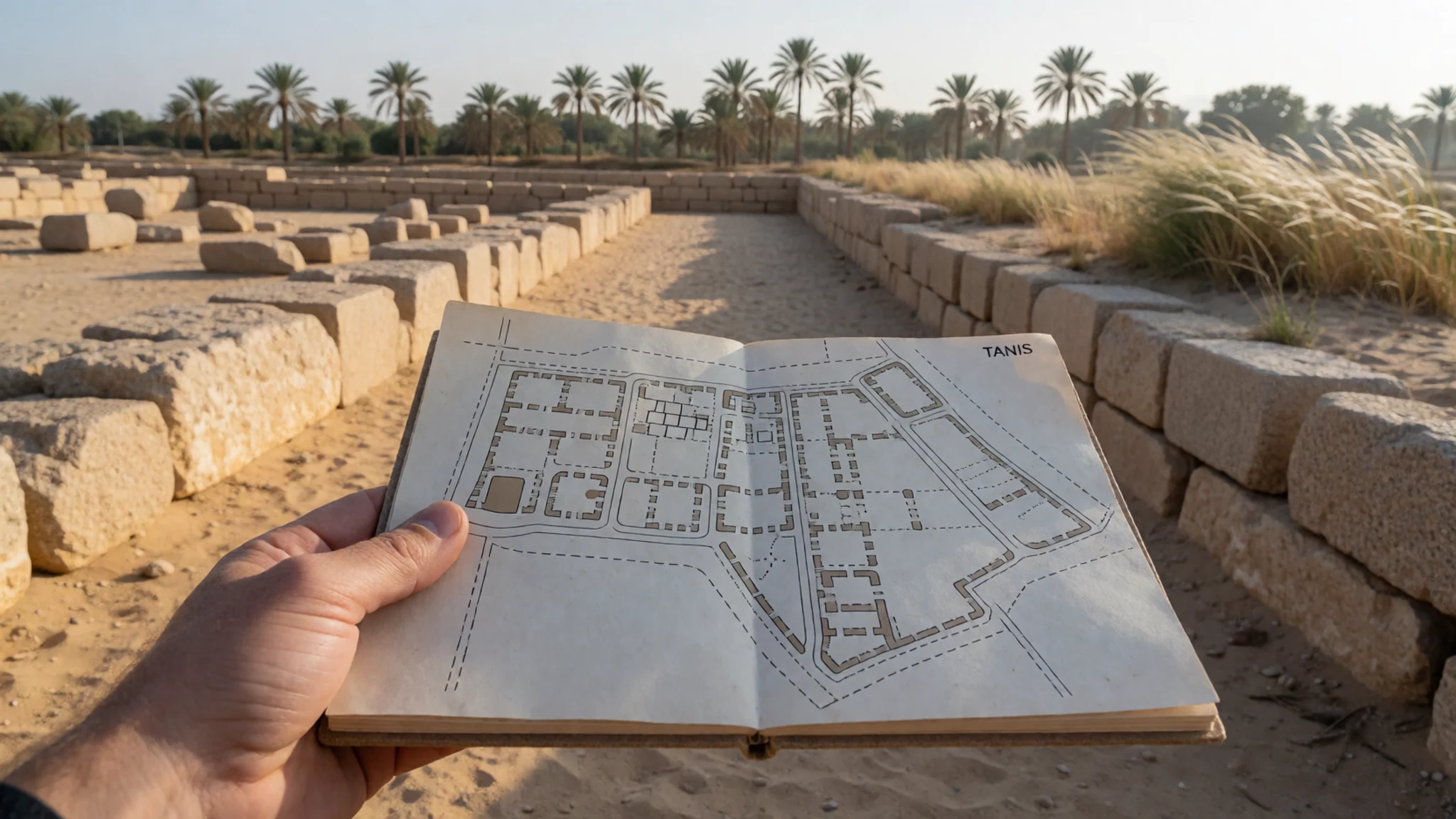
- Funerary mask of Psusennes I — Egyptian Museum, Cairo
Found among the royal tombs, this gold mask covered the face of King Psusennes I. Its calm, idealised features and inlaid eyes show how skilled the Tanite goldsmiths were. The treasures from his tomb are displayed in Cairo, not at the site, so plan a museum stop.
- Amenemope's mask and pectoral — Egyptian Museum, Cairo
Amenemope, a pharaoh of the twenty-first Dynasty, was buried with a gold mask and a pectoral centred on a lapis lazuli scarab, a symbol of the sun's rebirth. The deep blue stone had to be imported, a reminder of how far trade routes reached.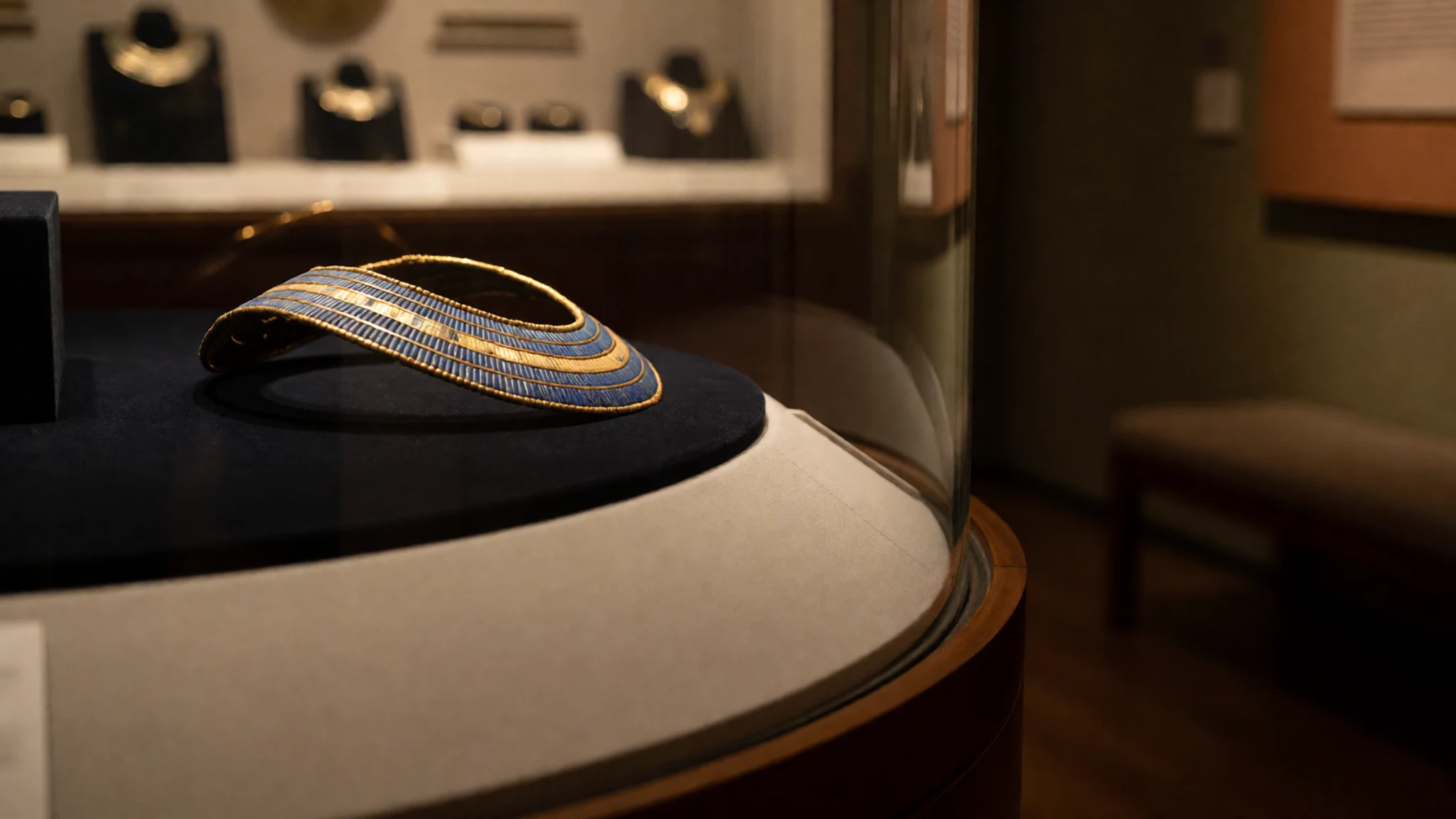
- Golden mask of Sheshonq II — Egyptian Museum, Cairo
Sheshonq II belonged to the twenty-second Dynasty, and his burial at Tanis included this gold mask, a striking piece with a falcon-headed finish. It is one of the finds that proves the Delta capital held royal tombs of real splendour.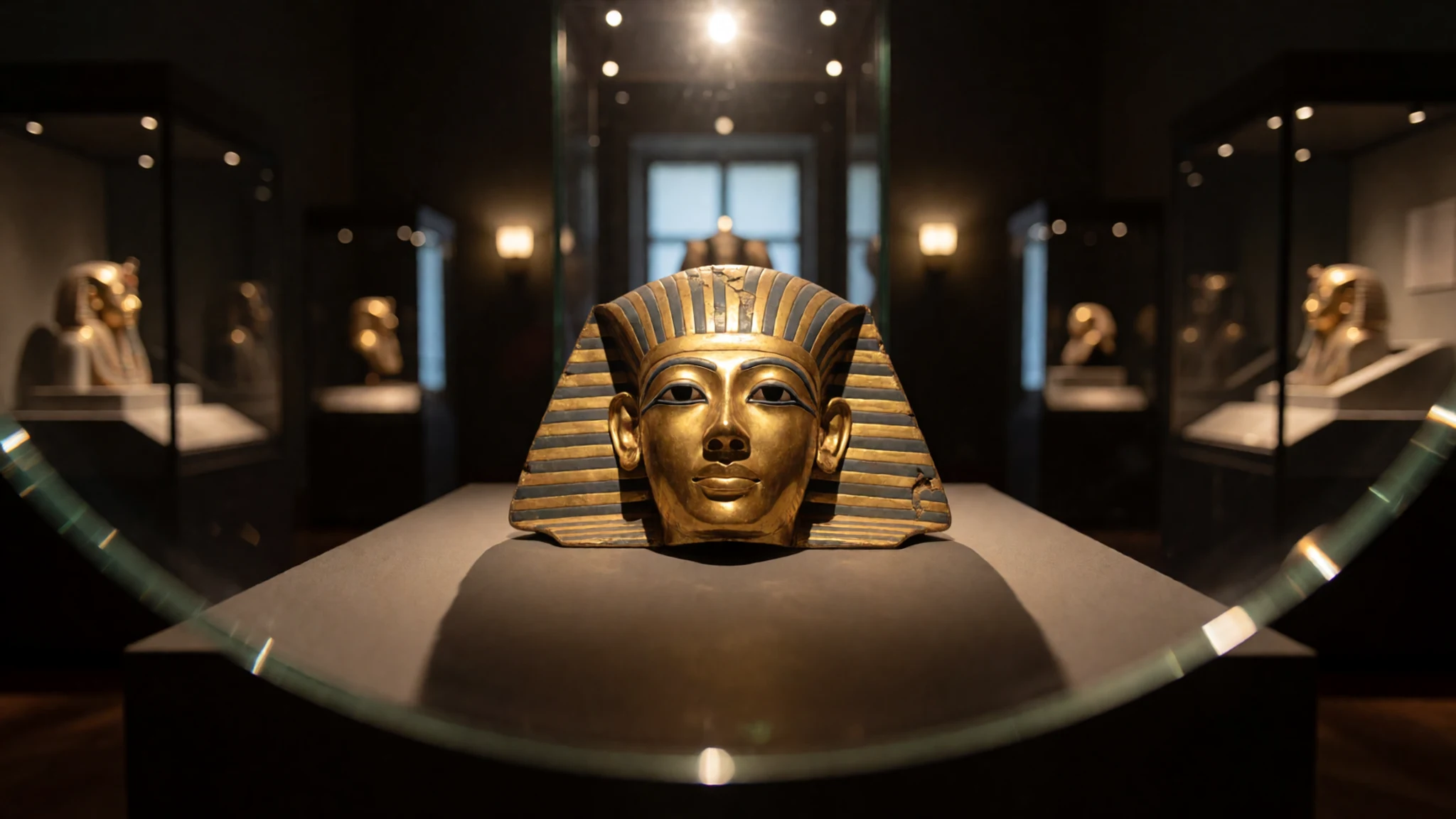
Culture
Tanis today is a farming village, and the culture around it is that of rural Sharqia: hospitable, family-centred and Muslim-majority. Egyptians generally take pride in welcoming a guest, and a visitor to San al-Hagar may well be invited for tea. Accepting, even briefly, is usually appreciated and is the quickest way to understand local life.
Good manners here follow the wider Arab world. Honour and face matter, so it is wise to avoid correcting or criticising anyone openly, even when something has clearly gone wrong. If a point must be raised, a calm, private and balanced tone works far better than a blunt one. Religion is a delicate subject, best approached with curiosity and respect rather than debate.
The ancient culture is present only in stone and museum cases, but it shapes how locals see the place. Villagers know the ruins as part of their landscape, and some will have worked with archaeological teams or have relatives who did. Their knowledge of where things were found is often better than any sign. The site has few facilities, so patience and a little Arabic go a long way.
When visiting, ask before photographing villagers, especially women and children, and keep to the paths so that you do not walk over unexcavated mounds or disturb the fallen stones.
What to wear
Tanis, as an ancient capital, belongs to a world of linen: the pharaohs and their courts wore finely woven white linen, pleated kilts and long robes, with broad collars, pectorals and bracelets of gold, lapis lazuli and carnelian marking rank. The royal burials found here show how that jewellery looked, with scarab pectorals and beaded collars made for the afterlife as much as for display.
In the village of San al-Hagar today, men commonly wear the long cotton robe called a galabiya, often with a light jacket or a scarf in cooler months. Women usually dress modestly, in long skirts or robes with a headscarf, and many wear an abaya outdoors. Younger people mix this with jeans, shirts and trainers, much as they would in any Delta town.
A visitor should dress for heat, dust and local norms. Light, loose cotton or linen trousers or long skirts, with shirts that cover the shoulders and upper arms, are comfortable and respectful in a rural area. A wide-brimmed hat, sunglasses and a scarf for dust are useful, because the ruin field has almost no shade. Wear closed, sturdy shoes with a good grip, as the ground is uneven and strewn with stone fragments. Women may find a light scarf handy for tea in a village home, and in a mosque if invited in.
What to eat
- Ful medames — Morning stalls and small eateries in Zagazig and nearby Delta towns
Slow-cooked fava beans mashed with oil, lemon and cumin, eaten at breakfast with flatbread. It is Egypt's everyday staple, and small stalls and eateries in Delta towns serve it from early morning, cheap and filling before a day among the ruins.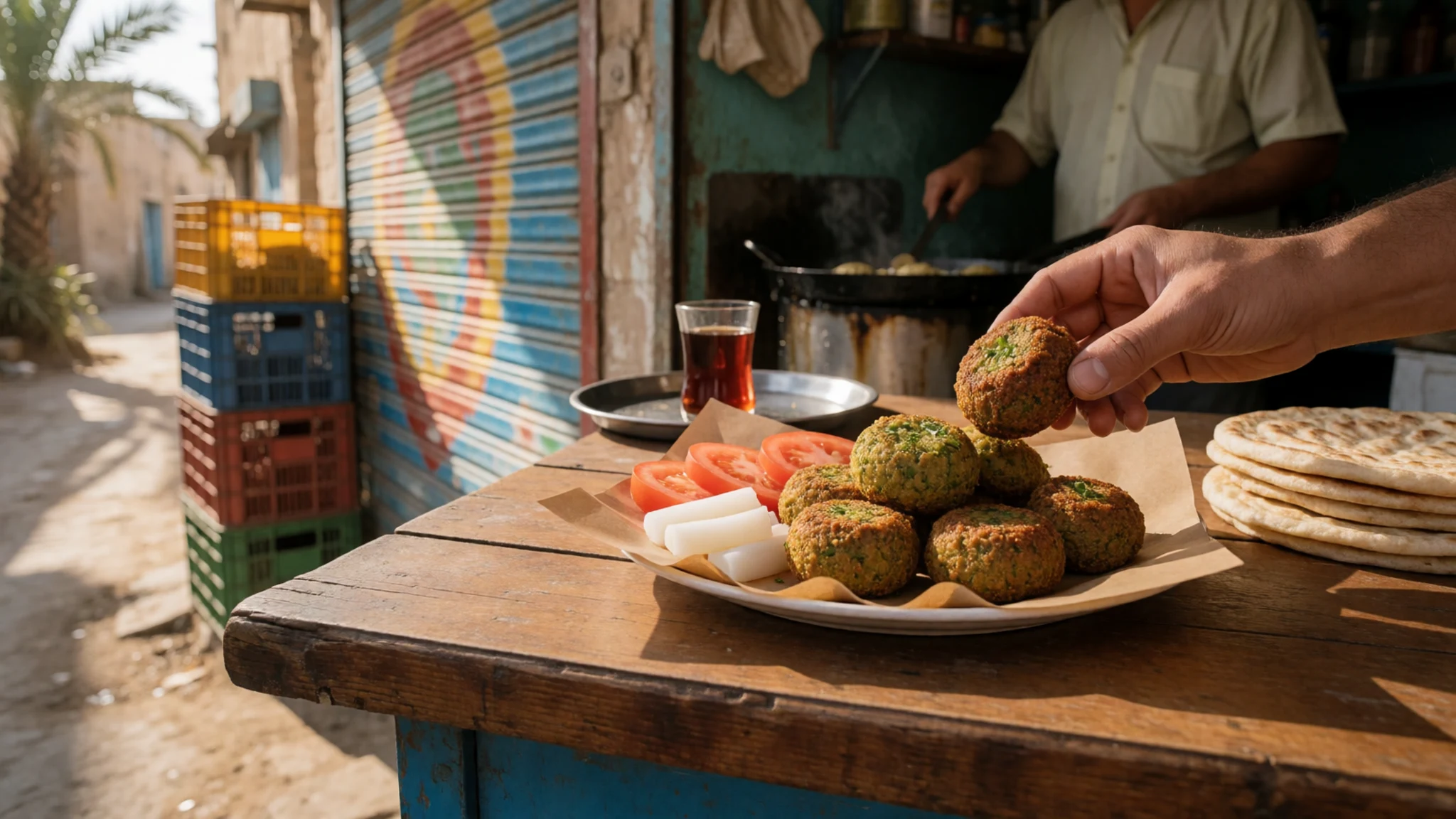
- Ta'amiya — Street-side stands and sandwich counters in market towns
Egypt's version of falafel, made from fava beans rather than chickpeas, with herbs such as parsley and dill inside, and a bright green centre. It is fried to order and tucked into bread with salad and tahini.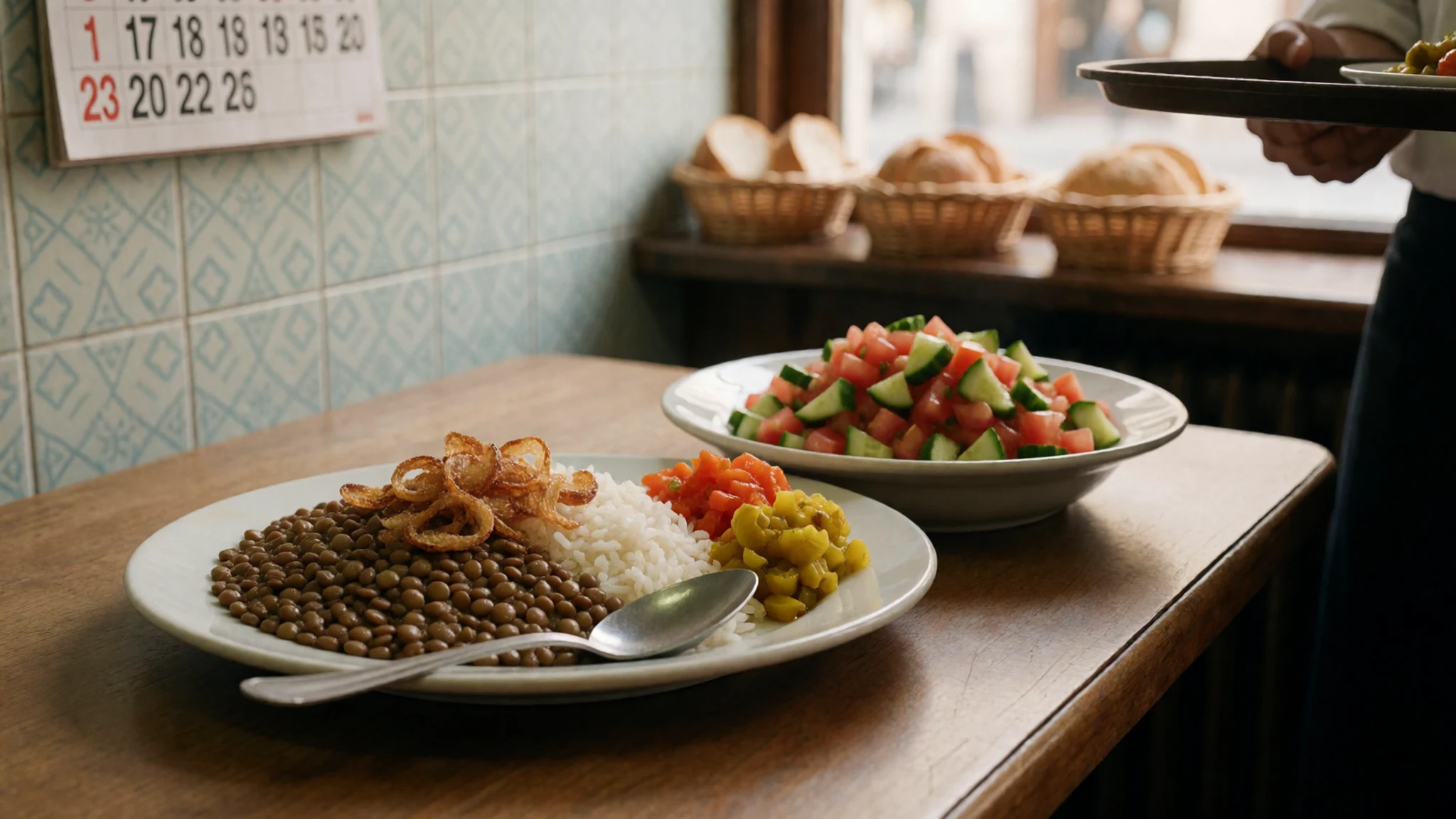
- Koshari — Dedicated koshari eateries in larger towns
A bowl of rice, lentils, macaroni and chickpeas topped with spiced tomato sauce, fried onions and a splash of vinegar-garlic dressing. It is hearty, vegetarian and filling, and a sensible lunch after a morning in the sun.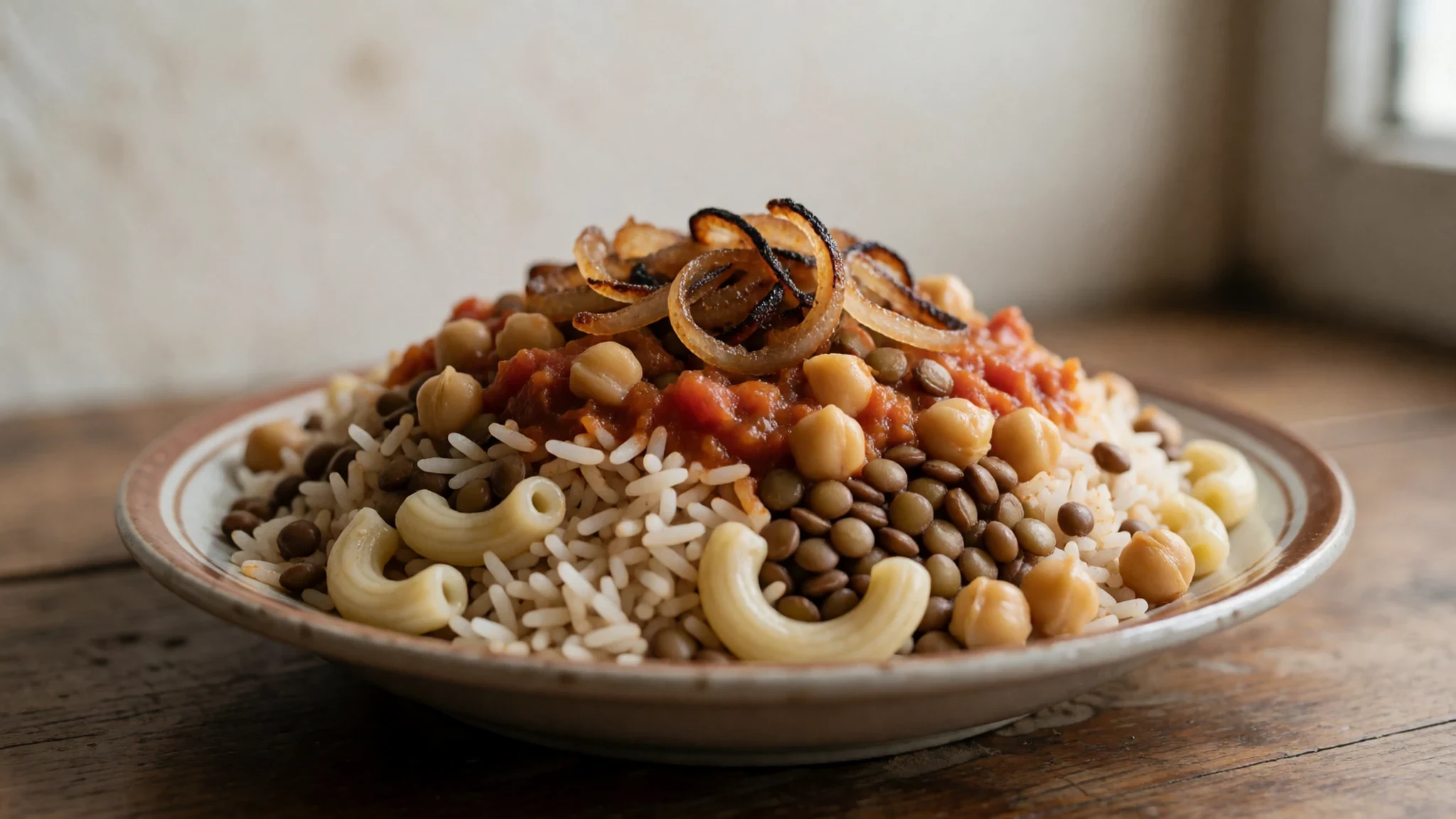
- Molokhia — Family-run eateries and home kitchens in Delta villages
A green soup of finely chopped mallow leaves, cooked with garlic and coriander and served over rice, often with chicken or rabbit. It is a home-cooking favourite across the Delta and has a distinctive silky texture.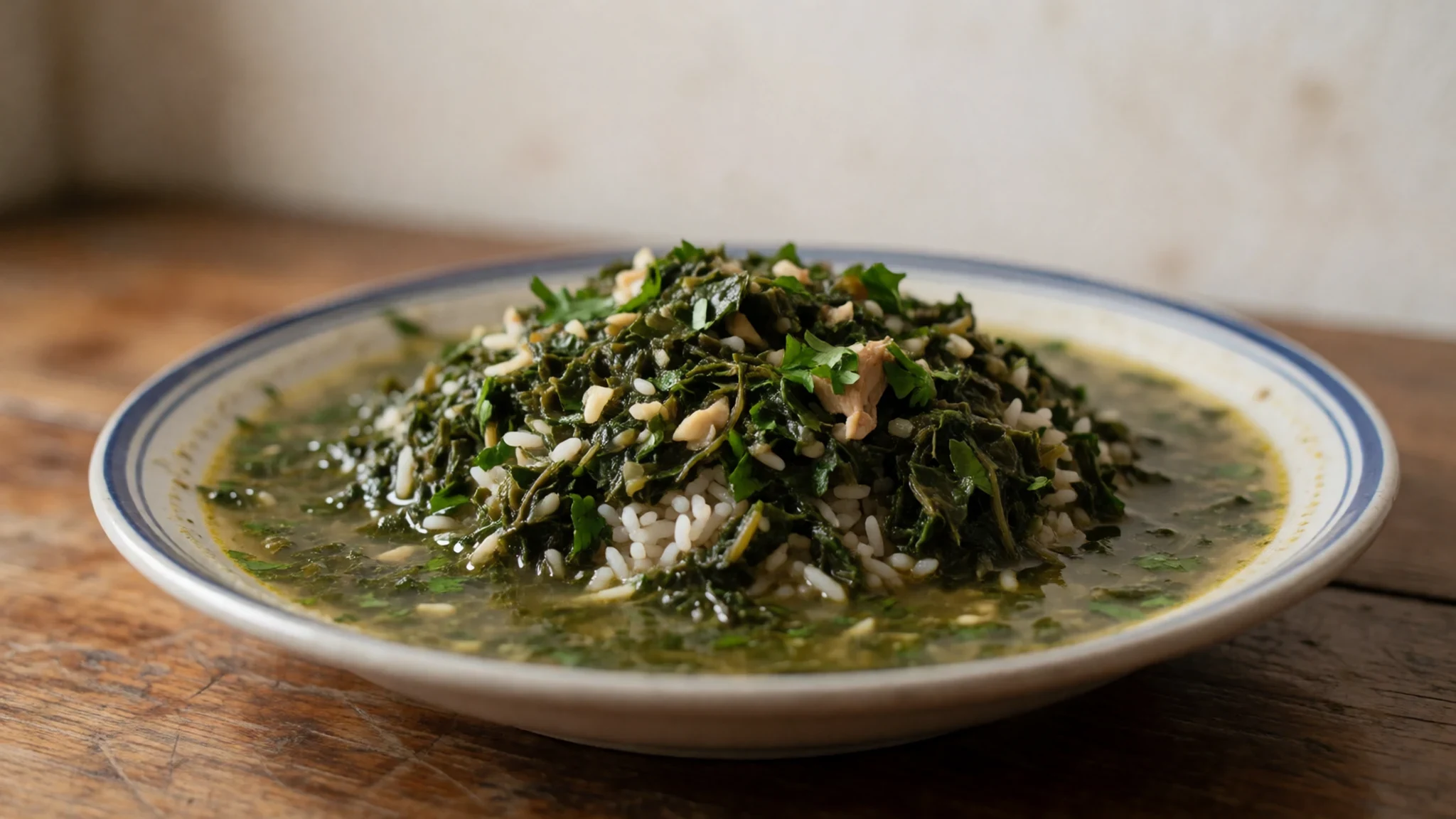
- Fresh Delta bread and cheese — Village bakeries and morning markets
Round baked flatbread, warm from the oven, served with white cheese, olives and tomatoes. The Delta's farmland supplies much of this simple meal, and it makes a good picnic for the site, where there are few places to buy food.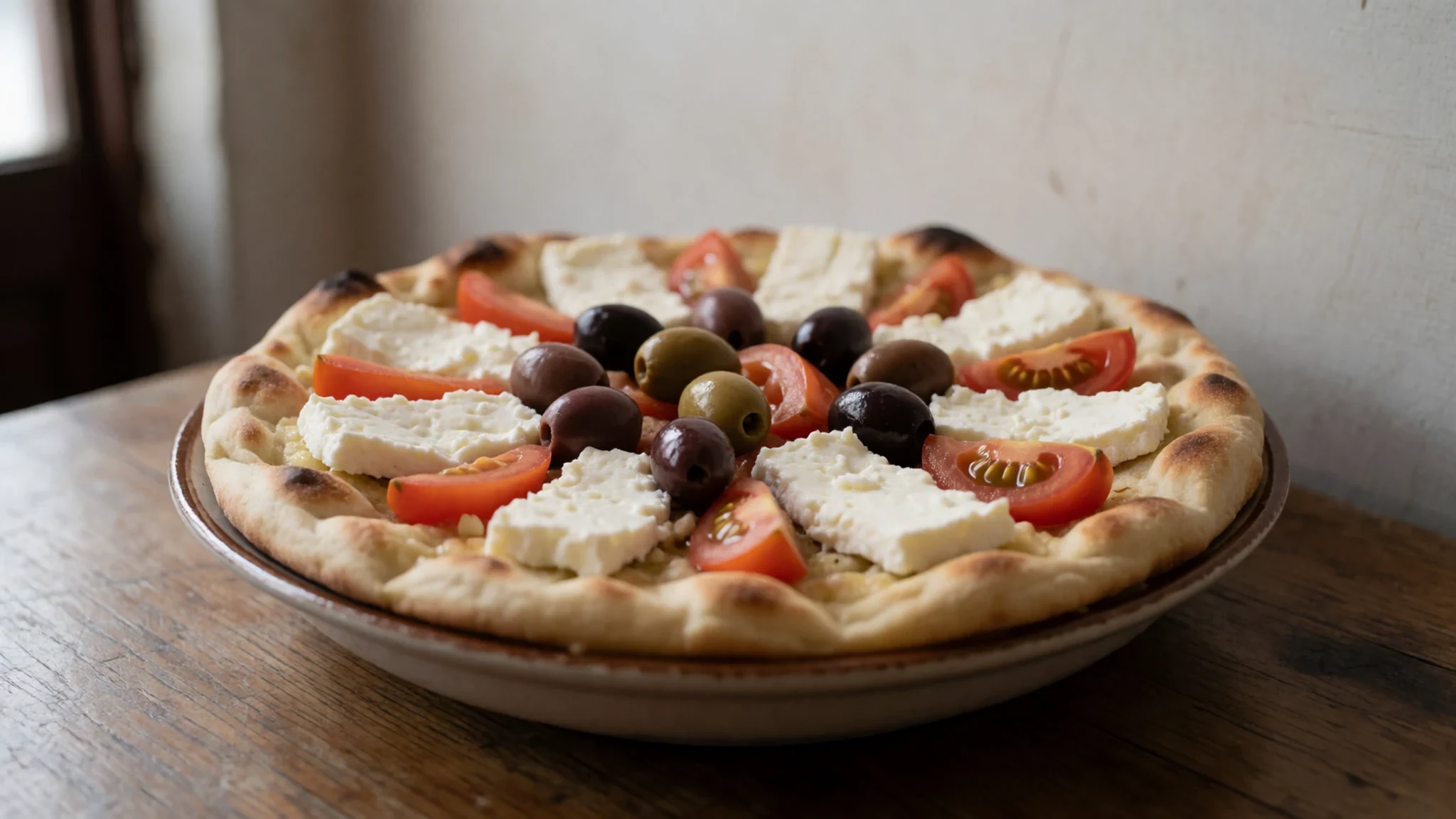
Plan it
Best time. October–November and March–April, when days are warm rather than fierce. Summer is hot and the ruin field has almost no shade, while winter can bring cool, damp spells. Go early in the day whichever season you choose.
How long. 1
Getting there. Fly to Cairo International Airport, then travel by road or rail towards Zagazig in Sharqia and onward to San al-Hagar. A hired car with a driver from Cairo is the simplest last leg, as public transport to the site is limited.
Budget. low
Tips
- Visit the Egyptian Museum in Cairo first, so that the site makes sense
- Check the official antiquities authority before travelling, as access and opening arrangements at remote sites can change
- Bring water, a hat and snacks, because the site has few facilities and little shade
- Carry cash, as cards are rarely accepted in villages
- Start early to avoid the midday heat and to leave time for the drive back
Etiquette
- Dress modestly, covering shoulders and knees
- Ask before photographing people
- Stay on paths and do not climb on fallen stones or mounds
Nearby
Sources
- Wikidata Q210598 (CC0)
- Wikipedia: Tanis (rev 1384385054) (CC BY-SA 4.0)
- Wikivoyage: Egypt (rev 5410102) (CC BY-SA 4.0)
- Photo: The ruins of Tanis (Public domain)
- Photo: Map of Lower Ancient Egypt (CC BY-SA 2.5)
- Photo: Tanis (Sân). Plan des ruines et des environs (Public domain)
- Photo: Psusennes I's funerary mask (CC BY-SA 2.0)
- Photo: Mask of Amenemope (CC BY 2.5)
- Photo: Jewellery of Psusennes I (CC BY 2.5)
- Photo: Pectoral of Pharaoh Amenemope (CC BY-SA 2.0)
- Photo: Golden mask of Sheshonq II (Public domain)


