Tangkuban Perahu
Tangkuban Perahu, Indonesia
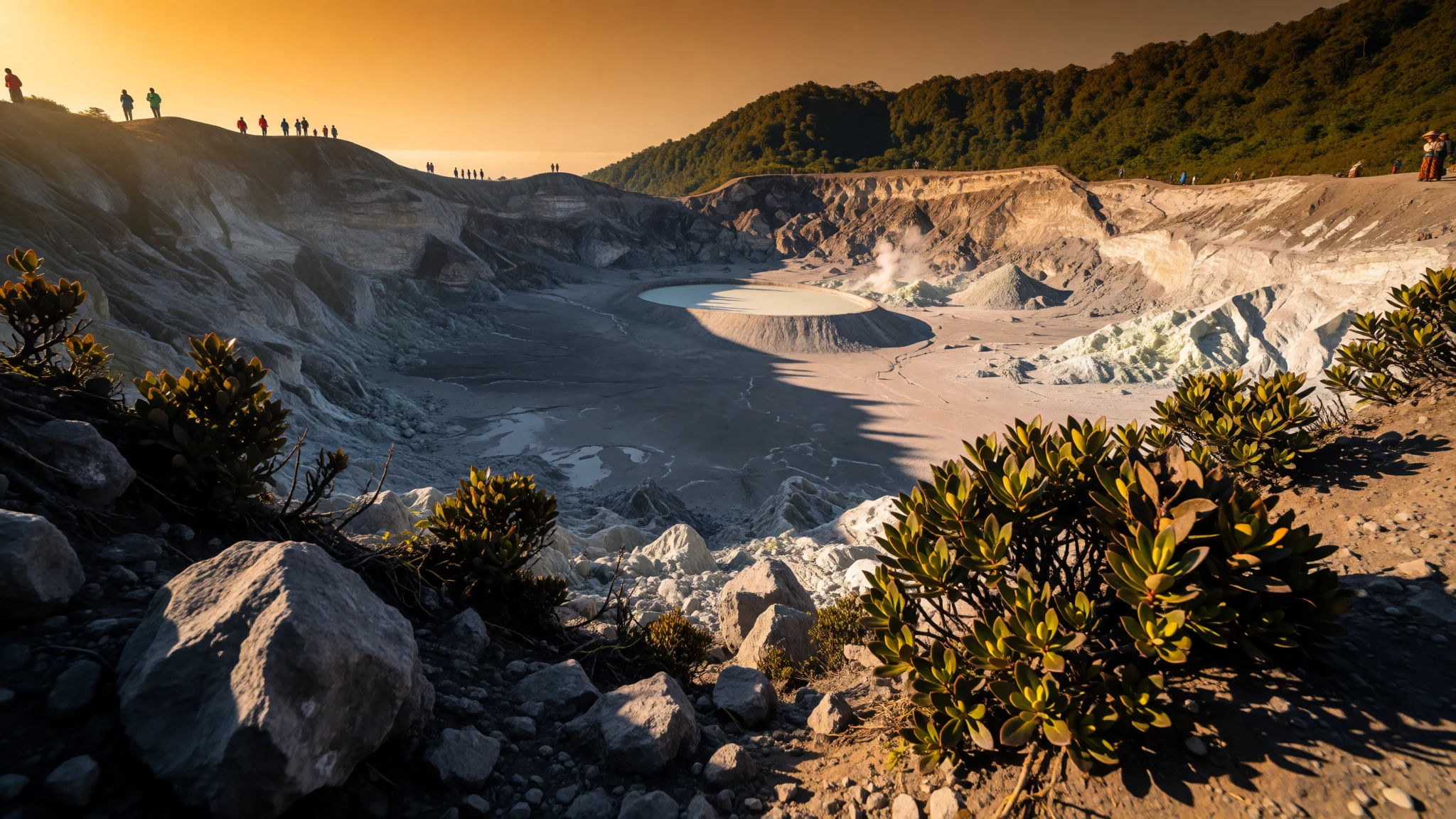
Tangkuban Perahu lets visitors stand on the rim of an active West Java volcano, smell the sulphur and watch steam rise, within easy reach of Bandung.
The place
Tangkuban Perahu is a stratovolcano on the northern edge of the Bandung basin, in Lembang, West Bandung Regency, West Java. Its summit stands at 2084 m, high enough that the air is noticeably cooler than in the city below. The road up passes through pine, tea and vegetable country before reaching bare, sulphur-stained rock. The mountain forms a trio with Burangrang and Bukit Tunggul, all remnants of an older giant, Mount Sunda, whose caldera collapsed after a huge eruption. What visitors see today is a younger cone that grew amid that wreckage.
The appeal is easy access. A paved road reaches the car park near the crater rim, and short paths lead to viewpoints over pale, steaming bowls of rock. Vapour drifts from vents, the smell of sulphur never quite leaves the air, and on a clear morning the rim looks out over wooded ridges. A second crater area holds hot springs and bubbling mud, where small vendors sell eggs boiled in the water.
It is also a working hazard zone. Volcanologists monitor the mountain, and the authorities have closed it to visitors more than once when gas levels or activity rose, including after small eruptions in 2019. West Java is densely populated, and weekends and school holidays send crowds up from Bandung, so the car park, lookouts and access road can be slow and busy. Weekday mornings are calmer. Mist often rolls in by midday and can hide the crater altogether.
Its story
Tangkuban Perahu has a long and restless record. A study published in 2001 concluded that the volcano had erupted at least 30 times over the previous 40,750 years. Layers of ash and rock fragments near the crater showed that most were small events, with a minority of larger ones. Eruptions older than about 10,000 years involved magma meeting water, while the later ones were steam-driven blasts with no fresh magma reaching the surface, which is why recent activity tends to be modest but sudden.
The written record runs from 1826 and includes many eruptions through the twentieth century, then 2013 and 2019. On 26 July 2019 the volcano erupted, and on 2 August 2019 it produced eight small eruptions, after which visitors were kept away until it was judged safe to reopen. Access has been restricted on other occasions too, so a closure is part of the mountain's normal rhythm.
Local people tell the story differently. In the Sundanese legend, a young man named Sangkuriang unknowingly sets out to marry his own mother, Dayang Sumbi. To put him off, she demands a lake and a great boat, both to be finished in a single night. He nearly succeeds, but she tricks the dawn into arriving early. Furious, he kicks the boat over, and it settles as the mountain, whose name means roughly 'upturned boat'. Seen from Bandung, the long, flat-topped ridge does resemble a hull.
What to see
- The main crater rim — Summit area, Lembang
The broad, pale bowl near the car park is the classic view. Paths along the rim give looks down onto bare, grey-white slopes where steam seeps from cracks. Early morning is clearest. Sulphur fumes can sting the throat when the wind turns, so many visitors cover their nose briefly.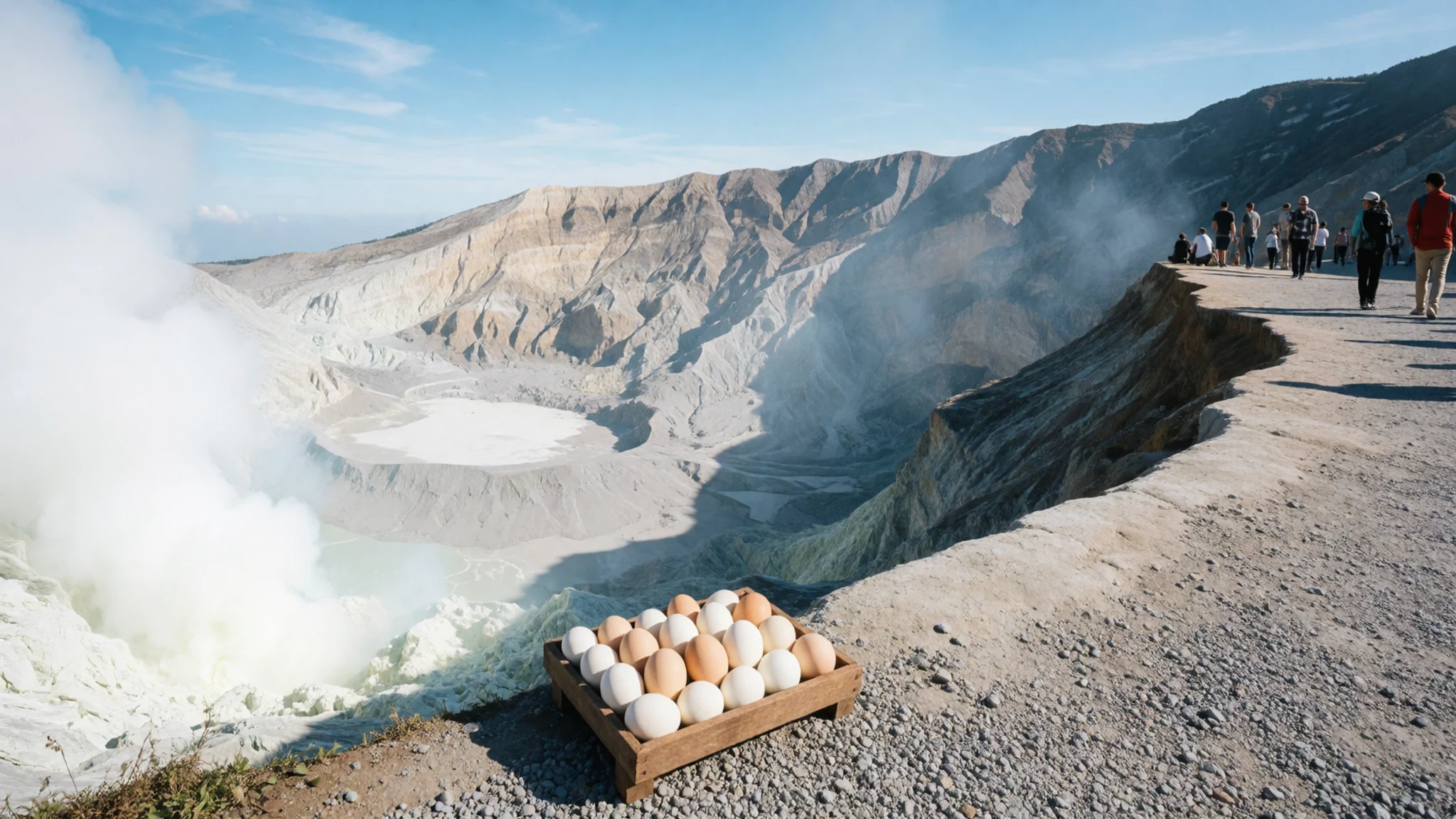
- Domas hot-spring crater — Eastern side of the summit area
A separate crater area reached on foot, where hot water runs through channels and mud bubbles beside the path. Local vendors sell eggs to cook in the springs. The ground is hot and sometimes unstable, so staying on the marked route and listening to guides matters more here than anywhere else on the mountain.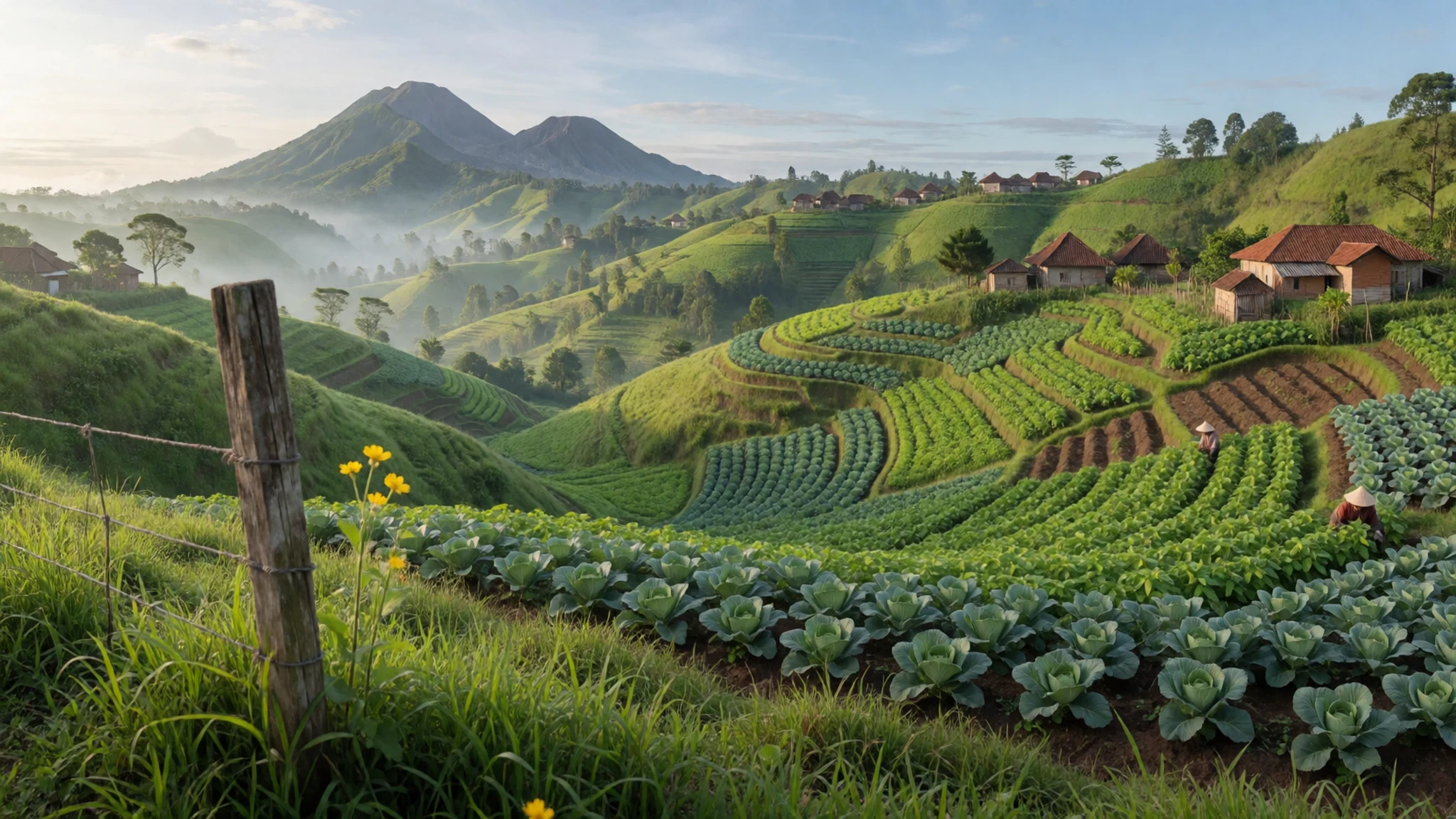
- Death Valley on the northern flank — Northern flank
The northern slope holds a hollow named for gases that collect there. The name is a warning rather than a tourist label: poisonous fumes can build up in still air. Treat it as a place to read local advice about, and follow any signs or closures set by the park staff.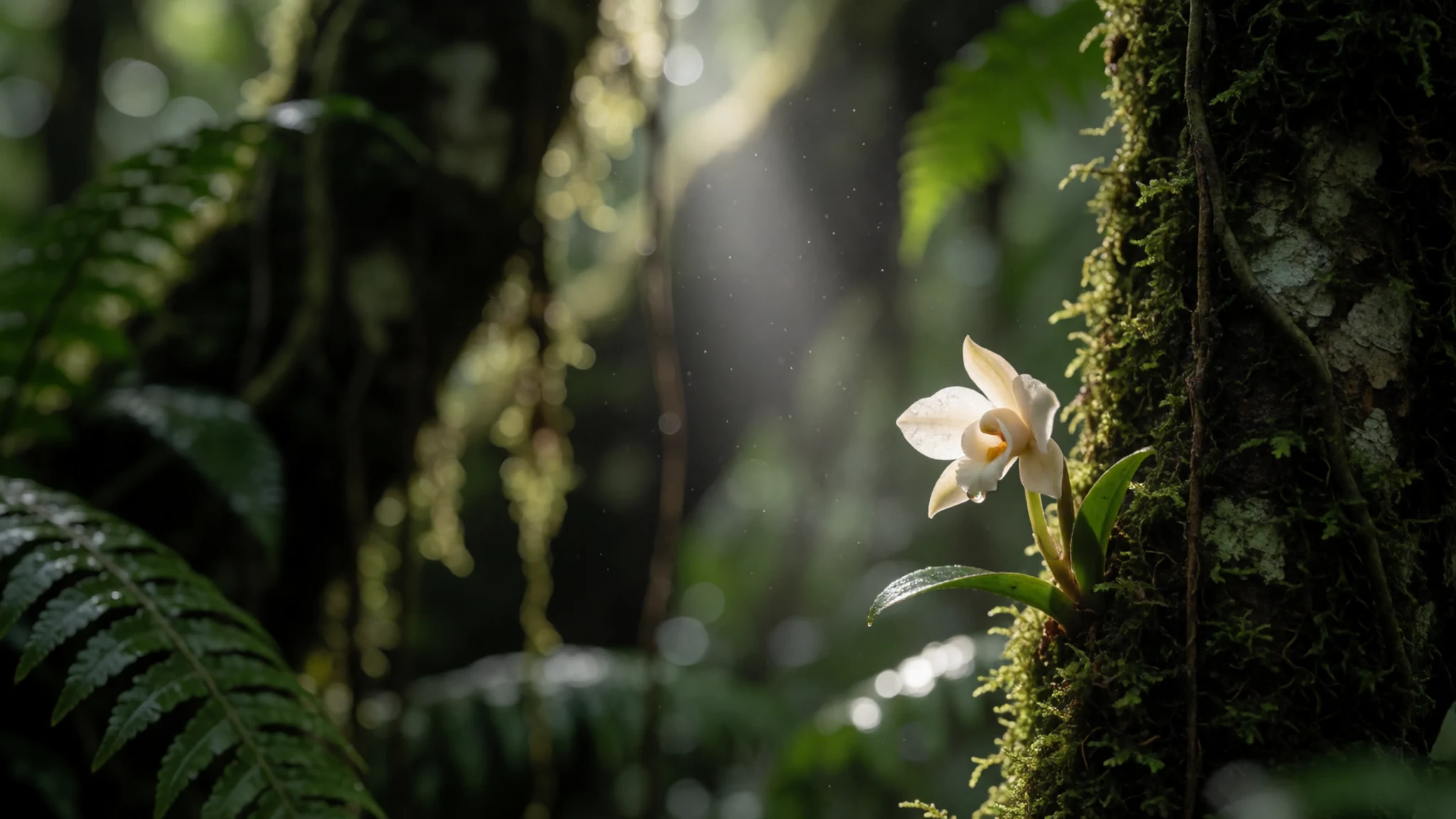
- The nature reserve forest — Lower slopes of the reserve
The slopes around the crater are protected forest, with cool, damp woodland that contrasts sharply with the bare summit. Orchids, including a yellow-flowered species photographed in the reserve, grow in the canopy. Short forest walks are a gentler alternative to the crowded rim.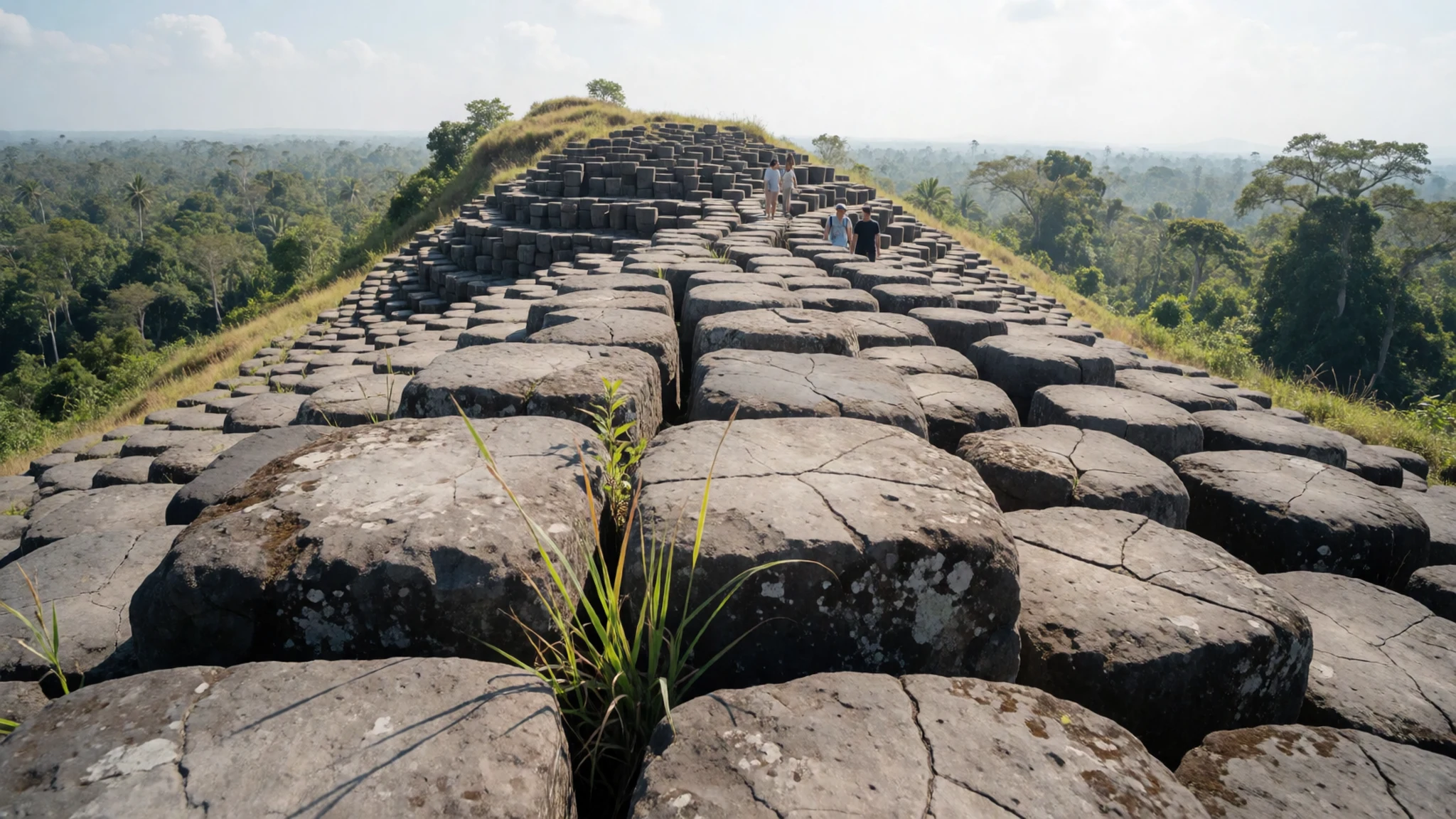
- Lembang and the road up — Lembang, West Bandung Regency
The approach through Lembang is part of the experience. The road climbs from the Bandung basin through market gardens, tea slopes and roadside stalls, and the temperature drops as it rises. Stopping at a viewpoint on the way up gives a sense of how the mountain sits above the city.
Culture
Tangkuban Perahu sits in the Sundanese heartland of West Java, and the legend of Sangkuriang is part of how local people relate to the mountain. It is retold in school lessons, puppet performances and songs, and many families visiting the crater know the story well. The region is predominantly Muslim, and daily life around Lembang follows that rhythm, with prayer calls, modest dress and food that suits halal expectations.
Sundanese culture is known for its soft-spoken courtesy, and visitors will often be greeted with a smile and a short 'punten', roughly 'excuse me', when passing someone. Traditional arts such as the bamboo angklung and carved wooden puppets, wayang golek, are common in Bandung and are sometimes performed for visitors nearer the town.
The summit is also a livelihood for many people. Vendors, guides and horse owners work the car park and paths, and bargaining is normal and usually good-humoured. A polite refusal with a smile is accepted without fuss. Weekends bring large family groups, picnics and a lively, social mood rather than a hushed one.
The volcano is treated with respect as a place of risk as well as beauty. Guides and park staff give instructions about where to walk and when to leave, and following them is part of local good manners. At the crater, keep to the marked paths, follow staff directions without argument, and ask before photographing people, especially women and children.
What to wear
Traditional Sundanese dress around Tangkuban Perahu centres on batik and the kebaya. Women wear the kebaya, a fitted lace or cotton blouse, over a batik wrap skirt called a kain, often for weddings, formal events and cultural performances. Priangan batik, from the highlands of West Java, tends to favour floral and plant motifs. Men wear a batik shirt with a kain wrap, and a folded head cloth, the iket, is part of ceremonial dress. In the countryside, the loose black pangsi suit has long been associated with farmers and martial arts practitioners.
Day to day, people in Lembang and Bandung dress simply. Jeans, T-shirts, jackets and sports shoes are common, and many women wear a headscarf with long sleeves. Because Lembang is cool, fleeces and woollen hats are popular, and vendors at the crater sell them. Batik is worn on Fridays at some workplaces and on formal occasions.
Visitors should plan for cool, changeable mountain weather even when the lowlands are hot. A light waterproof, a warm layer and long trousers are sensible. Closed shoes with grip suit the loose, sometimes damp paths, and sandals can be uncomfortable on rough rock. A scarf or cheap mask helps with sulphur fumes. Shoulders and knees covered is the safe choice in a modest, mostly Muslim region, and essential if visiting a mosque.
What to eat
- Eggs boiled in the hot springs — Vendors around the Domas hot-spring crater
Hard-boiled eggs cooked in the crater's hot water are the signature snack here, sold in small bunches by vendors. They taste faintly mineral and are best eaten with a pinch of salt and a hot drink while looking at the steam.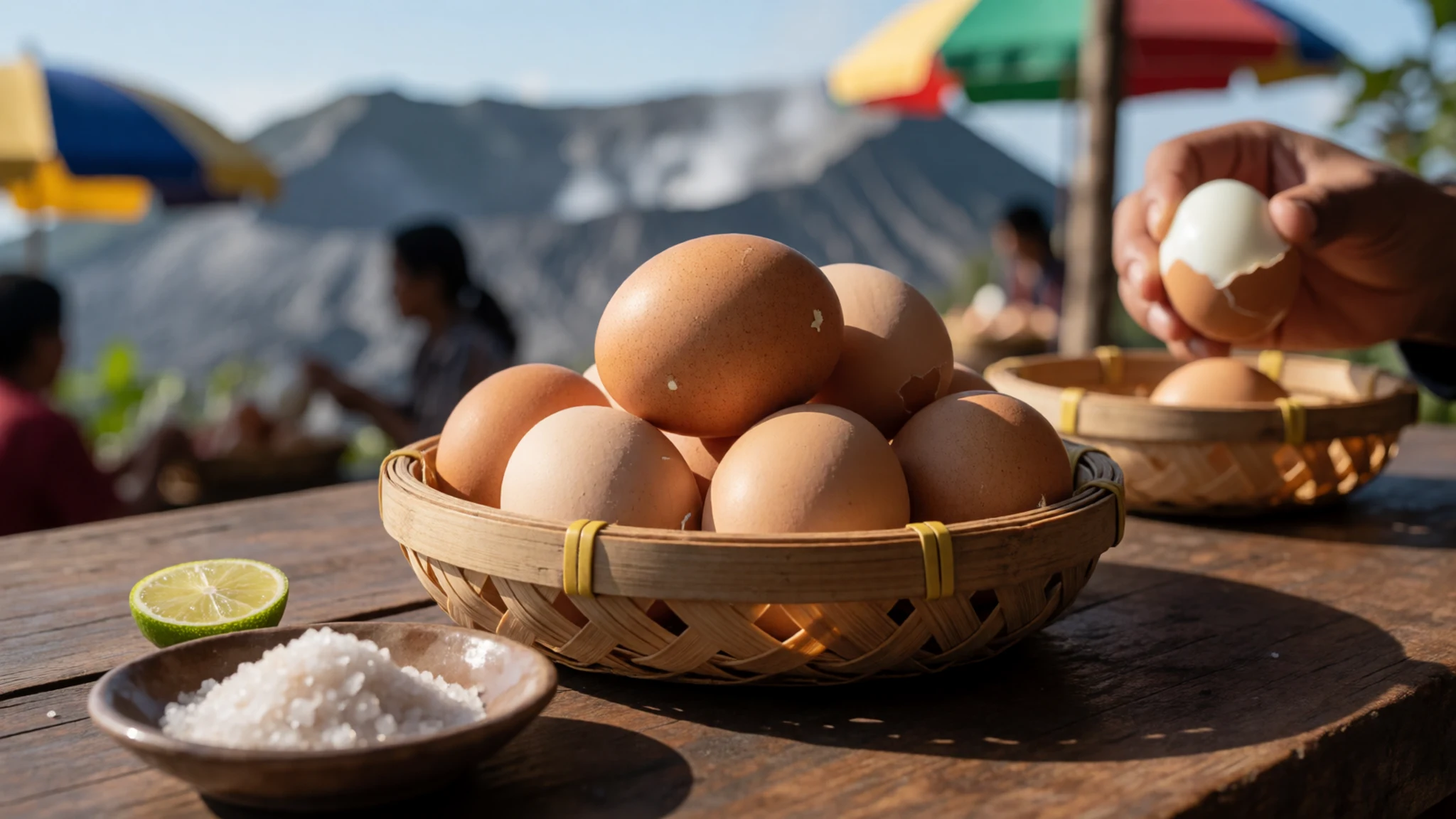
- Jagung bakar — Roadside stalls along the road up from Lembang
Corn on the cob grilled over charcoal and brushed with sweet, spicy or salty seasoning. It is a standard cool-weather snack in the highlands, smoky and chewy, and easy to eat while walking back to the car park.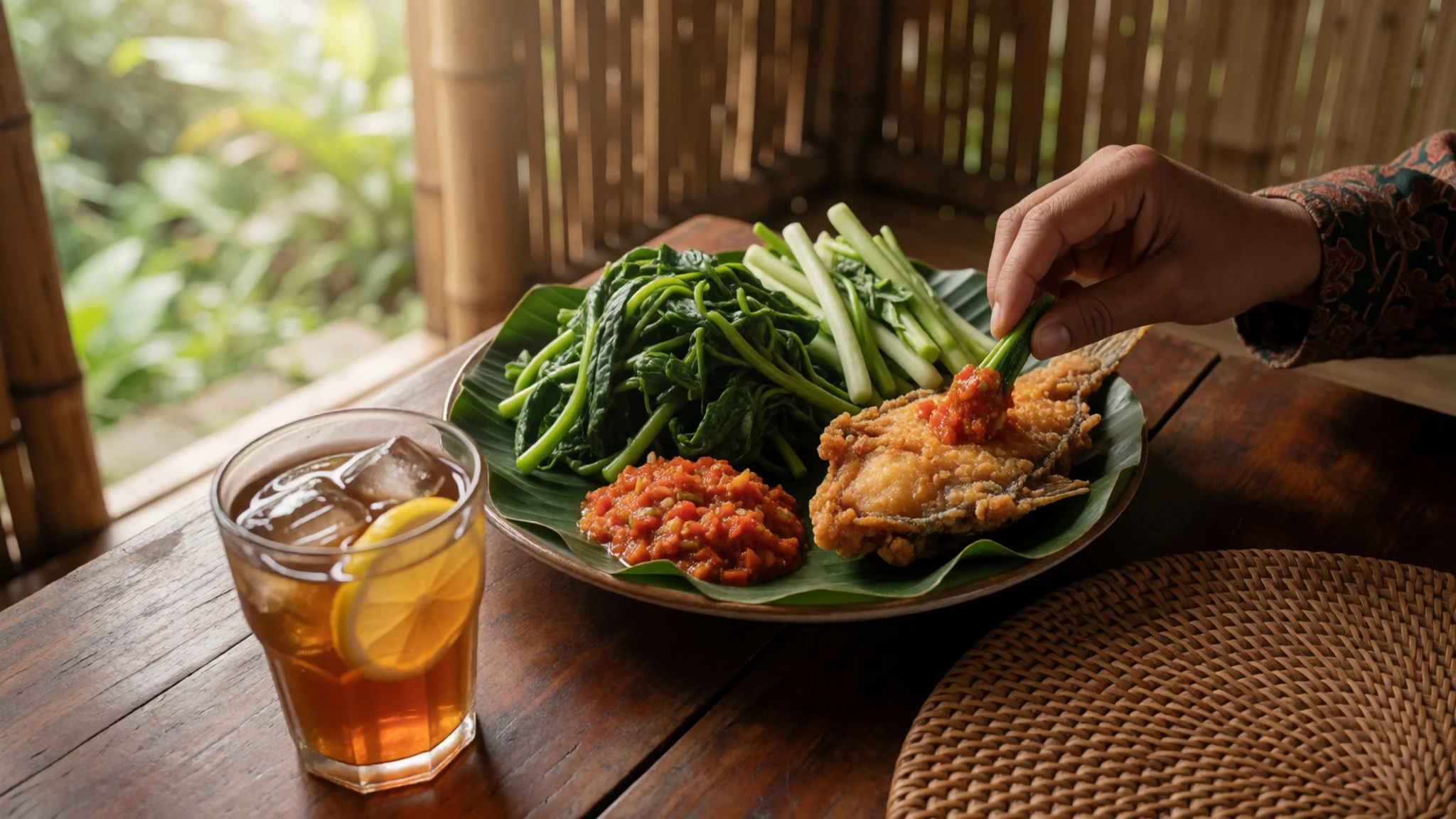
- Bandrek — Warung and drink stalls near the summit car park
A hot ginger drink sweetened with palm sugar and spiced, sometimes with coconut milk added. It is a Sundanese remedy for chilly, damp days and works well after a windy morning at the crater. - Nasi timbel with lalapan — Sundanese eateries in Lembang and Bandung
Rice wrapped in banana leaf, served with fried chicken or fish, tofu, tempeh, raw vegetables and a pungent chilli sambal. It is the classic Sundanese meal, simple, fresh and filling, and typically shared among the table. - Batagor — Street stalls and small eateries in Bandung
Fried fish dumplings served with peanut sauce, soy and lime. Originating in Bandung, they are crisp outside and soft inside, and a good snack for the journey back to the city.
Plan it
Best time. June to September is the drier part of the year in West Java, with clearer mornings and better odds of seeing the crater. The wet season, roughly November to March, brings cloud, rain and slippery paths. Go early in any month, as mist often builds by midday.
How long. 1
Getting there. Fly to Soekarno-Hatta International Airport (CGK) near Jakarta, then travel to Bandung by train or road. Bandung is the usual base. From there, Lembang is a short drive north, and the last stretch is a road up the mountain to the crater car park by car, taxi or arranged transfer.
Budget. low
Tips
- Check current volcano status before travelling, as access has been closed when activity rises
- Arrive early on a weekday to avoid weekend crowds and midday cloud
- Bring a warm layer, a light waterproof and closed shoes with grip
- Carry small amounts of cash for vendors, parking and snacks
- Cover your nose briefly if sulphur fumes blow your way, and leave if you feel unwell
Etiquette
- Follow park staff directions and stay on marked paths near the crater
- Dress modestly and greet people politely
- Ask before photographing people
Nearby
Sources
- Wikidata Q1190569 (CC0)
- Wikipedia: Tangkuban Perahu (rev 1369722335) (CC BY-SA 4.0)
- Wikivoyage: Western Java (rev 5371717) (CC BY-SA 4.0)
- Photo: Vulkaan Tangkuban Perahu, Hullie (CC BY 3.0)
- Photo: Tangkuban Prahu, Vivi Lestari (CC BY-SA 4.0)
- Photo: Indonesia Java relief location map, RXerself (CC BY-SA 4.0)
- Photo: Tangkuban Perahu Relief Map SRTM-1, Batholith (Public domain)
- Photo: Krater des Tangoeban prauw, Emil Karl Schumacher (CC BY-SA 4.0)
- Photo: Tangkuban Parahu crater, CHJL (Public domain)
- Photo: Chelonistele sulphurea orchids, Ibenk Kusyanto (CC BY-SA 4.0)
- Photo: Bedeuh6639, 48Ismayanti (CC BY 3.0)


