Tana Toraja
Tana Toraja, Indonesia
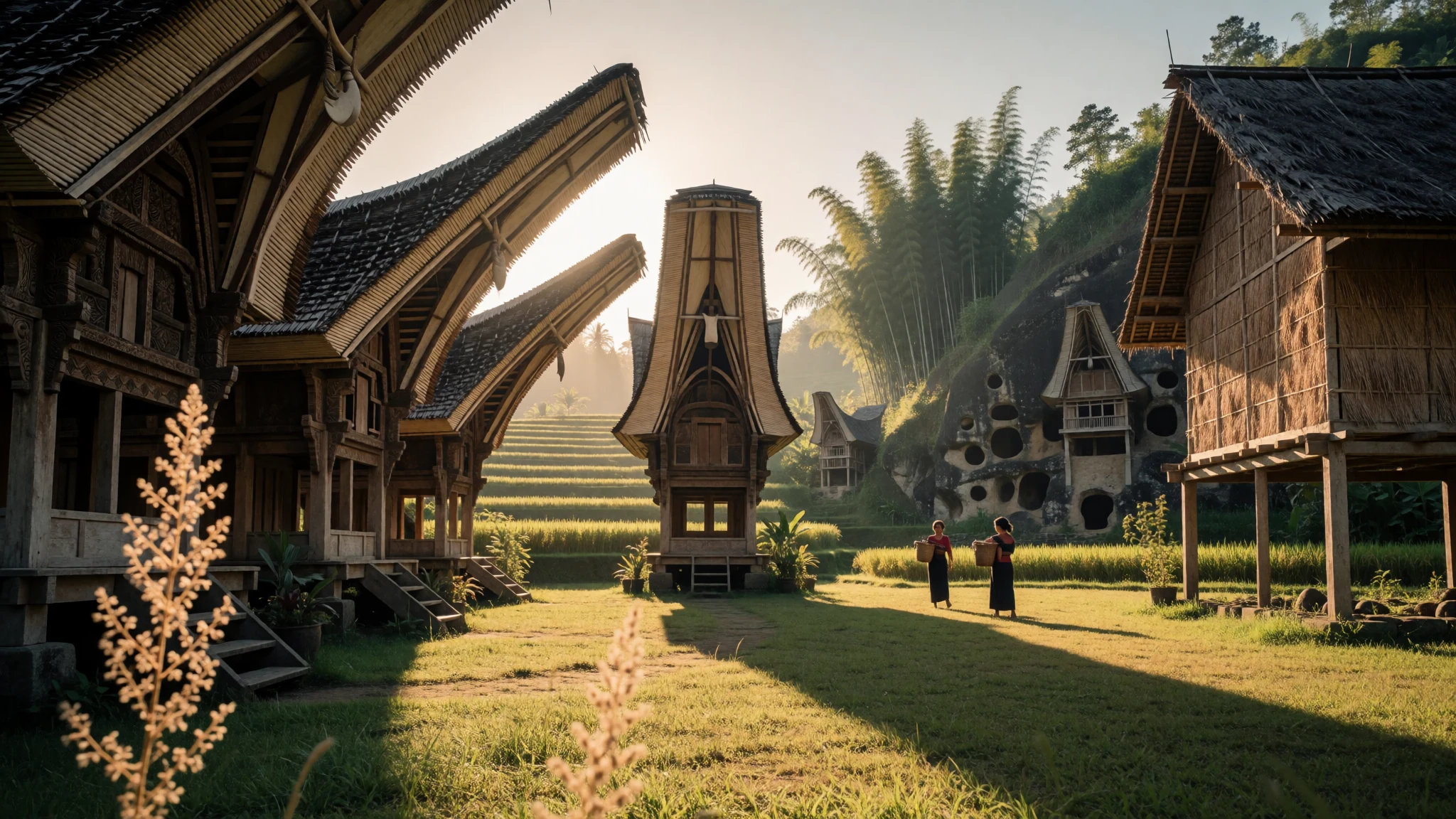
Tana Toraja is a highland corner of Sulawesi where funerals, boat-roofed houses and cliff graves are still part of living community life.
The place
Tana Toraja is a landlocked regency in the mountains of South Sulawesi, Indonesia, and its name means 'Land of the Torajans'. It sits near the middle of the island, about 300 km north of Makassar, the provincial capital, and the coastal lowlands feel a long way off once the road starts to climb. The regency has a population of about 279,000 and an elevation of 988 m, so days are milder than on the coast. Two towns matter to visitors. Makale is the seat of local government and is fairly quiet. Rantepao, now in the neighbouring regency of North Toraja, is the traditional centre of Toraja culture, and most guesthouses, eateries and guides are clustered there. Because the old Tana Toraja area was divided between the two, maps, signs and conversations often use 'Toraja' loosely for both. The landscape is steep terraced ricefields, bamboo groves, rocky outcrops and villages of tall houses with sweeping roofs. Sights are scattered along narrow roads, and moving between villages by motorbike or hired car is the normal way to do it. The visit is shaped by the ceremonial calendar: a funeral is a gathering of whole families and neighbours, and whether one is under way changes what a day looks like. Anthropologists and tourists have been coming for decades, so there is an established, sometimes pushy, guiding trade. Visitors who stay several days and treat the place as lived-in rather than staged tend to get far more from it.
Its story
Tana Toraja has a short paper history, mostly colonial, but the culture it governs is far older than any boundary line. The highlands were organised around family houses and rice-growing villages, where kinship, rank and ritual set the rhythm of life. The Dutch East Indies government fixed the area's boundary in 1909, and by 1926 it was administered under the Bugis state of Luwu. Regency status followed in 1946, the last one the Dutch granted. After independence, Indonesian law created the district of Tana Toraja in 1957, with Lakitta as its first regent. Later reforms multiplied districts, and in 2001 village units were renamed lembang, a word still seen on local signs. In 2008 the regency was divided: Tana Toraja kept the west and south with Makale as its capital, while Toraja Utara took the north and east with Rantepao. Behind the paperwork, the story visitors actually meet is ritual. The funeral is the central event of a Torajan family's life and may be held well after the death, giving relatives time to gather from far away and prepare. Tourism grew once the Indonesian tourism ministry began promoting the highlands, and researchers arrived in numbers too. Christianity is now widespread and sits beside older practice, which is why a Protestant church in Makale and a ceremony with buffalo can belong to the same community.
What to see
- Ke'te' Kesu' — South of Rantepao
Ke'te' Kesu' is a traditional village near Rantepao, laid out with rows of tongkonan houses facing rice barns across a grassy yard. Burial sites sit in the rock behind. It is easy to reach and busy at midday, so early morning gives better light and fewer tour groups.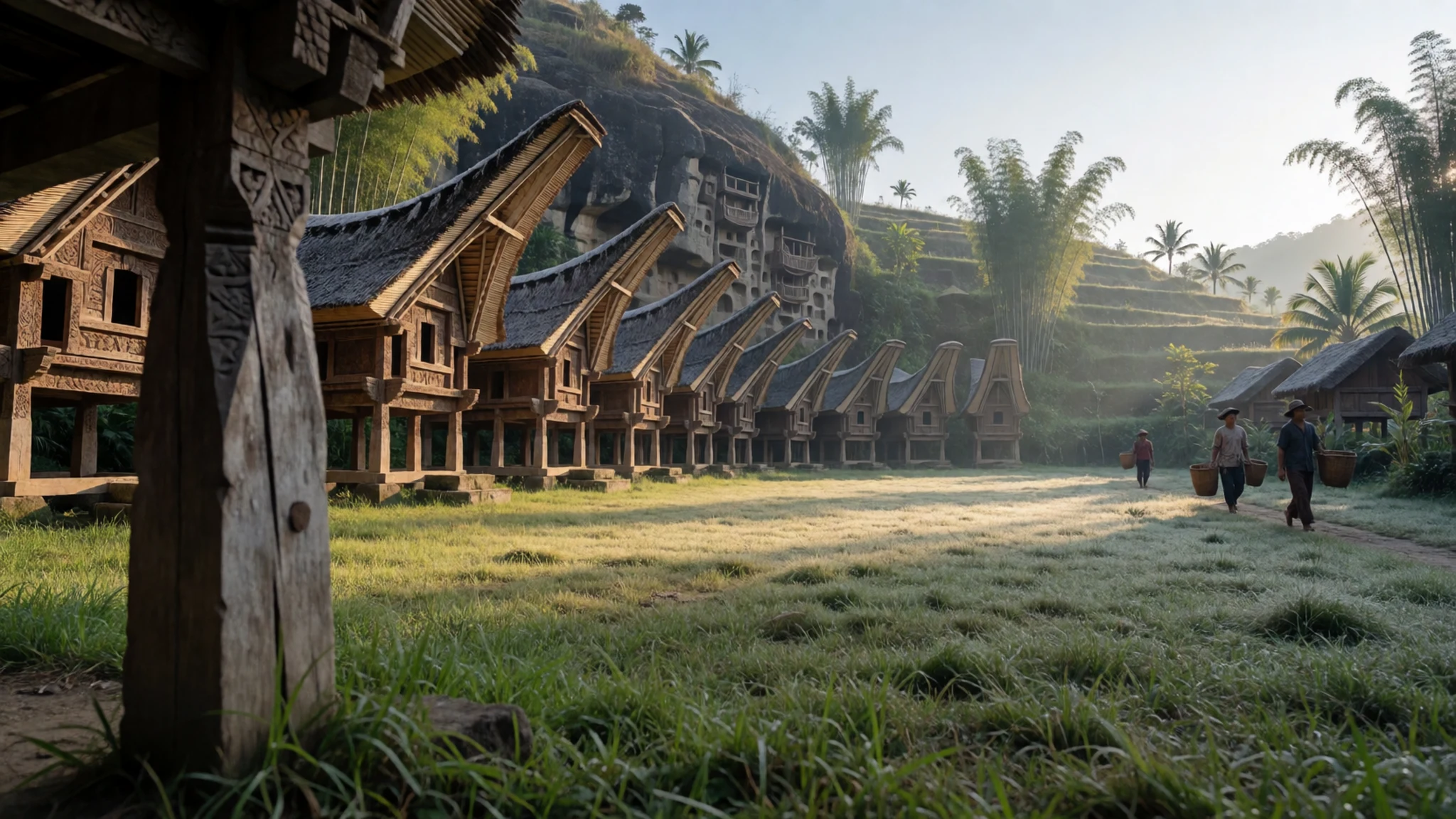
- Tongkonan houses — Villages across the highlands
The tongkonan is the Torajan family house, recognised by a roof that curves like a boat and a steep, carved gable. Bamboo and timber are the main materials. Many stand in villages beside rice barns, and the houses belong to extended families rather than individuals, so ask before walking up to one.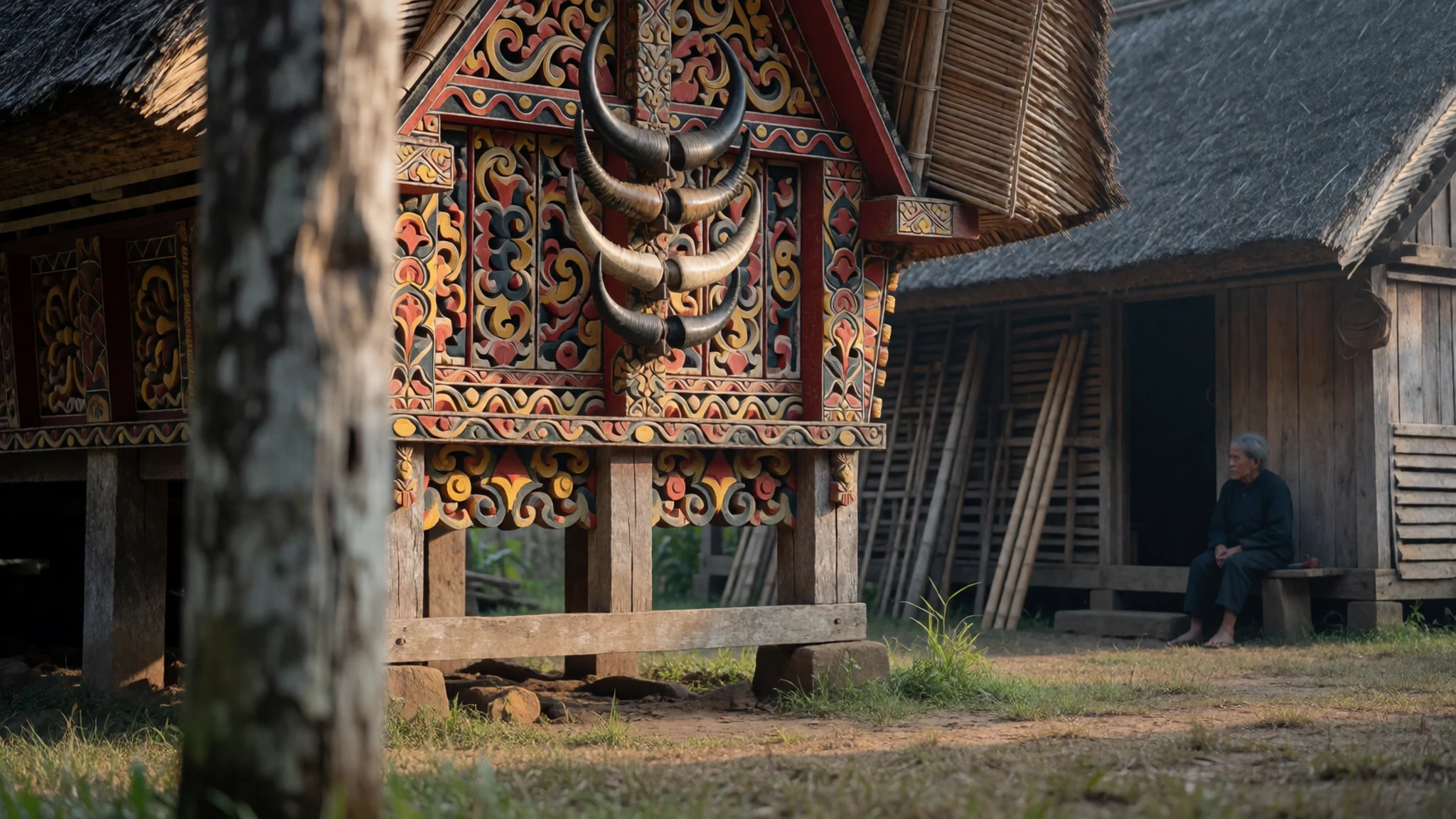
- Bori Parinding — North of Rantepao
Bori Parinding, north of Rantepao, combines ceremonial grounds with burials. Upright stones mark the space where large funeral rites have been held, and graves lie close by. It is a quieter stop than the better-known villages and suits a slow half hour of looking rather than a quick photograph.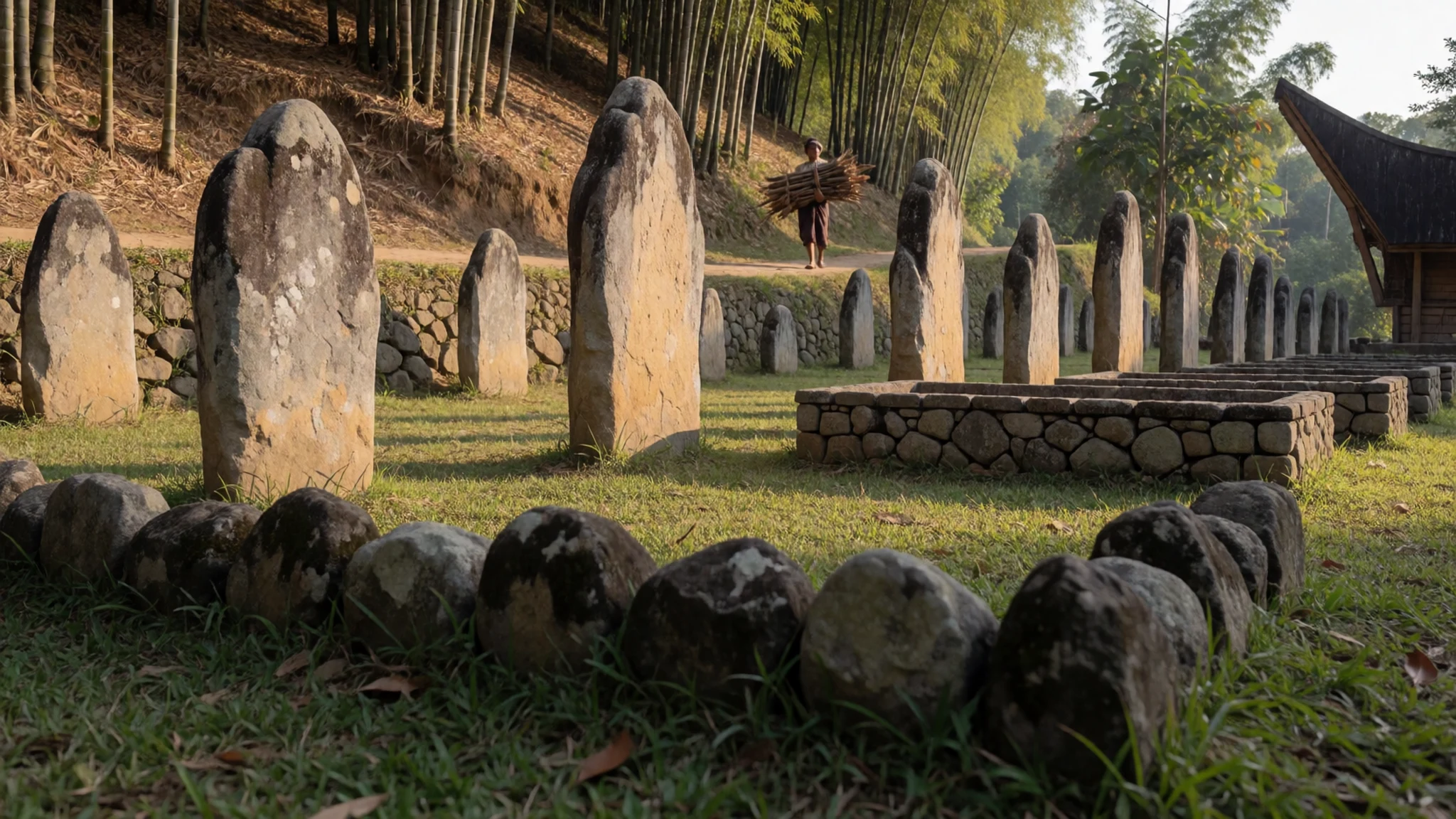
- Bolu Buffalo Market — North of Rantepao
Pasar Bolu, north of Rantepao, is the buffalo market, held on Tuesday and Saturday mornings. Animals are traded for ceremonies, and prized ones are valued highly. Go early, keep out of the way of handlers, and treat it as a working market rather than a show. Other stalls sell everyday goods.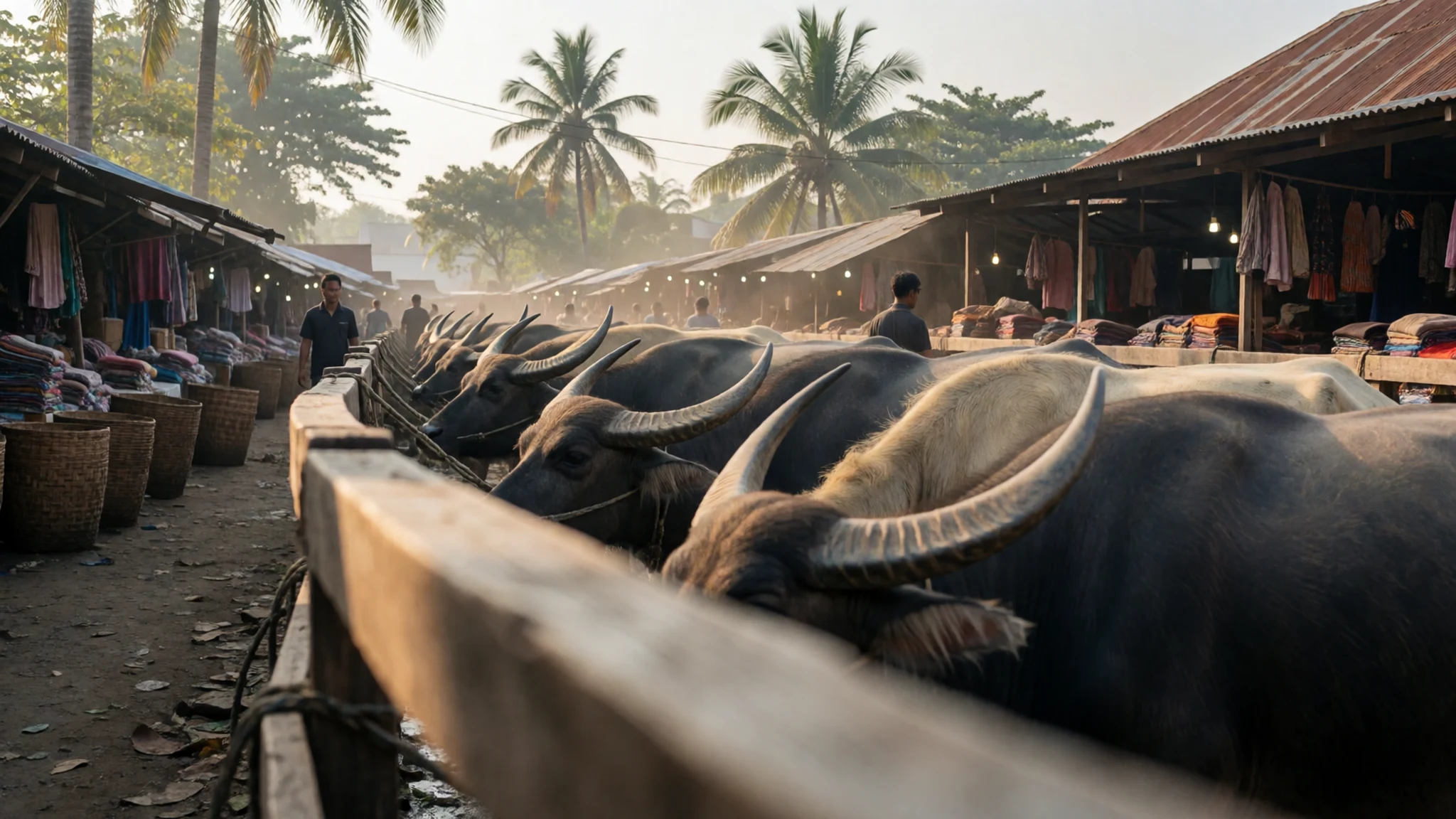
- A funeral ceremony — Arranged by the host family, by village
Funerals are the main reason many people come, and they involve dancing, processions and animal sacrifice over several days. Visitors are sometimes welcomed as guests, but never as an audience. Go only with a local contact or the family's invitation, dress in dark clothes, and be ready to sit quietly.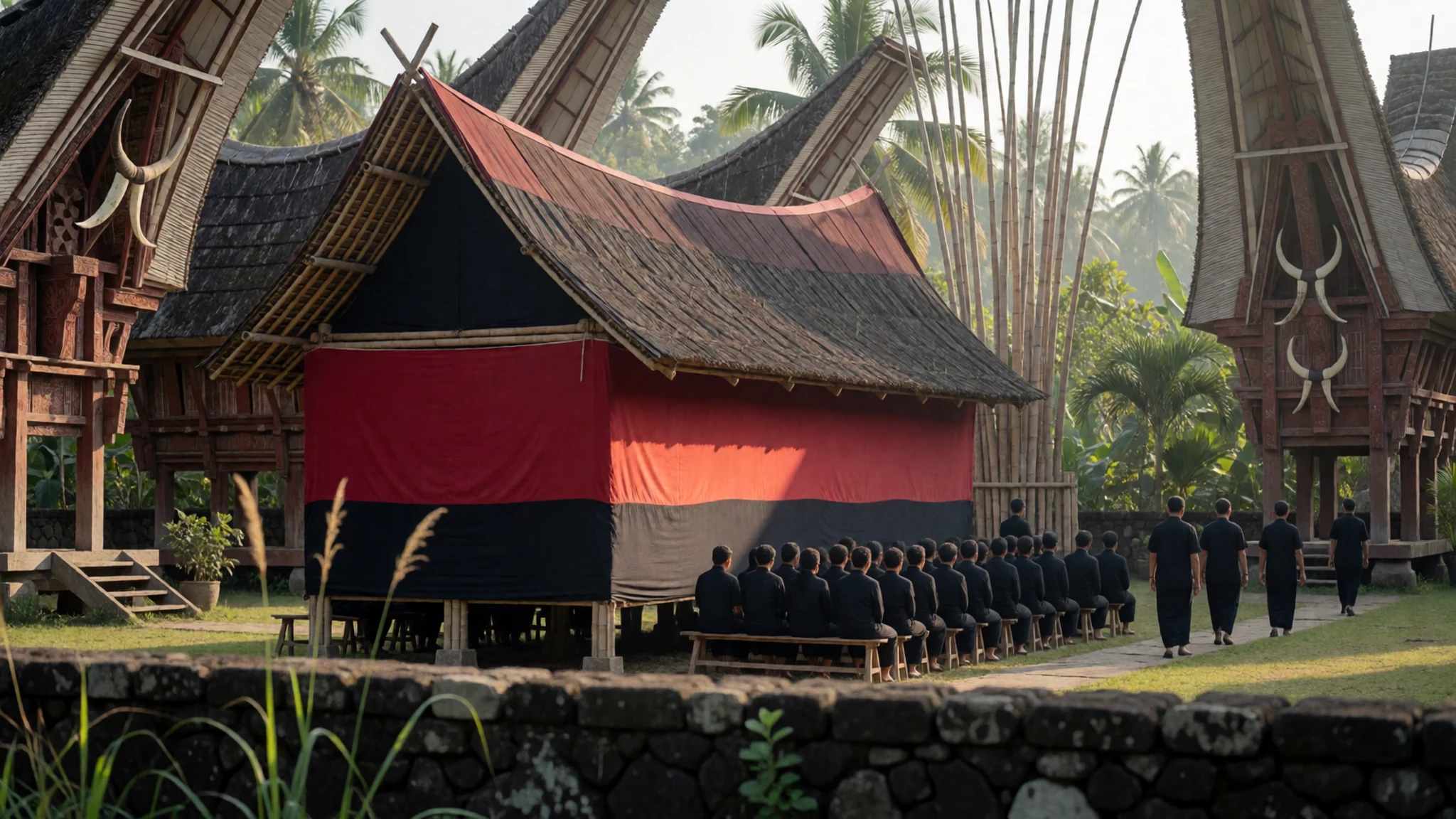
Culture
Tana Toraja is best understood through death. Torajan funerals are large social occasions that bring a family together, repay obligations and honour the dead, and they may be held long after a person has died. Until the rite takes place, the deceased is often spoken of as unwell rather than gone. Buffalo and pigs are sacrificed as part of the ceremony, with dancing, singing and long hours of hospitality around them. The house plays its part too: the tongkonan ties a family to its ancestors and to a shared land, and its carved gable and boat-shaped roof are as much a statement of identity as a shelter. Graves are cut into cliff faces or kept in caves, and carved wooden effigies of the dead, called tau-tau, may watch over them. Most Torajans today are Christian, and church life, hymns and older ritual live side by side without much fuss. Dance, such as the pagellu, and community singing accompany many occasions. Visitors often arrive curious about the sacrifices and burials, and the respectful approach is to remember that these are real bereavements, not performances laid on for tourists. If you are invited to a funeral, greet the host family first, sit where you are shown, and do not photograph the mourners or the sacrifice without asking permission.
What to wear
Tana Toraja has its own textile tradition, centred on hand-woven cloth with bold geometric patterns, often in black, red, white and yellow. Weavers work cotton on backstrap or simple frame looms, and cloths are used in ceremonies and as gifts. Beadwork is part of formal dress, with long strings of beads worn at festivals, alongside headdresses and, for dance performances, ornamental costume. Traditional clothing is mostly kept for weddings, funerals, church festivals and performances rather than daily life. Black is the colour of mourning, and at funerals many family members and guests wear black or other dark clothes. Day to day, people in Rantepao and Makale wear ordinary Indonesian clothing: shirts, trousers, long skirts, jeans and, on Sundays, smart church clothes. Rural workers in the ricefields often wear boots and wide-brimmed hats. A visitor should dress for mild highland weather that can turn wet quickly. Light layers, a rain jacket and quick-drying trousers work well. Shoes need grip, because village paths, ricefield banks and the steps up to burial sites can be muddy and uneven. For any ceremony or church, cover shoulders and knees, and bring something dark if a funeral is possible. Shorts and sleeveless tops are fine for walking around town, but they stand out at a ceremony.
What to eat
- Pa'piong — Restaurants in Rantepao and Makale, usually ordered ahead
Pa'piong is meat or fish cooked with vegetables and herbs inside bamboo tubes over a fire. The result is moist and smoky. Eateries in Rantepao and Makale serve it, but it usually has to be ordered at least a couple of hours in advance.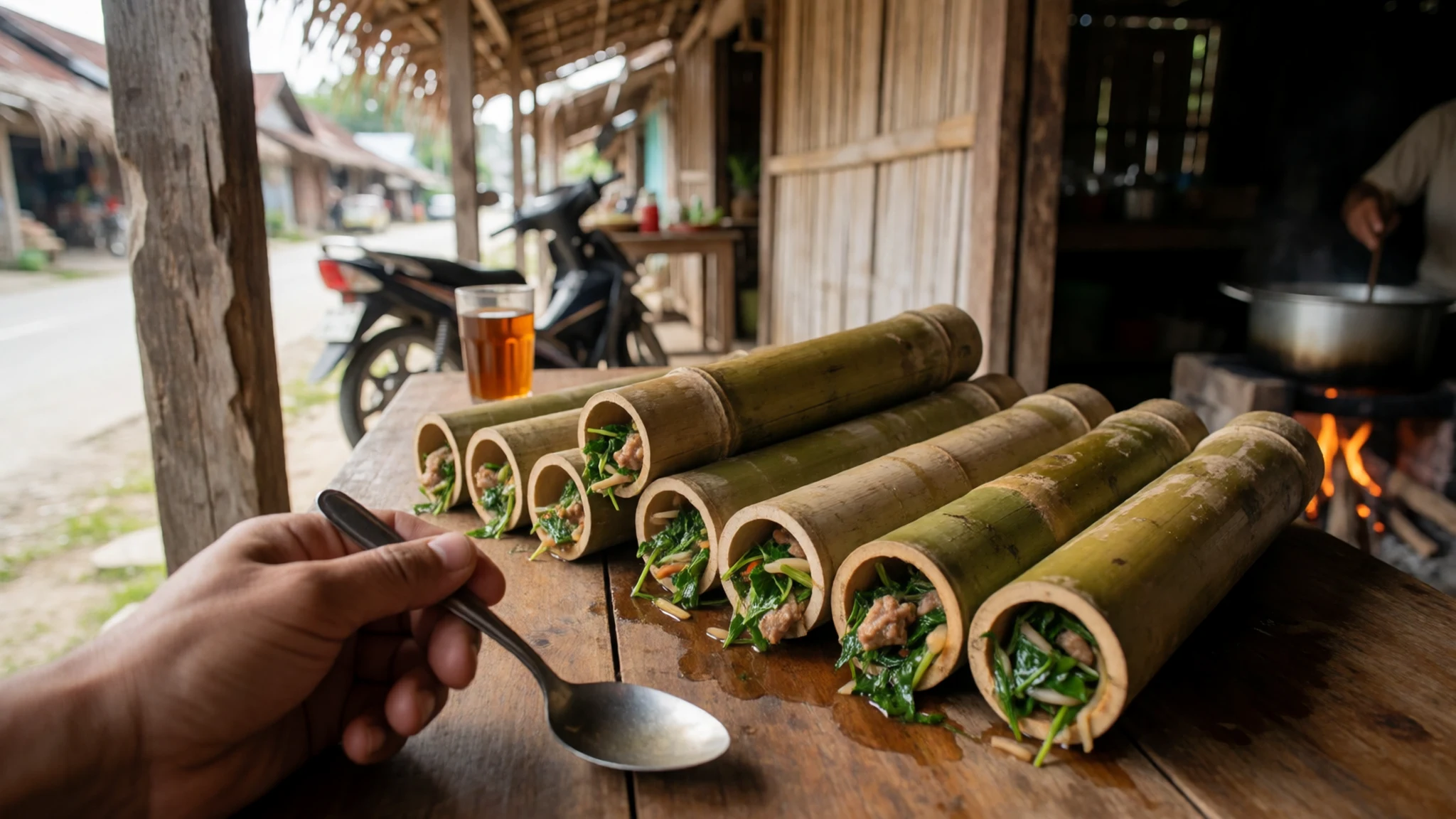
- Ballo' (palm wine) — Sold on the street and at roadside stalls
Ballo' is the local palm wine, sold from roadside stalls and easy to find. Colour is a guide to strength, with darker generally meaning stronger. It is sweet at first and can be far more potent than it tastes, so go slowly.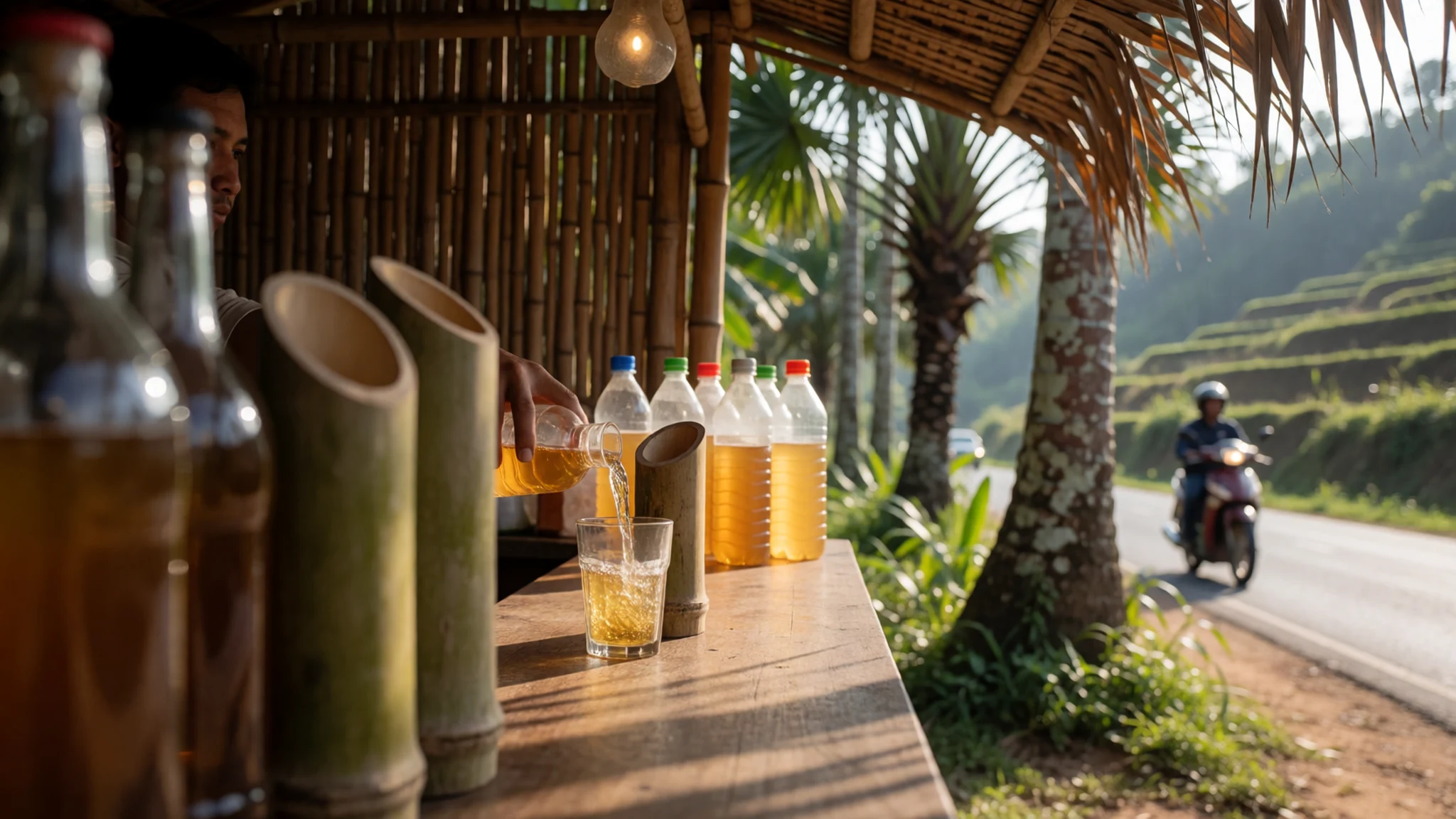
- Toraja coffee — Cafés and coffee stalls around Rantepao
The highlands are known for their coffee, and drinking it here costs a fraction of what it does at home. Rantepao has plenty of places to sit with a cup. Ask what is grown locally and take a bag home if it suits. - Rice-flour sweets — Morning markets and snack stalls
Small sweet snacks made from rice flour and palm sugar are sold at markets and stalls, often wrapped in leaf or paper. They go well with coffee. Availability varies by day, so ask vendors what has just been made.
Plan it
Best time. June to September is the usual choice, as the drier months mean easier travel on muddy paths and more outdoor ceremonies, and the highlands stay cooler than the coast. Funerals follow family timing rather than tourist calendars, so none can be promised on a given date.
How long. 3–4
Getting there. Fly from Makassar's Hasanuddin Airport to Toraja Airport (Buntukunik), south of Rantepao, then continue by car or motorbike taxi. Alternatively, take a bus from Makassar, a long road journey of about 300 km, with morning and overnight departures and varying comfort.
Budget. mid
Tips
- Order pa'piong a few hours ahead, because it is not kept ready
- Be wary of guides who take payment up front for a meal or extras, and agree the day's plan before setting out
- Many sights can be reached on your own, so you do not need to accept the first guide who approaches
- Carry cash for markets, small villages and roadside stalls
- Pack a rain jacket and shoes with grip for muddy village paths
Etiquette
- Greet the host family before settling in at a funeral, and dress in dark clothes
- Ask before photographing mourners, graves or sacrificed animals
- Do not touch or remove anything at burial sites
Nearby
Sources
- Wikidata Q14632 (CC0)
- Wikipedia: Tana Toraja Regency (CC BY-SA 4.0)
- Wikivoyage: Tana Toraja (CC BY-SA 4.0)
- A funeral ceremony in Tana Toraja — WiDi (CC BY-SA 4.0)
- Ke'te' Kesu' (Tana Toraja, Sulawesi, Indonesia) — Jorge Franganillo (CC BY 2.5)
- Tarian Pagellu — RaiyaniM (CC BY-SA 4.0)
- Rumah Adat Tongkonan (Toraja) 01 — Ribkha Tandepadang (CC BY-SA 4.0)
- Protestant Church Gereja Toraja in Makale — Torbenbrinker (CC BY-SA 4.0)
- Tana Toraja - south sulawesi (2 sijoli) — Feldi fast (CC BY-SA 4.0)
- Tana Toraja - south sulawesi (Acara Adat) — Feldi fast (CC BY-SA 4.0)
- Art Spoke — Veronica Fish (CC BY-SA 4.0)


