Taiping
Taiping, Malaysia
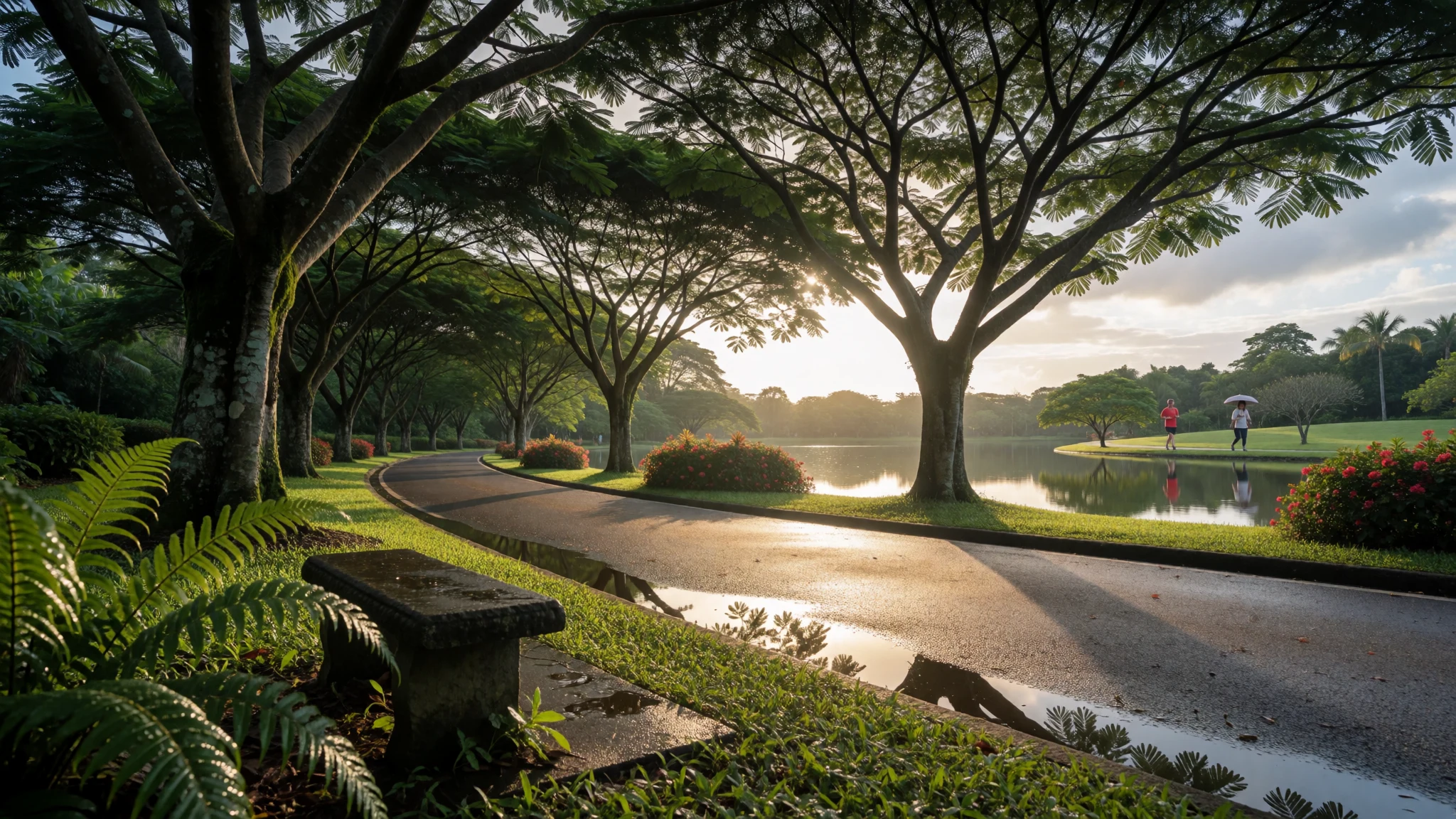
Taiping is a rain-washed Perak town of old tin-money arcades, century-old rain trees and cheap hawker food worth a detour.
The place
Taiping sits in the state of Perak on the western side of Peninsular Malaysia, on a flat plain with the Bintang range rising behind it. Ipoh lies a short drive to the south-east and George Town on Penang island a little further to the north-west, which makes Taiping an easy stop between the two. It is a town rather than a resort: a grid of shophouse streets, covered walkways, a municipal council that looks after the lake gardens, and a pace that feels slower than either neighbour. Its main claim on the map is rain. Taiping is described as the wettest town in Peninsular Malaysia, and even June, its driest month, is far from dry. That wetness explains the huge rain trees arching over the roads around the lake gardens, and the green, slightly steamy feel of the whole place. Showers tend to arrive in the afternoon, so mornings suit walking and afternoons suit eating. The old centre is compact enough to cover on foot. Arcades on both sides of the streets keep off sun and downpour alike, and some older buildings still have stucco fronts and wooden shutters. The state museum of Perak is here too. The town lost its role as state capital to Ipoh, its growth slowed for a long while, and it has been picking up again in recent years. Beyond the centre, a cool hill station, a mangrove reserve and a zoo with a night safari give a visit more range than the size of the town suggests.
Its story
Taiping's story is a tin story. Before the town had its present name, the district was known as Klian Pauh, roughly 'the mango mine', and the name hints at what drew people here. Tin in Larut is traditionally credited to a local chief, Long Jaafar, with the discovery dated to 1848. The legend is better than the paperwork: he kept an elephant called Larut, which wandered off for three days and came back with tin ore caked in the mud on its legs. The district is said to take its name from that animal. Mines brought workers, and many of them were Chinese migrants. Rival groups of miners fought bitterly over claims and control, and the disorder grew serious enough that the British stepped in and took charge. Taiping, whose founding year in the data is 1875, became the administrative centre of the Larut, Matang and Selama districts, and then the state capital of Perak from 1876 until 1937, when the role passed to Ipoh. Quarrels over succession after the death of Sultan Abdullah in 1857 had already unsettled the state, and the conflicts around Larut helped change who ruled Perak. Losing the capital slowed the town for decades. The mining past survives in a gentler form: the lake gardens were made from abandoned surface tin workings, so the town's favourite pleasure ground is its former industry, filled with water.
What to see
- Taiping Lake Gardens — West of the town centre
The gardens were laid out on abandoned tin-mining pits, and the flooded workings now form linked ponds with lawns, flowering shrubs and playgrounds around them. The big rain trees along the lakeside roads are the reason to come early, when walkers and joggers share the paths. Showers are common, and the tree canopy gives shelter until they pass.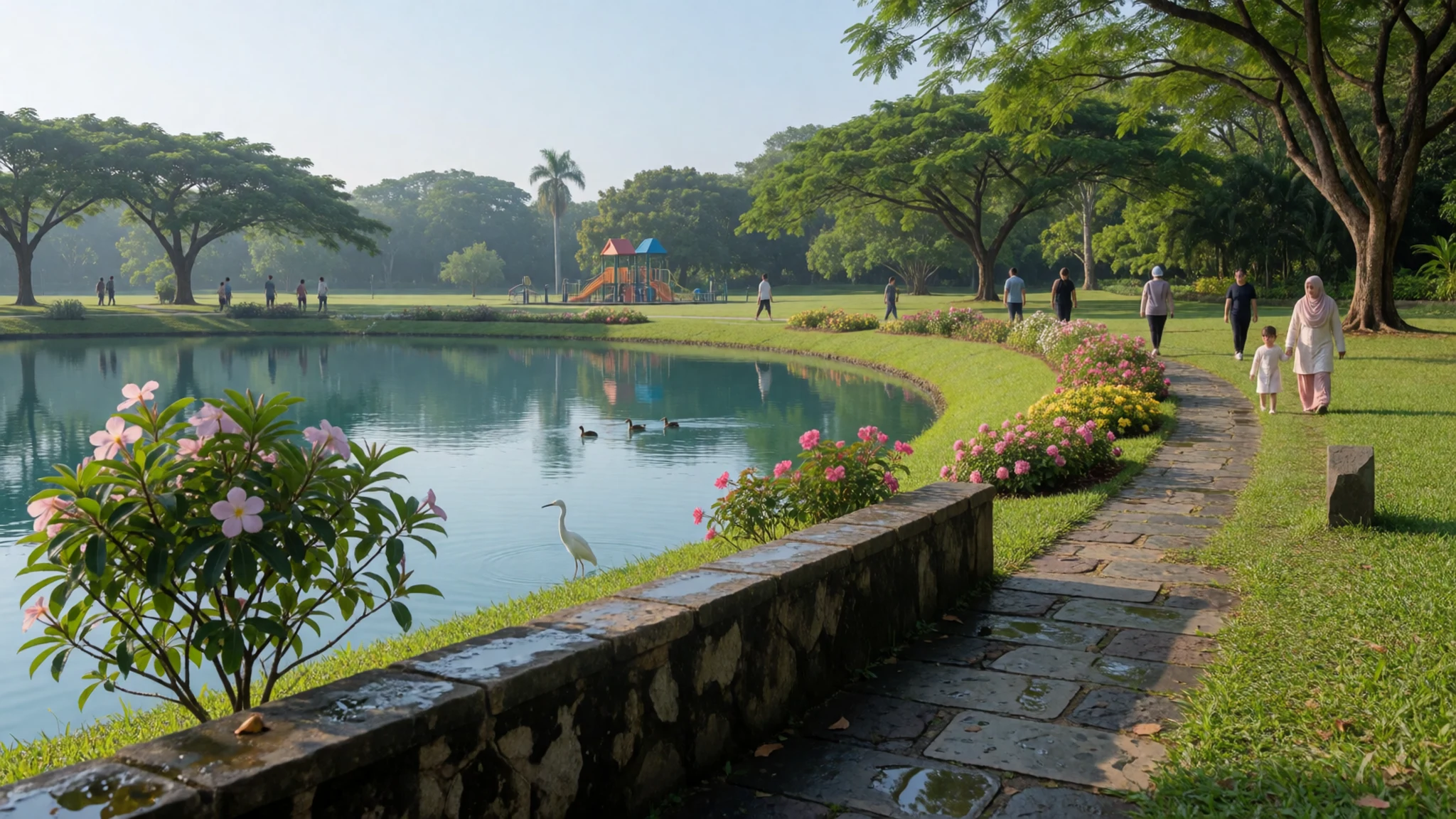
- Kota Road and the old town arcades — Town centre
The older streets are best walked slowly. Covered walkways run along both sides, so rain and sun are rarely a problem, and some shophouses keep their stucco fronts and wooden shutters. A British-built clock tower stands on Kota Road, which looks especially good lit up after dark, with the arcades emptying and the food stalls filling.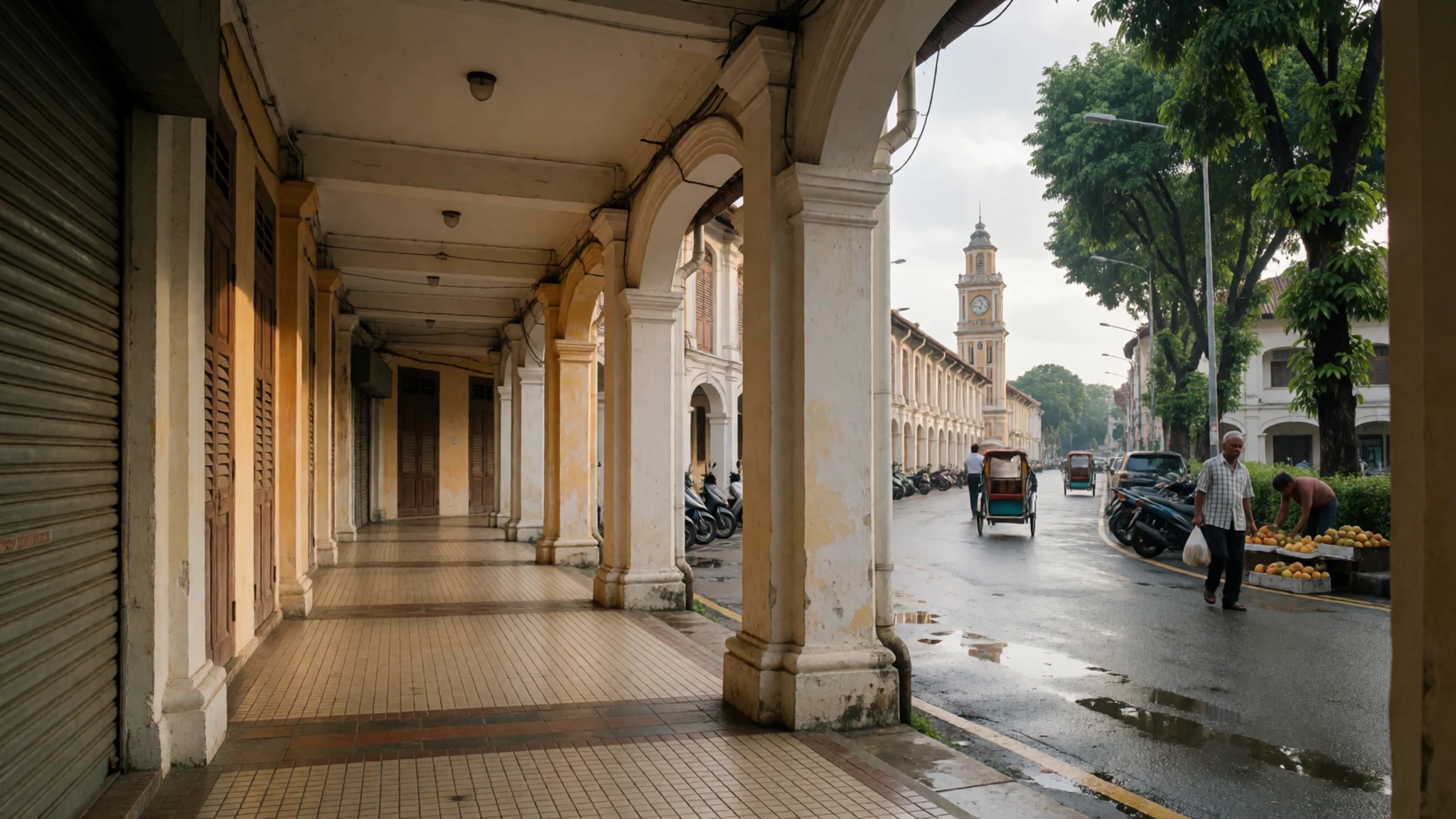
- Taiping Zoo and Night Safari — Beside the Lake Gardens
The zoo is described as the first one set up in Malaysia, and it sits beside the lake gardens. Weekends bring day-trippers from out of town, so weekdays are calmer. The night safari runs in the evening after the heat has eased. Check opening times and prices on the town council's official site, mptaiping.gov.my.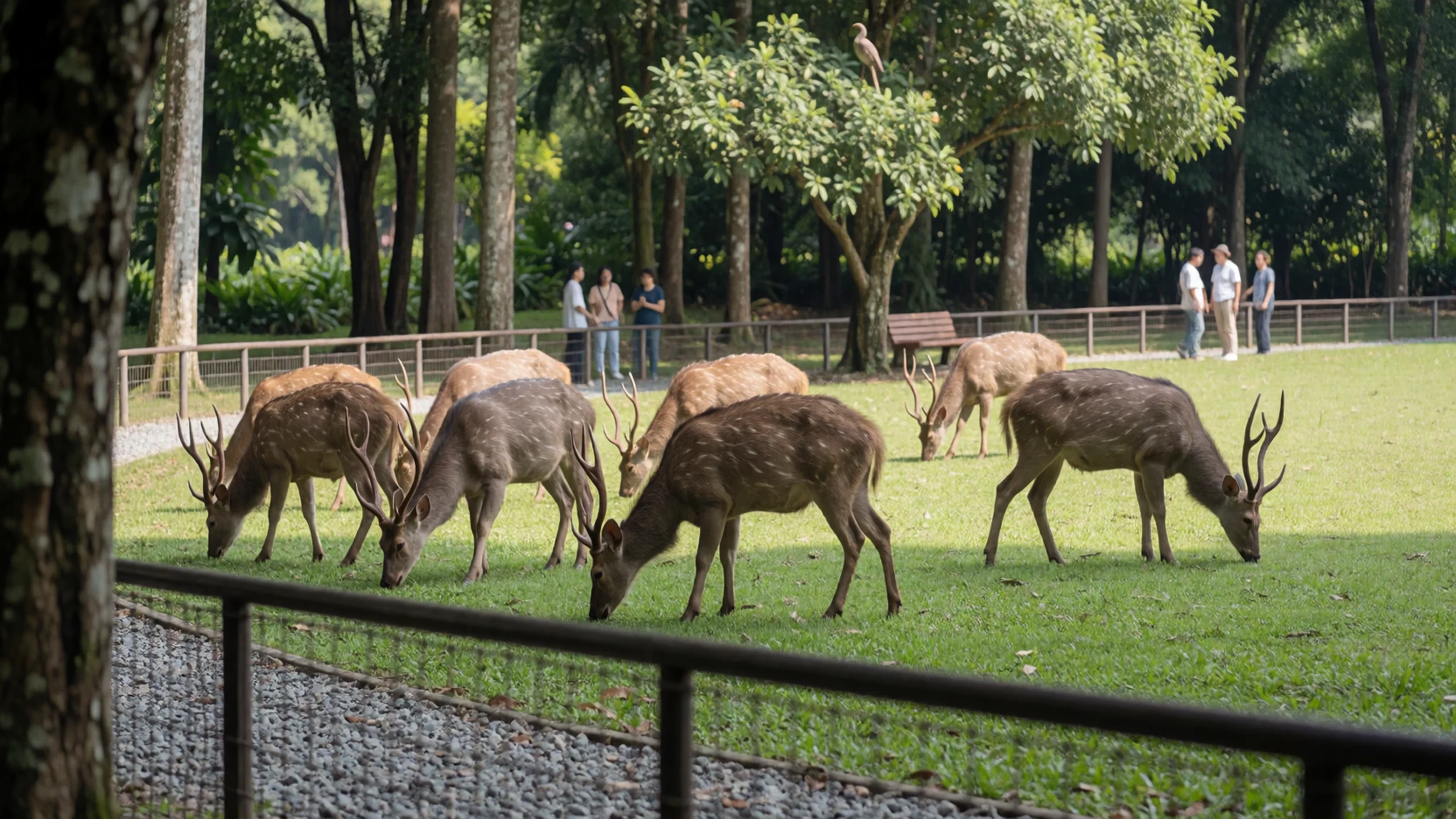
- Maxwell Hill (Bukit Larut) — Hills behind the town
A quiet hill station well above the town, noticeably cooler than the plain. The only way up is a narrow single-track paved road, served by a fleet of municipal four-wheel drives that are old and rattly. Accommodation is limited to a couple of resthouses and a few bungalows, so confirm access and bookings with the council before going.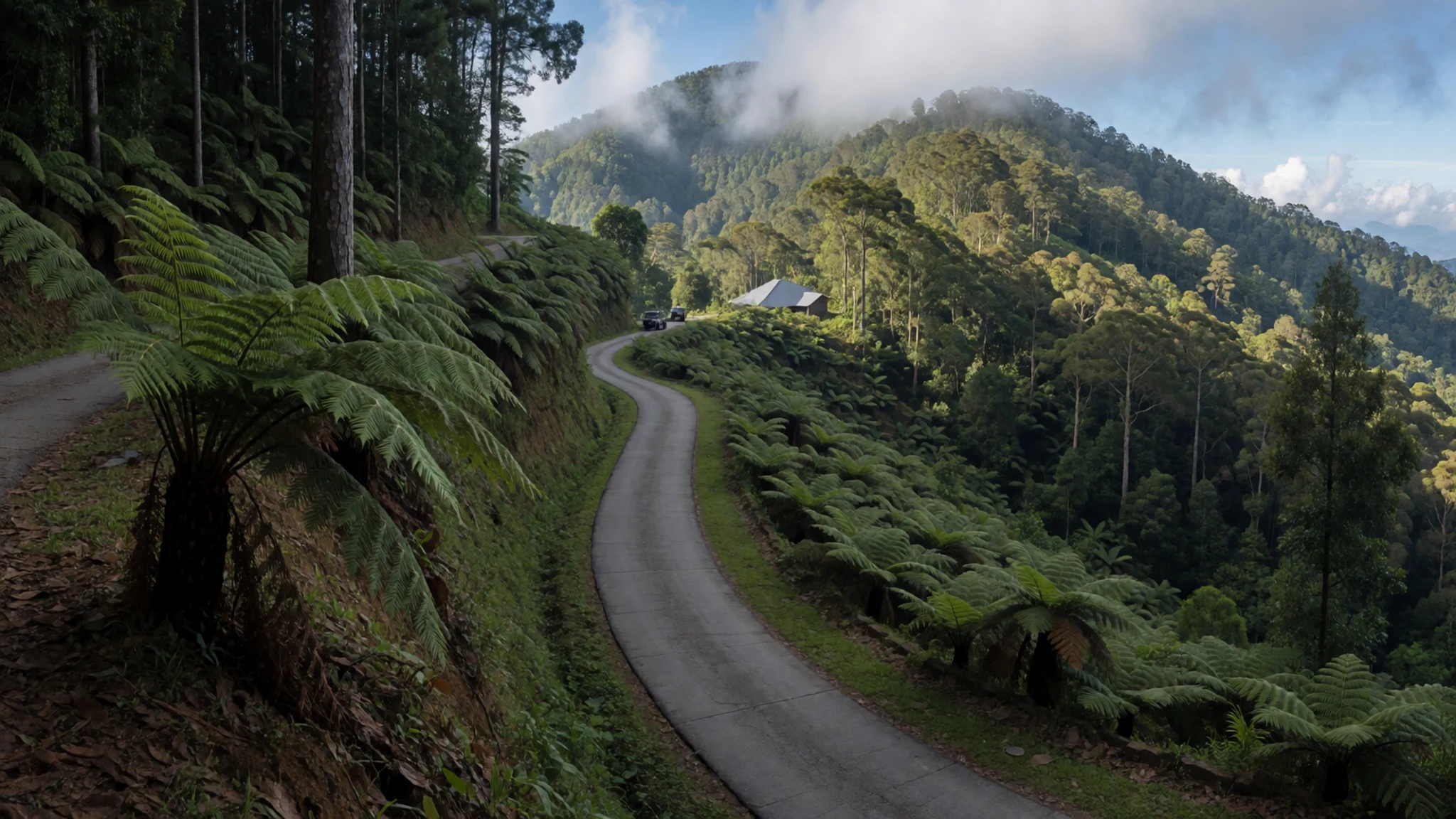
- Matang Mangrove Forest Reserve — Coast west of Taiping
A protected stretch of mangrove on the coast, a short drive from Taiping, where the tangled roots, mudflats and tidal channels support a good variety of plants, birds and other wildlife. It is a quieter, wetter contrast to the town. Wear shoes that can get muddy, and check access and boat options locally before setting out.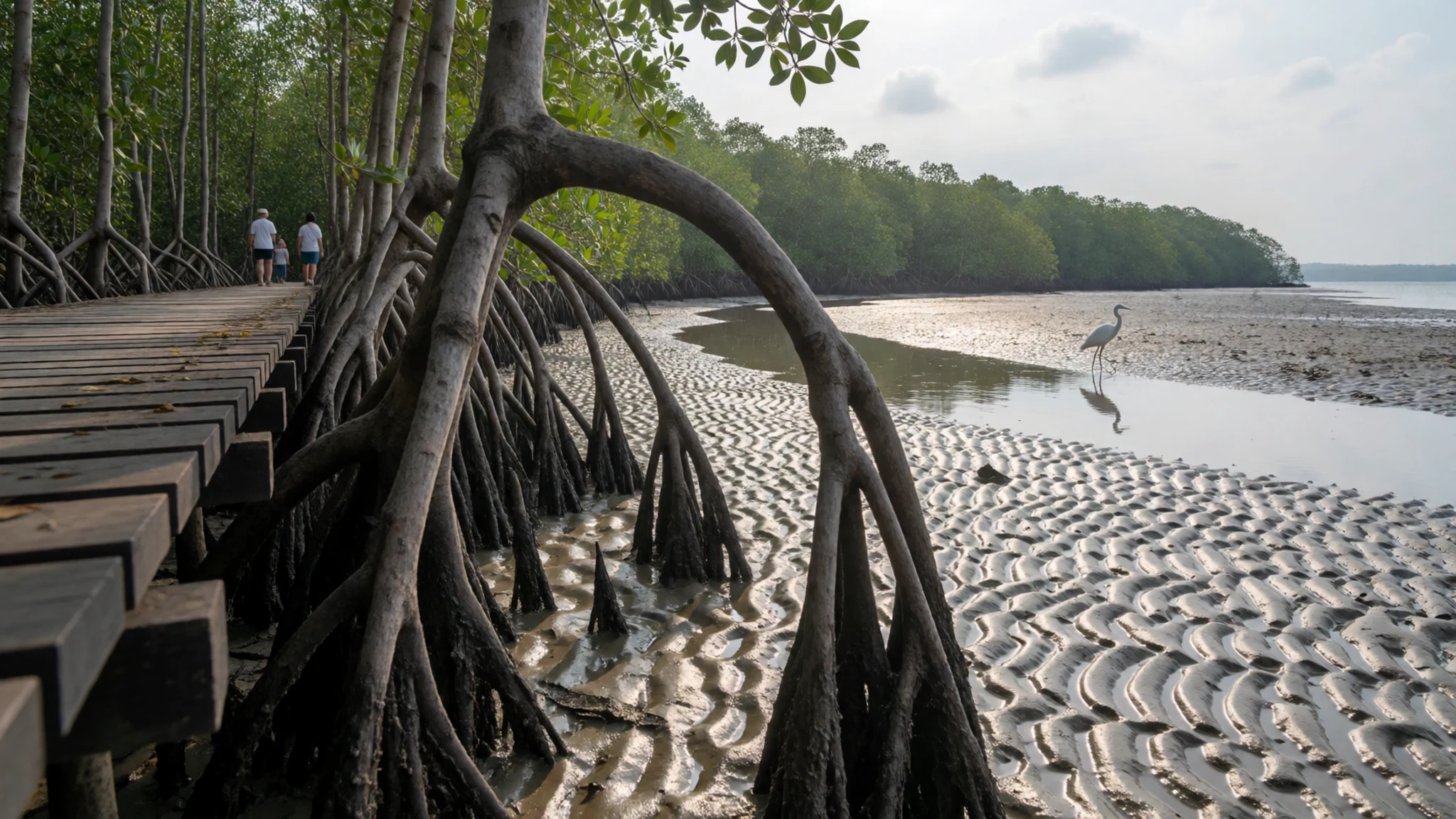
Culture
Taiping's culture is the everyday mix of peninsular Malaysia: Malay, Chinese and Indian communities sharing the same streets, markets and coffee shops. The town's history of Chinese tin-mining migrants still shows in temples, clan associations and old-style coffee shops, while mosques and Indian-Muslim eateries anchor other parts of daily life. Festivals follow the calendars of all three groups, so Hari Raya, Lunar New Year and Deepavali each change the mood of the town, with extra stalls, lanterns, decorations and open houses. Rain shapes the daily rhythm as much as religion does. People meet early, shelter under the arcades in the afternoon and gather again in the evening when the air cools, usually over food. Taiping also takes pride in its colonial-era civic buildings and in the lake gardens, which locals treat as a shared living room for exercise, picnics and family photographs. Conversation is unhurried, and being asked where you come from is a friendly opening rather than an interrogation. Public life is polite and fairly conservative. Alcohol is not served everywhere, particularly in Muslim-run eateries, and pork appears only in Chinese places, where it is usually signed. When entering a mosque, a temple or a home, dress modestly, take your shoes off at the door, and ask before photographing worshippers or stallholders.
What to wear
Traditional dress in Taiping follows the communities that live there. Malay women wear the baju kurung, a long tunic over a skirt, often with a tudung headscarf, and men wear the baju Melayu with a sampin wrapped at the waist, usually for Friday prayers and Hari Raya. The best pieces use songket, a silk or cotton cloth woven with gold or silver thread, or batik, wax-resist dyed cotton. Chinese families bring out cheongsam and bright new clothes for Lunar New Year, and Indian families wear saris and kurtas at Deepavali. Day to day, almost everyone dresses for heat and humidity: short-sleeved cotton shirts, light trousers, loose dresses and sandals, with many Malay women covering their hair and arms. Visitors should pack light, quick-drying clothes, a compact rain jacket or umbrella, and shoes with a good grip, since lakeside paths and arcade floors get slick. Bring a thin layer for Maxwell Hill, which is cooler. For mosques and temples, carry a scarf or shawl and wear clothes that cover the shoulders and knees. Slip-on shoes help, as they come off often. Beachwear belongs on the coast, not in the town centre.
What to eat
- Wan tan mee — Coffee shops near the wet market and the Larut Matang food court
Springy egg noodles with slices of roast pork or char siu, greens and dumplings, served dry with a dark sauce or in a light broth. A staple breakfast and lunch order, and the dish most locals will point visitors towards first.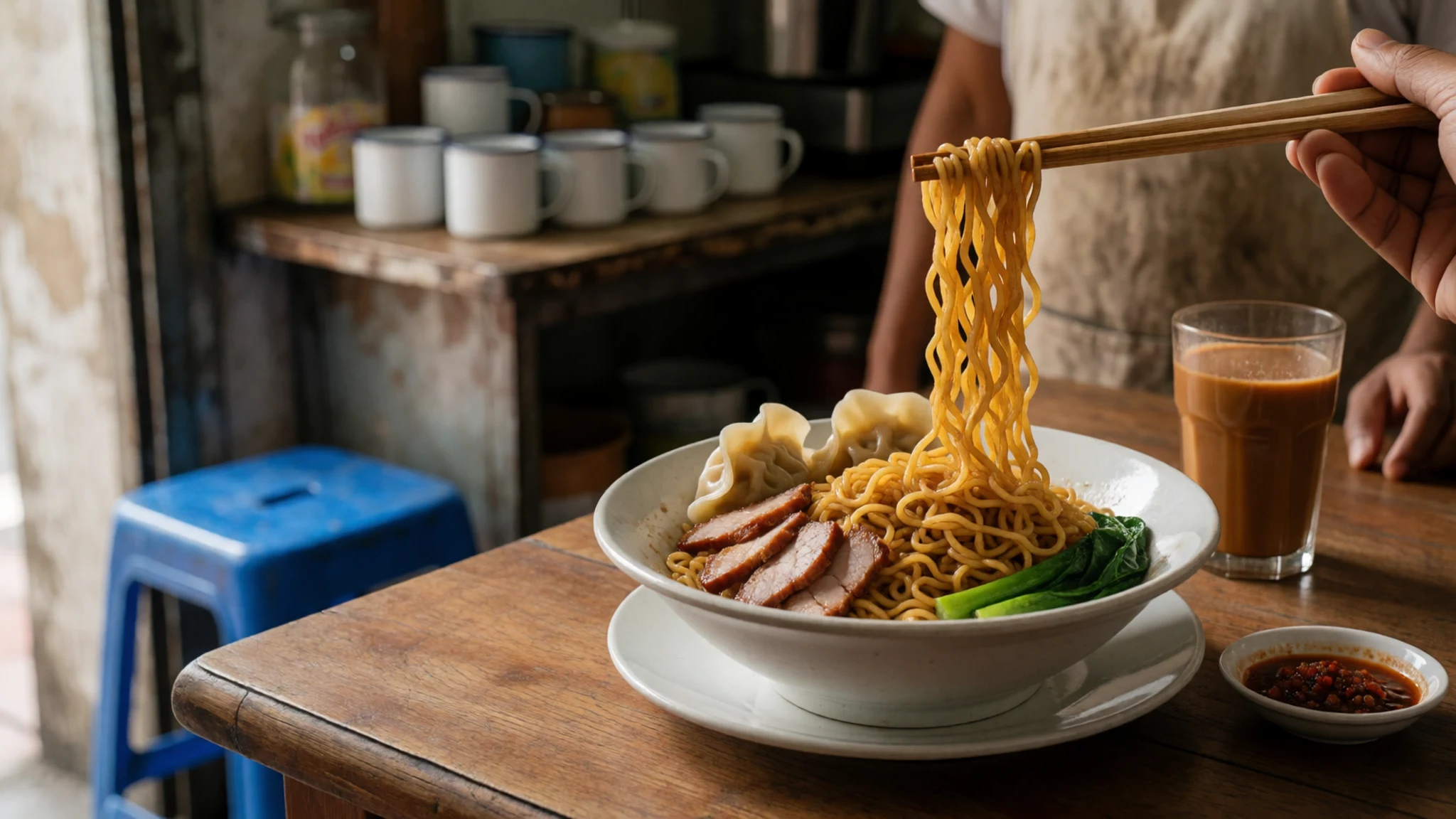
- Roti canai — Indian-Muslim eateries around the hawker centre
A flaky, griddled flatbread torn up and dipped in dhal or curry. It is the standard early meal in Indian-Muslim eateries, cheap and filling, and often followed by sweet tea. Order it fresh off the griddle and eat with your right hand.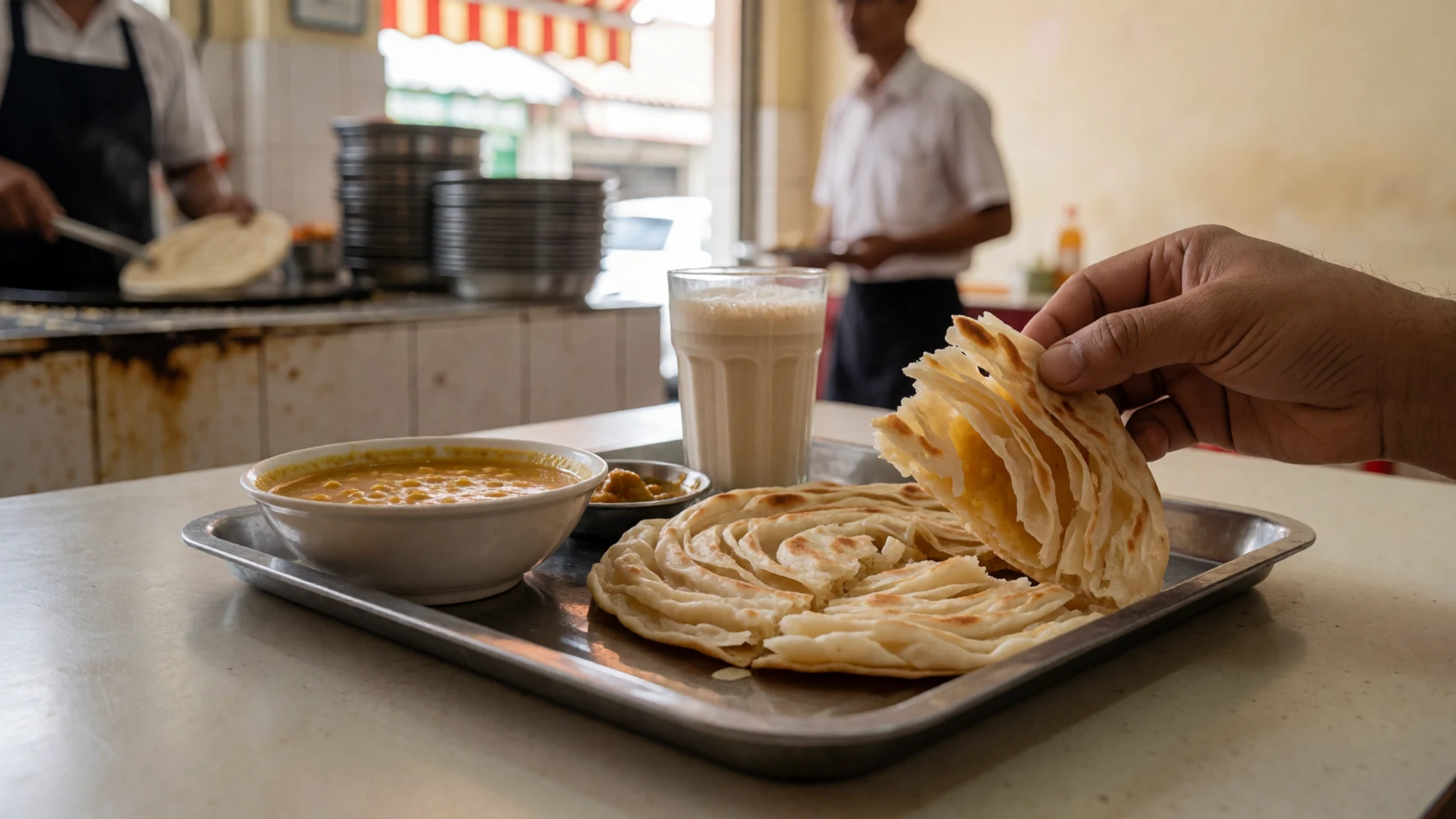
- Laksa — The food court beside the Lake Gardens
A tangy, fish-based noodle soup, sour from tamarind, with herbs and chilli. Taiping's version suits a damp, grey afternoon better than almost any other dish. Look for a stall with a steady local queue and eat it while it is piping hot. - Char kuey teow — The central hawker centre
Flat rice noodles fried hard over a very hot wok with egg, bean sprouts, chives and usually prawns or cockles. Smoky flavour is the aim. It is a classic of northern Malaysian hawker cooking, and a good test of any stall. - Popiah — Stalls under the supermarket and traditional coffee shops
A soft, thin wheat wrapper rolled around stewed turnip, egg, bean sprouts and sweet sauce. It is fresh and light, usually eaten as a snack between meals, and made to order at stalls that roll them in front of customers. - Cendol and ais kacang — Dessert stalls behind the main eateries and in food courts
Two cooling shaved-ice desserts. Cendol has green rice-flour jelly, coconut milk and palm sugar syrup. Ais kacang adds sweet corn, red beans and colourful syrups. Both are sensible rewards after a wet, humid walk around the lake.
Plan it
Best time. Rain falls here all year, and even June, the driest month, is still wet, so no month is reliably dry. January–February and June–July are usually the more comfortable choices. Carry rain gear whenever you go, and plan outdoor walks for the morning before the afternoon showers.
How long. 2
Getting there. The nearest airport with commercial flights is Ipoh, about an hour's drive away. Penang is a little further but has more routes, and Kuala Lumpur International Airport is about four hours by road. Express buses use the long-distance stations at Kamunting and Simpang, then a short taxi or local ride reaches the town centre. The PLUS North–South Expressway runs past the town.
Budget. low
Tips
- Walk the lake gardens early, before the afternoon showers and the weekend crowds
- Weekends bring day-trippers to the zoo and gardens, so weekdays are quieter
- Carry some cash for hawker stalls and small coffee shops
- Check the official council site, mptaiping.gov.my, for zoo and night safari times and prices
- Confirm access to Maxwell Hill before going, as the road up is single-track and run by the municipality
Etiquette
- Dress modestly and take off your shoes at mosques, temples and private homes
- Eat with your right hand and avoid pork in Muslim-run eateries
- Ask before photographing people, worshippers or stallholders
Nearby
Sources
- Wikidata Q1011190 (CC0)
- Wikipedia: Taiping, Perak (rev 1377600791) (CC BY-SA 4.0)
- Wikivoyage: Taiping (rev 5244052) (CC BY-SA 4.0)
- Photo: Kota Road at night (Gohweiyang) (CC BY 3.0)
- Photo: Taipingperak.JPG (unknown author) (Public domain)
- Photo: Aerial View of Taiping City (Adiyon84) (CC BY 3.0)
- Photo: Aerial view of Taiping town at night (Sezhian6911) (CC BY-SA 4.0)
- Photo: Raintrees at Taiping Lake Gardens (Azreey) (CC BY 3.0)
- Photo: Taiping Railway Station (Chongkian) (CC BY-SA 4.0)
- Photo: Taiping Bus Terminal (*angys*) (CC BY-SA 4.0)
- Photo: Plaque at the War Cemetery, Taiping (Photo Dharma) (CC BY 2.5)


