Tai Mei Tuk
Tai Mei Tuk, People's Republic of China
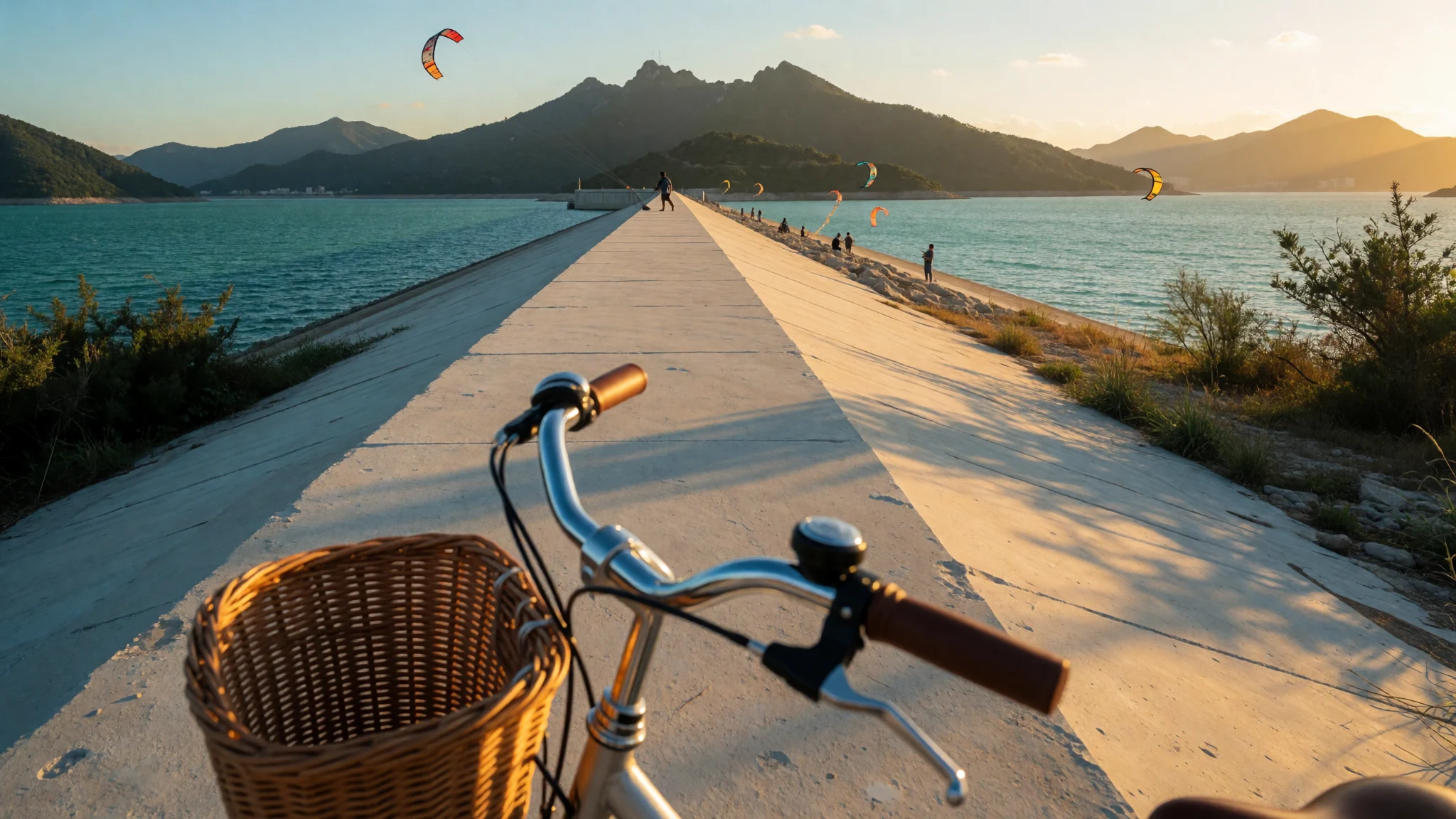
Tai Mei Tuk shows a quiet, rural side of Hong Kong: flat cycling beside a reservoir, with a jagged ridge for company.
The place
Tai Mei Tuk is a small waterfront settlement in Tai Po District, in the New Territories of Hong Kong, right beside the Plover Cove Reservoir. It is a place of edges: the end of the bus line, the start of the dam road, the last stretch of shoreline before the hills take over. Behind the village the jagged ridge of Pat Sin Leng fills the skyline, and in front lies calm, sheltered water. The settlement itself is modest, with village houses, a few food stalls and bicycle-rental shops, a promenade, and a group of outdoor centres run by youth organisations that offer sailing, canoeing and kayaking. Visitors who know Hong Kong only for towers and tram lines are often surprised by how rural this corner feels. Hong Kong is part of China but runs as a Special Administrative Region, with its own immigration system, currency and legal tradition, which is why it feels like a separate country to many travellers. The city's name means "fragrant harbour" in Cantonese. Tai Mei Tuk's mood changes sharply with the calendar. On weekends and public holidays, cyclists, families and barbecue parties fill the promenade and the road along the water; on weekday mornings it can be almost empty, with a few anglers and the odd jogger. Summers are hot, humid and prone to sudden downpours and typhoon warnings, while the cooler months bring clearer air and the best views of the ridge. It is a gentle place rather than a dramatic one, best taken slowly, with a bike, a flask of water and no fixed schedule.
Its story
Tai Mei Tuk grew out of the farming and fishing villages of the north-eastern New Territories. Historically it belonged to a group of Hakka villages, among them Shan Liu, Lai Pik Shan, Lo Tsz Tin, Lung Mei and nearby Ting Kok, which together formed an alliance known as the Ting Kok Yeuk (汀角約). Alliances of this kind let neighbouring villages share defence, markets and the settling of disputes in a countryside where formal government was distant. The Hakka, whose name is usually explained as "guest families", worked hillside fields and small paddies with the sea close at hand. The wider political backdrop shifted in 1898, when the New Territories were leased to Britain for 99 years. That brought the district under colonial administration, though village life and land customs carried on in many respects. In the decades that followed, the water needs of a growing city reshaped the coast here: an inlet of the sea was closed off and gradually turned into the freshwater Plover Cove Reservoir, so the shore at Tai Mei Tuk now faces a lake-like expanse rather than an open bay. The village still has its own rural committee office, a reminder that this is an established community with its own organisation, not simply a trailhead and car park. Farming has largely given way to recreation, but the older identity survives in the village names on maps, the surviving houses, and the way residents still describe their neighbours by village rather than by district.
What to see
- Plover Cove Reservoir main dam — Tai Mei Tuk dam entrance
The long dam of Plover Cove Reservoir begins at Tai Mei Tuk and carries a level path across the water towards the Ma On Shan side. On a clear day the walk or ride gives wide views over the reservoir on one side and open water on the other. It is exposed, so shade is scarce; check current access rules before setting out.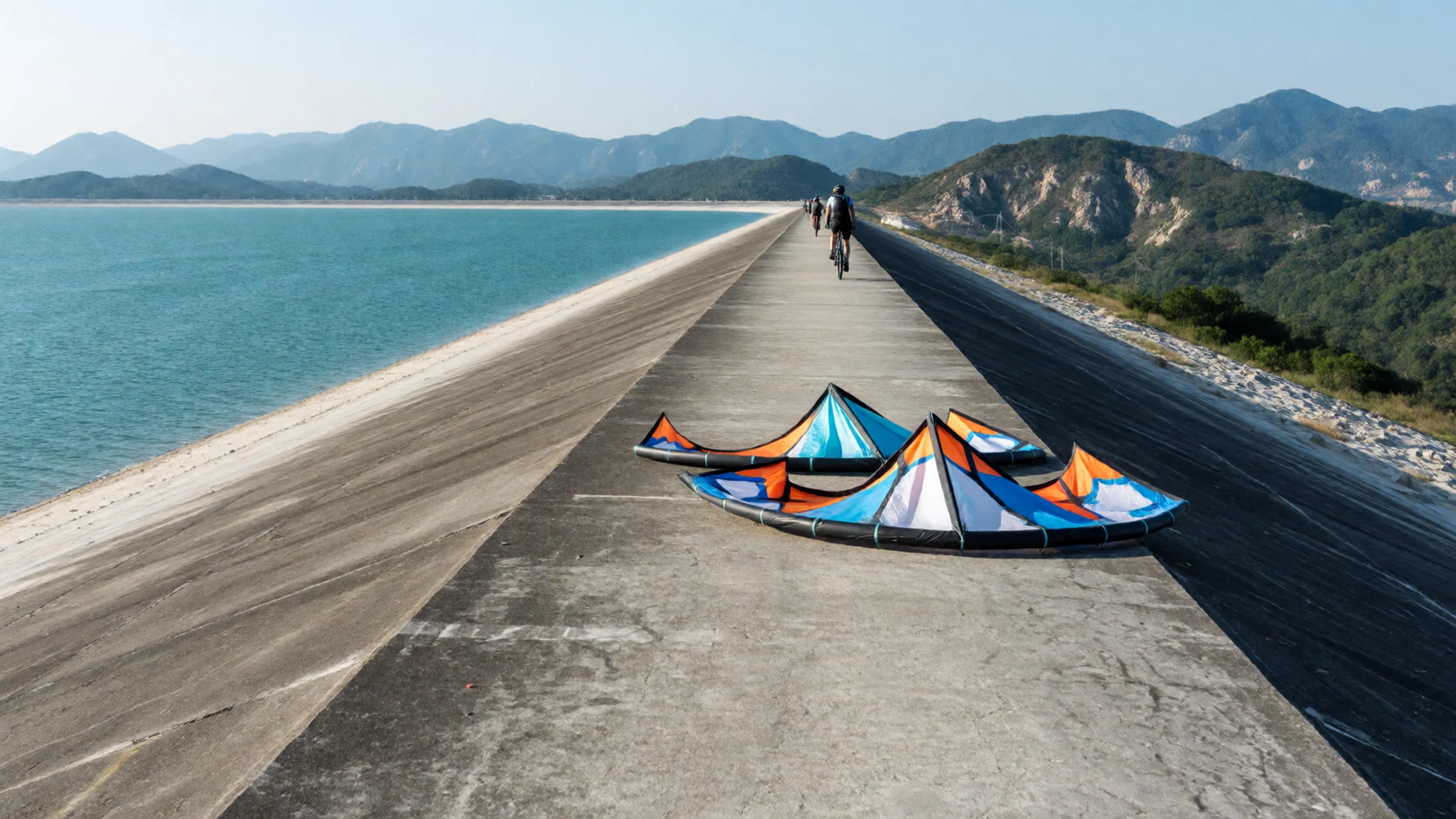
- Pat Sin Leng ridge — Plover Cove Country Park, behind the village
Pat Sin Leng, the "Eight Immortals" range, forms the skyline behind Tai Mei Tuk, and the village is a convenient place to photograph it from the shore. Trails in the surrounding country park climb onto the ridge, but serious walks are steep and exposed, so start early, carry plenty of water and watch the weather.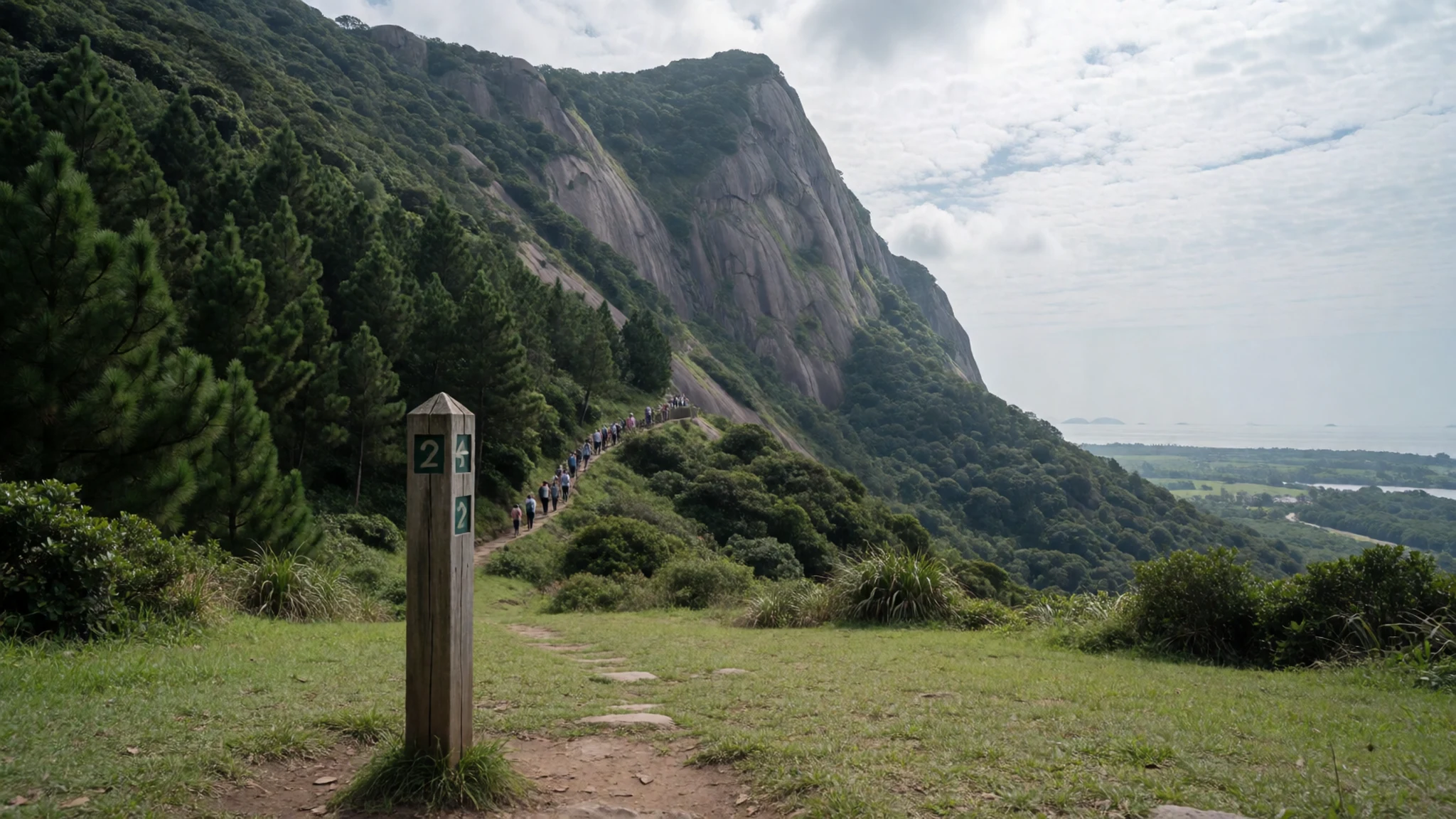
- Waterfront promenade and cycle route — Tai Mei Tuk waterfront
Tai Mei Tuk's waterfront is the starting point for a mostly flat cycling route along the harbour towards Tai Po, and bicycle-rental shops line the approach. Weekends are busy and bikes can run short, so arrive early. The promenade also works well for a slow walk and a drink while watching boats on the water.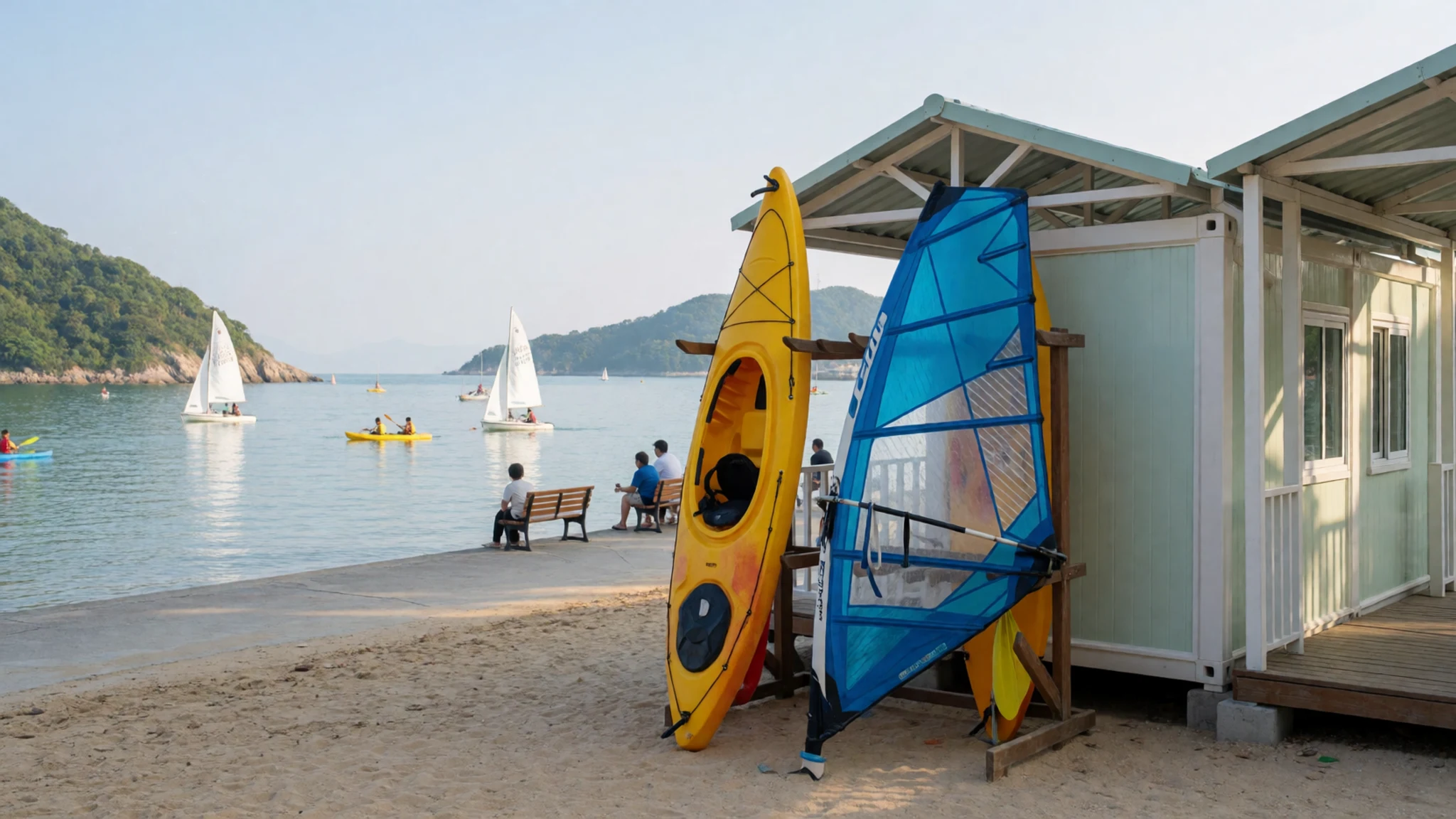
- Youth outdoor activity centres — Tai Mei Tuk shoreline
Several youth organisations, including the Scouts, the Girl Guides and a youth federation, run water-sports centres along this shore, where young people learn sailing, canoeing and kayaking. They are mainly for members and booked groups, so treat them as a view from the path unless a public programme is advertised; check the organisers' own sites.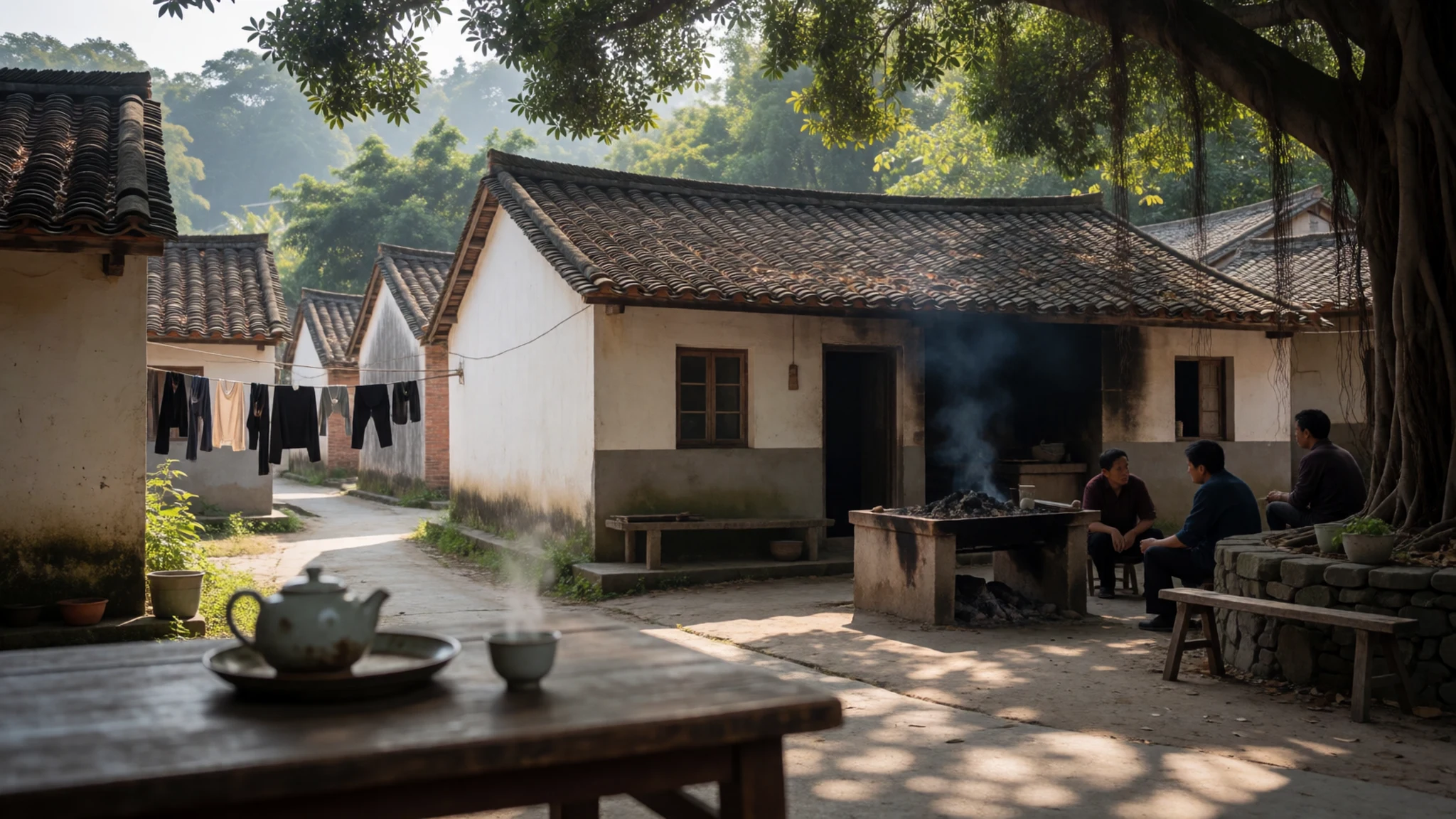
- Village and rural committee office — Tai Mei Tuk village
Behind the leisure strip, Tai Mei Tuk's older village core is worth a short, respectful wander. The rural committee office is a plain, functional building, but it marks a community that existed long before bicycle hire. Keep to public paths, avoid peering into homes, and remember that residents live and work here.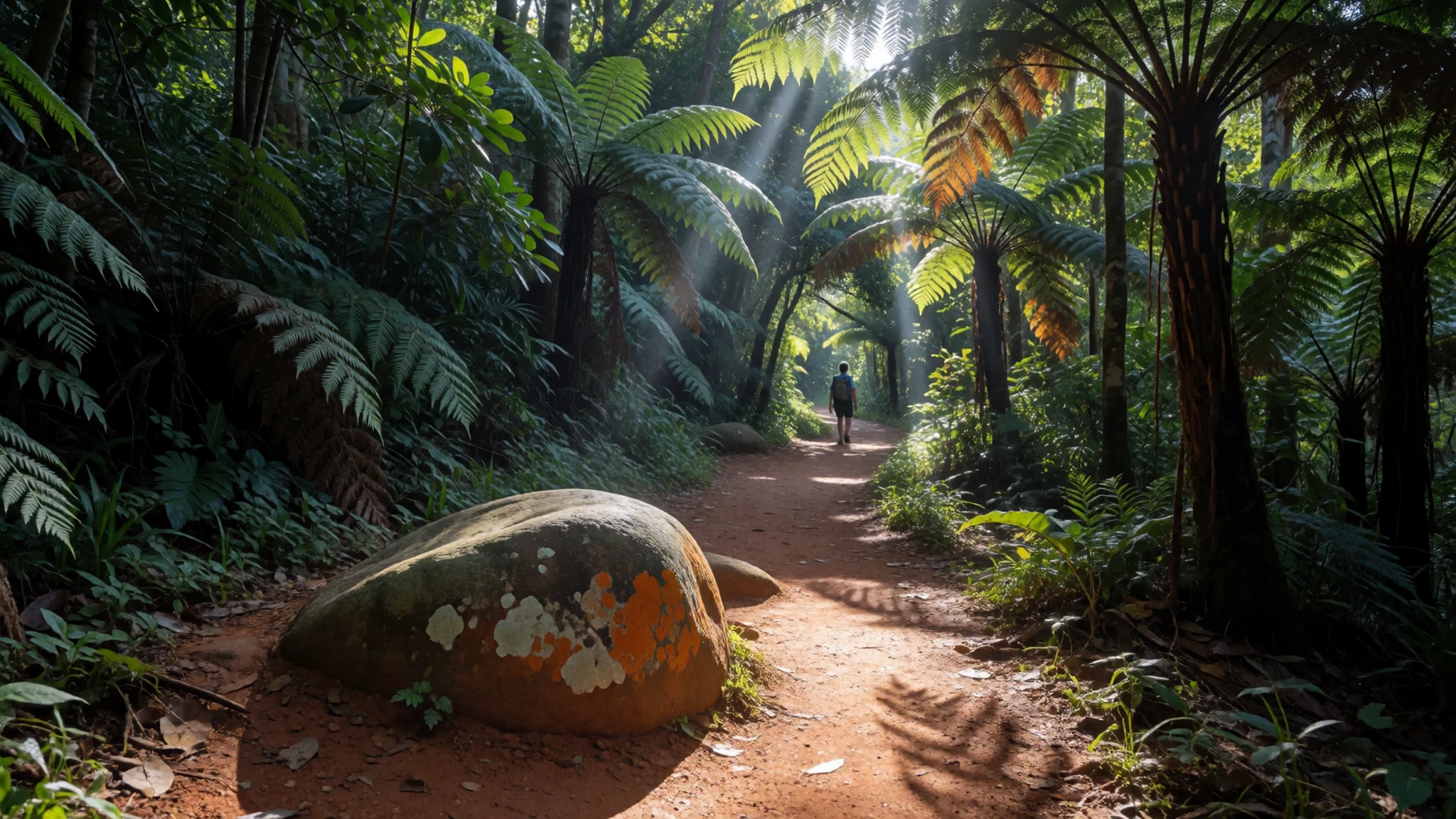
Culture
Tai Mei Tuk's culture is a mix of old Hakka village life and the weekend leisure habits of a very dense city. The villages here were Hakka settlements, and clan ties, ancestral halls and village committees still shape how land and shared space are managed. Alongside that sits a modern pattern: Hong Kong residents travel out to the New Territories to cycle, hike, barbecue and sit by the water, treating the edge of the reservoir as their open-air living room. Everyday manners follow the wider city. The phrase "mm goi" (唔該) covers both "excuse me" and "thank you", and it is used constantly, from squeezing past someone on the path to taking a drink from a stall. Behind it lies a broader habit of not troubling other people: covering coughs, wearing a mask when unwell, keeping voices moderate and waiting your turn. Hong Kong is already noisy, so adding more noise is not welcomed. Hong Kong operates under its own laws as a Special Administrative Region, with a British-era legal heritage, and littering and spitting are treated as offences with penalties, not just bad manners. Visitors often find that the rules are enforced lightly on a quiet weekday and more visibly on crowded holidays. Staff at the outdoor centres and the shopkeepers along the promenade are used to visitors and generally helpful, though few expect long conversations in the middle of a busy weekend. At the barbecue sites and on the promenade, take all your rubbish with you and keep music and voices low, because littering can draw a fine and the village houses sit right beside the path.
What to wear
Tai Mei Tuk's traditional dress belongs to its Hakka farming heritage. Hakka women were known for plain, dark cotton jackets and trousers, often in black or indigo, practical for fieldwork, and for a broad-brimmed hat with a fringe of cloth hanging around the edge to shade the face. Today these garments appear mostly at heritage events, in museums and in photographs, not in daily life. What people actually wear now is outdoor casual: sports kit, quick-dry shirts, caps, cycling shorts, light trousers and trainers. Families on weekend outings often wear matching sun hats and carry umbrellas against both sun and sudden rain, and anglers and hikers dress in practical, faded layers. Nobody here will mind if clothes are unfashionable, but they should be sensible. A visitor should dress for climate and terrain. From late spring to early autumn, wear light, breathable, quick-drying clothing, a hat, sunglasses and sunscreen, and carry a thin rain jacket because showers arrive fast. In the cooler months, a light layer is useful in the evening and by the water, where there is more breeze. Closed shoes or trainers with grip are better than sandals for the dam path and any hill trails, and a pair of shoes that can get wet helps if you plan to use water-sports facilities. There is no strict dress code, but if you pass a village shrine or ancestral hall, cover bare shoulders and stay quiet.
What to eat
- Egg waffles (gai daan jai) — Street stalls near the Tai Mei Tuk waterfront
Egg waffles are a Hong Kong street snack: a bubble-shaped, eggy batter cooked in a hot iron until crisp outside and soft inside. They are sold from small stalls and kiosks around the waterfront, especially on busy weekends, and are best eaten hot, straight from the paper bag.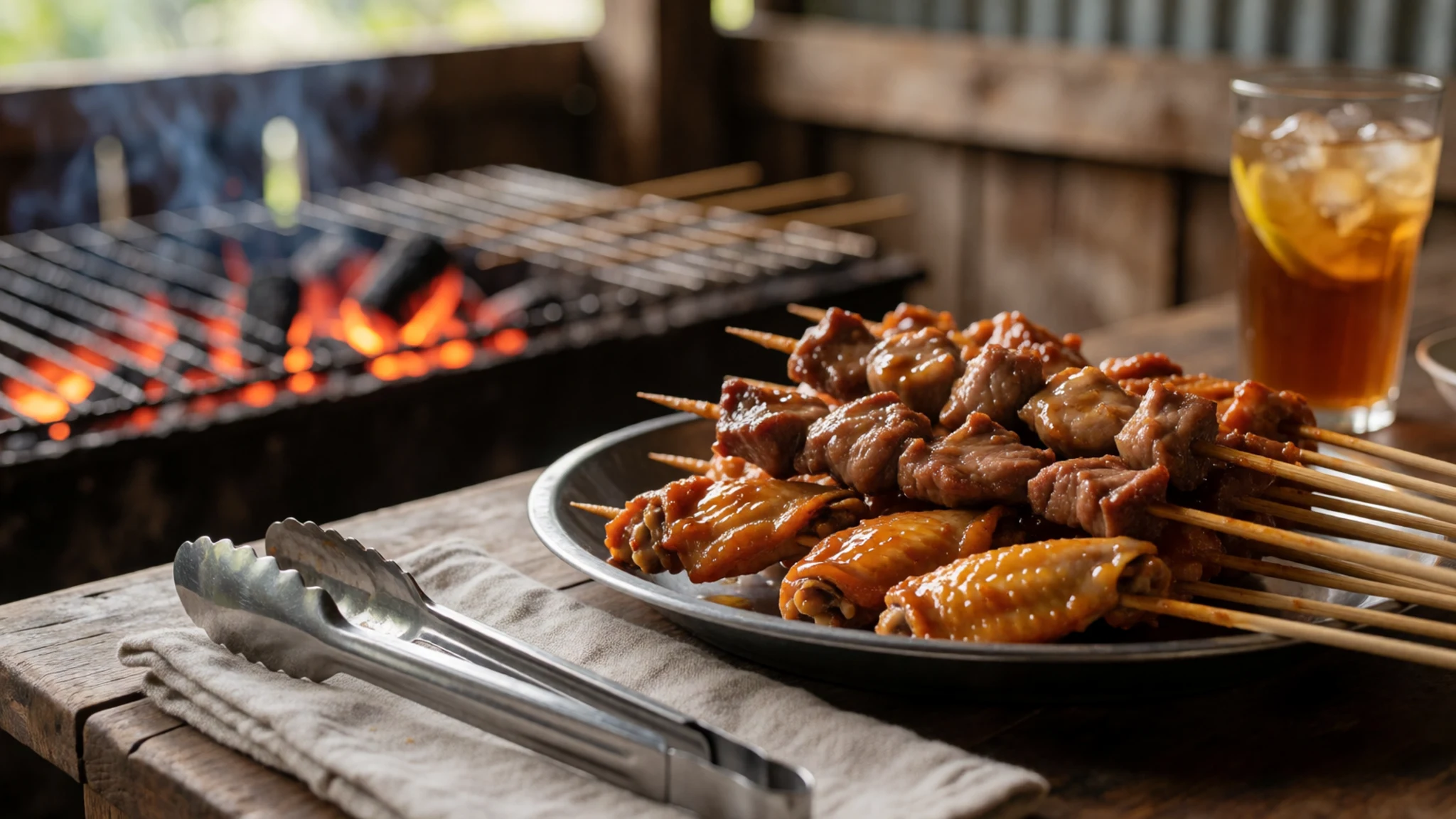
- Curry fish balls — Snack stalls and small eateries near the bus terminus
Fish balls in a thick, mildly spicy curry sauce are a classic cheap Hong Kong snack, served in a paper cup with a skewer. Look for the stalls and small eateries along the road to the promenade. The sauce stains, so keep clear of light-coloured shirts.
- Hong Kong milk tea — Local cha chaan teng cafés in Tai Po and simple eateries by the waterfront
Hong Kong milk tea is strong black tea blended with evaporated milk, served hot or iced and often sweet. It reflects the British tea habit adapted to local tastes. Order it at a casual local café (cha chaan teng) in Tai Po or at a simple eatery near the dam. - Pineapple bun (bo lo bao) — Bakeries and café-style eateries in Tai Po and near the village
The pineapple bun has no pineapple in it. The name comes from its sugary, crackled top, which looks like the fruit's skin. It is soft inside and often eaten with a slab of butter. Bakeries and café-style eateries sell them, and they make a good cycling snack. - Waterside barbecue — Designated barbecue areas near the waterfront and country park
Weekend barbecues are part of the Tai Mei Tuk routine: groups bring skewers, sausages, corn and vegetables to cook on fire pits at designated spots near the water. Cooking is done by visitors, so bring supplies, charcoal or buy locally, and clear everything away afterwards.
Plan it
Best time. October to December is the most comfortable time: the air is clearer, the heat and humidity ease, and the ridge shows well. March is also pleasant. Summer is hot, humid and prone to heavy showers and typhoon warnings, so a weekday visit with an early start works best.
How long. 1
Getting there. Fly into Hong Kong International Airport, take the airport rail and MTR links into the city, then the MTR East Rail line to Tai Po Market station. The last leg is a bus, minibus or taxi from Tai Po to Tai Mei Tuk, taking about as long as a short suburban ride; check the operators for current services and times.
Budget. low
Tips
- Go on a weekday or early on a weekend morning, because bicycles and barbecue spots fill up by midday
- Carry water, sun protection and a rain layer, as there is little shade on the dam and the weather turns fast
- Bring a bank card and some cash for small stalls and bicycle rental, and check what each shop accepts
- Check the official Hong Kong government and tourism sites for current access rules on the dam and country park trails
Etiquette
- Take all rubbish away with you, and do not spit or litter
- Keep voices and music low near the village houses
- Ask before photographing people, especially at barbecue groups or village homes
Nearby
Sources
- Wikidata Q7675791 (CC0)
- Wikipedia: Tai Mei Tuk (rev 1294860740) (CC BY-SA 4.0)
- Wikivoyage: Hong Kong (rev 5408641) (CC BY-SA 4.0)
- Photo: 香港青年協會大美篤水上活動中心 (Chong Fat) (Public domain)
- Photo: Pat Sin Leng and Tai Mei Tuk (Geographer) (CC BY 3.0)
- Photo: 船灣淡水湖主壩北端向馬鞍山展望 (A52ljgh89) (CC BY 3.0)
- Photo: 大美督村公所 (Chong Fat) (Public domain)
- Photo: 大尾篤劉皇發海上活動中心正門 (Chong Fat) (Public domain)
- Photo: 女童軍梁省德海上活動訓練中心 (Chong Fat) (Public domain)
- Photo: Best Sonic Industrial Tai Shui Hang to Tai Mei Tuk timetable (LN9267) (CC BY-SA 4.0)
- Photo: Blue Jellyfish in north eastern Hong Kong (Earth100) (CC BY 3.0)


