Sultan Haji Omar Ali Saifuddien Bridge
Sultan Haji Omar Ali Saifuddien Bridge, Brunei
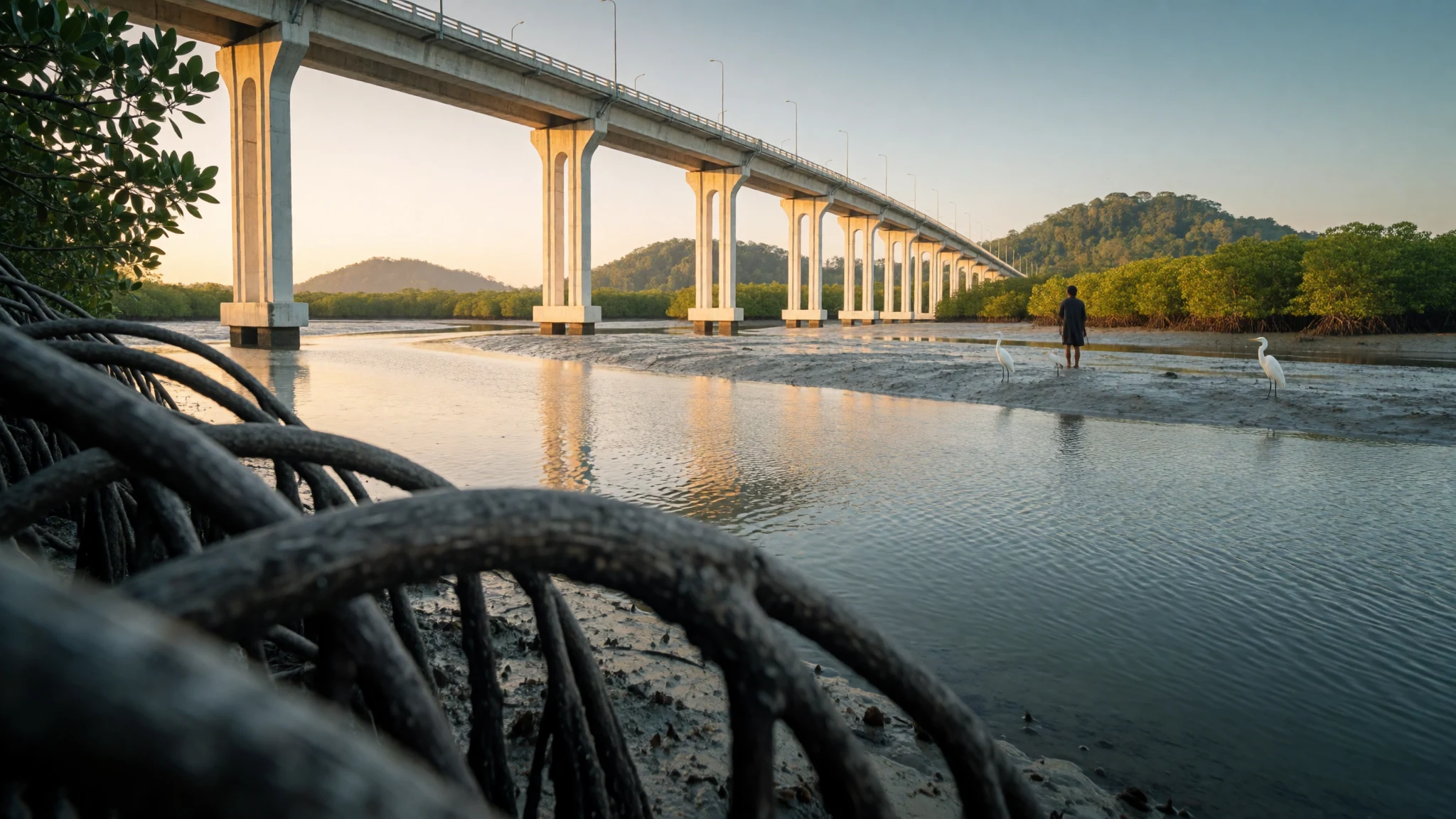
The Sultan Haji Omar Ali Saifuddien Bridge joins Brunei's separated Temburong district to the capital by a road across the bay.
The place
The Sultan Haji Omar Ali Saifuddien Bridge is the road that ties Temburong to the rest of Brunei without a boat or a detour through Malaysia. Brunei is split into pieces of land. The larger holds Bandar Seri Begawan and the oil coast. The smaller, Temburong, sits across Brunei Bay, cut off by the Malaysian district of Limbang. Earlier the ordinary crossing was a launch over the water, or a drive that left the country and came back in. The bridge makes that journey a drive: viaducts over the bay, a high span where ships pass, then a quieter stretch through mangrove and forest toward Bangar.
The crossing is named for Sultan Haji Omar Ali Saifuddien, the ruler linked with Brunei's modern reshaping and the father of the present sultan. People say Temburong Bridge, which says what the structure is for. It is not a promenade. There is no pavement to stroll and no row of cafes on the deck. It is a controlled highway, so cars and coaches can move between the capital district and a place that had felt like another country. From the carriageway the view runs from pale channels to a dark line of mangrove, then to the forested hills of Temburong.
What the bridge protects matters as much as what it joins. Temburong's inland is rainforest, and the road was threaded so the forest would not be cut open for its whole length. Travellers notice the light change when the bay opens and again when the trees close in. Heat sits on the concrete at midday. Rain arrives as a sudden sheet, and the water turns the colour of tea. A morning in Bandar can become an afternoon among hornbills, and the way home is no longer a matter of tides and border posts.
Its story
The story of the Sultan Haji Omar Ali Saifuddien Bridge is the story of a country that could see its own district and not reach it by road. Temburong belonged to Brunei, yet Limbang, a finger of Sarawak, lay between it and the capital. A driver met a border and a long loop through Malaysia, then the same on the way home. The other choice was water: speedboats from the capital's river mouth across Brunei Bay, timed to weather and daylight, with forest waiting on the far bank.
Talk of a fixed link lasted a long while, because the gap was political as much as physical. A bridge would keep a domestic journey inside the country and make Temburong feel less like an outpost. It also had to cross a working bay, with ships bound for the port, then enter forest Brunei treats as green reserve rather than a strip to clear. Long viaducts step across shallow water. A taller span lifts the road where vessels need room underneath. Nearer Temburong the road slips through mangrove into the trees, arranged so the canopy can meet above the traffic.
The name reaches back a generation. Sultan Haji Omar Ali Saifuddien is remembered as the ruler who steered Brunei toward a modern administration while holding the Malay Islamic monarchy at the centre of public life. His name on the bridge sets new concrete inside that older story: a royal work, and a district drawn nearer the capital. School runs, hospital visits, and the weekly trip home no longer depend on a boat or a stamp at a land border. A small country declined to let a neighbour's geography decide how its own people meet.
What to see
- Navigation span — Brunei Bay shipping lane
The navigation span is the tall section of the Sultan Haji Omar Ali Saifuddien Bridge over the shipping lane in Brunei Bay. The deck lifts so vessels can pass beneath toward the port. From a car the moment is brief: a change of height, open water, mud banks, and cranes. There is nowhere to pull over, so the sight is the lift and the bay traffic moving under the shortcut.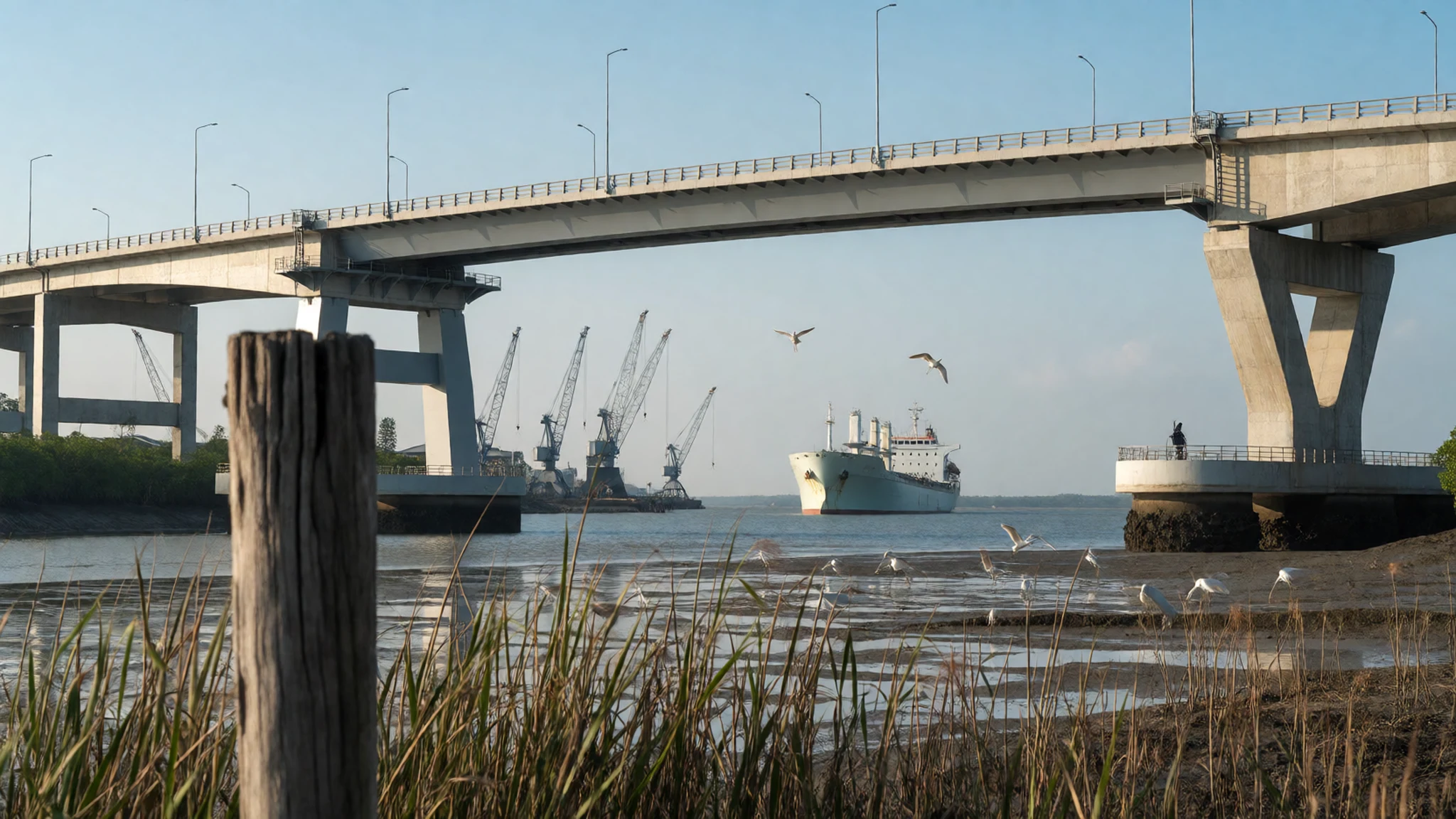
- Bay viaducts — Brunei Bay
The long viaducts of the Sultan Haji Omar Ali Saifuddien Bridge carry the road across the shallow reach of Brunei Bay. Pier after pier repeats above pale channels and mangrove fringe, and the feeling is distance more than a landmark tower. Birds work the banks. Hard rain hides the far shore. Drivers notice how ordinary the water looks once a guardrail stands between them and it.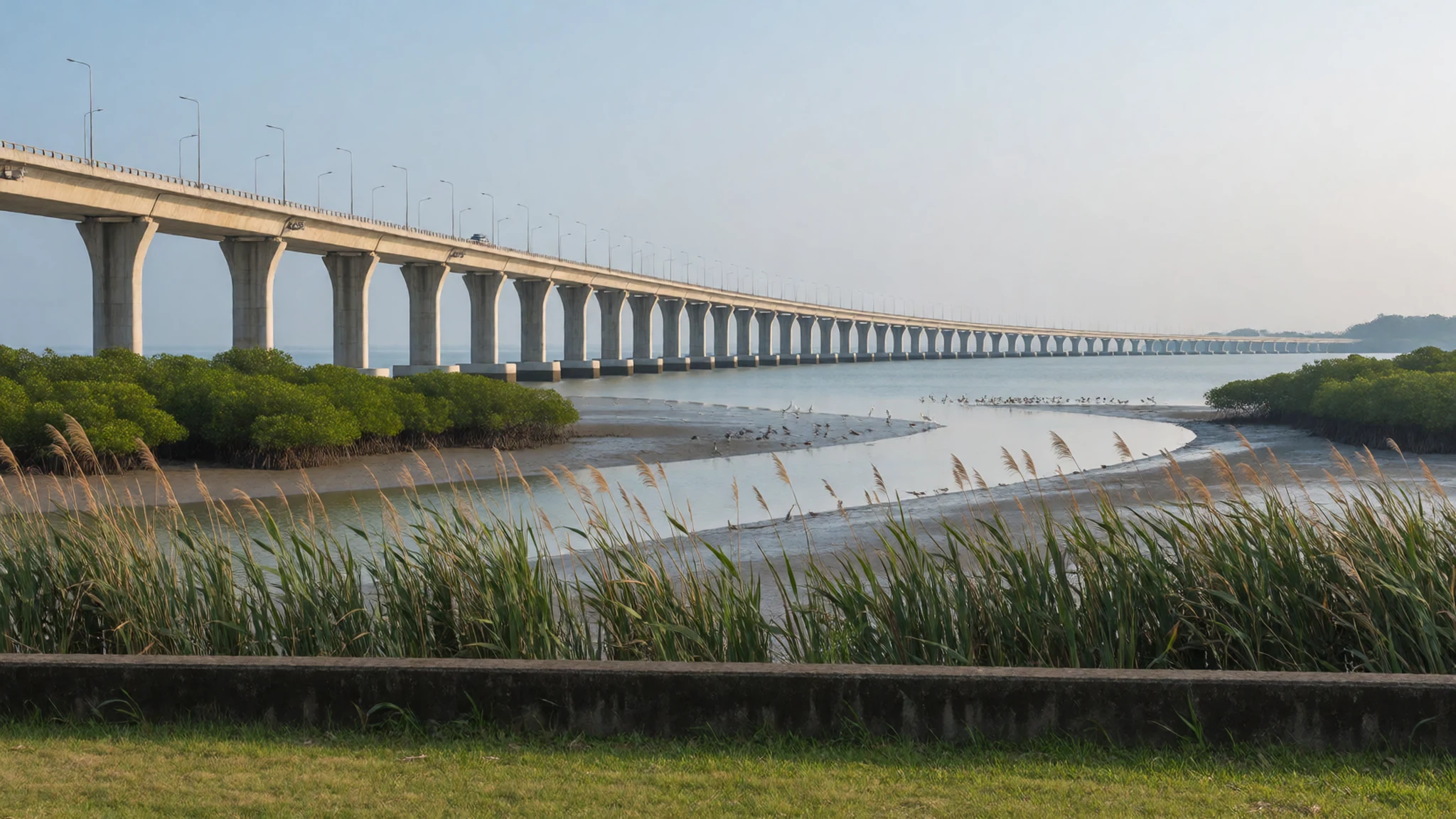
- Labu forest stretch — Labu, Temburong
Past the bay, the Sultan Haji Omar Ali Saifuddien Bridge enters the green of Labu on the Temburong side. Mangrove gives way to taller forest, and the road is threaded so the trees are not bulldozed into a wide scar. Light drops and the air smells wetter. The stretch shows the project's care: a highway arriving in rainforest without acting like a clearing. Hornbills follow the glare off the water.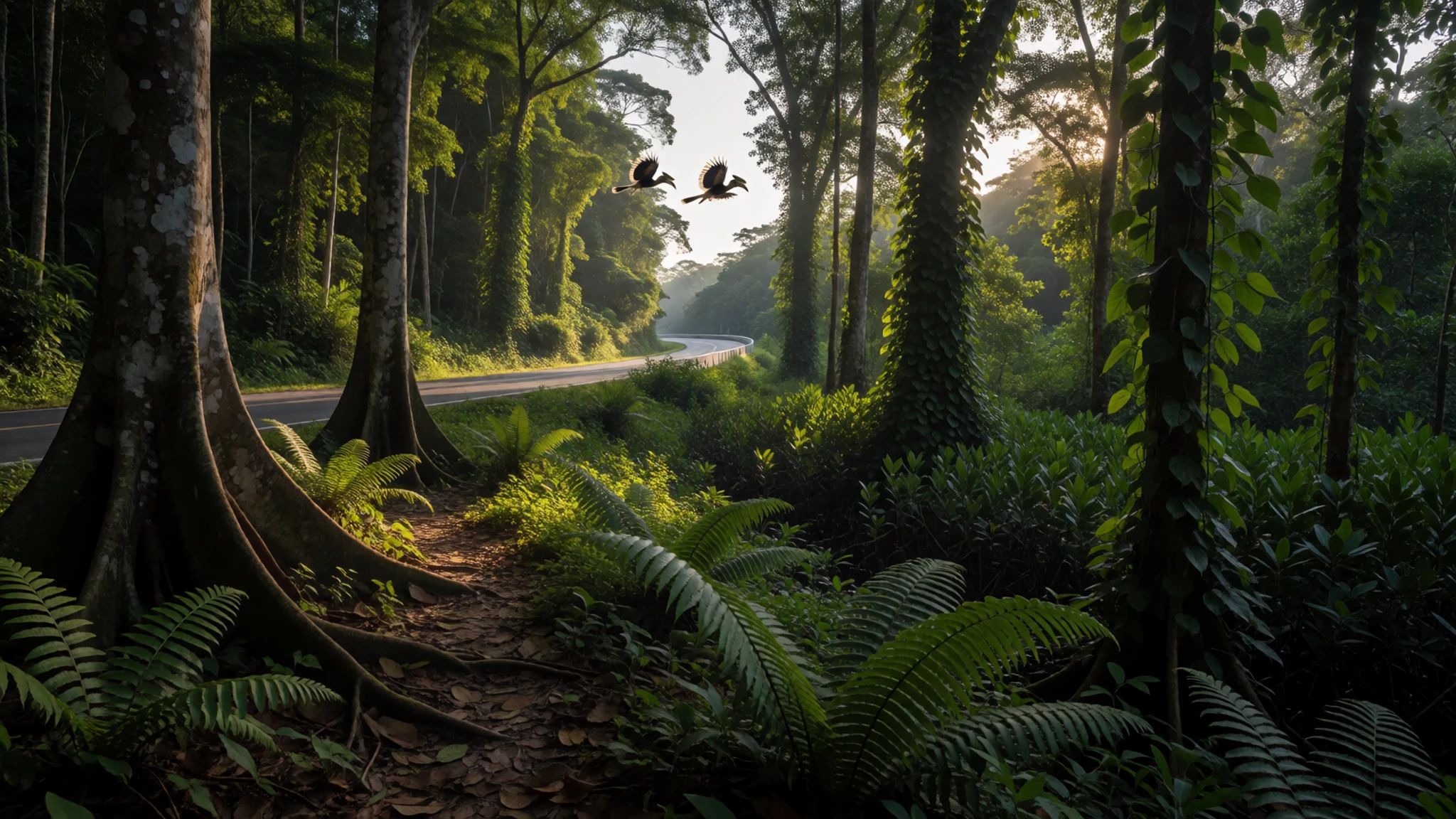
- Bangar — Bangar, Temburong
Bangar is the small water-taxi town in Temburong, and the bridge sets traffic down at the Jalan Labu roundabout in Labu Estate. District offices, the market, and the river sit close, and the pace is quieter than Bandar. This was the jetty end of the boat ride. Drivers arrive without leaving Brunei, which changes who comes. Bangar is the hinge: a meal, a walk by the water, then forest beyond or the drive back.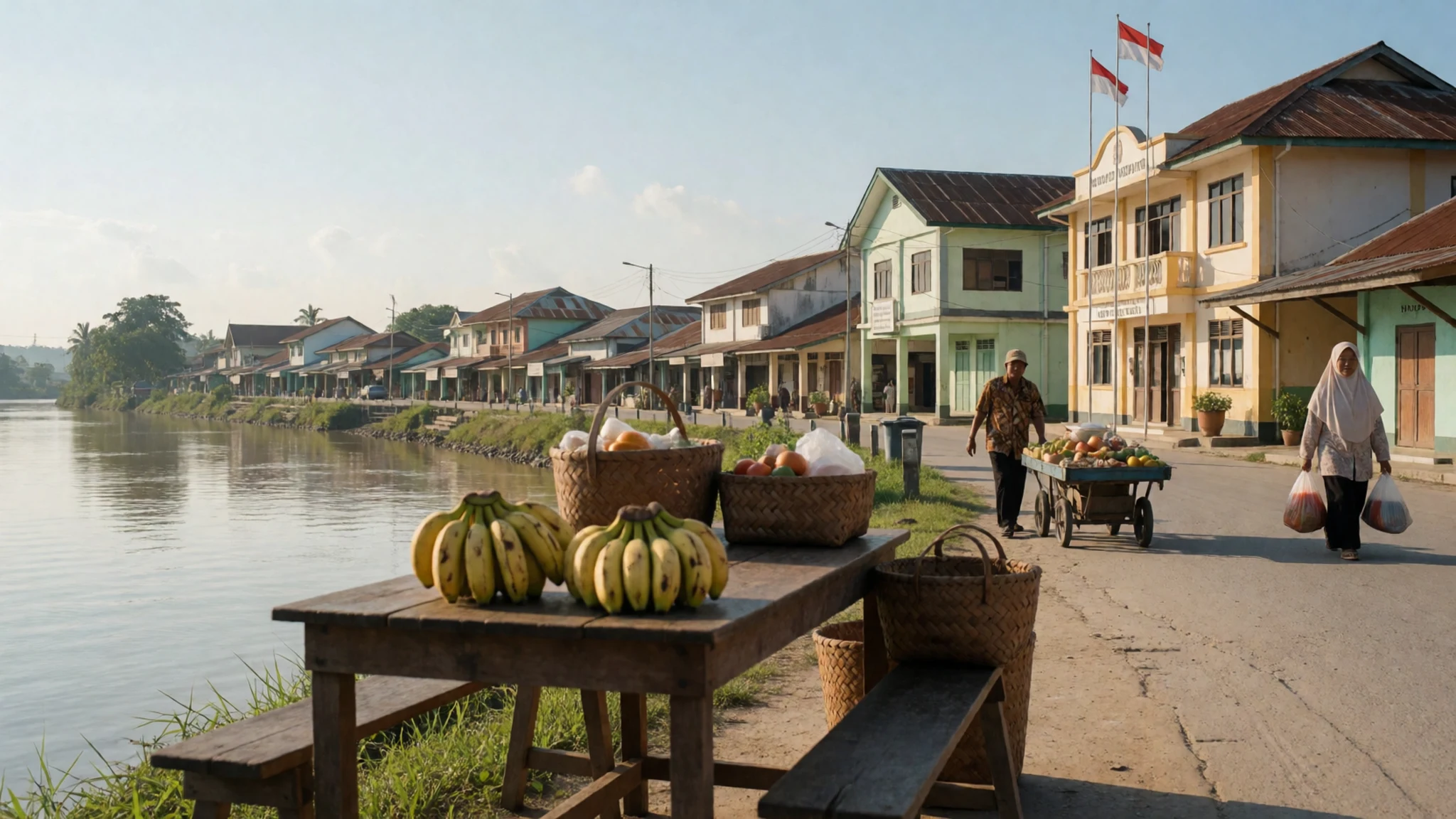
- Kampong Ayer — Kampong Ayer, Bandar Seri Begawan
Kampong Ayer, the stilt village on the Brunei River in Bandar Seri Begawan, is the old counterpart of the Sultan Haji Omar Ali Saifuddien Bridge. Life here turned on boats, tides, and timber walkways long before a bay road existed. Houses, schools, and mosques stand over the water, and taxis thread the channels. The village makes the bridge legible: a new road beside a capital that lived on the bay.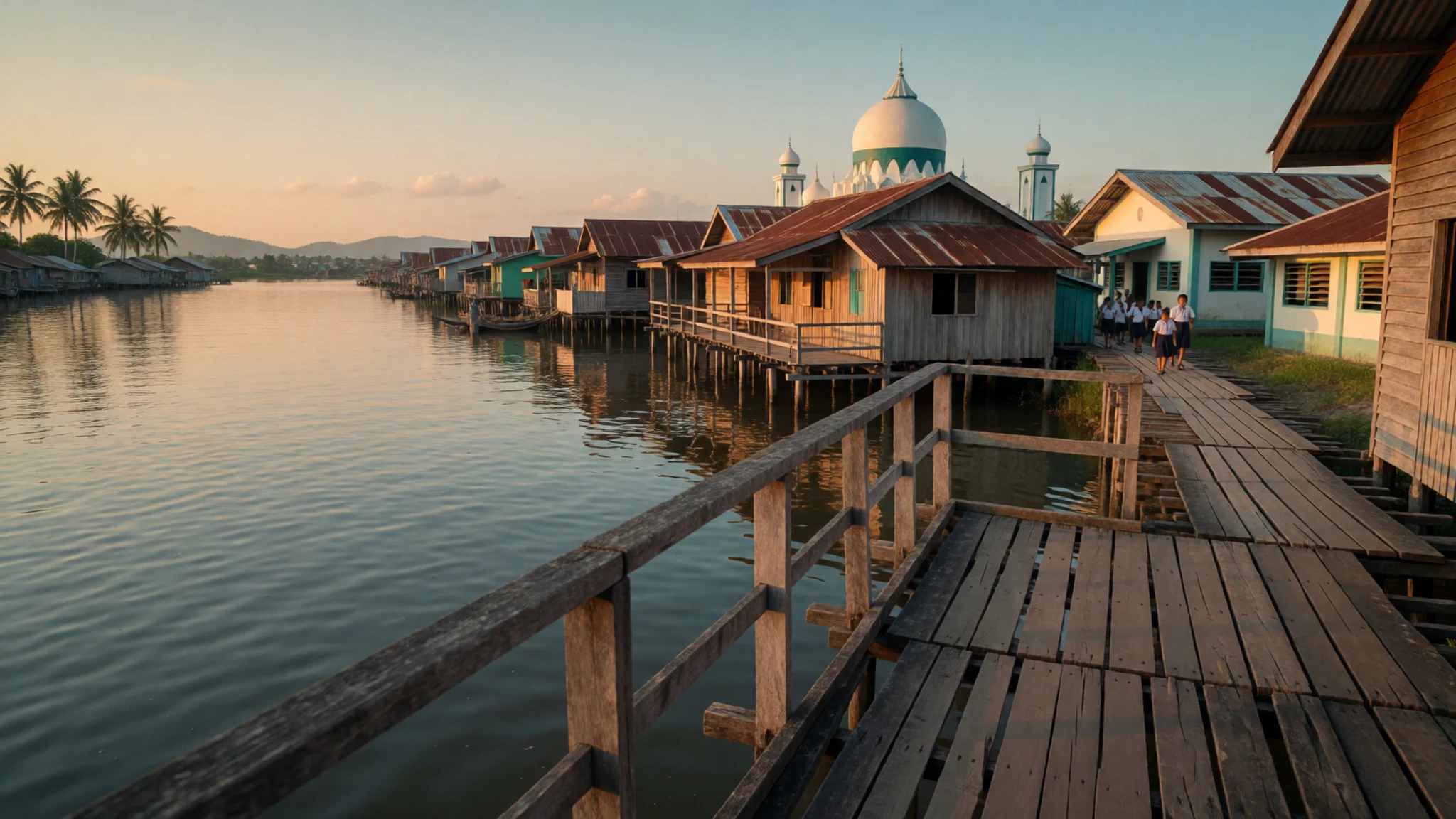
Culture
Culture along the Sultan Haji Omar Ali Saifuddien Bridge is Brunei's own mix, carried from Bandar to Temburong rather than invented for the crossing. The state is a Malay Islamic monarchy: the sultan at the centre, Islam as the public faith, and Malay custom in language, food, and family duty. Malay is the everyday tongue, with English widely used in town. The call to prayer marks time more reliably than the traffic on the bridge. Friday gathers men at the mosque, and during Ramadan the daytime pace slows, then the evening meal becomes the social hour.
Temburong adds a rural note. Villages are smaller, the river still matters, and the forest is not scenery but a place people enter with guides and permission. Public life is modest. Affection is private, alcohol is not part of the street, and halal practice shapes every cookshop. The bridge has made both moods a day out, which is new, but it has not loosened the manners.
Dress modestly, speak quietly inside mosques, and ask before you photograph people at prayer or in Kampong Ayer homes.
What to wear
Fashion around the Sultan Haji Omar Ali Saifuddien Bridge follows Brunei rather than the engineering. Formal Malay dress is the language of weddings, Hari Raya, and anything touched by the court. Men wear the baju Melayu, a long tunic and trousers, often with a songkok cap and a samping at the waist. That cloth is often songket, a brocade of gold or silver thread woven through silk so the pattern catches the light. Women wear the baju kurung, a loose long tunic over a skirt, commonly with a tudung. These clothes belong to the mosque and to family houses in Bandar and Temburong, not to the carriageway.
Daily dress is simpler and still modest. Offices favour long sleeves and covered legs. Many women pair a hijab with a modern tunic and trousers. Younger people in the malls wear jeans and trainers, though singlets and very short hemlines stay unusual. Heat is constant and rain is sudden, so cloth is light and a spare layer is normal.
Breathable cotton, covered shoulders, and covered knees suit visitors for town, markets, and the drive. A scarf helps at mosques. Shoes that slip off save fuss in prayer halls and homes. Forest trails on the Temburong side want closed shoes with grip, and a light rain jacket earns its place.
What to eat
- Ambuyat — Malay eateries in Bandar and Bangar
Ambuyat is Brunei's sago staple, eaten on both sides of the Sultan Haji Omar Ali Saifuddien Bridge. Diners roll the sticky paste on a bamboo fork and dip it into sour prawn sauce and chilli, with fish or greens alongside. Malay eateries in Bandar and Bangar serve it as lunch.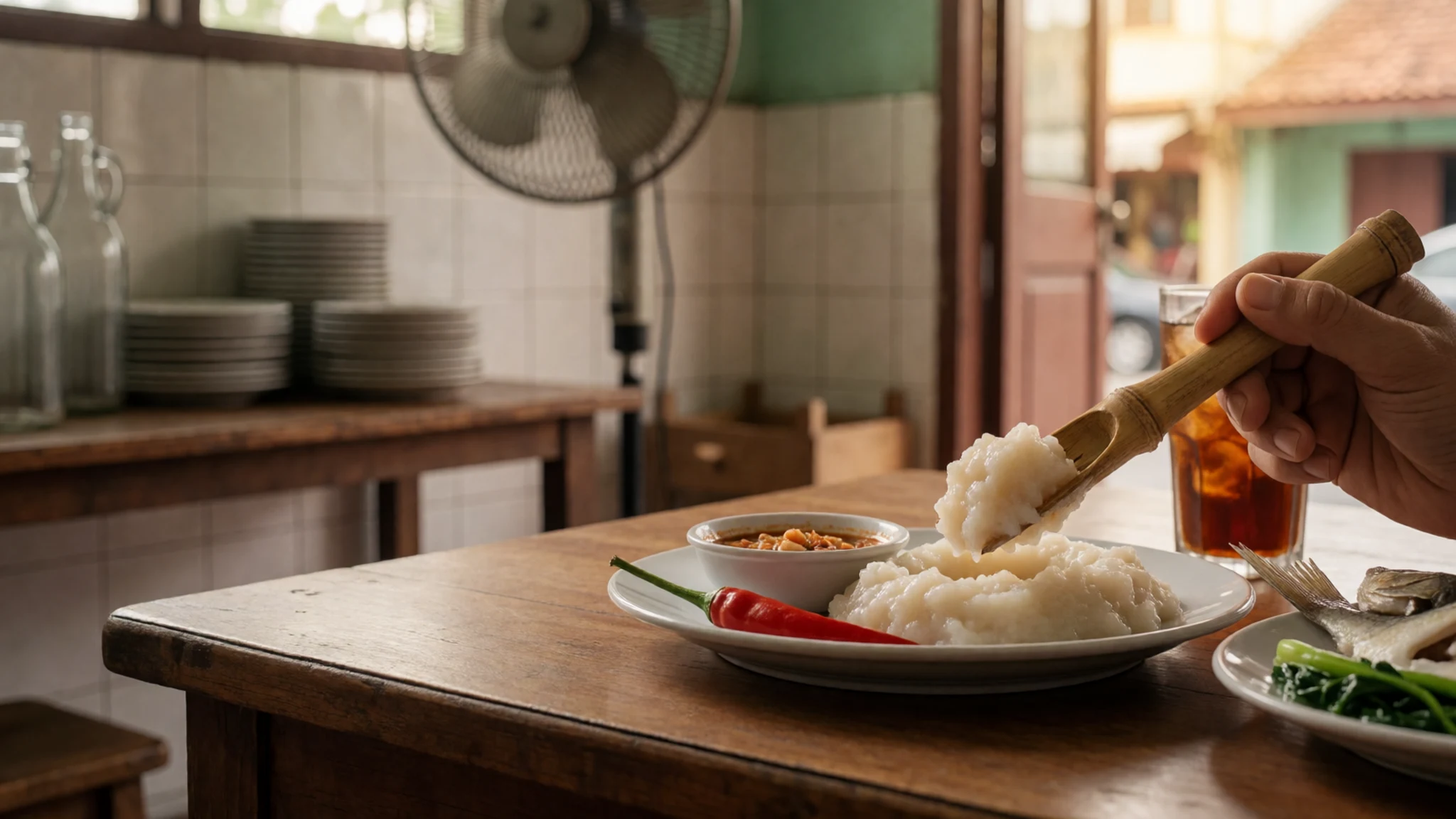
- Nasi katok — Night stalls in Bandar and simple shops in Bangar
Nasi katok is the plain parcel eaten near the Sultan Haji Omar Ali Saifuddien Bridge: rice, fried chicken or beef, and sambal. The name remembers a door-knock from sellers who came after dark. Hot and salty, it is wrapped at night stalls in Bandar and simple shops in Bangar.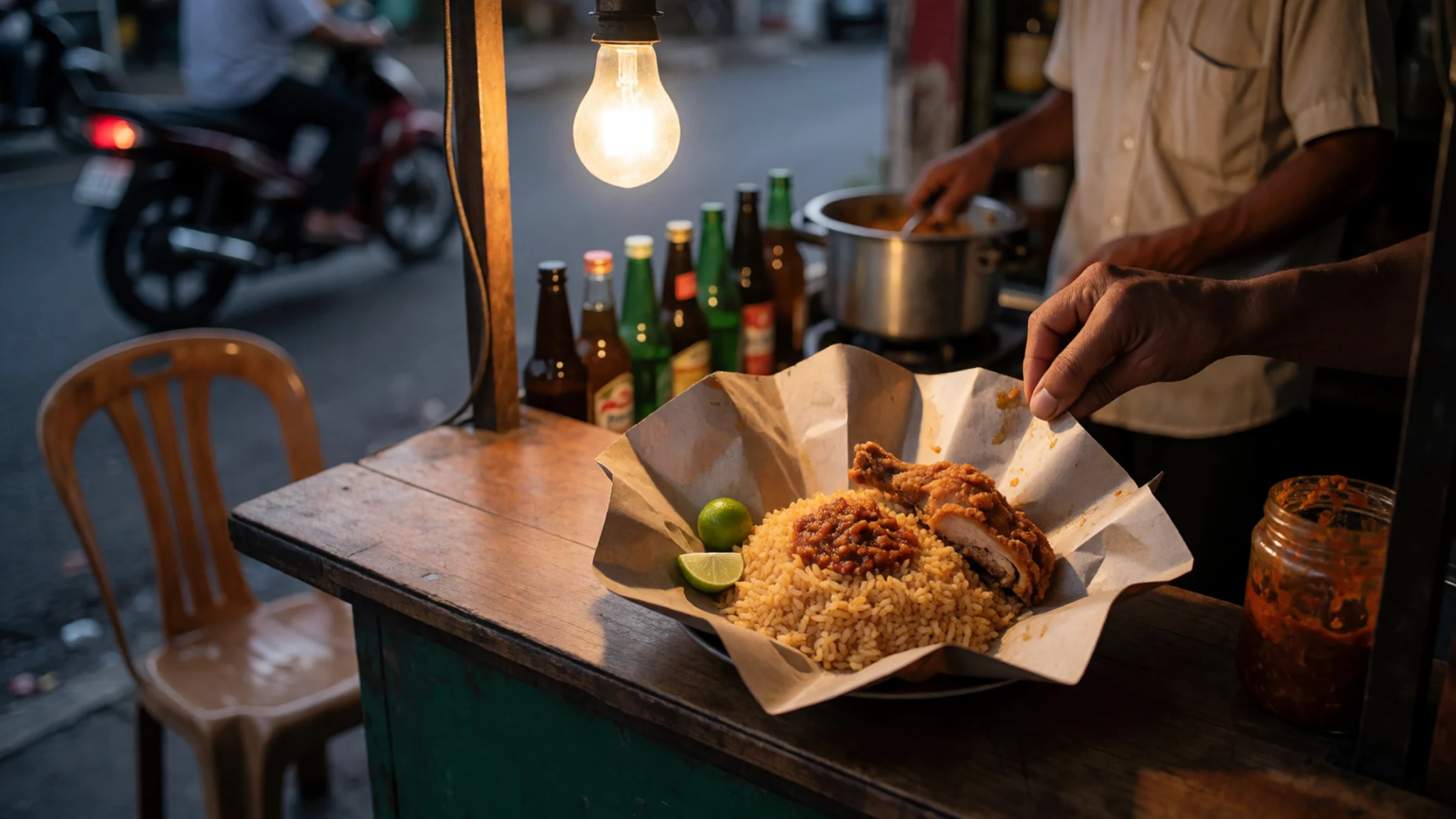
- Soto — Morning stalls in Bandar and Bangar
Soto on either side of the Sultan Haji Omar Ali Saifuddien Bridge is a spiced soup of chicken or beef with rice or noodles, herbs, and lime. Ginger and fried shallot scent it. Stalls serve it from early morning in Bandar and in Bangar, often beside sweet strong coffee. - Satay — Tamu markets and night stalls in Bandar
Satay around the Sultan Haji Omar Ali Saifuddien Bridge is grilled chicken or beef with a thick peanut sauce, pressed rice, and cucumber. Smoke is the sign. Tamu markets and night stalls in Bandar grill it over charcoal, as do outdoor gatherings in Temburong. - Kuih — Tamu stalls in Bandar and home stalls in Temburong
Kuih are the small sweets that finish a meal near the Sultan Haji Omar Ali Saifuddien Bridge. Pandan, coconut, and glutinous rice do the work: layered cakes, banana fritters, and sticky parcels in leaves. Tamu stalls in Bandar and home stalls in Temburong sell them by the piece with tea.
Plan it
Best time. February to April is the slightly easier stretch on the Sultan Haji Omar Ali Saifuddien Bridge, with fewer long rains, though showers still come. The rest of the year is hot and humid, and afternoons often turn wet.
How long. 1–2
Getting there. Brunei International Airport serves Bandar Seri Begawan. From the capital, a taxi or hired car reaches the Brunei-Muara end of the Sultan Haji Omar Ali Saifuddien Bridge and continues to Temburong. Speedboats still cross the bay for travellers who want the water, but the road no longer depends on them.
Budget. high
Tips
- Treat the bridge as a highway: there is nowhere safe to stop on the span.
- Leave Bandar early, before heat and rain build over the bay.
- Carry cash for tamu stalls; cards are easier in Bandar malls than in Temburong shops.
- The drive stays inside Brunei, so this trip does not need the old road through Limbang.
- For trails beyond Bangar, book a local guide before setting out.
Etiquette
- Cover shoulders and knees at mosques and in village homes.
- Take off shoes before a prayer hall or a private house.
- Ask before photographing people, above all at prayer or on Kampong Ayer walkways.
- Keep alcohol out of the day; it is not part of public life here.
Nearby
Sources
- Wikidata (CC0)
- Wikipedia (CC BY-SA 4.0)
- Wikivoyage (CC BY-SA 4.0)
Wildlife
- Hornbill (animal)
Meet the oriental pied hornbill, also called the Sunda or Malaysian pied hornbill: a large member of the hornbill family that lives in the treetops, high above your head. Around Sultan Haji Omar Ali Saifuddien Bridge, it tends to follow the glare off the water, so look where the light sparkles. Nobody can promise a season or time of day. Stay well back, stay quiet, let a guide lead you, and never give it food.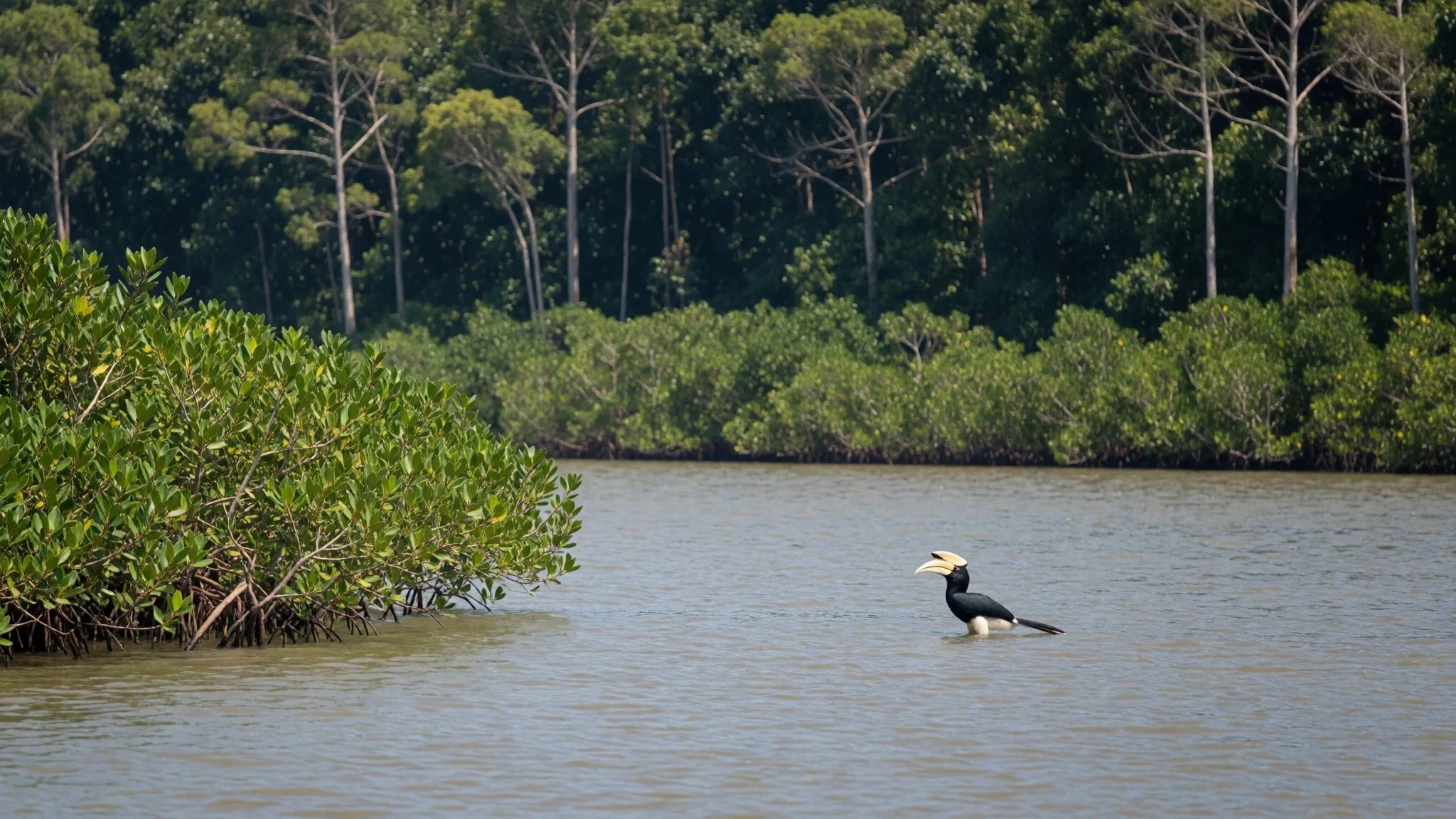
- Hornbill (bird)
Meet the oriental pied hornbill, also called the Sunda or Malaysian pied hornbill: a large member of the hornbill family that lives in the treetops, high above your head. Around Sultan Haji Omar Ali Saifuddien Bridge, it tends to follow the glare off the water, so look where the light sparkles. Nobody can promise a season or time of day. Stay well back, stay quiet, let a guide lead you, and never give it food.