Brunei Bay
Brunei Bay, Brunei
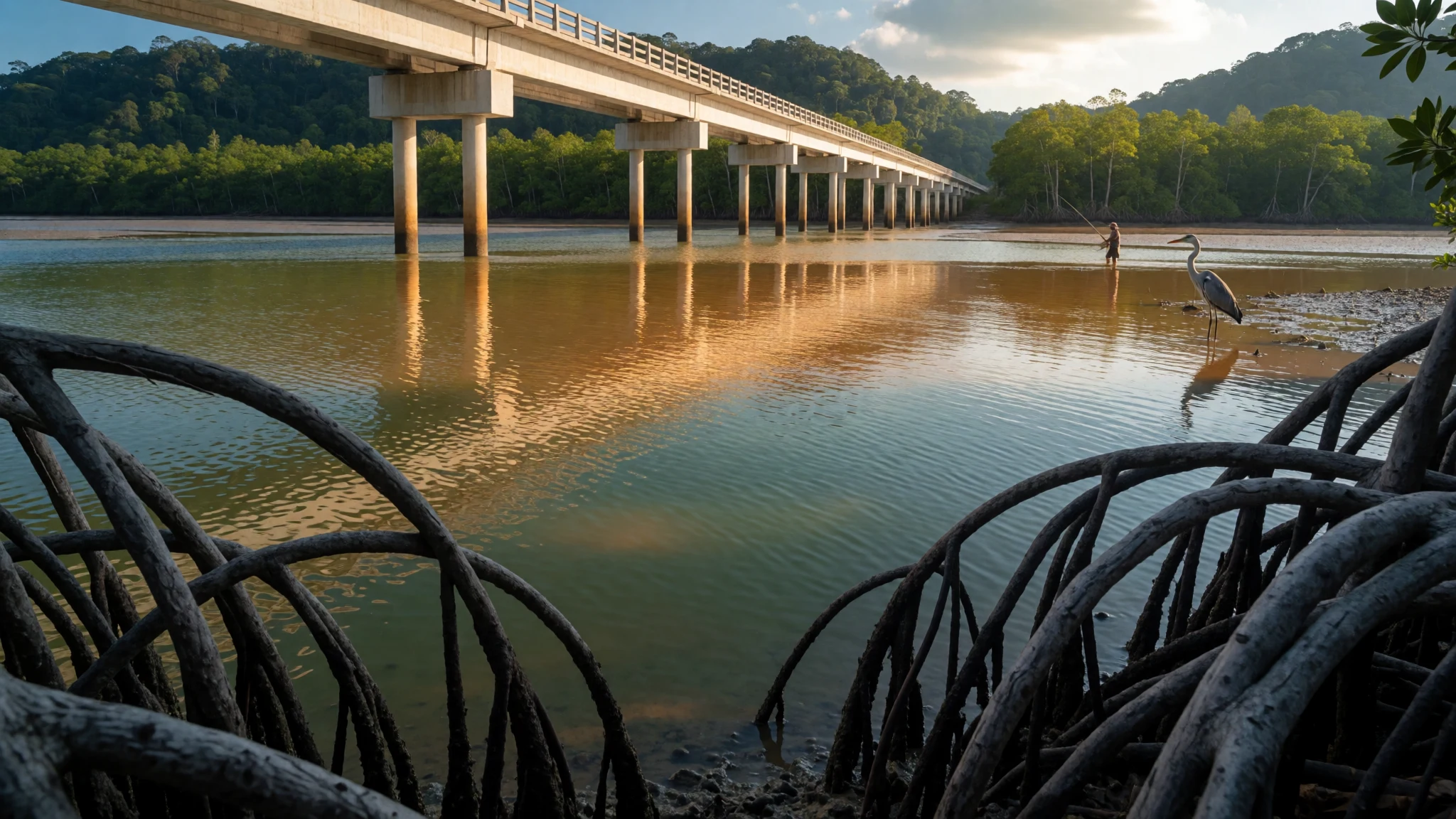
Brunei Bay is a quiet Bornean estuary where a long modern bridge, mangrove forest and sleepy island ports meet across two countries.
The place
Brunei Bay lies on the north-west coast of Borneo, shared between Brunei and Malaysia and east of the capital, Bandar Seri Begawan. It is less a beach destination than a working estuary: a broad, shallow sheet of brown-green water fringed by mangroves, stilt villages and small ports, with rainforest rising behind. The bay matters because it is the sea approach to Temburong, the part of Brunei cut off from the rest of the sultanate by Malaysian Sarawak. For most of history, reaching Temburong meant a boat. Since 2018 a road link of about 30 kilometres has joined Muara and Temburong, and the stretch across the bay itself is about 14 kilometres, so a trip that once meant ferries and border posts is now a single drive. On the Malaysian side the bay is bordered by the island of Labuan and the western edge of Sabah, where the Klias wetlands reward early boat trips. Expectations need setting. Swimming is not the draw, because the water is silty, and the climate is hot and humid all year, with heavy rain possible in any month. The appeal is a different Borneo: river life, birds, monkeys in the mangroves and a coastline that has not been turned into resort strips. Distances look short on a map, but border formalities, ferries and weather can stretch them, so the bay suits slow travel better than a tight itinerary.
Its story
Brunei Bay sits in waters that were once the heart of a much larger Bruneian sultanate, whose influence reached along the northern Borneo coast as far as present-day Sabah. Over the following centuries the region was pulled apart by rival powers. The north-east came under the Sulu sultanate, while Europeans began arriving and tried to set up trading posts. A British attempt on an island off the northern tip of Sabah never took off. A lease over North Borneo then passed from an American consul to an American company, whose settlement also failed, and eventually to a Hong Kong-based Austrian consul and a British partner who formed the British North Borneo Company. It ran the territory under British protection until Japanese forces invaded during the Second World War. The bay then became a war zone. Allied warships, bombers and landing craft gathered here for the Borneo campaign, and archive photographs show rockets and gunfire hitting the beaches as troops went ashore. Sabah later joined the Malaysian Federation, while Brunei kept its own path as a sultanate, leaving the bay as a border water between two countries. The newest chapter is the long bridge across it, which ties Temburong to the rest of Brunei without any foreign soil in between. Few places show so plainly how a sheet of water can shape who rules what, and how roads can later undo that.
What to see
- The Temburong bridge — Muara to Temburong
The road bridge across Brunei Bay is a sight in its own right: a long, low line running over open water, with mangroves on both ends. Driving it takes minutes, but the views of the bay, fishing boats and distant forest make it worth doing in daylight, ideally on a clear morning.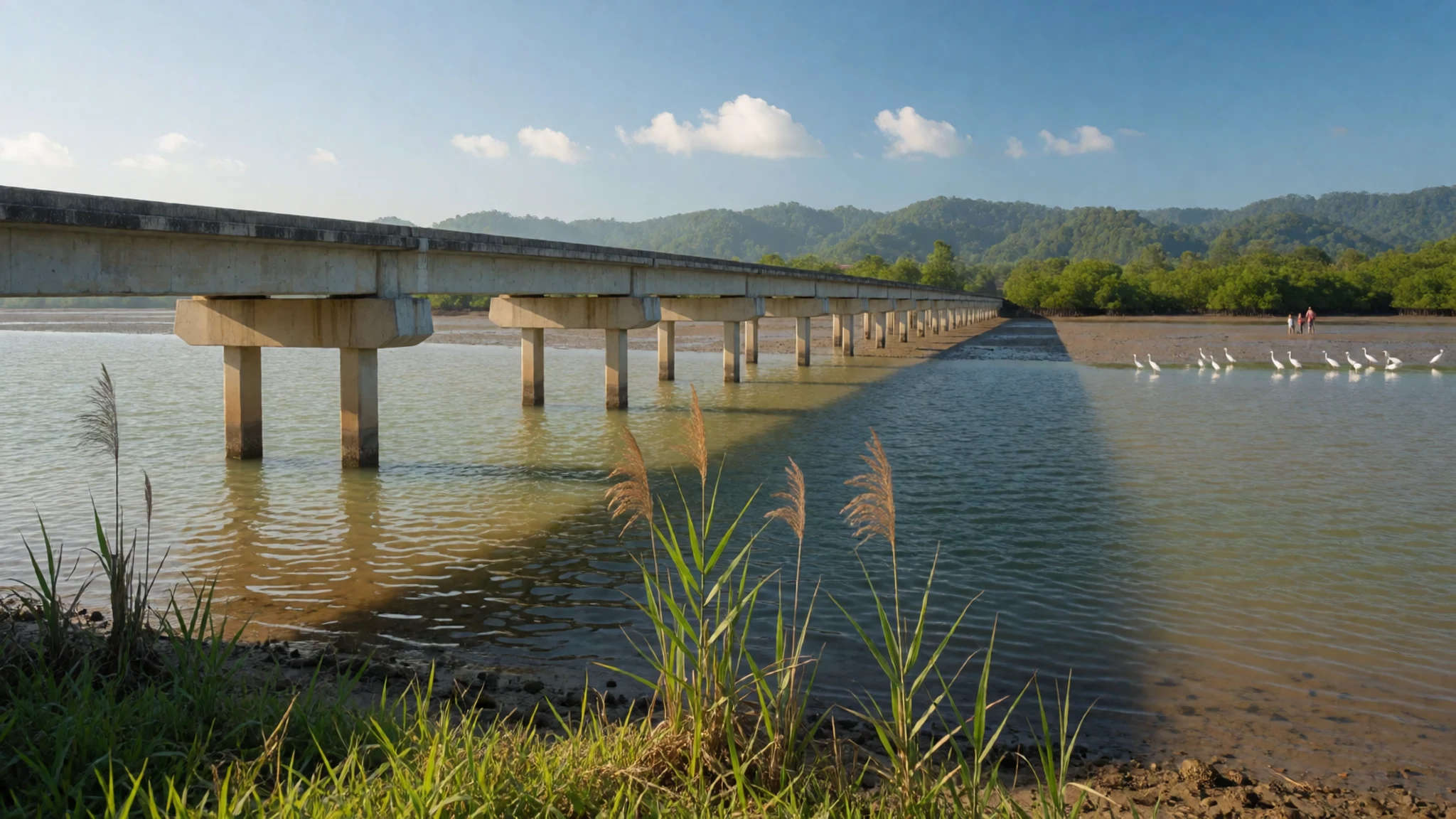
- Kampong Ayer, Bandar Seri Begawan — Bandar Seri Begawan
Kampong Ayer is a cluster of stilt villages along the river that feeds the bay's western shore. Water taxis cross in a couple of minutes, and walking the plank-built walkways shows how families live above the water, with schools, shops and mosques all raised on posts.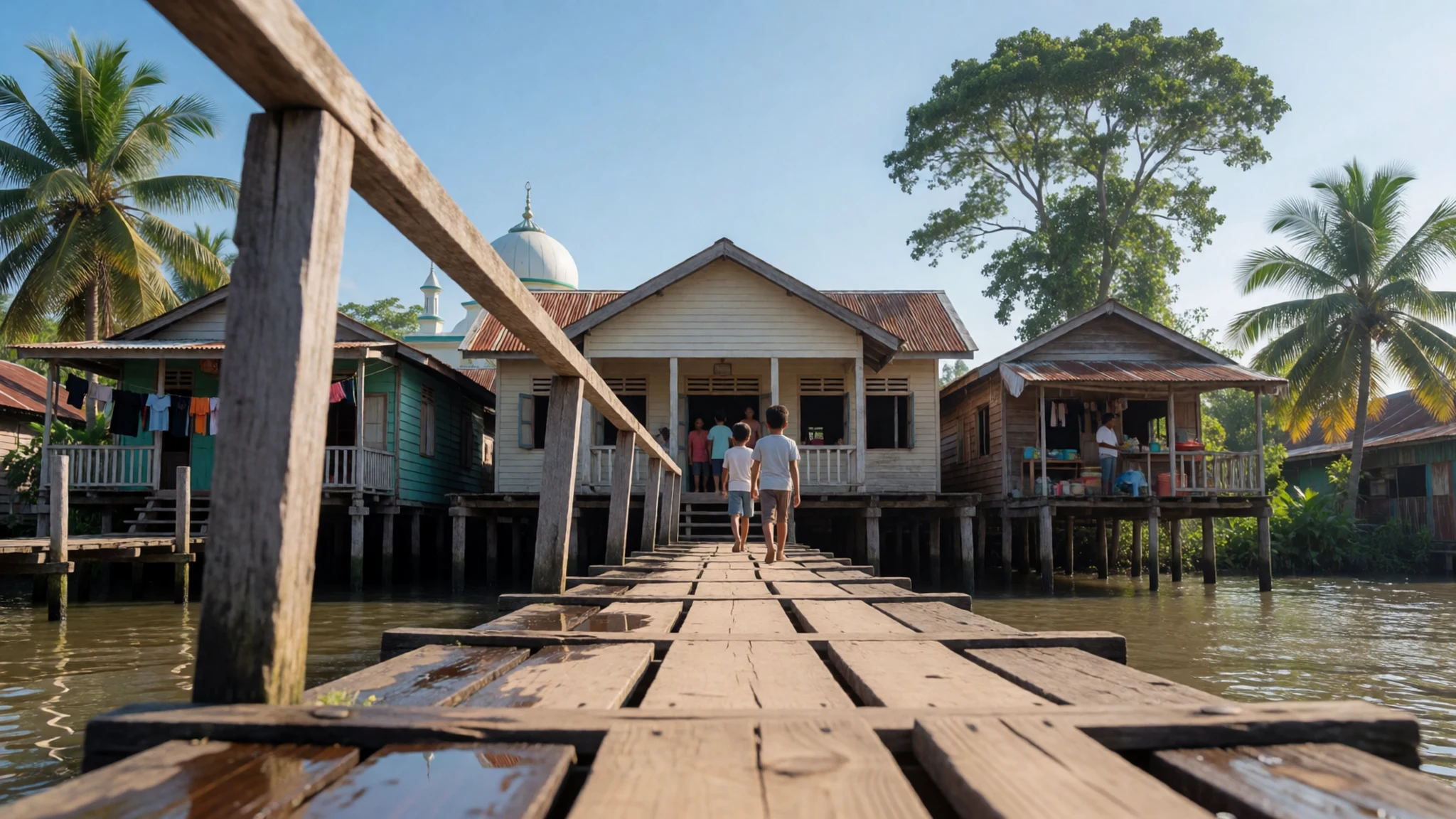
- Temburong rainforest and mangroves — Temburong District
Temburong, the district the bay opens onto, keeps large areas of forest. Longboats run up shallow rivers to reach trails and canopy viewpoints, usually arranged through local operators. Go early for birds and cooler air, and expect humidity, leeches after rain and a good deal of stairs.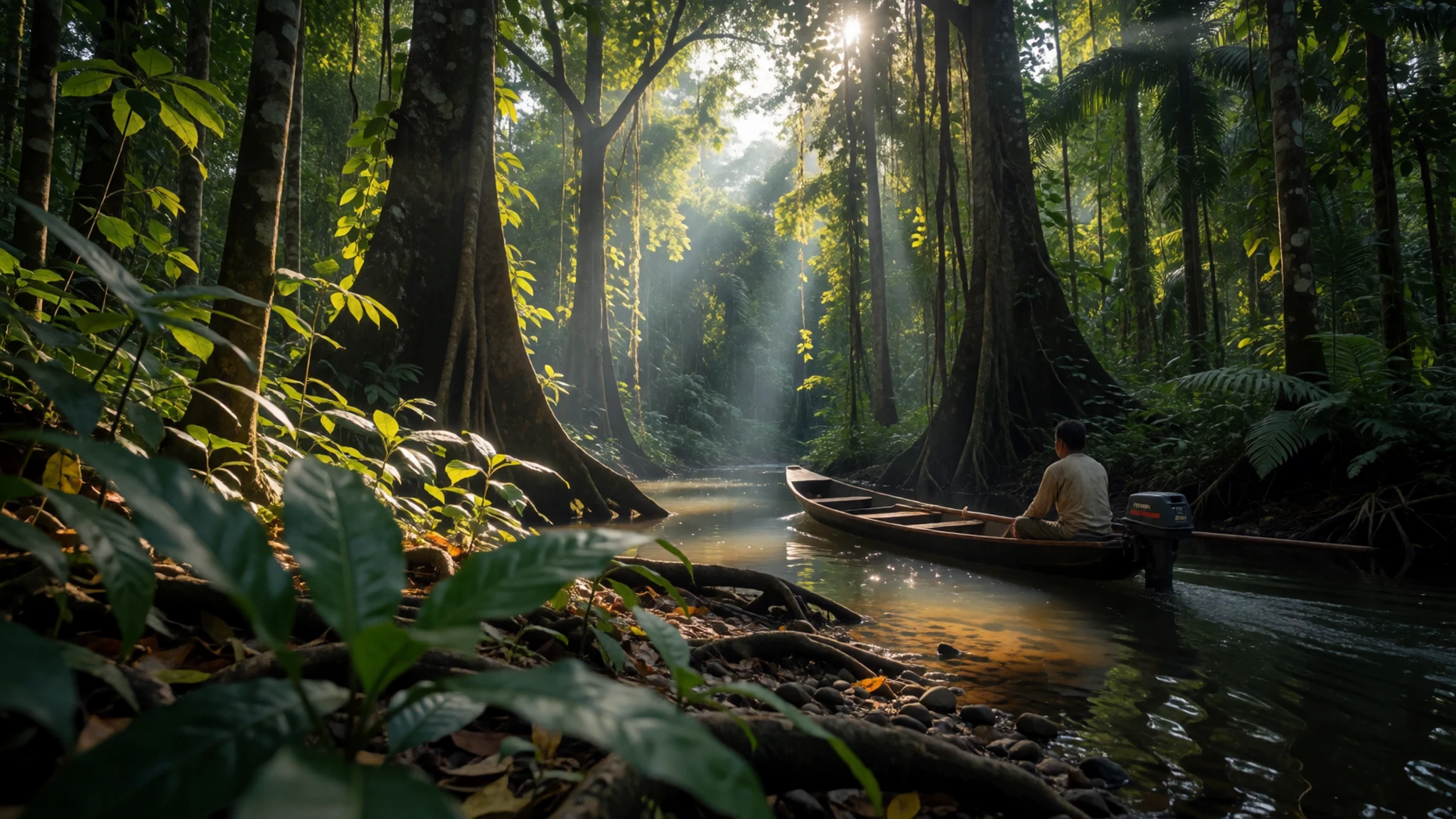
- Klias wetlands and proboscis monkeys — Klias Peninsula, Sabah
On the Sabah side of the bay, the Klias wetlands are known for river cruises at dusk, when proboscis monkeys settle in the riverside trees to sleep. Fireflies often appear after dark. Tours normally leave from Kota Kinabalu or nearby towns, so check pick-up arrangements in advance.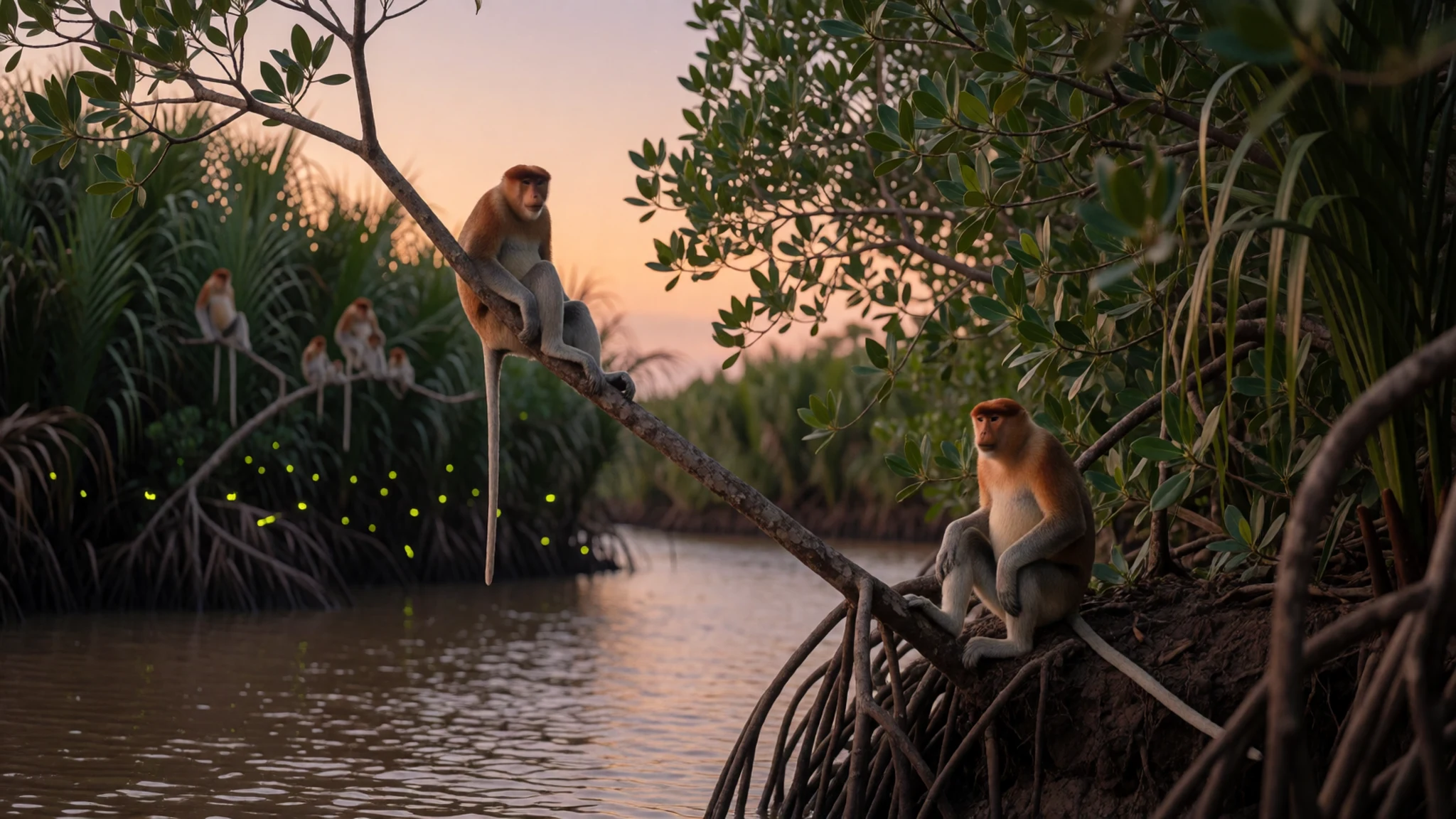
- Labuan and the wartime landing beaches — Labuan, Malaysia
Labuan island, at the mouth of the bay, was a target during the Allied Borneo campaign, and archive photographs show landing craft firing rockets towards its beaches. Today the island is calm, with memorials and quiet shores. It is also a stepping stone by ferry between Brunei and Sabah.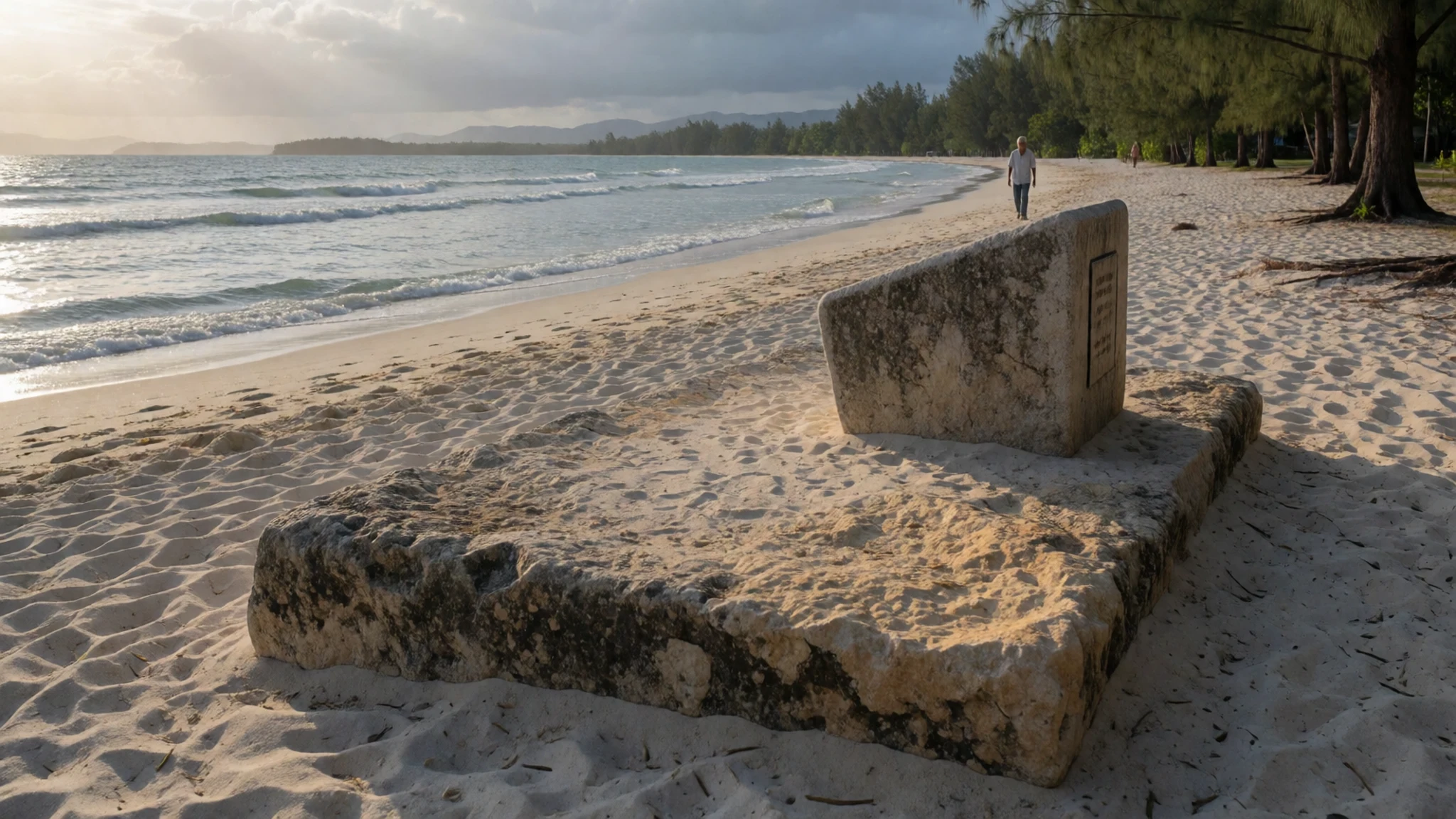
Culture
Brunei Bay straddles two cultures, and the mood changes as you cross it. The Brunei side is a Malay Islamic monarchy, where the sultan is revered, the call to prayer shapes the day and alcohol is not sold in shops or restaurants. Friday midday is a quiet time, with many businesses closing for prayers. The Malaysian side, in Sabah and Labuan, is more mixed, with Kadazan, Bajau, Malay and Chinese communities, church and temple as well as mosque, and a more relaxed attitude to drinks and dress. Family and hospitality matter on both shores. A visitor offered tea or a snack is expected to accept at least a taste, and invitations to open houses at festival times, such as Hari Raya, are common. Fishing, river transport and rainforest livelihoods remain part of life, and the stilt villages are homes, not displays. During Ramadan, eating or drinking in public in daylight is discouraged in Brunei, and many daytime eateries close or screen their windows; visitors should plan around that. Conversation tends to be soft-voiced and polite, and pointing with a finger or raising one's voice reads as rude. Dress modestly and remove your shoes before entering a mosque or a private home, and use your right hand when giving or receiving anything.
What to wear
Around Brunei Bay, traditional dress depends on which shore you are on. In Brunei, Malay formal wear is the baju kurung for women, a long tunic over a skirt, and the baju Melayu for men, a loose shirt and trousers worn with a sampin wrapped at the waist and a black songkok cap. Songket, a handwoven fabric with gold or silver thread, appears at weddings, royal occasions and Hari Raya. On the Sabah side, Kadazan-Dusun and Bajau groups wear dark velvet or cotton embroidered with beadwork, coins and bright trims for harvest festivals and weddings. Everyday clothing is simpler and chosen for heat: light cotton shirts, long skirts or trousers, and a tudung headscarf for many Muslim women. Office workers in Bandar Seri Begawan dress smartly even in the heat. Visitors should pack light, breathable clothes that cover shoulders and knees, especially in Brunei, where beachwear belongs on a beach only. Bring a lightweight scarf for mosque visits, a compact rain jacket for sudden downpours, and sandals for towns. For rainforest trails, wear closed shoes with grip, long trousers and quick-drying socks, since mud and leeches are common after rain.
What to eat
- Ambuyat — Malay family restaurants and eateries in Bandar Seri Begawan
Ambuyat is Brunei's signature dish: a sticky, glue-like paste made from sago starch, twirled onto a two-pronged bamboo stick and dipped into sour, spicy sauces. It tastes mild by itself, so the dips matter. It is served with fish, vegetables and sambal.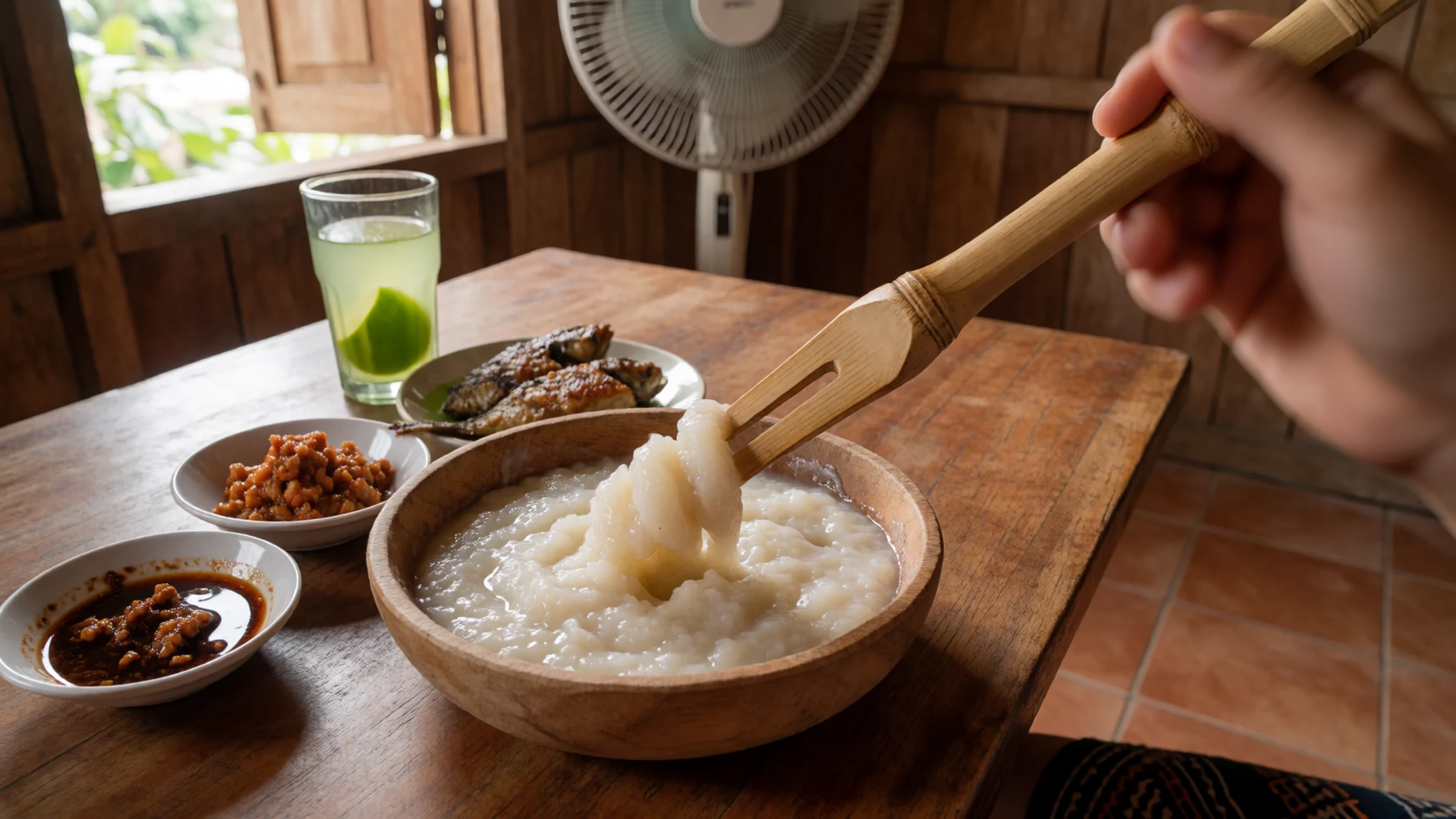
- Laksa mee — Morning food courts and kopitiam-style coffee shops on both shores
Laksa mee is a bowl of noodles in spiced coconut curry broth, often topped with prawn, tofu or fish cake. It is rich and warming, and found at breakfast and lunch alike. Chilli is usually served on the side to adjust the heat.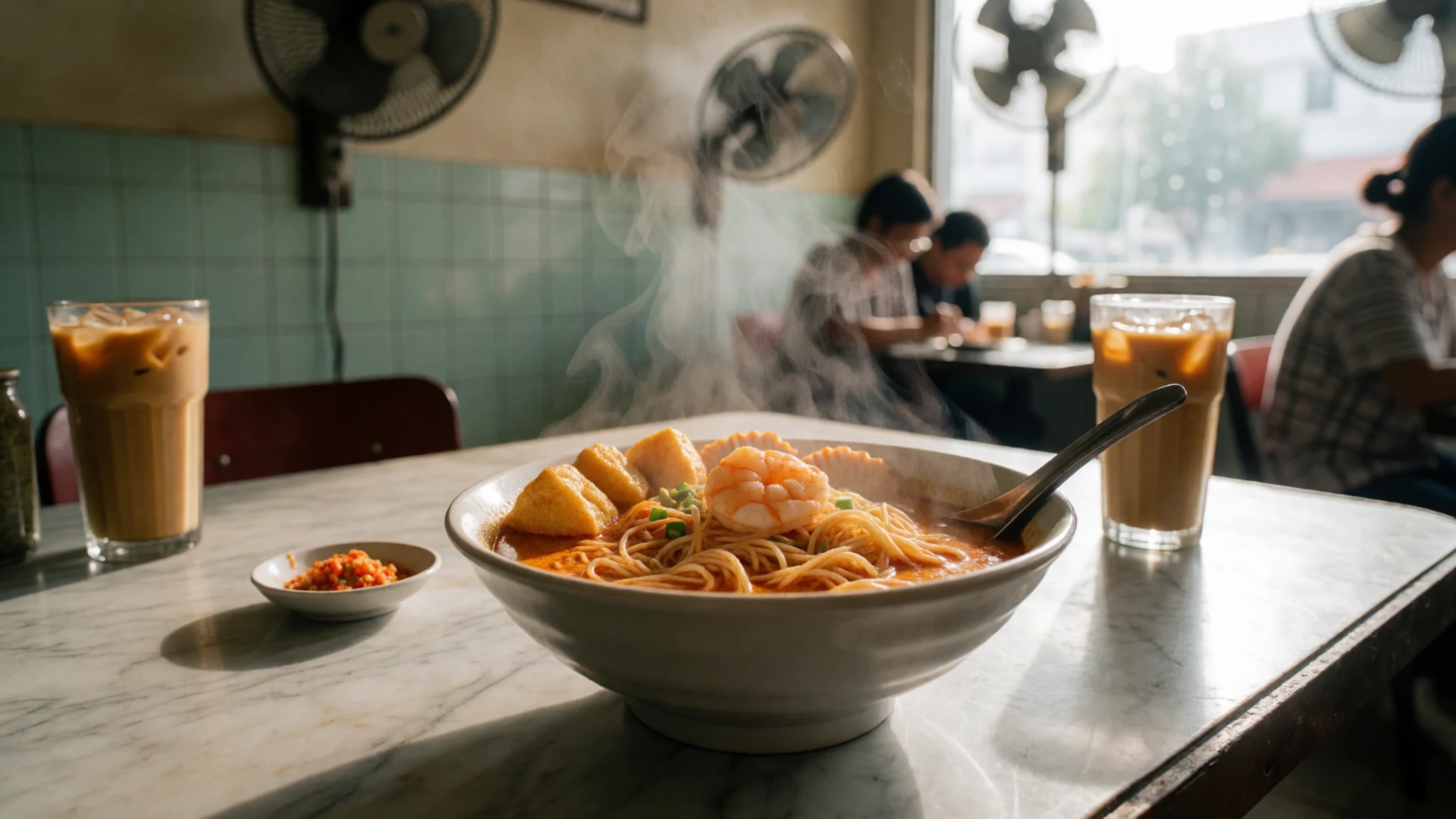
- Mee soto — Local noodle stalls and market food halls
Mee soto is the Malay-style noodle soup with a clear, fragrant beef broth, spiced with lemongrass and ginger and served with herbs. It is lighter than laksa and well suited to humid weather, usually eaten at a casual counter-service stall. - Ngiu chap — Chinese coffee shops and small noodle eateries in Sabah and Labuan
Ngiu chap is a beef noodle dish from the local Chinese community, with sliced beef and offal in a clear savoury broth. It is typically eaten for breakfast or an early lunch, and regulars often add pickled chilli or soy for extra bite. - Fresh seafood — Seafood restaurants near fishing jetties and harbour-side markets
Prawns, crab and fish from the bay and nearby seas are usually grilled, steamed or cooked with chilli and garlic. Choose by weight at the counter and ask about the cooking style. Fresh fruit juices such as lime and mango are the usual drinks.
Plan it
Best time. February to May is usually the drier stretch, which suits boat trips and rainforest walks, though showers can happen in any month. November to January tends to be wetter, with muddier trails and rougher water. Heat and humidity stay high all year.
How long. 2–3
Getting there. Fly to Brunei International Airport near Bandar Seri Begawan, then take a taxi or hire car to Muara and over the bridge to Temburong. On the Malaysian side, Labuan has ferry links to Brunei and Sabah and Kota Kinabalu is the usual gateway; check current ferry timetables and border rules before booking.
Budget. mid
Tips
- Book Temburong rainforest tours and Klias river cruises ahead, as operators often need advance notice
- Start river and forest outings early, when it is cooler and wildlife is more active
- Carry some cash for small eateries and boat fares, as card acceptance varies
- Take a refillable water bottle and insect repellent, and keep a rain layer in your daypack
- Allow slack time for border crossings, as ferries and immigration queues can run late
Etiquette
- Dress modestly in Brunei, and remove shoes before entering mosques and homes
- Avoid eating or drinking in public during daylight in Ramadan
- Ask before photographing people in stilt villages, and keep your voice low
Nearby
Sources
- Wikidata Q3182027 (CC0)
- Wikipedia: Brunei Bay (rev 1371477765) (CC BY-SA 4.0)
- Wikivoyage: Sabah (rev 5277517) (CC BY-SA 4.0)
- Photo 01: Warships and bombers guard the Australian convoy (National Archives Catalog) (Public domain)
- Photo 02: Borneo Operation, rockets toward the beach (Public domain)
- Photo 03: Borneo Operation, 40mm bow gun of USS LCI (R)-338 (Public domain)
- Photo 04: Admiralty Chart No 2109, Barram Point to Nosong Point (UK Hydrographic Office) (Public domain)
- Photo 05: Admiralty Chart No 2109, Tanjong Baram to Tanjong Nosong (UK Hydrographic Office) (Public domain)
- Photo 06: Aerial of Brunei (Pangalau) (CC BY-SA 4.0)
- Photo 07: Aerial of Brunei (Pangalau) (CC BY-SA 4.0)
- Photo 08: Aerial of Brunei (Pangalau) (CC BY-SA 4.0)


Wildlife
- Proboscis monkey (animal)
The proboscis monkey is the monkey with the enormous nose, reddish-brown skin and a long tail, and it lives only on the island of Borneo. It favours mangroves and coastal forest. In Brunei Bay, head to the Sabah side, where the Klias wetlands offer boat trips along the river as evening falls. That is when these monkeys bed down for the night in the trees along the bank. Watch from the boat as the light fades, and let the monkeys settle at their own pace.