Kampong Ayer
Kampong Ayer, Brunei
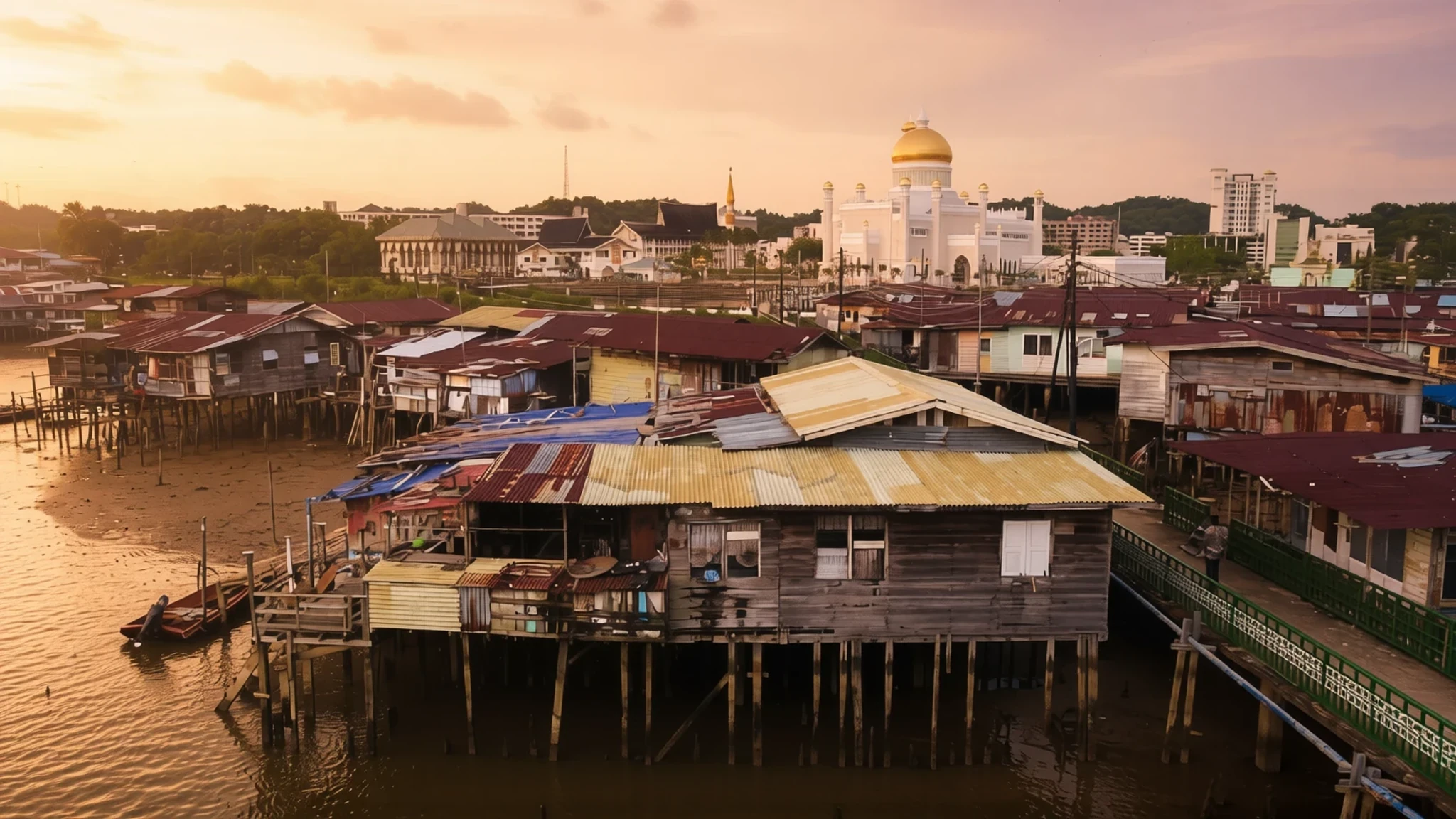
Kampong Ayer is a living river town of wooden houses, schools and mosques on stilts, reached by a short water-taxi ride from Brunei's capital.
The place
Kampong Ayer sits on the Brunei River in Bandar Seri Begawan, directly opposite the modern city centre. It is not one village but a cluster of neighbourhoods, linked by walkways and bridges, where houses, schools, mosques and a fire station all stand on stilts above the tidal water. Wikidata files it as both a human settlement and a stilt house, which fits: it is a town built on a single idea.
The contrast is the first thing a visitor notices. On the land side are wide roads, palace buildings and glass offices; a few minutes away by boat, people live above the river with their own schools and places of worship. Residents commute by water taxi, and the little boats shuttle back and forth all day between the stilt neighbourhoods and the waterfront steps.
It has long been nicknamed the Venice of the East, though the comparison only goes so far. There are no grand squares here. What there is instead is everyday life at water level: washing on lines, satellite dishes on tin roofs, children heading to school by boat, and boardwalks gone silver with age.
The settlement is still home to thousands of people, and it is a neighbourhood first and an attraction second. Many families have moved to houses on land, but plenty have stayed. The place feels lived-in rather than staged, and the best way to see it is slowly, from the water and then on foot along the walkways, with respect for the fact that these are people's front doors.
Its story
Kampong Ayer is thought to date back to the reign of Sultan Muhammad Shah, in the late fourteenth century, when the settlement served as the heart of the Bruneian empire and as a busy trading port. Goods from across the region passed through it. Locals and outsiders alike described a town built over the water, and people have probably lived on this stretch of river for several centuries.
The most famous outside account comes from Antonio Pigafetta, the Italian chronicler who sailed with Magellan and reached Brunei in 1521. He described a city built entirely over salt water, with wooden houses raised on tall pillars and an enormous number of families. Later, around the turn of the seventeenth century, a Dutch visitor, Olivier van Noort, noted that the nobles' houses stood on such light piles that they could be shifted across the river in bad weather. That hints that the settlement may not always have sat exactly where it does now.
Brunei's power faded in the following centuries, and by the mid-nineteenth century the sultanate was a shadow of its former self. Under the British Residency, officials began encouraging water-village families to resettle on land. The scheme struggled at first but gradually gained ground, and the population fell. Even so, a large number of people chose to stay on the water.
The settlement also came through the Allied bombing of the Second World War. Today it is a reminder that Brunei's capital grew from a trading town on the river, and that the river town never entirely gave way to the city beside it.
What to see
- Kampong Ayer by water taxi — Brunei River waterfront
The best introduction is simply crossing the river and cruising between the stilt neighbourhoods. Boats weave past houses, schools and mosques, and the walkways overhead show how the settlement is stitched together. Agree the route and the fare with the boatman before setting off.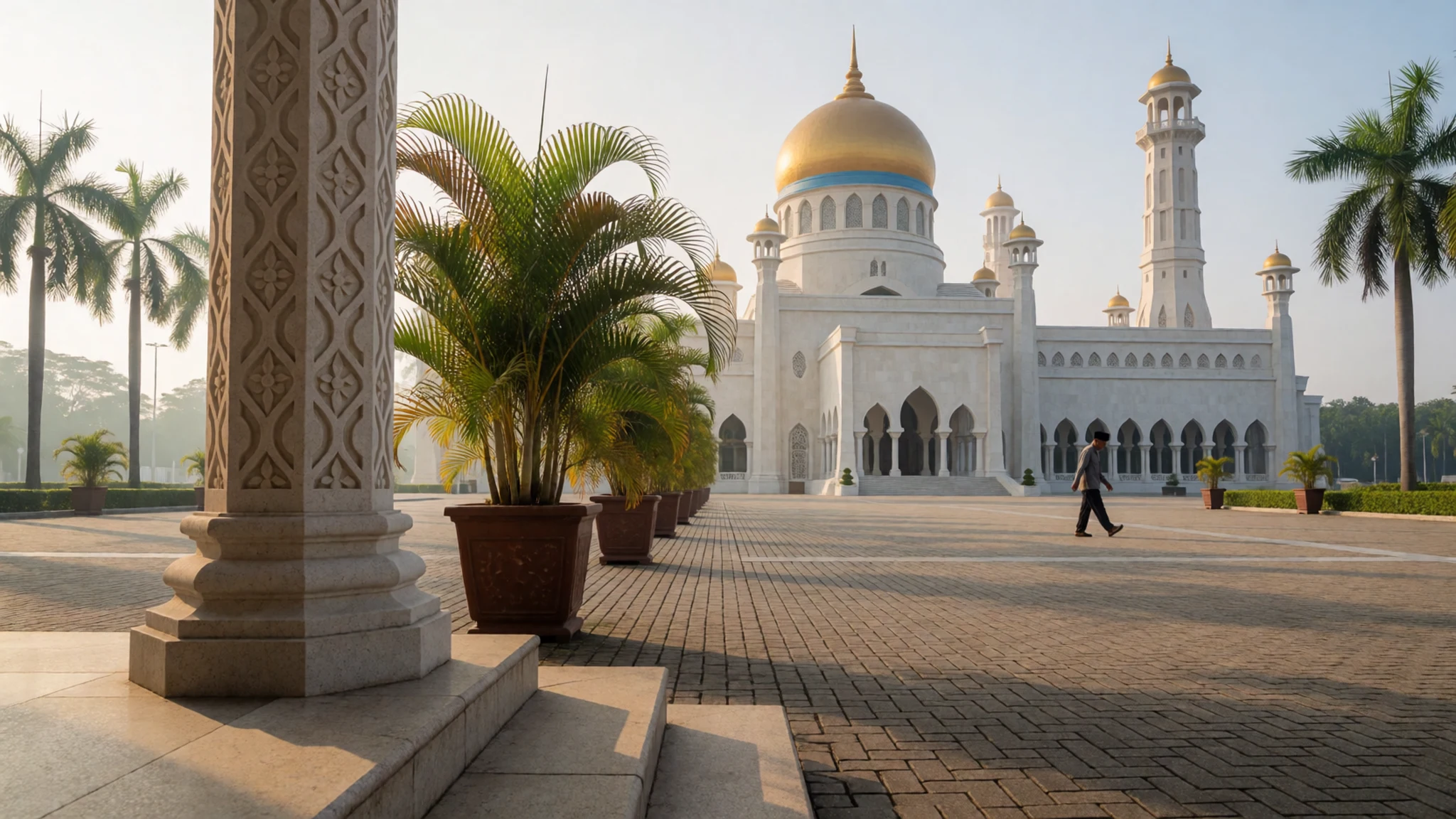
- Malay Technology Museum — Bandar Seri Begawan
This museum explains the water village through exhibits on the styles of house and ways of life of the people who lived on the river. It is a useful stop before or after a boat trip, because it puts the stilt architecture into context. Check the official site for opening arrangements.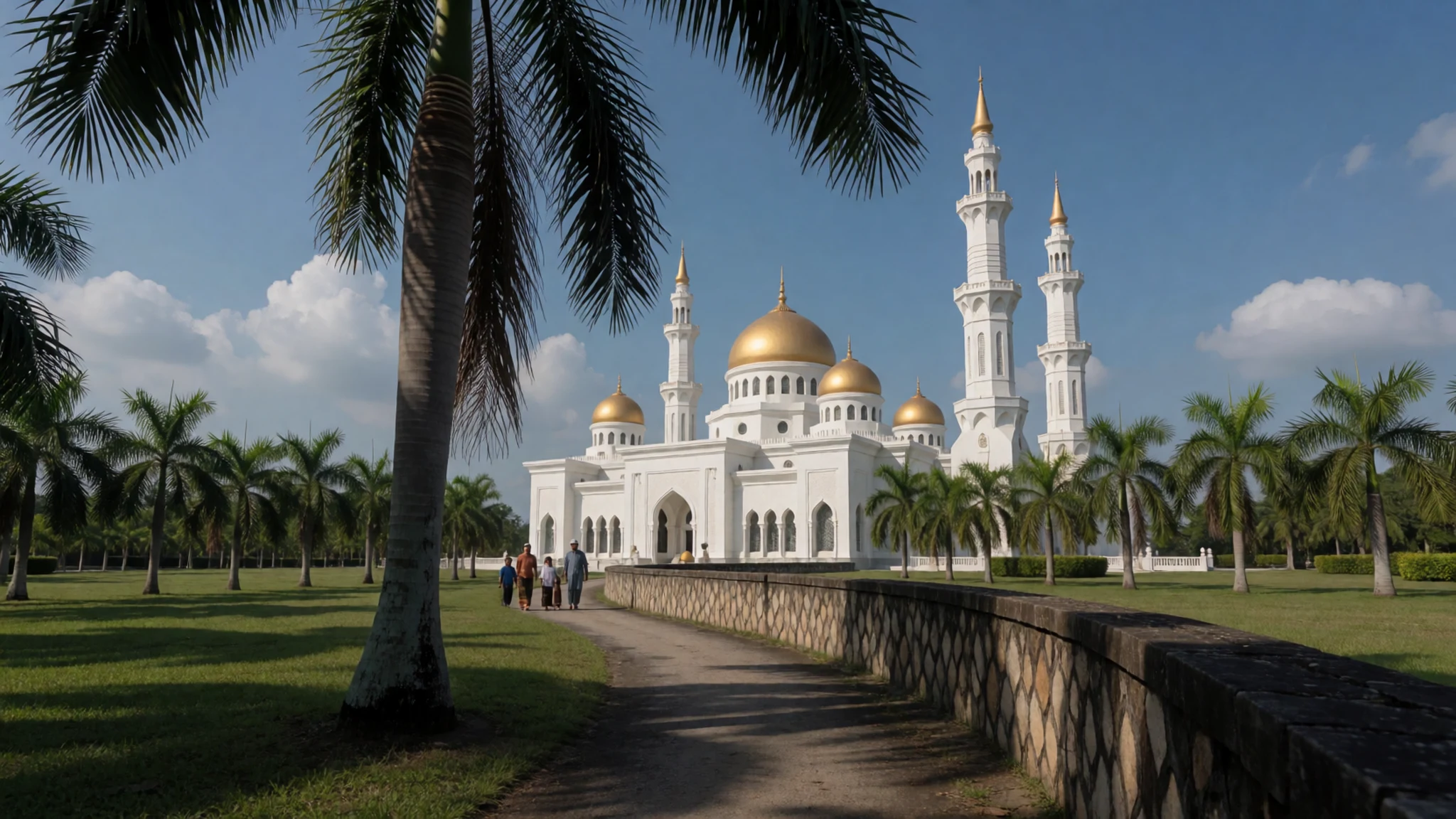
- Omar Ali Saifuddien Mosque — Bandar Seri Begawan centre
The city's best-known mosque stands near the river and is a good counterpoint to the village: formal, grand and calm. Visitors are welcome when prayers are not under way, with opening times posted at the gate. Robes are lent to anyone whose clothes are not suitable.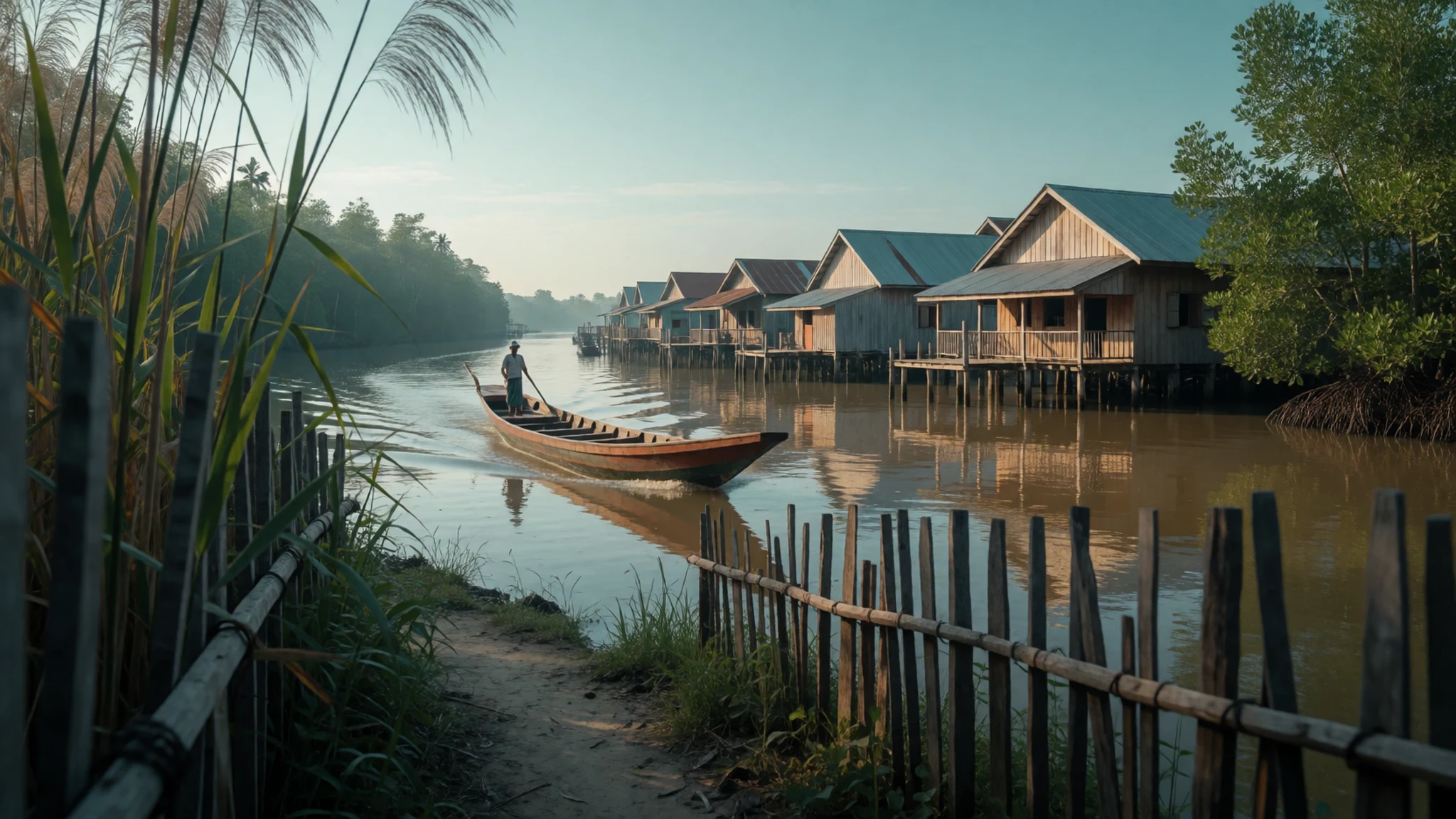
- Royal Regalia Museum — Bandar Seri Begawan centre
This museum shows the accessories used at a coronation, along with reproductions and gifts the Sultan has received from dignitaries and ordinary people around the world. It gives a sense of the monarchy that shapes modern Brunei. Check the official site before visiting.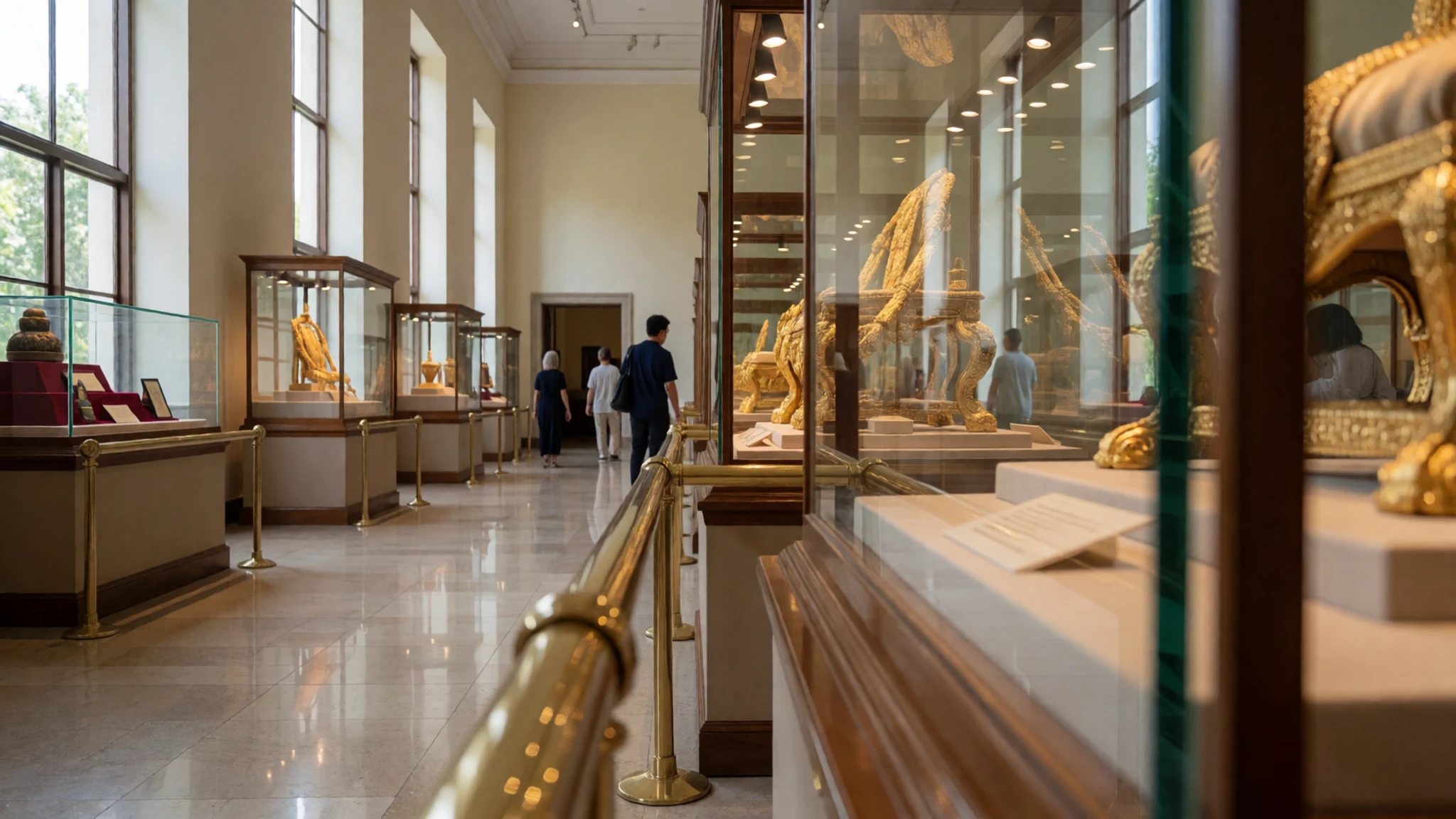
- Kianggeh Canal and market — Downtown Bandar Seri Begawan
A small canal beside the covered market, where monitor lizards are sometimes seen in the water and monkeys in the trees nearby. It is an easy, unhurried walk from the waterfront and a good place to see everyday town life away from the tourist trail.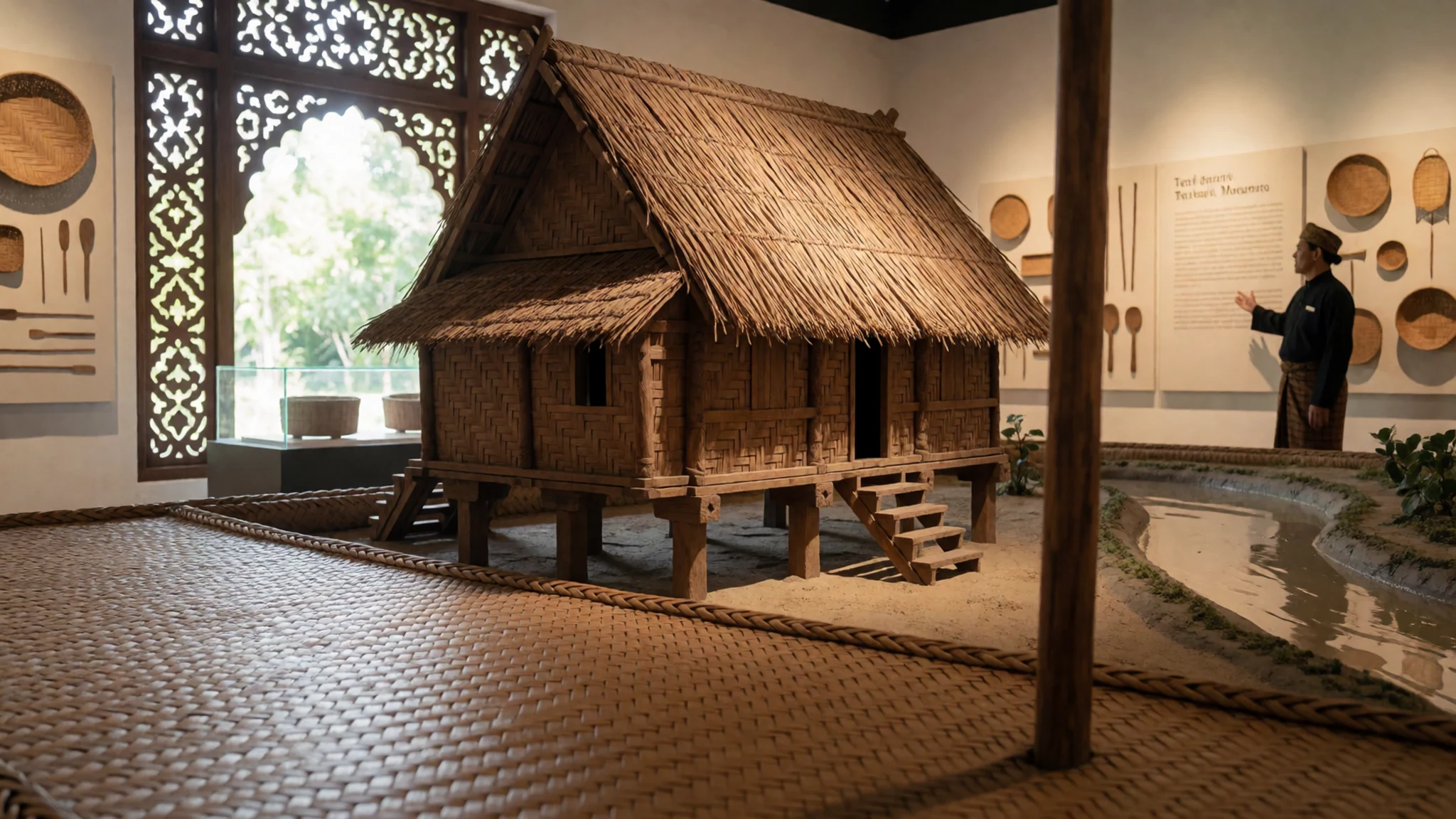
- Proboscis monkey river trip — Rivers near the capital
Boats can take visitors along the winding rivers through swampy forest near the capital to look for proboscis monkeys in the trees. The boatman will help spot them. Early morning and late afternoon are usually the more comfortable times to go.
Culture
Kampong Ayer is a Malay Muslim community, and its culture is shaped by faith, family and the river. Mosques stand among the houses, schools sit on the same walkways, and the call to prayer carries across the water. Brunei is a monarchy with a strong tradition of Malay identity, and that shows in the respect given to elders, to the Sultan and to the home.
The river has long been the village's road, market and playground. People have traditionally lived by fishing, boat-building, trading and craft work, and many families have handed houses down through generations. Neighbours know one another well, and visitors who are polite and curious are generally met with friendliness.
While boat travel is routine, there is also a strong sense of pride in the place. Its residents have seen the capital grow up on the opposite bank, and many choose to remain on the water for reasons of family, heritage and community, not necessity. That is worth keeping in mind when stepping onto a walkway: this is a neighbourhood, not a set.
Brunei's customs are more conservative than those of many neighbouring countries, and alcohol is not sold openly in restaurants. Visitors will find that the pace of life is calm and courteous, with a gentle formality in greetings and in dealings with strangers.
Ask before photographing residents or their homes, and keep your voice low and your steps quiet on the walkways, especially near houses, mosques and during prayer times.
What to wear
Kampong Ayer's traditional dress is Malay: men wear the baju Melayu, a loose tunic and trousers, often with a sampin, a short wrap of woven cloth, and a songkok cap. Women wear the baju kurung, a long tunic over a skirt, frequently with a tudung headscarf. The finest occasion cloth is songket, silk or cotton woven with gold or silver thread, worn at weddings and festivals such as Hari Raya.
Day to day, people dress modestly but practically for heat and humidity. Light cotton shirts, long skirts and trousers are common, and office workers in the capital wear neat, conservative clothes. Many women cover their hair, and school uniforms follow the same modest style.
Visitors should dress for a hot, wet climate while respecting local norms. Light, loose clothes that cover shoulders and knees are best, with long sleeves or a scarf to hand for mosques, where robes are lent if needed. Shoes should be comfortable and non-slip, since the boardwalks can be slick after rain and some have gaps. Sandals that slip off easily suit mosque visits. Bring a hat, sun protection and a light waterproof for sudden downpours.
What to eat
- Ambuyat — Local Bruneian restaurants in Bandar Seri Begawan
Brunei's signature dish is a sticky starch made from sago, twirled around a two-pronged bamboo stick and dipped into a sour, spicy sauce, eaten with side dishes. It is an acquired texture. Look for it at local Bruneian restaurants in the capital.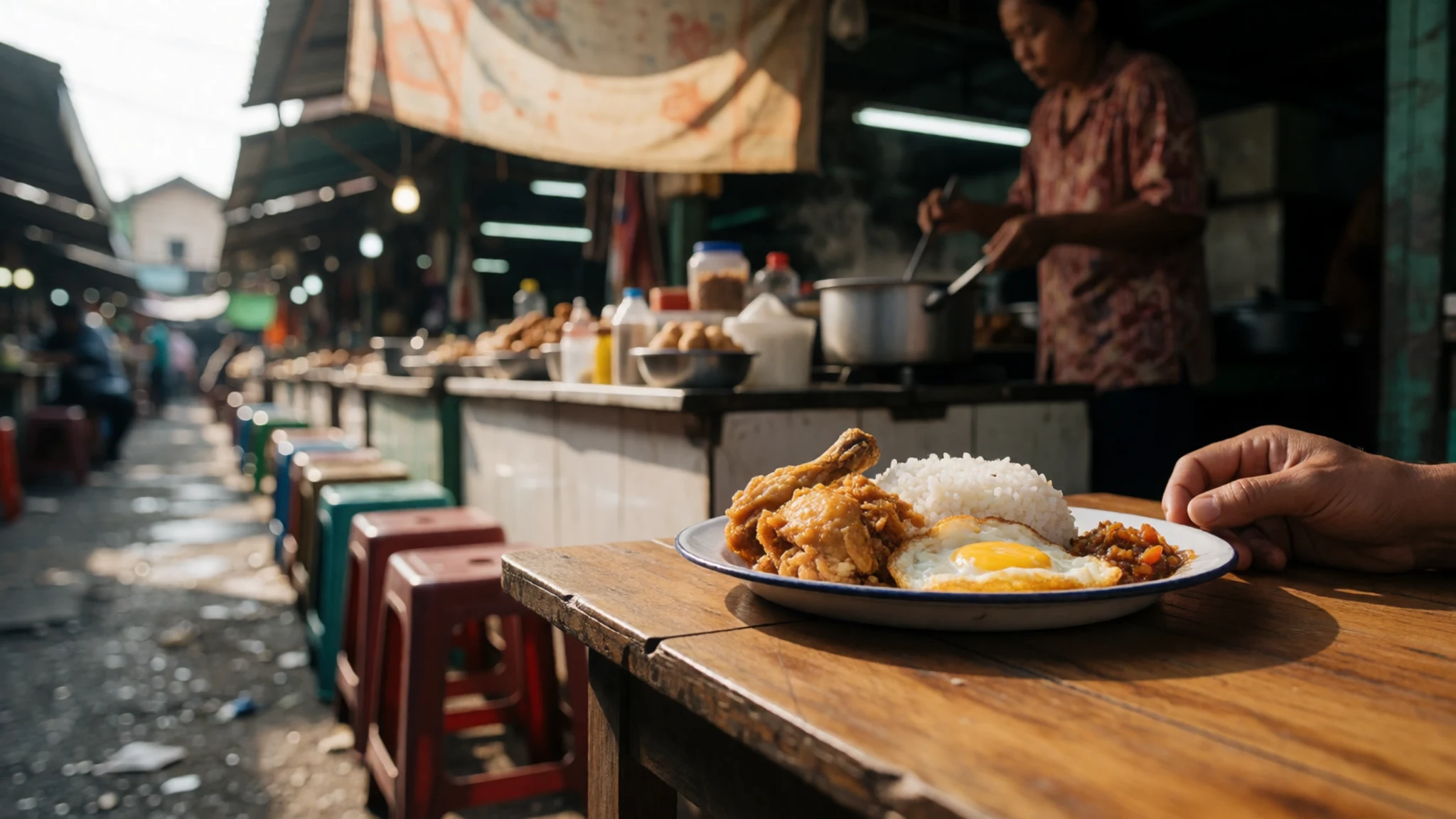
- Nasi katok — Kianggeh Market and neighbourhood food stalls
A cheap, filling snack of rice with fried chicken and sambal, traditionally wrapped in paper. It is a favourite of students and workers alike, and a good quick breakfast or late-night bite.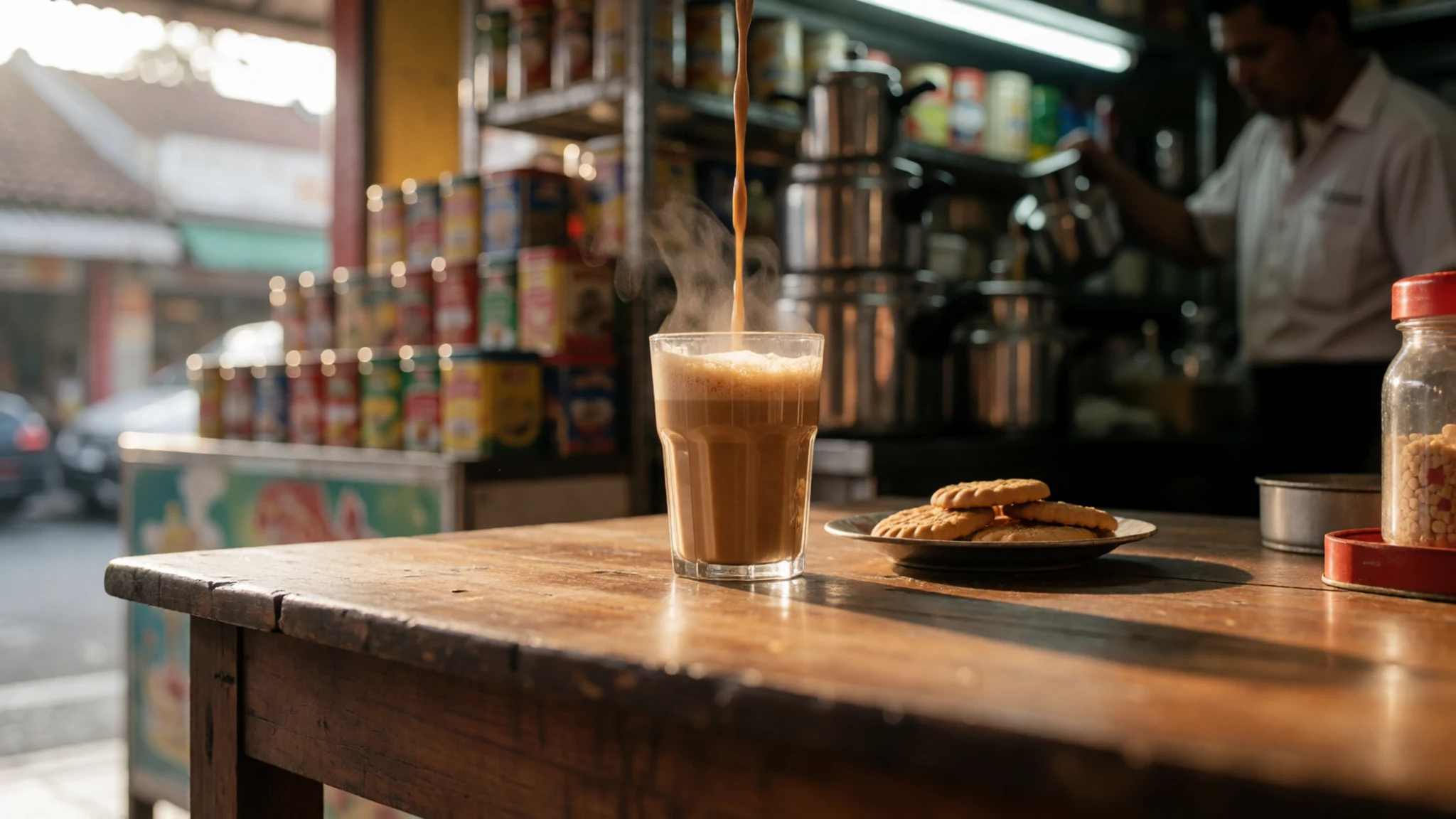
- Teh tarik — Kianggeh Market and coffee stalls
Strong sweet tea poured back and forth between two vessels until frothy. It is the everyday drink of the country, and a cup in the shade is a good break from the humidity. - Fresh market vegetables and sapit — Kianggeh Market, downtown
The covered market sells raw vegetables and local produce by weight, including sapit, a local item sold in the market. It is more for looking and tasting small things than a full meal, but it shows how the town shops. - Waterfront grilled food — Gerai Makan waterfront food stalls, southeast corner of the city
Open-air eateries by the water serve simple, inexpensive rice, noodle and grilled dishes. Water taxis dash past and stilt houses line the opposite bank, so it is a pleasant spot for a relaxed evening meal.
Plan it
Best time. February to May is generally the more comfortable stretch, with less rain than the wetter months towards the end of the year. Brunei is hot and humid all year, so go early or late in the day, and carry a rain layer in any month.
How long. 1–2
Getting there. Fly to Brunei International Airport (BWN); the city centre is about 20 minutes away by taxi or private hire car. From the waterfront in Bandar Seri Begawan, short water-taxi rides cross to the stilt neighbourhoods.
Budget. mid
Tips
- Go early in the morning or late afternoon to avoid the worst heat
- Agree the water-taxi route and fare before boarding
- Carry some cash for boats and market stalls
- Bring water, sun protection and shoes with a good grip for wet boardwalks
- Check opening times for museums and mosques on official sites, as they change
Etiquette
- Dress modestly and cover shoulders and knees, especially for mosques
- Ask before photographing people or their homes
- Keep noise down on residential walkways
Nearby
Sources
- Wikidata Q1990199 (CC0)
- Wikipedia: Kampong Ayer (rev 1378687167) (CC BY-SA 4.0)
- Wikivoyage: Bandar Seri Begawan (rev 5416038) (CC BY-SA 4.0)
- Photo: Balou46, Kampong Ayer, Bandar Seri Begawan (CC BY 3.0)
- Photo: Tourism Development Department of Brunei (CC BY 4.0)
- Photo: Yu Chu Chin (CC BY-SA 4.0)
- Photo: Mochagateau567 (Public domain)
- Photo: Pangalau (CC BY-SA 4.0)
- Photo: Mstyslav Chernov (CC BY 3.0)
- Photo: zulfadli (CC BY-SA 4.0)
- Photo: Jorge Láscar (CC BY 2.5)


