Tasek Merimbun
Tasek Merimbun, Brunei
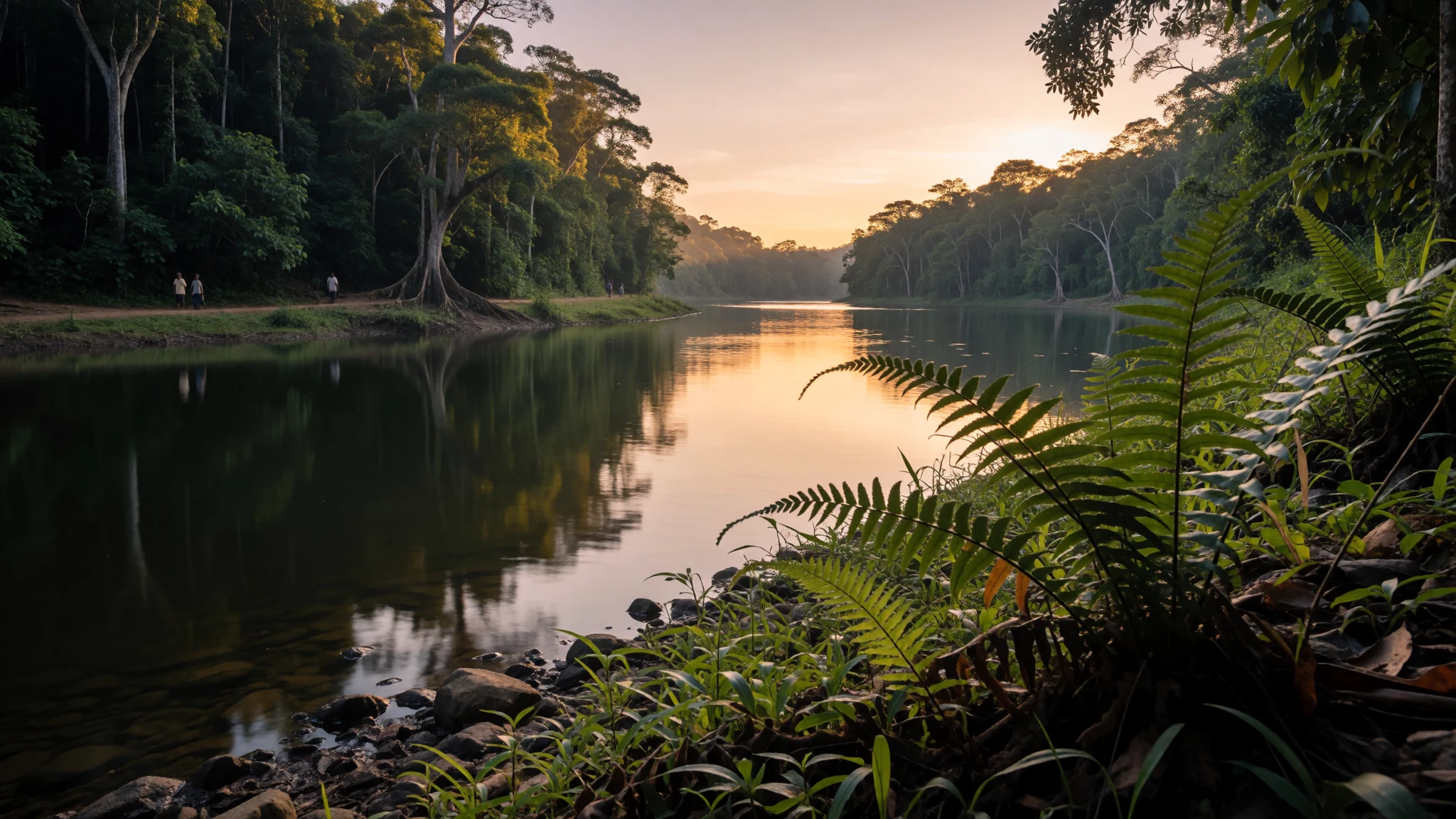
Tasek Merimbun feels like Brunei’s calm side: a big natural lake ringed by a conservation park, ideal for wildlife-focused days.
The place
Tasek Merimbun (Malay: Tasek Merimbun; Merimbun Lake) is the sort of place you notice more for its pace than its landmarks. It’s a natural lake in Brunei, set near Mukim Rambai in Tutong District, with an S-shaped stretch of water that gives the whole area a gentle, sheltered feel.
What makes it stand out is the surrounding parkland. The lake is enclosed by Tasek Merimbun Heritage Park, a wildlife sanctuary and research-and-conservation area where biodiversity matters. If you’re expecting an urban attraction or a “big ticket” view point, this isn’t that. Instead, the appeal is in walking trails, boat or river routes through green landscapes, and the chance to see animals connected to the lake and forest habitats.
This is also a great contrast to the rest of Brunei. The country is small and relatively conservative, with daily life shaped by Malay Islamic monarchy values. In practice, that often means visitors experience Brunei as relaxed rather than frantic—useful when you’re trying to enjoy nature without the kind of crush you might see elsewhere in Southeast Asia.
Expect humidity, and expect that outdoor time is most comfortable when you plan your day around the weather rather than trying to “tick off” every viewpoint at once. Done at a thoughtful pace, Tasek Merimbun is the sort of nature stop that stays with you: quiet water, conservation energy, and a sense of being in an ecosystem rather than a theme park.
Its story
Tasek Merimbun’s story is tied to people living close to the water long before there were roads and tourist infrastructure. In the area, early communities relied on the lake and its resources as part of everyday survival, with life closely linked to what the landscape could provide. Later on, evidence of a sacred ancestral site was found on Pulau Jelundong, pointing to long-running cultural significance in this region.
In the modern era, the lake’s conservation role sharpened. A Museums Department director identified Tasek Merimbun as a valuable asset in 1967—an early signal that the area wasn’t just scenic, but important for wildlife. Then, during a biodiversity-and-socio-economic survey between 1983 and 1984, researchers reported a rare white-collared fruit bat. That discovery helped shape the decision to designate Tasek Merimbun Heritage Park as an ASEAN Heritage Park on 29 November 1984.
The park became more than a label. It was set up with a clear conservation purpose: protecting flora and fauna, supporting recreation, and serving as a site for research and surveys. Years later, the park’s official inauguration took place at an exhibition hall on 27 May 2000, with a representative from the Ministry of Culture, Youth and Sports.
So when you visit today, it’s not just “a lake with trees.” It’s an ecosystem that’s been studied, named, and protected because of what lives there—especially the mix of water, forest edges, and the species that depend on them.
What to see
- Tasek Merimbun Heritage Park — Tutong District (around the lake and park)
Tasek Merimbun sits inside Tasek Merimbun Heritage Park, set up for wildlife sanctuary work, conservation of plants and animals, and research. Think of it as your base for slow nature time—walks, viewpoints over the lake, and the feeling of being in a protected landscape rather than an attraction circuit.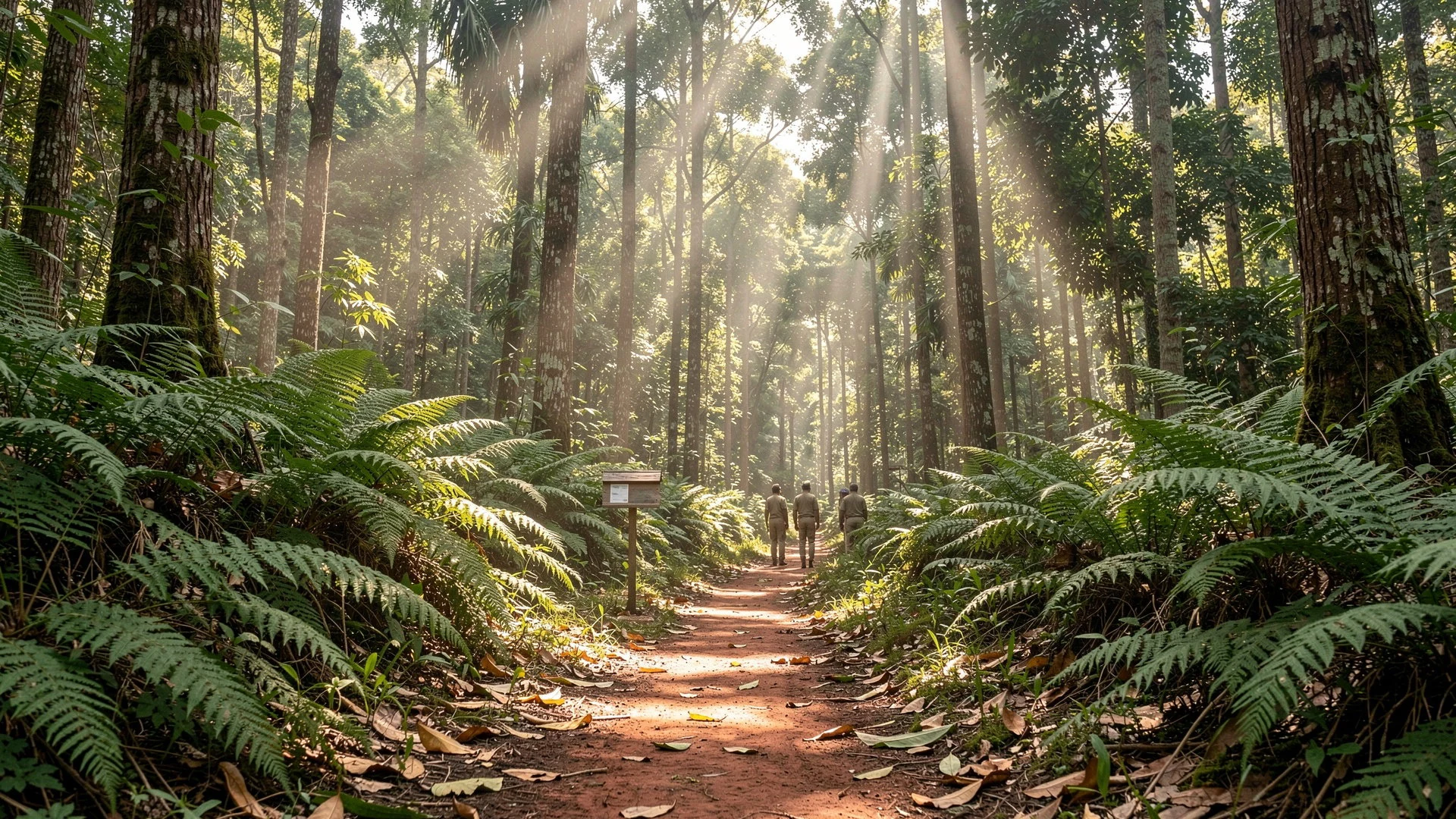
- Lake margins and S-shaped shoreline views — Merimbun Lake (Tutong District)
Tasek Merimbun’s shoreline is S-shaped, and the park wraps around it, so the scenery changes as you move—quiet water, greener edges, and wildlife-friendly habitat. Bring time for pauses rather than chasing constant photos; the “best view” is often the one that lets you watch for movement.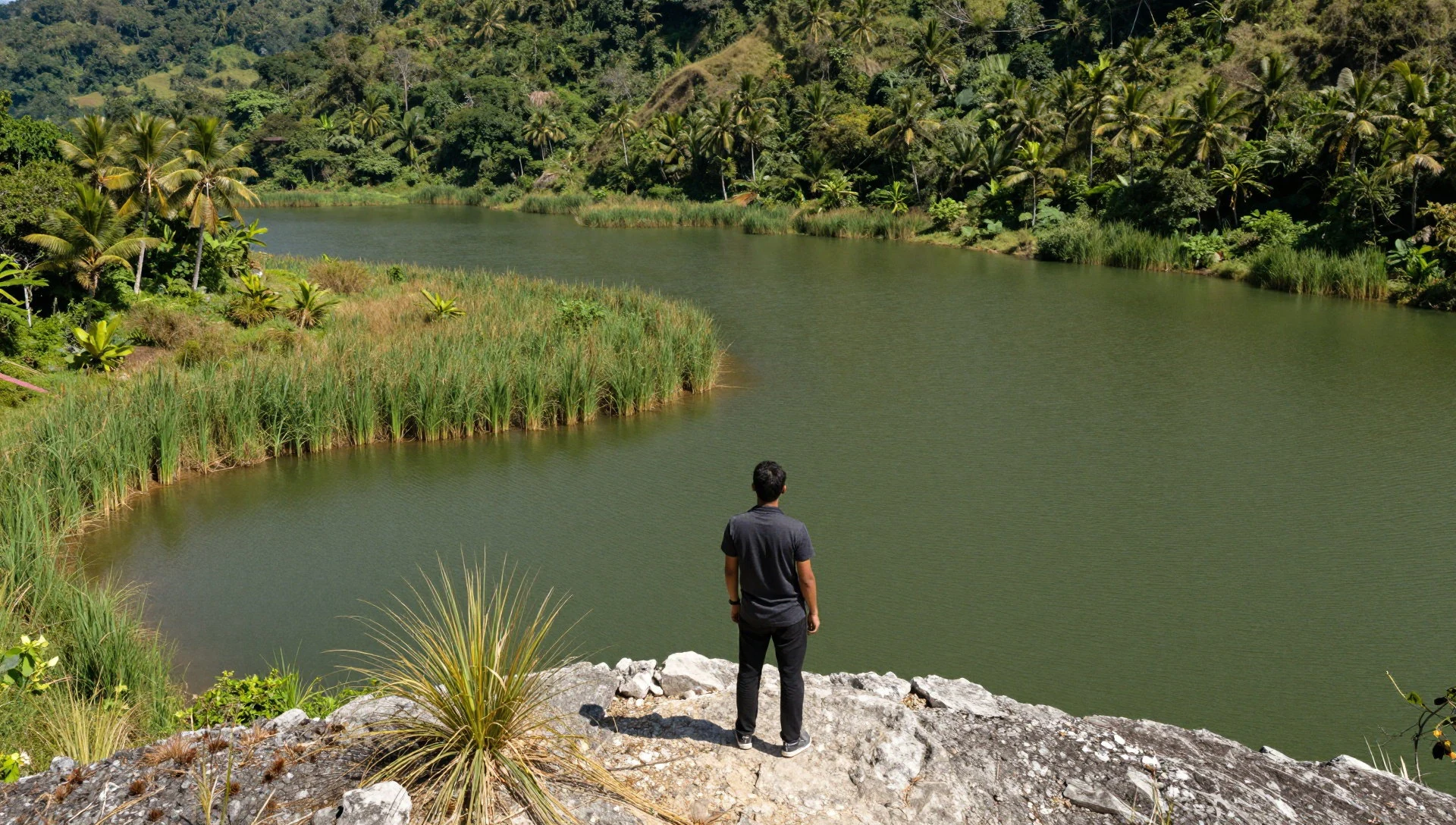
- Discovery-focused eco-tour routes — Tutong–Temburong route style
Eco-tours commonly focus on slow boat or river routes that connect the lake area with nearby forest habitats, with time for wildlife viewing around park facilities. Even when the route is wider than the lake itself, it reflects the region’s nature-first way of touring.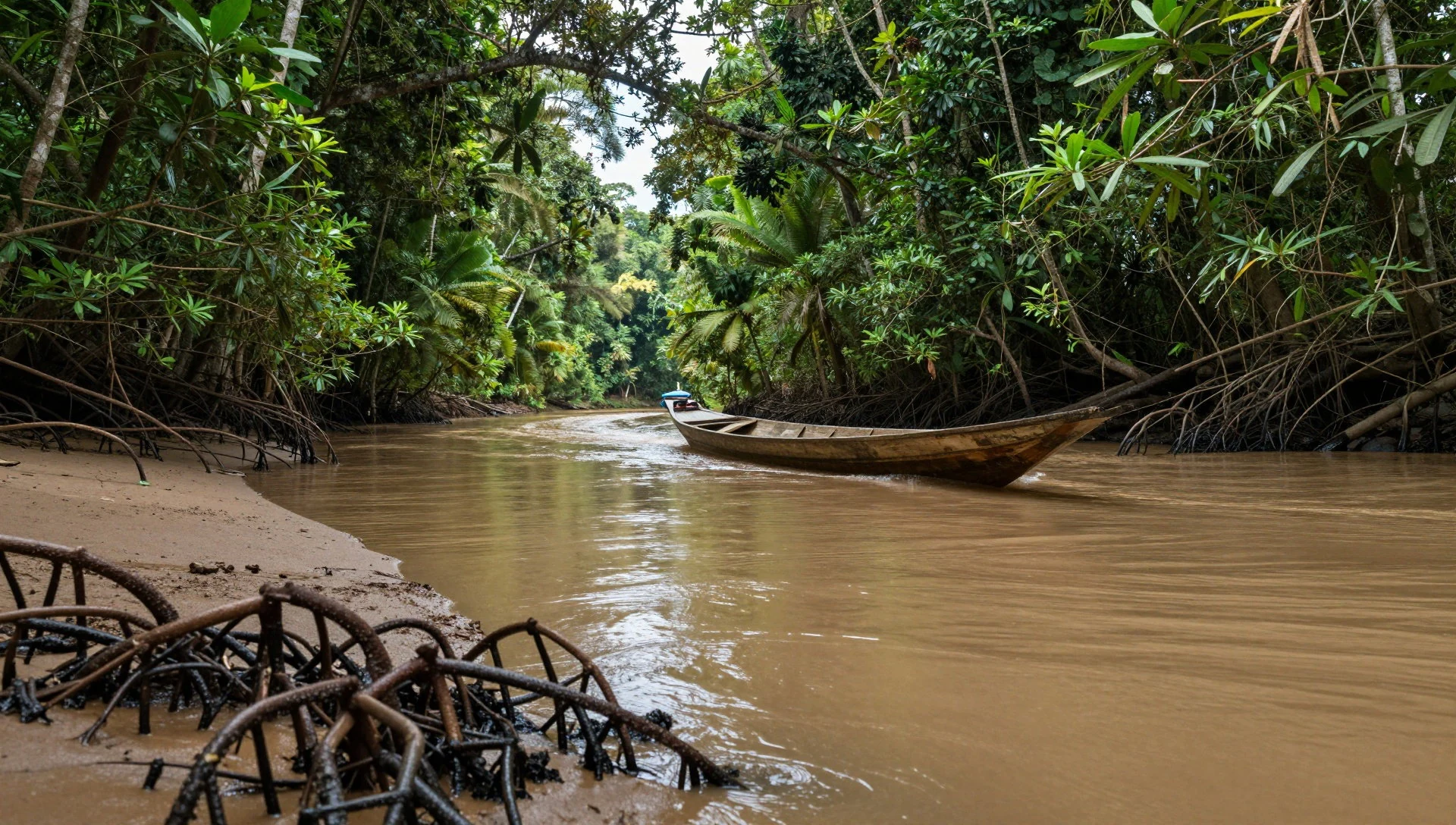
- Heritage Park exhibition hall area — Heritage Park facilities (Tutong District)
Tasek Merimbun’s official inauguration was held at the Tasek Merimbun Heritage Park Exhibition Hall. If you visit during staffed hours, it’s a good way to anchor what you’re seeing outdoors with the story of why the lake and surrounding habitats were protected.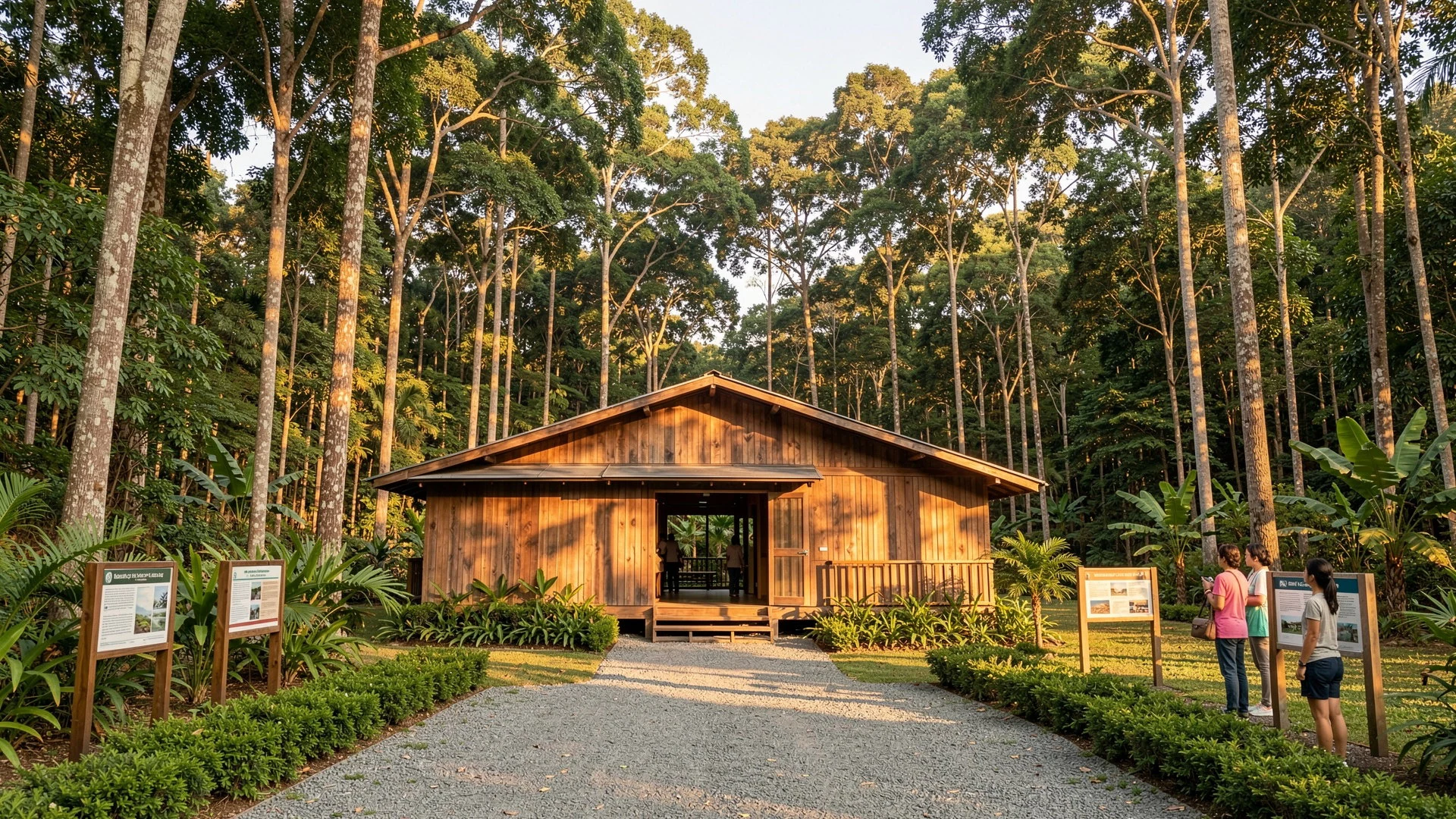
Culture
Tasek Merimbun is in Brunei, a country run as a Malay Islamic Monarchy (Melayu Islam Beraja). In day-to-day life, that shows up in the visibility of the Sultan and in strong respect for royal institutions. It’s the kind of place where political chat can become sensitive quickly, so keep conversations light and friendly until you clearly know what’s welcome.
Brunei is also strongly religious and conservative, and that can shape what you’ll notice around you—public behaviour, how people speak, and how attentively people follow local norms. Non-Muslims don't have to follow Islamic dress rules, but keeping your clothes modest, as you would for a visit to a quiet mosque, is a sensible choice.
A useful thing to remember while visiting a conservation area is that rules often exist to protect both people and nature: stay on permitted paths, avoid loud disruptions, and treat the park like a working wildlife site, not a stage for loud selfies. Overall, the country tends to feel courteous and relaxed, and visitors are usually welcomed as long as they show consideration.
Visitor etiquette: keep your voice down in the park and don’t litter or stray off paths—this is a protected wildlife sanctuary.
What to wear
For Tasek Merimbun, dress for humid outdoor time and for Brunei’s conservative, religion-aware atmosphere. Traditional dress in Brunei is often connected to Malay Islamic culture: men commonly wear the sampot and songkok (a traditional cap), while women wear garments associated with Malay royal and everyday dress traditions. Silk or richly patterned fabrics are common for special occasions, with decorations and textiles reflecting local craft.
What people wear now is usually modern but modest: breathable shirts and trousers for men, and loose tops with skirts or long trousers for women. In a place like the heritage park, the practical choice matters—lightweight layers for warmth, sleeves that don’t cling, and clothing that can handle humidity and occasional insects.
What should you wear? Choose comfortable, modest outfits in light colours, and bring a cap plus a light rain layer for sudden wet weather common in the region. Footwear is important: closed shoes or hiking sandals with grip are better than flip-flops because park surfaces can be uneven and damp. If you plan to enter any indoor facilities linked to the heritage park, lean slightly more covered so you blend in with the respectful setting.
What to eat
- Nasi katok — Local restaurants and eateries across Brunei
Nasi katok is a simple combination of rice with curried beef or chicken, and it can be quite spicy. Look for it at local eateries in town areas around Brunei, where quick, filling meals are part of everyday dining.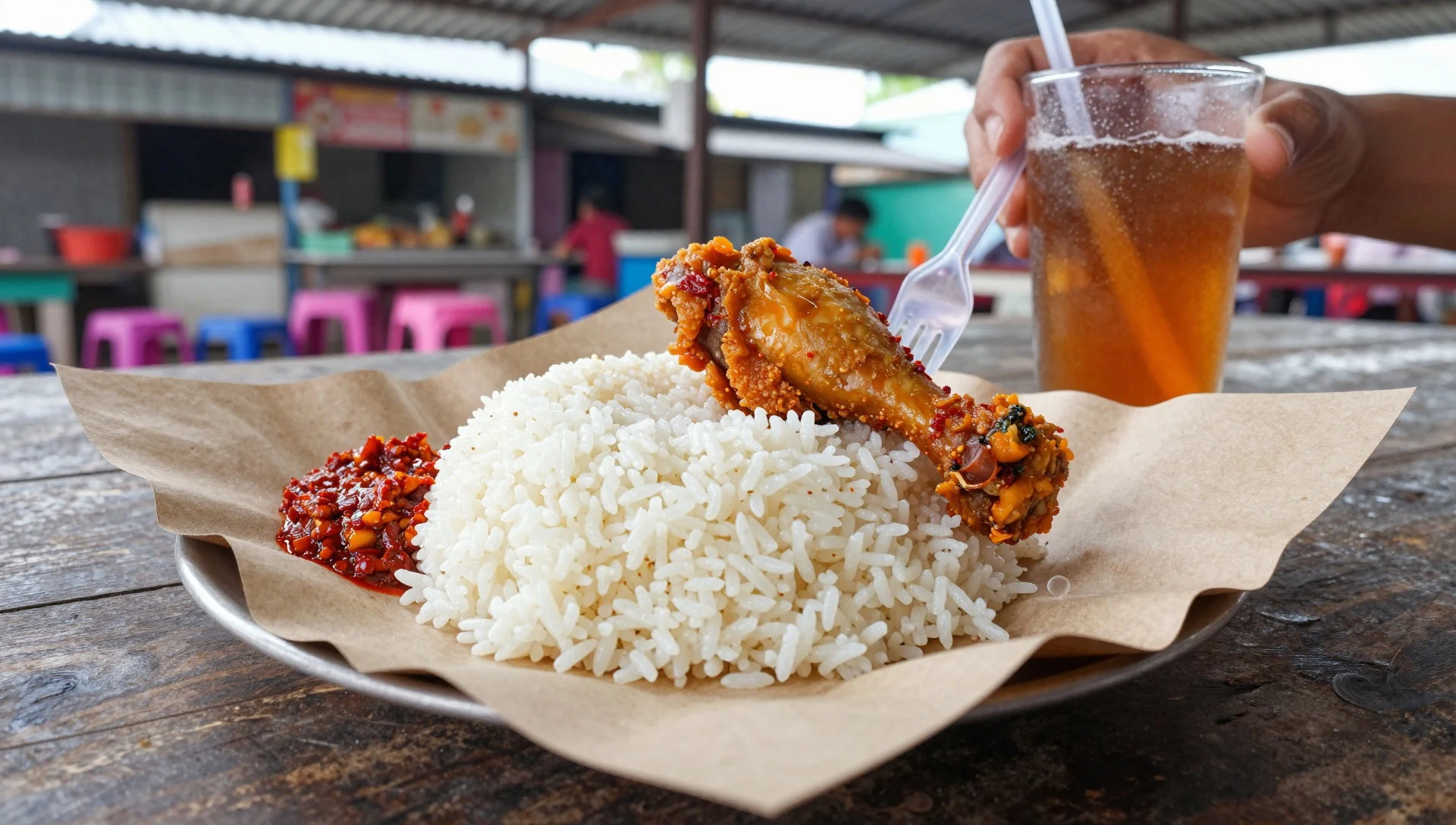
- Ambuyat — Specialty restaurants serving Borneo/Bru nei dishes
Ambuyat is a Borneo specialty made from sago into a starchy paste, eaten with linked chopsticks called chandas and dipped into a savoury sauce. It’s not the everyday choice for locals, so you’ll usually need to seek out specialty places that serve it.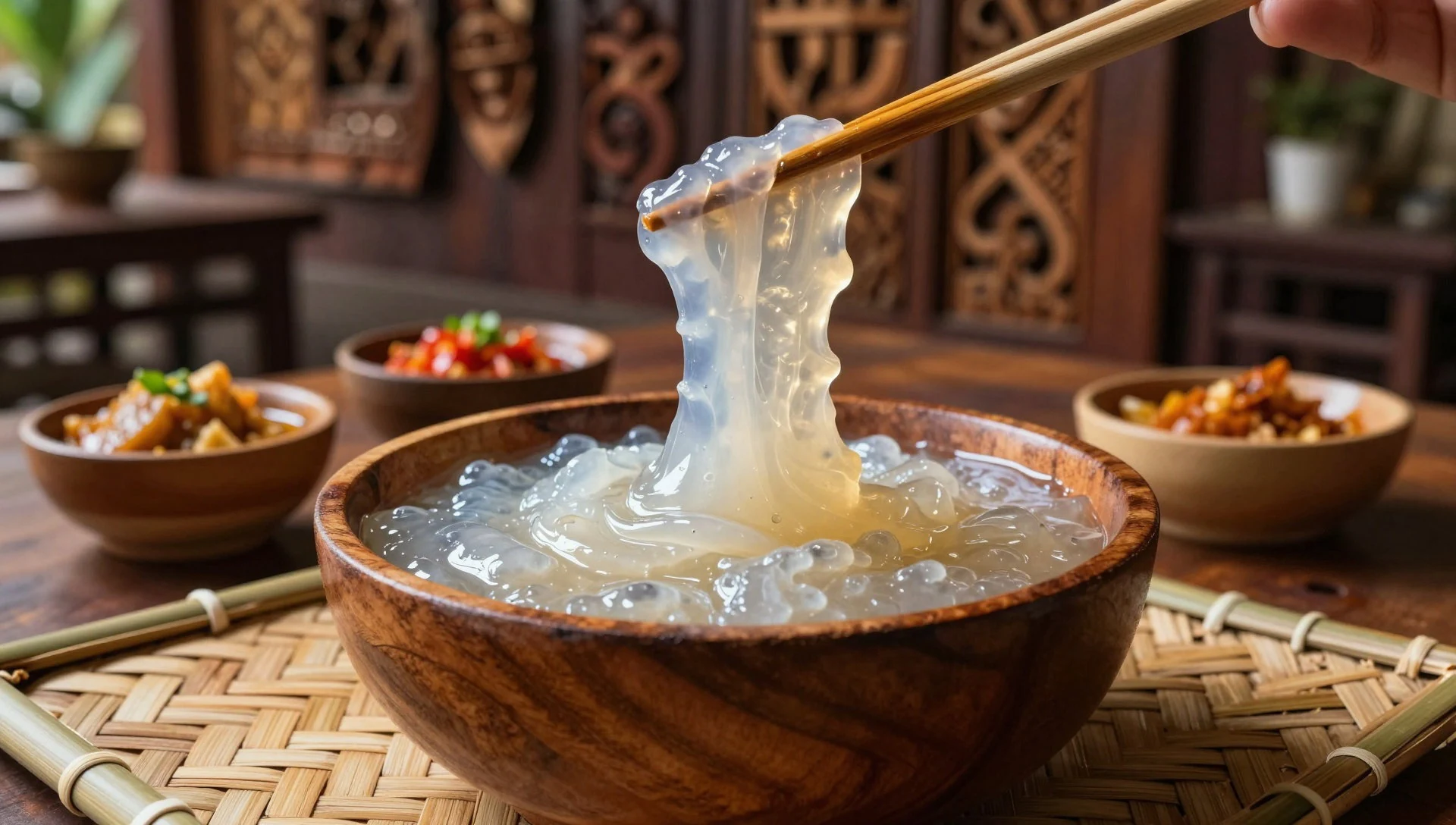
- Malay-style dishes — Everyday restaurants across Brunei
Malay and Chinese cuisines are popular and broadly similar to what you’ll find across the border in Malaysia and Singapore. You can usually find Malay-style curries, grilled meats, and rice-based meals at mainstream local restaurants. - Chinese food stalls (with variations) — Food-stall areas and popular dining districts
Chinese food is widely available, often with halal-friendly versions, because Brunei is Muslim and most food sold is halal. In areas with lots of food stalls, you’ll typically see rice, noodles, and stir-fried dishes adapted for local rules. - South Asian vegetarian meals — South Asian restaurants
Vegetarians have an easier time by looking for South Asian restaurants, which serve the large foreign-worker community’s food. These places often offer vegetables curries, lentils, and rice options that fit dietary needs.
Plan it
Best time. February–April and September–November are good for Tasek Merimbun because temperatures stay fairly warm and rainfall is lower most of the time; December and January are the wettest, while June–August are the hottest and most humid.
How long. 2–3
Getting there. Start from Bandar Seri Begawan, then make your way to Tutong District for Merimbun Lake and the Heritage Park. Use local transport for the final leg, and confirm the exact starting point for any eco-tour pickup with your operator.
Budget. mid
Tips
- Plan a half-day or full-day around early morning to make outdoor time more comfortable in the heat and humidity.
- Book an eco-tour or a local guide if you want a structured route into the wider rainforest-and-river scenery.
- Carry water and basic insect protection; park time is easier when you’re not constantly searching for supplies.
- Use cash for smaller park-related purchases and any community stops, as cash is often expected for local services.
Etiquette
- Dress modestly and keep your voice low in conservation spaces and indoor exhibition areas.
- Stay on permitted paths and follow staff instructions—this is a working wildlife sanctuary.
- Be careful with questions about politics or royalty; if conversation turns sensitive, steer it back to general travel and culture.
Nearby
Sources
- Wikidata Q7687127 (CC0)
- Wikipedia (rev 1366773651) (CC BY-SA 4.0)
- Wikivoyage (rev 5418958) (CC BY-SA 4.0)
- Photo photos/01-tasek-merimbun-heritage-park-brunei-9565514695.jpg (CC0 1.0)
