Tutong
Tutong, Brunei
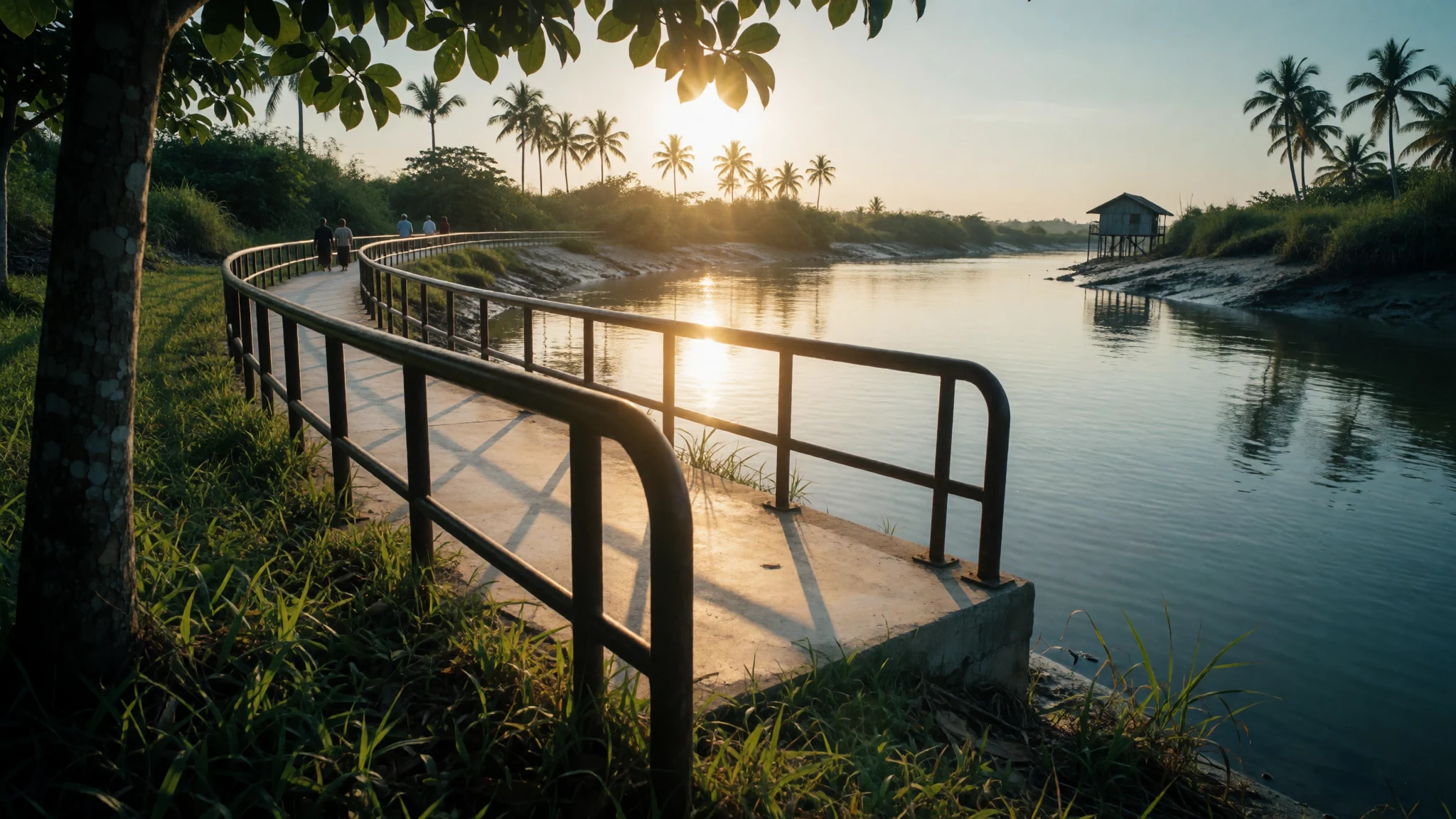
Tutong is an unhurried Bruneian river town where old kopitiam coffee, grilled pulut panggang and a sea-facing beach make an easy day out from the capital.
The place
Tutong is a small administrative town in Brunei, about 40 kilometres from the capital, Bandar Seri Begawan, and the seat of the district that shares its name. It sits on the northern bank of the Tutong River, a short way inland from the South China Sea. Until the 1980s the old main road through the centre was the route linking the capital in the east with Seria and Kuala Belait in the west, so most long-distance traffic once passed through. A newer road has since taken much of that, and the town feels calmer for it.
The settlement grew out of the village of Petani, which began beside a small tributary of the river. Position mattered. Boats arriving from the sea went upstream past it, and people from inland came downstream to it, so it became a natural place to trade, settle paperwork and meet. That role has stuck. Today Tutong is mostly government offices, shops, a handful of cafes, a riverside promenade and the district's cinemas, and it is the only town in its district.
Visitors should not expect monuments or crowds. The appeal is an everyday Bruneian town: Malay and Chinese eateries side by side, families strolling by the water in the evening, and a beach, a recreational park and lake-and-forest country within easy reach. The climate is tropical rainforest, hot and wet in every month, so afternoons are slow and the town comes alive after dusk.
Its story
Tutong's modern story starts very small. In 1900 it was a settlement of four or five plain houses and a few shops. Over the next two decades the British Resident's administration turned it into a centre. The first government building went up in 1910, the settlement was formally established in 1911, and oil exploration began in 1913. A Malay-language school opened in 1918, which marked the start of real growth, and the village took the name Tutong.
Oil shaped what followed. By 1923 Brunei Shell Petroleum had drilled eight exploratory wells in the area. A road of roughly 48 kilometres from Brunei Town was built in 1924 and 1925 along the northern bank of the river, and it opened officially in 1927. It was extended to Seria in 1929, the same year Tutong became a sanitary board area responsible for cleanliness and development. Ferry services followed in 1945.
Communications arrived in steps. A wireless system began working in 1924, telephone lines reached the town in 1931, postal services started in 1936, and a small hospital opened in the same year. The Japanese occupation during the Second World War destroyed key buildings, the hospital among them. After 1946 the facilities were repaired and expanded, and a police station and maternal healthcare were added. The layout of the town still follows the road and river that tied it to the oil towns and the capital.
What to see
- Tatangan Persiaran Sungai Tutong — Tutong town centre
Tutong's riverfront promenade is a short, easy walk along the bank of the Tutong River. It is the simplest way to understand why the town grew here. Go in the cooler hours around sunrise or after sunset, when locals walk and the heat has eased.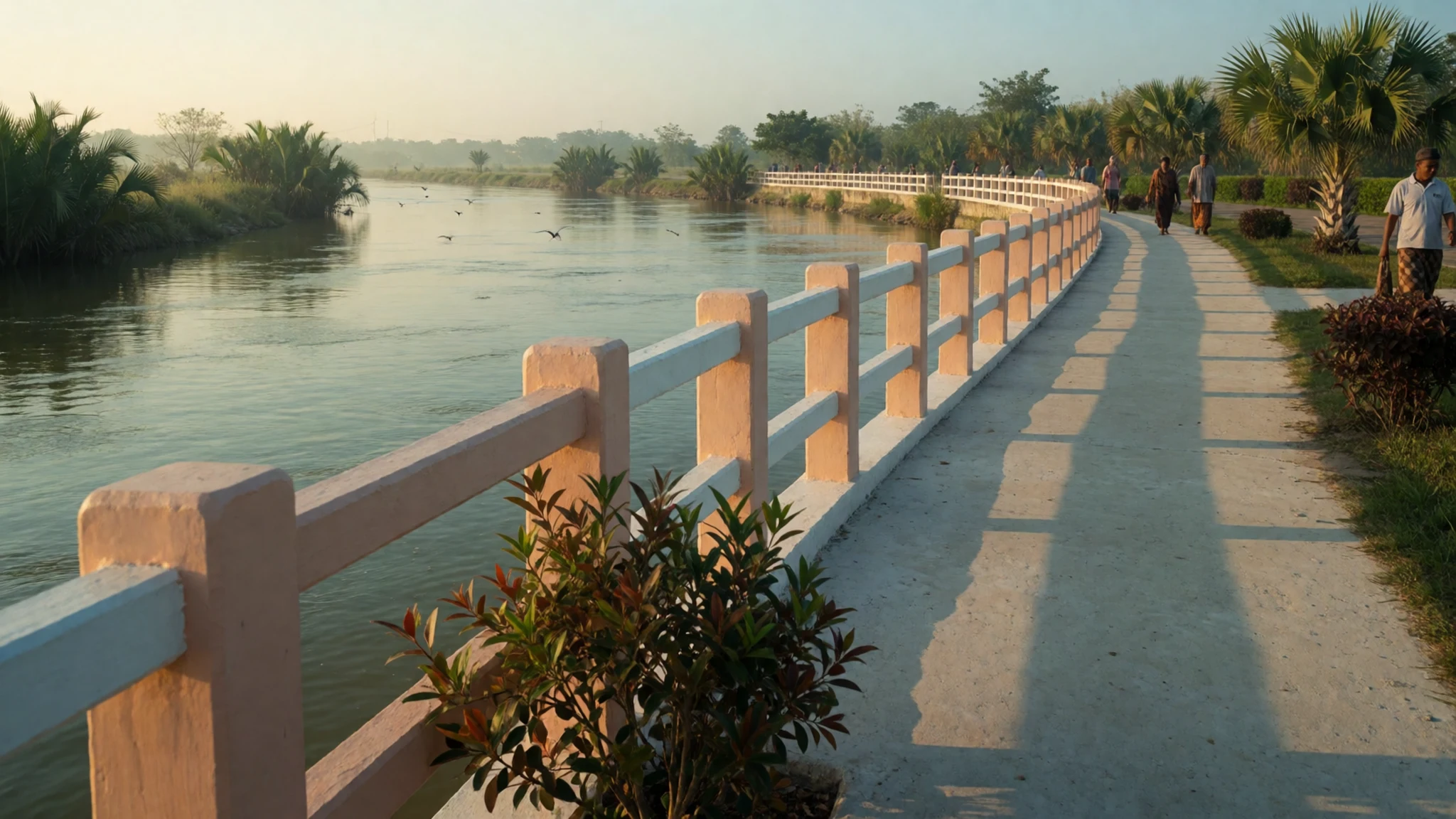
- Old Building of Tutong District Office and Court — Tutong town centre
This old wooden building once housed the district office and court. It is a modest reminder of the early British Resident period, when Tutong became the administrative heart of its district. It is worth a look from outside, and a quick photograph, as part of a stroll around the centre.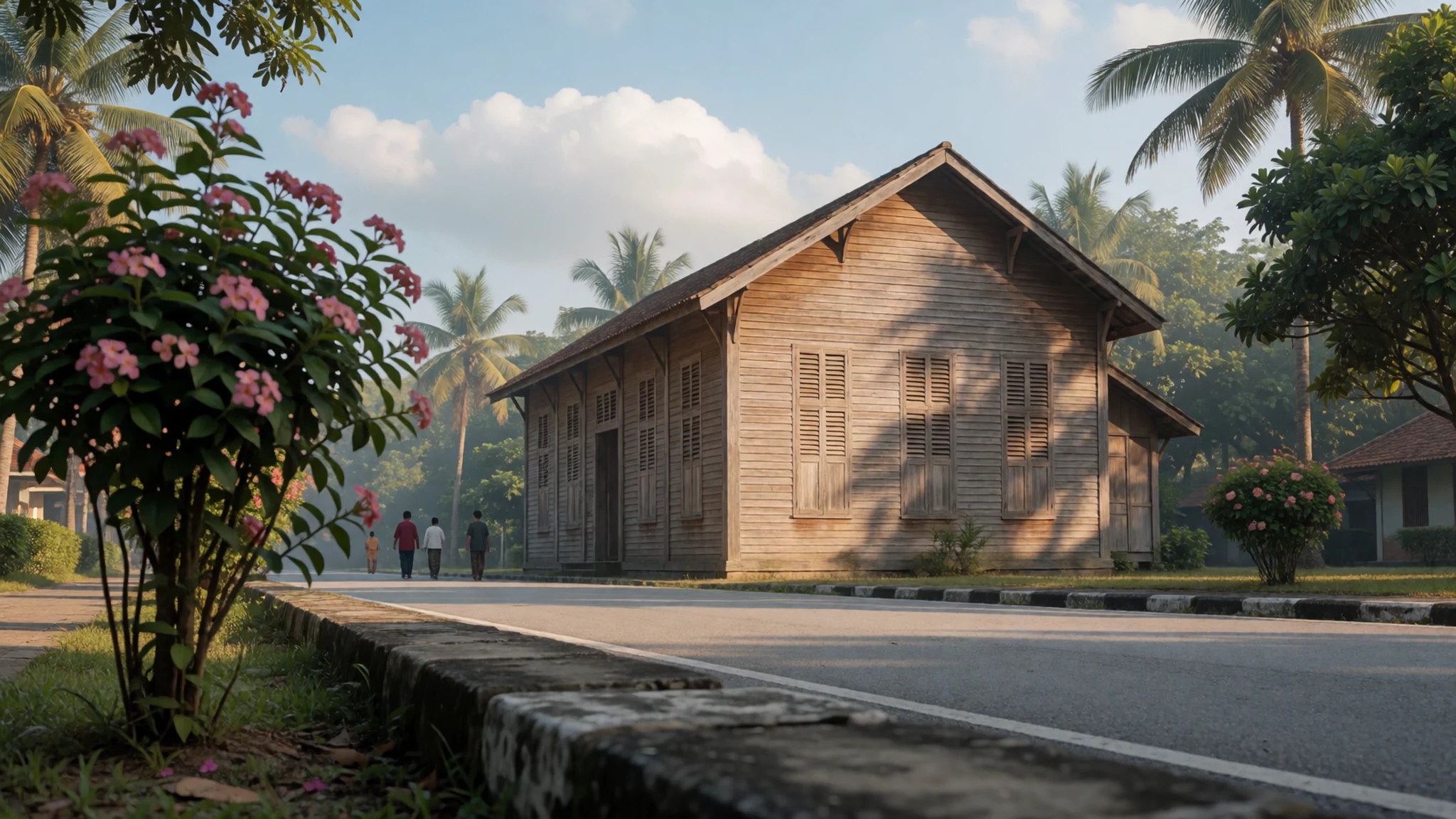
- Pantai Seri Kenangan — Coast, west of town
Tutong's popular beach and recreation area lies on a spit formed by the meanders of the Tutong River before it reaches the South China Sea. Families come for picnics, sea breezes and sunsets. Swimming conditions vary, so heed any local warning signs, and expect shade to be limited.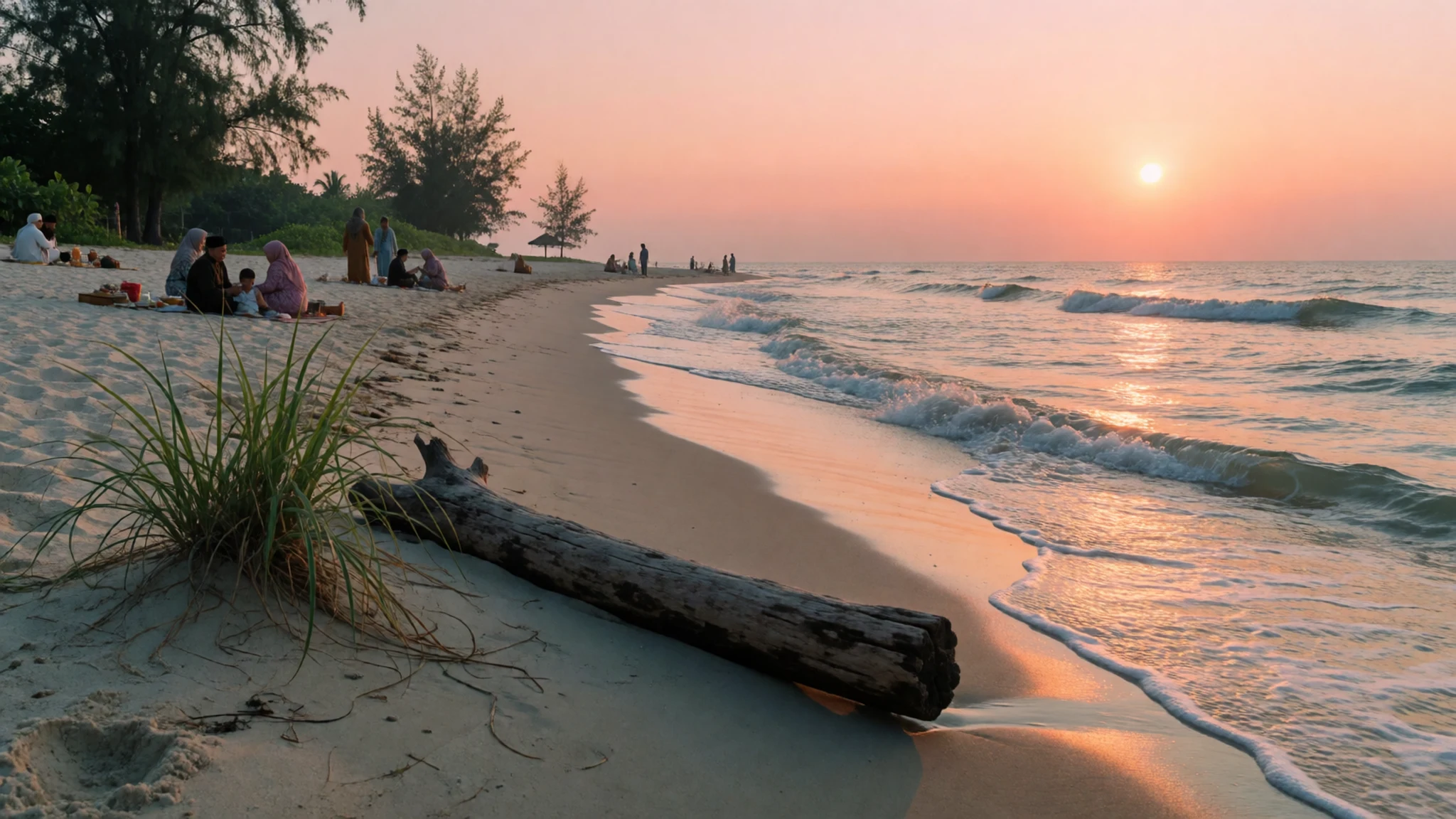
- Taman Seri Warisan Emas — North of Tutong town
This small park holds a monument marking the birthday of Sultan Hassanal Bolkiah, the 29th Sultan of Brunei. It is a tidy, quiet spot that shows how the monarchy is woven into civic life. Allow a short visit, ideally combined with a walk through the northern part of town.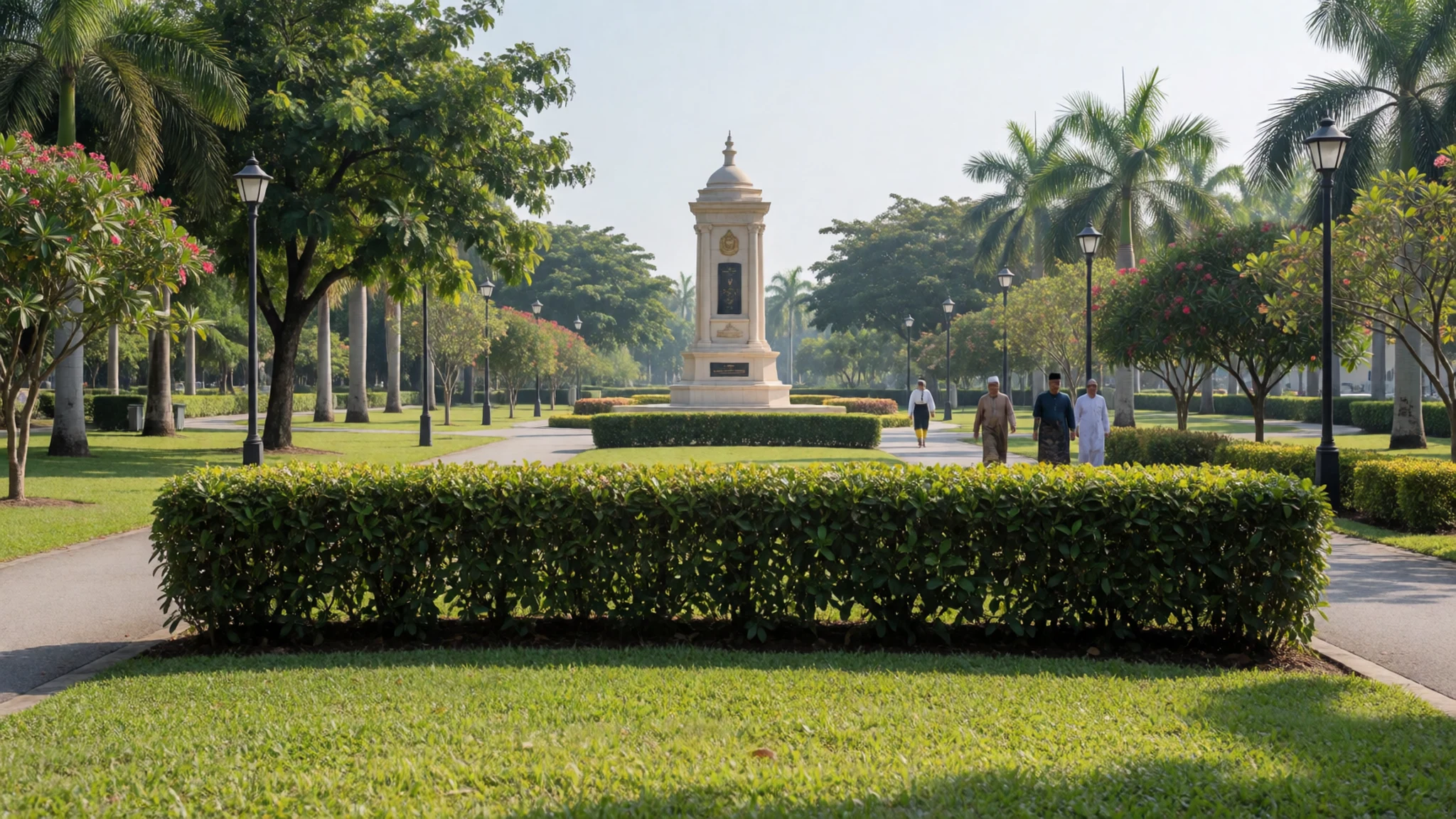
- Sungai Basong Recreational Park — North-east of Tutong town
Sungai Basong is a green recreational area on the edge of town, suited to a relaxed walk under trees and a break from the traffic. It makes more sense as a local outing than a destination in itself. Bring insect repellent and rain protection.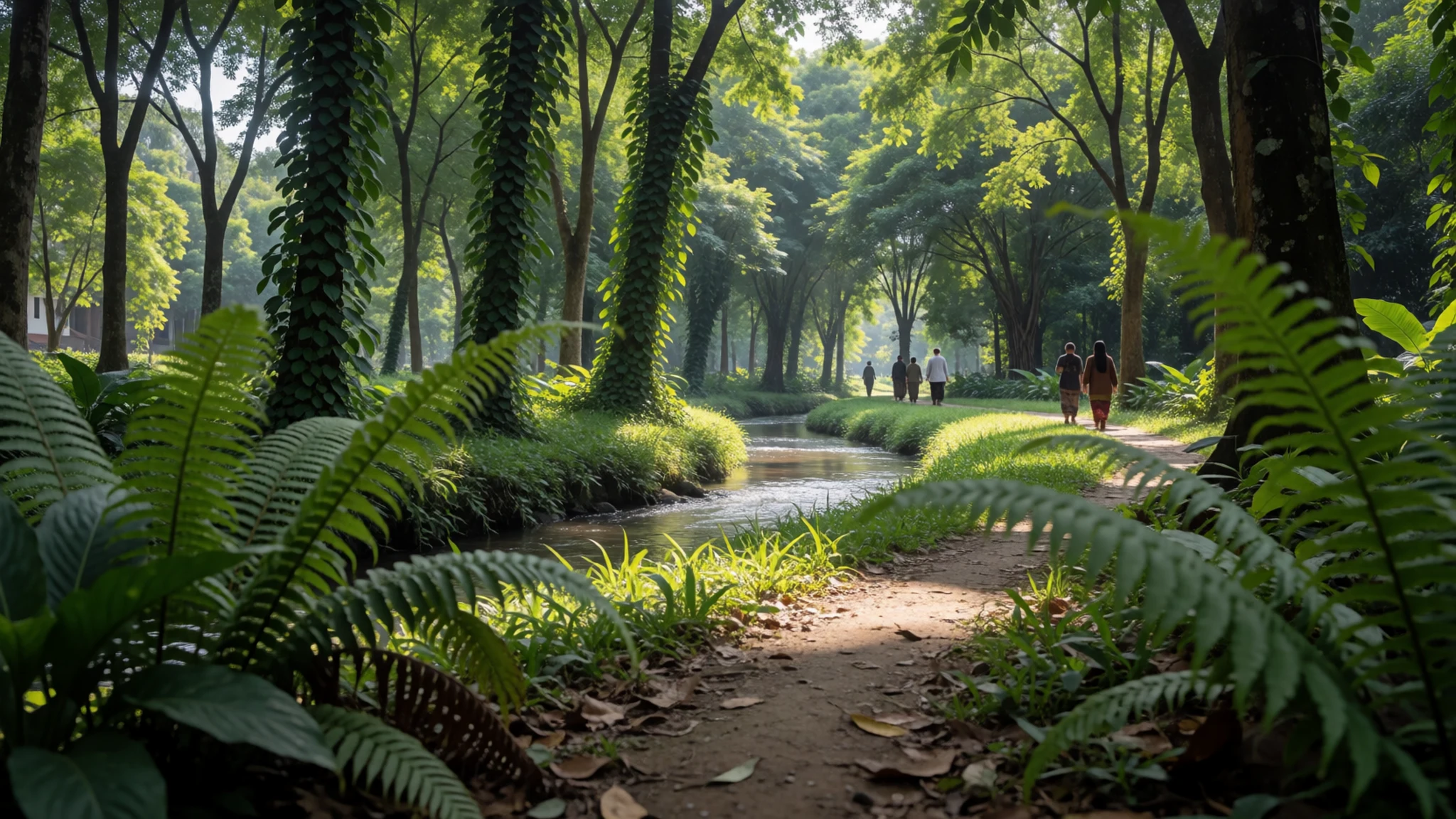
- Tasek Merimbun — Inland Tutong District
Tasek Merimbun is a lake and wetland area inland in Tutong District, recognised as part of an ASEAN Heritage Park. It is a trip for nature rather than town sightseeing, with forest and water as the draw. Plan transport and check current access before setting out.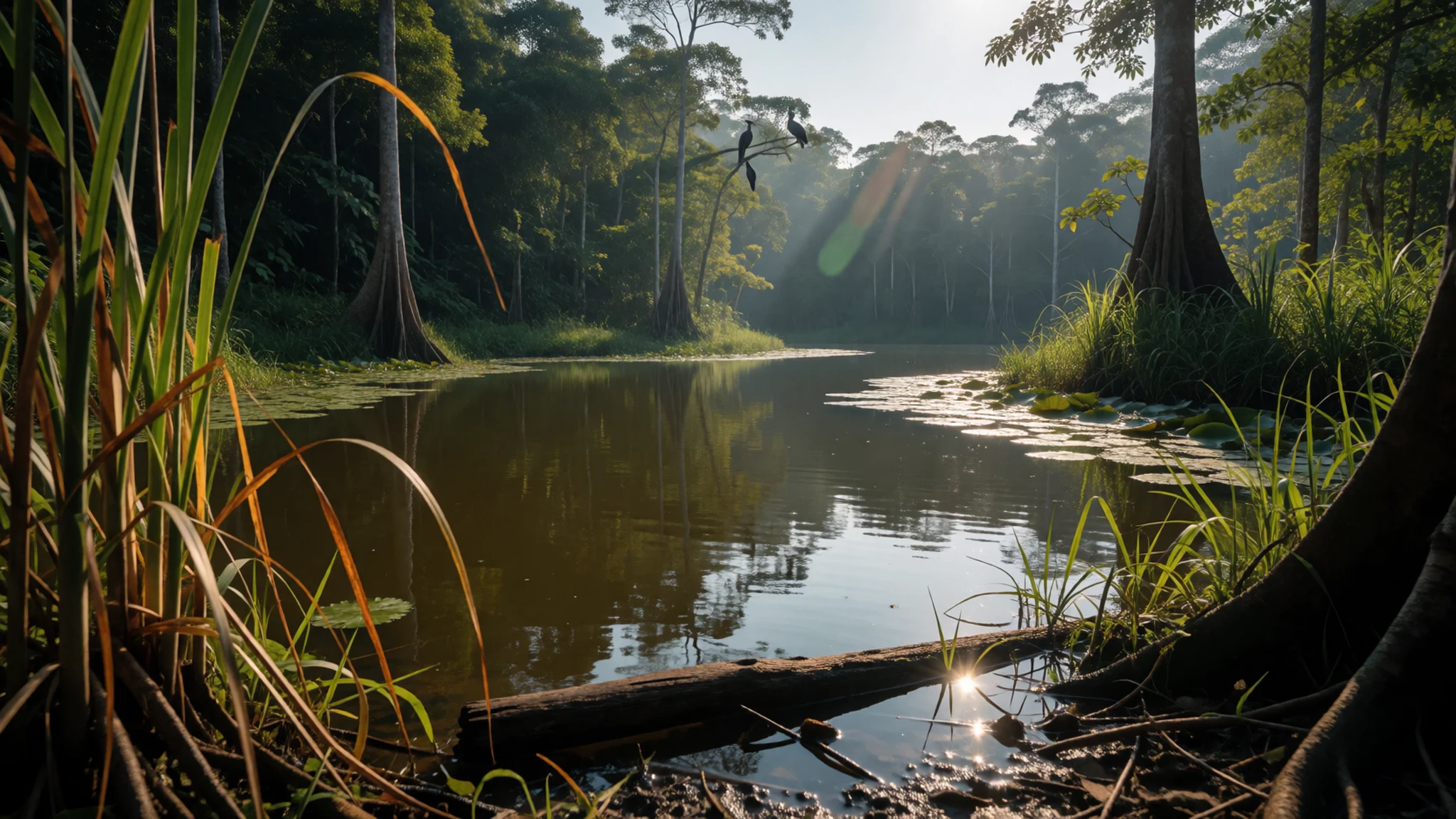
Culture
Tutong is a Malay Muslim town, and the rhythm of daily life follows that. The call to prayer sets the pace of the day, and the Friday midday prayer is the quietest time in the centre, when some shops pause for a while. The fasting month changes the town noticeably: daytime eateries may be quiet, and the evenings fill with food stalls and families breaking the fast together.
Malay customs of courtesy matter here. People greet each other politely and speak softly, and visitors are met with friendliness and some curiosity. Brunei has a monarchy that is widely respected, and portraits and monuments to the Sultan are part of the civic landscape, so jokes about it are out of place. Most eateries serve halal food, and alcohol is not part of public life. A Chinese community adds its own character, most visibly in the old kopitiam coffee shops and in the non-halal restaurant in the centre.
Festivals bring homes and streets to life. During Hari Raya, families hold open houses and visitors who are invited are expected to accept at least a small bite. Away from the festivals, the best way to feel the culture is simple: sit in a coffee shop, watch the town go by, and talk to the person at the next table.
Dress modestly, remove your shoes before entering a mosque or someone's home, and use your right hand when giving or receiving money, food or gifts.
What to wear
Tutong's traditional dress is the Malay dress of Brunei. Women wear the baju kurung, a long tunic over a skirt, often with a tudung (headscarf). Men wear the baju Melayu, a loose shirt and trousers, usually with a sampin, a short wrapped cloth at the waist, and a songkok, the black cap. Songket, a handwoven cloth with gold or silver thread, is kept for weddings, religious festivals and state occasions, and is a mark of formality rather than daily wear.
Day to day, people dress for heat and humidity. Office workers wear smart, light clothes, with many women in baju kurung or long skirts and many men in long trousers and shirts. Younger people wear jeans, T-shirts and trainers, with covered shoulders and knees still the norm. On Fridays and on festival days, traditional dress appears in greater numbers.
Visitors should wear light, breathable cotton or linen, with shoulders and knees covered. That suits the climate as well as local norms. Carry a scarf for visiting a mosque, and a compact umbrella or light rain jacket, since showers come in any month. Sandals that slip off easily are practical because shoes come off at doors. Walking shoes with grip are better for the beach spit, riverbank paths and forest trails. Swimwear belongs on the beach only, and a T-shirt over it is sensible away from the shoreline.
What to eat
- Pulut panggang — Malay eateries and the old Chinese coffee shops in the town centre
Tutong District is associated with this snack: glutinous rice wrapped in pandan leaf and grilled, sometimes filled with shrimp floss or minced beef. Smoky, sweet and savoury, it is best eaten warm with coffee.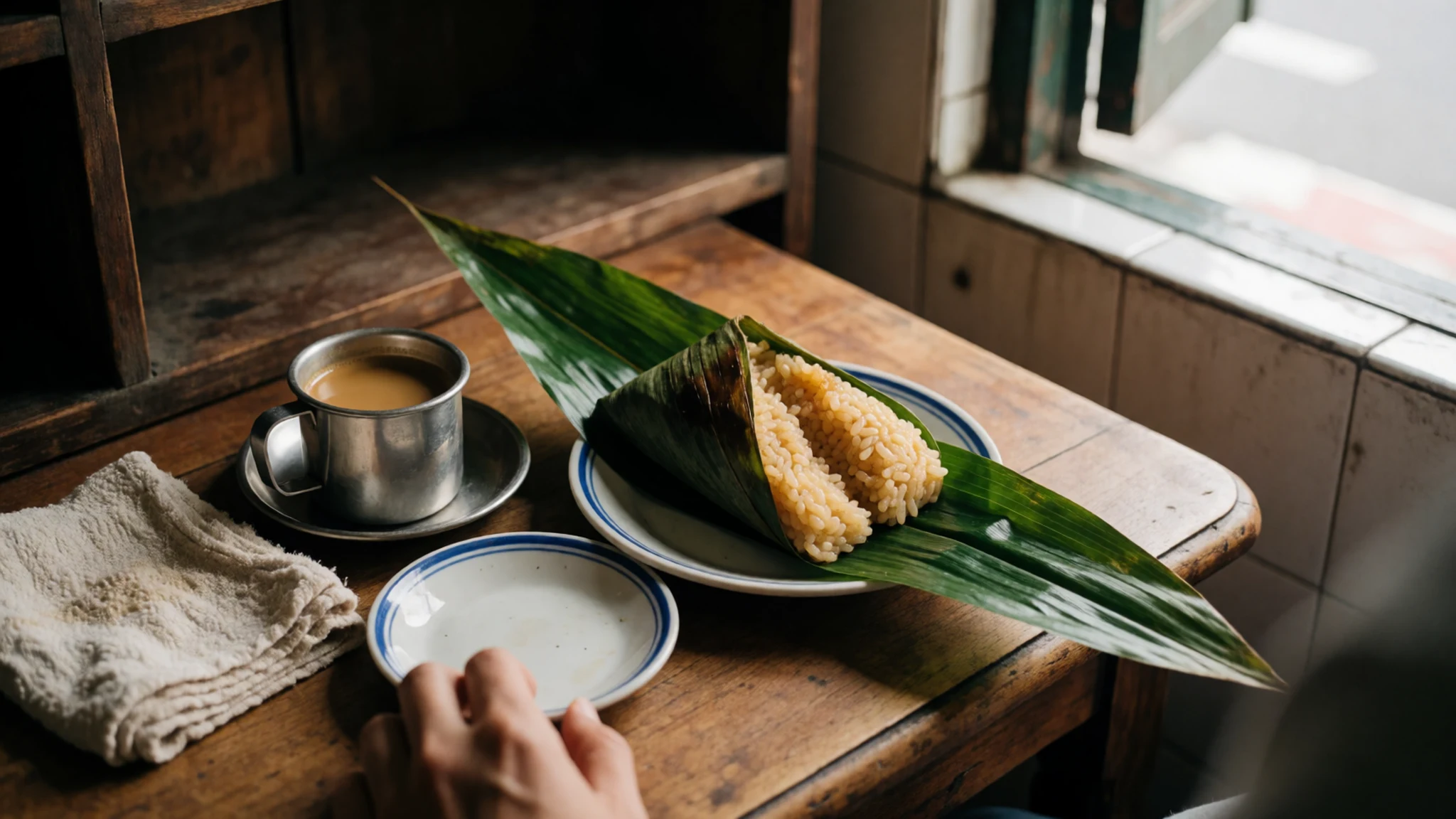
- Rojak — Malay-Indian Muslim eateries around the centre
The regional take on a fruit and vegetable salad, tossed in a dark, sticky, sweet-sour sauce, often with crunchy fritters. It is a good light snack in the heat, and the style varies from kitchen to kitchen.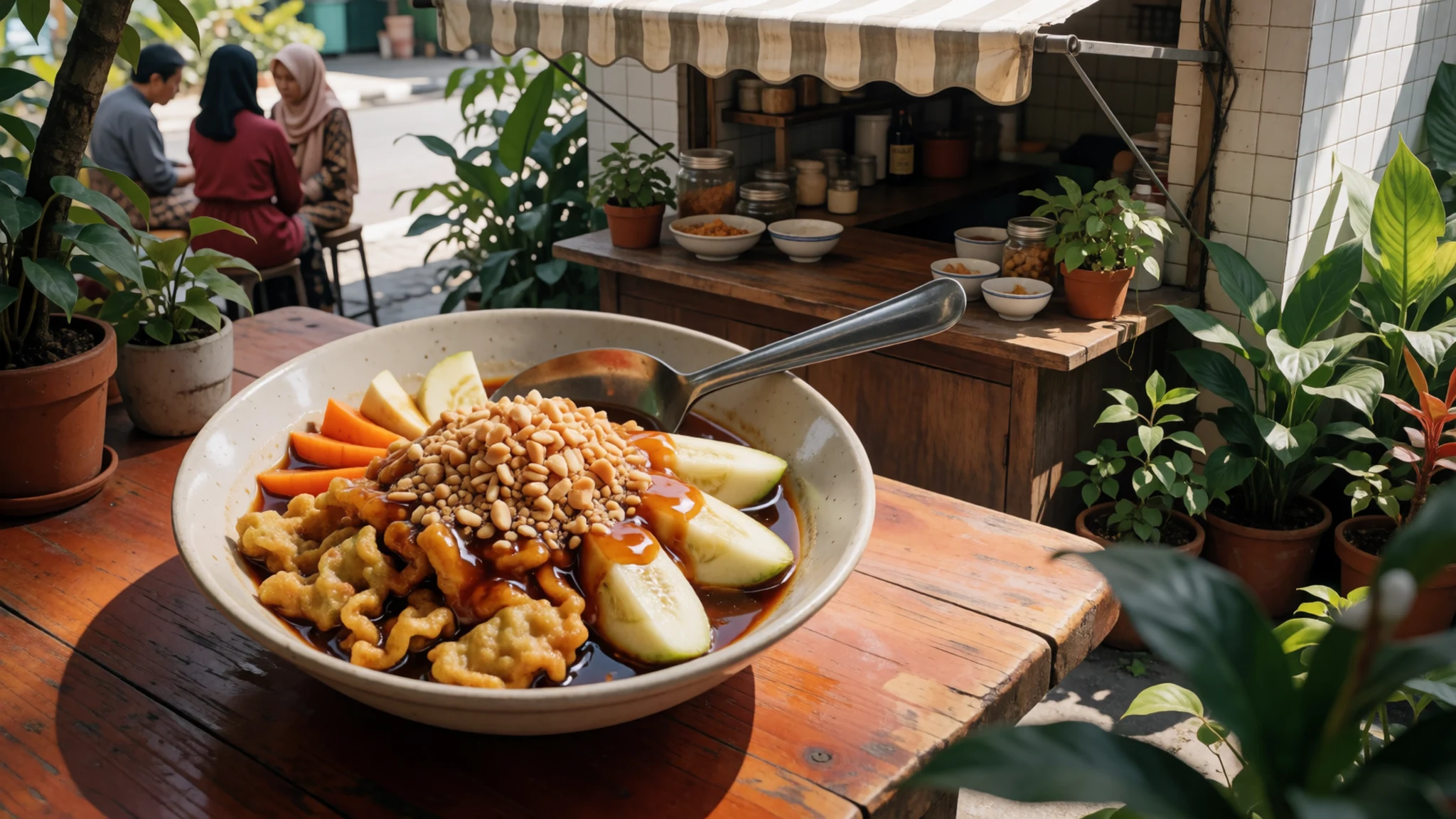
- Kopitiam coffee and stir-fried noodles — Kopitiam in the old town centre
Traditional Chinese coffee shops serve strong, sweet coffee with stir-fried noodles and small Chinese desserts. The old kopitiam format has been part of town life for decades, and mornings are the liveliest time. - Grilled chicken — Local chain outlets on the town's outskirts
A local fast-food chain is known for its grilled chicken, served with rice and sauces. It is simple, filling and popular with families, and a useful option when you want something quick after a beach trip. - Bubble tea — Cafes near the town centre
Tutong has its own bubble tea scene, with shops that began as takeaway counters and have grown into cafes. Sweet, cold and chewy, it is a popular afternoon treat among younger locals.
Plan it
Best time. The climate is tropical rainforest, with high temperatures and heavy rain in every month, so no season is dry. The early months of the year, roughly February to May, are a sensible choice for beach and park visits, but carry rain gear whatever the month.
How long. 1–2
Getting there. Fly to Brunei International Airport near Bandar Seri Begawan, then travel about 40 km west by road to Tutong by taxi or car. Buses between Miri and Bandar Seri Begawan stop in Tutong if you ask the driver.
Budget. low
Tips
- Tutong works well as a day trip from Bandar Seri Begawan, or as a stop on the road to Seria and Kuala Belait
- Start walks and beach visits early or late, to avoid the midday heat
- Carry some cash for small eateries and check the town's official website, bandaran-tutong.gov.bn, for local notices
- Bring a rain jacket and insect repellent, and drink plenty of water
- Tell a bus driver in advance that you want to get off in Tutong
Etiquette
- Dress modestly, with shoulders and knees covered, away from the beach
- Remove your shoes where you see a pile at the door, and always before entering a mosque
- Use your right hand when handing over money or food
Nearby
Sources
- Wikidata Q2299301 (CC0)
- Wikipedia: Tutong (town), rev 1384625118 (CC BY-SA 4.0)
- Wikivoyage: Tutong, rev 5357510 (CC BY-SA 4.0)
- Photo: Tutong Town on 21 December 2024 (Pangalau) (CC BY-SA 4.0)
- Photo: Brunei on 16 July 2023 (Pangalau) (CC BY-SA 4.0)
- Photo: Brunei on 16 July 2023 (Pangalau) (CC BY-SA 4.0)
- Photo: Tutong on 23 February 2023 (Pangalau) (CC BY-SA 4.0)
- Photo: Aerial view of Tutong Town (Government of Brunei) (Public domain)
- Photo: Tutong District in 1967 (unknown author) (Public domain)
- Photo: Tutong on 19 February 2023 (Pangalau) (CC BY-SA 4.0)
- Photo: Tutong on 23 February 2023 (Pangalau) (CC BY-SA 4.0)


