Mangrove Paradise
Mangrove Paradise, Brunei
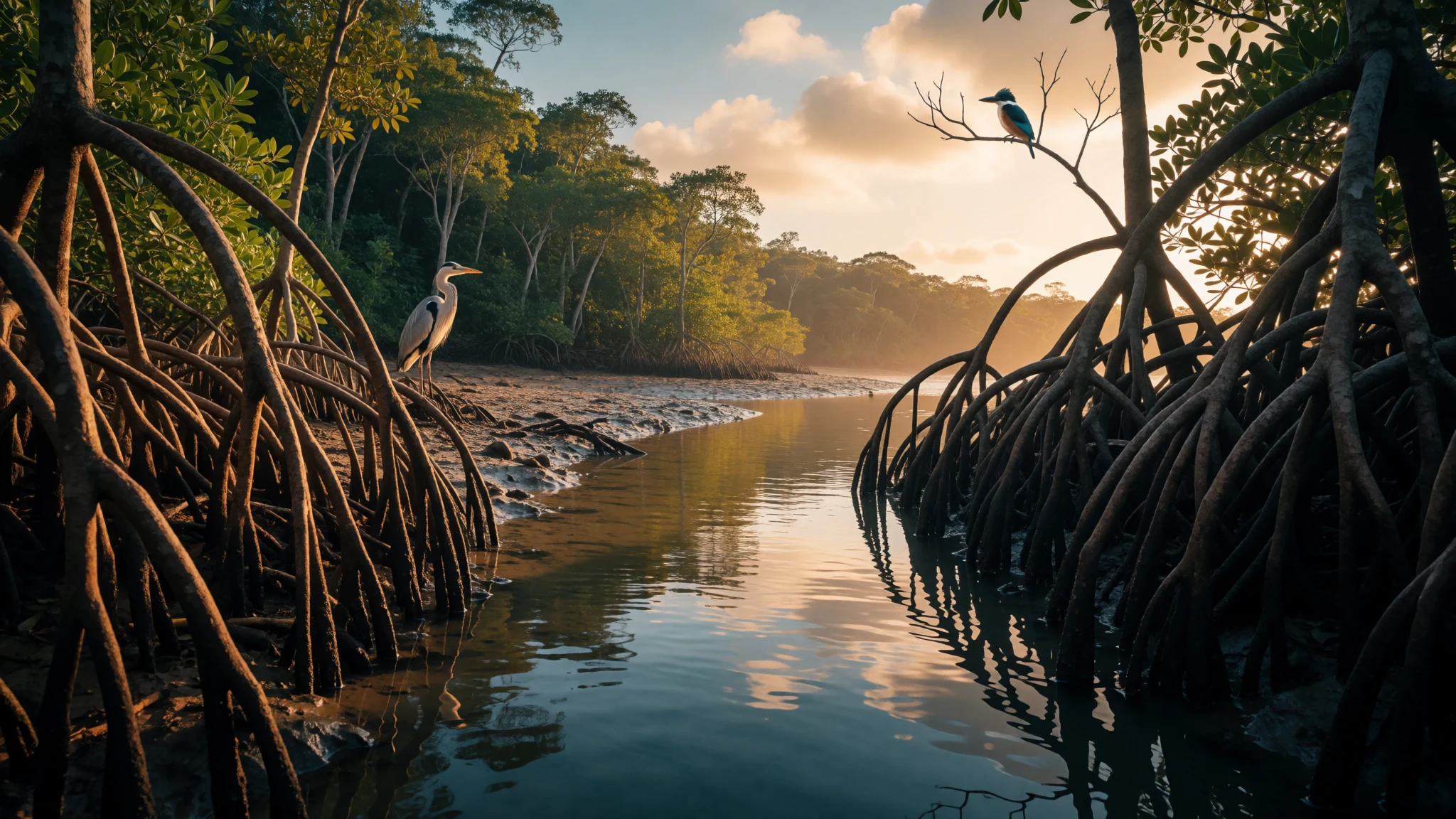
Mangrove Paradise is a quiet stay beside Brunei's tidal forest, with birdlife, boat-friendly waterways and a compact, calm country behind it.
The place
Mangrove Paradise is a resort in Brunei, the small Islamic sultanate on the north coast of Borneo. Wikidata files it simply as a hotel, and that is the honest framing: this is a place to stay beside tidal forest, not a monument with a gate and a ticket desk. Public information about the property itself is thin, so this reading rests on the setting rather than on a list of facilities. Brunei's coast is a patchwork of river mouths, mudflats and mangrove stands, backed by lowland rainforest. The tide does the editing. At high water the roots of the trees disappear and small boats can slip between the trunks; at low water the mud is exposed, crabs and mudskippers come out, and herons and kingfishers work the margins. The air is warm and damp all year, with rain in every month and heavier spells towards the end of the year. Mornings are the kindest hours, before the heat and the afternoon showers build. Brunei is compact and well surfaced, so a stay near the coast can be combined with the capital, Bandar Seri Begawan, and its mosques and water villages without long drives. Anyone expecting a beach resort should adjust: mangrove water is brown, the shoreline is mud and root, and the pleasures are birds, boats and quiet. Mosquitoes are part of the deal, so repellent matters. Rooms, activities and access should be checked on the resort's own website or a current booking page before anything is planned around it.
Its story
Mangrove Paradise has no recorded history that the sources for this reading can support, so its story is best told through the landscape around it. Brunei's coast has been shaped by rivers carrying silt out of the Bornean interior, and mangroves colonise the soft margins where fresh and salt water meet. For centuries, communities in the region have lived with this edge: fishing, gathering shellfish, cutting timber for poles and fuel, and travelling by boat because the land behind was swamp and forest. The best-known expression of that life is Kampong Ayer, the cluster of stilted villages on the Brunei River in the capital, where houses, schools and shops stand on piles above the water. It shows how much of the country's story has faced the water rather than the land. Oil and gas revenue in the last century brought wealth, roads and new buildings, and parts of the coast were developed. Yet Brunei kept a good deal of its forest, and mangrove stands still fringe the bay. Attitudes have shifted too. Mangroves are now valued as nursery grounds for fish and prawns, as a buffer against storm surge, and as stores of carbon in their mud. A resort named for them belongs to that change, from swamp to be cleared towards habitat to be visited gently. How the property itself came about is something to ask the owners or check on their official site.
What to see
- The mangrove shoreline at Mangrove Paradise — Brunei coast, near the resort
The resort's own waterfront is the main attraction. Walk or boat the edge at both high and low tide, because the scene changes completely: roots submerged and glassy at one hour, crab-studded mud the next. Early morning gives the best birdlife and the coolest air. Ask staff about guided boat outings.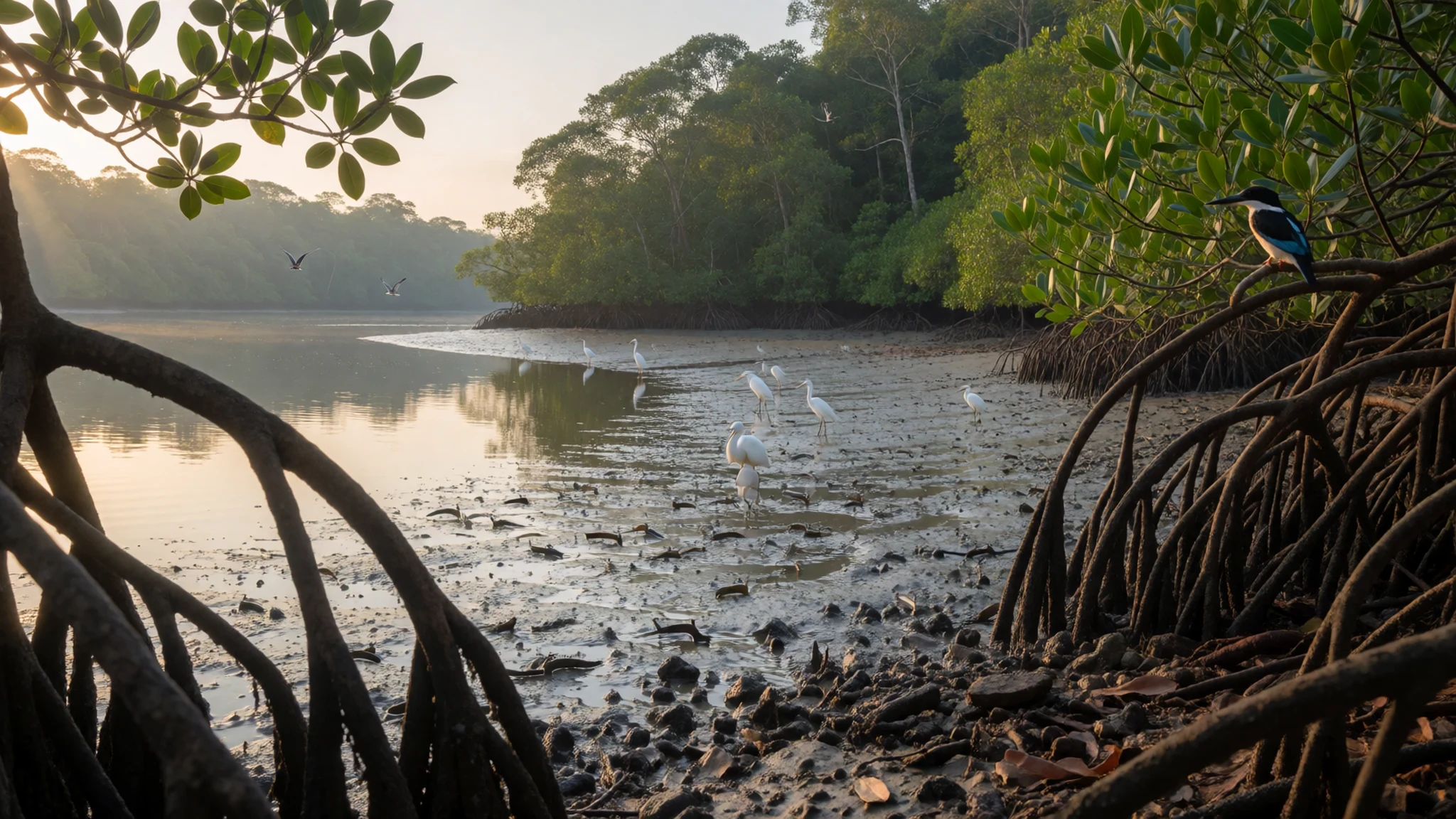
- Kampong Ayer — Bandar Seri Begawan
The stilted water villages on the Brunei River are the clearest picture of how Bruneians have lived with water. Water taxis cross from the capital's waterfront in minutes. Walk the plank walkways, look at the houses from the river, and visit the small cultural gallery if it is open.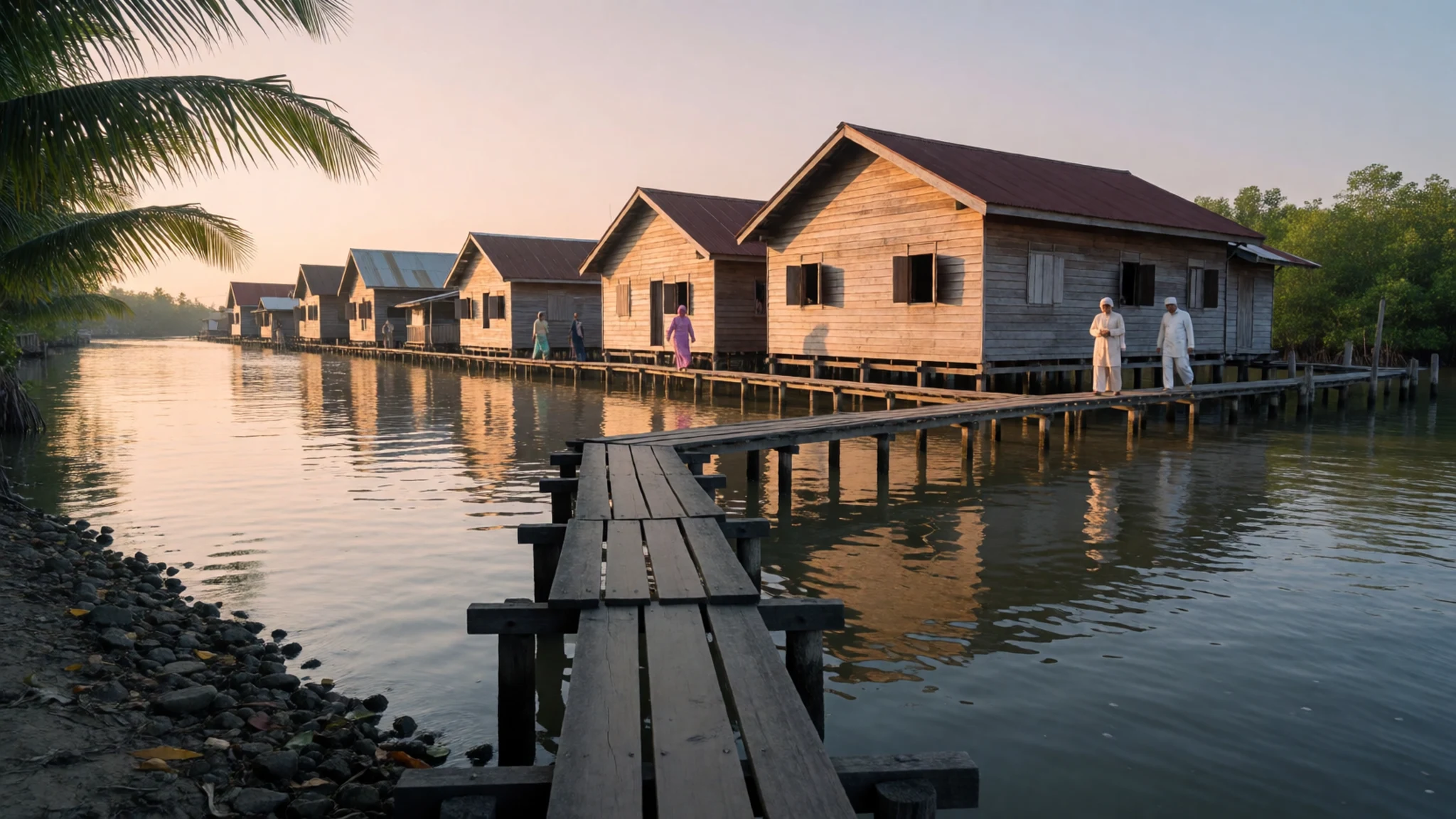
- Omar Ali Saifuddien Mosque — Bandar Seri Begawan
A gold-domed mosque beside a lagoon, built in the modern era and still the symbol of the capital. Visits are usually possible outside prayer times with proper dress, which can be borrowed at the entrance. Late afternoon light on the dome and its reflection is the best moment.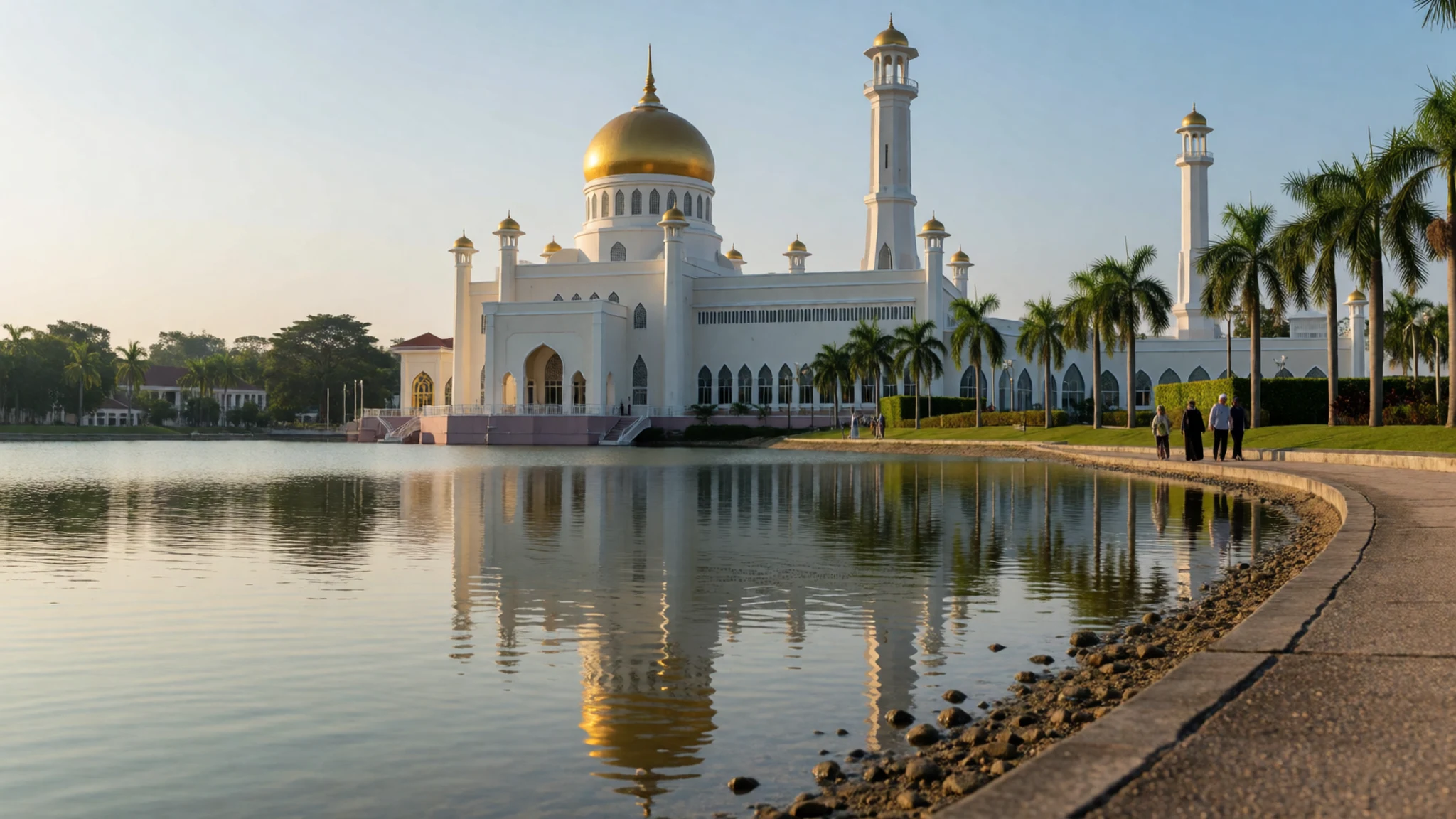
- Brunei River wildlife cruise — Brunei River, near the capital
Boats leave the capital's waterfront to look for proboscis monkeys, long-tailed macaques and birds along the mangrove-lined river channels. Dawn and late afternoon are the best times, when the animals feed. Binoculars help, and operators should be booked locally and checked for current schedules.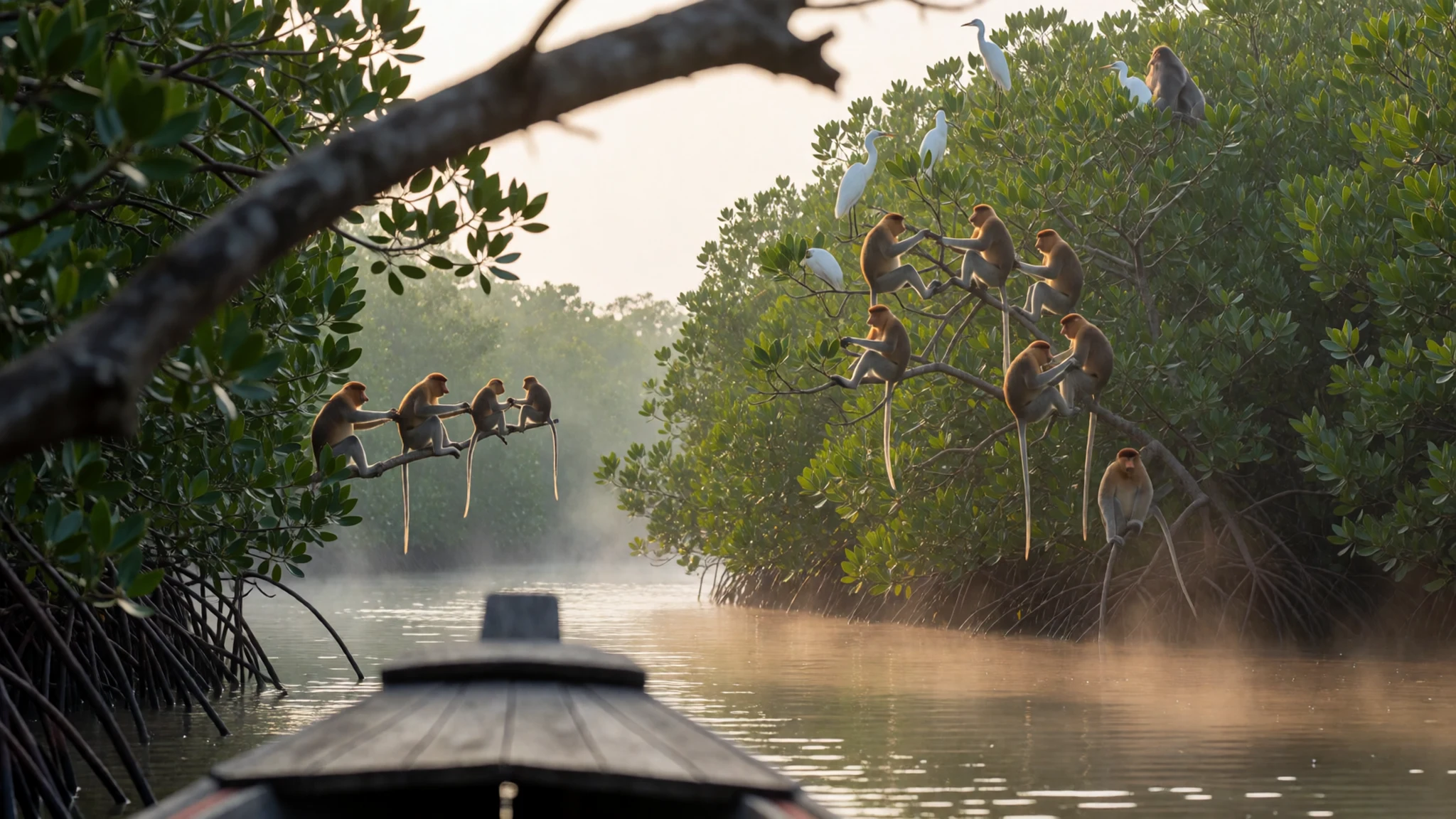
- Ulu Temburong National Park — Temburong district
Brunei's well-known rainforest reserve, reached by a boat journey from the Temburong district. Trails and a canopy walkway lift visitors into the treetops for birds and views over the unbroken green. Plan a full day, wear sturdy shoes, and book through a licensed operator.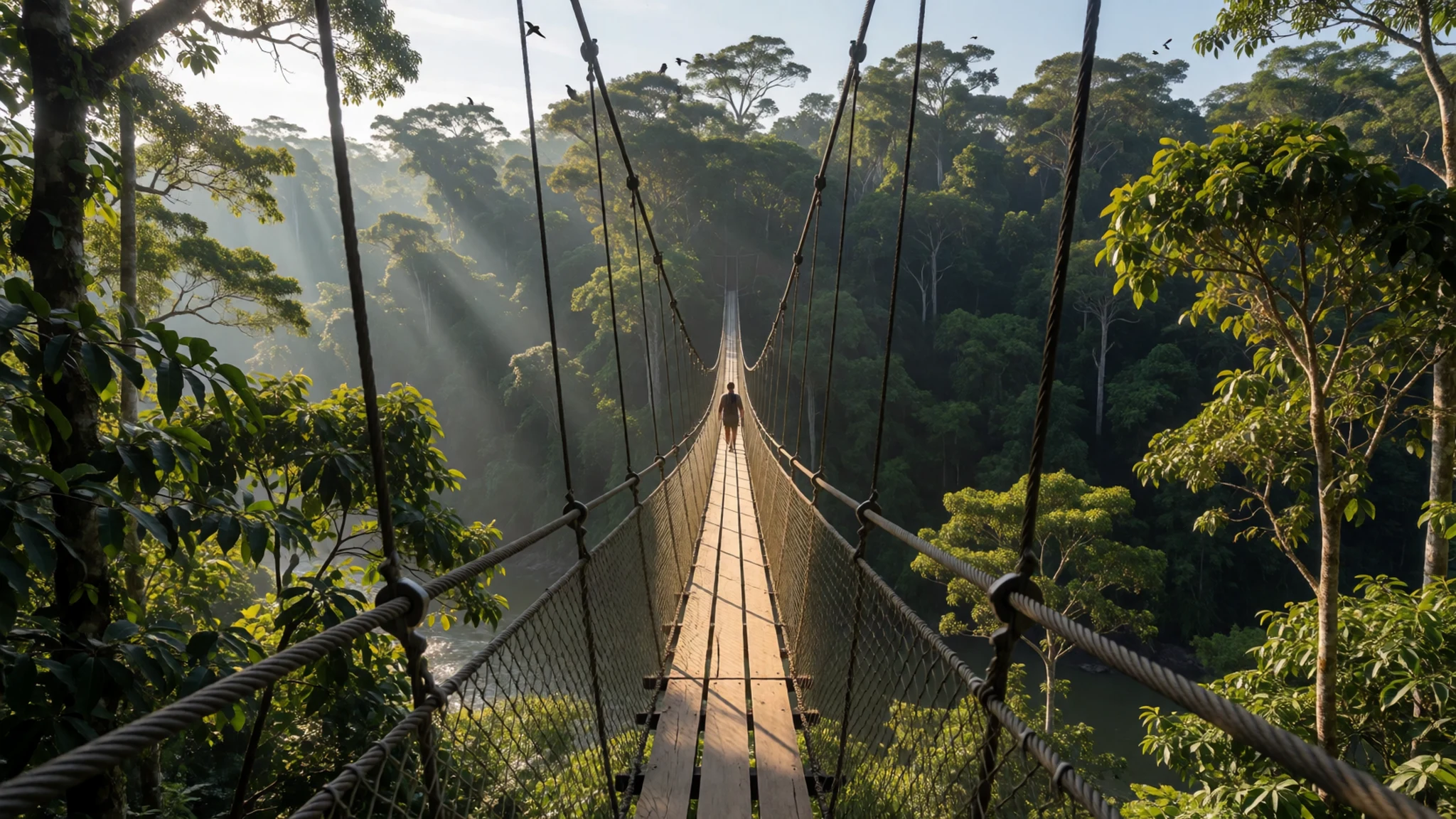
Culture
Brunei, where Mangrove Paradise sits, is a Malay Islamic monarchy, and the national philosophy of Melayu Islam Beraja (Malay, Islamic, monarchical) shapes daily life more visibly than in most neighbouring countries. The call to prayer sounds through the day, shops and offices pause around Friday midday prayers, and alcohol is not sold in ordinary restaurants. Visitors will notice courtesy before anything else: quiet voices, soft handshakes and a lot of patience. The sultan is revered and his portrait hangs in public buildings, so jokes about the royal family land badly. Festivals follow the Islamic calendar. Ramadan changes the rhythm of the day, with eateries quieter until sunset, and Hari Raya Aidilfitri brings open houses where guests are fed generously. Other communities, notably Chinese Bruneians and the indigenous peoples of the interior, keep their own festivals and longhouse customs, and the coast has long been a meeting point for them all. Take shoes off before entering a mosque or a home, cover shoulders and knees, and use your right hand when giving or receiving anything.
What to wear
Traditional dress in Brunei centres on Malay garments. Women wear the baju kurung, a long loose tunic over a skirt, or the lighter baju kebaya, often with a headscarf (tudong). Men wear the baju Melayu, a collarless shirt with trousers, topped on formal days with a sampin, a short wrap of woven cloth at the waist, and a black felt songkok cap. The prized textile is kain tenun, handwoven cloth, and above all songket, silk or cotton brocaded with gold or silver thread in dense geometric patterns. Brunei's own styles, such as jong sarat, are worn for weddings, royal ceremonies and Hari Raya. Everyday clothing is simpler. In the heat, people choose light fabrics in modest cuts, with many women in plain baju kurung for work and school and men in shirts and long trousers. Shorts are uncommon outside sport and leisure. Visitors should pack for humidity and rain: breathable long sleeves and trousers or knee-length skirts, a light waterproof, a hat and sunglasses. Closed shoes with grip or water sandals suit muddy boardwalks and boat jetties, and pale clothes mark easily in tannin-stained water. For mosques, women need a loose long garment and a scarf, which many mosques lend; men need long trousers and covered shoulders. Swimwear belongs by the pool.
What to eat
- Ambuyat — Family-style Malay restaurants in Bandar Seri Begawan
Brunei's national dish is a sticky paste of sago starch, twirled around a bamboo fork called a chandas and dipped in a sour, fruity sauce, then eaten with fish, vegetables and sambal. The taste is mild; the dipping is the point.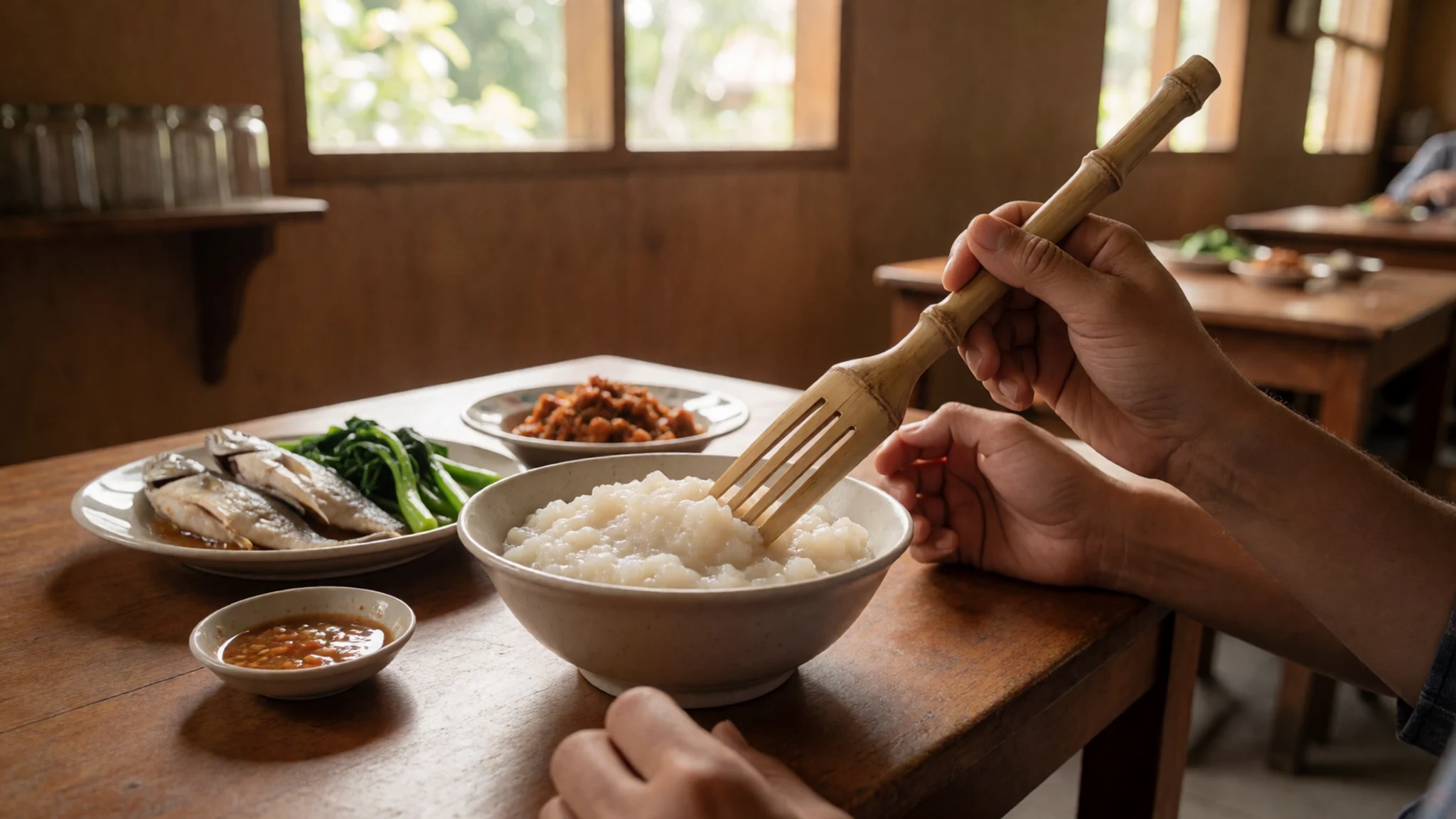
- Nasi katok — Roadside stalls and small eateries across Brunei-Muara
Plain rice with fried chicken and a spoonful of chilli sambal, usually wrapped in paper. It is a cheap, filling, everyday meal, eaten at any hour and especially popular late in the evening.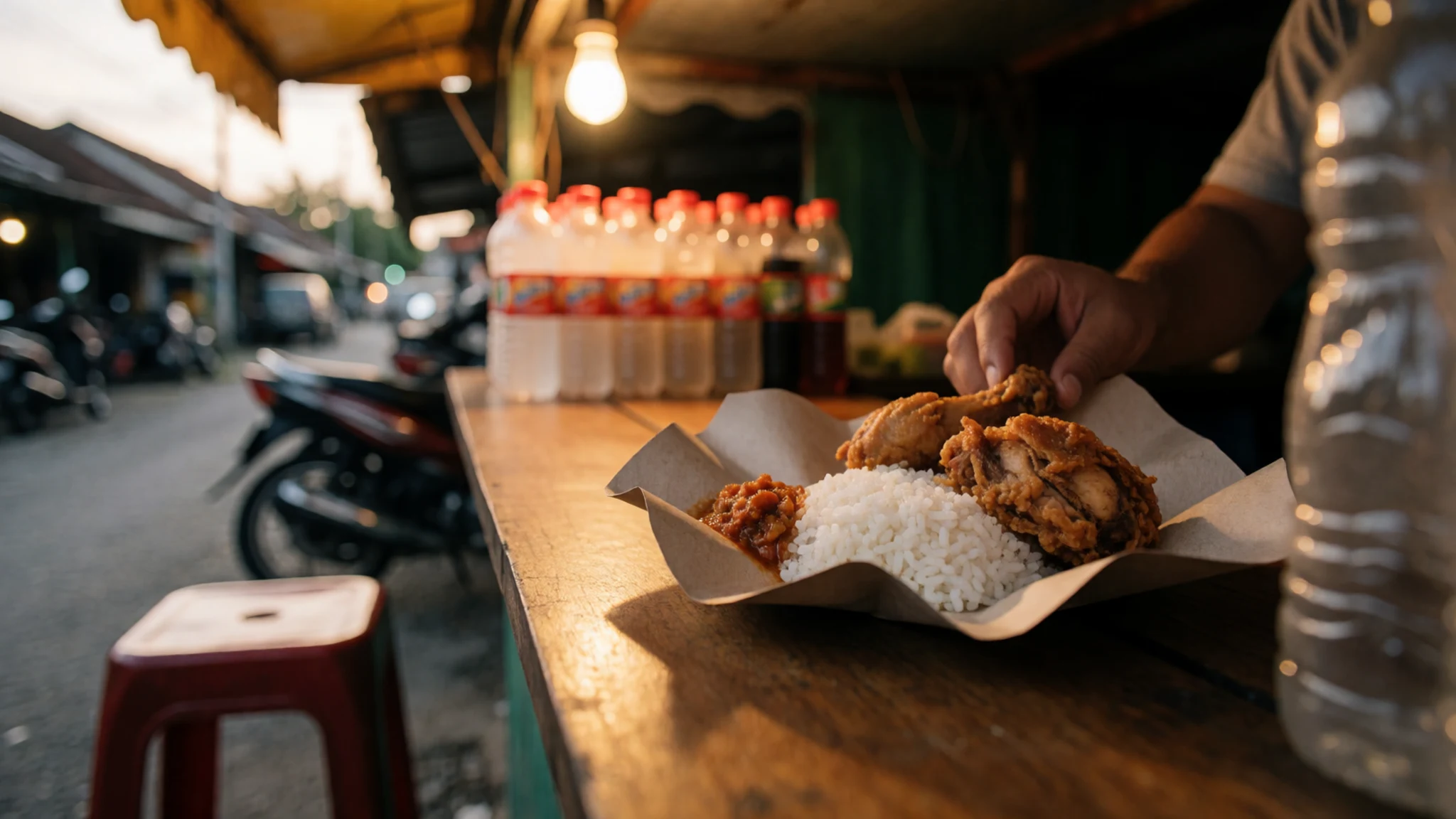
- Kuih — Morning stalls at the Kianggeh market in the capital
Small sweet and savoury cakes made from rice flour, coconut, palm sugar and pandan, from sticky layered kinds to fried fritters. They are sold in the morning and are a typical breakfast or tea-time snack. - Grilled fish with sambal — Riverside and coastal eateries near the water
Fresh fish from local waters is grilled over charcoal and served with a hot paste of chilli and shrimp. It comes with rice and cucumber, and tastes best eaten close to the water that supplied it. - Soto — Local coffee shops and food courts in town
A light spiced chicken or beef broth with rice cakes or vermicelli, herbs and a squeeze of lime. It is a gentle, warming breakfast or lunch, easily adjusted with chilli sauce at the table.
Plan it
Best time. February to May is usually the drier stretch, with fewer heavy showers for boat trips; Brunei is equatorial, so rain can fall in any month and the wettest spell tends to run from November to January. Heat and humidity are constant.
How long. 2–3
Getting there. Fly into Brunei International Airport near Bandar Seri Begawan, then take a taxi or hire car for the last leg towards the coast; confirm the transfer and directions with the resort before arrival.
Budget. mid
Tips
- Check the resort's official site or booking page for rooms, activities and access, as details here are limited
- Book wildlife and rainforest trips through licensed local operators, and ask about tide times
- Start boat outings early, when it is cooler and animals are most active
- Carry some cash for markets and small eateries, and bring repellent and drinking water
- Pack a light rain jacket, since showers can arrive suddenly in any month
Etiquette
- Dress modestly outside the resort, and cover up fully for mosques
- Use your right hand for giving, receiving and eating
- Keep voices low near wildlife and do not feed animals
Nearby
Sources
- Wikidata Q112007610 (CC0)
- Wikipedia — Brunei (CC BY-SA 4.0)
- Wikivoyage — Brunei (CC BY-SA 4.0)
Wildlife
- Striated heron (bird)
The striated heron is a small, mostly stay-at-home bird, a little green heron of the mangroves that is known for some curious habits. In Mangrove Paradise, look for it when the tide has drawn back and bare mud is showing, because that is when it hunts along the edges beside the crabs and mudskippers. Keep a respectful distance, stay quiet and let a local guide steer the boat. Never feed it; it knows how to find its own supper.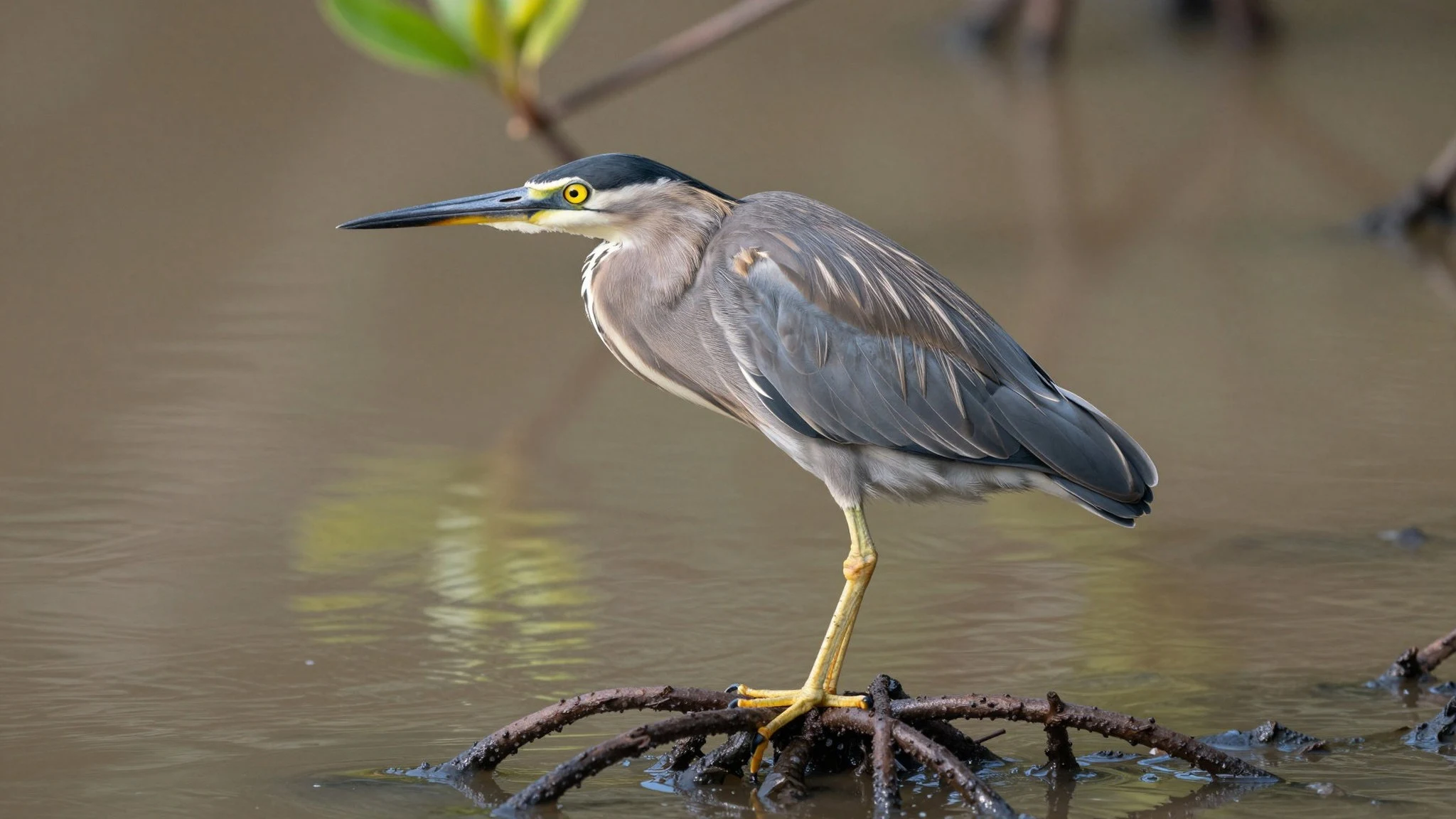
- Collared kingfisher (bird)
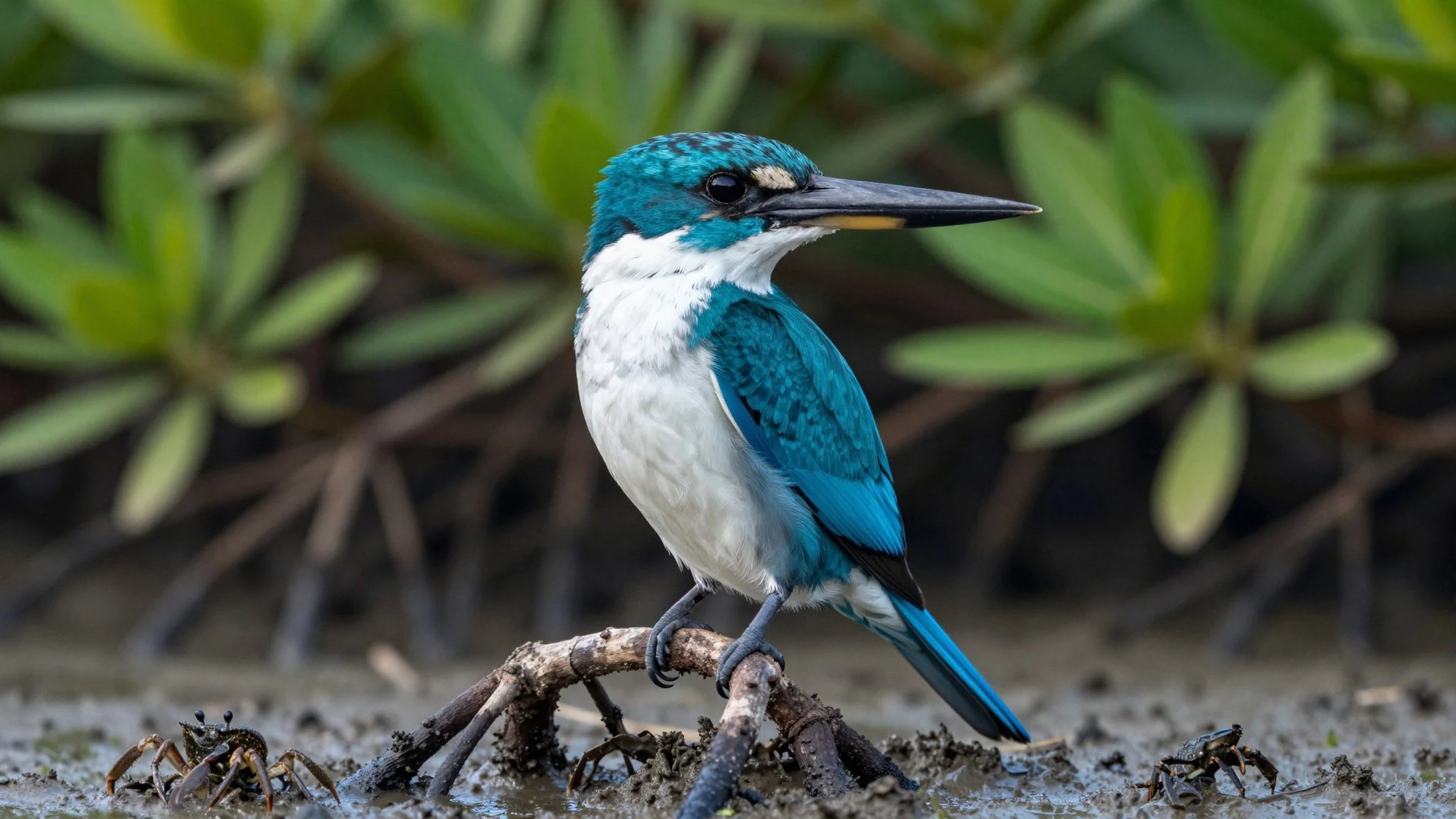
The collared kingfisher is a medium-sized tree kingfisher with a white collar, also called the mangrove kingfisher. In Mangrove Paradise, watch for it along the muddy edges when the water has dropped and the mud is bare, as crabs and mudskippers wander out. At high water the roots are hidden and boats can glide between the trunks, so a guide helps you find a good spot. Stay quiet, keep your distance and never feed it.